
Hello again! Before I continue with this post, I will try to begin posting in the mornings, just to make it at a more convenient time (We’ll see how well that works out for me..)! (Editor’s Note: It doesn’t.)
Yesterday was quite a packed day… For the first half of it, we viewed numerous sites dedicated to Harry S. Truman, 34th President of the U.S, including his home, the nearby Noland House, and his Library. The second half took us back to Kansas City to see the World War I Museum and Memorial.
Without any further ado, let’s dive right in!
Harry S. Truman National Historic Site
As the tickets to the Truman Home were on a first-come, first-serve basis, we immediately headed over to the Visitor Center nearby the Courthouse, which i’ll picture now.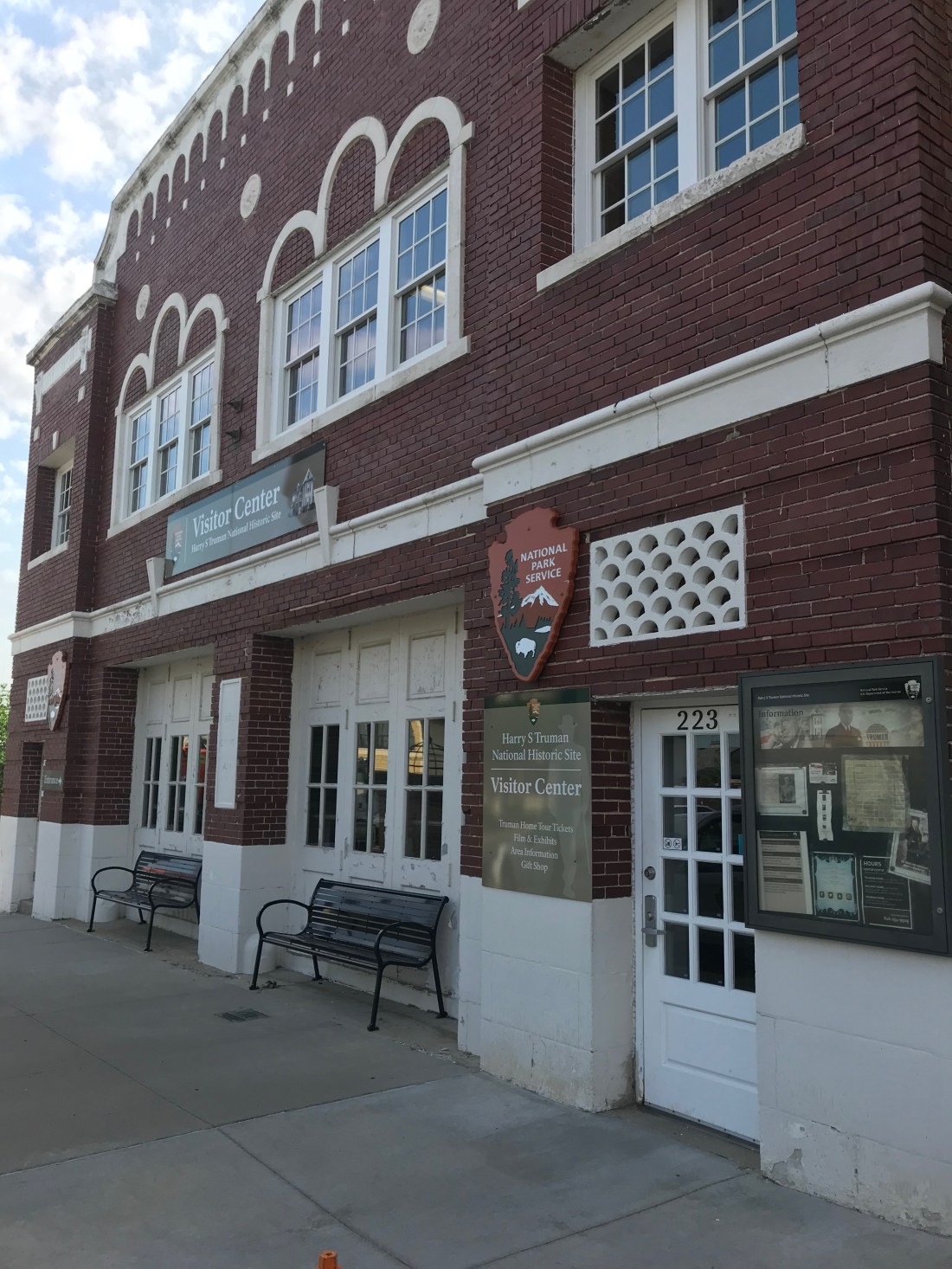
Reminds you an awful lot of a fire station or something similar. I believe that’s what it originally was.
Thanks to our punctuality, we got the only tickets for the first tour of the day!
So, we walked several blocks down the street to the Truman Home once again.
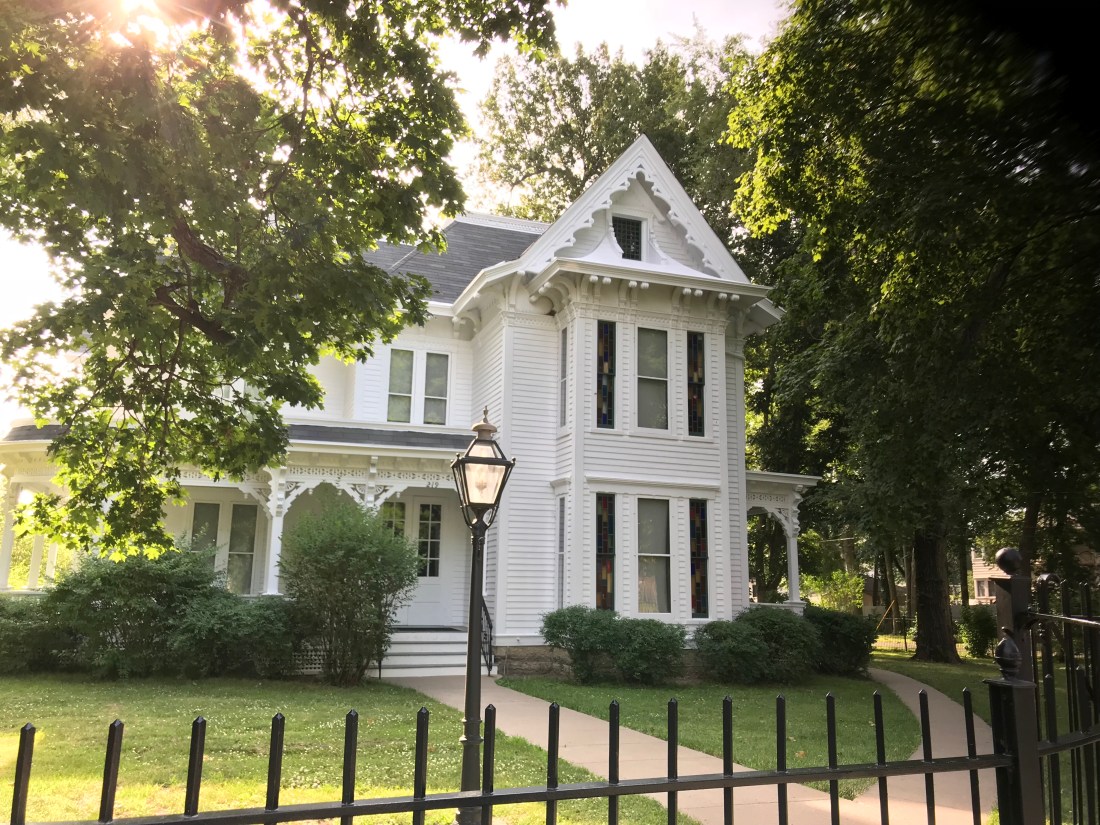
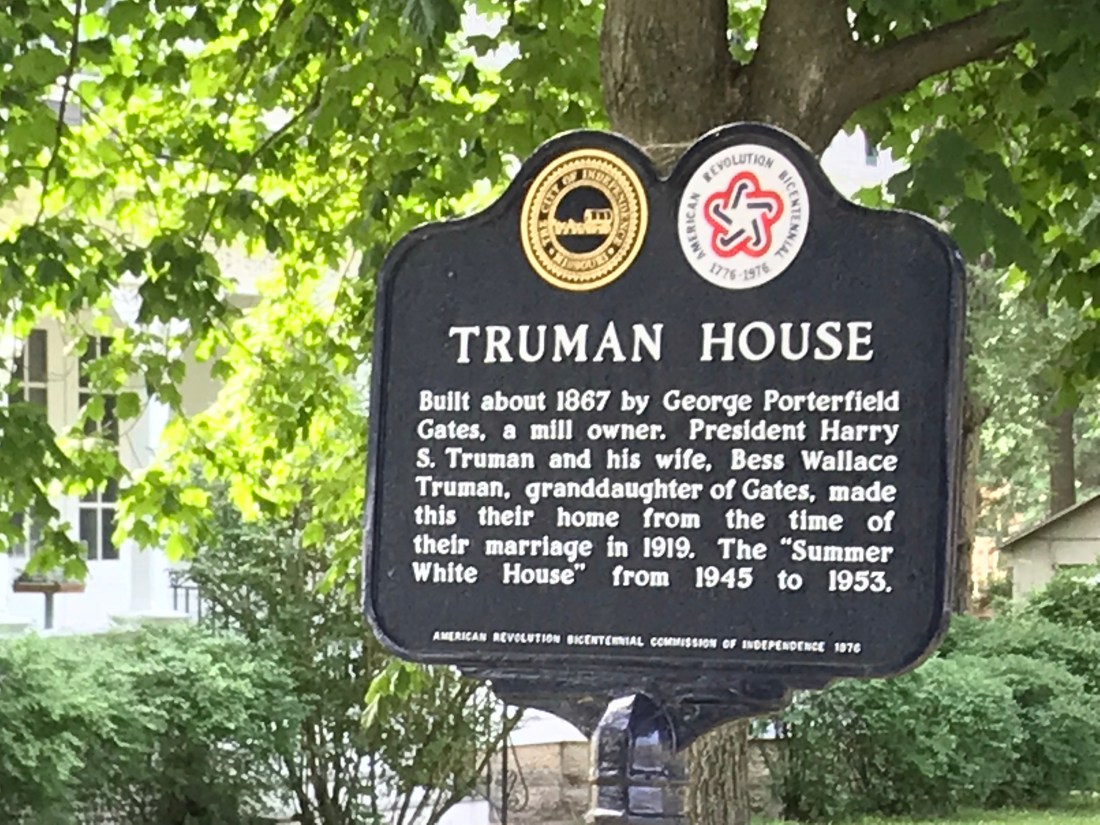
This home has more background than we thought!

The iron fence around the place was constructed to prevent tourists from coming in and actually tearing down the house bit by bit for souvenirs, or even digging a hole in the back lot to get dirt (both of which happened before the fence was constructed). As our tour didn’t begin for a few minutes, we decided to look at the Noland House across the street, where a young Harry S. Truman was said to have been returning a borrowed cake platter back from the house, and met his future sweetheart Bess Wallace on the doorstep.
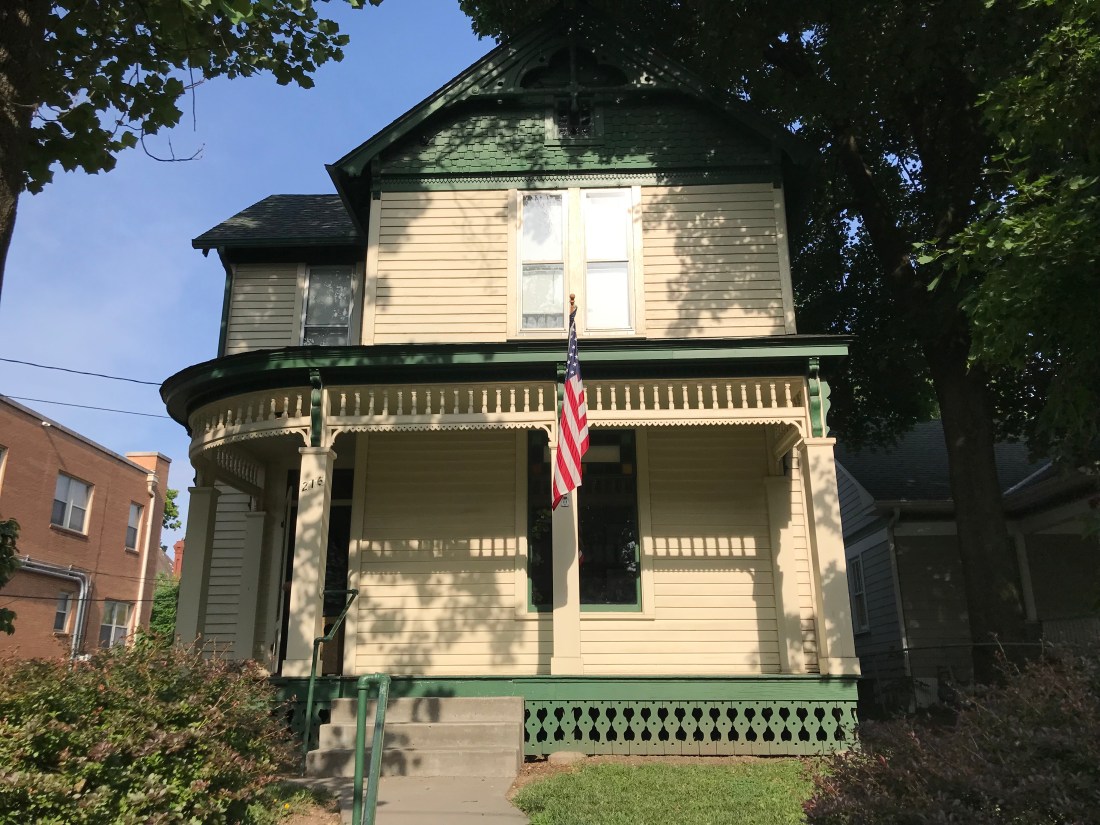
This is the Noland House, and inside were a number of small exhibits dedicated to the family, including a small documentary by Margaret Truman (the president’s daughter) interviewing her parents on the Truman House. Margaret Truman was a Opera Singer, journalist, and an author, and and preferred to live in New York City, so her time was more often spent there than back home in Independence.
Our guide then led us into the Truman Home, and around the back to the porch. Sadly, pictures were not allowed inside the home, so i’ll have to make do with non-trip pictures.
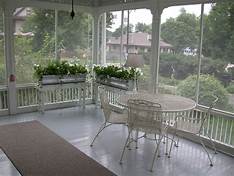
The back porch was often where the Trumans would eat and relax on summer evenings. The chairs reminded me an awful lot of the ones we have back home.
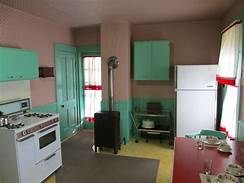
Almost every item in the house was original, including the kitchen appliances. The Trumans would eat breakfast in this Kitchen, and Bess’s calendar still hangs on the wall, with X’s marking out the days until the day of her death at the age of 97… to this day, she remains the longest lived First Lady.
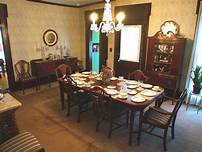
One thing I found fascinating about the home was that there wasn’t the usual rope barriers to off limits areas in the House. This was especially puzzling… Our ranger explained that they wanted to make it seem more like a home than just a Museum (which it was, and it seemed more authentic). The dark paths on the carpet (that you can see in the pic above), are the walkable parts, while the lighter carpet areas cause a small buzzer to go off should someone step on it (a mistake that I actually did, though only slightly and by accident).
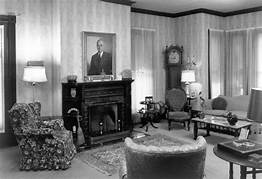
The Trumans were somewhat more protective of their private life than other presidents post-service, particularly in their older years. Even if one had the fortune of entering the home, mostly they would only see the entrance hall. Still, many dignitaries often came to the home to visit the president, from Winston Churchill, to Lyndon Johnson.
Speaking of LBJ, the Truman home reminded me a bit of the LBJ ranch. Both presidents were scorned by a large part of people because of their controversial decisions, and retreated into their special homes in their familiar settings they had known for decades. Both of their reputations have somewhat improved over-time of course, but while LBJ tried to ultimately hide away from the world in his ranch (except for his Library’s affairs in Austin), Truman preferred to remain a part of the community, and one could even meet him on one of his daily walks to the Truman Library, where he had his own office.
Oh, and around the corner from the house, was the garage, and one of his cars was still inside!
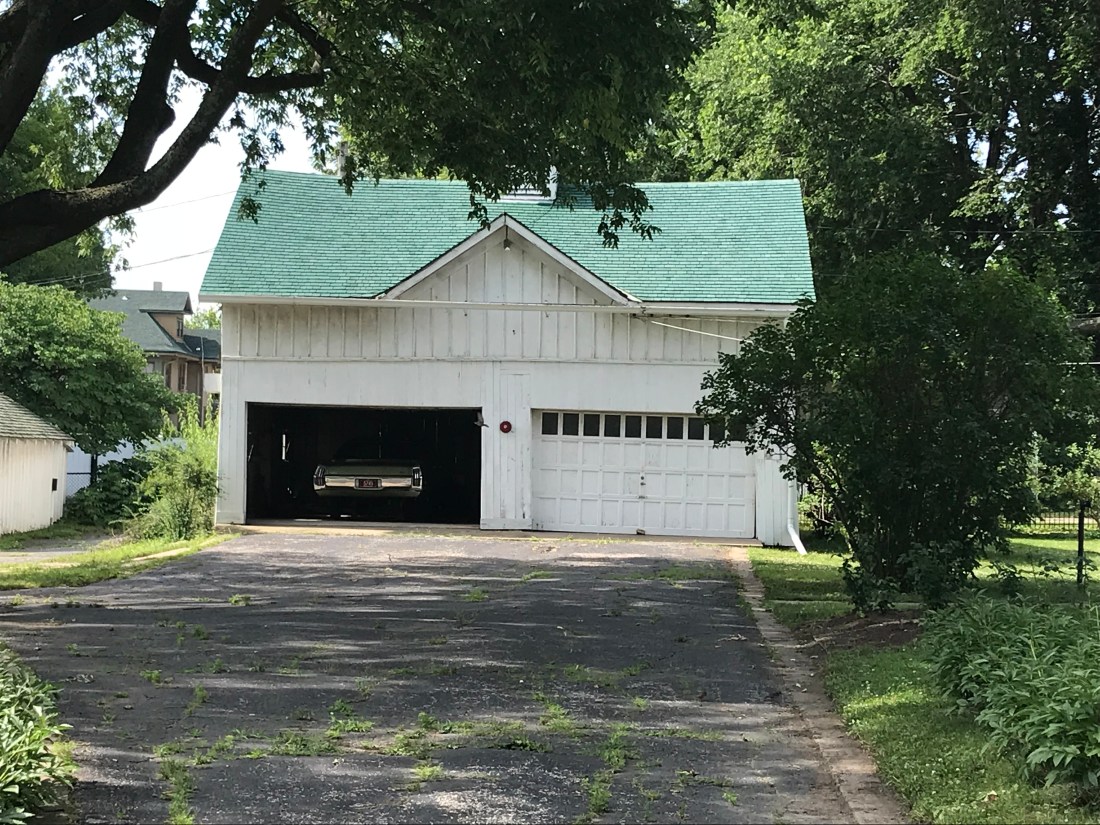

Truman having such a common car makes him seem more level with us doesn’t it?
Harry S. Truman Presidential Library and Museum
Leaving the House, we drove along the path that Truman would walk to the Library, and entered the campus.
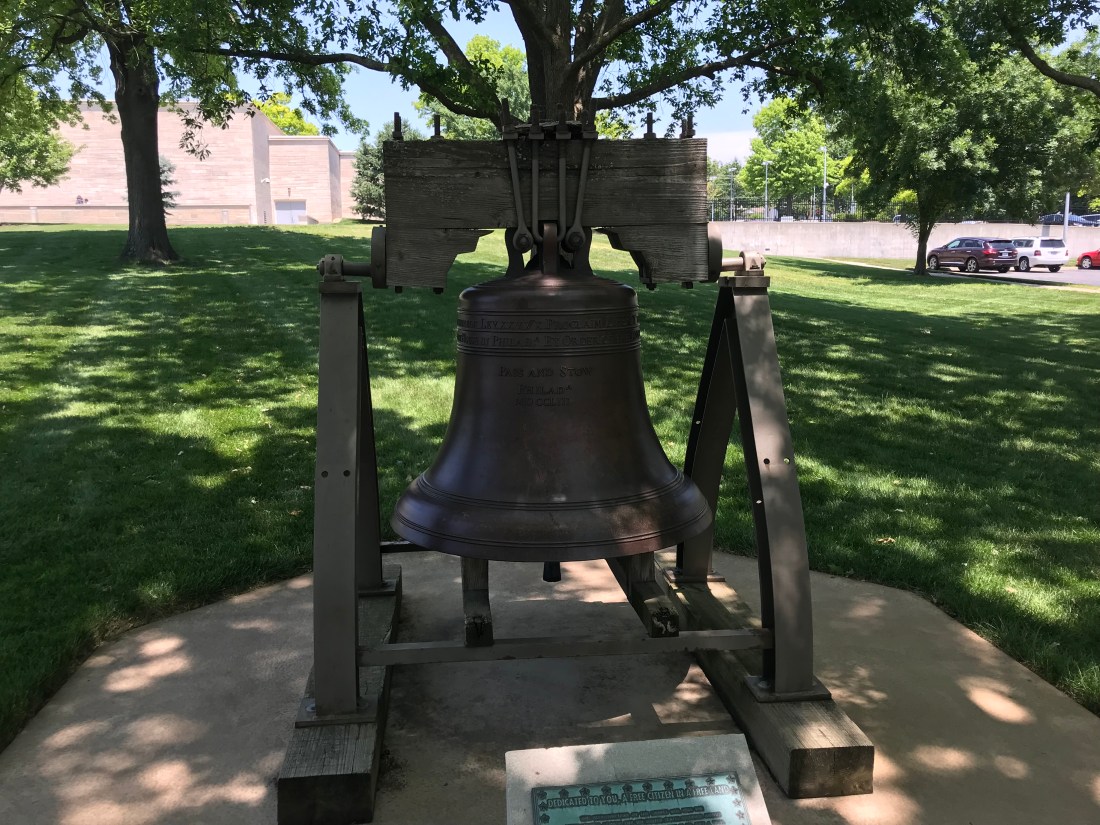
While there, we found a replica of the Liberty Bell! This was one of 53 copies presented to each state. The Texas one rests at A&M University in College Station.

The library is a ring of a facility surrounding a central courtyard. So, we went into the visitor center, and got the third stamp of our trip! (Editor’s Note: The Harry S. Truman Presidential Library and Museum is currently closed for renovation, where it’s exhibits and front facade will be updated. It is slated to reopen in Fall 2020).
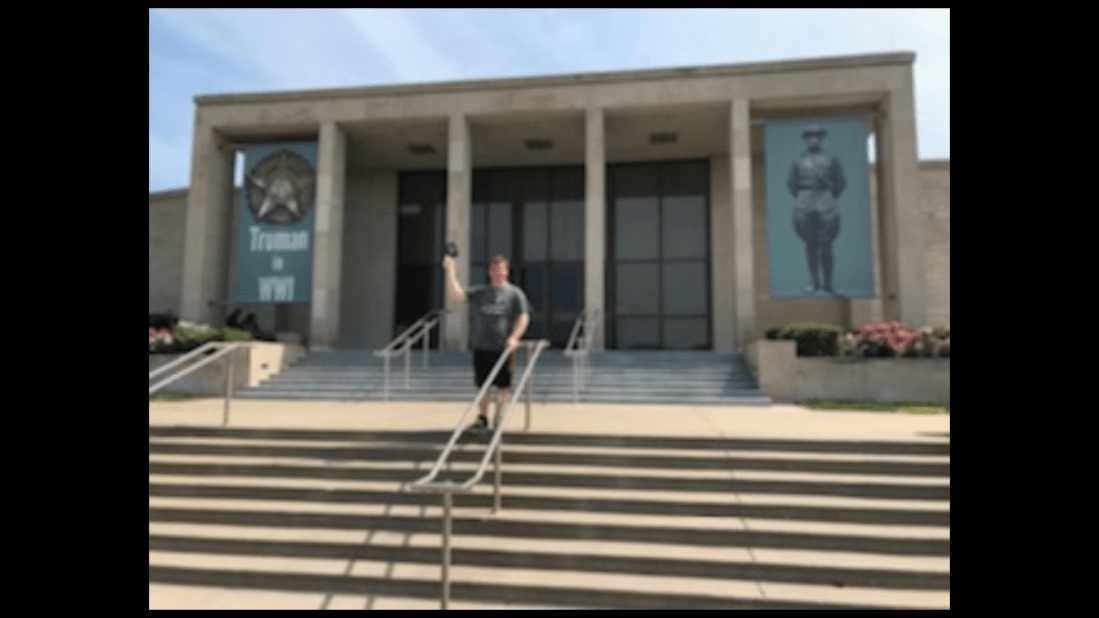
Going through the exhibits was interesting…
Harry Truman (The S didn’t actually stand for anything by the way) was certainly a man of many vocations. He was a piano player, farmer, the former owner of a Haberdashery, and used to have worked in a bank… call him a “jack of all trades” if you will. Regardless, he didn’t do well in any of these occupations professionally.

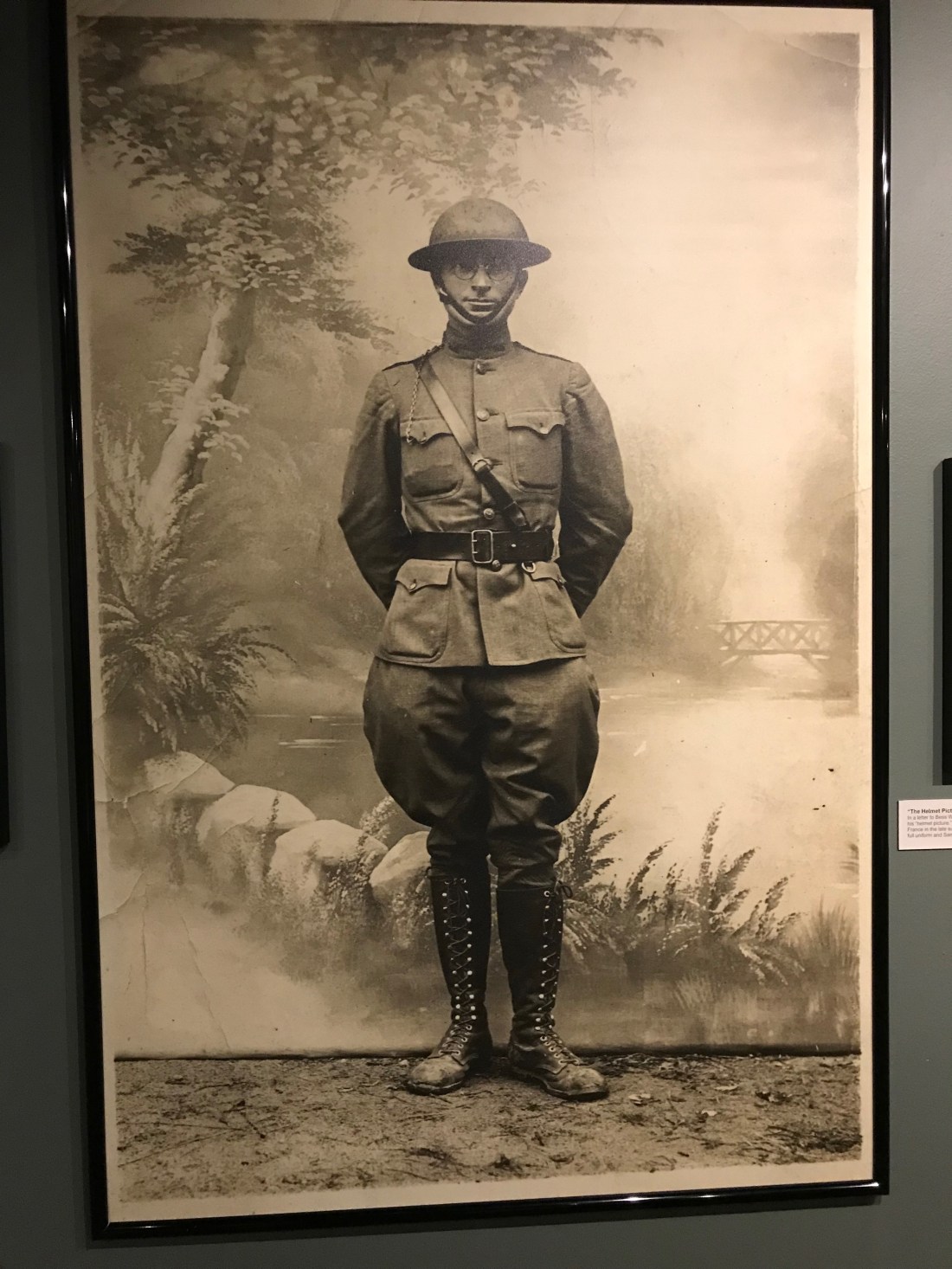
Going through World War I as a soldier on the main front, he learned of the horrors of war, which gave him further drive to find solutions to whatever challenges he faced.
I was a bit caught up in the exhibits rather than taking a decent number of pictures, so I apologize for that. But i’ll tell a bit of Truman from the exhibits we garnered.
Raised by powerful political friends from County Judge to U.S. Senator, Truman garnered a reputation of Integrity and loyalty, and was considered a great candidate for the Democratic Vice-President for incumbent Franklin D. Roosevelt, which he became. Only months after he was sworn in however, FDR died unexpectedly of a Stroke in Warm Springs, Georgia…

Swept into the office on this very Bible, it was Truman that made the difficult decision to drop the two atomic bombs upon Japan that put a swift end to World War II. While the goodness of the decision is still in debate to his day, it can be considered that it helped prevent a prolonged war against Japan, but began an arms race and a Cold War that would last for nearly half a century… It was Truman and his “Truman Doctrine” that not only formed the basis to contain the spread of Communism, but also provide aid to those free nations that opposed the oppression of the Iron Curtain.

Truman managed to win the election of 1948 against Republican George Dewey, which many thought Truman was going to lose, including the Chicago Tribune. This picture is probably the most famous election picture of the 20th century, where Truman held up the false headline.
Truman continued to do good for the country, including desegregating the Armed Forces, Helping to found the United Nations, and recognizing the newly formed nation Israel as an independent state.

He even survived an assassination attempt by two Puerto Rican Nationalists that wielded these two handguns, but thankfully, Truman escaped harm.
Despite all this, Truman faced serious backlash from critics. The pro-segregational South panned him deeply for his Civil Rights initiatives (he was the first president since Lincoln to truly work towards Civil Rights), confusion and distrust ensued due to the start of the Korean War (along with General Douglas Macarthur’s dismissal), and his failure to slow down the Red Scare of Joseph McCarthy. He left to return home in Independence, with one of the lowest approval ratings in American History.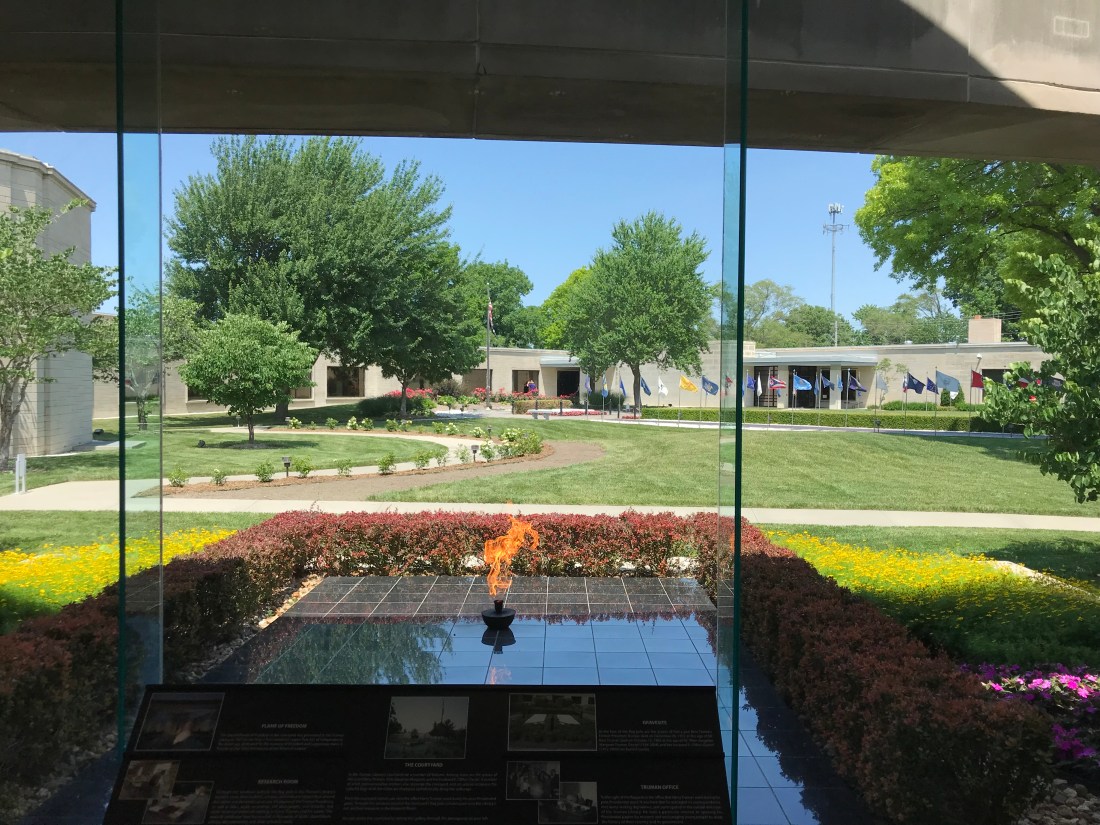
We were surprised to see an eternal flame in the final room. It’s awfully reminiscent of Kennedy’s Gravesite in Arlington. Still, I think its proper for Truman, as his times were very turbulent, yet he fought for the sacred fire of liberty, like many others. Beyond in the courtyard, you can make out the gravesite of President and Mrs. Truman.
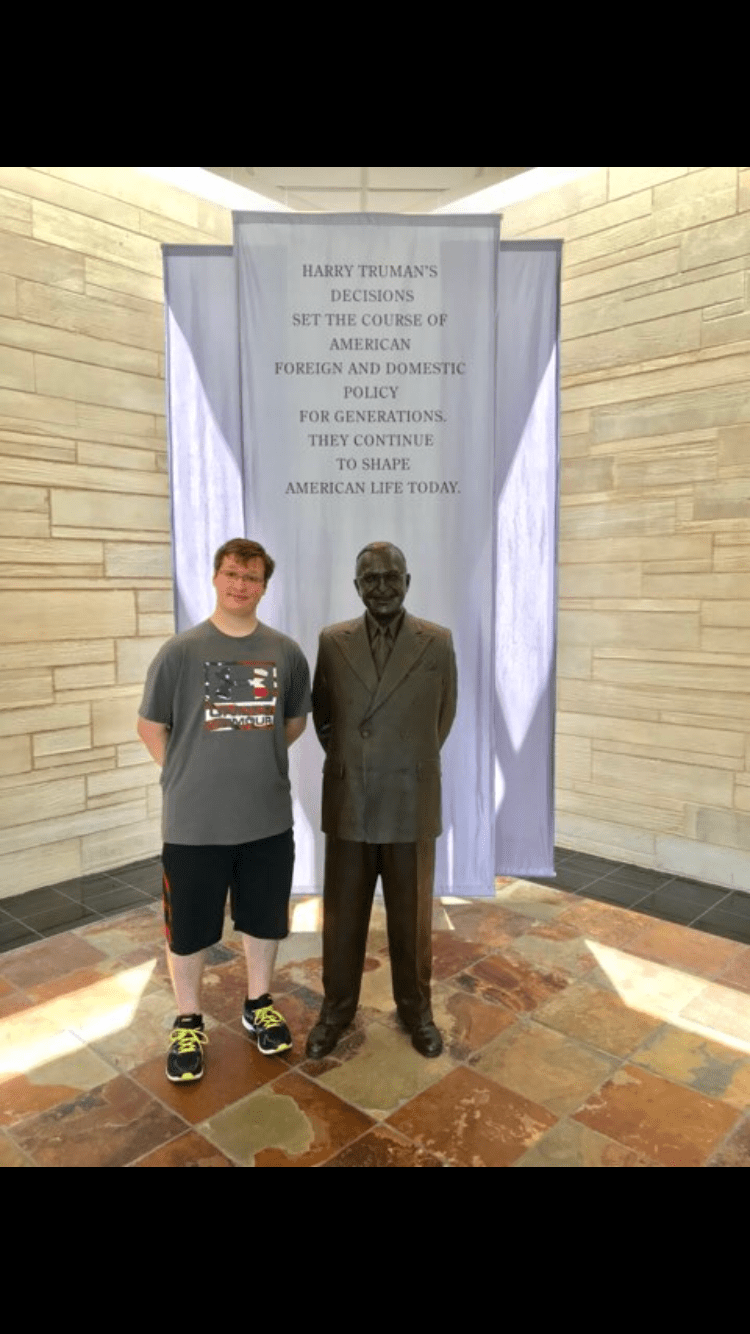
Behind the spot where I took the picture of the eternal flame, was a life-sized statue of Truman (I was actually taller than him…). With those words inscribed on the pillar behind us, lining the statue up with the eternal flame outside is very unique, particularly at night, which i’ll show right now!

At night it’s easier to see. No, I’m not this good of a photographer, and no, its not my picture, since it was taken at night.

As you’ve probably guessed, we’ve entered the courtyard at this point.

All 50 states play tribute with their flags (Texas is the first on the left in the picture above.)
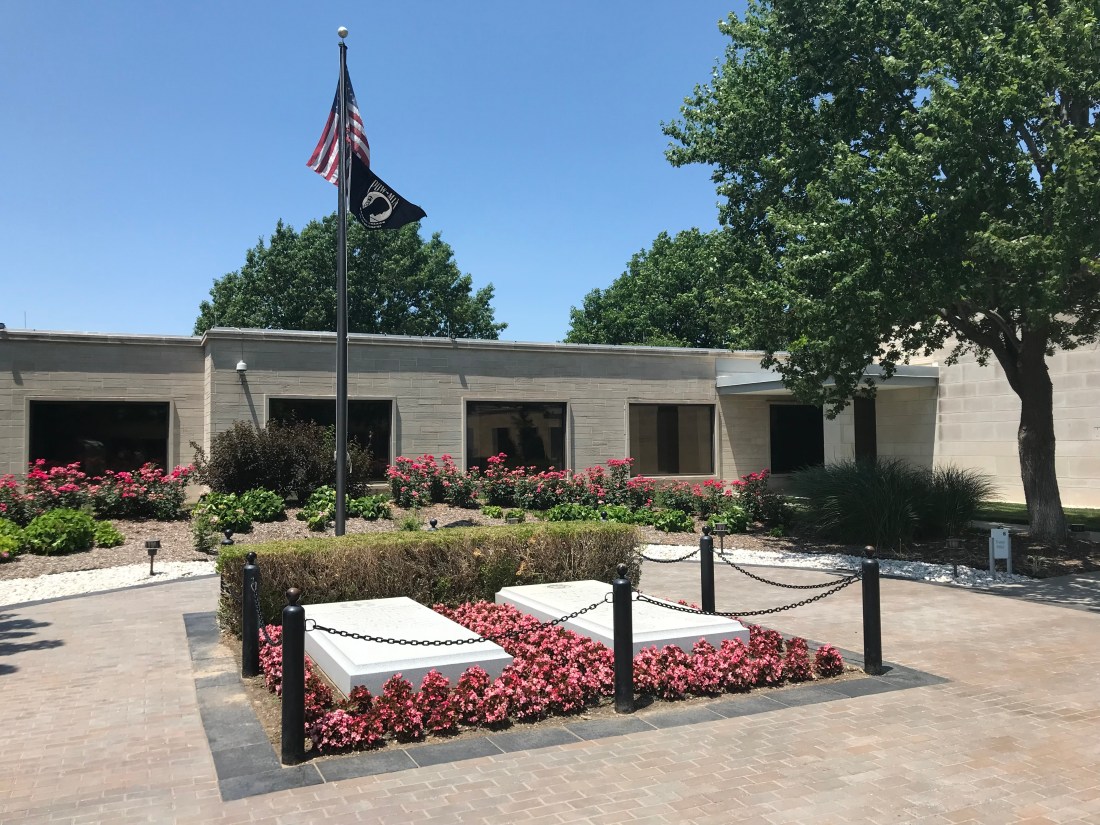
And so, we come to the gravesite, surrounded by lush flowers and plants.
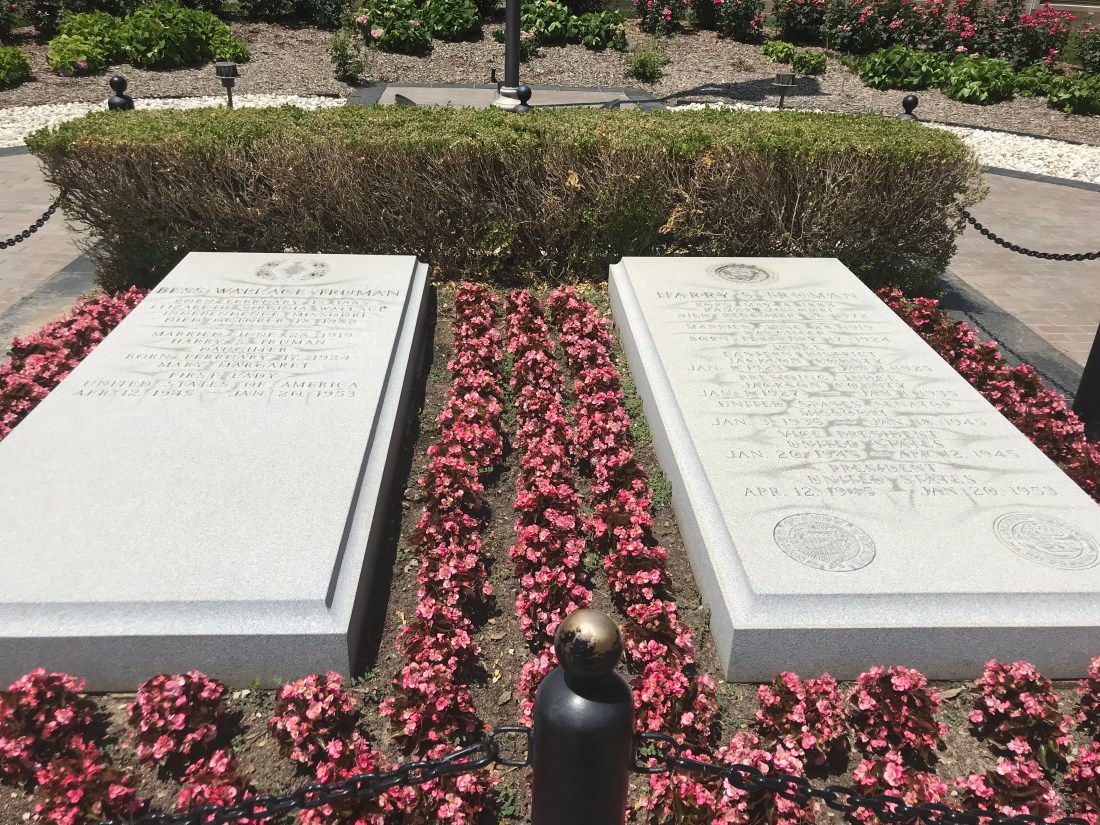
The water that you see on the graves was from the recent rain.

Wow… he did a lot!

Yet another quiet spot. It’s really touching.
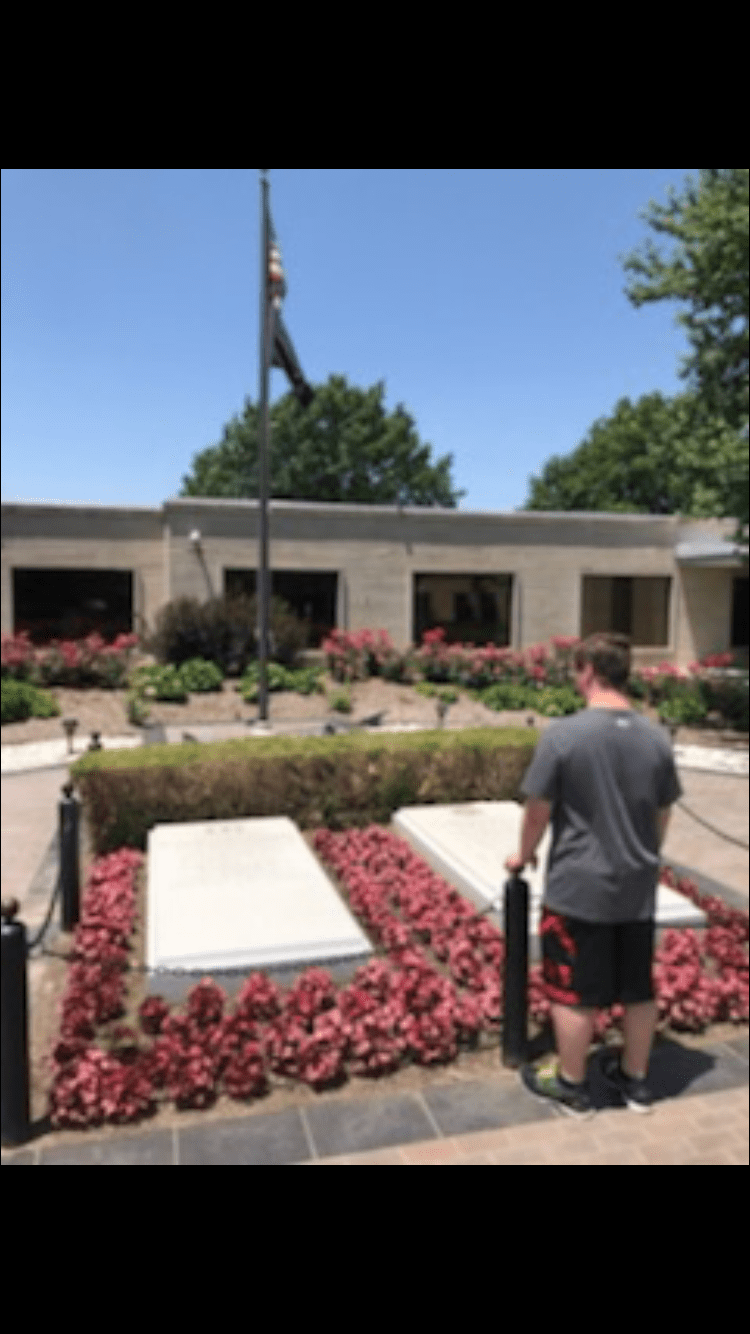

At the end of the long row of hedges and across from the gravesite is the final resting place of Margaret Truman and her husband, Clifton Daniel. Margaret was the President’s daughter if you remember.

Well said Harry… Well said.

His personal office still was on display, which he regularly used in retirement up until shortly before his death.
President Truman was closer in association with his Library than most other presidents, and thus he had his own office here! He would sometimes give his own tours to visitors, and even reply to telephone callers, saying, “Your speaking to the man himself.”
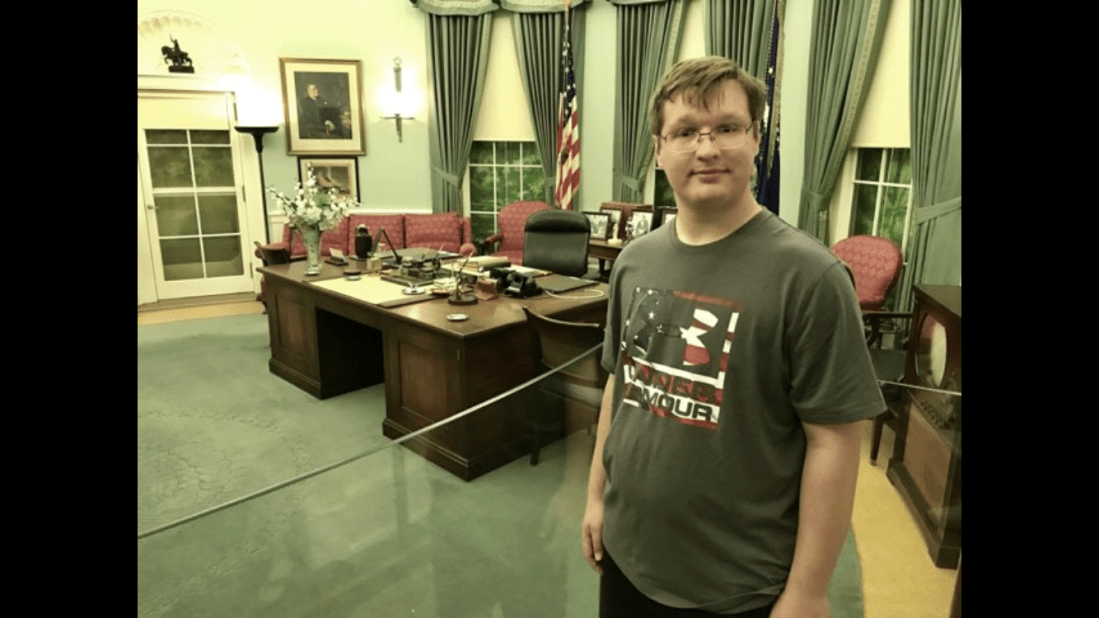
Most Presidential Libraries have replicas of the Oval Office during their time. Truman’s Library had one as well of course, which is inaccessible, contrary to some other libraries.
To truly understand Truman, I think that his final and most famous item says it clearly enough.
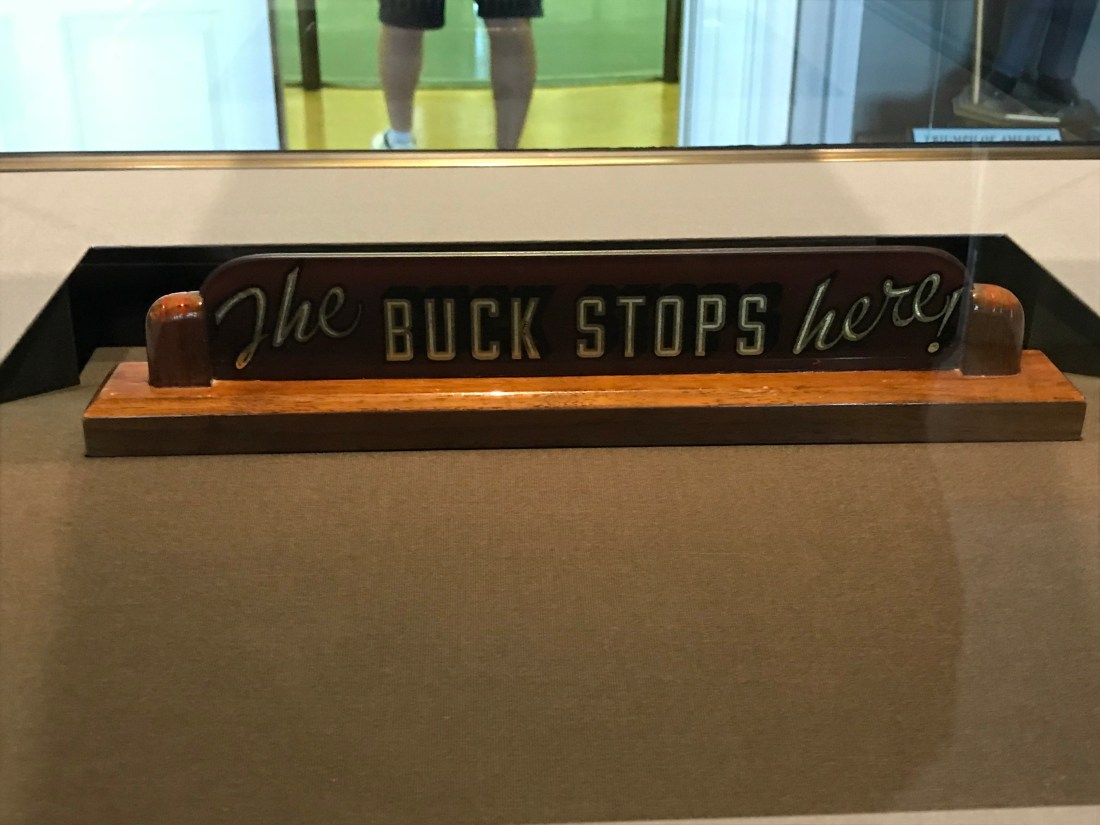
This famous quote derives from the statement “Pass the Buck”, which means to avoid responsibility. This sign perfectly defines Truman’s accountability and integrity, even in times of scorching controversy. Truman did what he thought was RIGHT, not what was EASY, even if it meant that his popularity would significantly decline, or that he would be often ridiculed. You got to admire that. Now, through the fires that put him to the test, we can see that his loyalty to what he believed in still benefits us to this day. So whenever you see proud veterans of the armed forces free from racial prejudice, where you see that our way of life is preserved for us to enjoy, and whenever you see that the principles that we are founded on endure, thank the fiery farmer from Independence that helped to see our way through, even when we could not.
World War I Museum and Memorial
After getting a very nice collector’s coin from the Truman Library, we headed back west for about 20 minutes back to Kansas City, to see the WWI Museum and Memorial. Suffice it to say, it was pretty easy to spot.
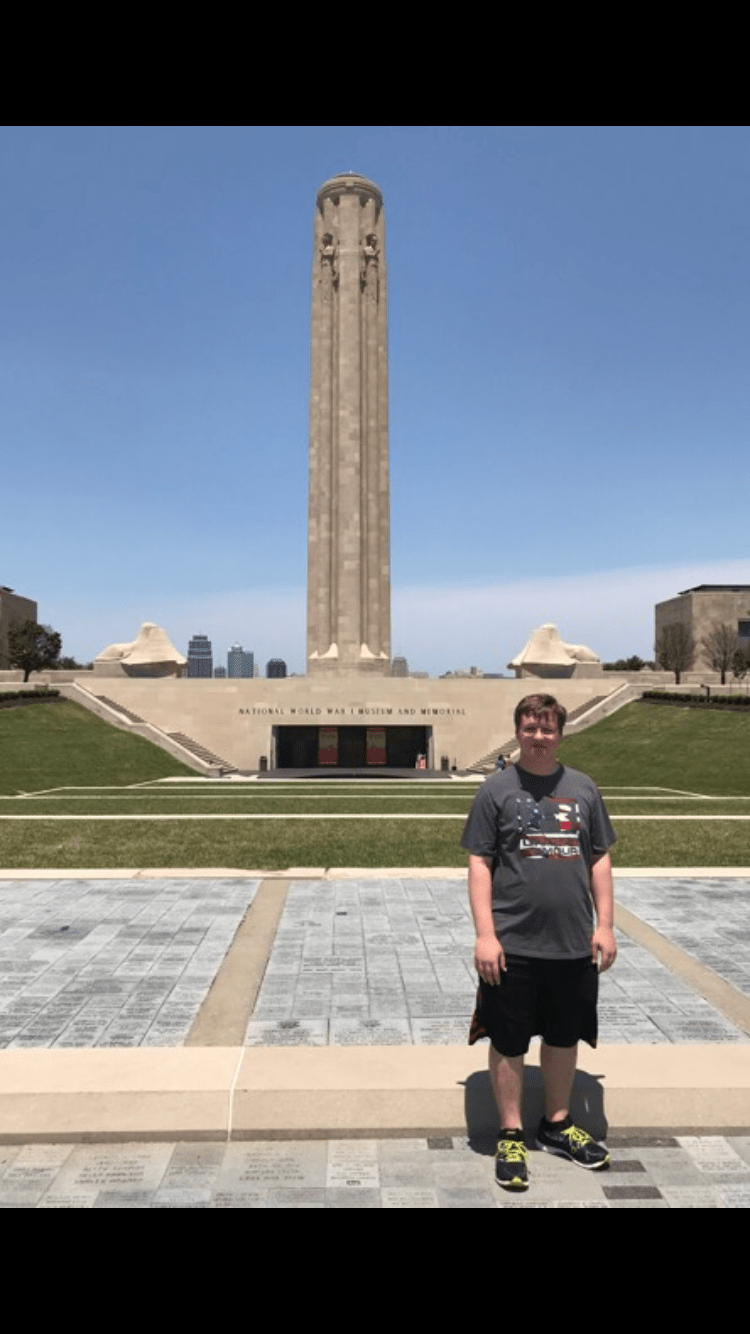
Many young students today are taught the trials and tribulations of World War II and the numerous wars after, but few remember the great sacrifices made in the “Great War”. It’s hard to believe that its been exactly 100 years since the battles in Europe continued to erupt for four long years.
Anyway, to tell you a little bit about the memorial, it originally wasn’t a National Museum, but a local Memorial to commemorate the veterans hailing from Kansas City that gave their lives to win the war. This impressive memorial was commissioned and built, and at it’s dedication, many famous dignitaries were present, including General John Pershing, leader of the American forces during the war, and even then Vice-President Calvin Coolidge. When the National World War II Museum was formed in New Orleans, it soon came to mind that there was no such tribute for World War I, so rather than start a new one, they took the already existing one in Kansas City, and made it into a National Museum. And this was only recently, about 10 or 20 years ago!
As soon as we entered, one feature stood apart from the others…

A large field of Poppies growing on the floor below us… The scale of the entire thing is impossible to capture on camera, not only because it is so big, but also that there was not really a good spot to take such a perspective. Each poppy here resembles 1,000 lives lost in the Great War…and there are 900,000 Poppies in this field. Do the math, and 9,000,000 lost lives are represented here (from all sides of the war)…. the thought is staggering… Poppies were chosen because the flowers found the bloody battlefields to be very fertile places to grow, and they were common sights amongst the field of dead…
Anyway… to help lighten the mood a bit, we ate lunch. For me, a very good Reuben, and for my dad, a special army styled meal in a tin plate similar to what they would have issued, complete with Goulash, a biscuit, and Salad.

Joining our tour guide, we were taken throughout the exhibits, discovering many of the causes of the World War.
For some general background, many of the leaders of Europe in the very early 1900’s were united by bloodline under the descent of Queen Victoria of England, including Kaiser Wilhelm II of Germany, Czar Nicholas II of Russia, and George V of the United Kingdom. Each power was vying for political dominance, resources, and land, and thus, when Austria-Hungary attempted to overstep it’s boundaries taking over Serbia, a Serbian assassin killed Franz Ferdinand, heir of the Austrian-Hungary throne.
As a result, Austria-Hungary declared war on Serbia, which drew the ire of the latter’s ally, Russia, which declared war on Austria-Hungary. Seeking dominance over all, Germany allied with Austria Hungary to make it’s grand entrance, declaring war on both Serbia and Russia, and threatened to send it’s troops all over Europe, including conquering France by traveling through Belgium, a neutral territory, which in turn led to the United Kingdom to declare war on Germany and Austria Hungary….
In short, it was one complete bloody mess.
Going through the exhibits not only described the conditions and equipment of the soldiers, but also showed the raw emotions of how miserable the conditions were…
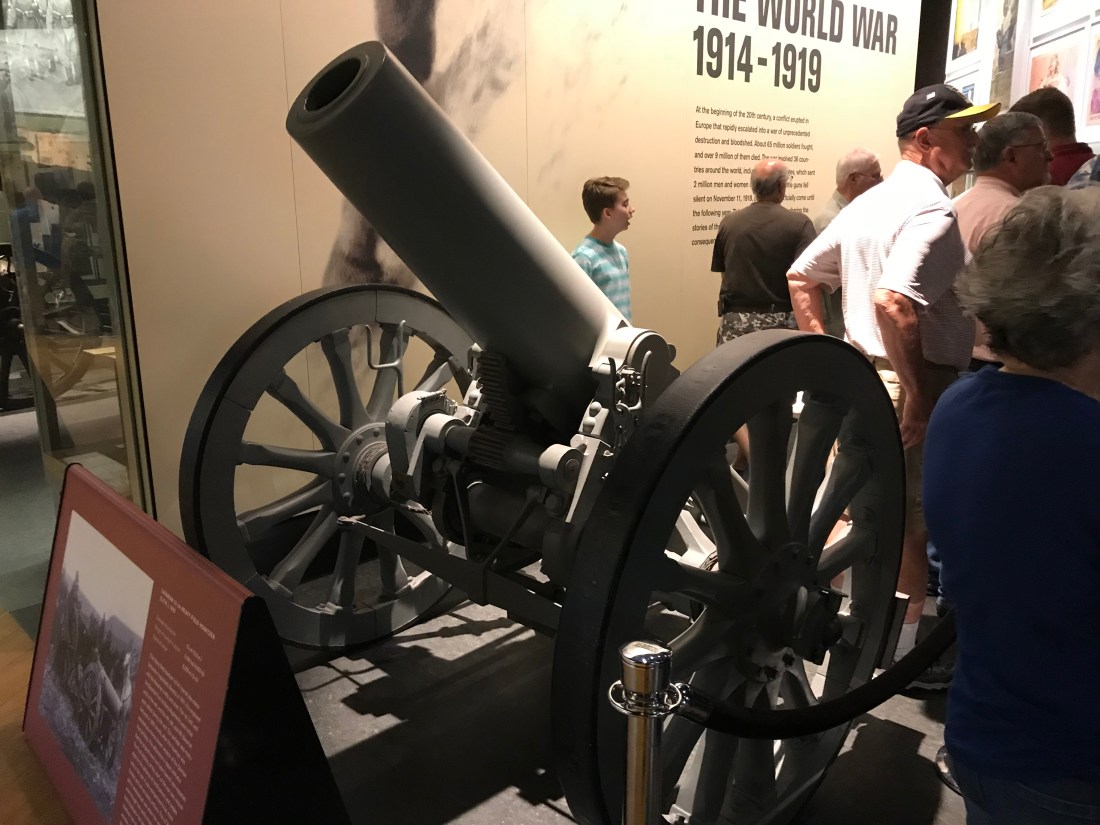
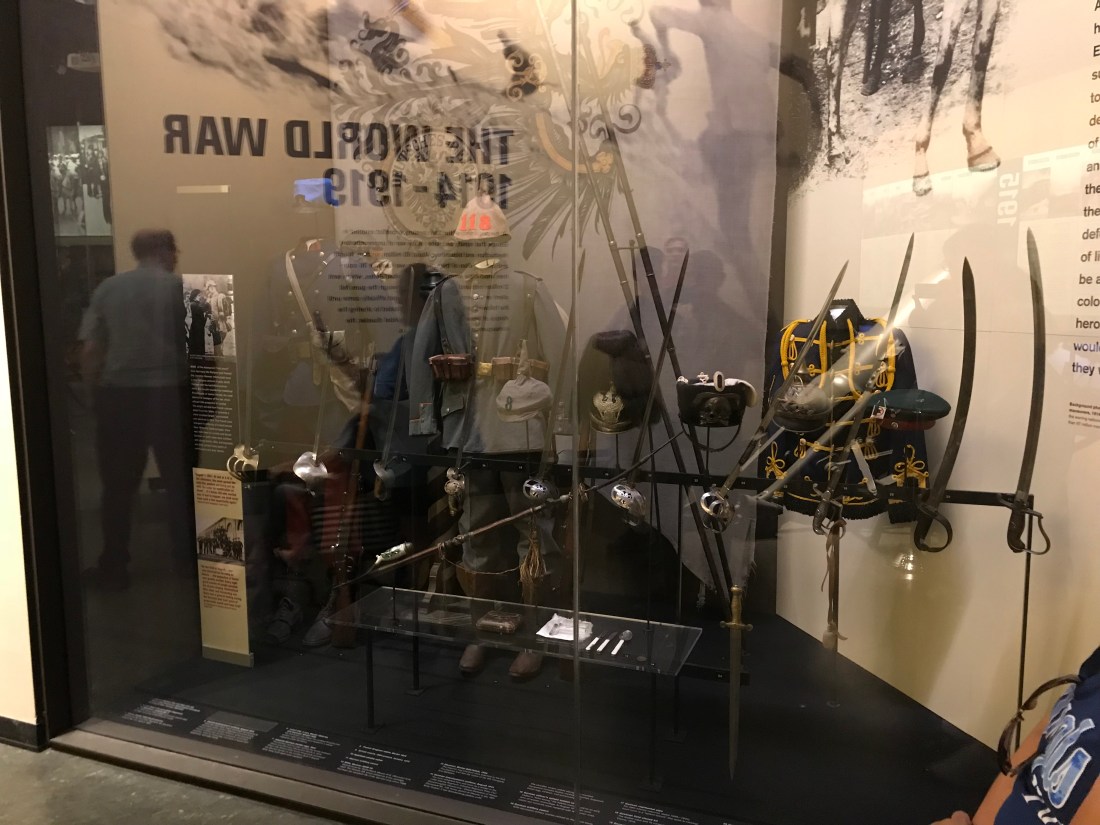

And then, we came to the Trenches…
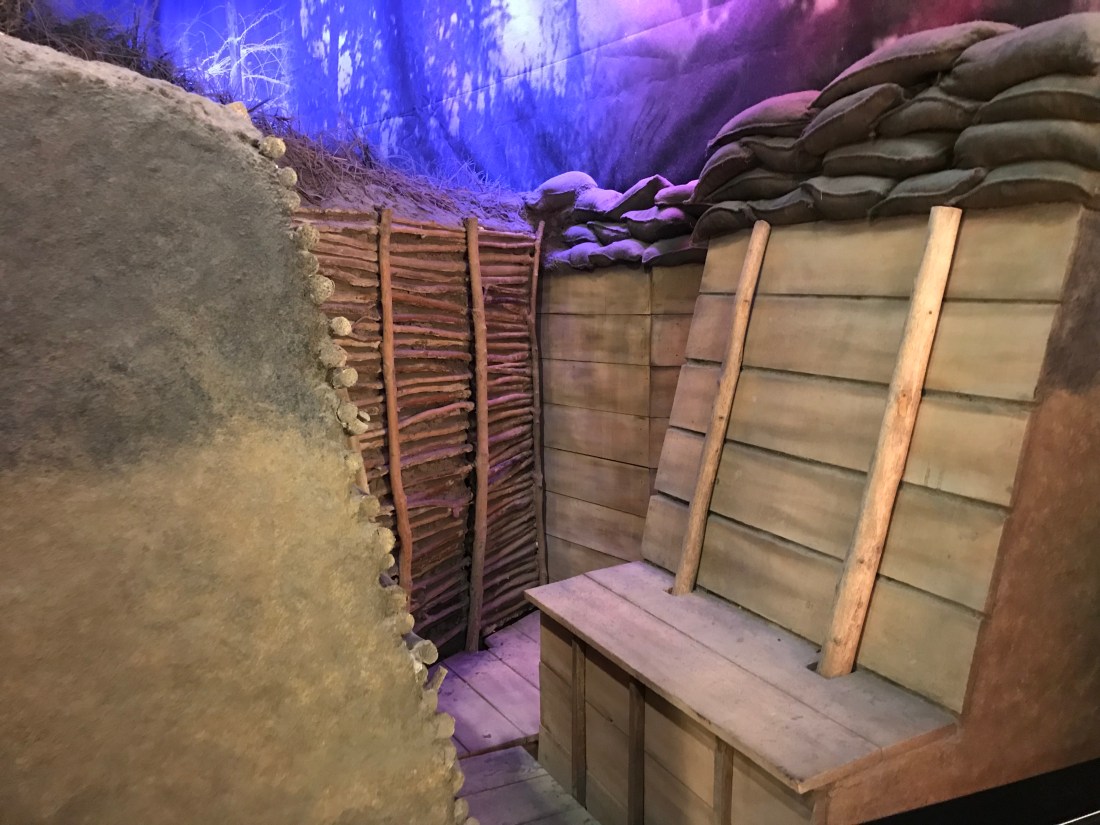
Trench Warfare was first used in this conflict, and it certainly didn’t help either side in preventing a stalemate. The weather was horrible and dreary, mud had a daily presence, the soldiers couldn’t bathe for days, corpses attracted rats in the trenches, and this would go on for four very long years…

Almost all of the items in the Museum were actually used in the War. This is likely one of the largest gatherings of WWI artifacts in the entire world.

That map in the back shows every sunken British Merchant Ship around the UK, sunk by German U-boats. This Unrestricted Submarine Warfare would ultimately prove the doom of Germany by forcing another major player later into the war… the U.S.


When the Lusitania, a passenger ship carrying Americans was sunk, and the Zimmerman Telegram (an intercepted telegram from Germany to Mexico in an attempt for Mexico to attack the U.S. in exchange for lost land) discovered, U.S. President Woodrow Wilson (pictured above) had no choice but to declare war on Germany, saying that “The world must be made safe for Democracy.” It is this decision that ultimately shaped our modern foreign policy, from FDR’s Pearl Harbor Speech, to the Gulf of Tonkin Resolution of LBJ, and the War on Terror under Bush 43.


Women’s uniforms. Women played a crucial supporting role as nurses, Operatives, and scouts.
And so, America became a rude awakening for it’s foes, and with the aid of the other allied powers, Germany and it’s associates were crippled to surrender. Though the League of Nations (the predecessor to the UN) proposed by Wilson was formed at the Treaty of Versailles, the U.S. voted not to join, weakening the league and possibly allowing more sinister threats to fester (which I’m sure, seeing that the “War to end all Wars was not actually true, you would know what came about.)
Back outside, we went to the top and toured two other buildings (pictures weren’t allowed inside.


The former of the two pictures is Memorial Hall, which had very large murals depicting many men who played some part in WWI, among which I noted U.S. President Woodrow Wilson, American General of the Armies John Pershing, French General Joseph Joffre, French Prime Minister Georges Clemenceau, Former U.S. President William Howard Taft, Captain Harry S. Truman (and future U.S. President), even Former U.S. President Theodore Roosevelt, who pleaded to Wilson let him gather a group of volunteers into battle, but who was turned away.
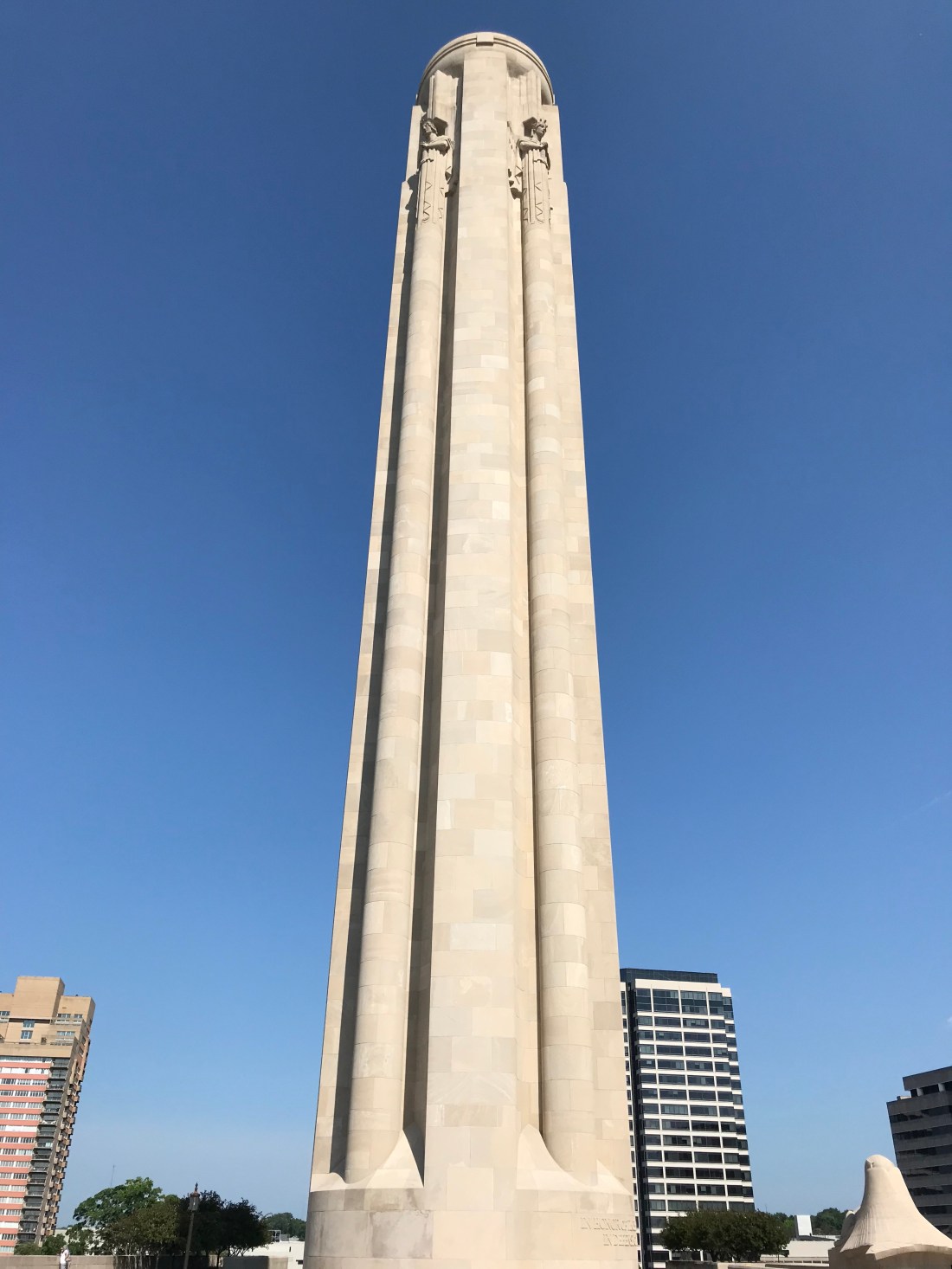
In normal times, the top of the tower would be lit up by night, and is also accessible. However, the tower has long been in disrepair, and thus is not.
Though the battlefields have long laid dormant since the war a century ago, it’s impact still remains today. The sacrifices made by each brave hero are just as somber and resounding as those of WWII, or Korea, or Vietnam, or any other wars that followed it. The battles of the Somme, the Argonne, and Gallipoli remind us that peace cannot be taken for granted, that others laid down their lives so we could live in freedom, and carry on the day. And with their inspiration, we will,
Lest we forget.
Afterwards, we headed north from Kansas City and crossed into Iowa, where we stayed for the night in Des Moines. The next day, we would head to West Branch in the east to discover Herbert Hoover’s National Historic Site and Library.
Thanks y’all, and sorry for the lateness again… take care!
 Mark's Historical Roadtrips!