
Welcome back!
Today, compared with yesterday, was a little less packed, but certainly not detracting! Today we traveled East to West Branch (bit of misdirectional naming if you ask me) to see The Herbert Hoover National Historic Site/ Presidential Library and Museum! Simply put, we were pleasantly surprised with what we found!
After leaving Des Moines, we travelled about 2 hours to find the small town of West Branch, home to a very nice little community, even smaller than Abilene or Independence.

After stopping at the Visitor Center, we went to the nearby area that our 31st President proudly called “his roots.”
Here’s an overview of the site.

And so off we went, starting in the top right region.


Of course, as dad pointed out, the streets would have likely been dirt, and the boardwalks absent, but still, you couldn’t but help but feel that community sense already.
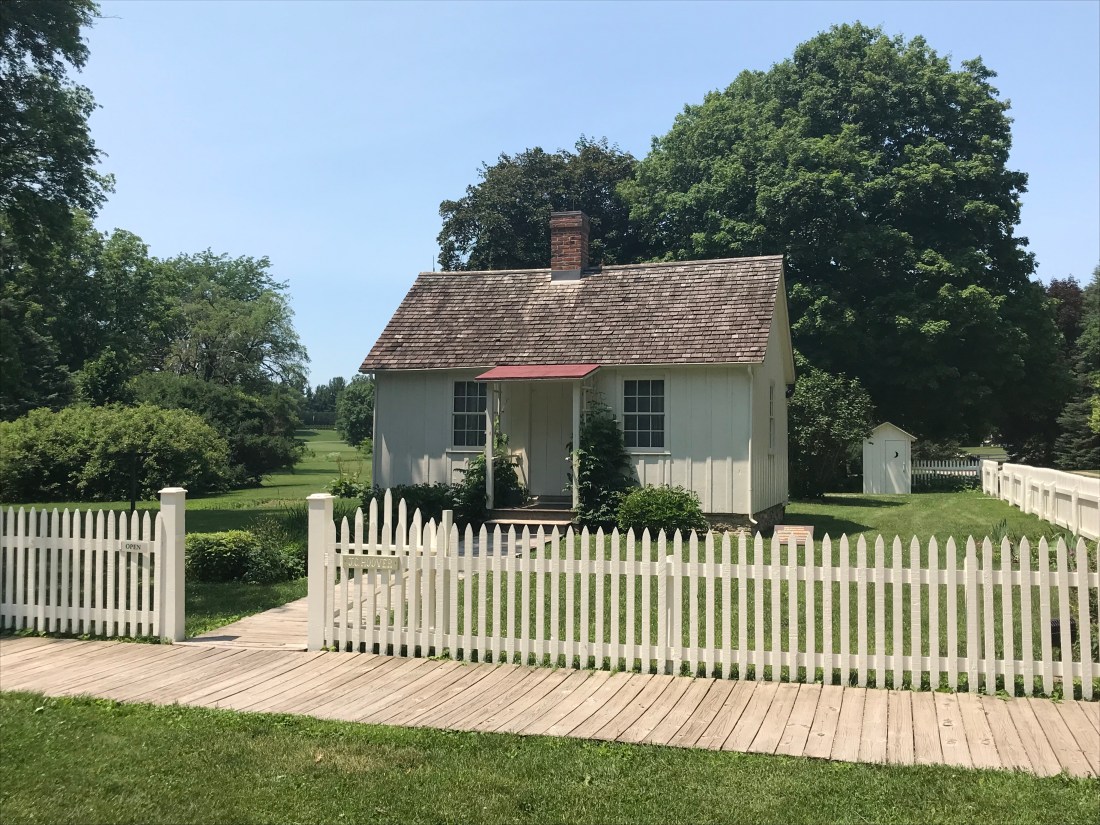
This little two-room house was where Hoover was born (he was the first president born west of the Mississippi River).
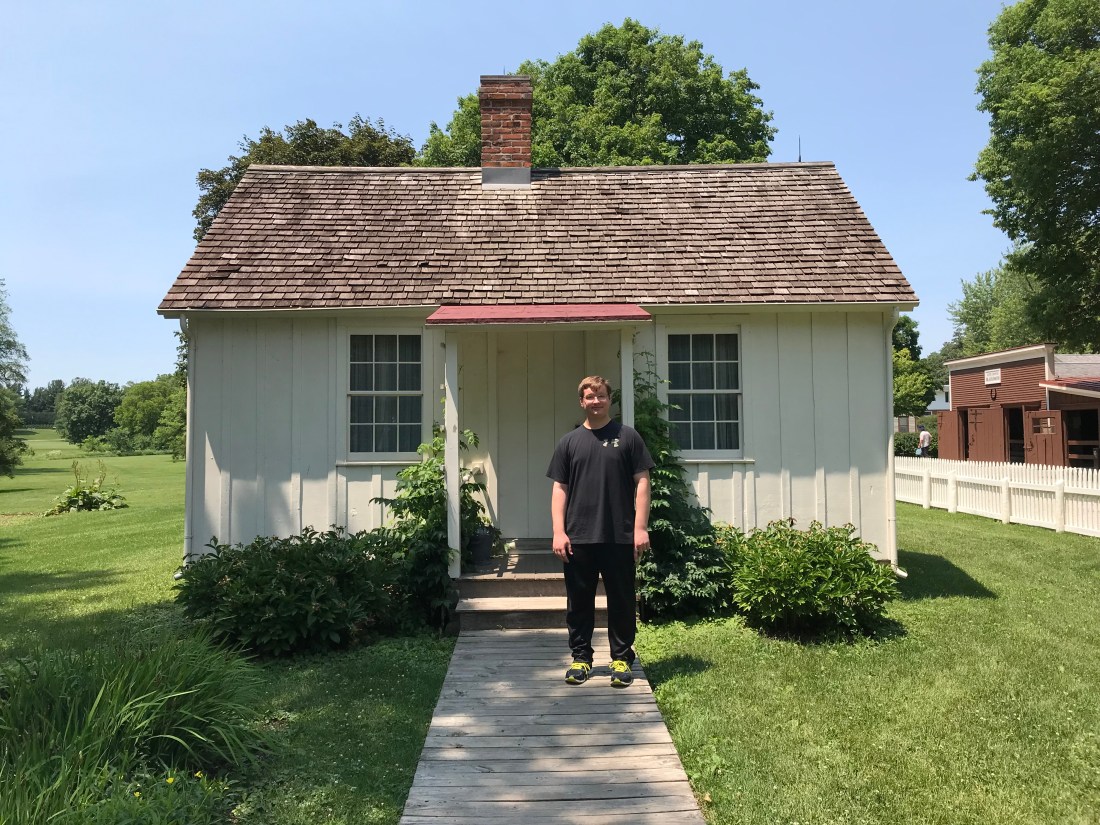

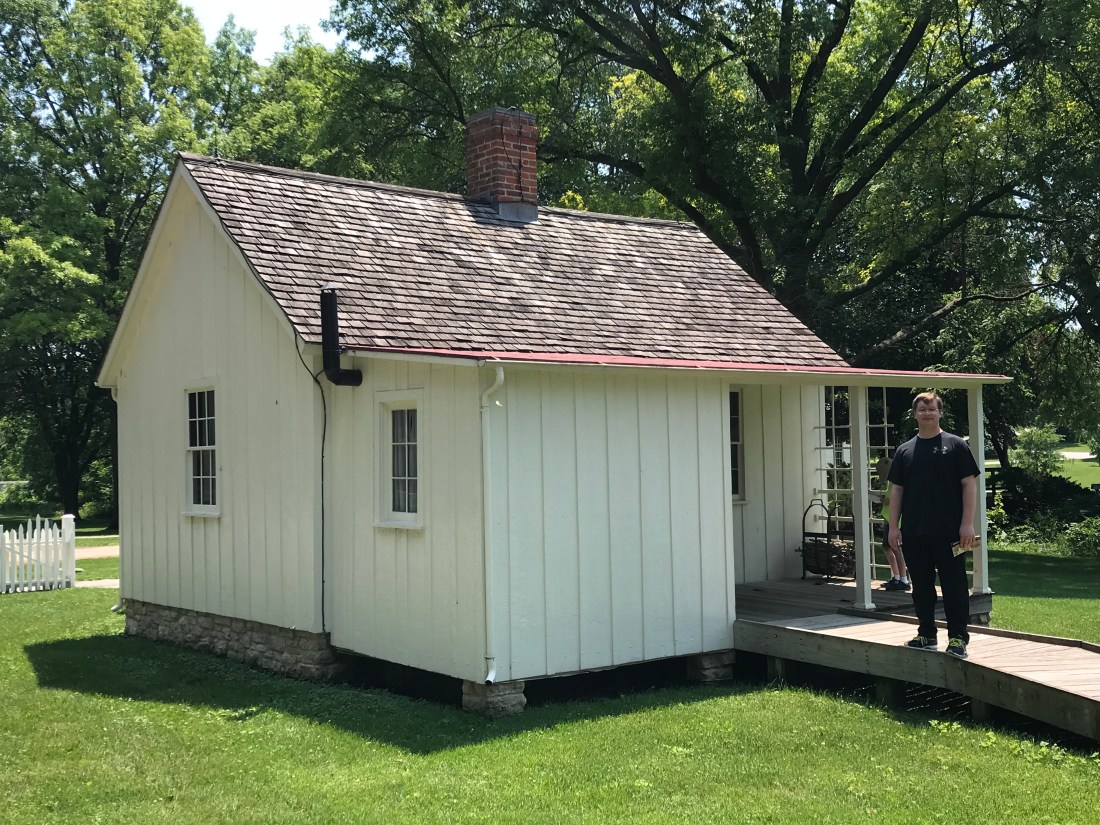 A very quaint place, and probably the main focus of the entire site, other than the Library.

It’s hard to believe that a house like this could house five (Two parents, three children) people in it… but, like all other people born in the west, “they managed.”
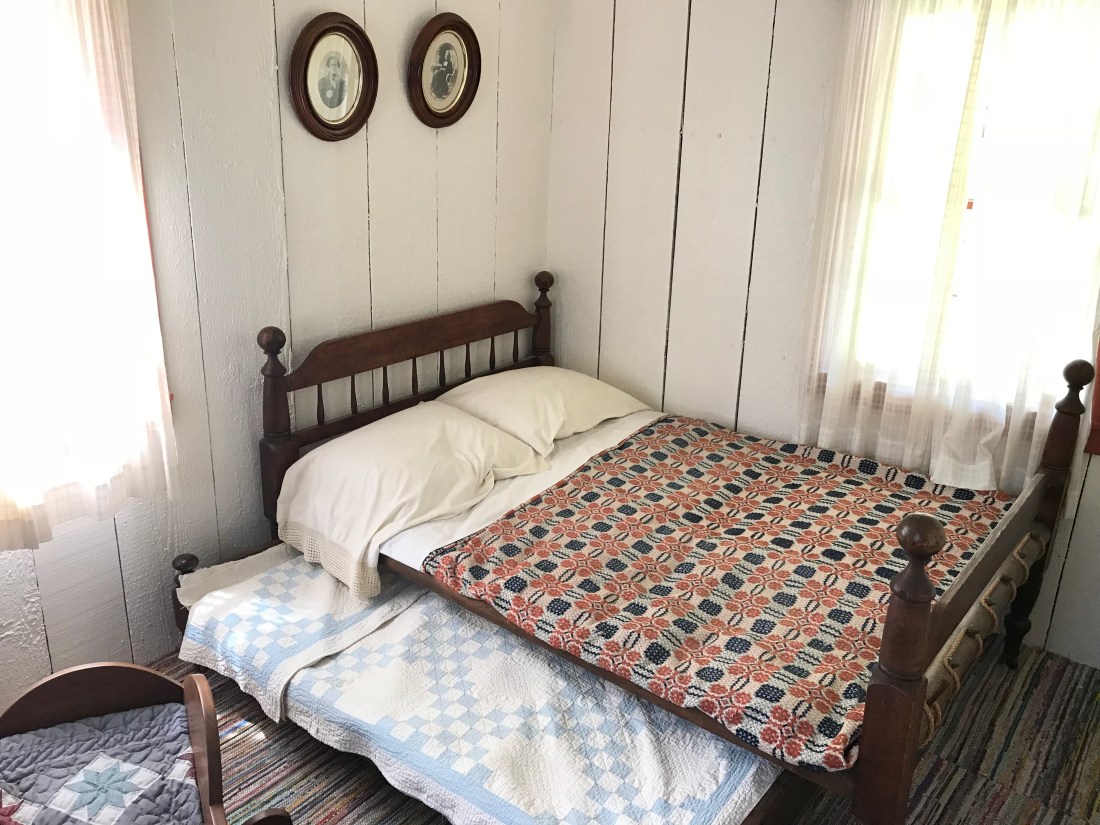
This was the room and bed that “Bertie” (Herbert) Hoover was born in, to Hulda and Jesse Hoover. Notice on the side of the bed the ropes that supports the bed.

The kitchen/storage area of the place.
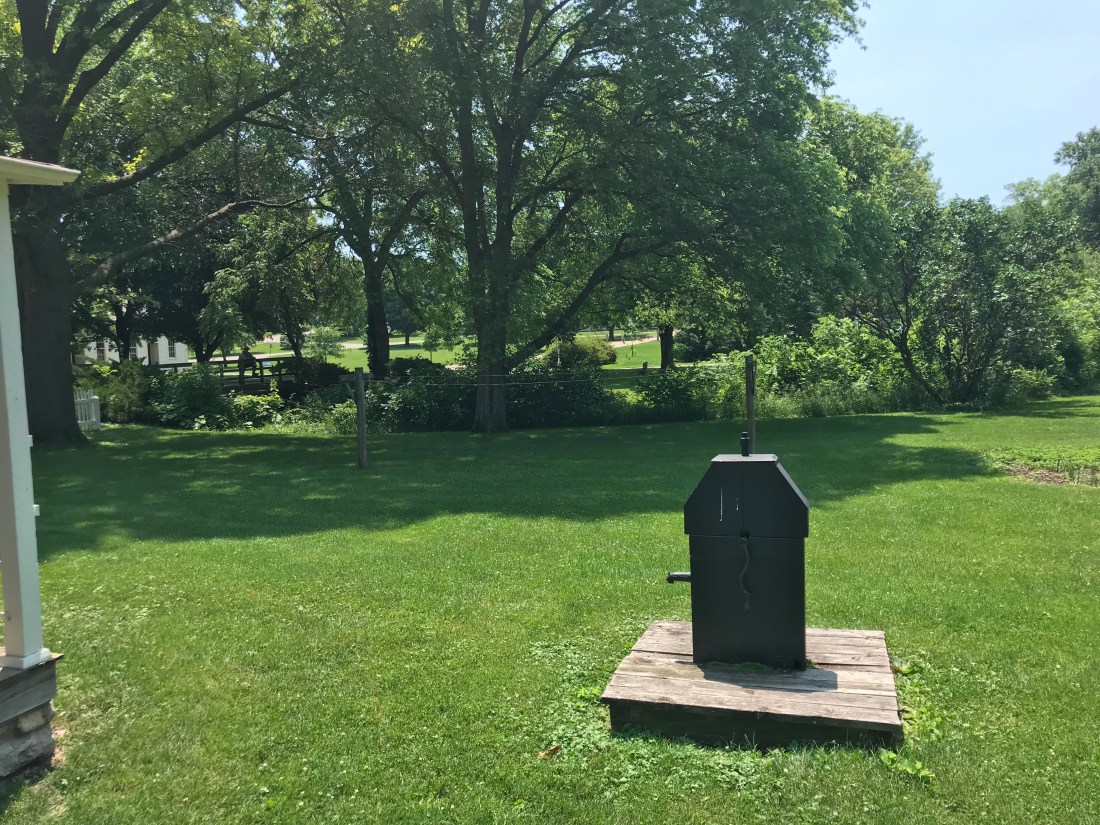
A common sign of frontier living… a water pump, and a clothesline.

Nearby, a sight line was cut throughout the landscape, where upon a hill, we saw the grave-sites of the Hoovers in the distance. There is a reason for this specific layout, but i’ll mention it later.
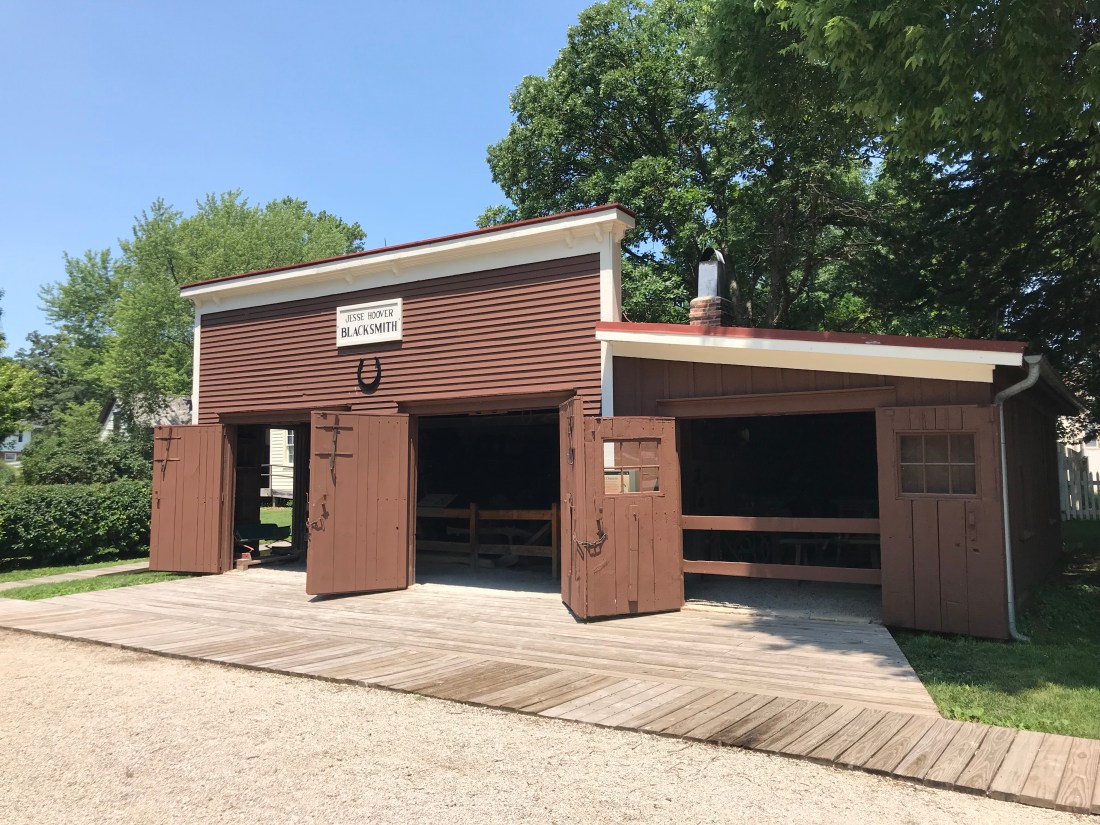
This is Jesse Hoover’s Blacksmith Shop, which he ran for a while until he sold it.
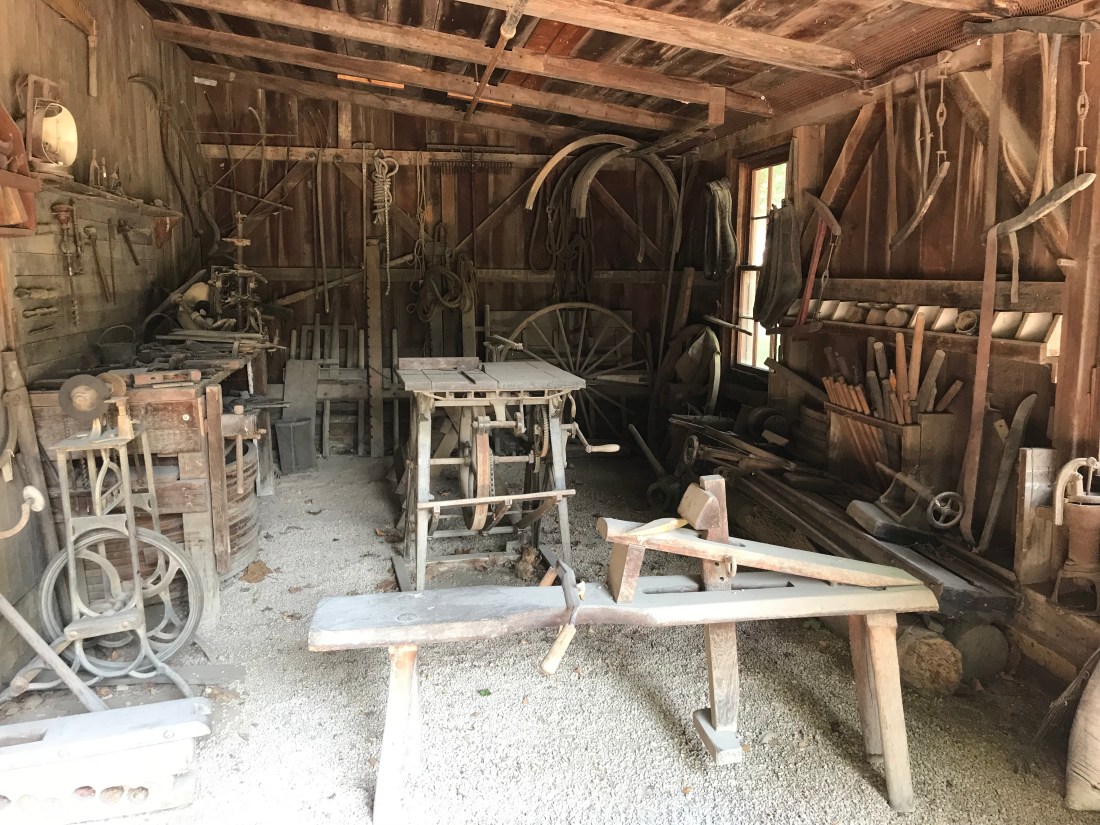
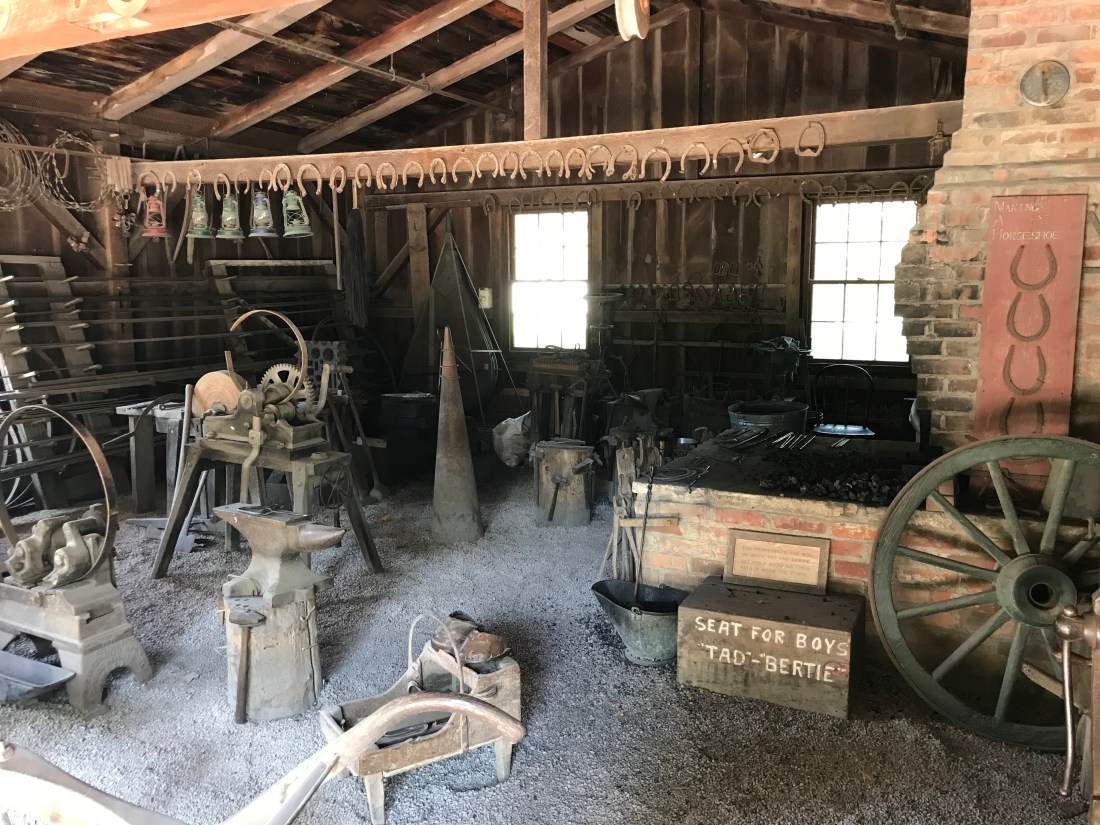
Aside from the many tools and products in here, there would often be a blacksmith actually working the furnace! As it is Saturday though, the Blacksmith was out. The writing on that box there was for “Tad” (Herbert’s brother Theodore,) and “Bertie” (Hoover).
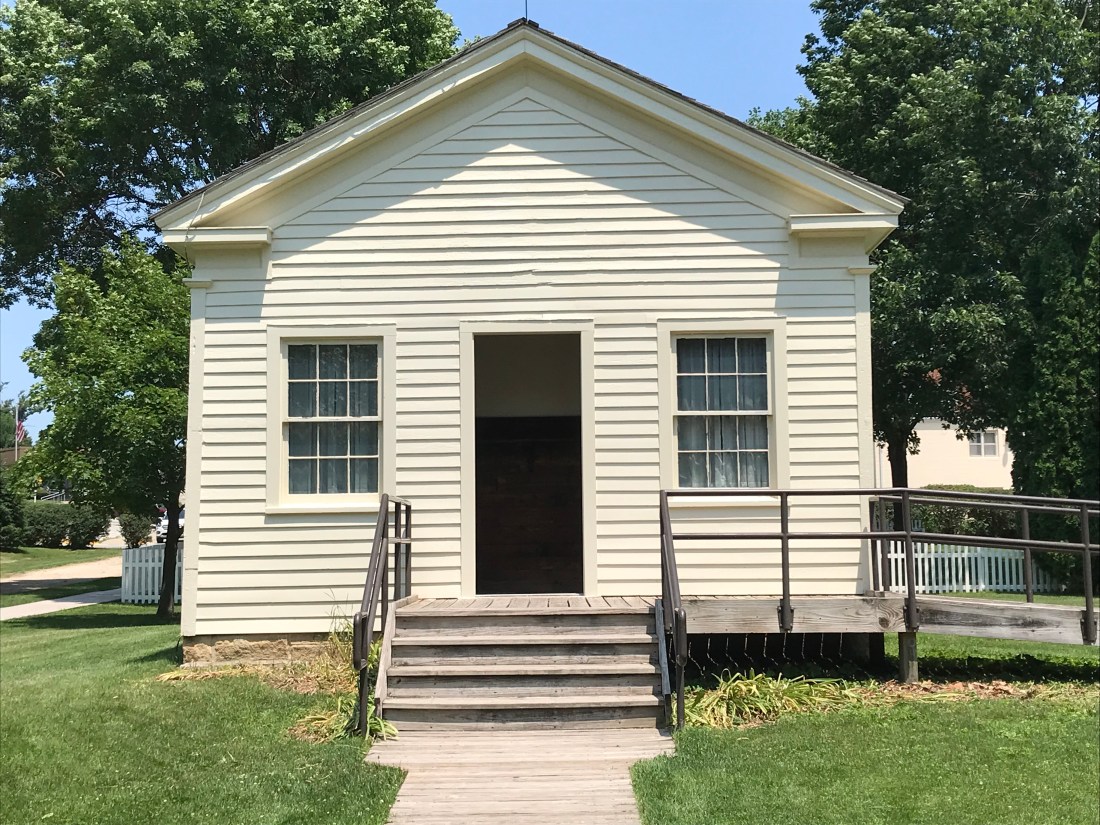
This schoolhouse was also similar to the one that Hoover studied in for a while.

I was fascinated to learn that they didn’t have number grades, but A, B, and C grades. (And I mean by education level, not assignment grades).
There was also the Friends’ Meetinghouse where the Hoovers and others Quaker families met to worship. (We’ve had two Quaker Presidents, Hoover, and oddly enough, Nixon). We didn’t go to visit this one.
Hoover was taught the great values of hard work and helping others by his parents. Work always came first before play, any his love of nature grew from his days chasing wild animals on the hills, or fishing by the river, or studying rocks (which paved the way to his degree in Geology). When his father died however, and his Mother joining him three years later, the children were split up, and Hoover was sent to Oregon to live with his aunt and uncle. With two dimes sewn into his pants, a basket of food, and his oldest clothes, Herbert Hoover travelled west to find his destiny, but never did he forget where he grew up in the hills of Iowa.
And at that point, we got back into the car and drove to the Library portion of our day, detailing his career and later life as a mining engineer, Director of the U.S. Food Administration, Secretary of Commerce, U.S. President, and elder statesman.
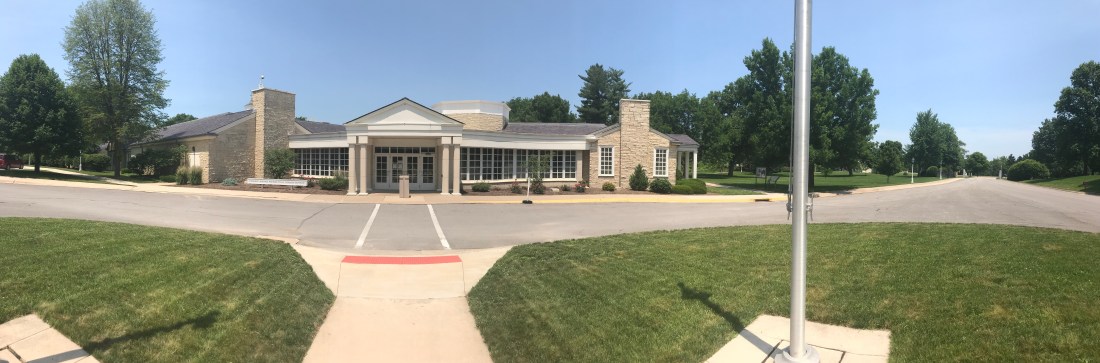
This building seems slightly more casual than most other libraries. I love that every Library has their unique design (I can’t remember if Ive said that before or not).
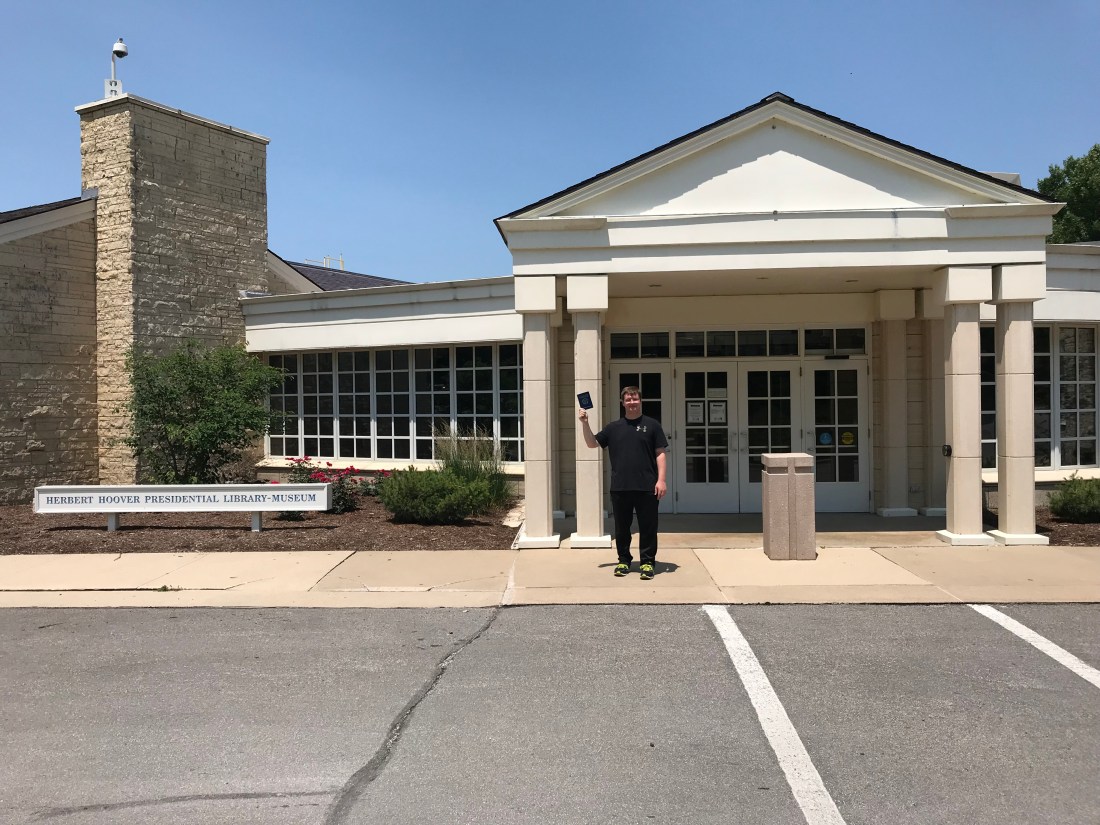
We also got the stamp for this Library! So that makes it… hm… 6 stamps, and 7 to go (Though I’ve actually been to 8 libraries)! Now to wait for the Gerald Ford Museum for the next one…
And into the exhibits we went!
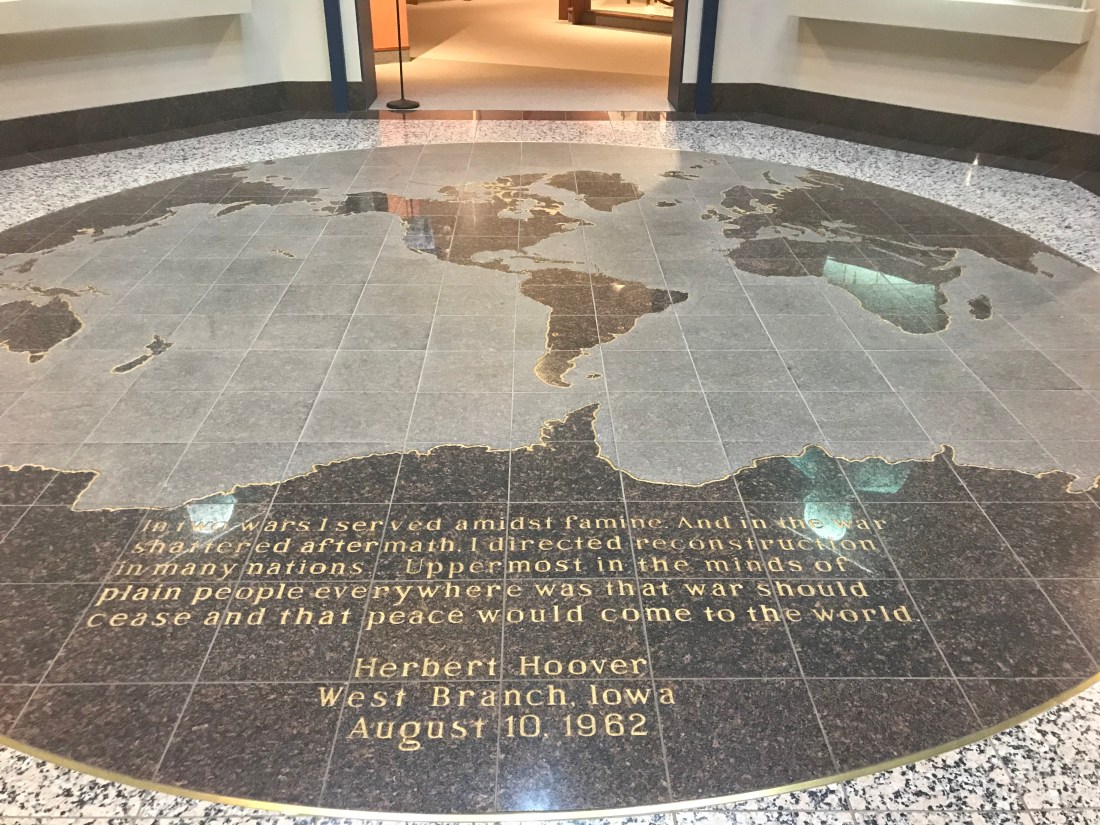
This is the central hub of the Museum, which branched off into the Exhibit Entrance, Exhibit Exit, Temporary Exhibit, and Entrance area.

Hoover attended Stanford University in California, as a member of it’s inagural class, where he developed a fascination with engineering… and Lou Henry, who he married a couple of years later.

He then travelled as a mining engineer to Australia, sporting a fresh suit newly made. Seeing as how the outback isn’t that forgiving when it comes to it’s living conditions, including heat, dust, and other hazards, he ditched the suit. He gained the trust of the Aussies there, and helped to discover a brand new gold mine, which he convinced some London business men to buy. This helped Hoover to become VERY rich, in fact, one of our richest presidents. He didn’t care for money though… his main goal was to become a public servant.

And so he did. His work ethic and progress reached Washington, and President Woodrow Wilson appointed him as Director of the U.S. Food Administration. Hoover helped to not only conserve American energy through creating gardens meant to supply food, (or establish meatless Mondays, or wheat-less Wednesdays), but also sending millions of relief food to starving families in Europe, which ravaged WWI, and recruiting many volunteers to aid in the relief efforts overseas.
One of the best stories that was told there was by a man who was one of those starving children, and had to live on diluted milk and a bread like substance mixed with sawdust. His teacher then gathered the students and told them that another teacher would bring them fresh White Rolls, named”Hoover Rolls”, and explained that it was given by relief teams led by a man named Herbert Hoover. When the teacher came in with the rolls, the aroma so impacted the child, that as an old man, he can still remember the sweet aroma, and that it was one of the happiest moments in his childhood, being served fresh White Rolls.
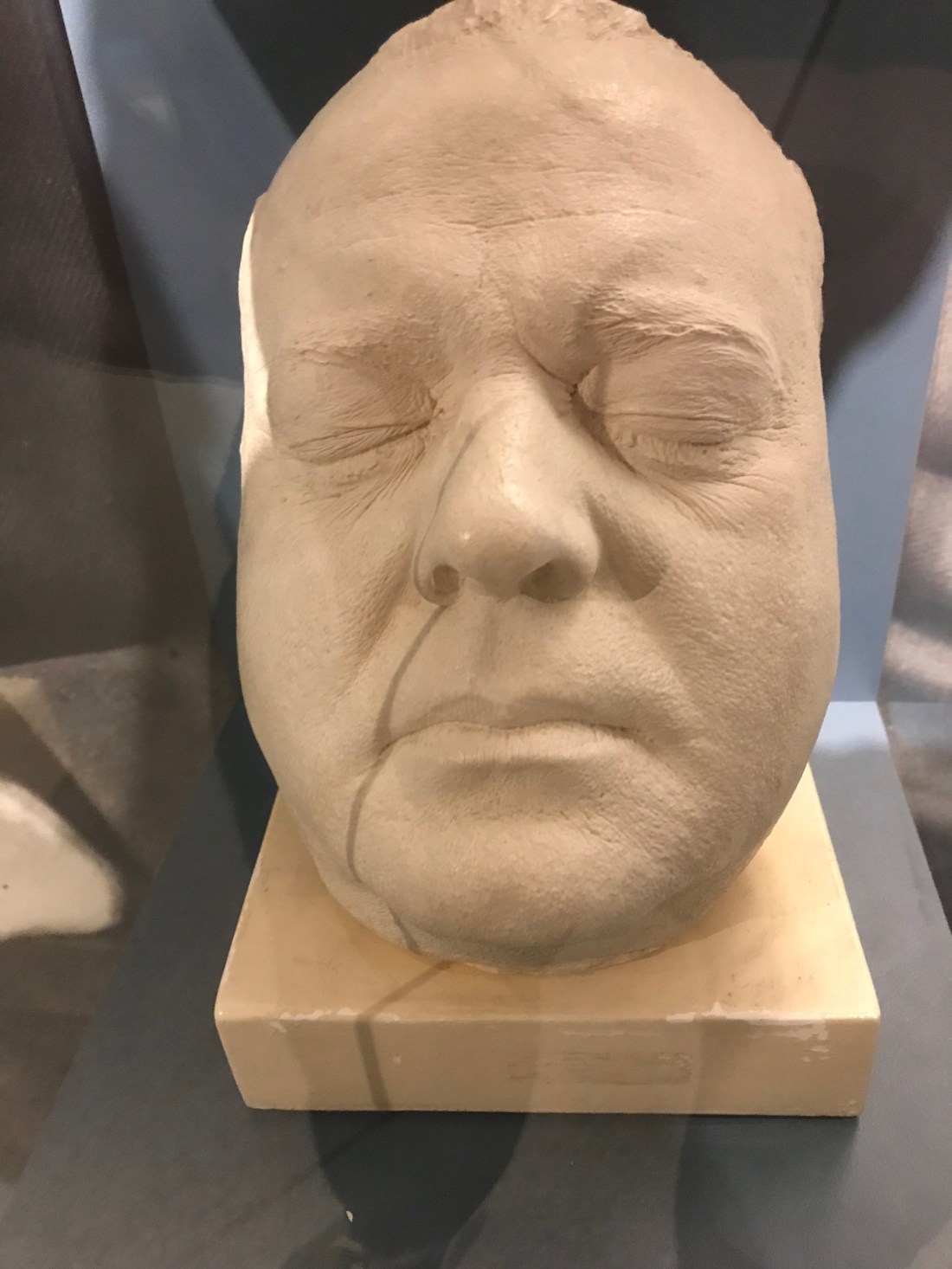
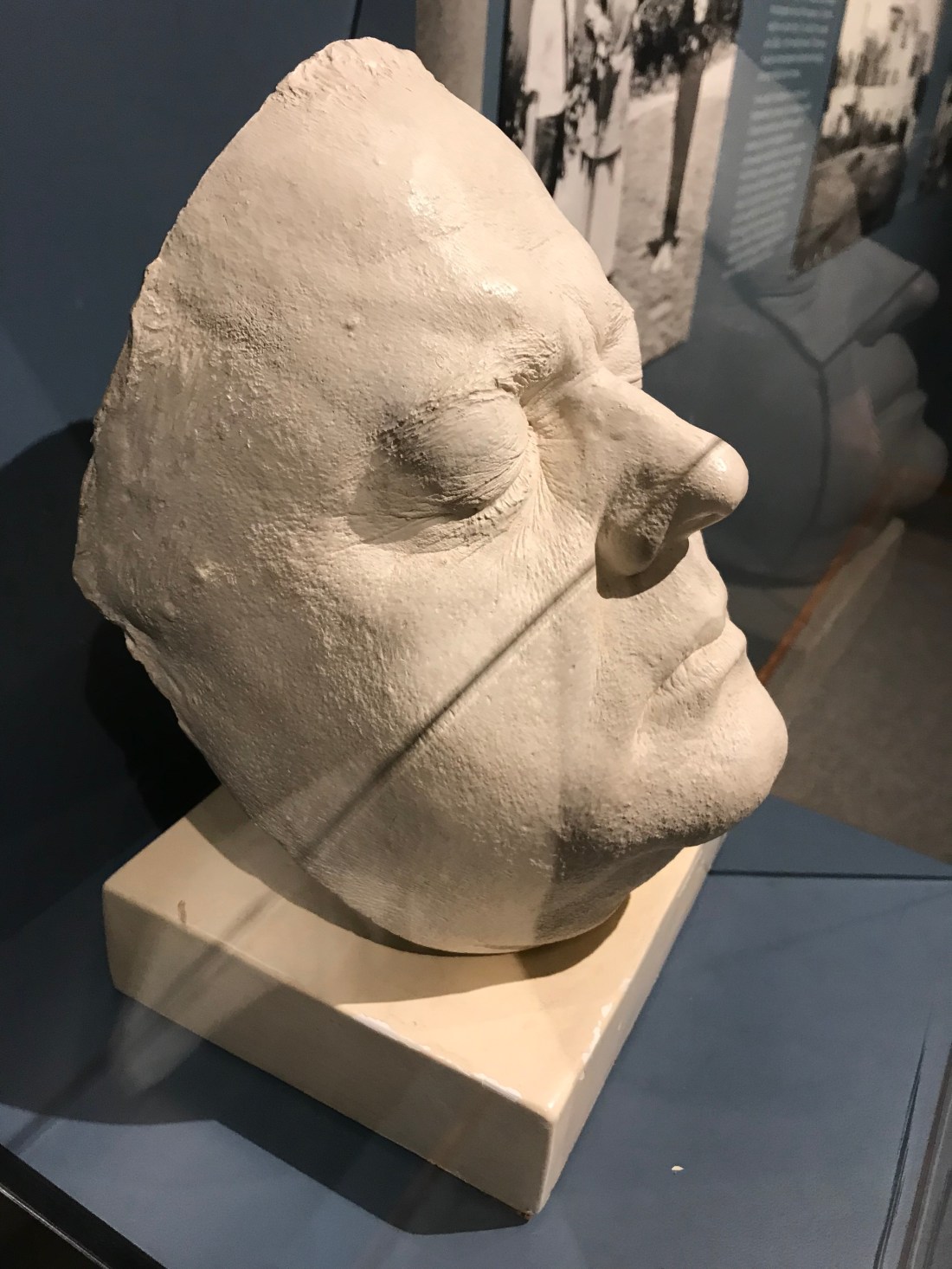
Also there was this actual life mask of Hoover, cast in 1919. Life masks capture nearly every minuscule detail, and is certainly a lot more particular than a photograph. That first picture especially sends chills down my back.
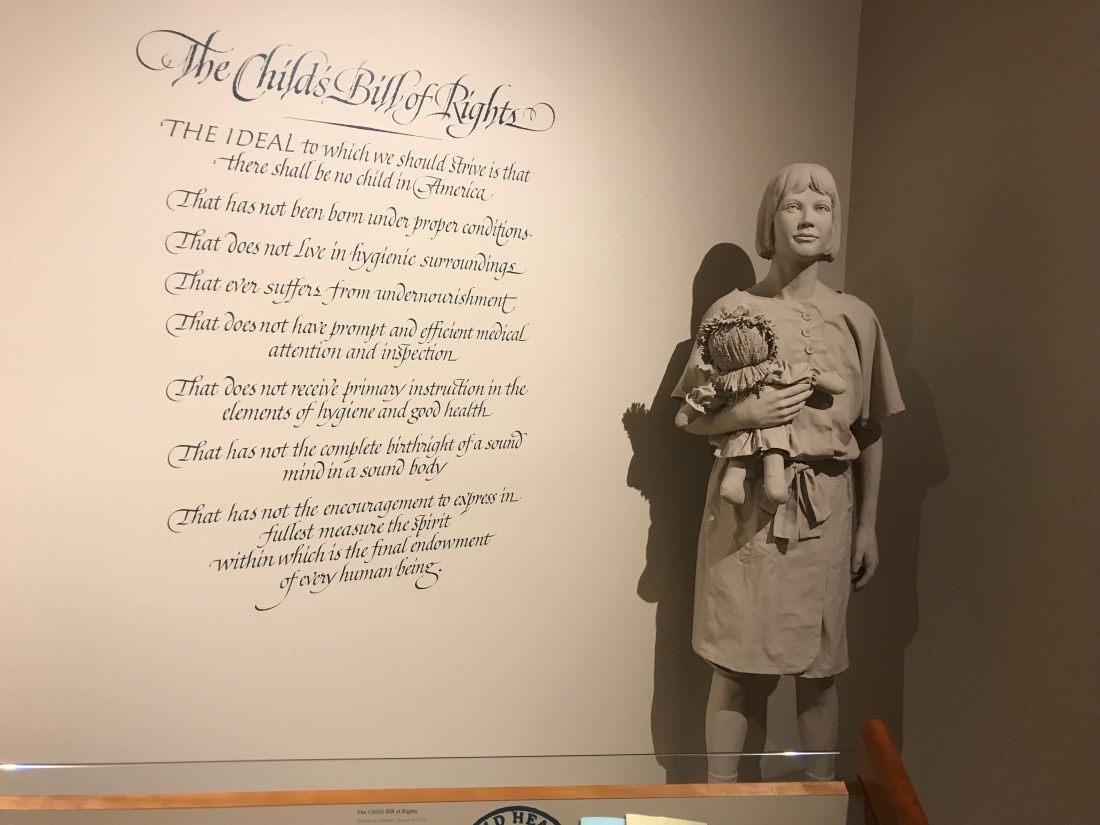
Hoover was certainly an idealist, and a true believer in proper life for families everywhere. People dubbed him, “The Great Humanitarian, and he was widely known throughout Europe for his efforts.

Appointed by President Warren G. Harding as Secretary of Commerce, Hoover served both in the administration of Harding, but also under Calvin Coolidge after Harding died of a stroke. Hoover was one of the few insightful enough to recognize the growing dangers of the Economy, and tried to warn of the telltale signs, but no one paid him any mind.
Hoover was nick-named, “Secretary of everything-else”, as he spent his efforts on a gigantic range of efforts, including the formation of Radio Broadcasting, aiding millions of dispossessed individuals in the Great Mississippi Flood of 1927, issuing standardized appliances and tools, and well… the list goes on.
As a side note, before he came to his job in the Cabinet, there used to be over 40 different container sizes of milk, and thanks to him, we thankfully now just have Gallons, Pints, Quarts, etc.
Hoover’s can-do attitude was enough to take him to the White House in 1928, where he wanted to fulfill Welfare, wilderness conservation, and domestic policies. But 8 months later….

Hoover did all he could to try to slow down this new “Great Depression”, including building the Hoover Dam, lowering taxes, and dismissing protests in an attempt to quell unrest, but his efforts did little to prevent extreme unpopularity, making him seem indifferent to the suffering of the people.

The scapegoat president became a byword for blame, and several terms of poverty were coined in his name. “Hoovervilles” (pictured above) were ramble-shack living spaces by the homeless that made up entire communities. A “Hoover Flag” was a pants pocket turned inside out, resembling the lack of money. And a “Hoover Blanket” was a mere newspaper used for blanketing.
Hoover lost in a major landslide to Franklin D. Roosevelt in 1932, and bitterly left public-life the following year. To make things worse, his beloved wife Lou died in 1944.
Hoover however, was not one to fade away. One of Roosevelt’s heavy critics during his tenure, he was later appointed by Harry S. Truman to lead the Hoover Commission, once again sent to Europe to aid in relief in the wake of World War II. Hoover slowly rehabilitated his image into that of an elder statesman, serving in a similar capacity to Dwight Eisenhower.

From an office similar to this in the Waldorf-Astoria in New York, Hoover continued to offer his opinion on affairs, address writers, fill out documents relating to his work, and find other ways that spent a 10 hour workday.
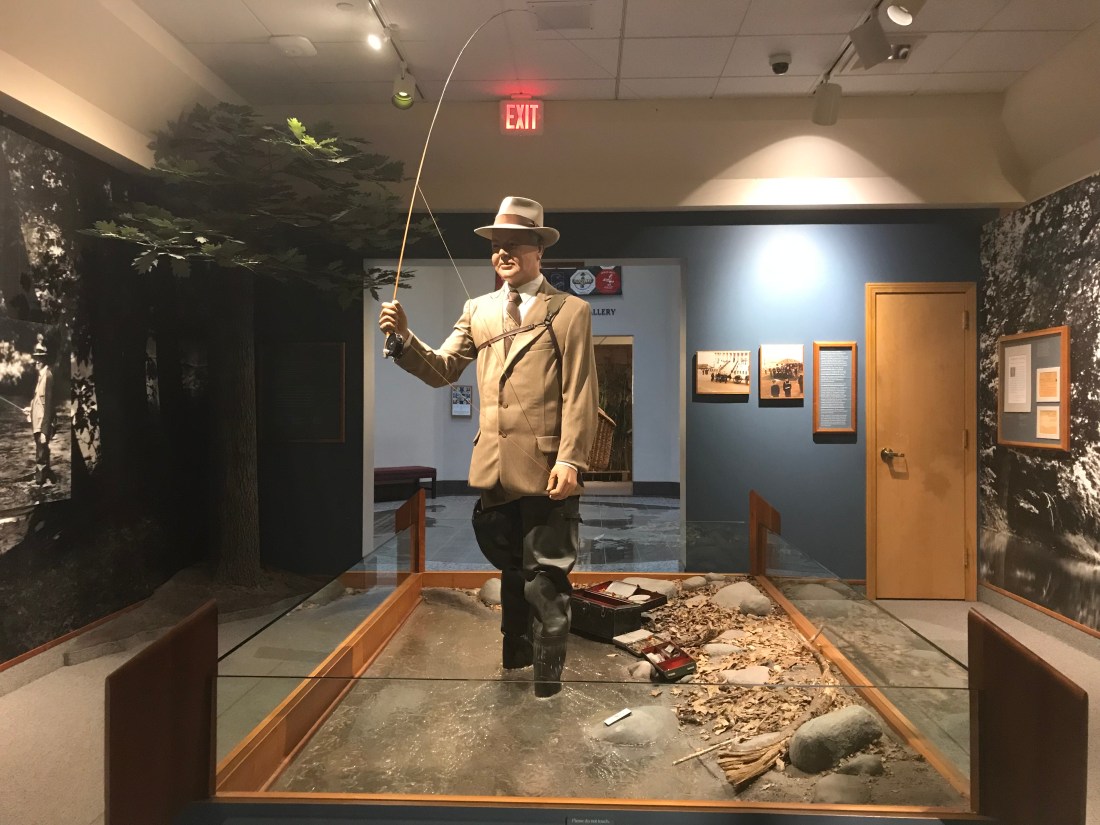
Hoover, still an avid fisherman, took time to spend his favorite pastime in peace, amongst the nature that he so loved, and had a special camp of his own in Shenandoah in Virginia. He continued to support the Boy Scouts of America, and has certainly remained “The Great Humanitarian”.

Though I may not look it, I am actually the same height as Hoover was, 5″,11.
Hoover died in 1964, and was returned to West branch one last time…
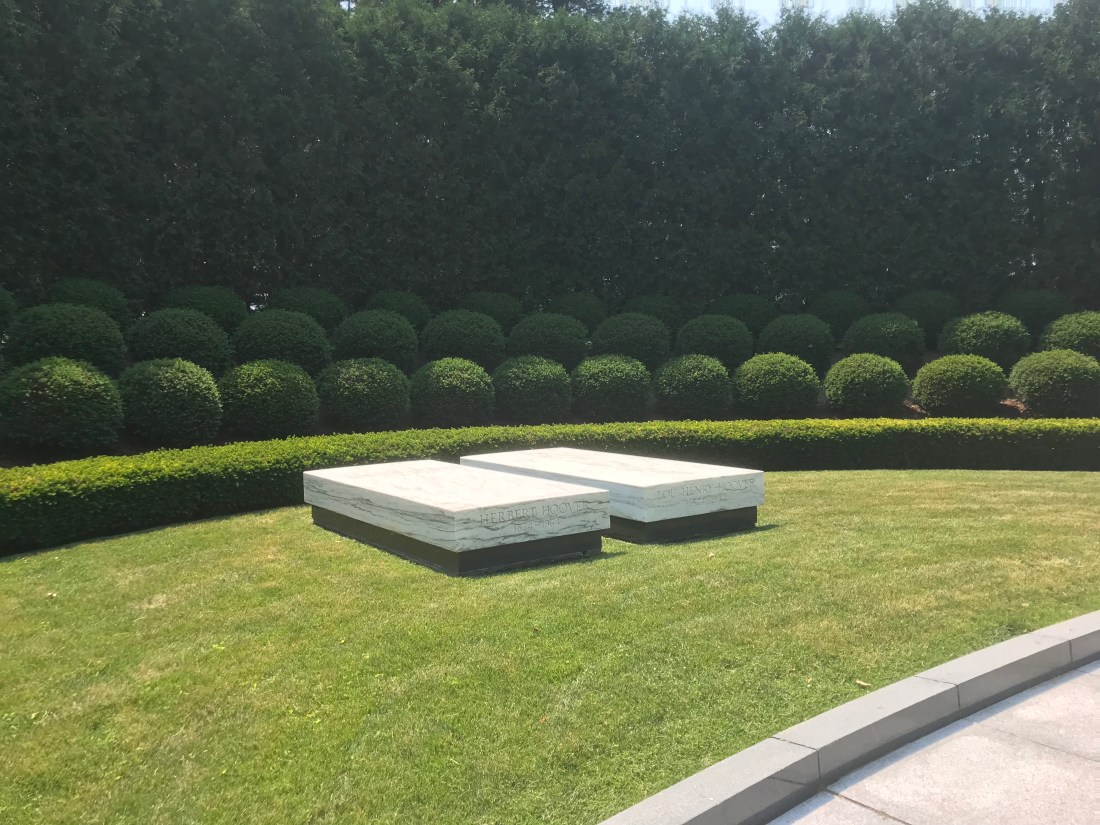
Buried under Vermont marble in the simple quaker fashion, Herbert and Lou Hoover remain in the hills that he so loved in his childhood.
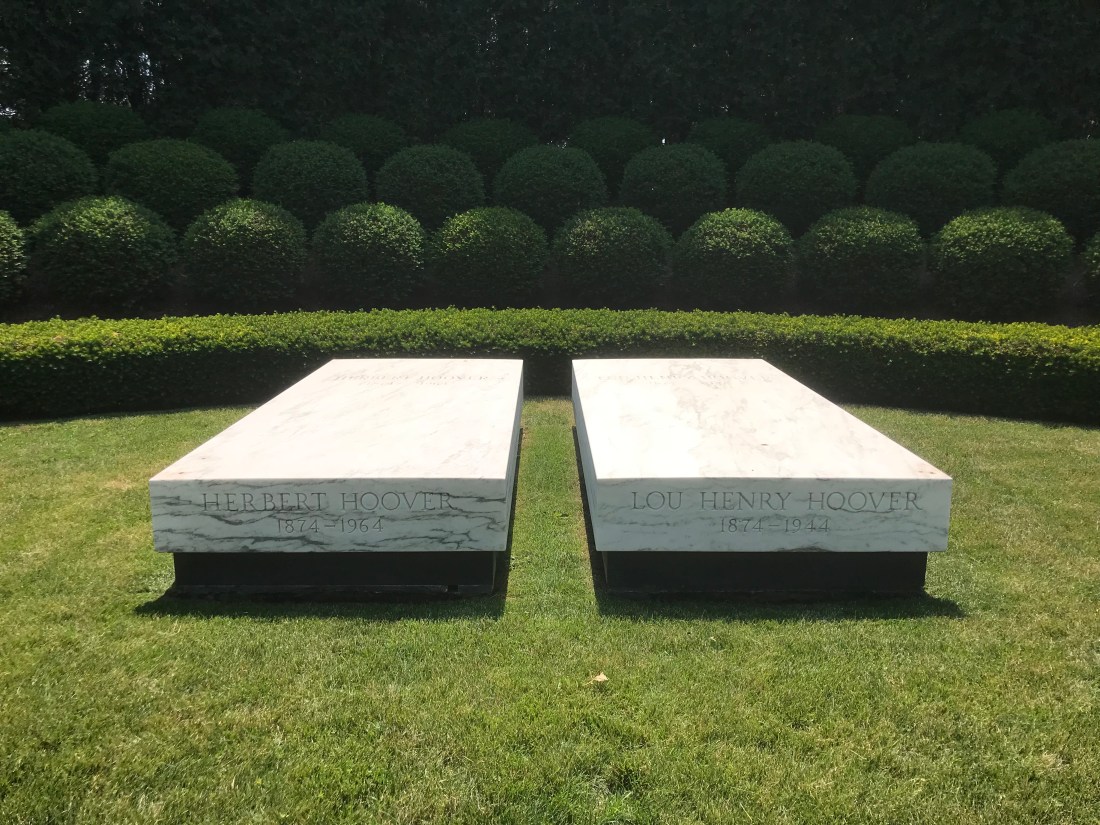
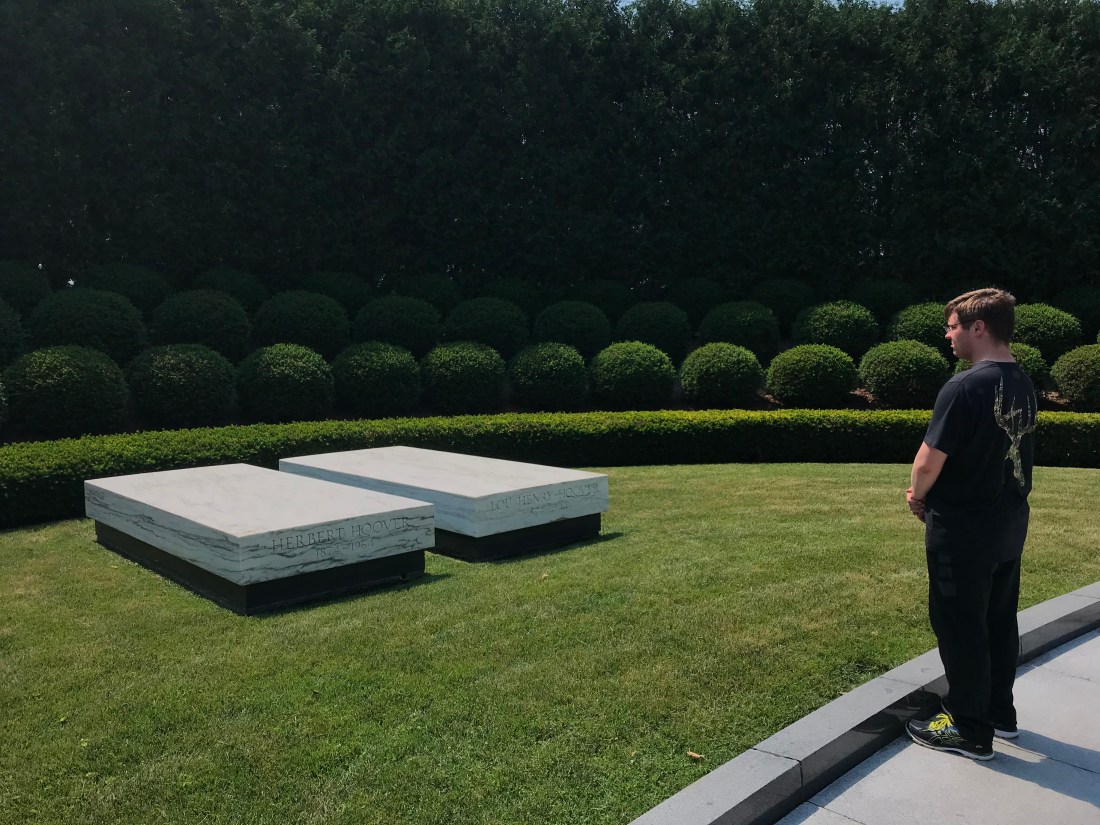
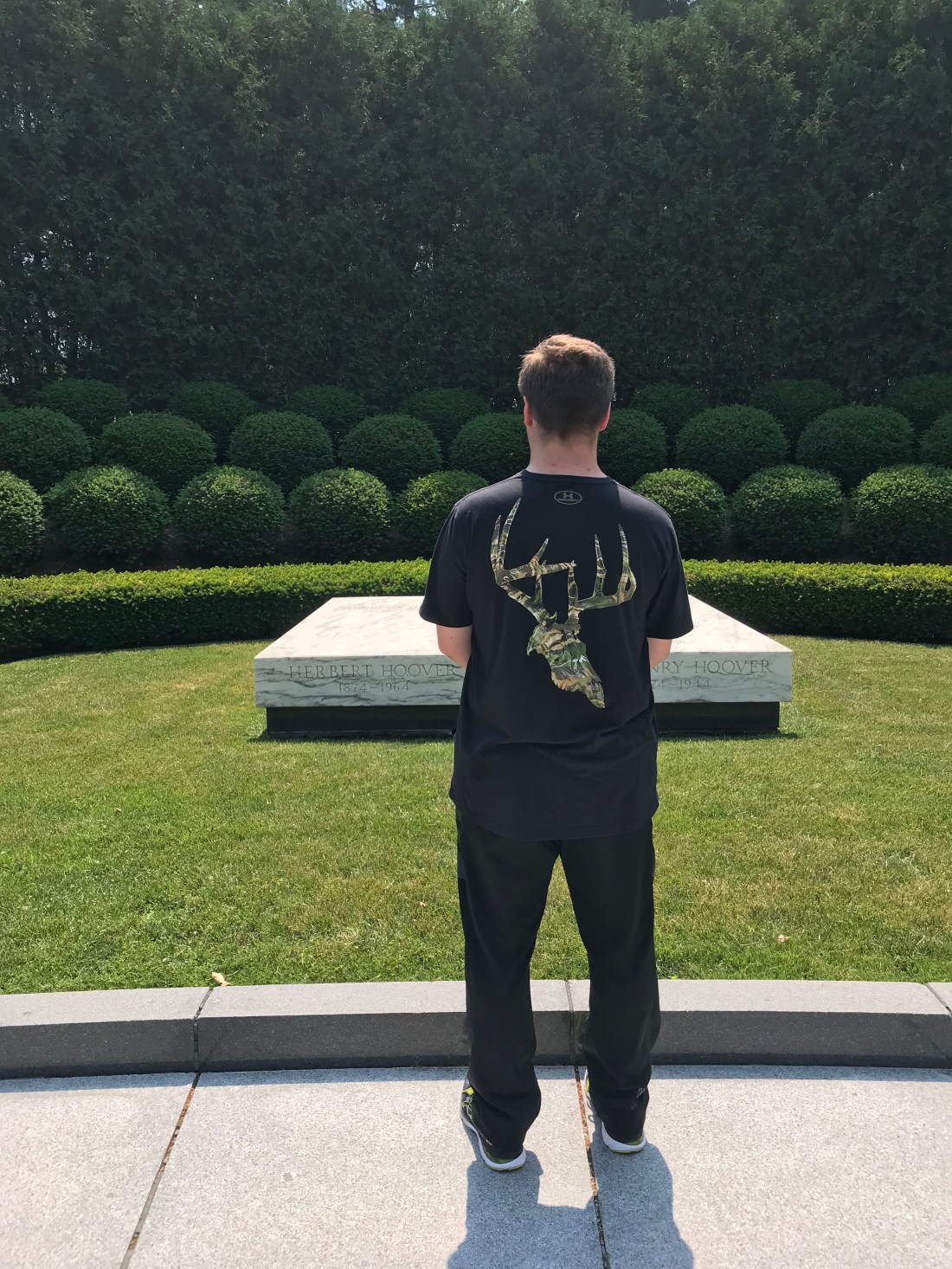
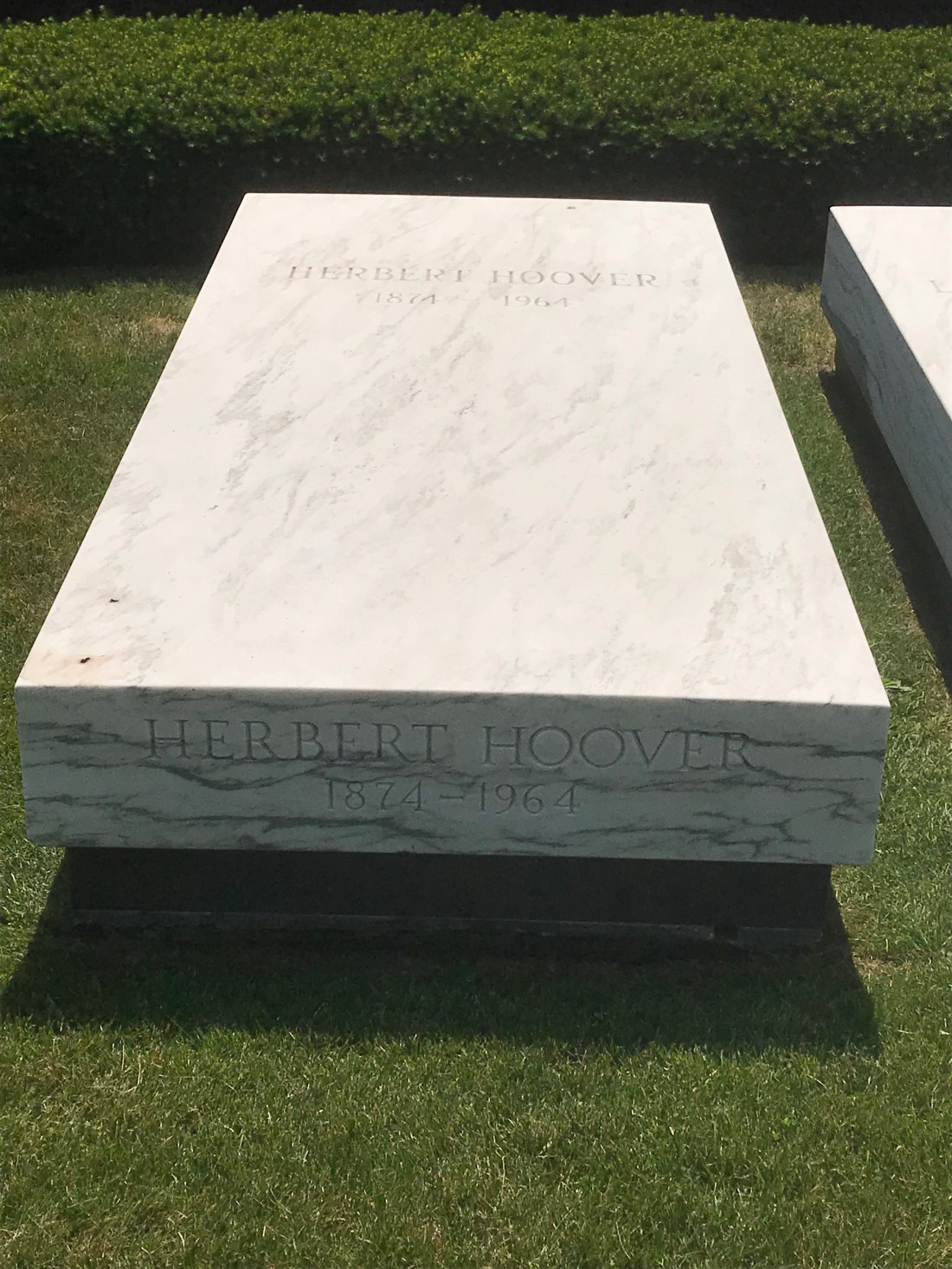

And now I can finally mention the significance of this view.
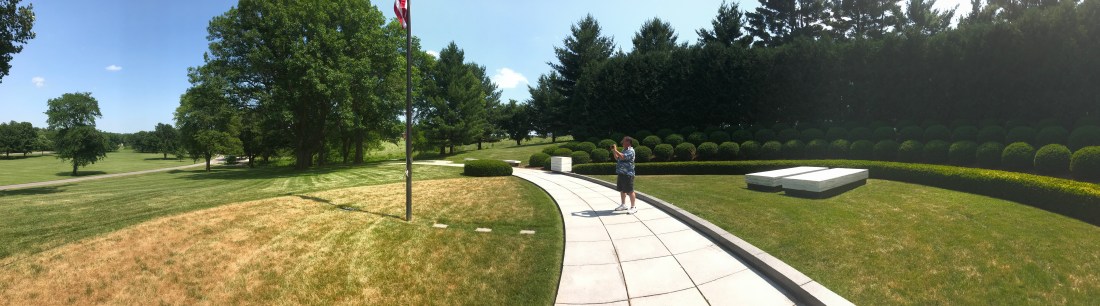
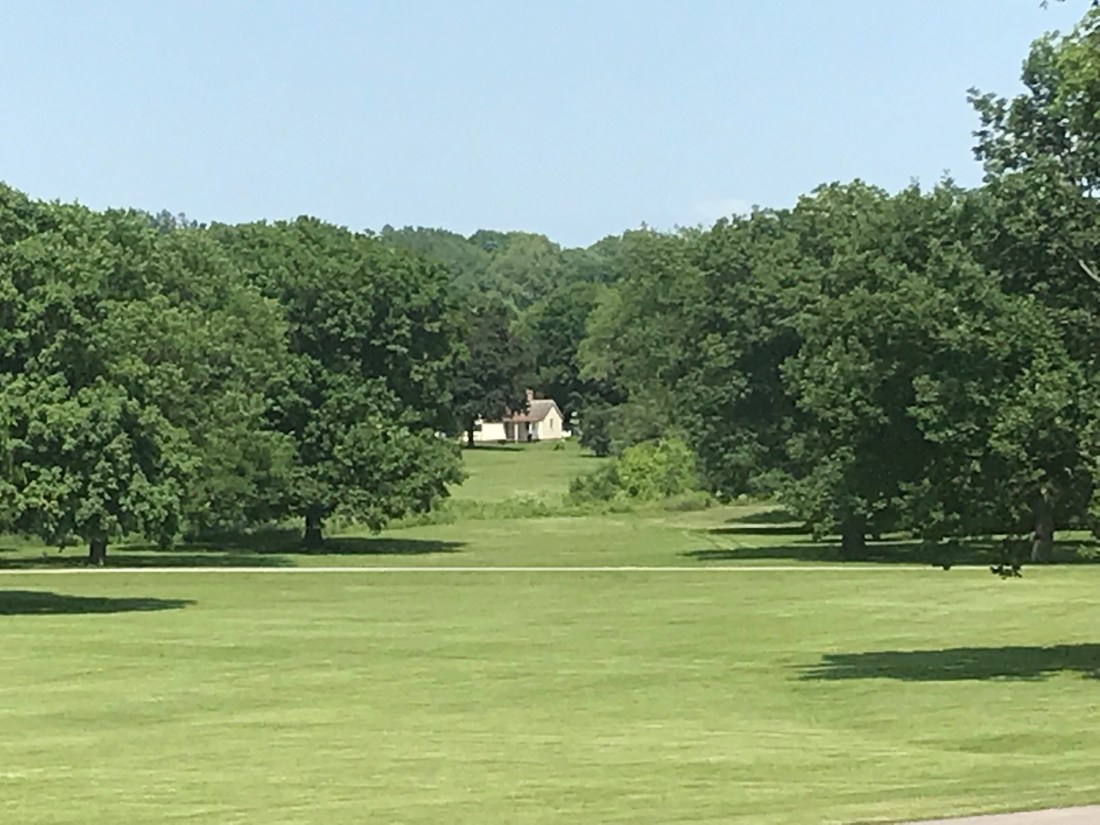
Hoover specifically left this window through the landscape open… to see the two room house of his birthplace, with nothing obstructing it’s view.
Why?
Well, Herbert Hoover wanted people to look at this view because, in the end, it all draws back to the American Dream. That absolutely anyone could come from anywhere, but still make their dreams come true, and make a difference in the world, even from a small house such as his. It is principles that help to shape our decisions and choices, and his of course, was his hard-working and helpful spirit. And he truly believed that there were no limits to human ability… but that people had to actually WORK, to make those dreams a reality.

Together, Eisenhower, Truman, and Hoover embody the spirit of the heartlands of America. They were poor, humble boys who were molded by their homes with Humility, Integrity, and Kindness, and went on to serve our nation in their highest capacity, with the greatest impact. And I truly believe that in the end, we can be just as capable, and continue the great legacy that they helped to pass on… our home. We are blessed with the opportunities and freedoms that no other nation has, and we shall certainly not squander our blessings, if we know what is right.
Leaving West Branch, and Iowa, we crossed the Mississippi River into Illinois… the land of Lincoln…
Apart from being the longest and widest river in North America, its certainly breathtaking…
Now, we are currently staying in Springfield, where we will spend the entire day tomorrow touring important Lincoln Historical sites, including His home, Library and Museum (not related to the Main 13, as it’s not controlled by the National Archives), and his tomb in Oak Ridge Cemetery… I’ve got my work cut out for me…
Sorry for not posting in the morning like I said… I guess that since my schedule can be rigorous, i’ll just have to post whenever I’m able.
Thanks for tuning in, and see you tomorrow (hopefully)!
 Mark's Historical Roadtrips!