
Welcome back everyone!
Yesterday was a very filled day, and thus, we stayed in our hotel for another night in Dearborn, nearby Detroit. Why do you ask? Because of the largest museum in the United States….
“The Henry Ford.”
Plus also the Motown Museum, but i’ll get to that.
Please note that there was so many items and objects in the museum, that hardly any pictures that we can take can captivate the grand scale of the entire place (several football fields long). Let’s now attempt to show you our discoveries at…
The Henry Ford

As soon as we arrived, we saw a parking lot enough to rival that of an olympic stadium. And of course, the main entrance.

I know this may not seem like a lot of ground, but Greenfield Village is 90 acres in itself, and the main museum 12 acres…so that makes… hm… A LOT.
Our guide said that to see everything, we would need more than a day, so we decided to set Greenfield Village for tomorrow. But to give you some background, this living history lot is filled with nearly a hundred old buildings and hidden treasures of bygone years. You can hop a ride in a Model T, learn the crafting techniques of numerous trades, ride the train around the lot, and just enjoy American culture from the 1700s to the present day. It’s said that it inspired Walt Disney in his creation of Disneyland and Disneyworld.
Of course, thats tomorrow. Today was still a handful, so here goes!
 Even this picture, a panoramic, can’t captivate the full scope of the area, which, like I said, is a 9 acre exhibition hall filled with the wonders of human invention and thinking. Dotted with numerous exhibits and restaurants, we immediately set off.
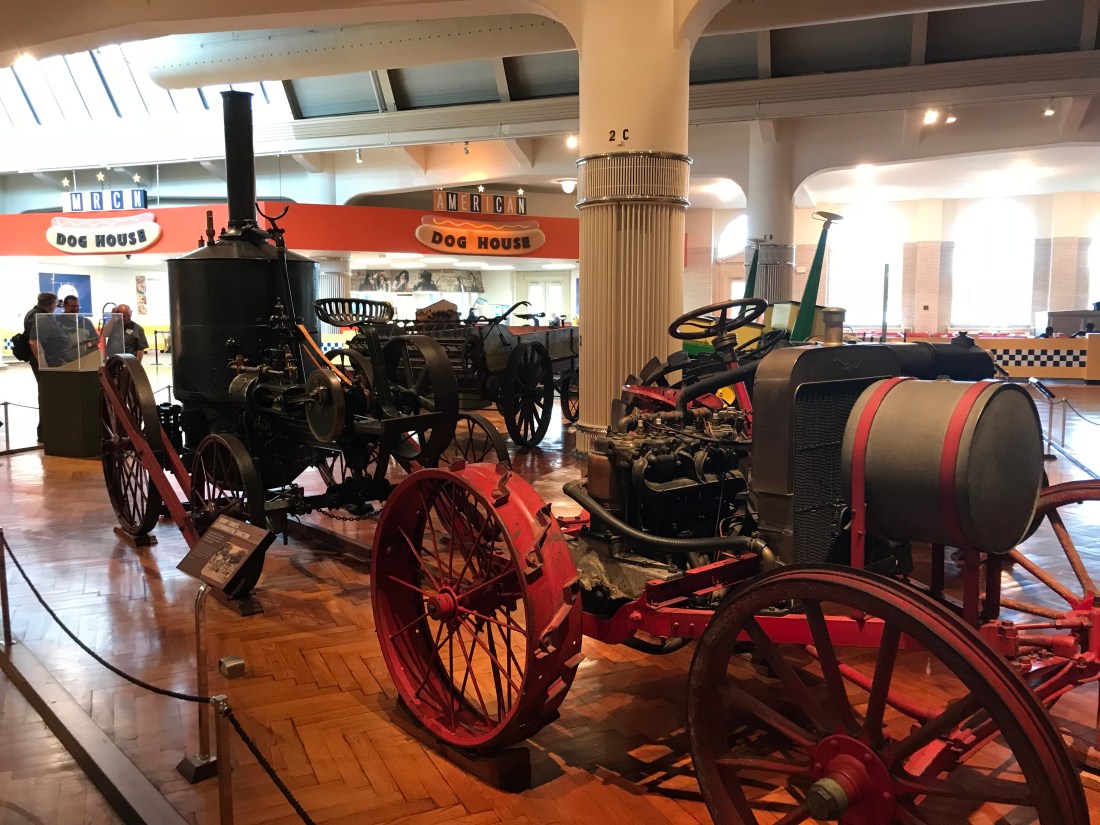 Here are some old fashioned tractors of the very early 20th century, and maybe even the 19th. Kind of different from the tractors we have now isn’t it?

This was a tomato harvester! It was designed to successfully pick tomatoes without damaging the little things, but on a much wider scale.
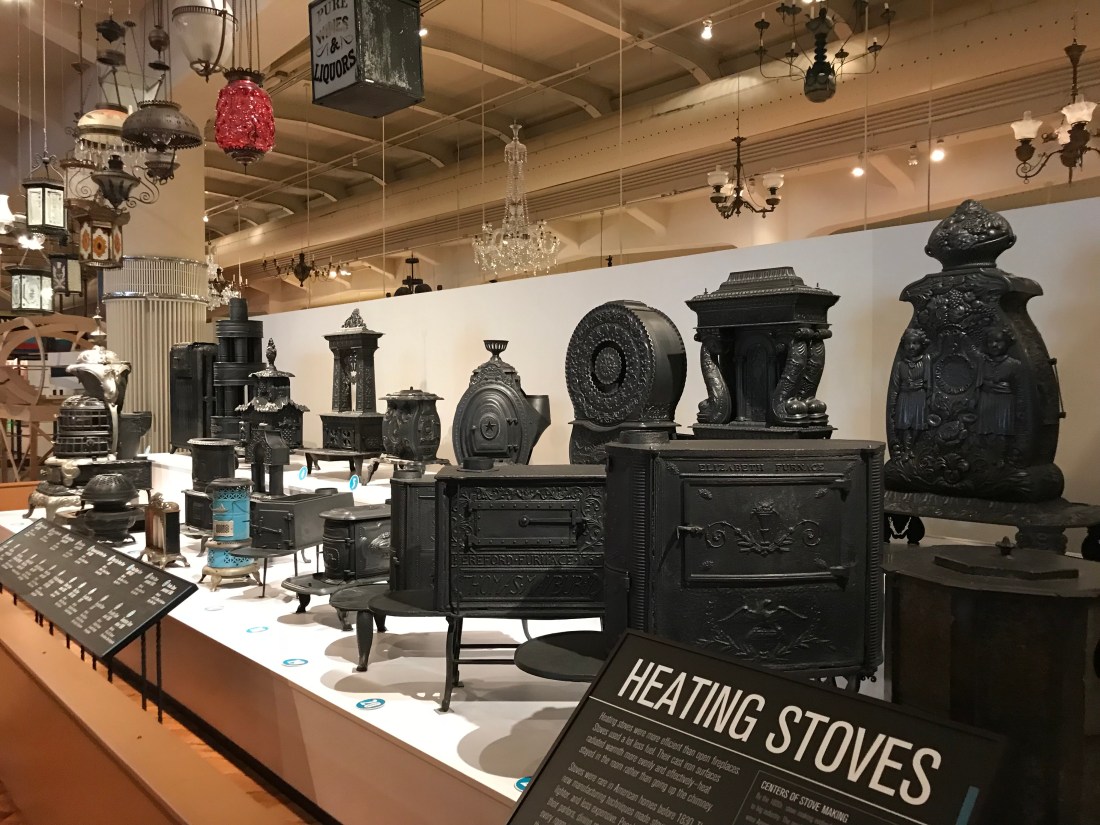 Not only vehicles and machinery were here, but also furniture, including heating stoves! Imagine the history behind all these ones.
 This was another old fashioned combine harvester. How the heck is that thing supported with that kind of a frame?
 Believe it or not, this was actually not a train. It was another early model of a tractor.
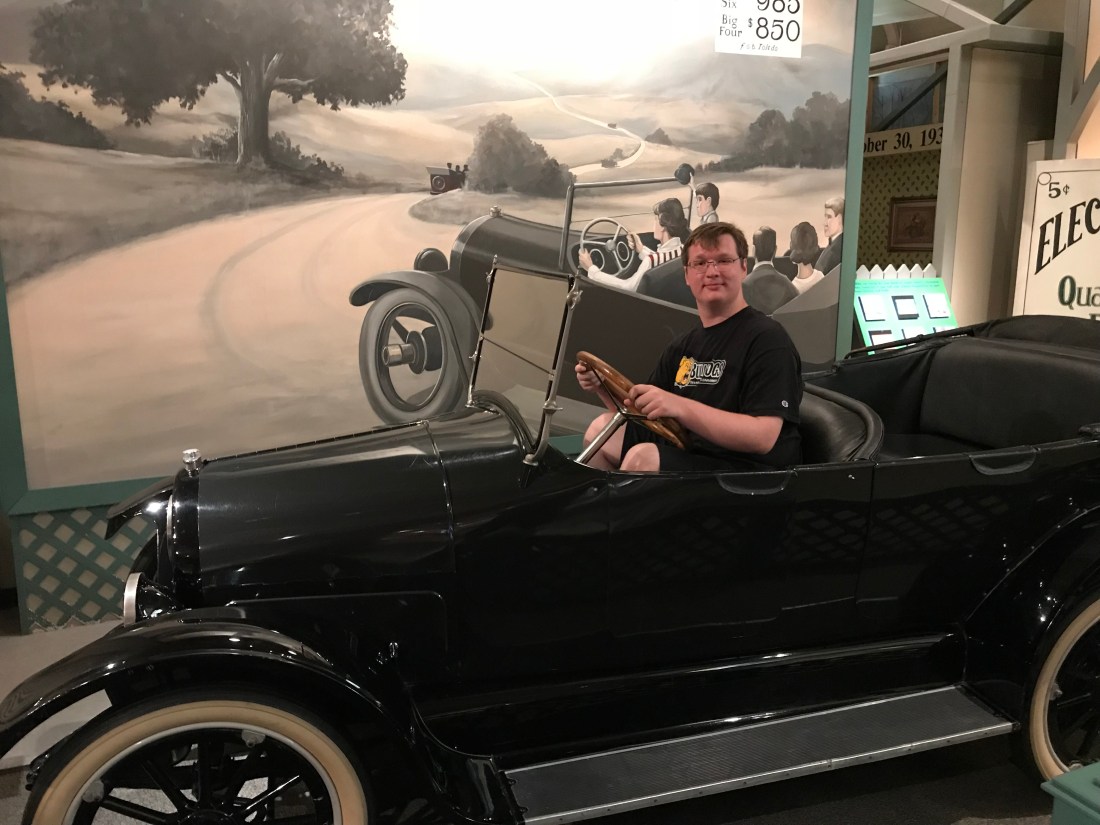
So, to get to the other exhibits, I hopped into my trusty Model T, and… ok, that didn’t really happen. Still, it was a neat vehicle.
 You’d be amazed at all the gun collections they had, some dating back to the 1600’s… its interesting to see the progression of all of the models throughout the years.
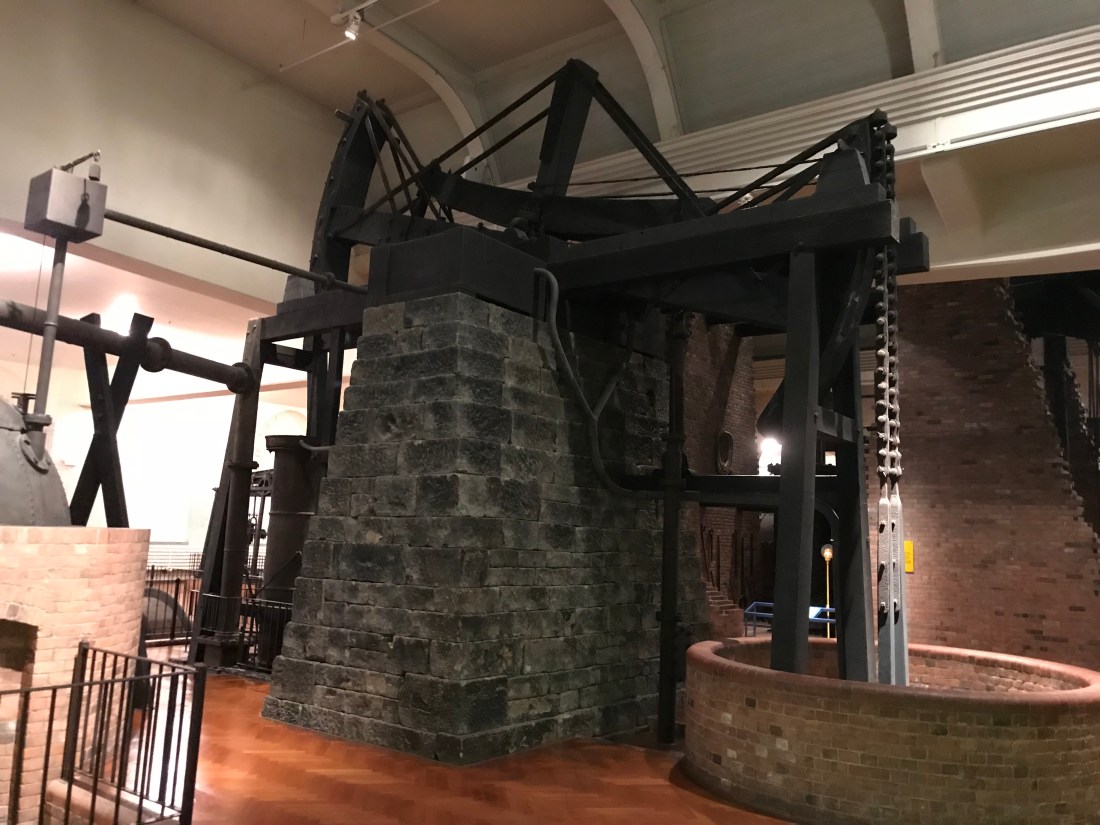 An old fashioned Oil Derrick (larger than most we see).

This windmill was moving by itself! the Museum is fascinated with the production of energy in any shape or form.
 Including this….thing.
 This thing was massive, I expect that it provided much needed power to whatever it was assigned to. You never know what you’ll find here.
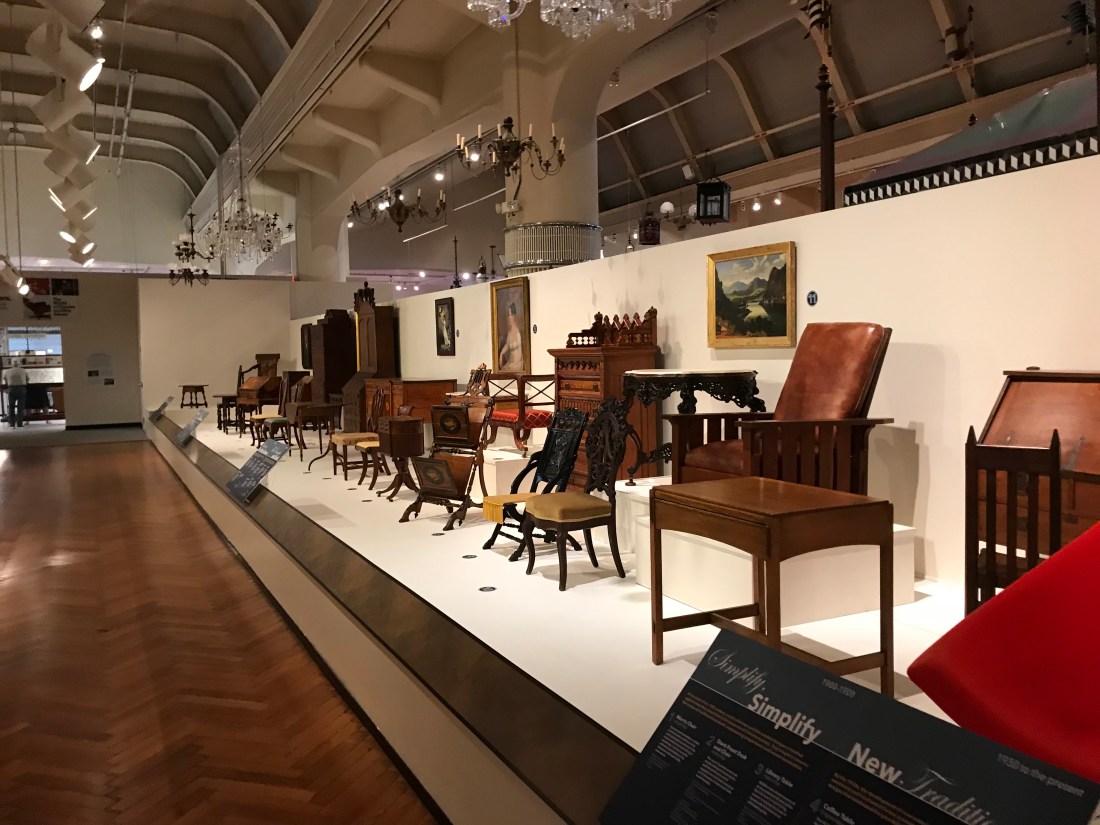
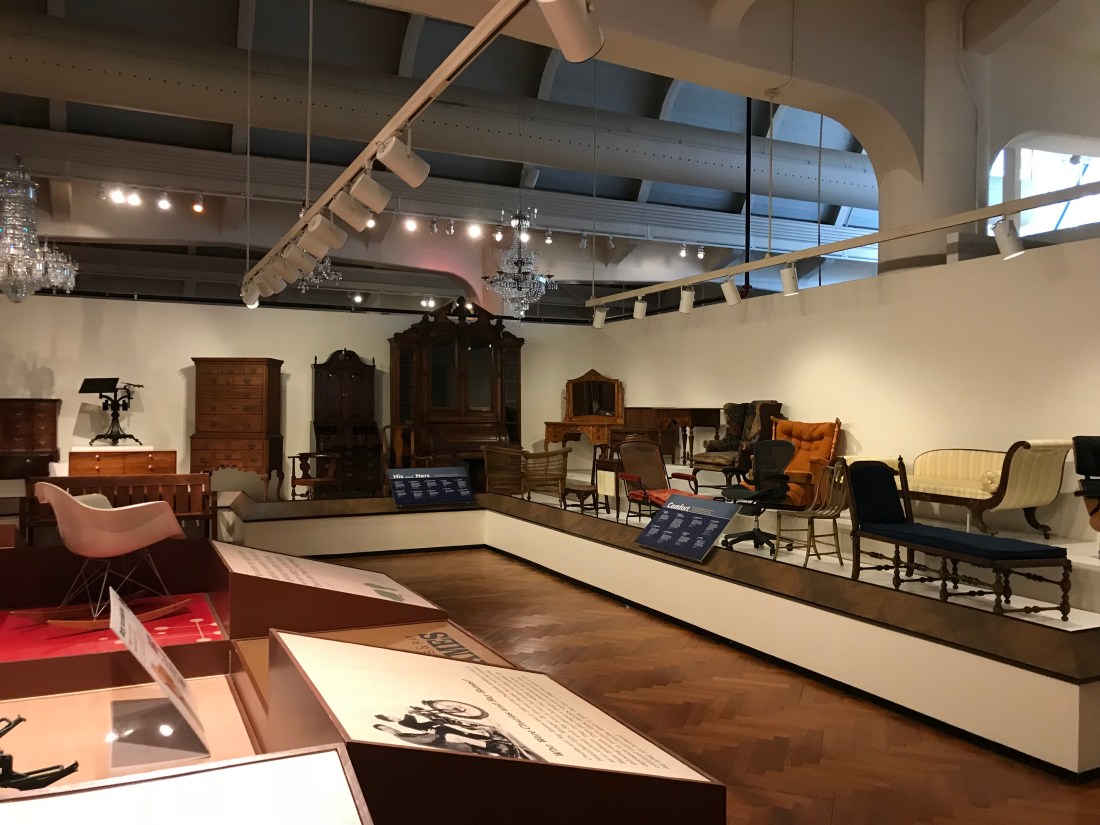
The Museum looks into every part of American culture and innovation, and that includes furniture! You might recognize a few pieces here similar to what you yourself own, if you look closely.
 They even had a section dedicated to Mathematics! There were features such as multiplication, probability, celestial mechanics, optical illusions, conical images… it goes on.
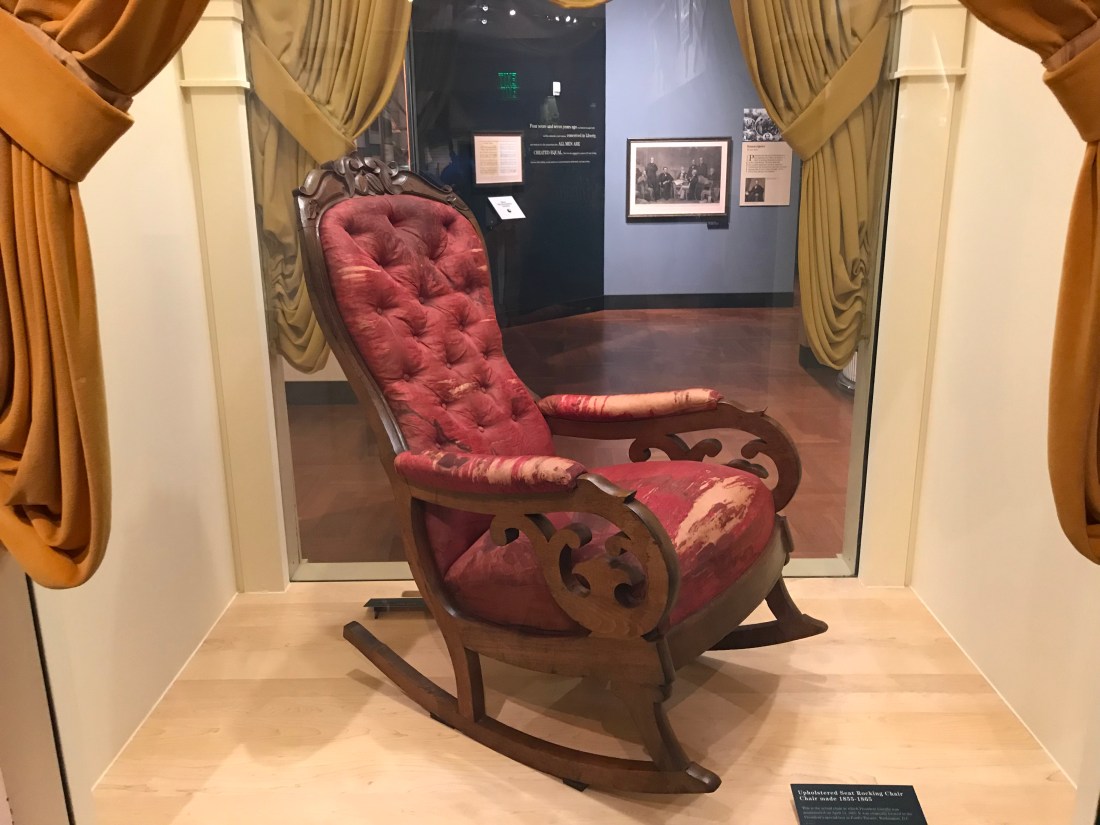

Here’s another something that you wouldn’t expect to see in Detroit, of all places. This was the very chair that Lincoln was shot in at Ford’s Theatre. Original upholstery and everything. Sends chills down your back.
 Also present was the Rosa Parks Bus! It was here that she refused to give her seat to a white man, in protest of segregation, and after her arrest, the Montgomery Bus Boycott began.
 Of course, the seats had to be restored, as this was temporarily a storage shed in Detroit. Many big names offered to buy the bus, including the Smithsonian, but it ended up here.

This futuristic hub is the Dymaxion House, developed in the aftermath of WWII to provide not only efficient housing in a circular pattern, but also to use leftover spare parts from war planes. It had a vent shaft that rotated every six minutes, a conveyer shelf system, and natural protection from the elements. However, due to it’s production costs, maintenance issues, and overall low popularity, this was the only one made. Bummer.
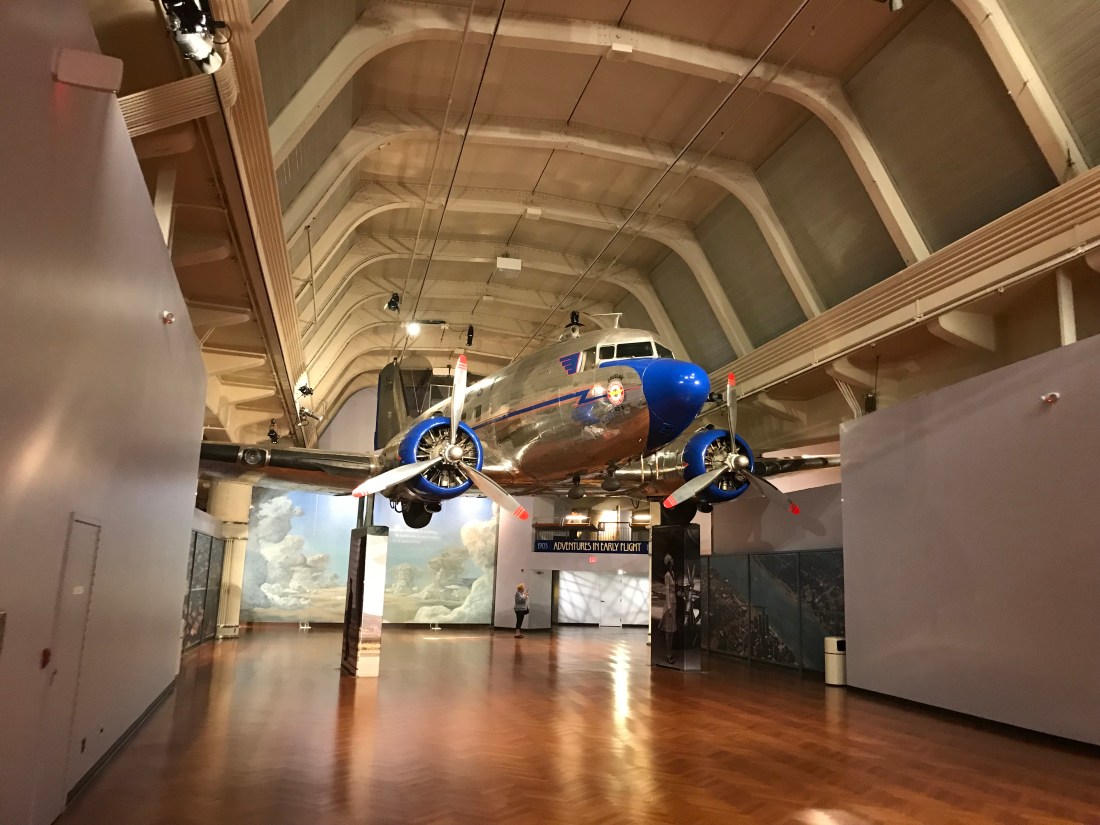
Airplanes were certainly common in the museum, including this early Southwest Airlines plane.

They also had a section on Human Rights, which included the Revolutionary War, Women’s Rights, The Civil Rights Movements, etc. This book was a copy of “Common Sense”, written by Thomas Paine. It’s ideals aided to turn public opinion against British oppressors. Id imagine this is one of the oldest items in the facility.
 Also present was a copy of the Declaration of Independence! (There are numerous, but the actual one is found in the National Archives in Washington D.C.)
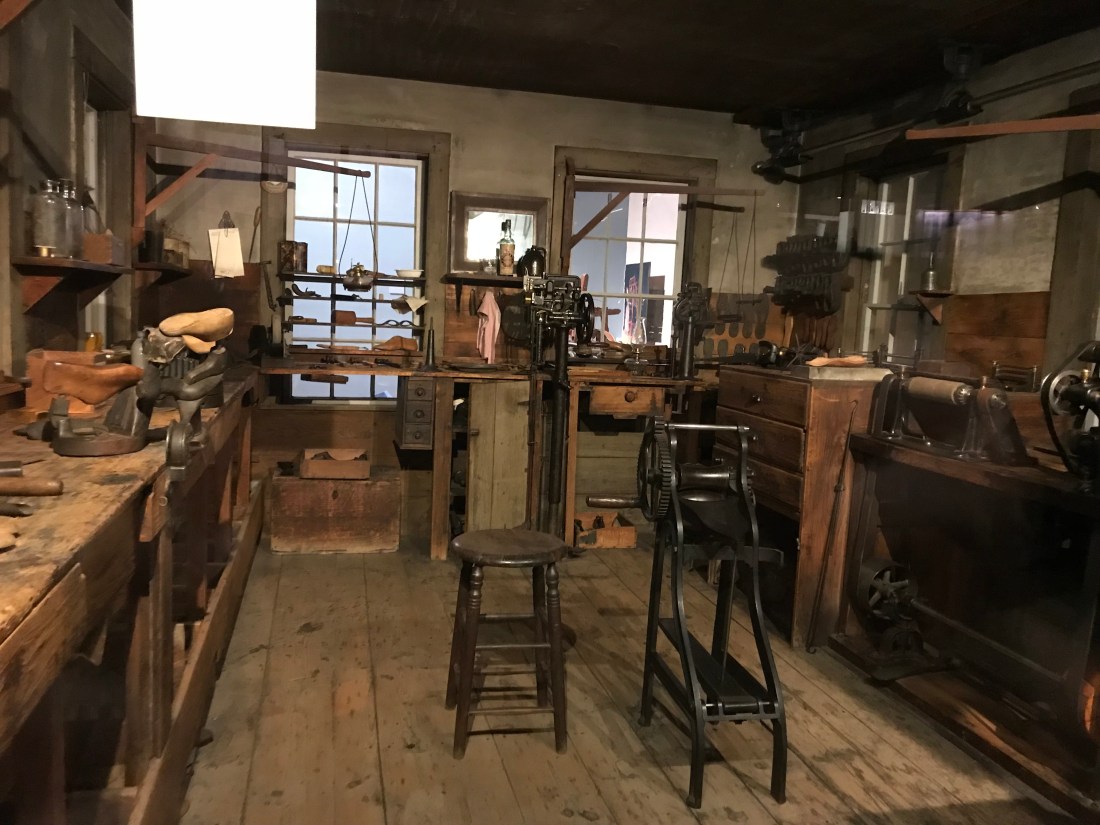 This shoemaker’s shop had seen a lot of busy workers in it’s day. An average worker could make 65 pairs of shoes in a day, and were paid 2 and 1/2 cents per pair. Doing the math, that is worth a $1.63 (rounded up). Im thinking too hard…
 Devices such as this power loom and that textile machine were instrumental in creating the cloth industry of the north, and thus, a growing economy.
 This “exploded” Model T Ford lets you look into the inner workings of one of the first models of a car. Cars are a lot more complicated than they seem, even this is no exception. While Henry Ford didn’t invent the production of vehicles (one car could take 10-12 hours to make manually), or the conveyer system, he helped revolutionized it’s making, and adding the conveyer belt and machinery, it only took 90 minutes to create a Model T Ford. Business would soon boom!
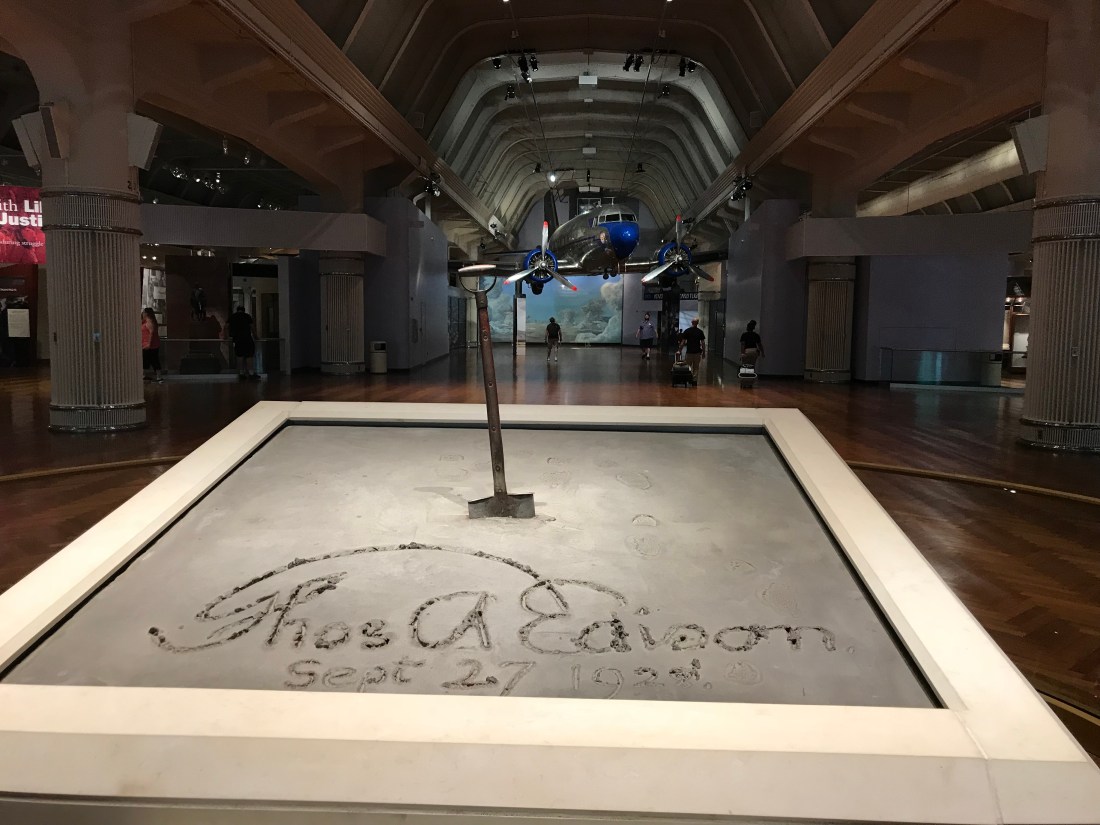 The concrete slab signed by Thomas Edison at the dedication of the museum. This museum is over 90 years old.
 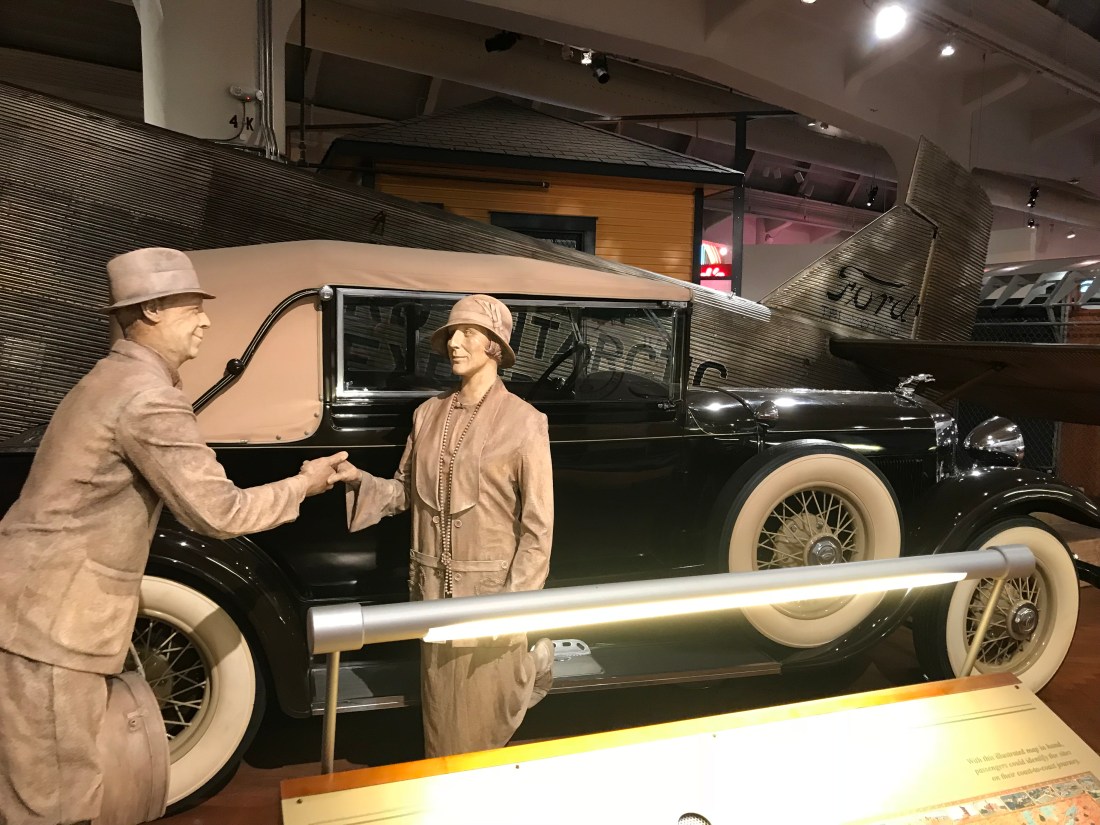 Here’s lookin’ at you kid.
 This plane, piloted by Floyd Bennet and Richard Byrd, was said to be the one to first cross the North Pole. However, due to numerous circumstances, the claim is disputed to this day.
 A replica of the Wright Brother’s plane. Statues on a nearby bench continued to jibe and sneer at the “nonsense” that humans could actually fly in these things. How wrong could they have been?
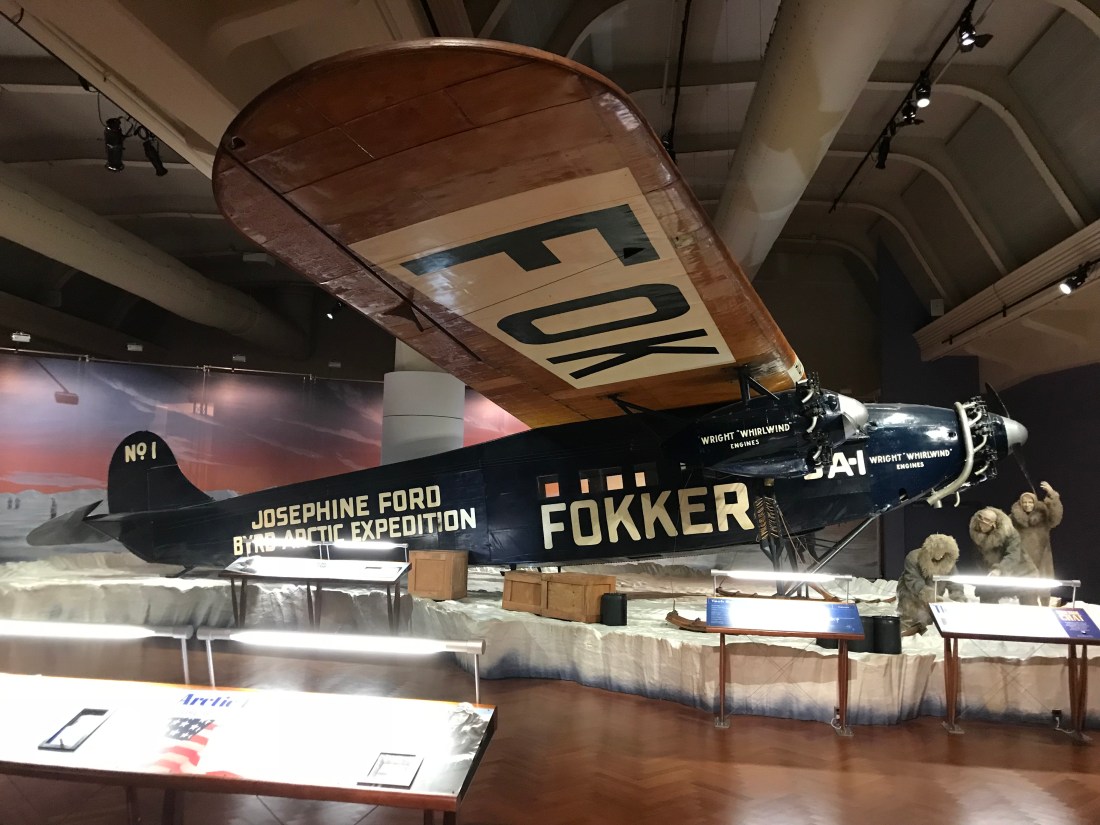 Another of the planes of the Byrd expedition.
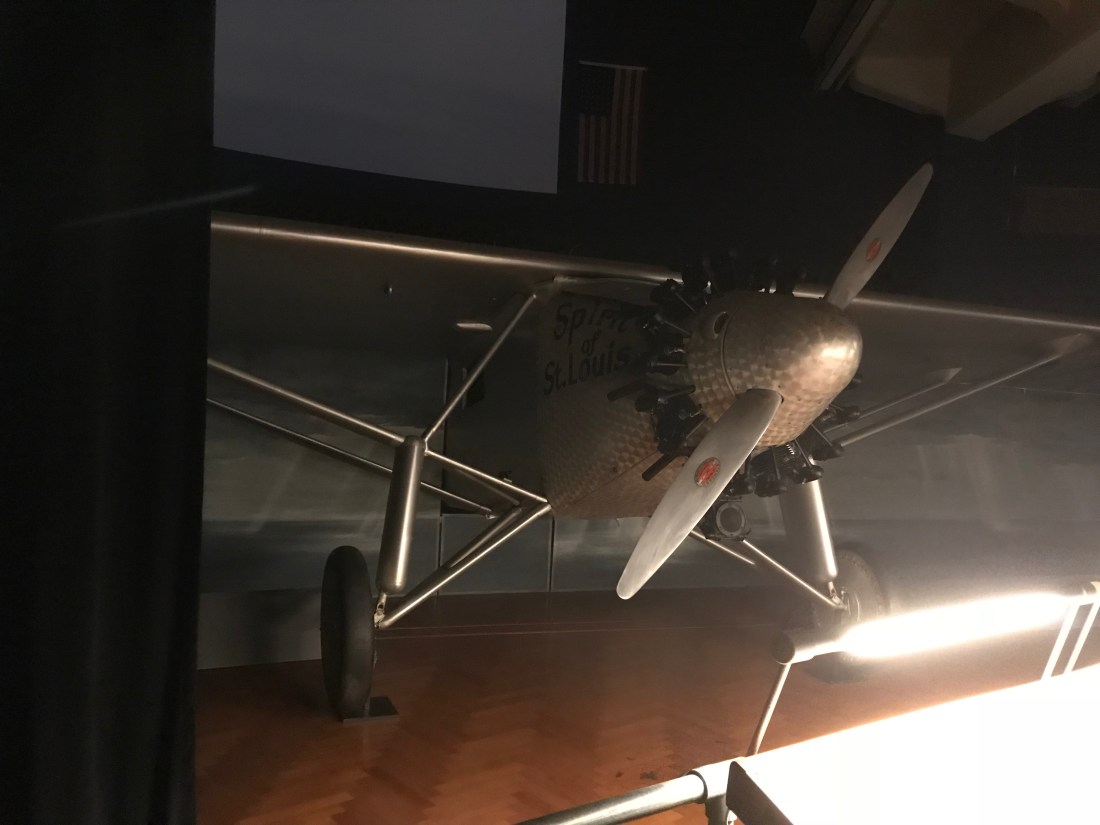 A replica of the “Spirit of St. Louis”, which Charles Lindbergh flew in on his famous flight over the Atlantic Ocean. The real plane is in the Smithsonian National Air and Space Museum.
And now we come to my favorite section… Presidential Vehicles!
 This car was used by Ronald Reagan during his Presidency. It is also the car that Reagan found refuge in after John Hinkley Jr. shot him outside a D.C. hotel. Thankfully, Reagan survived.
 This car however, is forever ingrained in the minds of anyone who can remember that fateful day… November 22, 1963.
Yes, this is the very limousine used by John F. Kennedy throughout his presidency, and also the one he was shot in while driving through Dealey Plaza in Dallas.
 The furthest back seat on the right side is where he was sitting.
 The roof was added on later in it’s service to presidents afterwards. But it is still the same vehicle.
 The sad part is, this car actually did have a bulletproof roof, but it was taken off prior to the assassination on request by JFK, saying that it was sunny, and he wanted people to see him and Mrs. Kennedy more. If they had the roof on, History might be very different than it is today…
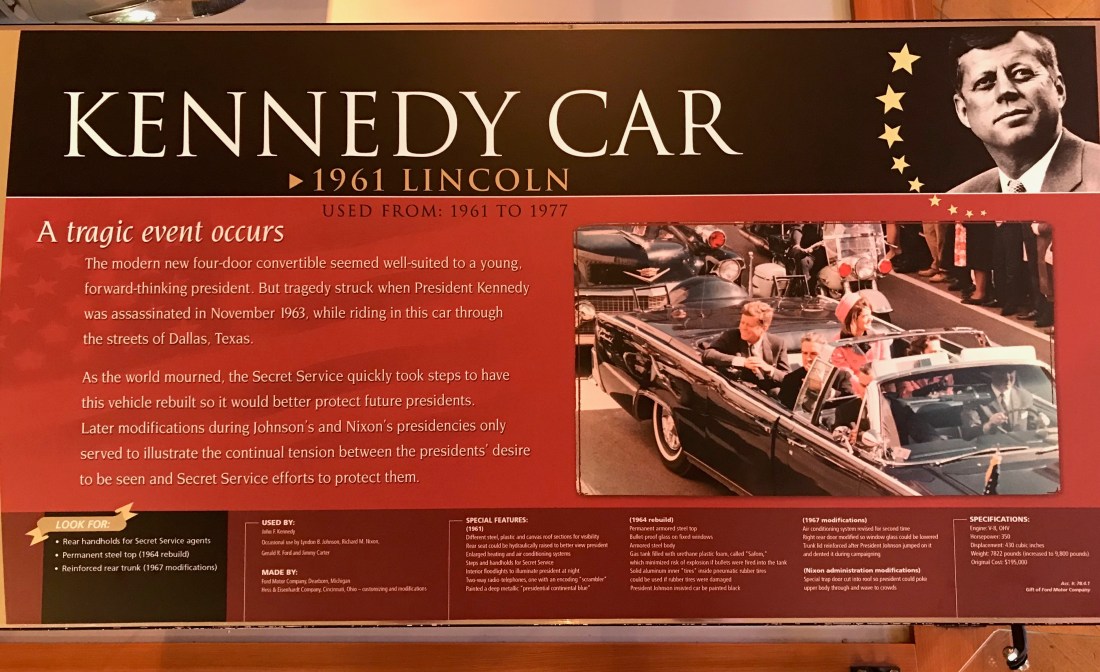 Seeing this car made me feel a bit sick inside… a similar feeling I experienced in Dealey Plaza just a week earlier.


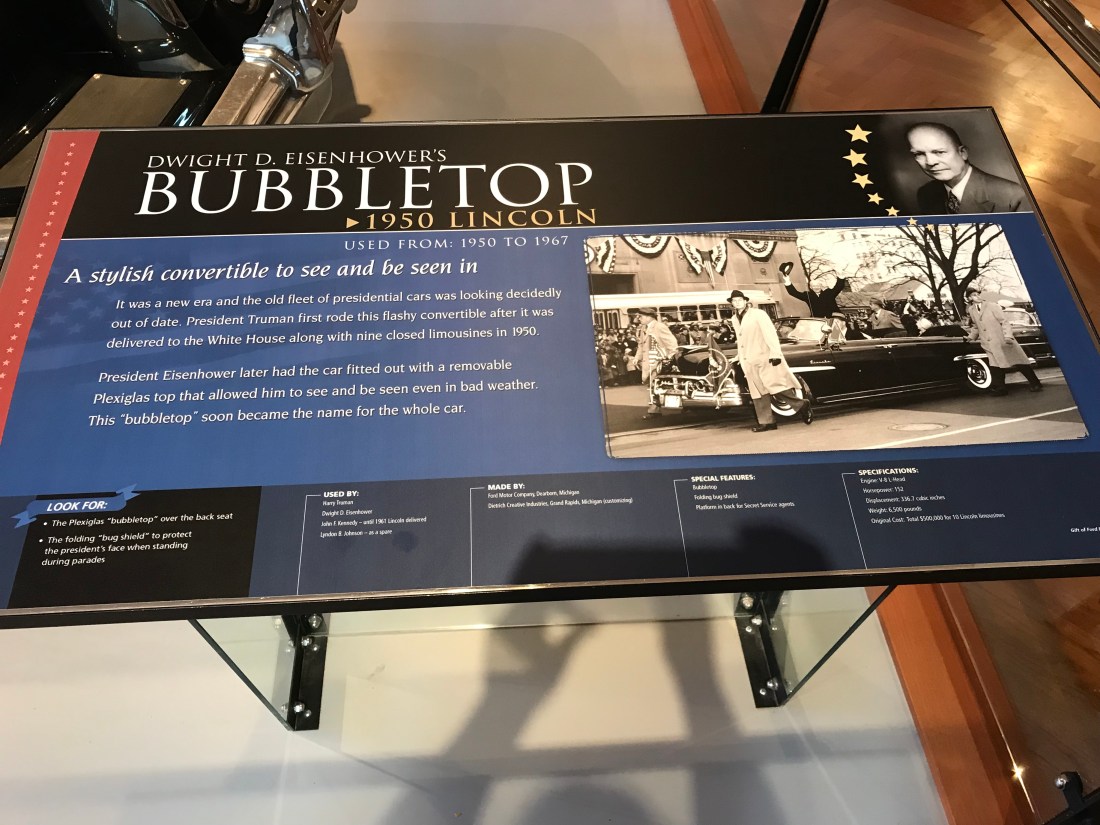 This limousine, dubbed “The Bubble-top”, due to it’s roof, served Eisenhower throughout his administration. It also served Truman, but Eisenhower is more well known for it.

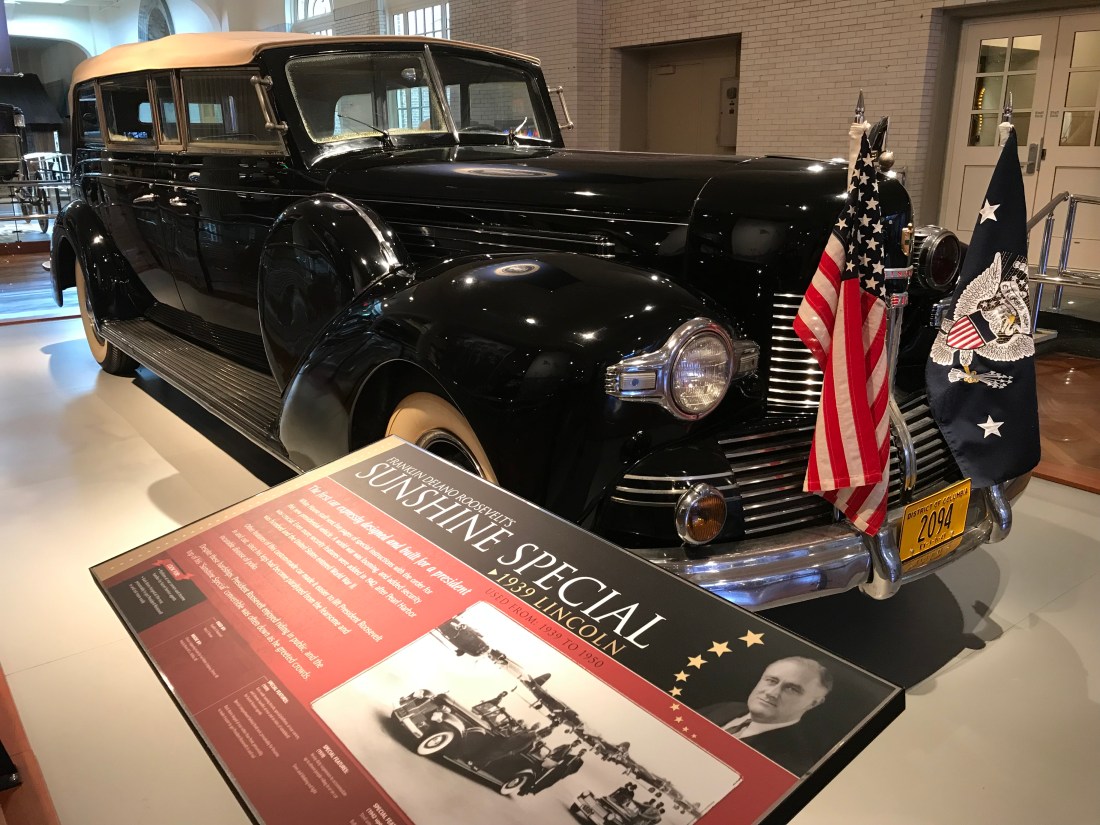

The Sunshine Special was the special vehicle for Franklin D. Roosevelt during his 12 years in office, and was immediately a symbol of Presidential power.

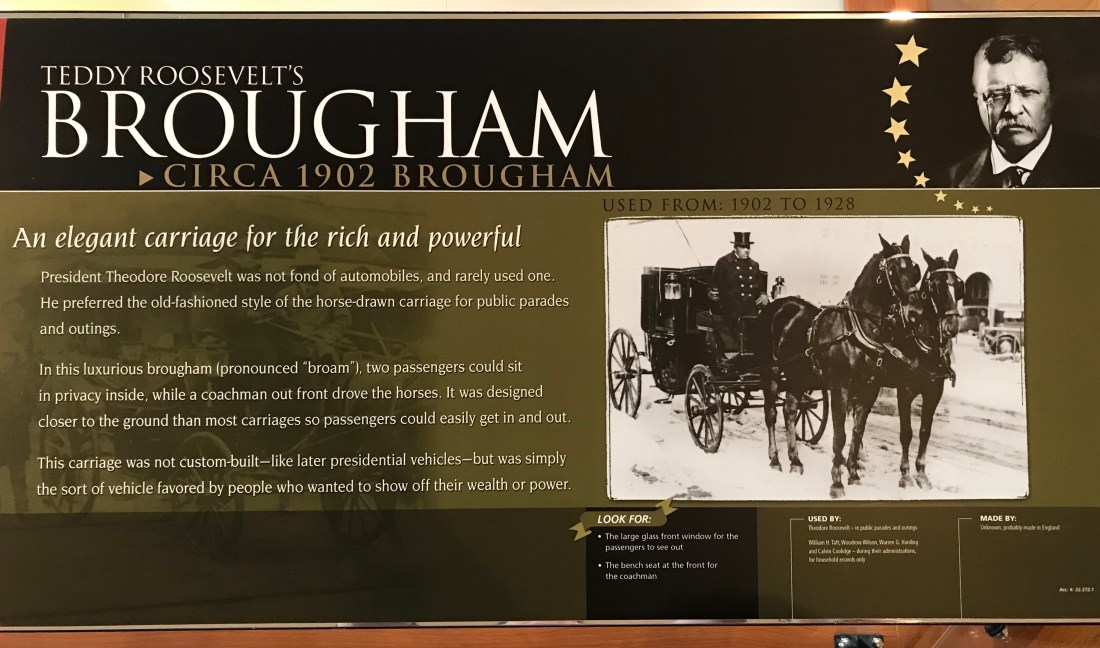
Used by Presidents Theodore Roosevelt, Taft, Wilson, Harding, and Coolidge, this horse-drawn coach was used to transport presidents to formal outings, or other functions.
At this point, we ate a late lunch at a nearby diner (delicious meatloaf and milkshakes), then continued onwards with our tour.
 A Texaco van… good to see a bit of home here!
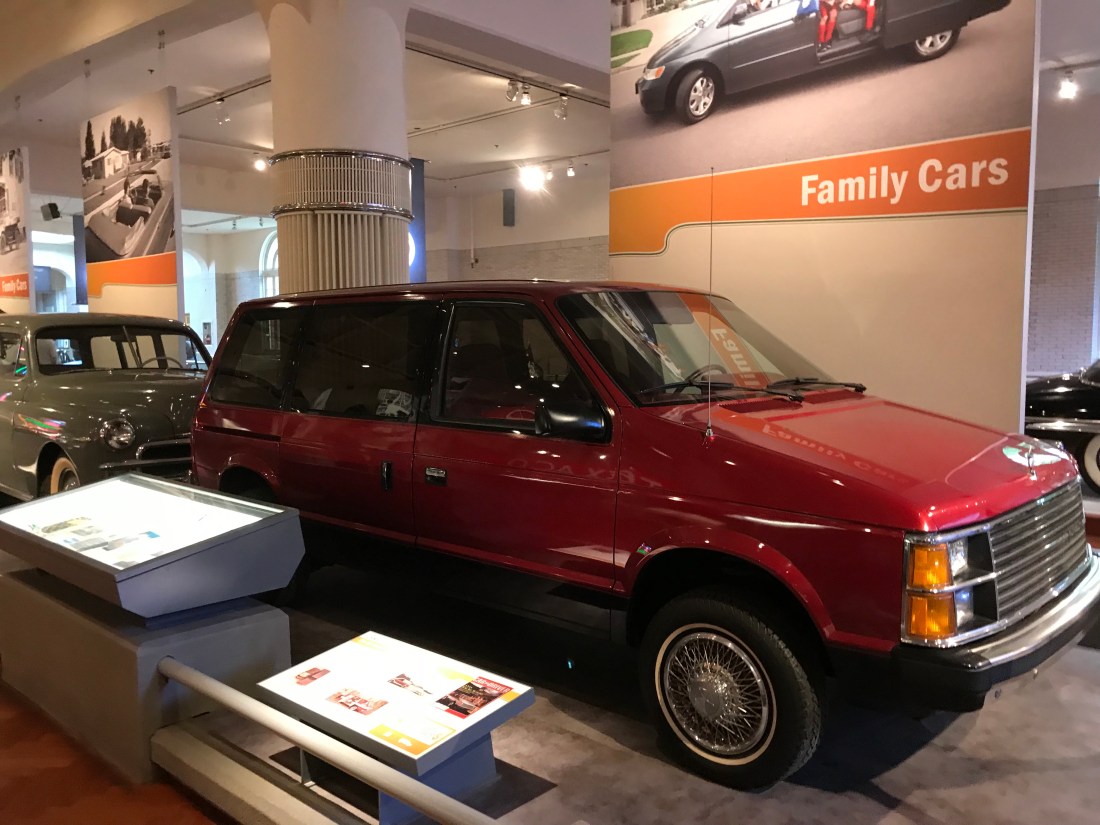 This car was especially popular when it came out!
 McDonald’s, back when it was only “The Golden Arch.” You can also see a A&W and White Castle sign.
 What was interesting to find out was the different kinds of models before the Model T. This green car was the Model A. the one behind is the Model B.
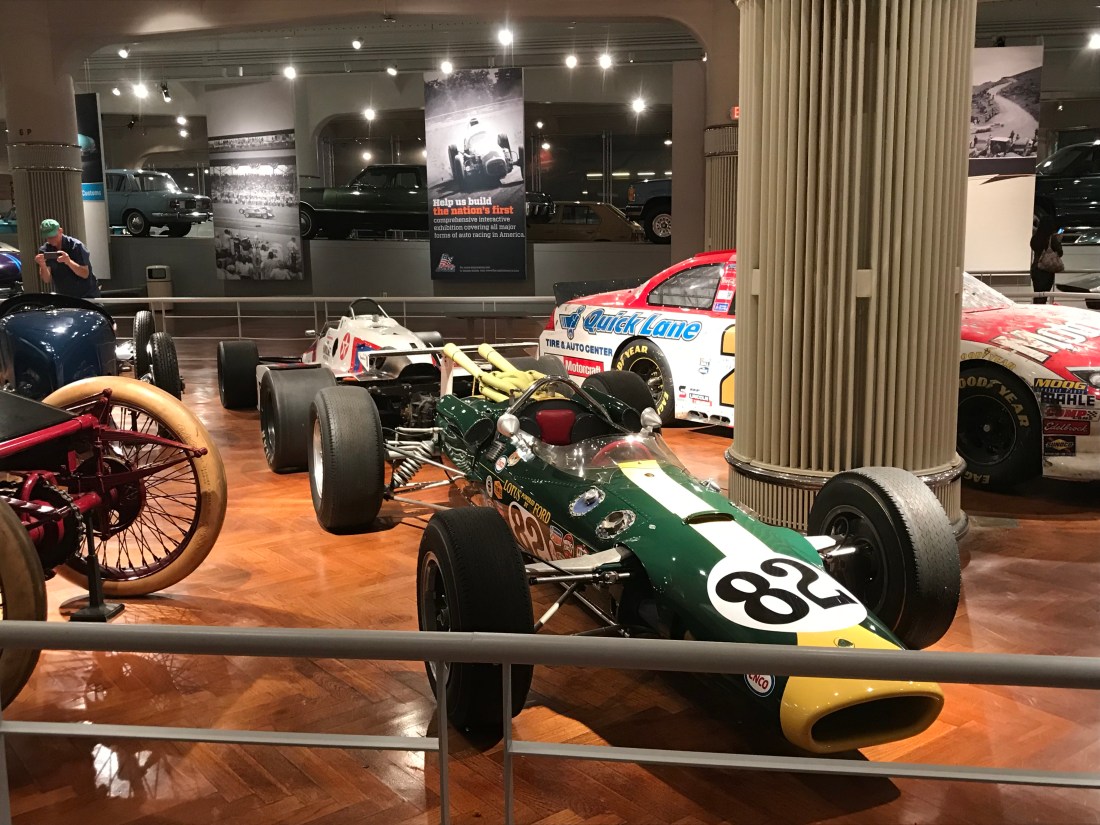
Kind of thing you’d find in the Indy 500 a few years ago.
 A classic Model T Ford.
 This giant of a train is called the Allegheny, the largest type of locomotives in the world! Just look at the size of this thing! It was used during the period of the Second World War, up to the 50’s.
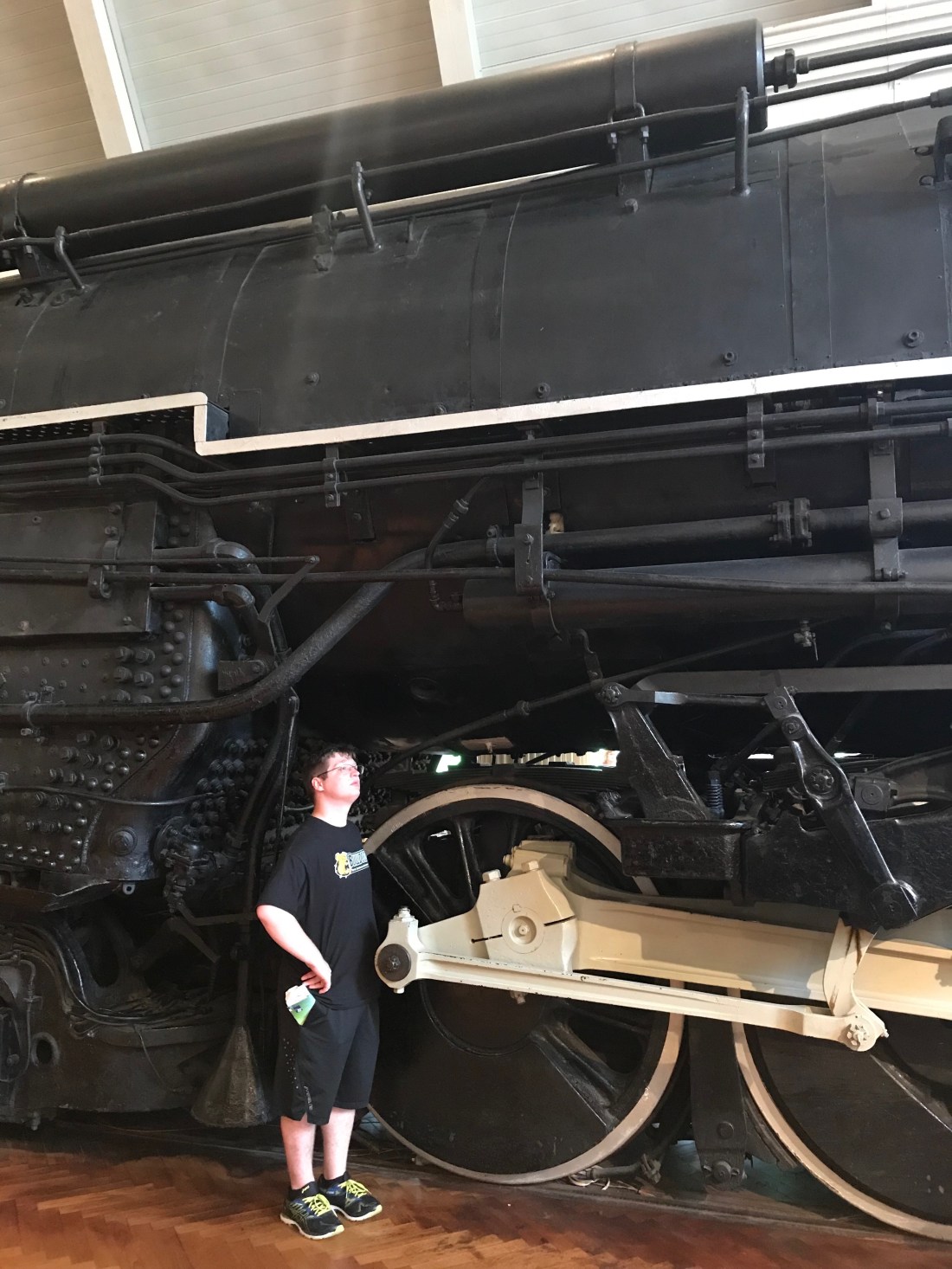
That’s me to scale. Heck, I’m barely as tall as the wheel!

 So many logistics that I’ll never figure out…
As it turns out, human labor couldn’t keep up with this engine’s need for coal, so it was funneled on its own from the coal car to the engine.
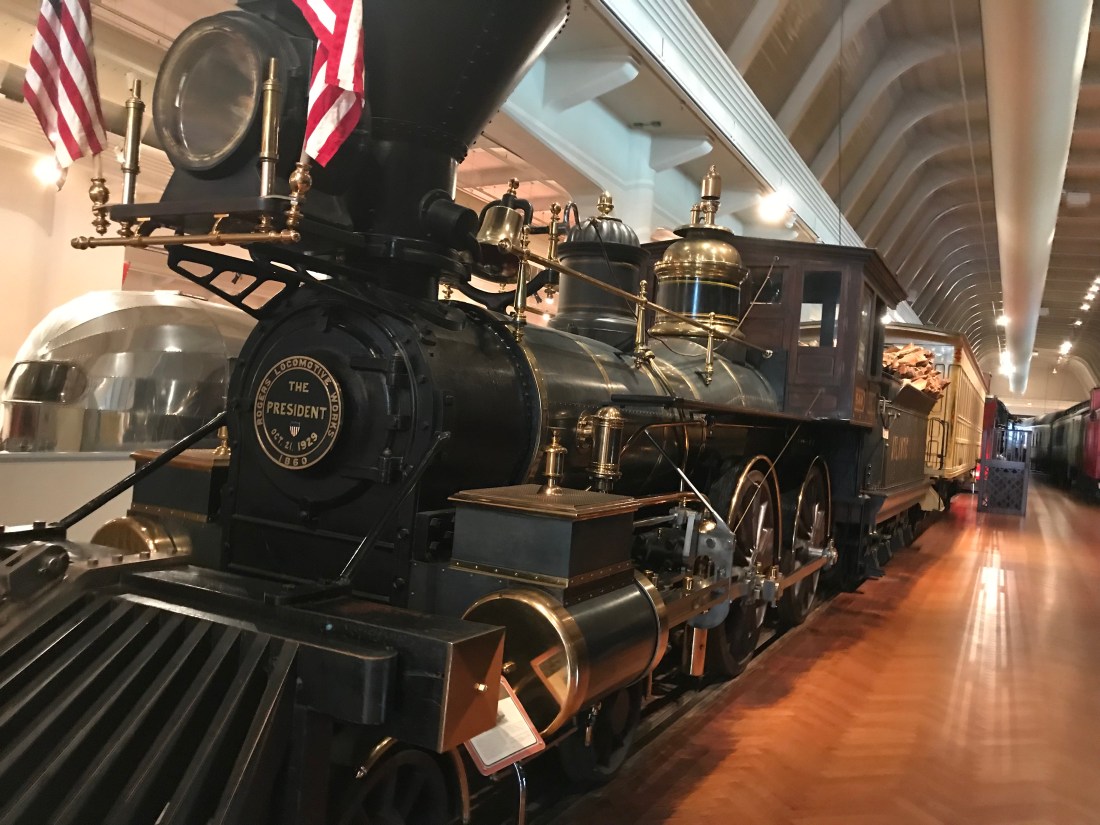 This engine, named “The President”, was used to carry President Herbert Hoover to the dedication of the Henry Ford Museum. It was one of the wood burning ones, as you can see in the back.
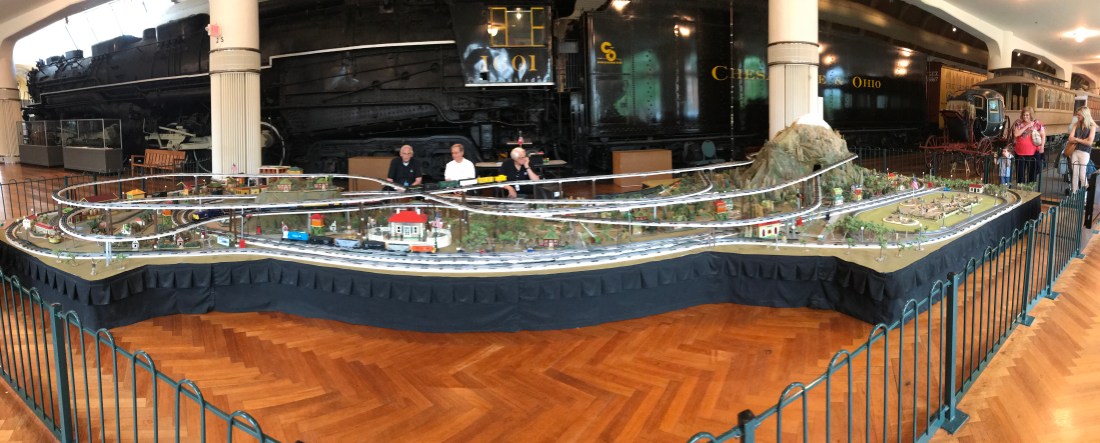 This large train model was also present on the end wall of the place (which we finally reached). The Allegheny is seen in the back.
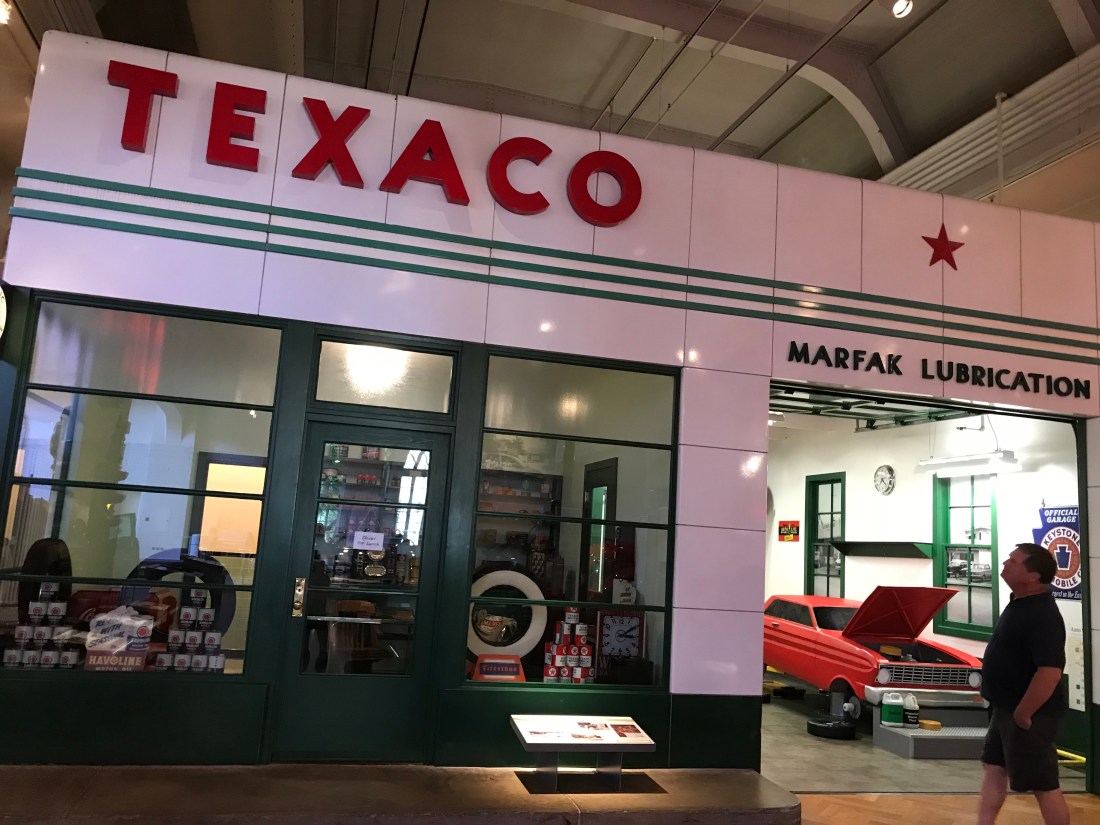
A Texaco Station that we saw on the long trek back to the entrance.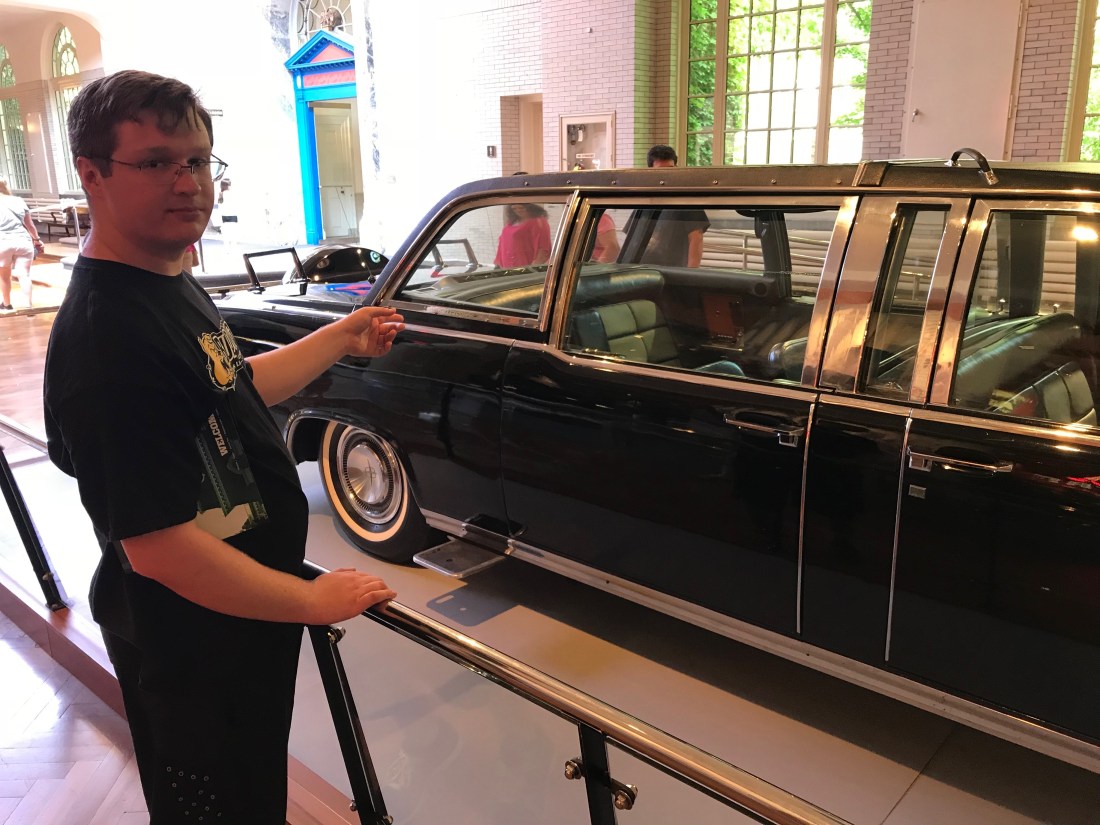
Also one last solemn tribute to the Kennedy Car.
Finally done with the exhibits after 6 hours, we took our leave of the place for now… Greenfield Village tomorrow!
Of course, we headed back to the Motown Museum to explore what to see there, and thankfully, made it in time for the last tour.
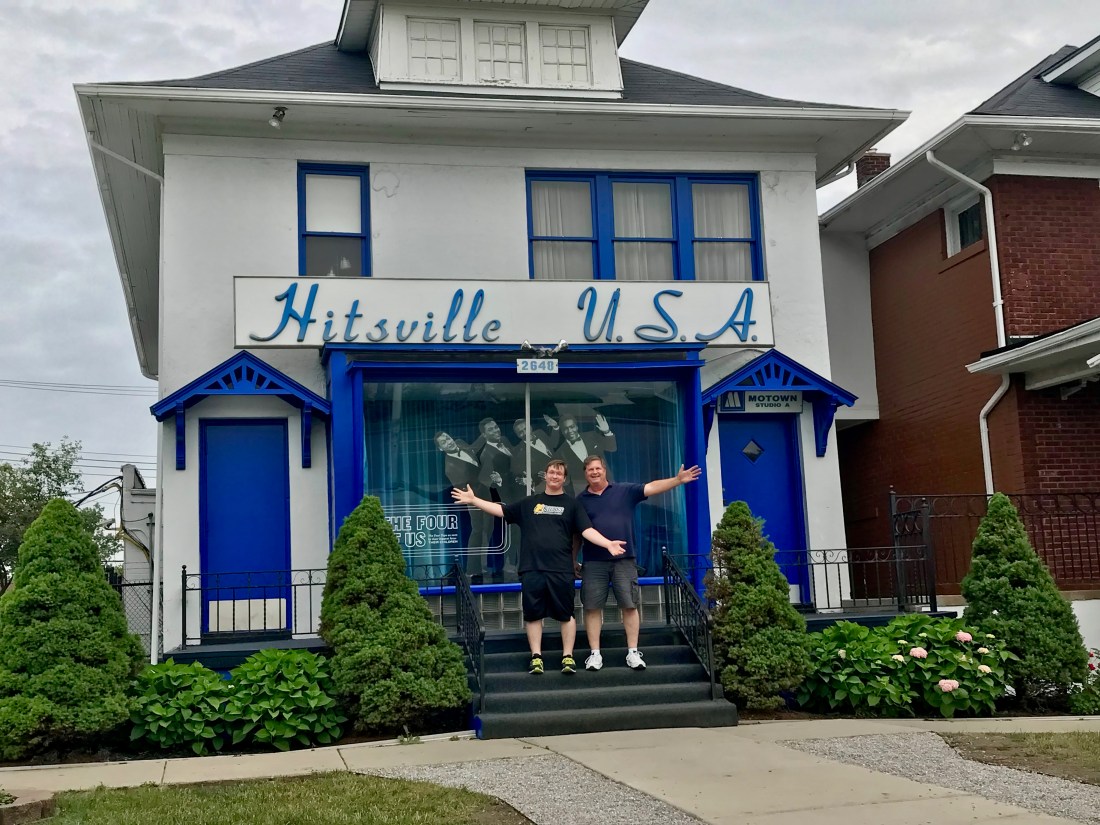
Unfortunately, they don’t allow photography in there. Sorry.
However, there were numerous exhibits in there dedicated to the music of Motown, including to the Jackson 5, Stevie Wonder, Four Tops, The Supremes, and Marvin Gaye.
Among these exhibits included costumes, records, actual items from the area, and a signature hat and glove donated by Michael Jackson himself.
Our guide, an avid fan of Motown, was exceptional, and showed us into the apartment, lobby, and recording room, with original instruments! Imagine, this place had been active for nearly 20 years, and produced such famous songs as “Baby Love”, “Please Mr. Postman”, and “Money (thats what I want!)”.
We also met another family who was on a similar historical road trip! They came from Boston, and we eagerly exchanged experiences of Presidential and Historical Sites! I also told them of the passport system, and they were excited to get started! Something tells me I’ve got me a new pen pal!
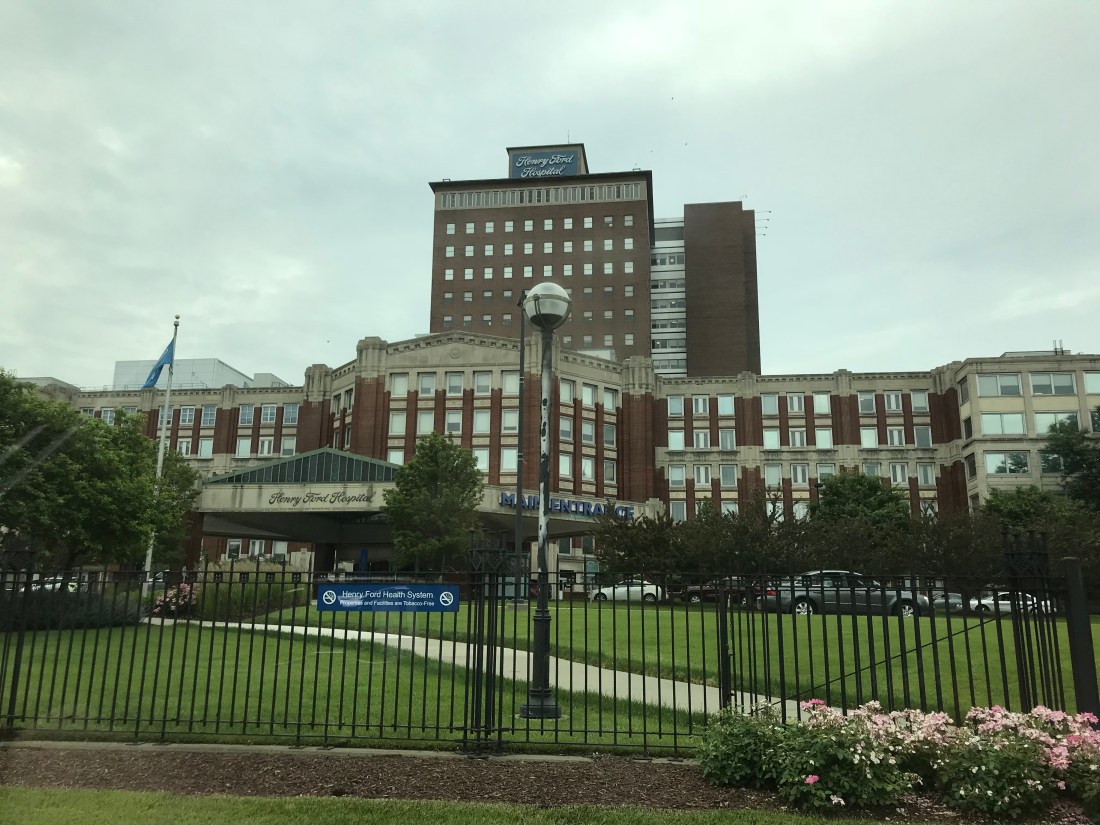
Later on, we passed by the Henry Ford Hospital (something tells me that this was once a factory, or something of that kind).
Eating out at a local restaurant, we went to sleep, ready for a great day ahead.
Now, today, we plan to traverse Greenfield Village, and to see as much as we can! And who knows, maybe there are other sights that we have no idea of?
Only one way to find out… see y’all soon!
 Mark's Historical Roadtrips!