
Hello everyone!
Today we wrapped up our activities in New York with a bang, with the Theodore Roosevelt Inaugural Site, and the Millard Fillmore Museum!
Both sites were very detailed and fun to visit, and is a fun start on the way back home!
Here, let me show you!
Leaving our hotel in Buffalo later rather than sooner, we were cruising in downtown to kill some time until the Roosevelt Site was open. We then came across a large square, with this.
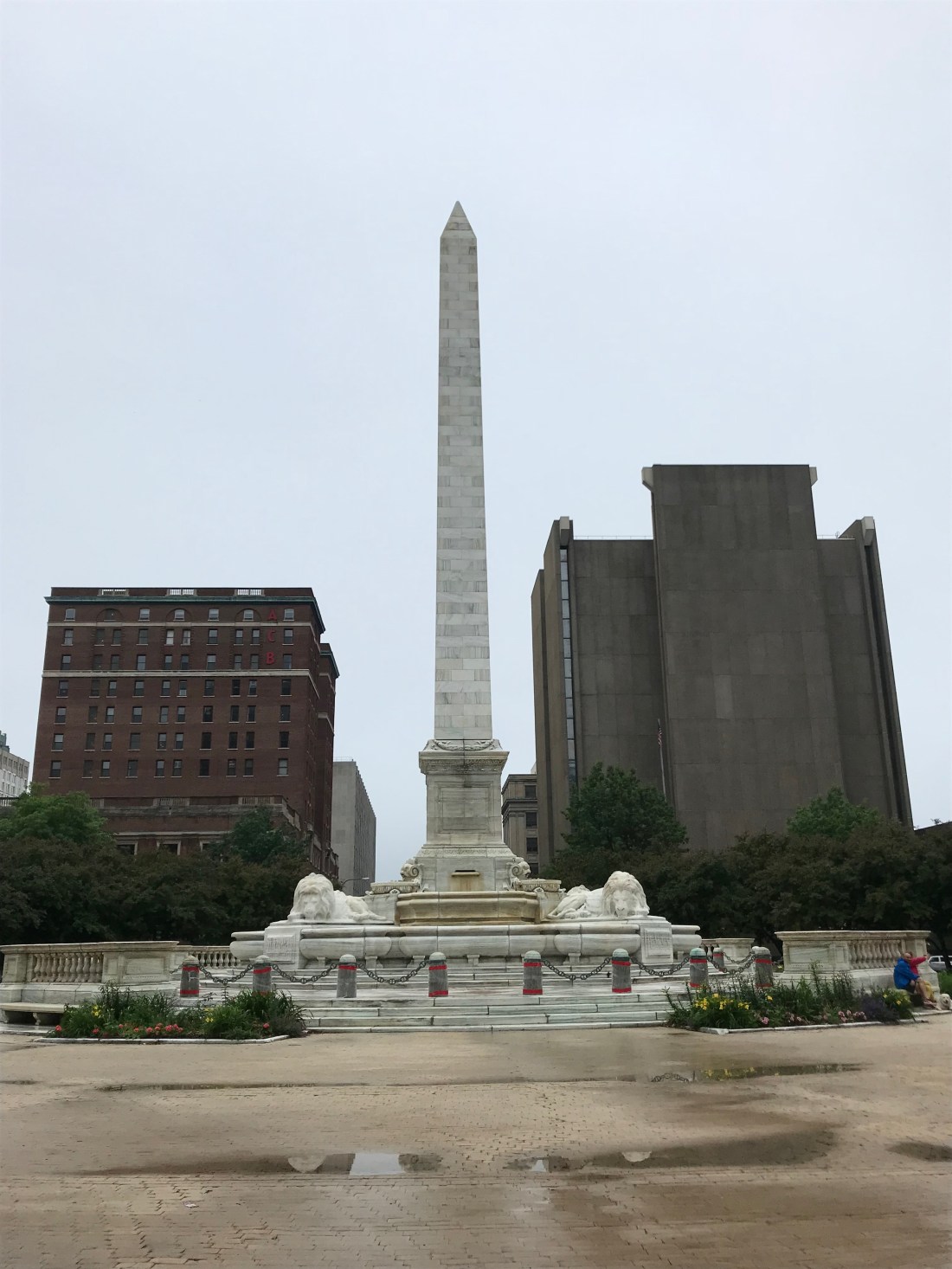 This was actually erected in honor of President Mckinley, who was shot and died in Buffalo! It’s a pretty tall monument, even by monument standards.
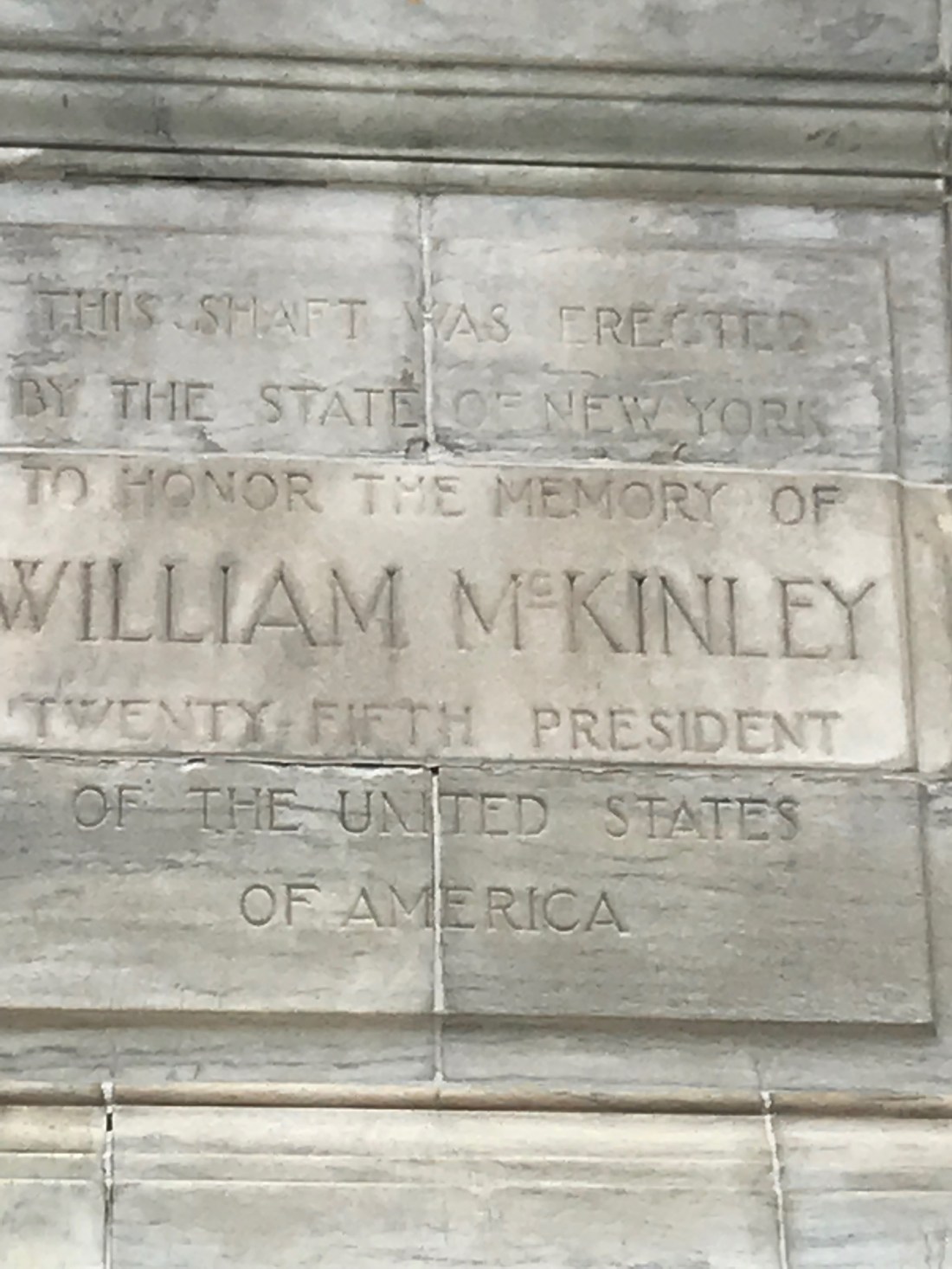
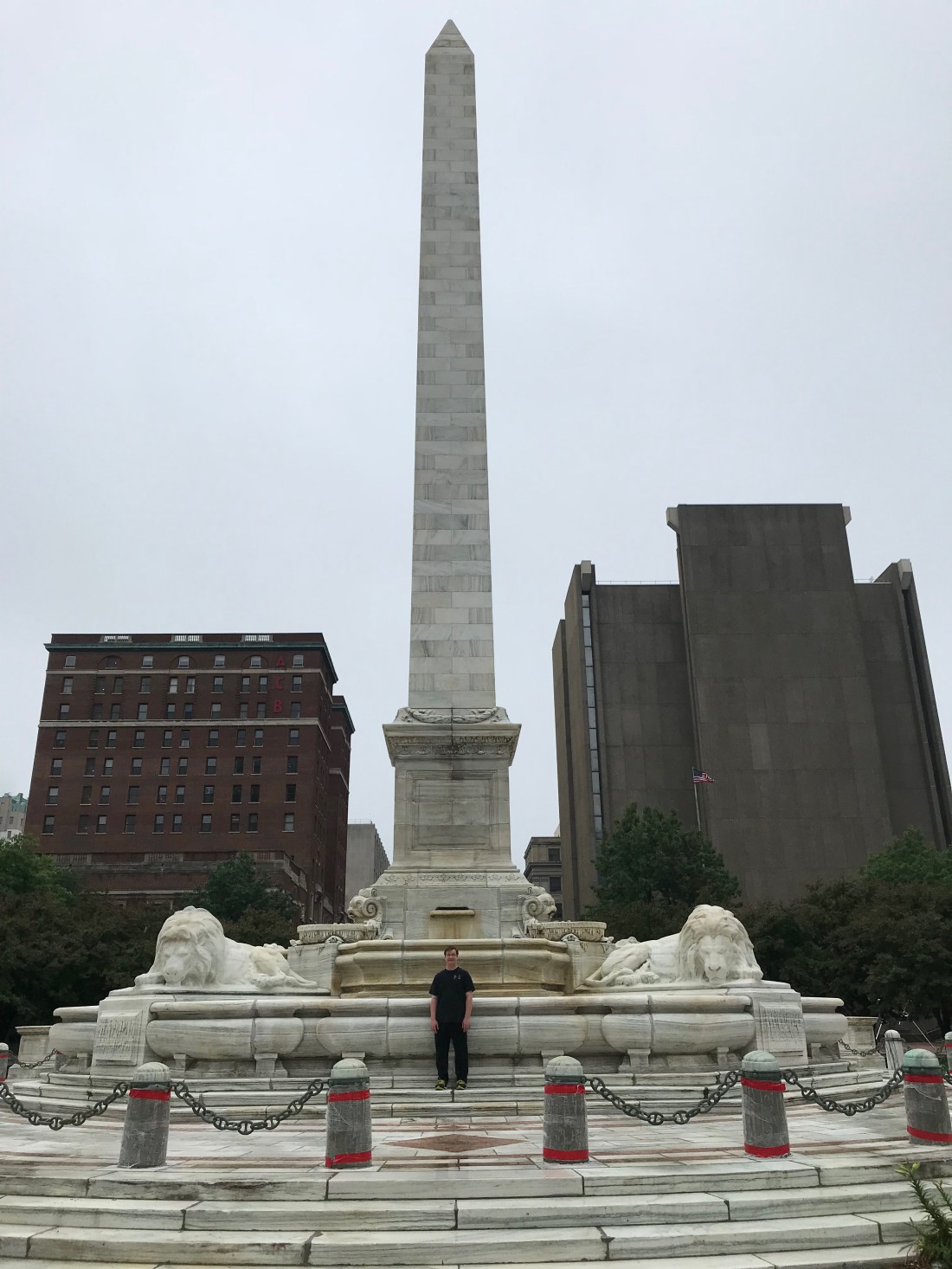 Mckinley was endeared in the hearts of Americans worldwide, and that support especially counts in the tragic deaths of their leaders.
And so, we continued on our way, until… we found it!
Theodore Roosevelt Inaugural Site
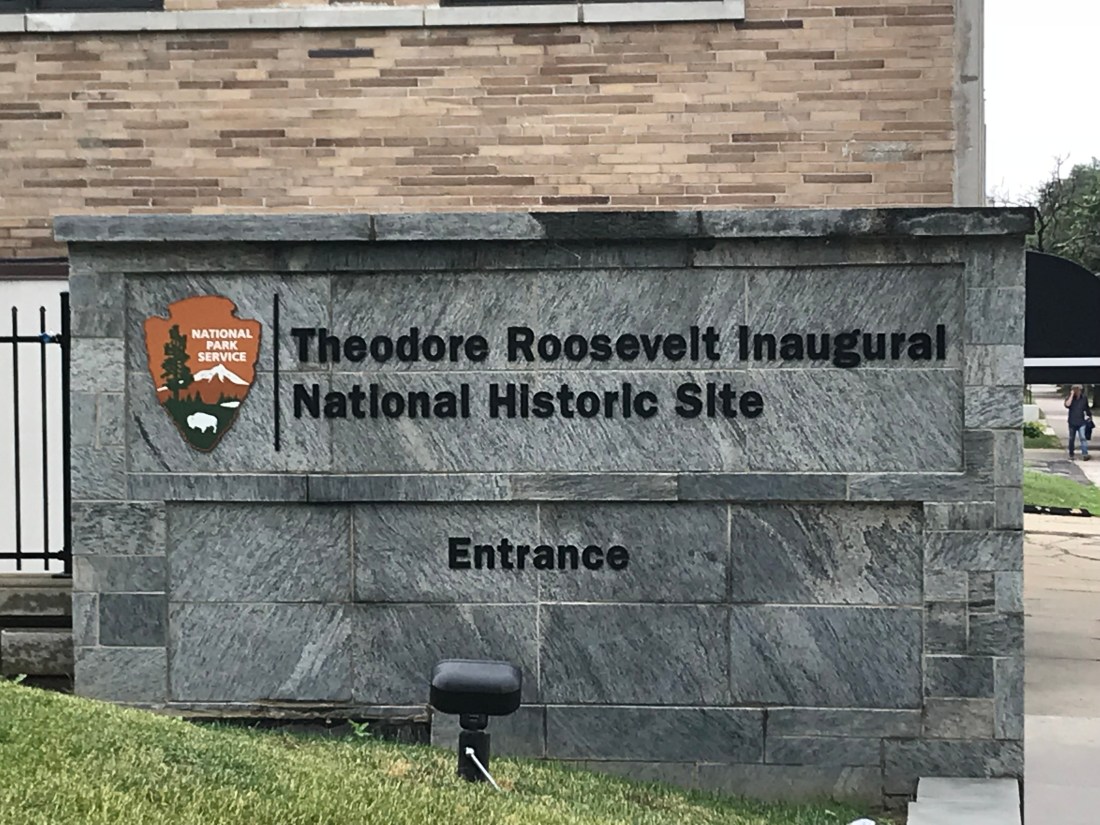 This site is actually owned by the National Park Service! Only a few months before, we saw ol’ TR’s (Roosevelt’s) Birthplace in New York City, so this was a very nice visit to add onto that!
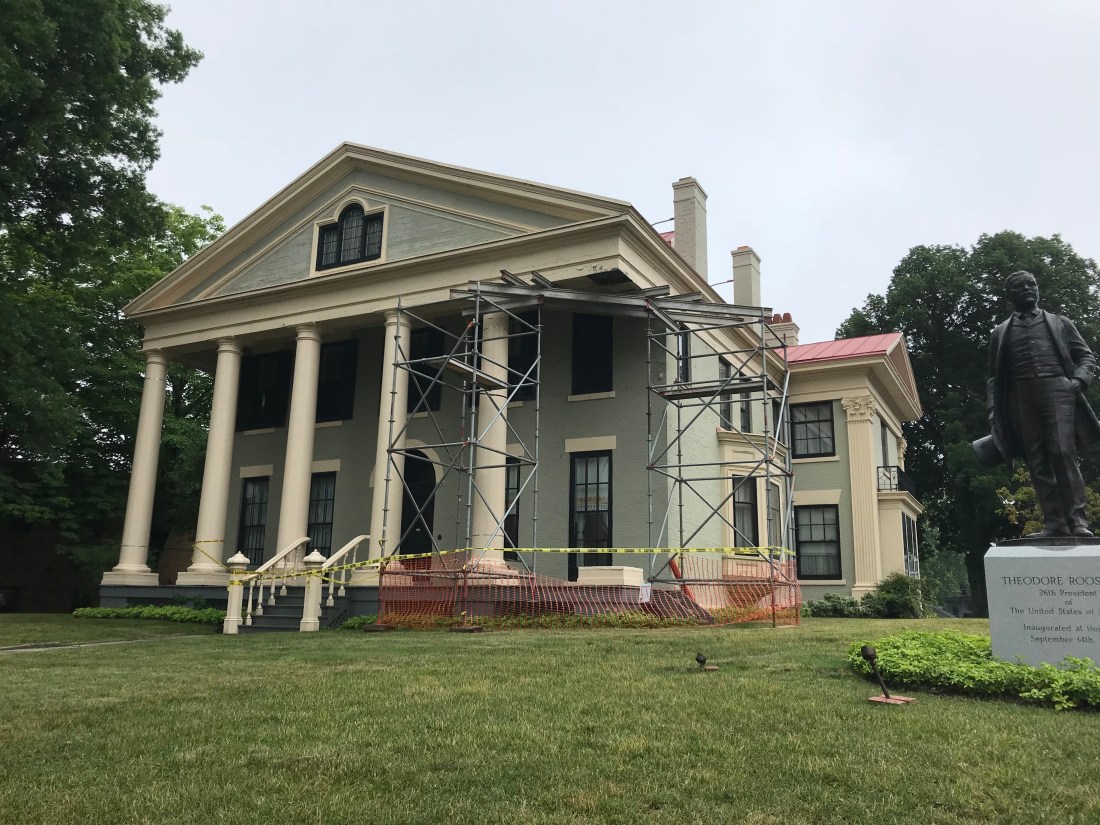
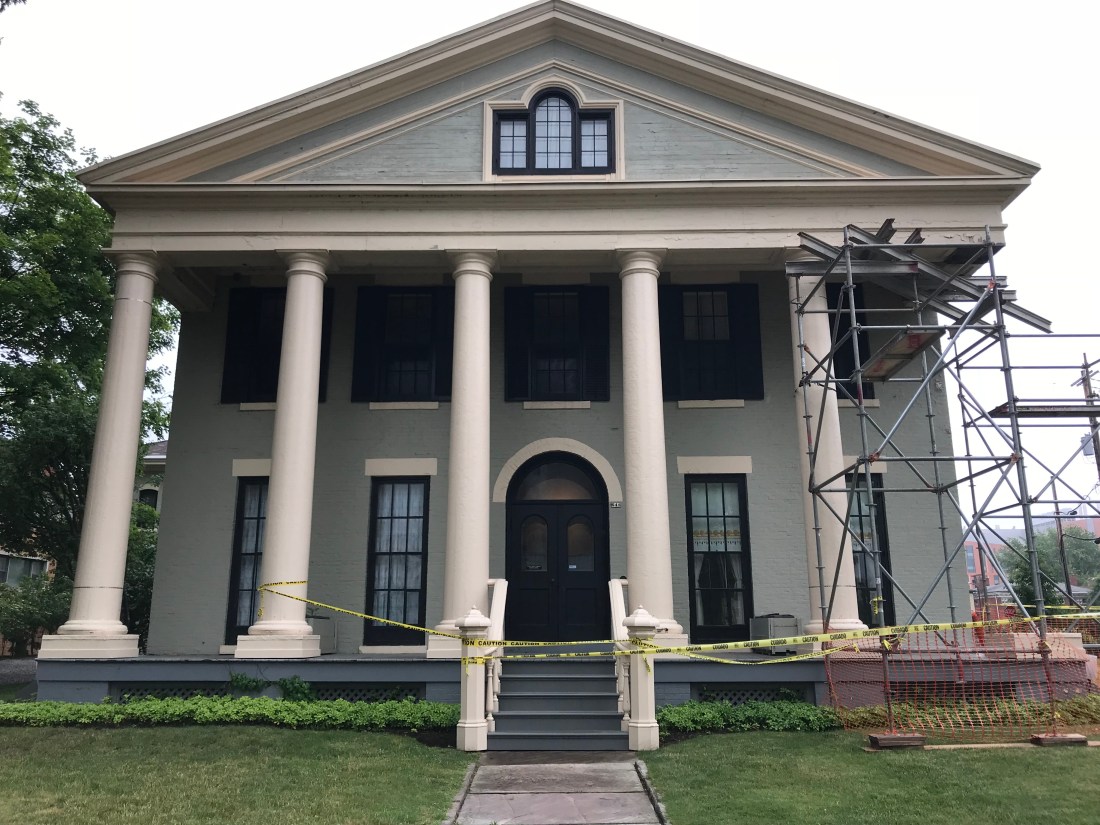
Seems that some restoration is going on the frontside…Thankfully it didn’t impede us in any way.
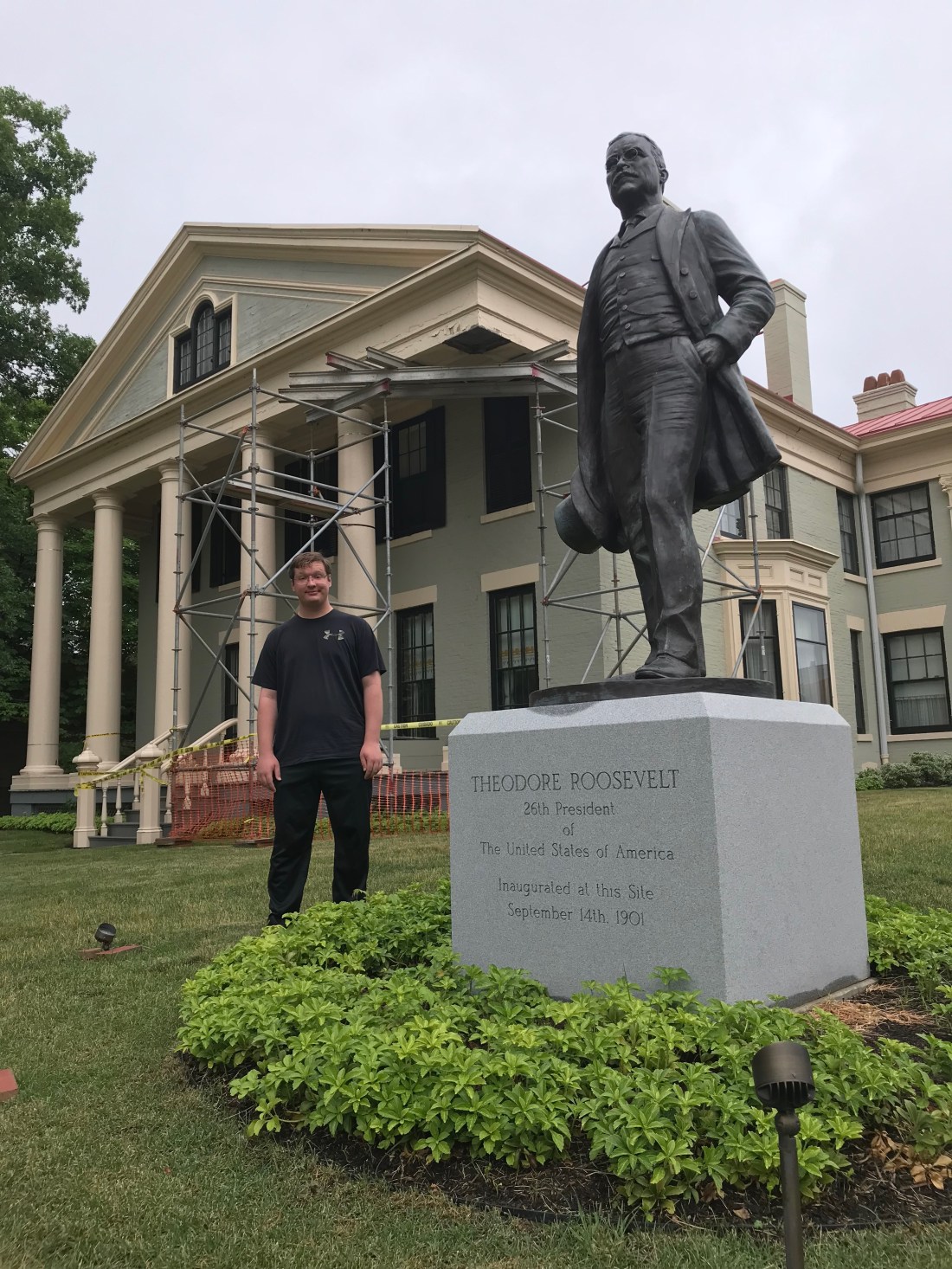
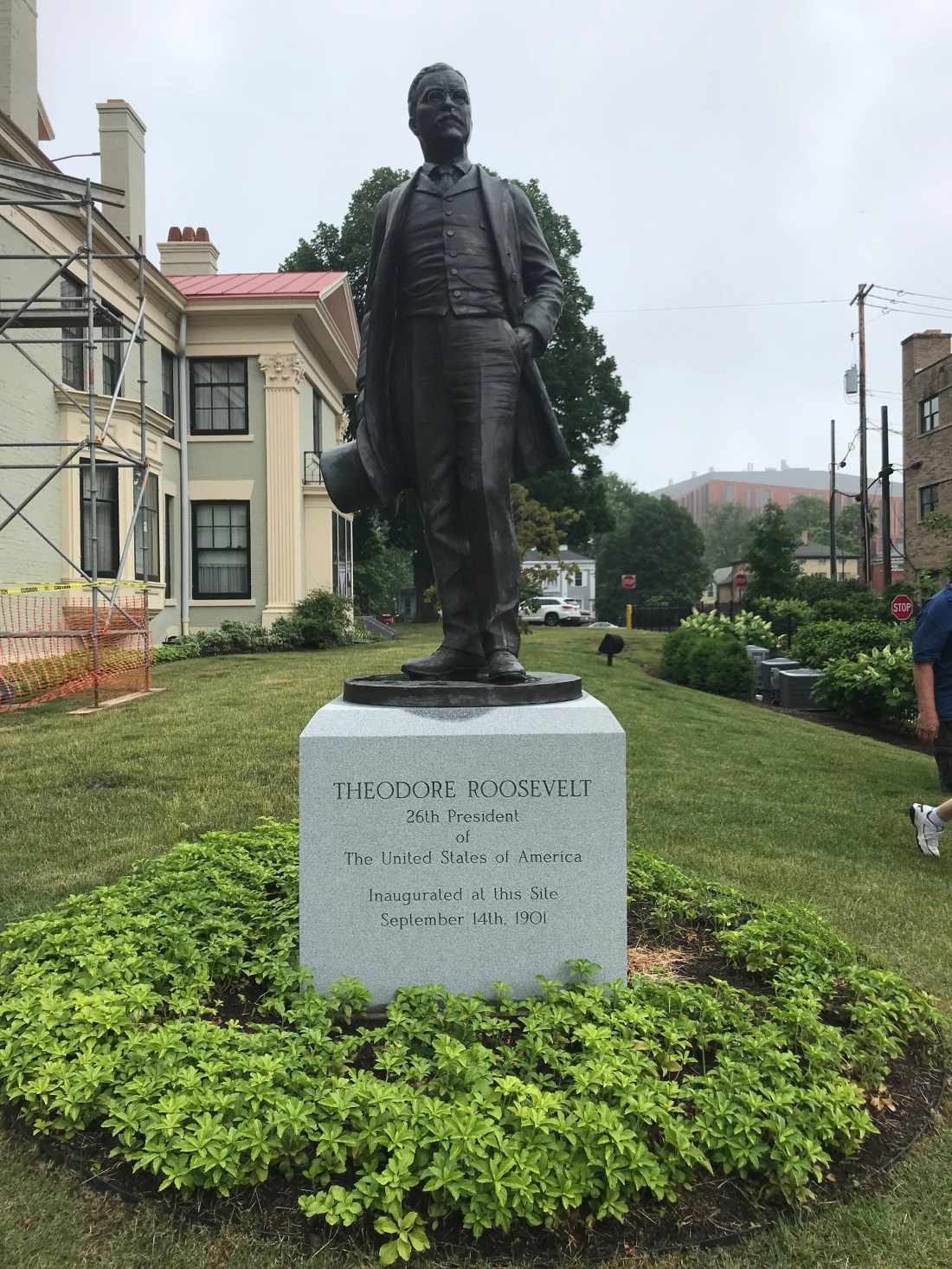 A very nice statue. TR has an iconic image.
 And so, heading inside, we looked around the Buffalo Pan-Exposition exhibit (try saying that five times), waiting for our tour. There were plenty of interactive games to explore the times of the turn of the century, including a machine that lets you turn the crank to watch old film footage!
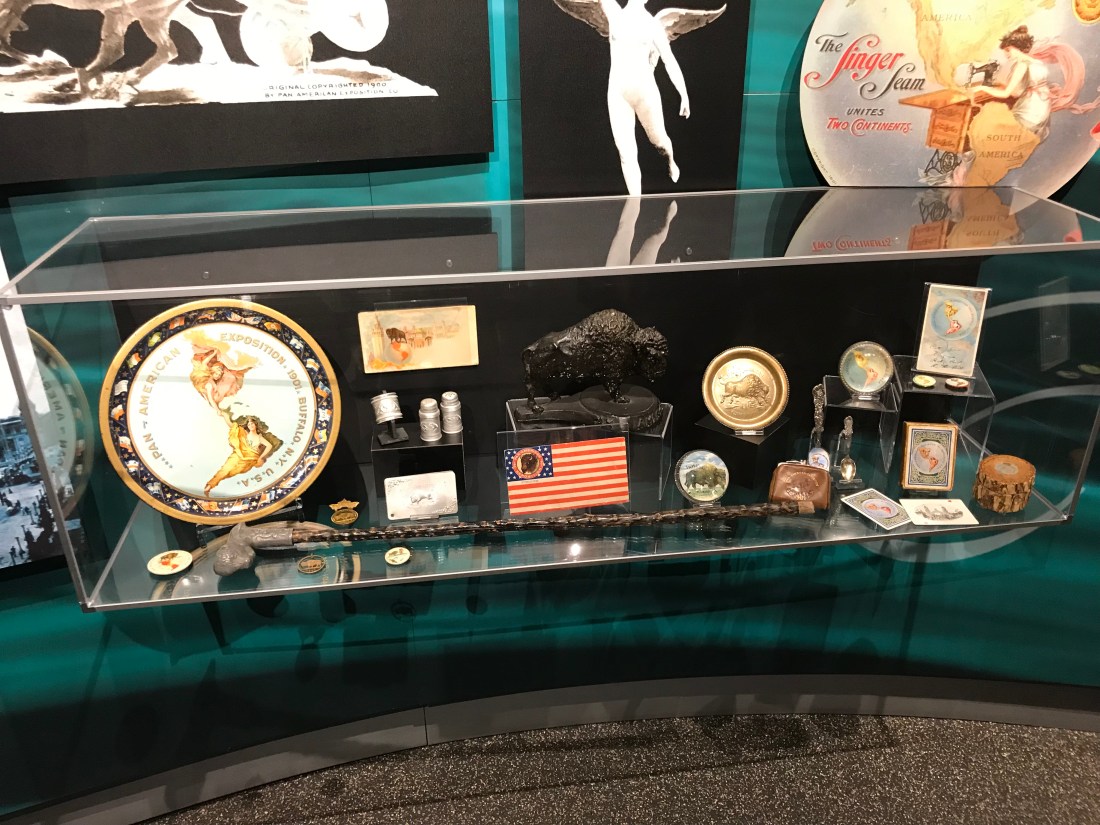
All these items were in some way or another related or belonged to the Exposition of 1901, which certainly had it’s breakthroughs! Most notably, individuals like Edison and Tesla showcased their ideas, and at night, the entire exposition grounds were lit up by lights! It was definitely a time to remember… but soon enough, it would not be for the exhibits…

As the story goes, President William McKinley arrived at the “Temple of Music”, the main building of the Exposition, where he would shake hands with passing members of the crowd in the open. Sadly, this allowed the perfect opportunity for Leon Czolgosz, an anarchist, to shoot McKinley twice in the abdomen.
McKinley was immediately rushed to the hospital, where doctors worked vigorously to heal the president. Vice President Roosevelt, receiving word of the incident while on vacation with his family in Vermont, immediately rushed to Buffalo. When word had it that the president had begun a steady recovery, Roosevelt was allowed to return to his family. However, things took a turn for the worse, and McKinley developed Gangrene, and more than a week after the shooting, he died; the victim of our third presidential assassination.
Roosevelt arrived at the house of his friend, Ansley Wilcox (now the Inaugural Site), and found out that the president had died, and that he had to be sworn in almost immediately. The house helped to paint the picture of the very broiling tensions that emerged within these walls.
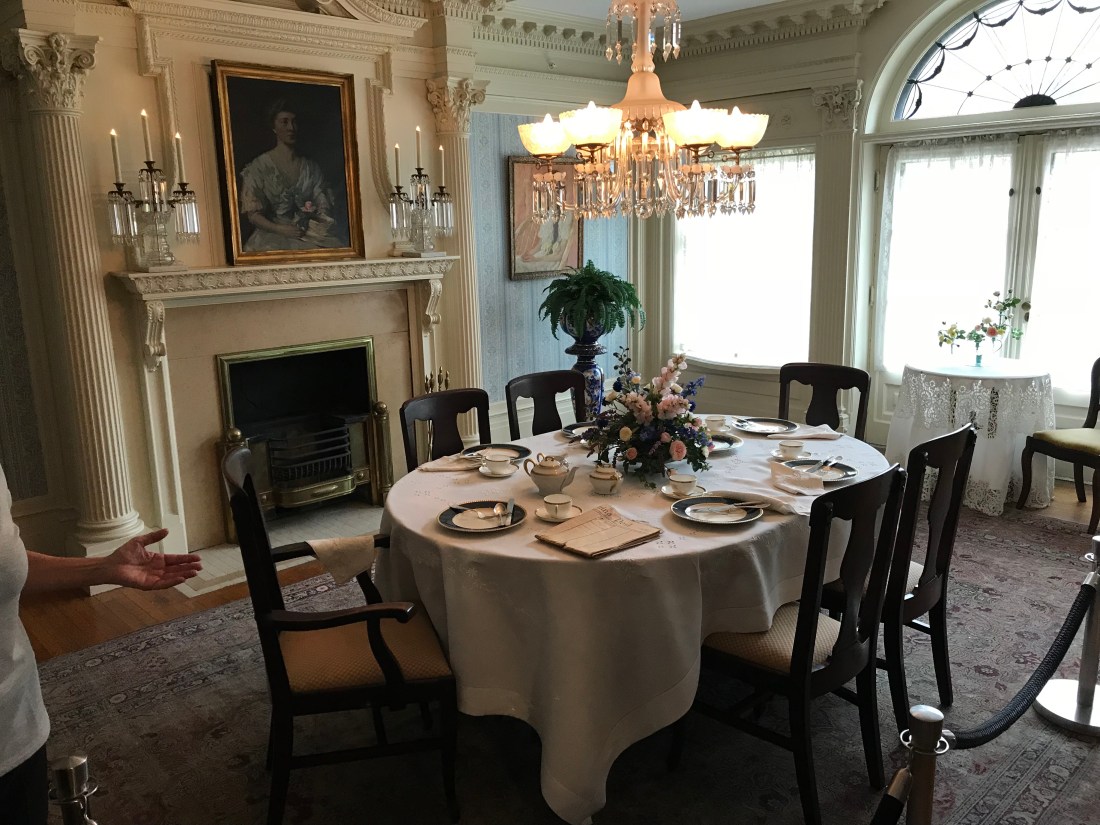
In the dining room, Roosevelt would pace in front of the windows, trying to think the best course of action. He was hesitant to trudge ahead in stormy waters, and so, some grew frustrated at his indecisiveness, particularly McKinley’s cabinet.
A nearby diorama played out of the numerous dilemmas that Roosevelt observed in America… natural resources and the American landscape vanishing, horrendous conditions for workers in factories, mines and other harsh jobs, the management of foreign affairs, and racial inequality.
Of course, Theodore Roosevelt was never one to shy away from adversity. After all, he had grown from being an asthmatic and sickly child, to a both physically and mentally strong individual who would become a police commissioner, governor, vice-president, and now president. I think that these words that he spoke here sum it up the best.
“It is a dreadful thing to come into the presidency this way. But, it would be a far worse thing to be morbid about it. Here is the task, and I have got to do it to the best of my ability, and that is all there is about it.”
Theodore Roosevelt – 1901
And so, without any further delay, Roosevelt gathered into the Wilcox Library, among 50 other cabinet members, reporters, officials, and other noteworthy individuals.
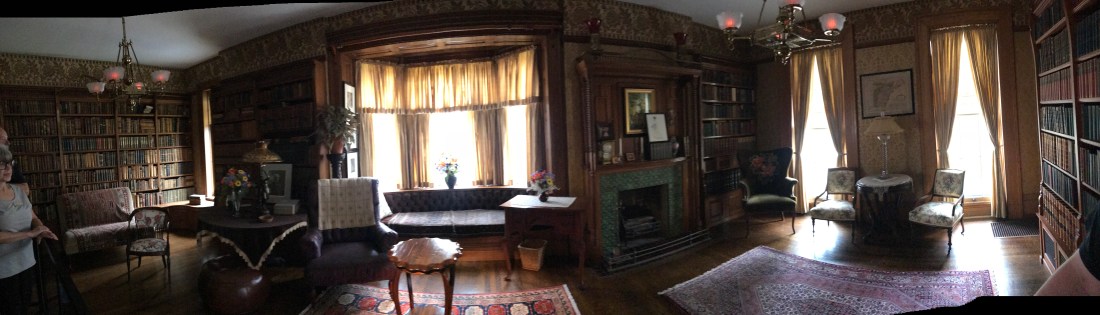
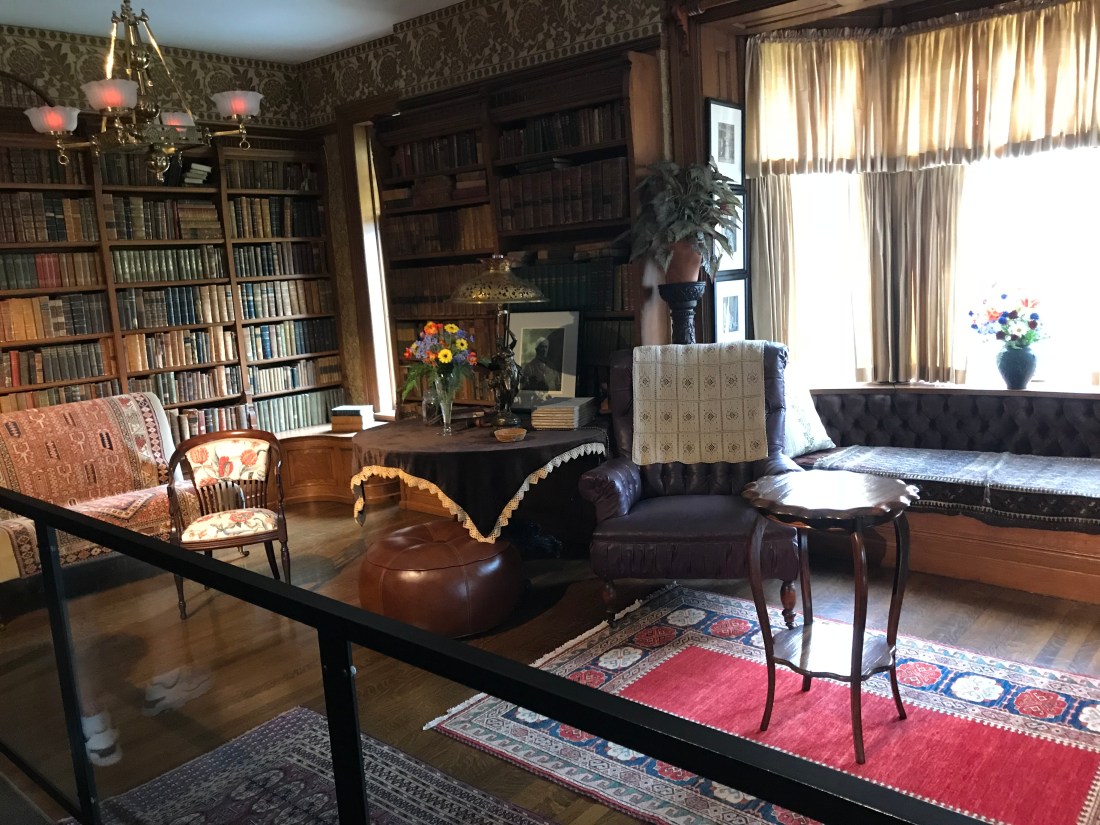
It was in this very room that Roosevelt became the 26th President of the United States. Without any bible, ceremony, or grand speech, he was given the oath of office at that same small table in the middle of the room. And Roosevelt naturally, would change the course of history.
 Here is the entrance hall to the house, which I imagine became a hub of ferocious activity in the aftermath of McKinley’s death.
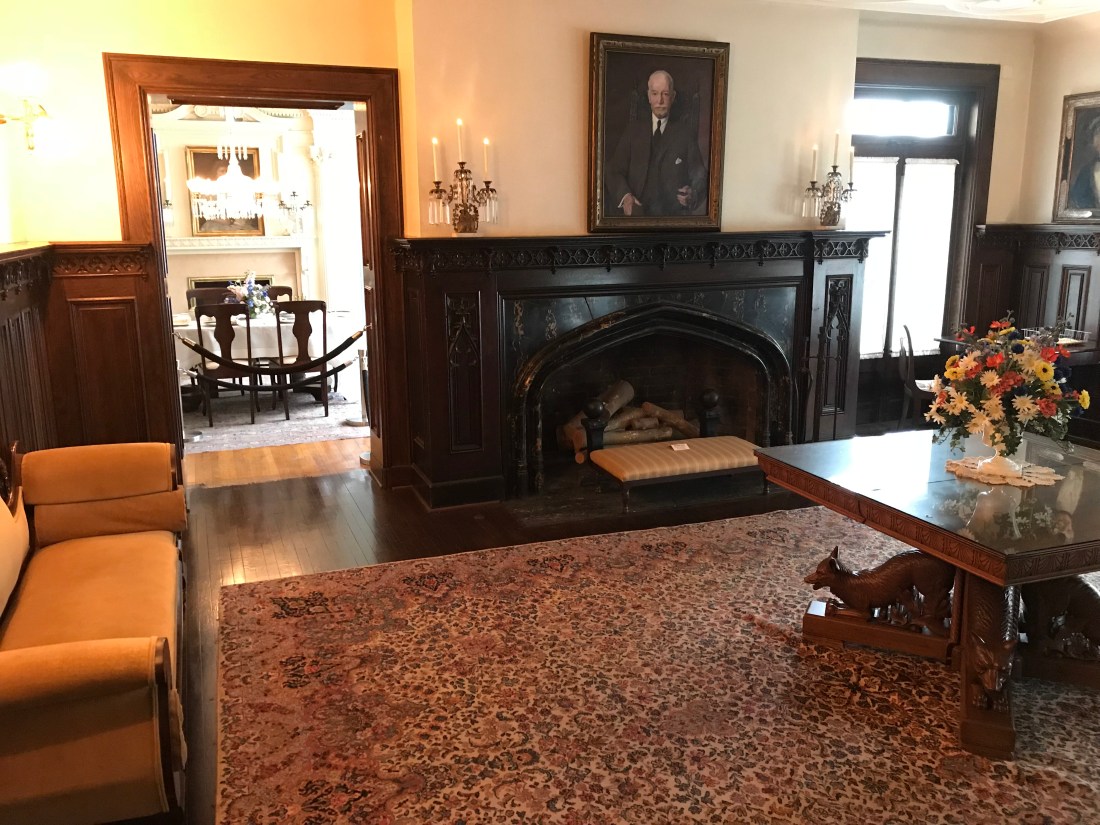
This house has been through a lot before becoming a historic site. Before the Wilcox’s, it was home to a series of barracks, which even housed future Confederate President Jefferson Davis at a time, when he was serving in the U.S. army. After the Wilcox death, it became a restaurant, and eventually evolved back into a similar state to the Wilcox house.
 In the three days following the inauguration, Theodore Roosevelt made this his makeshift office, and issued his first orders and proclamations as president. He returned to Washington after business was settled.
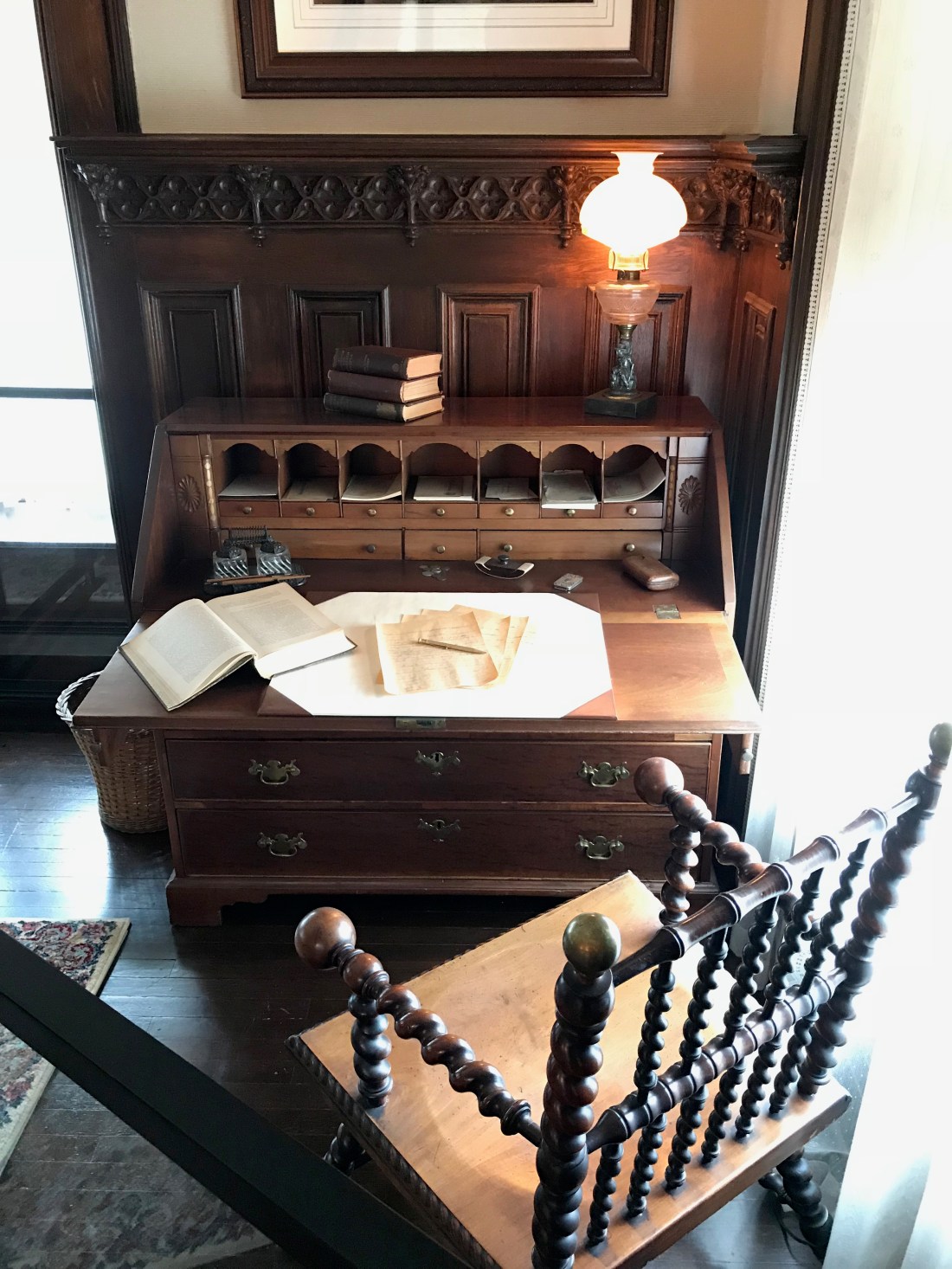 And it was from this desk that he wrote his very first messages to the nation. This desk actually had belonged in the Wilcox family since 1800. Which makes this desk 218 years old!
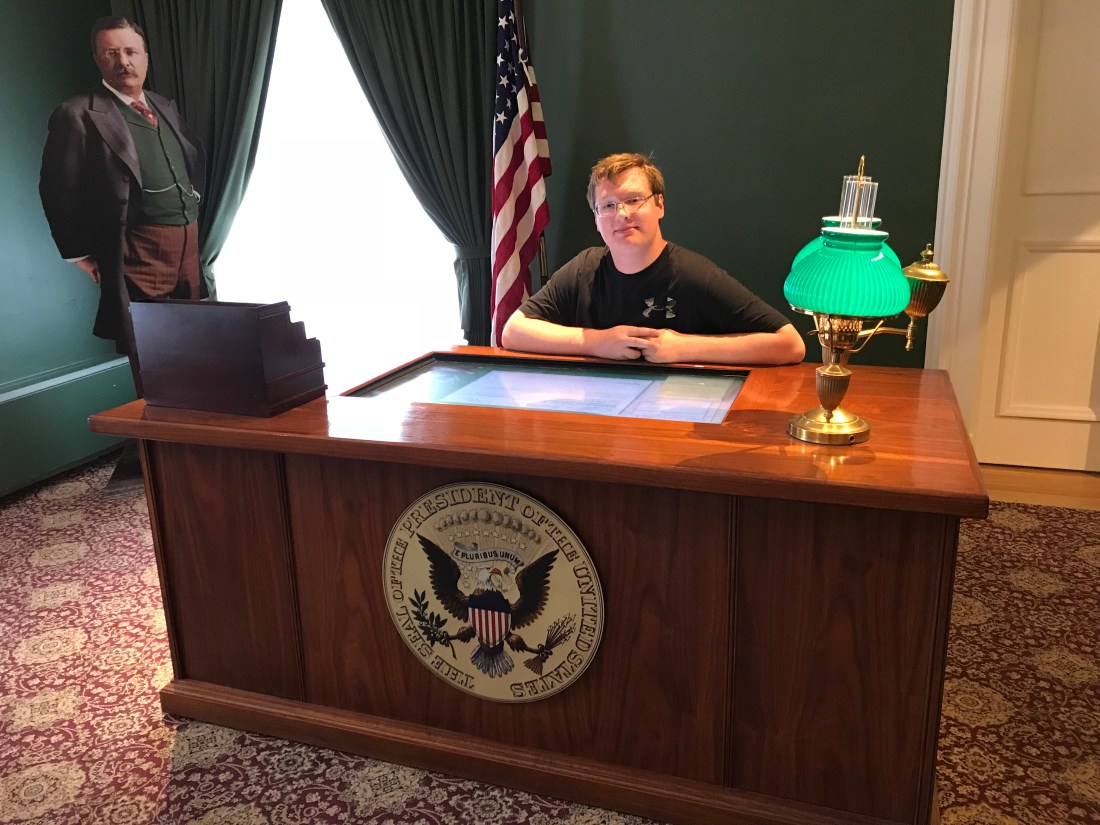
Back in the Visitor’s Center, I found an activity where I could be President for a day! There, I got to review bills presented to Roosevelt back in the day, and I could either sign them, or veto them. It was interesting to compare my decisions to Roosevelt!
What is it about Theodore Roosevelt that makes him a definite icon in America’s culture? Is it his cowboy attitude, combined with his robust and endless energy? Or is it his policies that helped to shape America into a global power? Well, those certainly play a great part, but it can’t be forgotten that Roosevelt was a man of principle. Whatever he did, he did so with the utmost respect for America as a nation, and it’s people as meaningful to it’s success. He had that sheer charisma and can-do attitude that changed the world for the better… and i’m sure that we can be inspired by that to make our lives better!
Anyways… sometime in the future, we will need to visit the town of Oyster Bay on Long Island, where Roosevelt’s home of “Sagamore Hill” rests, as well as his gravesite nearby. But for now… we have trip to finish.
And so, we continued onto the Millard Fillmore House, situated in the village of East Aurora, only 30 minutes away. The rain was coming down on us, but we managed to find it in the midst of the suburbs!
Millard Fillmore Museum
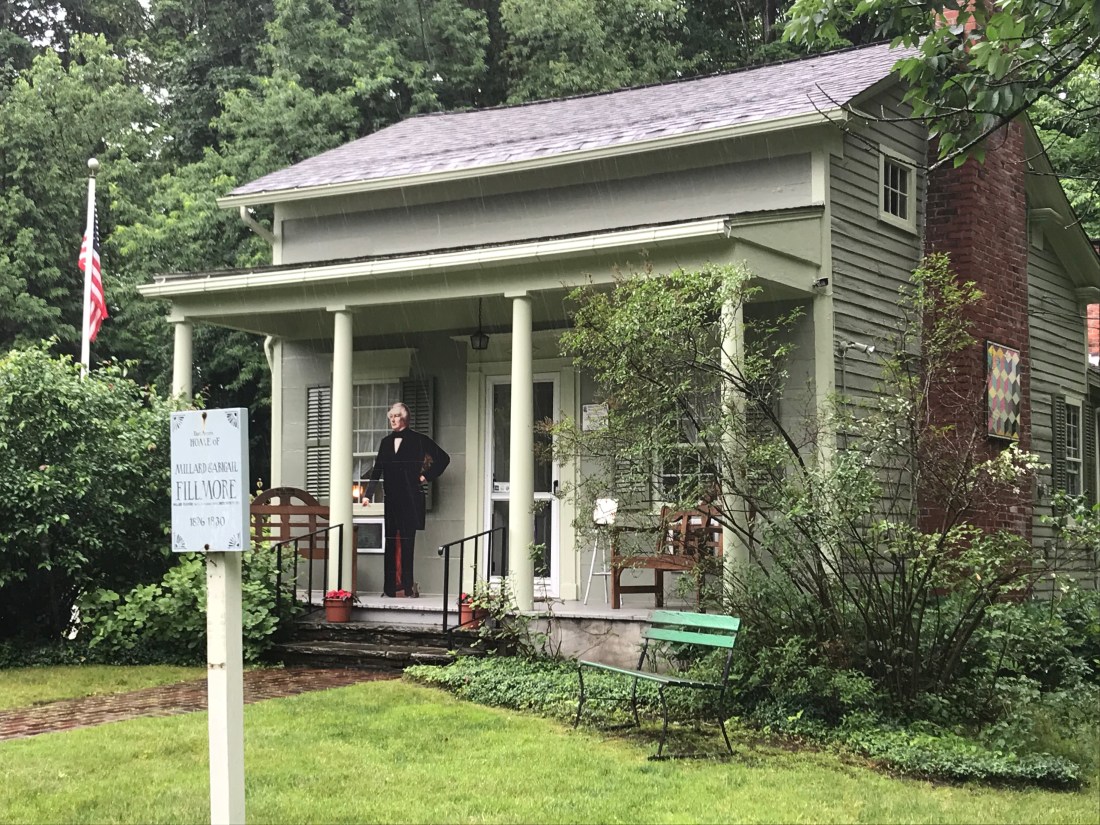
For a second, I thought we had the chance to meet another president, but naturally, we were once again fooled… sigh.
Fillmore was a self made man, and thus, built this house for himself and for his bride Abigail.
To let you know how I discovered this hidden gem, I was watching “CBS Morning News with Mo Rocca” one day, and he did a segment featuring on Millard Fillmore, which included a tour of this house! (Sorry for the low quality of the picture.)
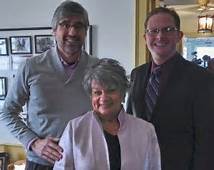
That’s Mo Rocca on the left, and tour guide Kathy Frost in the middle. I can’t wait to see how similar it was from the 7 minute segment!
Here’s the link, in case you want a more in depth look at the house and Fillmore.
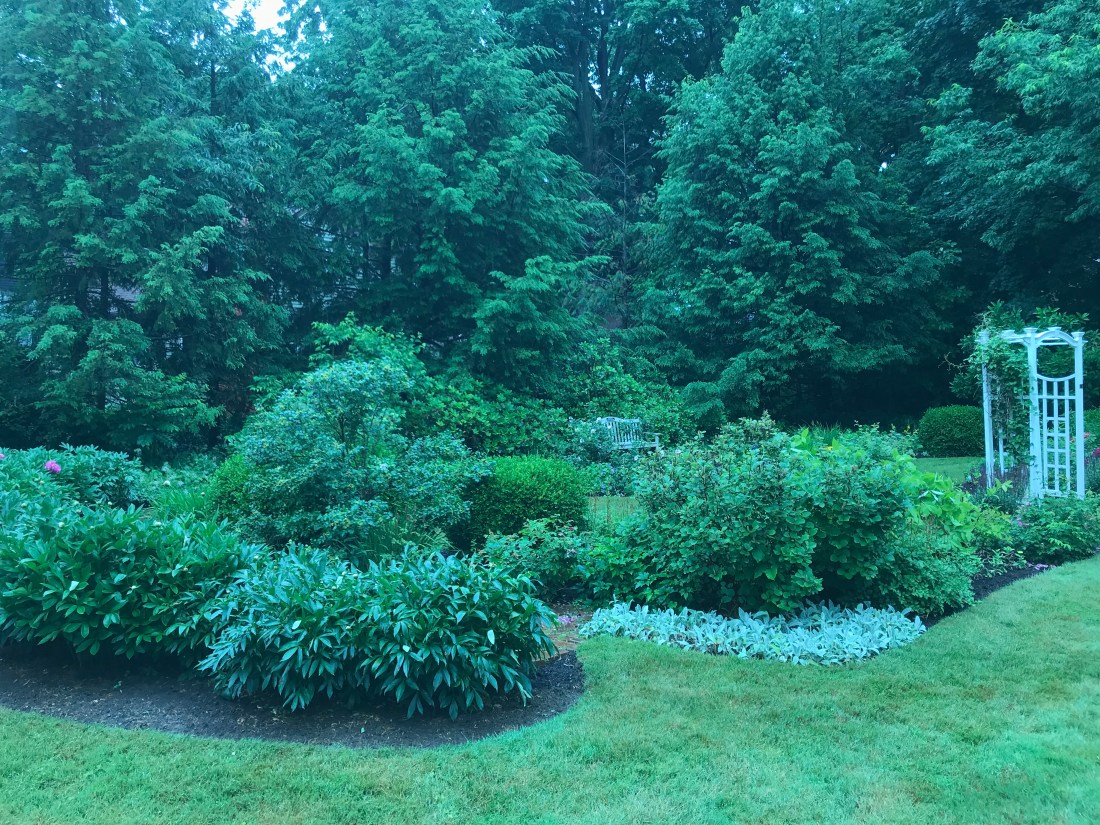
Nearby were some very beautiful gardens, which we couldn’t enjoy as the rain was down-pouring.
Waiting on the porch, we were let in by… Kathy Frost herself! I was just astounded to meet her! I brought the segment up in our conversation, and she told us a lot of details about the visit, and she was just about the most pleasant person to talk to, and there was plenty of laughter and geniality in the air as we toured the house.
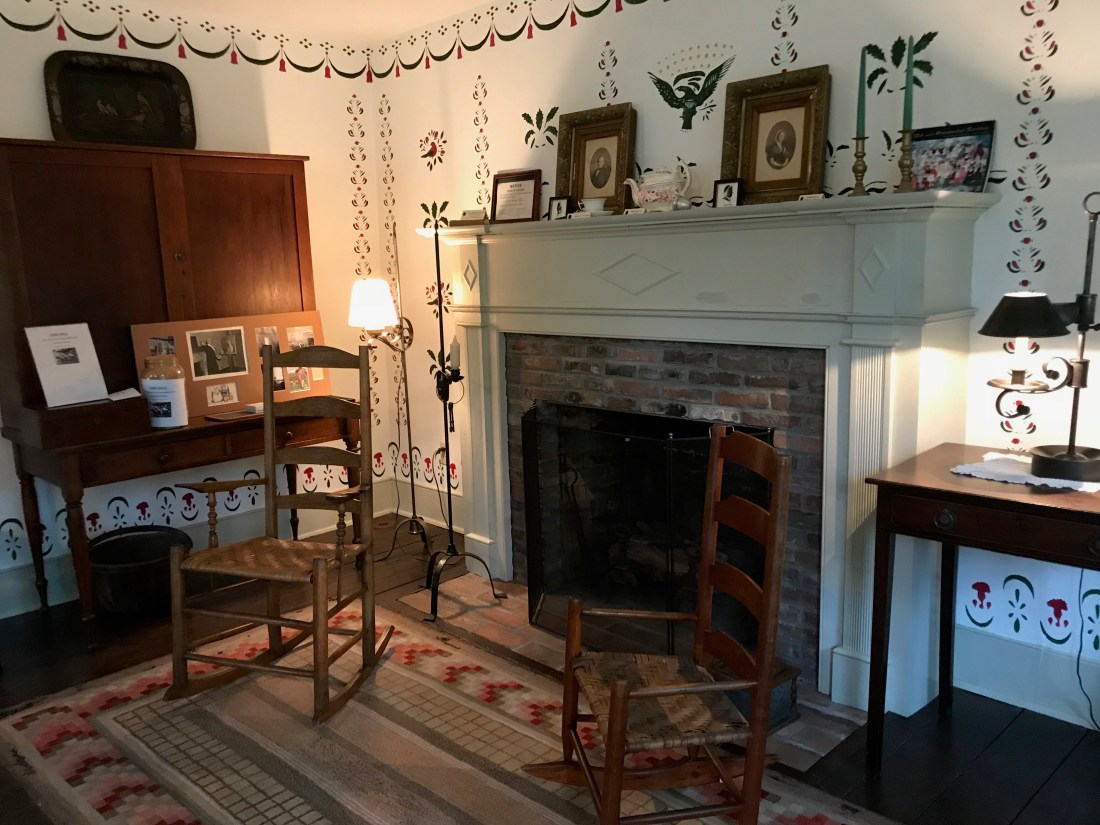
In the entry room were a number of both Fillmore’s actual items, and other objects that would have pertained to the period (and not necessarily his belongings).
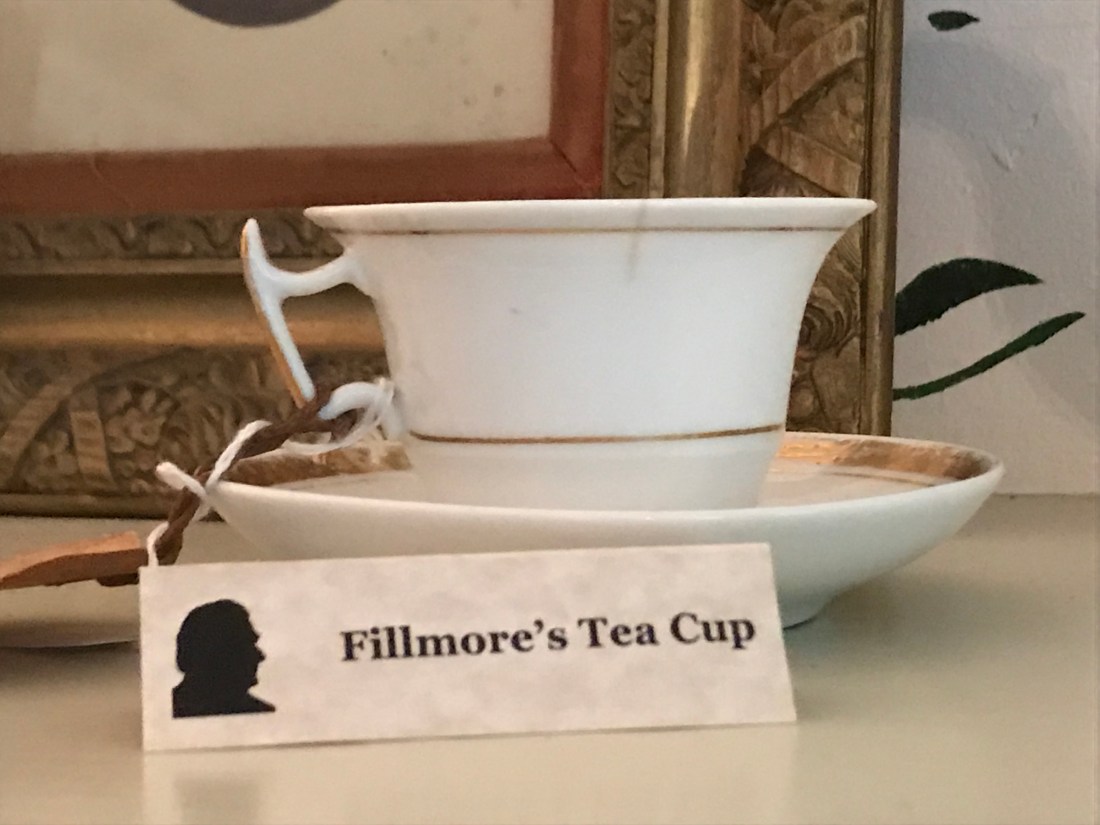 And this is the teacup that was featured in that clip above. While this house was humble, Fillmore was still a somewhat sophisticated person.
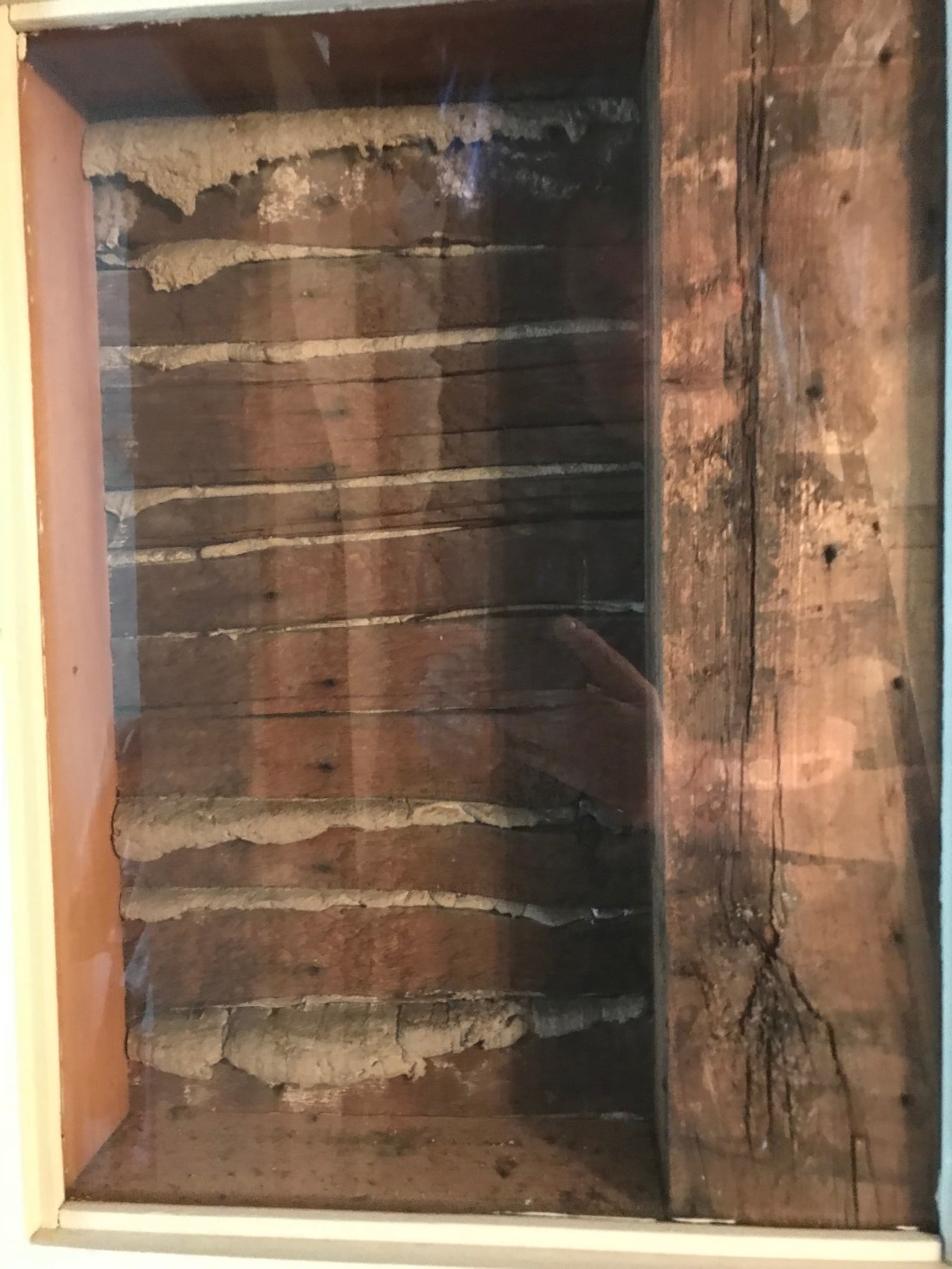 This opened section actually showed the original framework! With the original wood and mortar, the structure is still surprisingly stable, having withstood an earthquake at one point, with very little to no damage. Before becoming a lawyer, Fillmore would chop wood, and knew the trades of the woodworker!
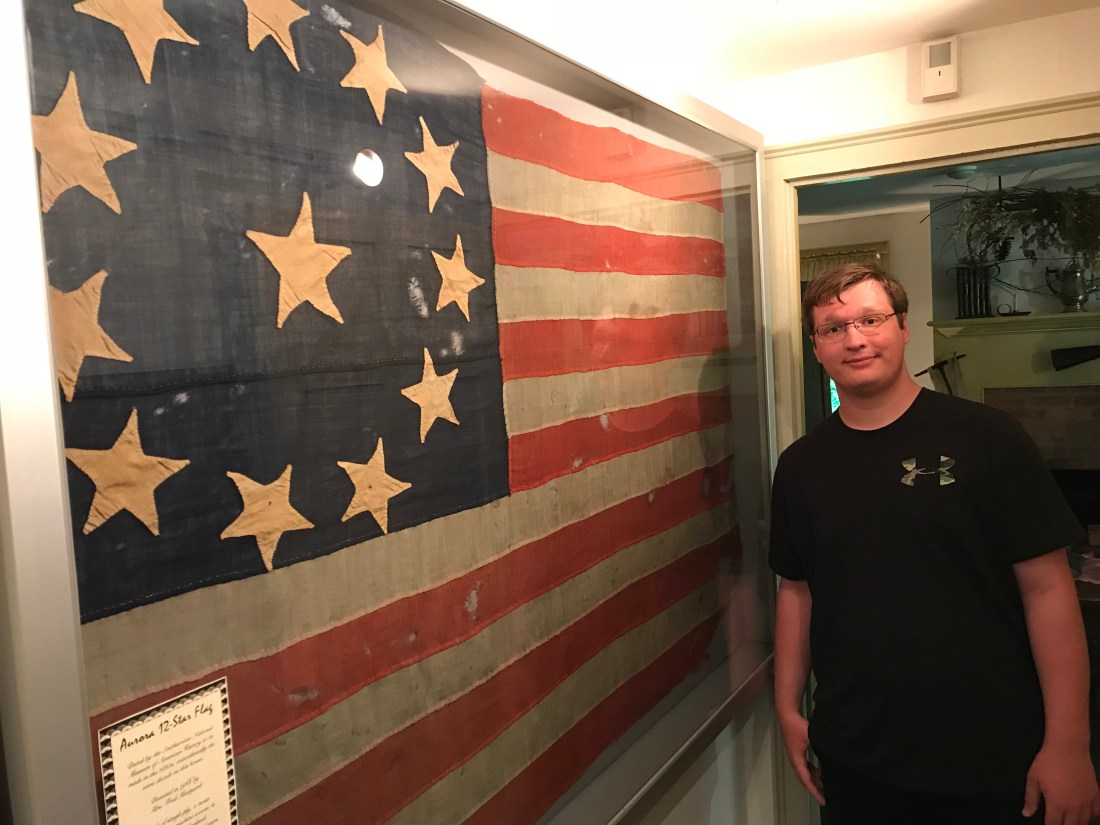 This very old flag belonged to Buffalo before being donated to the Aurora Historical Society, and the house. Note that the worn flag only has 12 stars. Either the sewer didn’t know how to count, or had some kind of grudge towards a particular state.
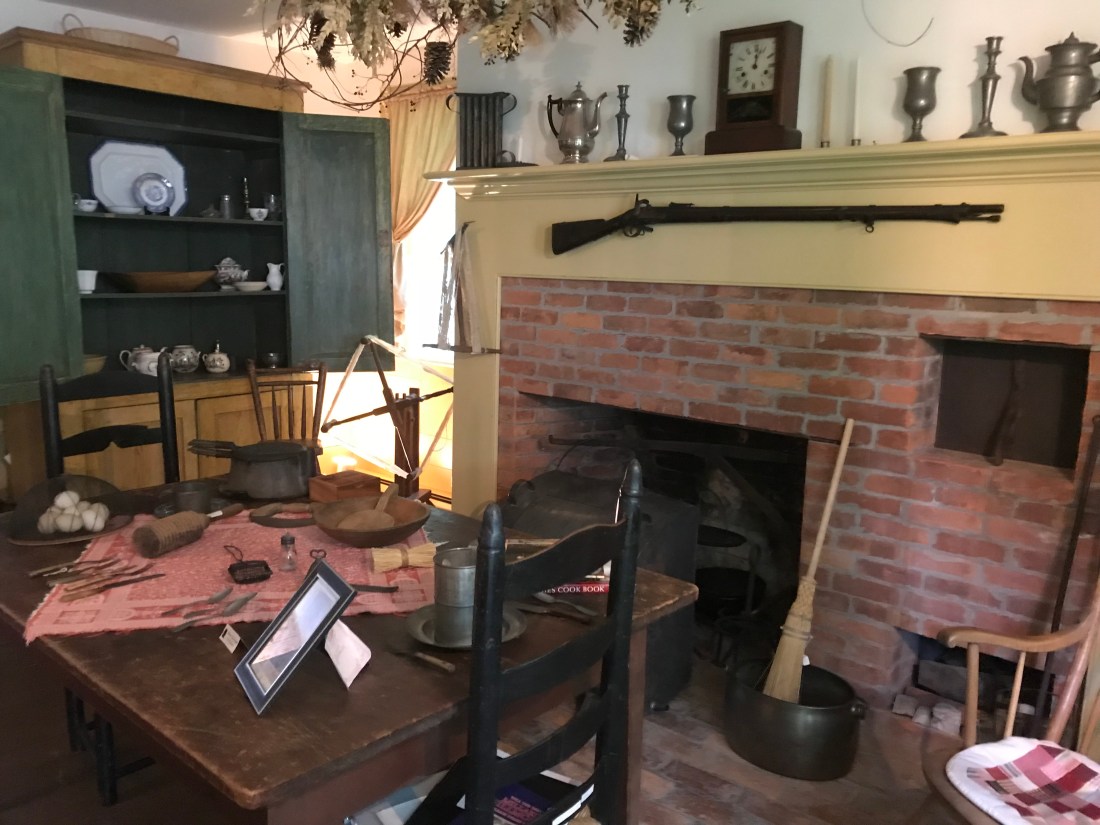 This was the kitchen, where the family usually ate in fashions similar to that of the common folk. That table was also crafted by Fillmore it seems!
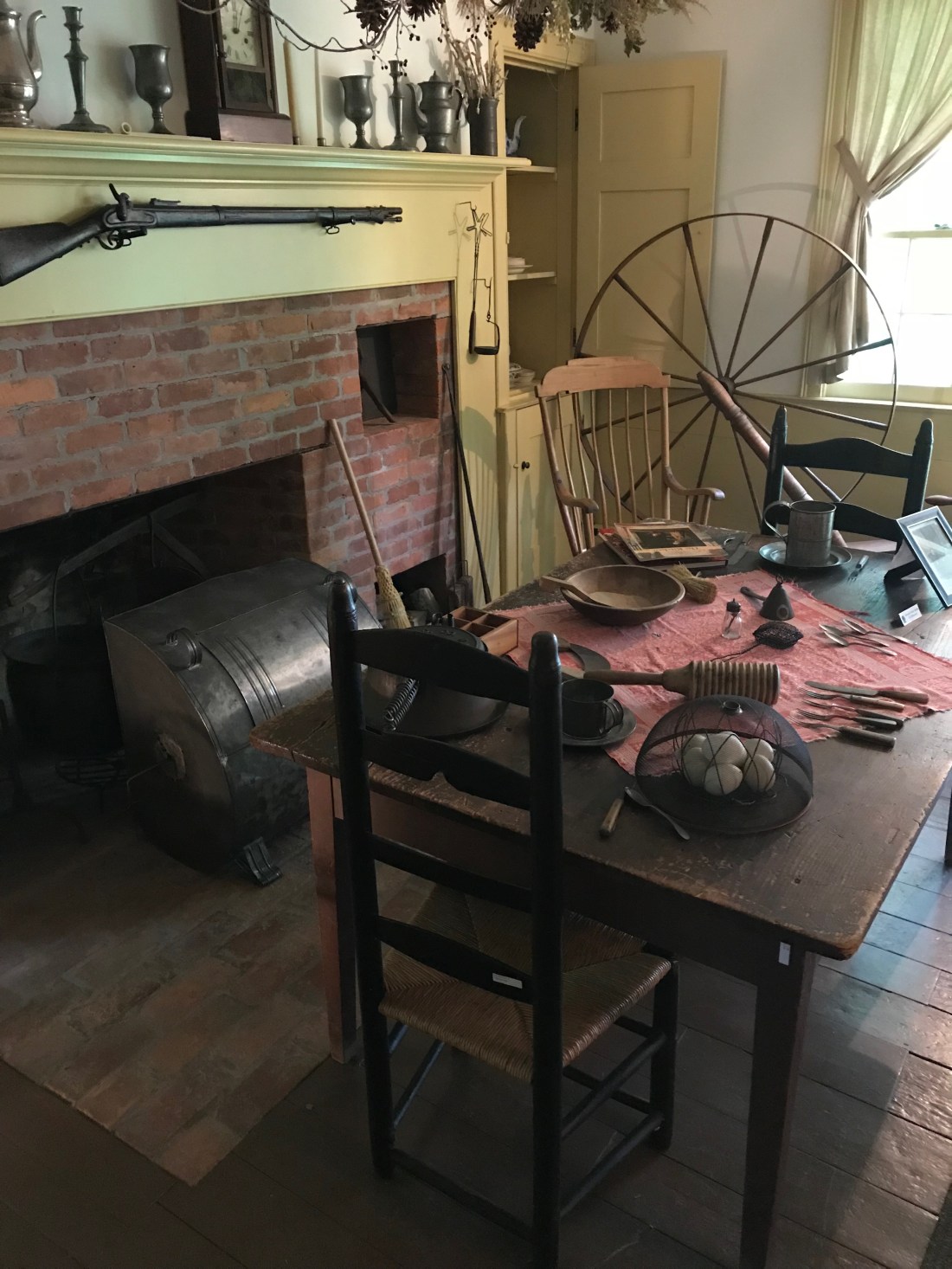 If you can see the pot peeking nearby in the fireplace, it’s on a swing rack. Basically, the temperature control back them was either swinging it farther or closer to the fire, or moving the pot up and down the rod. And that device in front of it? It would concentrate heat in the pot, that could create roasts or stews.
What stuck out the most however, was oven, that little alcove in the brick wall of the fireplace. For baking purposes, bread was made weekly. And how did women know what temperature it was? They would actually stick their arm in there, and if the hair on their arm was singed, then it was ready for baking.
Something tells me that the frequency of baking may have declined for some families.
We then headed into the nearby Library, which focused more on Fillmore’s Presidency.
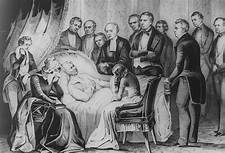
Fillmore was Zachary Taylor’s vice president, and when the latter died of uncertain causes five days after July 4th, Fillmore succeeded him as the 13th president.

Fillmore oversaw a number of events as president, from matters as trivial as lowering the price of the postage stamp, to perhaps most notably, the first interactions with isolationist Japan in economic trade. He was also our last Whig President.
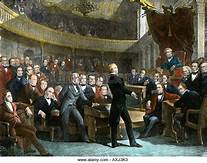
However, the Compromise of 1850, which Fillmore approved, only temporary abated simmering hate amidst the slavery debate. While Fillmore did support keeping the Union together, he viewed slavery as a political issue, not a moral one. And thus, he also supported the Fugitive Slave Act, which forced the north to aid the south in returning escaped slaves.
Fillmore lost renomination, and returned to Buffalo, returning again on the ticket of “The Know Nothing Party”, which was anti-catholic, and anti-immigrant. Of course, as with most third-parties, he lost to the normal “two-party” system.

The actual signature of Millard Fillmore. Thats more than 150 years old!
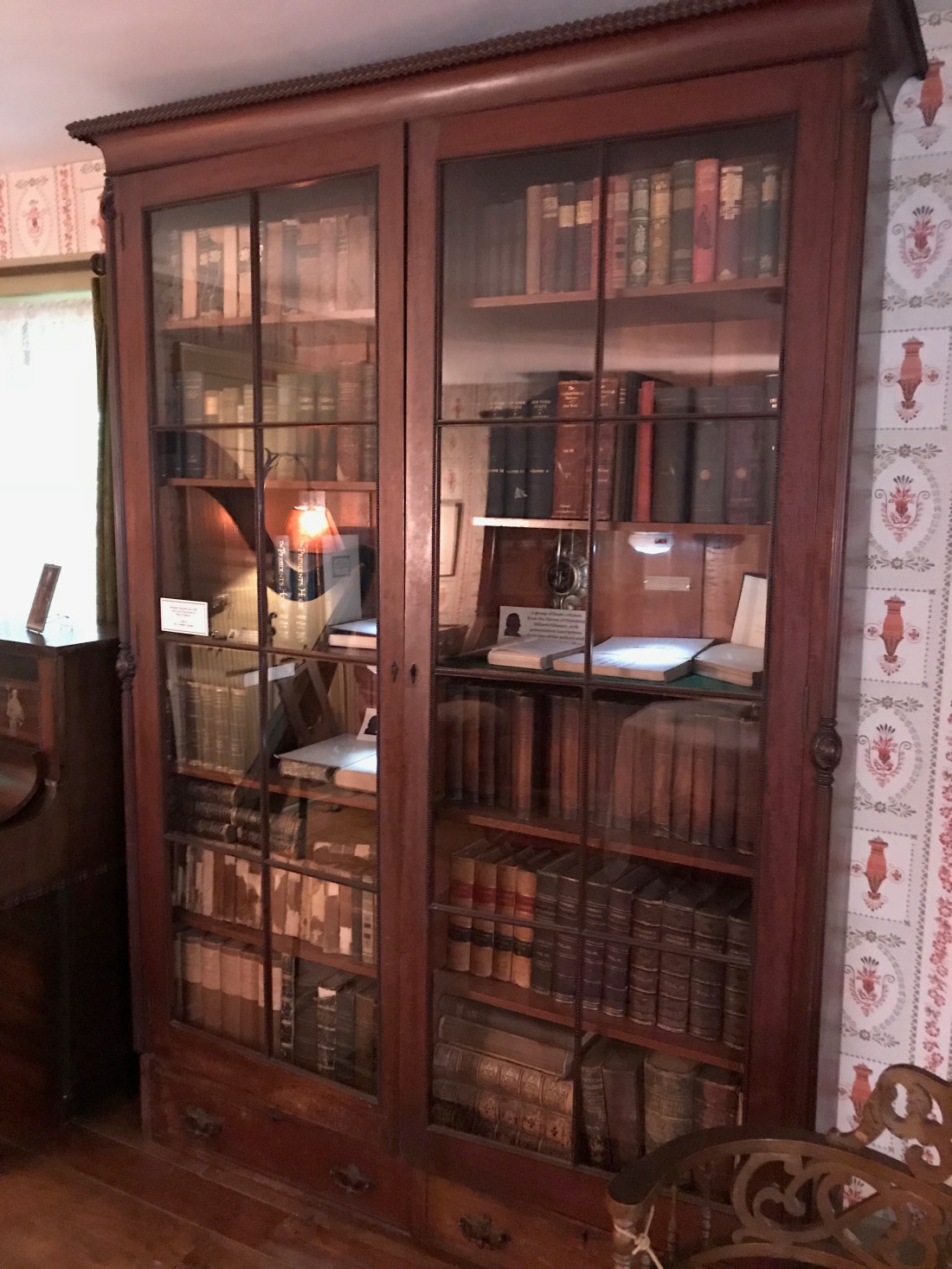
Many of the items in this room were from the White House. Abigail Fillmore was an avid reader, and it was she that created the White House Library! Sadly, she died of pneumonia just weeks after leaving the White House, leaving poor Millard heartbroken.
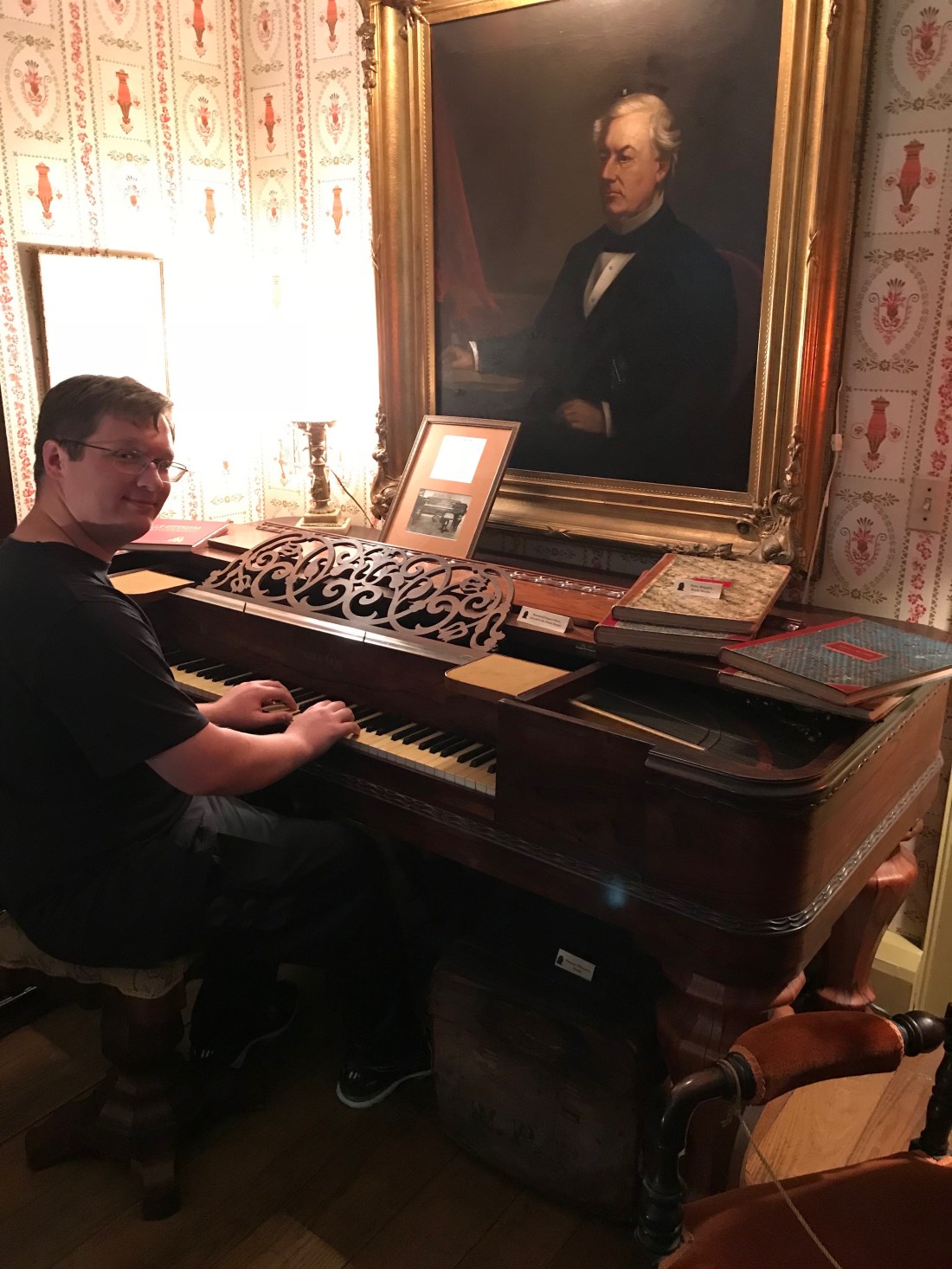
Now before anyone panics, let me state that I was allowed to do this! In fact, it was encouraged! The piano was put in tune, and had to be played often in order for it to last. This actual piano was what the Fillmore’s played… and Ms. Kathy allowed me to play it!
While I can’t remember all but one song on the piano since my piano lessons several years ago, I still remembered enough to play “Turkey in the Straw”. So there.
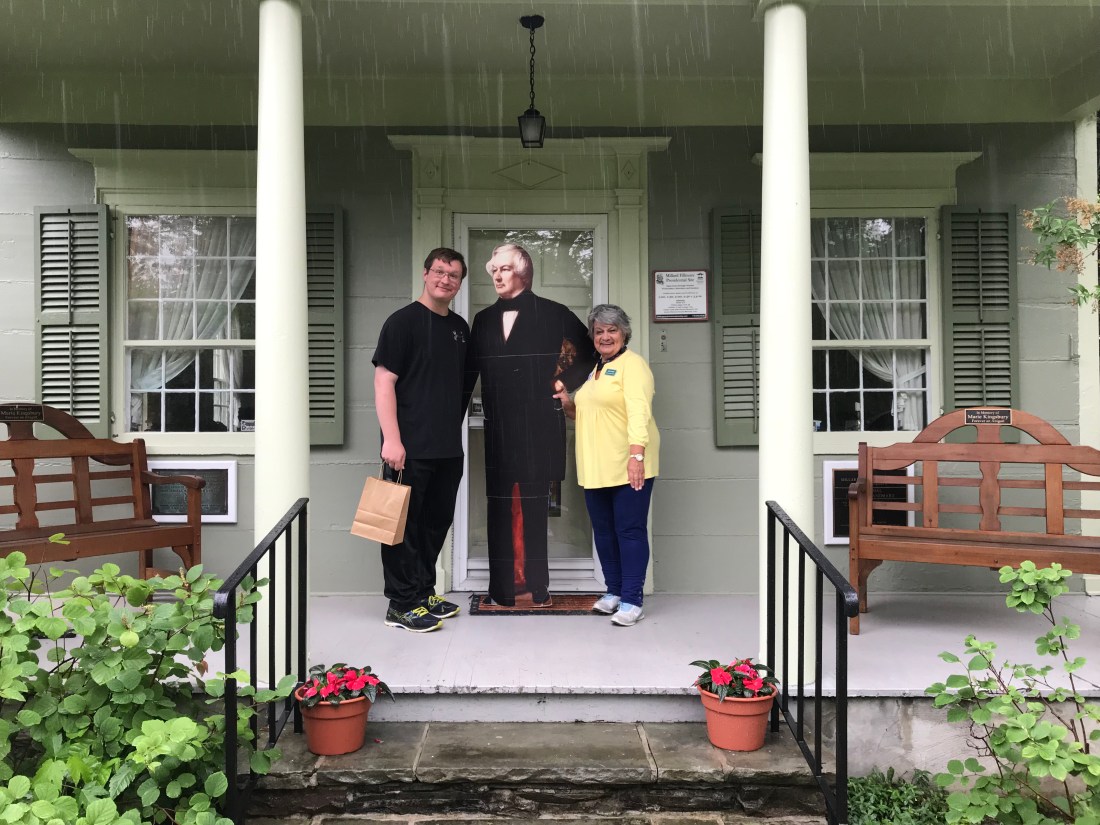
And finally, as a parting memory, Ms. Kathy and I took a picture with President Fillmore! We thanked her so much for being such a wonderful tour guide. I think we could tell that we might have been her favorites of the day (not meaning to brag)!
Unfortunately, I am sorry to announce that we had to skip the town of Jamestown, and thus, miss the Lucille Ball Museum and grave. This is only due to time constraints, but to makeup for it, here are some stock photos of the two sites.
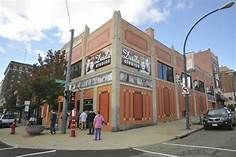 Here’s the Museum.
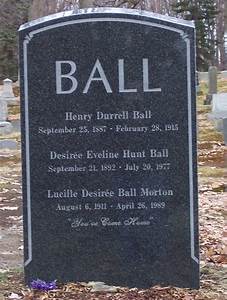
And here’s the grave. Very fitting.
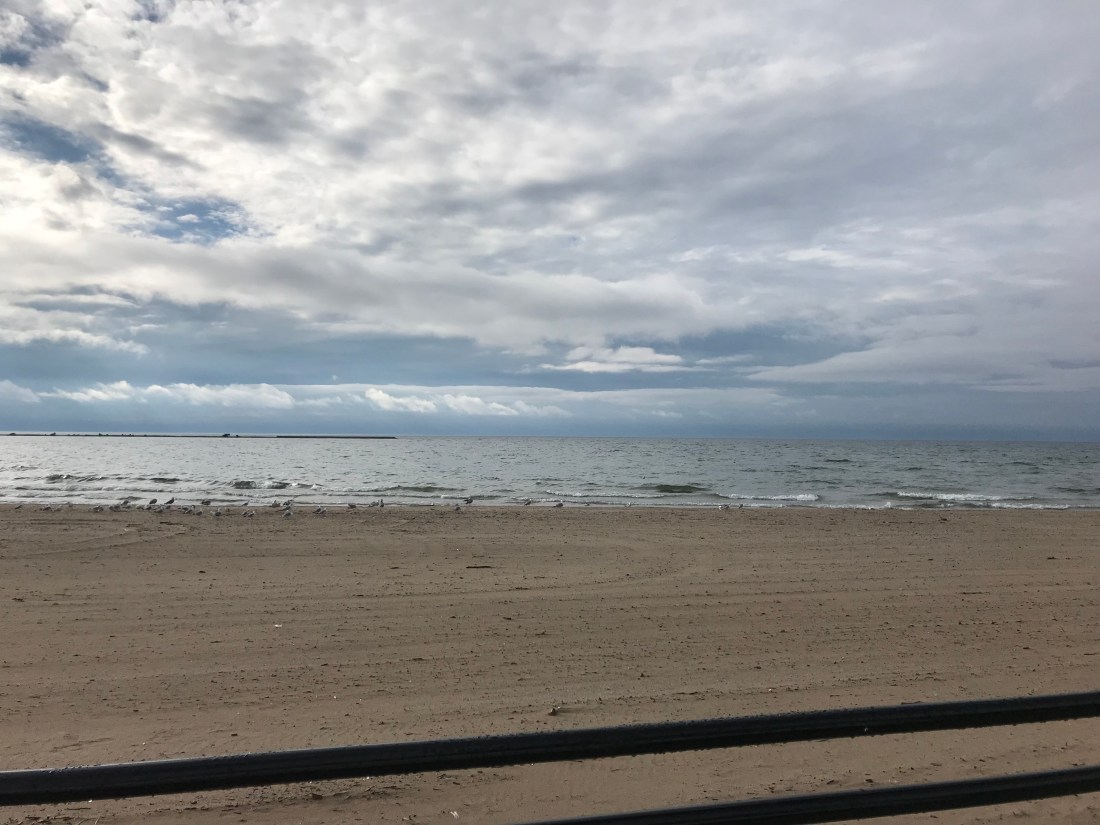
Coming across the coastal town of Dunkirk, New York (on our way back to Mentor in Ohio), we found ourselves once more alongside Lake Erie!
You can’t even see the other side.. it was breathtaking.
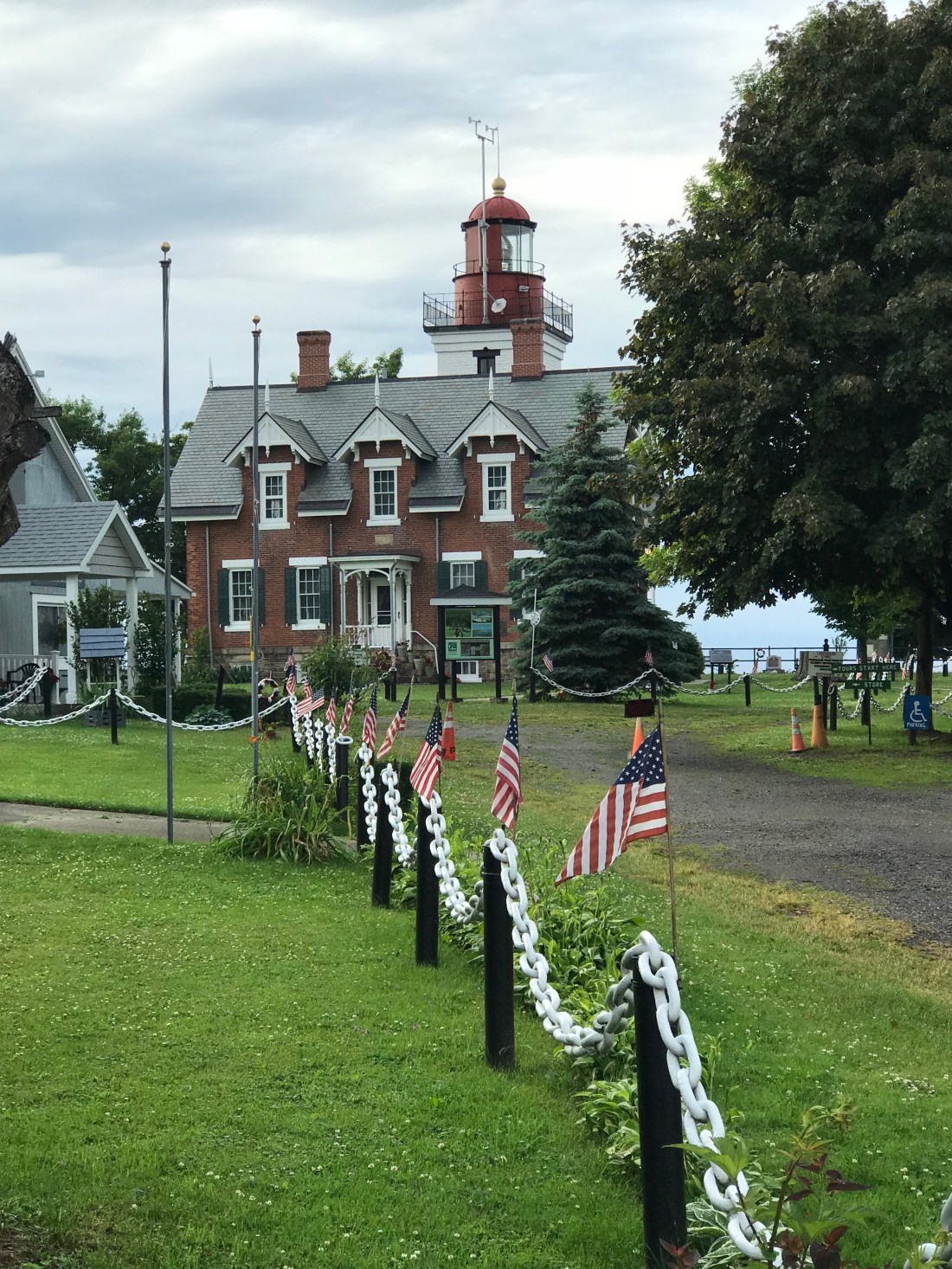
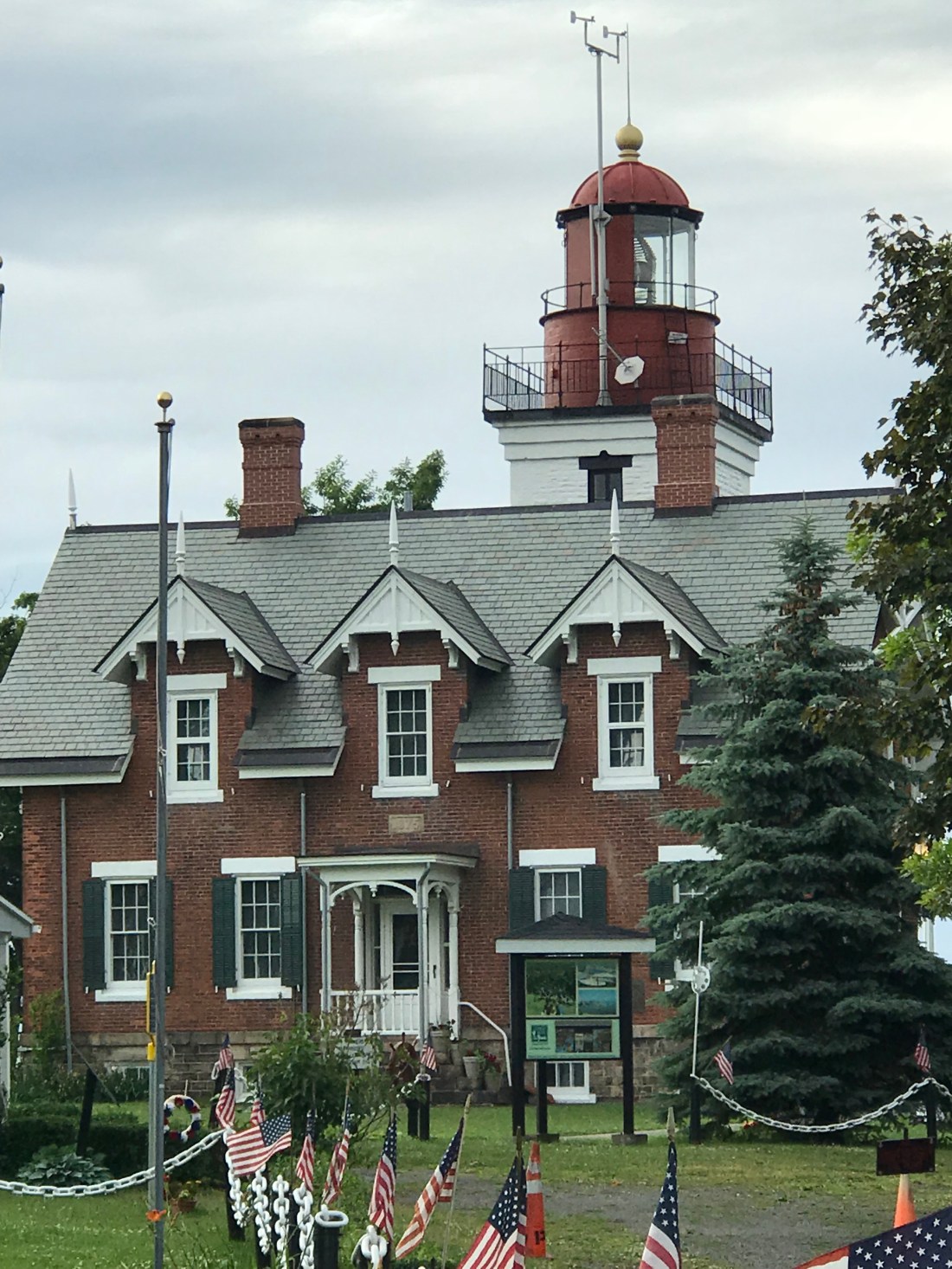 This old lighthouse has been here since the 1800s, and, i’d imagine, provide a boon to the safety of sailors during dark or foggy weather.
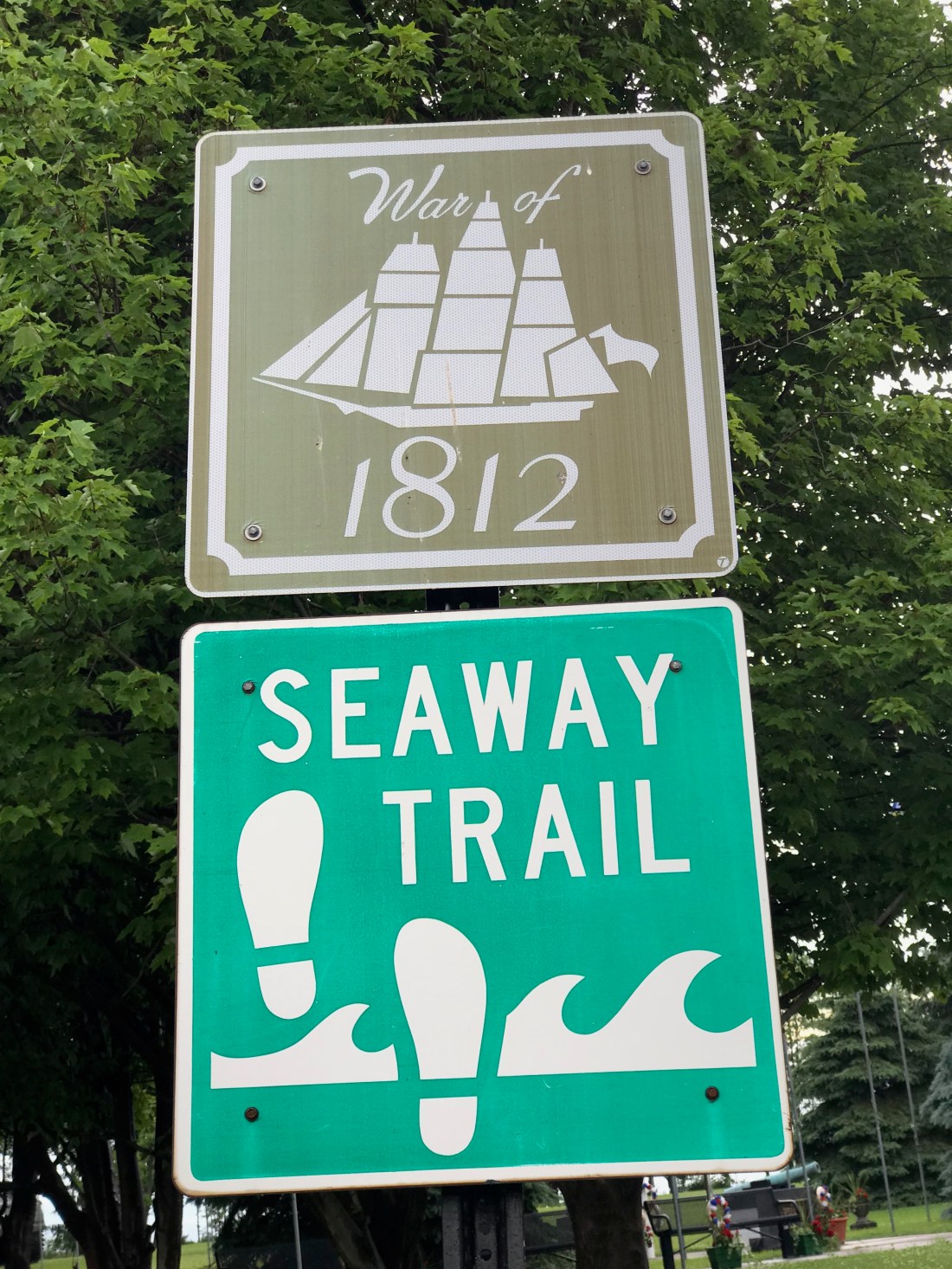
As I found our after a brief google search, the property of the lighthouse (the building didn’t exist yet) was actually the site of the first shot of the War of 1812! I think that the British were crossing in from Canada… You never know what gems you might find when you take a detour. Sadly, the grounds were closed.
And so, we are currently resting in Gainesville, a small town south of Mentor. Tomorrow we have a big day planned! With luck, we will knock out not only the Garfield Home in the morning, but also travel to Canton in the south, and explore the McKinley Museum/Memorial, and the National Pro-Football Hall of Fame!
Once again, I’ve got my work cut out for me… see you all soon!
 Mark's Historical Roadtrips!