
And we’re Live (not really), with day 9 of Roadtrip 2019!
Day 9 features our journey throughout more of Lower Pennsylvania, including our exploration of the city of Lancaster (and the sites of 15th President James Buchanan), as well as Valley Forge, the very place where the Continental Army bedded down to withstand the harsh winters during the American Revolution, and where they trained to turn the tide of the conflict.
Let’s dive right in!
Lancaster (James Buchanan’s “Wheatland” and Woodward Hill Cemetery)
Lancaster is the sixth largest town in Pennsylvania, and was home to the only U.S. President that hailed from this state: James Buchanan!
Buchanan is often hailed by many to be our worst President in U.S. History, for either his incompetant abilities to prevent the Civil War, or his southern favouritism that hastened the Civil War, depending on who you ask.
The “Lancaster History” Campus is the only decent place where one can learn from a historic site of James Buchanan, for it contains his estate of “Wheatland”, where he retreated to escape scalding hatred and bitterness towards him.

It’s a gorgeous home, well tucked away in the more wooded areas of the city.
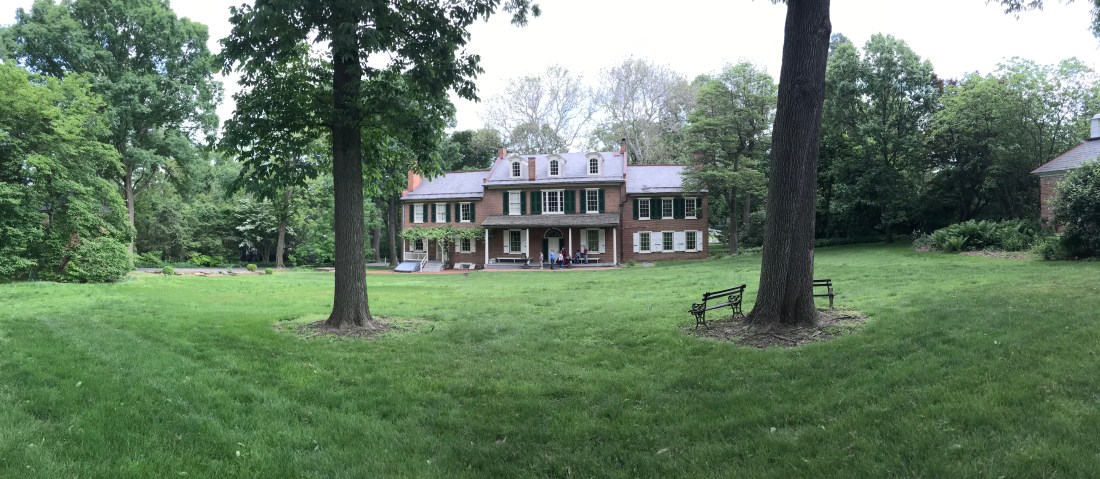
Buchanan purchased this federal-style brick house in 1848, and was his primary residence until his death in 1868.

Our guide was a sweet-old lady wearing a period dress of the time, hoop-skirt and all. Nevermind the temperature on this hot day, how is she able to move around!?
Well anyways, we went inside.
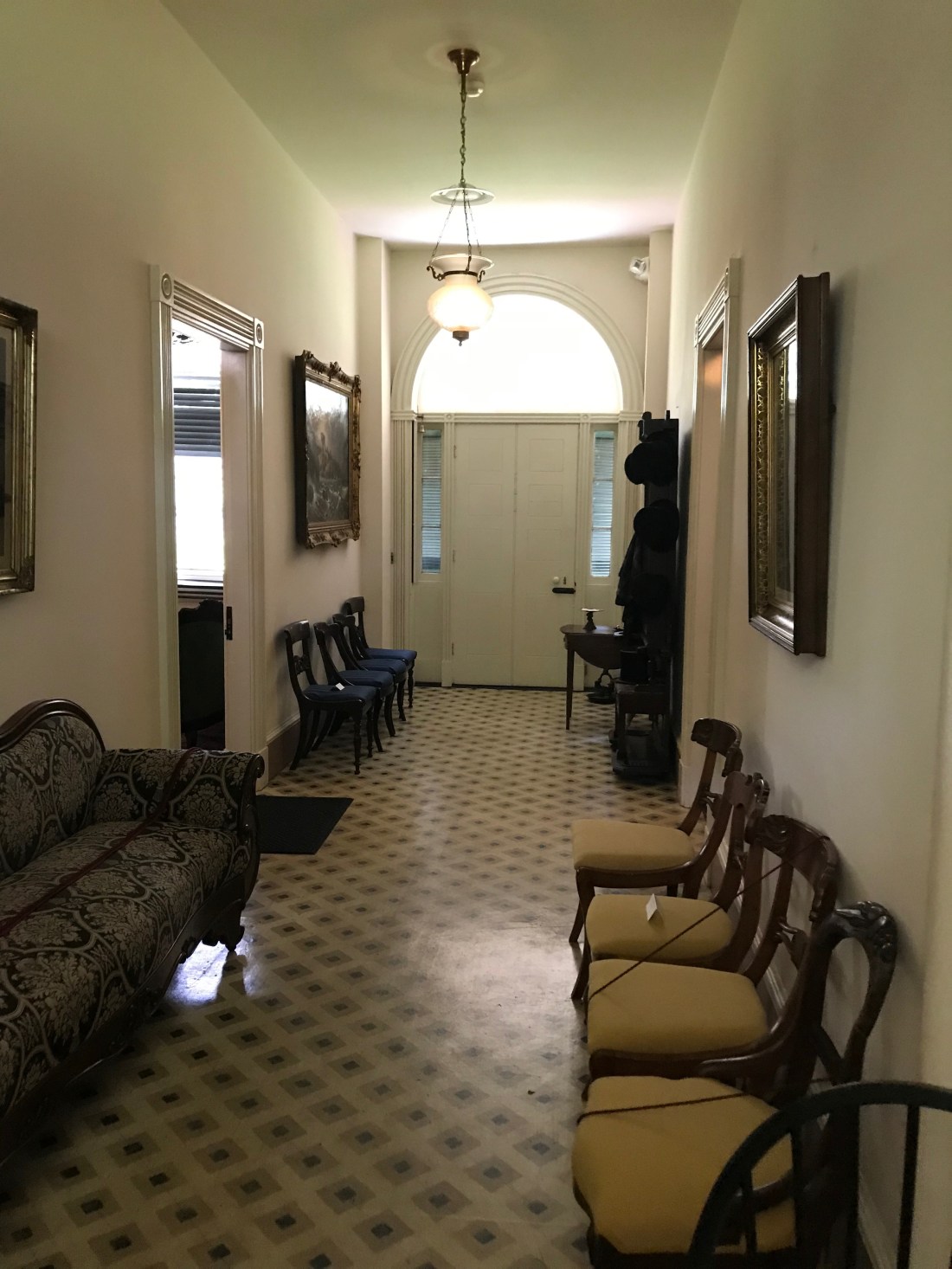
The entry hall was pretty symmetrical, as was the rest of the house. Many of the materials in the house were original pieces, some of which have never left the house since Buchanan’s time.
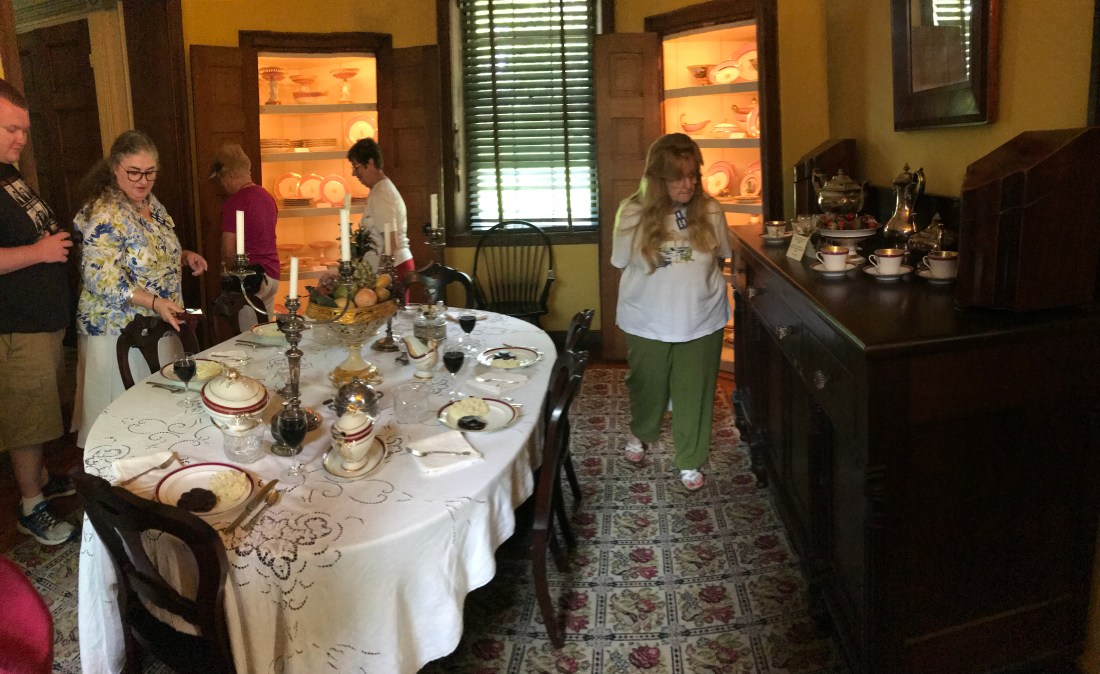
Buchanan’s dining room. He loved to host small parties, and loved to strike up terrific conversations. Unfortunetly, his infamy would cut those celebrations out, permenantly.
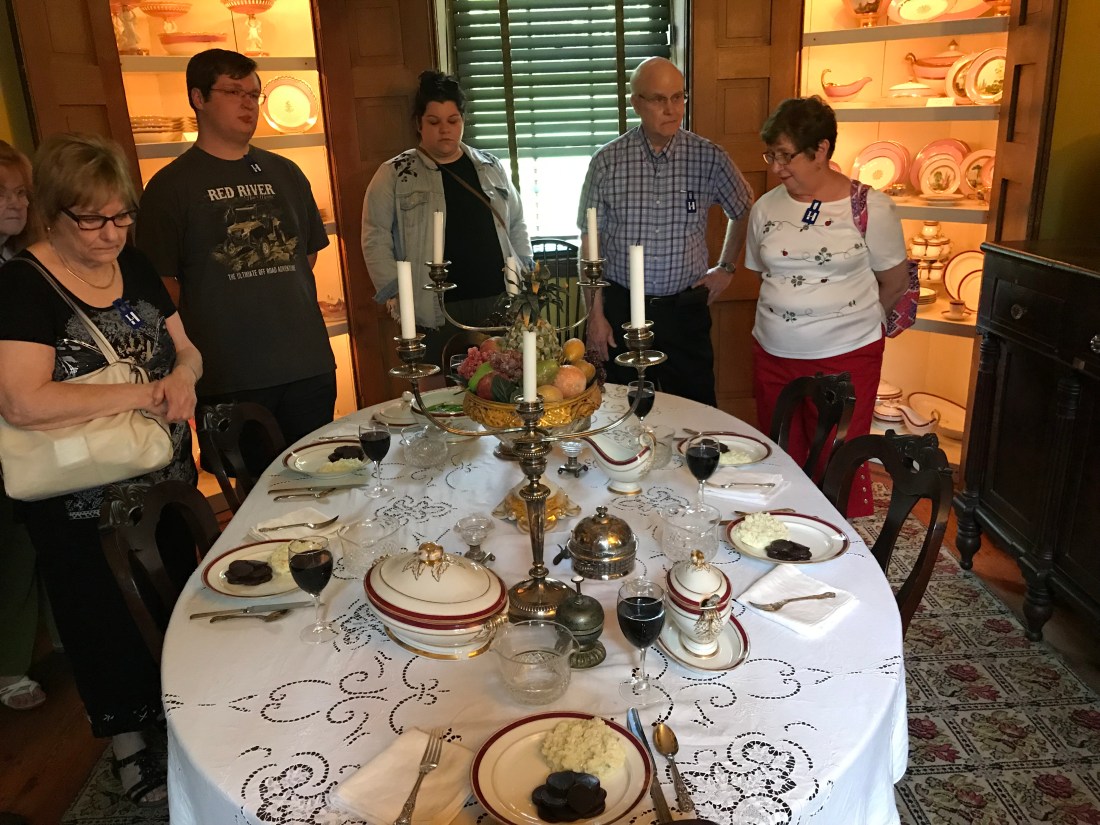
All of those pieces on the table were original china that the Buchanans used here, as well as in the White House. Fun fact, there were 500 different pieces to this china set, so Buchanan had no need to order new sets for the White House receptions. His favourite food was actually Sauerkraut, which might come from the german/dutch influence in this area, which the Amish frequent.
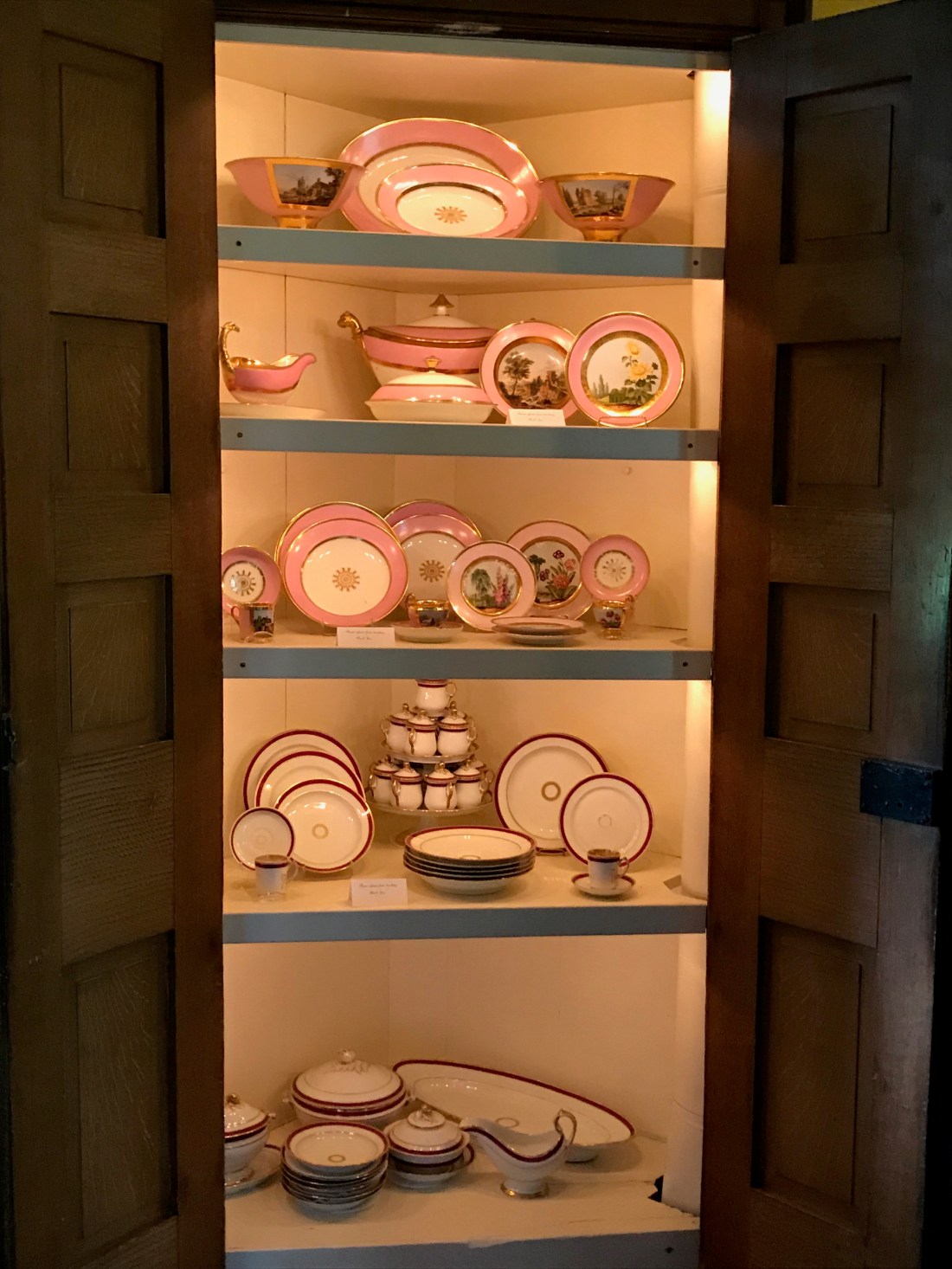
These original pieces of china were bought at a bargain price from the U.S. French Ambassador, and were also used in the White House. They certainly had an impressive collection.
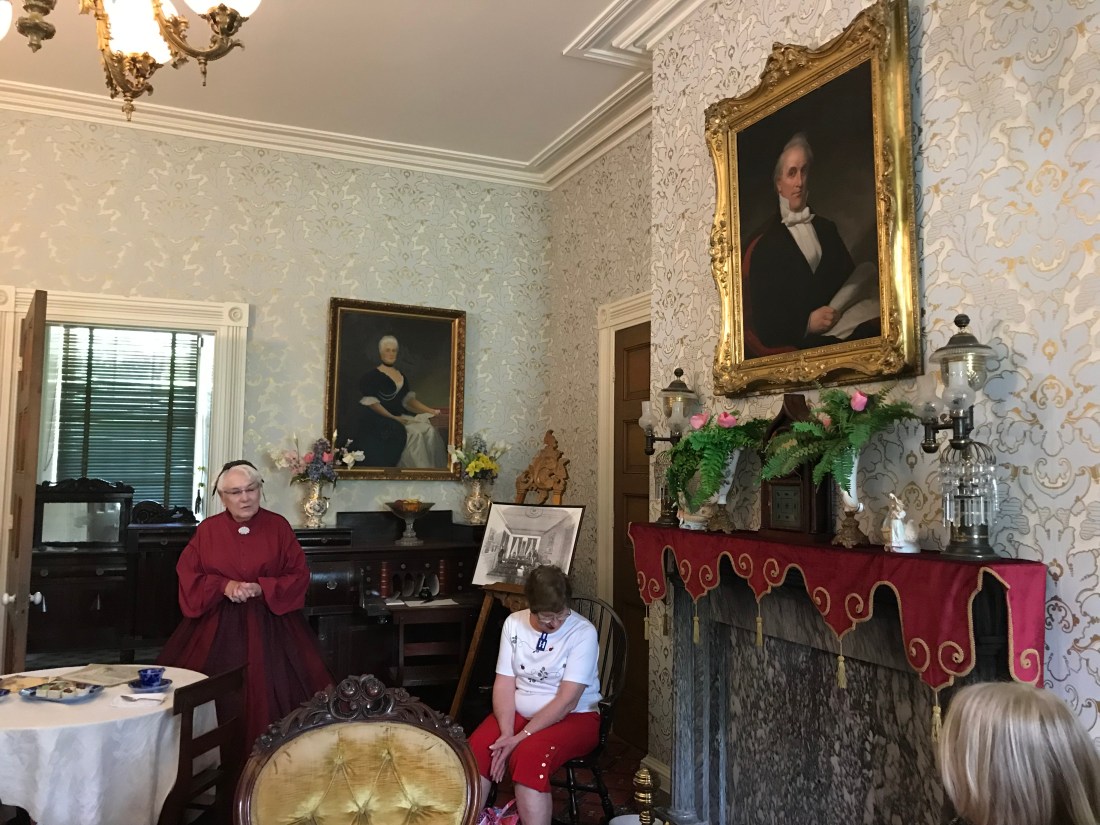
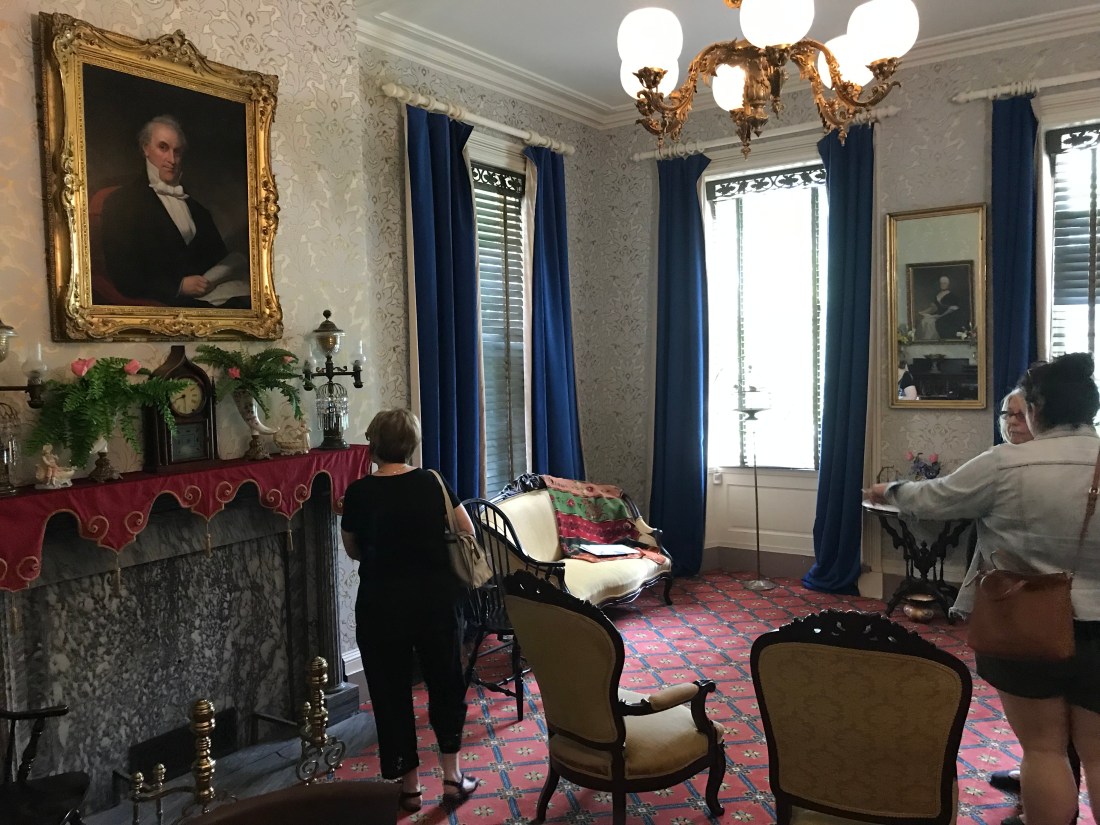
Moving right along, we found the Parlor Room of the house, where Buchanan often entertained guests who would come. That portrait above the mantlepiece is Buchanan, who was a very natty dresser.
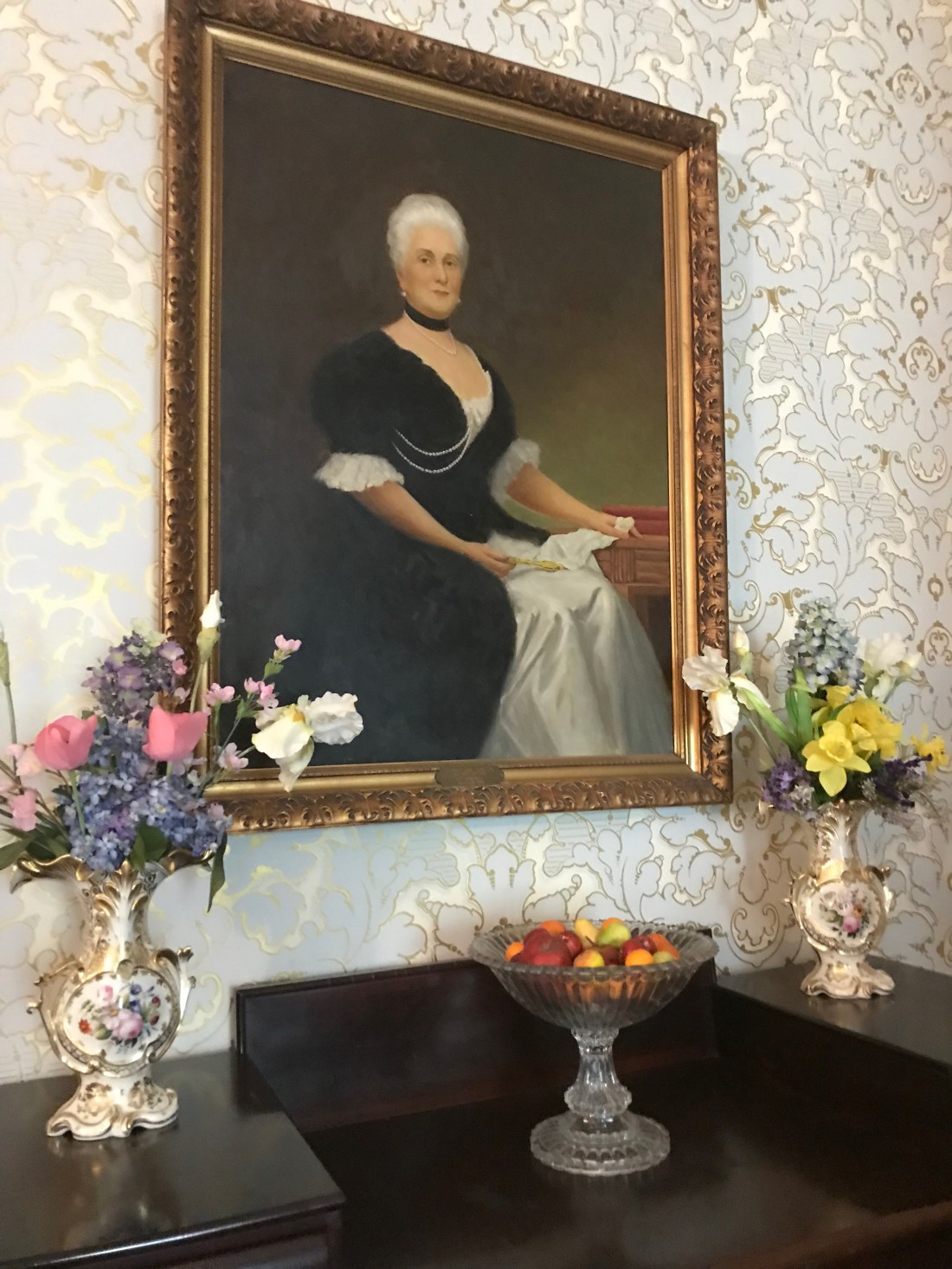
And this is Miss Harriet Lane, President Buchanan’s niece, in her late 70’s. She served as White House hostess in her uncle’s administration, and by extension, as the First Lady. Buchanan is our “Bachelor” president, for he was the only one of the 44 men to grace the office to never be married. Harriet Lane tried much to preserve her uncle’s legacy, and helped start art collections in D.C., and a pediatric foot-clinic in Baltimore.
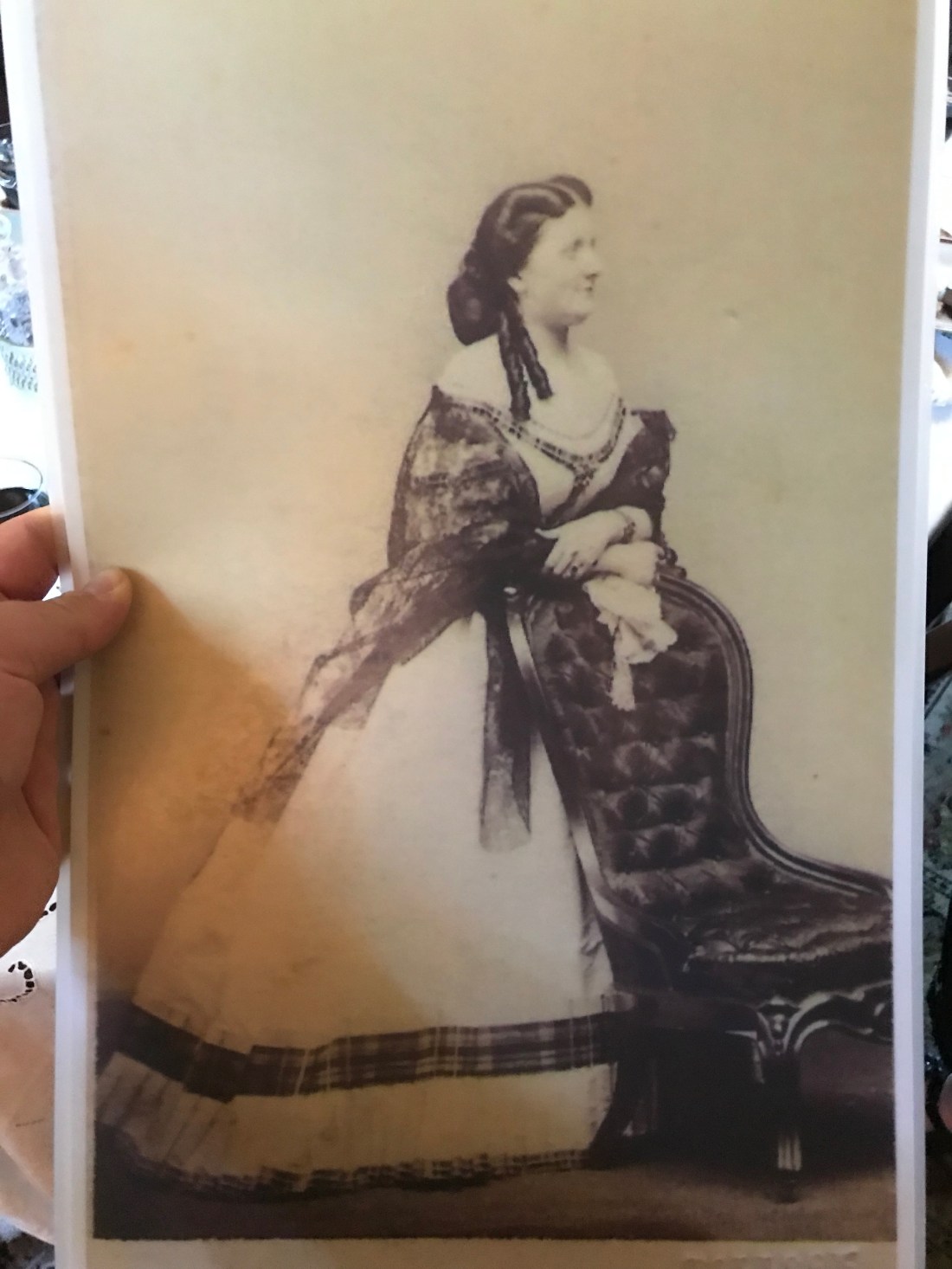
And this is her when she was younger. Mary Todd Lincoln didn’t like her very much, likely out of envy.

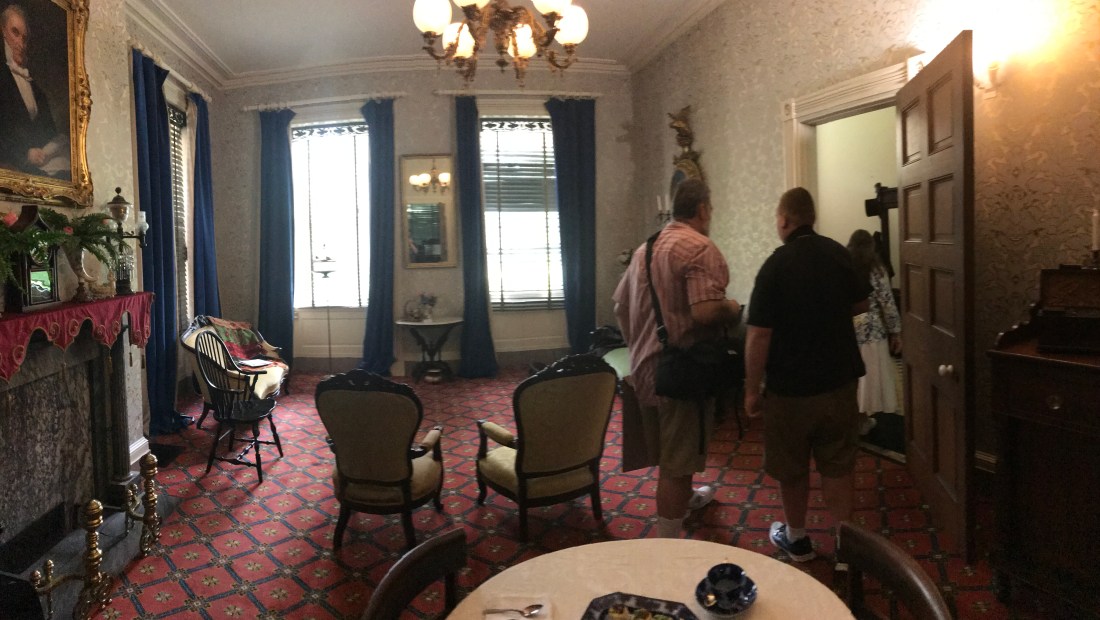
Various sketches like this were scattered around the place, in an effort to show how similar the place was to what it is today.
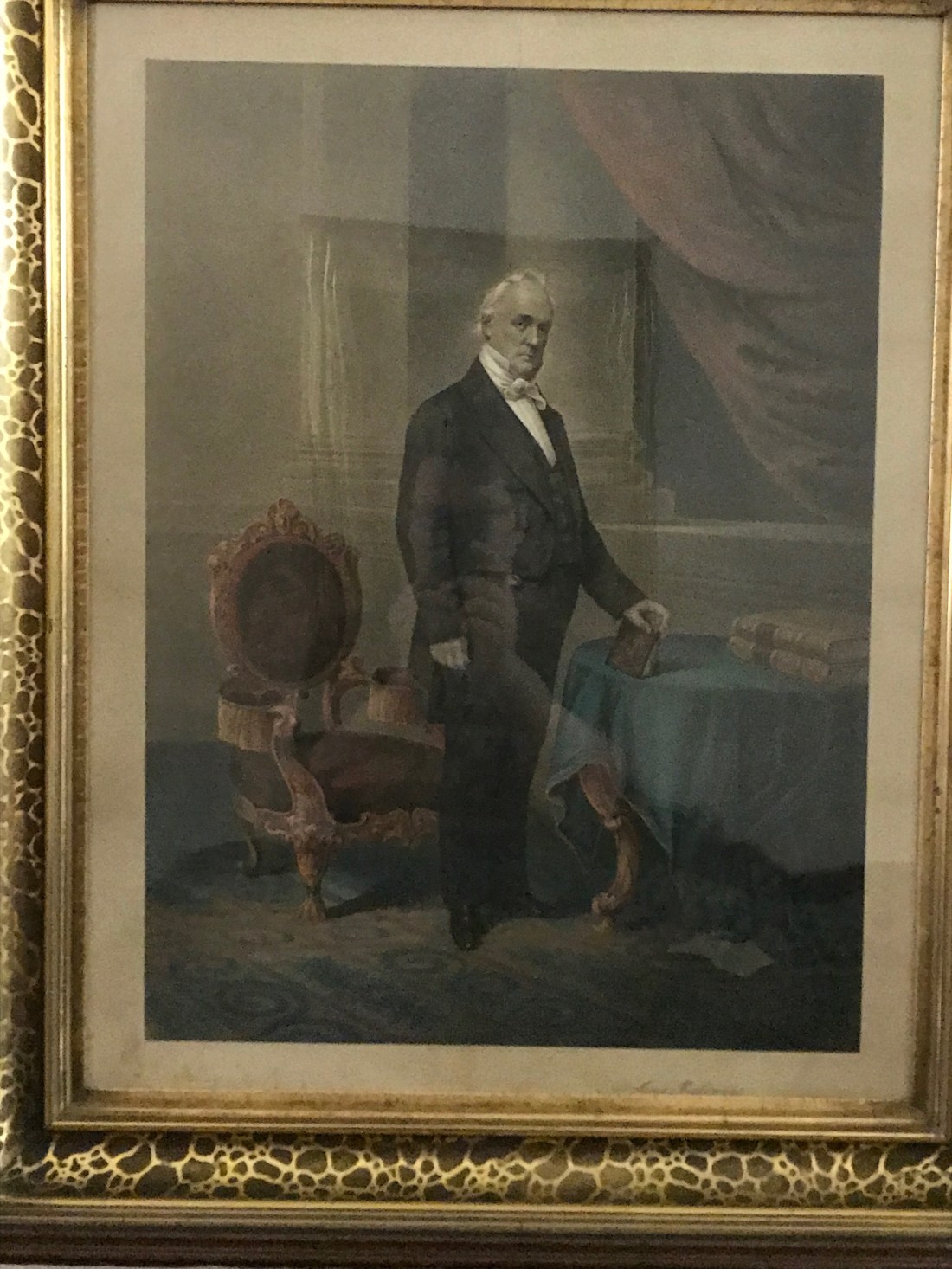
A portrait of James Buchanan. One of his eyes was far-sighted, and the other was near-sighted, hence the slight leaning of his head. His holding of a book signifies his status of an educated man (he was by trade a lawyer).
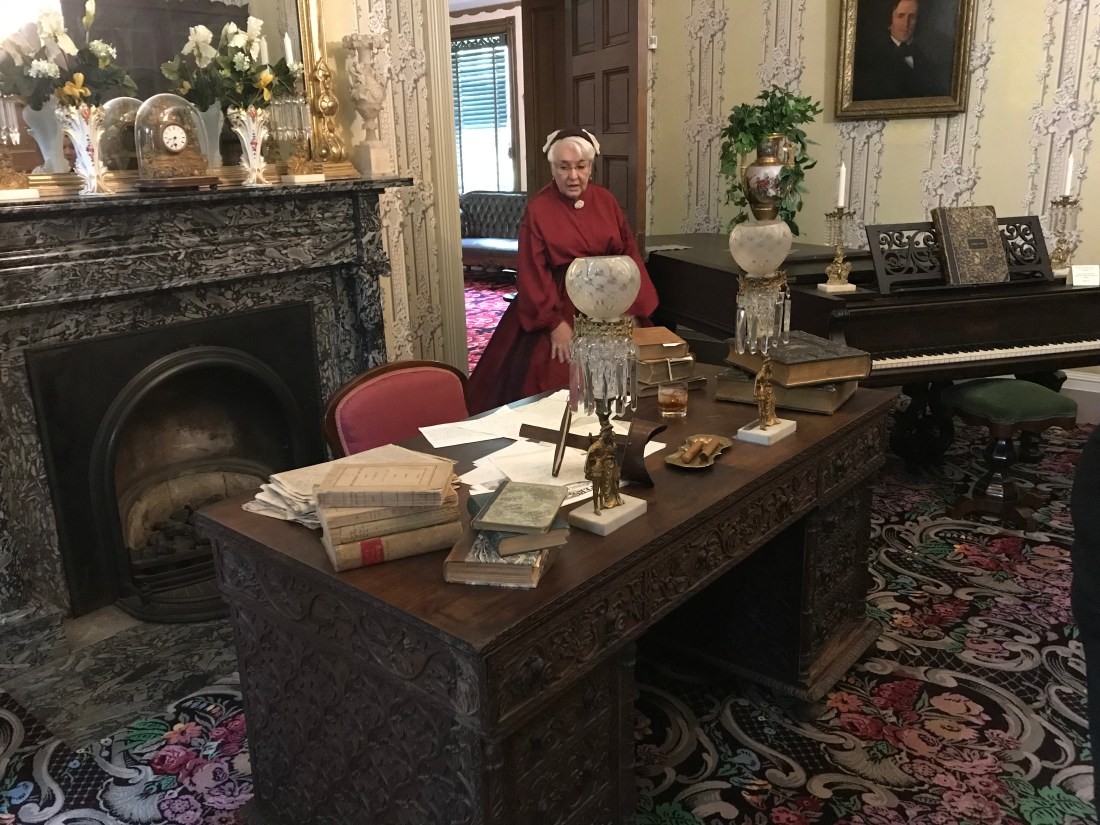
Buchanan’s office, which he often used. The expertly-crafted desk there is the actual one that he used during his time in the White House.
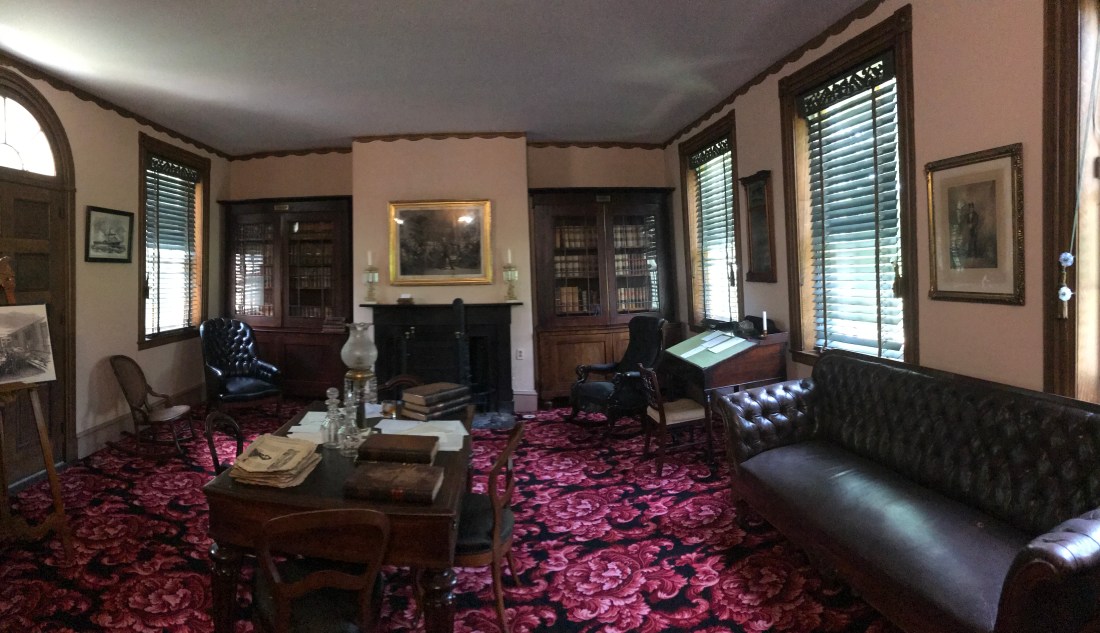
And this is Buchanan’s library, which he used to a decent extent.
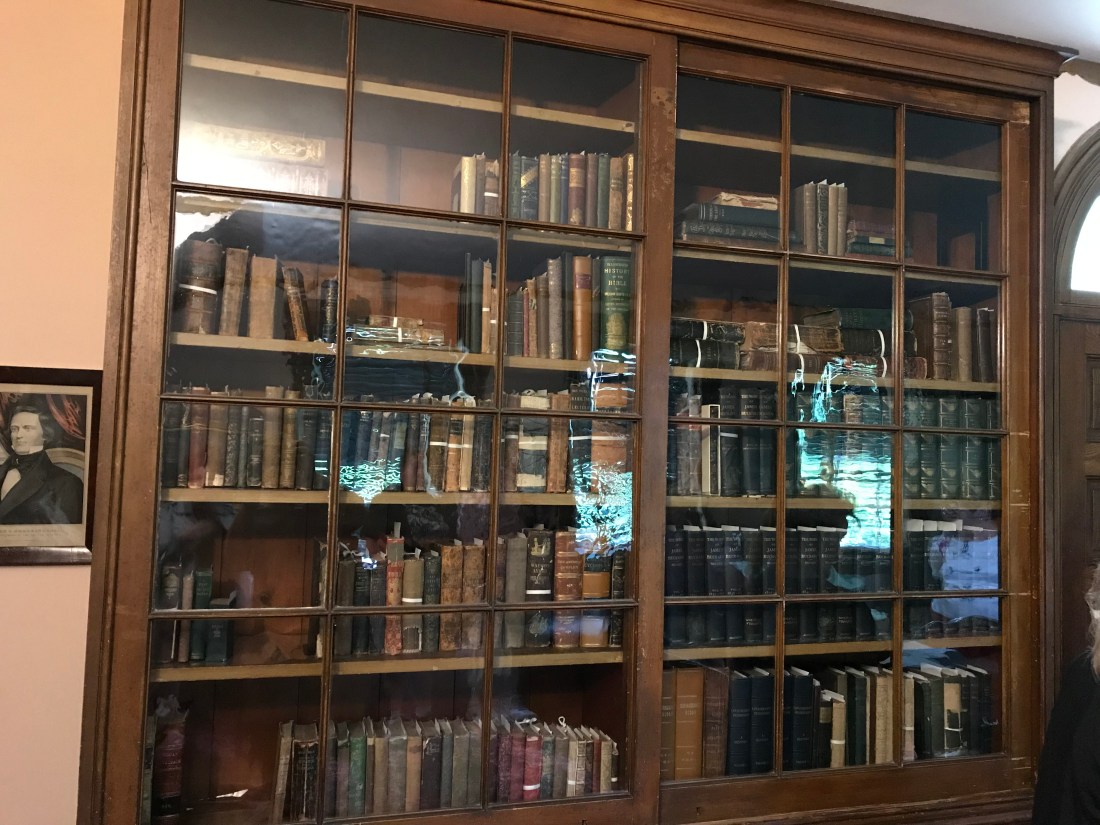
All of these books are original: he adored reading, especially about the Constitution, and his ultimate hero, George Washington.
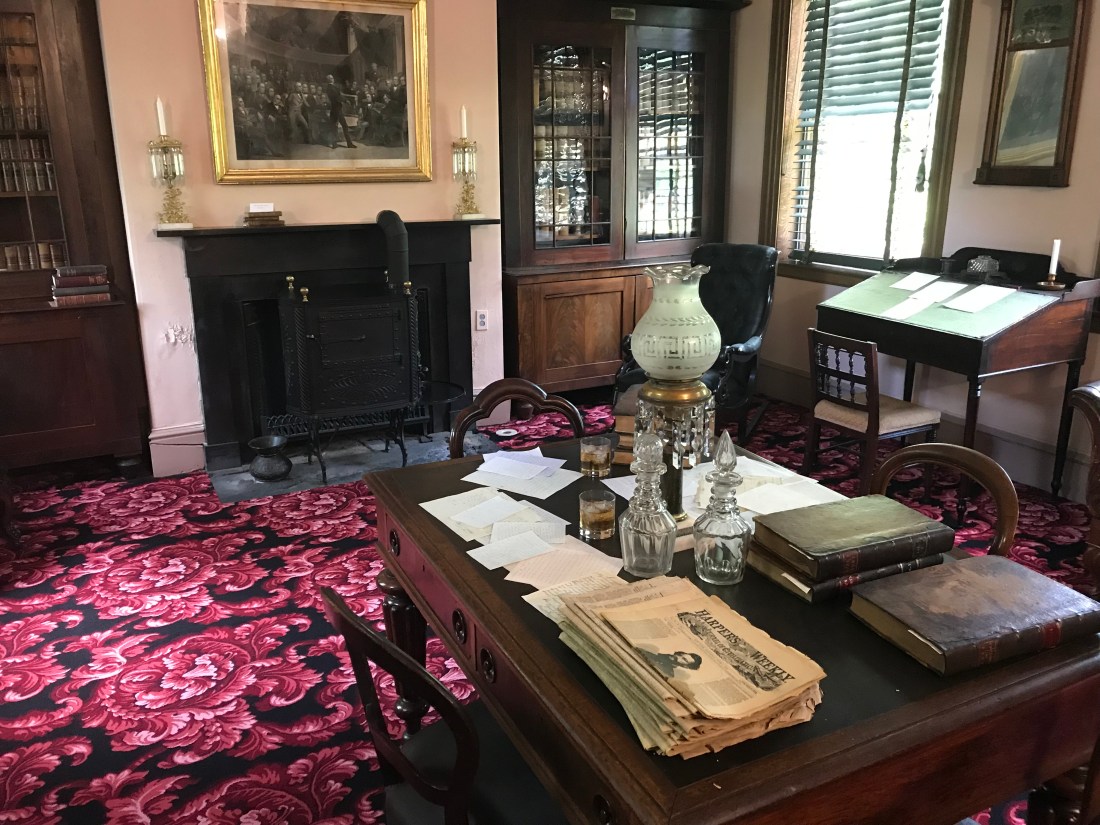
Buchanan would often interview applicants to his small staff here at this table. Let’s get a closer look at that picture back there.

The man standing at the forefront of the picture is Henry Clay, the Speaker of the U.S. House of Representatives. This depicts the debate over the Missouri Compromise, which would ensure a clear and defined line between states that advocated slavery, and those that have abolished it.
Only a few days after he entered office, the infamous “Dred Scott Deision” was handed down by the Supreme Court, which mandated that slaves were property. Buchanan backed this decision, and various concessions that followed the decision would invalidate the Missouri Compromise, infuriating northern voters.
Buchanan was an oddity in that time period… he was a Northern Democrat with southern sympathies, which was easily how he got elected in the first place. As a compromiser, he tried to please everyone, but in the end, he would please no one. Perhaps his greatest fault was that he never viewed Slavery as a moral issue, thus dooming his chances of success.
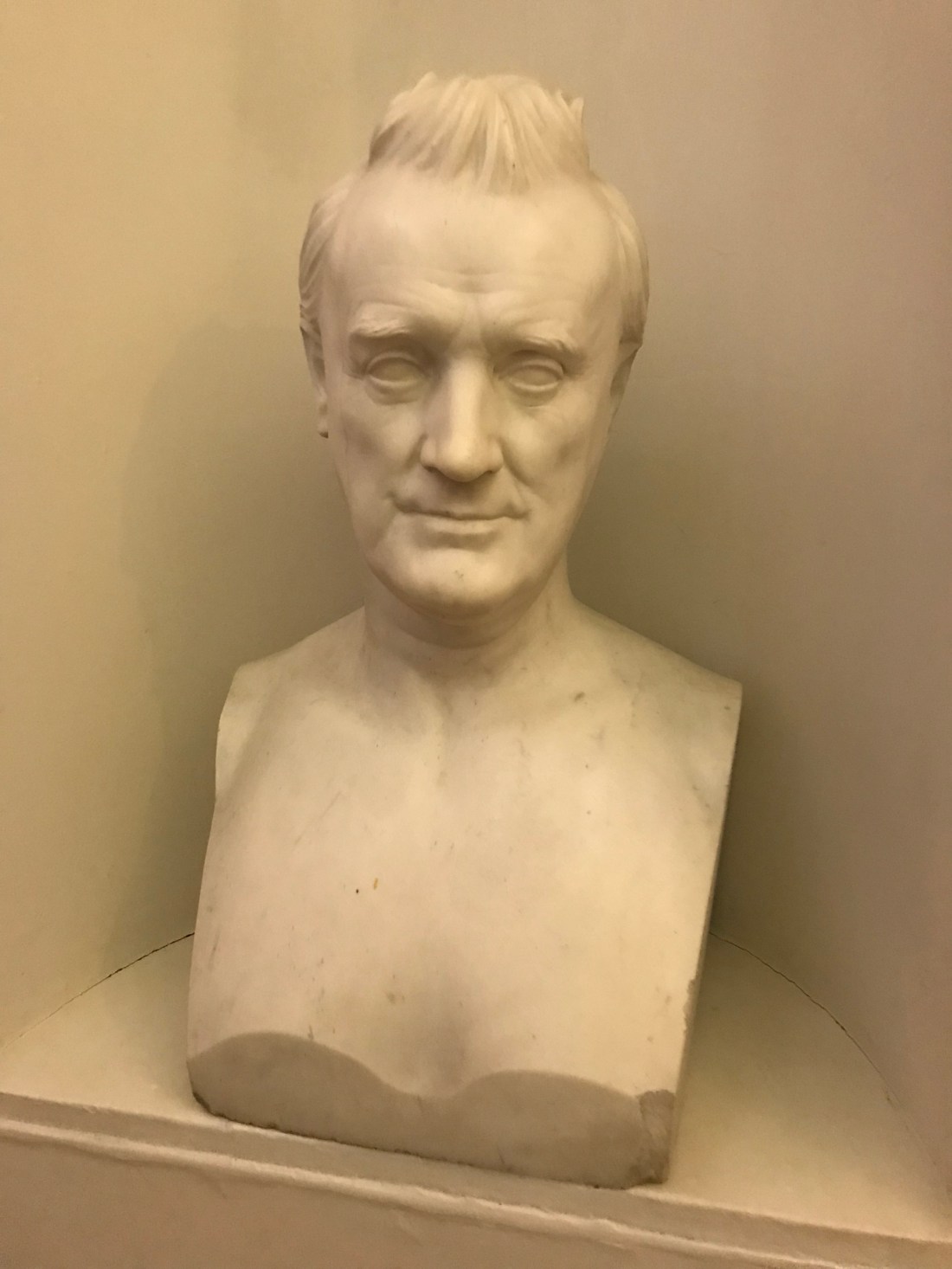
A bust of Buchanan. Does he ever comb his hair?

Harriet Lane’s room. Note all the lovely wallpaper.
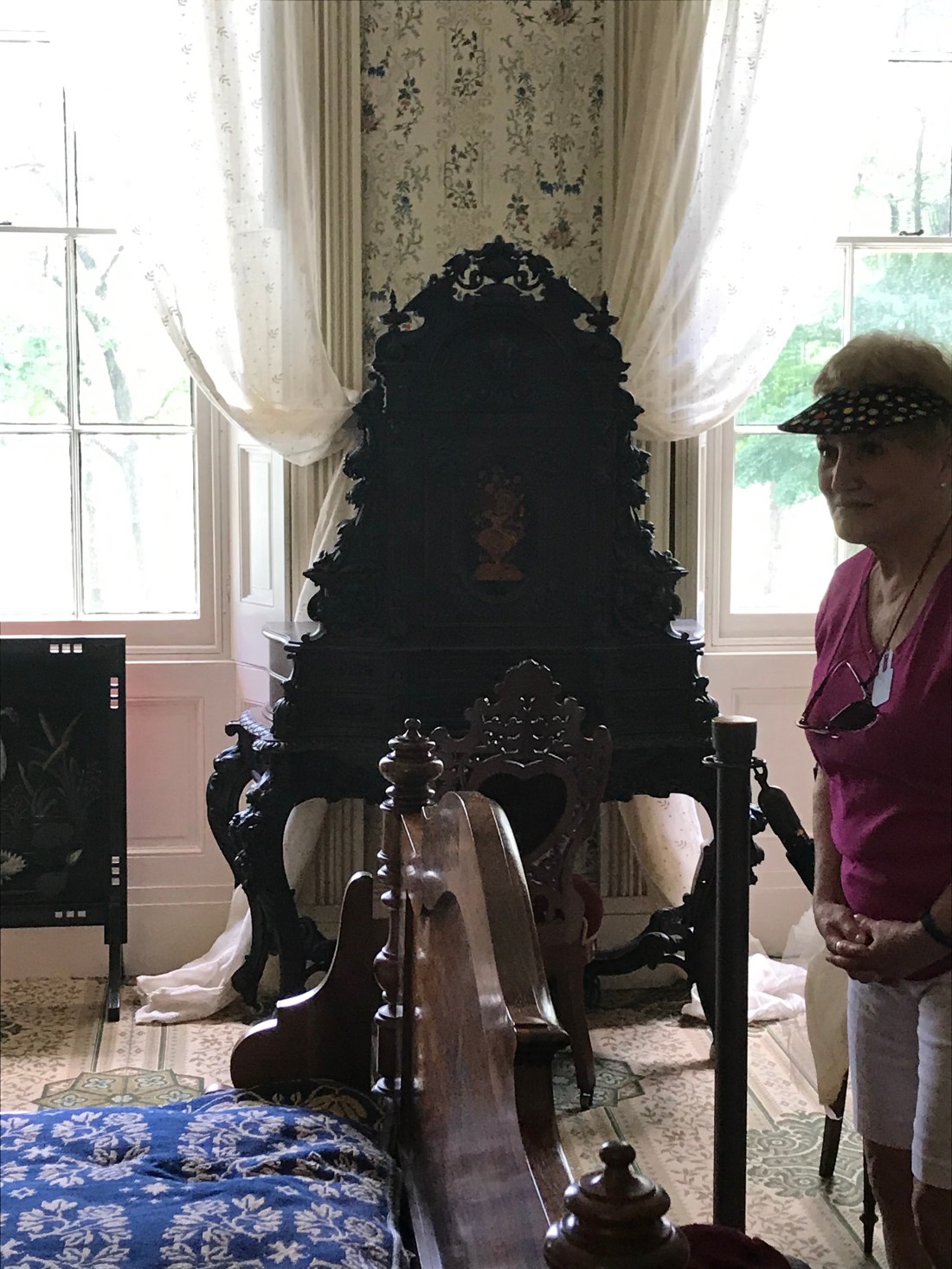
This is one of the most ornate pieces of furniture I have ever seen… who know’s how much it’s worth…
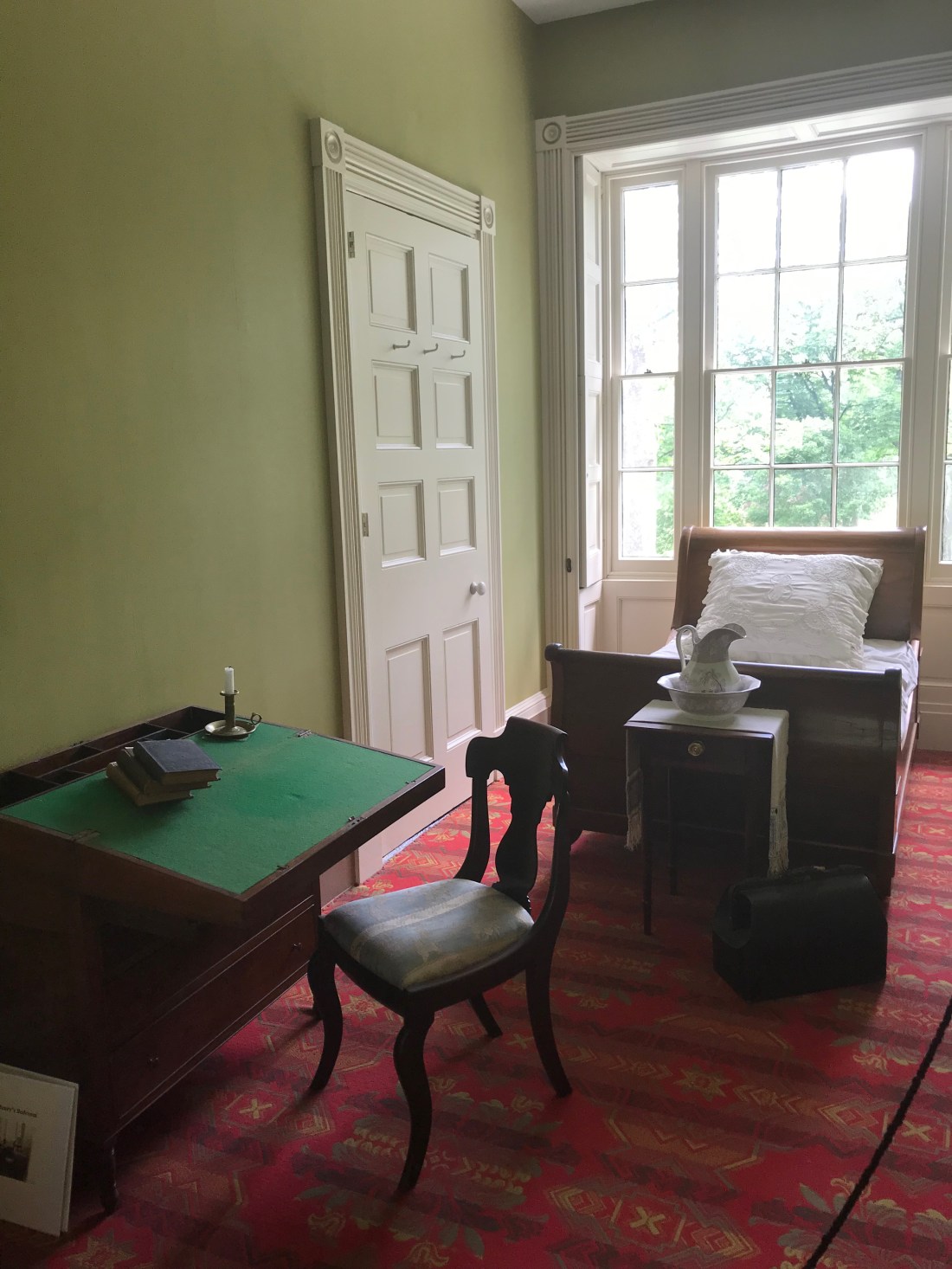
This was room of Buchanan’s nephew, “Buck”, who served as his secretary. It is comparatively smaller than the other rooms, he rarey spent time here.
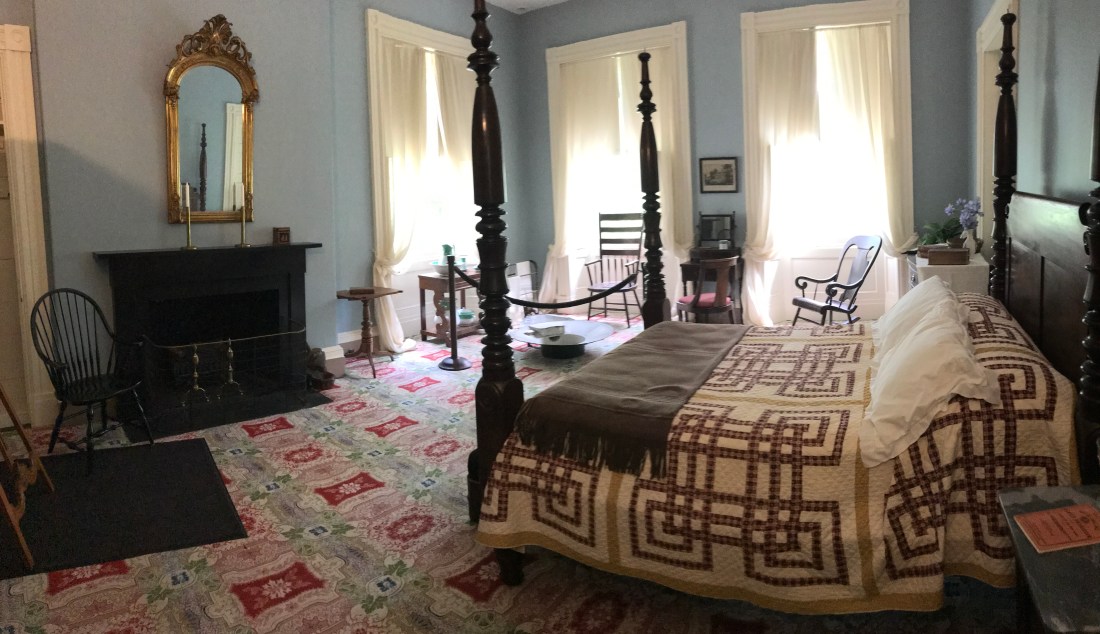

Buchanan’s bedroom. It was in this bed here that the president passed away in the peacefulness of his home. Shortly before he died, he claimed that “History would Vindicate his memory.” He would turn out to be as bad a prophet as he was a President.
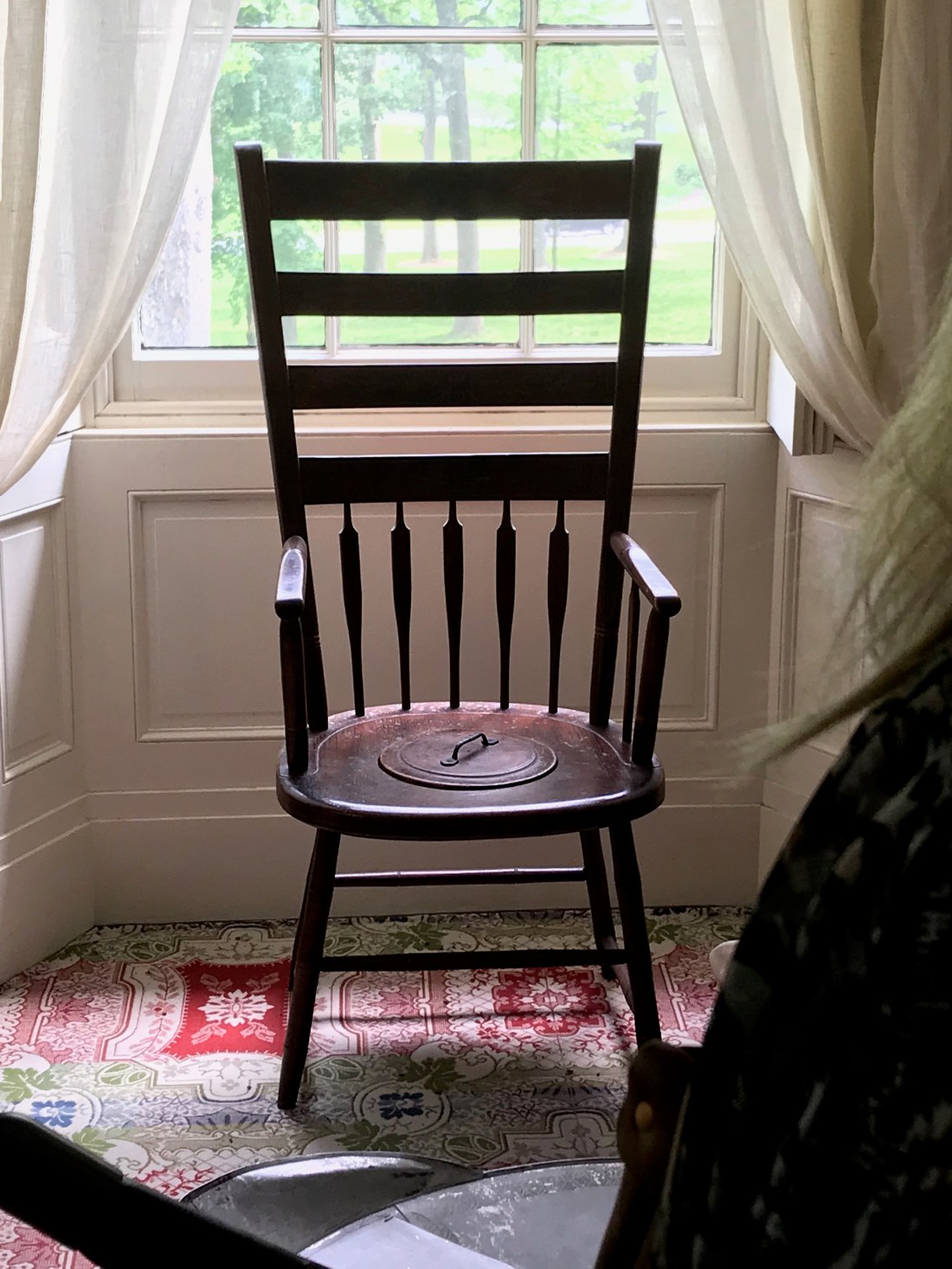
This is a nightchair, designed to have a lift-up lid, so a chamberpot could be placed underneath for “necessary buisness”. And all that makes sense, except for if you don’t need to go. Wouldn’t that handle be unconfortable to sit on?
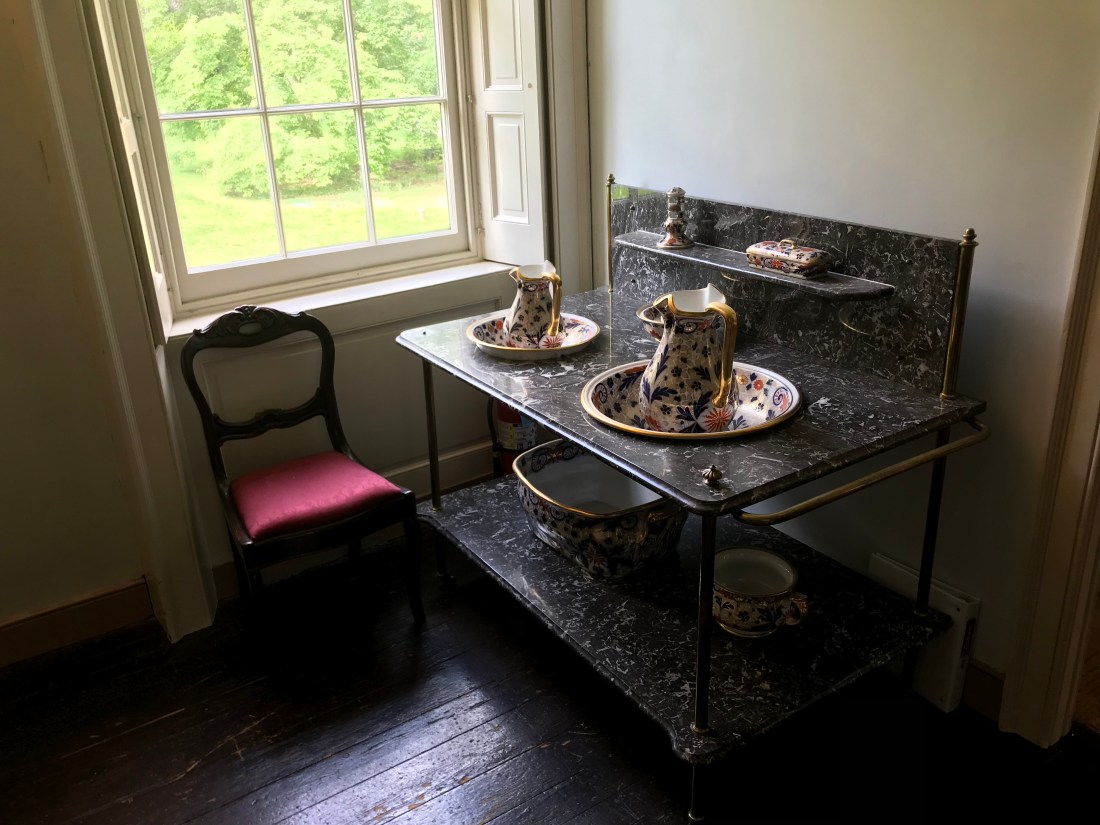
The sink of the 1800’s. It was not hard to get fresh water, given that three springs ran on the property.

A very deep bathtub, which I am suprised is in the house. Maybe it was an addition to the house after he died?
We then headed back outside.

Wheatland is still a very nice house. I can see why Buchanan loved it so. Solitary, peaceful and lush.
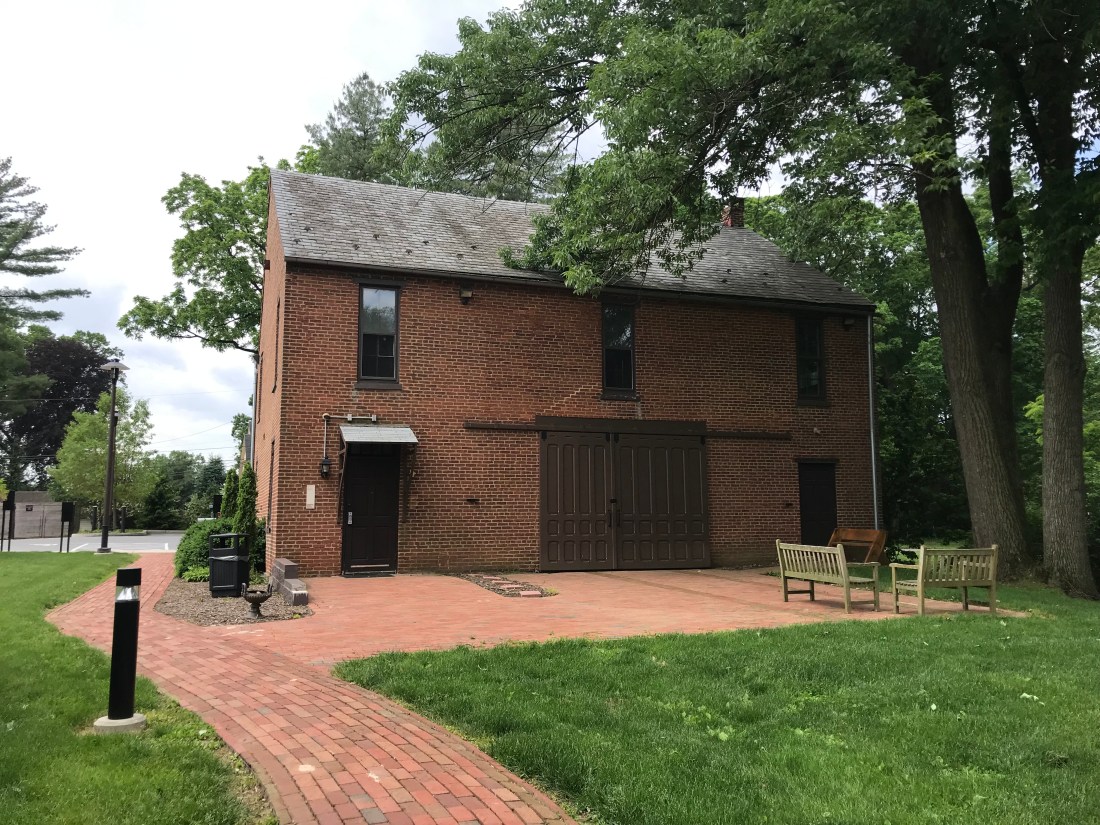
A stable installed after Buchanan’s death.
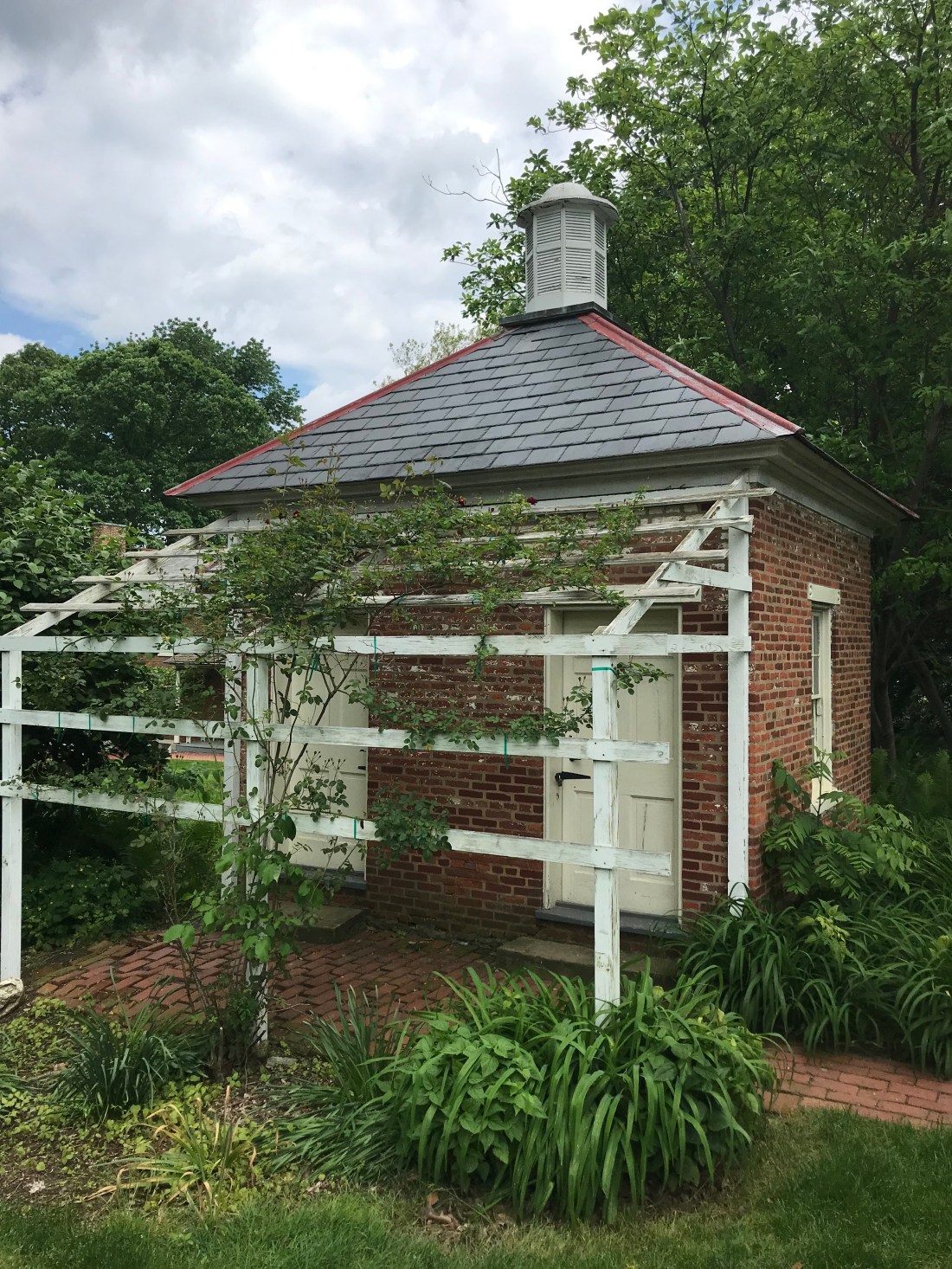
This outhouse has a fascinating history. One of the former owners of this estate had a large family with over 10 children, so it features two adult seats, a teenager seat, and two for children. I mean geez, you could have whole cabinet meeting in there (by no means am I saying that happened).
In the visitor center, we came across a few more items of interest.
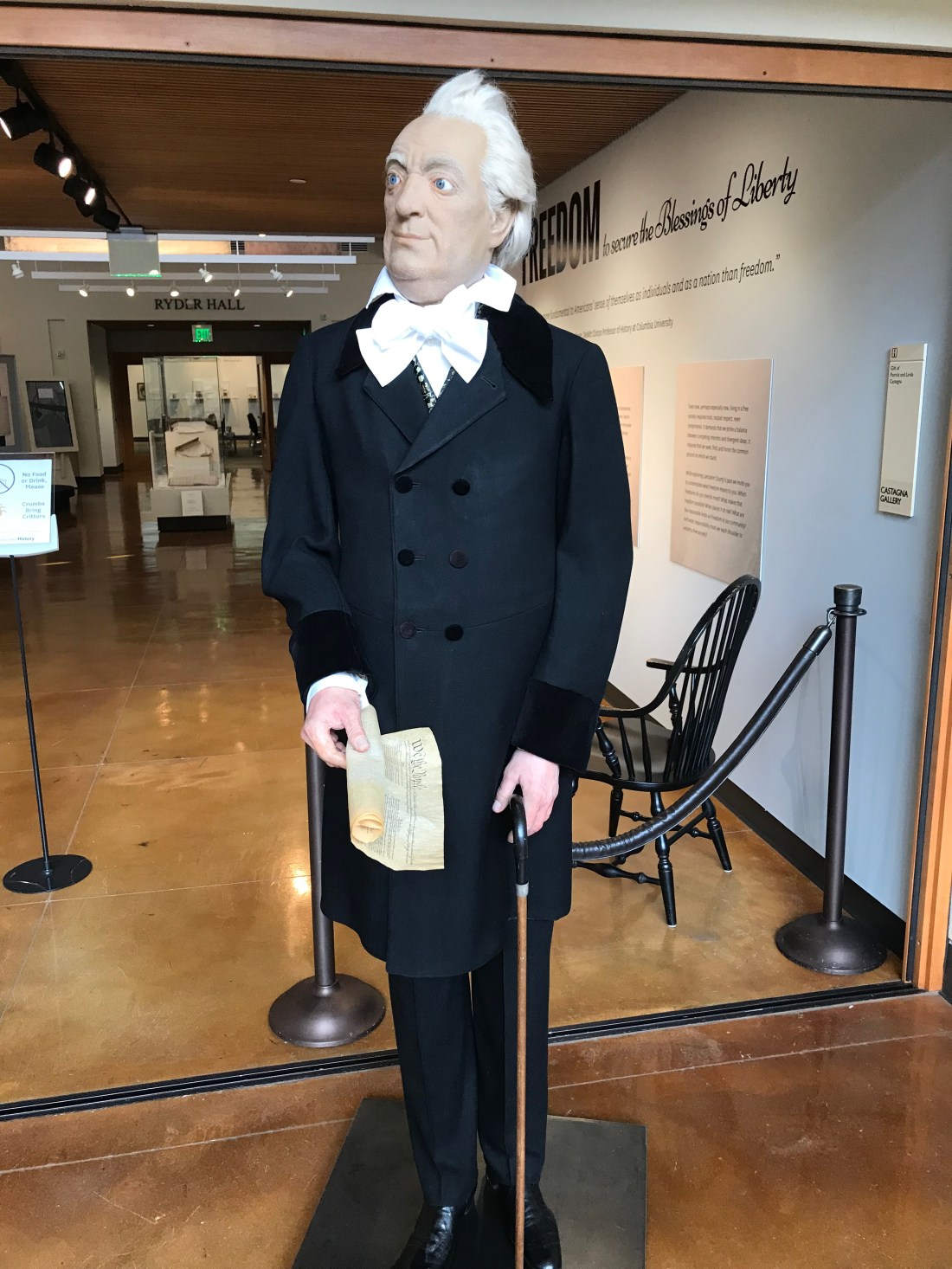
This wax figure of Buchanan originally came from the Presidential Wax Museum in Gettysburg, which closed down three years ago due to a lack of funding. Likely, it didn’t get much buisness considering the quality of places like Madame Tussauds. Still, it’s a decent enough figure.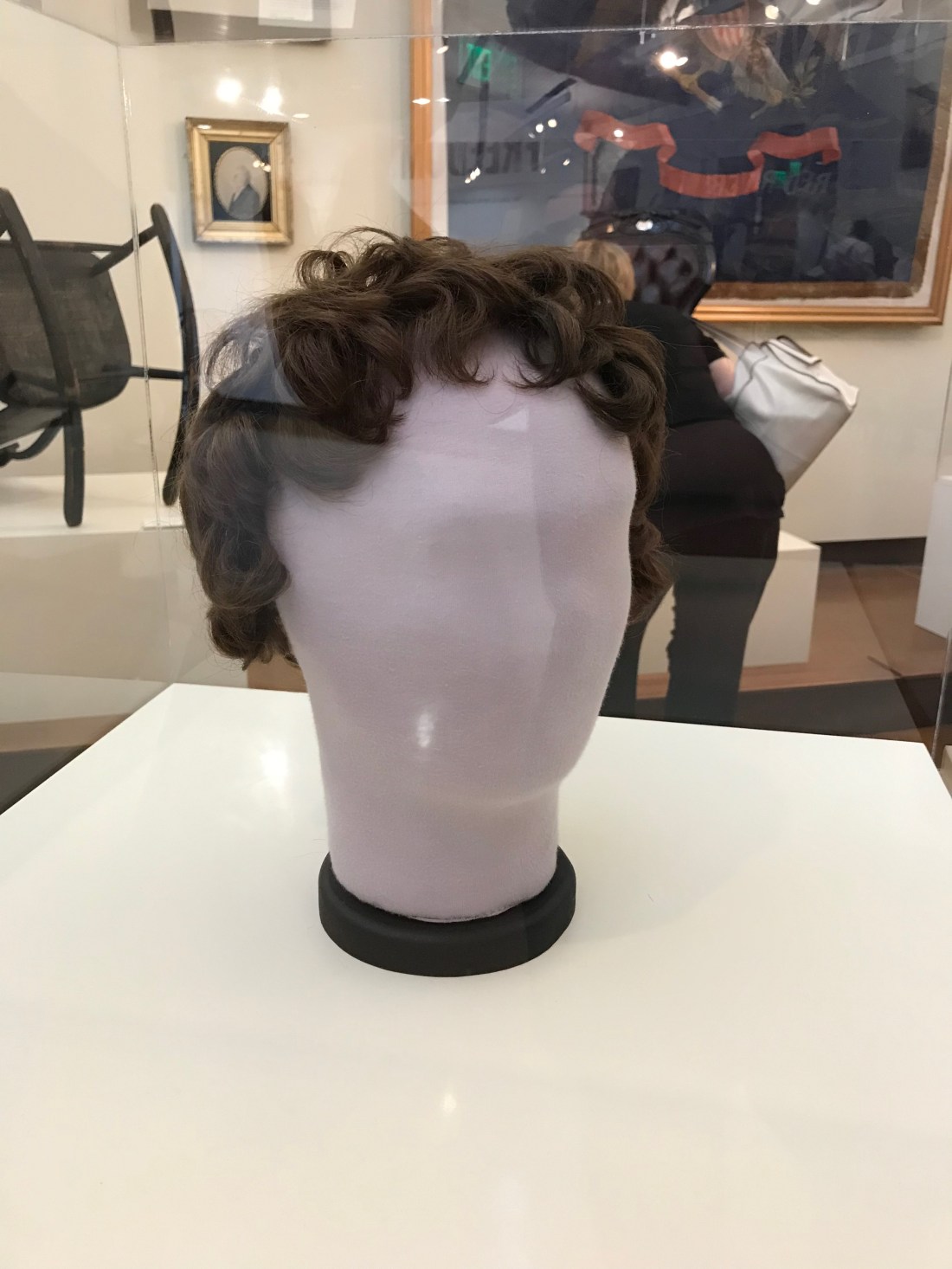
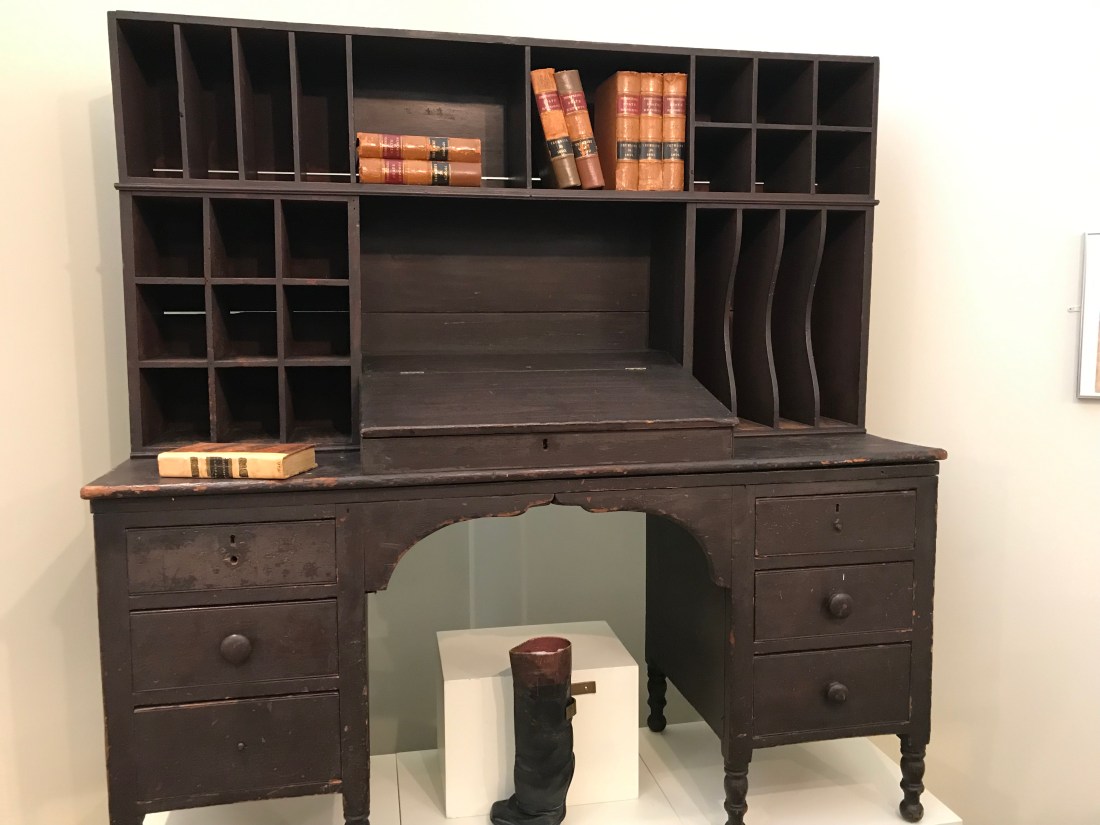
The wig and work-desk of Lancaster-native Thaddeus Stevens, who was a legendary Radical Republican during the days of the Civil War, and who helped to champion the efforts of the ratification of the 13th Amendment that ended slavery, and further equal rights for African-Americans.
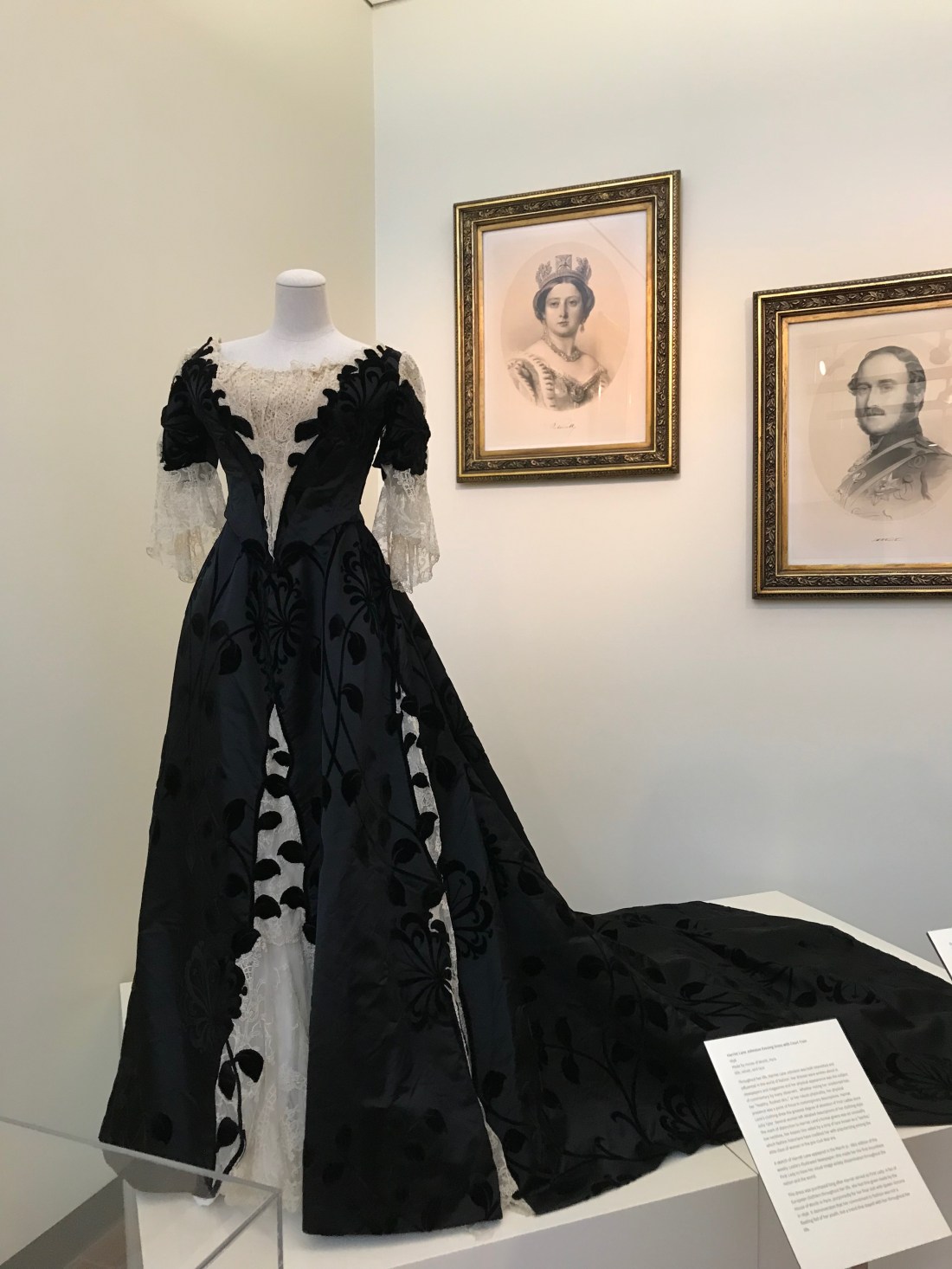
A very beautiful dress of Harriet Lane on display. There was another dress like this back in the Smithsonian First Ladies collection in D.C.
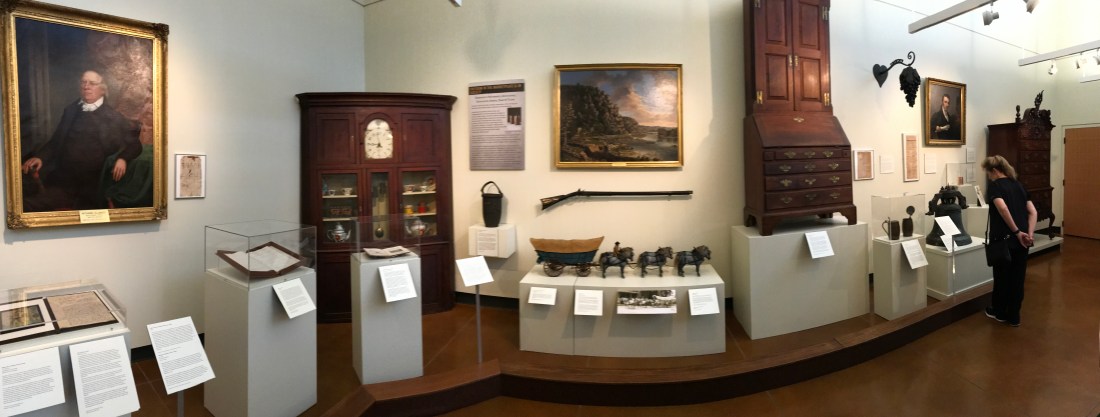
Assorted relics and artifacts from local history. Lancaster is one of the oldest inland towns in the entire country.
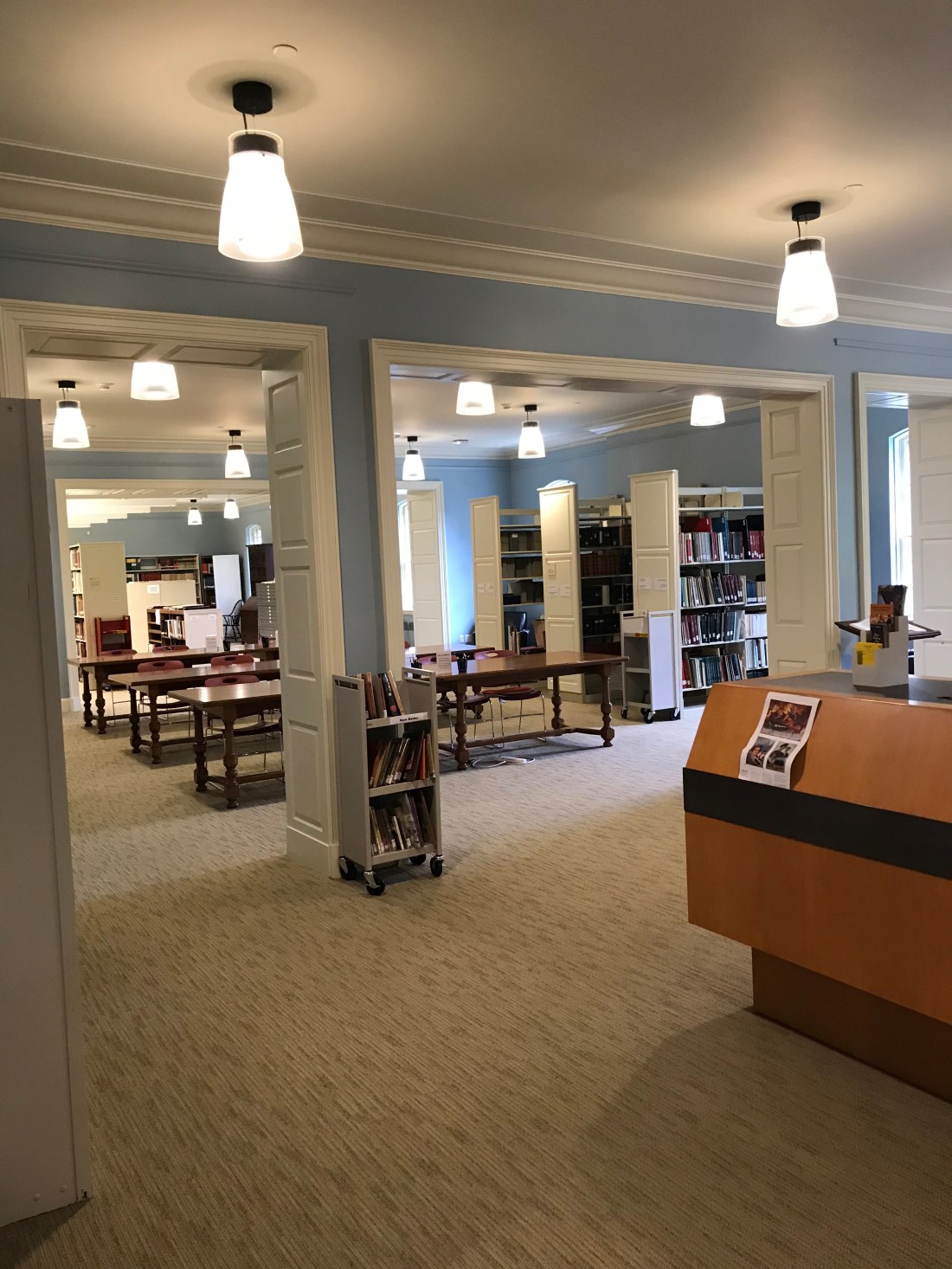
A library that probably is a terrific archive for anything Lancaster-related, or Buchanan-related.
After getting a nice collector’s lapel pin, we hurried deeper into town to discover Woodward Hill Cemetery, the final resting place of James Buchanan.
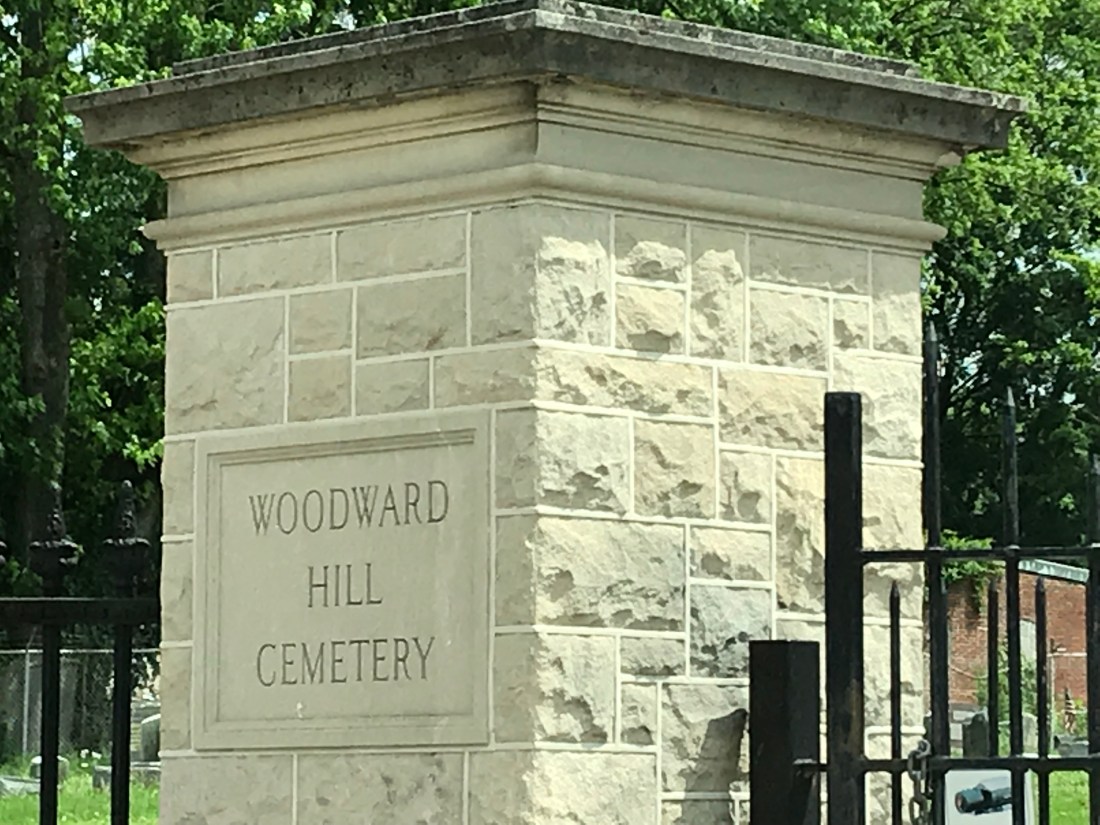

Oh there we go. Let’s check it out.
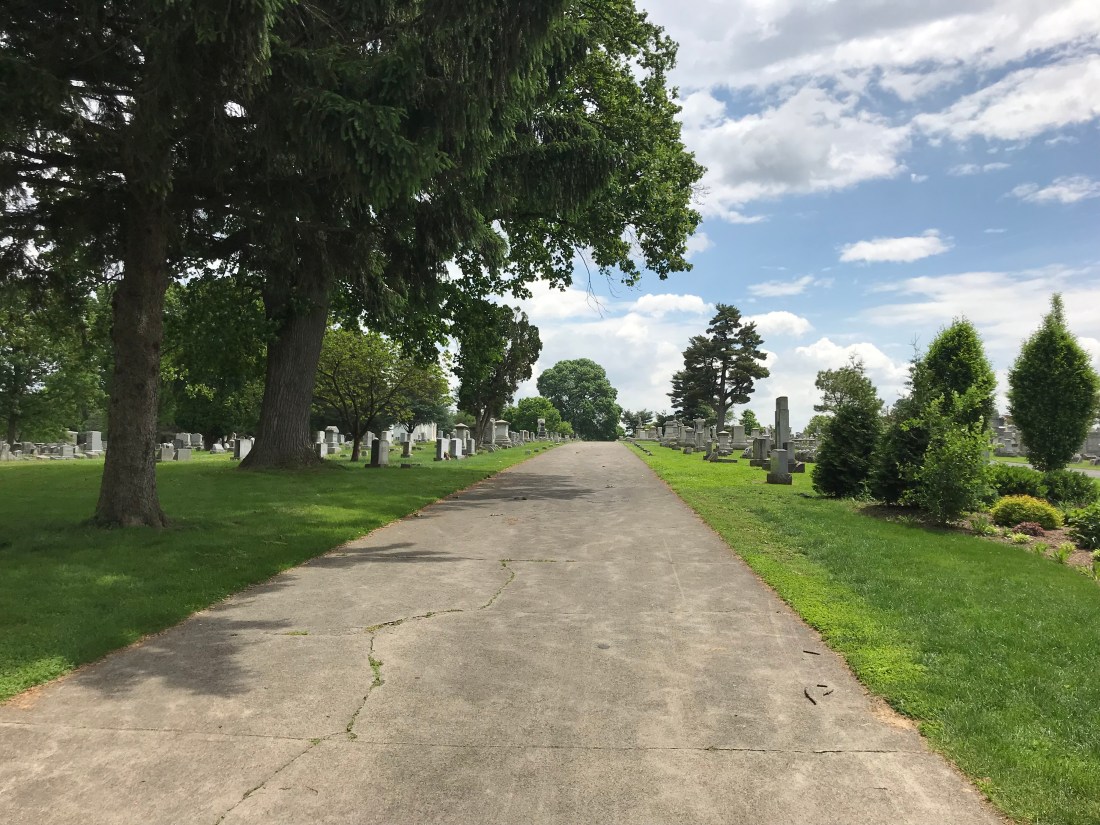
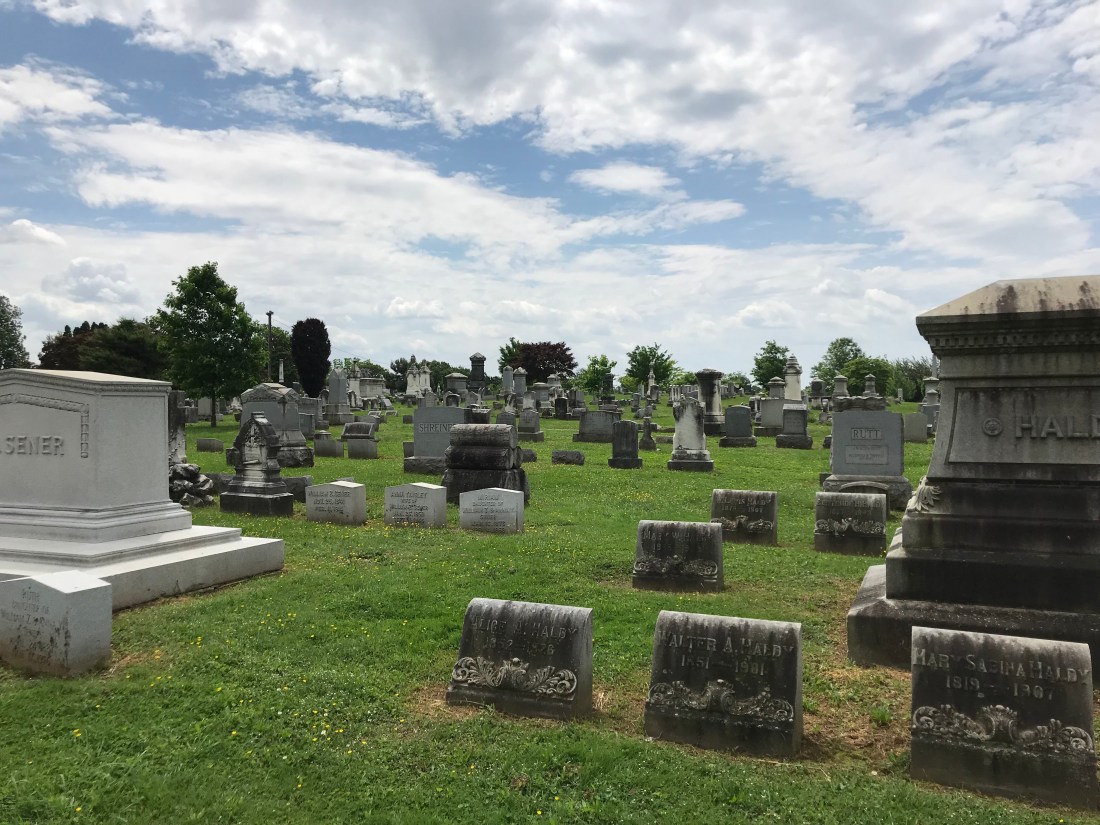
This was a VERY old cemetery, many graves of which were too inelligible to make out.
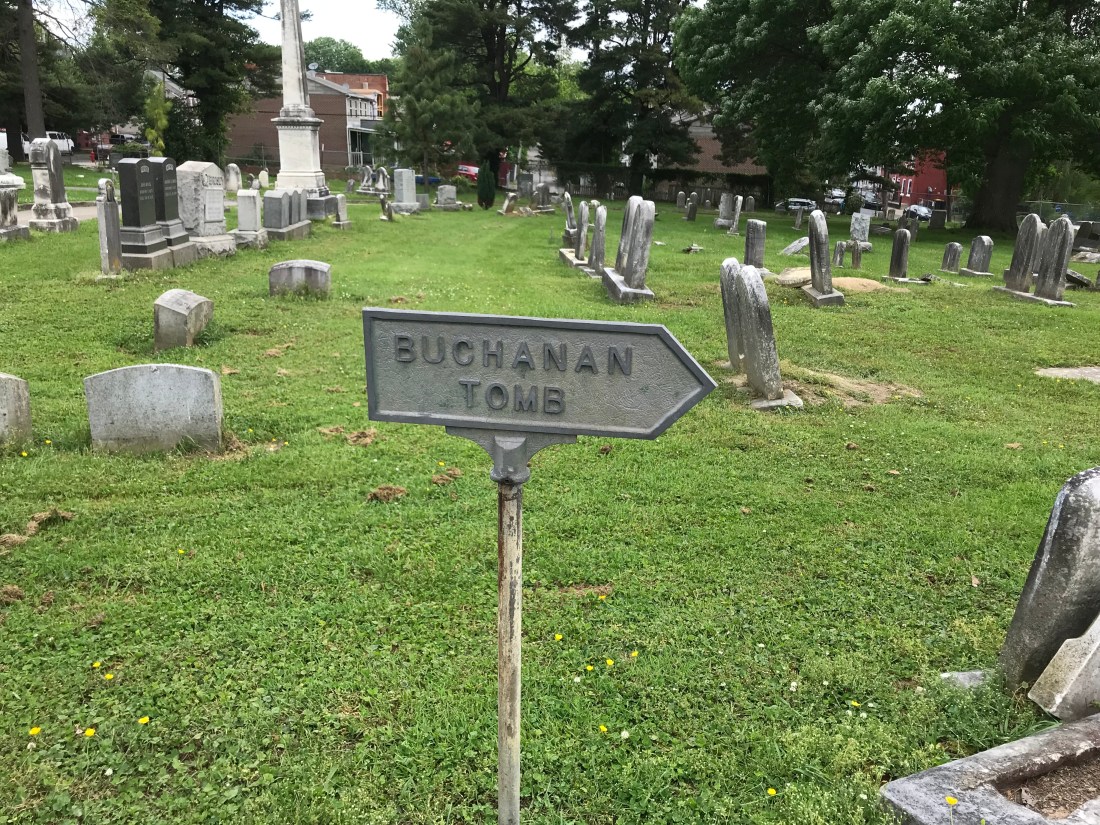
On the right track.
While I am here, I would like to note how unkept this cemetery is… many of the tombstones and tombs were either leaned, toppled, or broken. It seems that few efforts have been made to repair the cemetery.
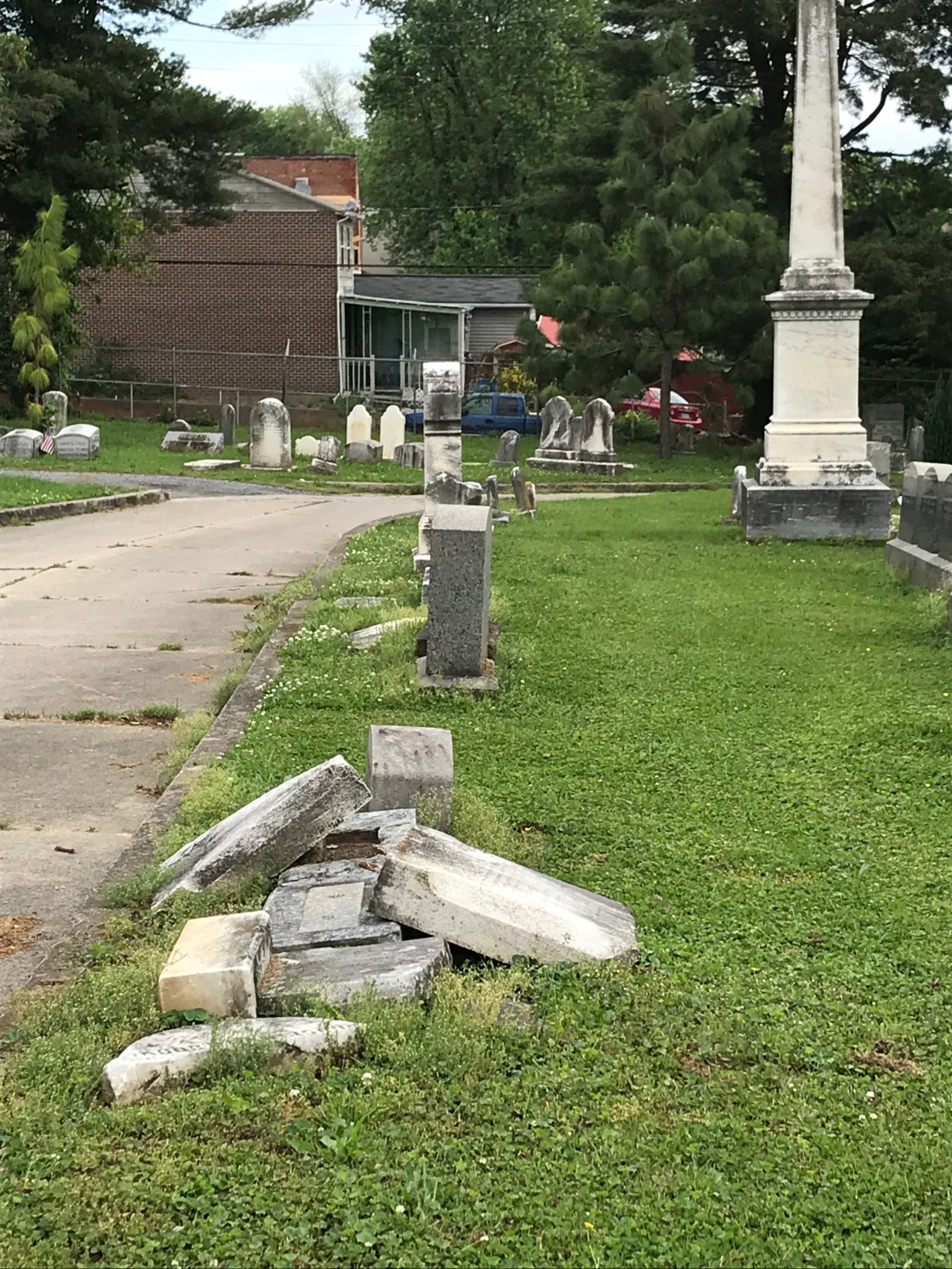
Like this. This is just disgraceful… there was even a family of marmots (or groundhogs) that were living in holes that led either next to or into a grave… I hope that this cemetery is fixed up soon.

And this is the gravesite of our 15th President, James Buchanan…
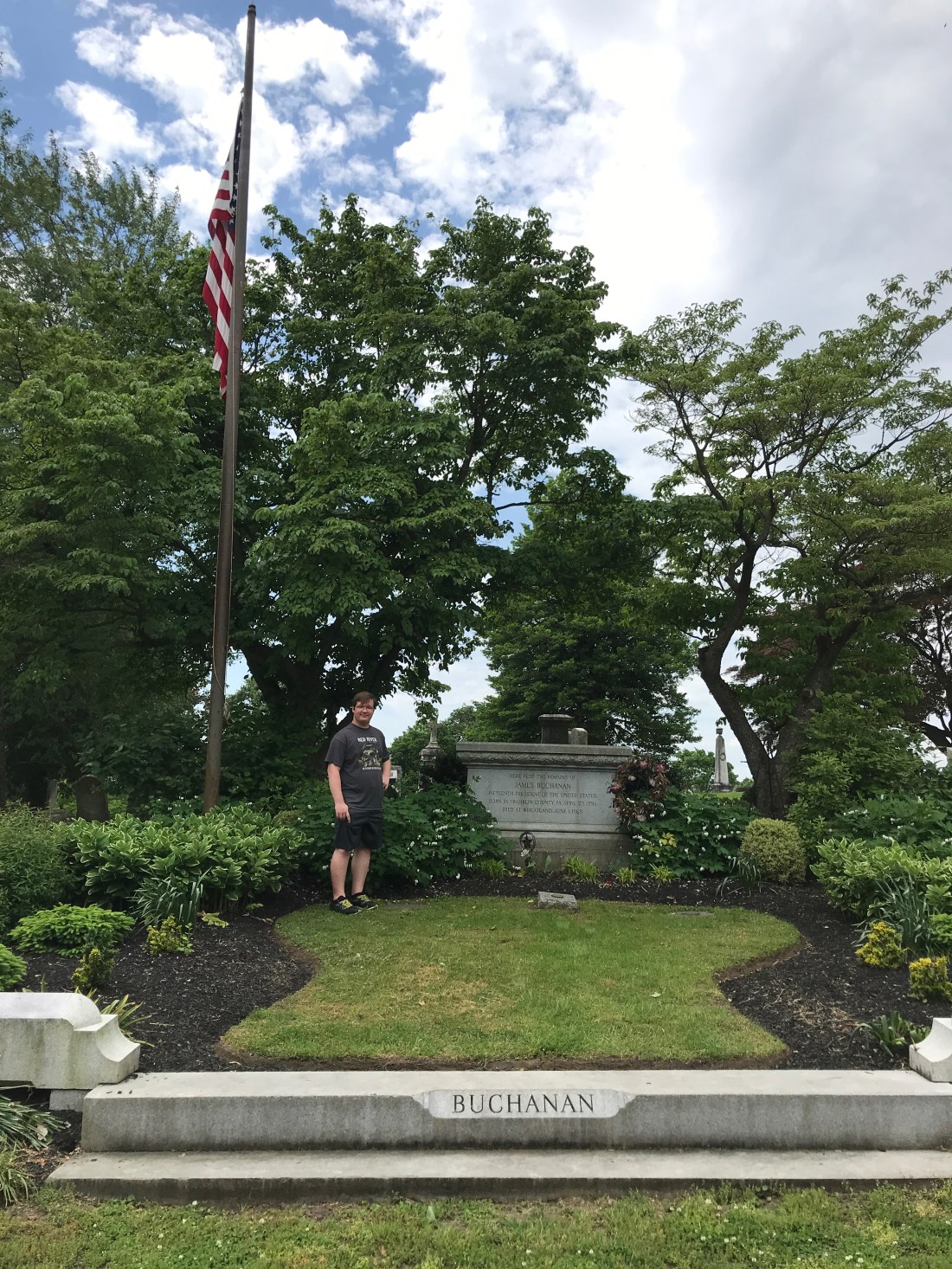

That decayed wreath on the right was likely left by the previous ceremony on his birthday. On the birthday of each President, a wreath is laid at their gravesite to commemorate their status as president. Buchanan’s birthday is only about 10 days away.
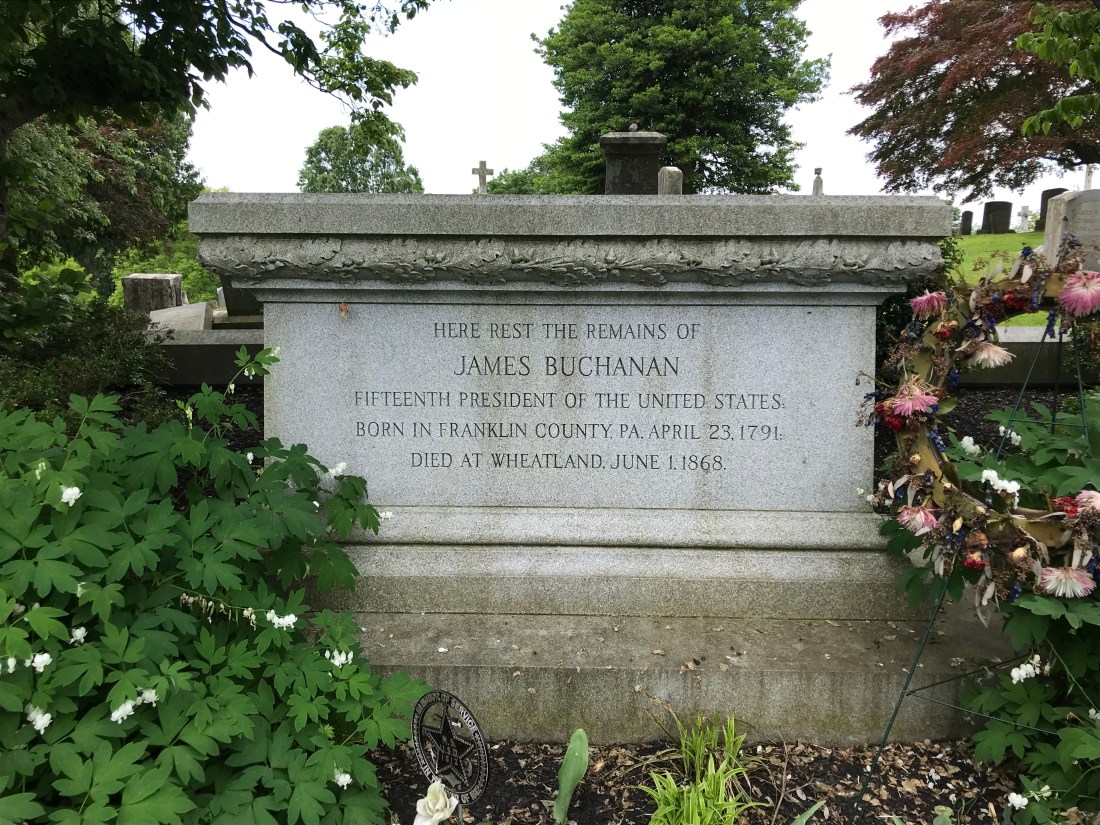
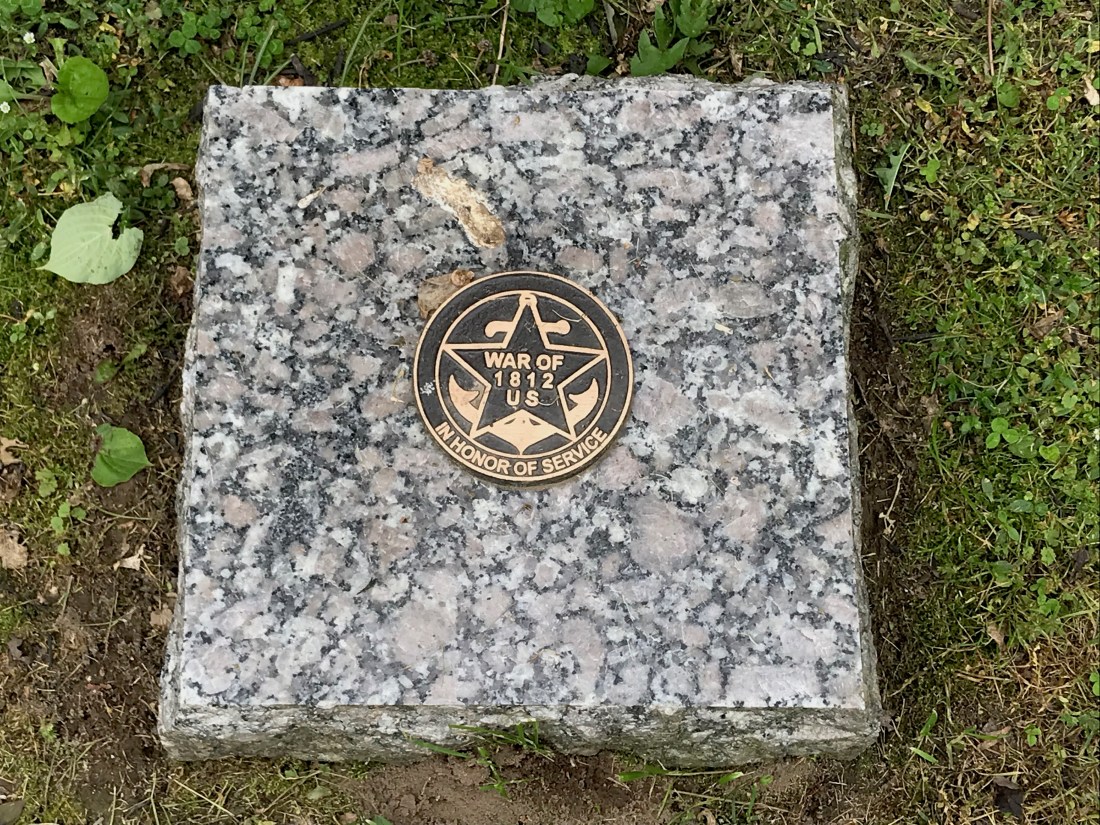
That marker below the grave indicates his service in the War of 1812, where he was only a private. Still, military service is still military service.
Well, at this point, I wonder if Buchanan was possibly in the wrong place at the wrong time? After all, his resume was exceptional. He previously served in both houses of the Pennsylvania State Legislature, both houses of the U.S. Congress, Ambassador to Great Britain, Ambassador to Russia, and as Secretary of State.
It takes a lot to be President, and he had to have some skill to get into office. And few know the burdens of the office that each of those 44 men had to undertake…
However, Buchanan’s actions of incompetence and misplaced beliefs led to the quickening of secession, to where many of his cabinet and citizens departed to create the Confederate States. His attempts to add some credit to his administration that circumvent his shortcomings were certainly not well impacted either.
So, who was the real James Buchanan? Was he truly a victim of his office, or a “traitor” to the Union?
You be the judge.
We continued on our trek further east, towards King of Prussia (yes, that is in fact a town), and Philadelphia.
After a directional mishap (in which we almost backtracked west to Gettysburg), and difficulty in dealing with the toll roads (Pennsylvania is practically laden with them), we finally reached the other stop of the day. Valley Forge!
Valley Forge National Historical Park
Valley Forge served as the major hub of activity for the Continental Army led by General George Washington as they evaded the British. Throughout the harshness of winter and the throngs of pestillence, the colonists here trained and better prepared themselves to combat their opponents, before and after the famous “Crossing of the Delaware”.
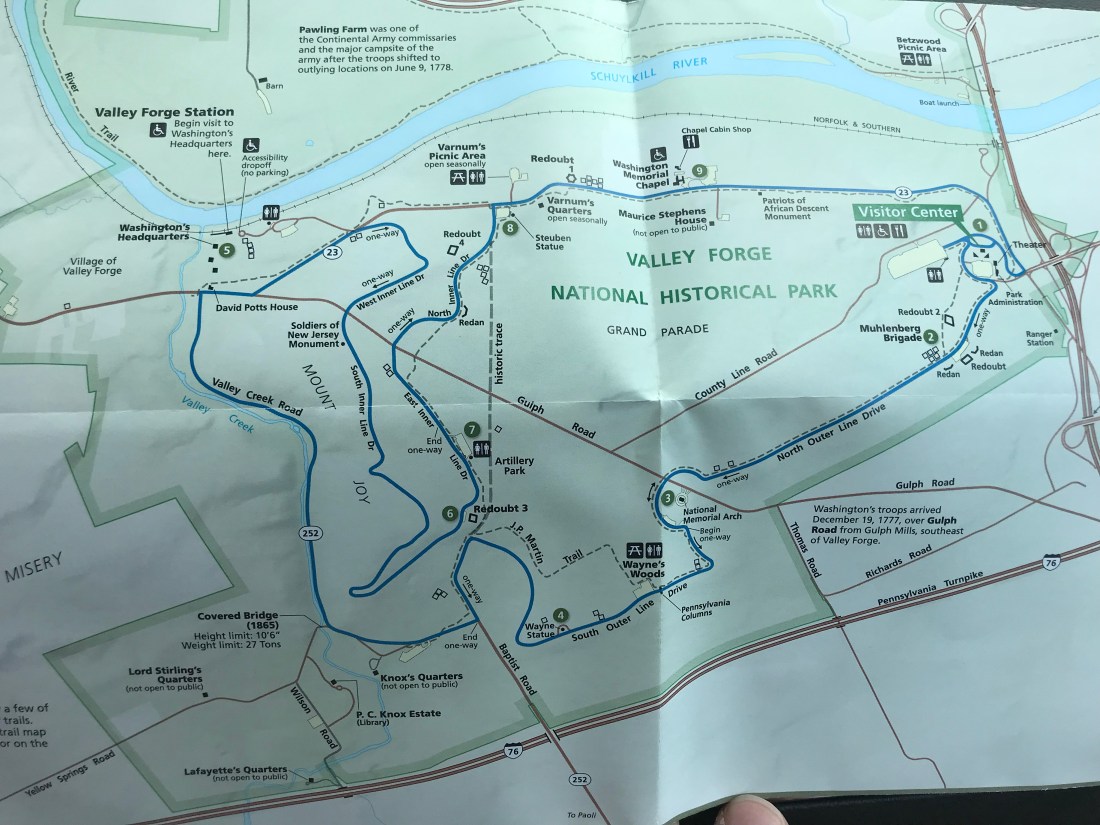
We’ve a lot to cover. Let’s get to it!
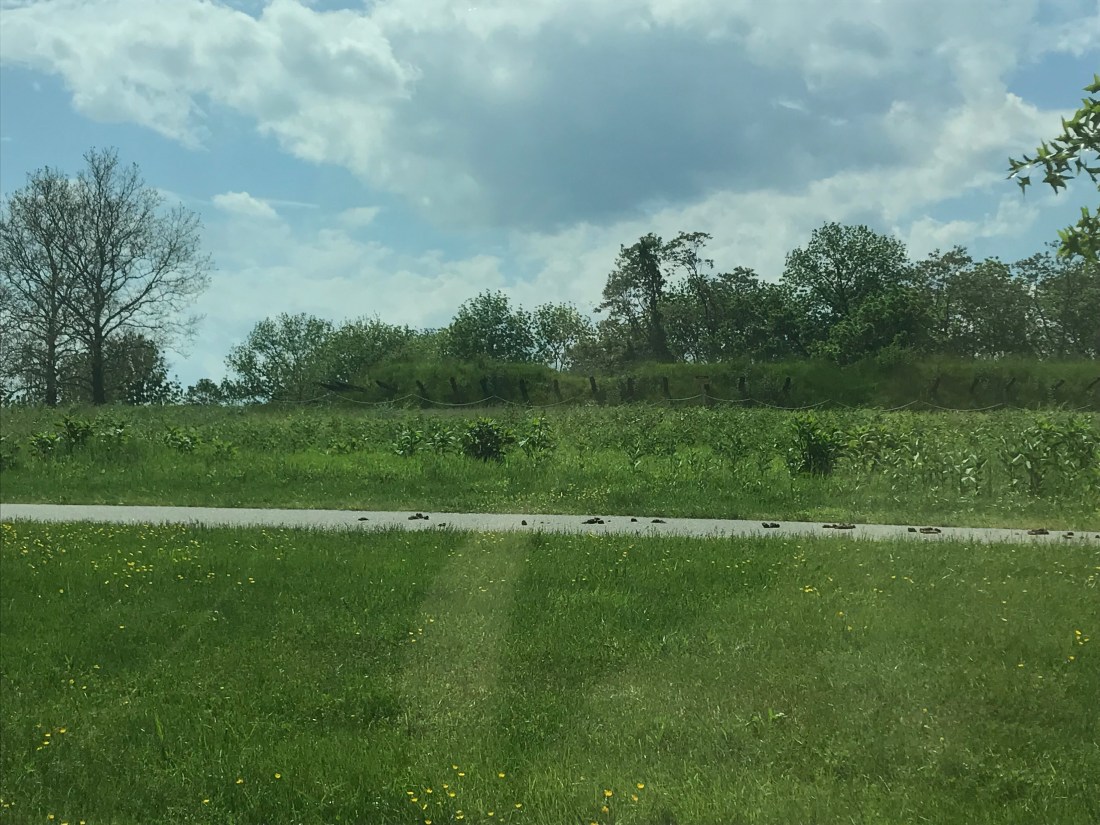
This is what is called a “Redoubt”, which was a dug out trench camoflaged by grass and shrubbery. There were several of these scattered throughout the field.
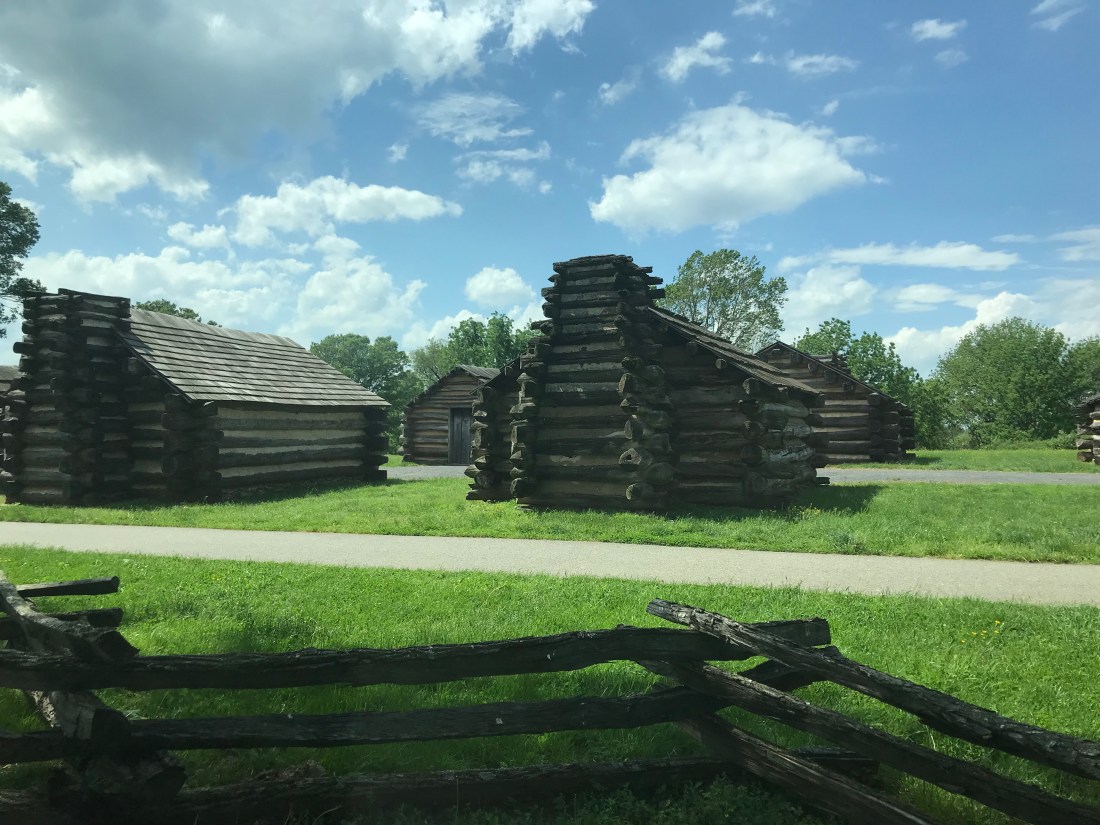
For colonial times, these were very high-quality and well-built cabins, which was comfy to many of the soldiers. However, there was still the bitter cold and disease to deal with. None of the cabins here are original of course, having long since decayed or been dismantled.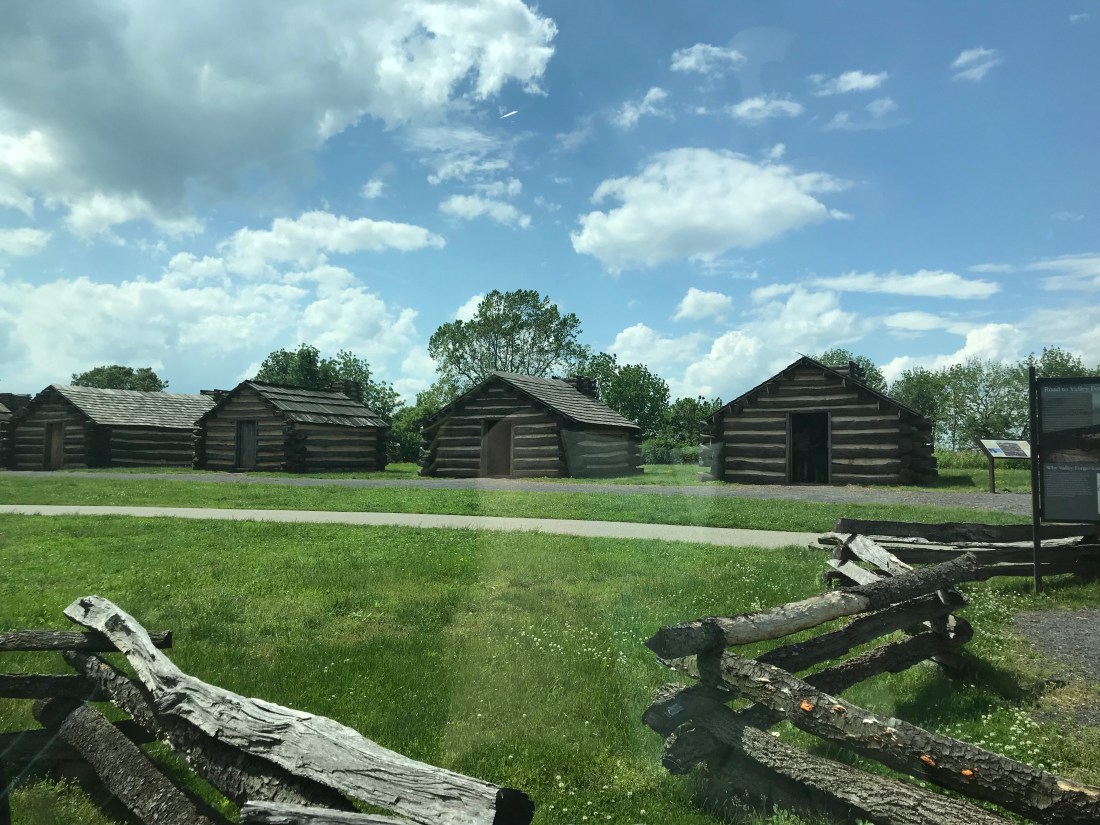

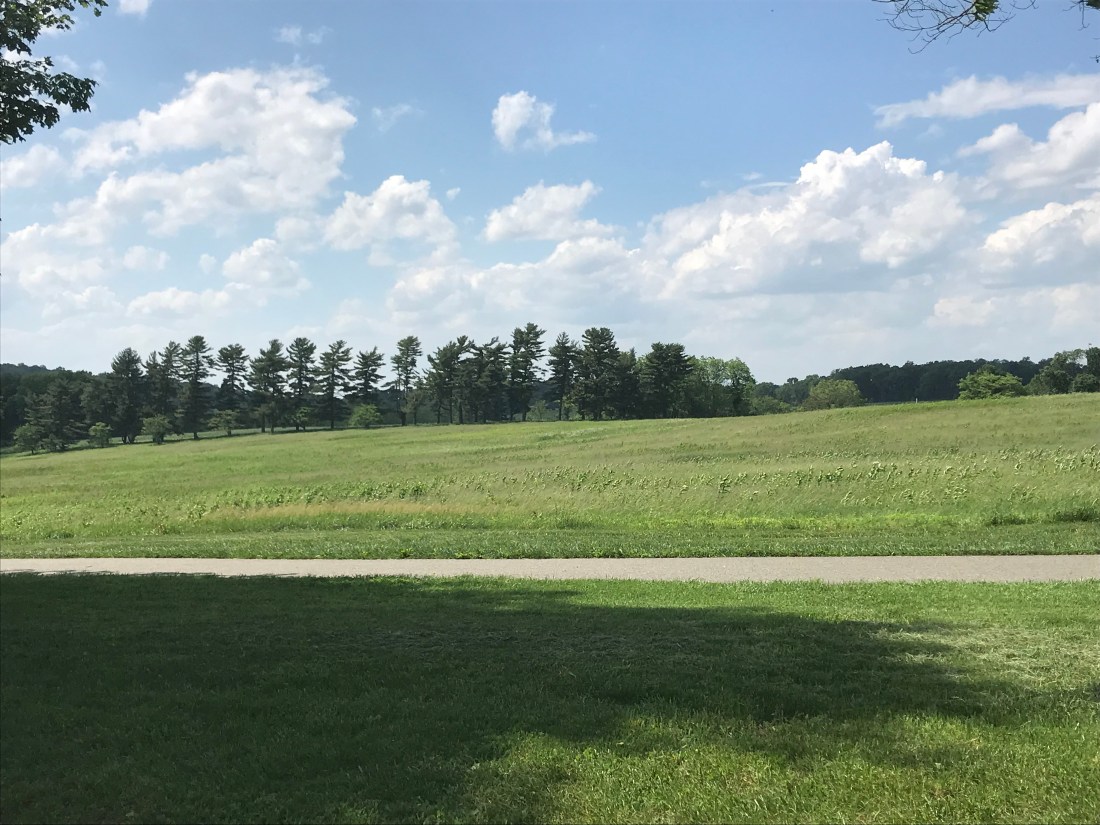
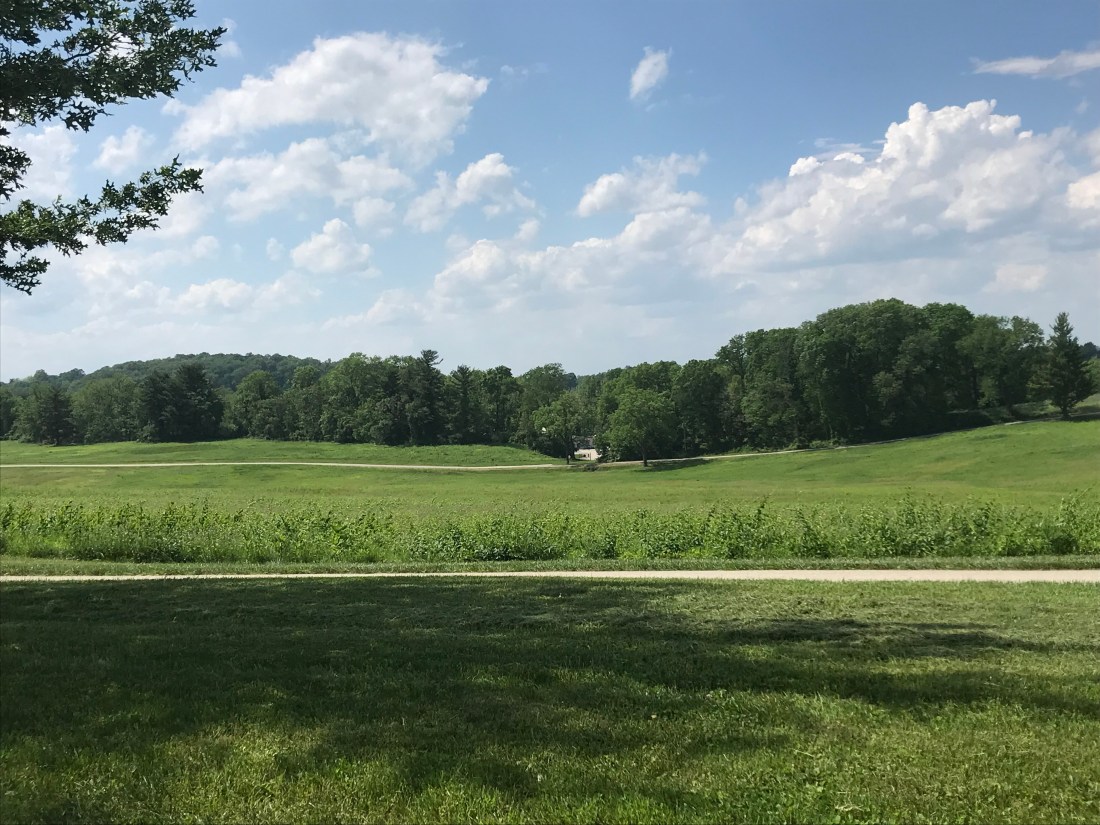
These rolling plains are absolutely beautiful… it seems impossible to imagine that this place was once filled with hundreds of those little cabins… it took 10 full years for the land to recover after the marks left behind by the camp.
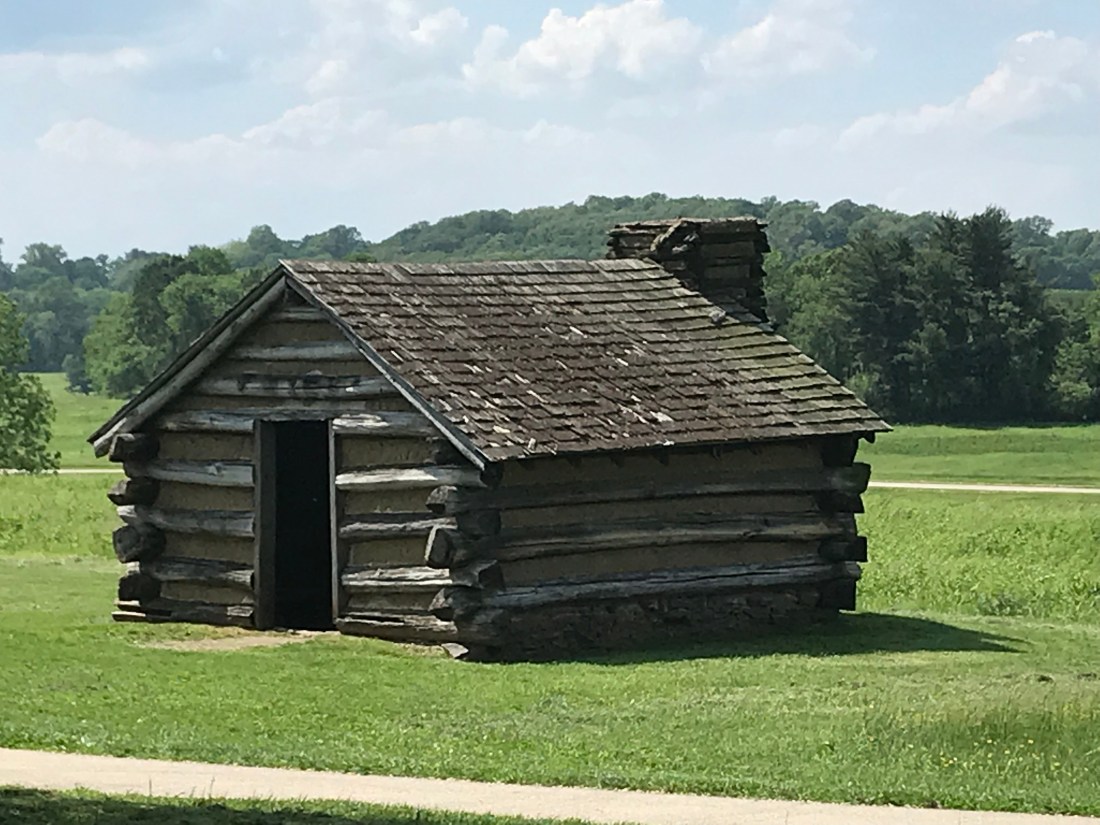
Another cabin. Let’s have a look in shall we?
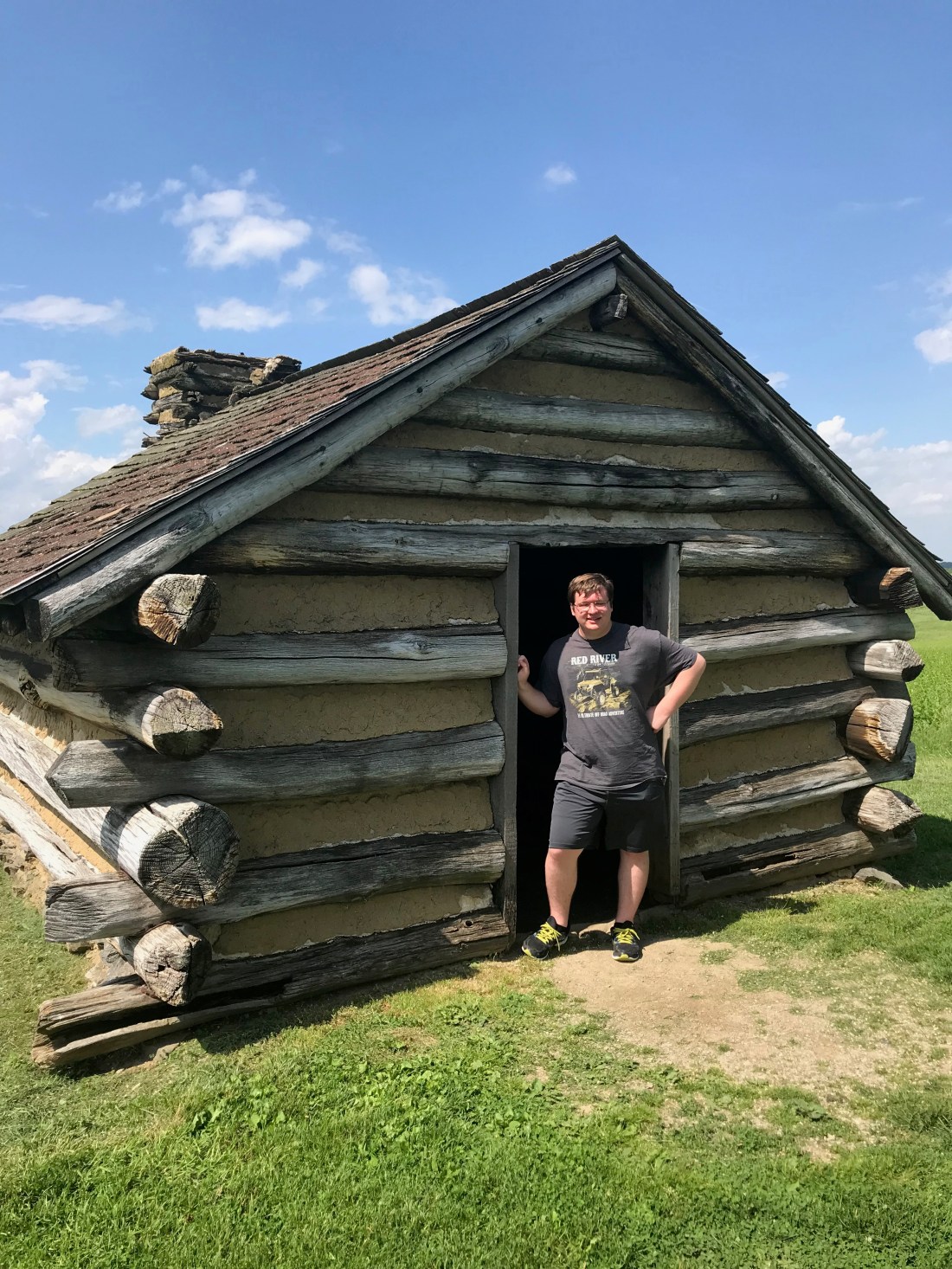
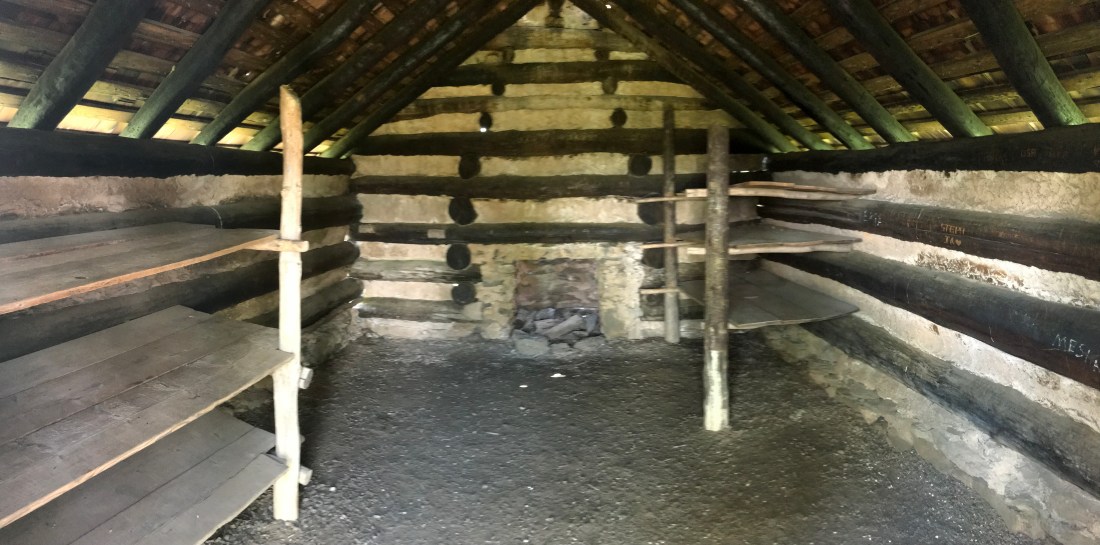
Bunks lie on both sides of the house, and one can faintly hear the birds coming from a nest near the chimney neck. Doing the chores and tasks needed to build the houses helped keep the soldiers warm, and give them something to do other than sitting around and shivering.
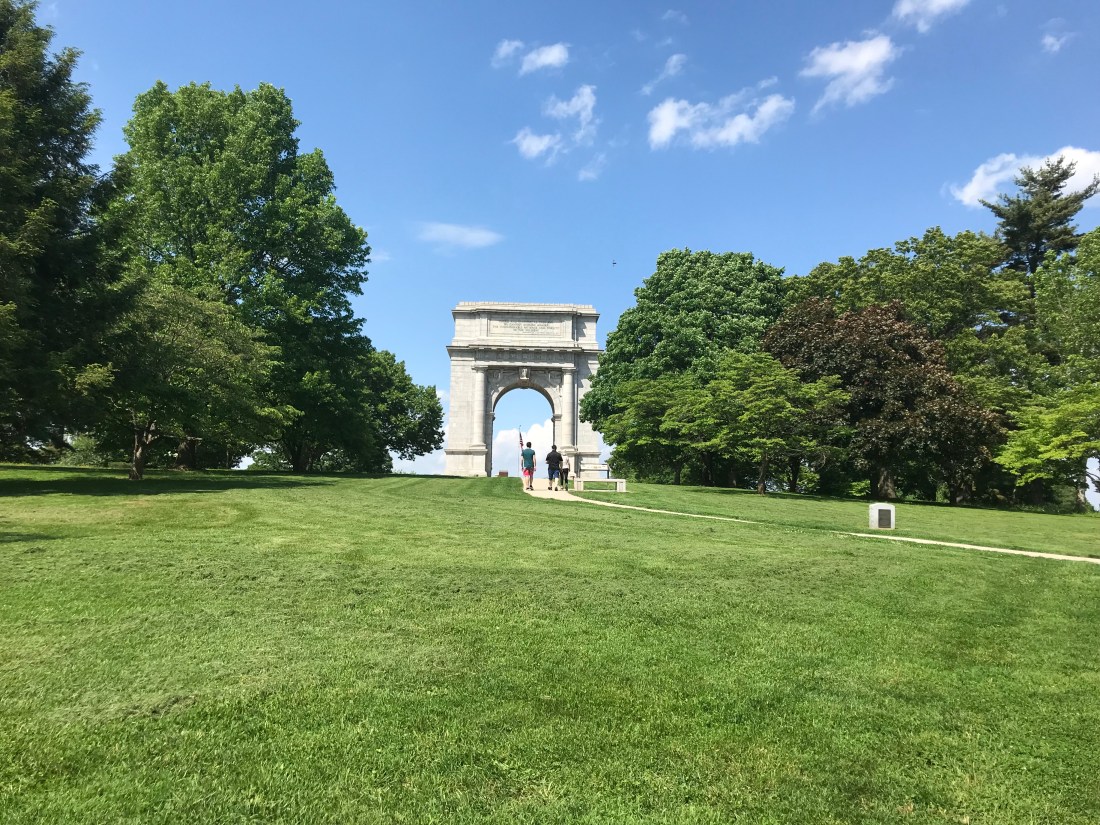
This impressive monument is the Memorial Arch, which commemorates the struggles and hope that the soldiers were intertwined with here.
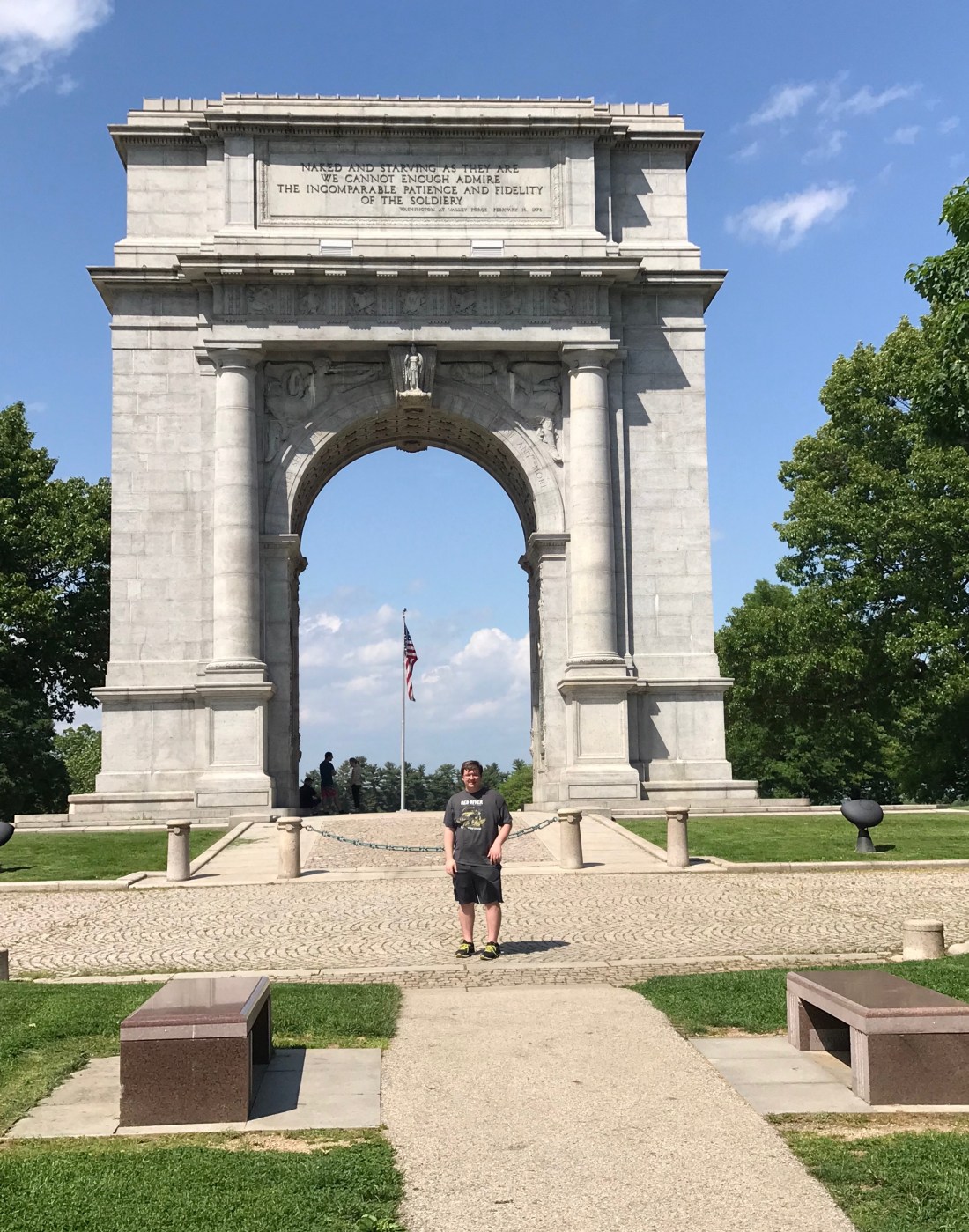
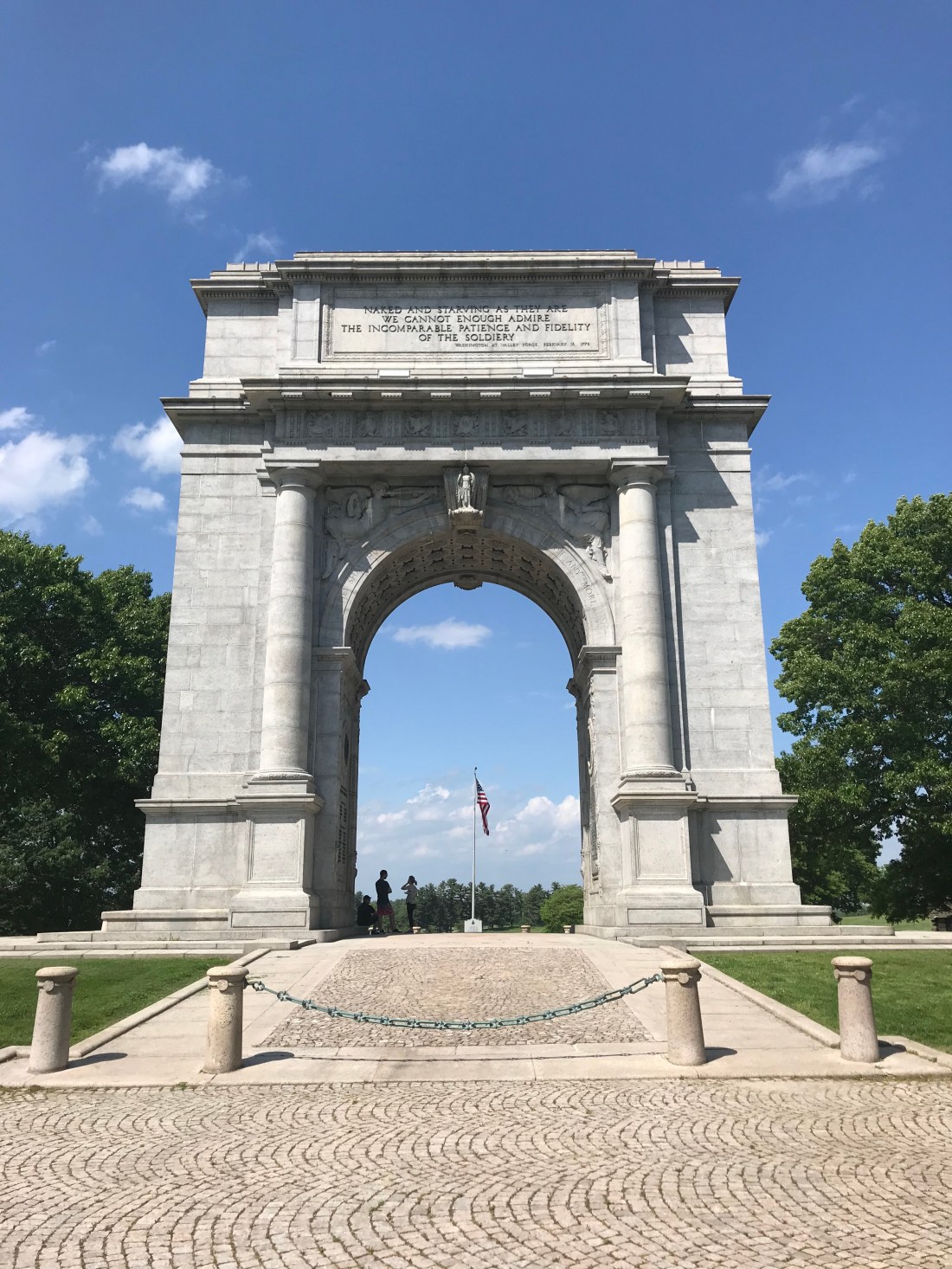
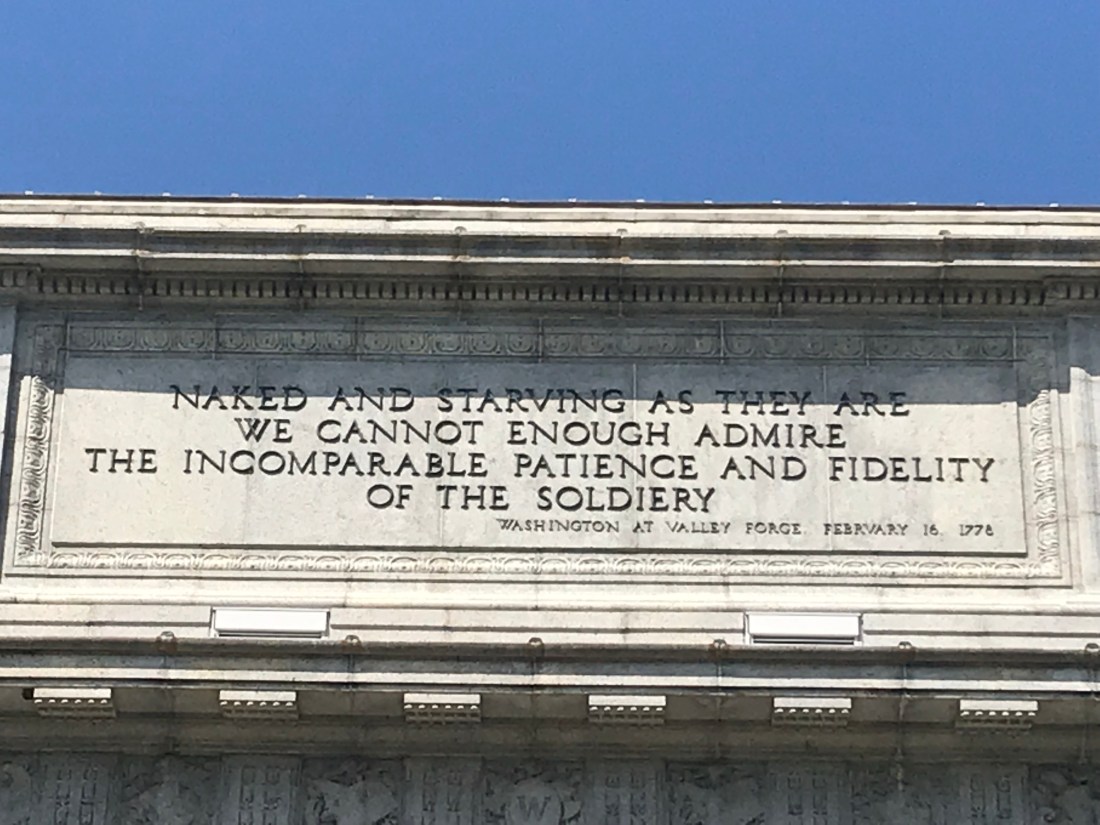
2,000 of the 12,000 soldiers stationed here died of cold and disease, and 4,000 more had left either due to desertion or of the need to treat the wounded. One can’t imagin what they had to endure.
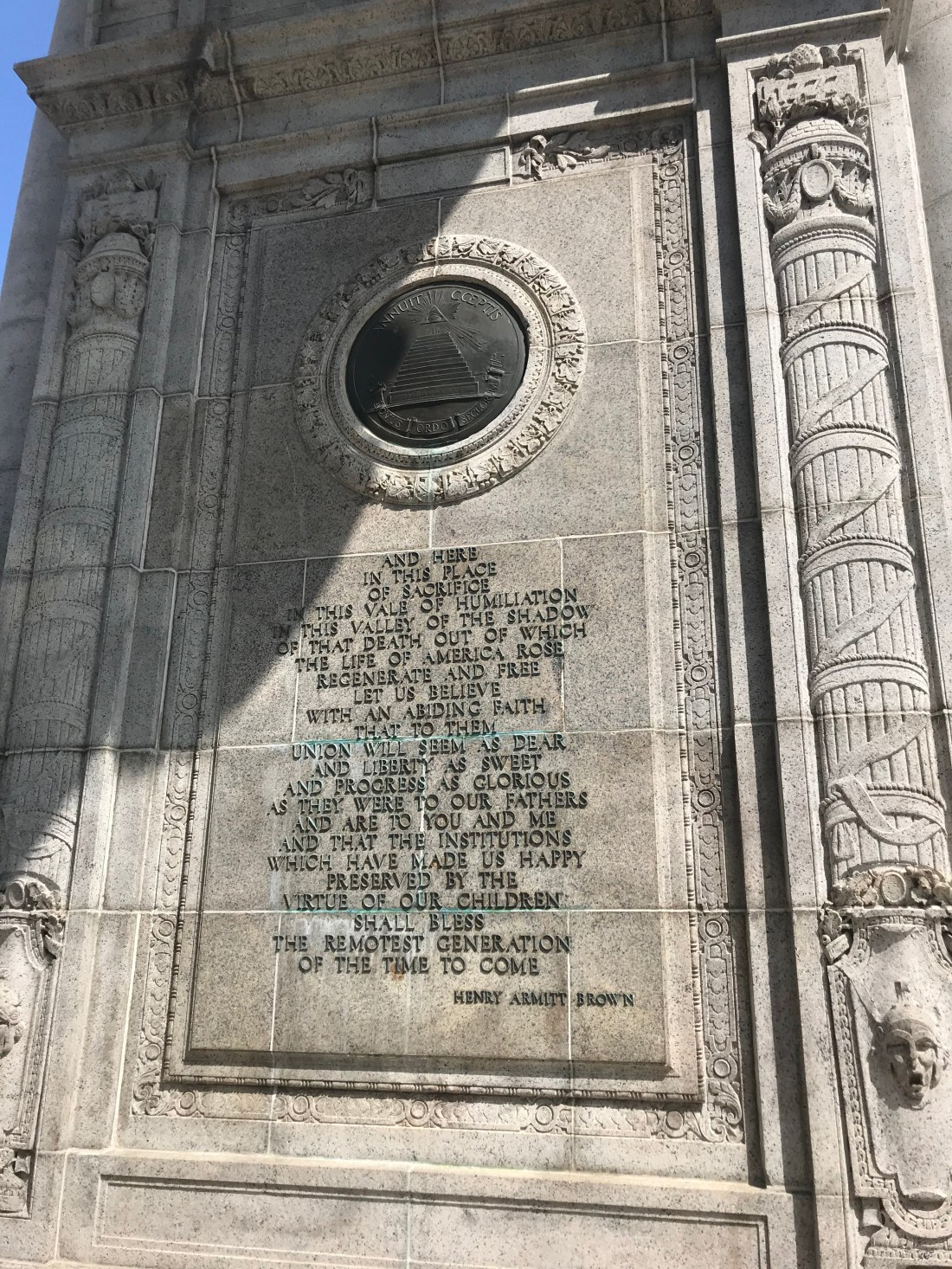

Henry Knox, who can be seen in the lower left column of commanders on this wall in the last picture, would become the first Secretary of War, who would of course work under President Washington. Alexander Hamilton also served under Washington here at Valley Forge, and who would become the first Secretary of the Treasury.
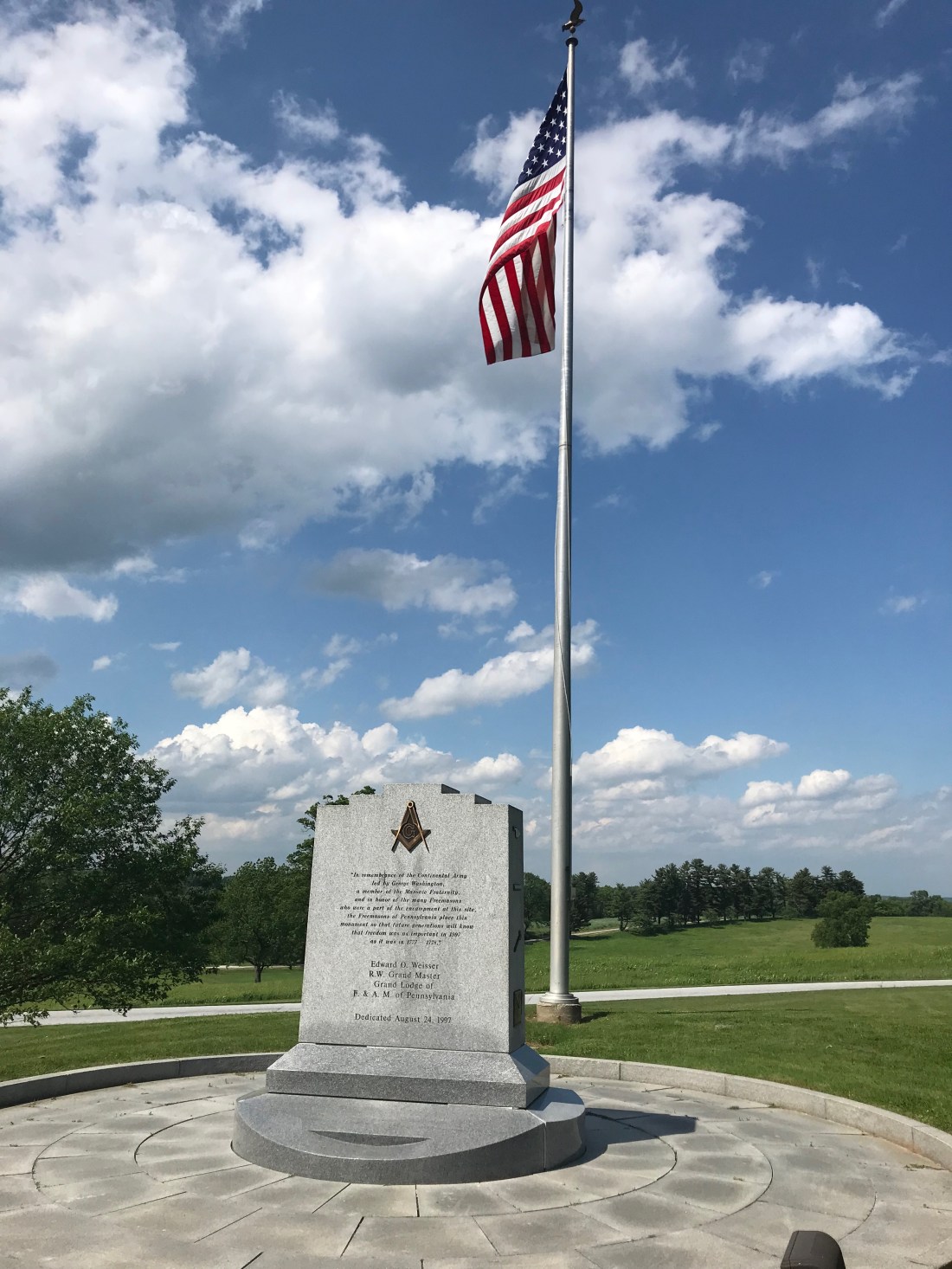
A memorial of the Freemasons of Pennsylvania to George Washington, of which he was a member.
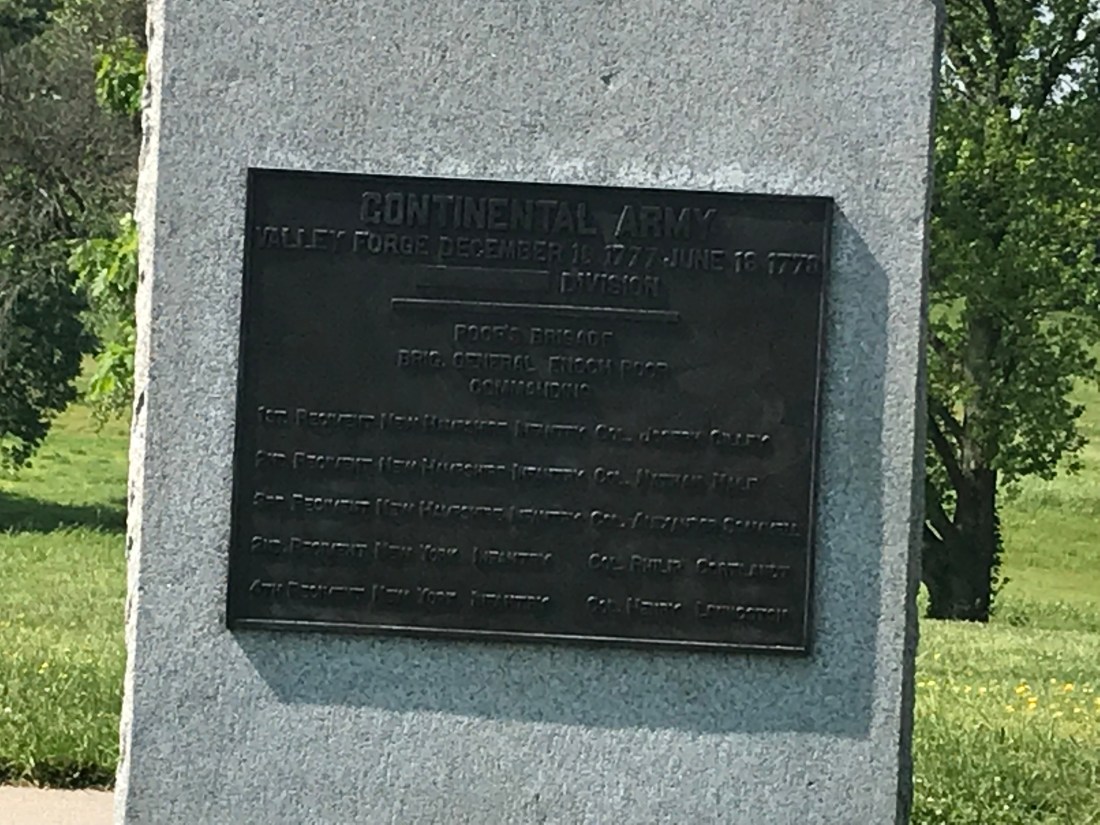
One of many division markers in the camp, similar to those of Gettysburg.
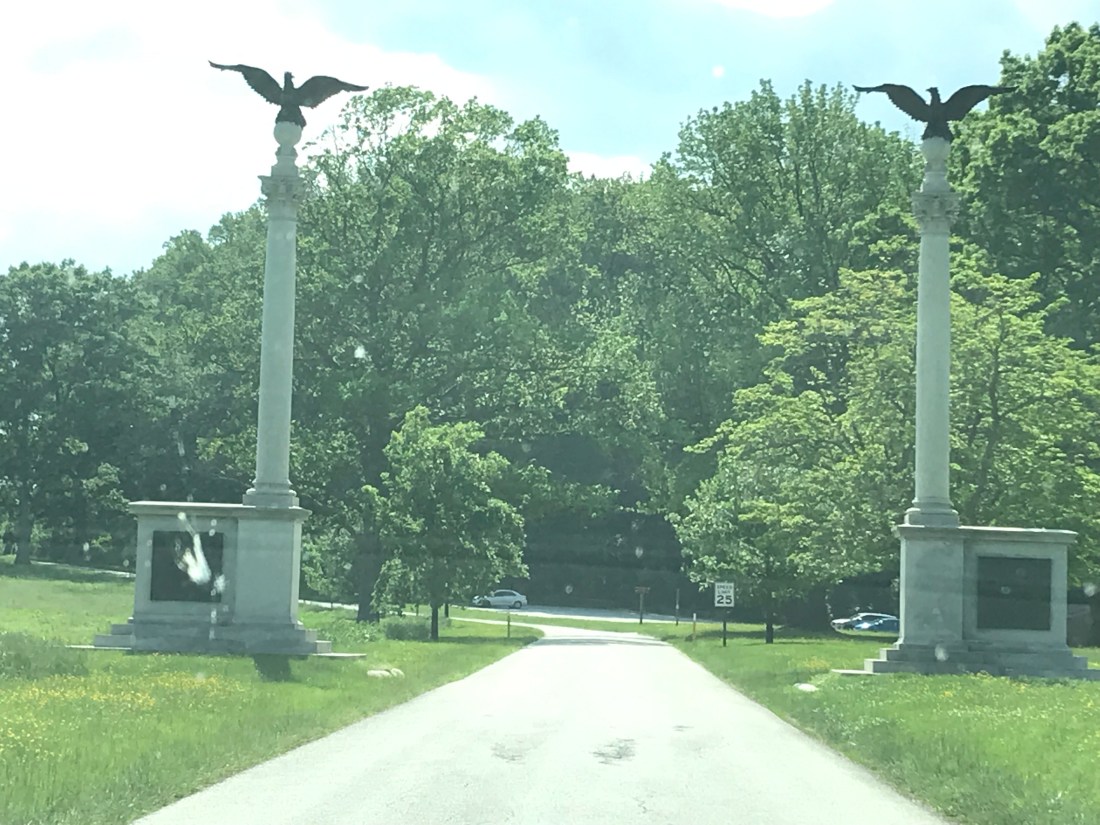
A memorial gate to the soldiers of Pennsylvania who were garrisoned here. Pensylvania had the most troups stationed here out of any other of the colonies/states.
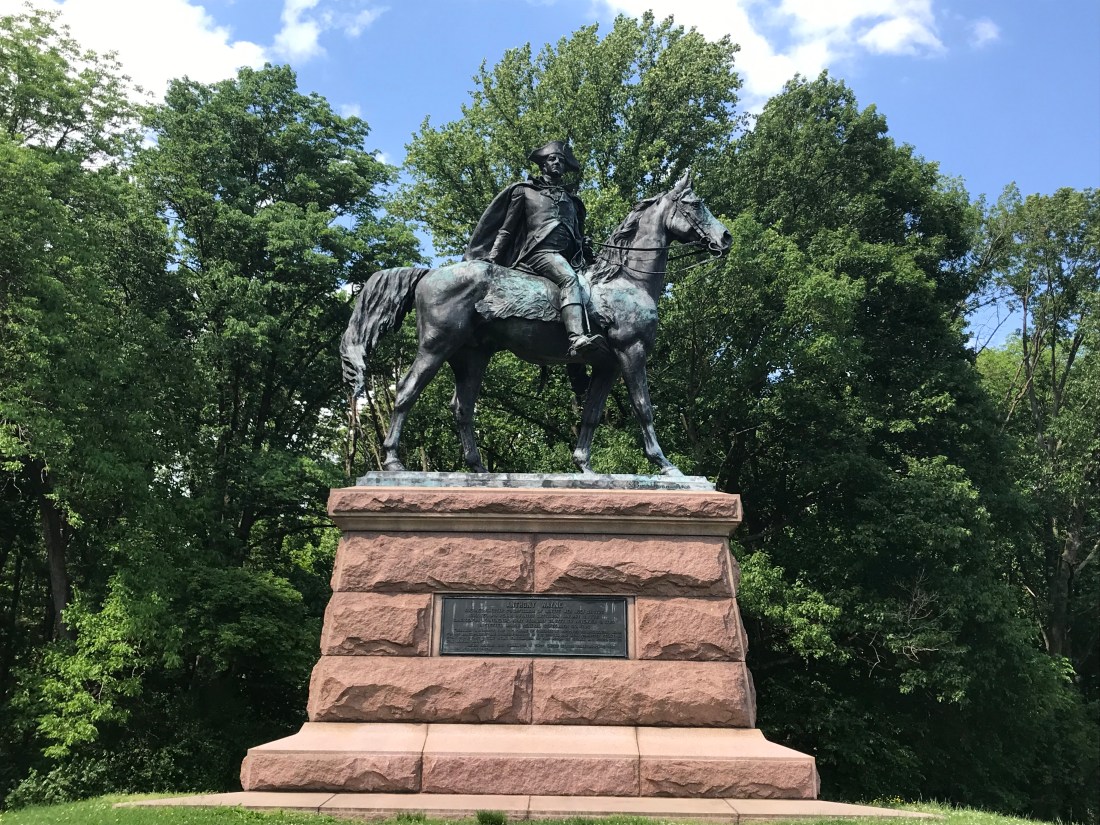
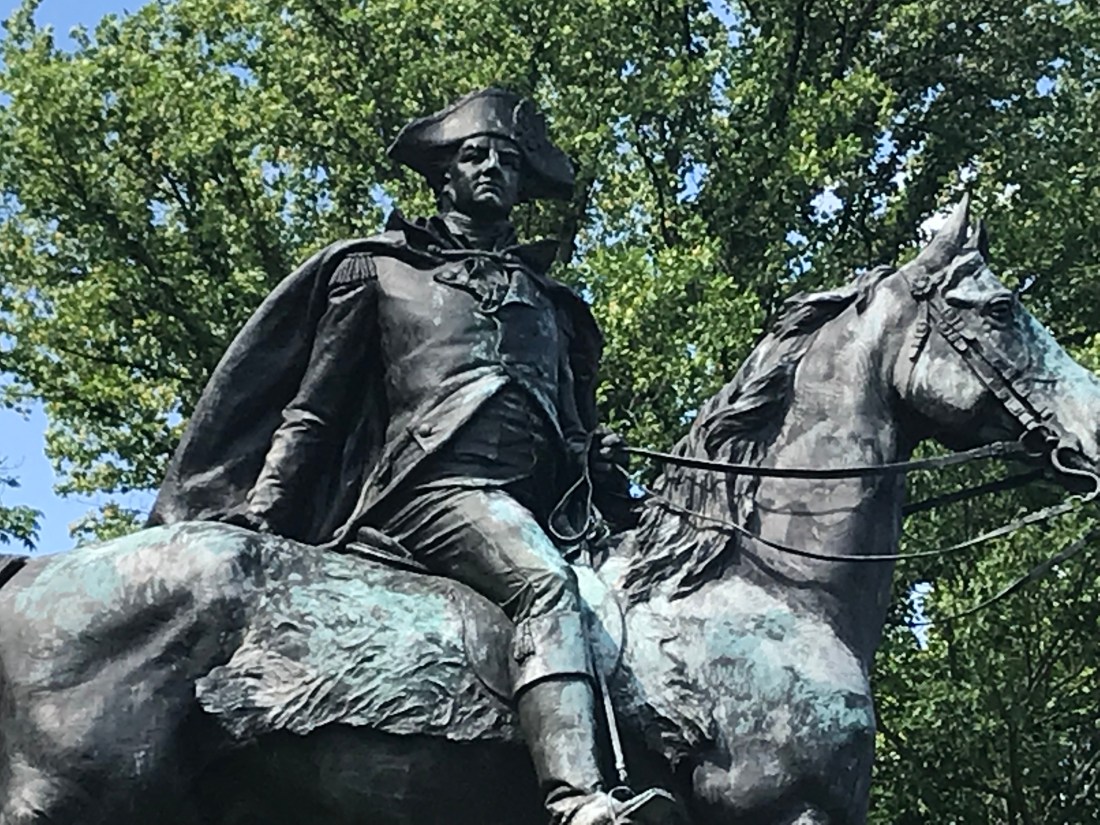
A statue of Anthony Wayne, a firebrand of aggressiveness in the Continental Army, was an inspiring figure who was well respected by both Washington and his soldiers for his determination and willpower.
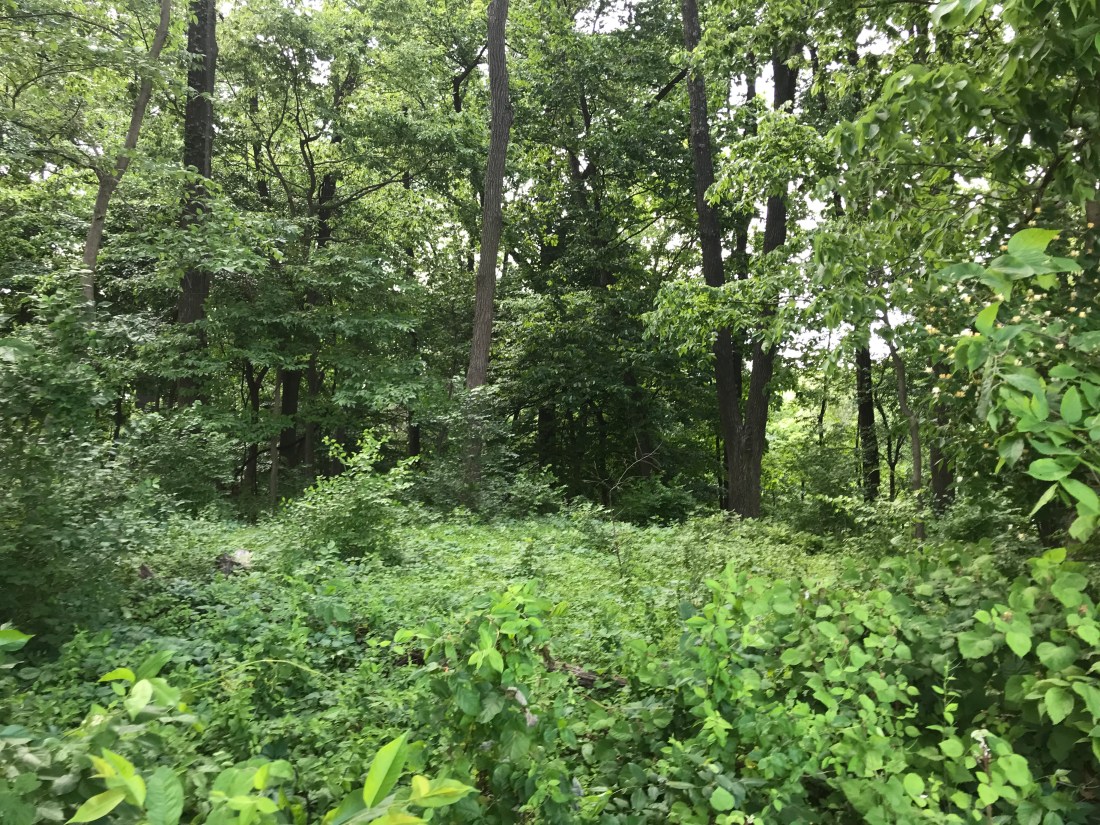
The woods on Mount Joy, the mountain located in the center of the area, was lush and filled with life. One could stay forever here..

Yet another Redoubt. Not the last one we’ll see here.
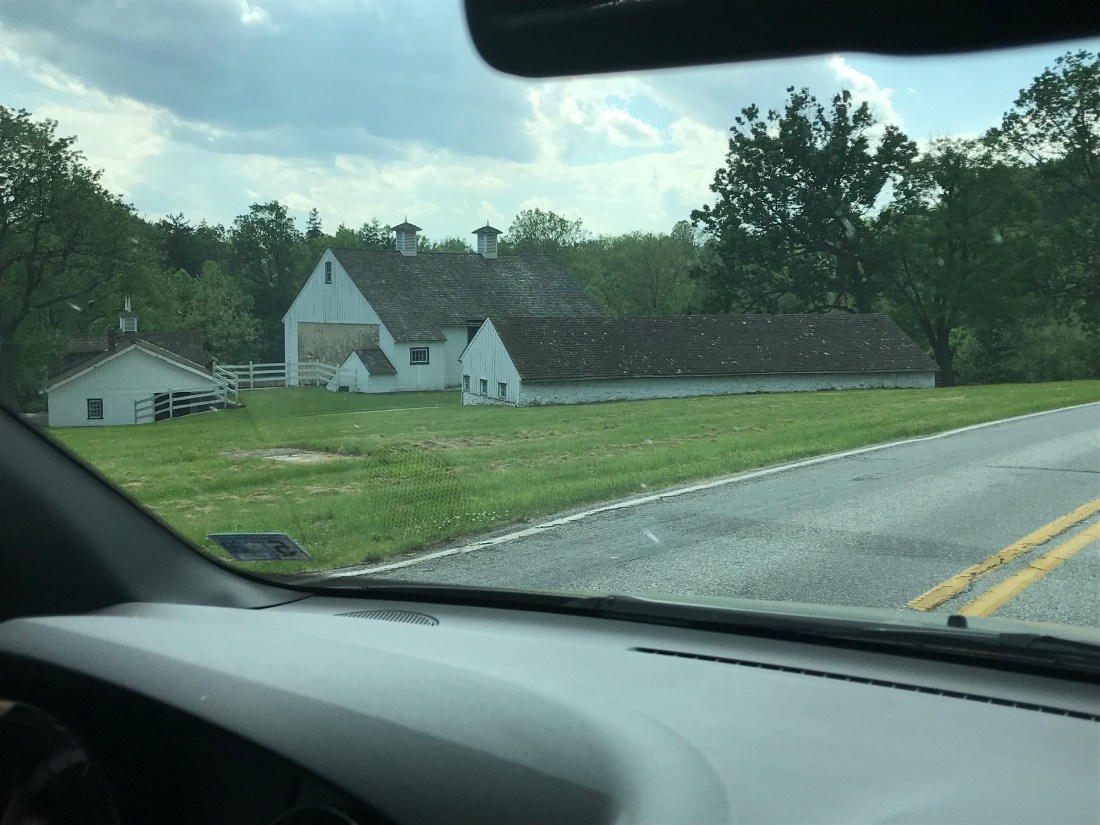
One of several farms here. This was Henry Knox’s headquarters in Valley Forge.
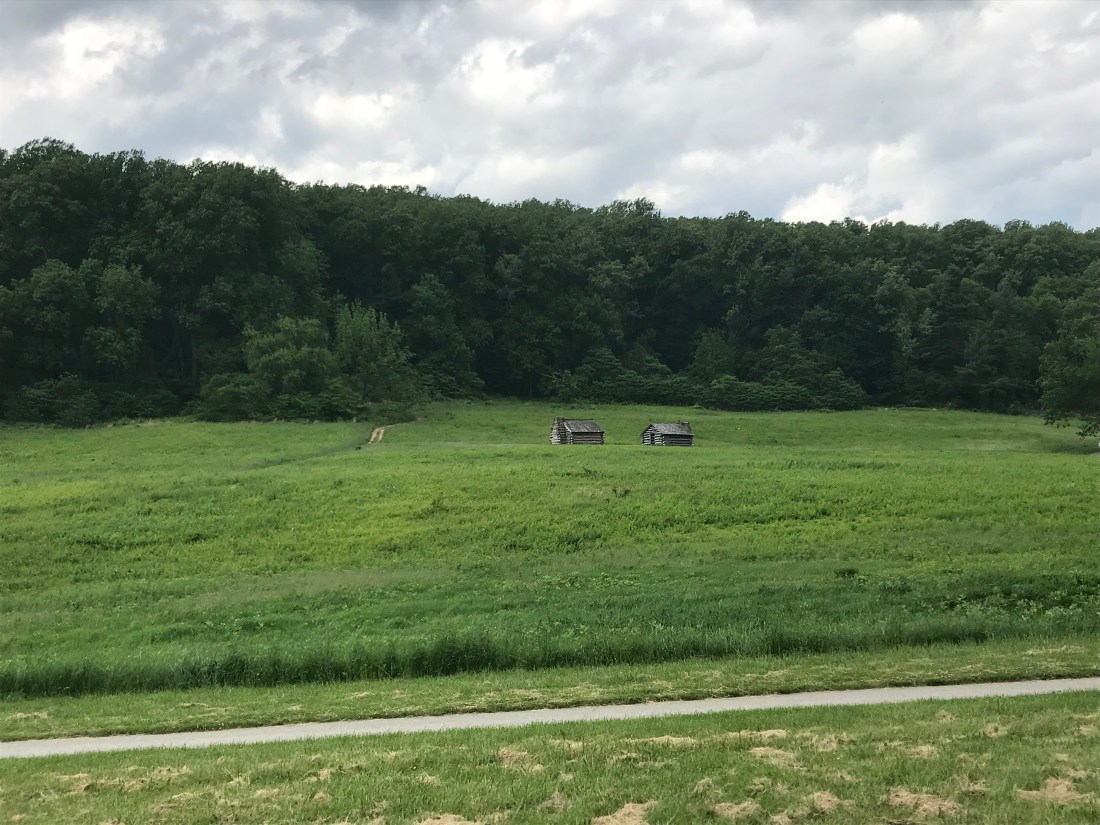
More cabins in the distance. Walking trails slither throughout every crook and dell of this place.
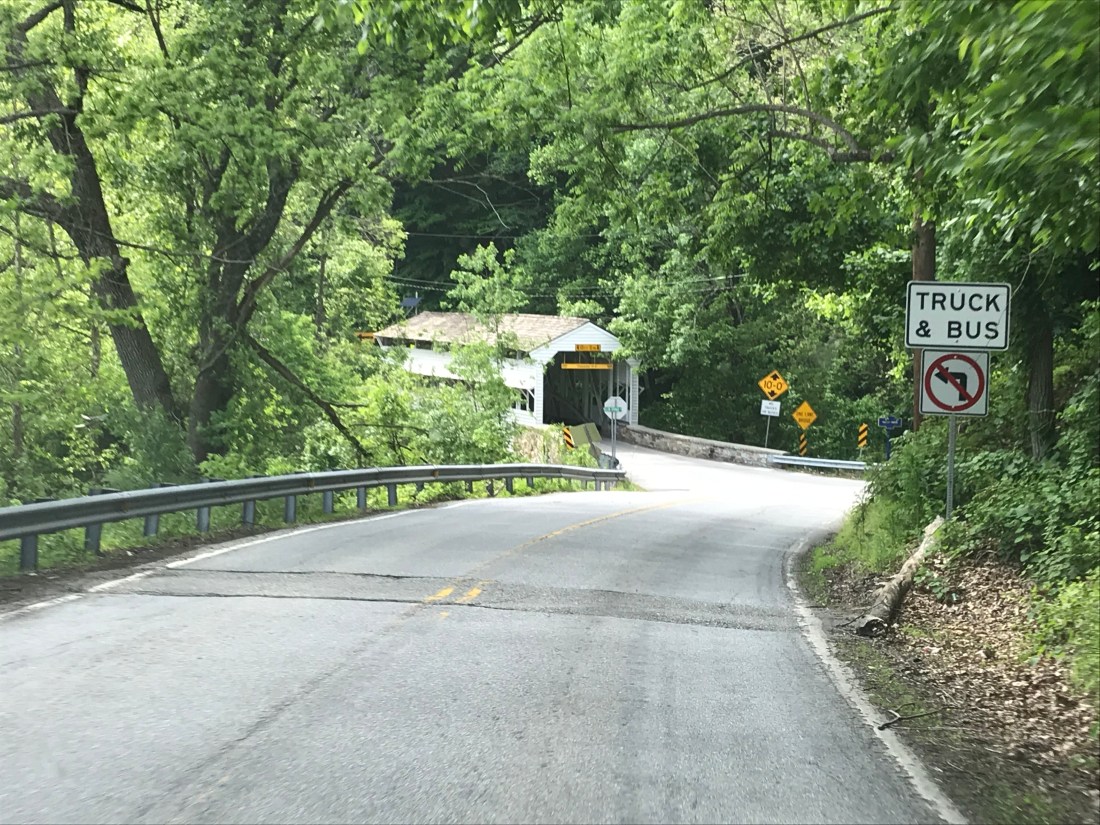
A neat bridge-tunnel… how neat it would be to go through there…
But we didn’t! We instead took the road to the right, further up into Mount Joy.
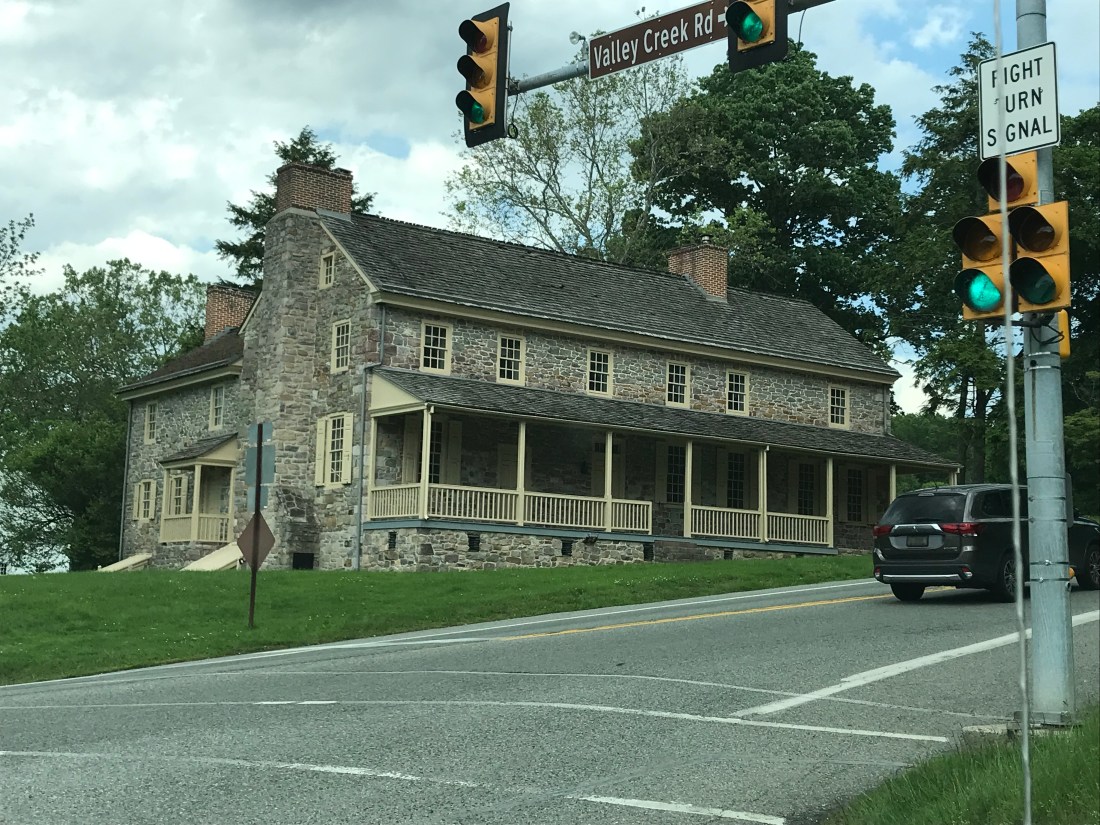
A nice building on the place, which we cannot remember it’s purpose.
Why is it called Valley Forge you ask?
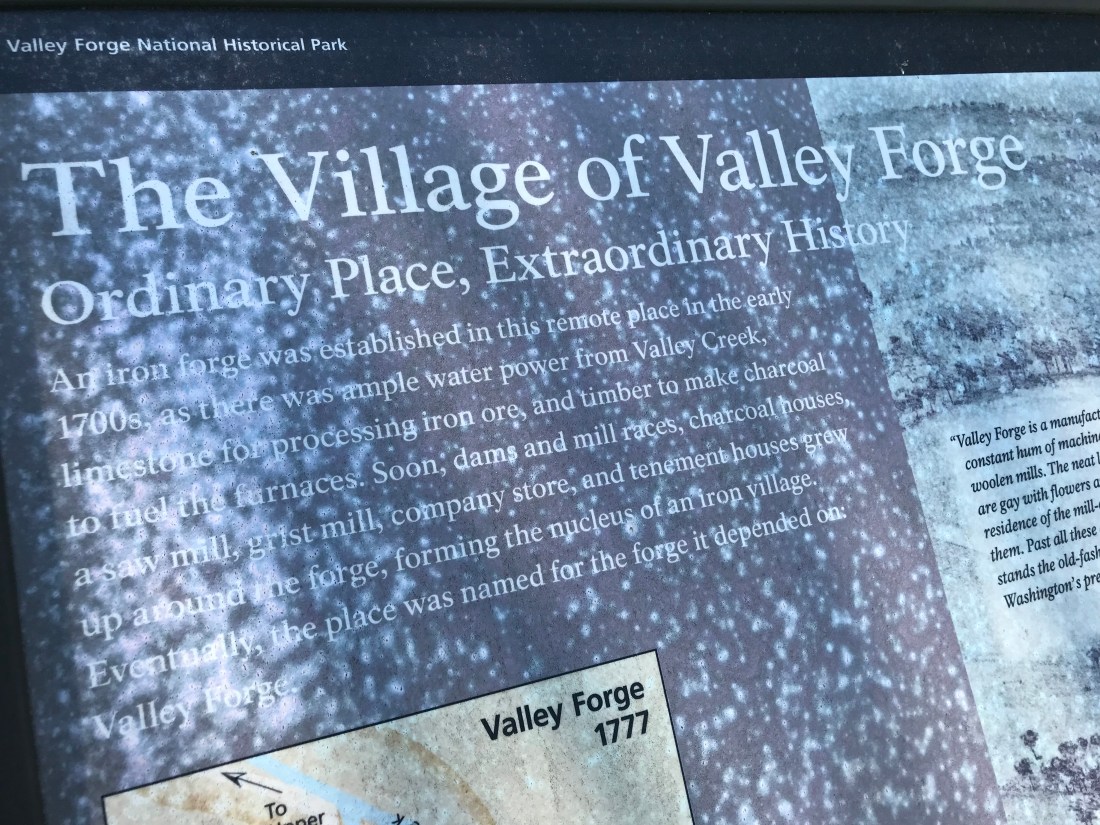
If you can’t read the print all that well, this valley was indeed a small community that contained a large forge where one could supply vital ironwork to surrounding areas. Before the Continental Army came here however, the British Army swept through this area and sacked the small community, destroying many of it’s buildings, as well as the forge itself.

Well… down we go.

Ooh, getting close!
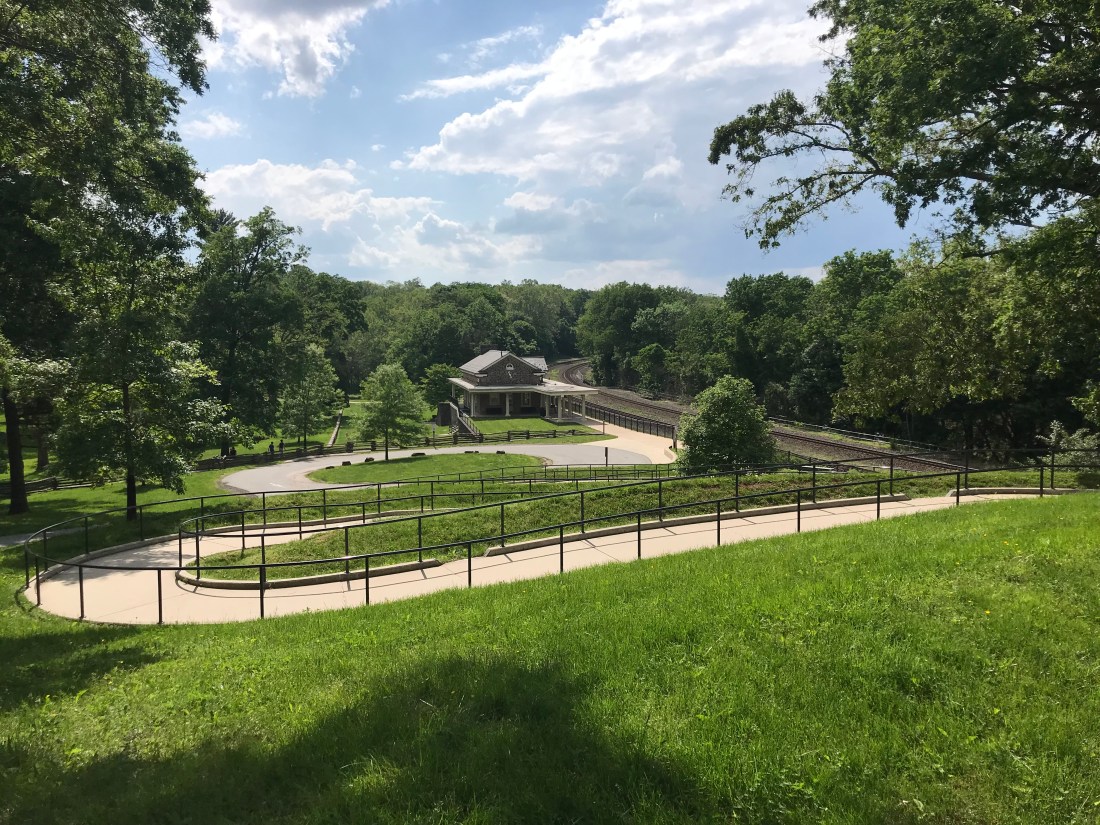
These houses hosted the guards who personally protected General Washington here. That little white hut there is a springhouse, which was located right under a natural spring.
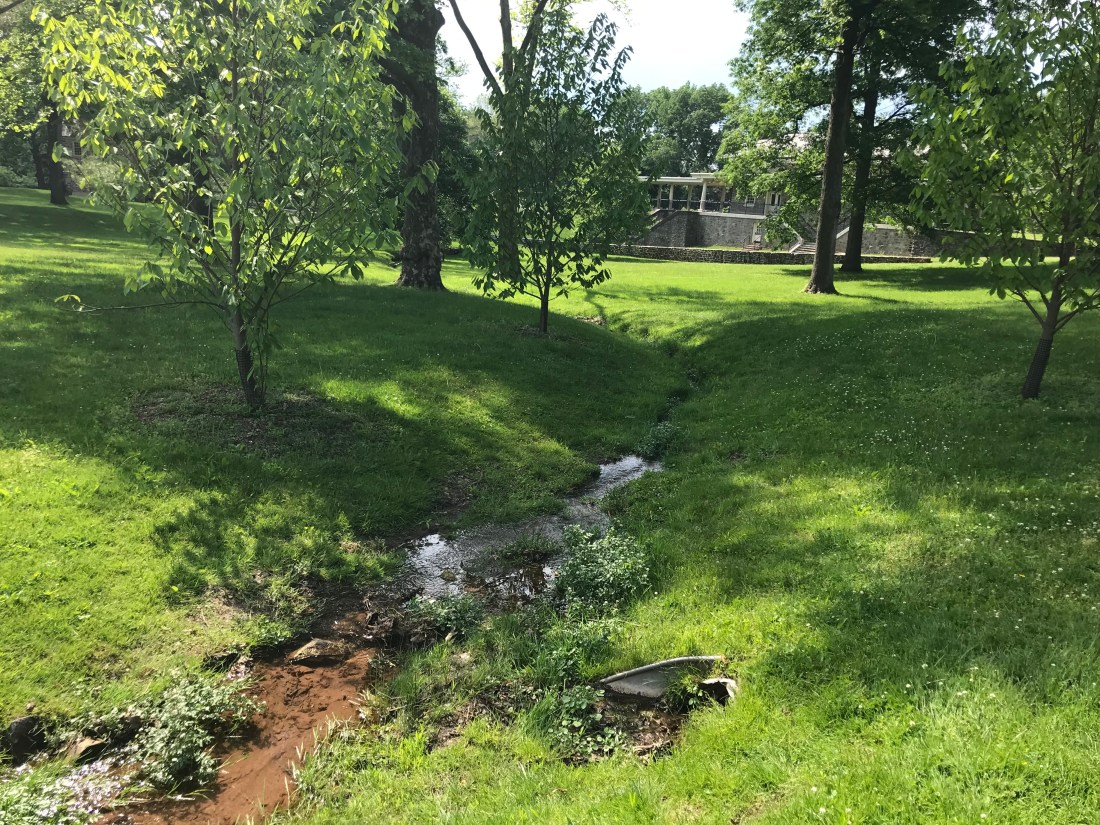
And down it goes towards more of the property…
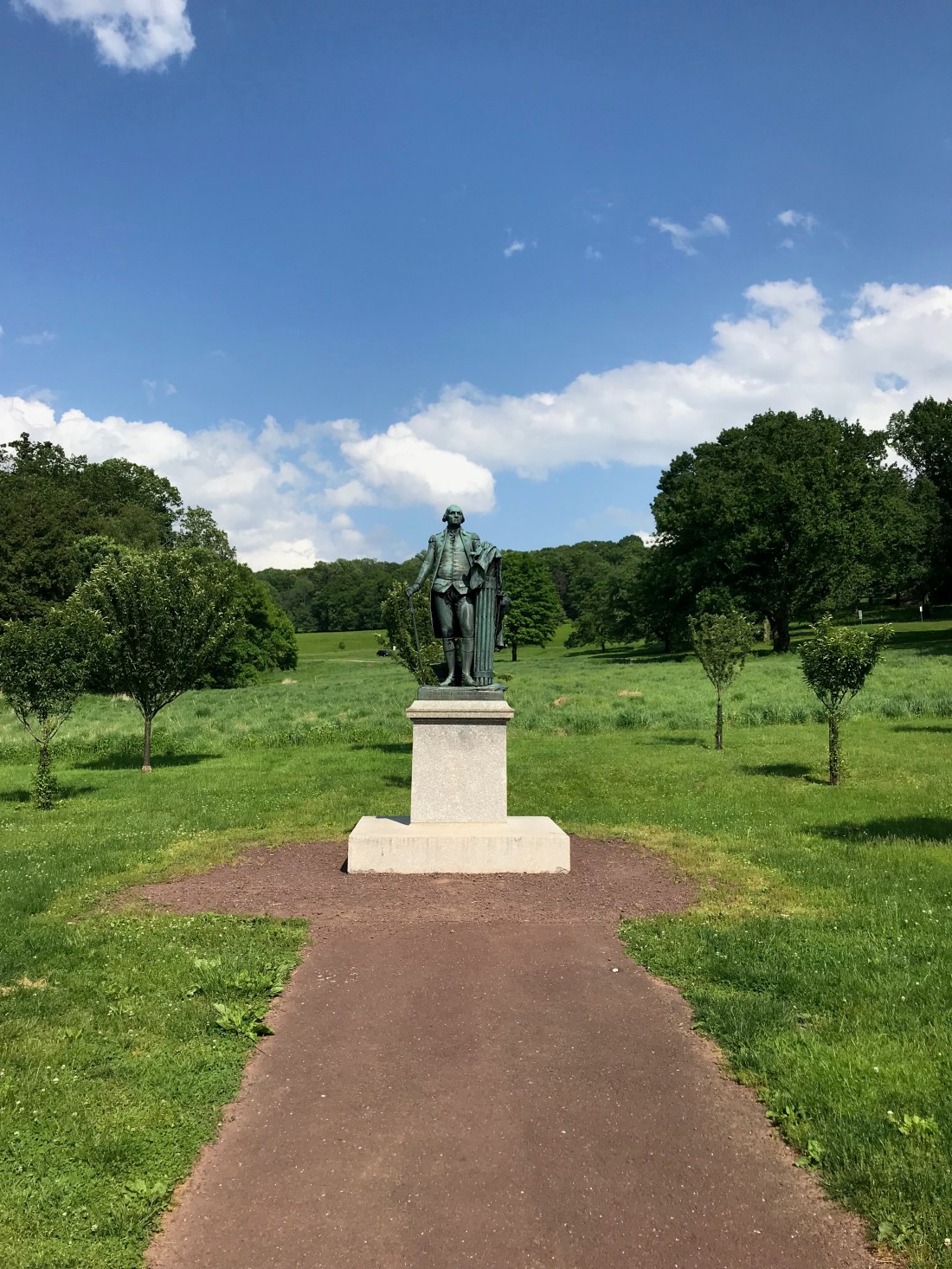
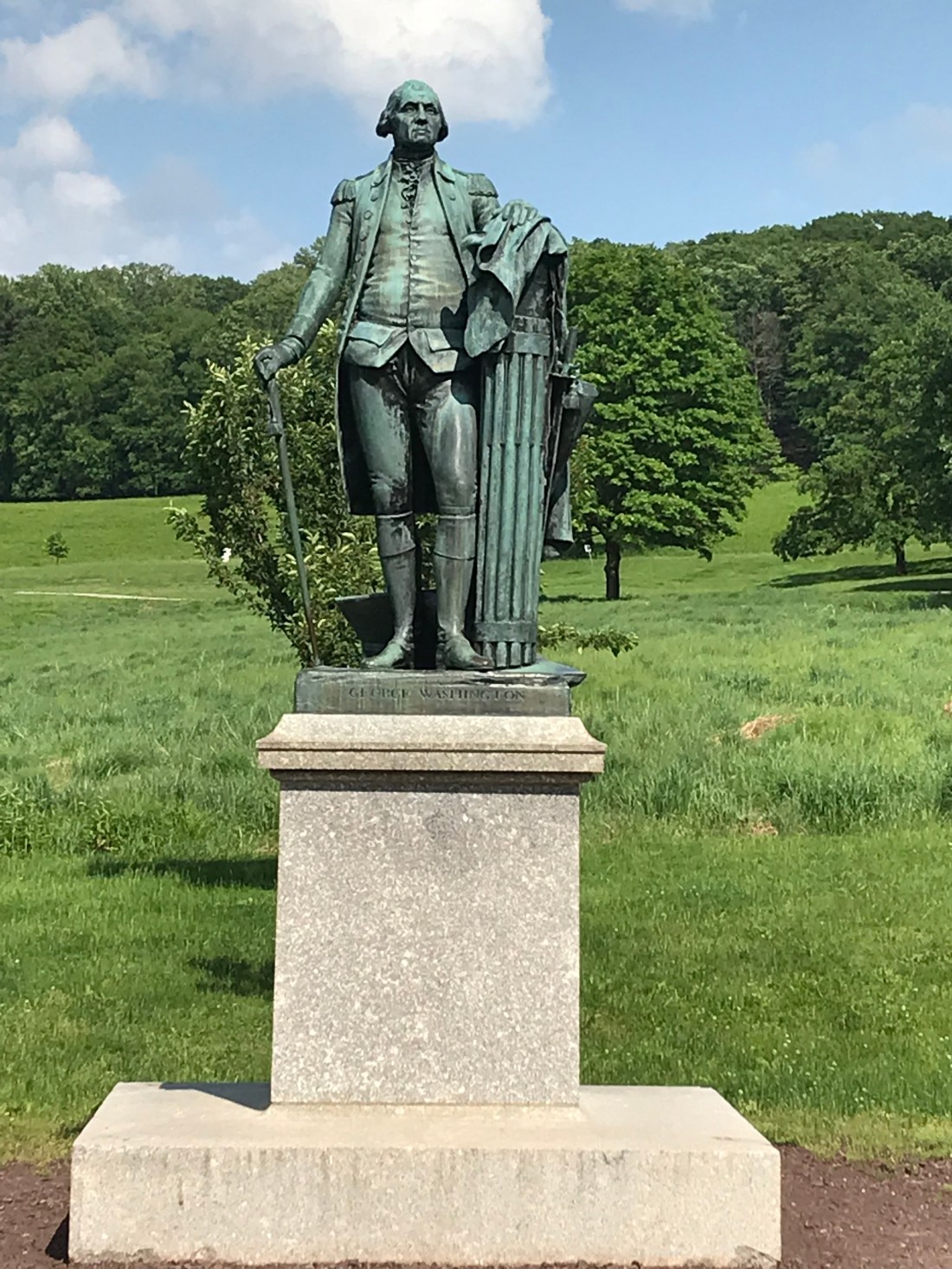
I would love to learn how man statues of George Washington there are out there… I would easily say over a hundred perhaps?
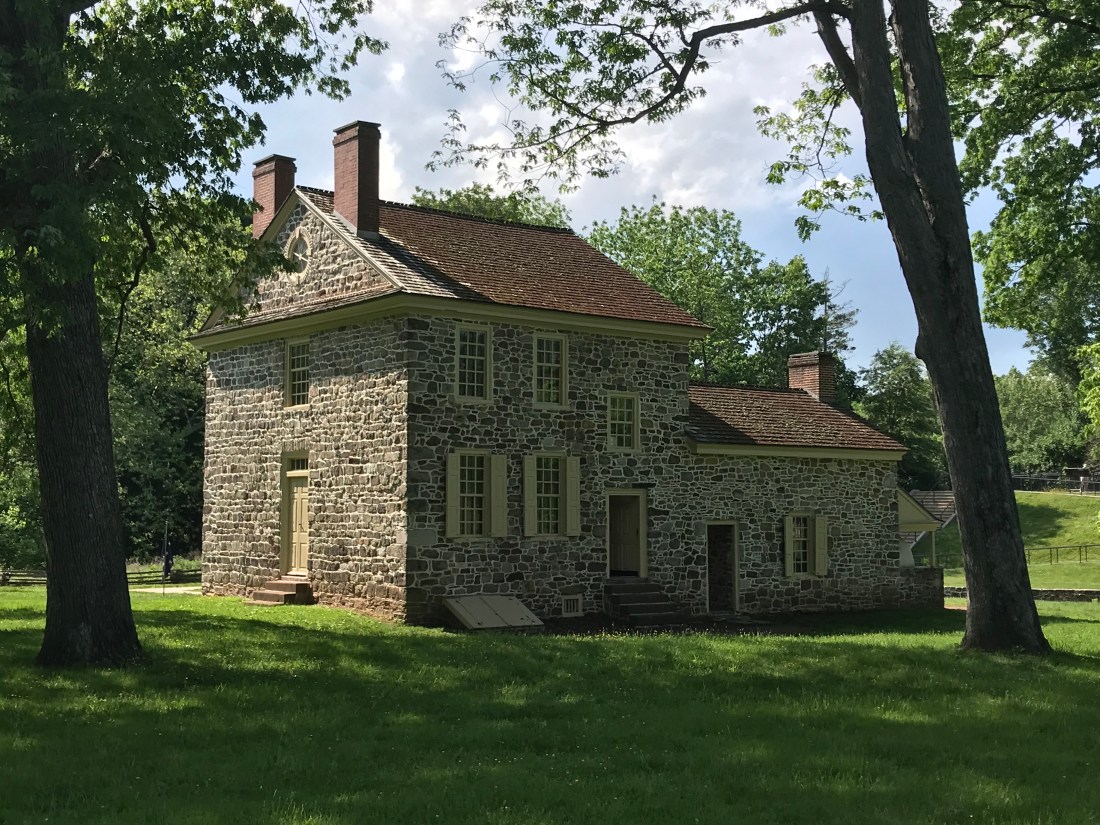
Washington’s headquarters in Valley Forge, as well as the headquarters for the High Command of the entire Continental Army. He stayed here for 6 full month, preparing for the bitter tasks ahead…
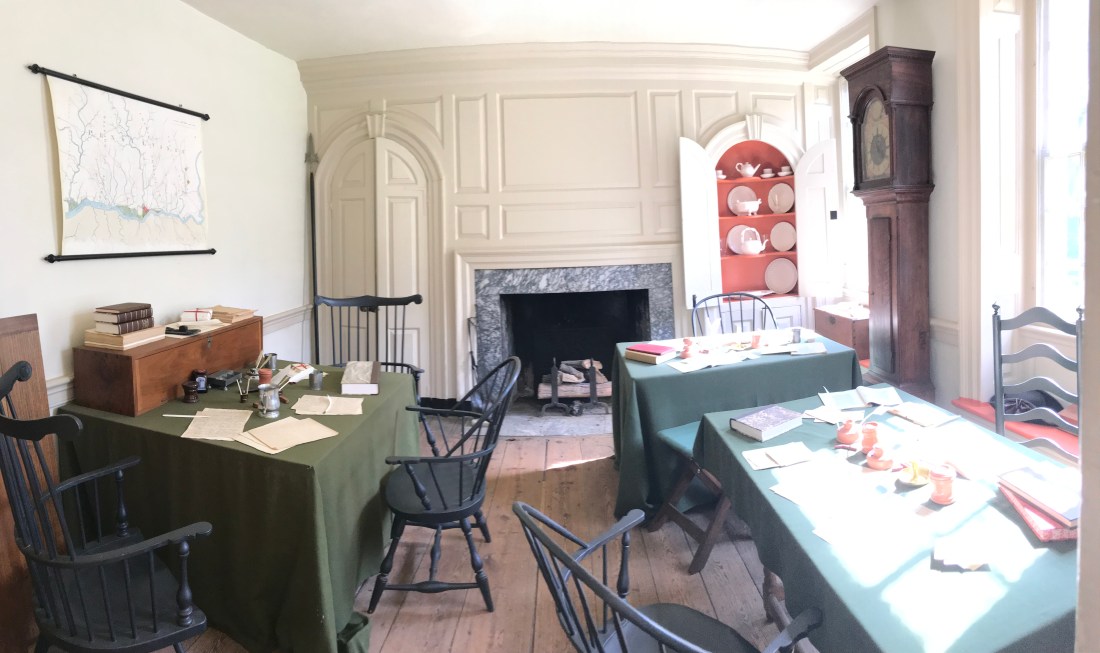
Some of the cramped offices in the house (Alexander Hamilton was one of the ones to work here).
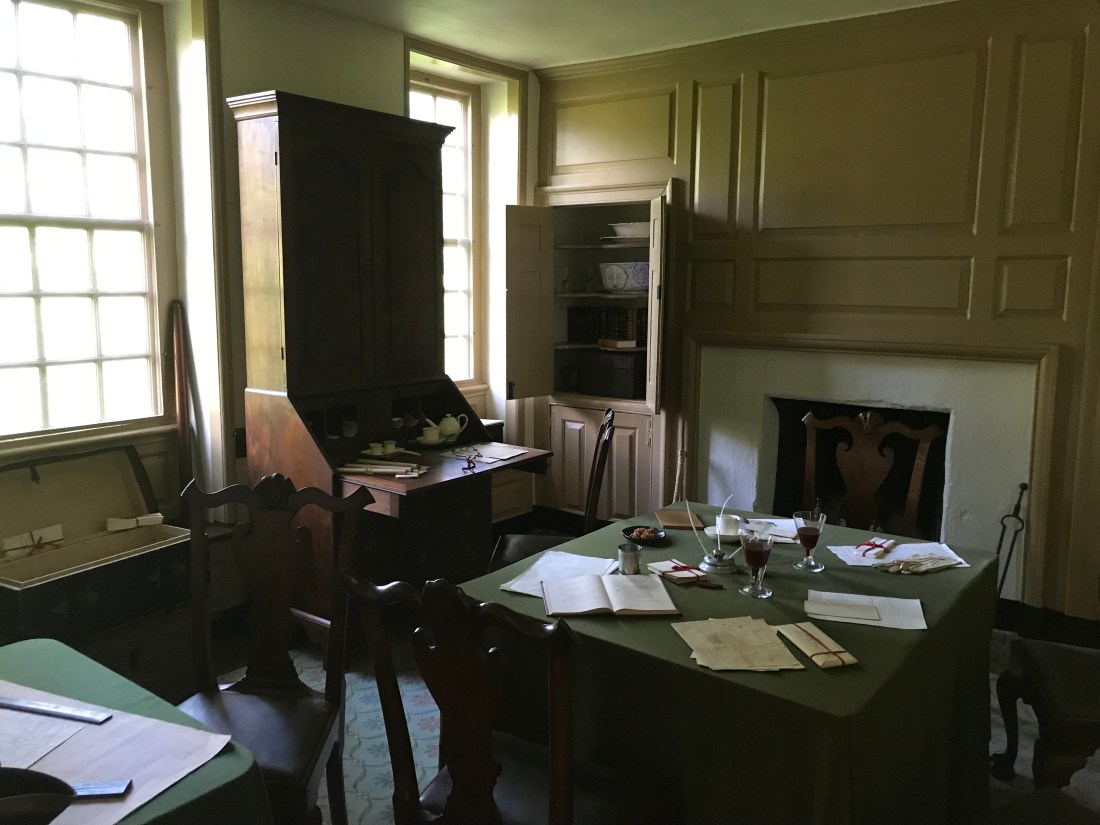
George Washington’s office, and his study in the back. He often kept to correspondance and writing in this place.
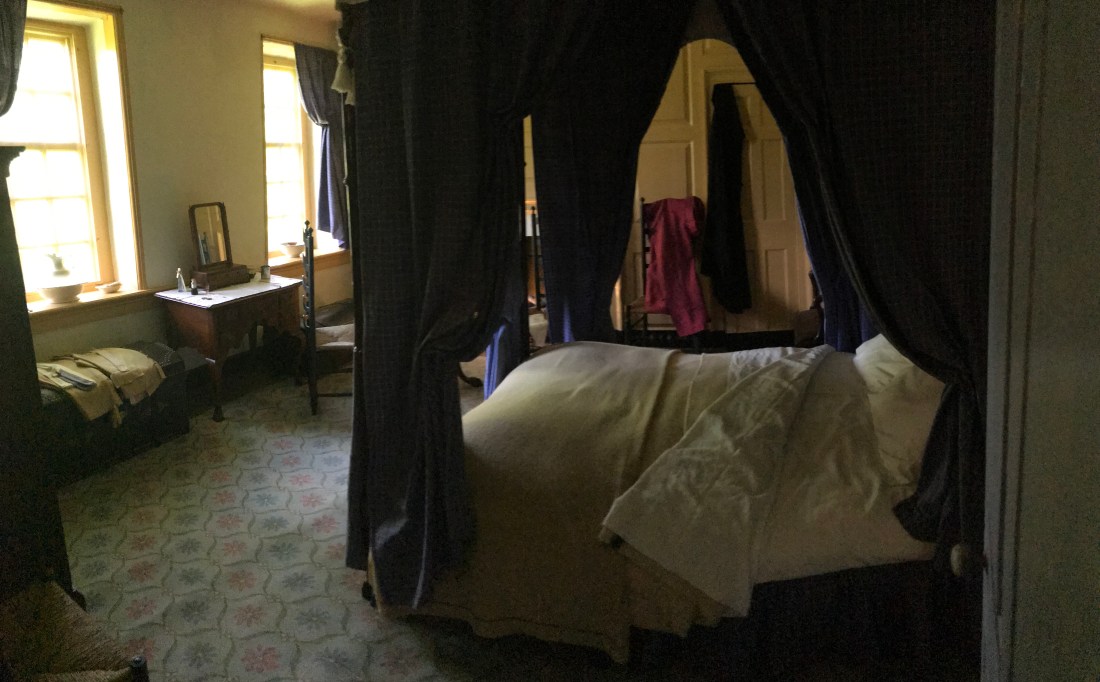
The bedroom of General Washington, as well as his wife Martha, who was called “The Lady of Valley Forge” for her support of the soldiers there.
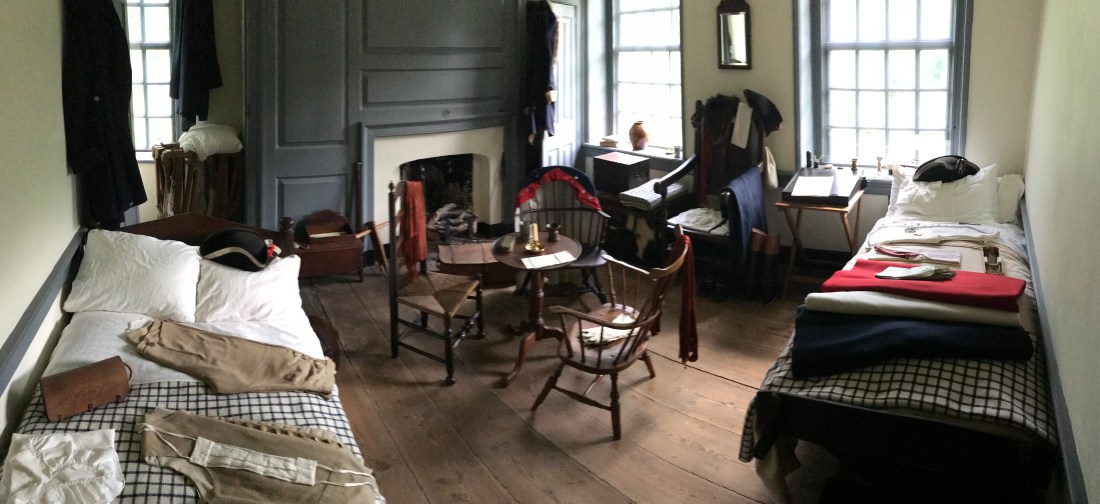
A guest bedroom, with assorted items and memorabilia.

The kitchen, with a large fireplace large enough to fit an an entire person inside… seeing those pies on the right makes me hungry again…
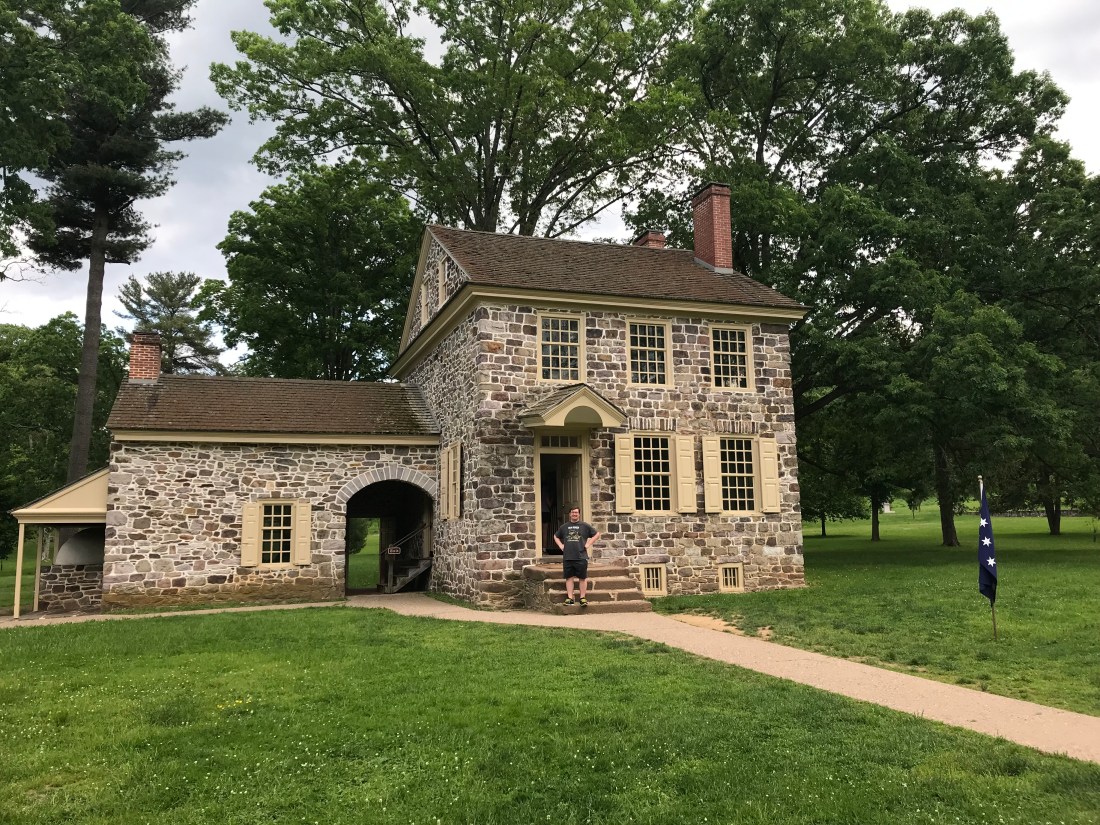
A very nice house, which was NOT built with the other cabins. It was built before the army came.
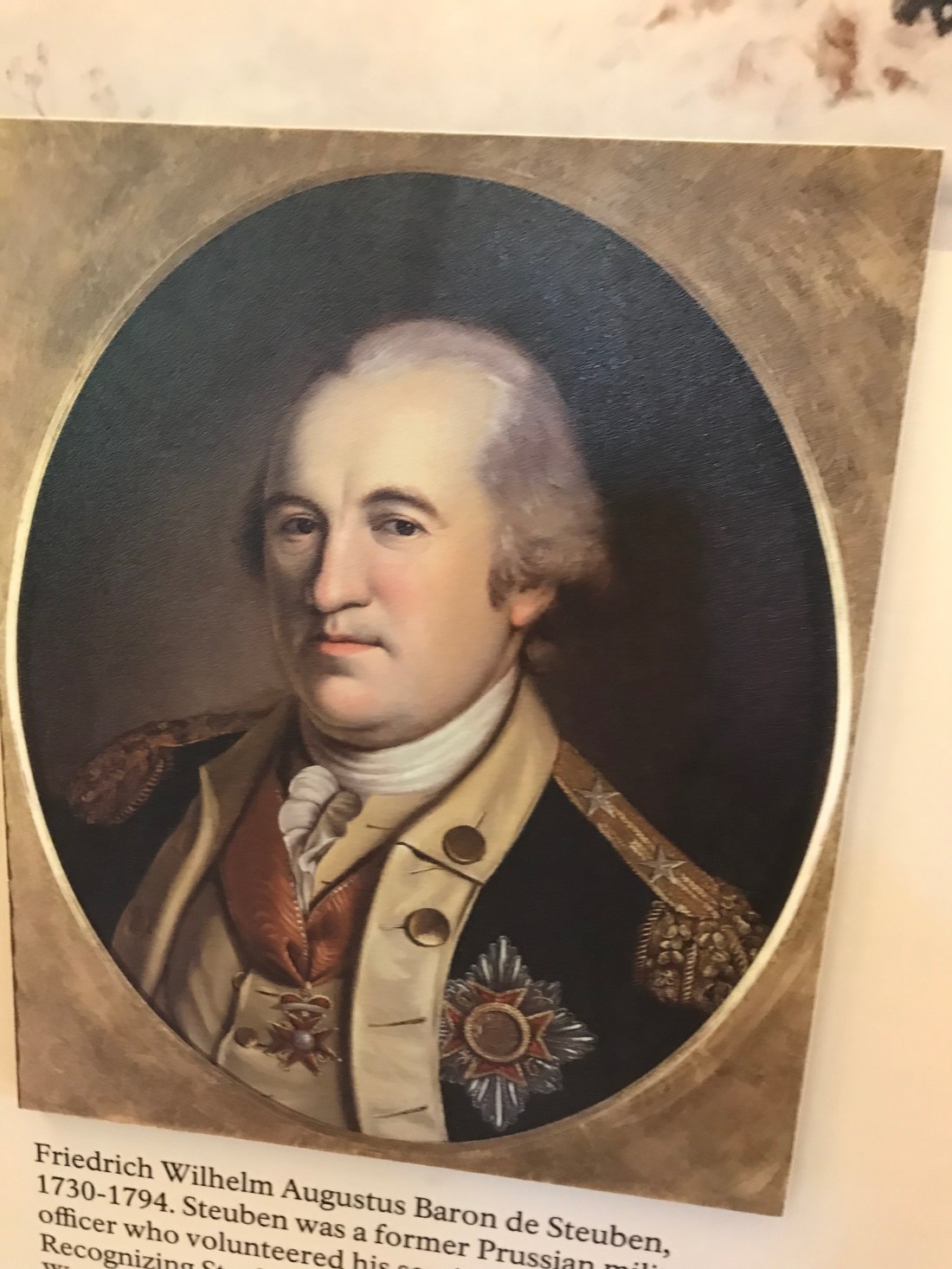
Friedrich Wilhelm Augustus Baron de Steuben was a prussian officer that had previously served under King Frederick the Great, and had moved to North America to aid in the endeavors of the army there. An expert in tactical strategy and drilling recruits, he didn’t speak a word of english. A undersecretary thankfully could translate his swearing and commands to the soldiers, who were whipped into much better shape and discipline that could rival the British Redcoats.
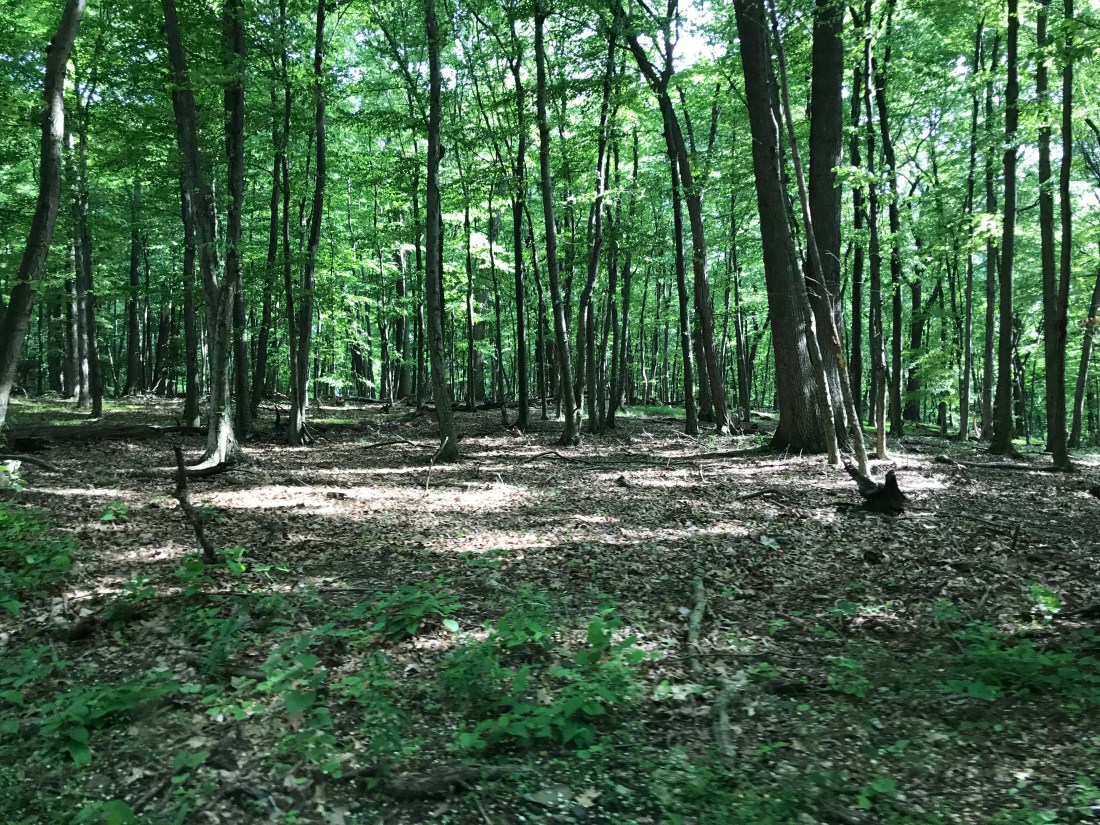
More lovely wooden glades on Mount Joy…
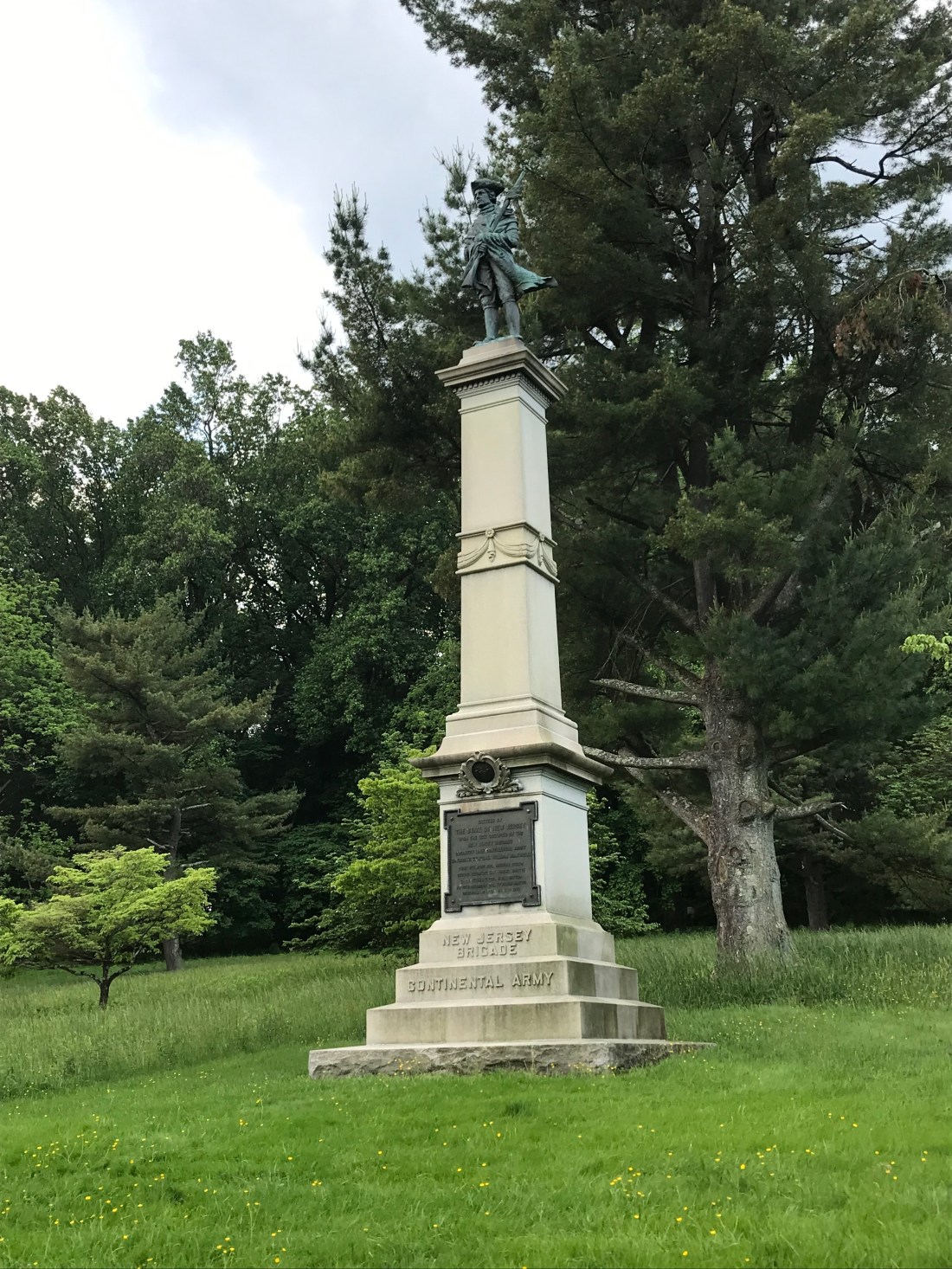
A memorial to soldiers of New Jersey. This is a similar pattern in honoring soldiers like in Gettysburg, isn’t it?
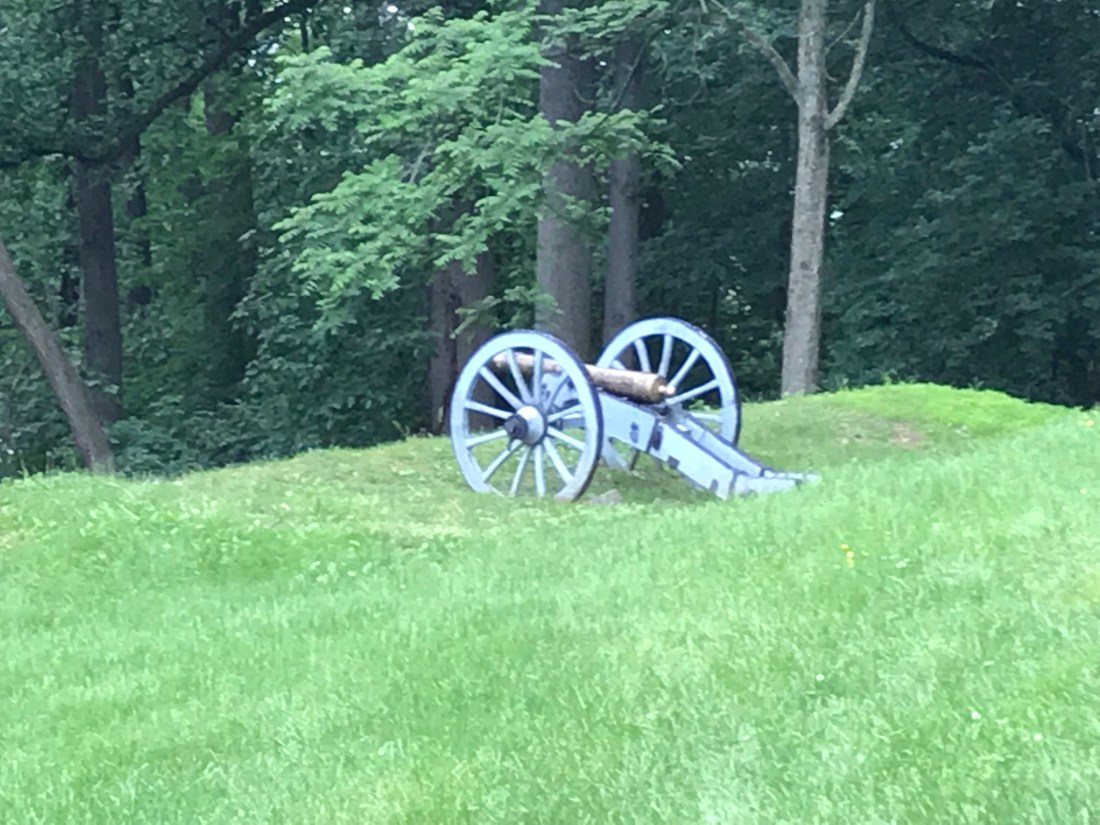
Though many cannons lay strewn across the place, these are only reproductions. Still, they look pretty accurate.
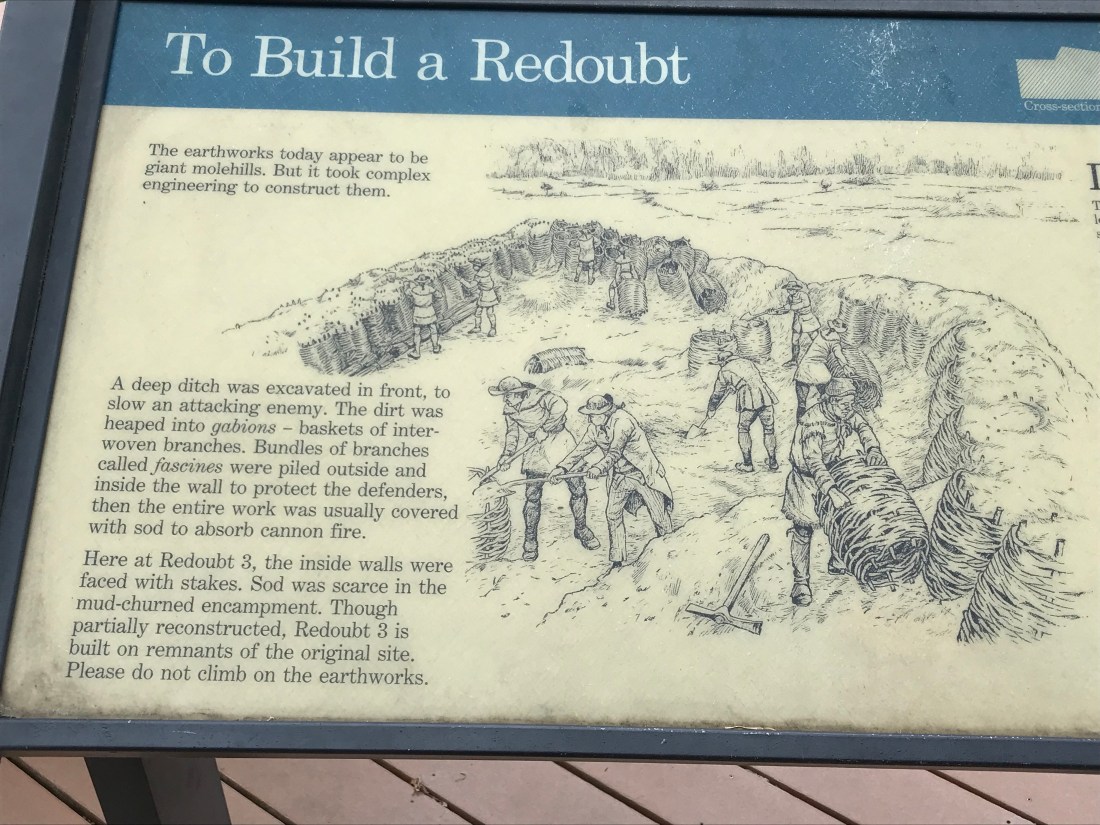
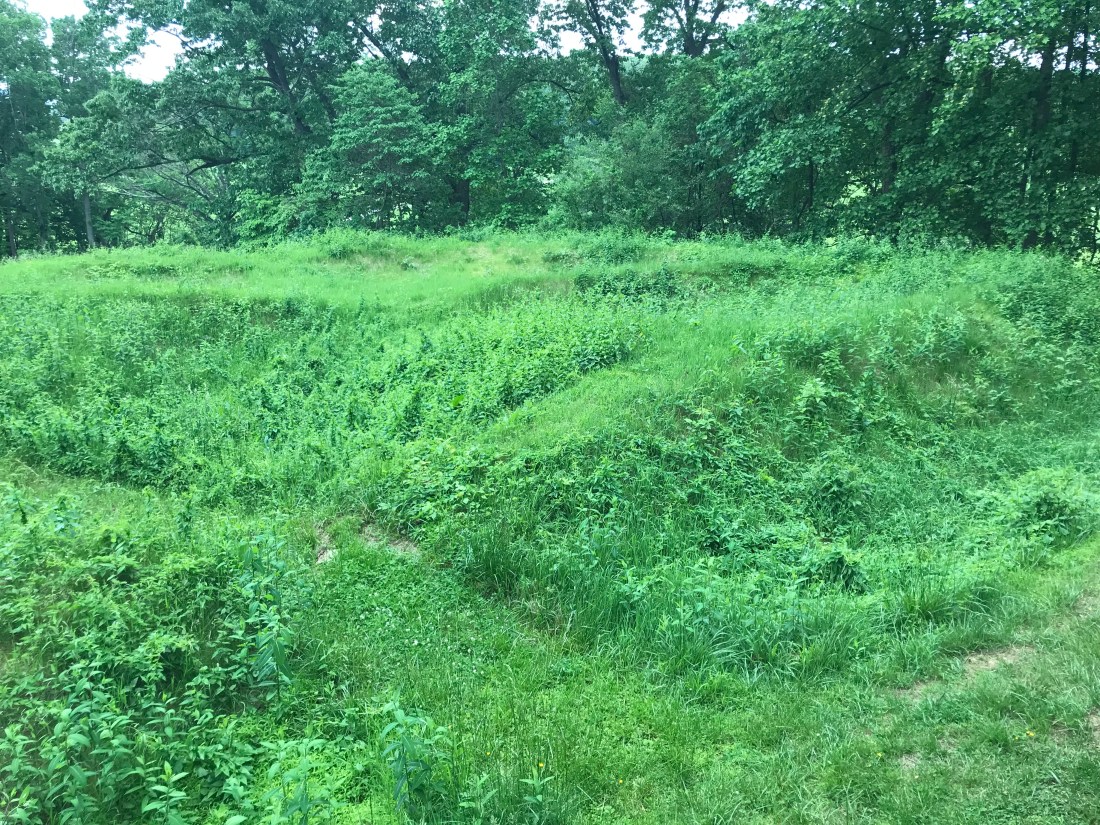
More special info on a Redoubt, along iwth the insides of a real one. Though it is covered with overgrowth, one can still see traces of the trenches.

Washington originally camped here, until moving to his more permenant quarters.

Whoops, pause one second. I’ll get right back to you.
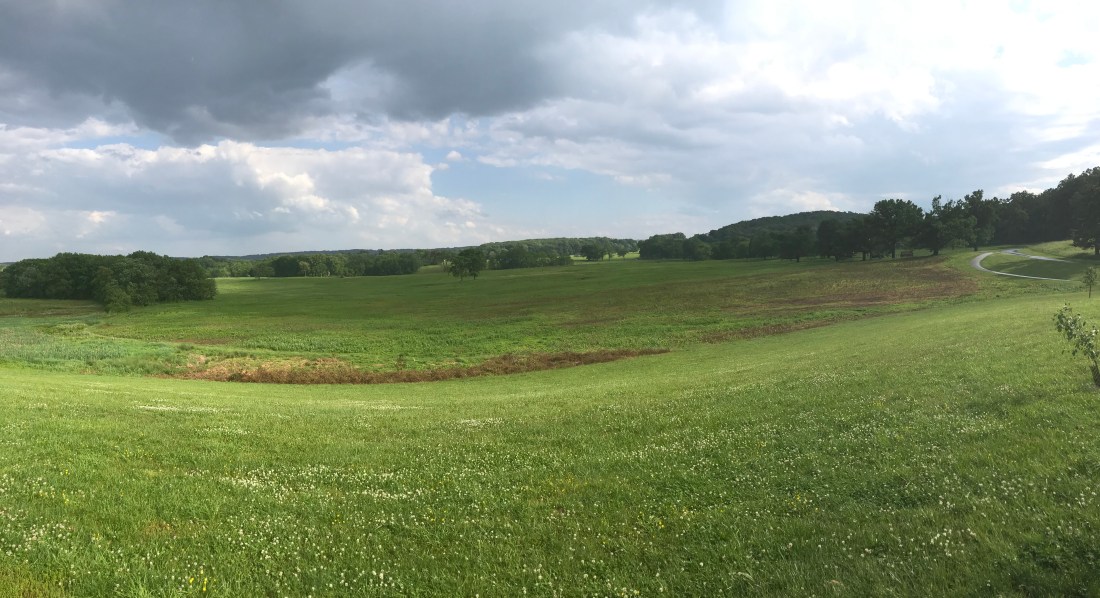
Ah that’s better… This is the “Grand Parade” area, where gatherings and celebrations would be held. It’s large enough to hold an entire army (which is what just happened).
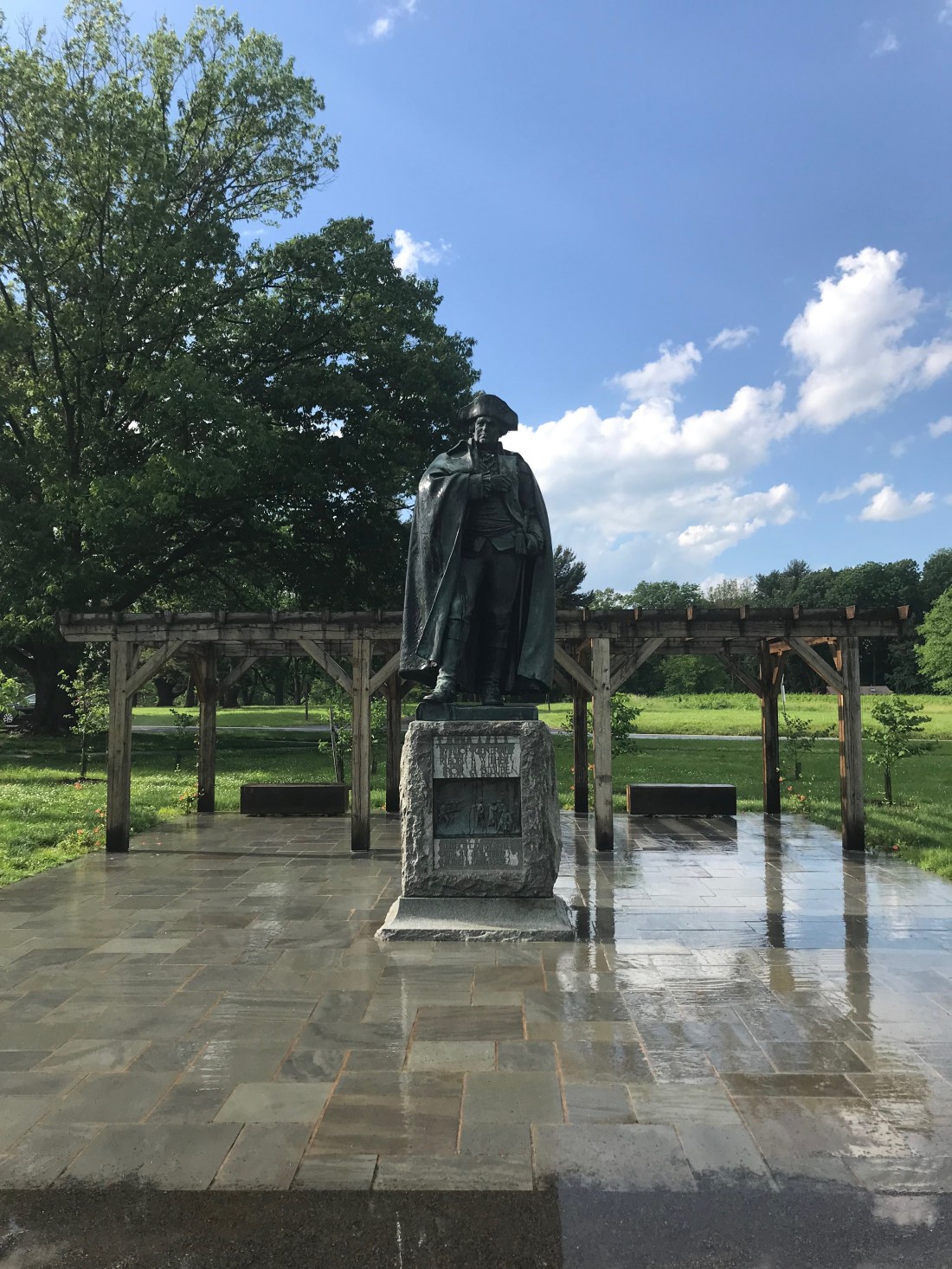
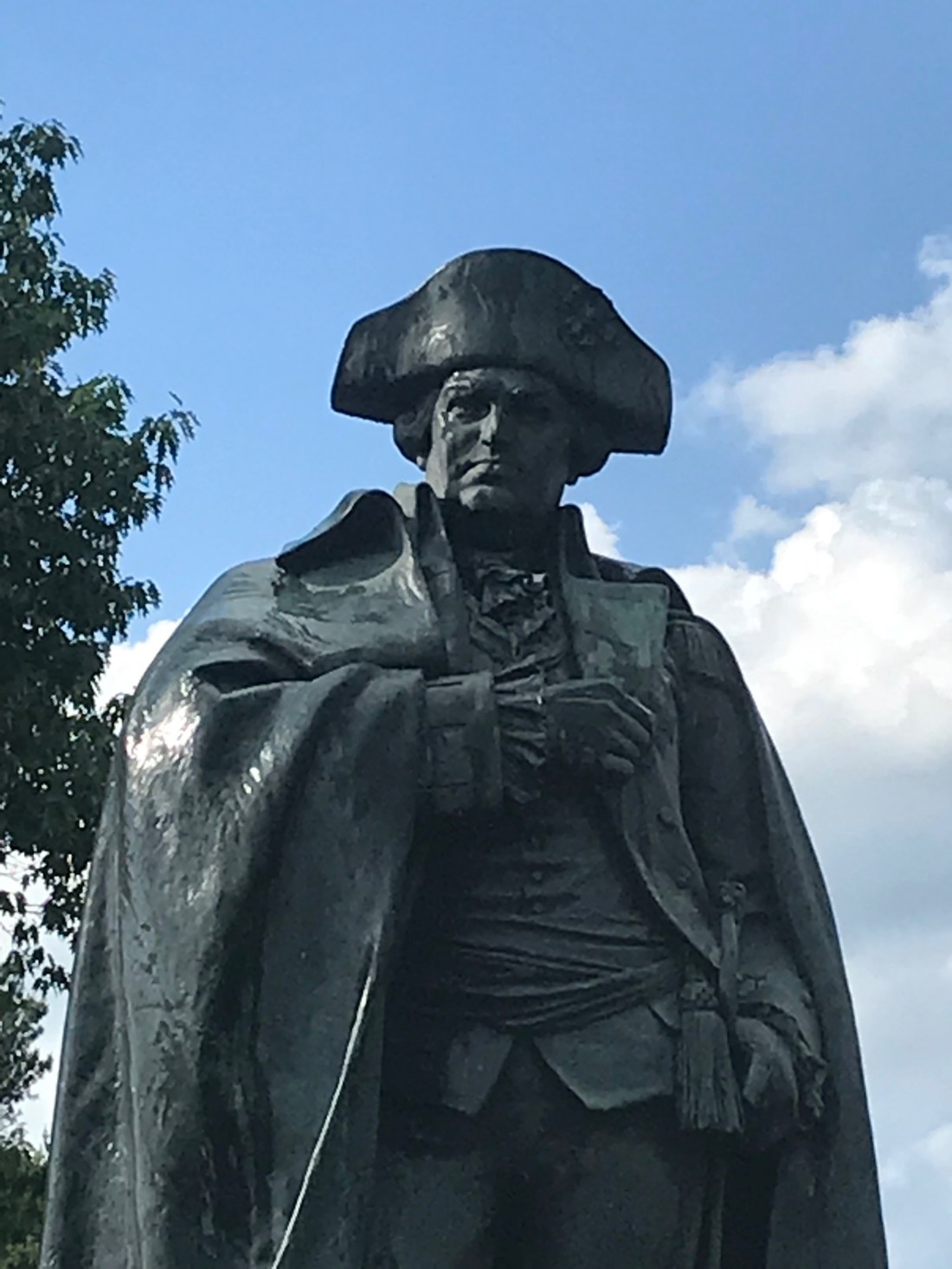
A statue of Baron Von Steuben. Looks nice and reflective now that the rain is gone.
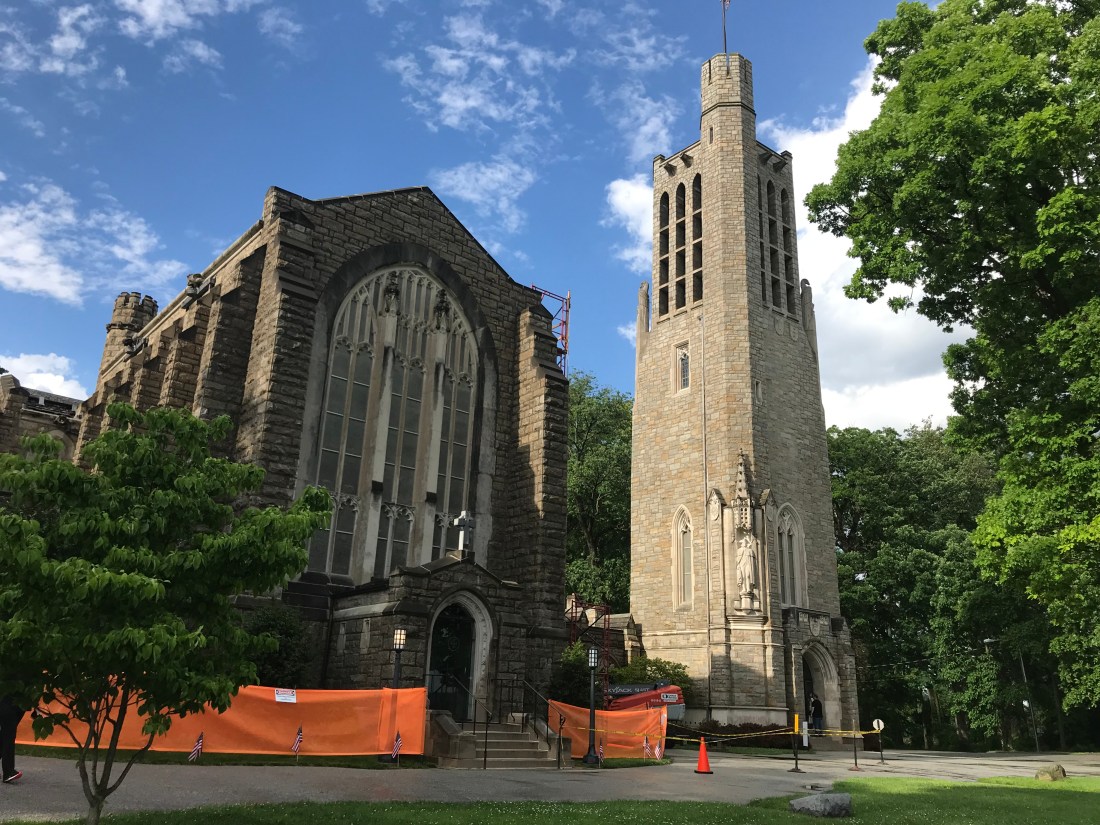
This special Episcopal chapel was built to commemorate the memory of the Washington and his soldiers that braved thick and thin here.
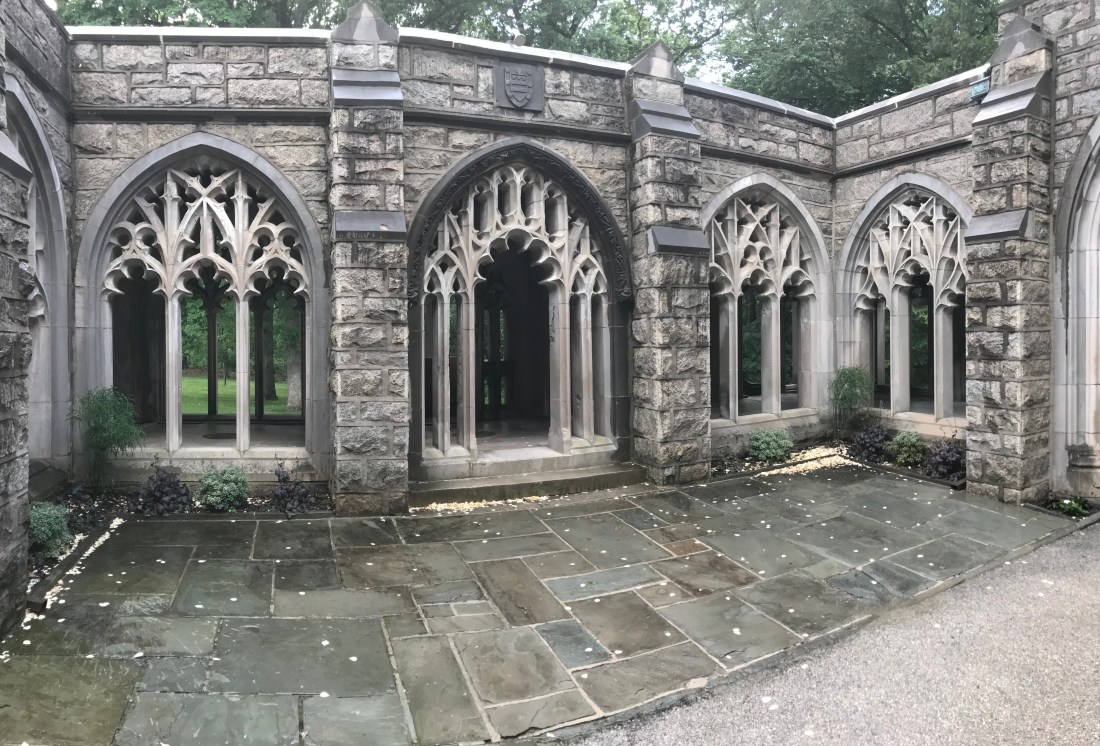
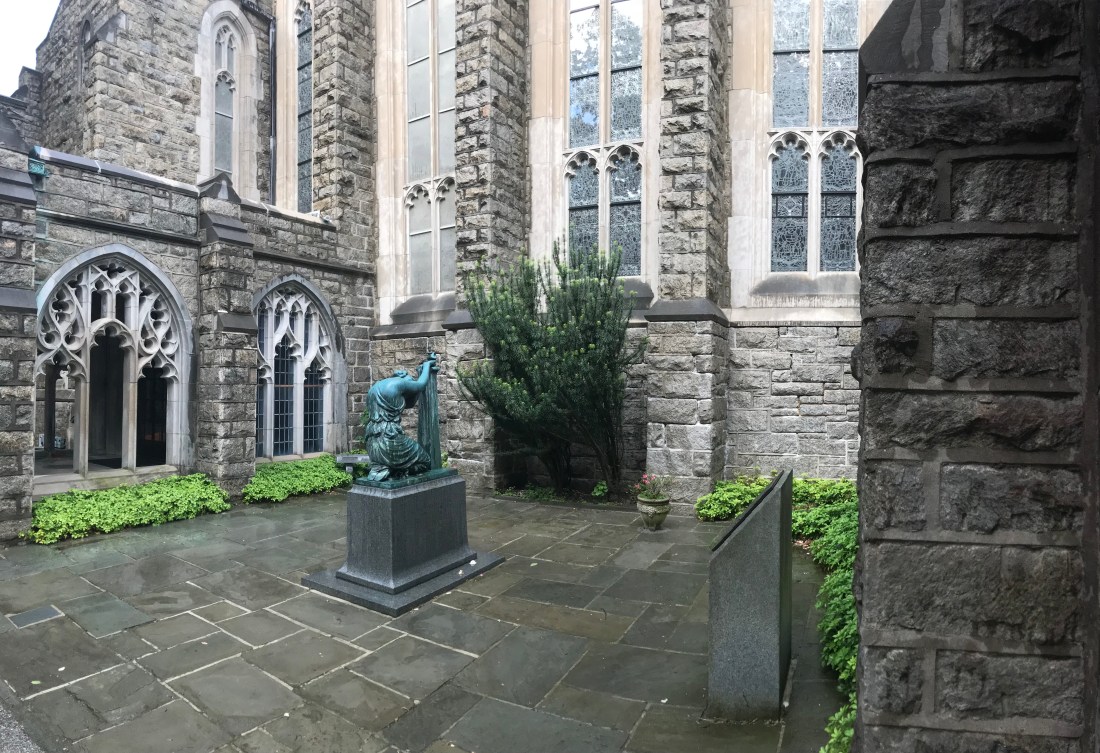
A very beautiful courtyard.

Washington was especially impressed by the patience and resolve of his men… who braved the worst conditions that nature could throw at them, so they could still fight against tyranny that threatened their families and homes. Valley Forge is a terrific site of the sturggles that they went through, and a birthplace of resolve for those soldiers who needed inspiration to prevail in this very long and bitter war. The meadows may be silent now, but they still echo the sounds of hope that the soldiers had to have… it’s an encouraging thought.
We are now “encamped” at the nearest hotel in King of Prussia (used to think three word towns were kept only in England, like “Stratford-Upon-Avon” or stuff like that). Tommorow, we drive onto Philadelphia, one of the most famous towns in the entire country, and the birthplace of the United States of America! After a day there, we will hurry on into New Jersey, and continue our adventure towards New York City!
Thanks for coming everyone, and i’ll see you soon!
 Mark's Historical Roadtrips!