
Ah Quincy… one of only two places in the entire country to have two presidents associated with it… for it is home to one of the most esteemed families in the entire country!
That’s right, The Adams Family!
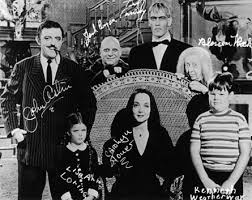
No no no, different one!

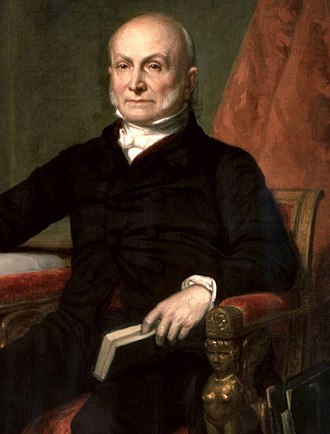
Ah, there we go!
Presidentia; father/son duo John and John Quincy Adams both hailed from Quincy, and the Adams National Historical Park encompasses many of their historial sites, from their Birthplaces, to their home of Peacefield, and to the very church where they both are entombed!
Let’s not waste any more time, let’s dive into the very last Presidential Site on this long roadtrip!
Adams National Historical Park
Arriving at the visitor-center, we barely had time to get our bearings before hopping on the shuttle to the different sites. The first stop were the birthplace homes of both John and John Quincy Adams… which were right next to each other.
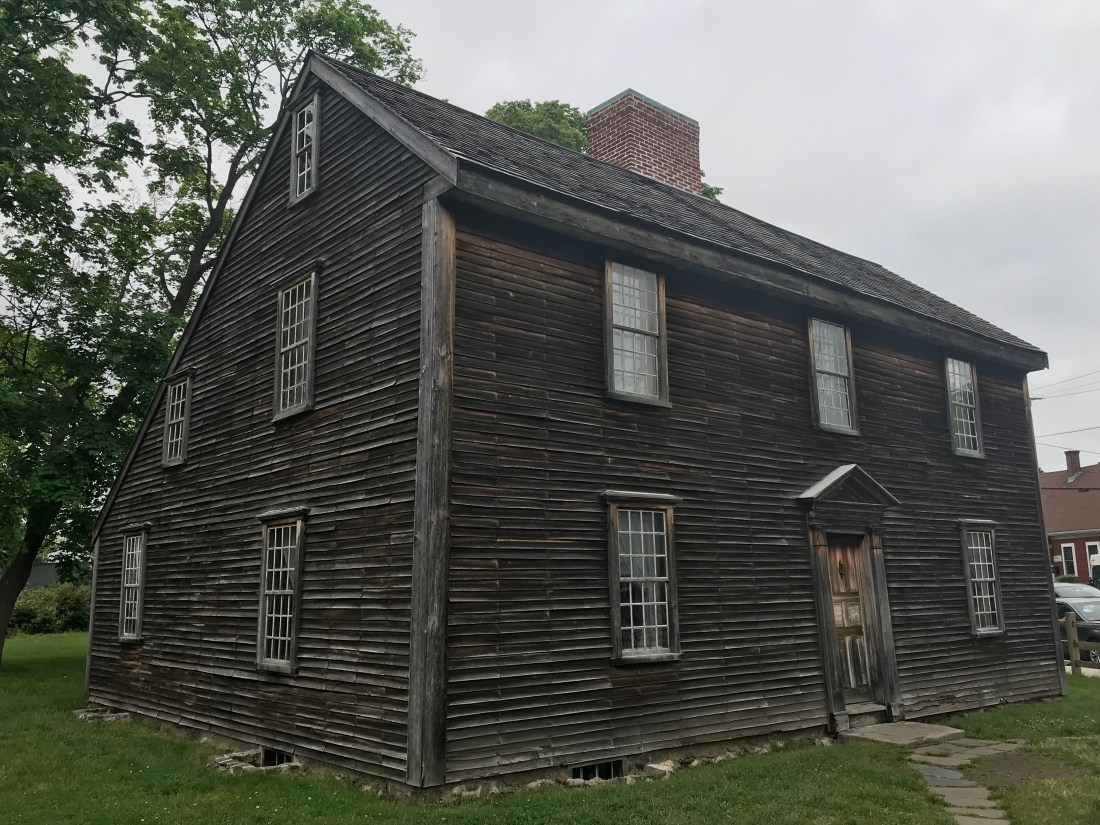

Comparatively small, John Adams was born here on October 30th, 1735, in what was then known as the town of “Braintree”. The reason that I am telling you this now, is because the second levels of both the homes were off limits to visitors, likely due to structural weakness (and likely, fire codes). The upper-right window here is at the room where he was born.
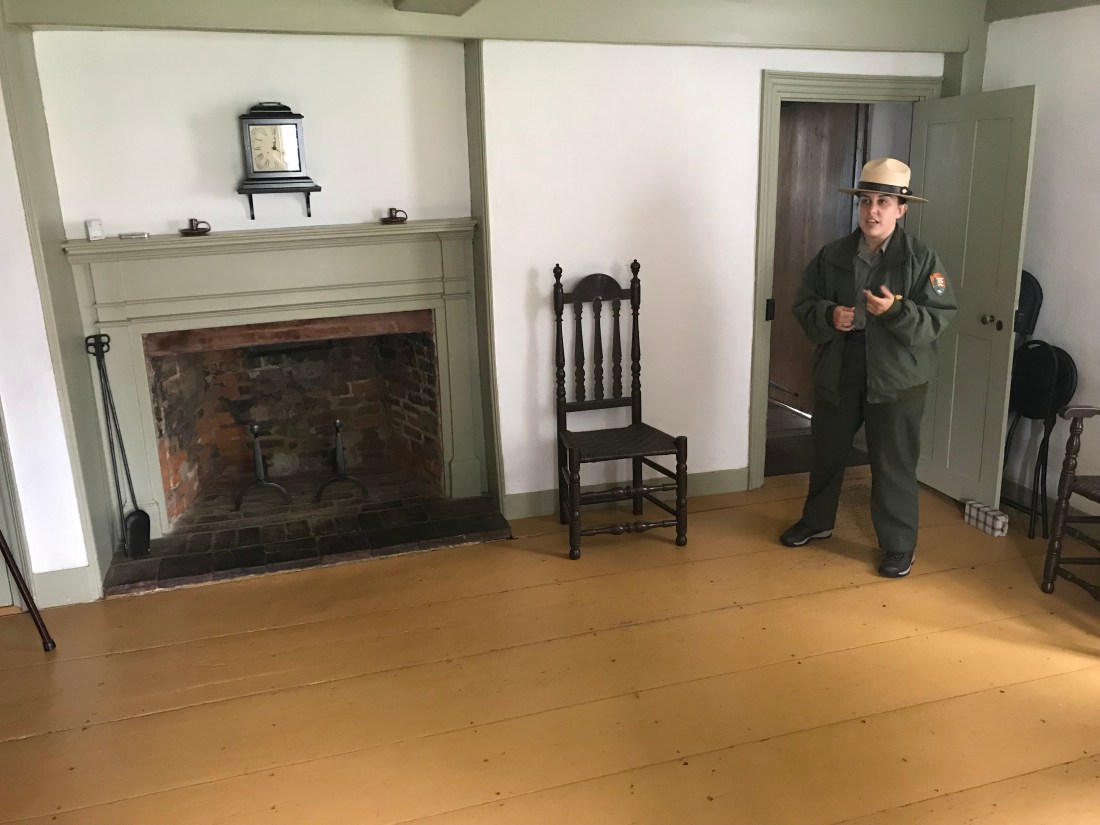
Much of the house here is bare however, and has had many owners after the Adams family lived here. As such, no original belongings of the Adams exist in either house.

The harpsicord in the corner is also not original to the house. John Adam’s father, a deacon, would not benefit from an item that would be considered frivious.

Upstairs, which is of course inaccessible.

Of course, that isn’t to say that none of these items are period artifacts. Most of them were indeed used back in the day, just not by the Adams family.
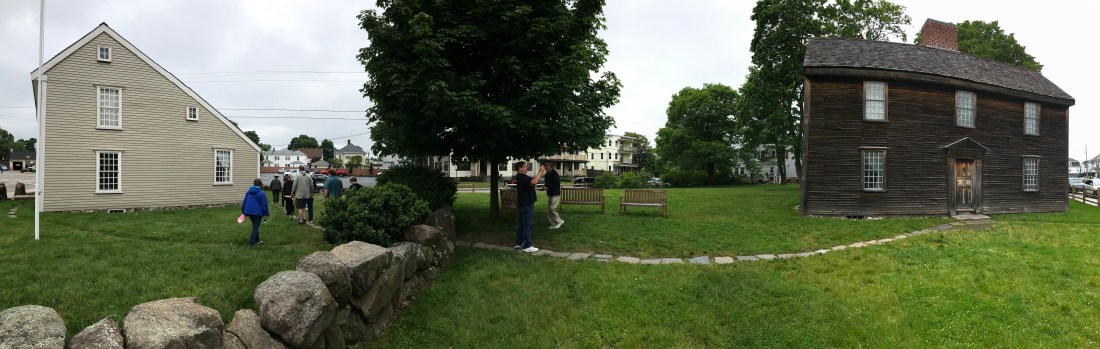
Just a few yards away was the birthplace of John Quincy Adams, and the home of John and Abigail Adams for much of the time around the Revolution.

Yet another furnace. There seems to be a fireplace in every room visible, likely to add more heat. Also, lower ceilings allow for heat to stay down closer to the ground.


This little doohicky here is fascinating.. It’s an Eel Spear, and it was used to hunt eels, which were considered a delicacy back then (What does eel even taste like? Not sure I want to try that…).
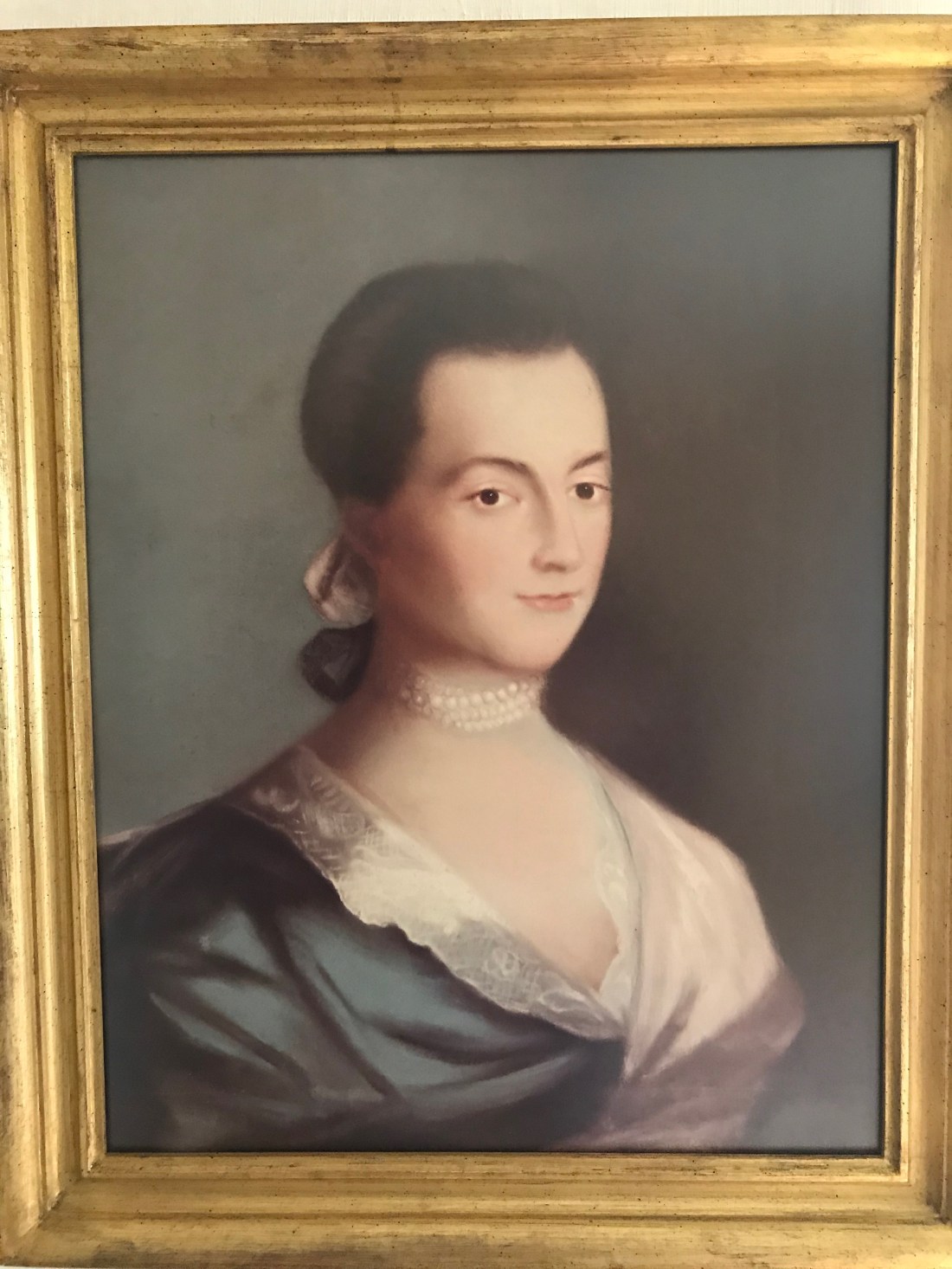
A picture of Abigail Adams. John and Abigail Adams considered each other to be best friends, and they were true soulmates for their 54 years of marriage. Their letters of long-distance correspondance are still well-known to this day.

The study of John Adams (when he wasn’t away for long periods of time), with a copy of the Massachusetts Commonwealth Constitution, which remains the oldest of it’s kind in the world. John Adams wrote it, and it served as an model for the U.S. Constitution, when it was structured.

All of the Adams family members were passionate readers, and both John and John Quincy Adams practiced to be lawyers. John Quincy Adams could himself recite 6 or 7 different languages, and write in 12.
We hopped on the shuttle once again, and then travelled to “Peacefield”, the primary home of the Adams family for four generations!

It’s a very gorgeous house, and was built in 1731, and bought by the Adams family in 1787. The Adams Family would to own it well into the 1940’s, until it was handed over to the United States.

Led by our tourguide, we began to explore the home of our 2nd and 6th President.
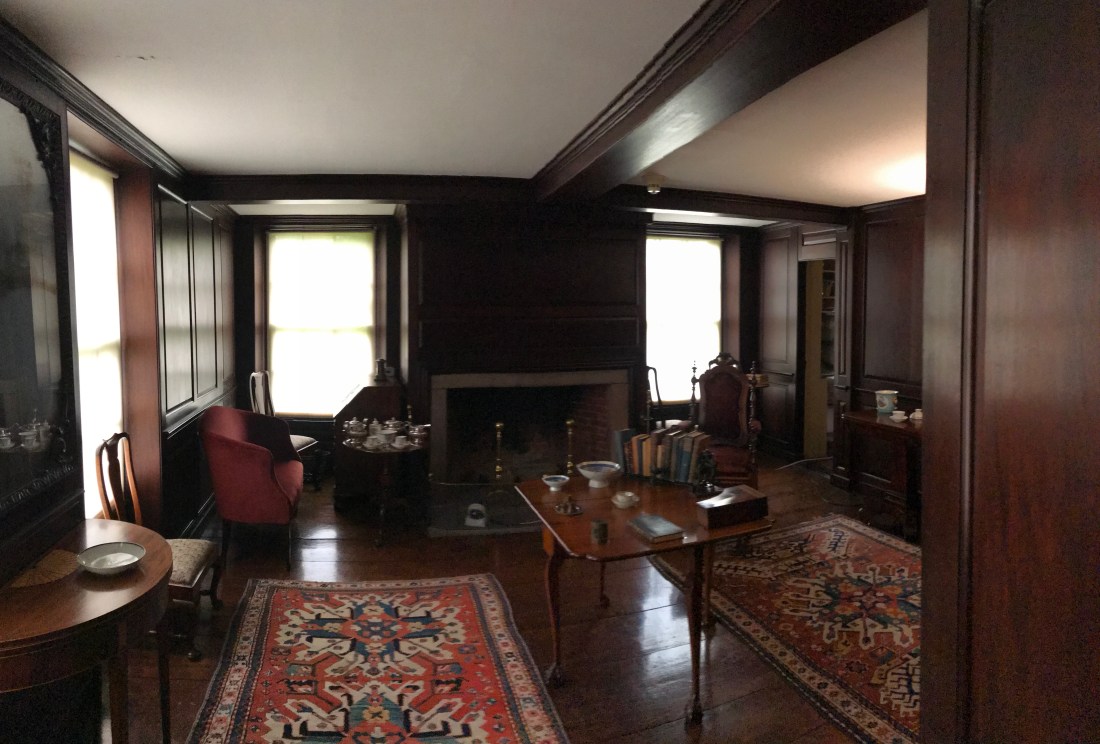
A side parlor room, which was likely used by John Adams’s descendents.
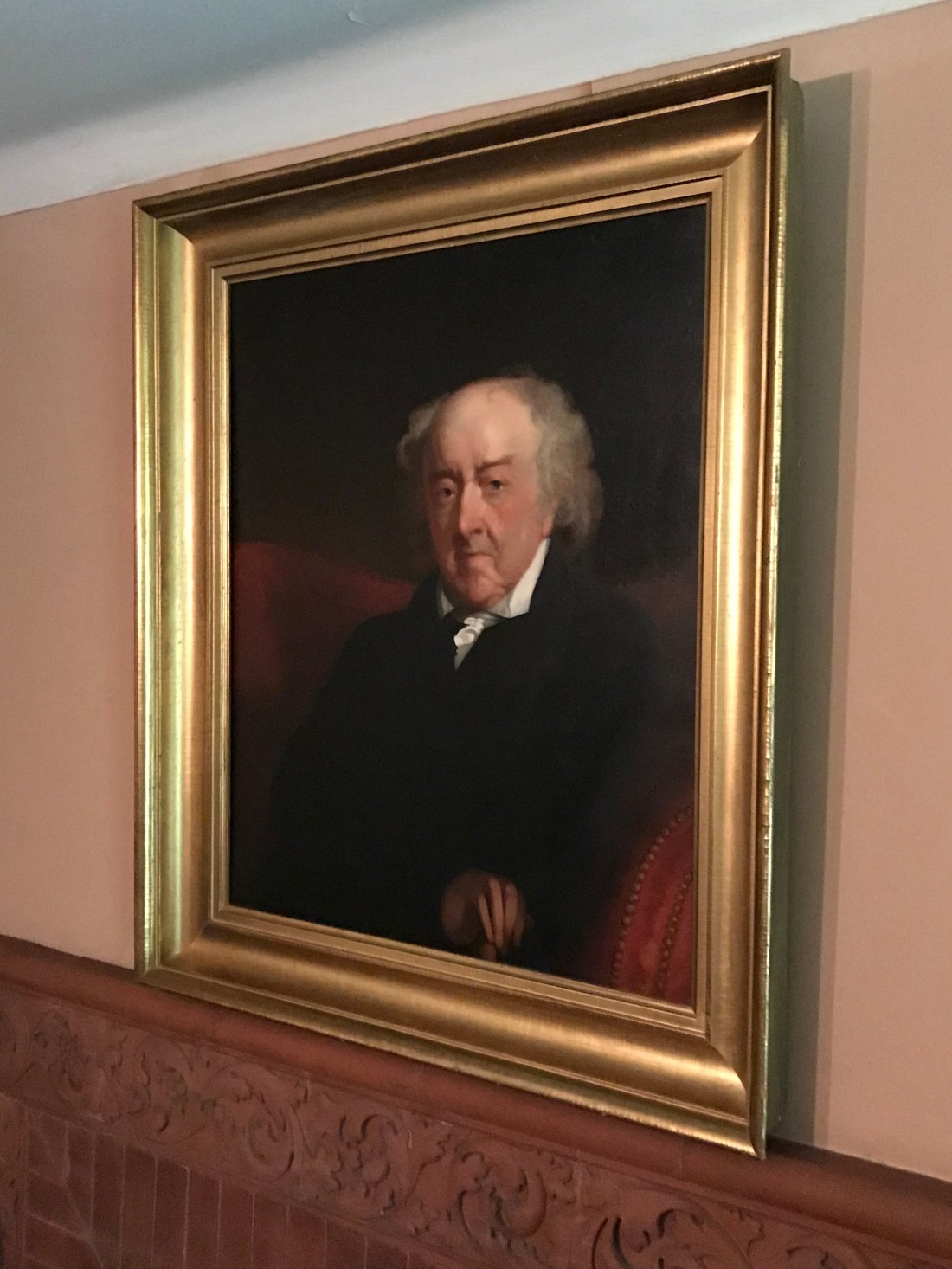
A picture of an elder John Adams when he was 88 years of age. When he died at the age of 90, he would long remain the longest-lived President in U.S. History.

The dining hall of the home. John Adams preferred to purchase second-hand furniture, many of which can be seen here. Unlike the birthplaces, Peacefield contains many more artifacts of the Adams, across the four generations.

A picture of George Washington, who John Adams greatly admired (he was Washington’s Vice President, and the first serving in that office). Washington himself stated that this portrait seemed to be the most accurate depiction of himself than any others.

John Quincy Adams, who was a literary genius, wrote the Monroe Doctrine that warned Europe not to impede affairs in the Americas. He served distinguished careers as Secretary of State and Minister to England (John Adams, John Quincy Adams, and Charles Francis Adams would all serve as U.S. Ambassadors to England, from Grandfather, to son and grandson).
As a side note, he loved to skinny-dip in the Potomic River during his Presidency, in an effort to keep his exercise up.

The main parlor, an addition to the original house filled with many more Adams furniture. Though prominent, the Adams family was not the wealthiest, and sometimes suffered financial difficulty.
Abigail Adams, wanting to add this onto the house while John Adams was away, tried to get builders to raise the roof to make the roof taller. Given the risks of the possibility of unevenness in the roof, the builders weren’t able to do that. So she smartly remarked: “If you cannot raise the roof, lower the floor!” And they did just that. That’s why it’s a bit taller than the others.
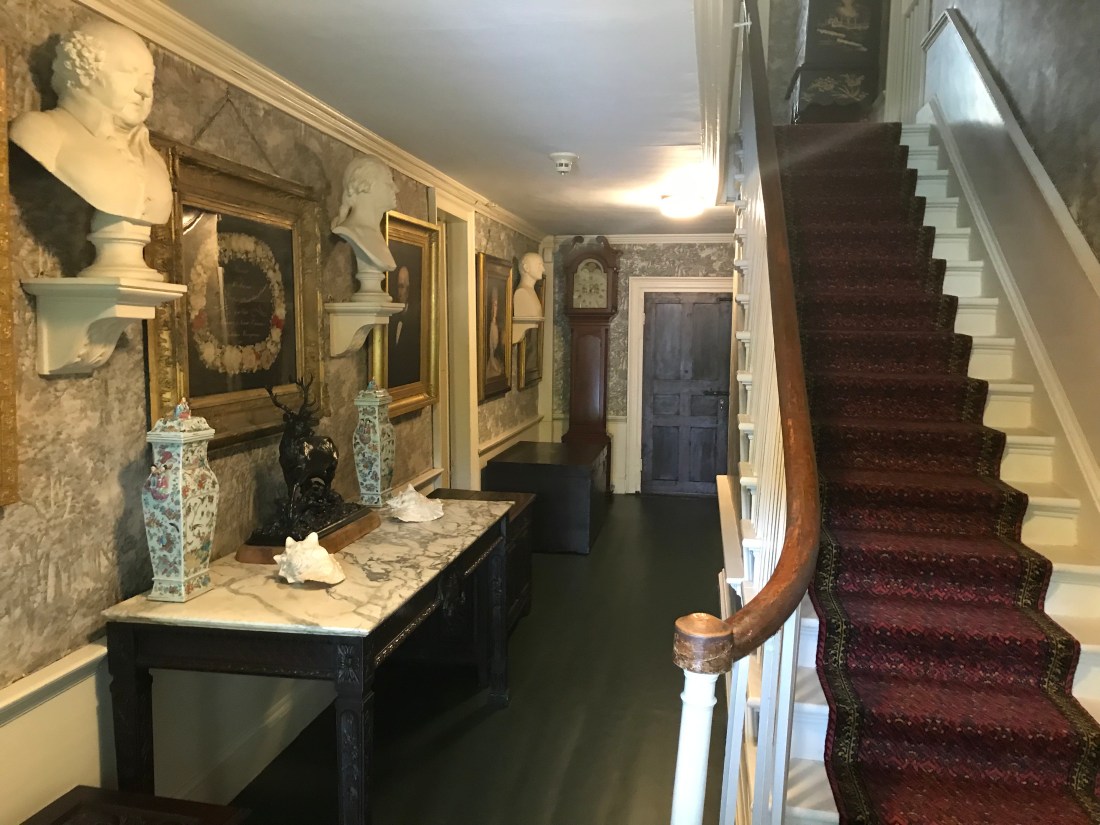
The entrance hallway, with the stairs that go up further into the mansion.

And up we go!

This study was perhaps a sanctuary for the patriarchs of the Adams family, especially John Adams, who would even sleep in a cot here in his older years. He would die here on July 4th, 1826, the 50th Anniversary of the signing of the Declaration of Independence…
His last words were: “Thomas Jefferson still Survives”. His dear friend, he had hoped, would have his ideals followed by the American people. However, little did he know that Thomas Jefferson had passed away hundreds of miles away in Virgina, mere hours before Adams did. Perhaps it is a poetic thought that both men passed on the exact same landmark occasion…
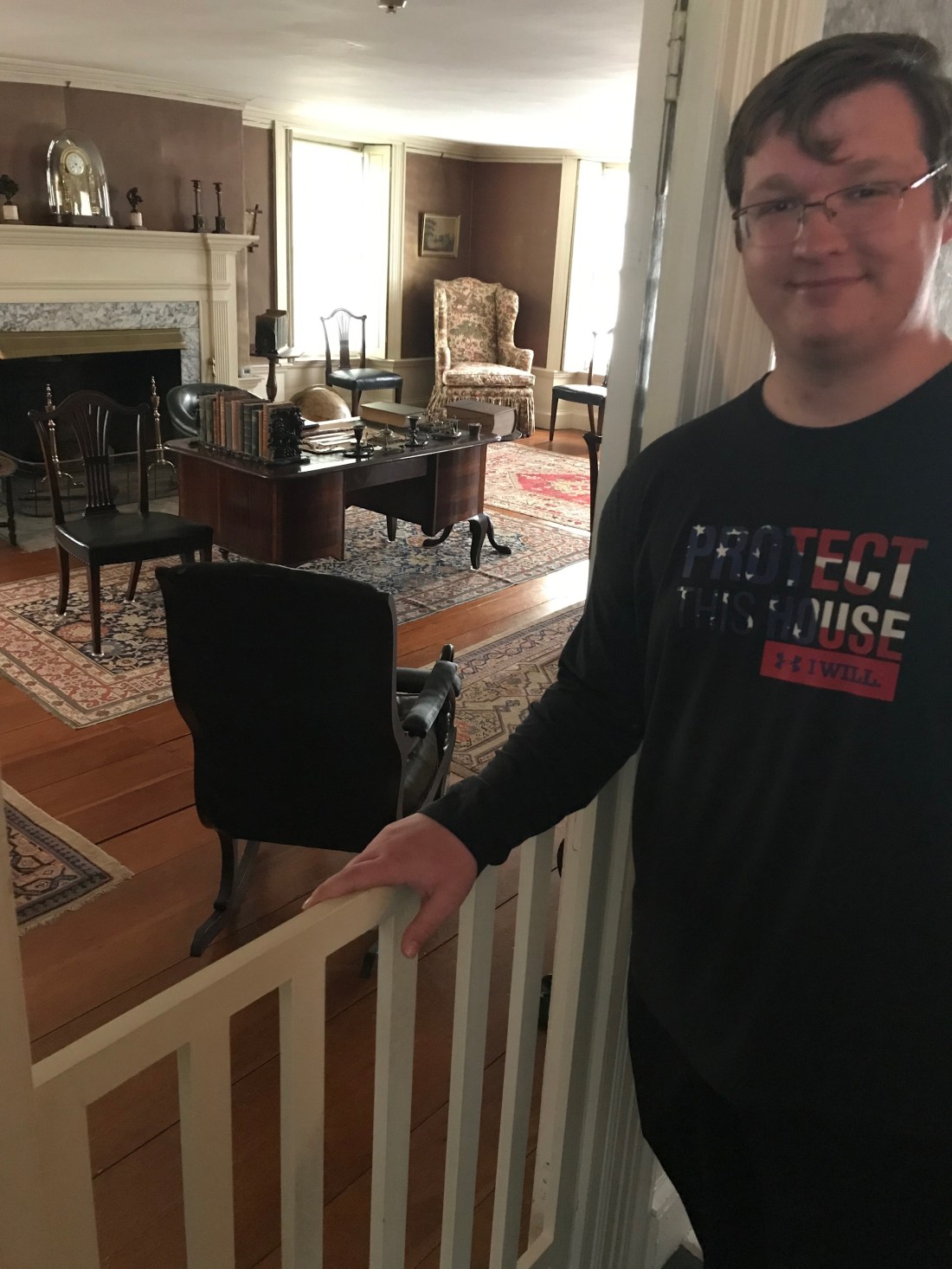
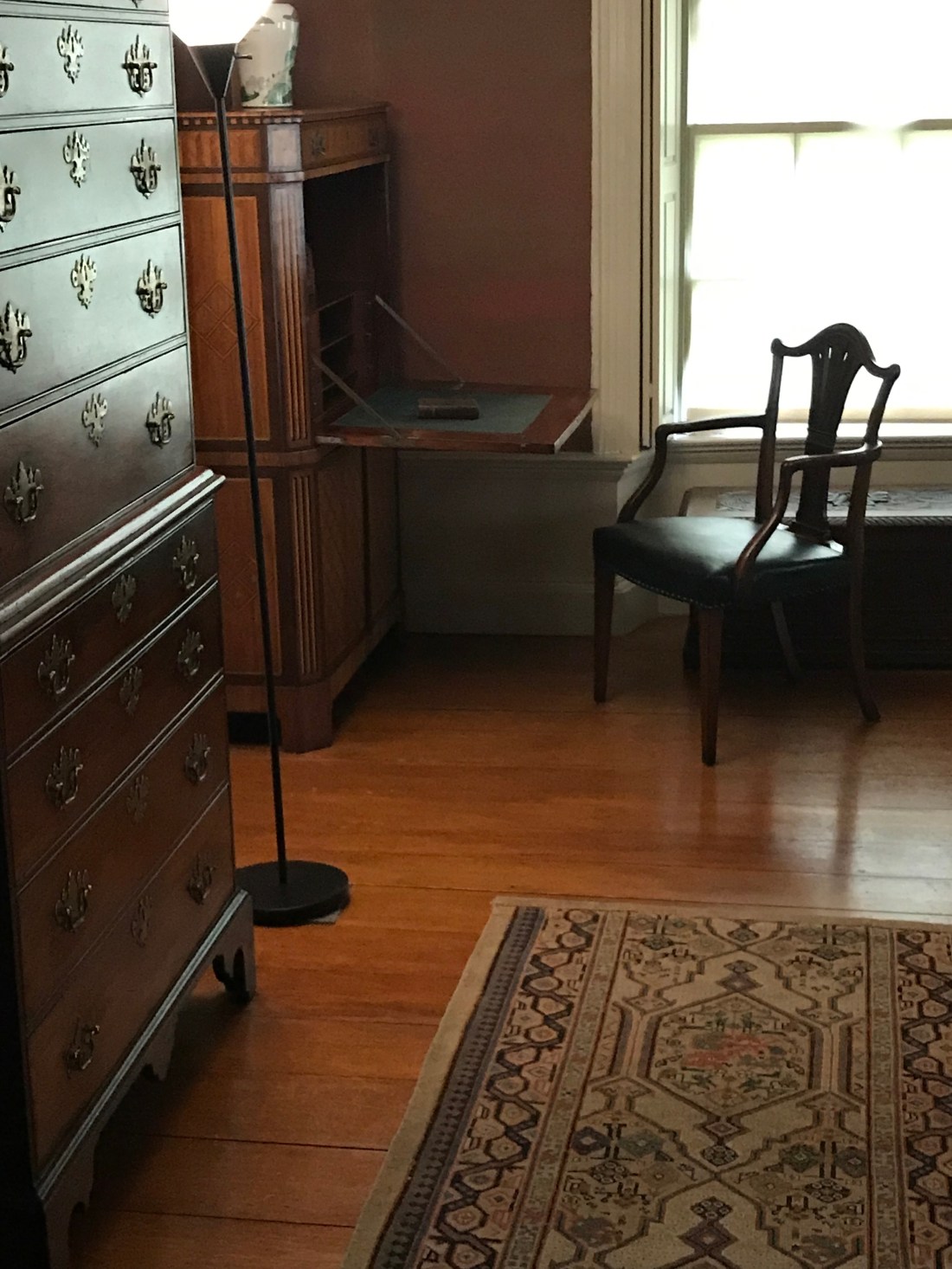
John Adams would write to Jefferson from this desk in the corner, and their long correspondance healed the wounds of the bitter Election of 1800, and renewed their friendship. Many of the over 50 letters that they wrote to another still survive today, giving testament to their faith in bipartisanship.

A guest room, which, back in the day was the only way to get from one half of the house to the other on the second floor. John Quincy Adams, before installing a separate hallway, would often have to walk through the often occupied room to get to his study.
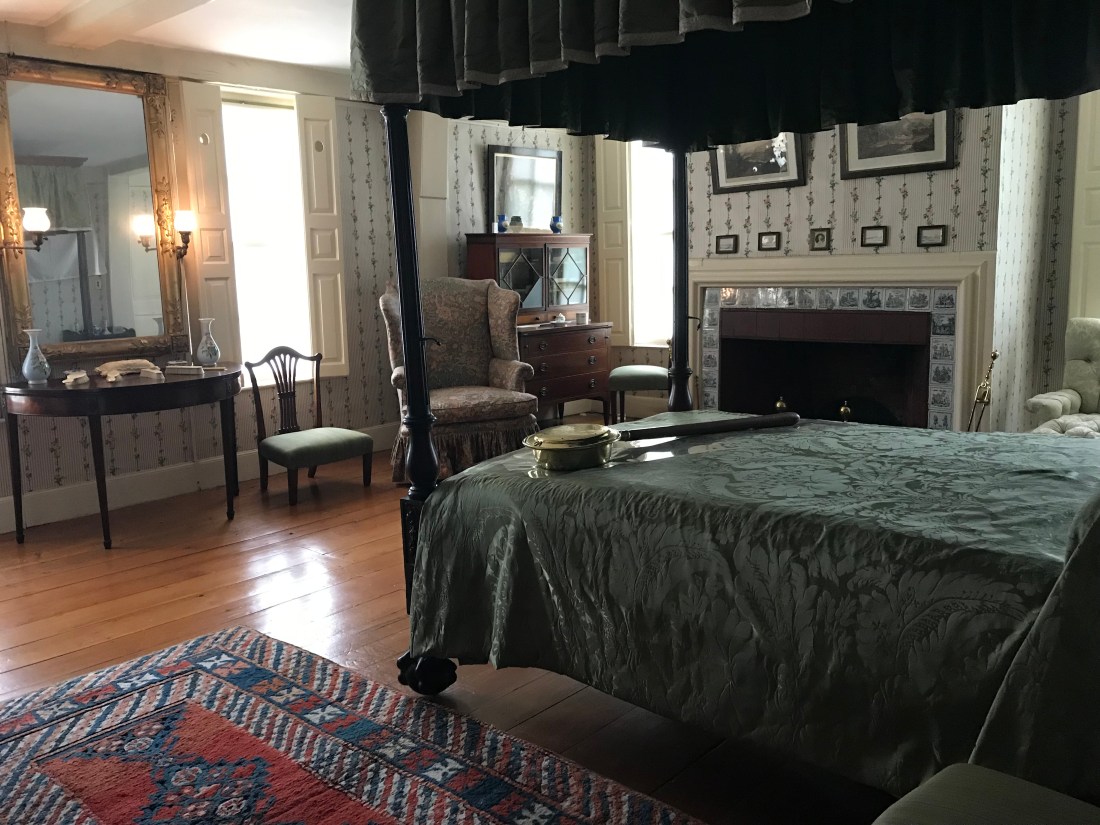
Until moving to his study, John Adams slept here with his wife Abigail in the master bedroom, until Abigail died in 1818. Her death shook John Adams to his core, and he truly felt lonesome in those last 12 years of his life.
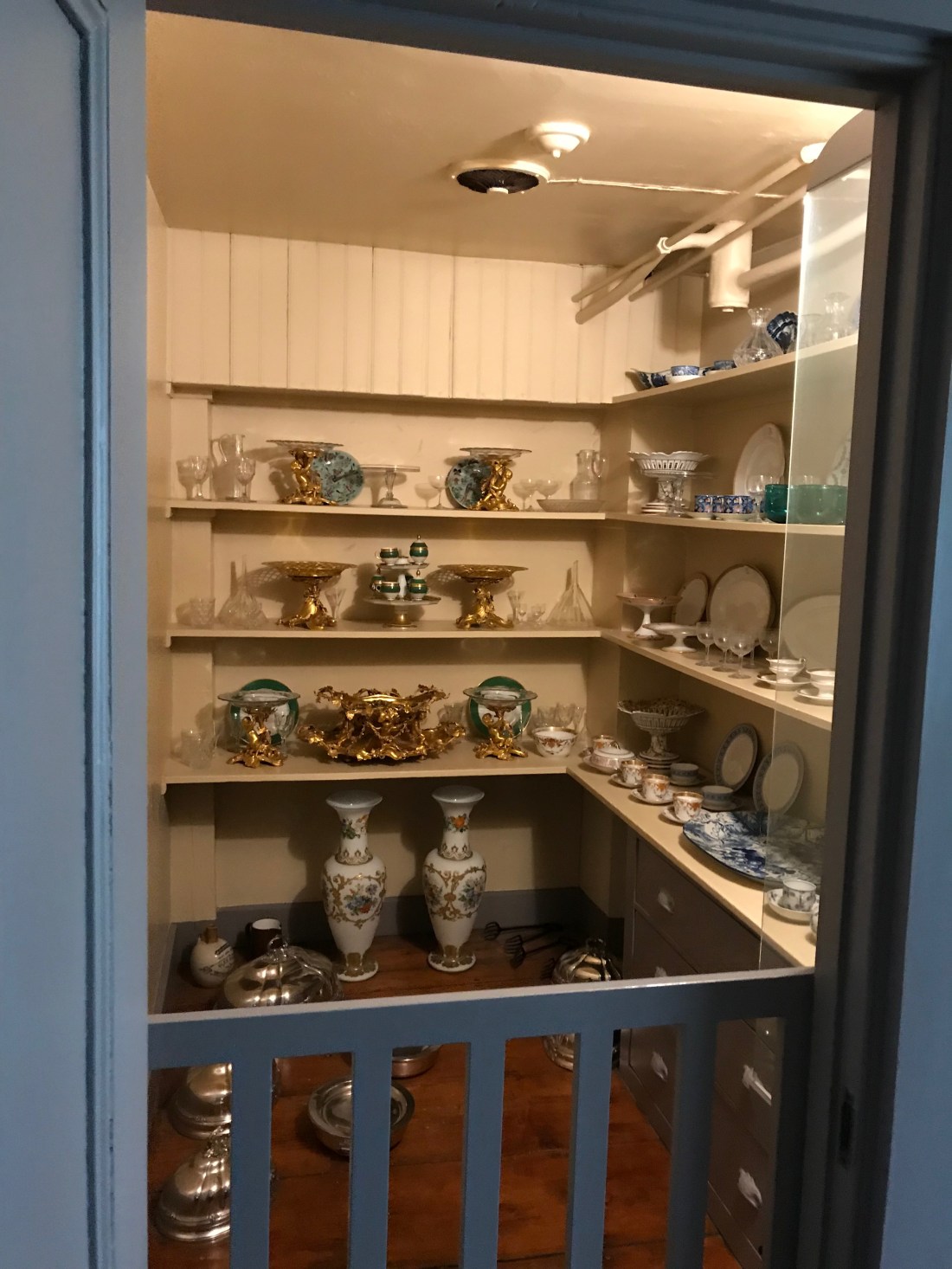
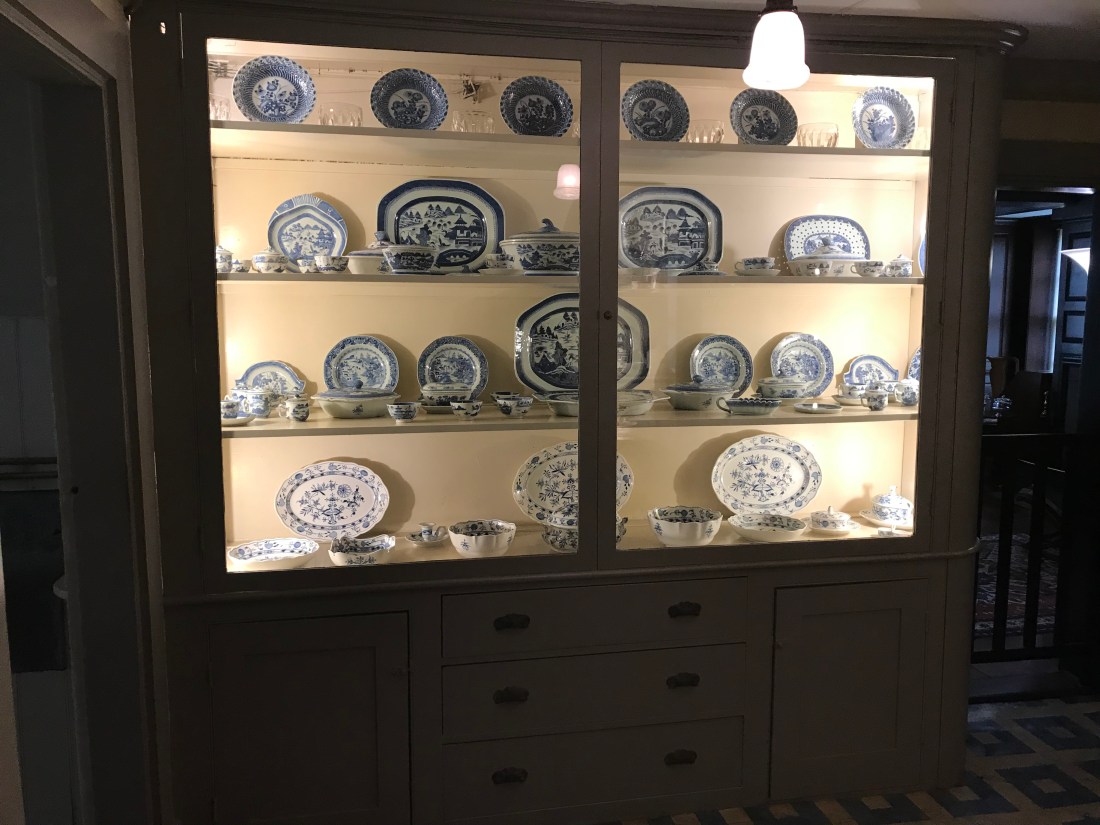
Treasure-troves of Adams china and dinner displays. I imagine that there is a fascinating story behind each of them.

This hallway used to be empty, but was eventually filled by John Adams’s great-grandson, Henry Adams. It was upon his death and his wife’s that the house was bestowed to the public.
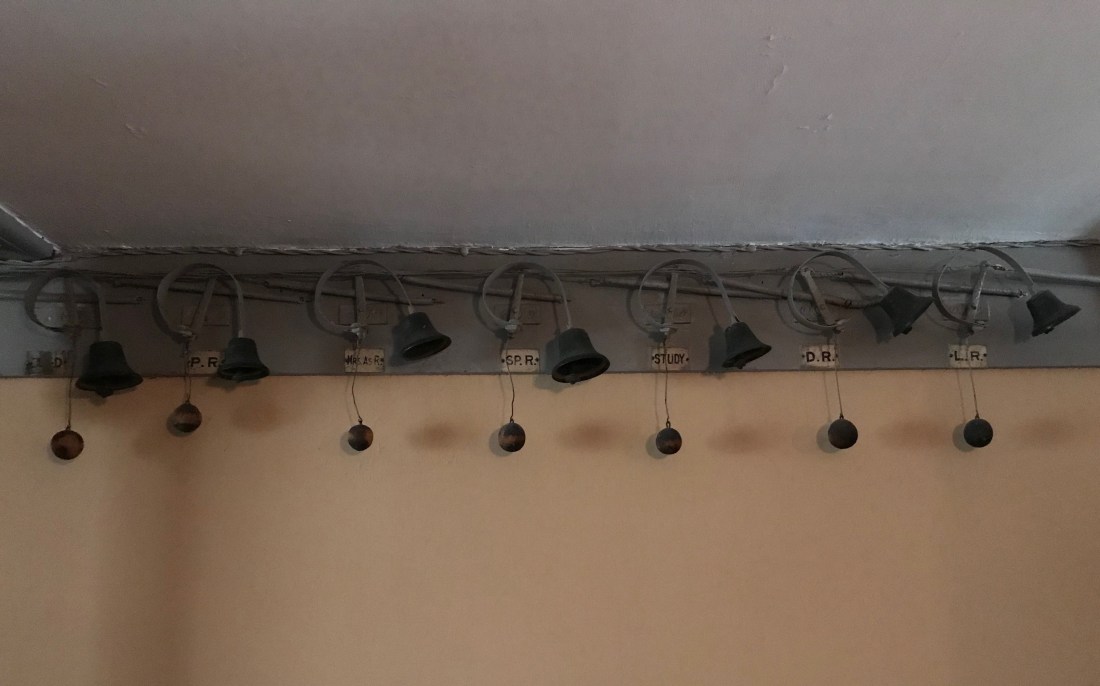
A bell-system similar to that of Martin Van Buren’s home in Kinderhook. The servants who tended to the family could rely on the pitch of the bells to determine where next to tend (this was necessary for those who were illiterate).

A bust of John Adams. Both he and his son were short, pudgy and somewhat bitter men, and often were not well-liked at times.
The last parting sign of the house was located above the door… an upside horseshoe. Horseshues are often associated with good-luck, and were typically faced up to resemble the keeping of good luck. This is upside down however, because Abigail Adams believed that their family had been blessed so much, and she wanted anyone who walked under it to visit Peacefield to gain a bit of the Adams family luck. It’s little stories like this that somewhat gives the most fascination.

The outside gardens of Peacefield were very precious, and filled with grass lawns, budding roses, and a large tree in the distance that was planted by John Quincy Adams himself, who was an amateur botanist.
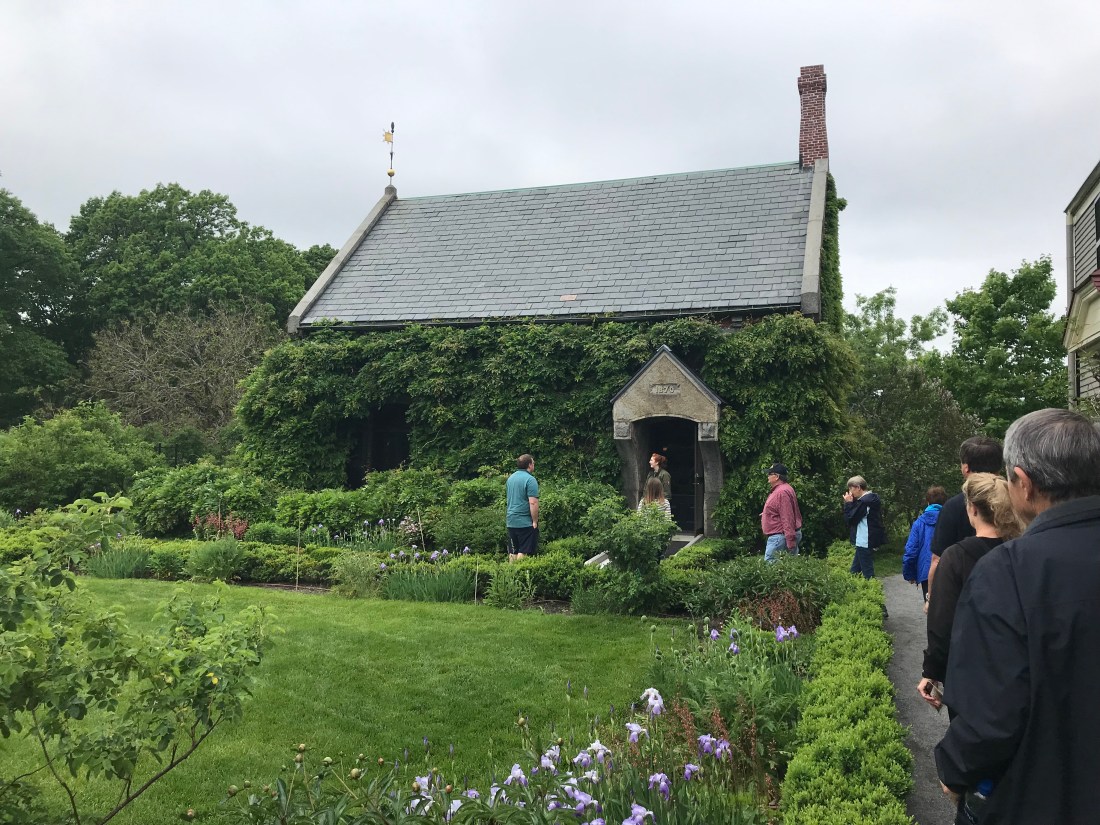
The Stone Library was built by Charles Francis Adams, John Quincy Adam’s son, for personal use to house his massive family collection of books and manuscripts. It was separate from the rest of the house in case of a fire. Neither of the Adams Presidents used this Library, as it was constructed after both their deaths.

12,000 books lined the bookshelves, many of which were of John Quincy Adams’ private collection. These books covered anything from modern-history to lingual scripts, almanacs, and encyclopedias. Some of these books were also in other languages such as hebrew and french.
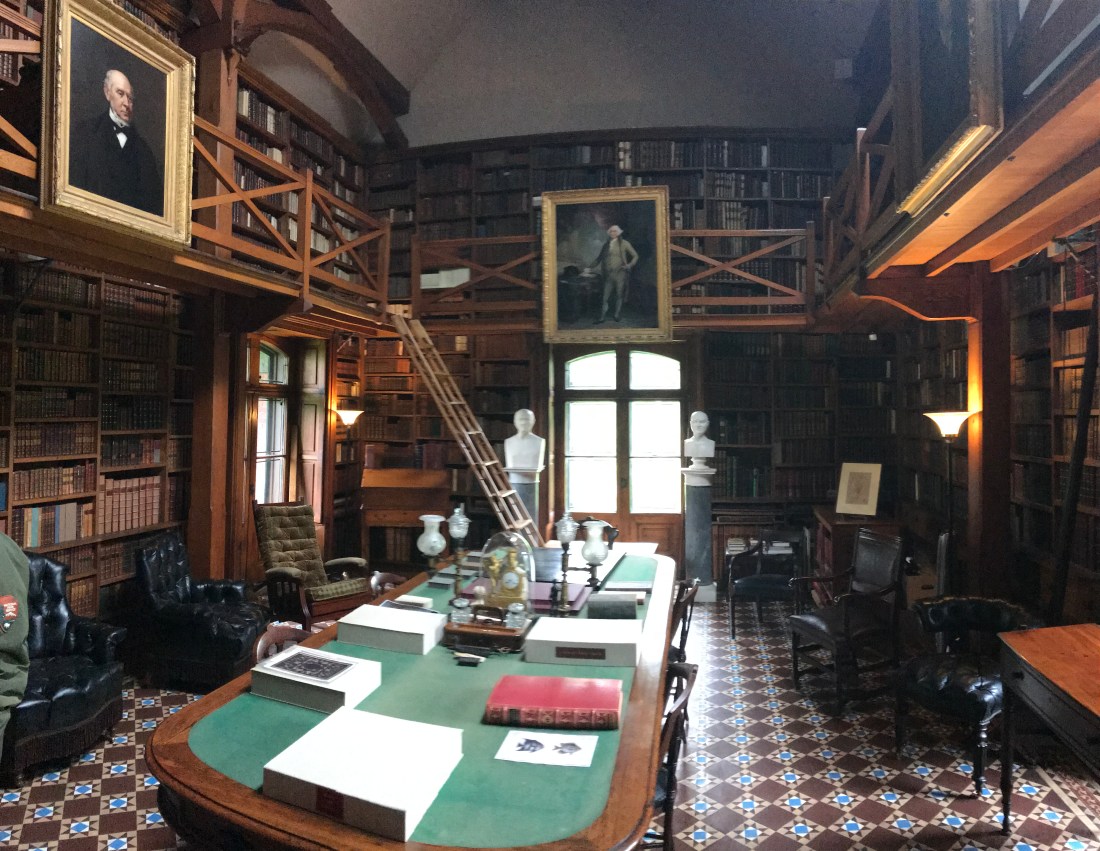
Easily the most impressive part of the tour, and a bookworm’s dream come true.
Finishing our tour, we took the shuttle back to the visitor center, and headed towards that very special church that contained their final resting places.
United First Parish Church

Hancock-Adams Common was nicely organized, and a very beautiful sight to walk, even if it was a bit small.
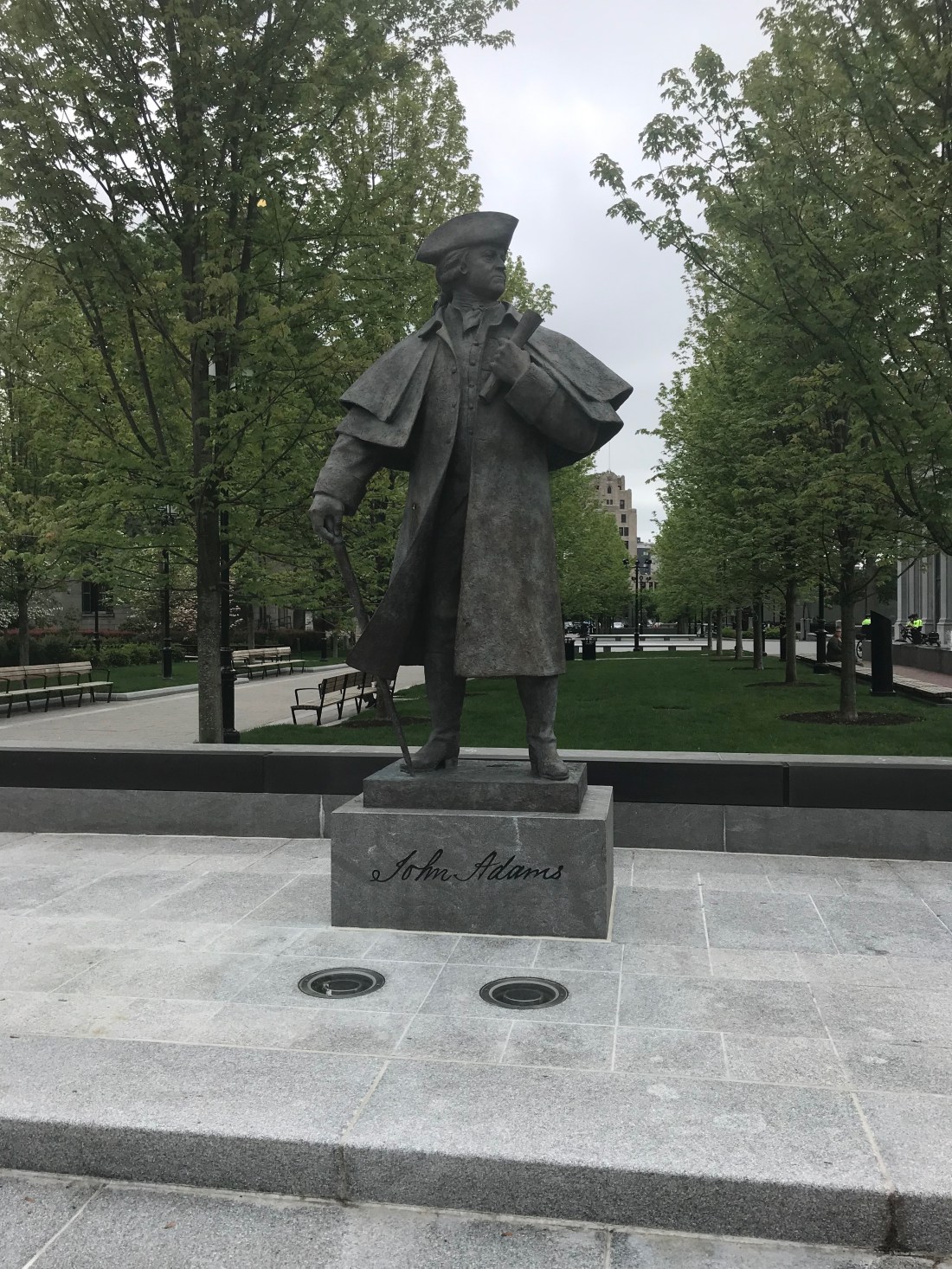
A statue of John Adams, one-half of the namesake of the walk.

And of course, the other half of the namesake, Patriot John Hancock. Hancock had much of his roots in here, though he is buried in downtown Boston.
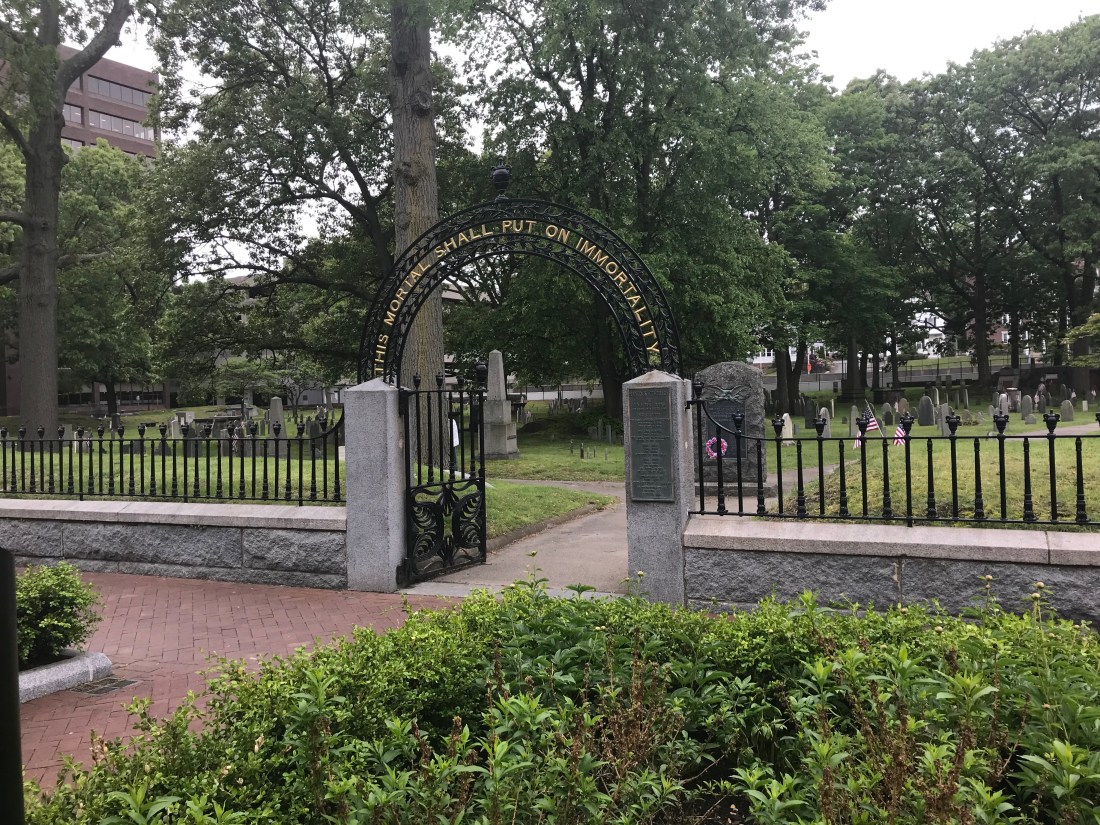
Hancock Cemetery, named for the father of Patriot John Hancock, Minister John Hancock Jr., was one of the oldest burial grounds in the entire Boston area, and contained gravesites that date as far back as the 17th Century.
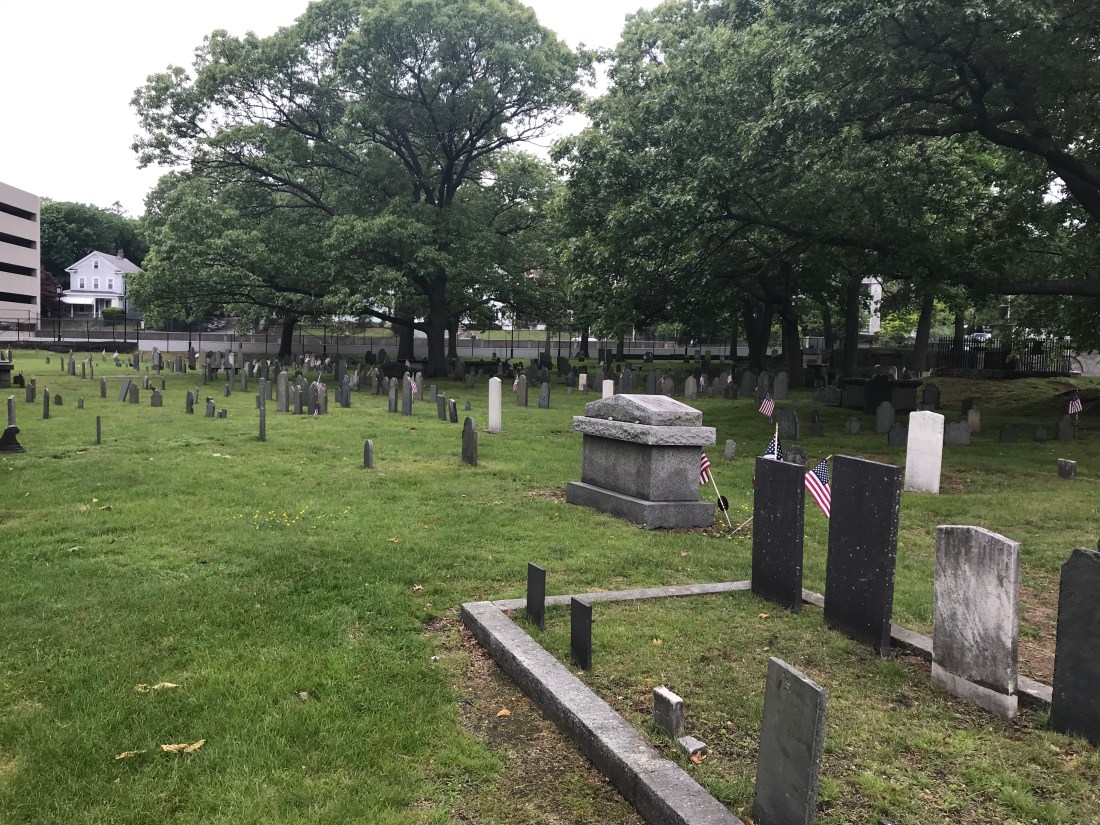

This small niche served as the original burial place of the Adams family, before John and john Quincy Adams and their wives were moved to the church.

The grave of Colonel John Quincy, who became the name for Quincy-town, and the namesake of John Quincy Adams.

Looking towards the United First Parish Church from the cemetery.

An inpressive structure, this “Stone Temple” was commissioned by John Quincy Adams to be a memorial and crypt to his late father. It is perhaps one of the more iconic structures in Quincy.

Only three places in the U.S. have the status of hosting two different Presidential Gravesites. This is one of them, along with Arlington National Cemetery near D.C., and Hollywood Cemetery in Richmond.

The inside of the building itself was impressive to look at. The town knew what it was doing during the construction.
We were accompanied in the building by a tourguide at all times, who was happy to provide more insight into the building of the place.
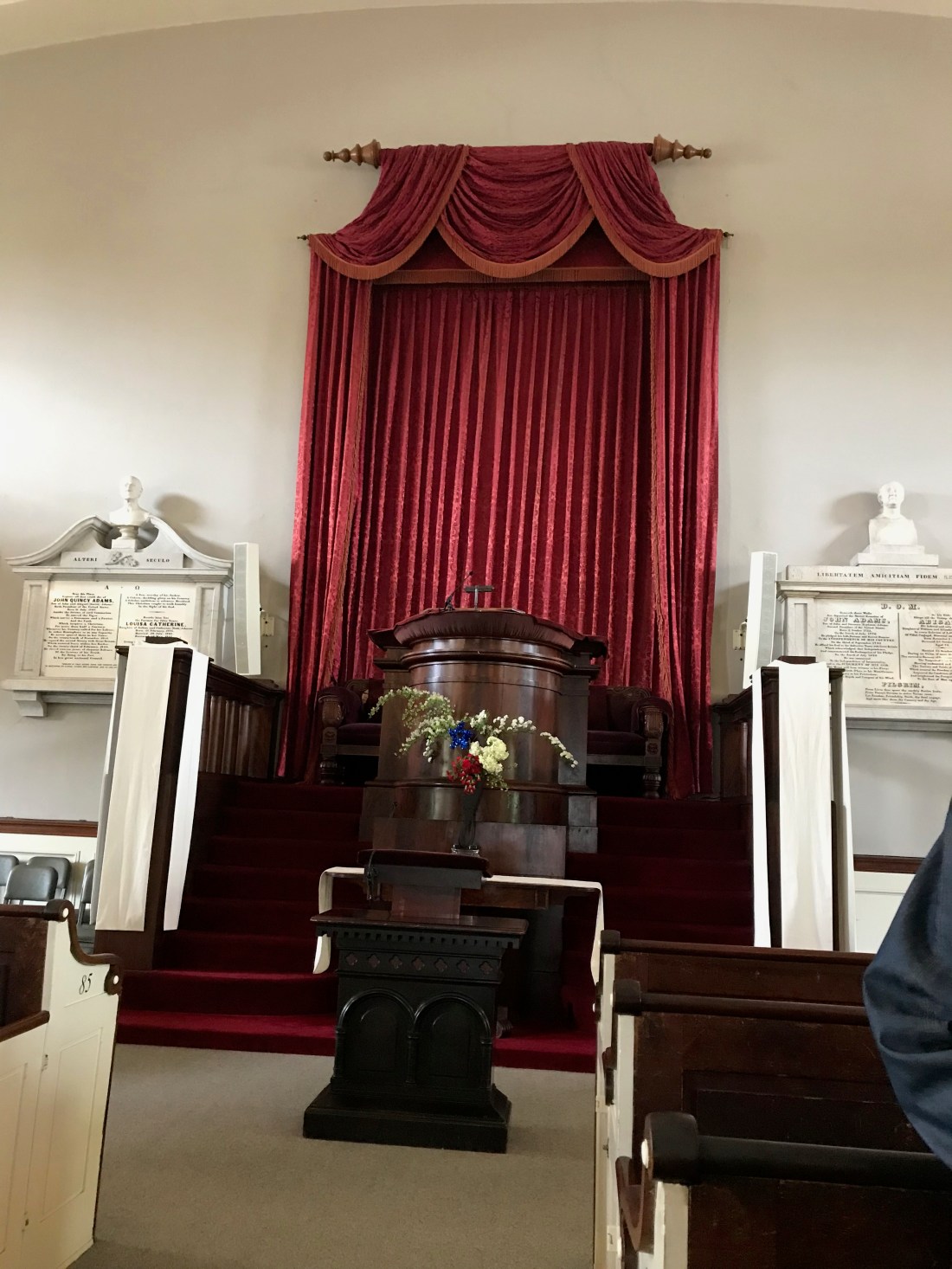
John Quincy Adams became a member of this church, and would worship here whenever he stayed in Quincy for the summer. It would become his tomb after his death in Washington D.C. in 1848. He has the only distinction of being a former U.S. President who afterwards served in the House of Representatives.
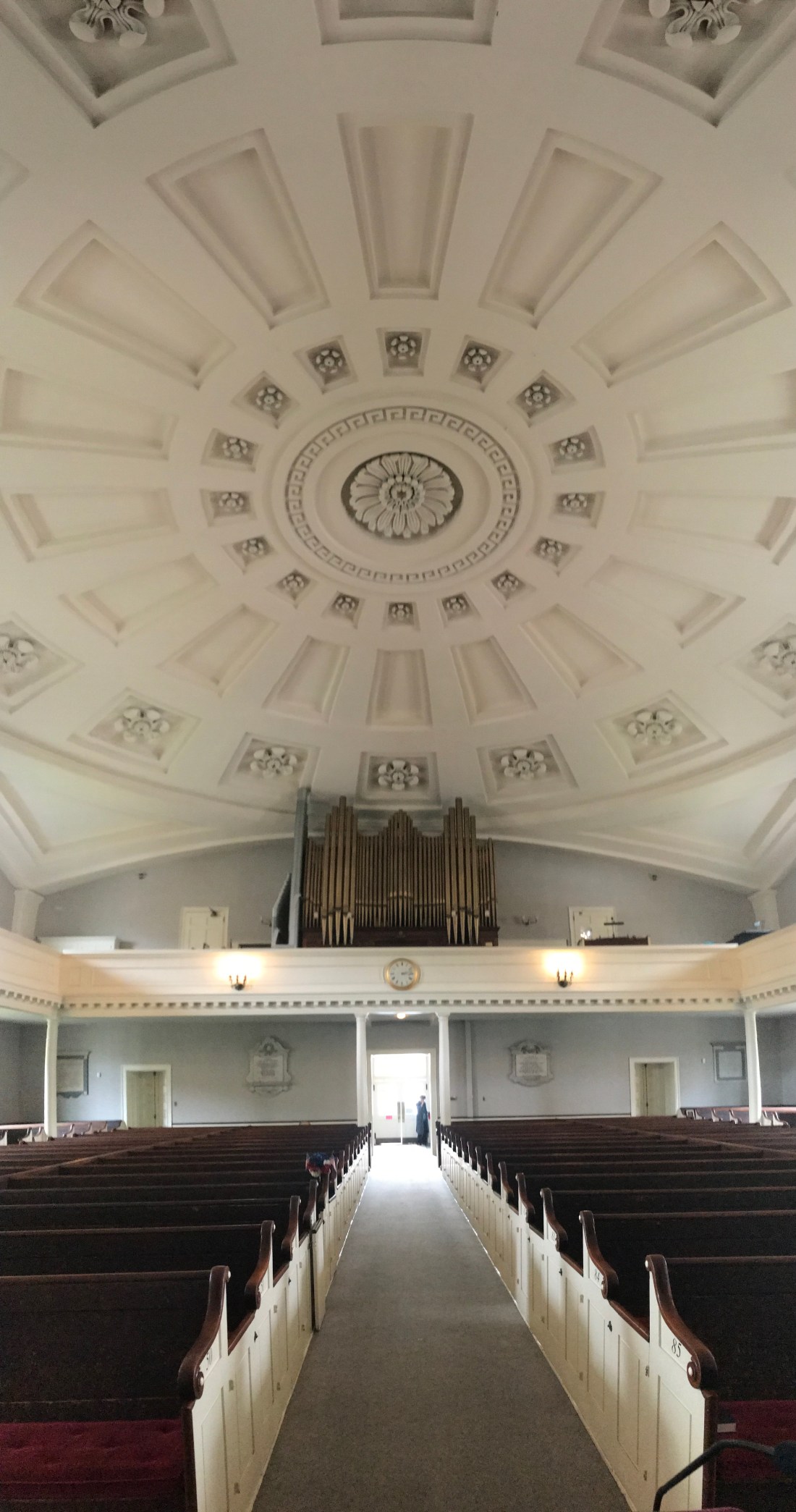

So much detail…
A short trip down the nearby flight of stairs took us to the basement level… and the crypts.
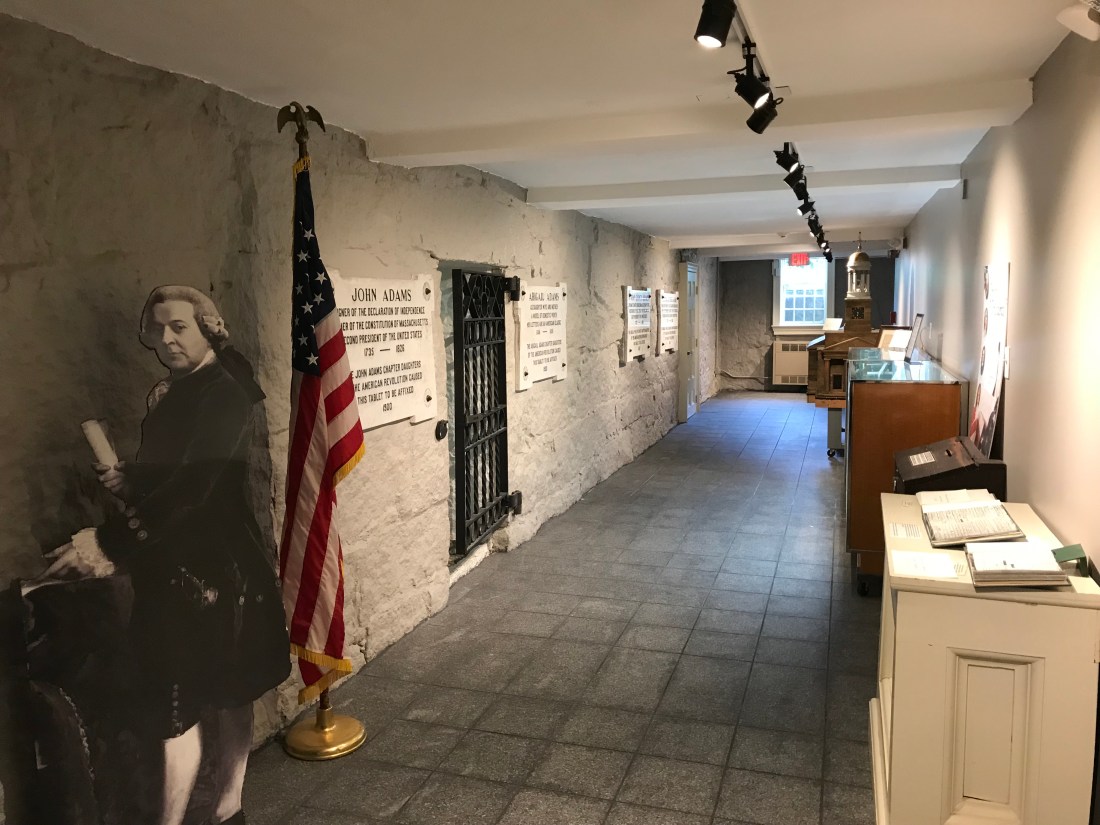
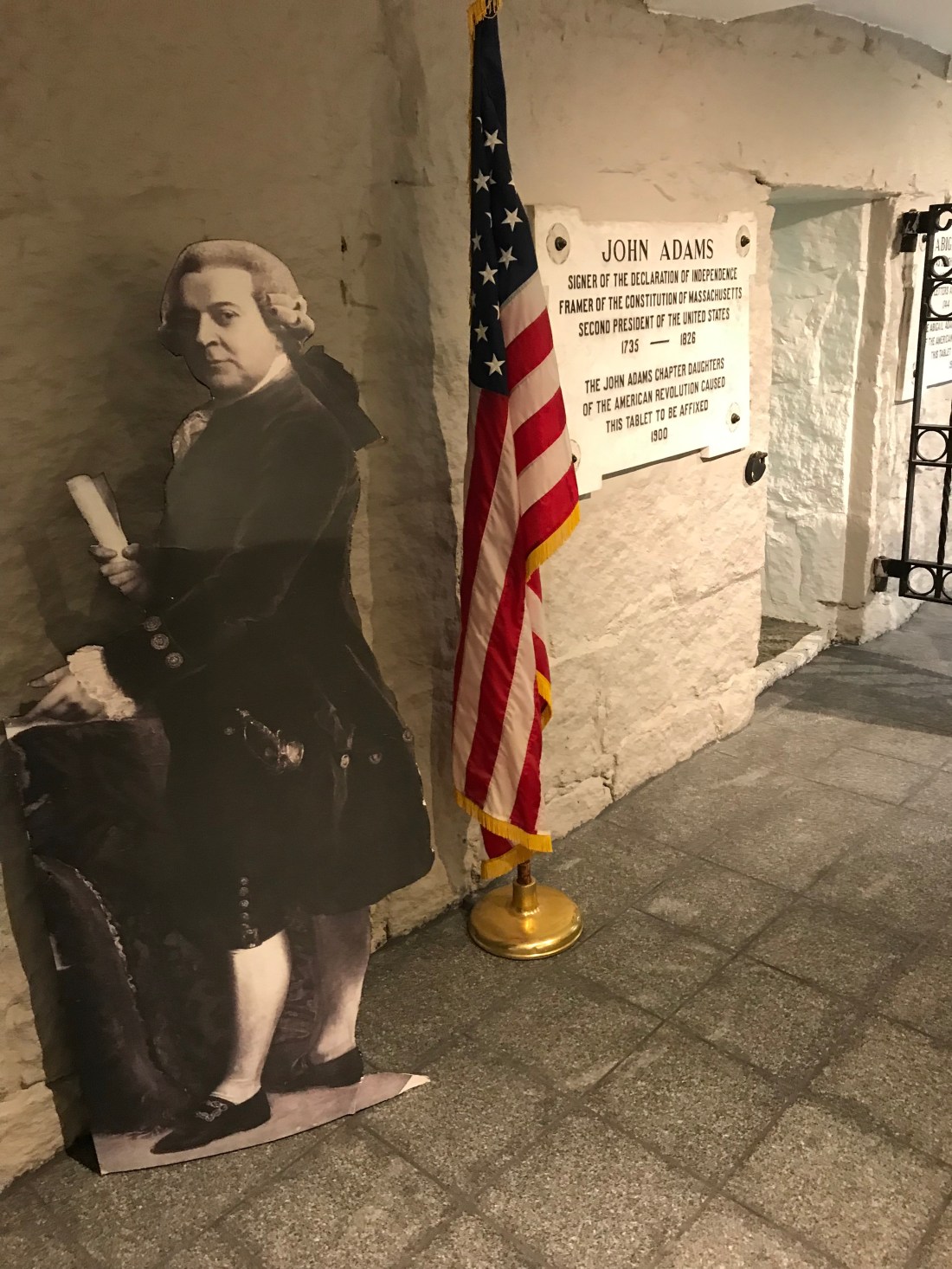
No other Presidents are buried so close together… this is special.

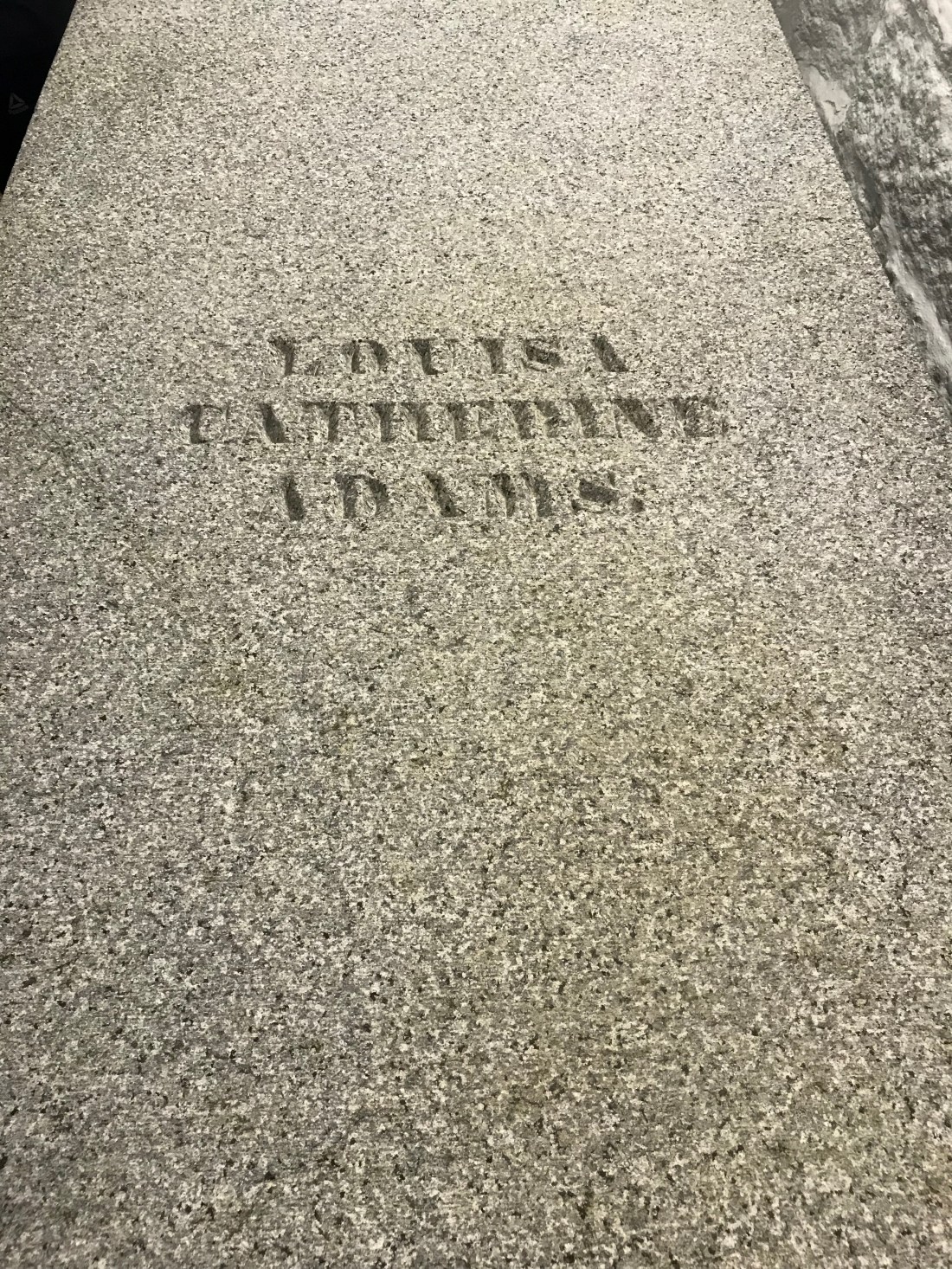
Unlike her husband John Quincy Adams, Louisa Adams was beloved by almost all, and her time as First Lady/White House hostess earned her much respect and praise from fellow socialites.
She is also one of only two First-Ladies not to have been born in the U.S. She was born in London, while current First Lady Melania Trump was born in Slovenia (then known as Yugoslavia).

The tombs of John Adams (left) and Abigail Adams (right), side by side…
At first, I was dismayed that we would not see the tomb of John Quincy Adams, since it was tucked away out of sight in the vault…
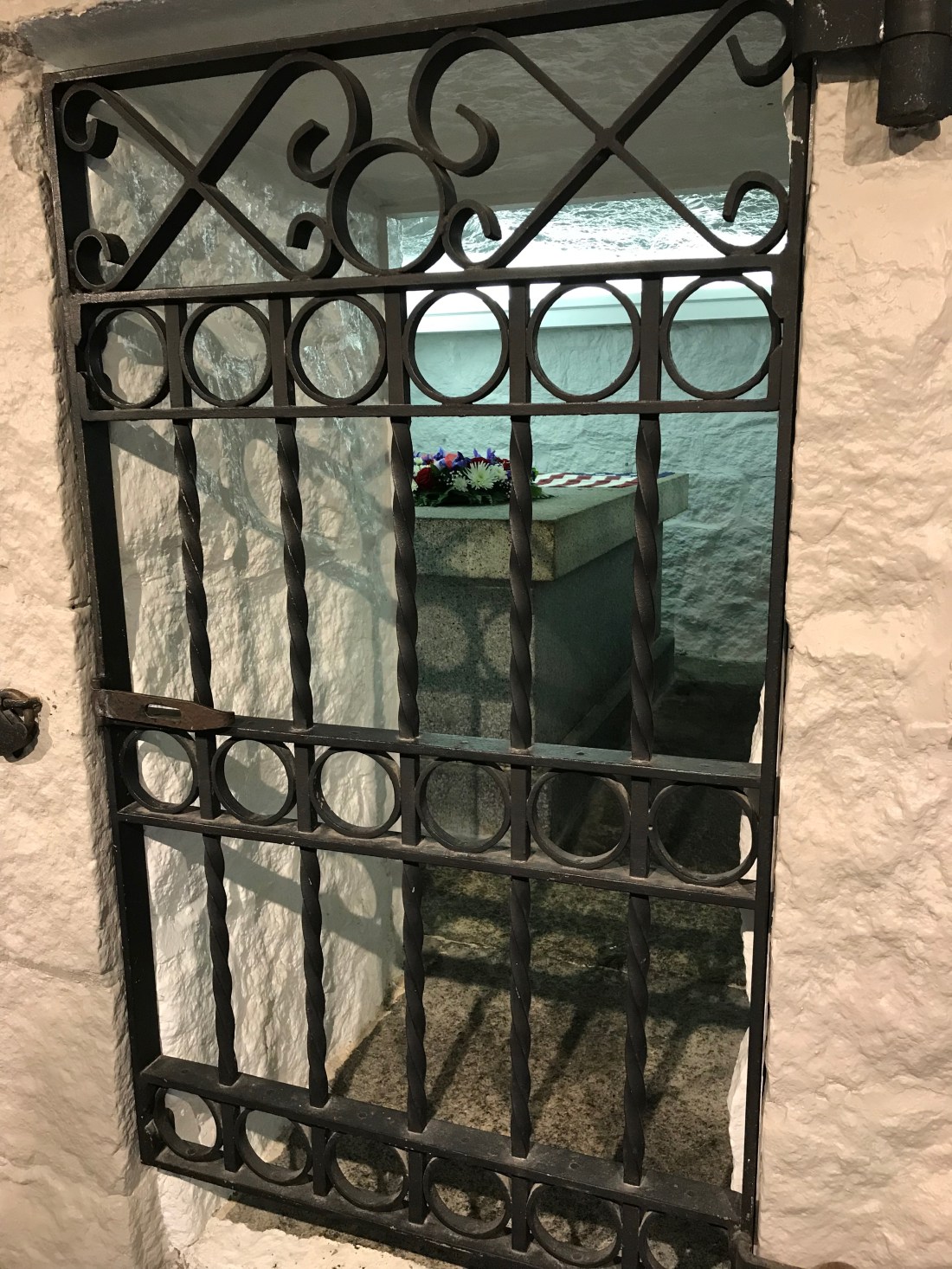
However, to our utter suprise, the tourguide unlocked the tomb door for us, and let us inside…

Elated as we could be, we entered the crpyts…
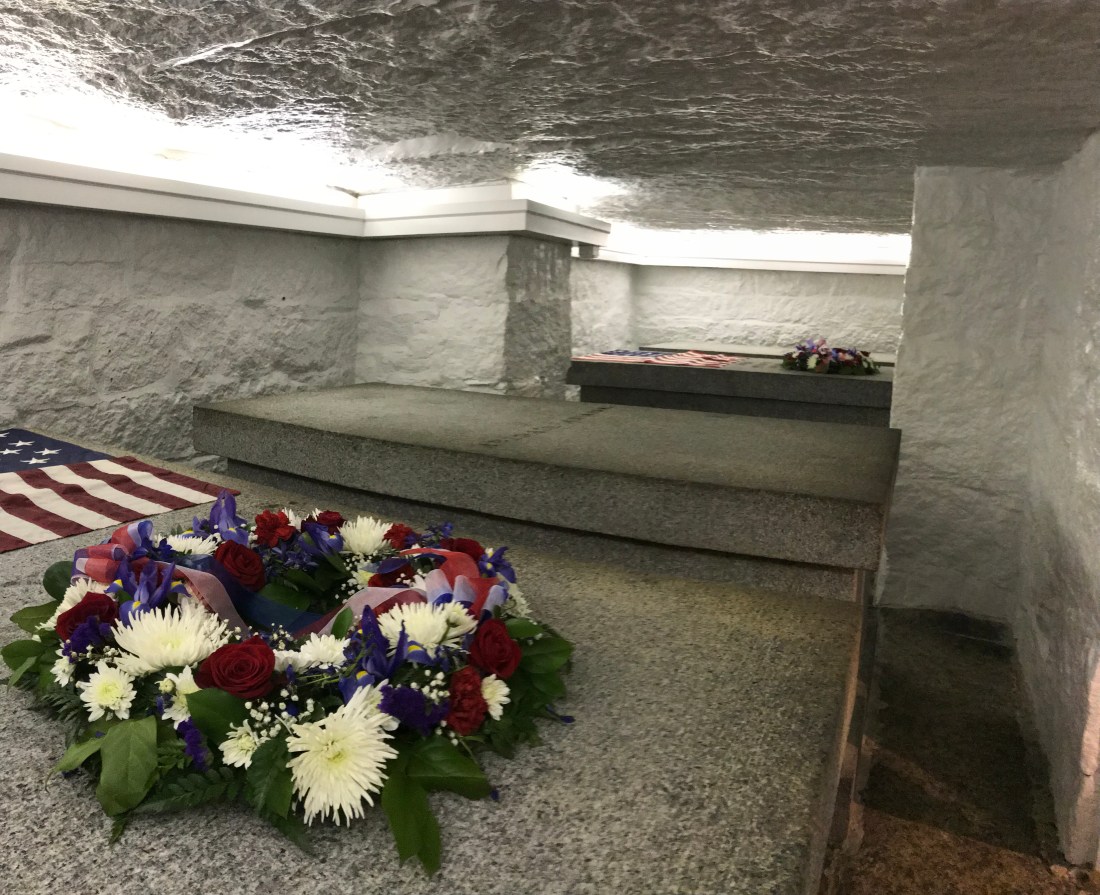
My god…
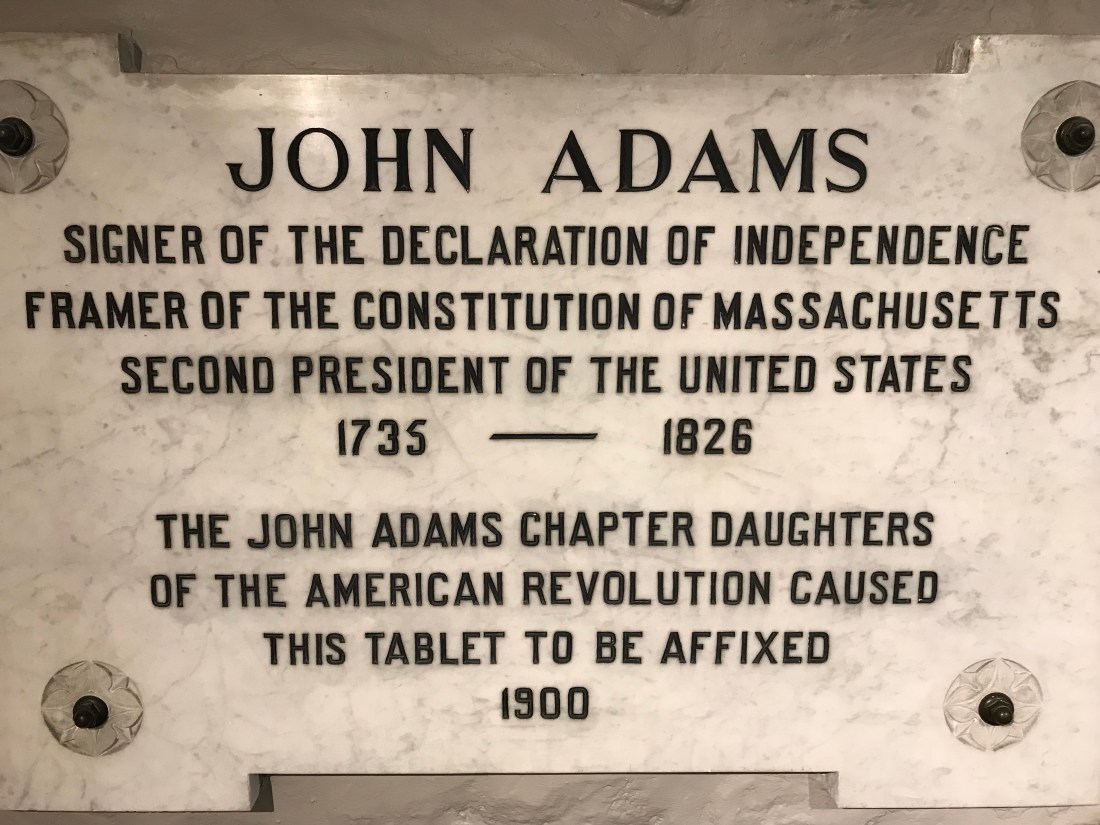
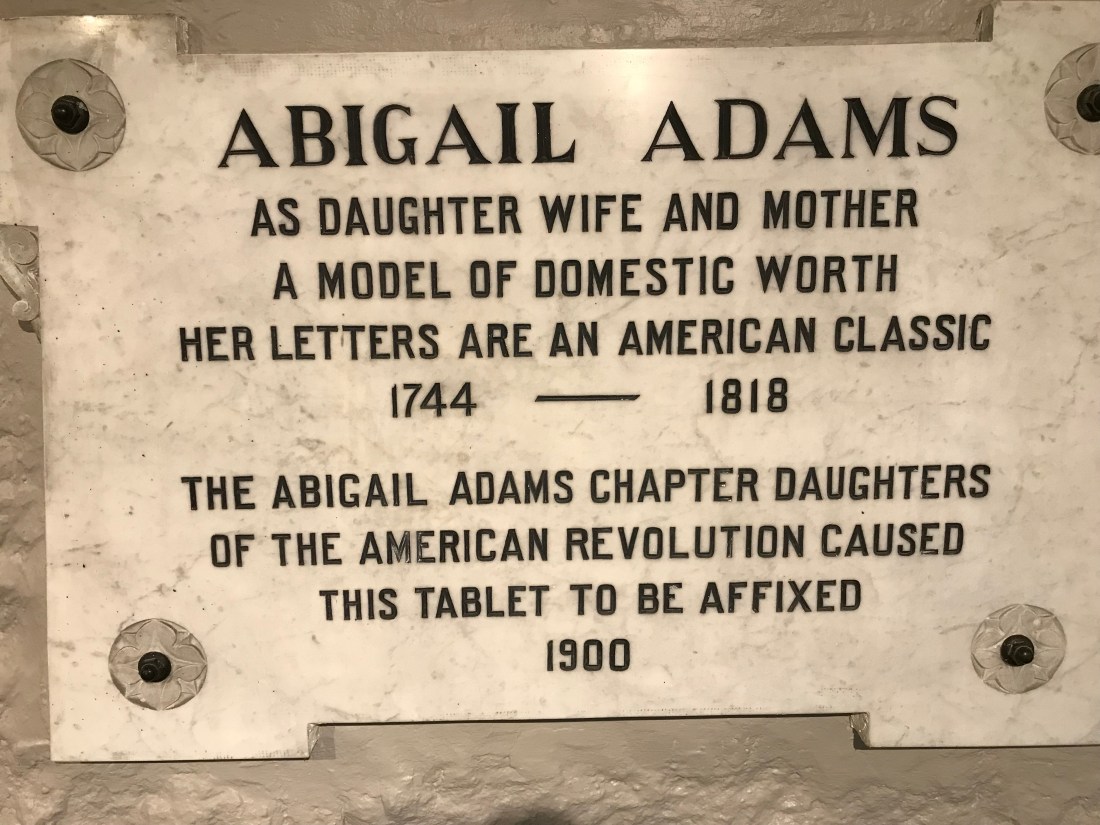
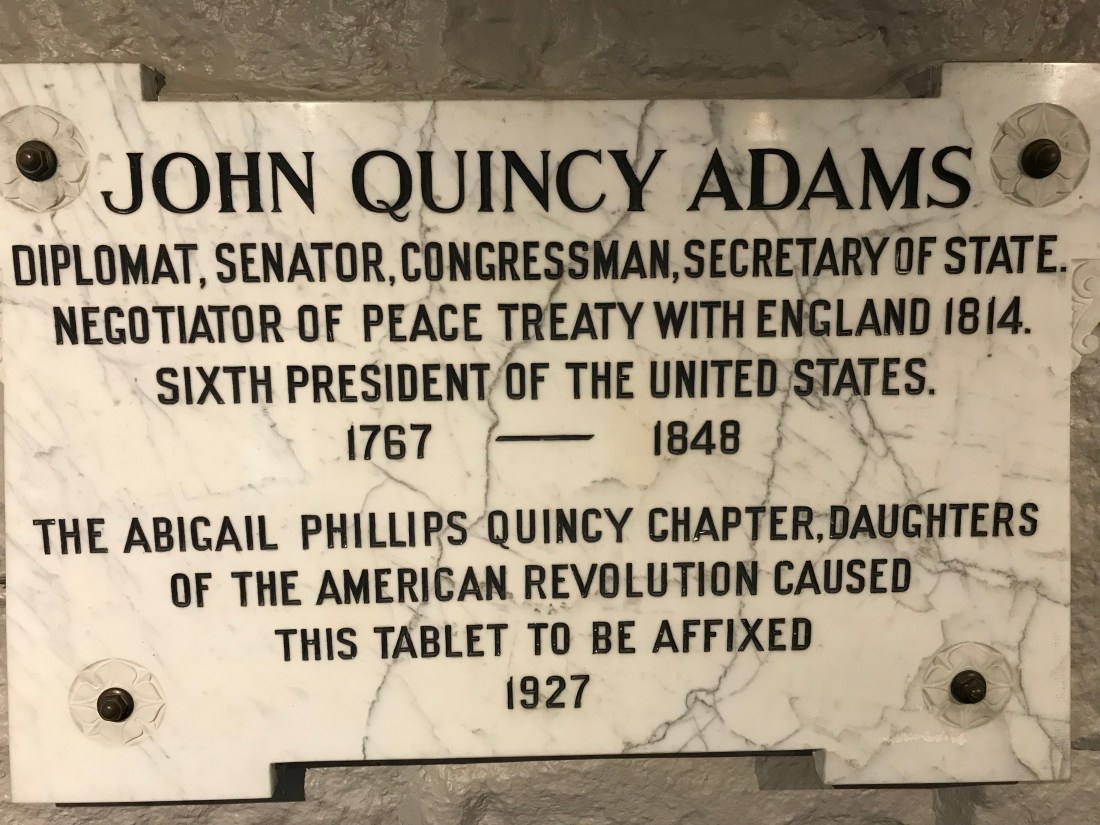
Four crypts. In order from closes to farthest of this perspective was John Adams, Abigail Adams, John Quincy Adams, and Louisa Adams… the crypt was well-lit and dry, and simply awe-inspiring to the fact that we could actually go inside!

John Adams… one of the most esteemed founding fathers of our nation… right before our very eyes.
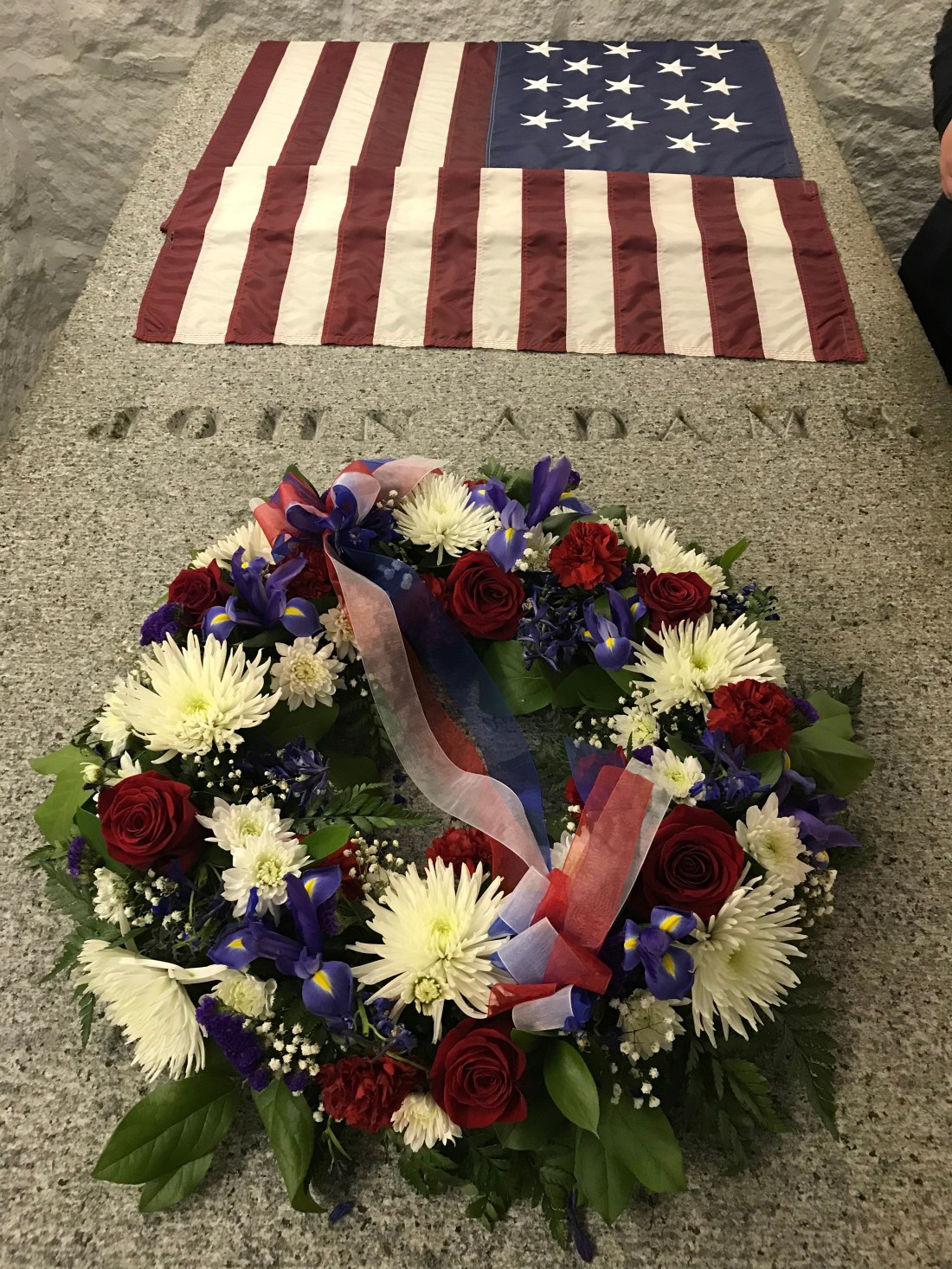
The flag’s stars contains the number of states admitted to the Union at that time: 15.
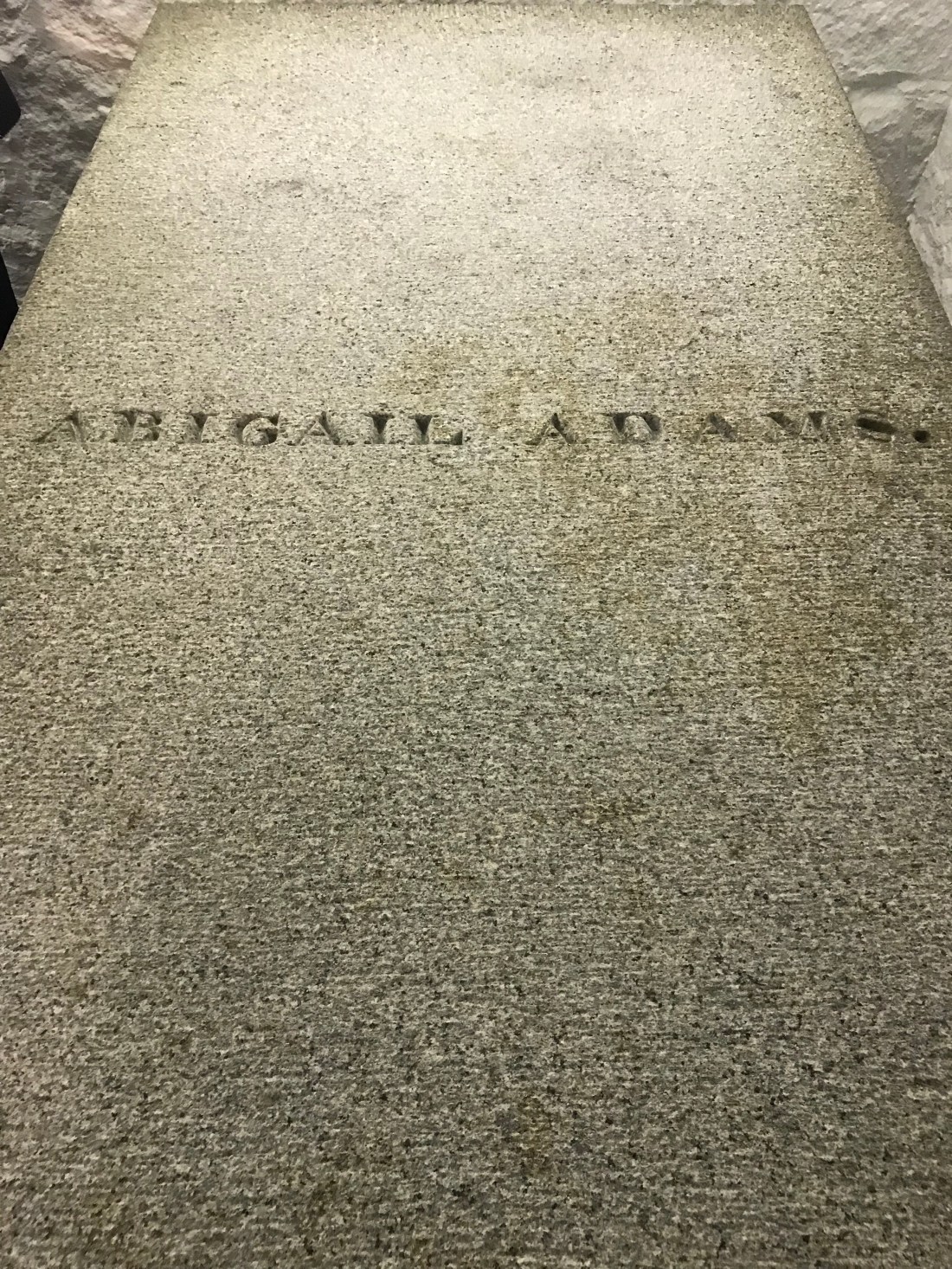
Abigail Adams’s simple inscription. All of these are relatively simple.

The tomb of John Quincy Adams, also very simple… I wonder how recent these wreaths were placed here?
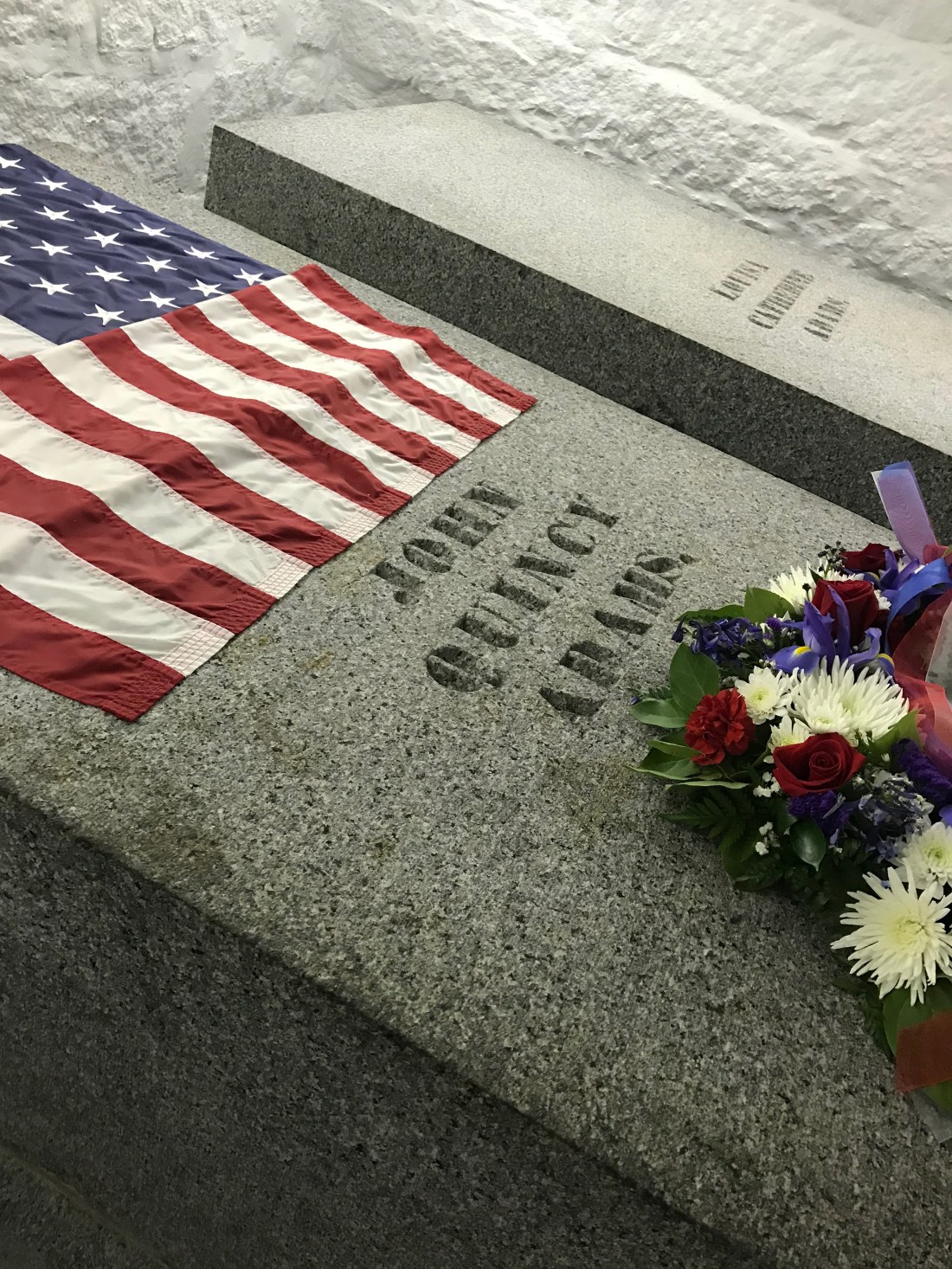
After paying our respects, we left the tomb, which was resealed.
These last two Presidential Gravesites on the trip brings our final total to 35/39 Gravesites seen… only four more to go!
Without getting overly-exausting on the philosophy like I usually do, I tend to note a special theme for both our 2nd and 6th Presidents.
For John Adams, it was his undying will to sustain Liberty for the fledgling nation. He was willing to risk all that he held dear, and everything that he had to protect something bigger than himself… a hope for a new birth. His loyalty to the United States could not be understated in any possible way.
And for John Quincy Adams, a man who was bitterly defeated in many of his various occupations (including as President), he still continued to work his ardent beliefs through other passions of his, particuarly with his 16 year service in the U.S. House of Representatives. To him, if one door closed, all that he needed was for another one to open so he could continue on with his life.
Though nowhere perfect, both of our Presidents from the town of Quincy still resemble commitment to service in a way that could be emulated. And for that, I respect them very much for it.

As we get closer to Monday, the day that we return to our beloved home state of Texas, we will try to knock out whatever else we can in Boston. Though the weariness of the trip as a whole (and homesickness) is starting to kick in, we are more than ready to end it with a boom!
So! Next Post will feature our very active day following The Freedom Trail through the very heart of Boston, and through the epicenters of Patriotism during the American Revolution. Tomorrow (from the time of this post), we will be taking a bus ride throughout the towns of Lexington and Concord, exploring even more Colonial History! I’m sure that it wont disappoint.
Until we meet again! Farewell!
 Mark's Historical Roadtrips!