
If you thought yesterday was a great start to our trip… “you ain’t seen nothing yet!”
For today, along with other interesting yet singular sights in the Richmond area, we pay our respects to some very “grave” people in historic Hollywood Cemetery (okay I’ll stop). We also pay homage to our 10th President, John Tyler, at his Sherwood Forest Plantation nearby in Charles City.
Join us, won’t you?
Before we see what Hollywood Cemetery has to offer, we went to tour various minor sites across the city. Six in total! I’ll go over these very briefly.
In Shockoe Cemetery, is the final resting place of perhaps our most distinguished judicial contributor in the United States…
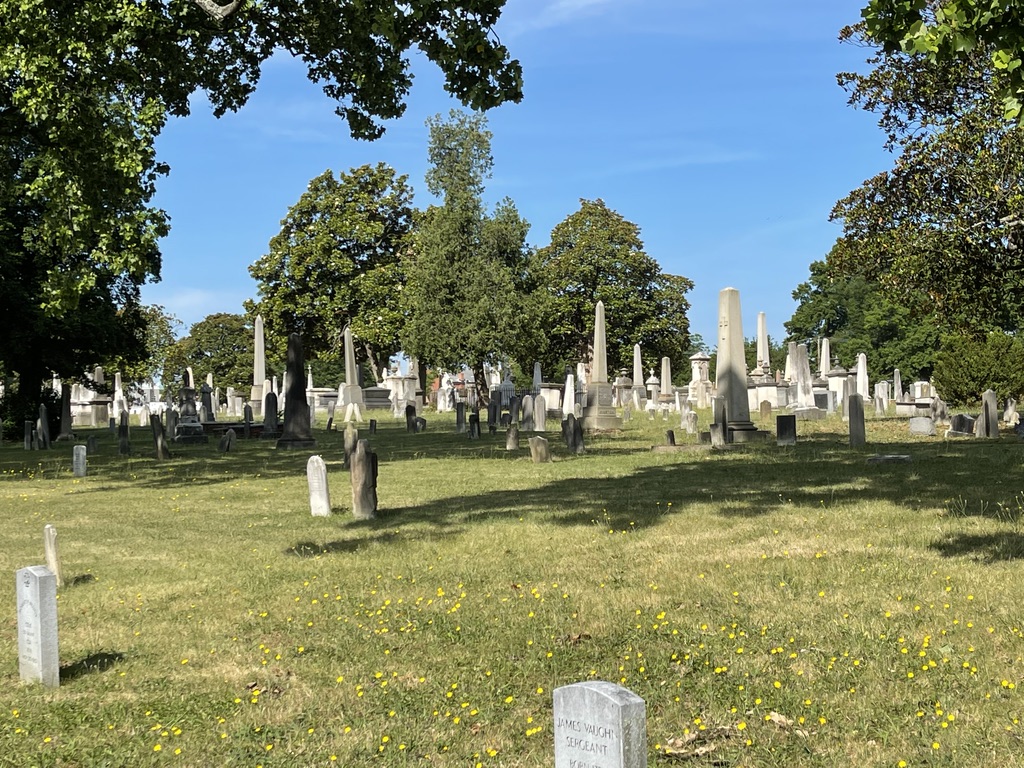
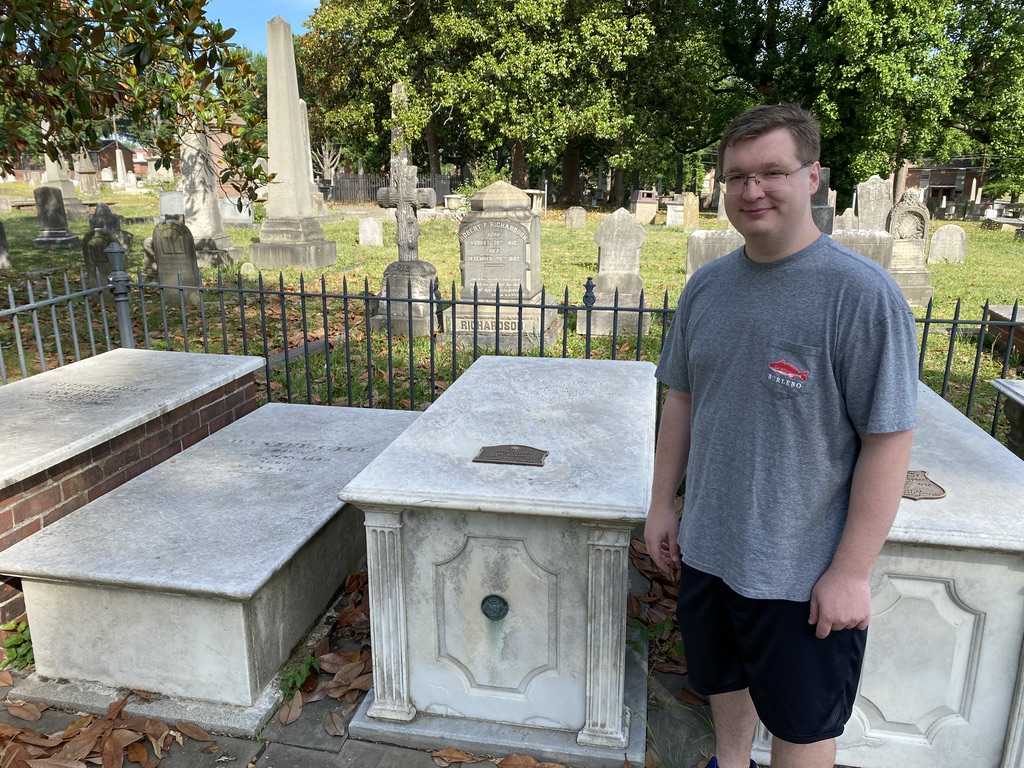
John Marshall was our 4th Chief Justice of the Supreme Court, serving from 1801-1835, and is generally credited as being the “Father of the U.S. Judicial System”. It was he that helped to establish the precedent of judicial review in the landmark Supreme Court case, Marbury v. Madison, which enabled the Supreme Court to declare laws unconstitutional, should the need arise.
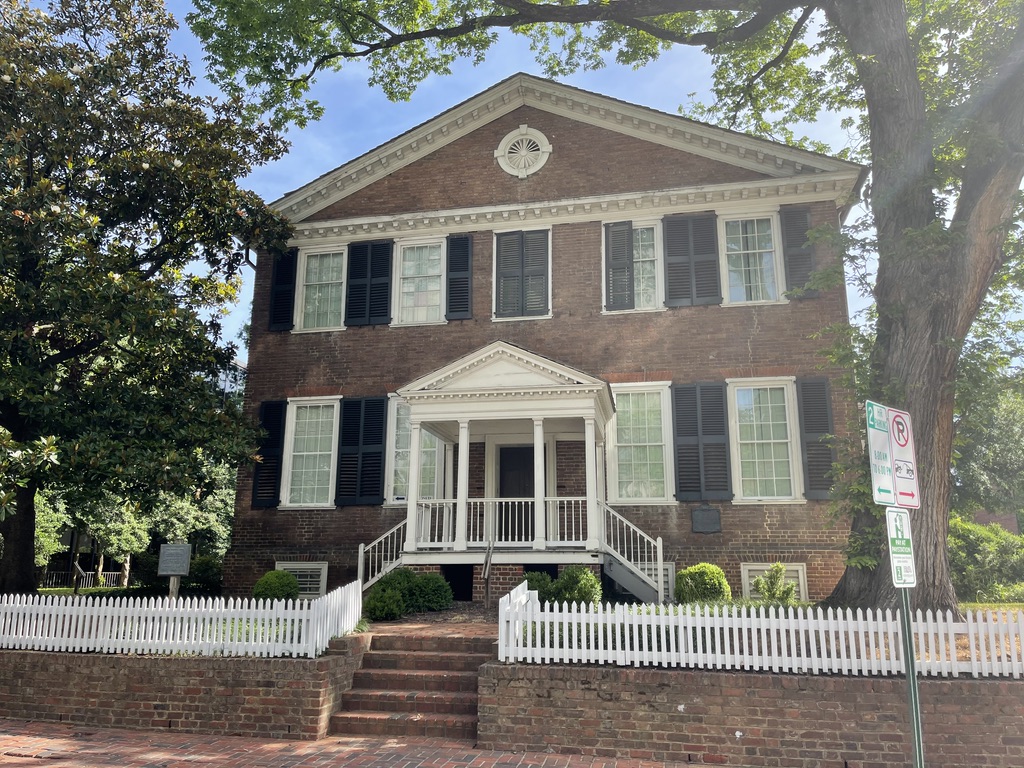
The John Marshall House, although currently closed, still stands in downtown Richmond as a tourable museum.


Monumental Church was built to honor the 72 victims of the 1811 Richmond Fire, and was also a place of worship for my favorite poet: Edgar Allan Poe, who originated from Richmond.

The Cathedral of St. Peter is the oldest Catholic Church in Richmond, and seemingly also closed for the day.

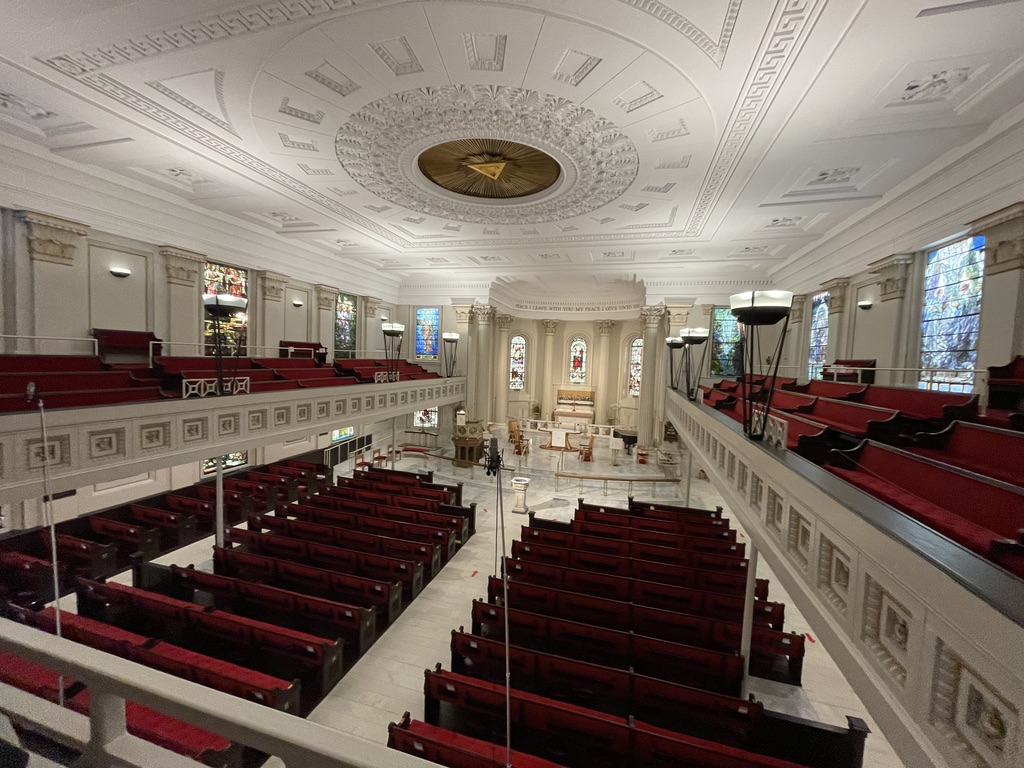
St. Paul’s Episcopal Church, pictured above, was often called the “Church of the Confederacy”, for during the war, notables such as Jefferson Davis and Robert E. Lee would worship here. In addition, John Tyler’s funeral took place here in 1862, shortly after he died in his Richmond hotel.
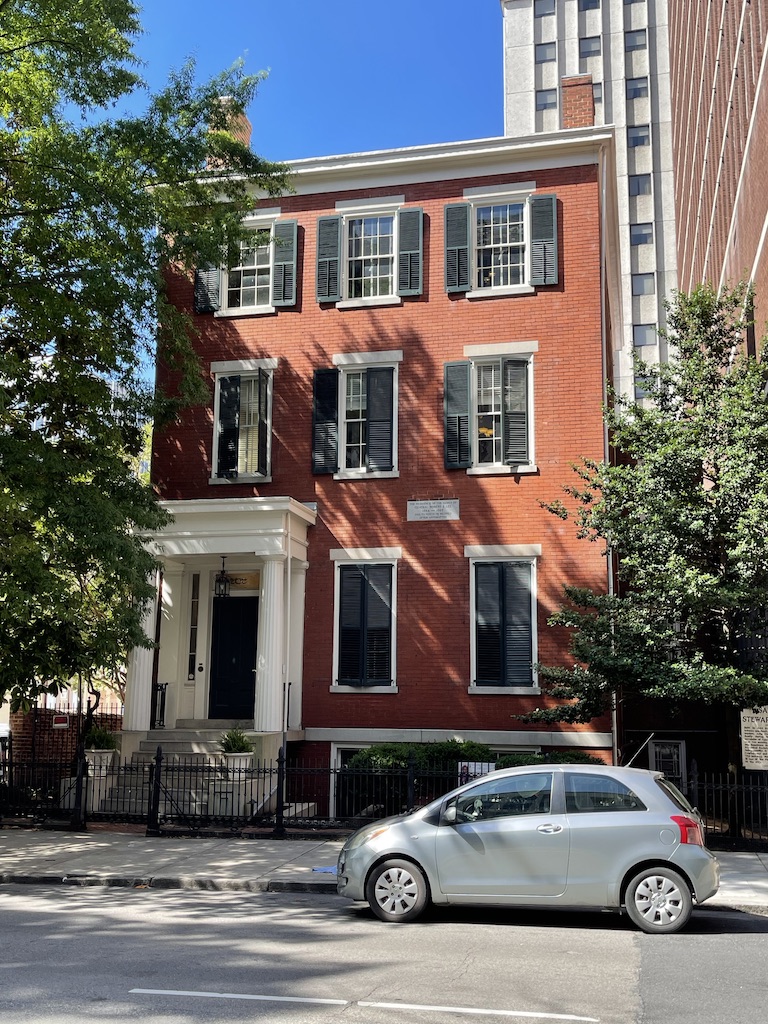
This tiny house on Stuart’s Row is the Stewart-Lee House, and was where Robert E. Lee lived for a brief period after the surrender at Appomattox. It’s closed to the public.
Feeling content with our time in downtown Richmond, we ventured on to the second-most visited cemetery in the United States…
Hollywood Cemetery
Often called the “Arlington of the Confederacy”, the 130 acre Hollywood Cemetery was founded in 1849, and contains many notable Virginians, including two presidents, the only Confederate President, 28 confederate generals, and over 18,000 Confederate dead. One of the greatest examples of “park-style” cemeteries, it also provides ample opportunity for exploring it in an unconventional way…
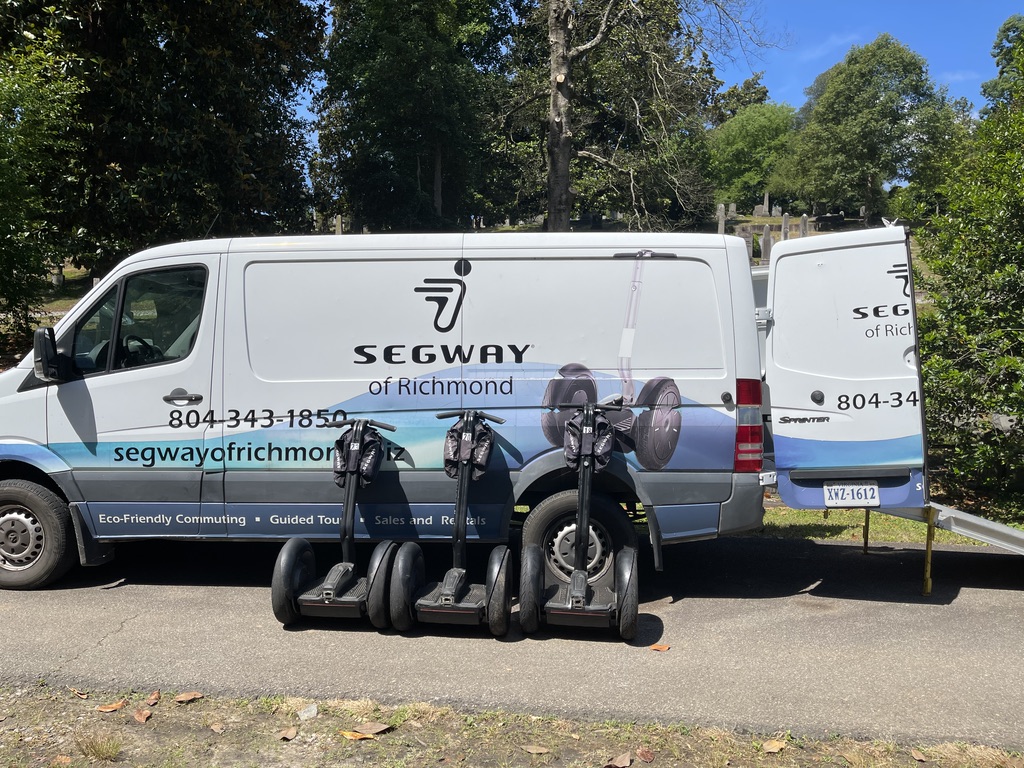
Segways!
Segway of Richmond is a company that does just what it would seem in the title: provide tours throughout Richmond with these incredible transports! Shoutout to our guide Andrew, who was able to provide us with not only quick training on the segways, but also fascinating stories told straight from the grave (okay I’ll stop this time, seriously)!
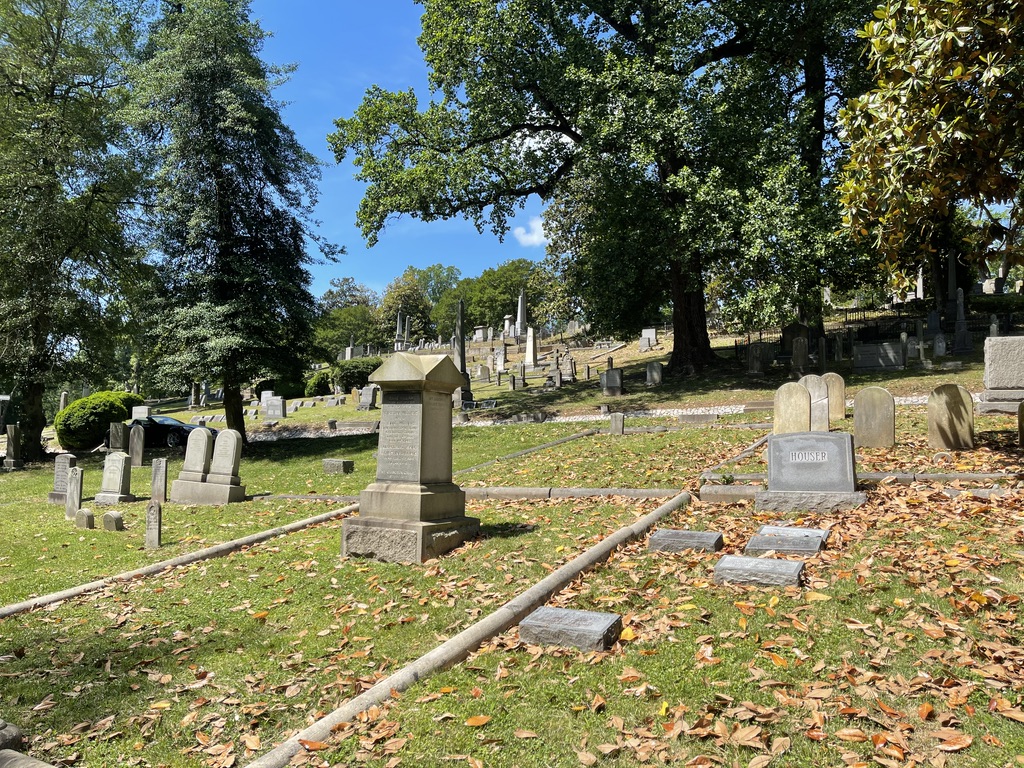

This hill originally served as the burial place for all officers in the Confederate Army, until they eventually ran out of space, and had to spread out elsewhere in the cemetery.

Virginia Governor William Smith, often called “Extra Billy”, was the 30th and 35th Governor of Virginia, and at the age of 65, was the oldest Confederate general in the Civil War. Previous to his governorship, he infamously established numerous “spur mail routes”, leading to the acquiring of questionable “extra funds”, hence his nickname. (Fascinatingly, Virginia is the only state that requires it’s governors to only serve non-consecutive terms).

One of the higher profiles of the cemetery is none other than the only person to have served as President of the Confederate States… Jefferson Davis (1808-1889).
Previously a member of both the U.S. House and Senate from Mississippi, and Secretary of War under Franklin Pierce (ironically helping to strengthen the the U.S. Navy at that time), Jefferson Davis was elected to be President of the Confederate States by the new Confederate Congress and led the short-lived union throughout the Civil War. Imprisoned for two years following the Civil War, he faded into relative obscurity, only regaining prominence posthumously via the “Lost Cause” myth.

Buried with him is his wife Varina Davis, herself a notable columnist later in her life, and their six children. Only two of their children lived to adulthood, and only the youngest daughter Varina lived to have a family.

The Davis’s, like the Lincolns, suffered tremendous grief throughout their life, with four of their children dying young to various causes. One, Joe Davis, fell off the second-floor balcony of the Confederate White House to his death at the age of only 5 years old…
Departing from those unhappy memories, we entered the highlight of our tour: President’s Circle!
Two presidents are buried here, mere yards apart from one another. The first is James Monroe!

Our 5th President is buried in eloquent fashion here, in this unusual cast-iron monument called “The Birdcage” by the local community.
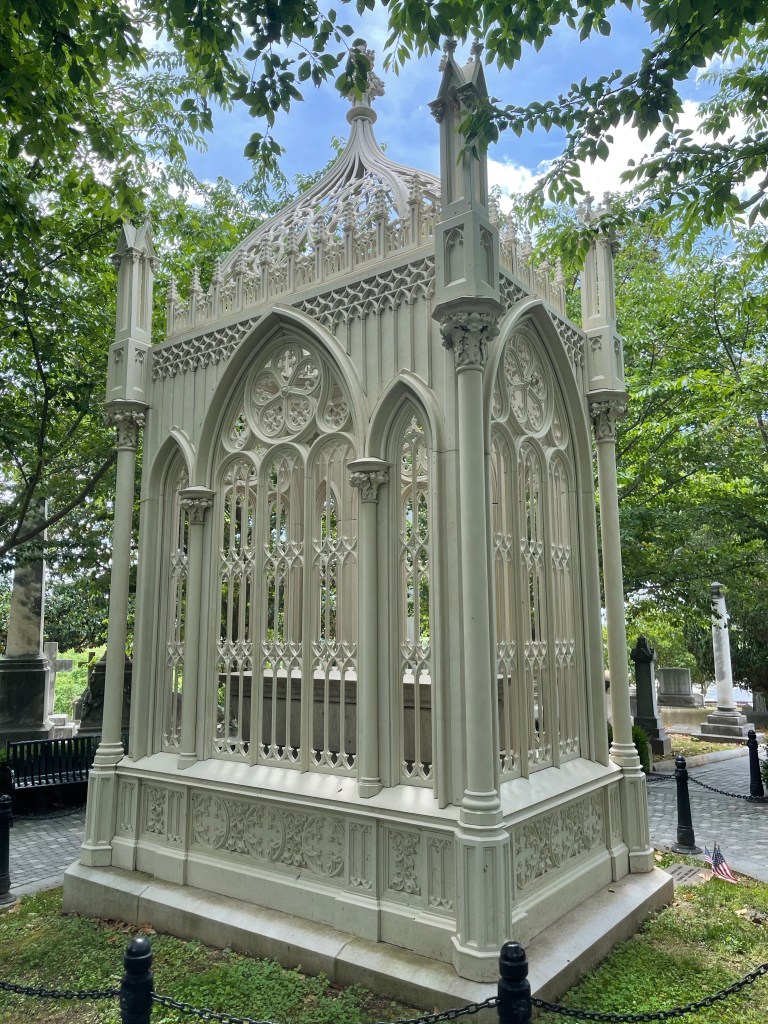
President Monroe is buried inside this simple stone sarcophagus, inside this not-so-simple structure. He was reburied here in 1858 from his original grave in New York City, where he lived with his daughter in the final year of his life. Monroe was one of the very first U.S. Senators from Virginia, Ministers to both the United Kingdom and France (he was instrumental in securing the Louisiana Purchase from France during the reign of Napoleon), twice-governor of Virginia, Secretary of War, Secretary of State, and of course, our 5th President. The Monroe Doctrine, which warned European powers against interfering in the western hemisphere, is also considered the basis of U.S. foreign policy for most of its history (despite being written by his successor, Secretary of State John Quincy Adams).
With a resume like that, perhaps a fancy tomb of this nature is warranted after all. We’ll learn more about Monroe at his farm in Charlottesville: Highland, in the coming days.

First Lady Elizabeth Monroe reopened the newly restored White House following it’s destruction at the hands of the British during the War of 1812, and was a devoted wife to her husband, the latter of whom was devastated following her death. President Monroe would die merely ten months after her, on July 4th, 1831, the 55th anniversary of the Declaration of Independence (the last of three presidents to have died on that historic holiday).
A few steps away, is the other of our two presidents: John Tyler!

Our 10th President, John Tyler became president in 1841, and was the first vice-president to rise to the highest office in the land, following the death of incumbent President William Henry Harrison, a month into his term. If you’ve heard the slogan: “Tippicanoe and Tyler Too”, this refers to the Harrison/Tyler ticket during the Election of 1840, which they easily won.
Praised by proponents for his political resolve, and criticized by his detractors for his allegiance to the Confederacy (he died just before he would take his seat in the Confederate House of Representatives), Tyler’s foreign policy record was exemplary, including establishing trade relations with China (and also the Hawaiian Islands), forming the boundaries of Maine and Canada during the Webster-Ashburton Treaty, and most notably, annexing Texas into the Union.
Tyler was the most prolific of presidents when it came to children, 15 in total between his two marriages, some of which while in his 60’s. Notice the grave of Lyon Gardiner Tyler, his 13th child (resting to the left above). I’ll come back to him later.


Matthew Fontaine Maury is notably referred to as the “Father of Modern Oceanography and Naval Meteorology”, and his contributions to ocean currents and winds are not forgotten, especially in naval academies. In addition, he’s credited as one of the first developers of the underwater torpedo!

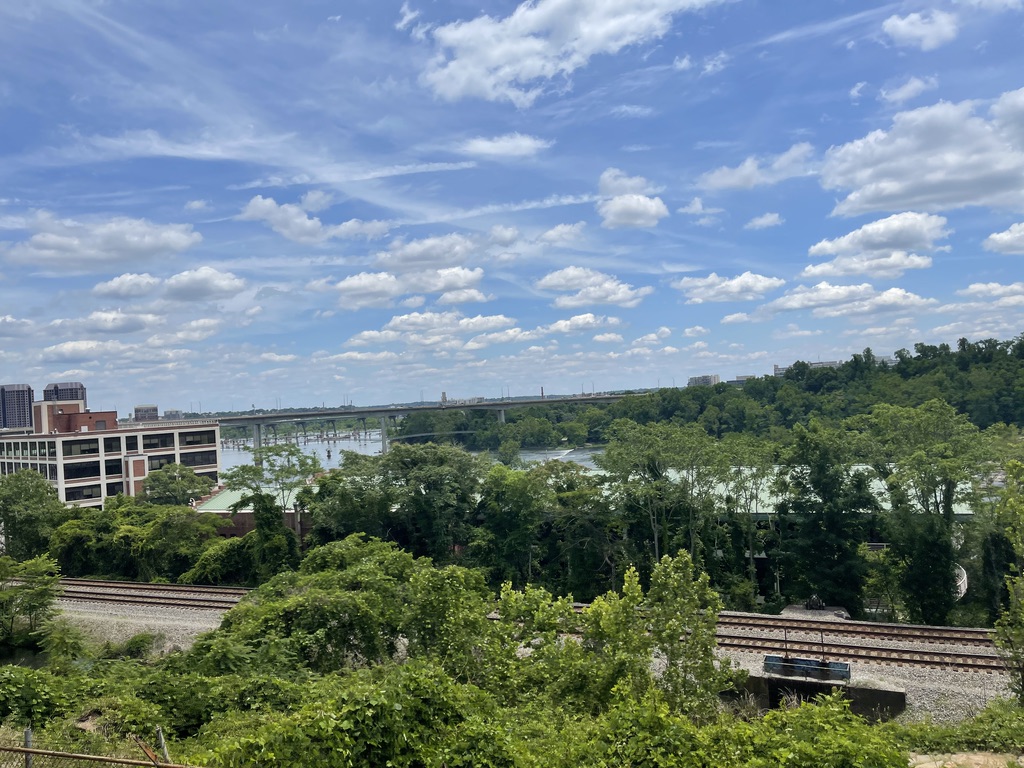

Completed in 1869, this impressive 90-foot pyramid is a memorial to the thousands of confederate dead interred in Hollywood Cemetery, and is free-standing. It certainly casts a magnificent height over the surrounding landscape.
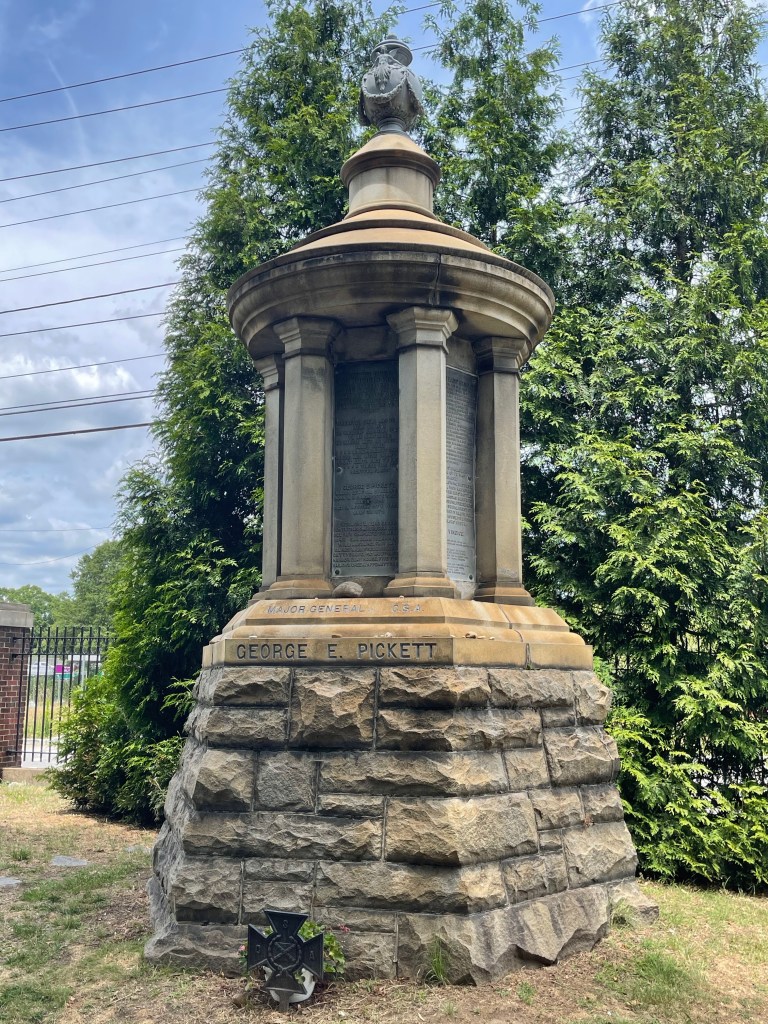
The grave of major-general George Pickett is also located here, the namesake of the infamous “Pickett’s Charge” offensive during the Battle of Gettysburg. The botched assault on Union defenses led to the 70% casualty rate of his troops in that battle and was perhaps the defining moment of defeat for the Confederacy there.
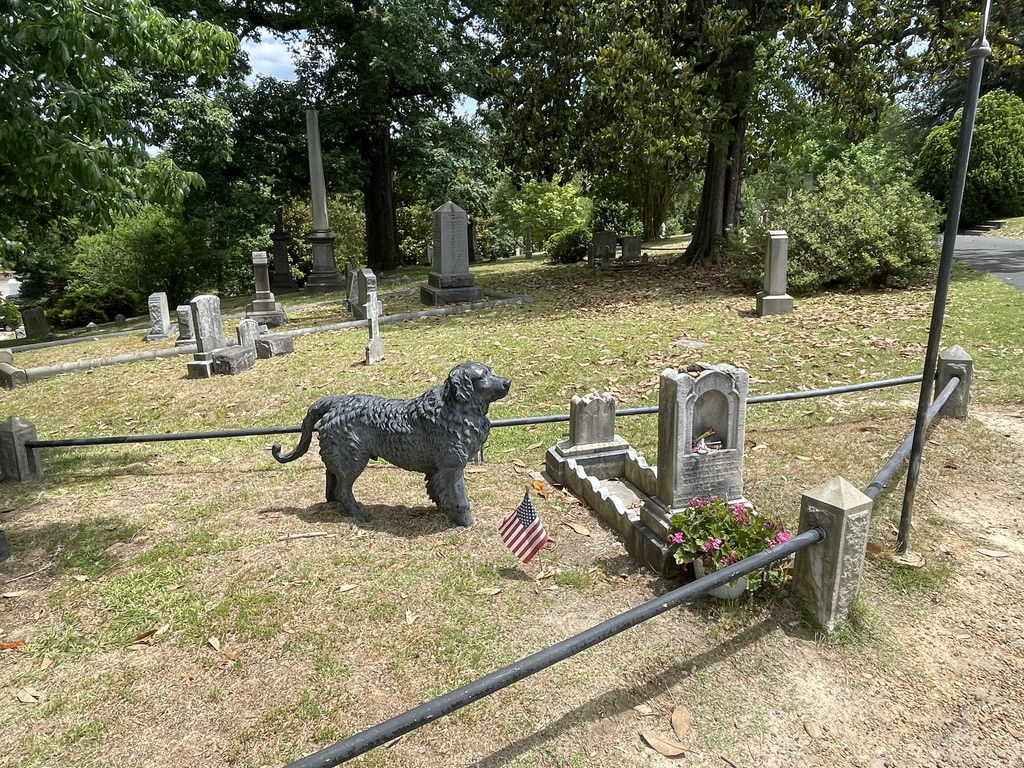
This famous iron dog is a popular highlight of the cemetery from tourists, which stands watch over the grave of a 6-year-old girl. It was moved here secretly in 1862, to prevent it’s melting down into bullets for the war effort.

Finally, the grave of J.E.B. Stuart, one of the most effective cavalry commanders in U.S. History, who was considered the “eyes and ears” of Robert E. Lee and the Army of Northern Virginia. Maintaining a spy network of couriers and scouts throughout the war, Stuart was gunned down at the young age of 31, during the 1864 Battle of Yellow Tavern.

What a fun time we had! Feeling “dead” on our feet (okay i’m serious this time! No more death puns!), we thanked our guide bade farewell to our guide, then proceeded on to the final destination of our day!
Sherwood Forest Plantation
Remember Lyon Gardiner Tyler, from earlier?
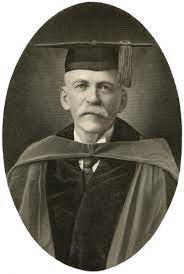
Yes him. Well, he in turn had children in his 70’s, one of which was Harrison Ruffin Tyler.
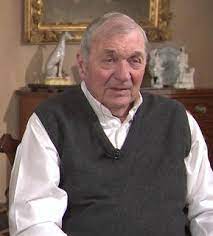
Harrison Tyler, believe it or not, is still alive at the ripe age of 93, and is the actual grandson of John Tyler!
Keep in mind, John Tyler (1790-1862) was born during the first term of George Washington, and Lyon Tyler (1853-1935) shortly before the Civil War. So the lifetimes of Harrison Tyler (1928-), his father and grandfather cover nearly the entire expanse of U.S. History! Nothing short of remarkable.
Tyler’s descendants, including Harrison Tyler and his children and grandchildren, still manage Sherwood Forest Plantation, the only presidential home that is still privately owned by a president’s family. As it is a private residence, I’m not allowed to show you the interior of the home at all, but I’ll try my best to show you what I was able to capture on the grounds, and also the map.


And here it is! Sherwood Forest Plantation. It just so happens to be the longest frame house in America, at 301 ft.! The main house, built in 1842, was later expanded with the side extensions in the following years.
Sherwood Forest got it’s name from the famous English forest of the same name, made famous in the Legend of Robin Hood. John Tyler named it Sherwood Forest, because like Robin Hood, he was an outlaw, albeit a political outlaw, with no party.
The reason for that is, that despite being a Whig vice-president, Tyler’s political ideology leaned more with states’ rights and constructionist orientation common with the Democratic Party of the time. Because he couldn’t stand Andrew Jackson’s politics however, he joined the Whigs instead. After vetoing a number of Whig bills, (including one establishing a national bank), Tyler was expelled from the Whig Party, a unique occurence in presidential history.


Perhaps I lied a little bit. The picture above is technically the front side, and the other the back side. It’s confusing, but oh well.
President Tyler lived here with his second wife Julia Gardiner Tyler (his first wife Letitia died a year into his presidency), and they truly enjoyed spending their time here in seclusion. During the Civil War, and following Tyler’s death, Julia and her family fled to safety in New York, and Sherwood Forest was briefly occupied by Union troops, who tried unsucessfully to burn the house to the ground. Parts of the house still bear reminders of that time, particularly with bayonet cracks on the door, or burn marks on the floor.

No picture could truly capture the length and scale of the house, especially with the abundance of various trees throughout the area. It’s just a necessity to see it in person to grasp it.

This map from our brochure features the layout of the house. While the second and third floors, the kitchens/laundry rooms, and the personal sitting room of the current family were closed off, everything from the dining room (E) rightwards on the map was tourable. Note the unusually long ballroom (H) on the right side, where the Tyler’s would host parties through the night, partaking in dances like the “Virginia Reel!” (see Gone with the Wind and you might get an idea of it).
The house contained various items and heirlooms from the different generations of the family, including family portraits, waterford crystal chandeliers, and various intricate and ornate decorations, ranging from practical to simply ornamental. Particularly in the dining room and drawing rooms, one could see a large number of Tyler artifacts, though not all items in the house necessarily belonged to Tyler himself. Some items are period pieces, as a number of the original furniture and items in the home were looted or destroyed during the Union’s occupation of the plantation.
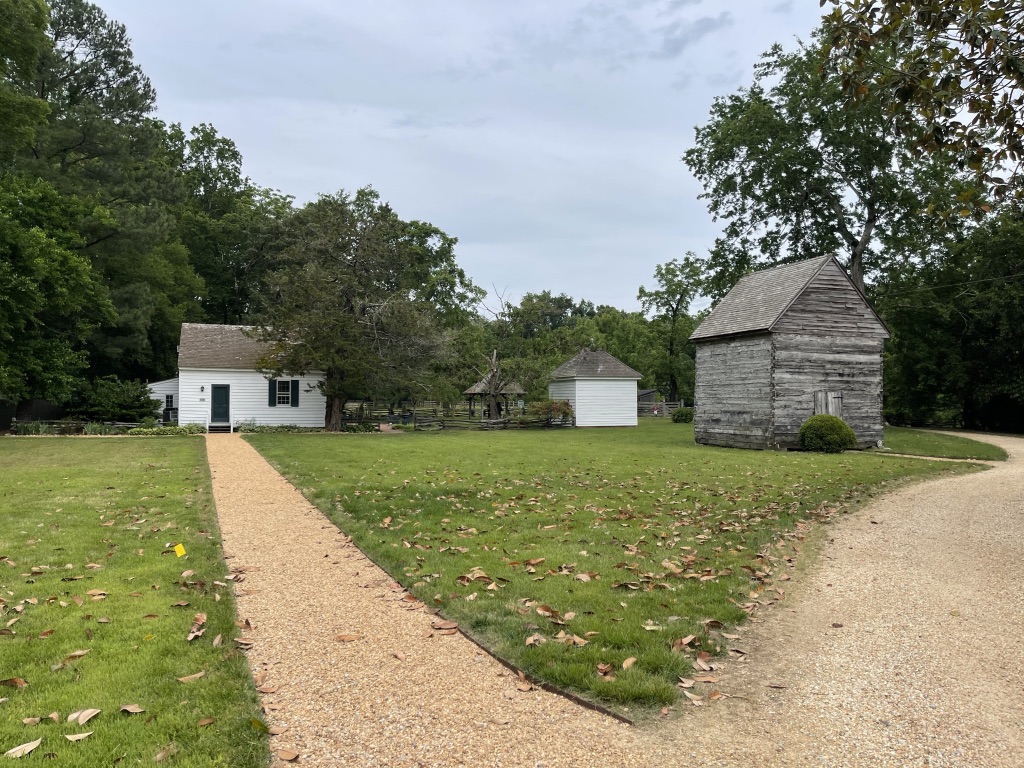
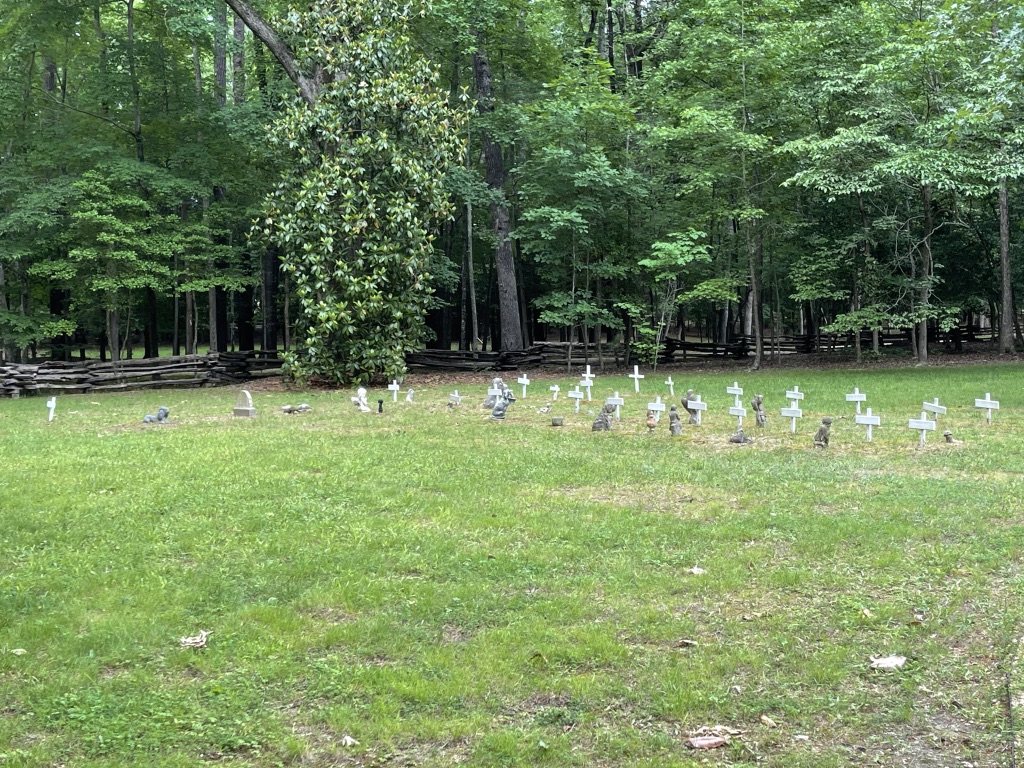
These buildings served a variety of purposes, them being the overseer’s quarters (left), the smokehouse (center), and the winehouse (right). All buildings were closed sadly, but we’ll have a better look at plantation life in the days to come, including those of the enslaved.
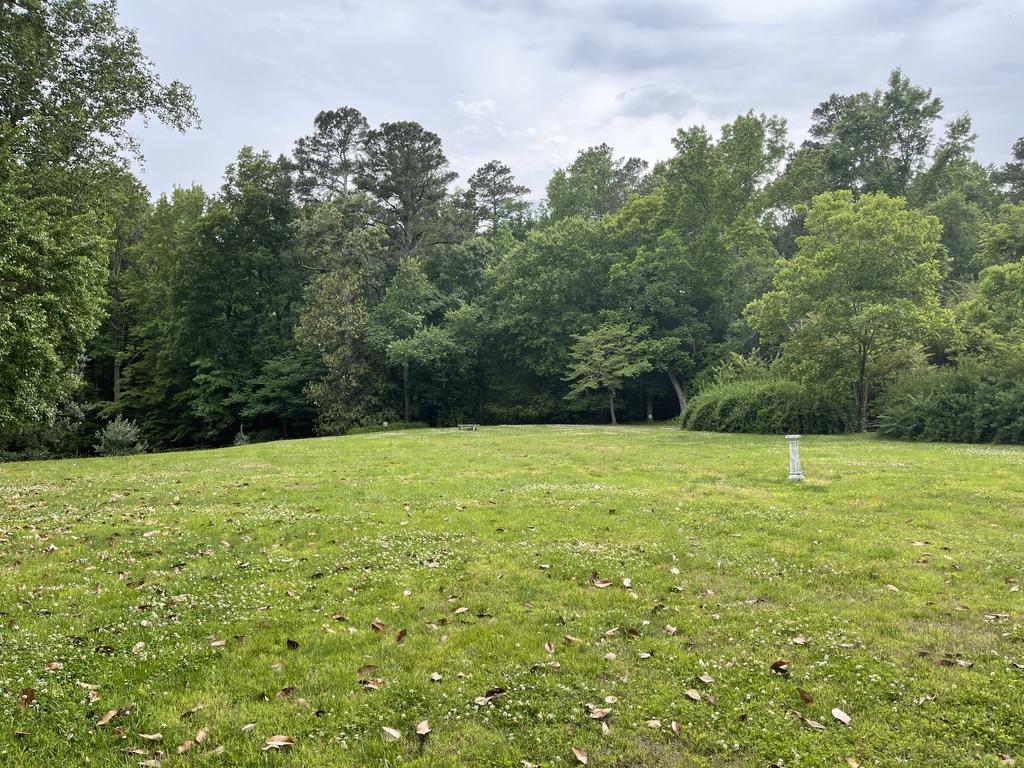
The one thing I’ll likely remember most about Sherwood Forest (other than the obnoxious and ridiculous abundance of flies, bees, mosquitos, and other bugs), is the solitude. In this garden, the sounds of the outside world are drowned out by the sounds of birds chirping innocently from afar, while the winds blow refreshing air through the place, and create a silent yet peaceful rustling through the leaves of the trees. I suppose these are the same sounds and sights that President Tyler enjoyed during his time here.
It really puts it in perspective I think… even so-called “outlaws” have their havens of respite, and here, Tyler’s memory is preserved for and cared for by his descendants. It’s invocative I think, of the importance of family heritage in various communities of Virginia, especially here in Charles City.
Of course, nothing can excuse the fact of slaveowning. Nothing ever could. It’s still important however, to view the entire legacy and/or contributions of individuals, good or bad, to get a full and complete picture of them. Indeed Tyler was a slaveowner, but his contributions to foreign policy are details often forgotten about in historical evaluations today. And I suppose that’s what history is all about. Trying to find the bigger picture.
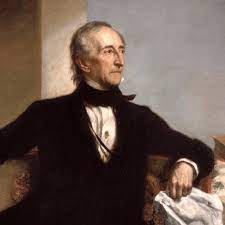
On the way back to Richmond, we briefly stopped at the historical marker of Greenway Plantation, Tyler’s birthplace!

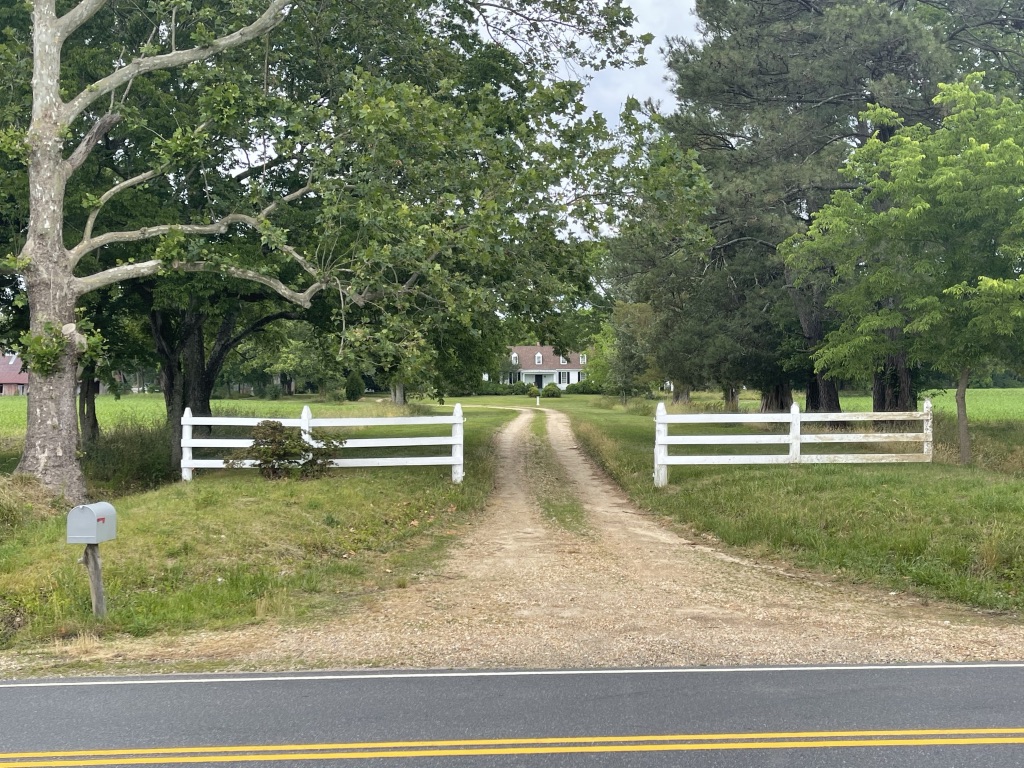
Today, a private residence stands over the site of Tyler’s birth. Regardless, it’s always nice to discover little easter eggs like this.
What a day! It’ll certainly be hard to top!
Then again, Colonial Williamsburg and Jamestown might be some good contenders for that… perhaps we’ll try in our next post?
Join me next time as we delve into where it all began, in the oldest communities in North America that would evolve into the beginnings of what would become the United States of America!
Farewell for now!
 Mark's Historical Roadtrips!