
Welcome back!
Today we discover the iconic history of two important sites of colonial history: Williamsburg and Jamestown! Together, these two communities formed the first European settlements established in North America, and by extension, the United States.
Let’s not waste more time, let’s dive right in!
Colonial Williamsburg
Williamsburg was the second of Virginia’s three capital cities, and served that purpose specifically during the Colonial and Revolutionary Eras (1699-1780 to be precise). Though the capital has since moved to present-day Richmond, Williamsburg is still fondly remembered by history enthusiasts for it’s” living-history” community, with entire blocks of the former downtown area preserved and functioning just as they were in the 1770’s, operated by period-styled and fashioned interpreters.
With the pandemic of course, some of that immersion has to be conveyed through face masks of the guides and interpreters (at least those who haven’t had their second vaccine yet). Despite not being required to wear a mask if your fully vaccinated, I would still recommend visiting when some degree of normalcy returns to Williamsburg, concerning the pandemic.

The Royal Governor of Virginia ( the steward of the colony for the King of Great Britain) lived in this palatial estate, considered to have been the richest and most adorned of the properties in Colonial Williamsburg. The last royal governor of Virginia was John Murray, who fled the colonies in 1775 when things were turning south during the war.

What could even be said about the many weapon adornments that surround the entry hall? Back then though, the most impressive thing would have been the incredibly rare marble floors, imported from Scotland.

The sounds of violins and the harpsicord once accompanied many a minuete in this elaborate ballroom, while the dominating presence of King George III and Queen Charlotte’s portraits leered overhead. Only the top of the top class would be able to see the rare carpets, glass windows and large cast-iron stove. Well, also including the servants and slaves that took care of this place, along with many other property owners in the city.
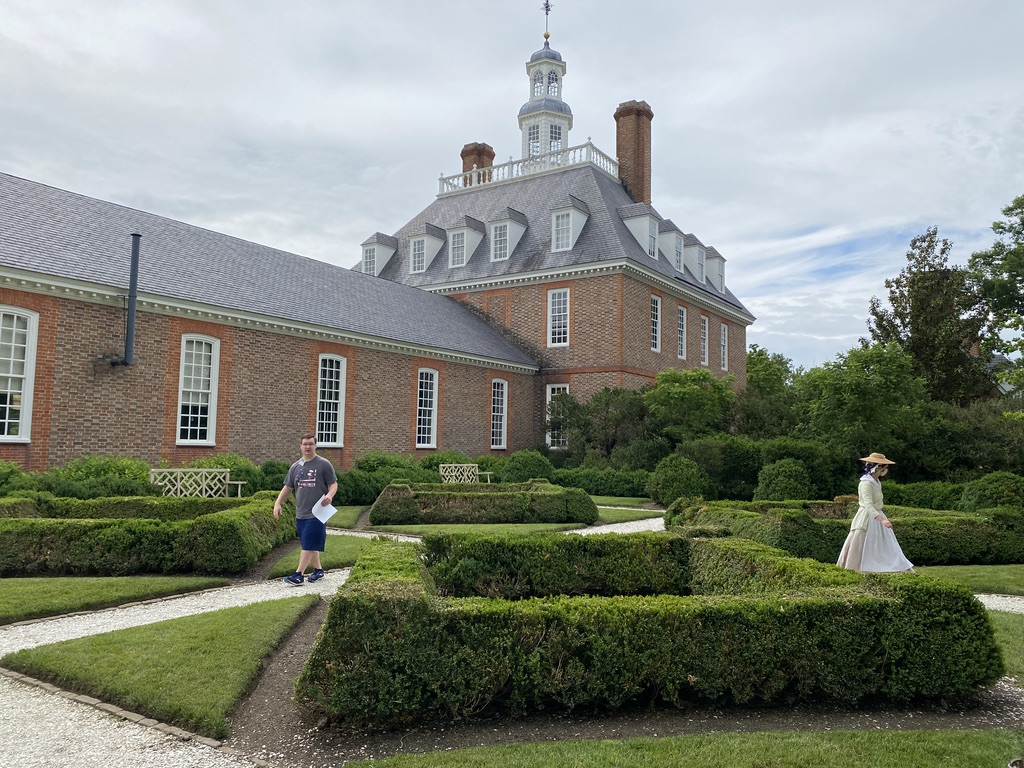

Vegetable gardens like the one above were vital to supporting the economy and food-supply of the city. Naturally, this doesn’t hold a candle to the size of Mulberry Row, on the grounds of Monticello. We’ll see those later.
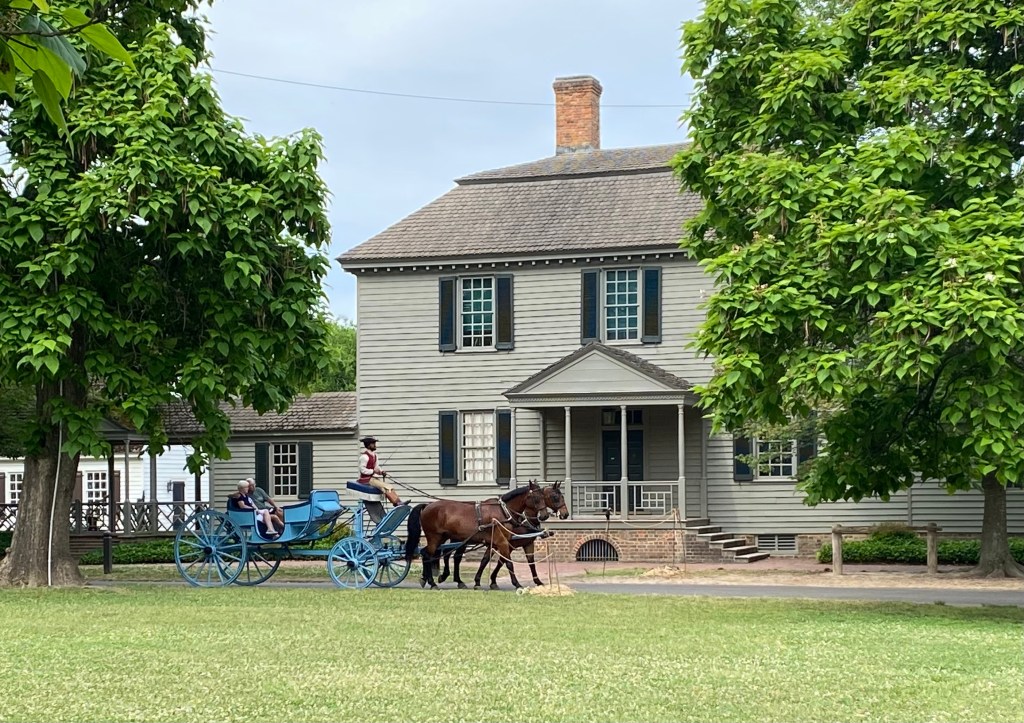
Horse Carriages, like the Model-T Fords in Greenway Park in Michigan, roam freely around the town, and are perfect for touring the place!

Bruton Parish Church is still an active church today. The services held regularly on Sundays like this one are likely the only time that one can find vehicles on the road of the Colonial District, as the area is typically closed to foot traffic.
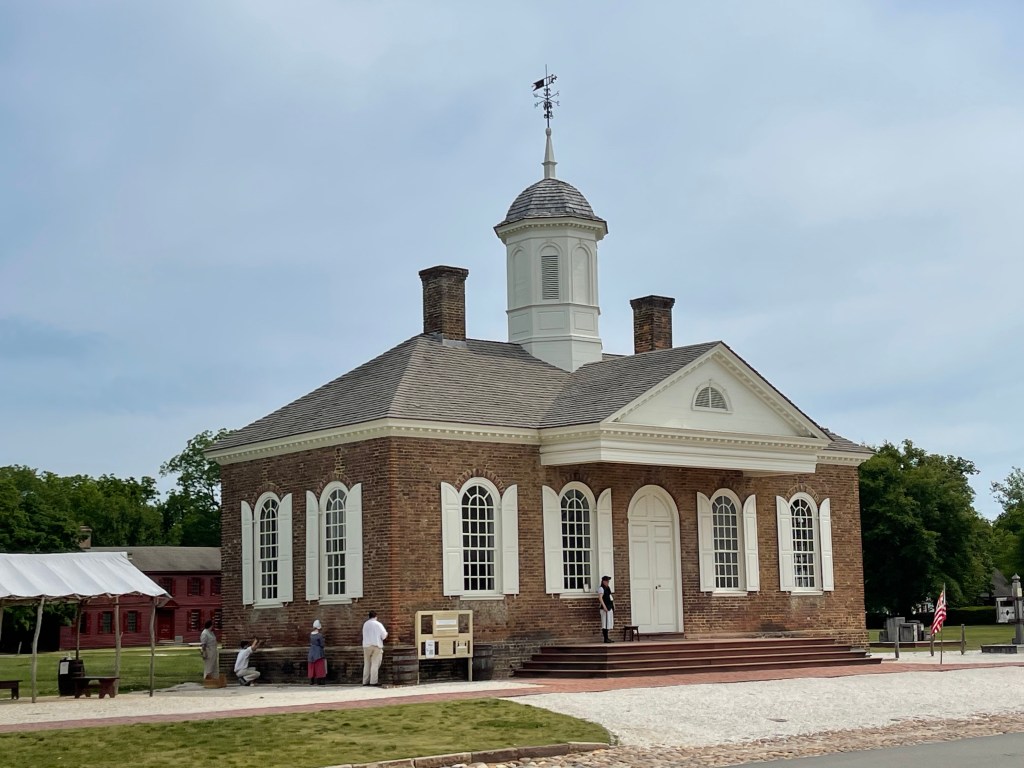

The Courthouse of Williamsburg was used to settle legal matters in the town, as well as deal with minor crimes such as minor theft, the unfulfillment of work contracts, or slave disputes. Of course, to pass the bar in colonial times, one had to be a white male of 21 years of age, own property, and pass seven years in preparation. Not exactly the inclusive standards that we have today. Punishments often ranged from regular imprisonment in the gaol or time in the stocks, but also to branding and/or hanging.
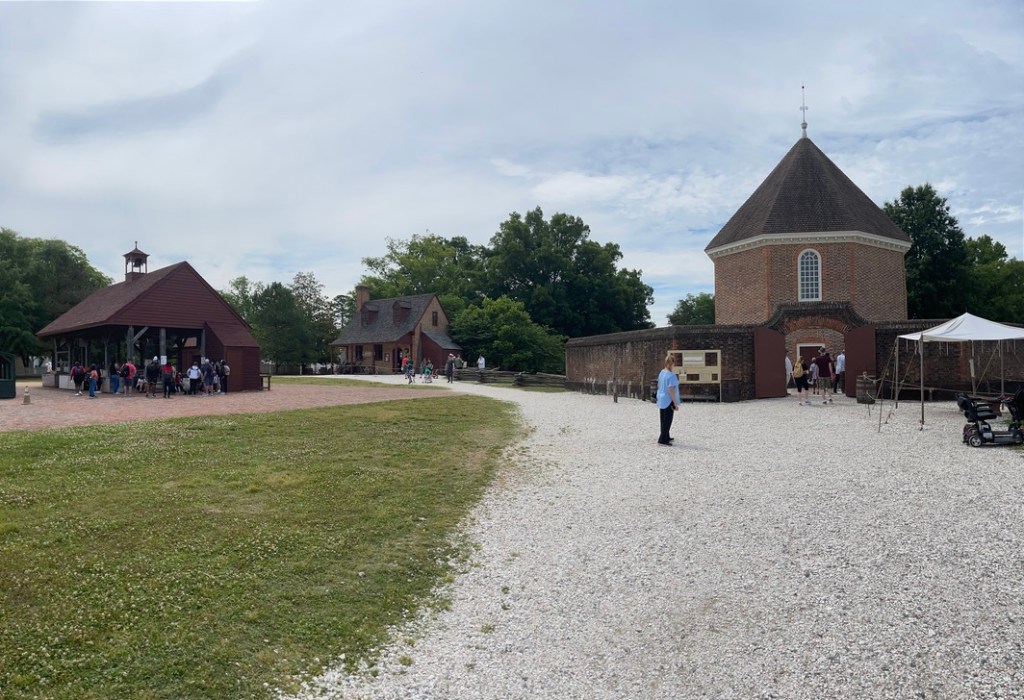
The Market Square was filled with the hustle and bustle of produce and goods bartered from each property and from the outside world. To the right you can see the Munitions Storehouse.
No one can do justice to recollecting the many types of artisan interpreters that are available to chat and discuss their work with, or the products that they made, including:


(On a side note, we found out fascinatingly that since glass was a rarity back then, they would boil and then peel off the layers of cow horns to make into a flexible yet transparent substitute for use in lanterns and other such materials! Who would have guessed!?)

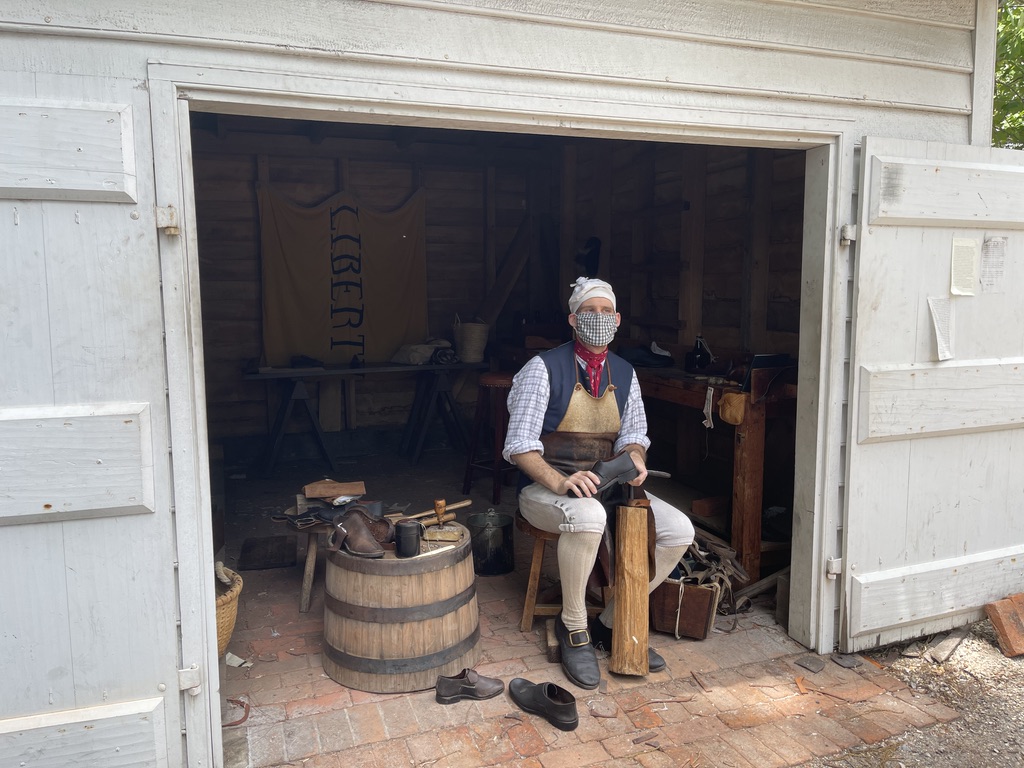

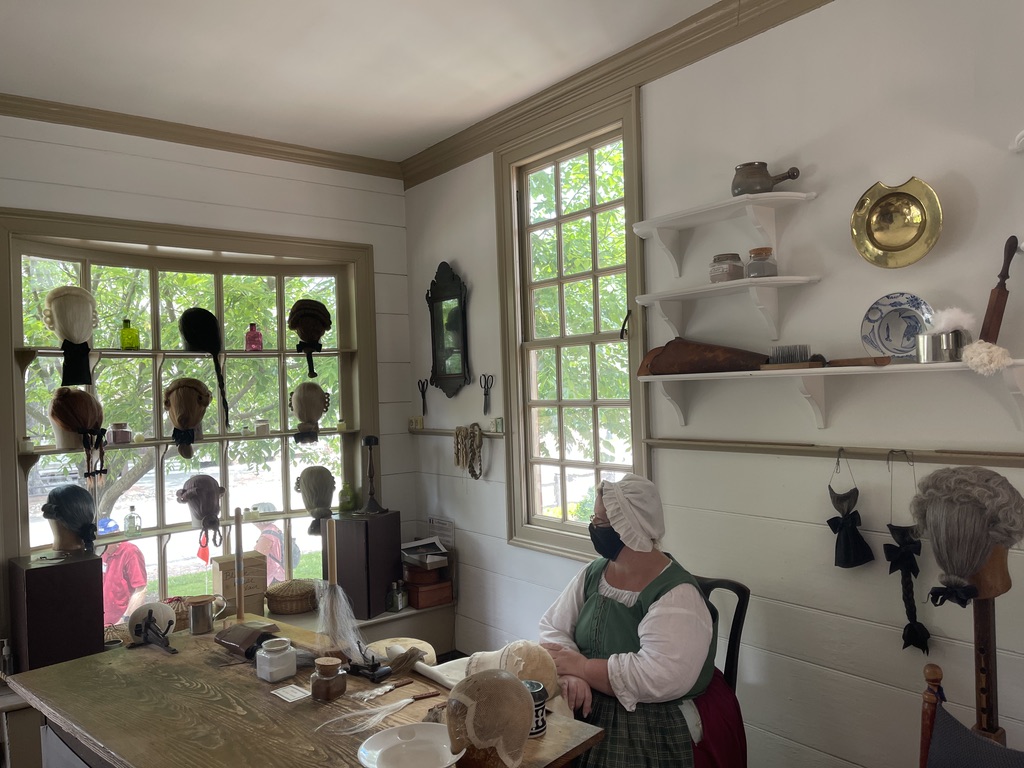
And so much more!
No joke, I literally wanted to try on those wigs… I find it very fashionable, historically speaking!
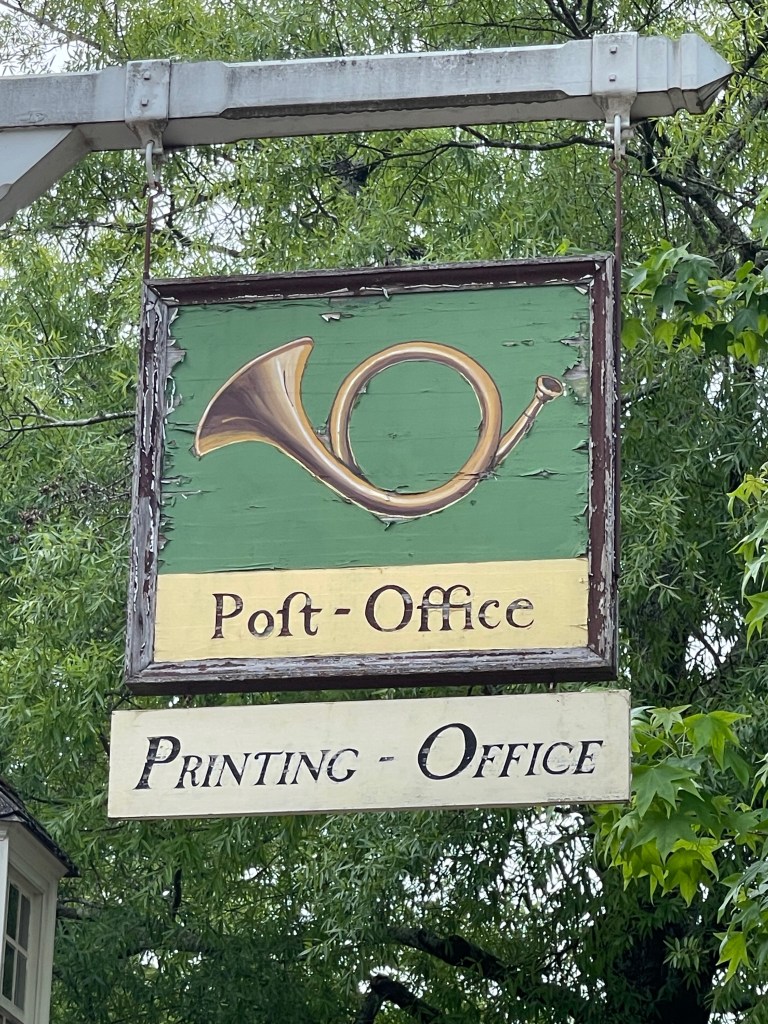
Home to the printing offices (very important in those days for newspapers, books, playing cards, etc.), the Poft Office made us chuckle a bit, spelling back then was slightly different from today.
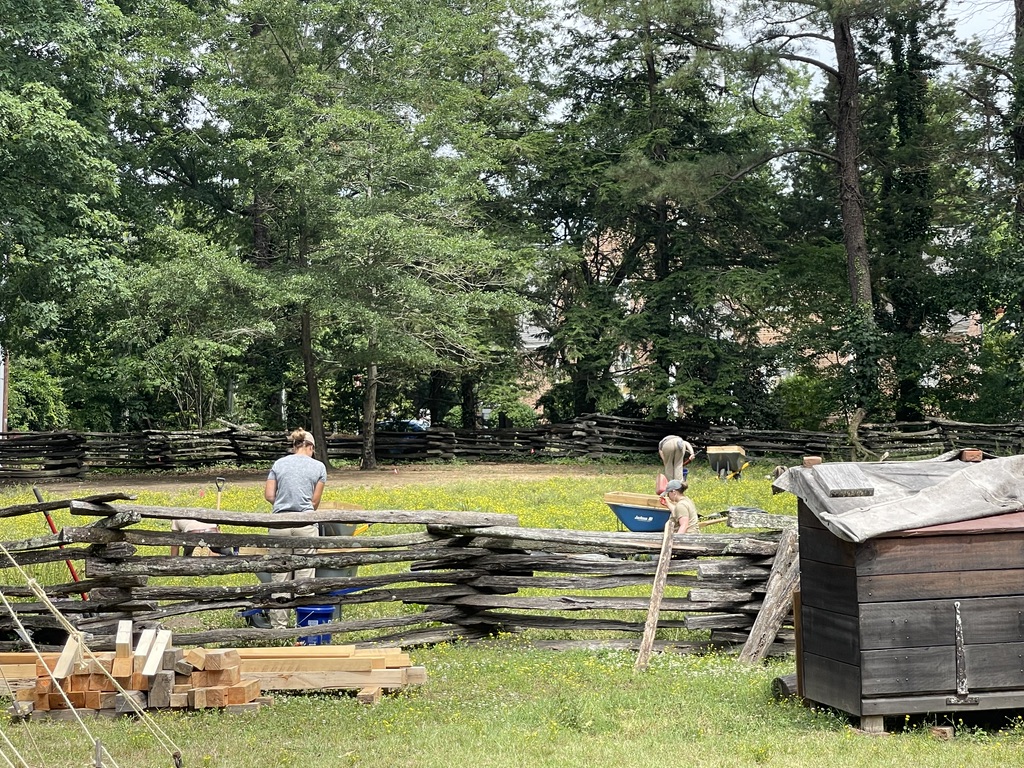
Archaeological work continues to this day, as historians continue to unearth and learn more about the past from any number of relics they could find. Imagine being involved in a project like this… for many historians, it would be a dream come true.


Chowning’s Tavern serves as a popular establishment for eating your traditional colonial cuisine!

Suffice it to say, the atmosphere was great, and our food excellent! I myself had Welfh Rarebit (I think the guy who came up with these f pronunciations had a lisp).
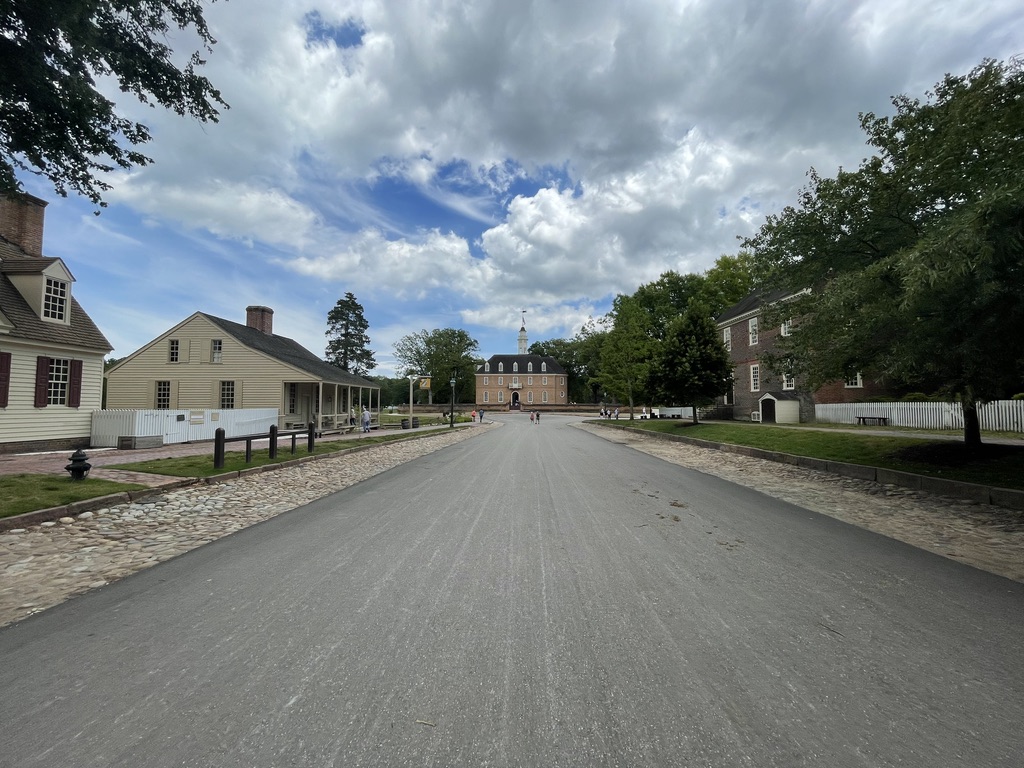
Down Main Street (Duke of Gloucester Street), one could see the final destination in this pristine community… the Old Capitol!
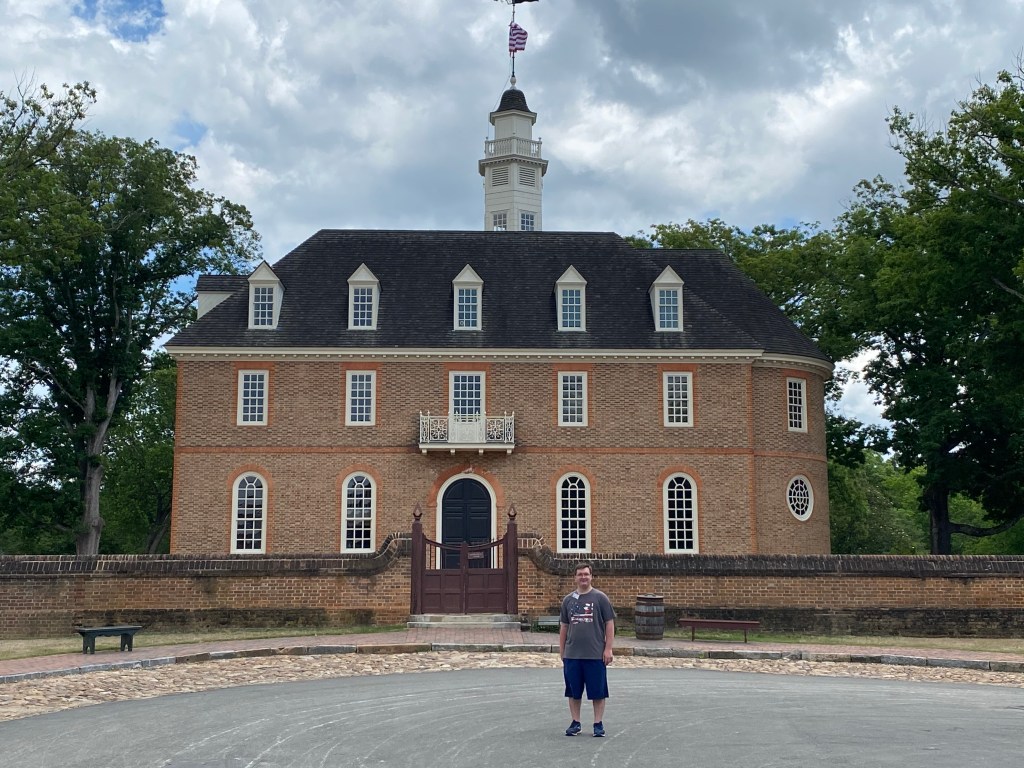
The Capital Building on this site has gone through at least three different identical iterations, following the colonial government’s moving from Jamestown. The two previous buildings, built in 1705 and 1753 respectively, burned to the ground, thus leading to the current 1934 recreation that is viewable today.

Seeing the flag of Great Britain flying above fills you with a sense of awe, especially over a building like this. The two circular wings you see above contained the Virginia High Court (left), and the long-lived Virginia General Assembly, then known as the famous “House of Burgesses.”
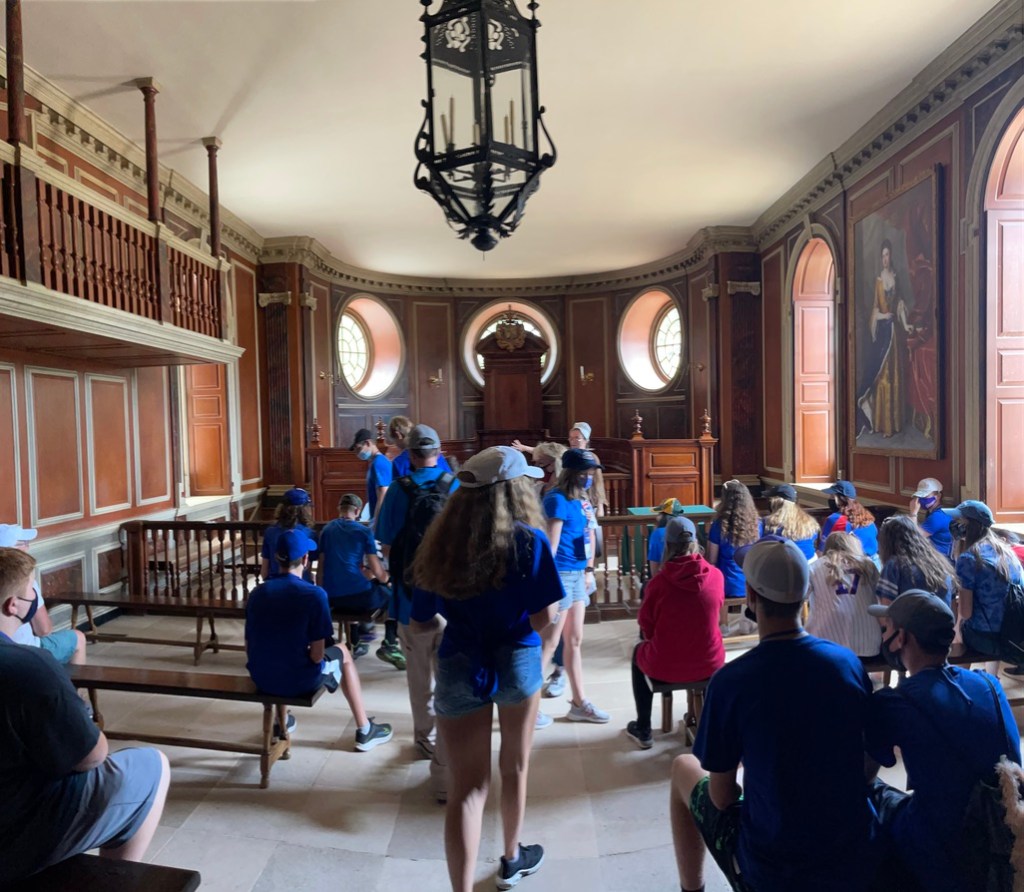
The Virginia High Court would preside over the most serious misdemeanors and felonies in the entire Virginia Colony here, including larceny, forgery, major theft, murder, treason, etc. Perhaps most famously of all, it was here that the crew of the infamous pirate Blackbeard were tried and sentenced, as he was slain near the coast of Virginia. In addition, note the portrait of Queen Anne to the right; last of the Royal House of Stuart, and last monarch of England before it’s consolidation into Great Britain. The original structure was built during her reign.

Looked over by the portraits of King George II and Queen Caroline, the legislative body of Virginia met here to guide the ordering and lawmaking of the day. The Council of State, the upper-house of the legislature, would meet upstairs. Virginia’s structure bicameral legislative structure would go on to inspire the two houses of the U.S. Congress that we know well of today.
There’s no place in the country like Williamsburg to experience living history, especially if you want to get your steps in! We aren’t done however, especially as there’s one place to still visit today… the place Where it All Began.
Jamestown
Jamestown was the very first european settlement in North America, and naturally is regarded as the origin place of America. Founded in 1607 by english settlers looking to profit from the “New World” and it’s resources (both the settlement and the neighboring river were named after King James I), the community would endure many incredible hardships, and feature the interactions between white settlers, native-americans (particlarly the Powhatan), and black slaves from Africa.
Jamestown is technically split up into two different (and non-associated) sites: Jamestown Settlement, which features a museum and living history sites for interpretive purposes, and Historic Jamestown, the site of the original Jamestown fort, dotted with archaeological work and monuments.
Starting with the interpretive Jamestown Settlement, we ended the day by getting shot.

I’m only joking! It was simply an interpreter demonstrating how to fire a 17th century rifle, which is considerably more time-consuming and difficult to do than modern firearms would be. And louder too (ow).

An entire replica of the original James Fort helps to demonstrate how the settlers tried to survive in this difficult environment (which wasn’t necessarily easy to do). Starvation, disease, harsh winter weather and other attritions would kill over two-thirds of the original 300 settlers, and tense relations with the neighboring Powhatan tribe proved troublesome, despite occasional yet uneasy alliances between the two.
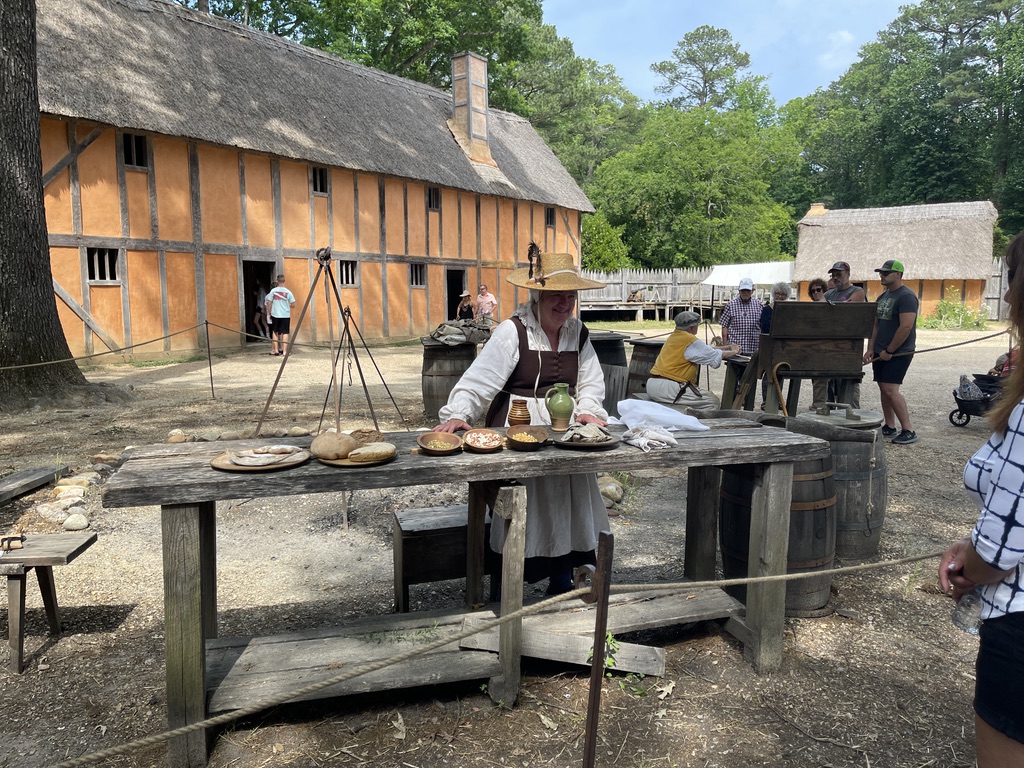
Living off the fat of the land was difficult, but much like the pilgrims far to the north 13 years later, the members of the Virginia Company were forced to live off the fat of the land, including new diets of fish, dried vegetables, and corn (the latter of which considered to be livestock food by the English of that time.
Were it not for the endeavors and organization/direction of John Smith, one of the leaders of the colony, Jamestown would not have survived long, and the fate of North America might have been very different from what it is today.
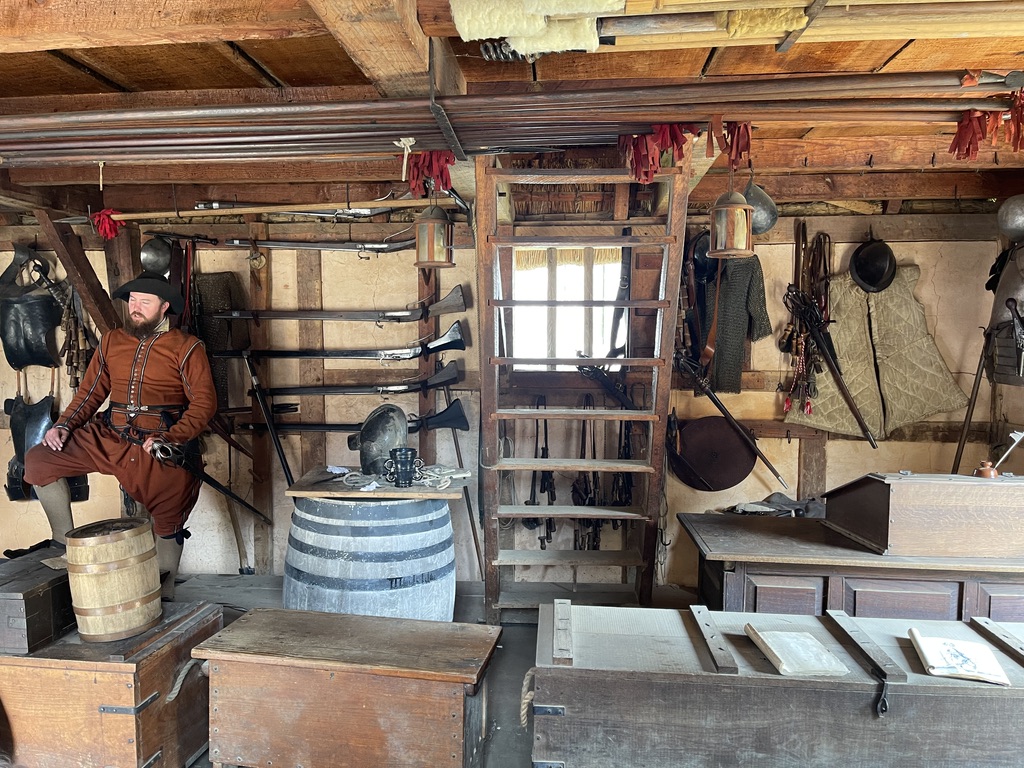
Though relations between the white settlers and Native-americans would remain cordial at best during the lifetime of Powhatan (Chieftain of the Powhatan unsurprisingly), numerous bloody conflicts would emerge between the two after his death. And the bows-and-arrows of the natives could little defend themselves against the powerful English rifles and armor.
Perhaps the deadliest however, were the new and unfamiliar diseases that the settlers brought over from Europe. The natives throughout the Americas, having no natural immunities to them, would face fatalities by the millions, which further left them vulnerable to conquest and relocation.
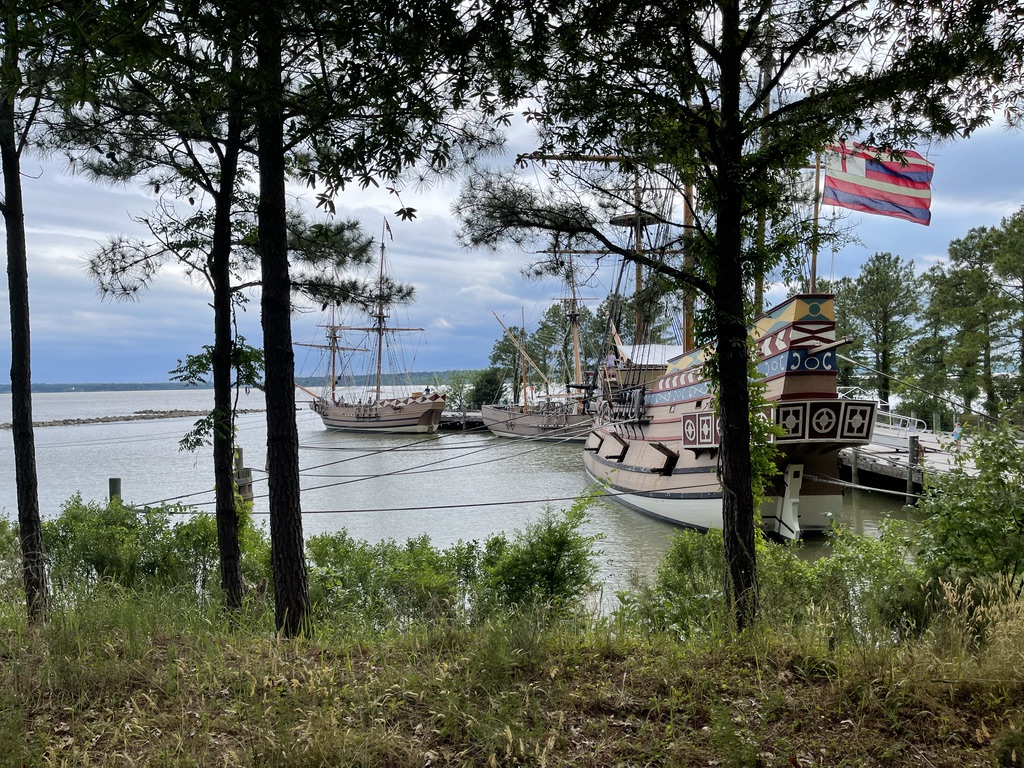
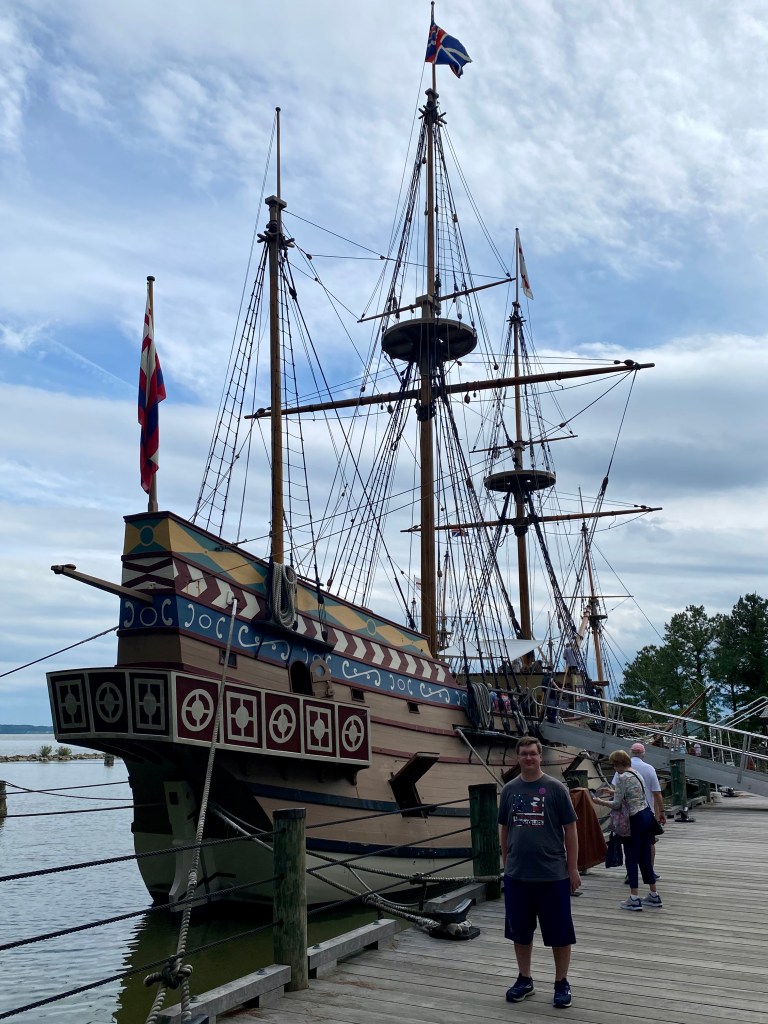
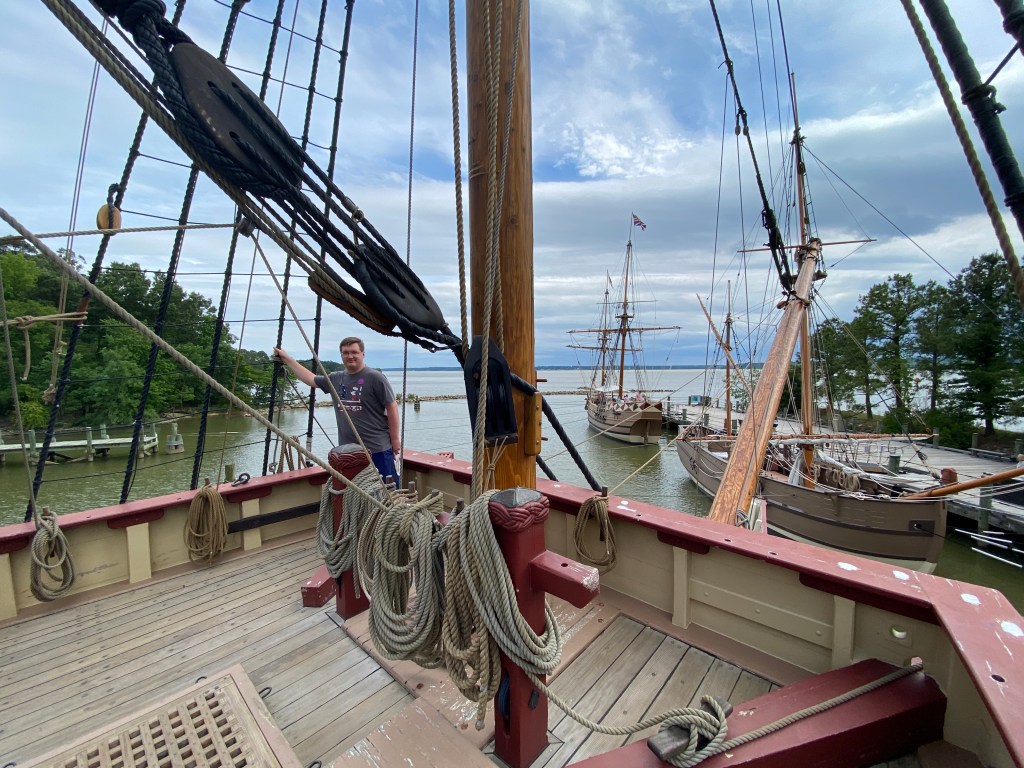
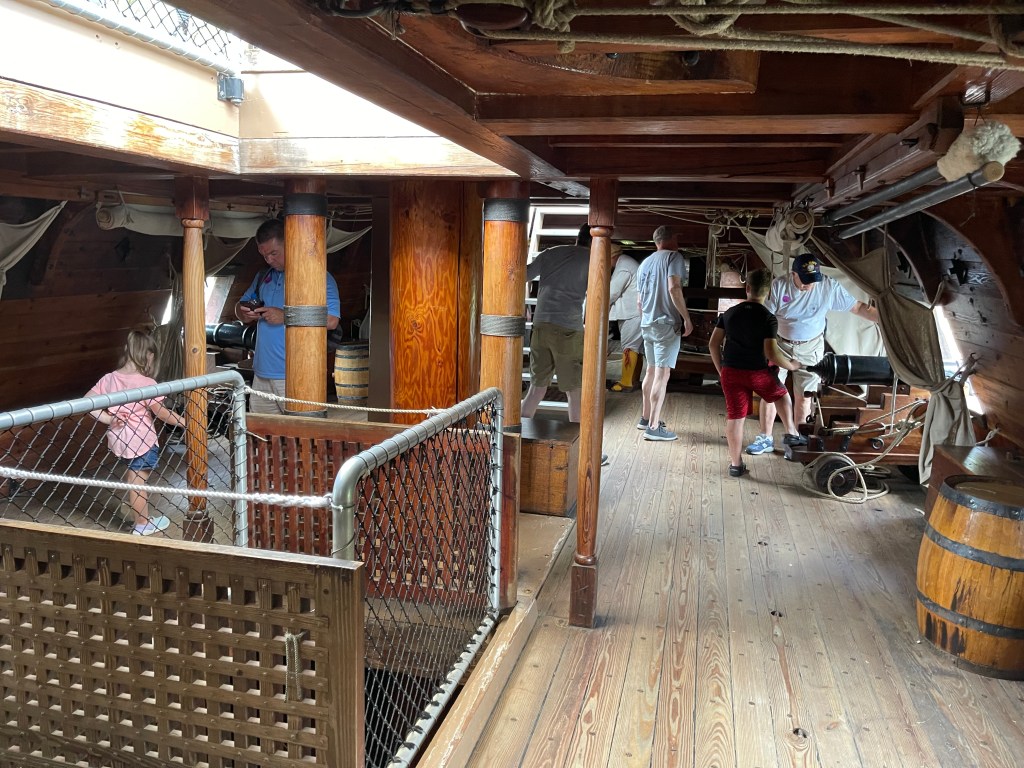
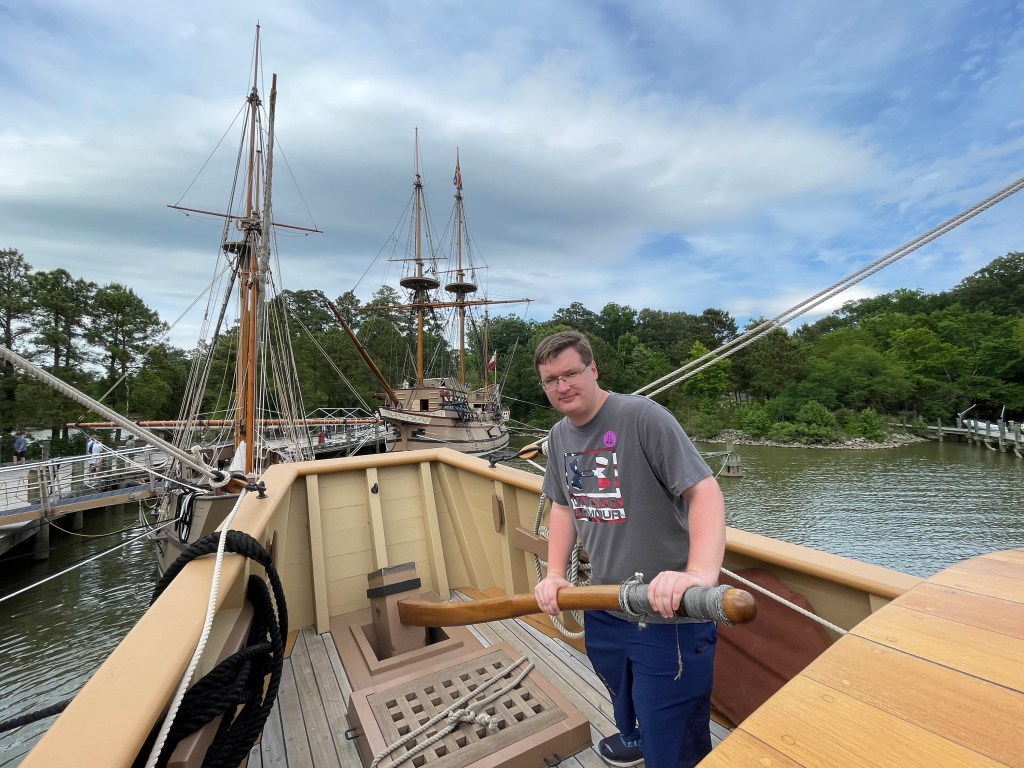
Replicas of the three ships that brought the first settlers to Jamestown are situated here, including the Godspeed (left), the Discovery (center), and the Susan Constant (right).

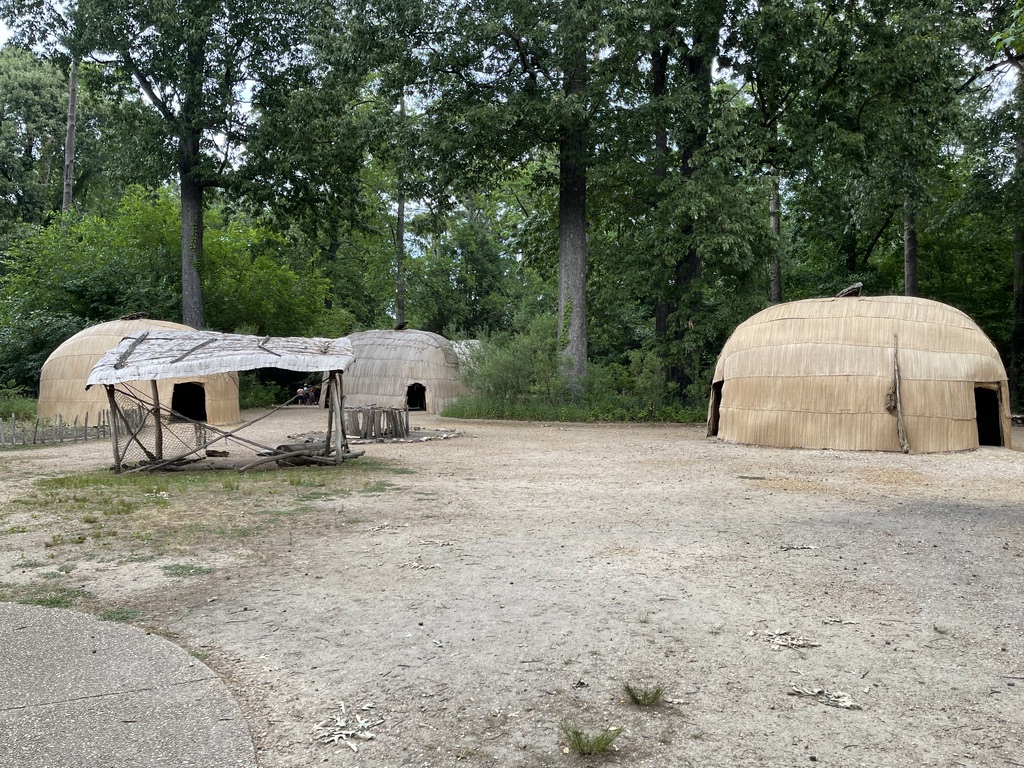
Unfortunately, the interpreters were gone by the time we got to the Powhatan Huts, so we had to continue on.
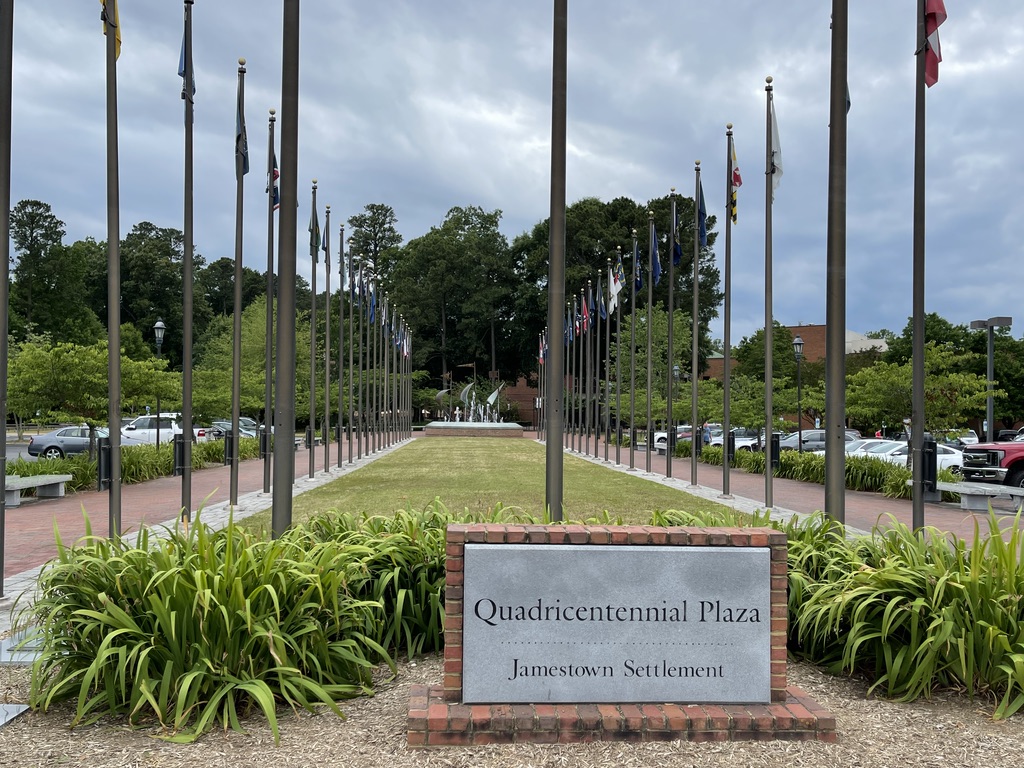
Not many cities or towns in the Americas can claim that they had a Quadricentennial… Jamestown just so happens to be one of them.
Moving on to Historic Jamestown, we soon came across the actual site of this once active community…
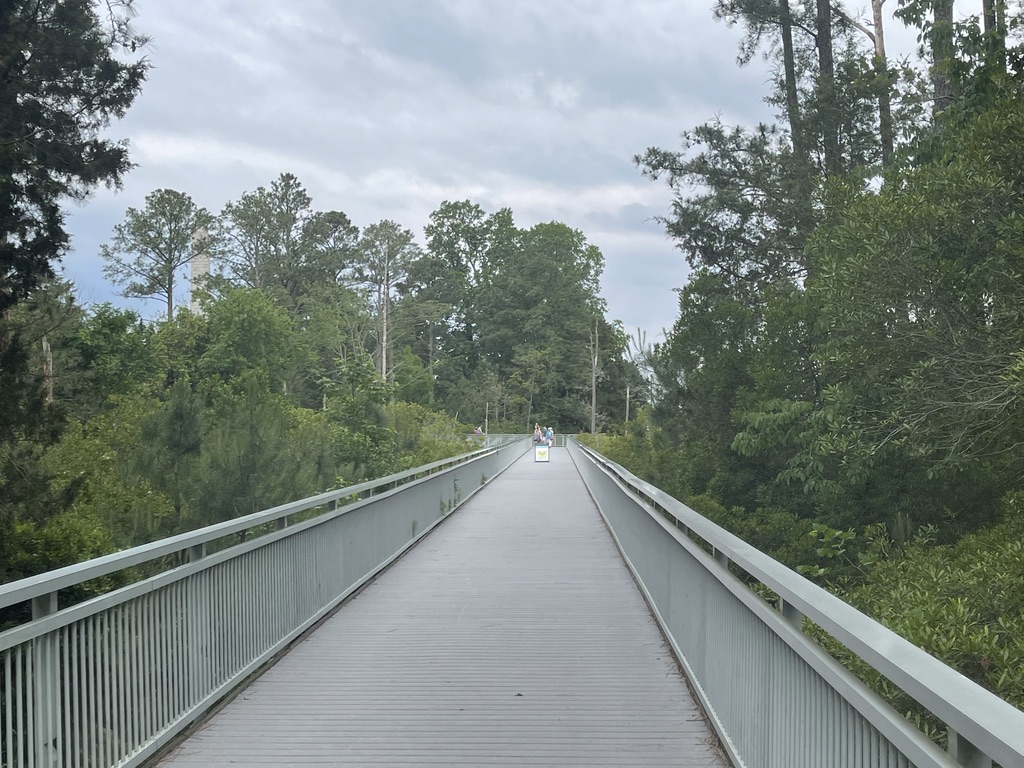
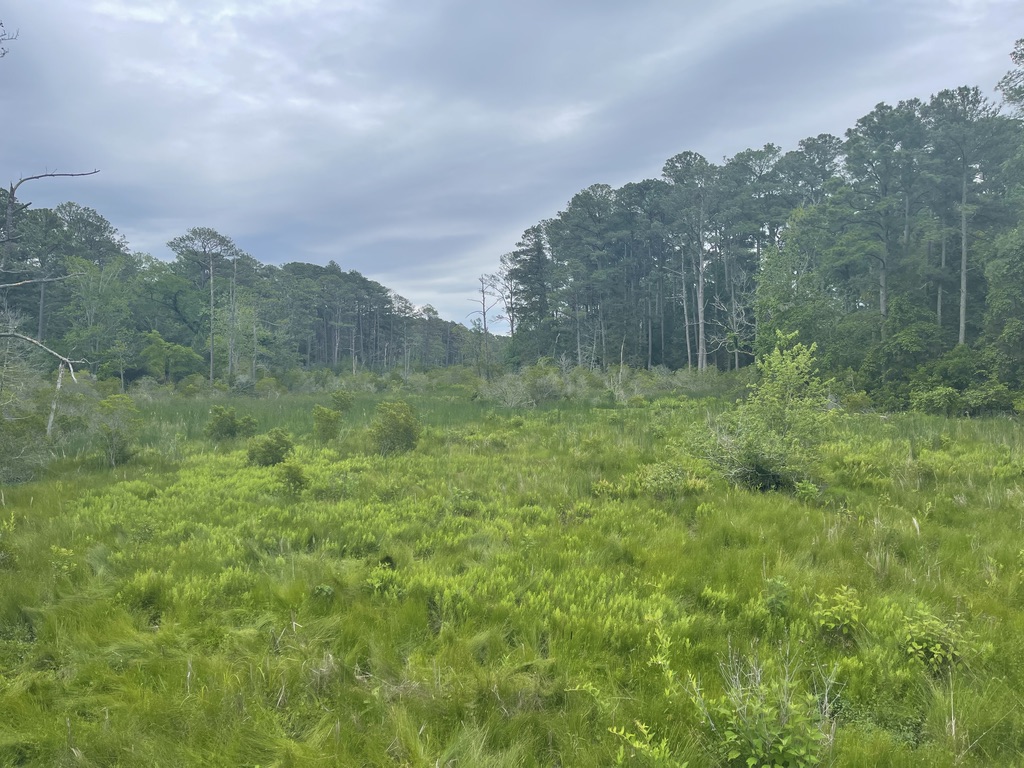
The marshes surrounding Jamestown Island surely provided ample breeding-havens for mosquitos and other bugs, just as they did 400 years ago (we felt it too).
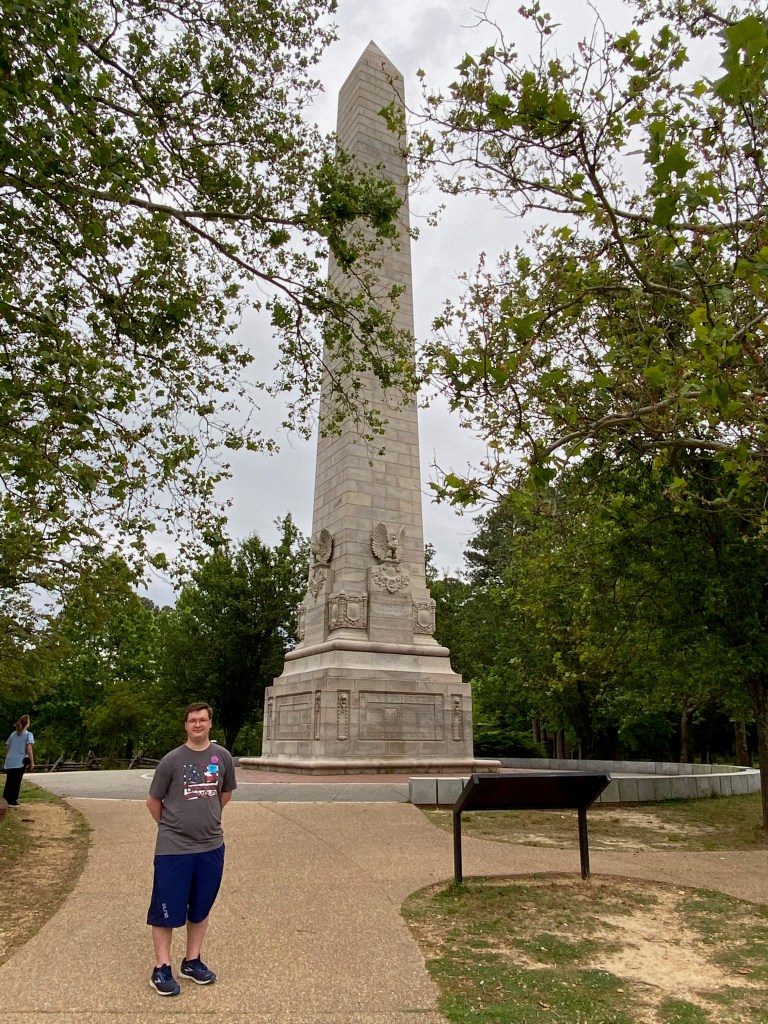
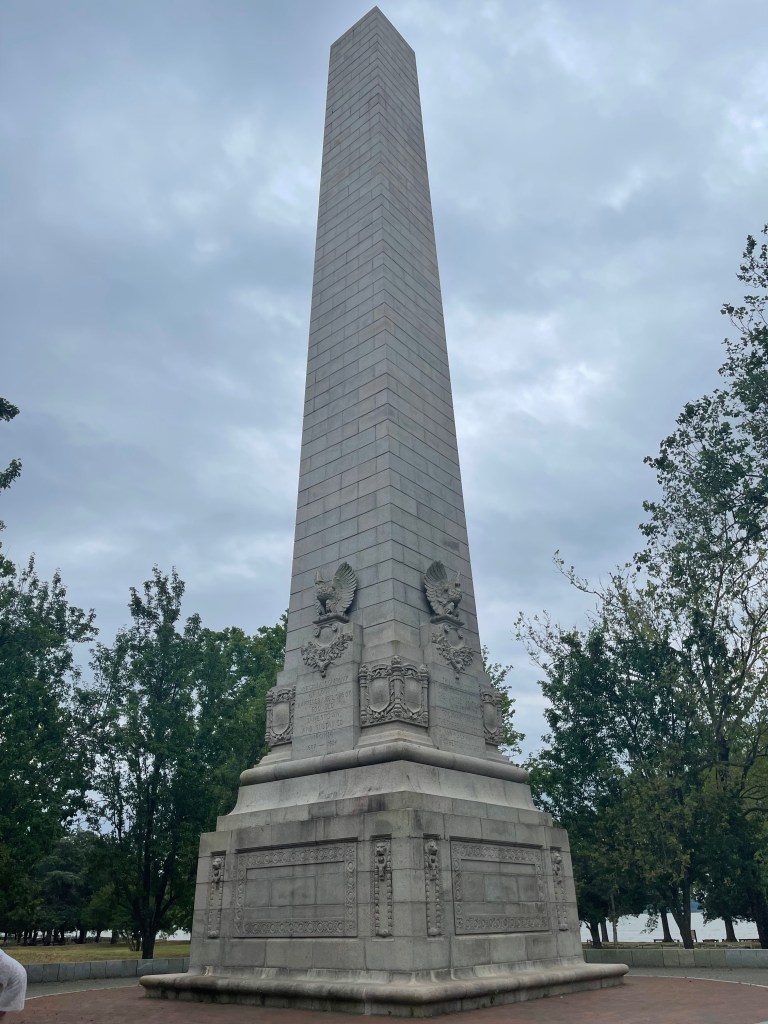
This quite impressive obelisk was placed in 1907 to commemorate the 300th anniversary of Jamestown’s founding…

The foundations of the Second Capitol Building of Virginia still remain on the island. Though after ANOTHER fire burned it down, the Virginia General Assembly moved to Williamsburg. Interestingly, several years ago they uncovered over 50 graves scattered underneath these foundations, many of whom were slaves from Africa.
Inside the Archaeological Museum, one can see quite a number of exciting finds from the site found throughout the years!

Including original and tarnished English armor,
I hope that you all haven’t eaten recently for this next bit. Might get a bit graphic.
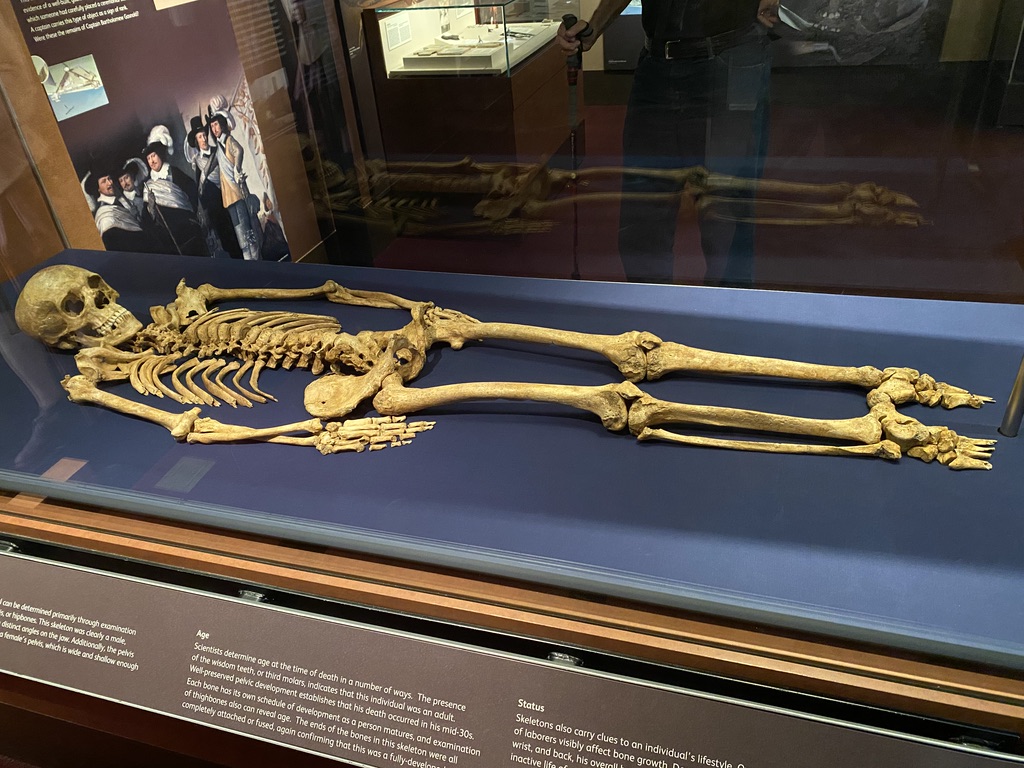
Human remains, including this skeleton here, were often found by research teams, as they further work to uncover the identities of both settlers and slaves alike.

Jamestown of course, experienced some of the darkest episodes in world colonial history, particularly with the lack of food there… some resorted to eating the soles off their own shoes, while others ressorted to something more horrifying… cannibalism.
Some corpses were literally dug up from their graves and consumed. Notice the fine cuts from a blade in the skull of this poor woman, and where they pryed it open to get to the brains: the most calorie-heavy part of the body.
Thankfully things in Jamestown gradually improved following successive expeditions back to Virginia.
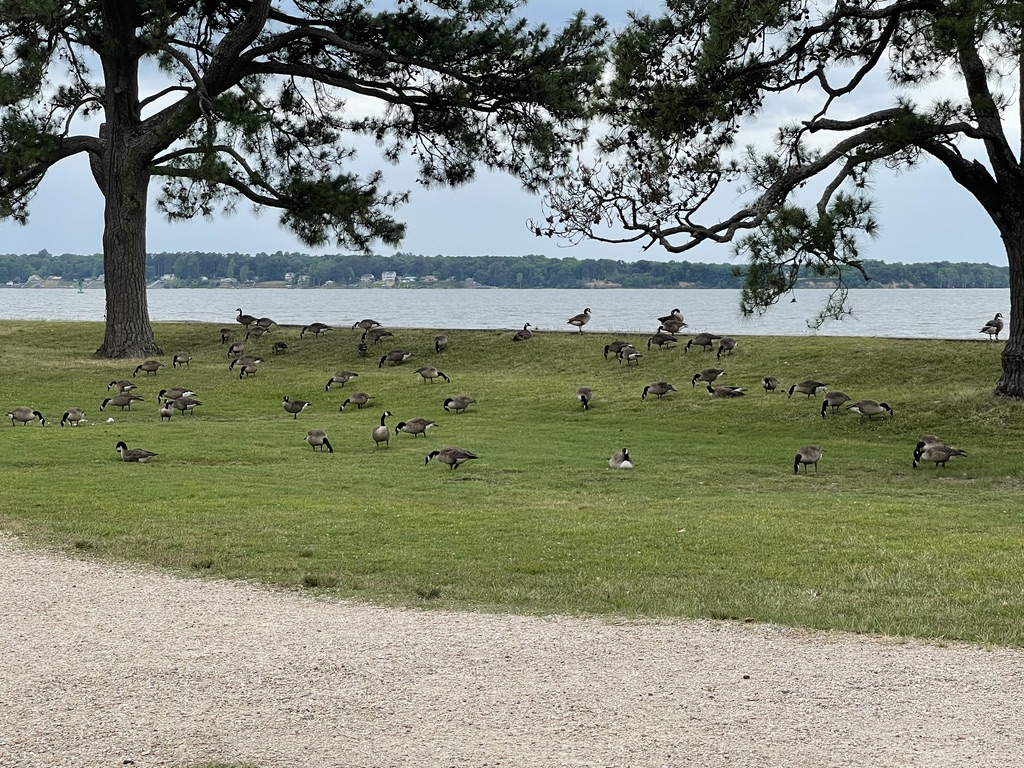
Wary of the literal army of geese on this island, we proceeded onward.

The original shoreline that extended 25 ft past this wall has since eroded, but it was on this very spot that the Jamestown colonists looked out onto their new home… perhaps these surrounding islands were what they saw all those years ago? What else could they have seen after such a long journey?
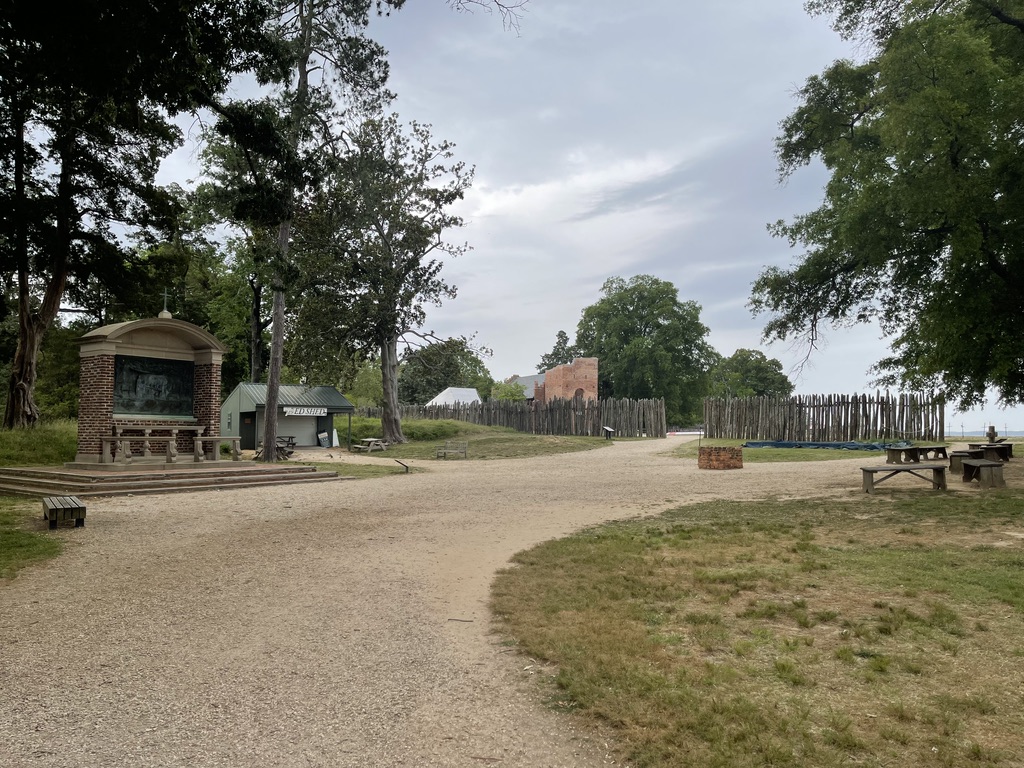
Though the wooden fence itself is new, it stands atop where the former walls of James Fort ran around the original settlement.
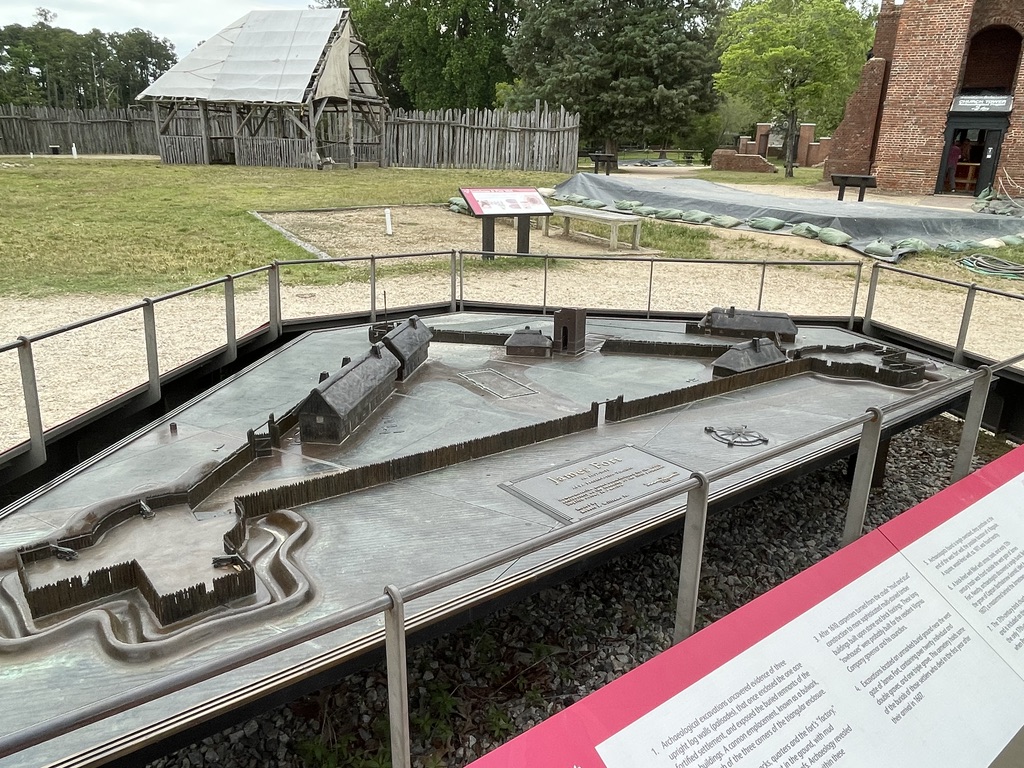
Ah, this is a better representation of James Fort, as you can see with the triangular layout, and gun fortifications on it’s corners.

More recently discovered graves… makes me wonder what their individual stories were?
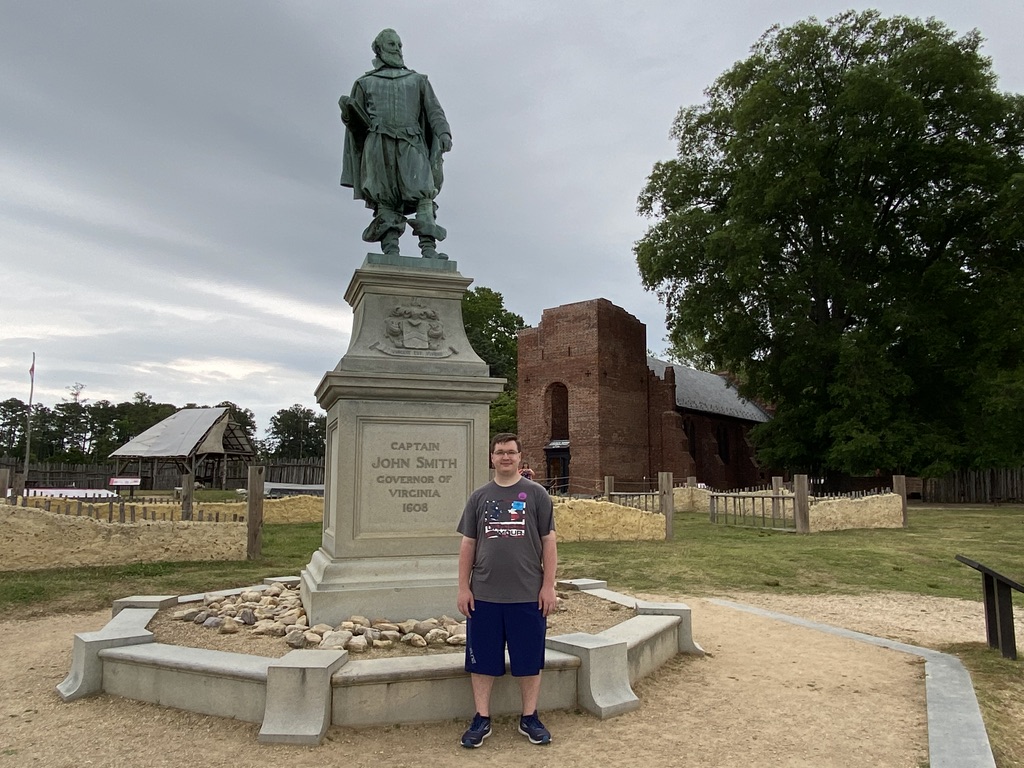
John Smith is memorialized today here on the site of the original settlement, though his grave rests far away in England.

A current archaeological dig is in progress near the ruins of this memorial church constructed in 1639.
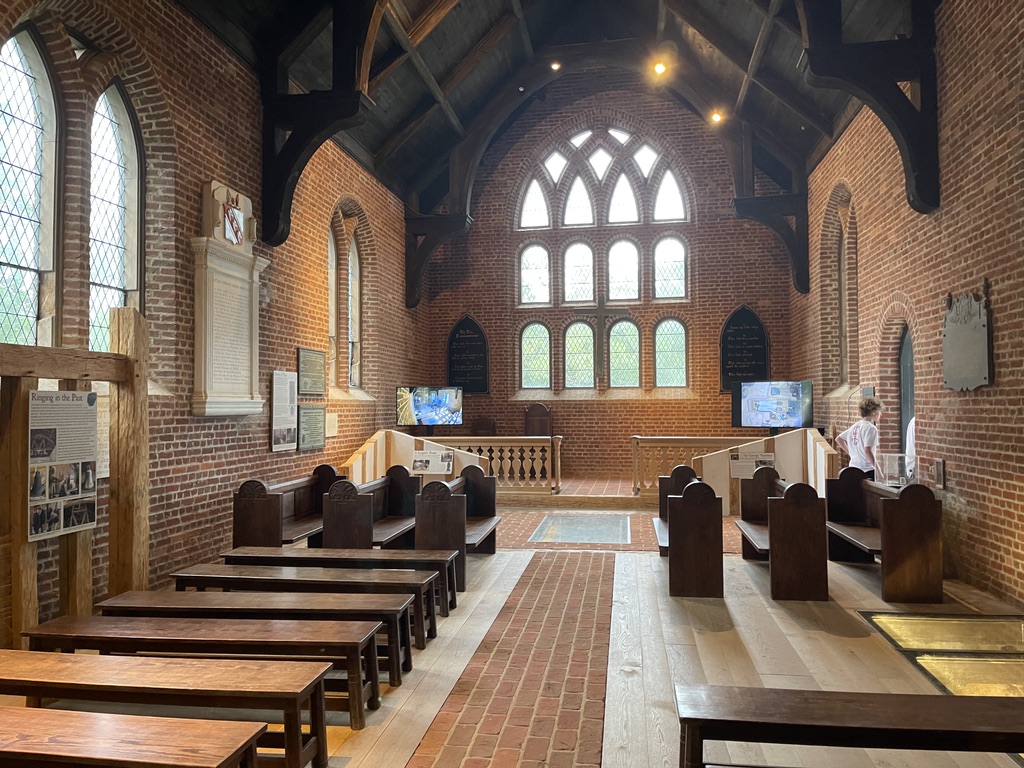
Insdie the church are a multitude of memorials dedicated to the memory of Jamestown. It was fascinating just to read them all.
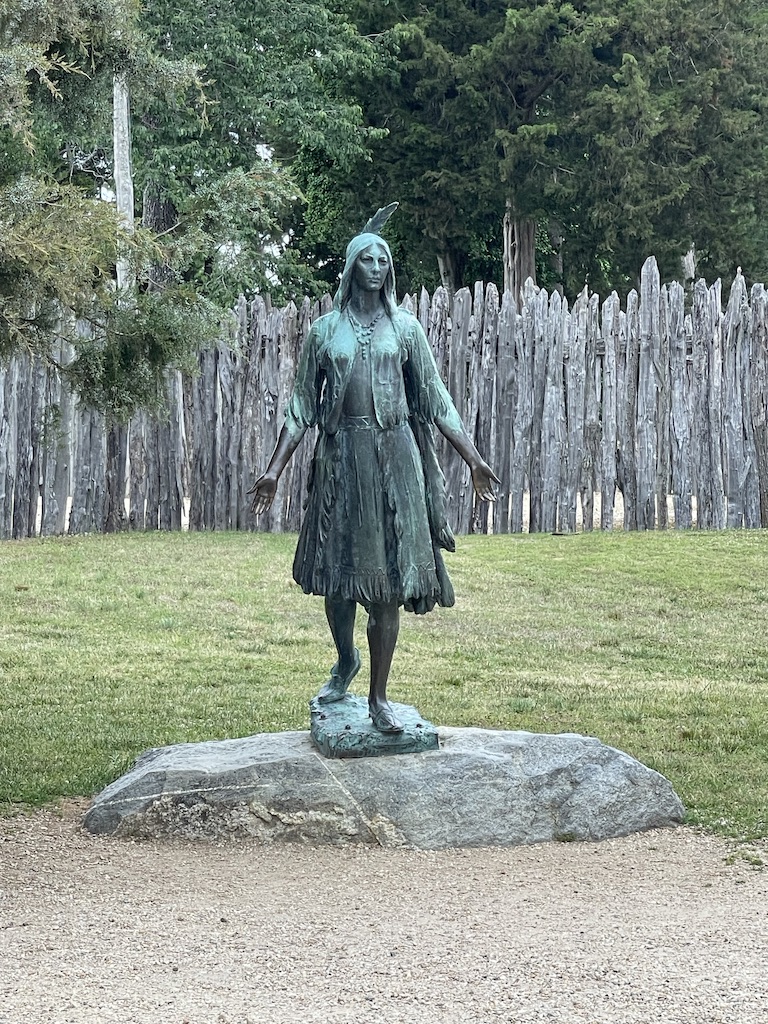
Who can forget Pocahontas, the daughter of Chief Powhatan, who famously helped to forge peace between the Powhatan and european settlers, and saved John Smith from execution by her kin?
Only a young girl by the time of their arrival (contrary to what might be presented in the famous Disney adaptation), she later married settler John Rolfe, which secured the alliance between their two peoples. She died only a year after returning with him to England.


Being on the very ground where those same settlers walked, and possibly seeing almost the same sights that they did, is quite a surreal feeling. Being “in the moment” is what I strive for when I visit these sites. Can you possibly imagine how hard it was to live back then, as a white settler, a slave or a native? The world of 400 years ago is an entirely different one from today… and as we reach for a more comprehensive and fulfilled look on all the peoples of this community, we learn a little more about ourselves too, as individuals, and as humans.
And that’s a feeling too precious to miss out on.
As a side note, Jamestown, Williamsburg, and Yorktown are on the Historic Colonial Triangle of Virginia. Unfortunatly, with our busy schedule, Yorktown will have to wait until another time.
But we have more in store next time! For tomorrow, Berkeley Plantation and the American Civil War Museum are next, in our final full day in Richmond.
Thanks for tuning in, see you then!
 Mark's Historical Roadtrips!