
Huzzah! Another post!
Today we explored two fascinating locations in the forms of Berkeley Plantation and the American Civil War Museum.
Let’s begin!
Berkeley Plantation
Berkeley Plantation was the ancestral home of the influential and wealthy Harrison political family, and the birthplace of both Benjamin Harrison V, a signer of the Declaration of Independence, and his son William Henry Harrison, our 9th President. But the property holds even more distinctions, as it was the location of the very first “thanksgiving” in 1619 (a year before the Plymouth Pilgrims), and where the famous bugle song Taps was first played in 1862! More on that later.
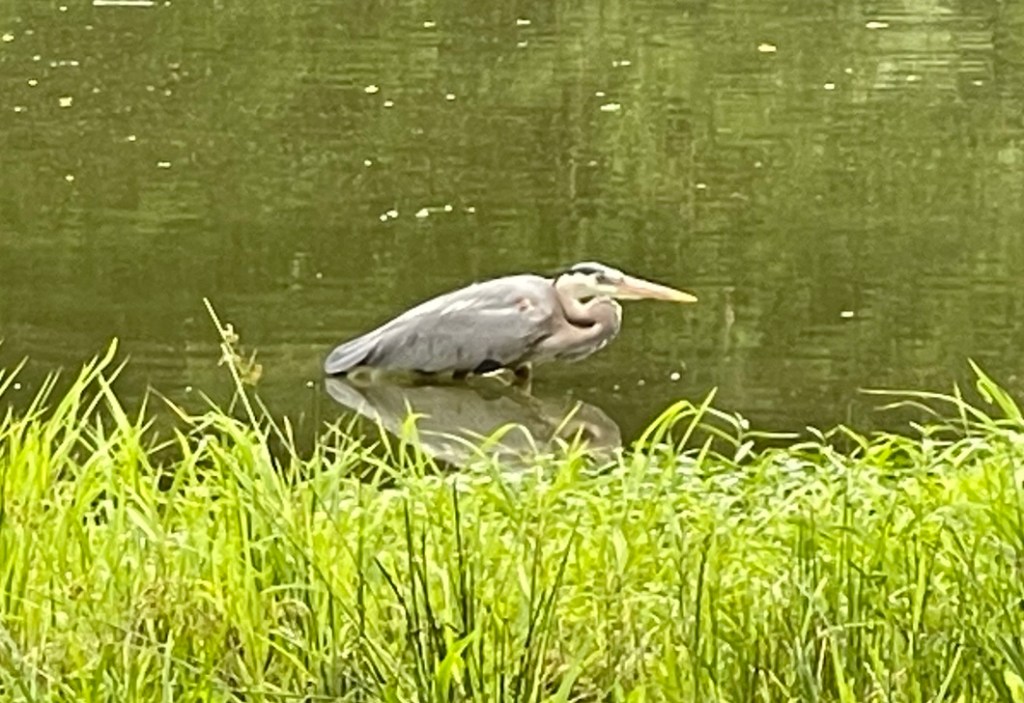
In a pond on the way to Berkeley, we saw this crane! Or was it a heron? I’m not sure.
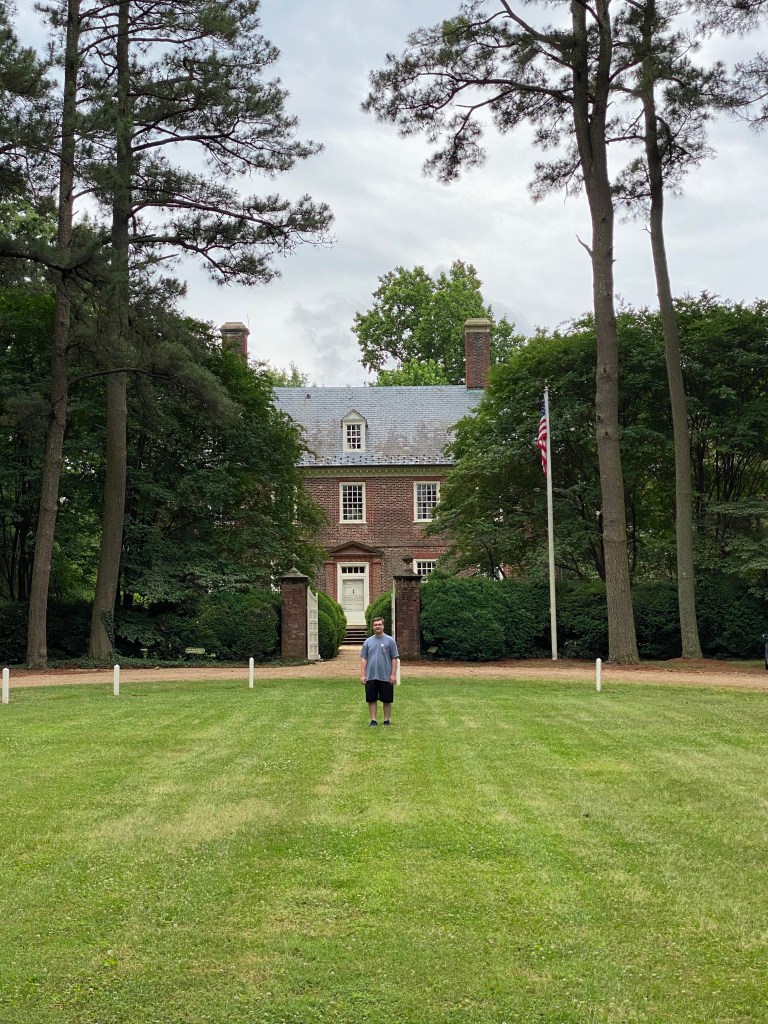
And this is Berkeley Plantation, also known as Harrison’s Landing in the past! Quite an iconic house.

Built in 1726 by Benjamin Harrison IV (the name sort of runs in the family), it was one of the largest plantations in Virginia at the time, particularly with it’s primary cash crop: tobacco.
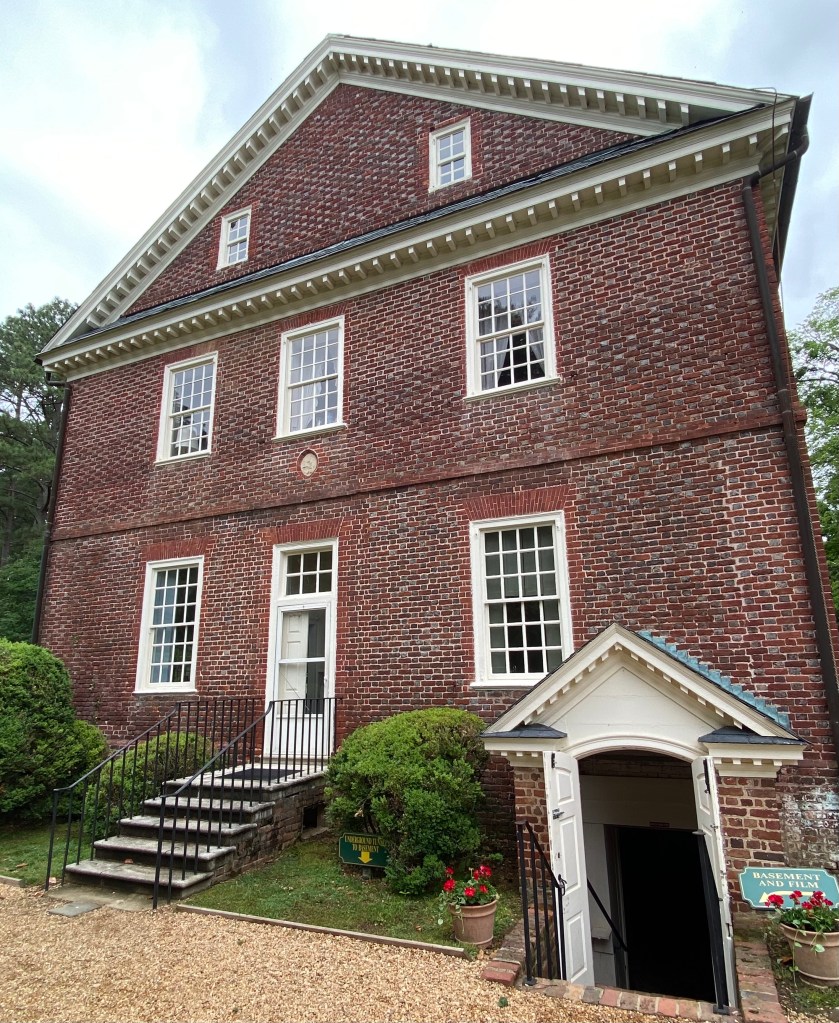
The first 10 U.S. Presidents, including Washington, Jefferson, and Tyler, have guested within these walls, yet tragedy would play a part in the history of Berkeley as did triumph. In 1745, Benjamin Harrison IV, along with his young daughter Hannah, were struck by lightning in the right window of the second floor (pictured above) in a freak accident, killing them instantly. His wife and mother, distraught, died within the month of grief.
Despite the downpour of despair, his son Benjamin Harrison V would go on to manage the 1,000 acre property, continuing to use his slaves and servants to reap in the cash crops of the time, and distilling a new beverage growing in popularity in Virginia… corn whisky.
We continued on our tour of Berkeley by getting shot.

Actually, this was our guide, who demonstrated how difficult it was to fire a 1600’s musket before flintlock firearms were developed.

The guesthouse/coachhouse was where male visitors would stay their time while on the road (the women would stay in the manor, to prevent “naughty” behavior).

And the kitchen/cookhouse is where naturally, the food was prepared by slaves. It likely was separated from the house to prevent a fire. Interestingly enough, recent archaeological work has revealed a secret underground brick tunnel that ran from the kitchen to the mansion.

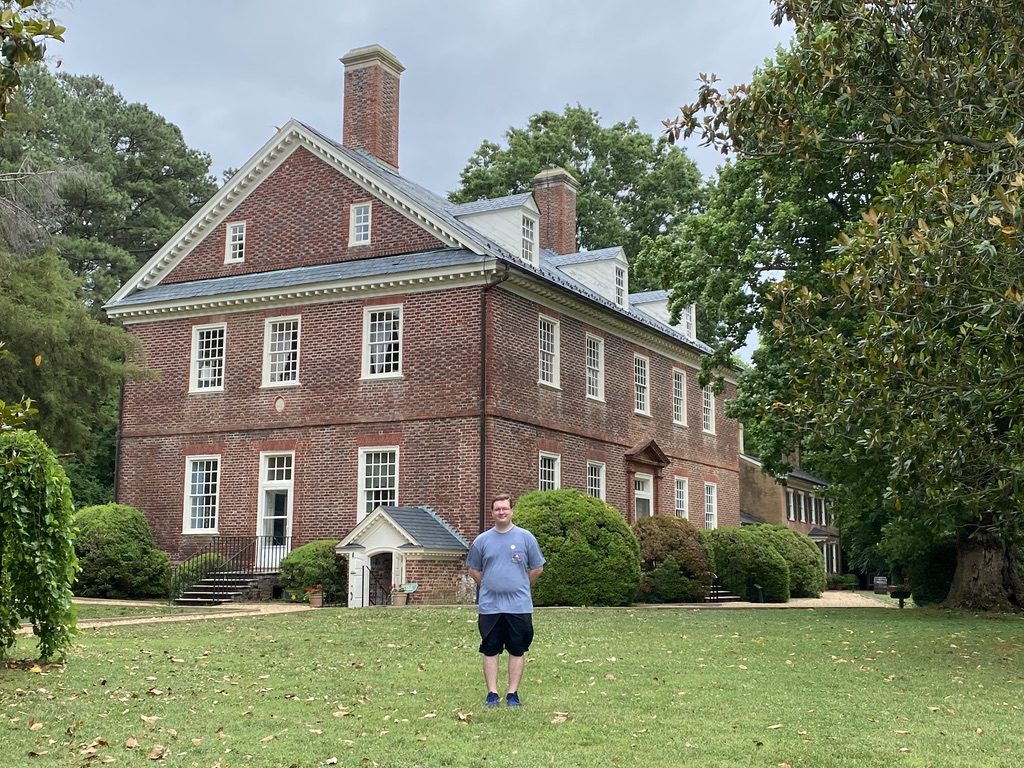
Unfortunatly, the elaborate interior of the house prohibited photography of any sort. I recommend visiting it yourself if you want to see what’s inside!
When Benjamin Harrison V signed the Declaration of Independence, he and his family were forced to flee to prevent being captured by the British. Benedict Arnold, the patriot-turned-traitor of the American Revolution, led his men into Berkeley, and looted and burned many of the original possessions found there. The house itself escaped destruction however, likely due to Arnold wanting to have it as a future estate. That never came about.
Other homes of the signers, however, would be destroyed during the war, and even some of their cherished family members were killed… the signers, no matter their stature, risked much in the concept of liberty and independence.
Naturally, William Henry Harrison would be more influential in Ohio and Indiana, as opposed to the previous generations of Harrisons at Berkeley, and by the lifetime of his grandson (23rd President Benjamin Harrison), Berkeley was not owned by the Harrisons anymore.

The Boxwood Gardens pictured above must have been an impressive sight back then as they are now.

What a gorgeous view of the James River… and this is looking from the gardens too.
People still come here for events, particularly with the Annual Thanksgiving Festival held here.
Ah yes! Perhaps I should get to that now!
On December 4th, 1619, the Margaret, a ship led by Sir George Yeardly and 38 seasoned explorers (and Jamestown veterans) arrived on the land that would soon be called “Berkeley”. The proprietors of that expedition stated explicitly that: “the day of our ships arrival . . . shall be yearly and perpetually kept as a day of Thanksgiving”.


And when the settlers arrived at Berkeley, they did just that, 2 years and 17 days before the Pilgrims arrived at Plymouth Rock far to the north in Massachusetts. Of course, in the following years, the settlement at Berkeley would have fallen to a Native-american assault, today it is still recognized as the site of the first Thanksgiving by the federal government.
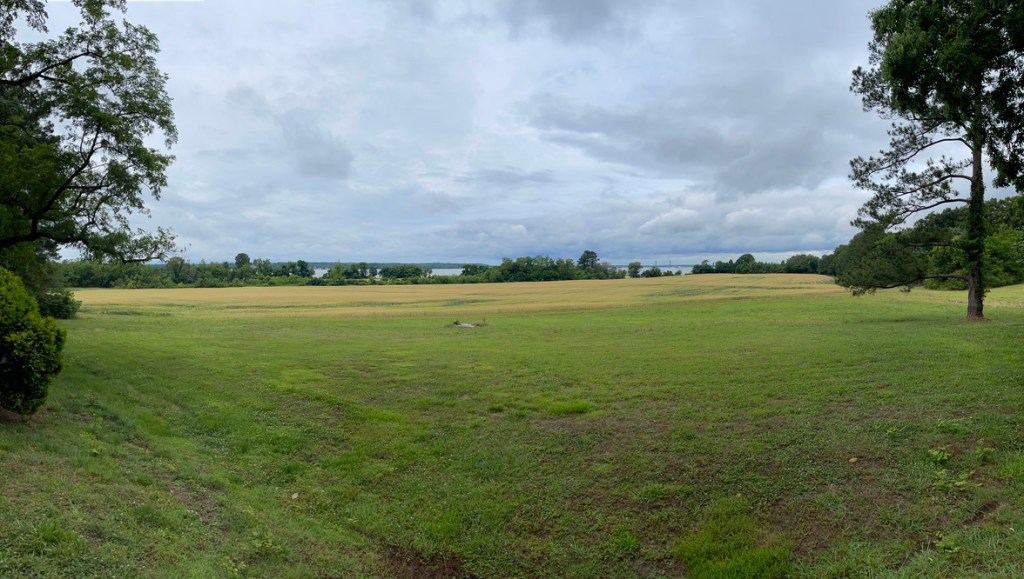

Imagine these wide fields surrounding Berkeley Plantation for a moment…
During the Civil War, Berkeley Plantation was occupied by the Army of the Potomac in 1862, which meant 140,000 union troops were stationed all around the property, and gunboats would fill the James River. Abraham Lincoln himself visited twice to inspect the troops. It must have been quite the sight to behold…

The original slave quarters of Berkeley were dismantled by the Union army for firewood in their many camps, and many of the surrounding trees were cut down to create large fortifications.
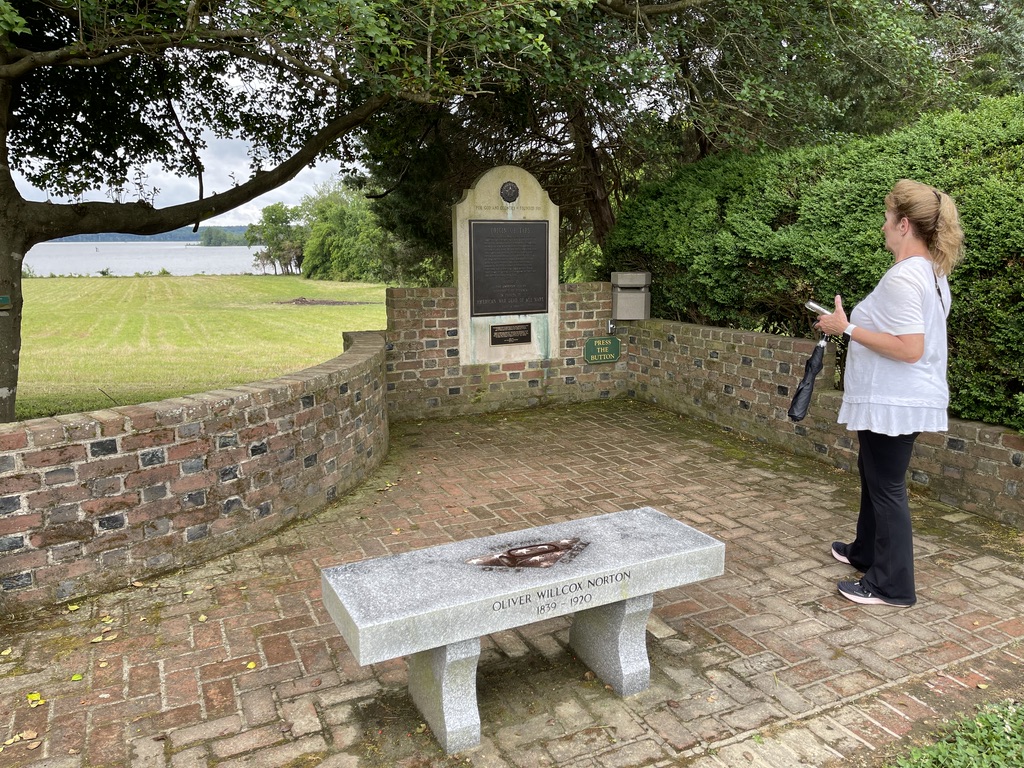
But it was here on this very spot that one of the most famous of U.S. Army tunes would be played for the first time to signal the end of another day… Taps.
Written by Brigadier-general David Butterfield during the army’s stay here in 1862, it was played as the sun set on these grounds. The bugle call became so popular, that it would be played by both Union and Confederate soldiers during the war, and it continues to remain the primary “final farewell” to a deceased soldier as they are laid to rest in cemeteries across the country, like Arlington.
Pressing the audio button on this spot, one could hear the bold, solemn, and resonating notes of Taps, while gazing out at the view of the wide and expansive property… hearing it actually made us tear up a little… and it meant so much more being on that spot.

The Harrison Family Cemetery is located here on the grounds, the most notable being that of Benjamin Harrison V and his wife Elizabeth. William Henry Harrison, his son, is interred in North Bend, Ohio, in a grandiose tomb along the Ohio River (we saw that tomb in 2018).
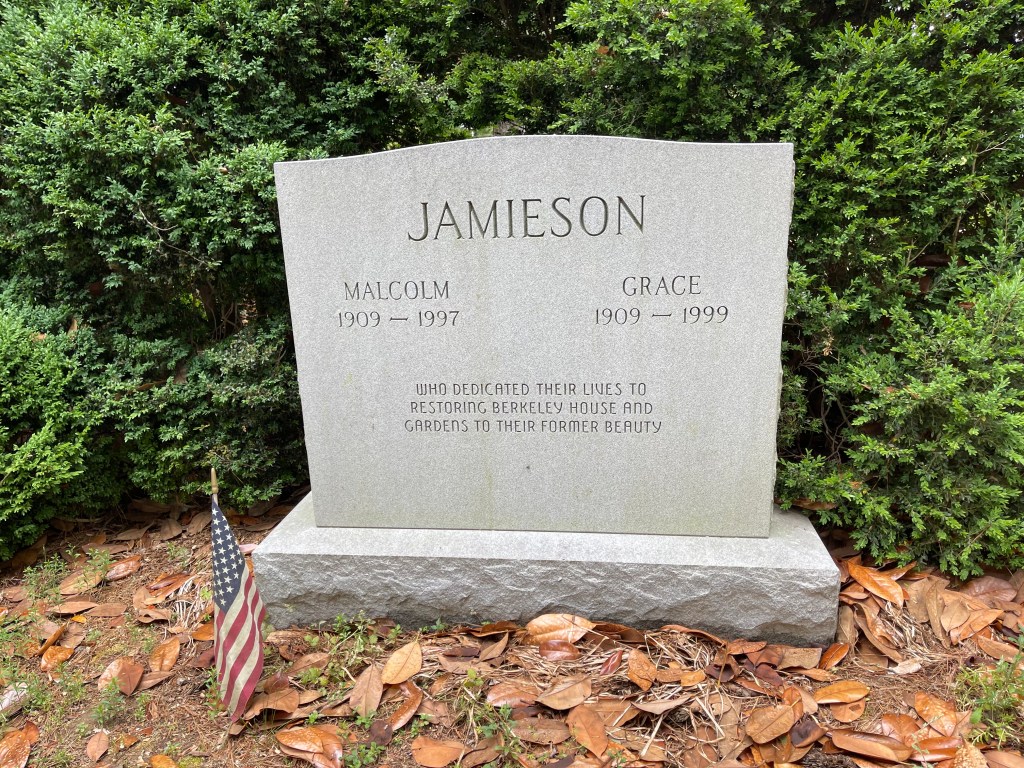
Malcolm and Grace Jamieson, the former owners of Berkeley Plantation, were critical to preserving the history here throughout the 20th Century and opened it up for tours.
Berkeley Plantation has many stories and perspectives to offer in its grounds and manor… but the concept that I found, I think, would be Bravery.
Reflect upon the hardships and sacrifices of the brave settlers that first came here in 1619, venturing into the unknown, who gave thanks for their prospects and wellbeing. Remember too of the bravery of the signers, like Benjamin Harrison V, many of whom lost much of what they held dear, in their dedication to posterity. And finally, recall the bravery of the Union soldiers who rested on these fields, as the sounds of Taps echoed throughout the dimly lit camps…
Into faith they placed their trust, and into memory were placed their souls.

Leaving Berkeley Plantation by midday, we hurried back to Richmond to visit the final site of the day:
The American Civil War Museum (Richmond)
Built within the ruins of the former Tredegar Ironworks, The American Civil War Museum in Richmond is one of the foremost museums of the Civil War in the country, especially concerning southern society at the time!
The American Civil War Museum is actually comprised of three different campuses: The Richmond Museum, The White House of the Confederacy, and the Appomattox Museum. Though we will visit all three eventually, for all intents and purposes, our focus today is the Richmond Museum.

When I said “literally” in the ruins, I literally meant “literally”!
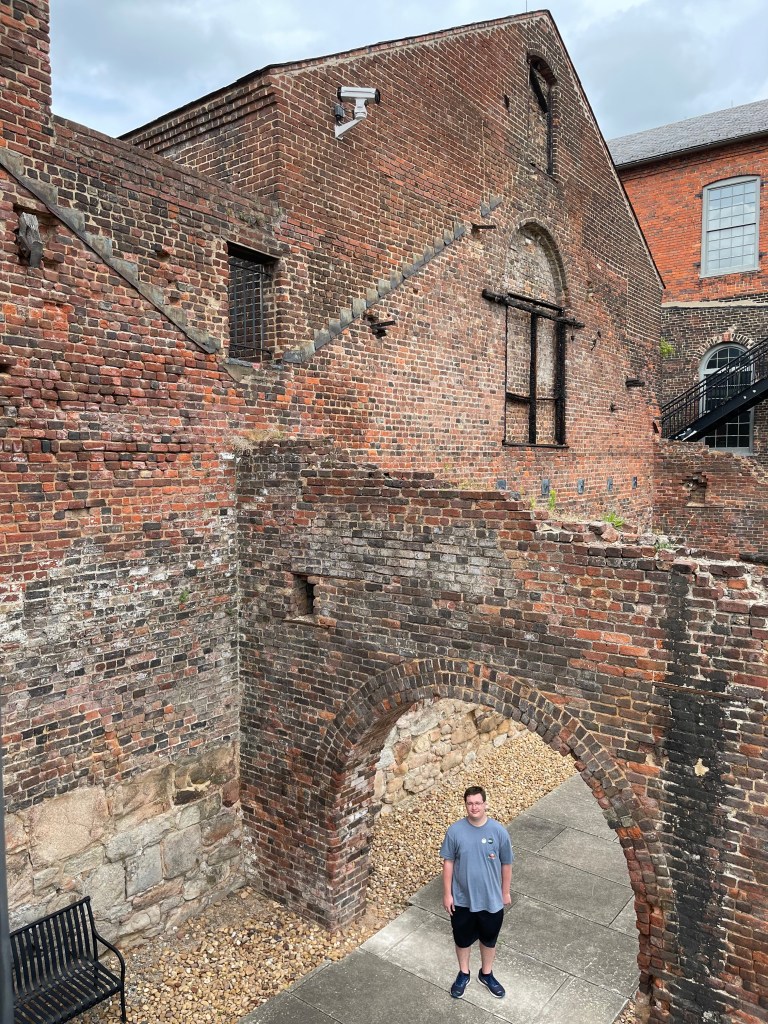
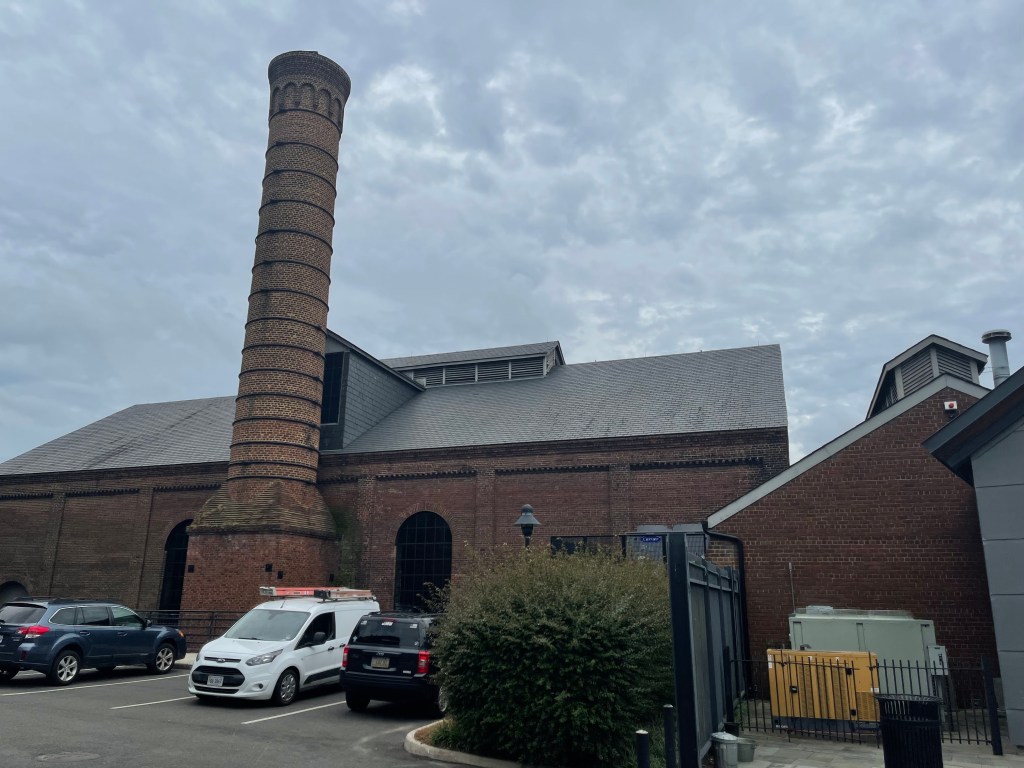
Tredegar Ironworks was absolutely critical to the confederate war effort, as it produced over half of its artillery and munitions over the four long bloody years. It was here that confederate soldiers attempted to burn many valuable items to prevent they’re fall into union hands. Unfortunately, strong winds caused the fires to spread out of control out onto thousands of houses, beginning the devastating Burning of Richmond.


A memorial to Abraham Lincoln and his son Tad. They both visited the occupied Richmond mere days before the president was shot.
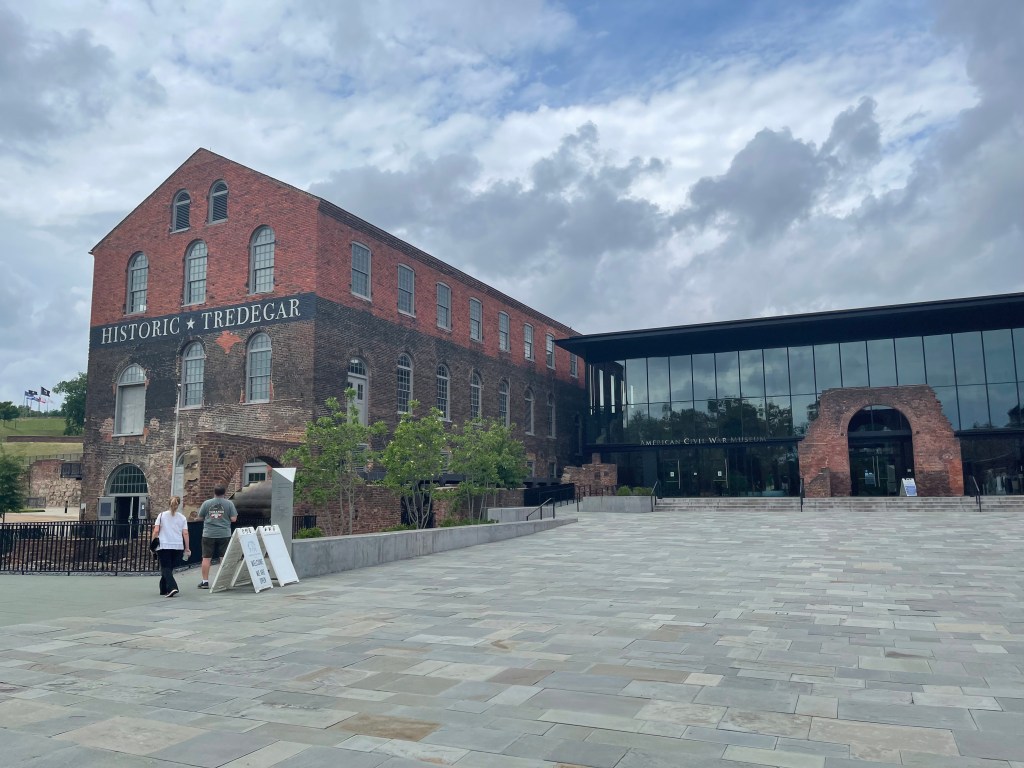
Let’s go inside!
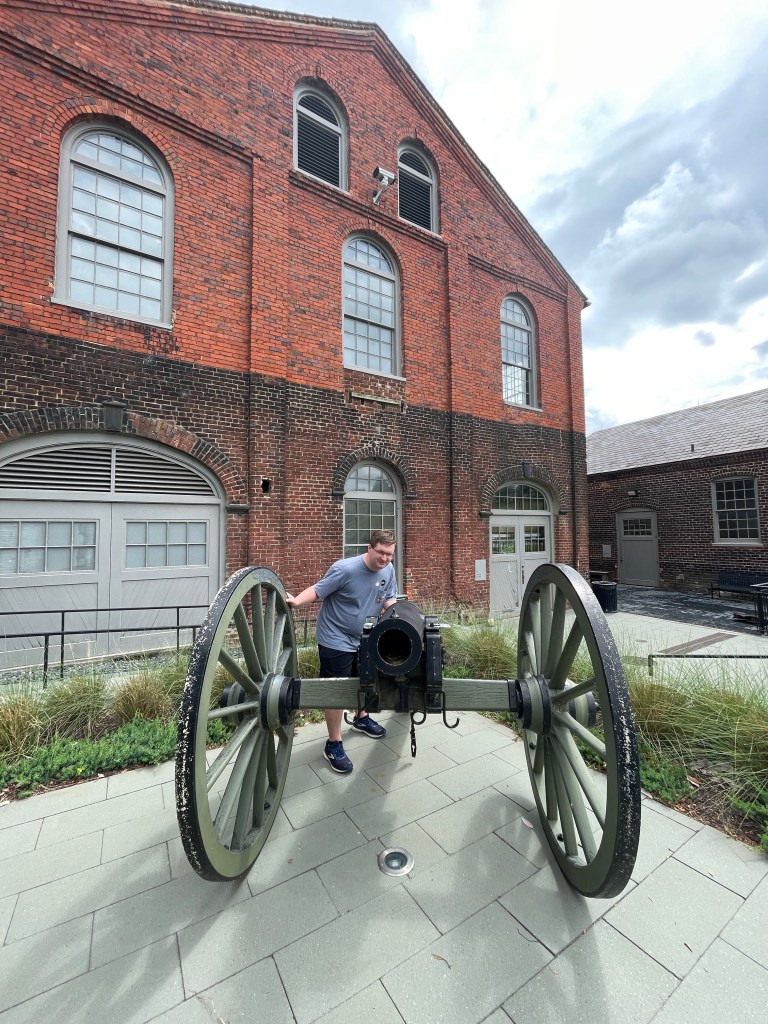
I insist.
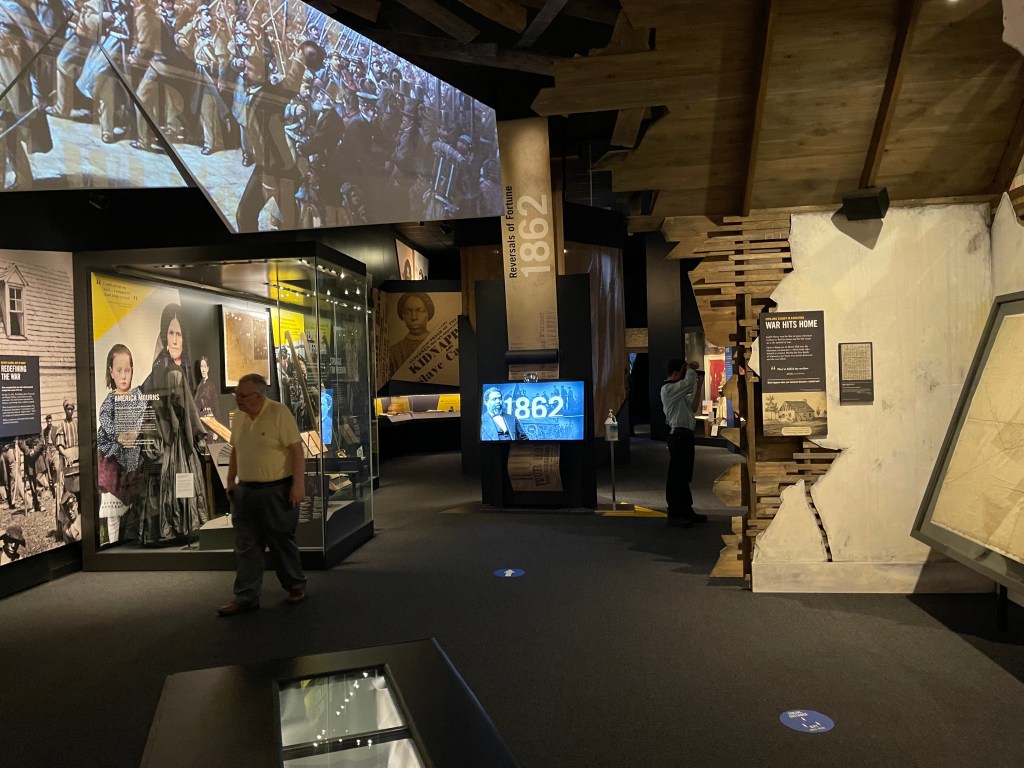
The museum truly had some state-of-the-art exhibits and displays, with various multimedia images, audio (of battles, and voices of union, confederate, and enslaved individuals), and layouts guiding you through this experience. I’ll simply go over the highlights, there’s simply too much to cover in one post.
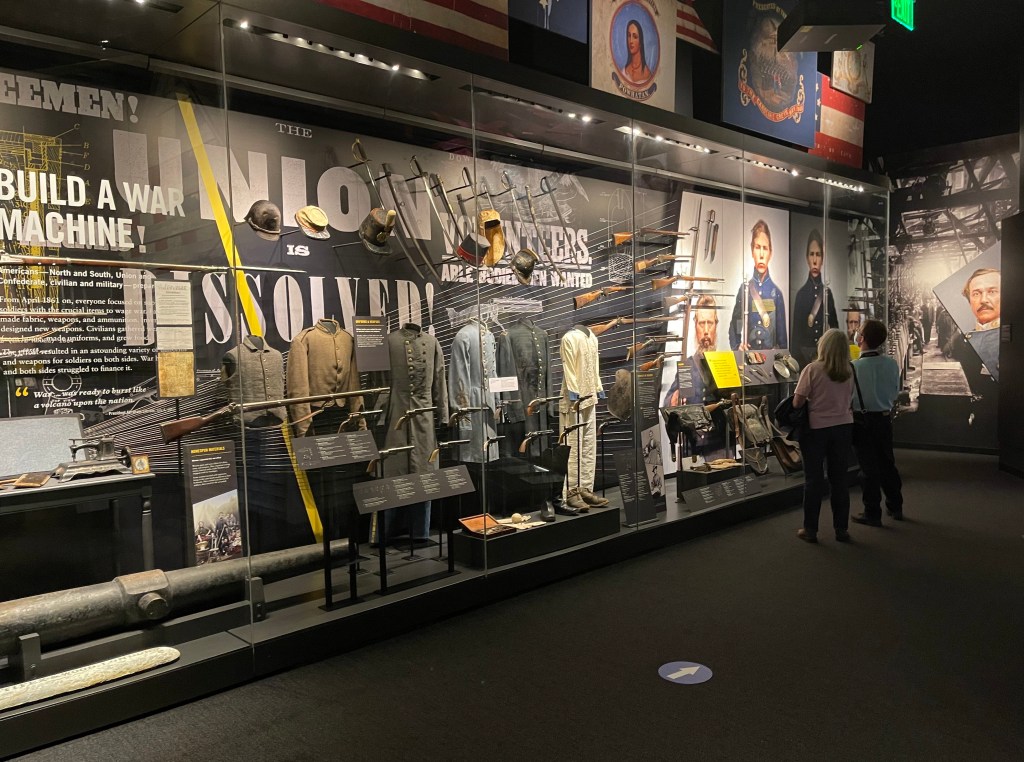

As was typical of the Victorian Era, elegant black dresses were worn by the women of the time whose fathers, brothers, and sons were killed during the conflict. And there were thousands of them. The woman who wore this dress in particular was in mourning at least three times during the war, for relatives she had lost.

Numerous personal effects of General Robert E. Lee, leader of the Northern Army of Virginia, and the highest-ranking and most famous confederate officer during the war. Here, one can see one of his hats, his rucksack, bible, binoculars, and campaign trunk, among other things. Although Lee himself didn’t believe in slavery for it’s moral depravity, he couldn’t raise a sword against his fellow Virginians, and thus turned down an earlier offer to lead the Union Army before defecting to the Confederacy.

These numerous personal items belonged to General Stonewall Jackson, yet another famous confederate leader. Note the flask and heavily damaged book. When Jackson was shot in an accidental incident by one of his own snipers, the bullet had also struck another soldier, killing him instantly, and nearly shattering the book. Stonewall Jackson drank from that borrowed flask on the way to the medical tent, where he died days later.
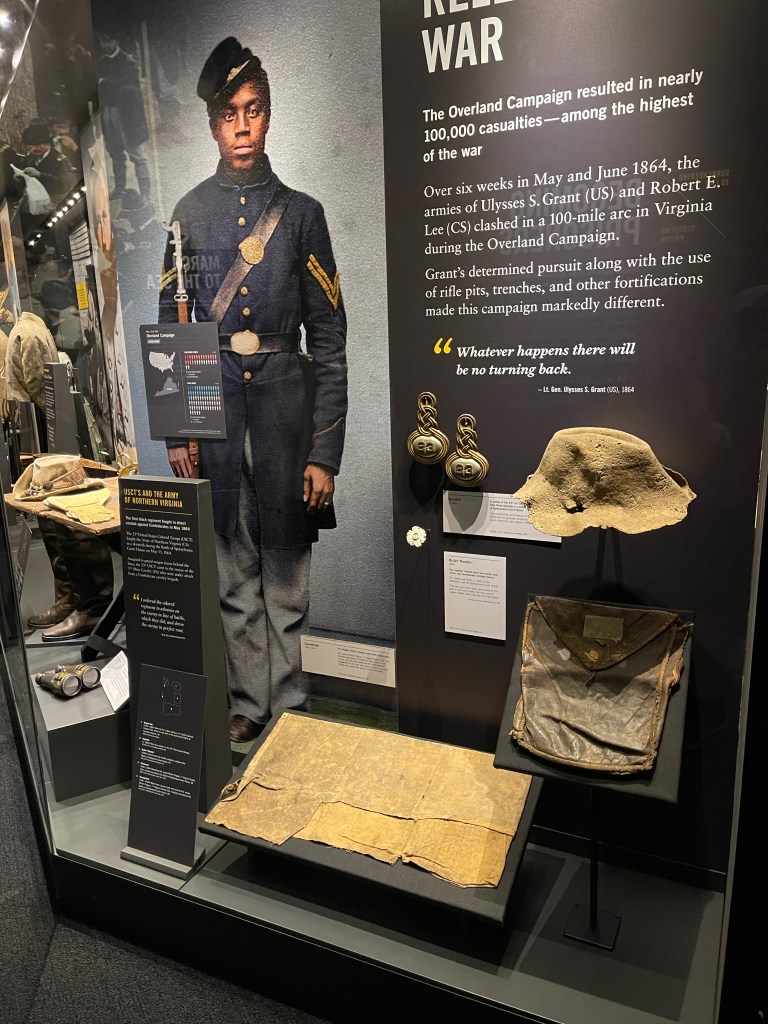
The museum thankfully shows much of how far the evolution of Civil War interpretation has come, especially in a formerly confederate region. These items belonged to freedmen (former slaves), who joined the union side to fight and protect for their freedom. The Confederacy also tried to recruit slaves to fight for them near the very end of the war, to little success.

J.E.B. Stuart, the legendary spymaster of the Confederacy, also has a number of his items here, particularly his boots, binoculars, and campaign desk.
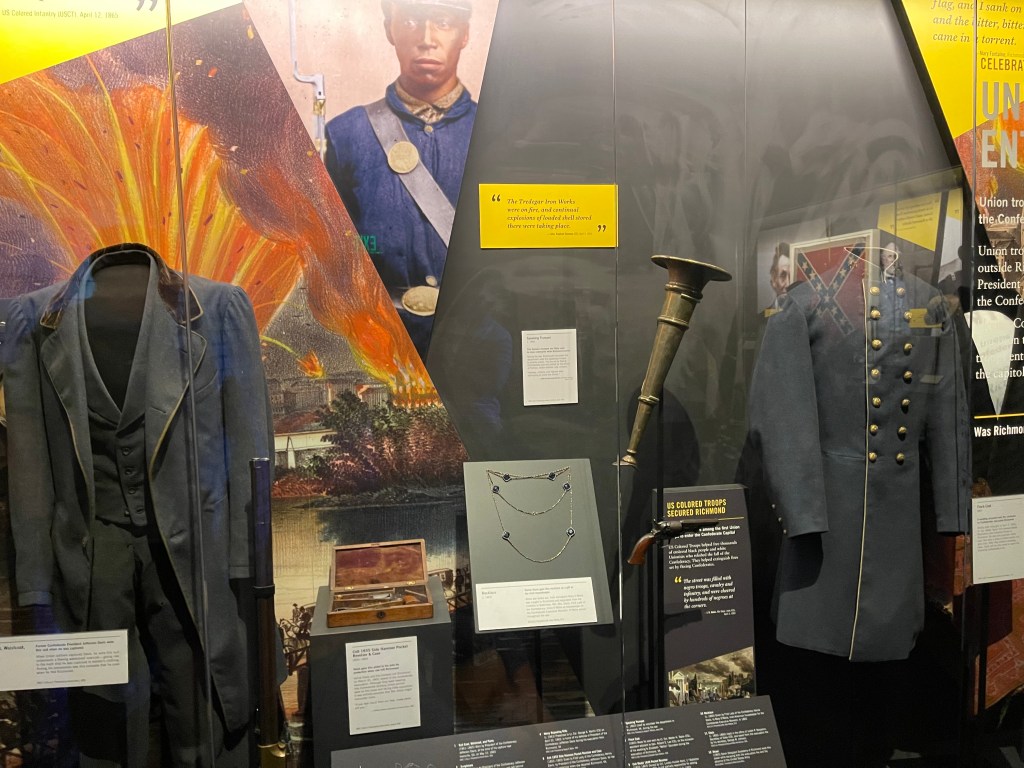
Numerous items pertaining to Jefferson Davis and his family, including the frock coat that he wore during his capture in Georgia, and one of the necklaces worn by his wife Varina. Both became unpopular in Richmond as the war progressed, as starvation led to riots, and riots to chaos.

Even back then the “art” of souvenir collecting was popular, with anything from cloth fragments of mourning drapes from the former Confederate headquarters (for Lincoln’s death), to locks of John Wilkes Booth’s hair (taken after his killing at a farm in Maryland. Sometimes people might take it a little too far, even by my standards.
During the Reconstruction Era, despite the Thirteenth, Fourteenth and Fifteenth Amendment, which freed all slaves and bestowed upon them rights, many southern states attempted to circumvent this with the Sharecropping System (not altogether different from slavery to begin with), literacy tests, and further harassment by “vigilantes”.
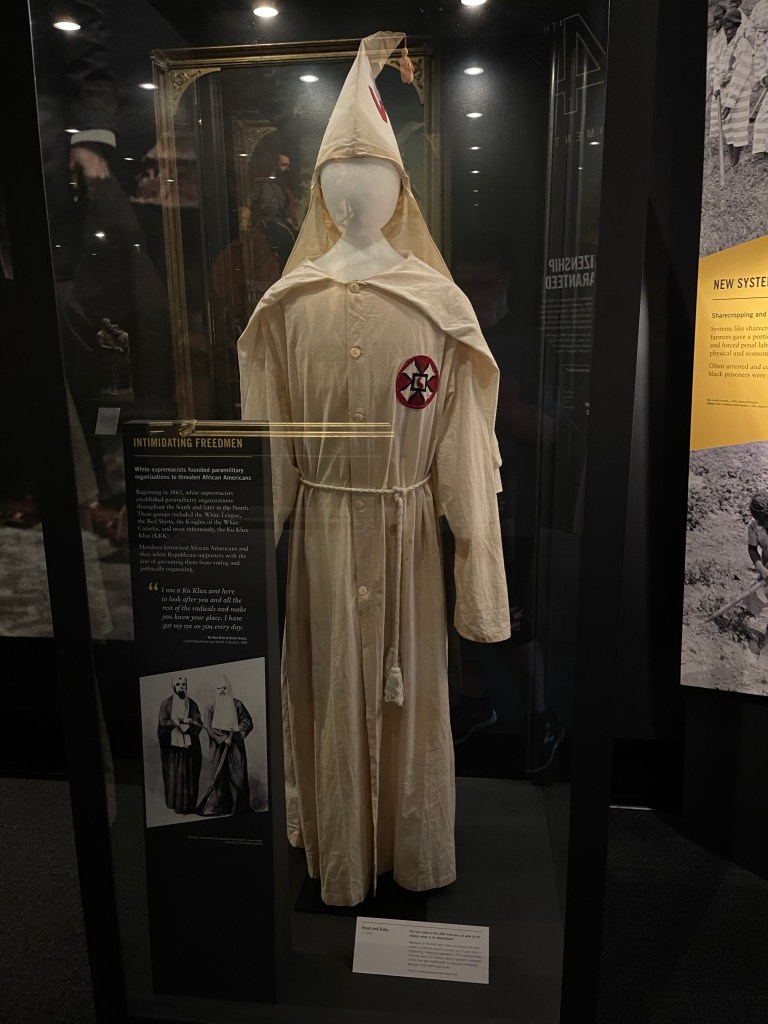
The Ku Klux Klan (KKK) for instance, were the terrorizers of freedmen and abolitionists, taking the “Lost Cause of the South” to heart, armed with threats, flaming torches and crosses, and of course, rope for lynching. The failure of the Reconstruction Era would provide many problems for decades to come, with the Klan continuing to surface and cause trouble throughout that time.
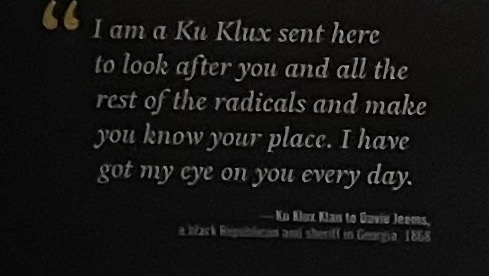
Nothing is more terrifying than hearing words like that. Intolerance between fellow human-beings is something that lasts even today and must be fought.
Between the two factions, over 1,000,000 lives were lost in the bloodiest war in U.S. History…
The country continued on a path of industrialization, raising its economic output and stature in the world…
And the social and racial scars and rifts from that time would continue to plague the nation for long afterward…
In truth, much has been done in the passing years to heal those rifts and scars, and unify the nation again as “One Nation, under God”. There is clearly still much work to do, and the legacy and evaluation of the Civil War and its modern-day impact on all of us continues to be felt. In one way or another, we all are connected through this war. Whether as the descendants of Unionists or Confederates, slaves or soldiers, and wives or daughters, our lives have been touched through the mutual sacrifices, pain, and torment felt by all of that terrible time. And through their stories, that history is still very real to us. And the task carried forth by our 16th President in his most famous speech, is still our mission today.

Thank you all for joining in on our final full day in Richmond!
Next time, We’ll take our leave of Richmond, and discover new exciting knowledge in the White House of the Confederacy, St. John’s Episcopal Church, and lastly, the George Washington Birthplace Monument.
Goodbye for now, and take care!
 Mark's Historical Roadtrips!