
Once more we meet again to view the rich history of Virginia!
Today, we wrap up loose ends in Richmond before heading along and across many rivers to various presidential birthplaces, and finally winding up in Fredericksburg!
Let’s begin!
White House of the Confederacy
Owned and operated by the American Civil War Museum (which also owns the Tredegar and Appomattox museum sites), the White House of the Confederacy served as the official residence of the President of the Confederate States: Jefferson Davis, and his family.

Built in 1818 by the wealthy Brockenbrough Family, the home was leased to the Confederate Government in 1861, who made it into both the Executive Mansion, and a strategy headquarters. This particular neighborhood in Richmond was once the shining jewel of the american aristocracy; the top 1%, the top dogs, the head honchos, the big cheeses!
Ahem, sorry.
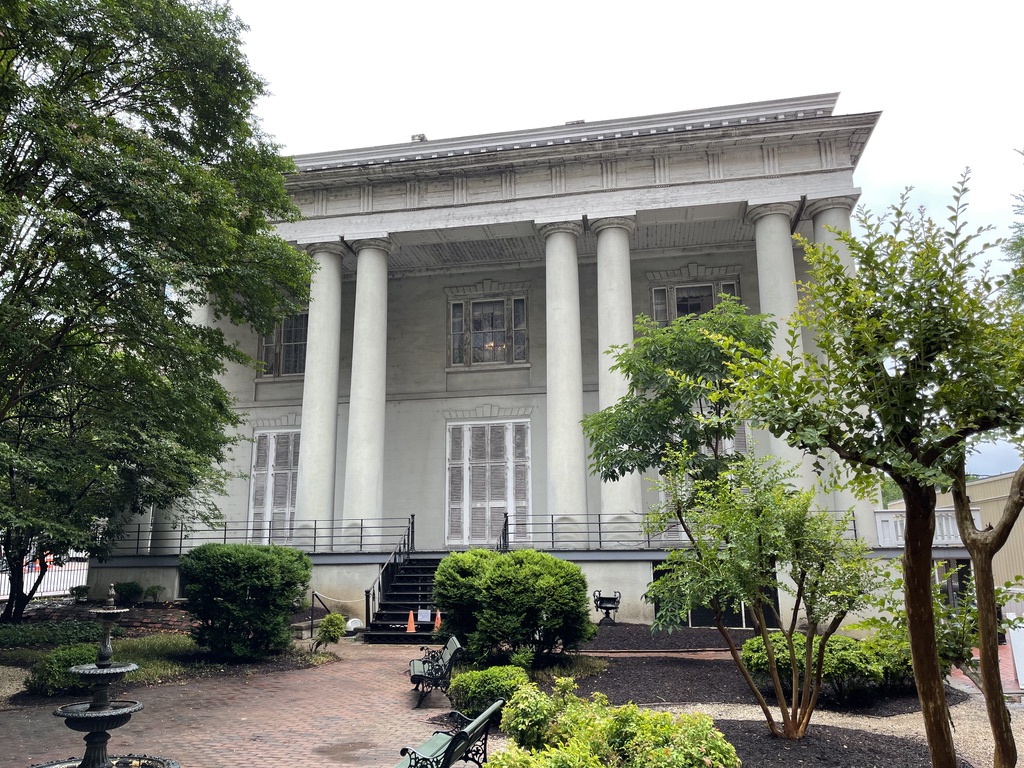
The Confederate White House was indeed grand during the day, yet hard times would fall on it and it’s residents. In often tragic ways.

The Entry Hall might seem quite opulent with it’s tile floor and stone walls. However, the walls are actually plaster, and the floors made of floorcloth. Ironically, it was more expensive to install these, rather than putting in actual stone and tile. Perhaps shipping back then wasn’t exactly Amazon. The twin statues however, date back to their original owners.
The Davis Home had 15 slaves for assorted tasks, each of whom were treated fairer than many owners who treated their slaves (although that wasn’t saying much, considering that it was still slavery). Five of them would escape in 1864, and escape into Union Territory, revealing information about the Confederate First Family.
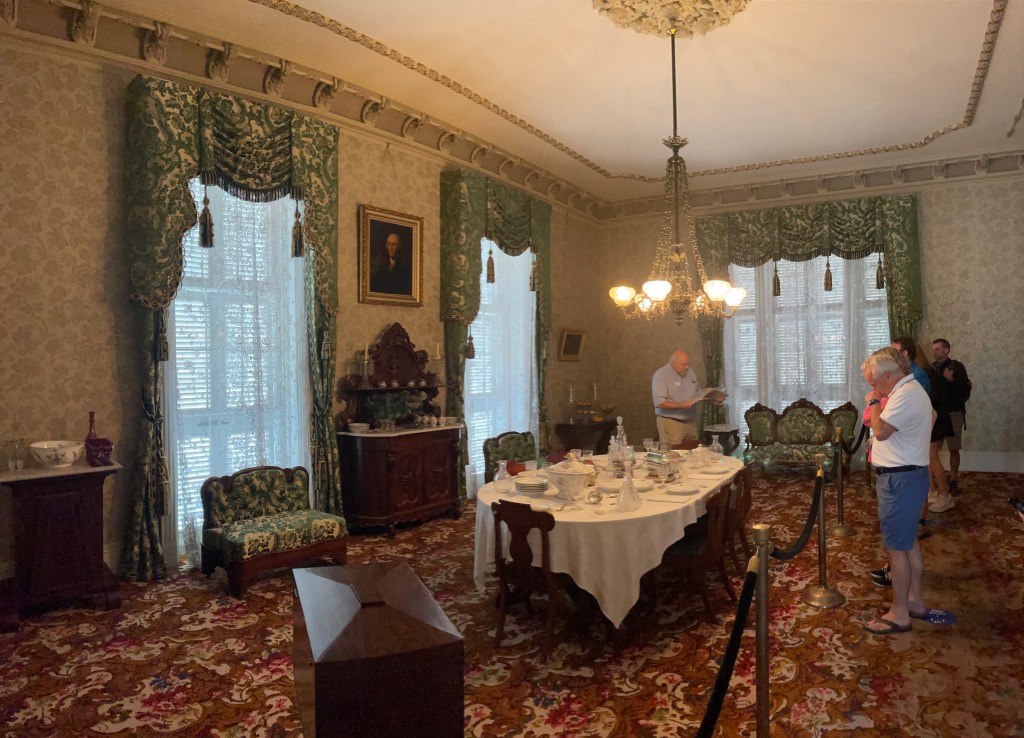
This elegant dining hall, although adorned with wallpaper and curtain reproductions, are exact replicas of the patterns that haven’t been made in over 150 years. Dining became difficult for the family with food shortages, and food such as turkey had to last three days (turkey on the first day, sandwiches on the second, broth on the third).
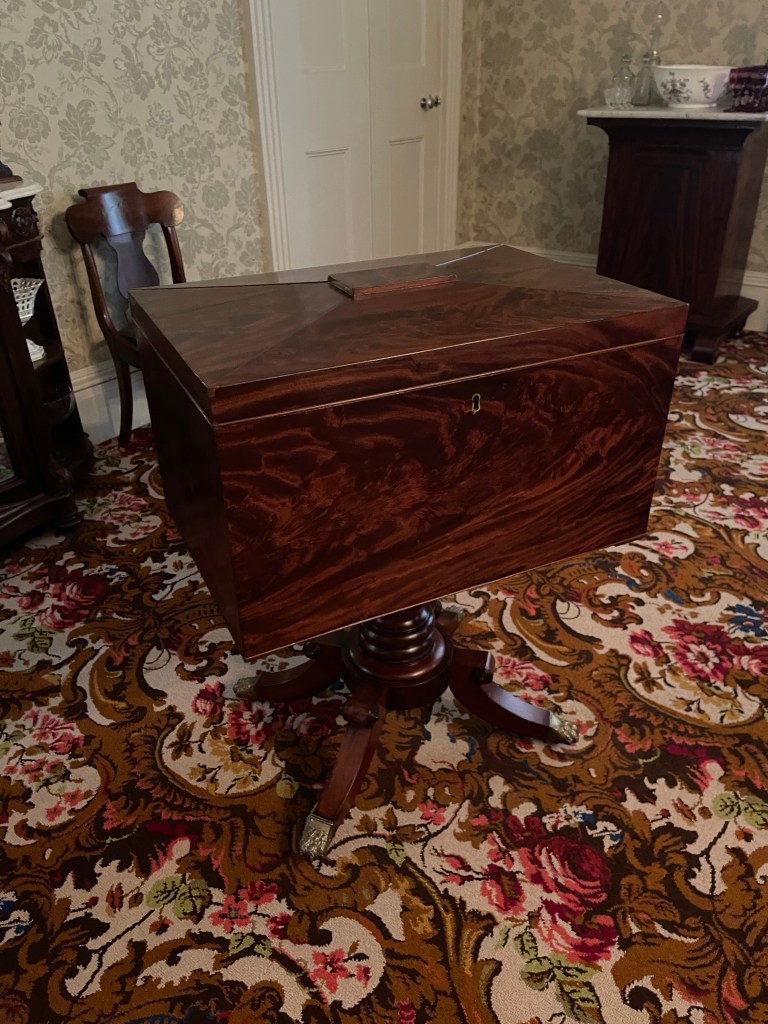
Believe it or not, YETI coolers existed even back then, albeit long before the brand came around. Wood supposedly worked just as well.
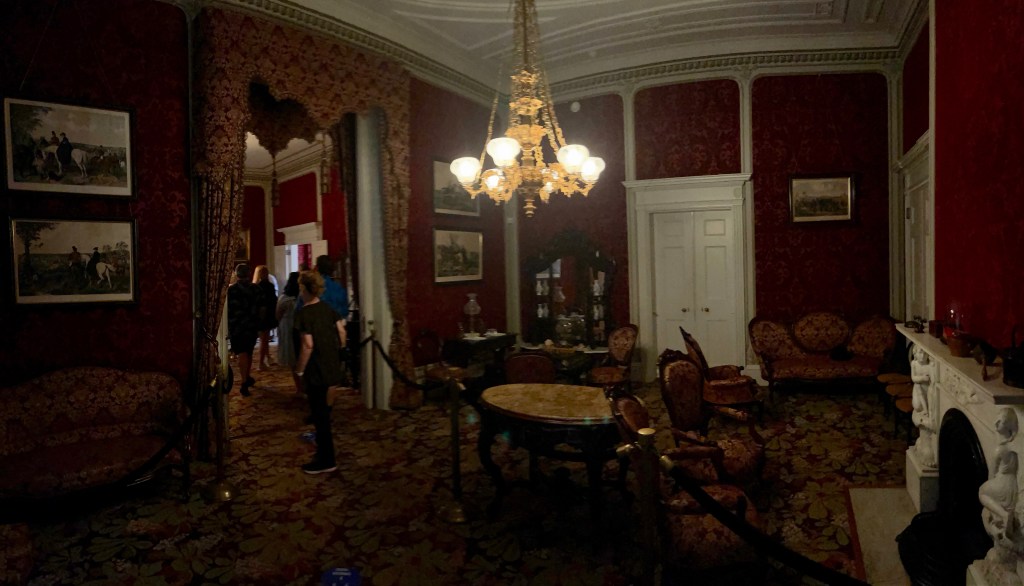
Imagine the receptions and parties that took place in this room; for this was the domain of Varina Davis. In their marriage, Varina had enough charm for both of them (which really says something about Mr. Davis).
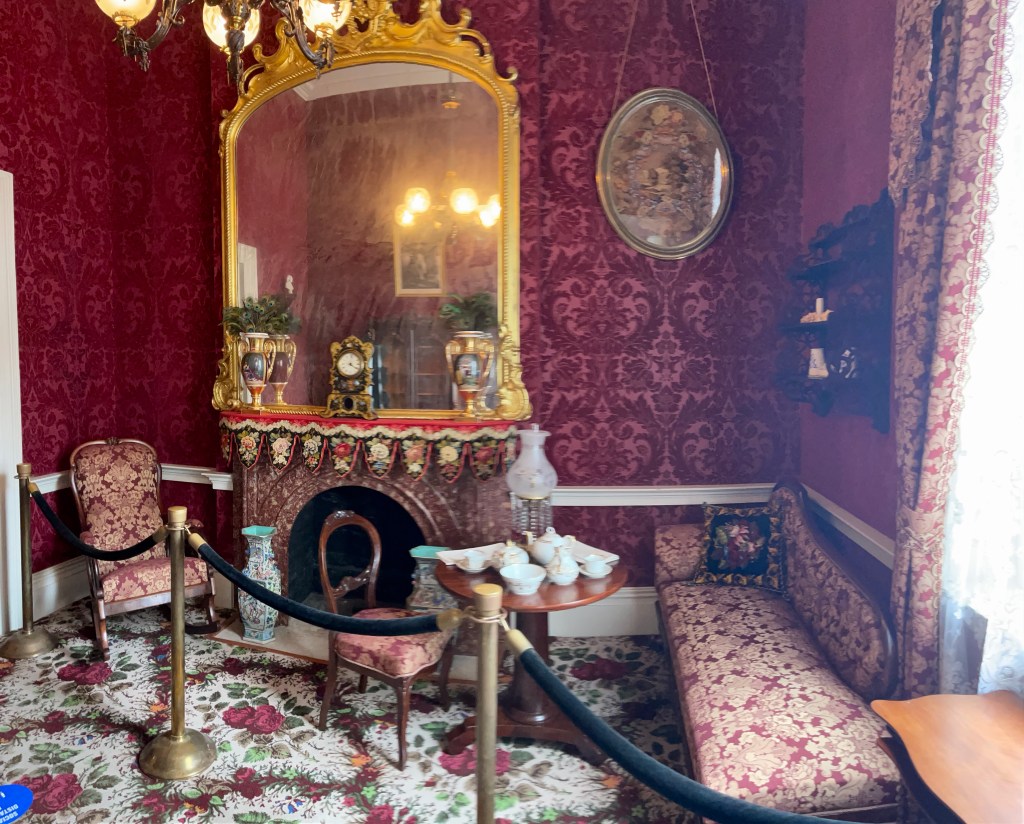
As with many of the historical houses we’ve visted in the past, this house had a “snuggery” (or “man cave”), which Mr. Davis often used.
When Abraham Lincoln and his son Tad went to the newly conquered Richmond, they toured the Confederate White House, signifying a remarkable message that the war was all but over.

Upstairs, one could find the family residence, including the bedroom of Mr. and Mrs. Davis (although I’m not entirely sure why their bed and baby crib are draped in white cloth).

The upstairs office of President Davis, who would meet here regularly with his military advisors to observe the war effort. Davis was more of a hands-on leader, who was often prone to making impulsive decisions, like a child with his toy soldiers (his advisors, like Robert E. Lee, often tried to temper his overbearing approach).
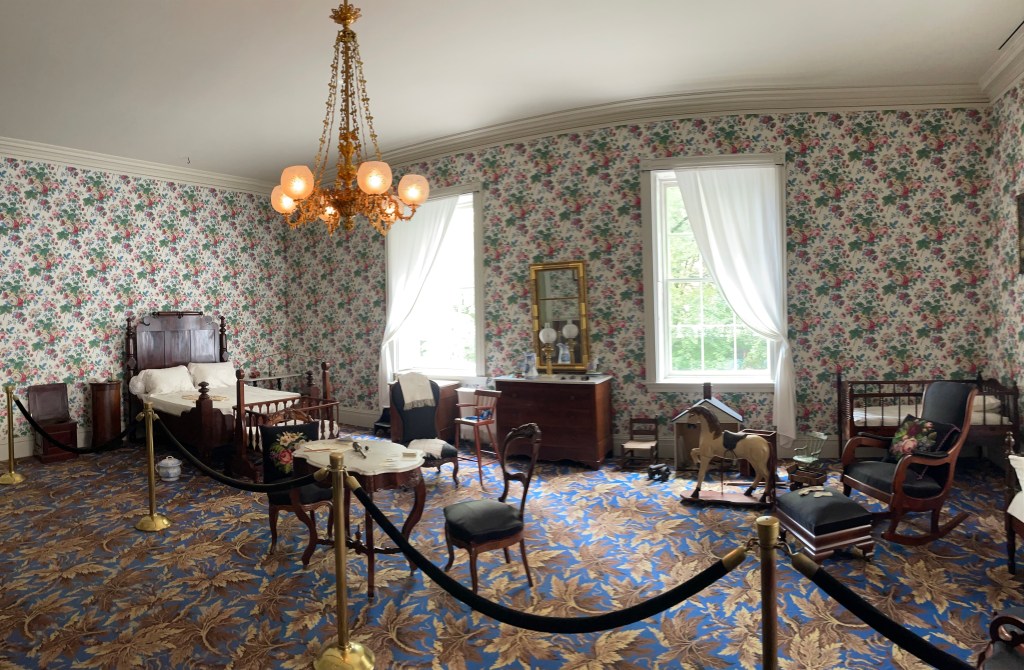
The Nursery was where a number of the Davis children lived during their time here. Of course, as we recalled in Hollywood Cemetery earlier, only one daughter, Varina, would survive to adulthood and produce offspring. Samuel, Margaret, Jefferson Jr., Joe, William would all die premature deaths, and 4-year old Joe, playing on the second-story balcony, fell to his death.
After being released from his two-year prison stay following the Civil War, the Davis family was left destitute, and Jefferson Davis died nearly penniless.
Davis receives much criticism even today for his handling of the war, and often for his “traitorous” ways. Yet at the same time, there’s a sliver of pity that might be saved for him. The loss of losing five children prematurely is something that no parent should have to endure, and I wouldn’t wish it on my worst enemy. Both sides of the war felt tremendous losses, it’s often easy to forget that vicious truth.
Then again, that’s the way of war.
Stopping for a brief surprise stop on our way out of Richmond, we came across a landmark, iconic in more ways than one…
St. John’s Episcopal Church
The oldest church in all of Richmond, St. John’s dates back to it’s time as an Anglican church in 1611, and then it’s reorganization and expansion as an Episcopal Church in 1741. It was further expanded in 1772, and remains an endearment in the local community today.
However, it is remembered most of all as the site of patriot Patrick Henry’s most famous speech: “Give me Liberty, or Give me Death”! , a rallying cry to resist British tyranny over the affairs of the colonies, especially Virginia.
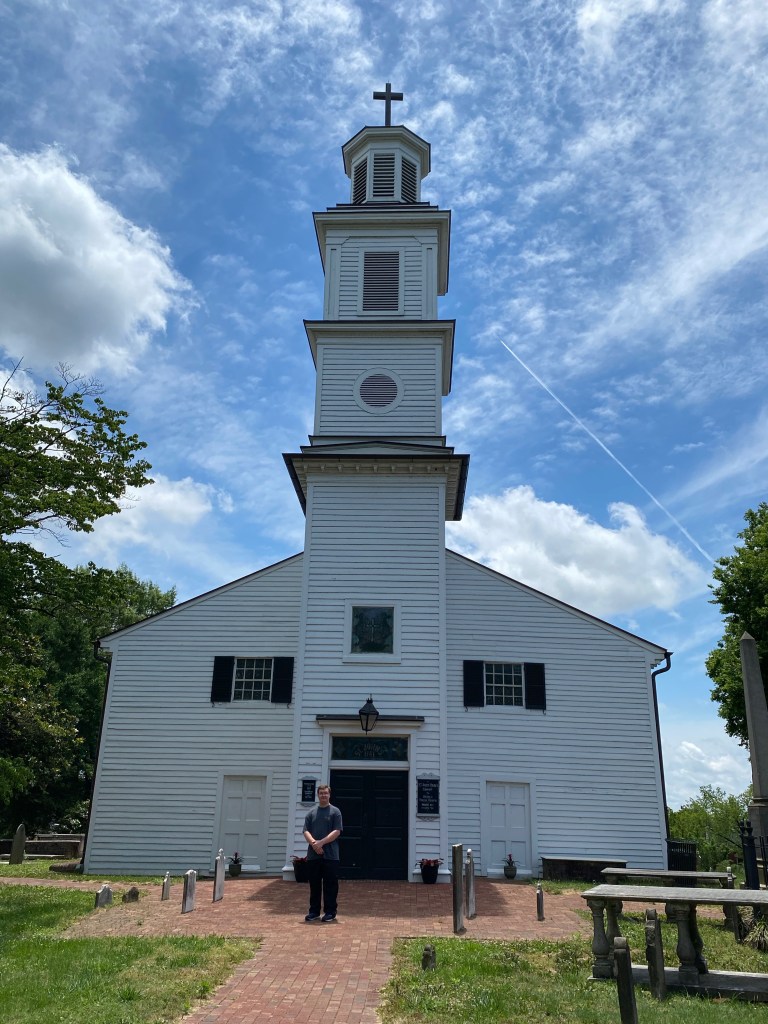
And this building still remains today, hosting a still-active congregation on this historic ground.

This side view shows the frame of the original church, which at one time only consisted of the protruding wing (with the door).

George Wythe was a signer of the Declaration of Independence, and a dear mentor and friend to Thomas Jefferson. I’ve lost count of how many graves of the signers that I’ve come across in my travels…
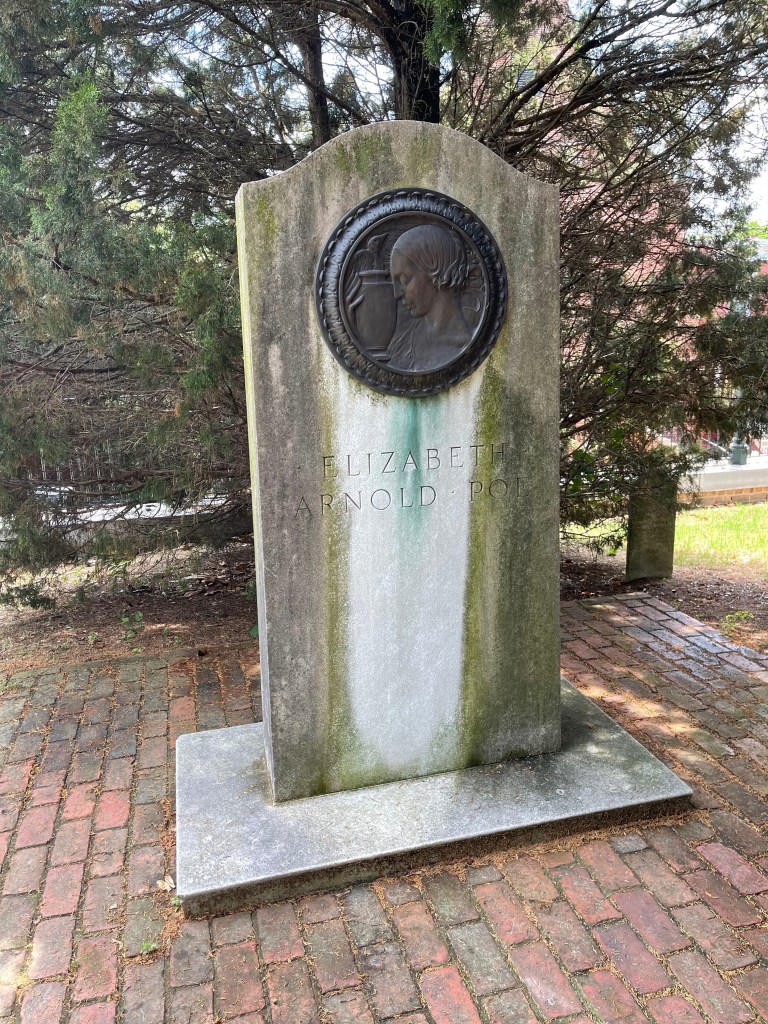
Perhaps for the more literary-tuned among you, St. Johns is also the final resting place for Elizabeth Poe, who was the mother of my favorite poet: Edgar Allan Poe. Dying at the young age of 24, her children would be raised by local Richmonders, and her death signified the beginning of young Edgar’s tragic life of loss and woe.

Here, one can see the interior of the church. Much of the building’s adornments, especially the stained glass windows and pulpit, were made in the 1900’s.

Imagine for a moment that you were one sitting in the audience of this church on March 23, 1775. The Second Virginia Convention had been ousted from meeting in Williamsburg by their British overseers, and here they had come to this church to consider the tides of conflict that were brewing throughout the colonies, particularly in Boston. You would have found many distinguished individuals here at this gathering, including George Washington of Fairfax County, Thomas Jefferson of Albemarle County, Richard Henry Lee of Westmoreland County, Benjamin Harrison V of Charles City County, and of course, Patrick Henry, all concerned of the various taxes and punishments levied against them.
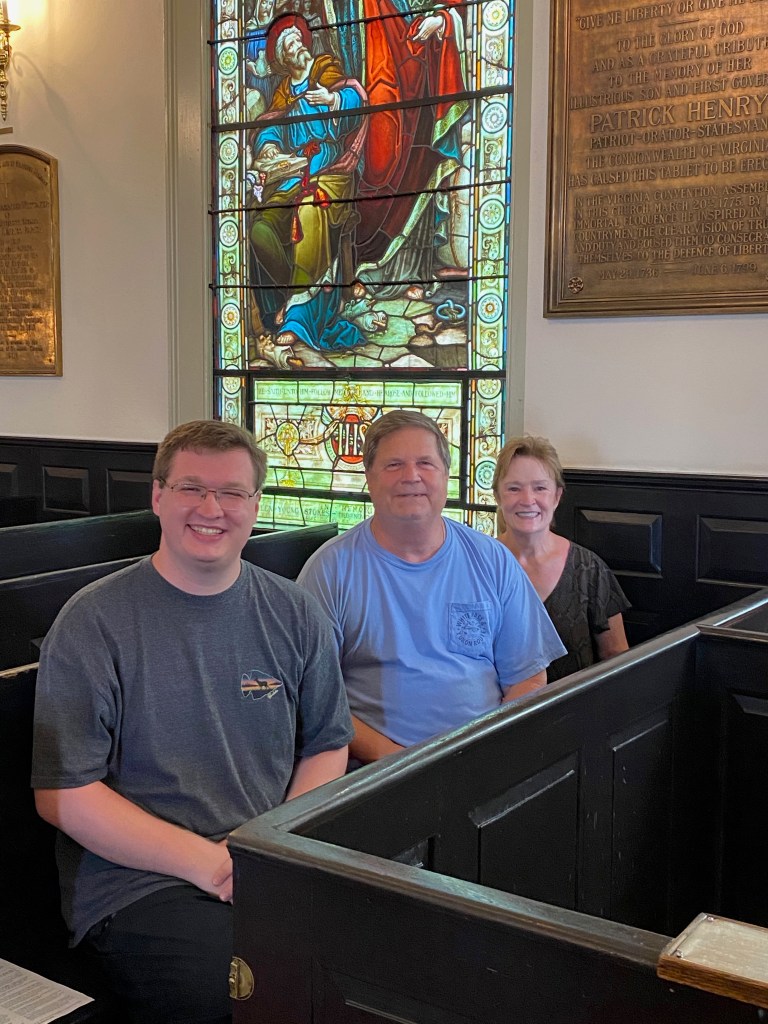
Patrick Henry, when called upon by the assembly to speak, rose from his box, and strode up and down the aisle, speaking to all who would listen to his words.

Up and down the aisle he strode, and as one of the finest orators in the colonies, he waged war with fiery words, capturing the hearts and minds of many in attendance. He spoke for all the colonies of the injustices that Great Britain had visited upon them, decrying:
“It is in vain, sir, to extenuate the matter. Gentlemen may cry, Peace, Peace– but there is no peace. The war is actually begun! The next gale that sweeps from the north will bring to our ears the clash of resounding arms! Our brethren are already in the field! Why stand we here idle? What is it that gentlemen wish? What would they have? Is life so dear, or peace so sweet, as to be purchased at the price of chains and slavery? Forbid it, Almighty God! I know not what course others may take; but as for me, give me liberty or give me death!” — Patrick Henry
Founding Father George Mason, also in attendance, later noted:
“Every word he says not only engages but commands the attention, and your passions are no longer your own when he addresses them.” — George Mason
Within mere minutes, the assembly had approved the motion to form a militia, led by none other than Patrick Henry himself.
Being in the church, hearing those words, must have been quite uplifting and resounding… the power of oratory is surely a powerful one indeed. For ideas can be much more piercing than bullets and swords.
We enjoyed Richmond incredibly over the last few days, but in the end it was time to depart throughout Virginia. So we ventured northeast, and over the Rappahannock River (no I didn’t make that name up), to see some presidential birthplaces! 3 of them!
The first, was James Madison!

Situated at Belle Grove Plantation, in Port Royal on the banks of that… river, is the birthplace of James Madison! we’ll learn more about Madison once we reach Montpelier, his plantation home.
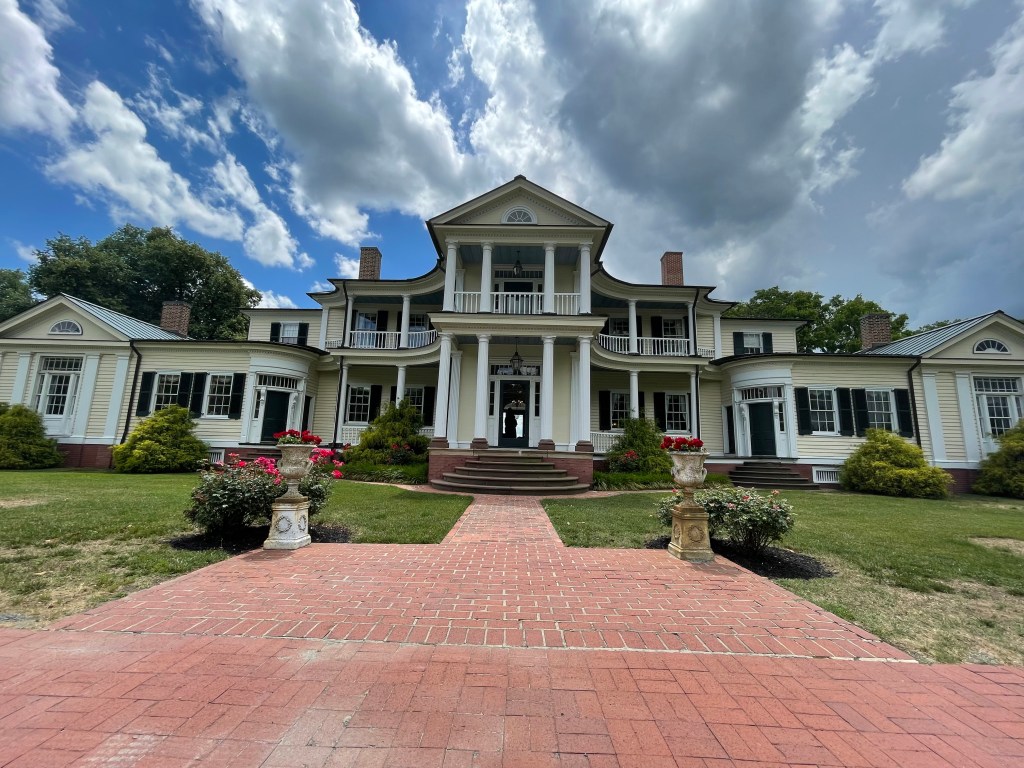
Today, Belle Grove Plantation is actually a Bed & Breakfast! It’s a private buisness, but it looks like they host events like weddings on a regular basis (one looked to be in preparation)!
Heading further north, we entered Westmoreland County, where we found the birthplace of perhaps the most esteemed Virginian of all…
George Washington Birthplace National Monument
The “Father of our Country” was born on Februrary 22, 1732, in a medium-sized planter’s house on the banks of Pope’s Creek, which feeds out into the Potomac River to the north. It’s quite an austere place to walk and reflect upon Washington and his morals.

This 50-foot obelisk is a 1/10th model of the Washington Monument that we all know and love in our nation’s capital. Originally placed in 1896 on top of the burial site, it now stands guard over the entrance to the park.


At one time following the Washingtons’ stay here, Wakefield Farm was located here. Much of the buildings you see however, were constructed in the 1900’s as part of the living memorial.
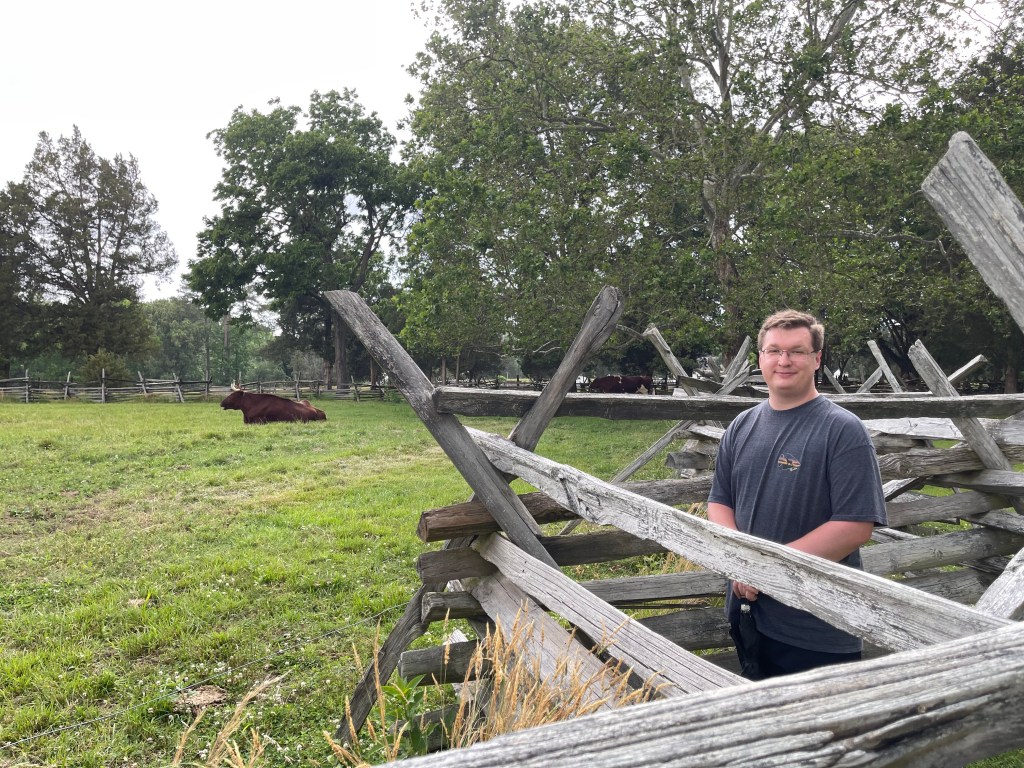
But a living memorial nonetheless!
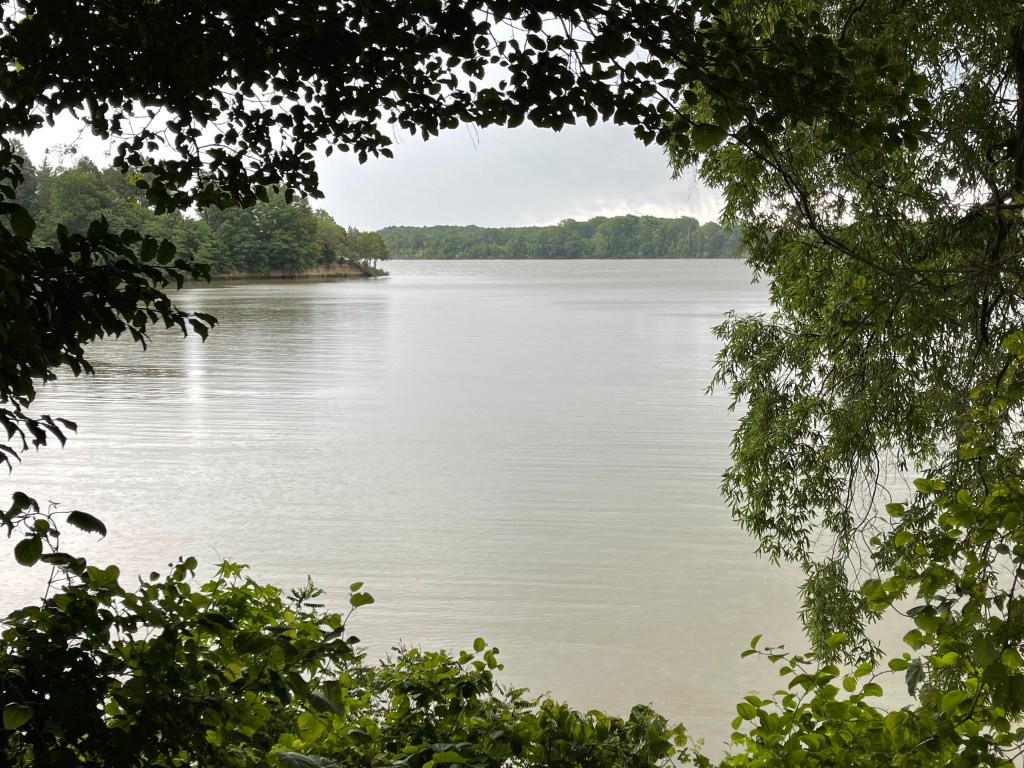
Looking out, one can see Pope’s Creek! Such a gorgeous view…
The Washington Family had actually been involved in this land predating George’s lifetime. His father and brother-in-law, named Augustine and Lawrence (respectively), lived here. Washington’s grandfather and great-grandfather, Lawrence and John Washington (respectively), also invested in the tobacco industry here, with their enslaved workers.
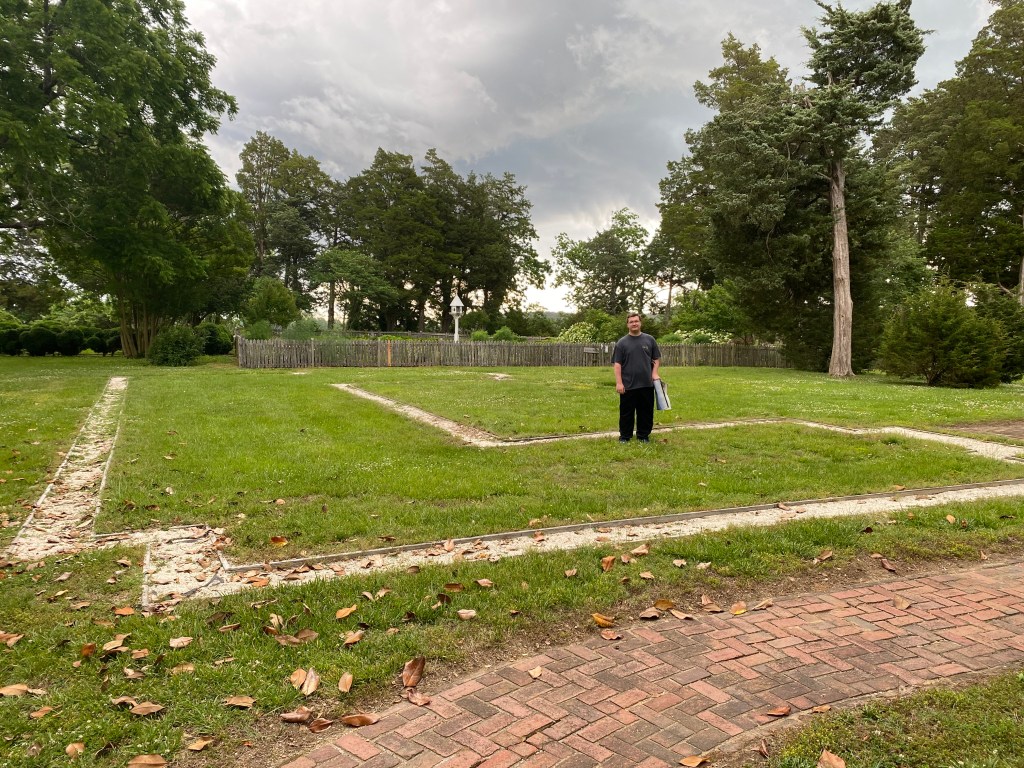
It was on these foundations (protected by gravel) that rested the modest farmhouse where George Washington, First President of the United States, was born.
In the moment we viewed it, we heard the distant poundings of thunder… I couldn’t help but picture the cannons firing during the war, a reminder of what experiences Washington would come to face.

Quite a lovely colonial garden is here! I wonder how often someone maintains it?

The replica home you see above was built in the 1930’s, and was thought to greatly resemble the house that Washington was born in. It was modest indeed for a Virginia Planter, but still quite large for the spacious of the time.
At this point, warnings of heavy rain were starting to come our way, so we had to rush past the numerous nature trails situated here (how I wish we were able to go on them), and head elsewhere on the site, which once covered 1,500 acres.

I can only assume that the name “ice pond” refers to the potential harvesting of frozen ice here during the winter, a rare commodity back in the day.
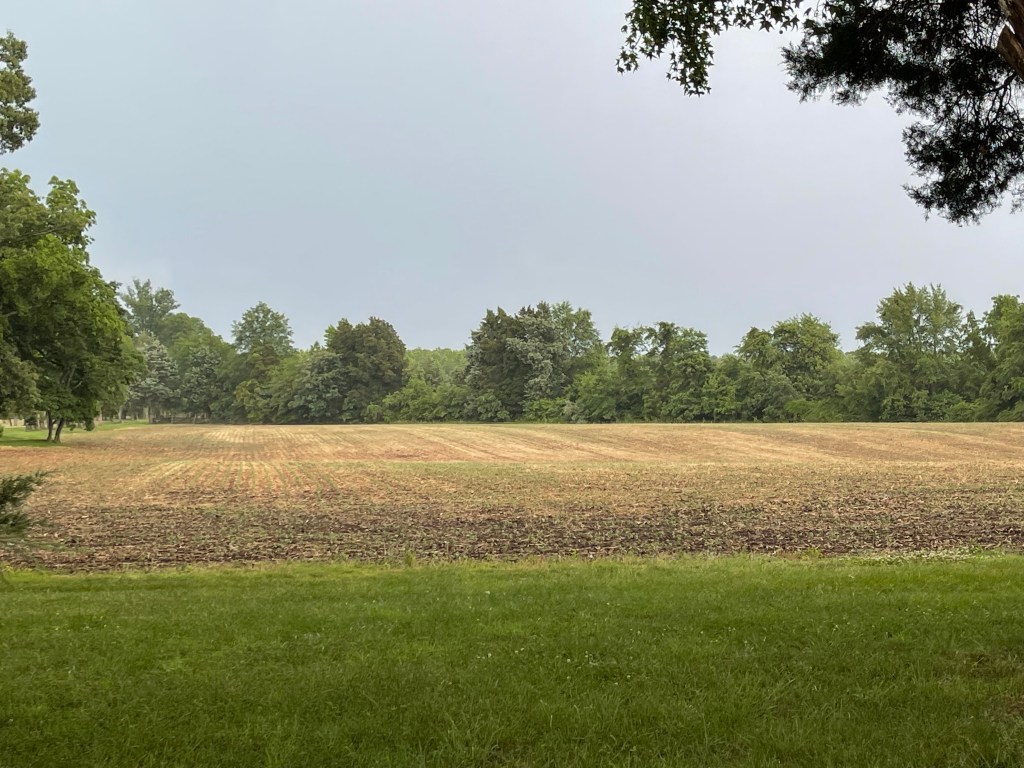

John Washington, George’s great-grandfather, moved from England and built this house on the field above. If you can zoom in on the display, you can learn more about how the Washington Family grew in influence and property.

We were quite surprised to get this close to our friendly neighborhood rabbit, who was nibbling on some grass. Apparently he wasn’t really afraid of us.
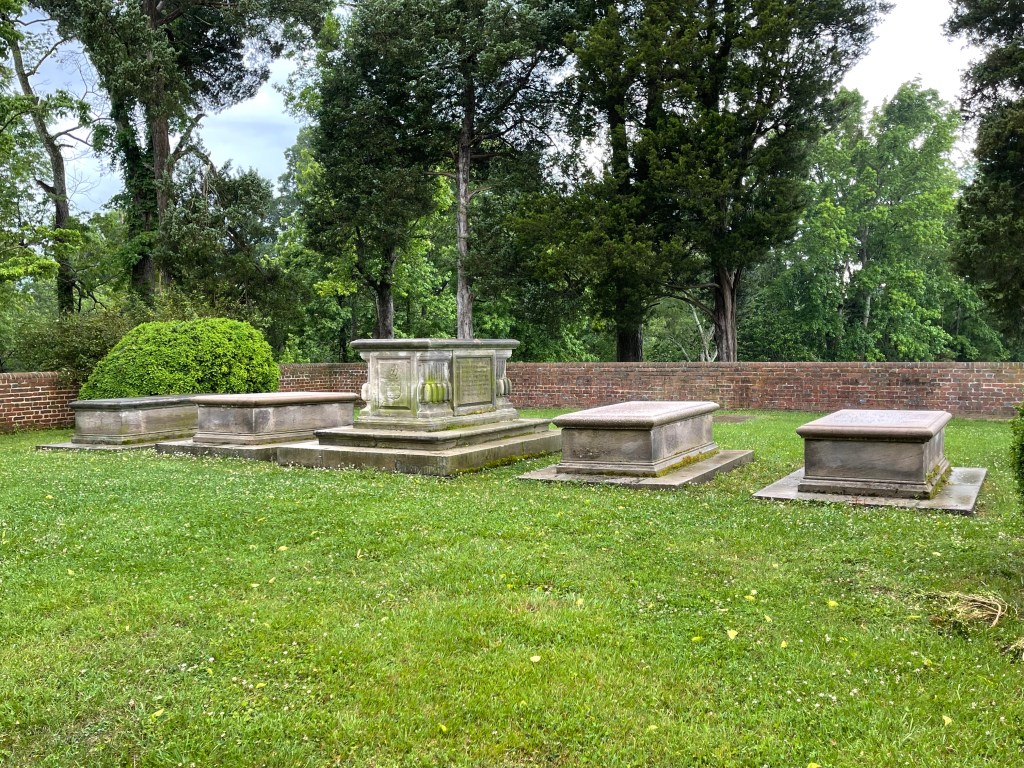
Buried in this tiny cemetery, are the remains of numerous Washington family members, including George Washington’s brother-in-law, father, grandfather, and great-grandfather. The tombs you see are memorials, but their actual burial spots are scattered throughout the cemetery, along with another couple dozen of Washingtons. George’s mother, Mary Ball Washington, is buried in Fredericksburg, which I’m sure we’ll be able to spot later.
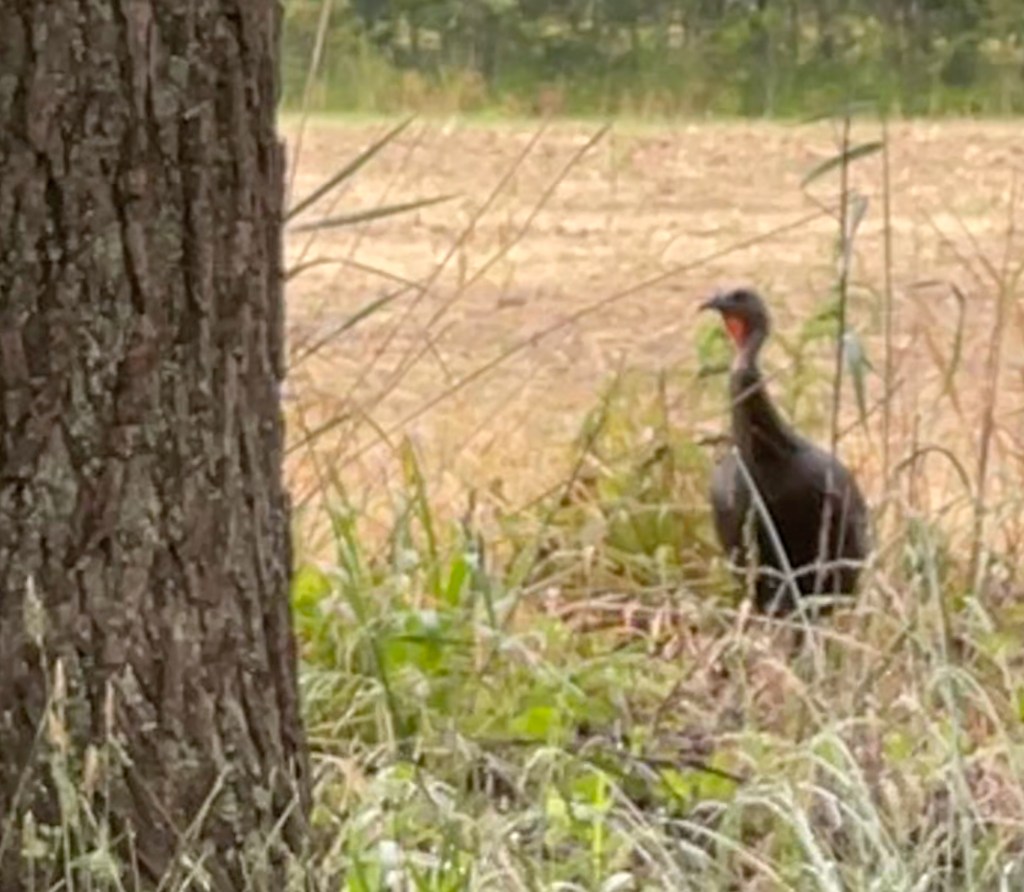
In what was perhaps either sheer luck (or a serious miscalculation of a certain November holiday’s date), we saw a wild turkey! We didn’t have long to spot it before it ran off and literally hopped over a fence, but it was incredible to see!
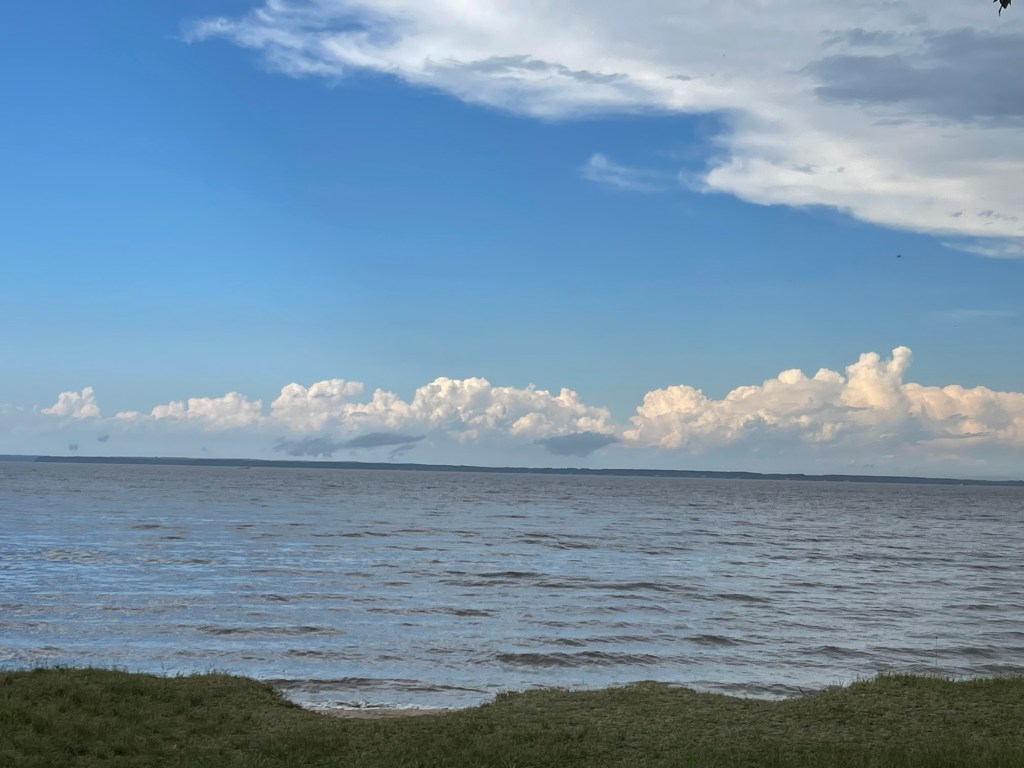
Finally, near the cemetery, one can see the Potomac River! This is the very river that runs right by Washington D.C., our capitol, that bears the name of the most famous of our founding fathers.
I looked across at the far distant shores of Maryland, and I reflected on George Washington, and his high sense of duty and morality that saved this country in the most desperate of times. Aside from his wise and shrewd actions during the Revolutionary War and his presidency, perhaps the most important action of all of his, was his final refusal of power. Instead of ruling for life, he decided to go back amongst the people, to retire again as a farmer in Virginia. That was something that had never really happened in World History before. It was a testament to not only the strength of his character, but also to the potential of the great “American Experiment”.
And it all started here, in the crisp coolness of the trees, on the banks of Pope’s Creek.
Escaping the rain which had hounded us briefly, we proceeded on to the final (and brief) destination of the day.
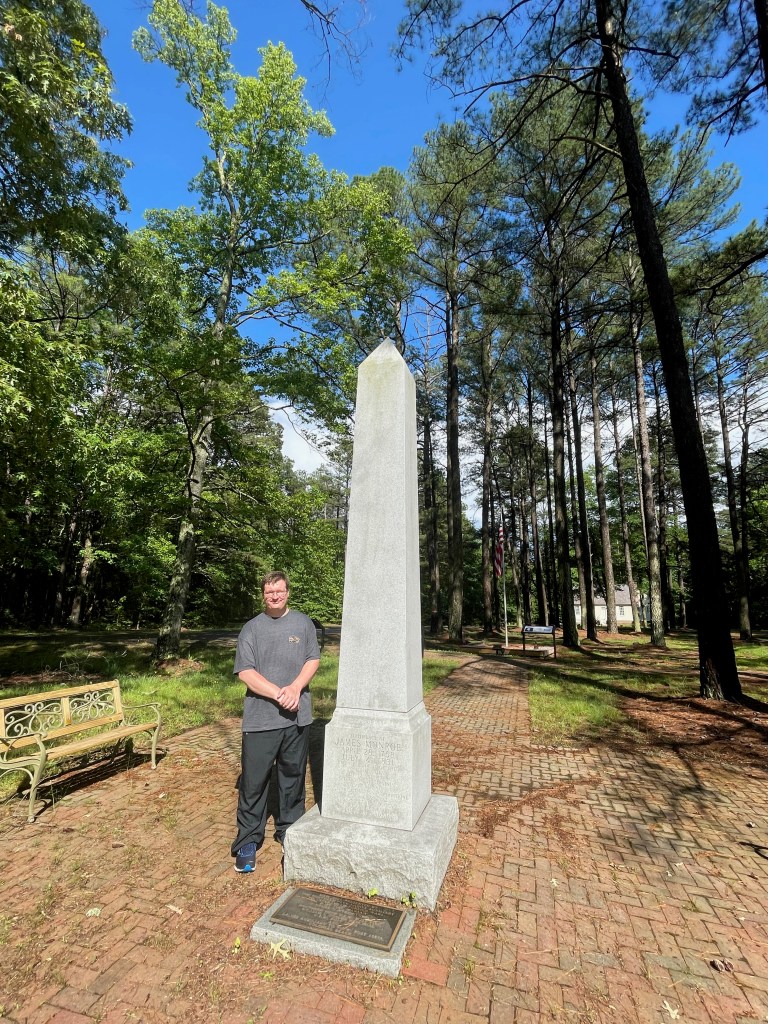
This site, merely 15 minutes west of Pope’s Creek, marks the site where James Monroe, our 5th President was born, and where he spent his first 16 years of life.
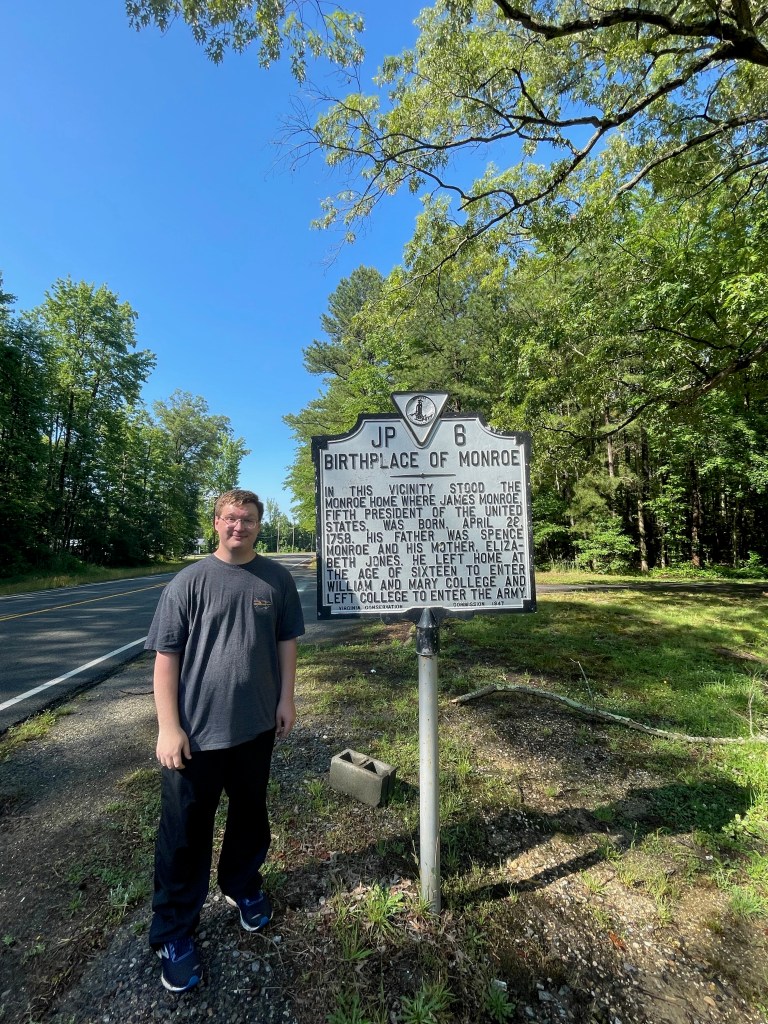
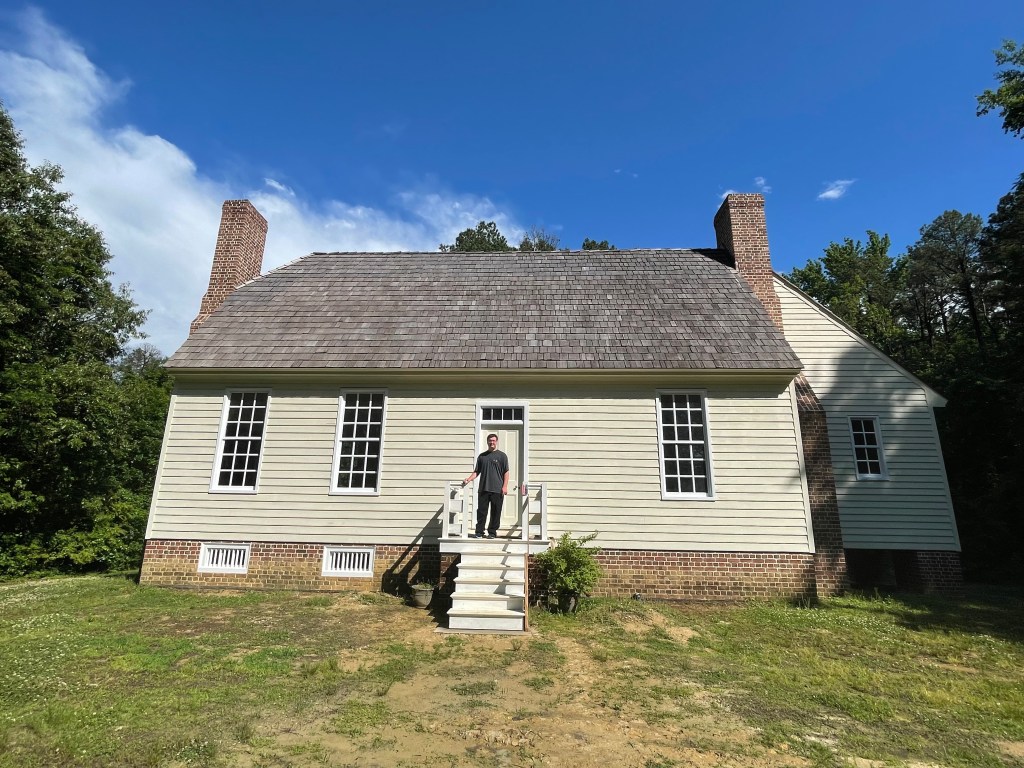
This recently built replica home is built as closely to the image of Monroe’s actual birthplace as can be. Back in 1758, apple and peach orchards accompanied the swamps and forests that surrounded this area!

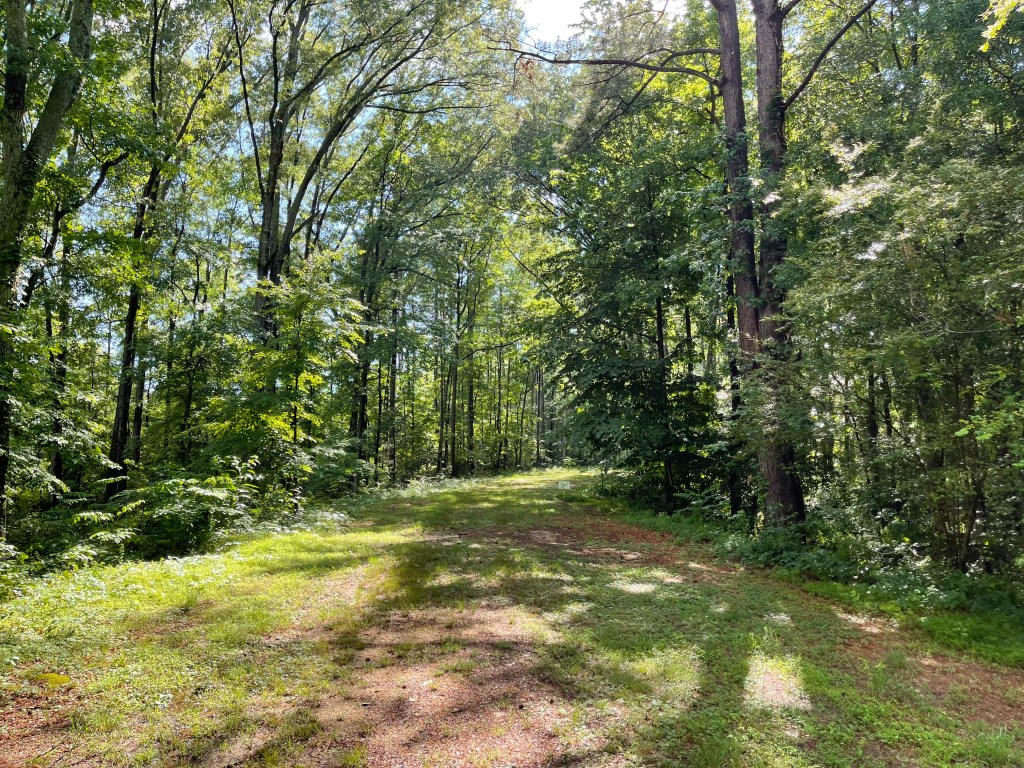
The trails, both peaceful and isolated, were quite lovely to walk on as well. However, I would reccomend not walking on the unpaved paths until they have dried after a rain. We’re still trying to dry our shoes and socks.
From there, within an hour’s time, we arrived at Fredericksburg, eager to rest for the busy day coming! And busy indeed it will be!
From historic and homes, to battlefields and presidents, it’ll certainly be a handful!
See you next time!
 Mark's Historical Roadtrips!