
Welcome back!
Today we explore Montpelier, the plantation of James Madison, and Highland, the farm of James Monroe.
In case you were wondering, yes, I had to look it up to find the correct plural for “James” for the title. With that out of the way, let ‘s begin!
James Madison’s Montpelier
Our 4th President was perhaps one of the most intellectual of all our commanders-in-chief, particularly as the “Father of the U.S. Constitution”, for which he was chief architect, as well as the primary author of the Bill of Rights. Madison’s contributions to our democracy still benefit us even today, and many of his groundbreaking ideas were born right here, at his home of Montpelier.

Despite his towering achievements, Madison’s physical frame was less impressive, standing at a mere 5’4, the shortest of any president. Dolley, his wife, at 5’8, still managed to have a height of advantage of him. Nonetheless, their love was very real, and not impeded by physical differences.

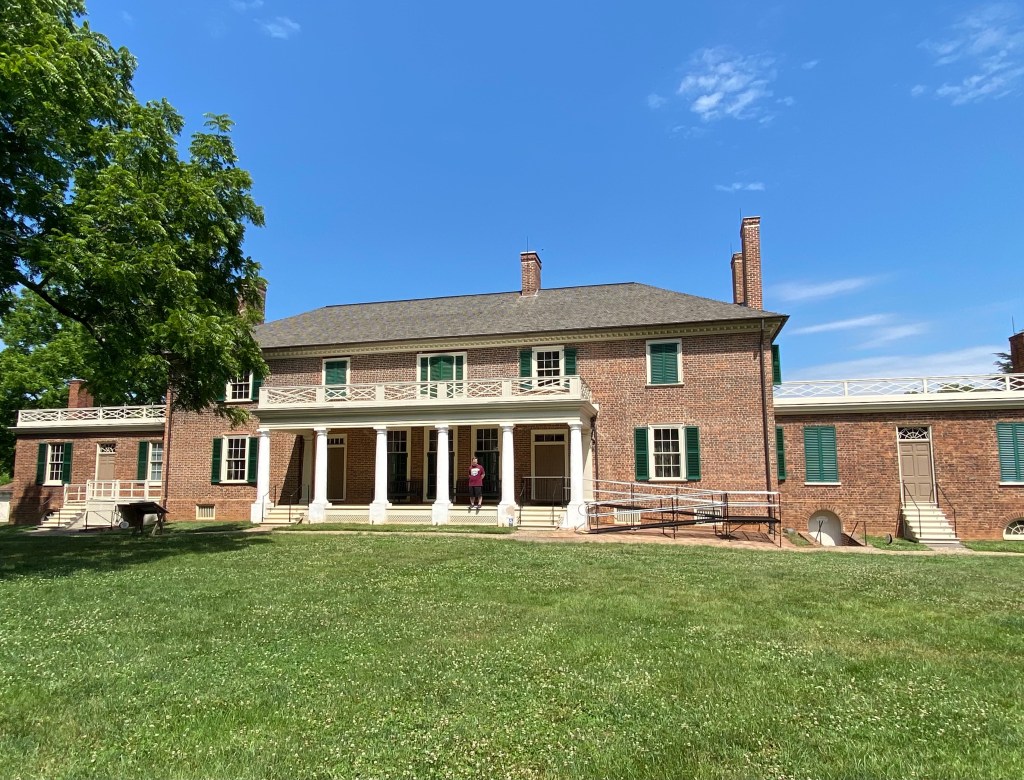
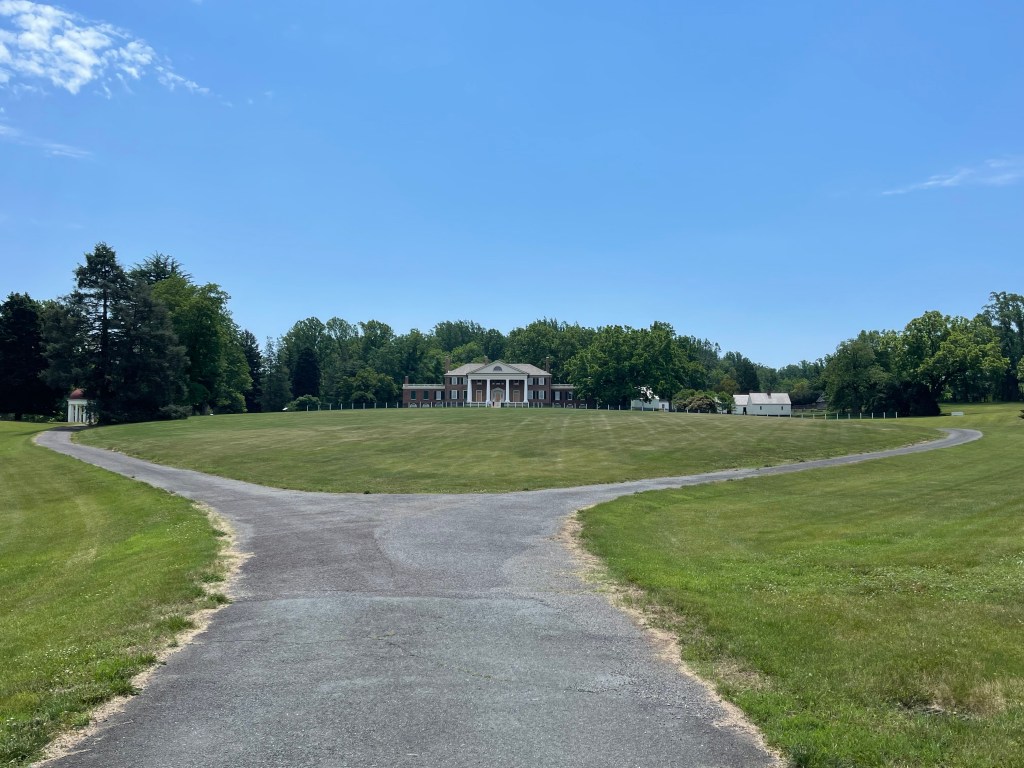
Montpelier, while not as expertly designed as Monticello, still casts an impressive image over the surrounding landscape.

The Madison Family, dating back to the time of James’s grandfather Ambrose, had first built on this property in 1723. Strong in the tobacco industry, this nearly 5,000 acre plantation would suffer heavy financial burden during the Revolutionary War, during the time of James’s father, James Madison Sr. (our 4th President the Jr.) With Great Britain (the primary importer of tobacco) at difficult terms with the new American nation, Madison Jr. found himself in debt when he inherited the property in 1801.

Various buildings, including the kitchen, and slave quarters. At the height of it’s production, Montpelier housed nearly 300 slaves, as it was the largest plantation in all of Orange County (and certainly one of the largest in Virginia).
Although he abhorred slavery as an immoral institution, he freed none of his slaves upon his death. He, like many other of the slave-owning presidents, receive much backlash for this. Perhaps it was because slavery was so deeply ingrained in the southern economy, that removing it would cause economic catastrophe. And there was certainly no easy or immediate solution to it either.
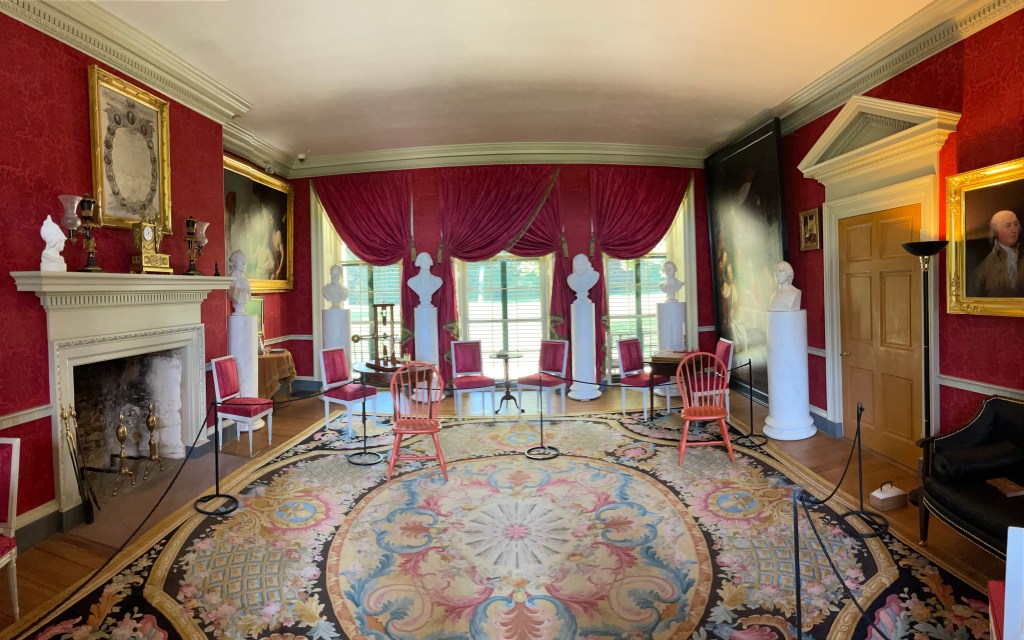
Heavily evocative of the red-walled parlor of Monticello, this room surrounds you with the profiles of the “Men of the Revolution”, including Jefferson, Washington, and Franklin.

James and Dolley truly loved one another. While James was more of a “cold fish”, and more of an awkward introvert than anything, Dolley lighted up a room with her presence and lively spirit. Called the “Hostess with the Mostess” by our tourguide, Dolley was critical to James’s personal success.
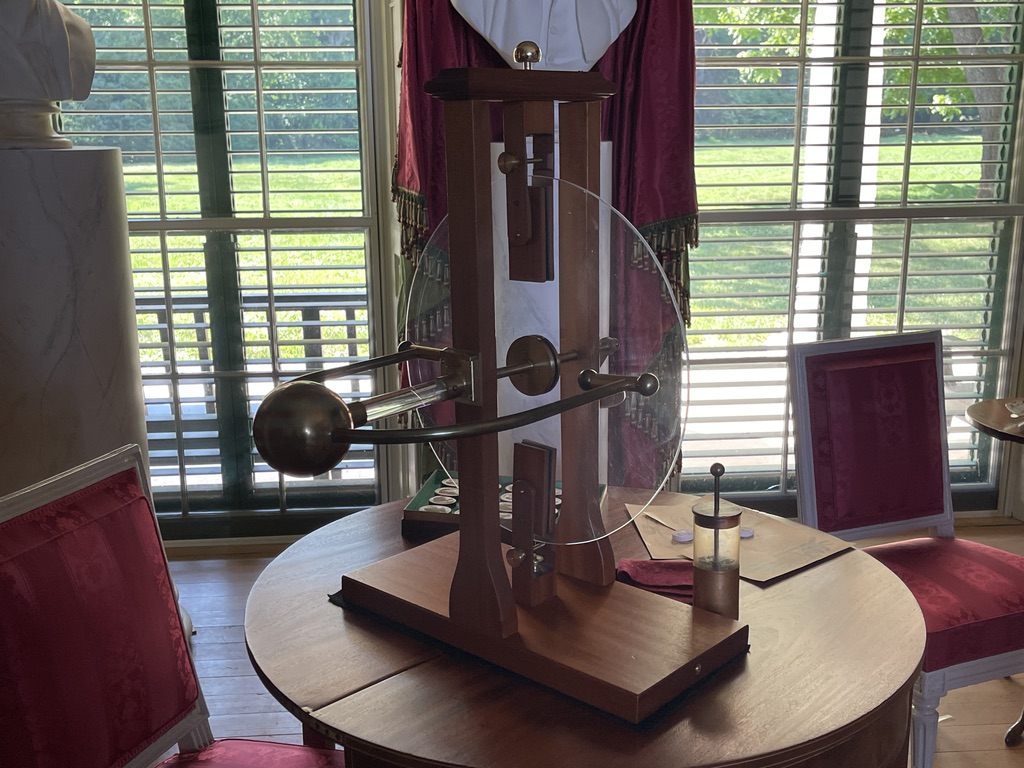
As one of Dolley’s parlor games during parties, she would often use this “static-electricity” machine for a somewhat “shocking” experience with dares. (Editors Note: While writing the preceeding pun, I buried my face in my hands and groaned.)

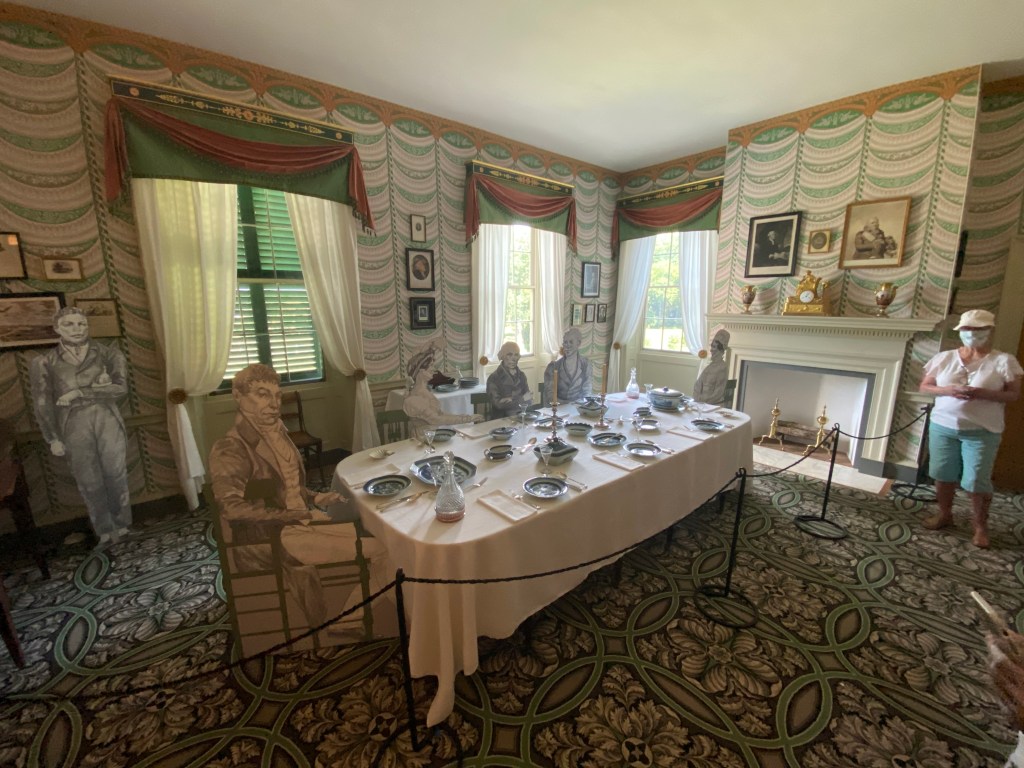
The Dining Room was a lively place back in it’s day, especially with Dolley at the head of the table. In a real sense, these were “her” parties. James however, liked to sit in the middle of the table, listening to the ideas of the various guests around him. He was insatiably curious about all kinds of concepts.
On June 28th, 1836, Madison was eating breakfast with his family, when he collapsed and fell unconscious, He died of congestive heart failure in the next room (sadly not on display due to social-distancing restrictions), at the age of 85. He was the youngest of the delegates of the Constitutional Convention, and the last to die.
The figure on the far-left you see is Paul Jennings, a prominent slave owned by the Madisons. He’s perhaps most notable for helping Dolley Madison to save the famous portrait of George Washington, before the British were able to burn the White House during the War of 1812.
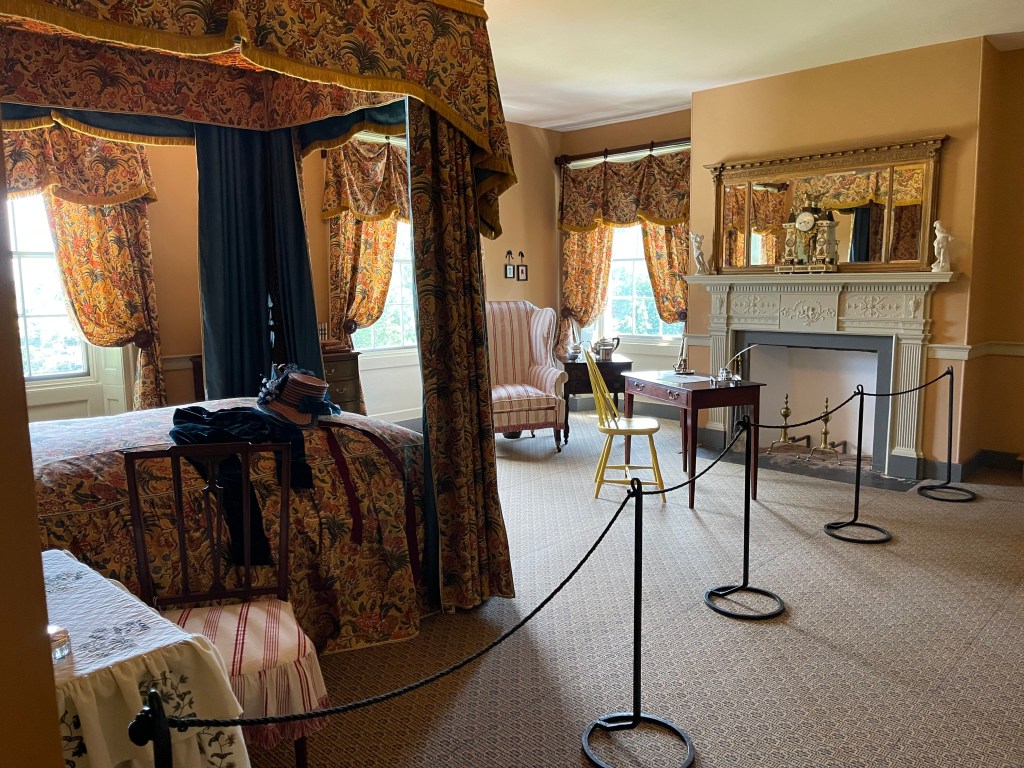
James Madison’s bedroom, upstairs. I was only able to snap a brief picture, as our tour had to pass it due to restrictions.
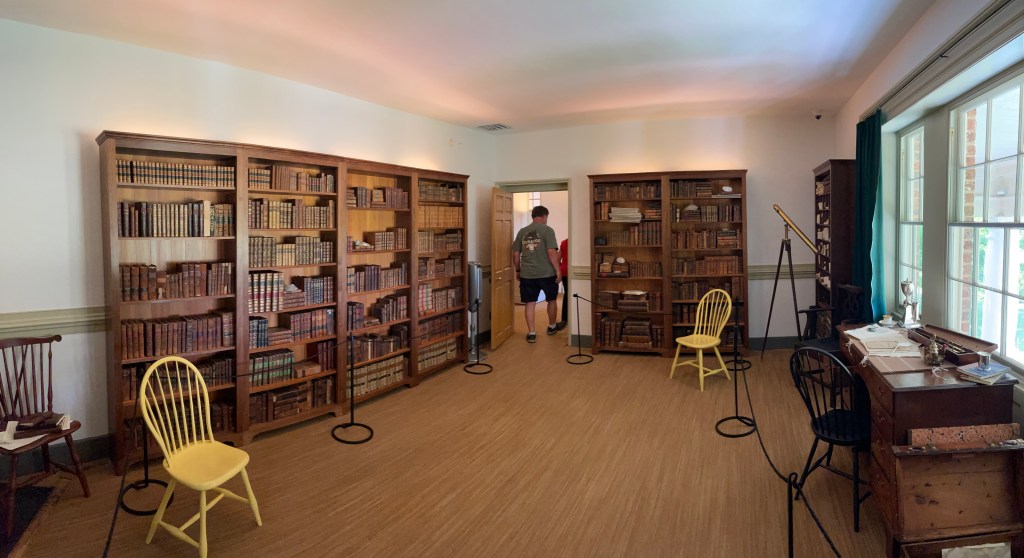
President Madison’s entire library filled this room on the second-level, directly above the front door. Tall stacks of books were everywhere in this room, with tiny passageways through the room. It was here that James Madison would brainstorm many ideas for the new American government that would replace the weak Articles of Confederation, our first Constitution.
Working ferociously at his study, he would contribute many incredible ideas to what would become the new government, most notably the suggestion of a bicameral legislature, both with representation based on state populations. When the smaller states fought back (in fear of being underrepresented in this system), Madison compromised by allowing the upper house to be based on equal state representation. This led to the creation of our modern House of Representatives and Senate.
Being the principal author of the U.S. Constitution, he was also critical to addressing the concerns of anti-federalists (those who advocated for States’ Rights over a strong federal government), by adding the Bill of Rights, the first ten amendments ot the Constitution that secure our most basic liberties.
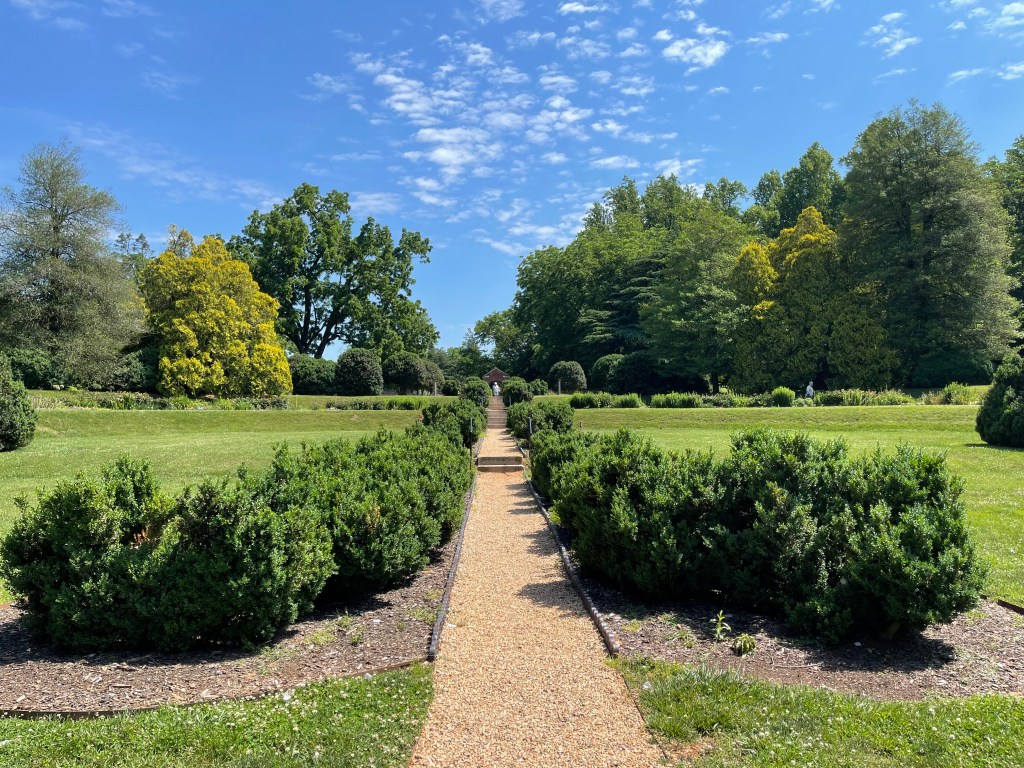
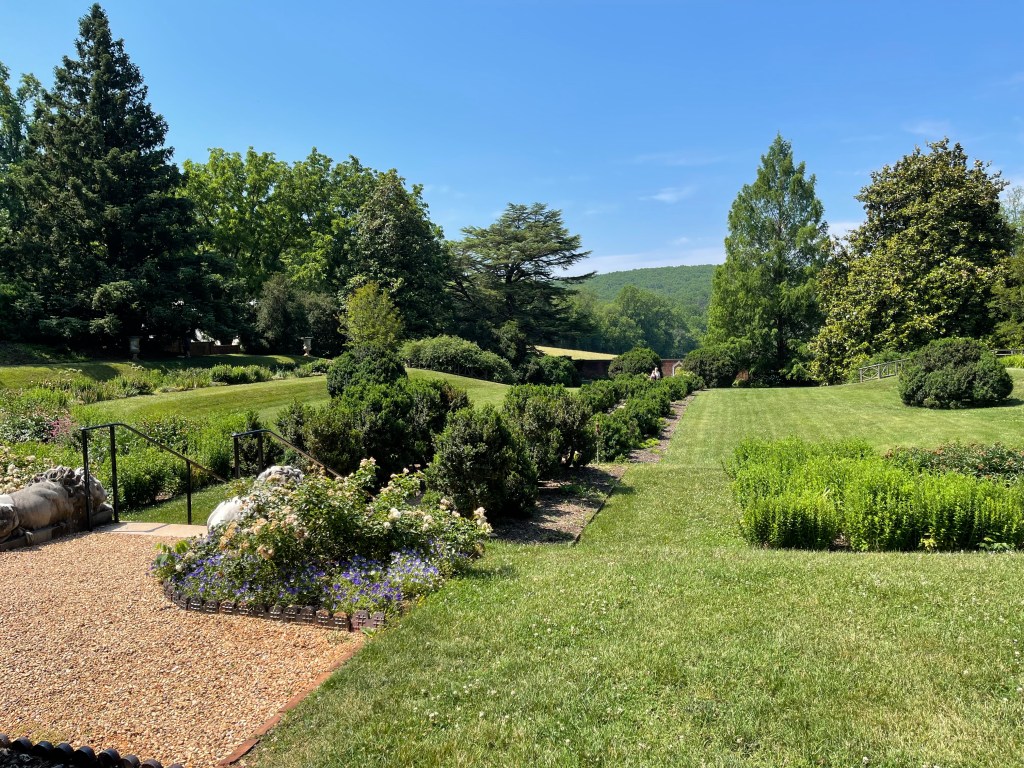

When Dolley Madison sold Montpelier in 1837 and moved to Washington D.C., the property was later purchased by the famous duPont Family, of chemical and industrial wealth and fame. They built these gardens, which remained on the property after Montpelier was converted into a Historic Site in the 1990’s.
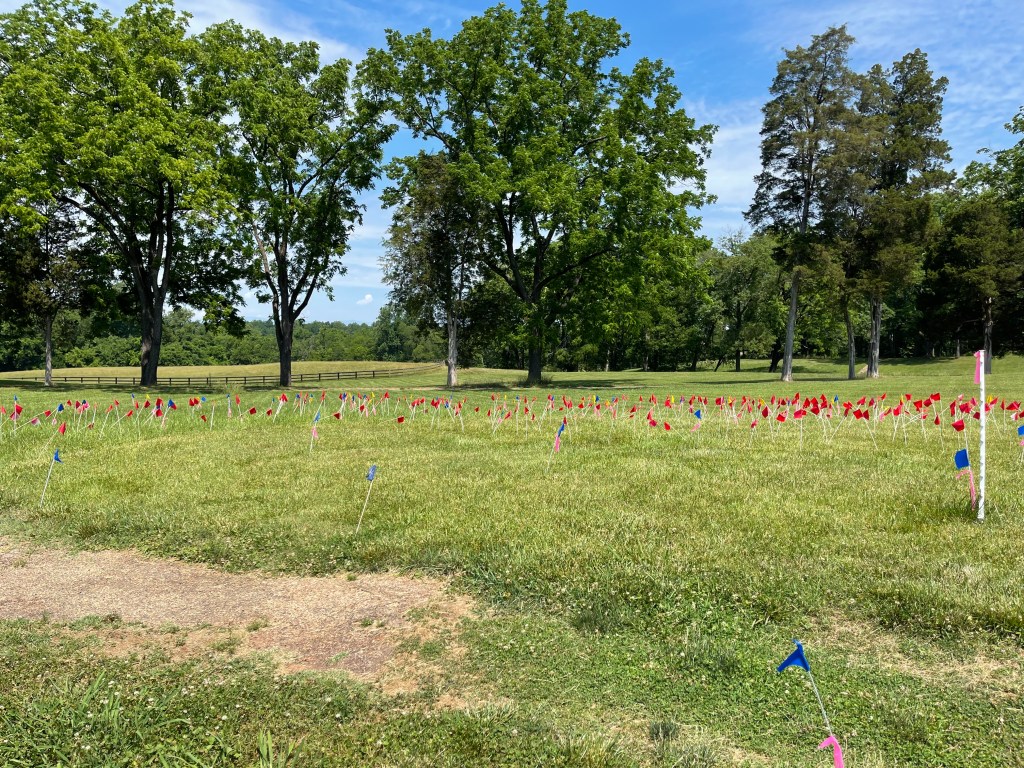
As typical at many of these historic plantations, archaeological work is still in progress, and the learning of the heritage and lifestyle of those that lived here is still quite dynamic.
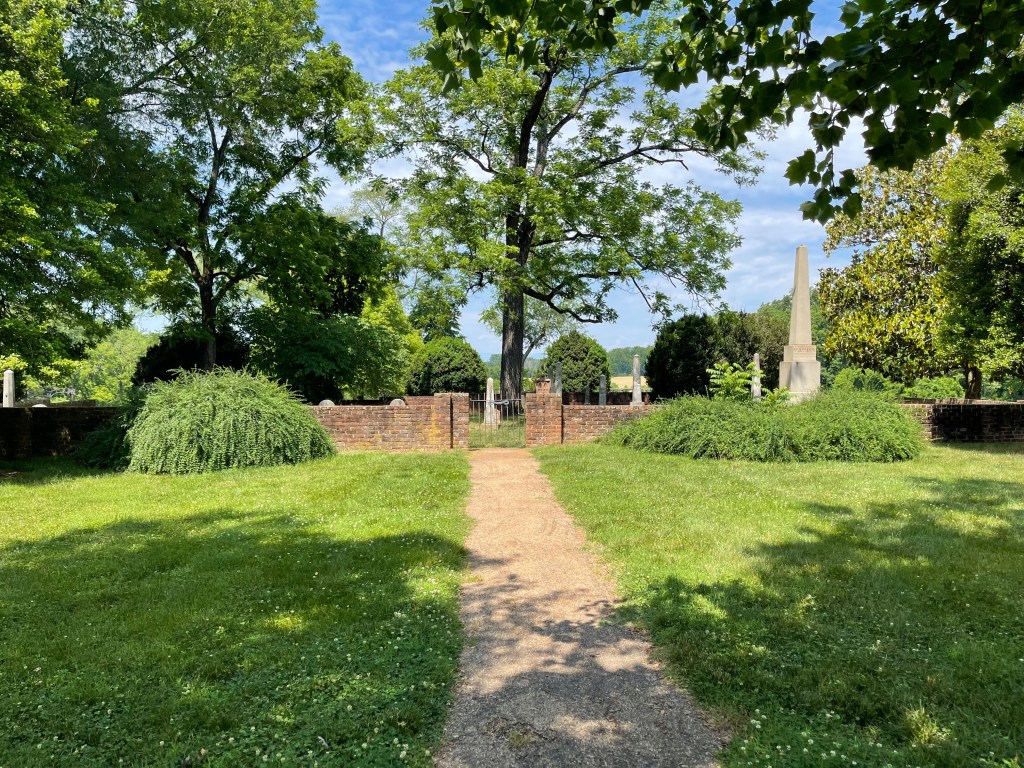
Always the most poignant moment of a site like this, is the family cemetery.
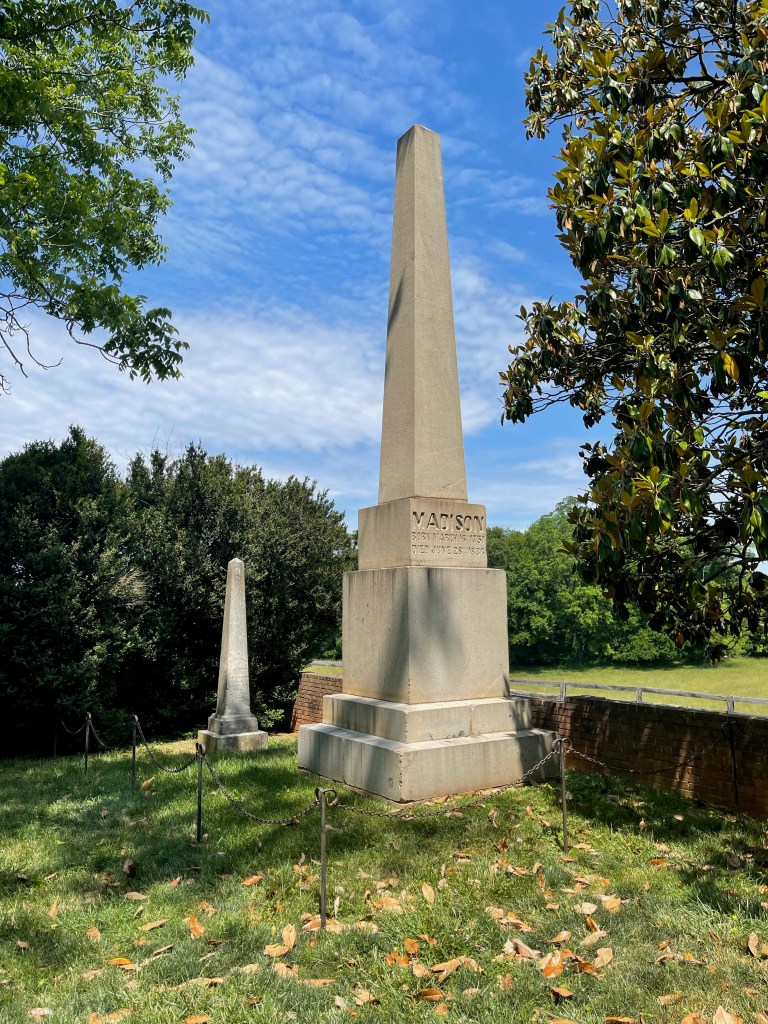
Here lies the 4th President of the United States, and Father of the Constitution, James Madison.

It seems that Dolley’s headstone has been broken a couple of times in the past.
In my mind, one image perhaps describes James Madison best. The view from his front porch.
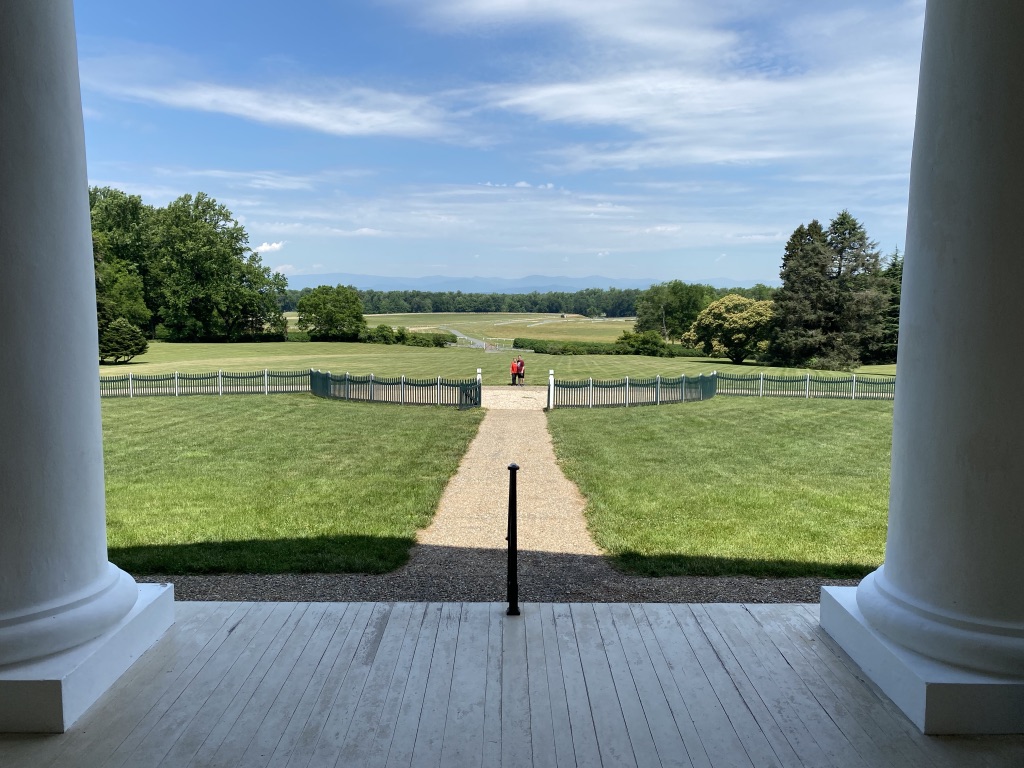
See it?
No, not the racing tracks and fences for horses. Those came during the duPonts’ time here. Look further.
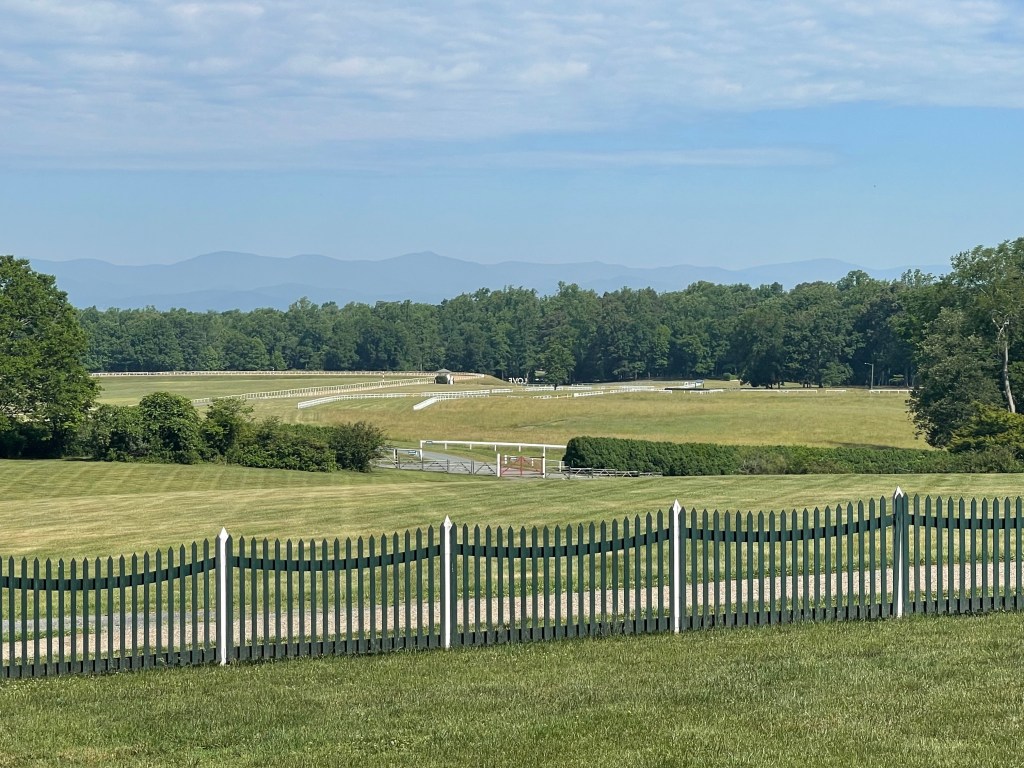
Far in the distance, one can see the Blue Ridge Mountains…
As he looked out at this view from his office, as he was writing the many notes for the Constitutional Convention (and afterwards with his memoirs), I like to think that he wondered what was beyond those mountains… was it perhaps potential?
He knew that even democracy had its’ failings… but it was all in the effort toward a more perfect union. The creation of a new Constitution, that benefited “We the People”, was an occurrence that had never happened before in the world. “The Great American Experiment.” And in that union, Madison placed his trust unto the people. As they climbed that mountain of hope… what would they find?
That was what Madison strove for.
With Madison’s final resting place visited, that means that only one president remains on my list to complete my long sought-after quest to visit every presidential gravesite!
Unfortunately, Andrew Johnson will have to wait until we get to Tennessee.
Leaving Montpelier, we began our short trek to Charlottesville to the southwest. Along the way, we came across a couple more presidential birthplace markers!
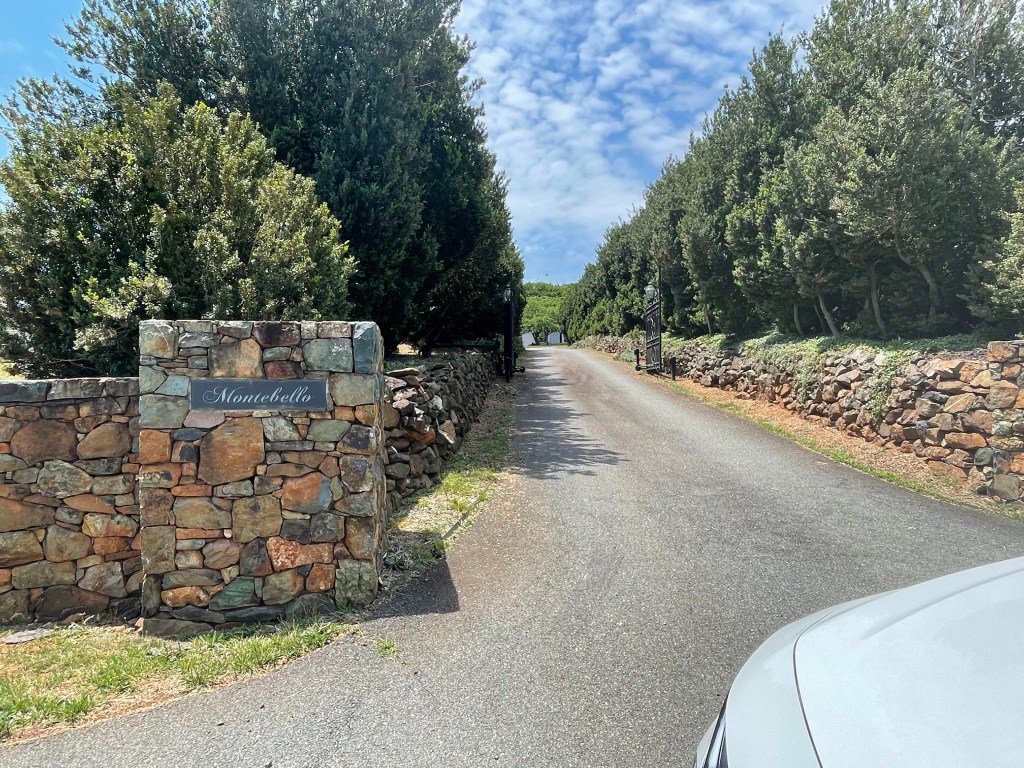
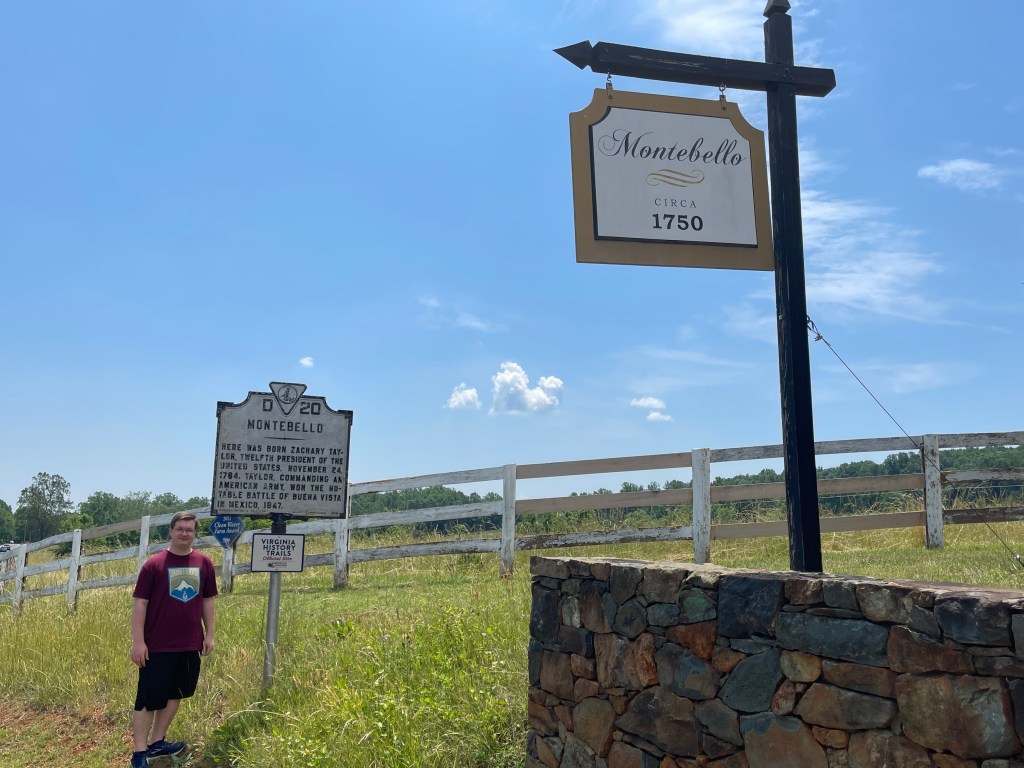
Montebello Plantation was where 12th President Zachary Taylor was born! As the famed general and “hero” of the Mexican-American War, Taylor would only be president for a year. He and James Madison happen to be second cousins. Unfortunately, Montebello is a private residence.

Second, we found the birthplace marker of Thomas Jefferson, near Charlottesville (Shadwell is a tiny community nearby)! No structure remains near this roadside marker, so we simply read it and went on our way.
Arriving at Charlottesville, we came upon the last site of the day: Highland!
James Monroe’s Highland
Though Monroe was not able to visit the property extensively throughout his career (especially through his time as a diplomat and as President), he owned Highland for nearly 25 years, starting in 1799, before selling it in 1825 due to debt.


Monroe was encouraged by his dear friend Thomas Jefferson to purchase some property near Monticello (just down the road) so they could be neighbors, and Monroe did just that. They were truly two peas-in-a-pod.

Although this was technically a “farm”, and not a “plantation”, Monroe still owned slaves; the most being 45 at one time here (a somewhat smaller number compared to larger plantations).
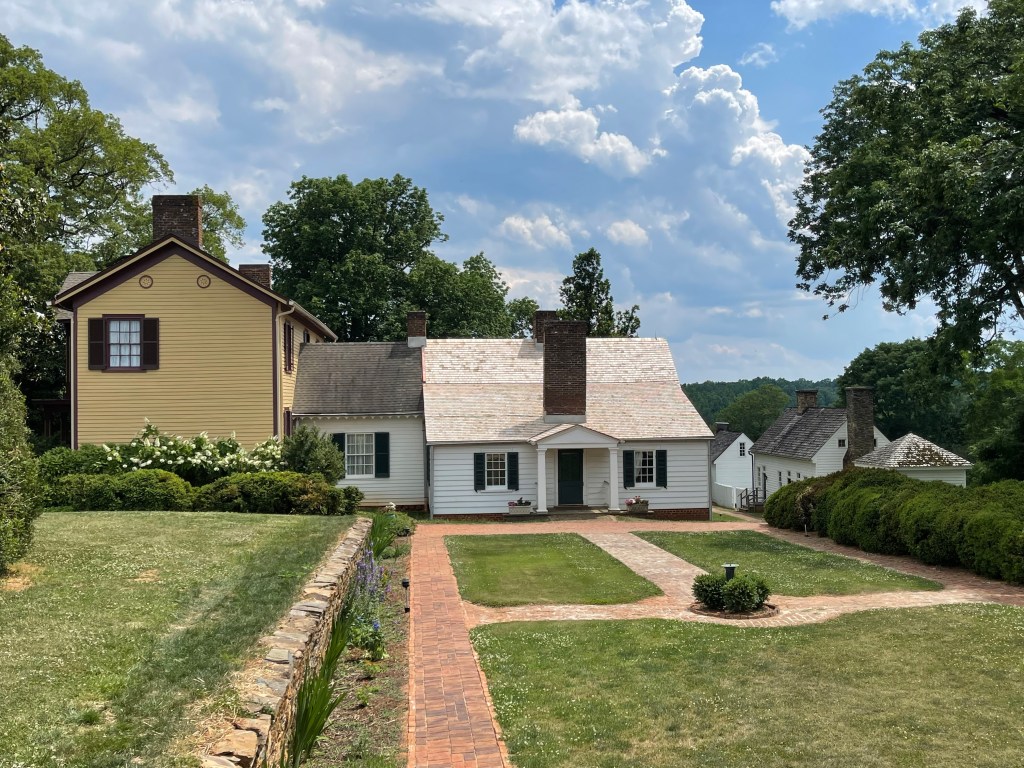
Most of the buildings, including the central slave-quarters (a guesthouse for later owners) and the kitchen (right) are replicas, although the structure to the left was original to Monroe’s time.
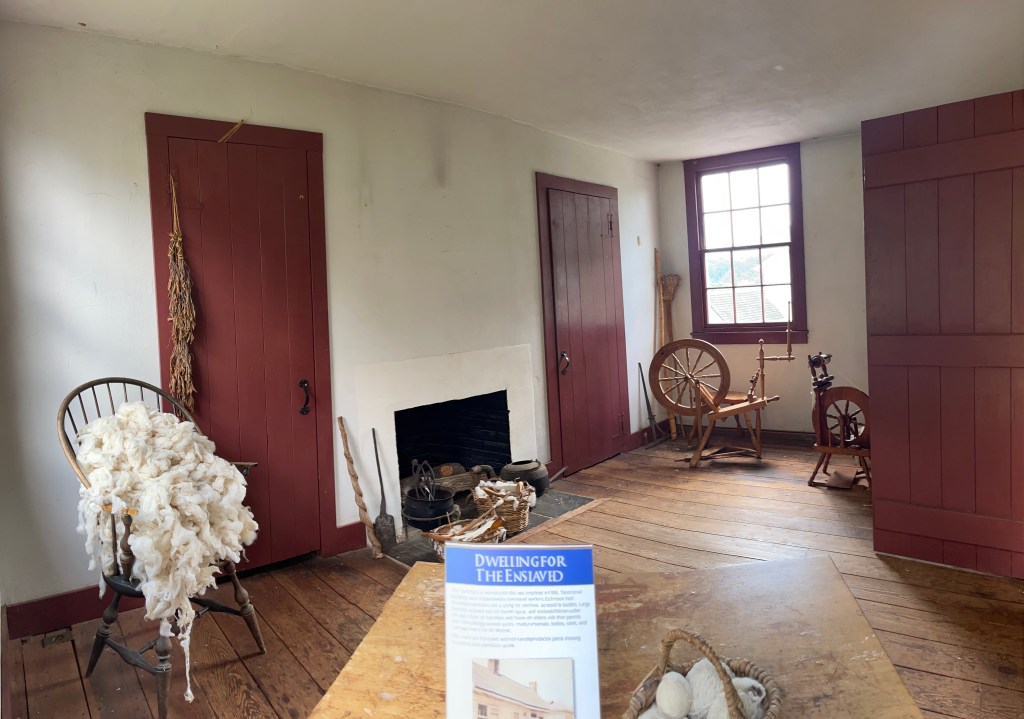
The slave quarters were considerably nicer than many other slaves had at other plantations. That’s not saying much, considering its still slavery.

The original house in which Monroe lived in burned down long ago, so most of the property you see was made by later owners during the Victorian Era. Typically, you can go inside and tour the house, viewing the many artifacts of Monroe that once belonged to them (90% of the items being actual belongings of his). However, due to its tight spaces, it’s closed to the public. They are planning to hopefully open it up more next month.

When not utilizing the summer kitchen (mentioned earlier), this kitchen is used during the other seasons, so as to warm the house more. Further restoration work is in planning at the moment, where they plan to incorperate new knowledge that the interpreters have learned recently.

Until recently, the property was called “Ash-Lawn Highland”, the Ash-Lawn portion dating back to the one of the many owners following Monroe (Mr. Garrett if I remember correctly, in 1837). Now, its’ simply called “Highland”, as it was in Monroe’s time.
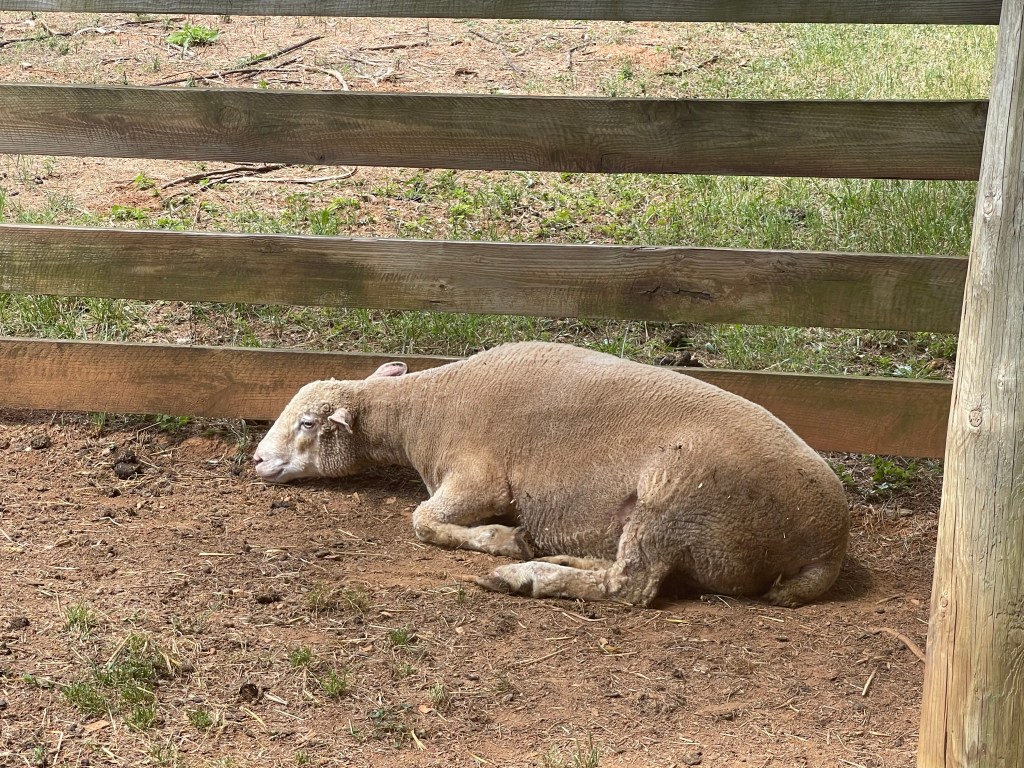
Still a “living-history” farm, sheep and chickens roam the fields nearby. Though in the case of this poor sheep trying to take shelter in the shade, the 90′ weather was just too much for him.
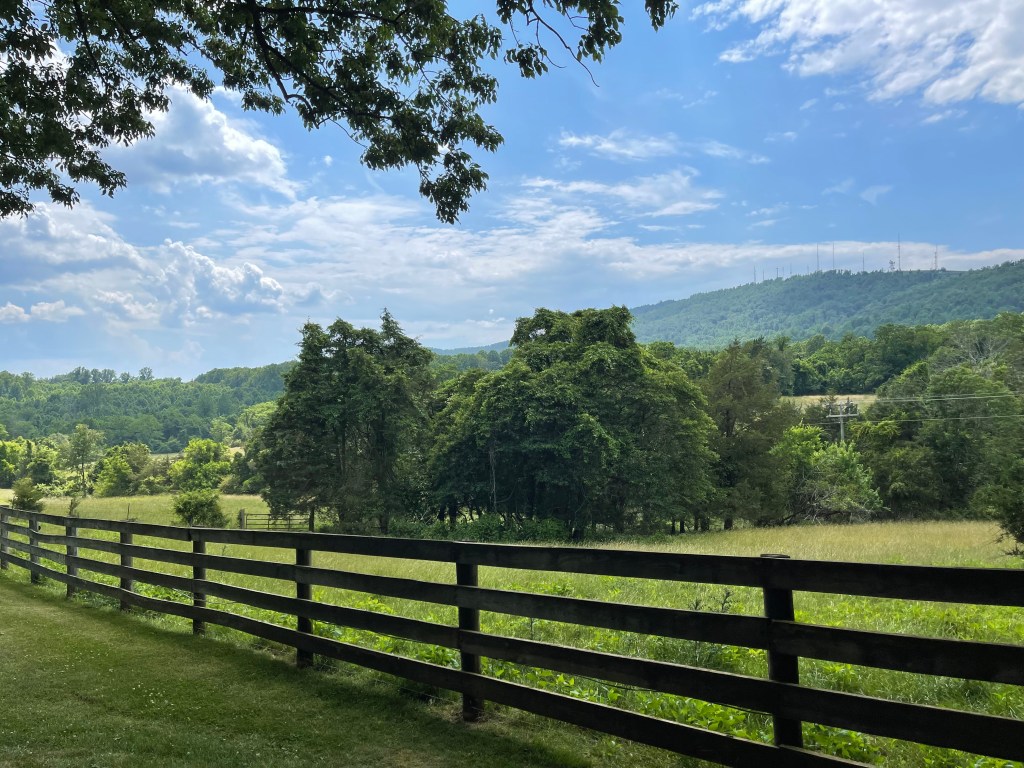
Albemarle County, where Charlottesville is located, is quite the mountainous region. Some of the views are just gorgeous.

Three interesting things to note here. One, you can see the yellow house in the back, built in the mid-1800’s.
Second, look at that 300 year-old tree! It was surely here during Monroe’s time!
Third, the foundations you see on the ground (if you squint) are the actual ones of Monroe’s original home! Archaeological work continues on the property to further learn more about it’s original structure, and the fire that destroyed it.
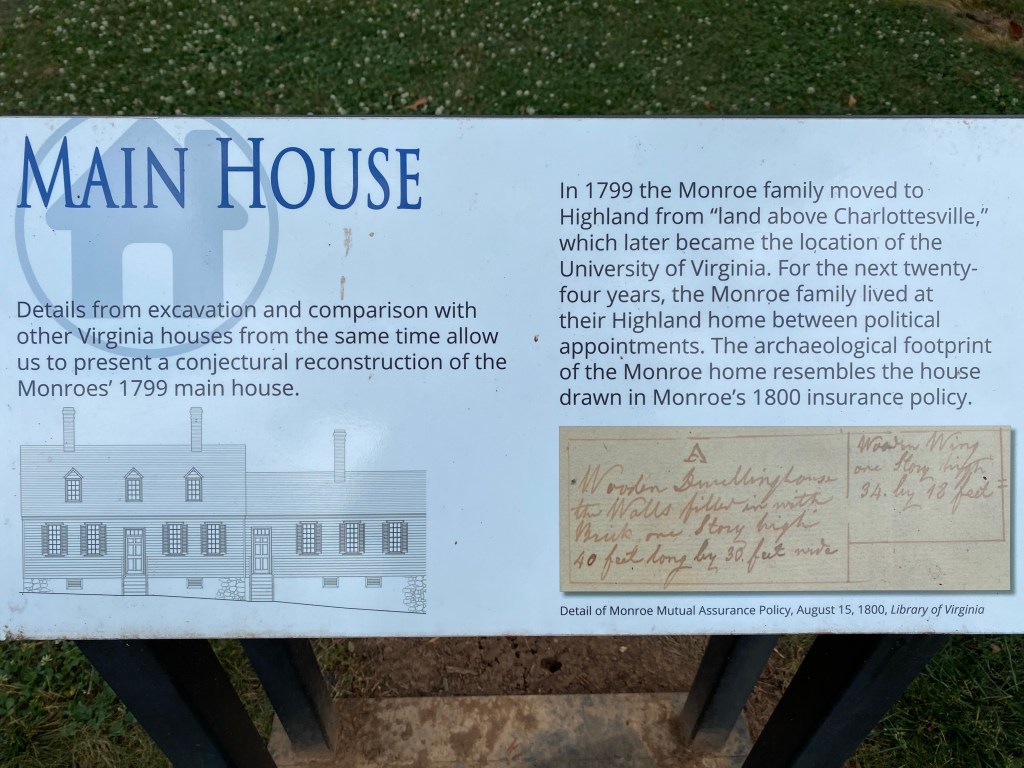
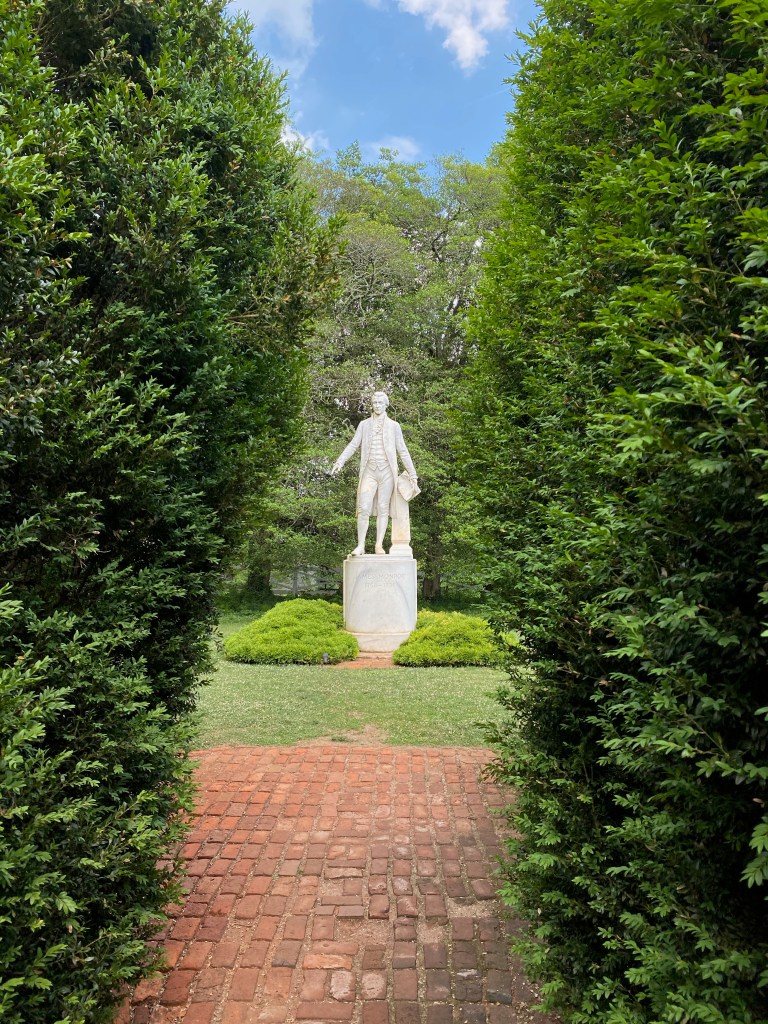
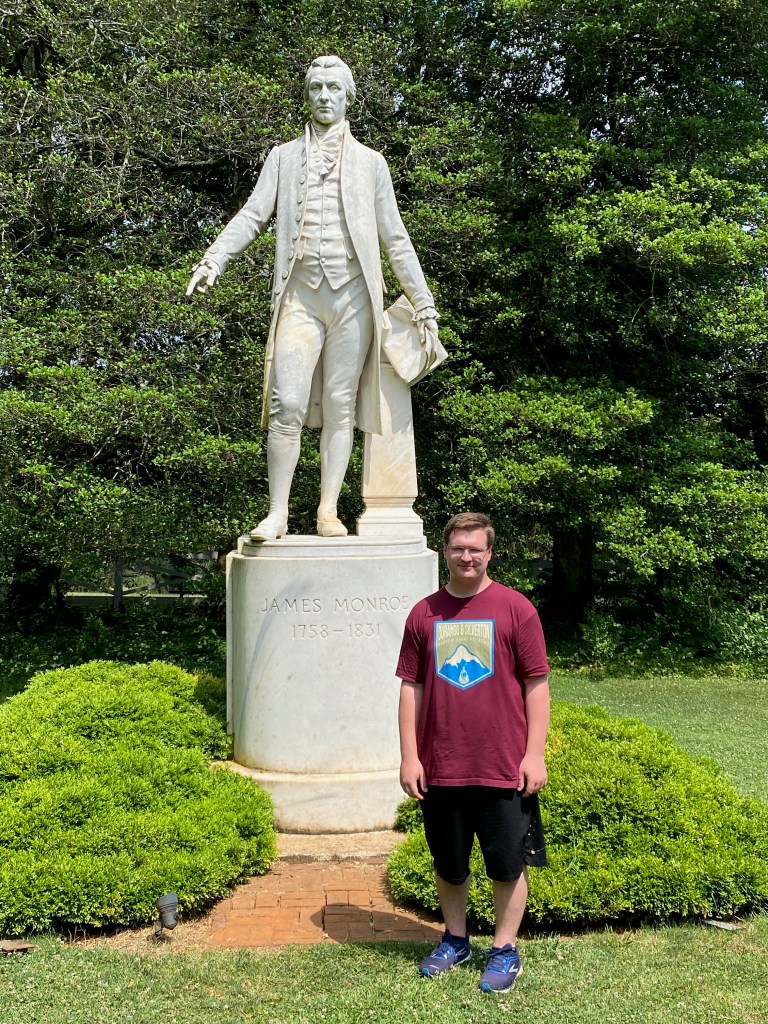
Monroe may not have been here often, but I think that speaks leagues about his devotion to service.
After being bravely wounded during the Revolutionary War during the Battle of Princeton, he managed to hold more local, state, and federal offices than anyone else in American History. U.S. Senator, Minister to both France and Great Britain, twice Governor of Virginia, Secretary of both War and State, and of course, our 5th President. His resume is certainly admirable. And that calling of duty and service is something that we all could emulate in our lives.

Before I go, I have one last thing to show you!

In downtown Charlottesville, near a fire station, rests the Virginia replica of the Liberty Bell! In 1953, in an effort to advertise purchasing bonds, the U.S. Government cast 53 bells identical in scale and shape to the actual bell that rests in Philadelphia. There’s one in each state, as well as in Puerto Rico, in Washington D.C., and in France, where the bells were made.
It might seem a trivial thing to look for in each state, but in my travels i’ve managed to see quite a few! Namely the Alaska, Colorado, New Mexico, Missouri, Tennessee, Georgia, and Massachusetts one. The Texas one is hung up in the old Academic Hall of Texas A&M University, in College Station.
Anyways, that’s all for now!
A big day waits for us, for next time, we explore Monticello, the pride of Thomas Jefferson, and exemplar of presidential homes! We also visit the Woodrow Wilson Presidential Library and Museum in Staunton, as we head deeper into Virginia, and closer to Tennessee!
Be sure not to miss it! It’ll be a blast. 😉
 Mark's Historical Roadtrips!