
Welcome to the official halfway point of our Virginia trip!
Today we explore the hilltop estate of Thomas Jefferson’s Monticello, as well as the Woodrow Wilson Presidential Library and Museum (along with some other things too)!
Thomas Jefferson’s Monticello
I have actually been to Monticello before, six years ago in fact. Of course, many things are bound to be different since that time has passed, and with all that i’ve learned in that span, and with mom also being with us, i’m eager to relook at Monticello!
Peter Jefferson, Thomas’s father, would die in 1757, and our future president would inherit this property and begin to build what would become one of his greatest physical legacies.

Built atop a small mountain, Monticello was designed personally by Jefferson, its’ chief architect. Over the course of 40 years, Jefferson would continuously build, extend, and redesign his house into the impressive structure it is today.
I mean it when I say that nowhere is Jefferson’s brilliance and talents displayed more fully (or in as many ways) than here.

Jefferson was inspired by many classical European structures while designing his home, particularly from Andrea Palladio, who designed many italian villas (like the one pictured below) in grand displays of antiquity. (That art history class in college actually really helped here!)

It’s no wonder that Monticello’s architecture (along with that of the University of Virginia, which he also designed), was declared a UNESCO World Heritage Site.
Let’s go inside Monticello, shall we?

The Entry Hall was laden with multiple artifacts brought from the Lewis and Clark Expedition, and gifted to Jefferson by the two intrepid adventurers. Being on a time limit, I had to hurry with some of my panoramic pictures, so I apologize if things get a bit distorted.
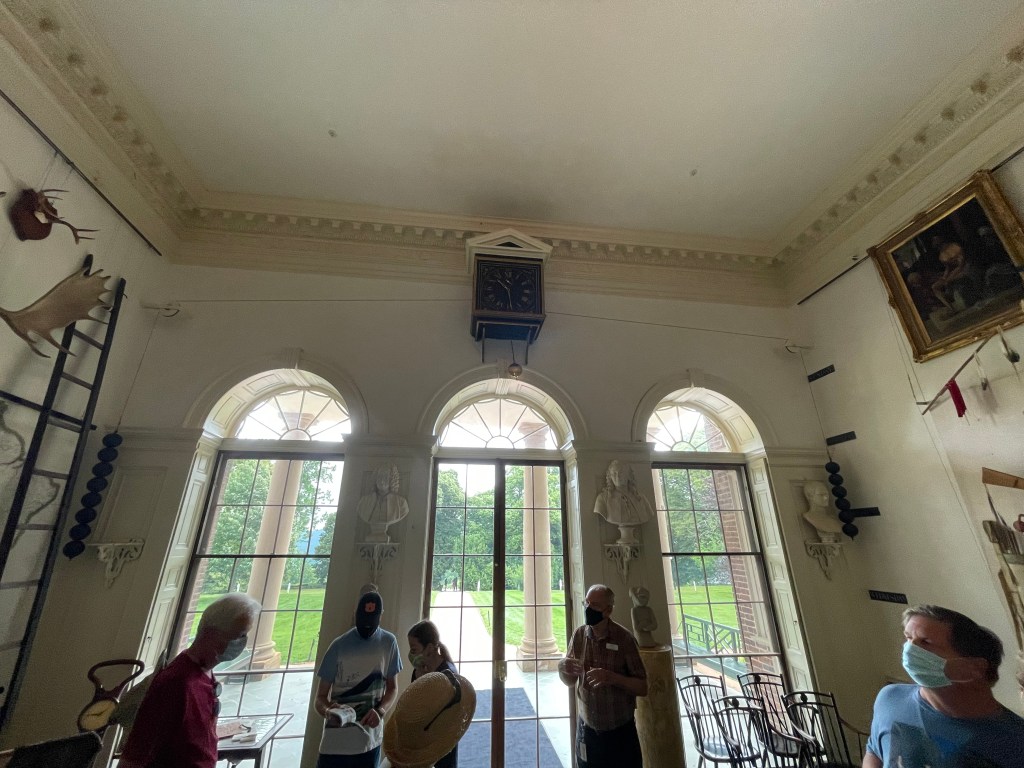
Notice the Grand Clock hanging over the entrance.
One of the many things that Jefferson is known for, is being an inventor. This unique grand clock for instance, was designed in 1792 by Jefferson (and built by Peter Spruck), and does more than just tell time. It not only offers clock hands for hours and minutes, but also a smaller one for seconds. But even more fascinating, the clock is driven by the two hanging pulley weights you see on each side of the room. And depending on the markers set on the right side of the wall, you could tell what day it was as well. Simply ingenious.

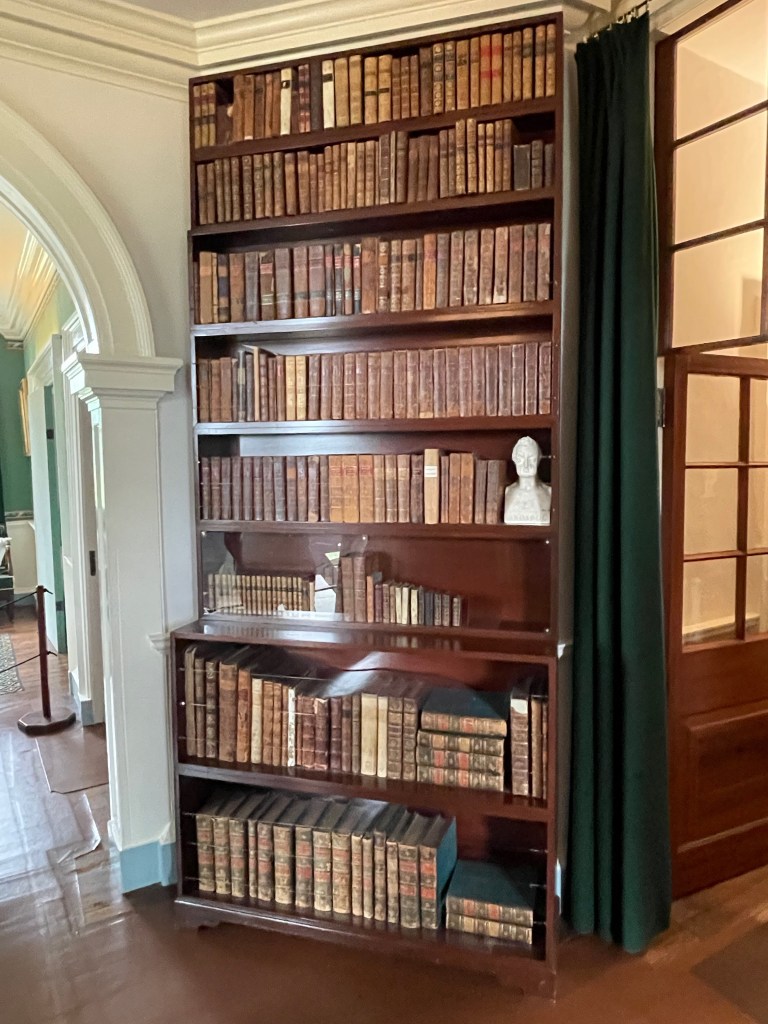
Jefferson was quite an avid reader, and the volumes that he owned proved to be quite important… When the British burned the fledgling Library of Congress during the War of 1812, Jefferson donated his entire personal collection to the United States government, where it served as the core of what would become the modern-day and very extensive Library of Congress.
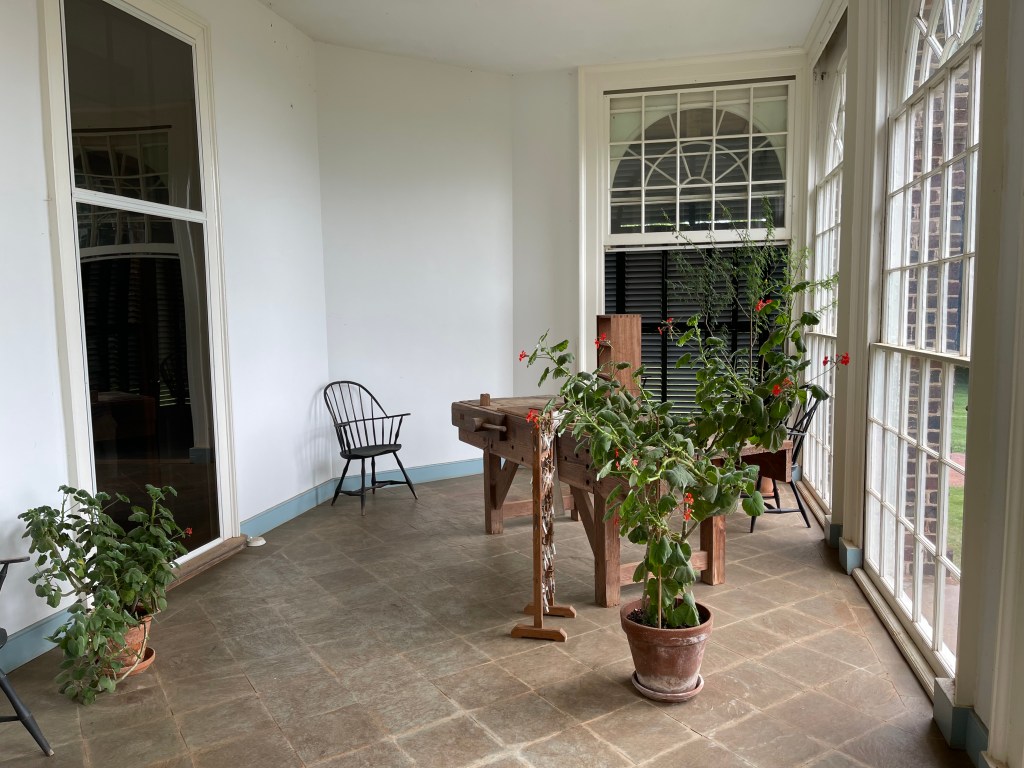
Jefferson was also an adept at Botany, fascinated by the nature of new plants and herbs, which he would regularly incorperate in Mulberry Row (which we’ll see in a moment).

Likely where you would find Mr. Jefferson during much of his time here, the study was where he could write in his journals or correspondence, or simply have time to think on the eventful life he led, cultivating the ideas of liberty and equality through the Declaration of Independence, which he authored.
Looking at the bust of his friend John Adams reminds me of their lengthy correspondence together in retirement, much of which is still preserved today. It was a long way from Monticello to Peacefield up in Massachusetts, but the two would be connected in more ways than one…

First, notice the actual copying machine he developed! As you wrote on a piece of paper with one pen, the other pen would write on another piece of paper! Jefferson would also invent various other inventions, such as pulley doors that opened at the same time (like those that led into his parlor), a small turntable bookstand where he could keep 5 different books or pages open at a time, and perhaps his most famous invention: the swivel chair.
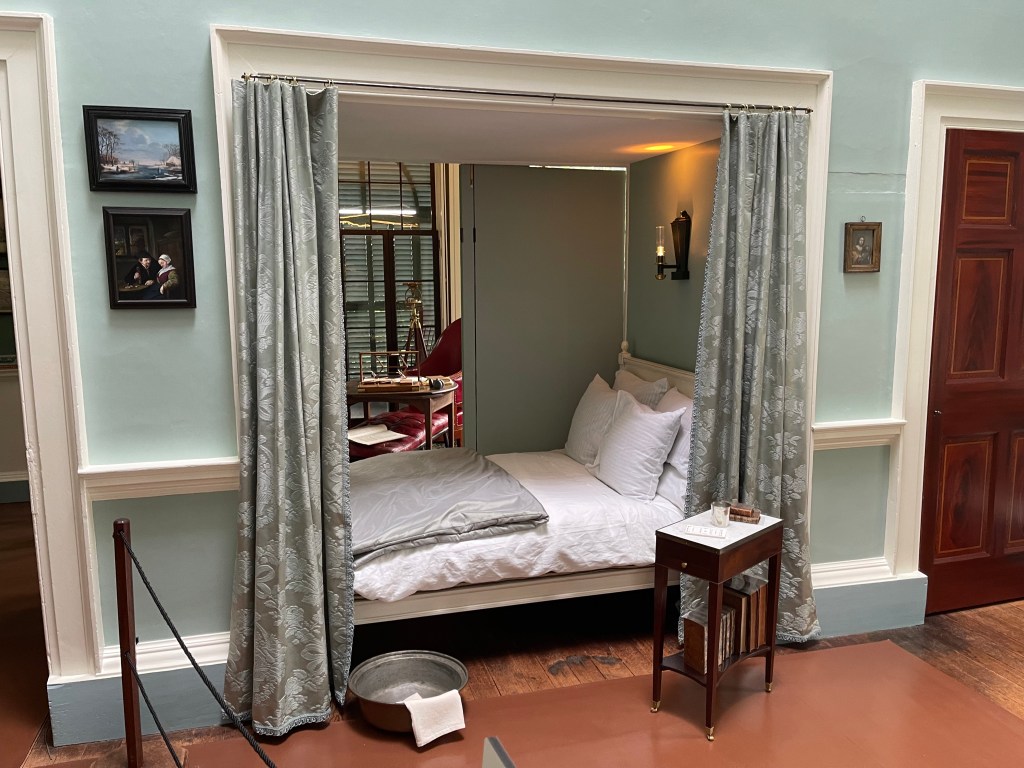
Reflecting on the idea that beds sometimes took up too much space of a room (like mine), Jefferson decided to build his right into the wall, so he could step out on either side.
It was here that on July 4th, 1826, the 50th anniversary of the signing of his Declaration of Independence, that he died at the age of 83. Hundreds of miles away, and several hours later, his friend John Adams would also die, with his last words: “Thomas Jefferson survives.” Of course, he was never aware of Jefferson’s earlier passing.
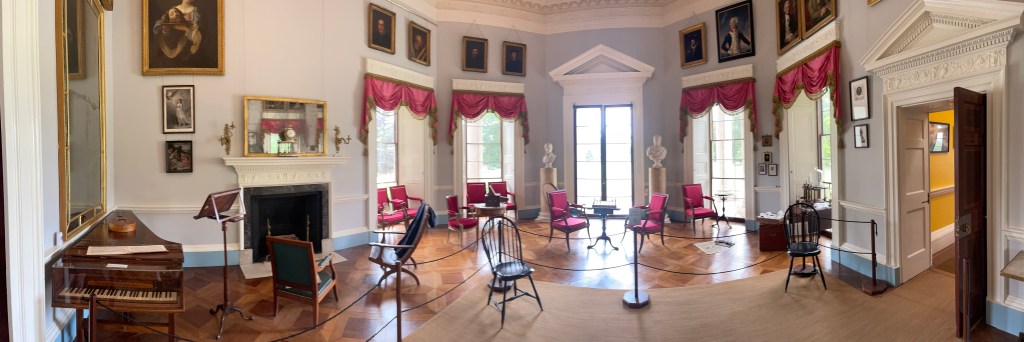
Jefferson received many visitors to the parlor, especially the likes of James Madison, James Monroe, and the Marquis de Lafayette. Jefferson, being more of an introvert, was still forced to greet as many as 30 guests on some occasions. With his wife Martha’s earlier passing in 1782, it was no easy task.
Attempting to escape his grief, he spent much time in Paris (as well as during his tenure as Ambassador to France), where he simply fell in love with french culture.

While yellow might not have been seen in Colonial America (probably not at all), it simply lights up the room.
Jefferson was potentially what we might call a “foodie” in today’s terms. No president, indeed, no person of his time, established such a reputation for experimental cooking and flavory than him. Inspired by french cooking (of course), he dabbled with recipes such as macaroni and cheese, vanilla ice cream, fries (of the french variety), and of course, the tomato.
As one story goes, he alarmed a group of dinner guests when he decided to eat a tomato right in front of their eyes. Tomatoes were originally thought to be poisonous you see, but while their leaves are poisonous, their fruit is not. So, we have Thomas Jefferson to thank for introducing that.

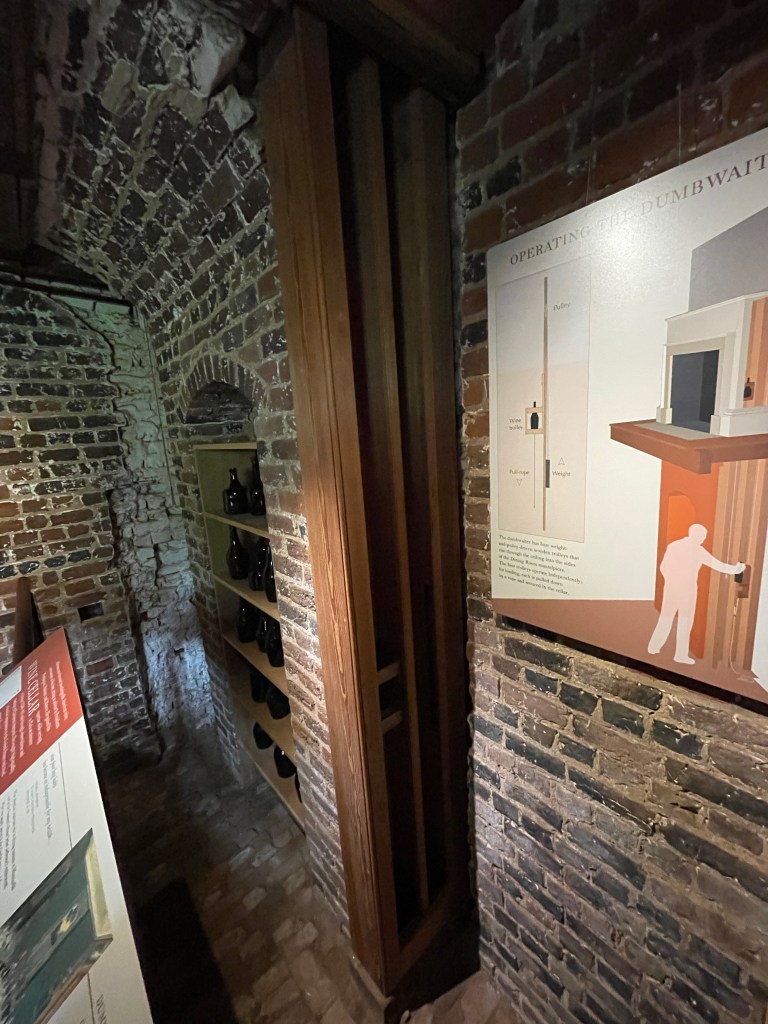
Hidden in the side of the fireplace is a wine elevator, which could send four bottles of wine from the cellar up to dinner! He designed this as well (with the pulley system of course).

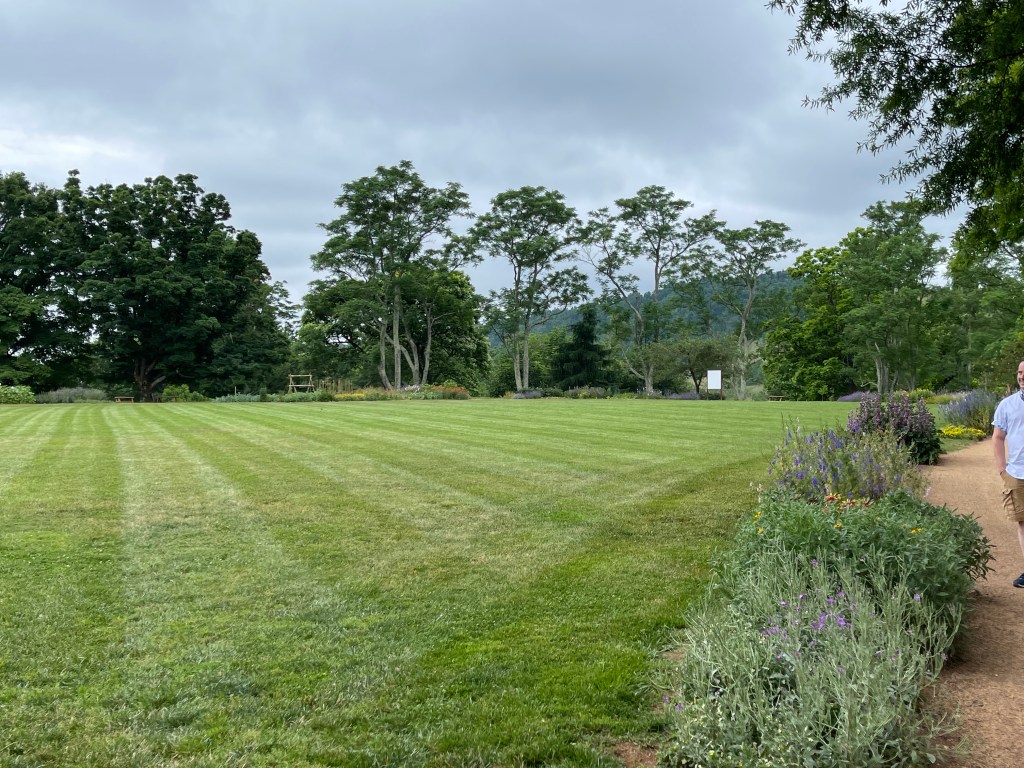

Various homemade products, like honey, plant seeds or spirits are grown or made here at Monticello, and offered at the shops there. I recommend you check them out if you ever visit.

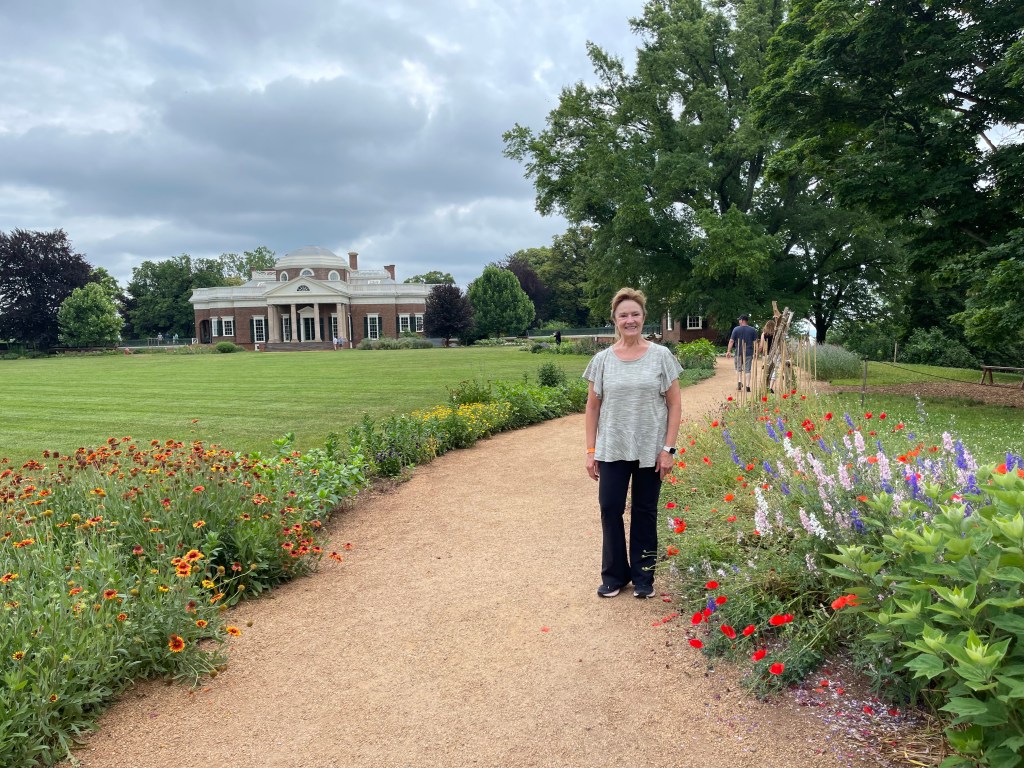
Looks familiar to you?

Monticello is simply that iconic of a site. Next time you see this side of a nickel, think of me and my blog won’t you? 😉
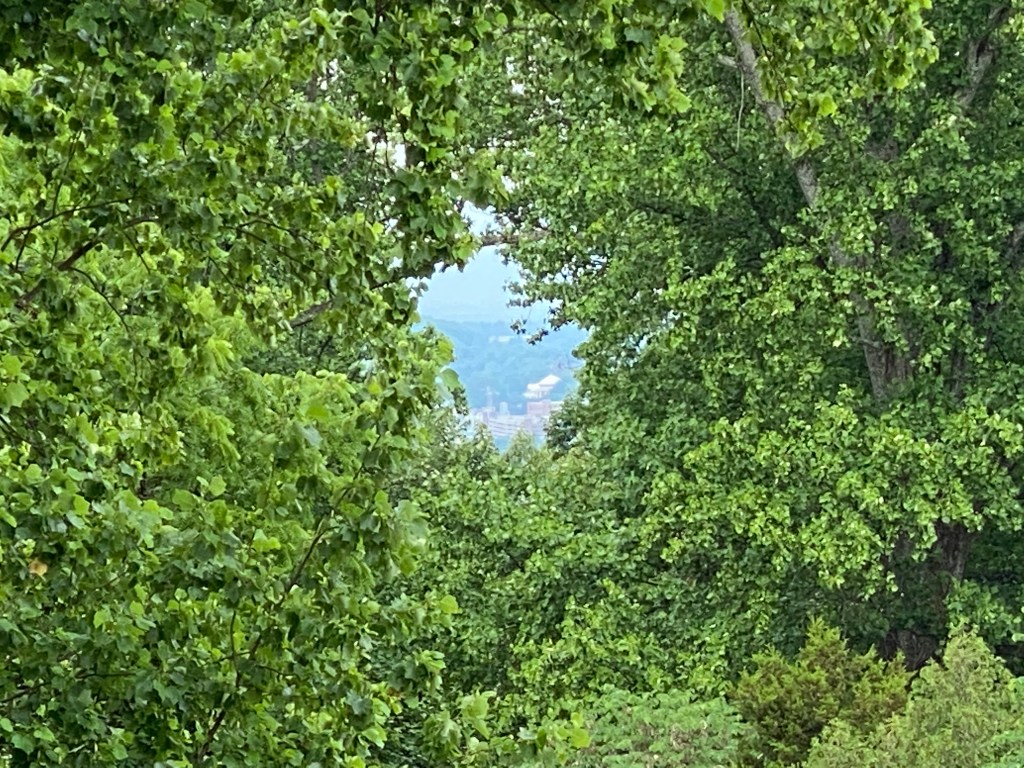
Peering through the treeline, one can see the University of Virginia far in the distance. Jefferson is known as the “Father” of that institution, as he created and formed most of the original buildings, curriculum, and scholarly material. When the building was under construction, Jefferson would keep this treeline open, so that when he looked through his spyglass and saw something wrong, he would literally ride on his horse to town and give them the “what-for”.

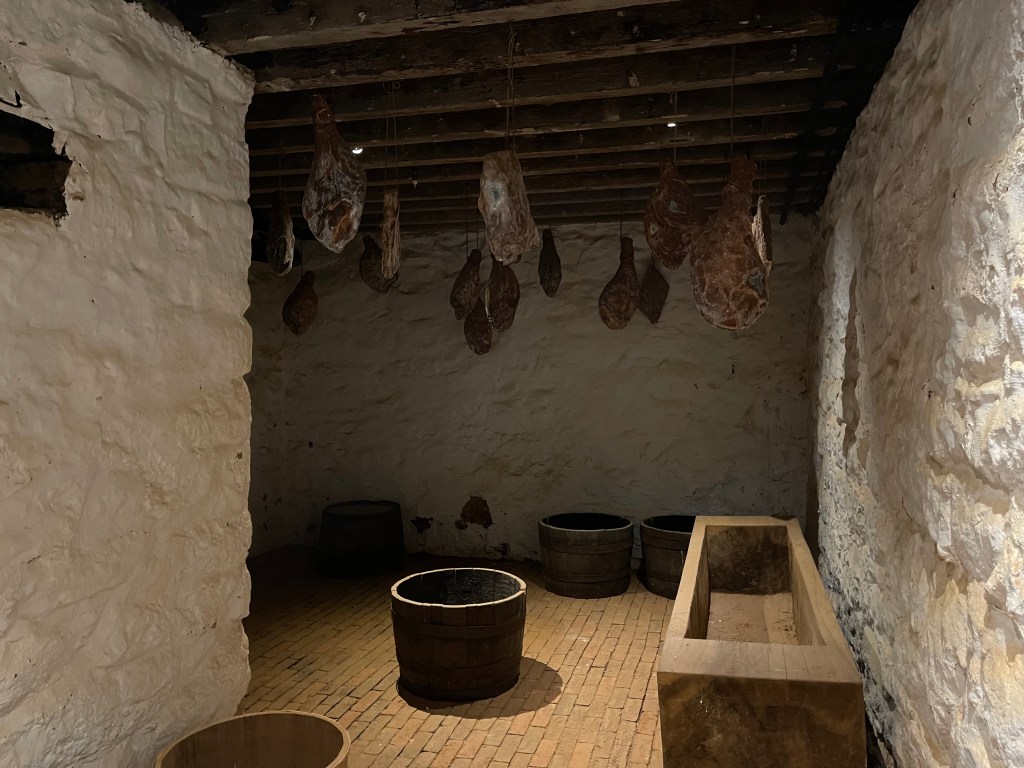
Jefferson’s slaves were quite busy with preparing various kinds of meats for his enjoyment.
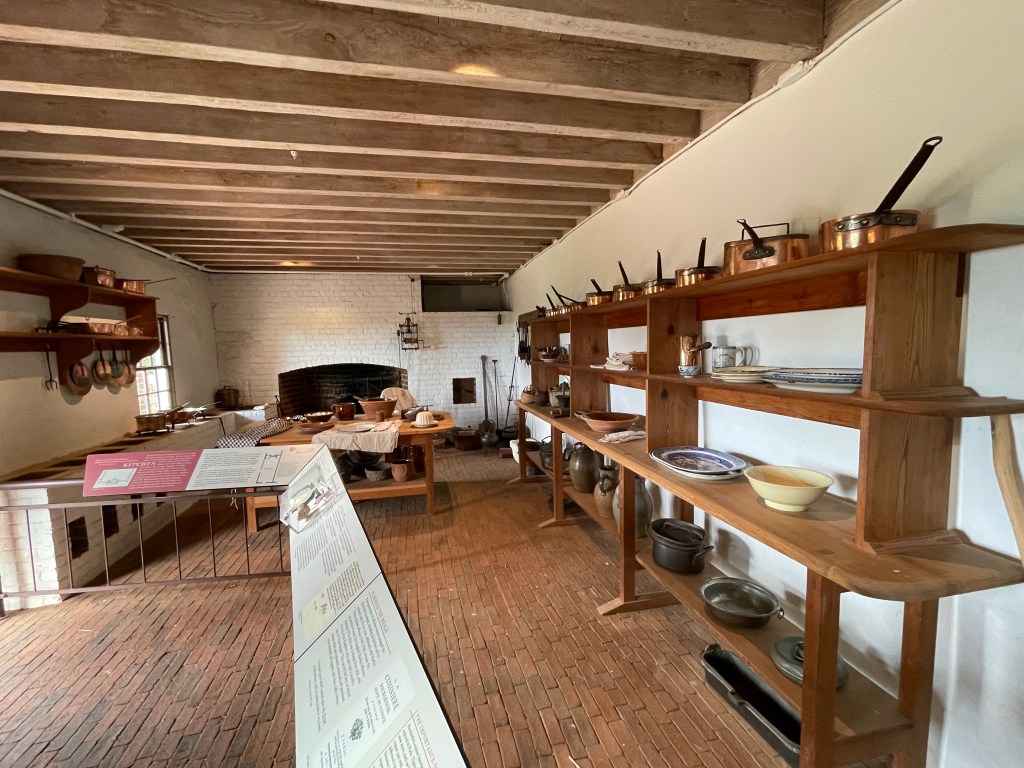
As were the kitchens, which bustled with activity. One particular slave, James Hemings, along with several others, had to learn to cook french cuisine while in Paris (I’ll get to his younger sister, Sally Hemmings, in a bit).

Remember the Grand Clock? They didn’t have enough height for the weights to cover all 7 days, so rather than extend the top of the house, Jefferson decided to cut a hole in the floor and have it work there.
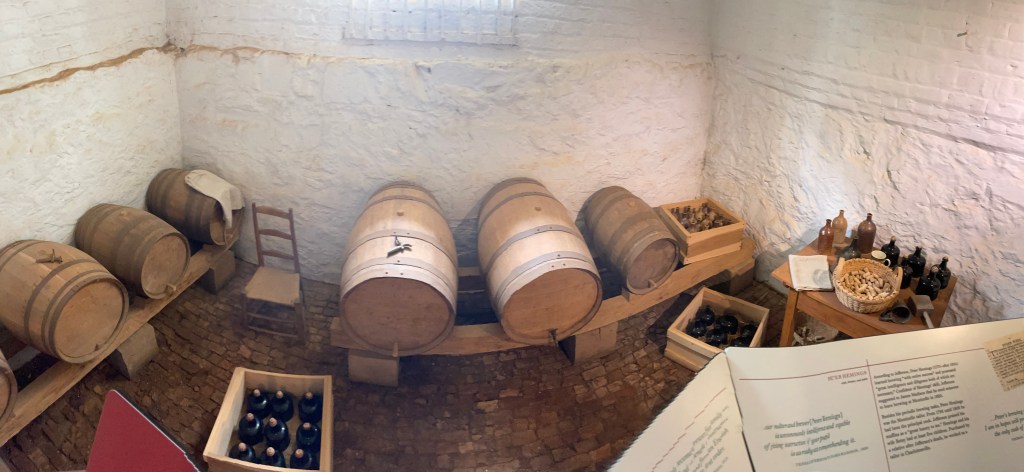
Beer, ale, lager, cider and mead were very popular drinks even back then, and Jefferson surely had quite the stash.

But it was in wine that Jefferson was most well known for.
Words cannot express how much he loved wine (especially red wine)… so much so in fact, that the cost of his wine spending would end up being $100,000 in today’s money (no wonder he was deeply in debt)…
Unfortunately, as with every president or prominant historical figure, there’s an elephant in the room to discuss.
Being a 5,000 acre plantation, Jefferson had to employ nearly 250 slaves to do his manual labor. He would own at least 600 throughout the course of his lifetime. He would only free 7 of them in his lifetime.
Many consider it the ultimate irony that Jefferson, a slaveowner, was the one who wrote our Declaration of Independence, which promised liberty and equality to all. Like his successors Madison and Monroe, Jefferson hated slavery, but was unable to find any way to alleviate it.

Many now know the story of Sally Hemings, a slave under his estate (and half-sister to Jefferson’s wife Martha), who Jefferson would have an “intimate” relationship with. Recent extensive research and DNA evidence has proved that four of Sally’s children were born from their mother and Jefferson.

Originally spread by rumors during his presidency, Jefferson still faces considerable controversy for this “illegitimate” relationship, particularly in the ambiguous context of the nature of their relationship. It is, and will always be, a stain on his already troubled legacy.
Well, venturing from that very heavy topic, we then came to Mulberry Row.
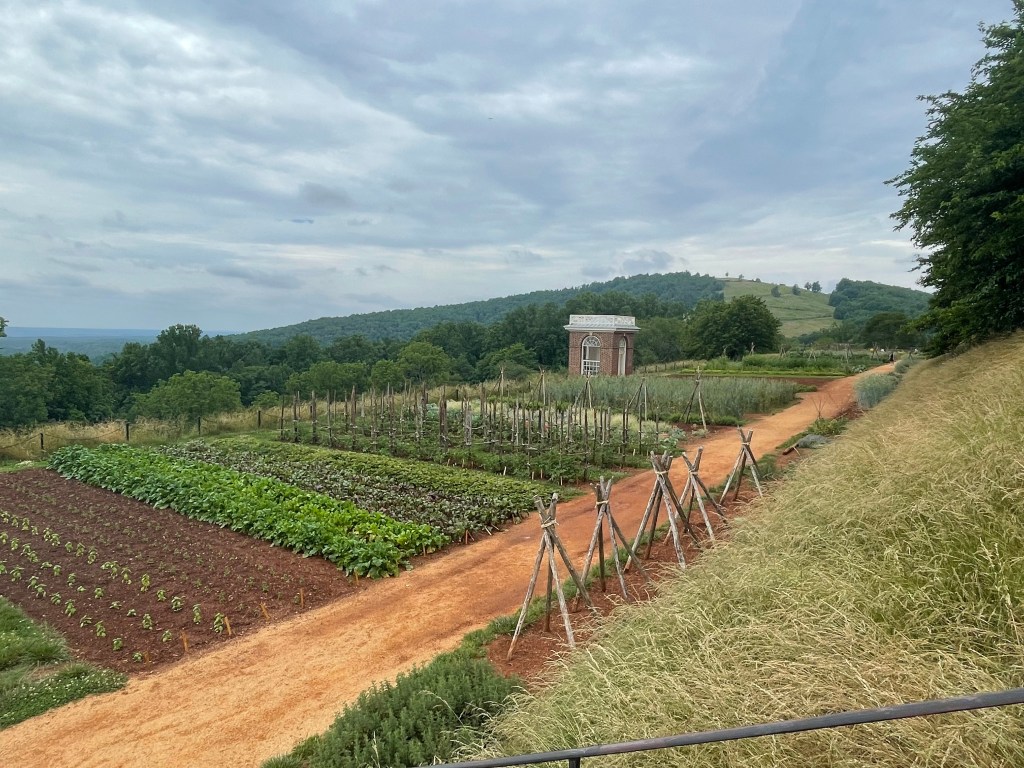
Mulberry Row was a garden unlike any other, for Jefferson would keep hundreds of different kinds of plants, fruits, vegetables, and herbs to experiment with, and use in his culinary exploits. He had catalogued his inventory extensively, and there could found common plants like corn, lettuce, carrotts, wheat, and grapes, but also new and exotic plants no one had ever seen before, including rutabegas, kale, sesame, chickpeas, okra, onions, peanuts, cucumbers, broccoli, cauliflowers… the list goes on.
Along the road also once rested many buildings which served as the industrial center of Monticello, featuring blacksmiths, weavers, woodworkers, tinsmiths, and other such slave-powered labor. Some replicas (or foundations) still remain along the road.
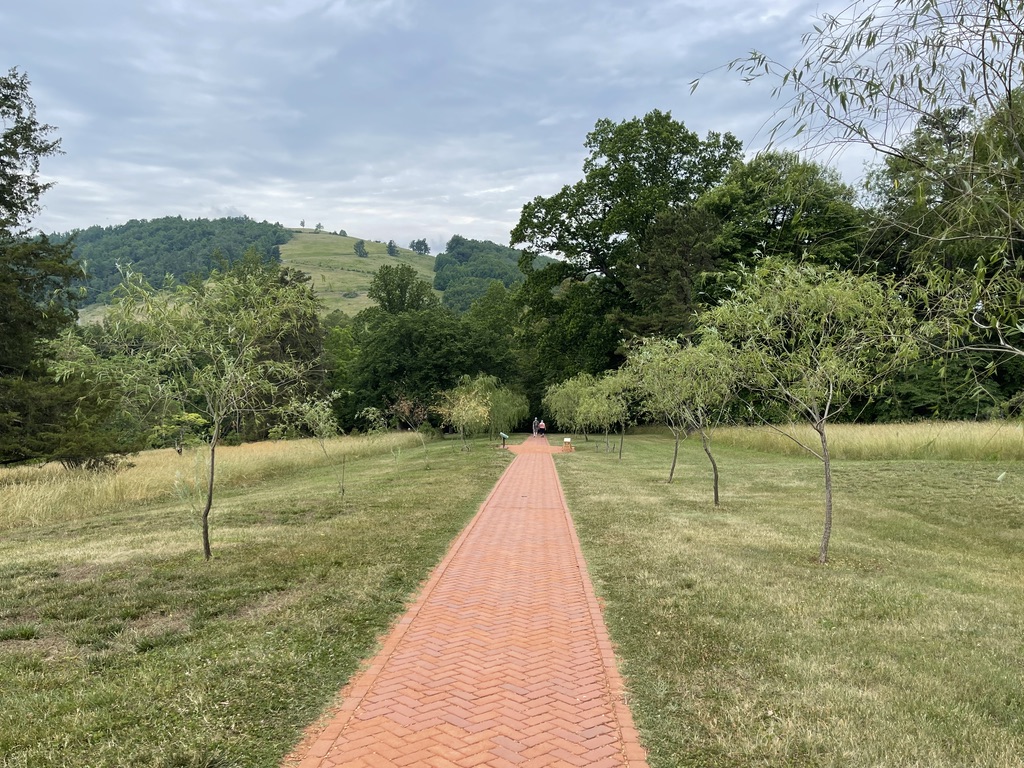
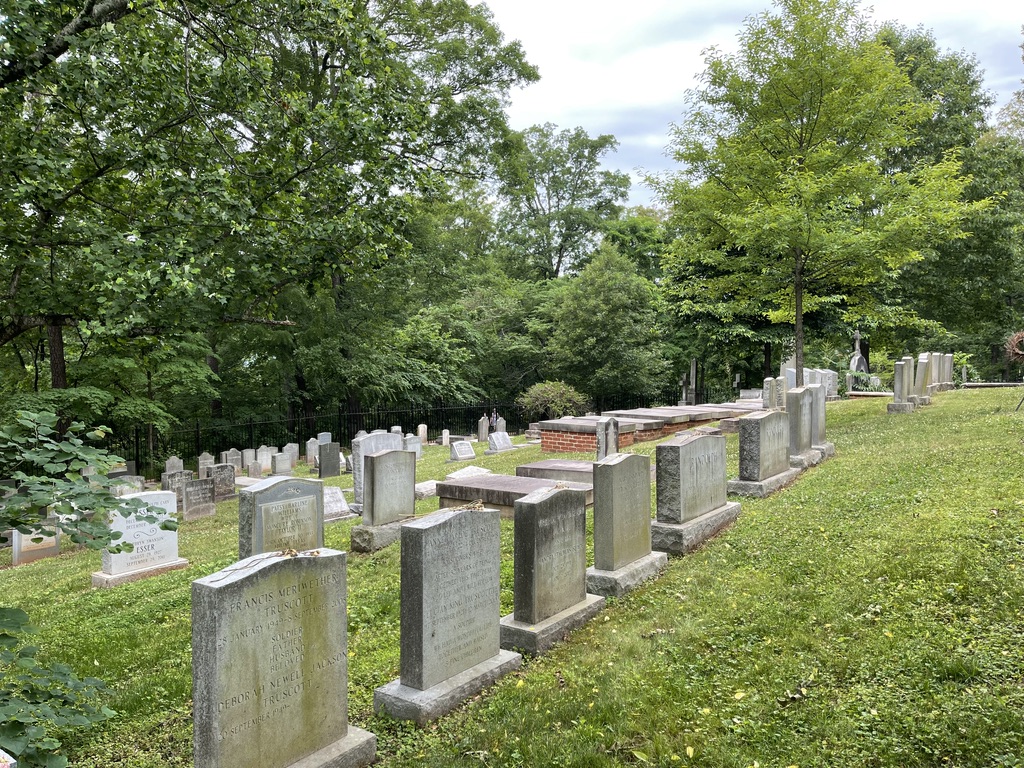
Surrounded by a wrought-iron fence, is the private cemetery of the various descendents of Thomas Jefferson, spanning the nearly 300 years since his time. Some interments date as far back as the 1700’s, while others as recent as the 2010’s. Various descendants of Salley Hemmings and Thomas Jefferson have petitioned to be able to be buried here, which has naturally been met with some backlash.
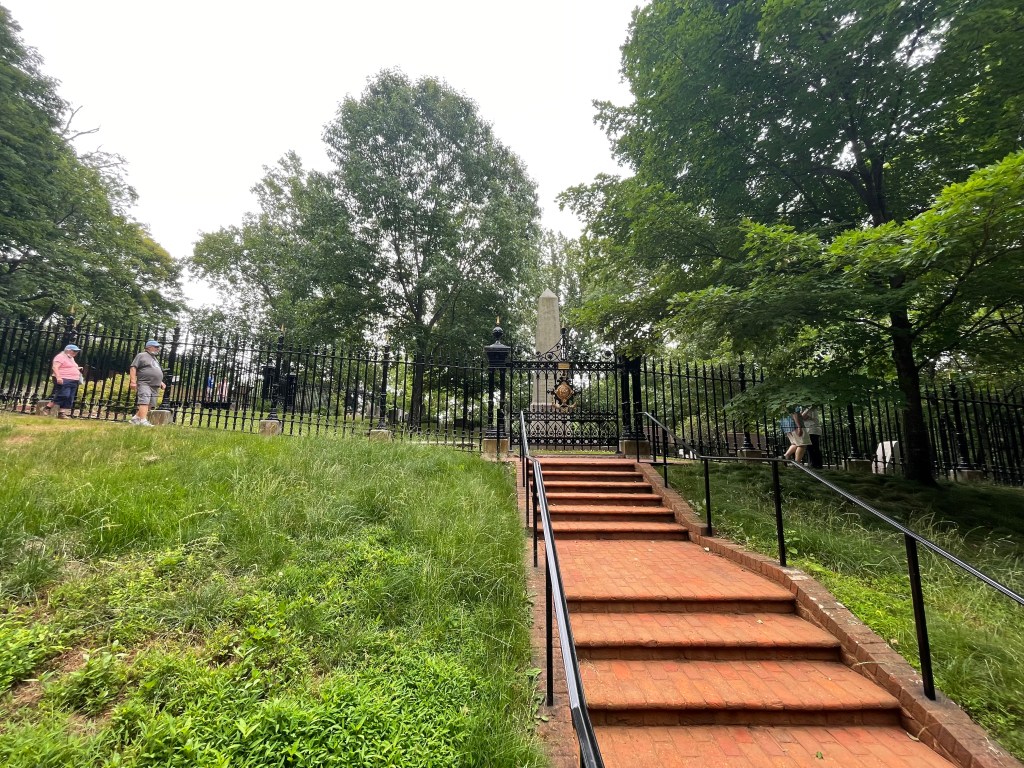
Of course, there’s only one grave that can be the center of all the cemetery.

The final resting place of the Governor of Virginia, Ambassador to France, our 1st Secretary of State, 2nd Vice-president, and our 3rd president… Thomas Jefferson.

Here, Jefferson is surrounded by his loved ones, including his wife, daughters, and other family members.
Do you know what’s most interesting about his grave? His own self-composed epitaph.

Jefferson wanted to be remembered for these three things. Not for being president, or governor, or any other government office. These were the three things that he wanted to be remembered for.
Jefferson’s legacy is indeed flawed, and certainly has some contradictions… but one has to remember that the Declaration was something that was entirely new to a world in which tyrants, kings, and emperors had total sway over the populace. It was a revolutionary idea (no pun intended), that raised the people up, and introduced to them the notion that “All Men are Created Equal”.
Many nations across the world have taken inspiration in the ideas sprouted by this man through this creed, and many have modeled their own Statutes of Freedom after it. It spread like wildfire, and it united many different peoples under a common hope that one day, WE all will be equal.
Though there is much work to do in the world abroad to ensure that the dream is realized, but we still have Jefferson to thank, for enlightening us to overcome our own failings, and ensure that all know the jubilation of those famous words…

Not far from Monticello, along the winding and hill-strewn road between there and Charlottesville, lies the quaint eating establishment simply known as the Miche Tavern.

Opened in 1784, the Miche Tavern is one of the most popular destinations in the entire state, and one could argue that it offers the finest food in all of Virginia. I’m inclined to agree with them.
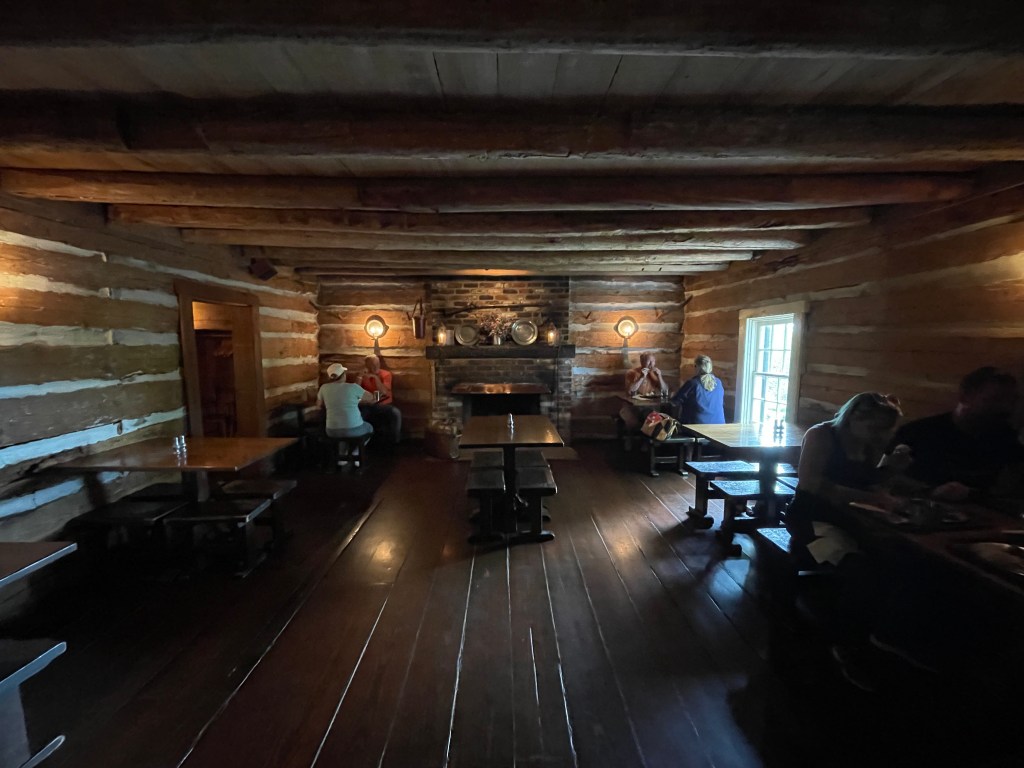
Atmospheric and cozy, the tavern is served by extremely friendly servers… having first been here six years ago, my fond memory of the place had still held up.
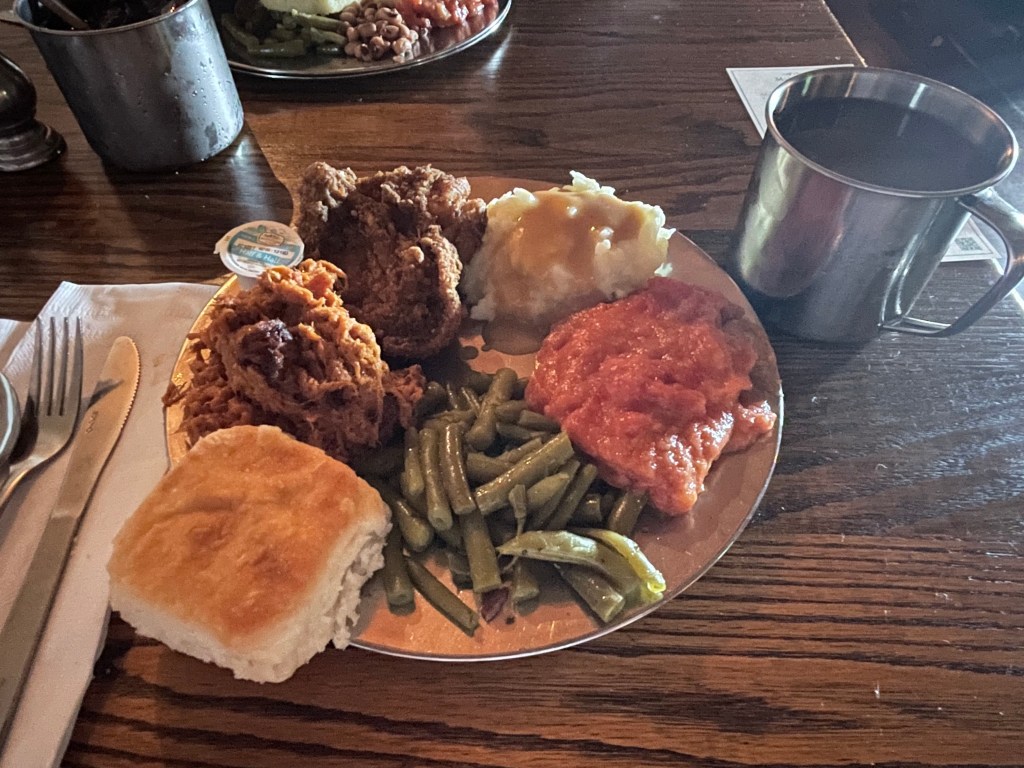
The abundance of delicious southern food was simply to die for… juicy fried chicken, pulled pork, mashed Potatoes, candied yams, green beans, savory biscuits, and a cup of cold and refreshing cider. And afterwards, the best peach cobbler in the world.
If that doesn’t spell southern delight, then I don’t know what does!

(I’m not getting paid to advertise the tavern to you, but no visit to Virginia is complete without a visit.)
Anyways, to distract myself from getting hungry again, let me tell you about the second half of our day
Woodrow Wilson Presidential Library and Museum
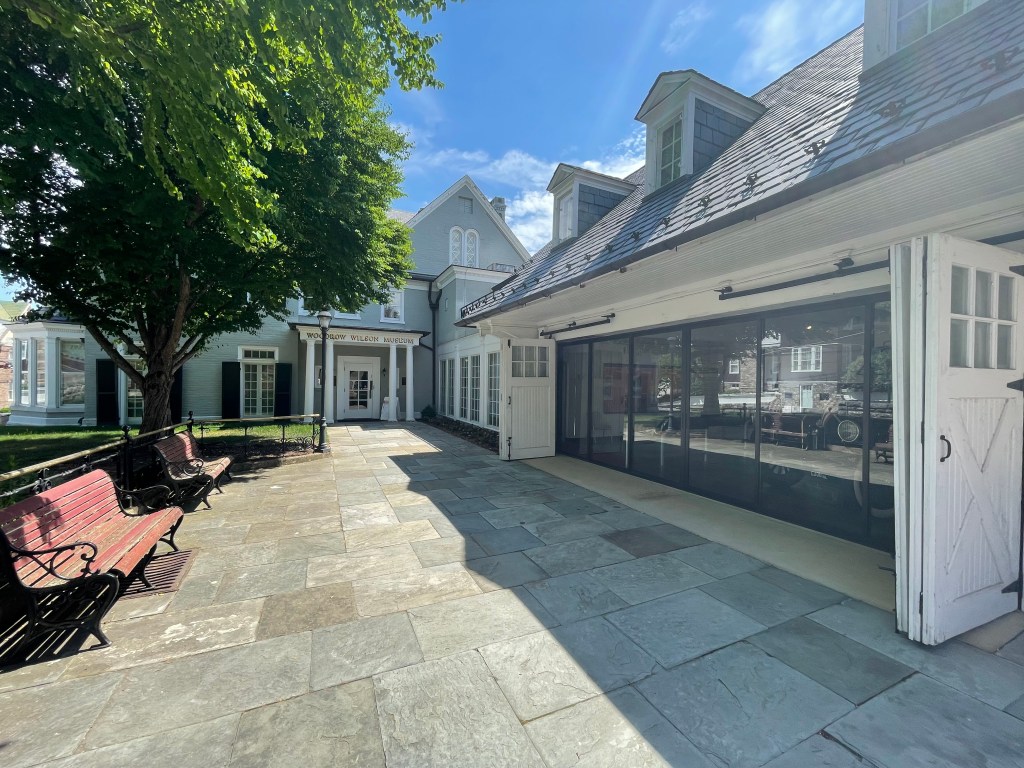
An hour’s drive west of Charlottesville takes you to Staunton, the creator of the “city-manager” form of local government (if that piques your interest at all). More notably (at least to me), is that it is the birthplace of Woodrow Wilson, our 28th President.

The Manse was where on December 28th, 1856, Thomas Woodrow Wilson was born to Joseph (a presbyterian minister) and Jesse Wilson. The family lived here only briefly before moving to Georgia, but here it still remains as a memorial to Wilson.
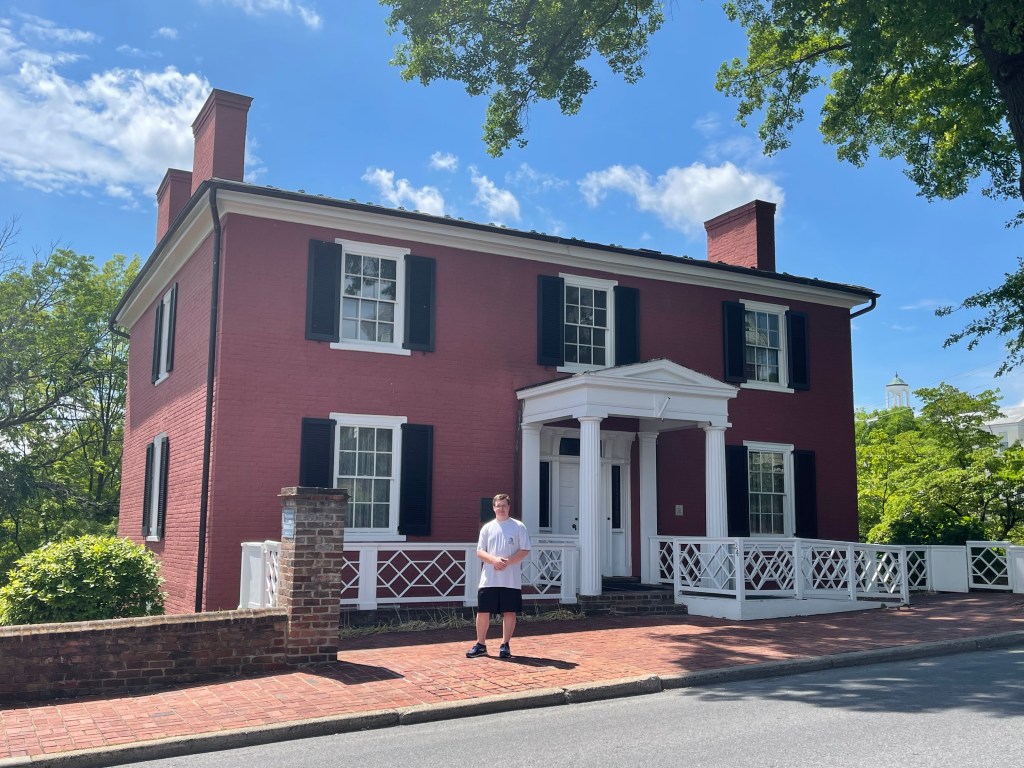
Unfortunately, due to the pandemic, birthplace tours have not happened in quite some time, and don’t start up until June 11th (dang it, we’ll be in Tennessee by then).
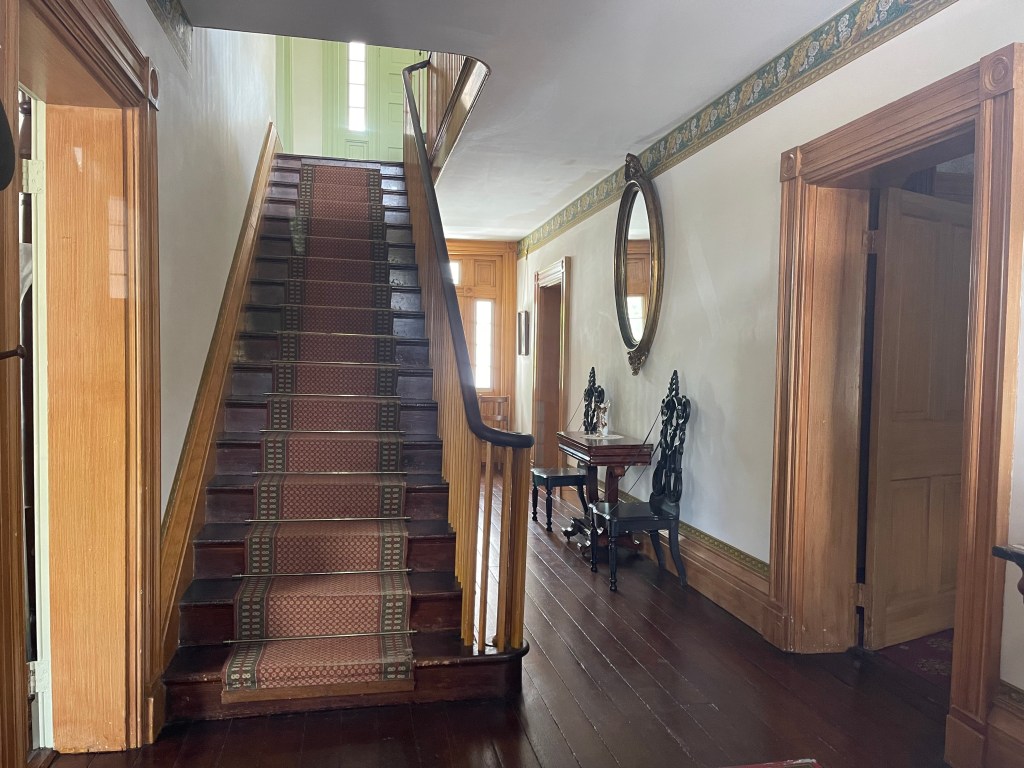
I did however, snap this hallway picture through the window! It turned out pretty well.
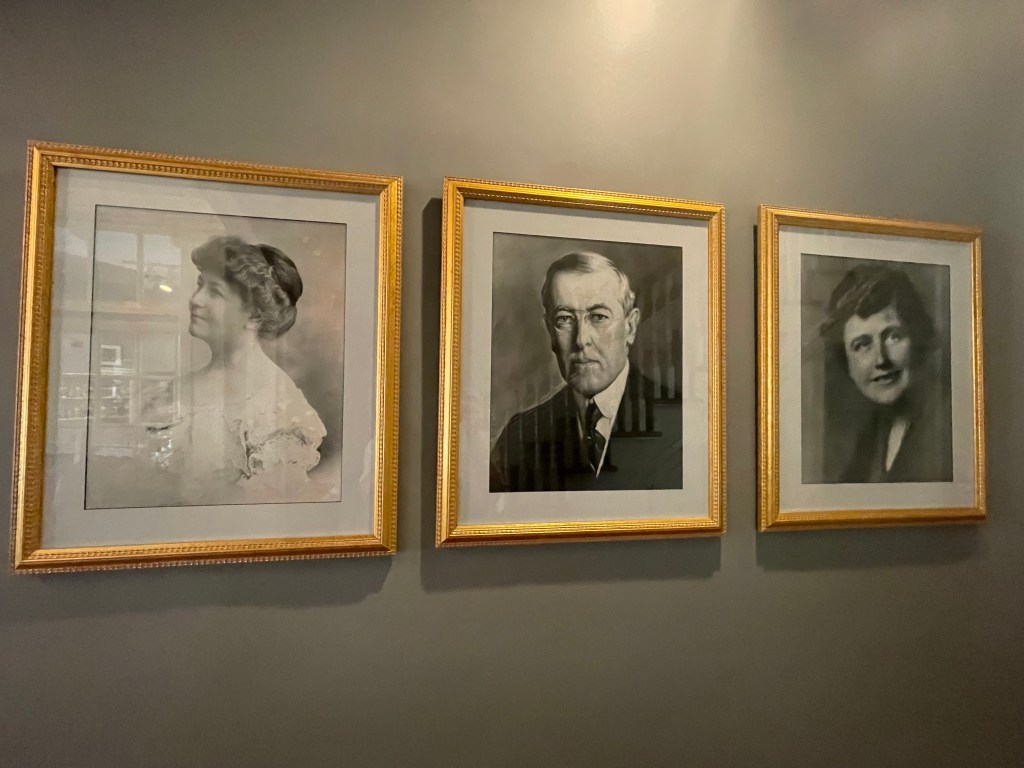
Though often considered stoic and reserved, Wilson was a deeply romantic individual, as evidenced by the many love letters to both his wives. Ellen, his first wife, died only five days after the outbreak of World War I, breaking his heart. But Edith’s entrance into his life managed to revive him with new vigor once again.
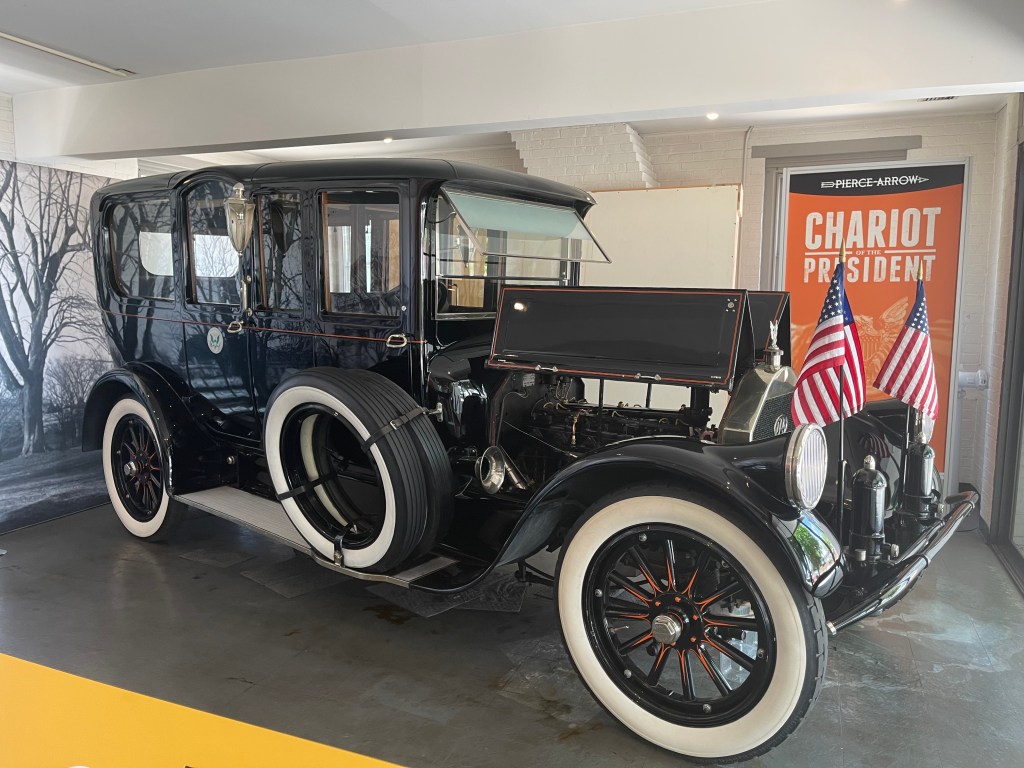
The center of the collection is certainly Wilson’s 1919 Pierce Arrow, THE car of luxury back in his day. He would woo Edith with long drives throughout Washington D.C., and the car today is still perfectly functional (sometimes participating in Staunton’s Fourth of July celebrations).
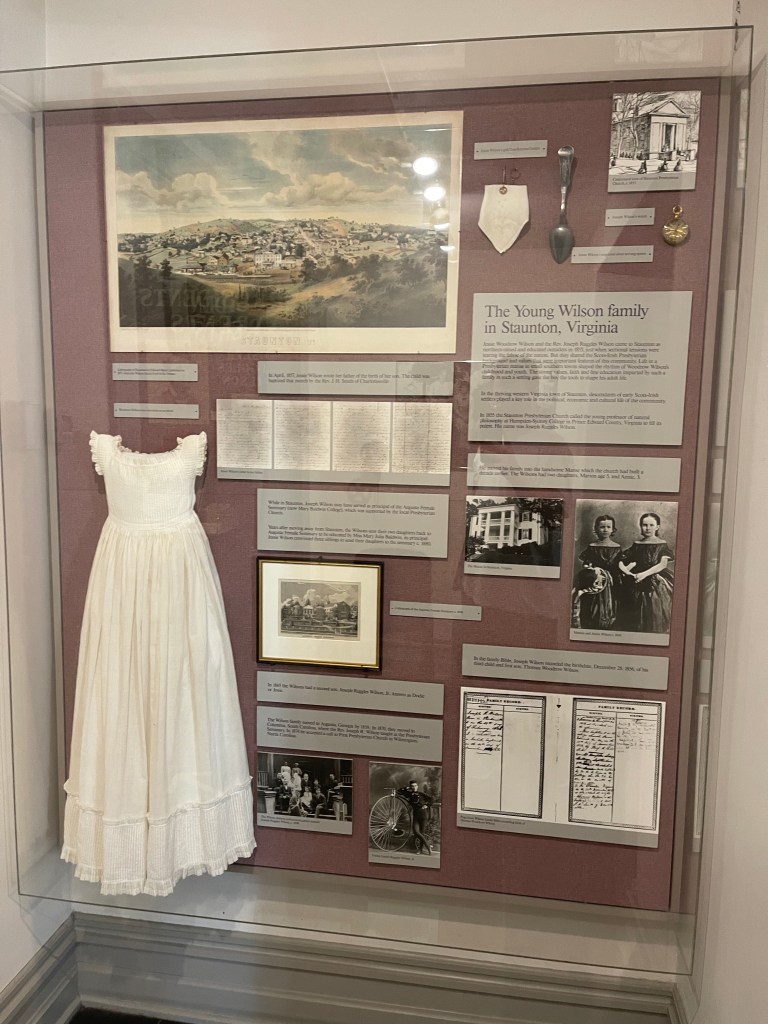
In case you were wondering, yes. Our 28th President wore that when he was young. Back then I suppose it was just the custom.

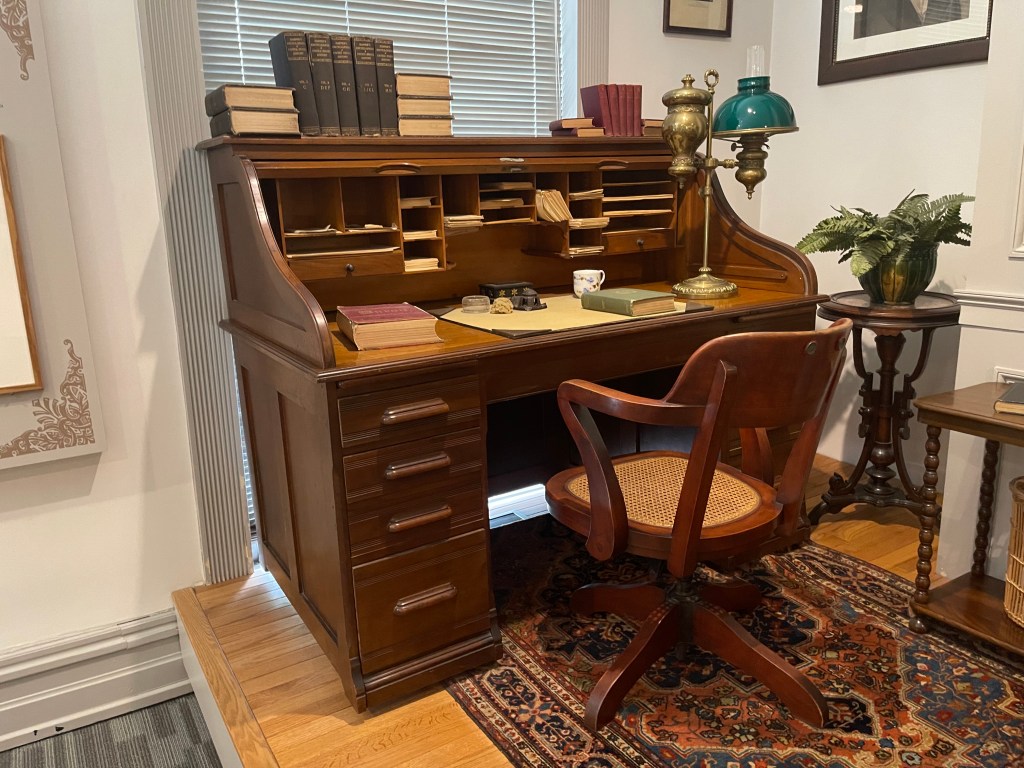
By the time Wilson came to Princeton University, he had never heard the Star Spangled Banner before (as he was a southern boy who grew up during the Civil War). But he gradually rose through the ranks to obtain a PhD in Political Science! He’s still the only president to have a doctorate degree.
As President of Princeton University, Woodrow Wilson managed to turn the college into a prestigious university, and was critical to what Princeton is now today.
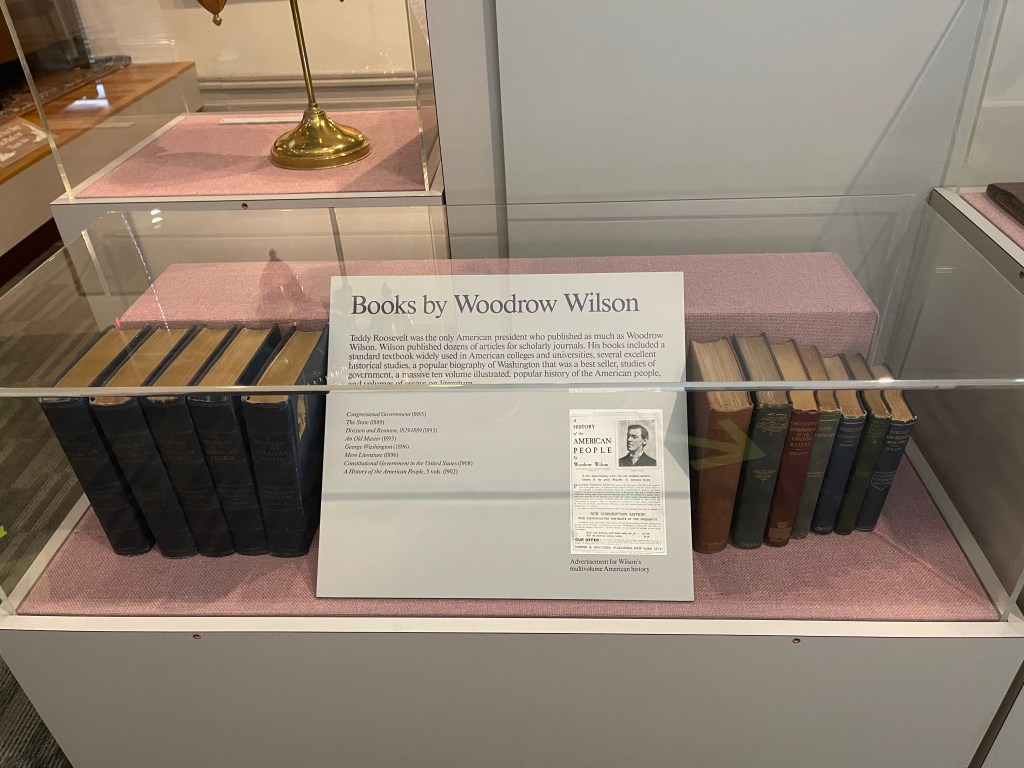
As a historian, Wilson wrote many different books, from multi-volume works of American History and Politics, to biographical works of George Washington, among others.

Wilson was unexpectedly raised into the limelight by powerful democratic political bosses, who helped him to be elected Governor of New Jersey in 1911. He filled his term by kicking out the political bosses, and establishing significant progressive reform that potentially made him one of the state’s best governors.
So much so in fact, that Wilson easily won the 1912 Election, with the Republican vote split beween incumbant republican William Howard Taft, and progressive Theodore Roosevelt.
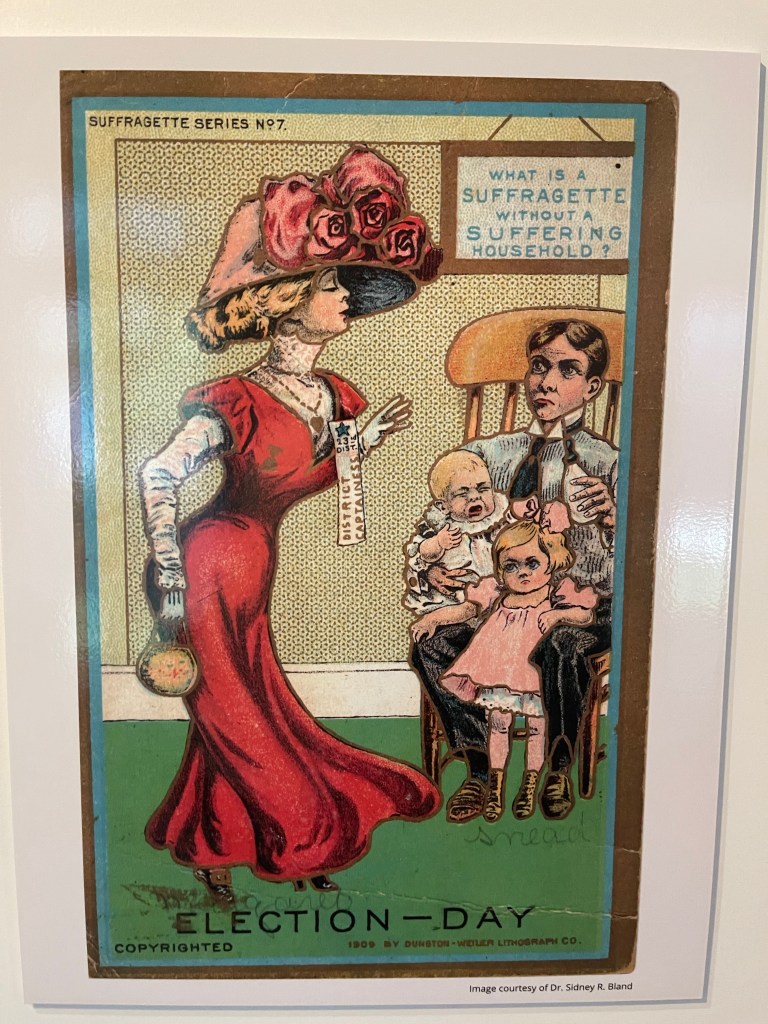
As president, Wilson enacted a sweeping wave of progressive reform, including the creation of the Federal Reserve, the Federal Trade Commission, and passage of the 19th Amendment, granting women the right to vote. Wilson however, does receive criticism for preserving racial segregation in Federal Offices.
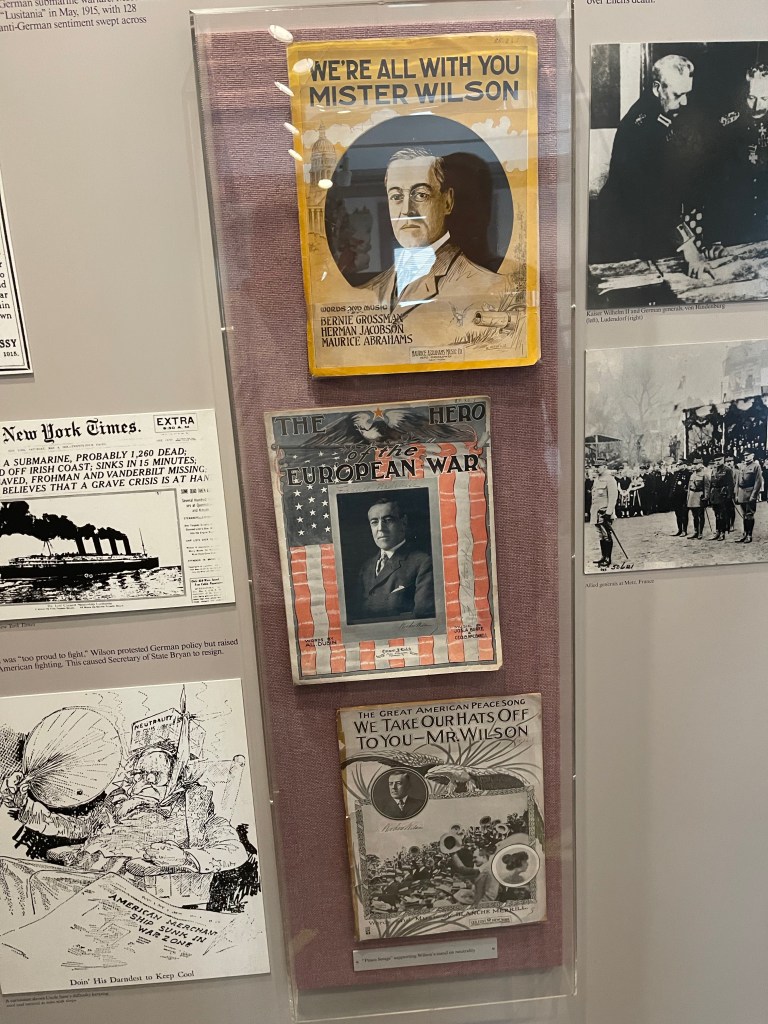
But war would soon come to threaten the United States’s affairs abroad, particularly with the sinking of the RMS Lusitania, a British passenger-ship carrying some American passengers, by German U-boats. Though having originally attempted to avoid joining World War I, further german aggression forced Wilson to go to war; who declared to a joint session of congress:
“The world must be made safe for democracy.” — Woodrow Wilson, 1917

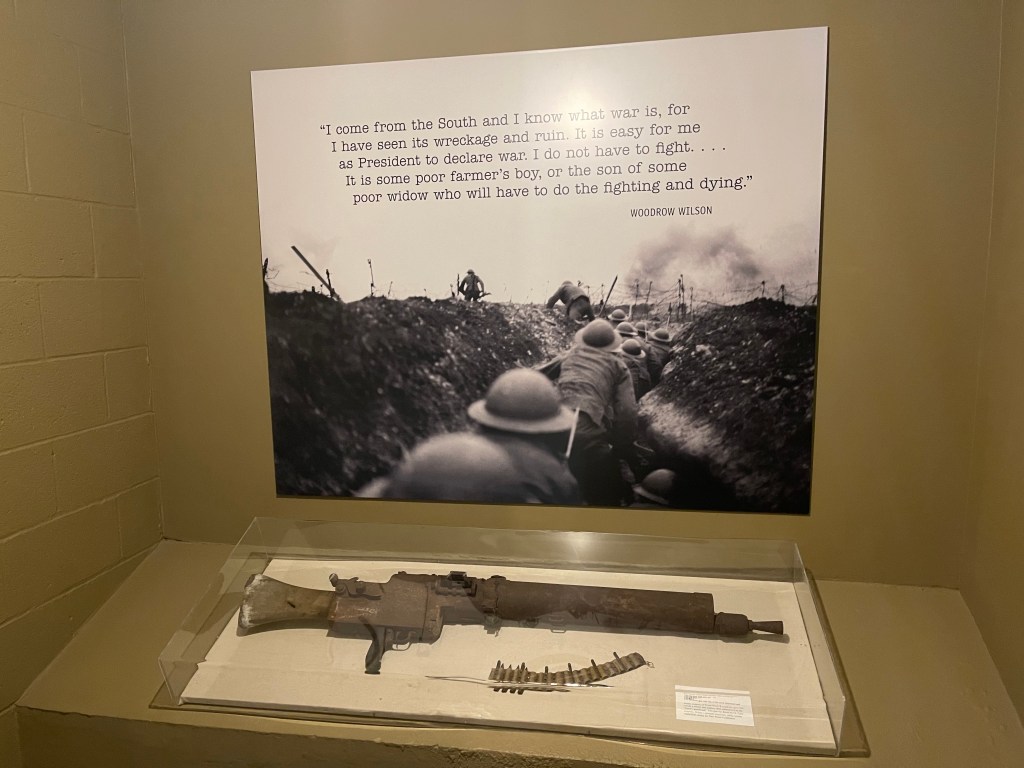
Wilson led the country through World War I, heling the allies to victory.

Wilson was critical in working with world leaders to establish the Treaty of Versailles, which would help create the precursor to the United Nations: The League of Nations; a concept of Wilson’s own making. However, the physical strain of being president would lead him to have a massive stroke, unable to prevent the U.S. Congress from voting to not join the League. It can be argued that this doomed the League, and paved the way for more malicious forces to spread across the world (and another world war).
Wilson retired with Edith to the private home in Washington D.C. (which we’ve visited), where he died in 1924. He was buried in the Washington National Cathedral in D.C., and remains today as one of our above-average presidents.
Having come full circle around many of Wilson’s historical sites (namely his D.C. home and museum here), I can certainly appreciate the legacy of what he left us with. And that famous line to Congress has often been the backbone of our modern foreign policy. Perhaps one day i’ll visit his boyhood homes in Georgia and South Carolina…
I have a little bit more to show you actually! Nearby Lexington has quite a bit of history!
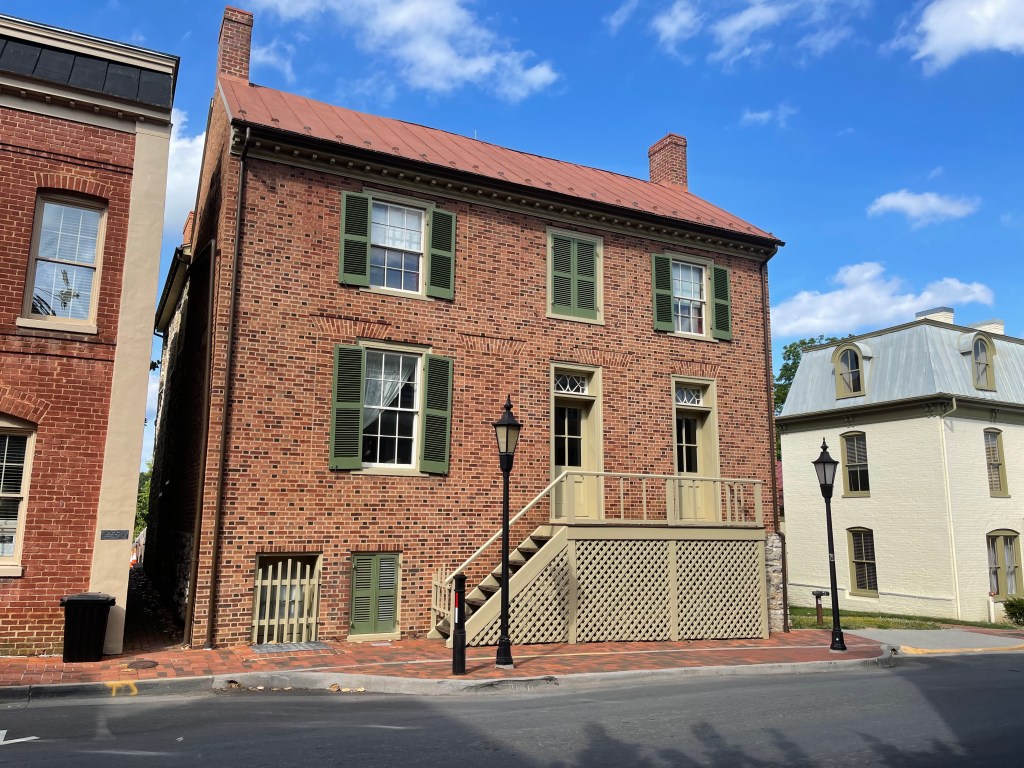
First, is the only house of Stonewall Jackson! Had I not known this was it, I would never have notoiced it…

Second, Washington and Lee University! It’s quite an elaborate college, but there was one landmark here that I originally intended to visit..
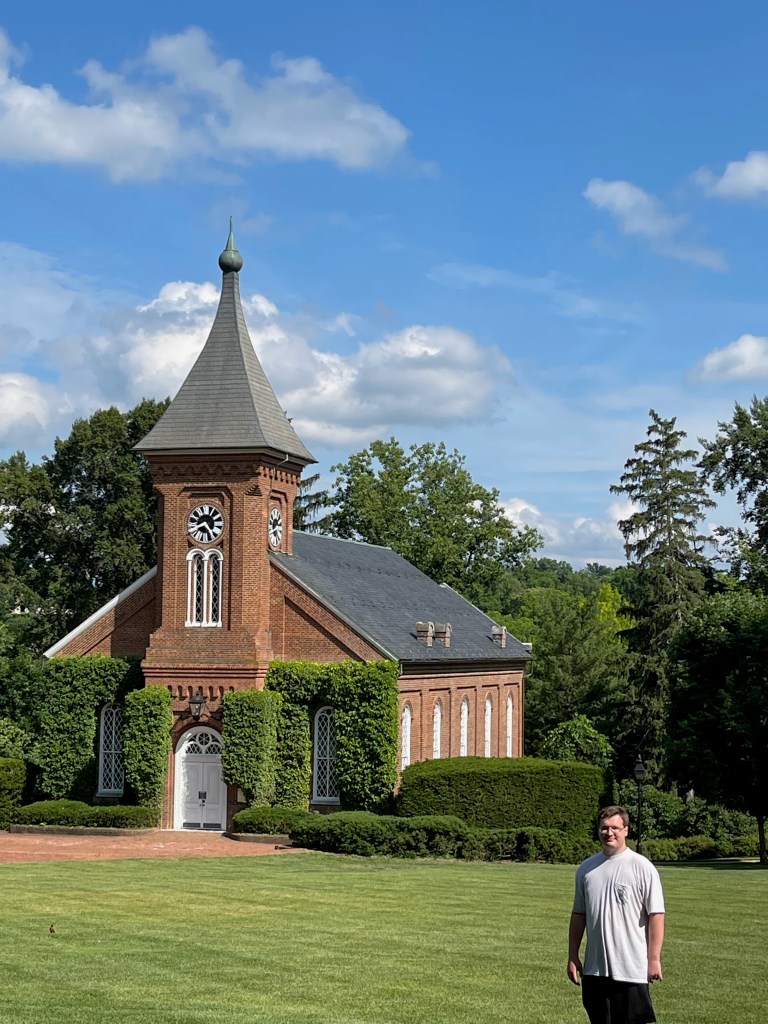

The Lee Chapel is where Robert E. Lee and various other Lee family members are buried. Due to to University restrictions however, the chapel has not been open in some time. I’ll show you a couple of internet photos to show you what it looks like inside.


Lee Crypt (underneath the chapel).
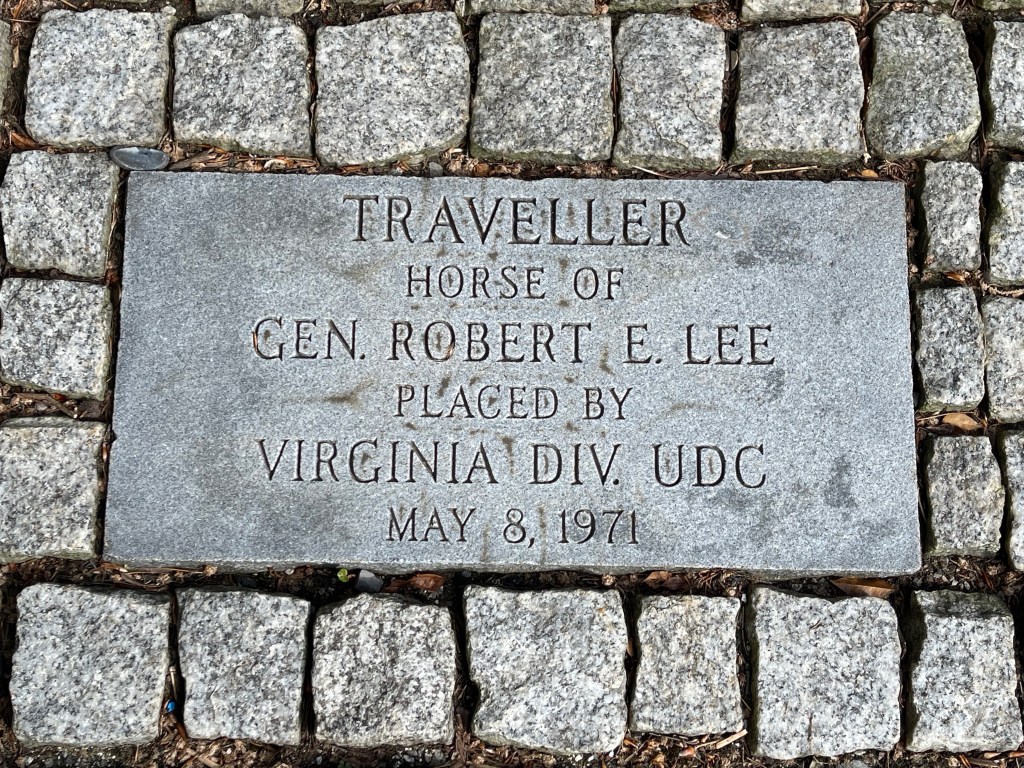

Finaly, in Oak Grove Cemetery, one can find the grave of one of the more notable confederate soldiers…

I’ll give you one guess.

The rest of “Stonewall” Jackson is buried here, and is the most noticeable monument in the place. Lemons surround his grave, on account that he used to do weird things to stay strong, including taking unnecessarily cold showers, and sucking on lemons.
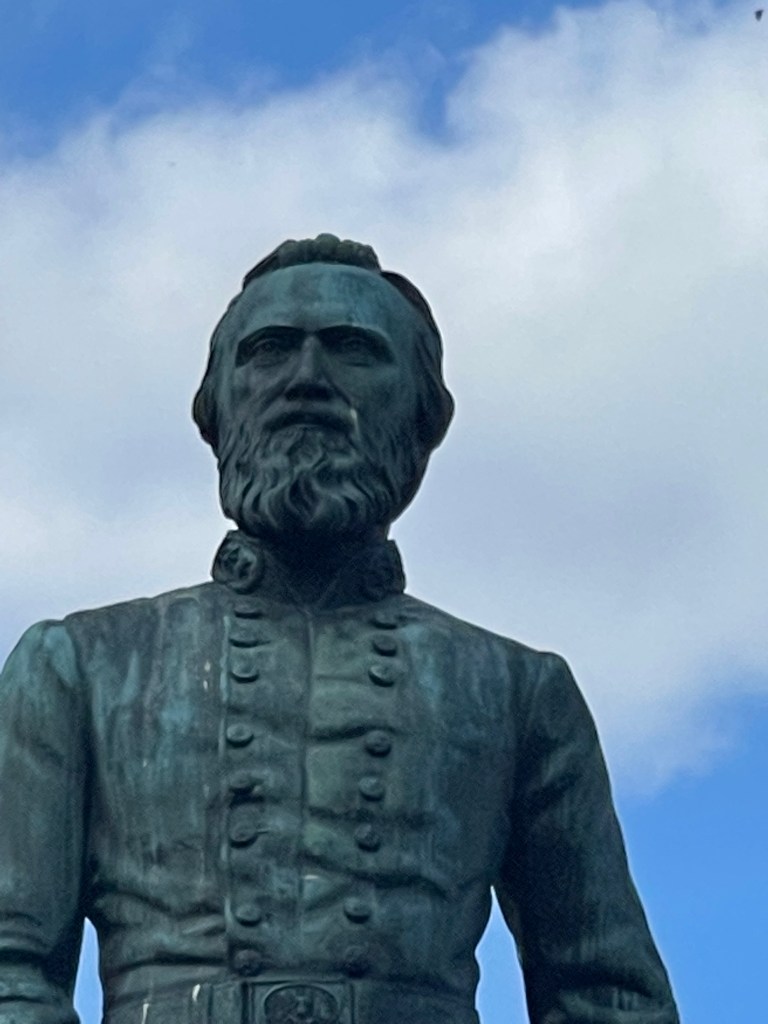
And that concludes Day 8! If you made it to the end, congratulations!
My next post likely won’t be quite as long, since the only thing we are seeing tomorrow is Appomattox Courthouse, the very place where the Civil War was brought to an end!
See you then!
 Mark's Historical Roadtrips!