
Welcome back! Today we spend our last day in Virginia, visiting two notable sites in the western area: Thomas Jefferson’s Poplar Forest, and the National D-Day Memorial!
So before we enter Tennessee… let’s give one last hurrah for the Old Dominion State!
Thomas Jefferson’s Poplar Forest
When Jefferson’s father-in-law John Wayles (the father of his wife Martha) died in 1773, Jefferson inherited several of his properties…as well as some serious debt. Jefferson sold off most of those properties, but managed to hold onto Poplar Forest, where he began constructing his summer villa… his “personal retreat”.

Jefferson, as you might expect, also designed this retreat, much like he did with Monticello. Before he had begun construction however, Jefferson (while Governor of Virginia) escaped Monticello with his family to hide here, away from the British. It wasn’t until 1806 however, that Jefferson would begin to design, build, and operate this property as a functioning plantation.

Jefferson would regularly visit Poplar Forest in between 1810 and 1823, to escape the sometimes intolerable attention and lack of privacy at Monticello. While Monticello was his “work-space”, Poplar Forest gave him time to think, read, write, and entertain his closest family members, including his granddaughters.

Jefferson built a long wing out from the side of the main house, which functioned not only as a long porch on top, but also provided workspace for slaves to do to their work (such as cooking, laundry, etc.)

Many trees once lined the perimeter of this hill, and also on its top. Having only been a historic site for at least three decades, the foundation here hopes to revert the grounds back to their original appearance.
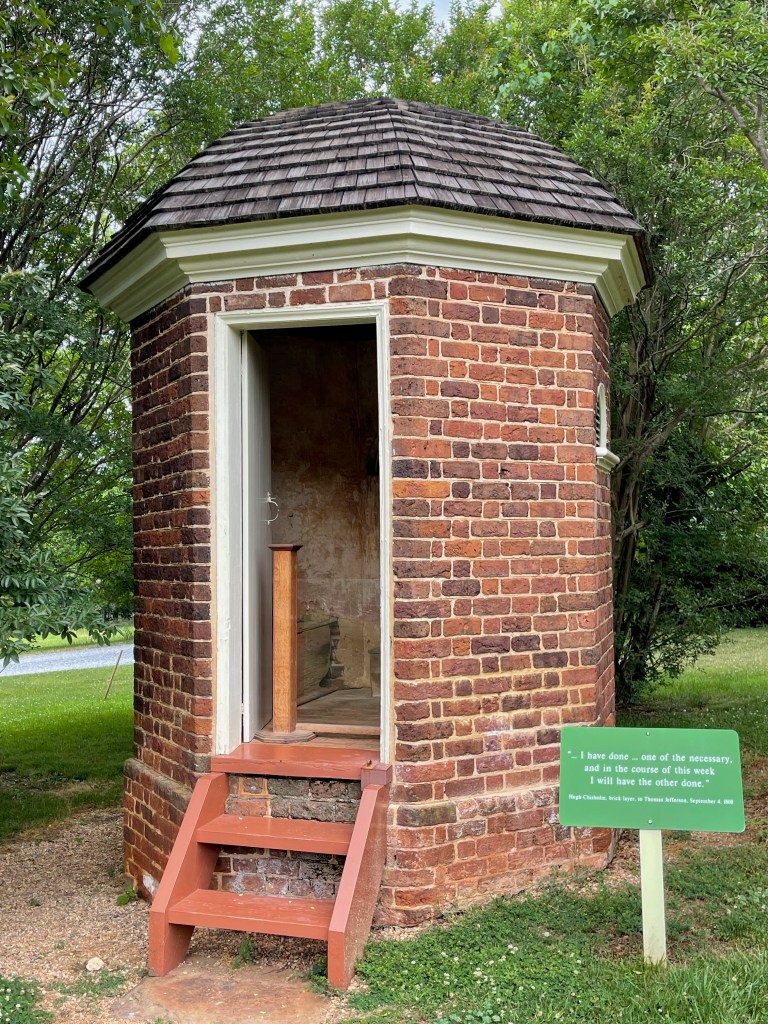
One doesn’t come across octagonal privies often, so this is quite a surprise to be sure. It was built (along with the main house) by Hugh Chisholm, a brickmason and plasterer who also helped to lay the bricks for Monticello. Under Jefferson’s “perfectionist oversight”, Chisholm would manage to complete both projects.
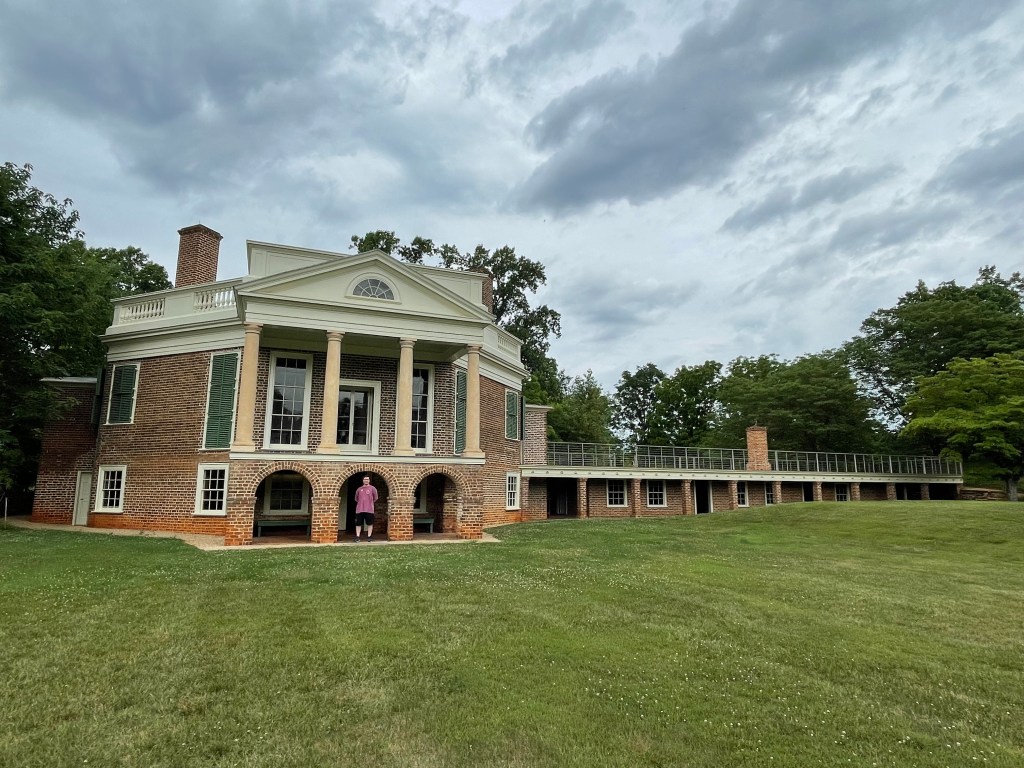
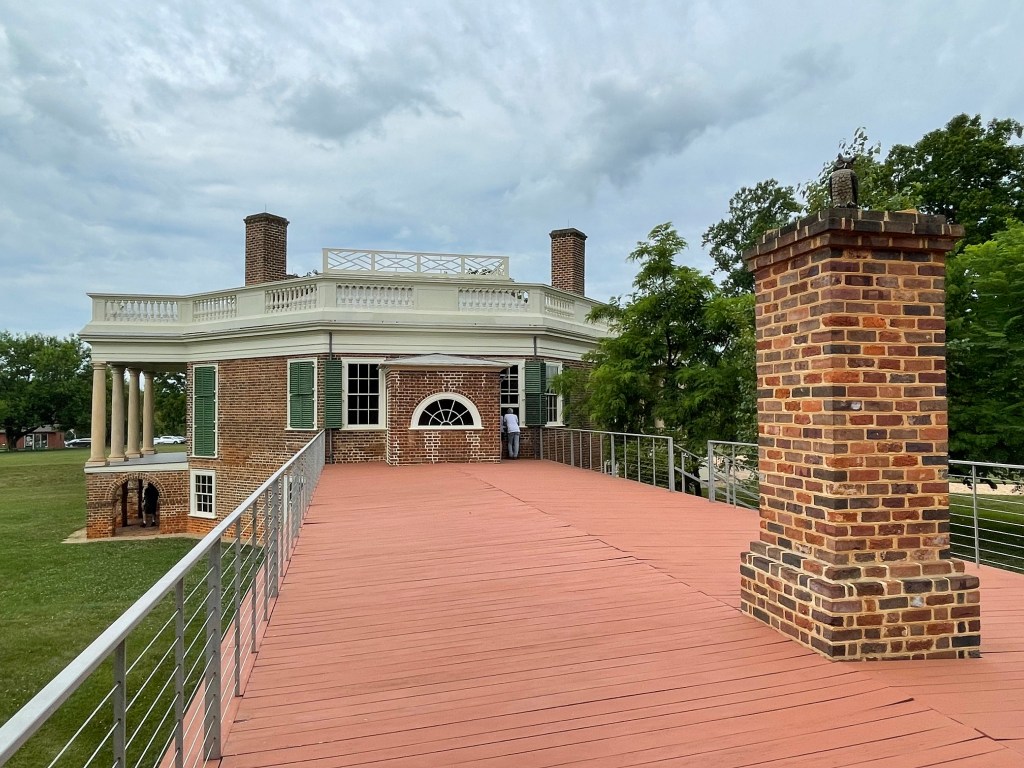
View from the Long Porch

Like Monticello, Poplar Forest was still a plantation, and 90-100 slaves lived and worked here to financially benefit Jefferson in his later years, growing cash crops like wheat and tobacco. Without their manual labor, his retirement would not have been possible.
The kitchen, seen above, was quite innovative for it’s time, and featured various kinds of ovens and stoves which were quite innovative during the time (like those seen at Monticello).
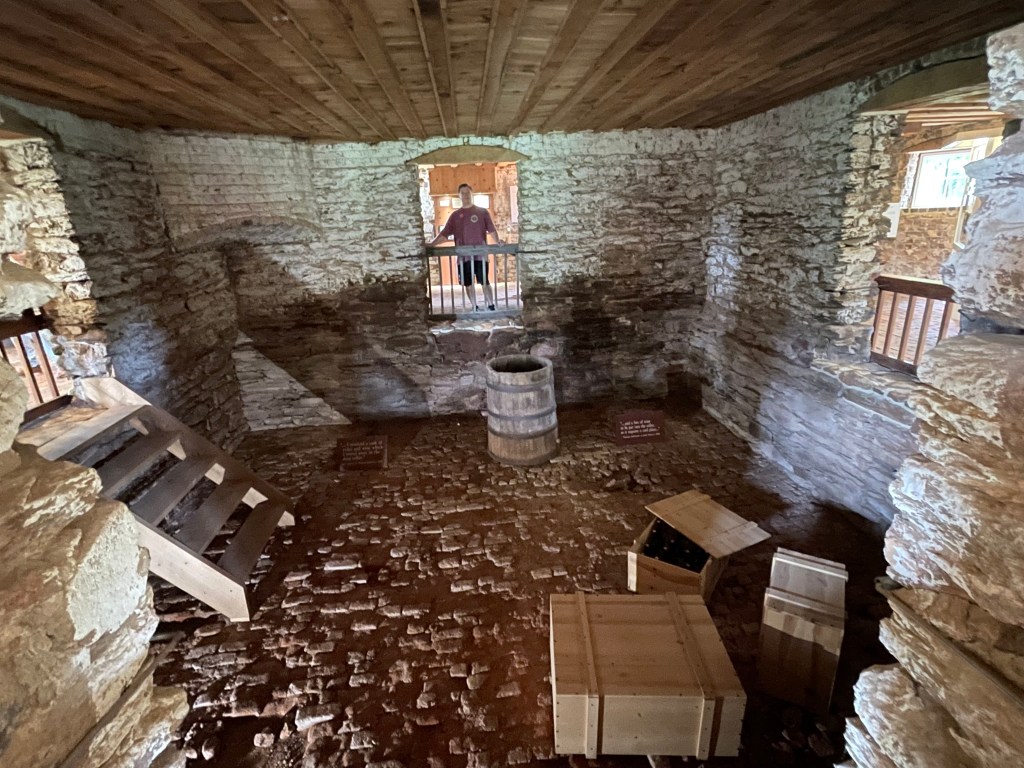
In here, Jefferson kept his most special of “spirits”… wine, beer, ale, and cider.
What? Did you think I meant ghosts?
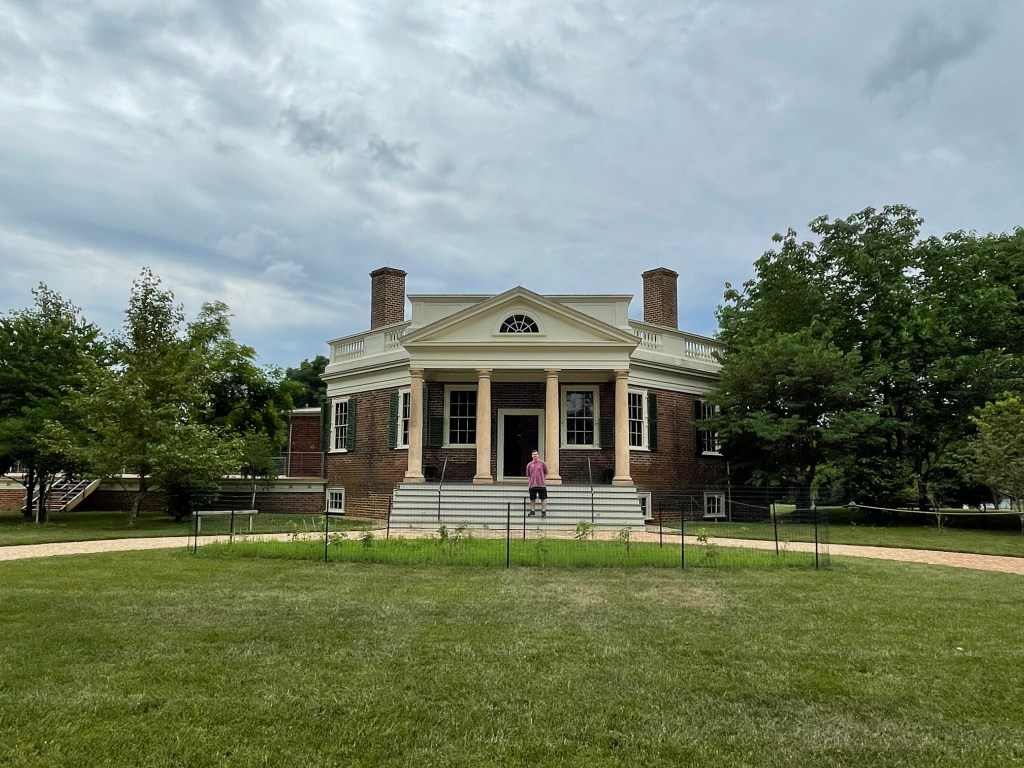
When Jefferson died, Poplar Forest passed to his grandson, Francis W. Eppes, who sold the property two years later. The house passed through several owners, and an 1845 fire burned all the woodwork of the roof and interior. In 1984, the property was purchased by the nonprofit ‘Corporation for Jefferson’s Poplar Forest‘, which has since been trying to restore the property (house, grounds, and all) to Jefferson’s time.
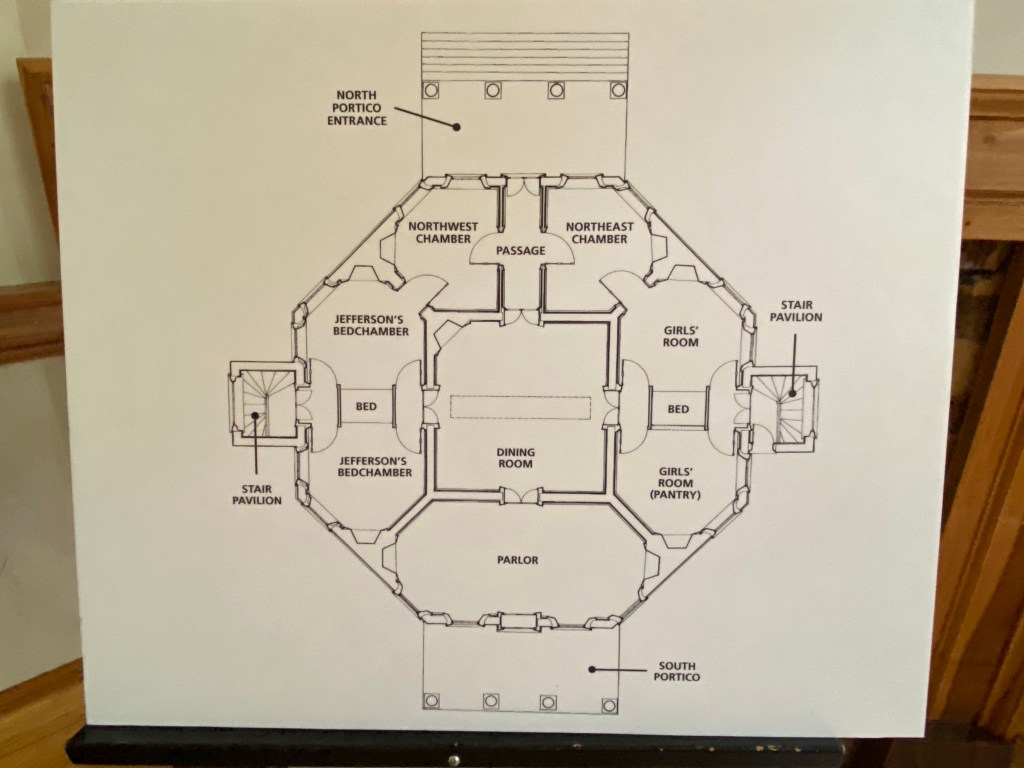
The house curiously takes on an octagonal shape, with a central square dining room. Jefferson took a lot of European influence for this design of course, especially once again from the works of Andrea Palladio.

Inside Jefferson’s bedchambers, one can see this central alcove where Jefferson once again employed the “bed-in-the-wall” trick. Much of the house is empty at the moment, as restoration work and research is ongoing, to learn more about the house, and its’ structure.

In the dining room, work continues to restore the house to its’ original design, thanks to Jefferson’s detailed records.The wooden frames of the door will soon be painted white to match the rest of the wall.

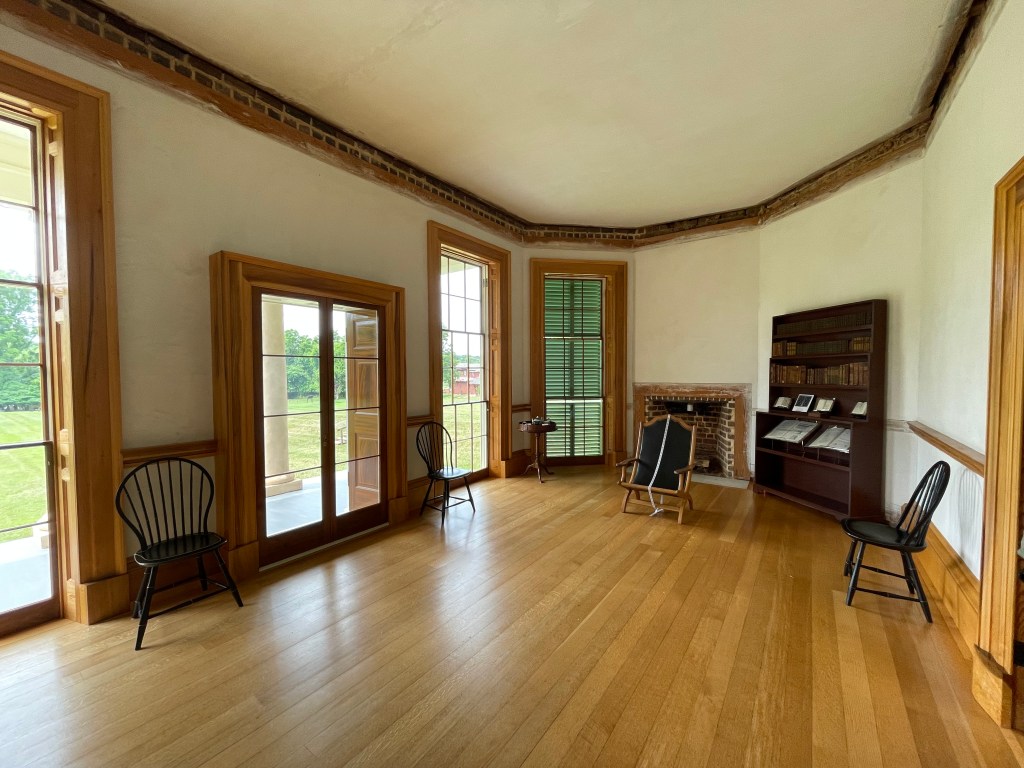
In the parlor, Jefferson could entertain very small groups of visitors, and here was also kept one of his several libraries. Though many of the original books are gone from this room, a small collection still remains.

In these private chambers (often used by the granddaughters), the true frame and structure of the house is put on display. The interweaving of timber and brick is really quite fascinating, and it’s a look you certainly don’t find at Monticello.


One of the original doors of Poplar Forest made by slave James Hemings, who did much of the interior structure and decoration in the house. This door, along with two others (and most of the furnishings), were saved from the 1845 fire. (Seriously, what is the deal with old historic homes and fires?)
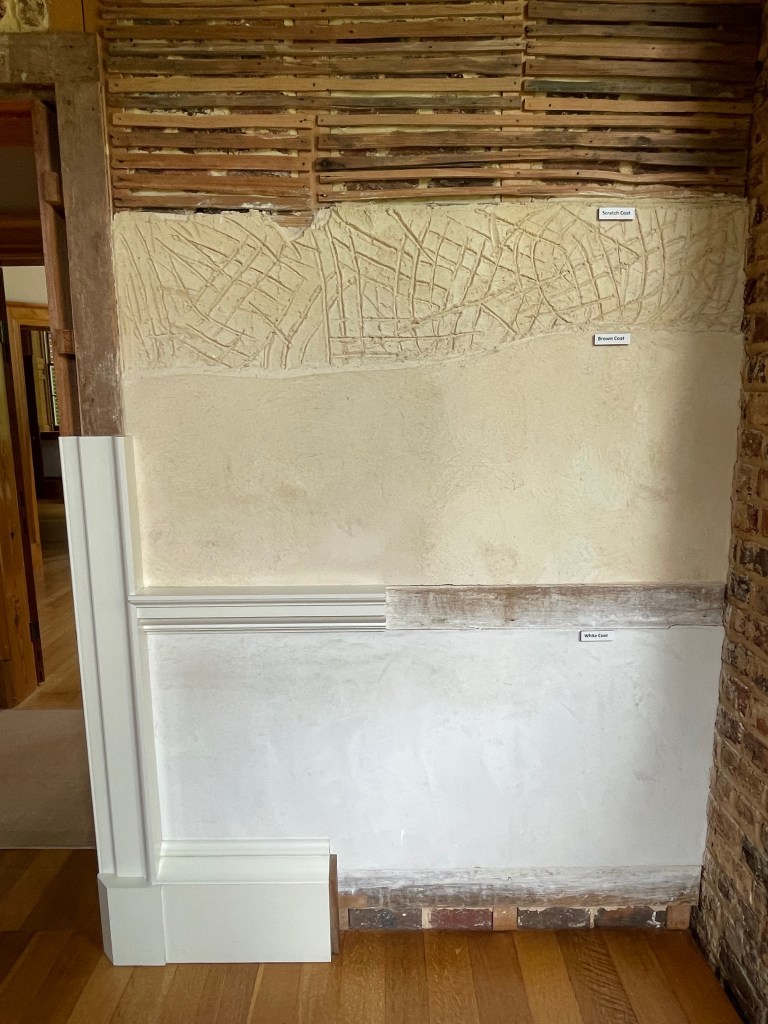
An interesting look into how the walls were formed at Poplar Forest (and I believe Monticello too). First, a number of rectangular wooden strips are applied to the brick. Then, a scratch coat layer mixed with horse hair (to make it stick better). Following that is a thick brown coat of primer, finishing off with the white coat that we’re familiar with.
I’ll say this for Poplar Forest… while Monticello might be better at exploring Jefferson’s talents and ideals (as well as plantation life), Poplar Forest excels at showing the practical matters of how these structures were built. Each site has their own strengths, so I still think that both are well worth a visit.
Leaving Poplar Forest, we proceeded on to Bedford, home to one of the finest military memorials in the entire country…
The National D-Day Memorial
I suppose our story begins with the dream of this man.
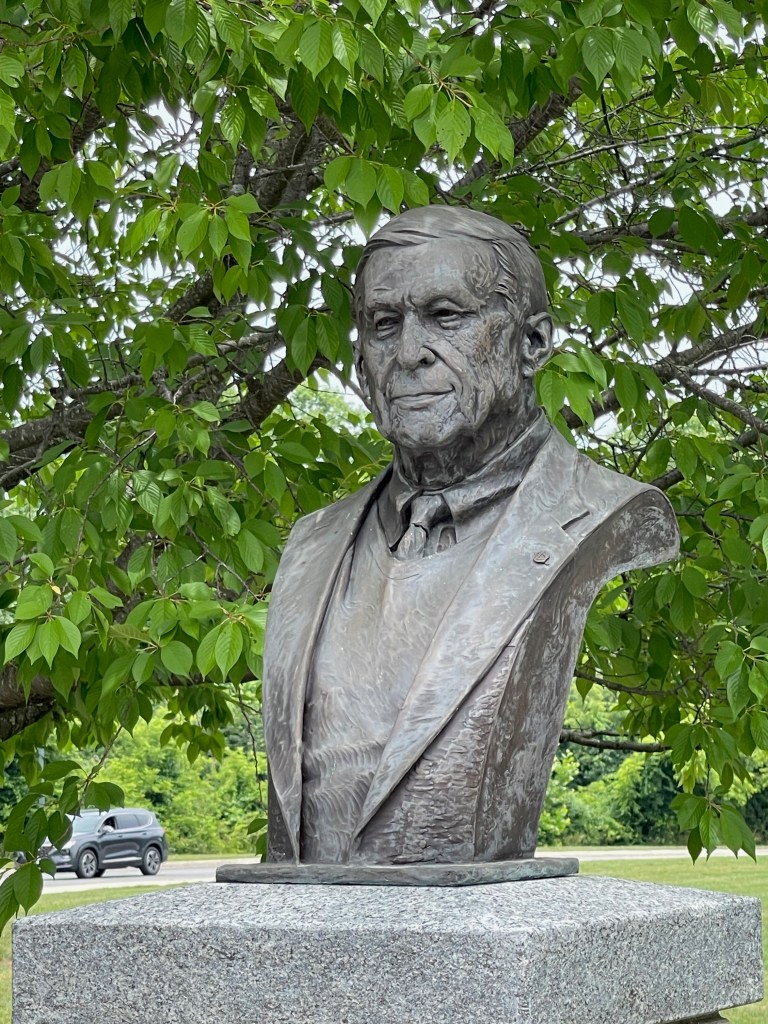
Bob Slaughter, pictured above, was a World War II Veteran, and survivor of the D-Day campaign, who felt that the heroic struggles, sacrifices, and victory on June 6th, 1944, could not be adequately conveyed through a mere exhibit wing (as was the case with the National World War II Museum in New Orleans). So, it was he that gathered the funds and the organization to create this monument on 60 acres of a hill overlooking the town of Bedford.
Dedicated by then-President George W. Bush on the 57th Anniversary (2001) of that offensive, the memorial serves as a tribute to the honor and bravery of those soldiers who braved the beaches of Normandy in what was the largest military offensive in World History.

Out of the 34 soldiers native to Bedford that participated in Operation Overlord, 19 were killed on the first day, with 4 more dying later in the campaign. Because Bedford suffered more deaths than any other American town during the campaign, the memorial was situated here, to honor the memories of those who would not return.

The English Garden reflects upon the planning of the offensive, and the high-ranking individuals who took part in the planning and execution of it. Individuals like Major-general Omar Bradley, Field Marshal Bernard Montgomery, and of course…

General (and future U.S. President) Dwight D. Eisenhower, who served as Supreme Commander of the Allied Forces during this time. It was partially thanks to Eisenhower’s shrewd delegation of responsibilities to capable officers that enabled the Allies to carry the day.
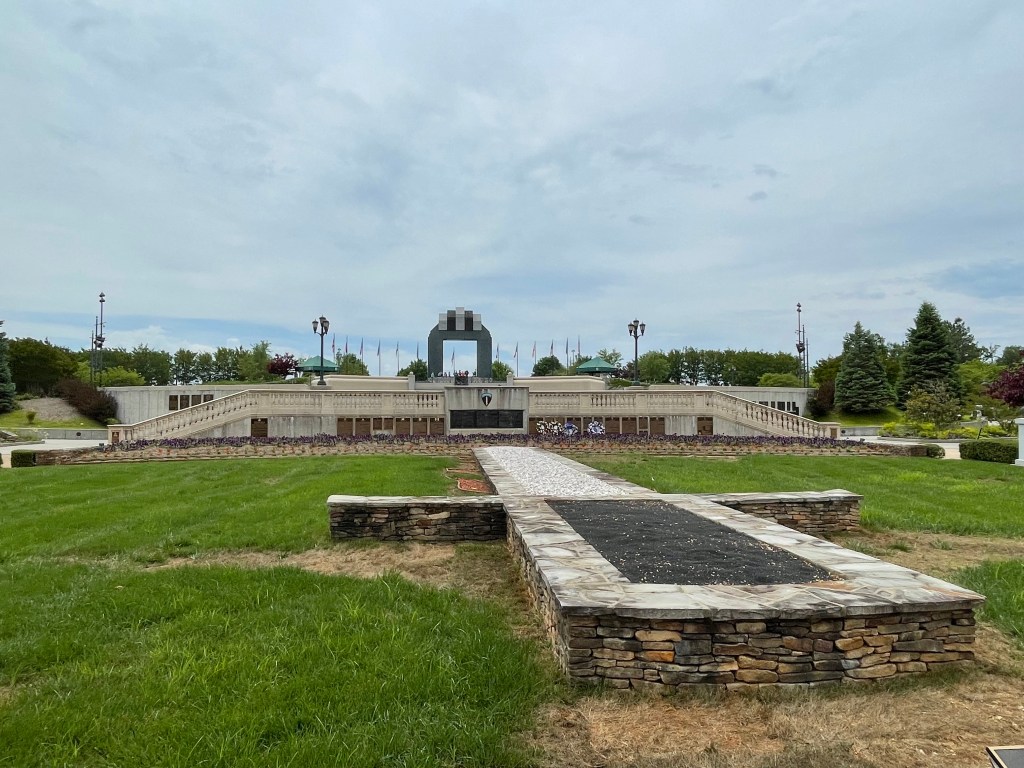


Eisenhower’s “Order of the Day” became synonymous with the events of Operation Overlord… with over 152,000 troops and nearly 5,000 ships from the 12 different contributing countries, the storms let up enough for the Host of Liberation to catch the Nazi defenders unawares…
Physically, the figures are impossible to fully comprehend by anyone.


Much like the Vietnam Memorial in Washington D.C., the names of the fallen simply stretch on and on…
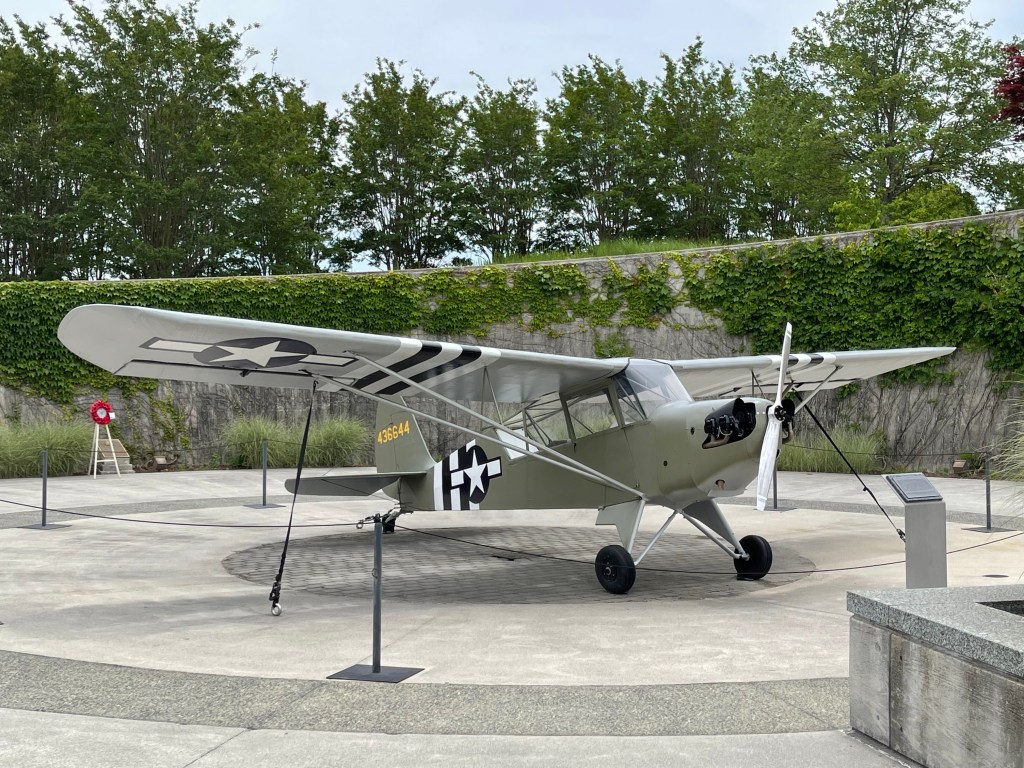
Painted with the black and white stripes, Allied lanes would do much scouting work, and attempt to drop paratroopers to aid in the fighting. Though the weather unintentionally spread them all around the countryside, the combined forces of the Allies were still able to overcome the outer defenses.

The centerpiece of the memorial is meant to capture the moment of landing on the Beaches of Normandy…
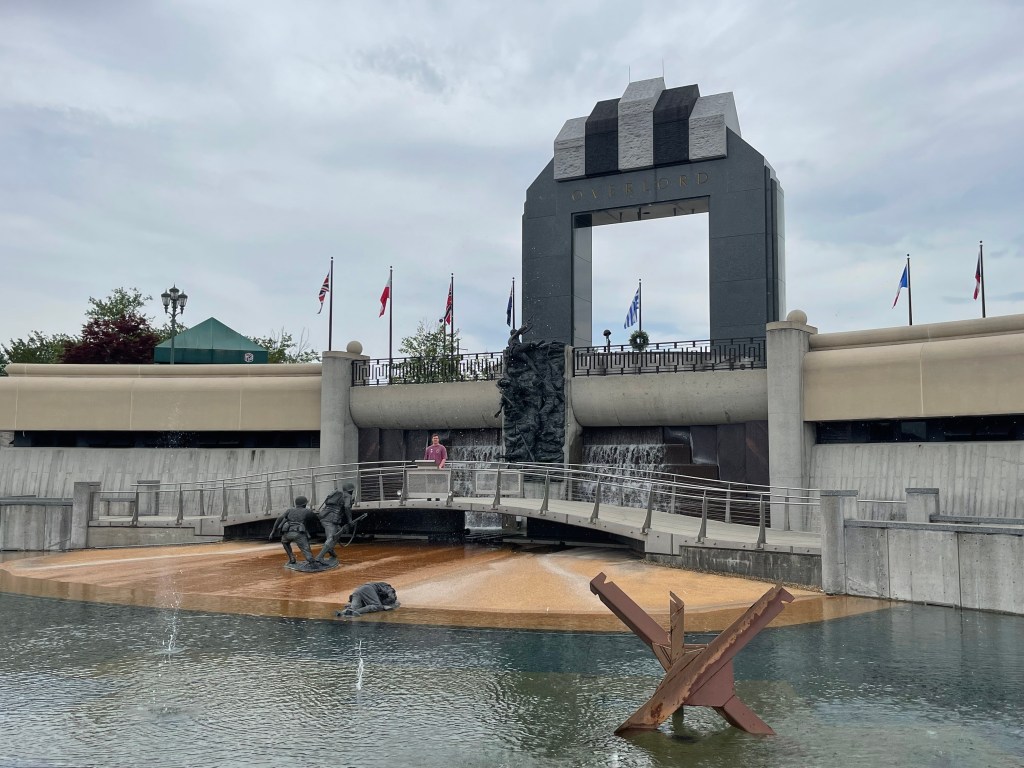
Note the splashes in the water… through clever techniques, they make it look like enemy bullets are sailing into the water… it was certainly a noteworthy detail.

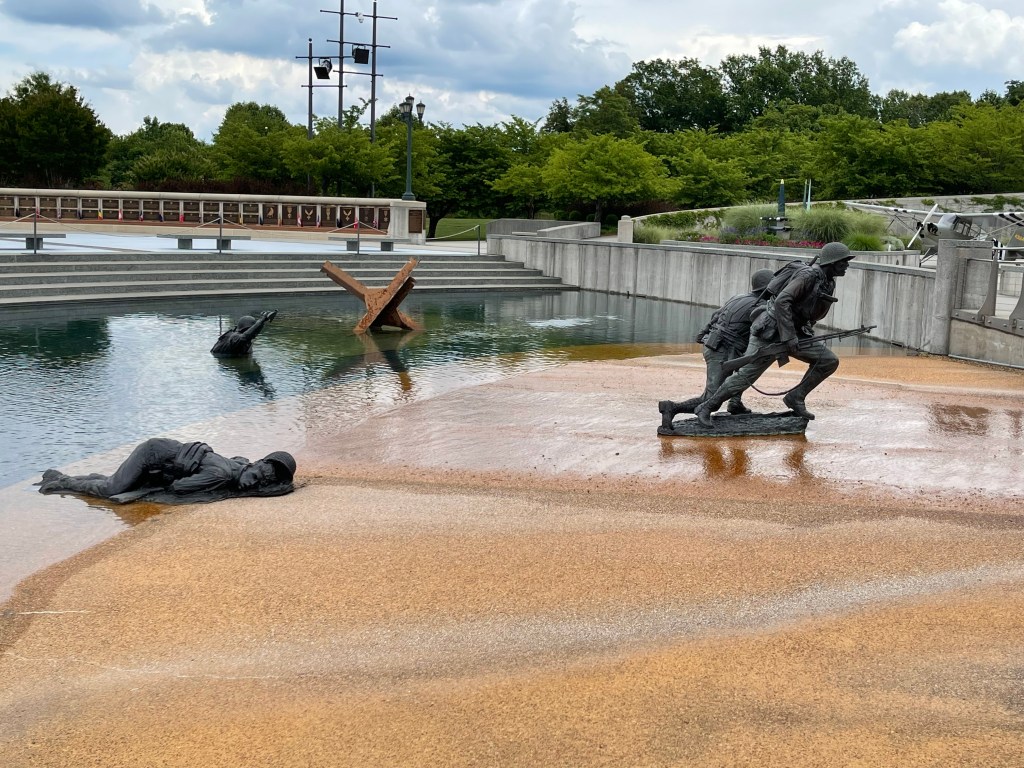
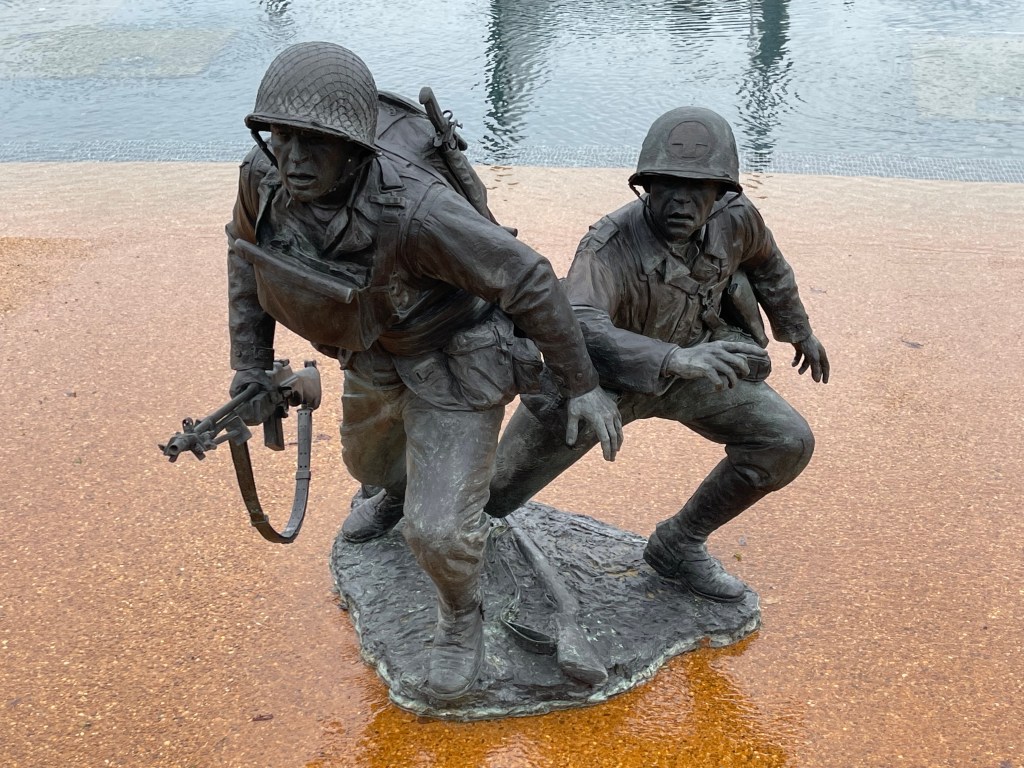
Valor, Fidelity, and Sacrifice. Valor is the brave trooper escorting the medic, Fidelity, to aid others in need. And the fallen soldier… sacrifice. Too many soldiers payed the ultimate sacrifice that day… though they did so willingly.
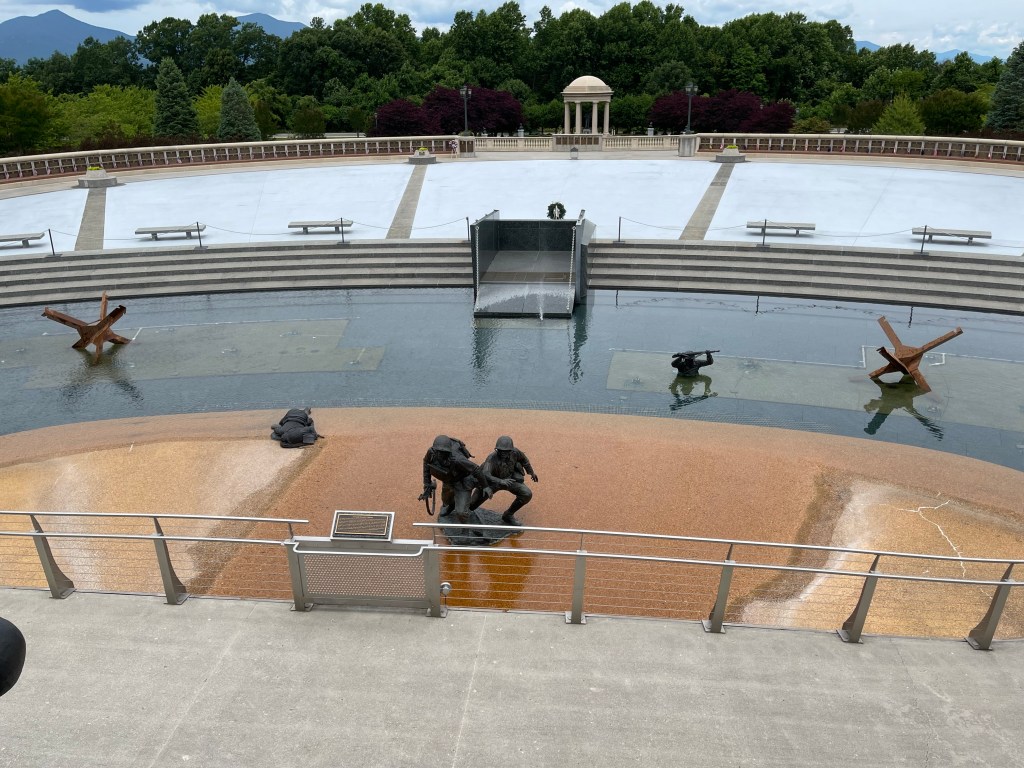
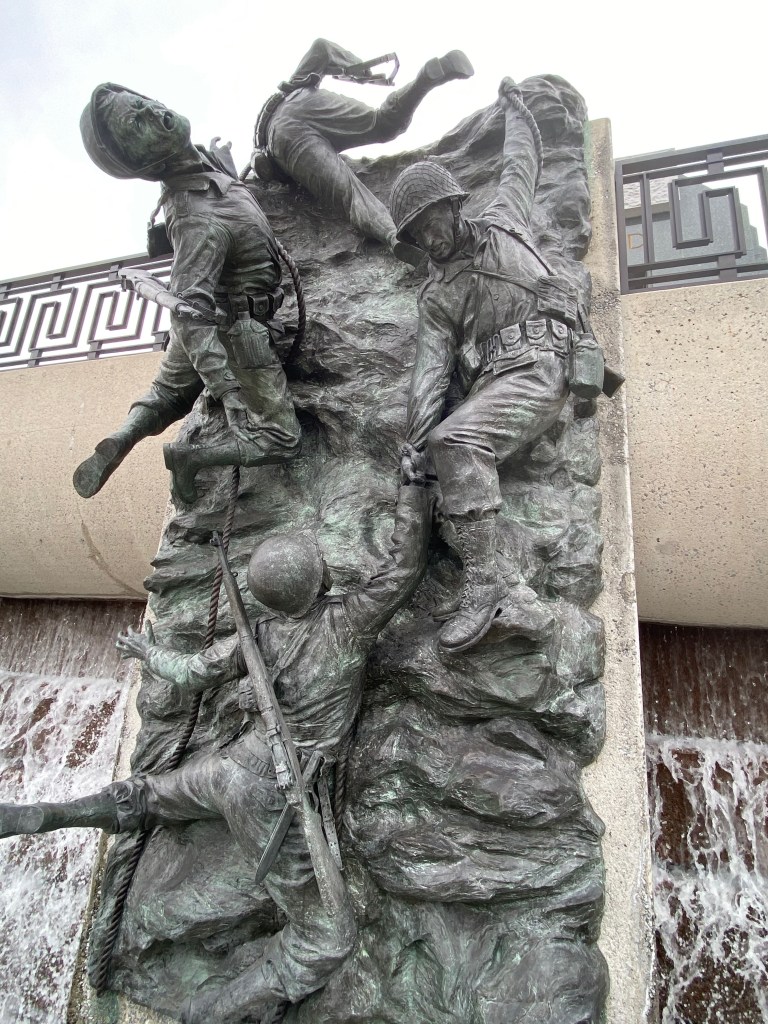
After emerging from the low tide, and navigating the long beaches strewn with debris, the soldiers had to climb the wall in order to take out enemy defense posts…
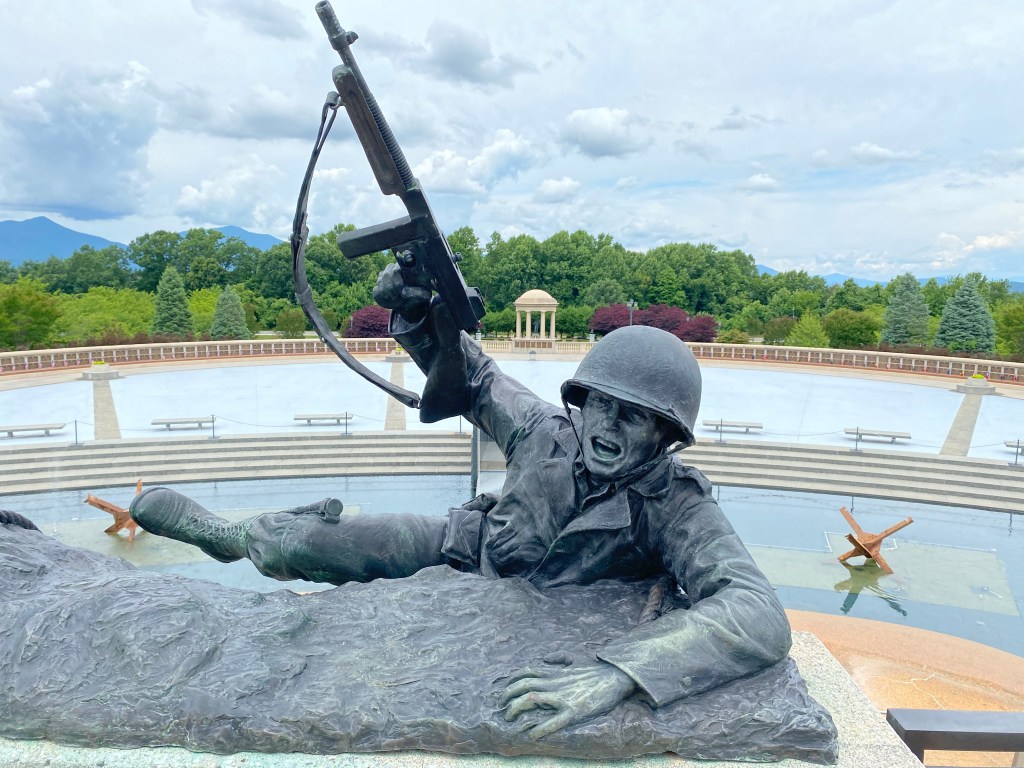
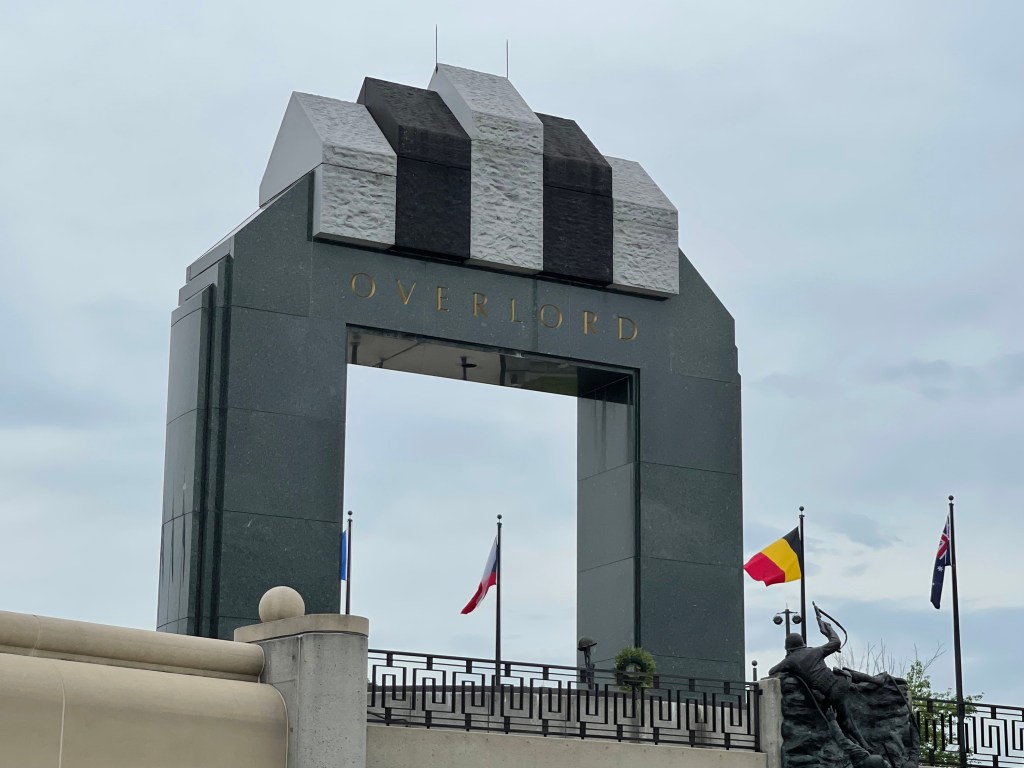
Though the fighting was tough, the Allies prevailed, and made their first foothold in what would become the Liberation of Europe, and the defeat of the Third Reich.

Surrounding the base are the names of each of the five sectors of the beach assault… Utah, Omaha (both American fronts), Gold and Sword (both British beaches), and Juno (the Canadian beach).

Also surrounding the Arch are the modern flags of the 12 nations that in one way or another joined in the efforts of Operation Overlord. (From left to right: the United Kingdom, Poland, Norway, New Zealand, The Netherlands, Greece, France, Czechoslovakia, Canada, Belgium, Australia, and the United States.)

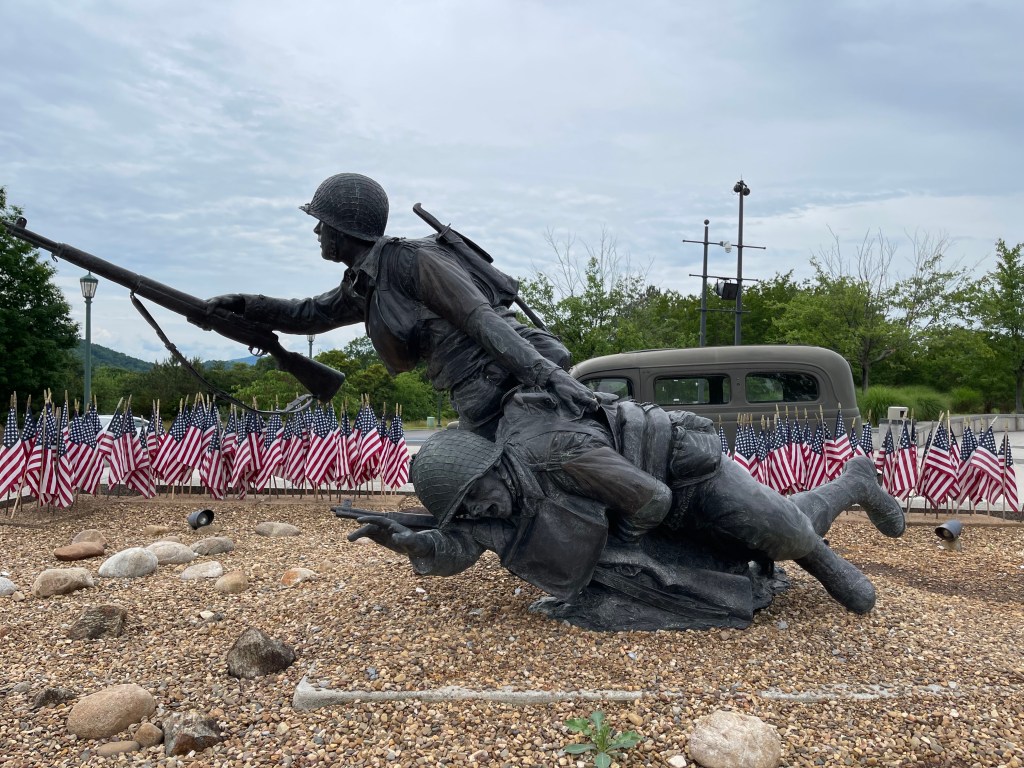
Upon this statue base, are the flags of World War II veterans: relatives of visitors to the memorial. Naturally, we couldn’t leave without remembering the ones of our own family.

My paternal grandfather Darvin served in the Army Air Corp, though thankfully was only in for two weeks before the war ended. My maternal grandfather Raymon served under General Patton on the western front, and even helped to liberate Flossenburg Concentration Camp. They never spoke deeply of their experiences, but I’m thankful for their dedication nonetheless.
With their names written on these flags by each of my parents, it was I, the grandson, who placed their names with the others.
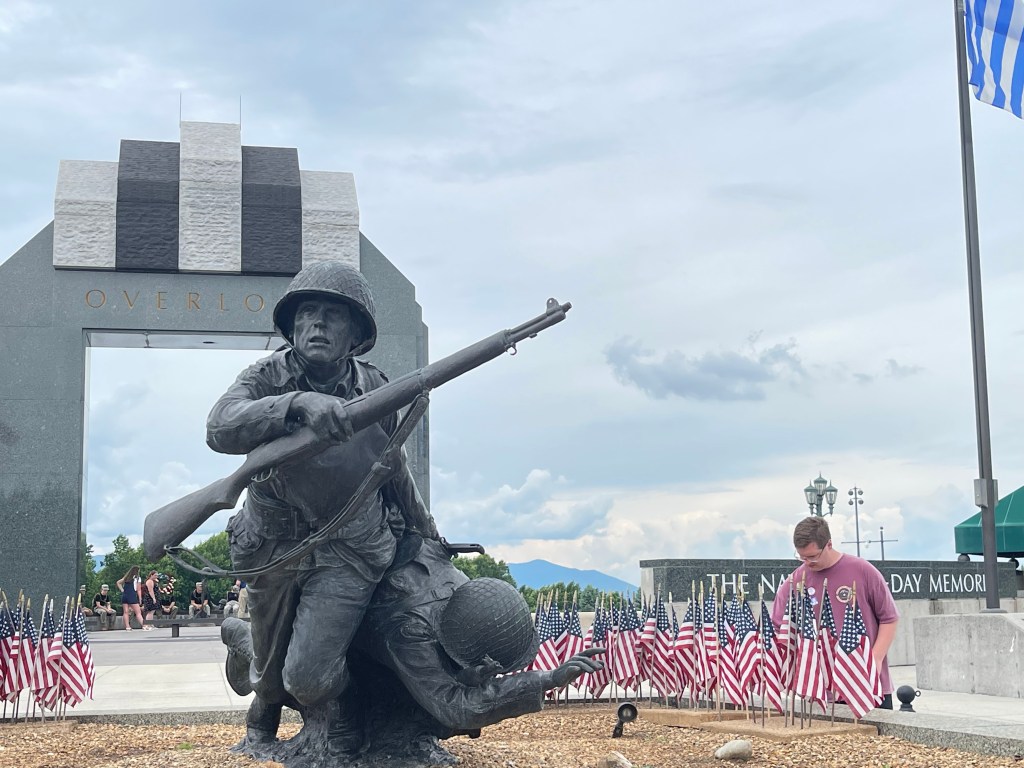
It is just hard to believe that it was only 77 years ago that those beaches were dyed with the foam and blood of the fallen, where thousands would rush on to protect their homes, their families, and their honor. And now, so few from that awful war, let alone that one offensive, remain with us in the world today. No word could speak for the experiences or the suffering that they had witnessed. And no one could ever truly know what those brave souls would have endured for our security, and for our independence.
We owe much to their valor, fidelity, and sacrifice. When next you see a veteran from that war, or from any war, take a moment to stop and thank them for their service. Let them know that they are appreciated for what they have done. And take some time to reflect on the principles and liberties that they had so sought after to guard for us.
Lest we forget.
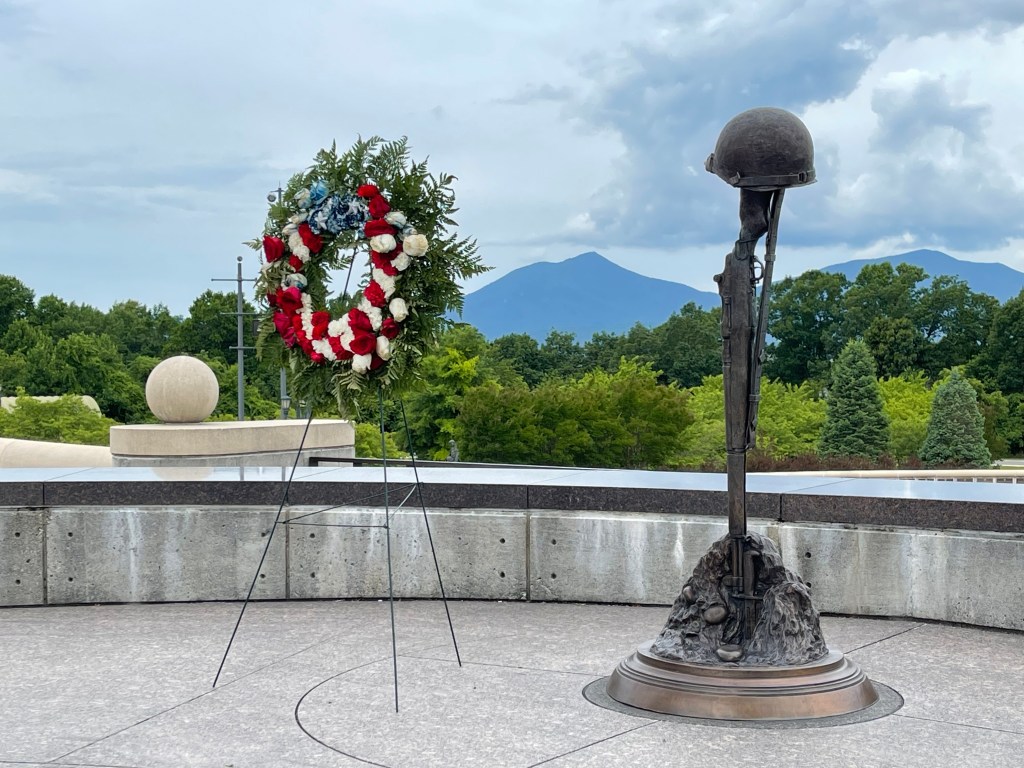
Although we were unable to visit during the 77th Anniversary of Operation Overlord three days earlier, I’m still glad we came.
Leaving our final stop in Virginia, and after a long drive through the hills, we came to it… Tennessee.

Even more adventures await us in Tennessee, not least of which those for next time! Join us as we visit the Andrew Johnson National Historic Site in Greeneville, Tennessee, wrapping up our quest to visit EVERY Presidential Gravesite! Also join us for our trip to Gatlinburg, where we’ll explore the beautiful landscapes in the shadows of the Great Smoky Mountains…
See you then!
 Mark's Historical Roadtrips!