
Well… here we are once again, in this latest blog post.
Today marks the completion of my long quest to visit every single presidential gravesite, a goal that’s taken me all across the country to visit the final resting places of our 39 deceased commanders-in-Chief. And it all ended in Greeneville, Tennessee, the home of Andrew Johnson, our 17th president.
Let’s journey to Greeneville, and take a little time to unwind in the wilderness afterwards, shall we?
Andrew Johnson National Historic Site
Situated in the easternmost portion of Tennessee, rests the interesting town of Greeneville (if you ever visit, be sure to spell it as Greeneville, not Greenville. The townsfolk will “kindly” remind you that). Most know it today of course, as being the home of President Andrew Johnson.
Johnson is generally credited as being one of our lowest-ranked presidents in the country’s history, yet around Greeneville, he’s often considered the “favorite son”.
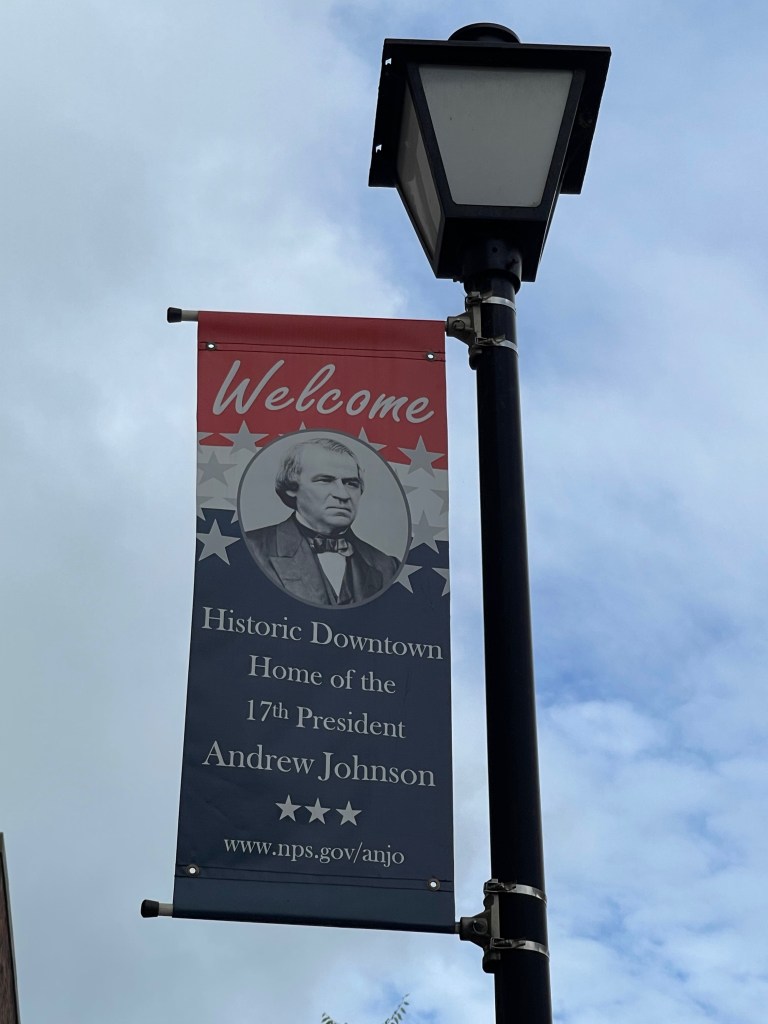
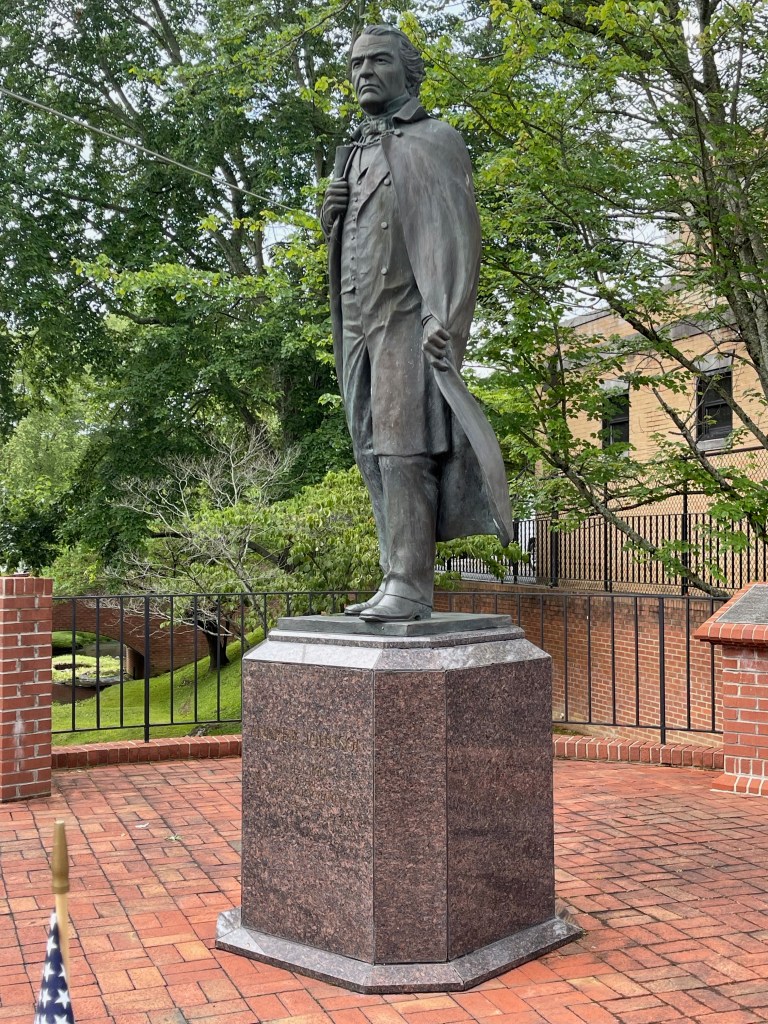
Here you’ll find the Andrew Johnson Bank, the Andrew Johnson Inn, the Andrew Johnson Highway, and of course, his National Historic Site, which preserves his homestead, various related artifacts of him, and the National Cemetery where he is buried.
Born in 1808, in Raleigh, North Carolina, Johnson and his brother would both become apprentice tailors, before running away to Tennessee to stake out their own paths.
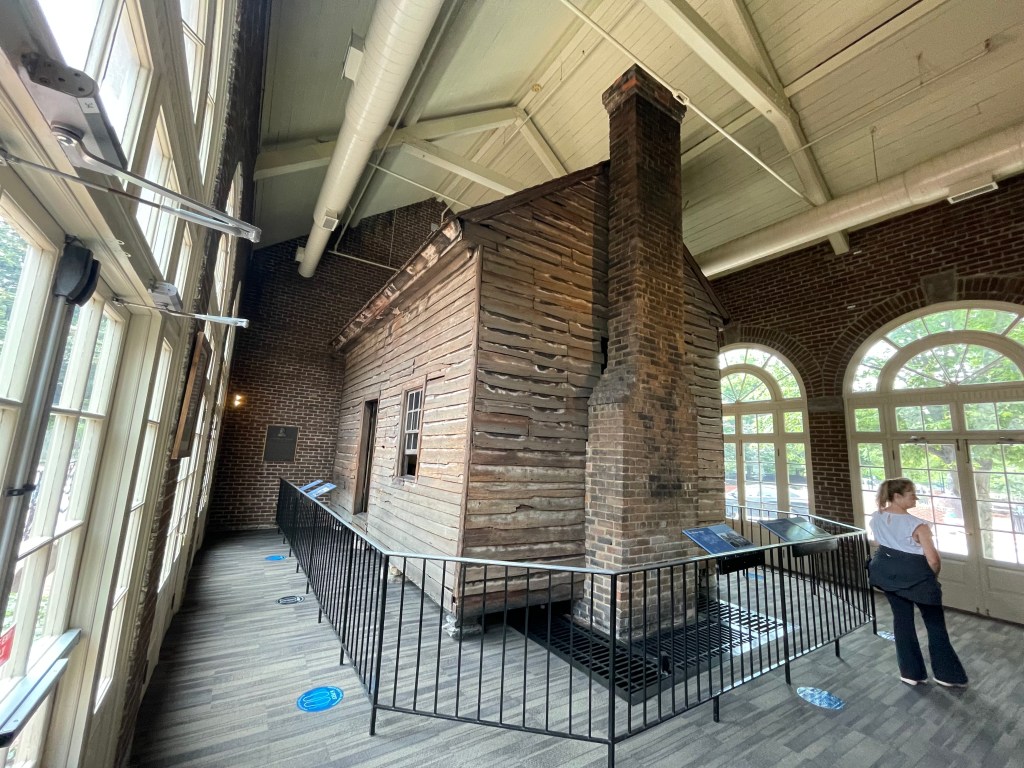
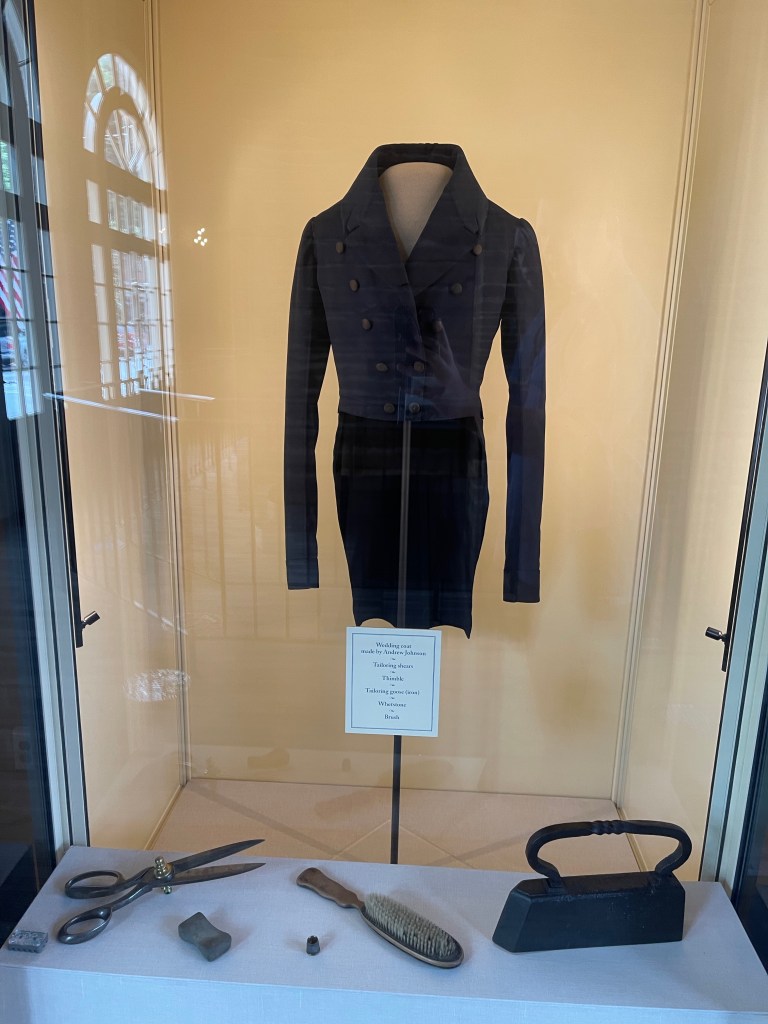
And so, Johnson would become known in Greeneville as “A.Johnson, Tailor”. Skilled in his trade, Johnson would sew, while his wife Eliza would teach him to read and write (he never had any form of formal education). The shop also served as a center for talking politics, and when some people suggested that he should run for office, Johnson did just that.

Johnson, always supporting the common man and worker, was elected to the U.S. House of Representatives, where his blunt and wounding form of speaking would lead to the gerrymandering (erasing) of his district. He then was elected as Governor of Tennessee however, and issued many appeals and reforms for the “common-man”, idealizing the populist mantras of fellow Tennessee native, Andrew Jackson.
Later, while serving in the U.S. Senate, the southern states, including his home state, seceded from the Union. Johnson, a staunch Unionist, was the only southern senator that remained with the Union. This loyalty would earn him the position of Military Governor of Tennessee during the Civil War. And later, when Abraham Lincoln sought a new running mate for the 1964 Presidential Election to balance out the regional ticket, he picked the “Tennessee Tailor“, as his vice-president.
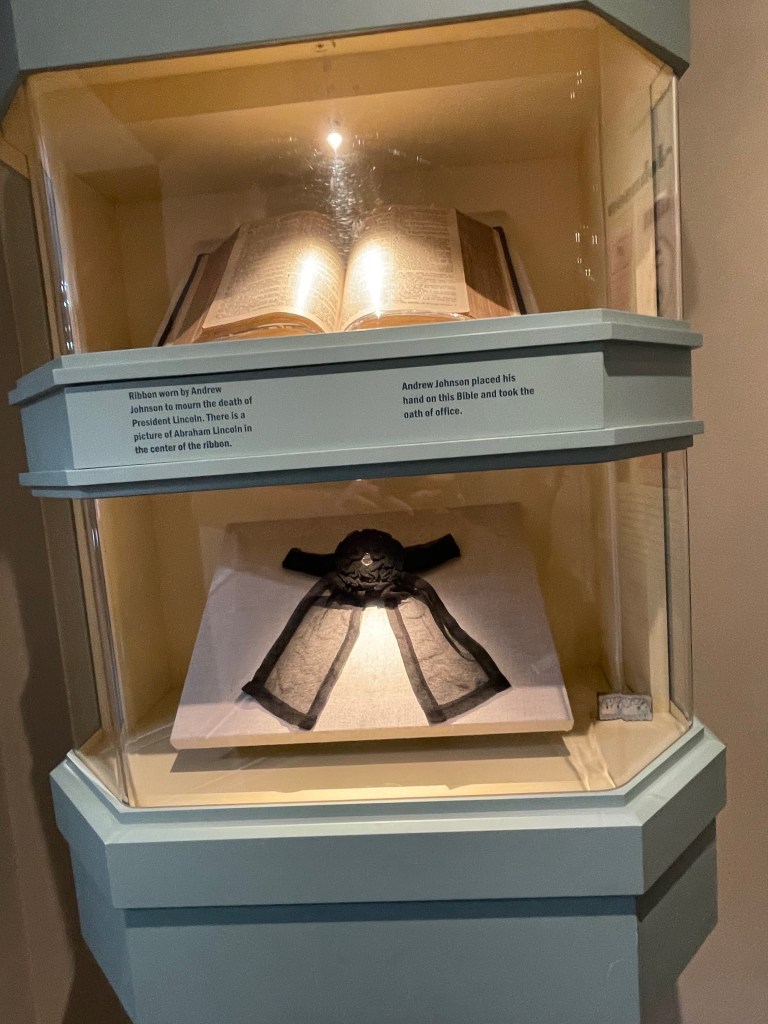
Only months later however, mere days after the Civil War came to a close, President Lincoln was shot at Ford’s Theatre, dying the next morning. As sorrow and grief consumed the nation, all eyes turned to Johnson, who now had the difficult task of Reconstruction of the Union, and all of it’s post-war dilemmas.
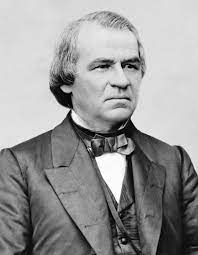
Unfortunately, unlike many times in American History where the right individual would be there for the right time, Johnson’s relationship with Congress would come to be adversarial.

At the time, the Radical Republicans (the name for the more progressive wing of the then Republican Party) were pushing for a rush of legislation. This included greater rights for freed slaves (including the establishment of the Freedmen’s Bureau), greater punishments inflicted on the former Confederate states, and an uncompromising attitude towards their Democratic colleagues.
Now if you might have guessed already, Johnson may not have been stubborn. But he was extremely stubborn.
Johnson vetoed many of these Republican bills, citing constitutional overstepping (Johnson was a strict constructionist when it came to the U.S. Constitution). In addition, his very bigoted racial views (noted in several of his species supporting racial hierarchy between whites and blacks) often played a part in denying or postponing the granting of additional rights to African-americans. He was generally more lenient towards the south, allowing many of them to immediately come into the fold.
His often abrasive and often accusatory rhetoric and actions created one of the most hostile relations between the President and Congress in the country’s history. Disliking their power being curbed by Johnson, the Republicans issued the “Tenure of Office Act”, allowing only cabinet appointments approved by Congress. Johnson, as you might expect, took the bait for this trap.

Johnson, having inherited most of Lincoln’s Cabinet, fired Secretary of War Edwin Stanton, who he suspected of collaborating with the Radical Republicans. This gave the House (majority-Republican) the vitriol needed to impeach Johnson, thus making him the first U.S. President to be Impeached.

As denoted in the Constitution, a 2/3 majority vote is required for the Senate to remove the President from office. Debate was fierce, especially as this was the first time a trial of this nature had been hosted. Many historians note that the entire effort was likely a partisan effort to remove Johnson’s obstruction of their agenda (though perhaps this was warranted due to the president’s likelihood to act outside of his jurisdiction).
The Senate acquitted Johnson by just one vote, and after serving the tense remainder of his term, returned to Greeneville…
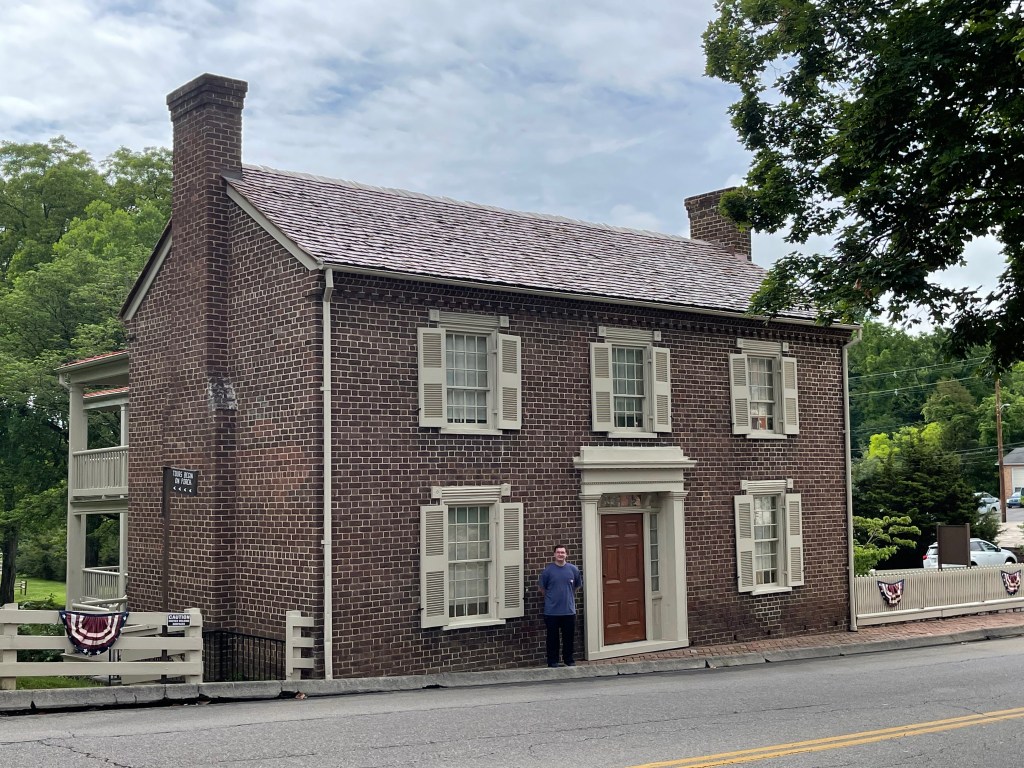
Andrew Johnson bought this home in 1851 for him and his family, though he was often abroad serving in political offices, preventing him from investing too much in the home initially. It wasn’t until his return to Greeneville that he began to take an interest in local affairs from this abode.

I found the two-porch design to be particularly fascinating…

85% of the items in the home are original to the Johnson Family’s time here. That means the furniture, bed, coat and vest, top hat, and travel trunk all belonged to President Johnson. Interestingly, he lived down here, while his wife Eliza lived upstairs. We’ll find out why in a bit.
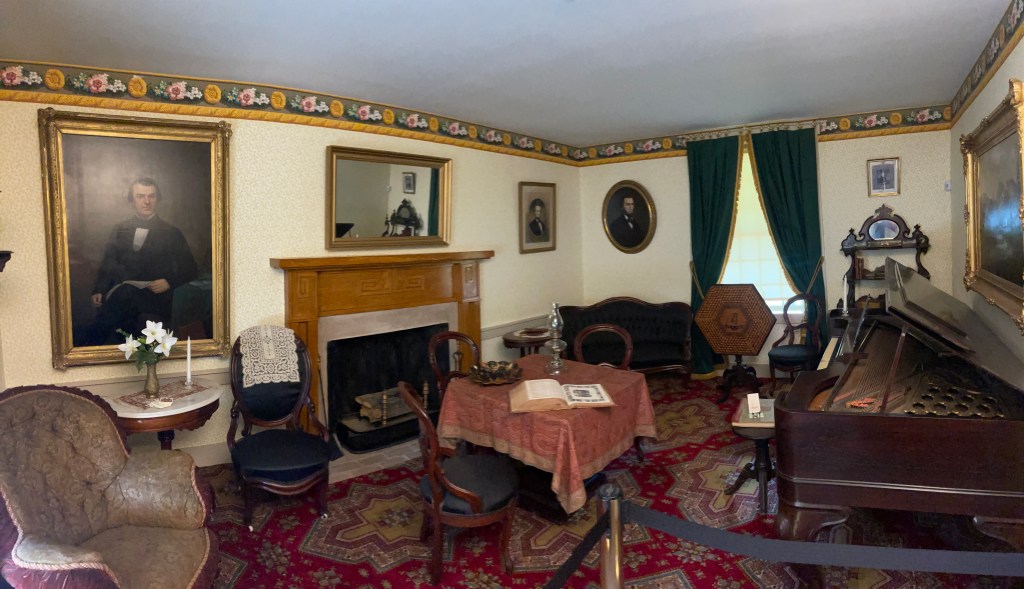
The Parlor could entertain a modest gathering of people. Two of his daughters played the Steinway Piano here (which he didn’t). The Johnson’s had five children, a number of whom led unfortunate lives. One, Charles, was thrown off his horse in 1863 during the War and died, and another, Andrew Jr., succumbed to a laudanum addiction.

Andrew Johnson’s wife, Eliza, lived in this room, upstairs. Though she dearly loved “Andy”, and supported him throughout his career, she suffered incredibly from Tuberculosis for, as did most of her family, who continued to struggle with it. She would die only 5 months after Andrew did (which I think is the shortest amount of time between both deaths of a presidential couple), perhaps from a broken heart.

The Dining Room, where Johnson enjoyed some of his favorite comfort foods, including Buckwheat Pancakes (extremely difficult to make), Hoppin’ John (a southern dish of black-eyed peas, rice, onions, bacon, and other ingredients), and sweet potatoes. He and his family would be weighted on by their various slaves.

Yes, Johnson would own up to 9 slaves during his lifetime (a relatively low amount compared with other Presidents), but would end up freeing them, and later paying them wages for their continued work. It’s an interesting dynamic considering his racial views.
Well… it’s time to head to the cemetery. (This is a phrase I often use to wrap up a historic site, or when we’re heading to a gravesite).

In the National Cemetery that bears the name of our 17th President, the U.S. Flag and the P.O.W. Flag fly proudly above Monument Hill, and the long flight of stairs leading up to the Johnson plot.

The Johnson Family originally owned this hill, then bestowed it to become a cemetery for military veterans.


On the crest of the hill, lies the final resting place of President Andrew Johnson and his family.

President Johnson actually returned to Washington 5 years after leaving office to serve a short few months as a U.S. Senator (the only former president to do so). Shortly afterward, he suffered a stroke, and died while visiting relatives just north of Greeneville.
He was laid to rest on this hill, draped in an American flag, and with a copy of the Constitution serving as his pillow.

President and Mrs. Johnson are buried underneath the arch of the tall eagle-adorned monument. Currently, grave restoration is being done to fix some of the cracks and weathering of the plot.

In historical rankings of our Presidents, Johnson is often considered one of the worst in American History, namely for his abrasiveness and refusal to work with others to get things done. This would leave behind a bitter legacy of injustice and social confusion for decades to come…
And yet, this site has given me much to think about of all the other accomplishments of Johnson, despite his many (many) faults. Strictly principled (stubbornly so) and a herald of the “common-man”, Johnson is recognized in few perspectives as a decent president. But in Greeneville, they keep the memory of Andrew Johnson “the man” alive. He’s “their” president after all. And perhaps that is enough.

With the visiting of Johnson’s grave, my quest to see all 39 presidential gravesites has come to an end, in a span of years beginning in 2007 with Lyndon B. Johnson, and ending in 2021 with Andrew Johnson (beginning and ending with a Johnson… I could not phrase that any better). Now I need to figure what to do with my life now.
Anyway, we left Greeneville to find respite in Gatlinburg, a center of tourism and attractions…

Suffice it to say, we were a little overwhelmed.
However, it’s not in Gatlinburg itself where our focus lies, but it’s in something much more impressive… the Great Smoky Mountains.
If there’s one other passion of mine you must know about (other than being a history buff, a Tolkien geek, and a coin-collector), is that I love to hike and immerse myself in nature, and breath that fresh air.
For this reason, we’ll be taking a brief break from History for a bit, for the end of this post (and the beginning of the next one), and just take some time to enjoy the scenery. I certainly recommend visiting if you’re in the area.
Great Smoky Mountains National Park
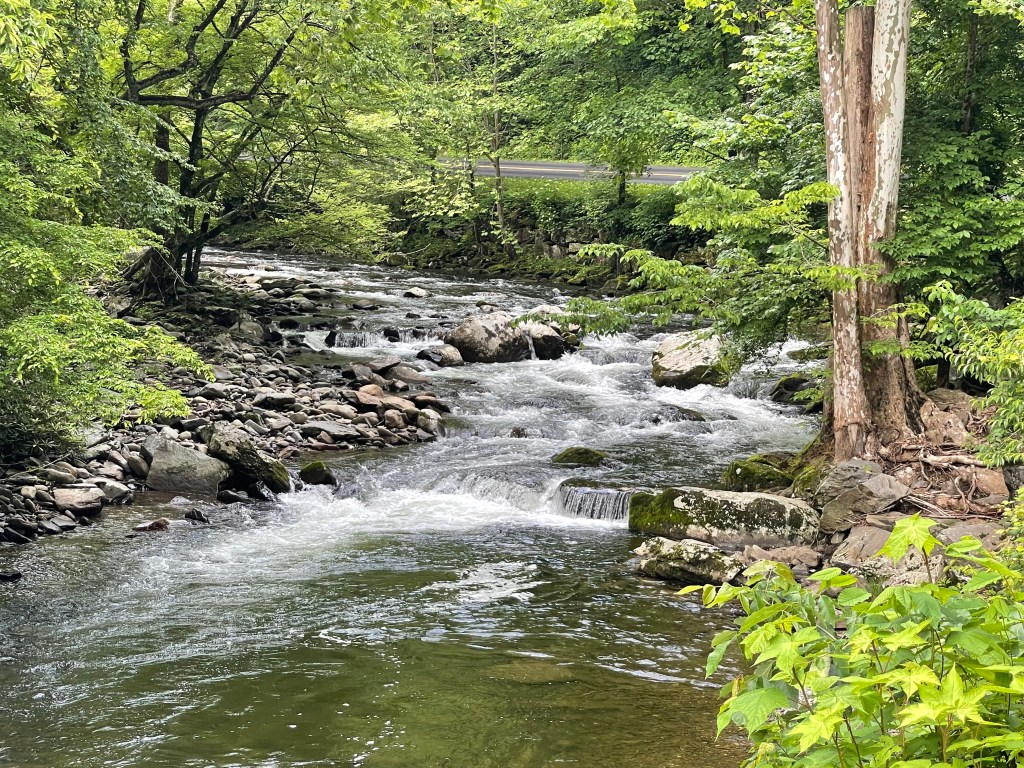
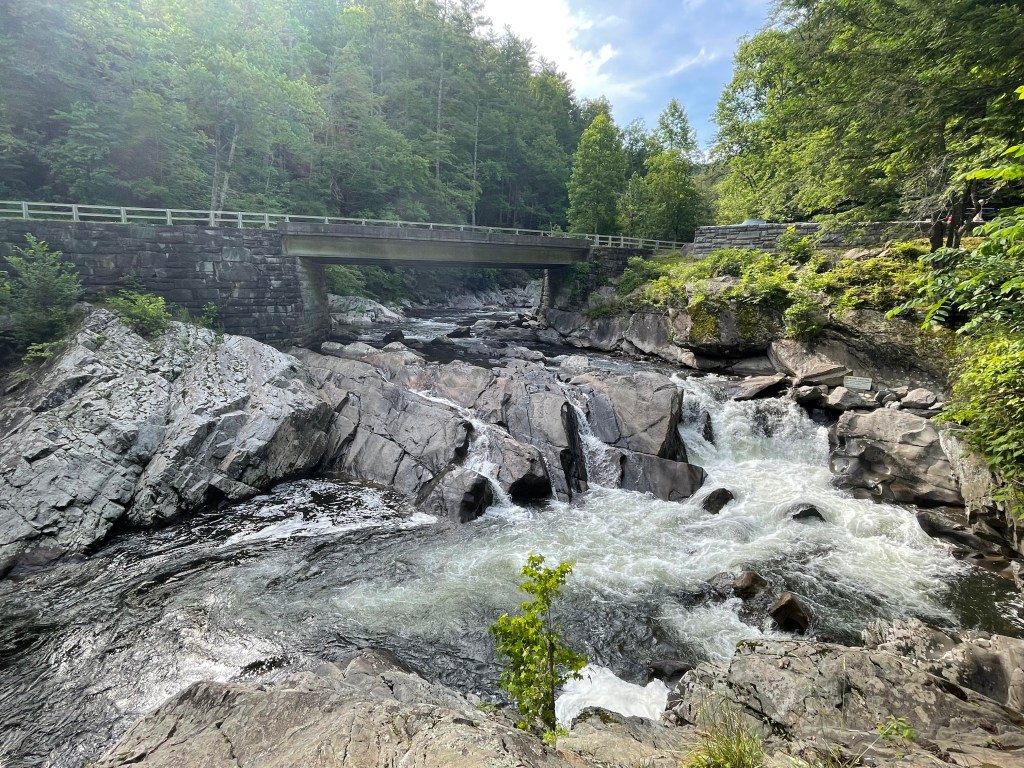
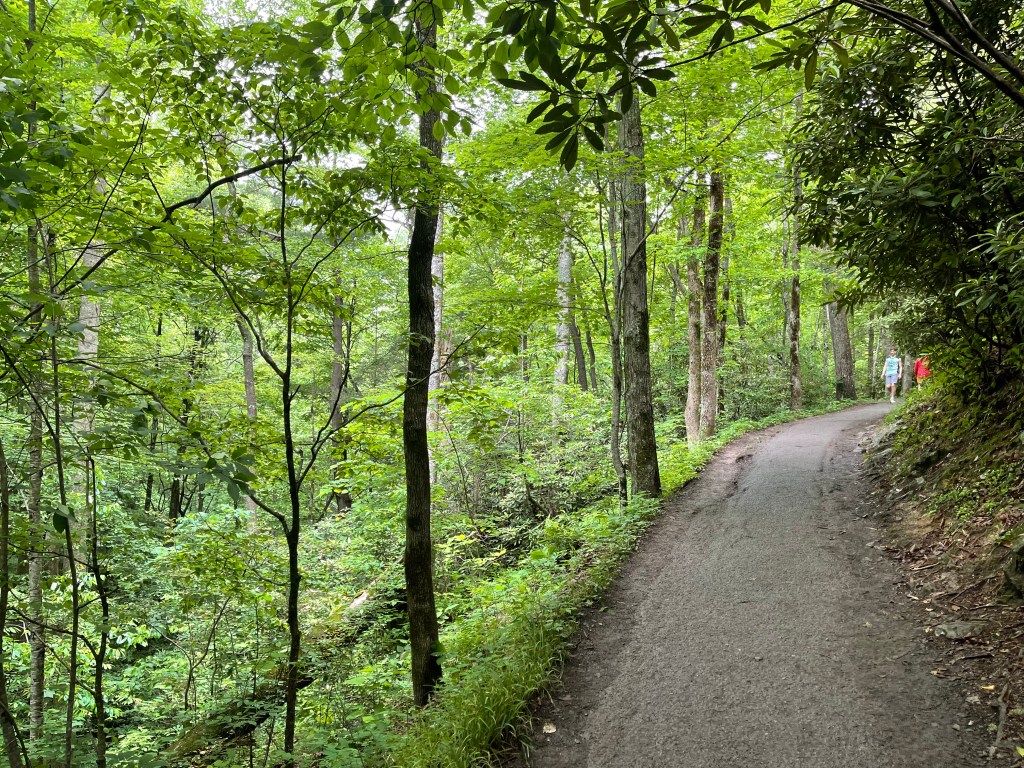

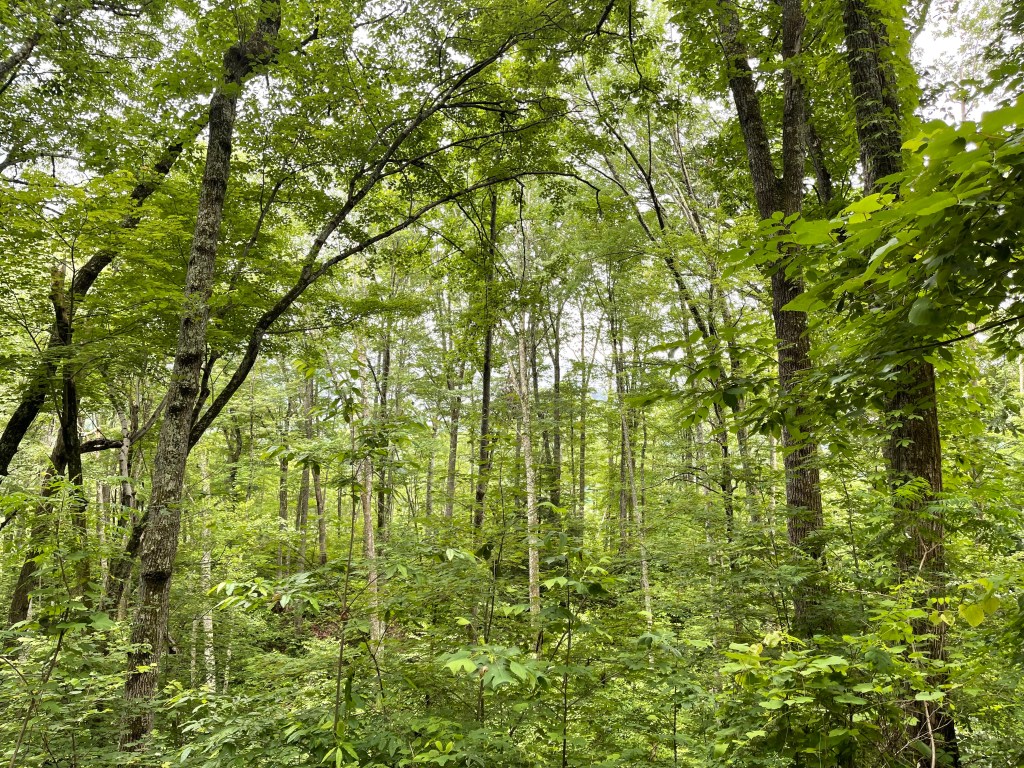
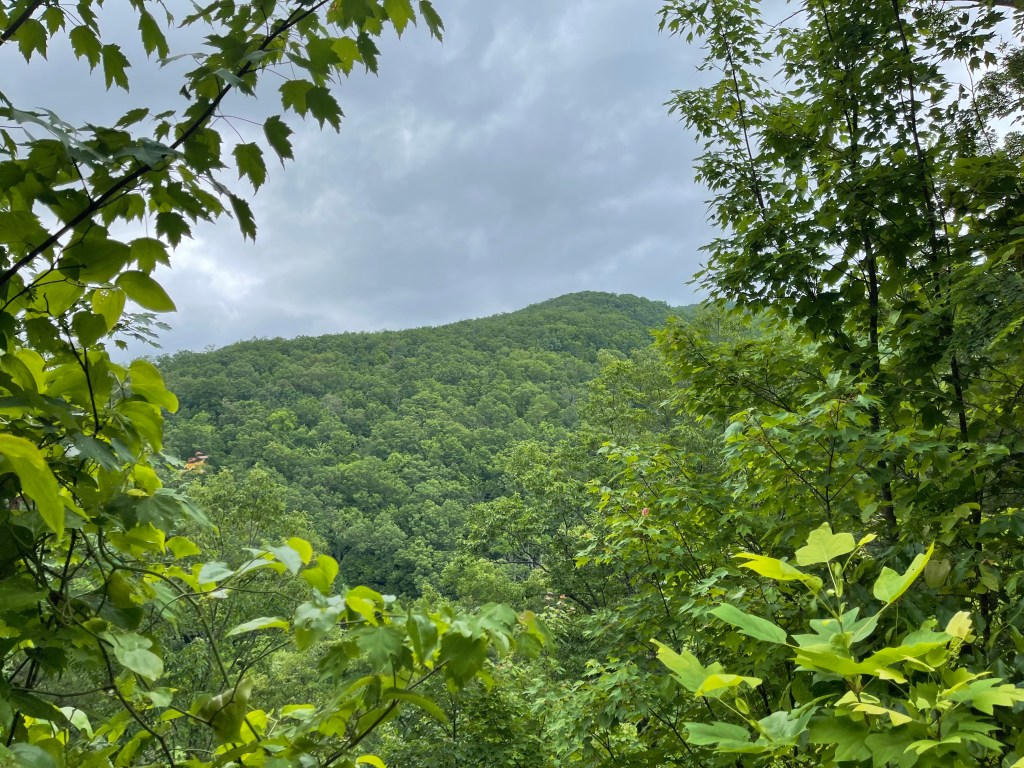

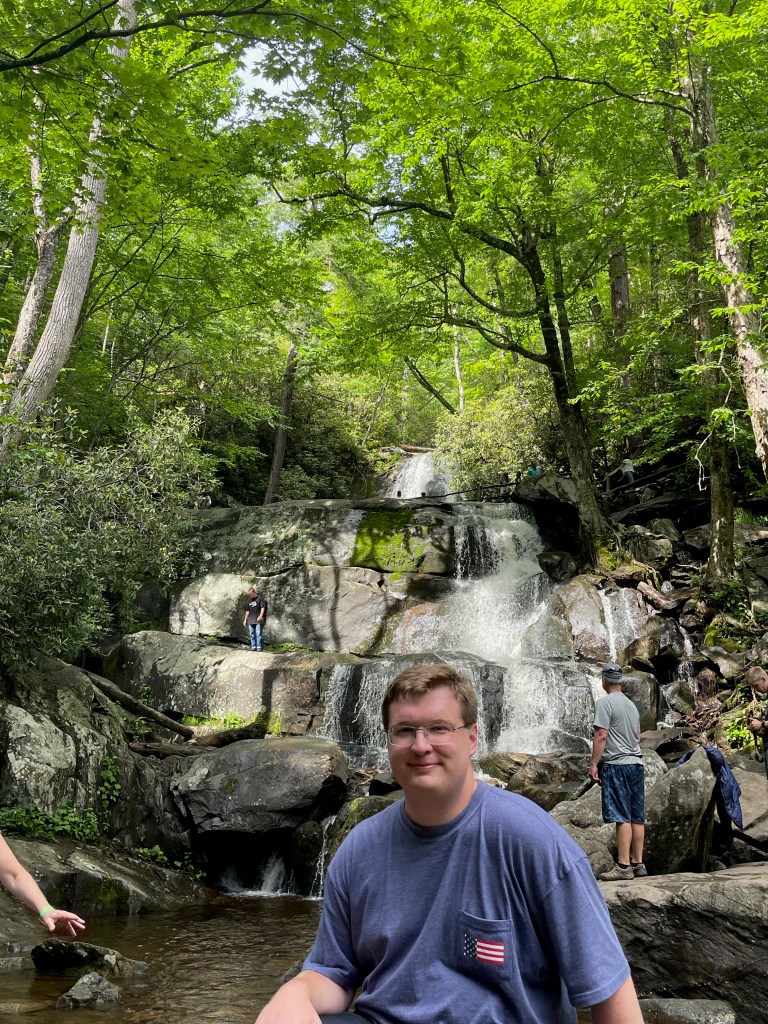
On our way back down from Laurel Falls, we came across a group of people gathered on the path, and well… this happened.
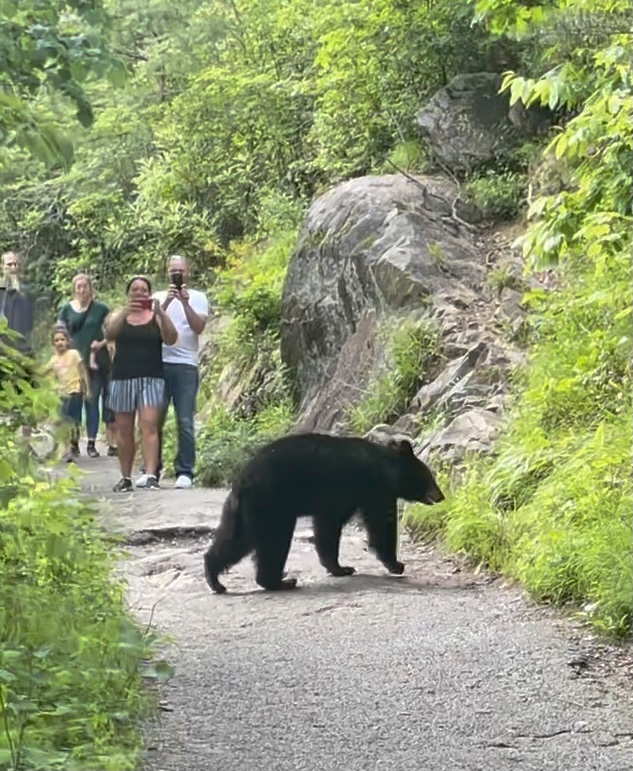
A black bear mother, having been separated from its cubs (who are up in one of the trees to the right), went back to fetch them, thus crossing the main path. For all of us, it was quite an unexpected sight to see.
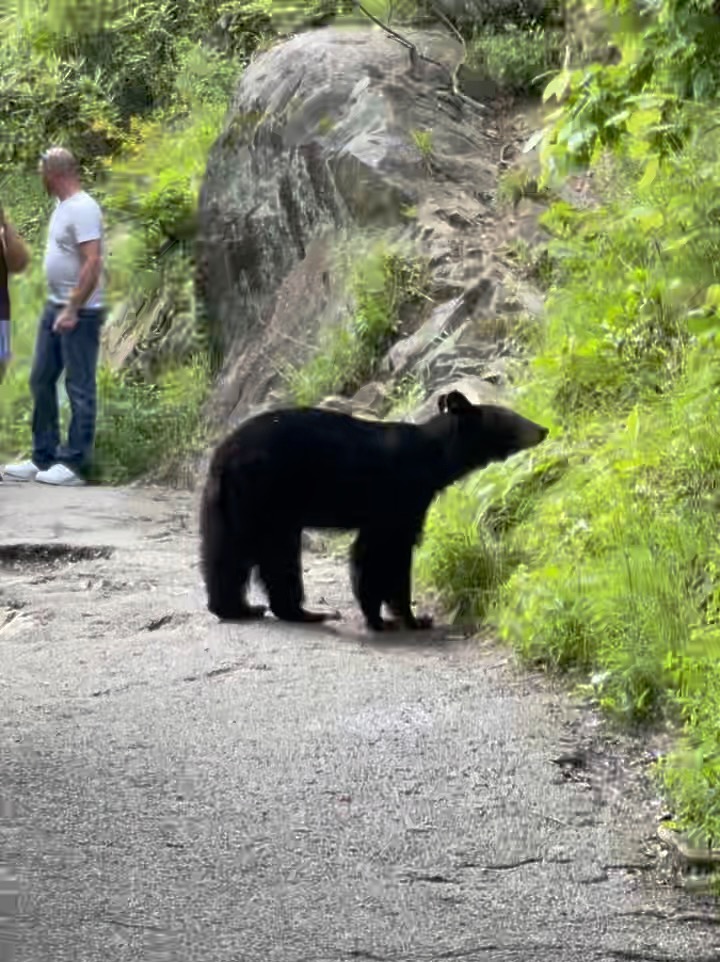
Giving our friend plenty of space, we watch with anticipation as the bear climbed up…
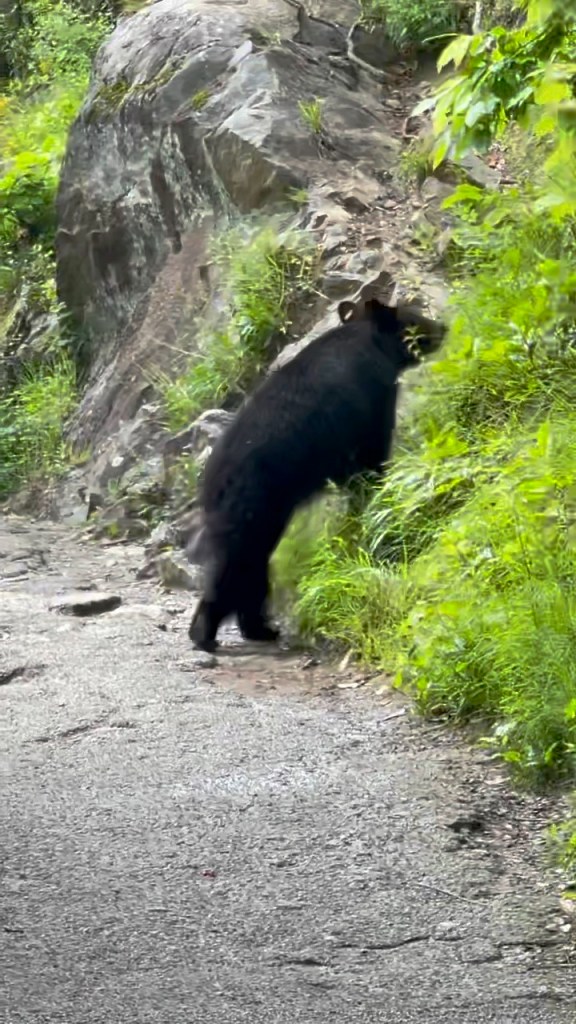
… and sort of posed for us, before going to fetch her cubs.
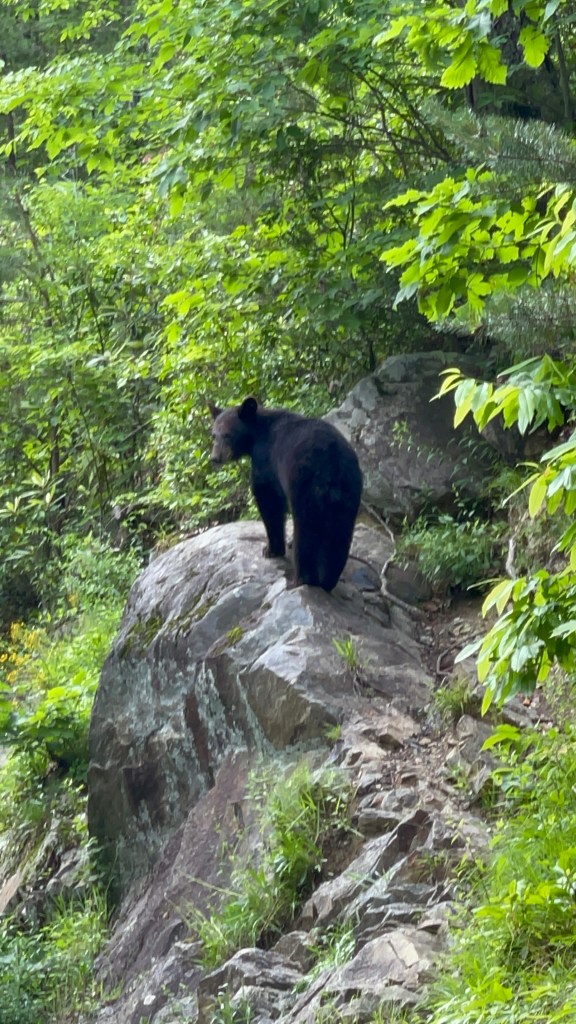
It’s chance encounters like these that make me adore nature… we’ve never seen a black bear during our many travels in Colorado, let alone one this close to us! Since WordPress can’t show videos, I can’t show you the great footage I got from my phone of this… still, it was quite a welcome to the Smokies.
And that wraps up the day! Thanks so much for tuning in!
Tomorrow, we’ll do a bit more sightseeing in the Smoky Mountains, before journeying to Pigeon Forge for a bit of sightseeing.
Most of that will entail a much needed break from our busy schedule (and an easier time for my blog this time), but I won’t leave you empty handed! For in Pigeon Forge is the largest museum dedicated to the “Ship of Dreams”, “The Unsinkable Ship”… one that would meet its’ doom on April 15th, 1912.
Thanks again, hope you stop by next time.
 Mark's Historical Roadtrips!