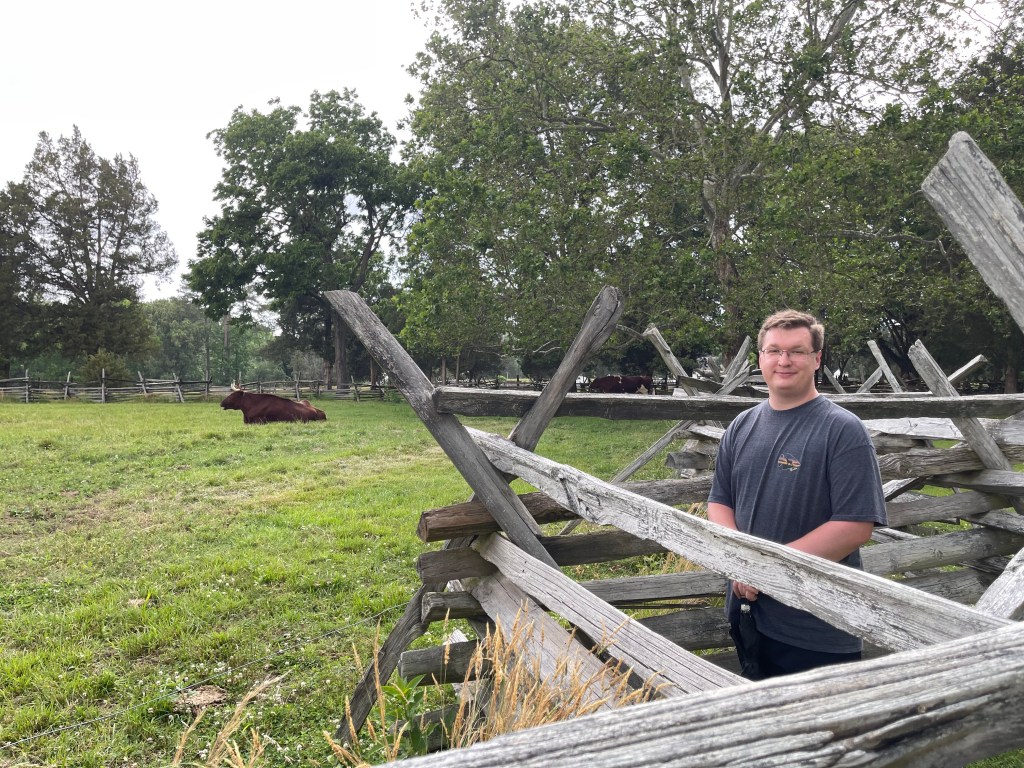
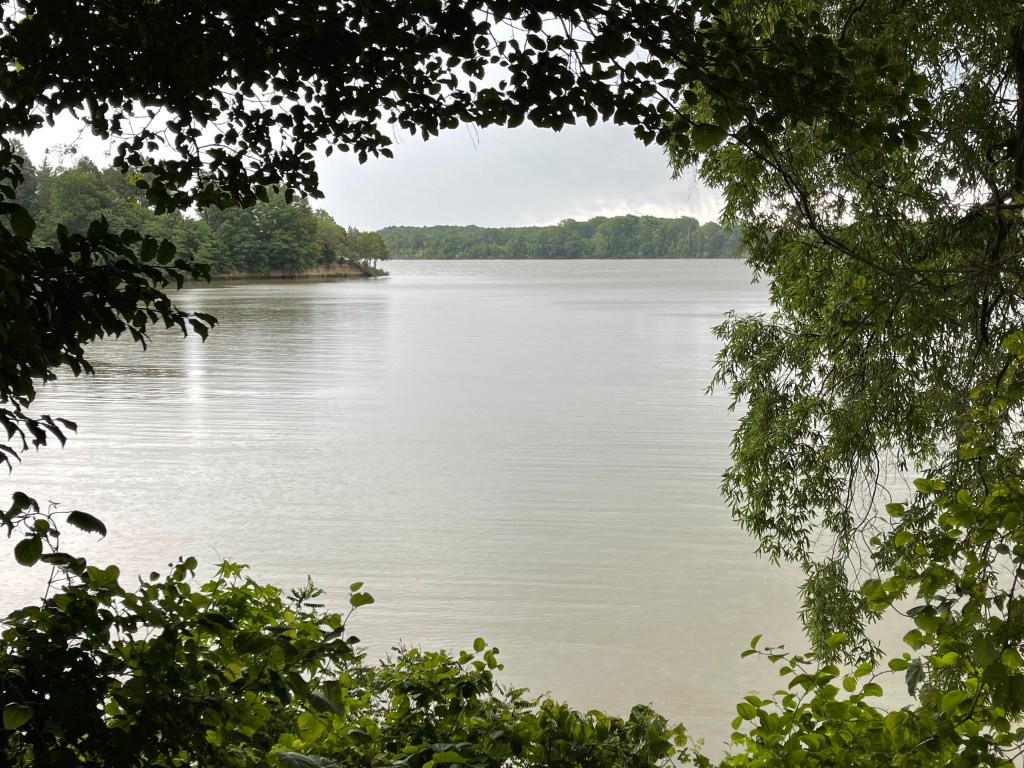
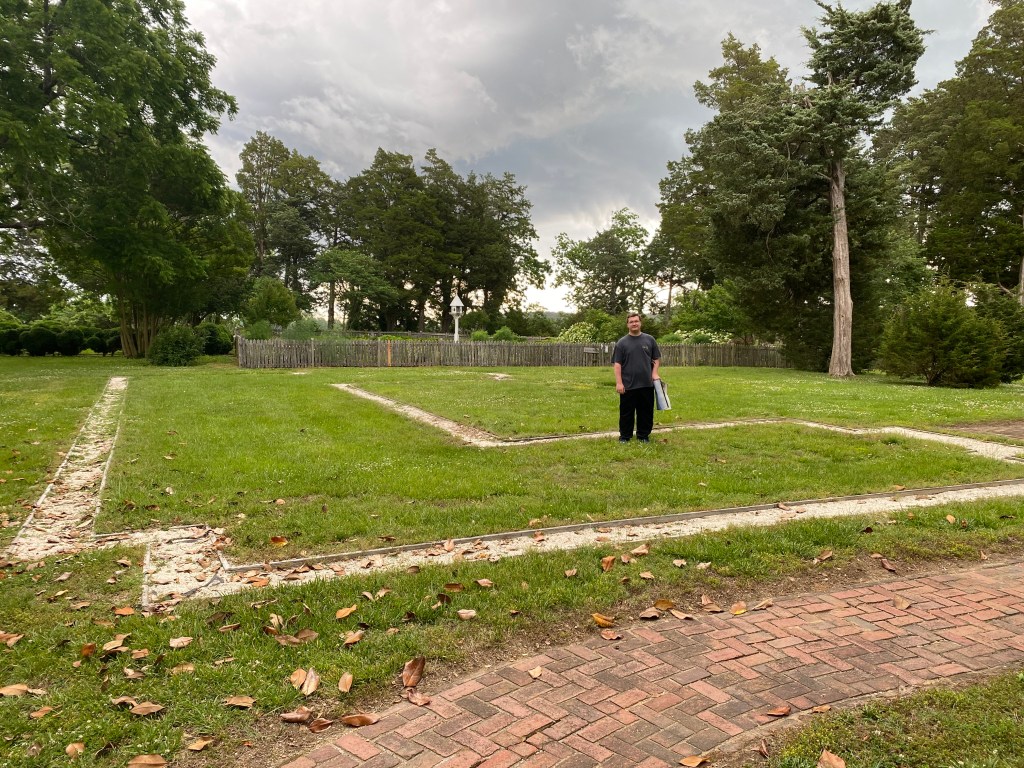
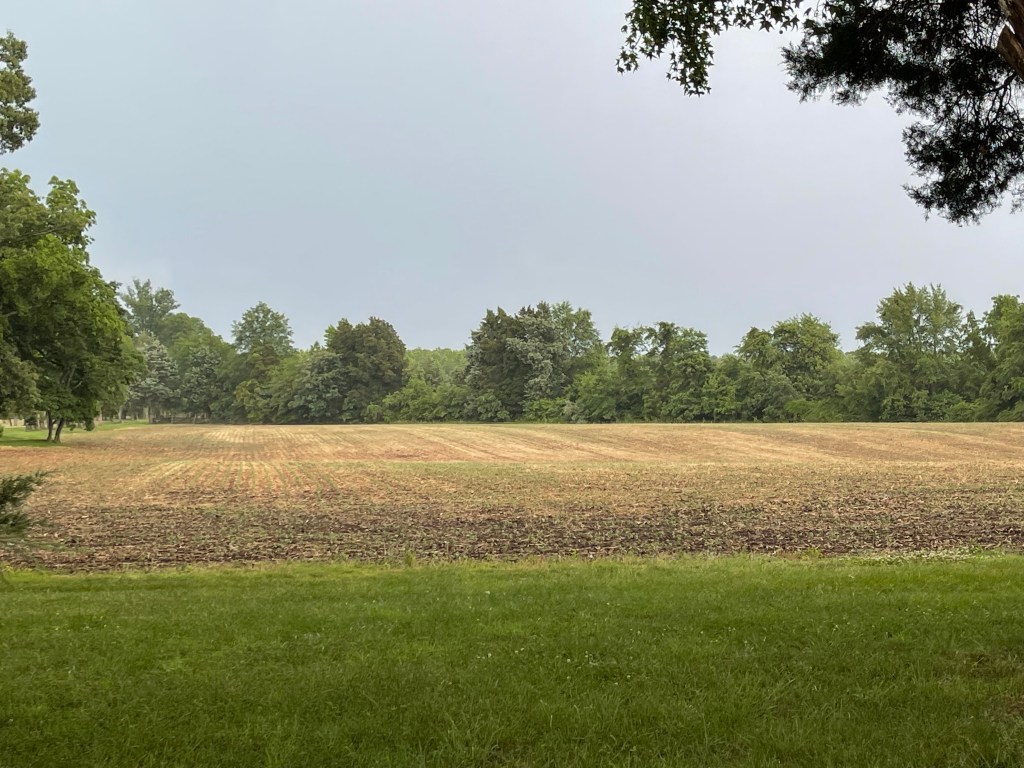
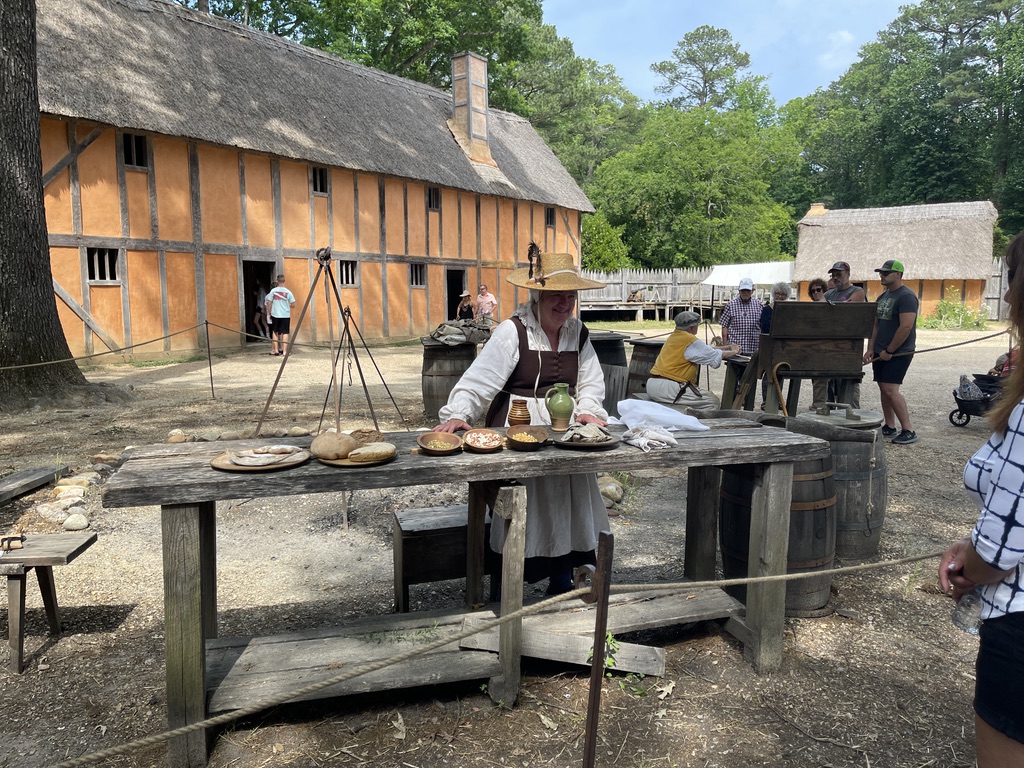
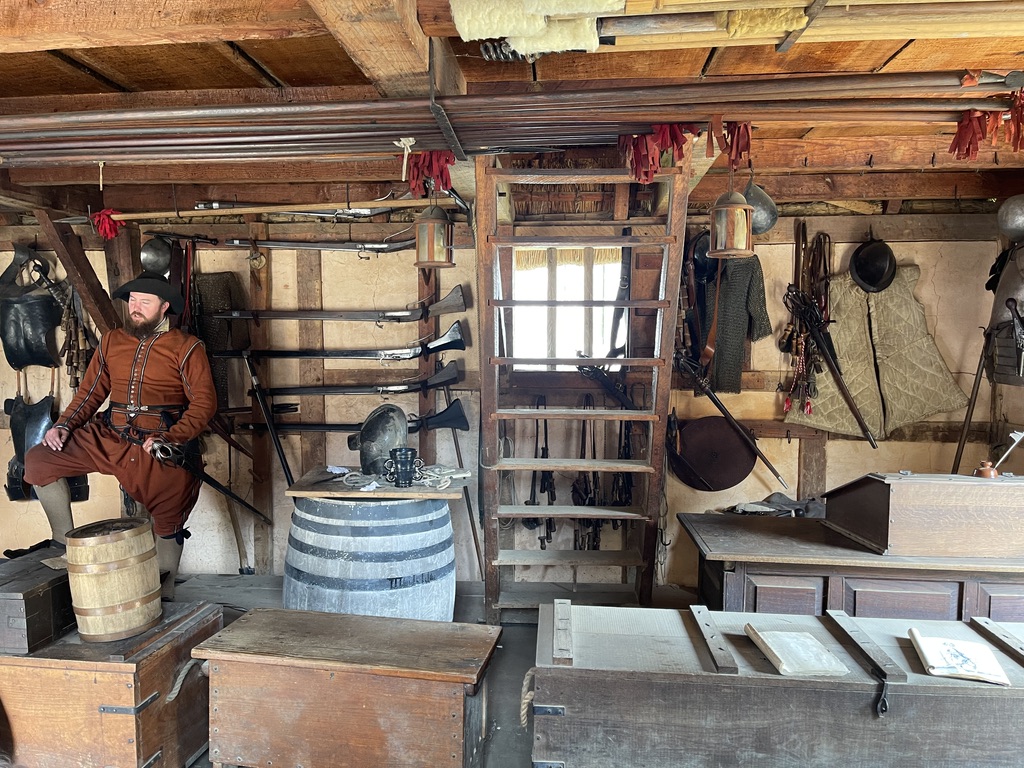
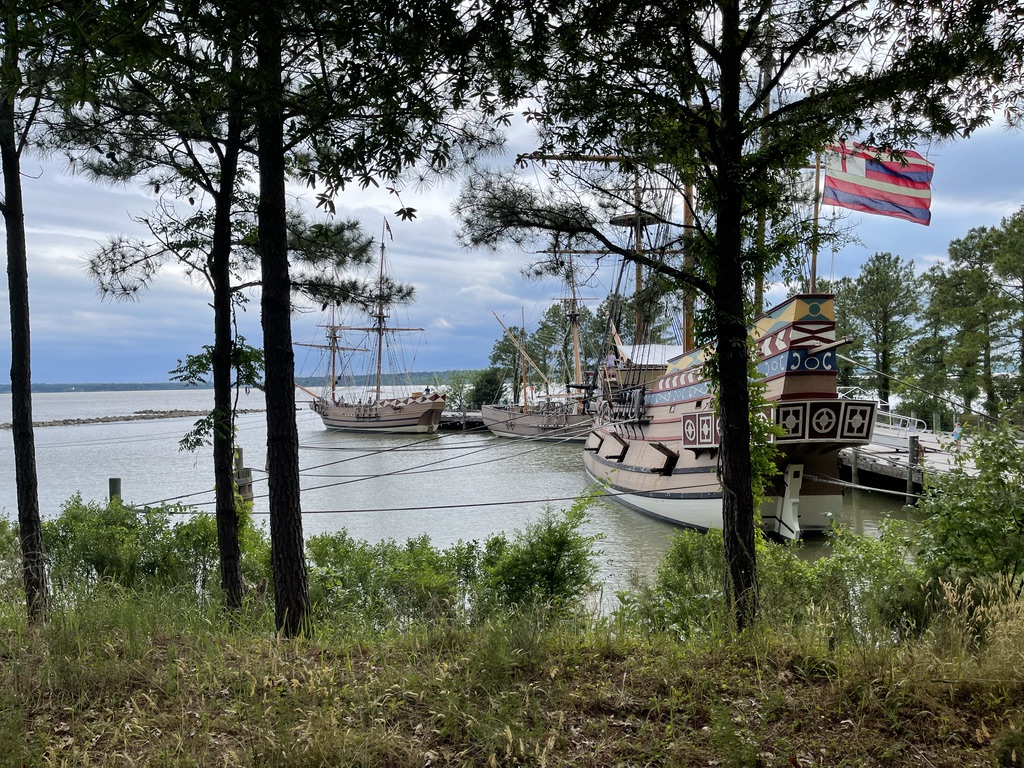
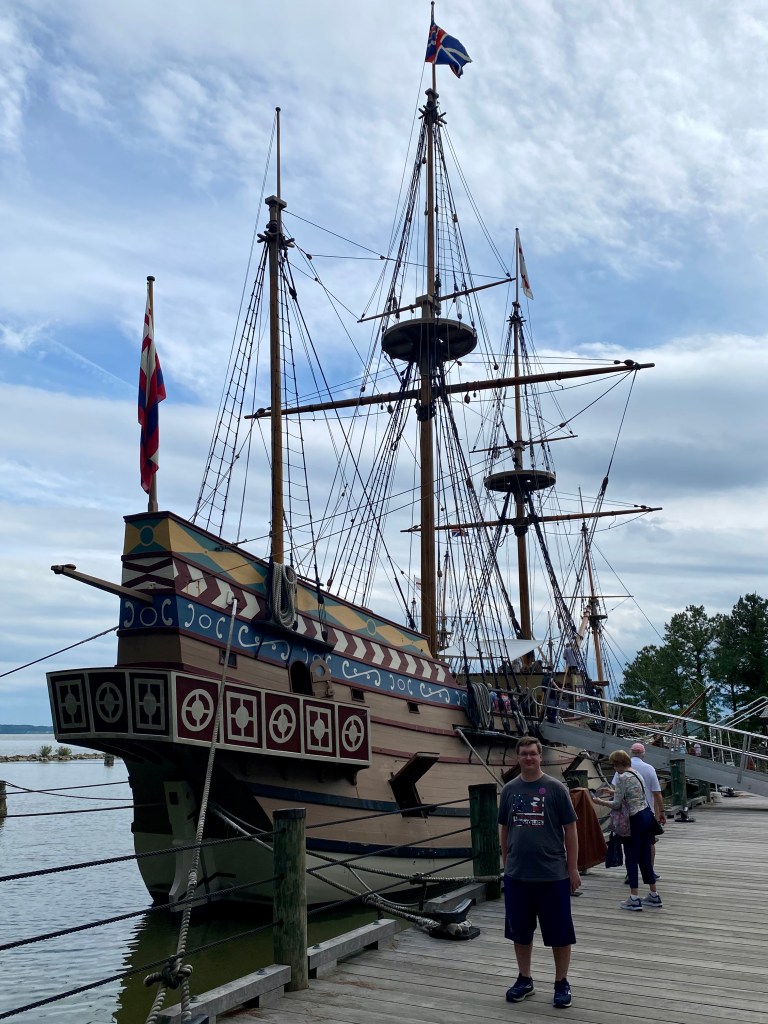
Day 7: Journeys with Jameses (Orange, VA to Charlottesville, VA) (6/6/21)

Welcome back!

Today we explore Montpelier, the plantation of James Madison, and Highland, the farm of James Monroe.

In case you were wondering, yes, I had to look it up to find the correct plural for “James” for the title. With that out of the way, let ‘s begin!

James Madison’s Montpelier

Our 4th President was perhaps one of the most intellectual of all our commanders-in-chief, particularly as the “Father of the U.S. Constitution”, for which he was chief architect, as well as the primary author of the Bill of Rights. Madison’s contributions to our democracy still benefit us even today, and many of his groundbreaking ideas were born right here, at his home of Montpelier.

Despite his towering achievements, Madison’s physical frame was less impressive, standing at a mere 5’4, the shortest of any president. Dolley, his wife, at 5’8, still managed to have a height of advantage of him. Nonetheless, their love was very real, and not impeded by physical differences.

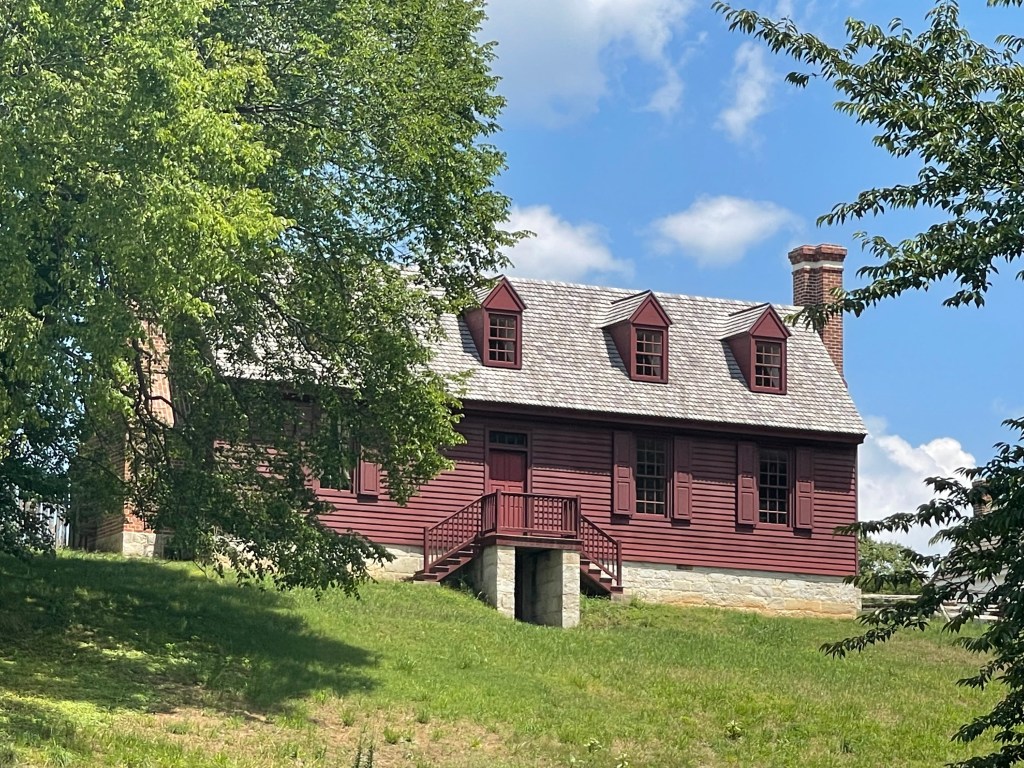
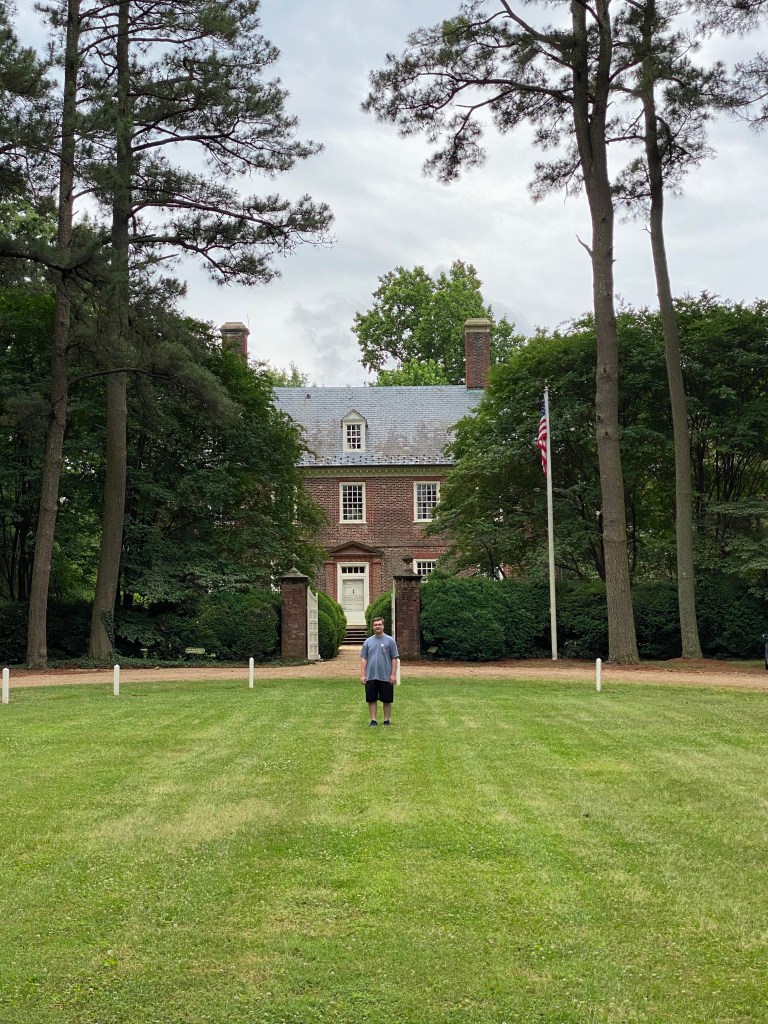
Montpelier (Front)

Montpelier, while not as expertly designed as Monticello, still casts an impressive image over the surrounding landscape.

The Madison Family, dating back to the time of James’s grandfather Ambrose, had first built on this property in 1723. Strong in the tobacco industry, this nearly 5,000 acre plantation would suffer heavy financial burden during the Revolutionary War, during the time of James’s father, James Madison Sr. (our 4th President the Jr.) With Great Britain (the primary importer of tobacco) at difficult terms with the new American nation, Madison Jr. found himself in debt when he inherited the property in 1801.

Slave Dependencies

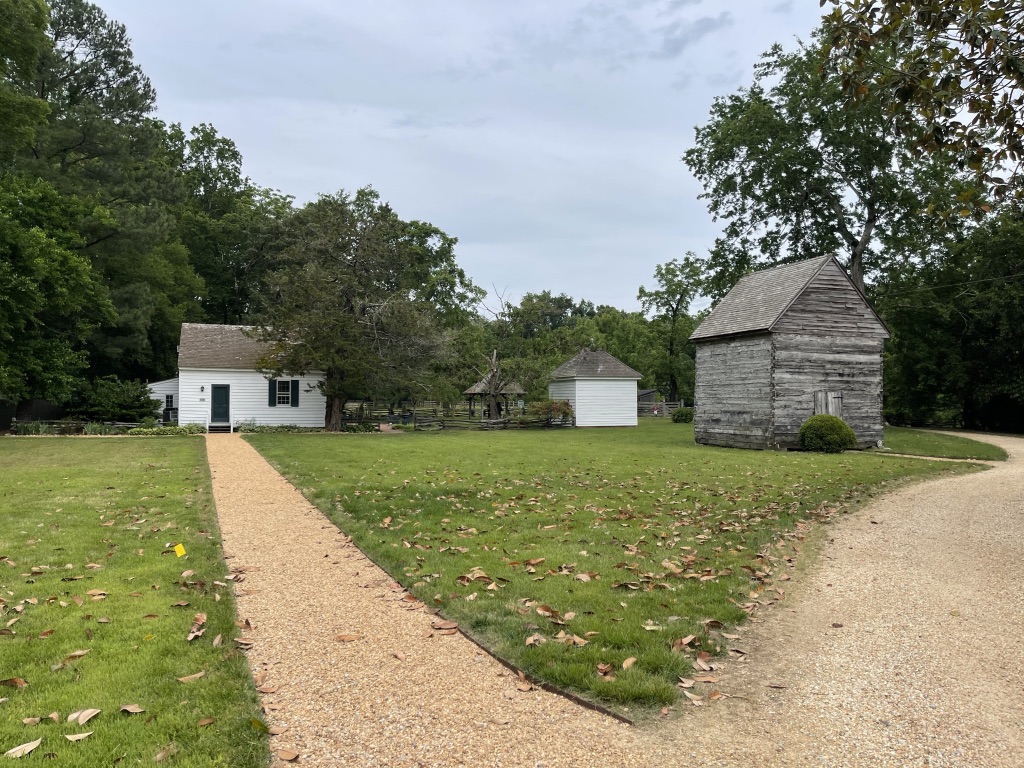
Various buildings, including the kitchen, and slave quarters. At the height of it’s production, Montpelier housed nearly 300 slaves, as it was the largest plantation in all of Orange County (and certainly one of the largest in Virginia).

Although he abhorred slavery as an immoral institution, he freed none of his slaves upon his death. He, like many other of the slave-owning presidents, receive much backlash for this. Perhaps it was because slavery was so deeply ingrained in the southern economy, that removing it would cause economic catastrophe. And there was certainly no easy or immediate solution to it either.
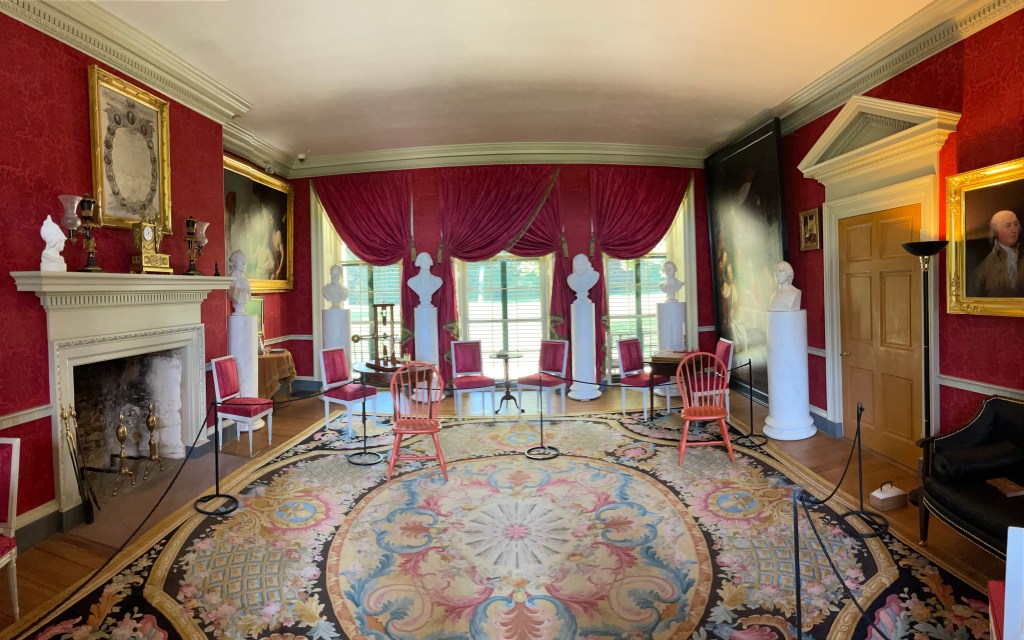
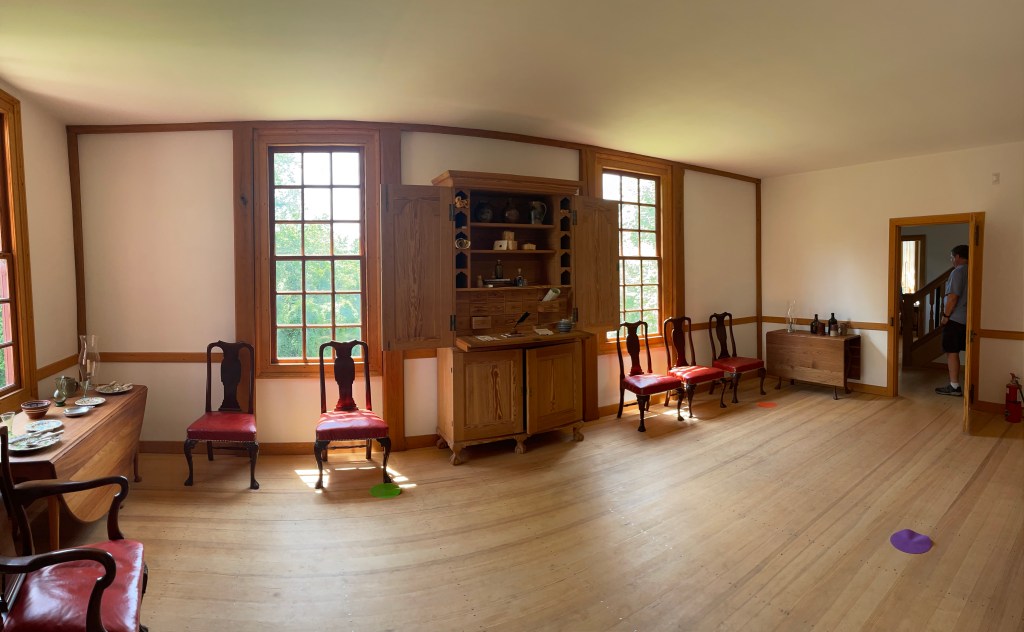
The Parlor

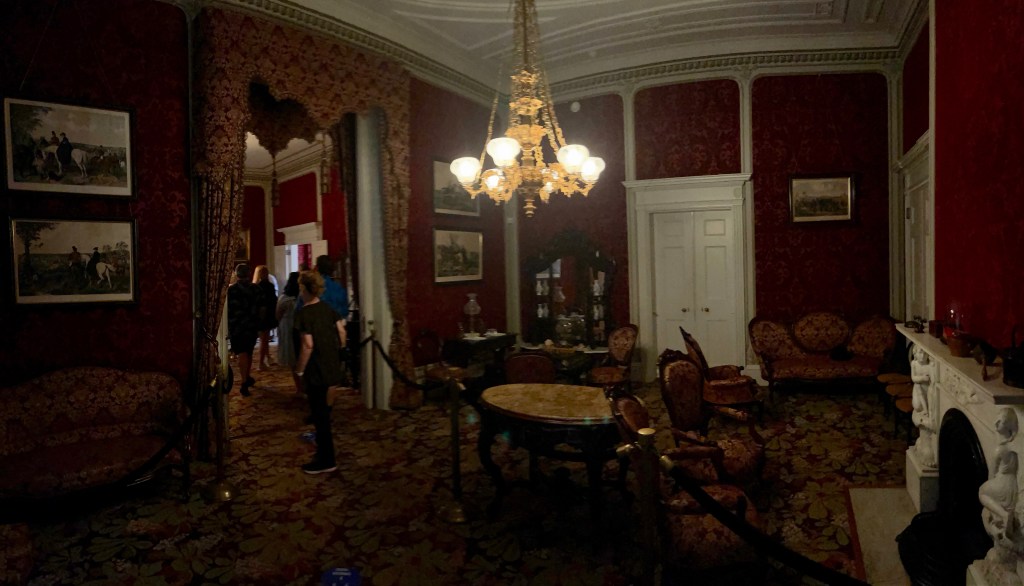
Heavily evocative of the red-walled parlor of Monticello, this room surrounds you with the profiles of the “Men of the Revolution”, including Jefferson, Washington, and Franklin.

James and Dolley Madison

James and Dolley truly loved one another. While James was more of a “cold fish”, and more of an awkward introvert than anything, Dolley lighted up a room with her presence and lively spirit. Called the “Hostess with the Mostess” by our tourguide, Dolley was critical to James’s personal success.
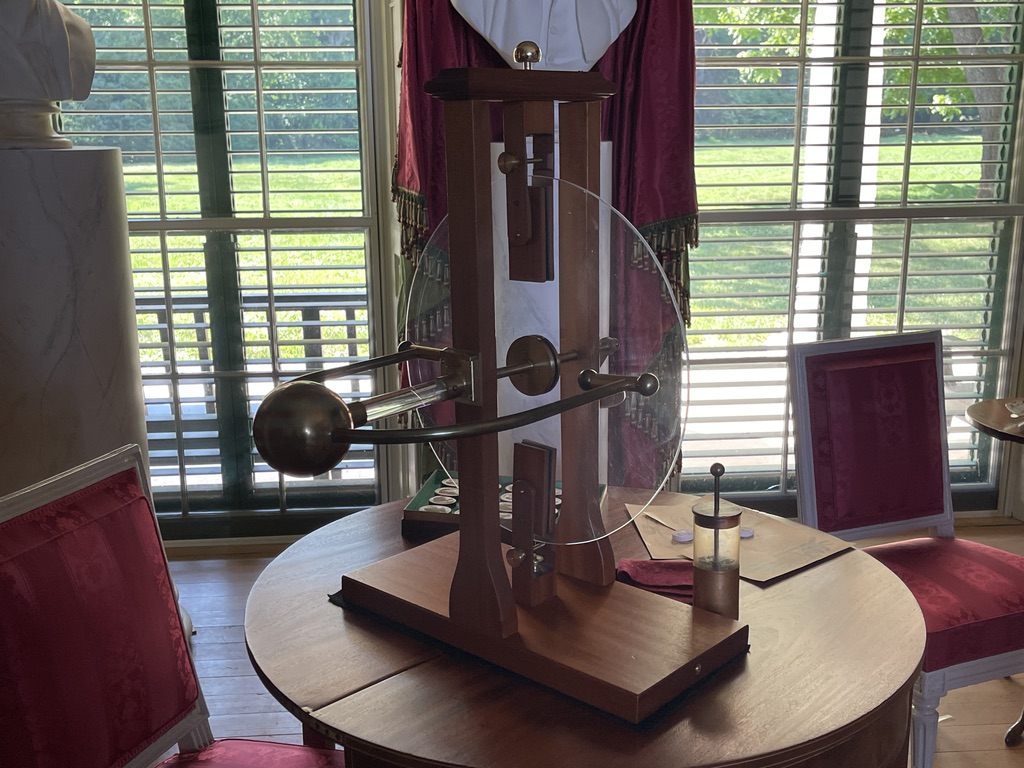
The “Parlor Game”

As one of Dolley’s parlor games during parties, she would often use this “static-electricity” machine for a somewhat “shocking” experience with dares. (Editors Note: While writing the preceeding pun, I buried my face in my hands and groaned.)

One of the Entry Hallways
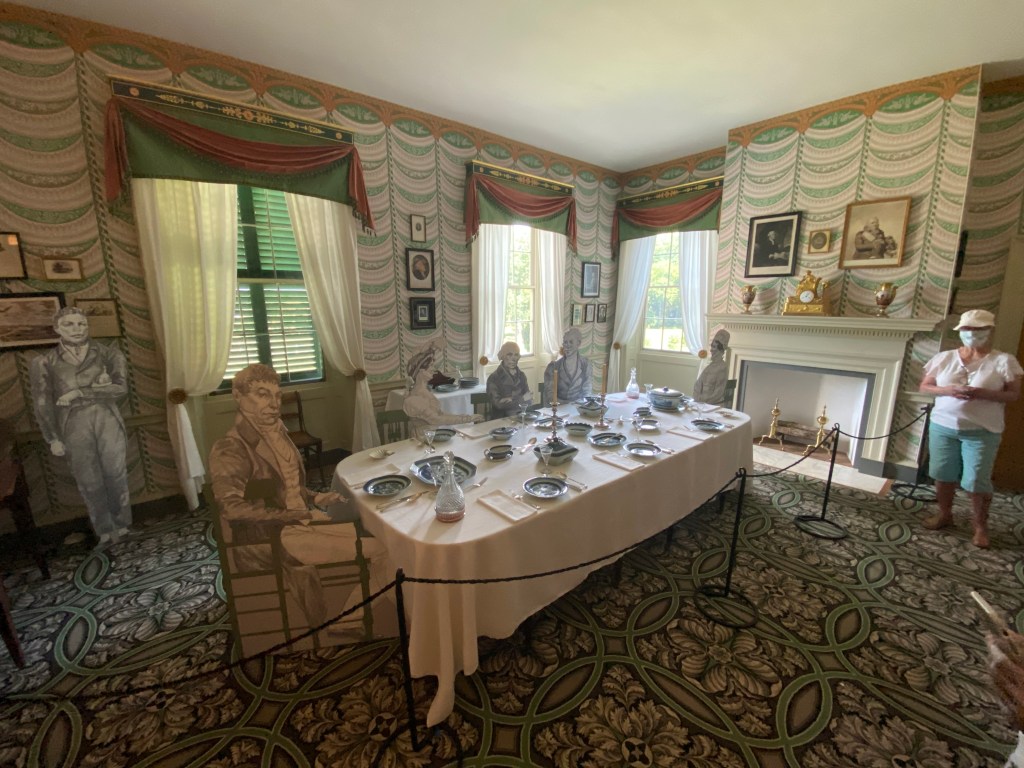
The Dining Room

The Dining Room was a lively place back in it’s day, especially with Dolley at the head of the table. In a real sense, these were “her” parties. James however, liked to sit in the middle of the table, listening to the ideas of the various guests around him. He was insatiably curious about all kinds of concepts.

On June 28th, 1836, Madison was eating breakfast with his family, when he collapsed and fell unconscious, He died of congestive heart failure in the next room (sadly not on display due to social-distancing restrictions), at the age of 85. He was the youngest of the delegates of the Constitutional Convention, and the last to die.

The figure on the far-left you see is Paul Jennings, a prominent slave owned by the Madisons. He’s perhaps most notable for helping Dolley Madison to save the famous portrait of George Washington, before the British were able to burn the White House during the War of 1812.
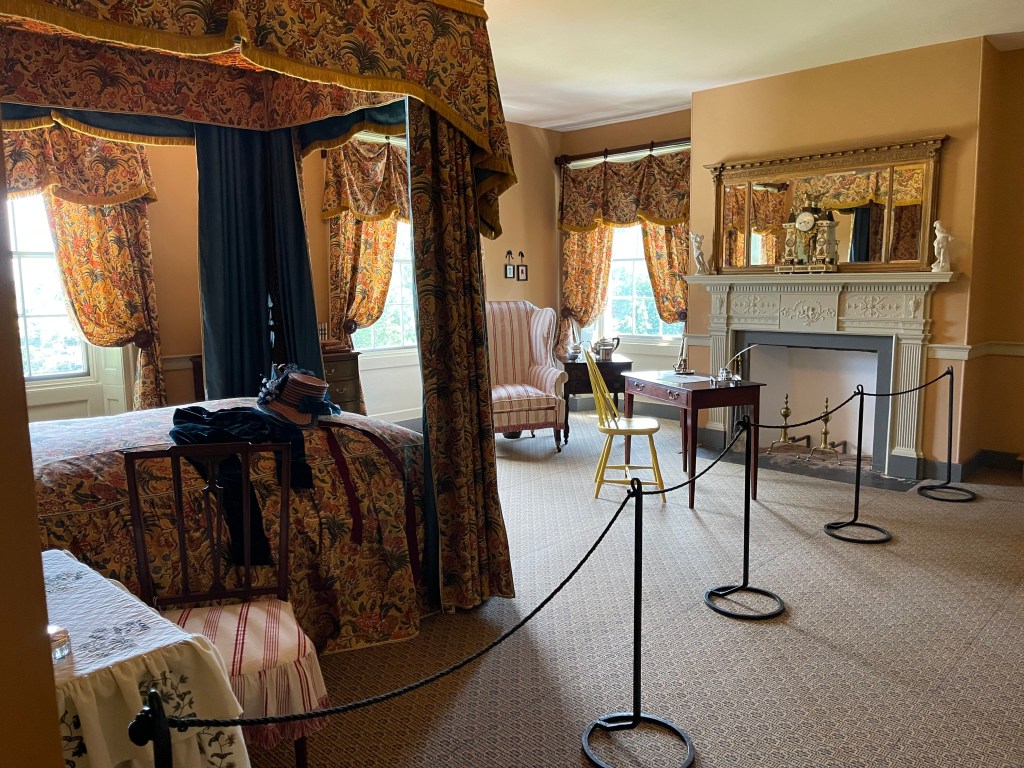
James Madison’s bedroom, upstairs. I was only able to snap a brief picture, as our tour had to pass it due to restrictions.
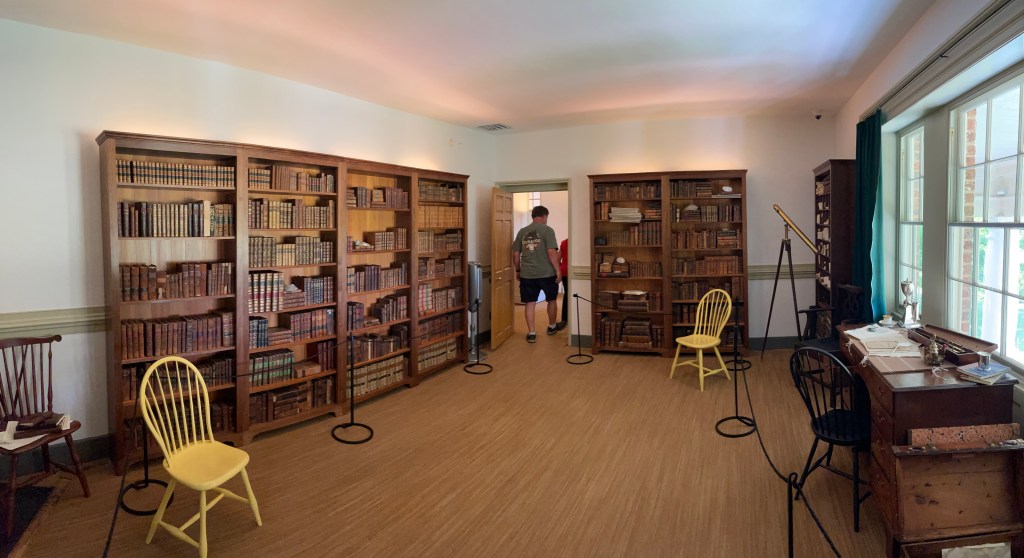
James Madison’s Library

President Madison’s entire library filled this room on the second-level, directly above the front door. Tall stacks of books were everywhere in this room, with tiny passageways through the room. It was here that James Madison would brainstorm many ideas for the new American government that would replace the weak Articles of Confederation, our first Constitution.

Working ferociously at his study, he would contribute many incredible ideas to what would become the new government, most notably the suggestion of a bicameral legislature, both with representation based on state populations. When the smaller states fought back (in fear of being underrepresented in this system), Madison compromised by allowing the upper house to be based on equal state representation. This led to the creation of our modern House of Representatives and Senate.

Being the principal author of the U.S. Constitution, he was also critical to addressing the concerns of anti-federalists (those who advocated for States’ Rights over a strong federal government), by adding the Bill of Rights, the first ten amendments ot the Constitution that secure our most basic liberties.
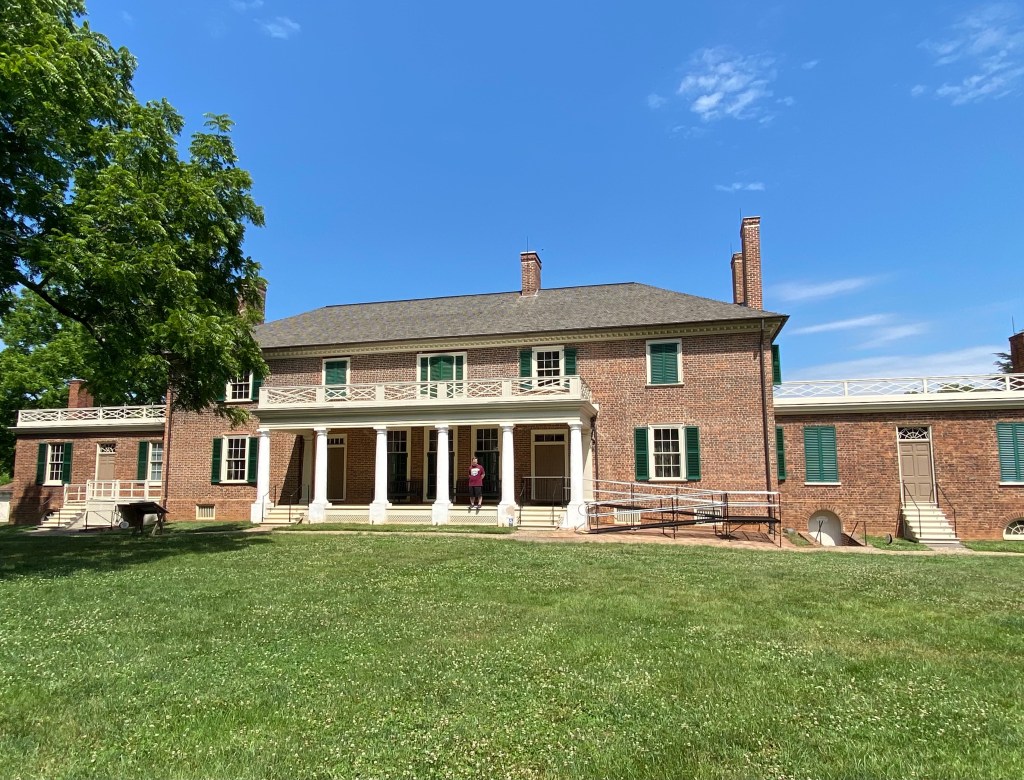
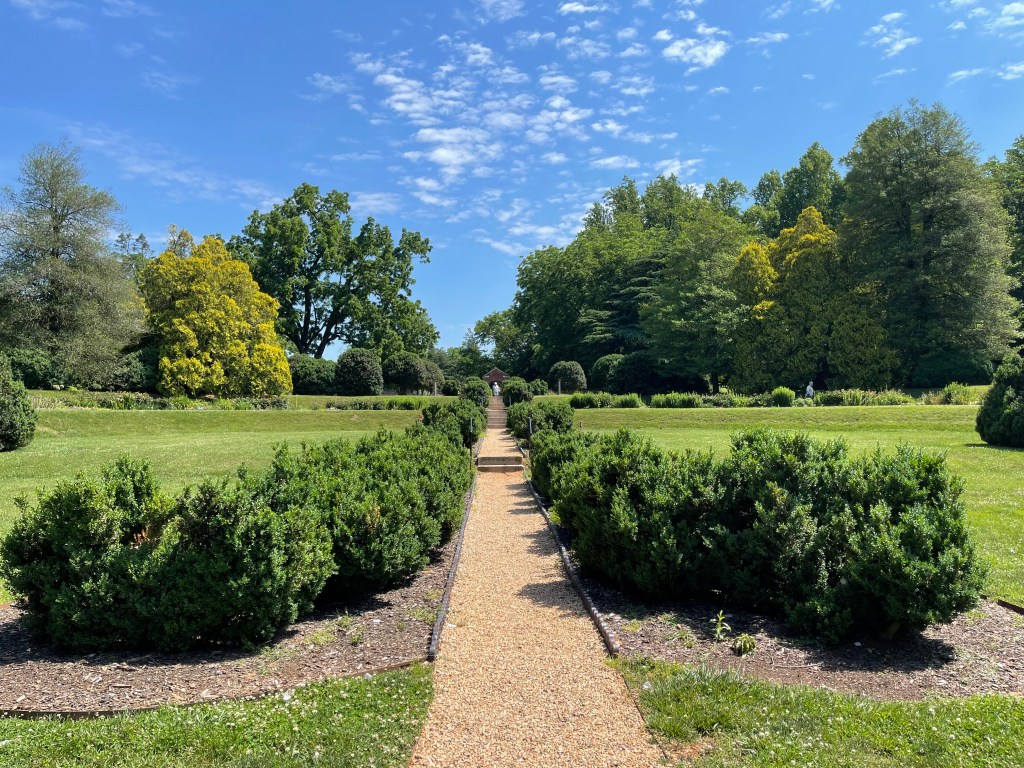
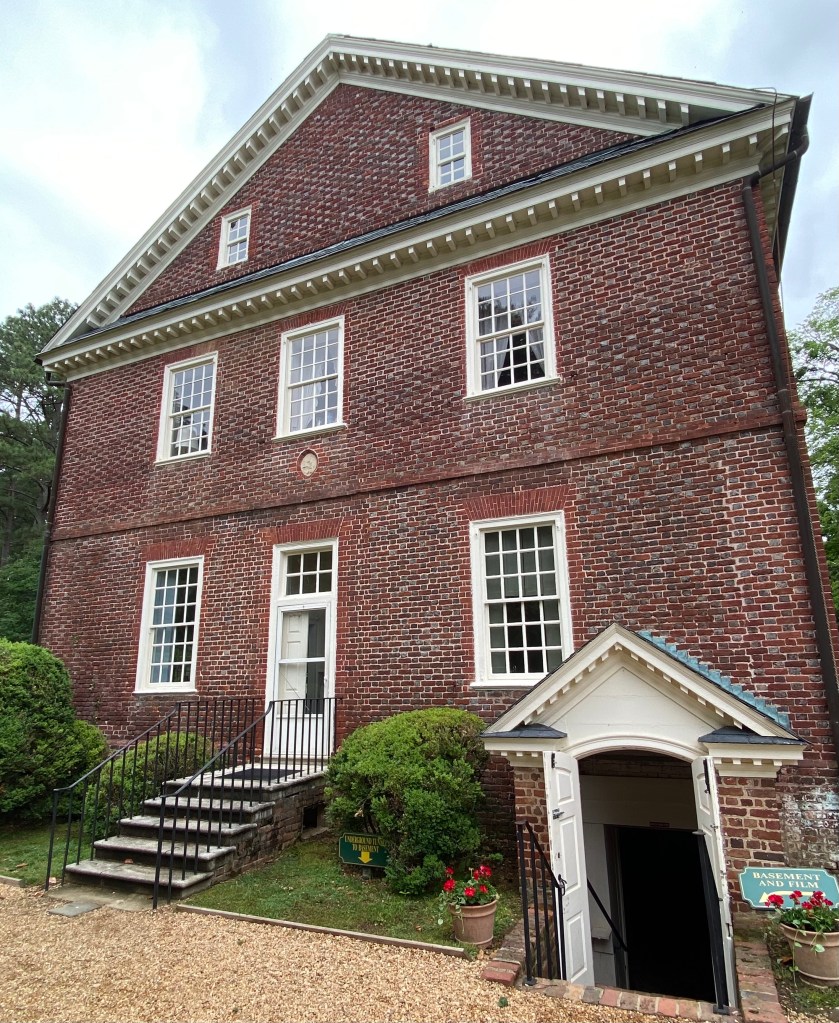
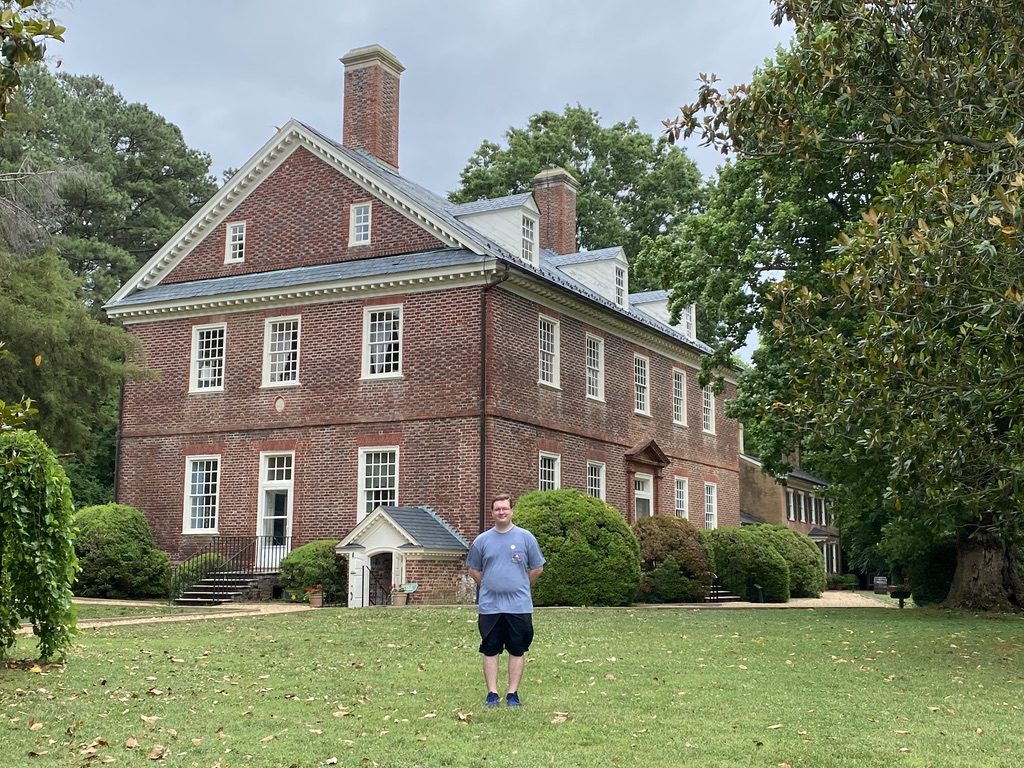
Montpelier (Backside)
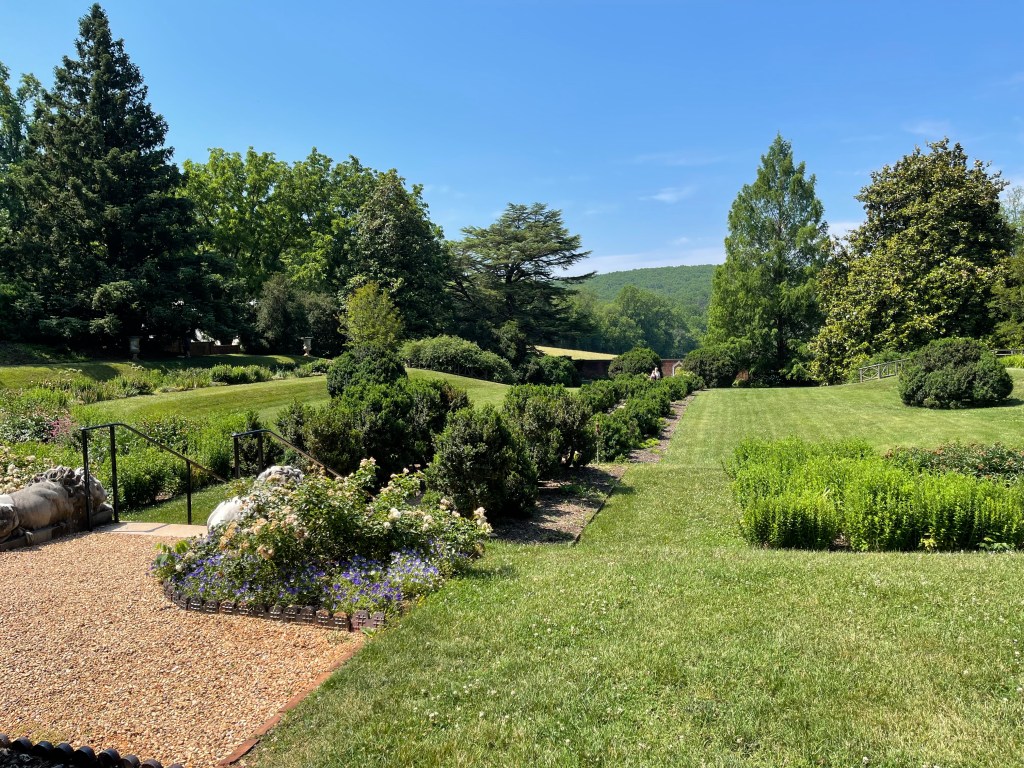
duPont Gardens

When Dolley Madison sold Montpelier in 1837 and moved to Washington D.C., the property was later purchased by the famous duPont Family, of chemical and industrial wealth and fame. They built these gardens, which remained on the property after Montpelier was converted into a Historic Site in the 1990’s.
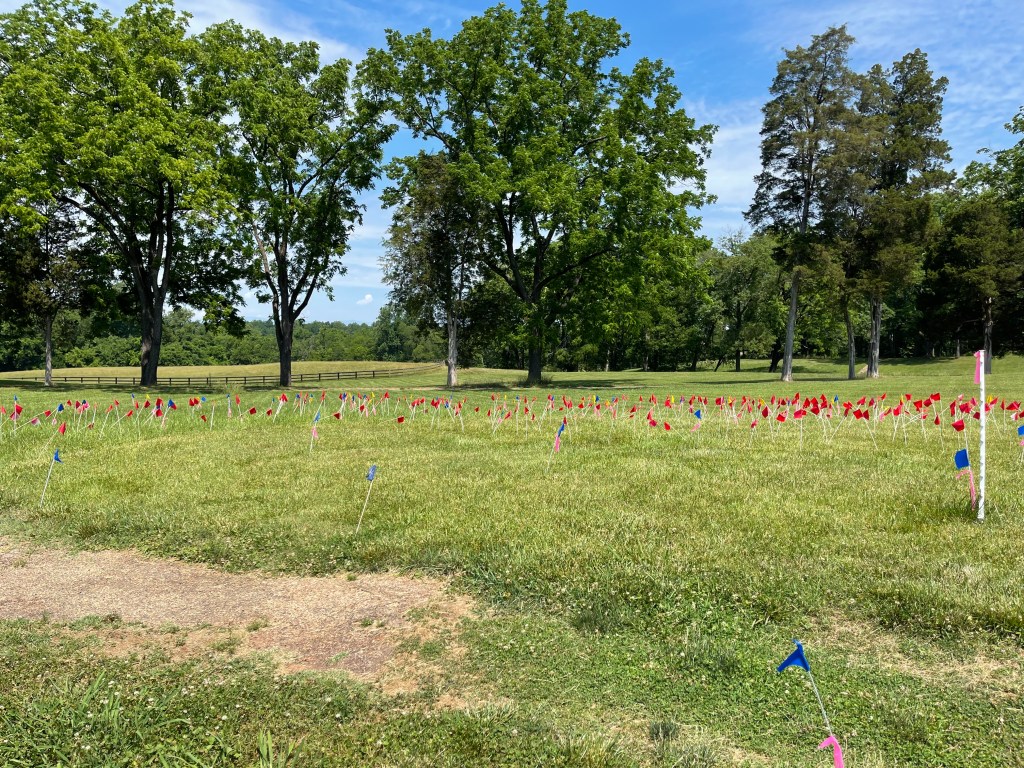
Archaeological Work at Montpelier

As typical at many of these historic plantations, archaeological work is still in progress, and the learning of the heritage and lifestyle of those that lived here is still quite dynamic.
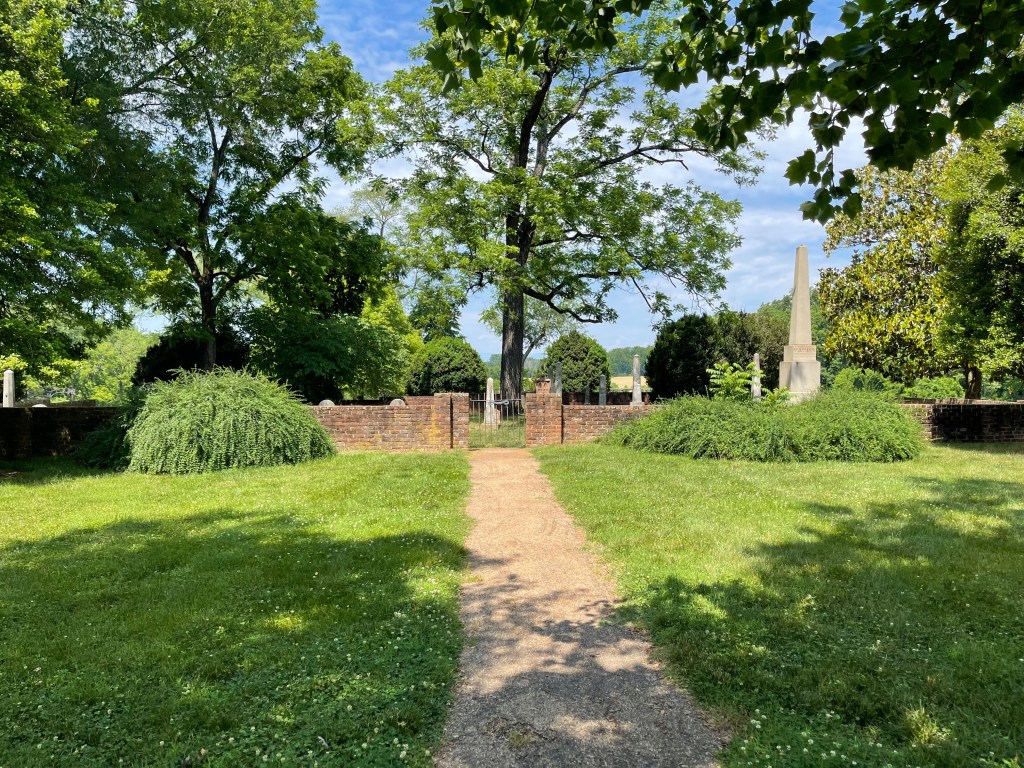
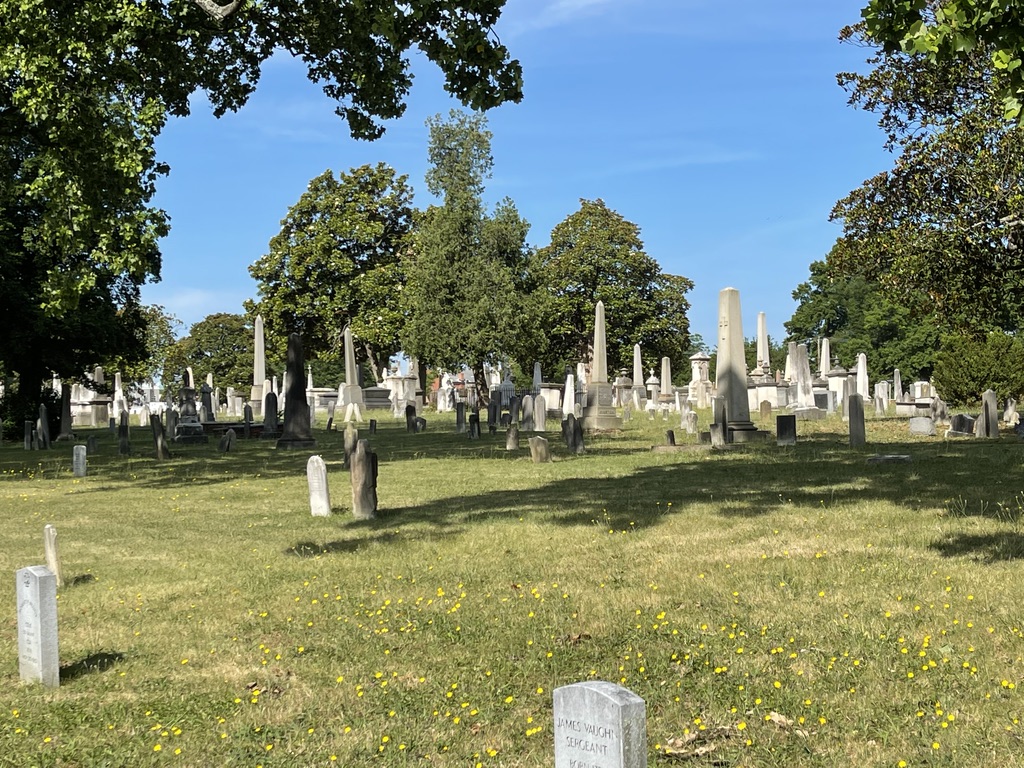
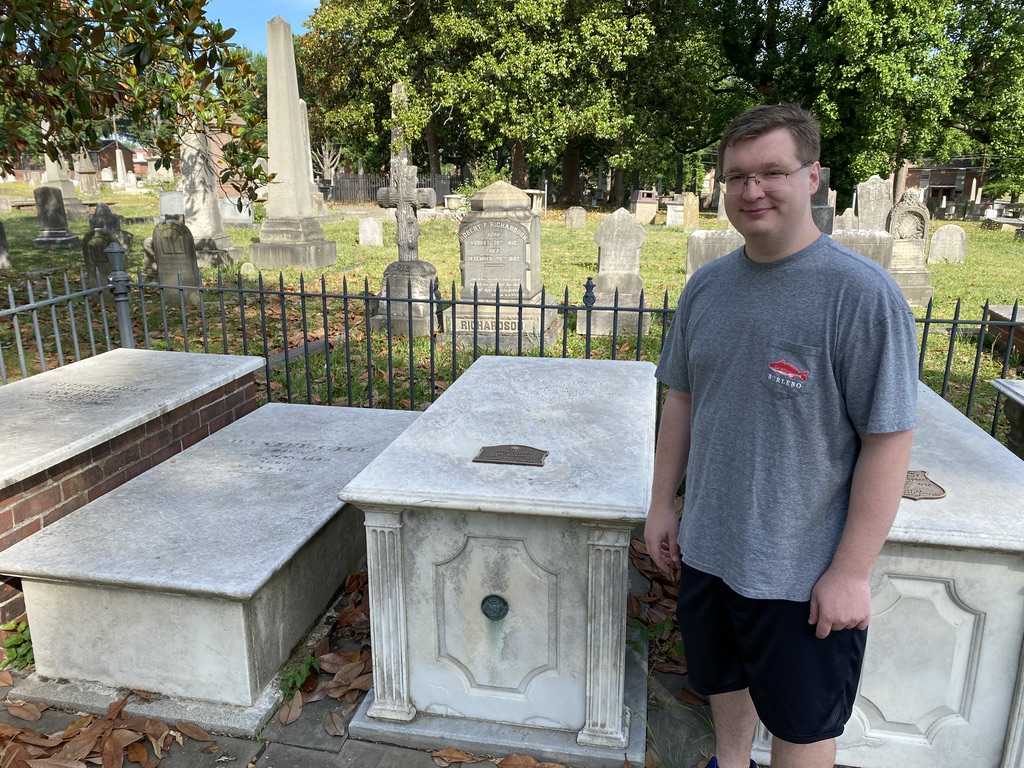
Madison Family Cemetery

Always the most poignant moment of a site like this, is the family cemetery.
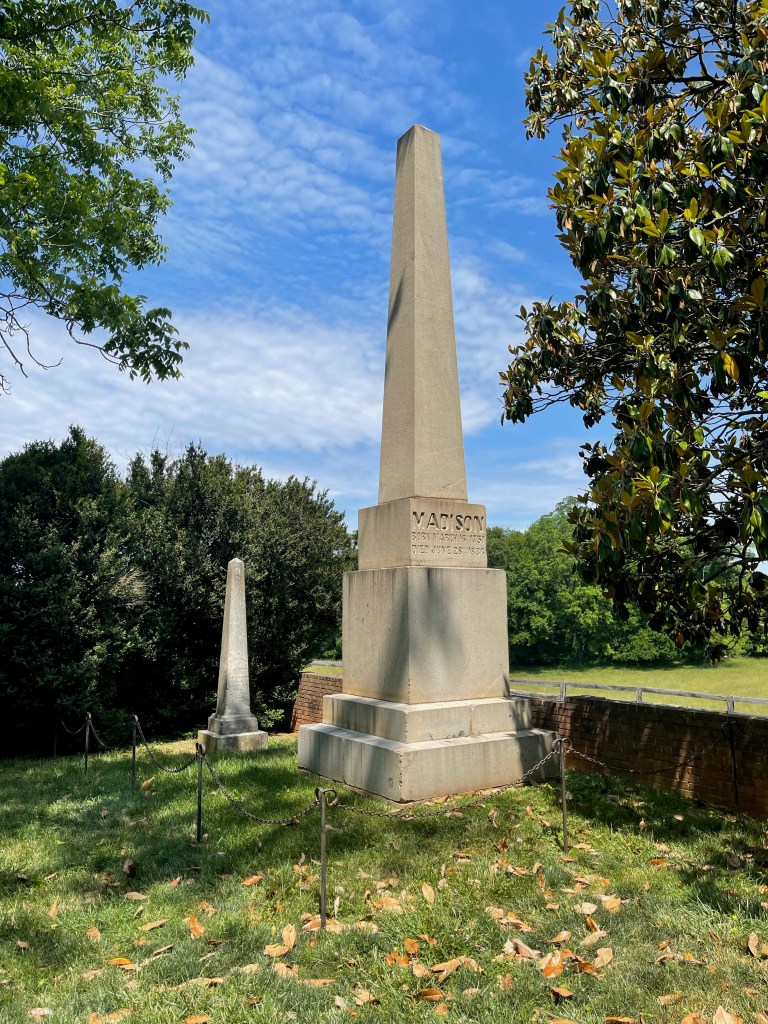
Here lies the 4th President of the United States, and Father of the Constitution, James Madison.

The Grave of Dolley Madison

It seems that Dolley’s headstone has been broken a couple of times in the past.

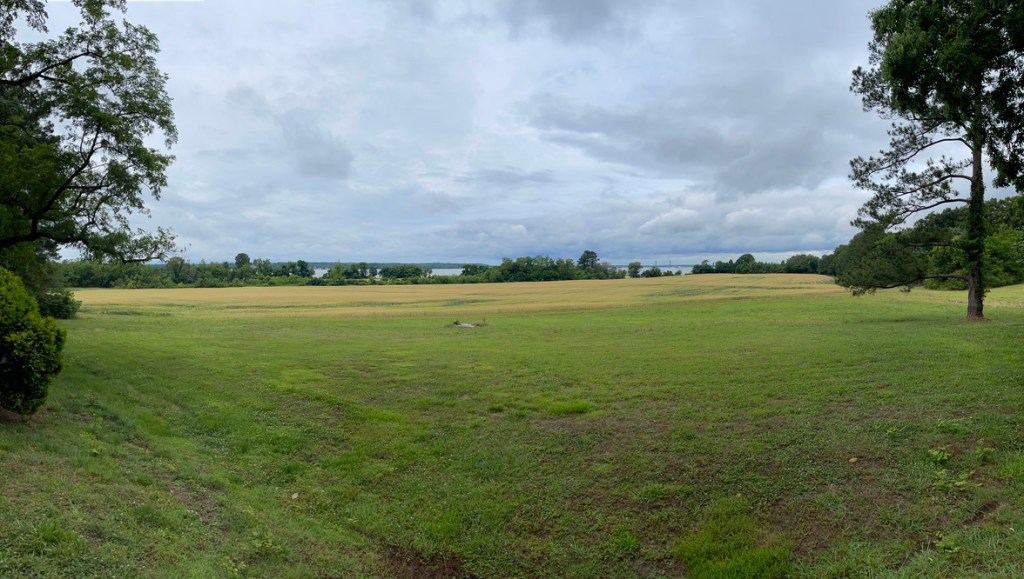
In my mind, one image perhaps describes James Madison best. The view from his front porch.
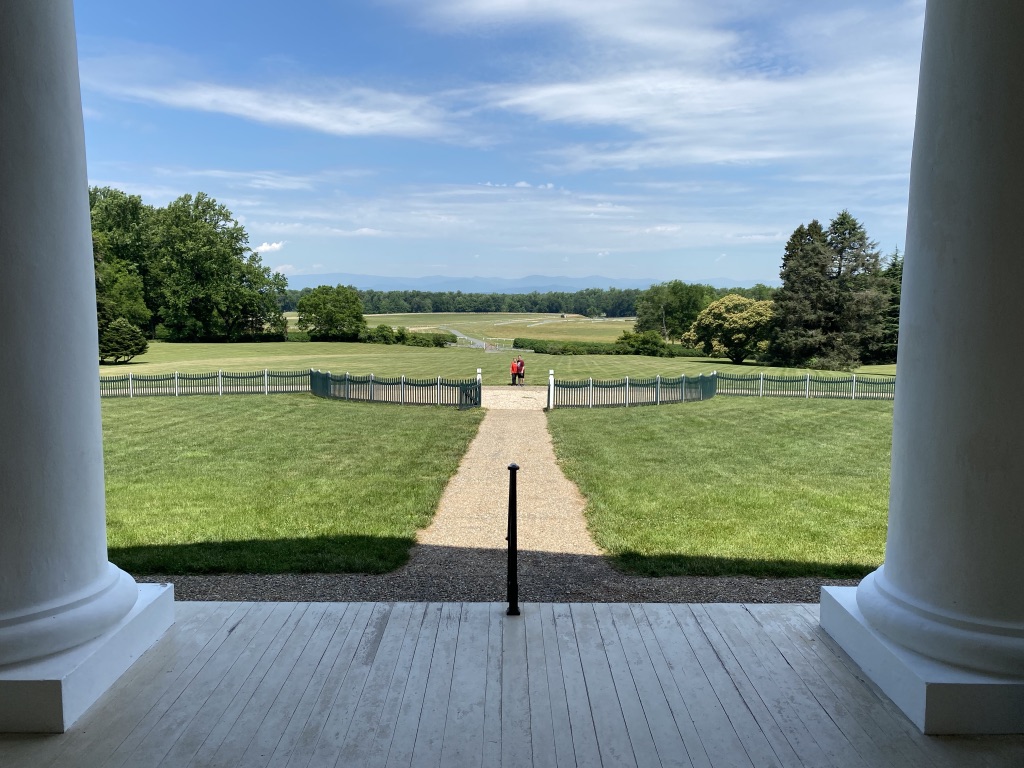
See it?

No, not the racing tracks and fences for horses. Those came during the duPonts’ time here. Look further.
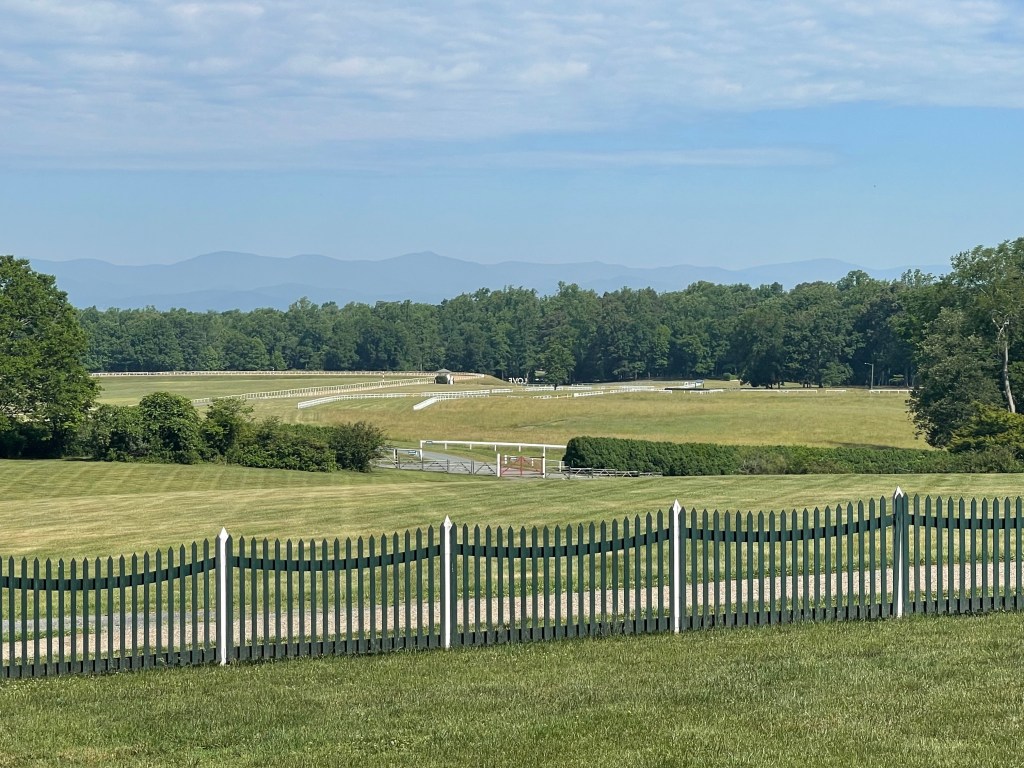
Far in the distance, one can see the Blue Ridge Mountains…

As he looked out at this view from his office, as he was writing the many notes for the Constitutional Convention (and afterwards with his memoirs), I like to think that he wondered what was beyond those mountains… was it perhaps potential?

He knew that even democracy had its’ failings… but it was all in the effort toward a more perfect union. The creation of a new Constitution, that benefited “We the People”, was an occurrence that had never happened before in the world. “The Great American Experiment.” And in that union, Madison placed his trust unto the people. As they climbed that mountain of hope… what would they find?

That was what Madison strove for.
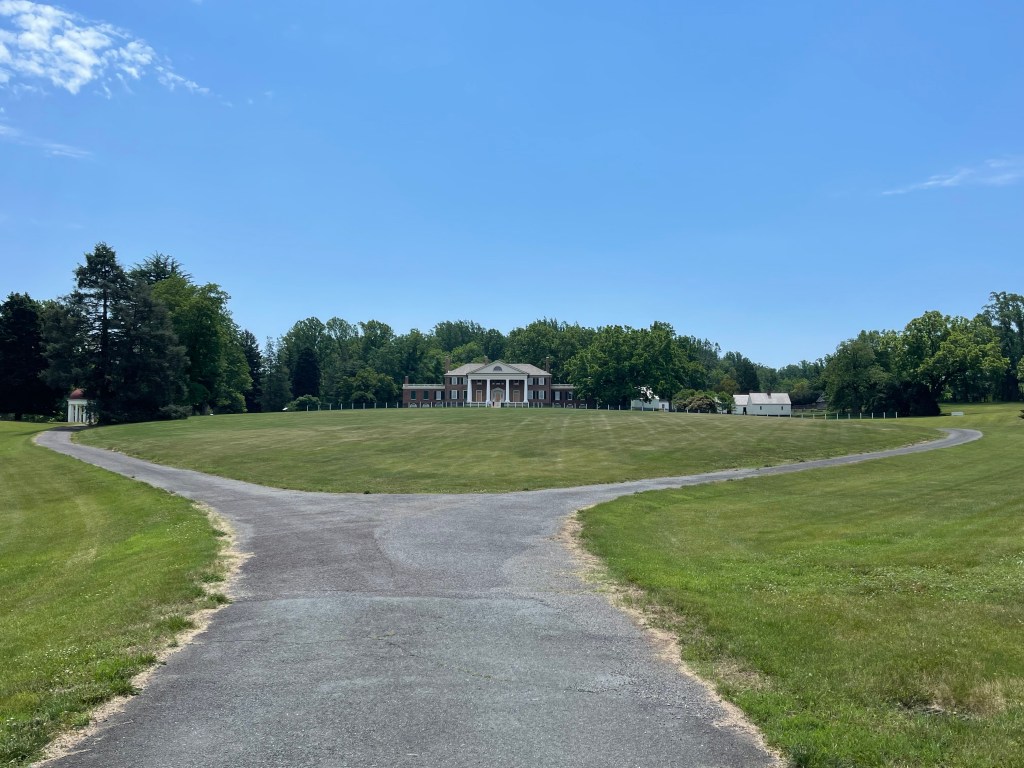
With Madison’s final resting place visited, that means that only one president remains on my list to complete my long sought-after quest to visit every presidential gravesite!

Unfortunately, Andrew Johnson will have to wait until we get to Tennessee.

Leaving Montpelier, we began our short trek to Charlottesville to the southwest. Along the way, we came across a couple more presidential birthplace markers!
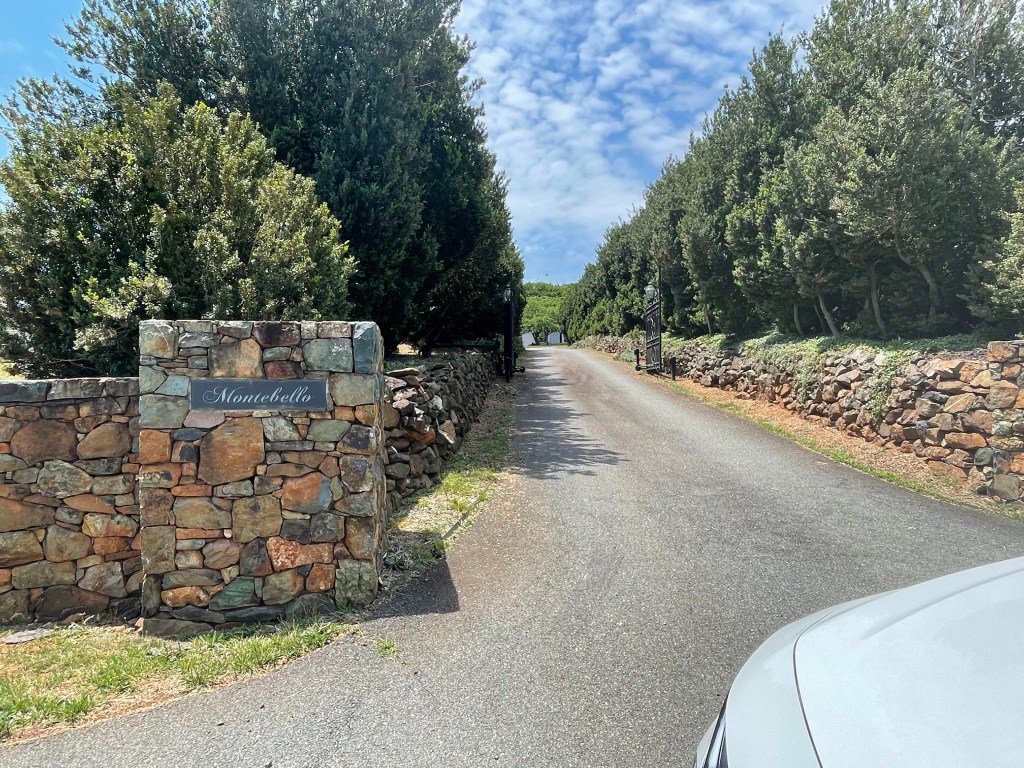
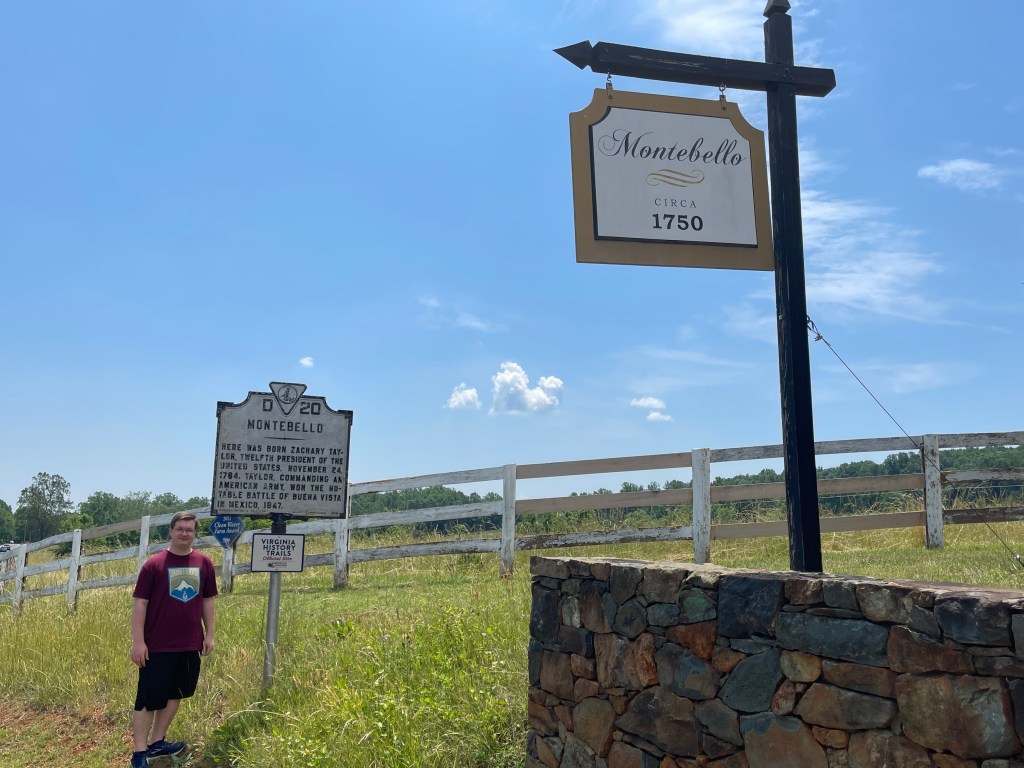
Montebello Estate
Zachary Taylor Birthplace Marker

Montebello Plantation was where 12th President Zachary Taylor was born! As the famed general and “hero” of the Mexican-American War, Taylor would only be president for a year. He and James Madison happen to be second cousins. Unfortunately, Montebello is a private residence.

Thomas Jefferson Birthplace Marker

Second, we found the birthplace marker of Thomas Jefferson, near Charlottesville (Shadwell is a tiny community nearby)! No structure remains near this roadside marker, so we simply read it and went on our way.

Arriving at Charlottesville, we came upon the last site of the day: Highland!

James Monroe’s Highland

Though Monroe was not able to visit the property extensively throughout his career (especially through his time as a diplomat and as President), he owned Highland for nearly 25 years, starting in 1799, before selling it in 1825 due to debt.

Such a lovely drive.
The vegetable garden, with many flowers, vegetables and corn.

Monroe was encouraged by his dear friend Thomas Jefferson to purchase some property near Monticello (just down the road) so they could be neighbors, and Monroe did just that. They were truly two peas-in-a-pod.

Various dependencies.

Although this was technically a “farm”, and not a “plantation”, Monroe still owned slaves; the most being 45 at one time here (a somewhat smaller number compared to larger plantations).

Most of the buildings, including the central slave-quarters (a guesthouse for later owners) and the kitchen (right) are replicas, although the structure to the left was original to Monroe’s time.
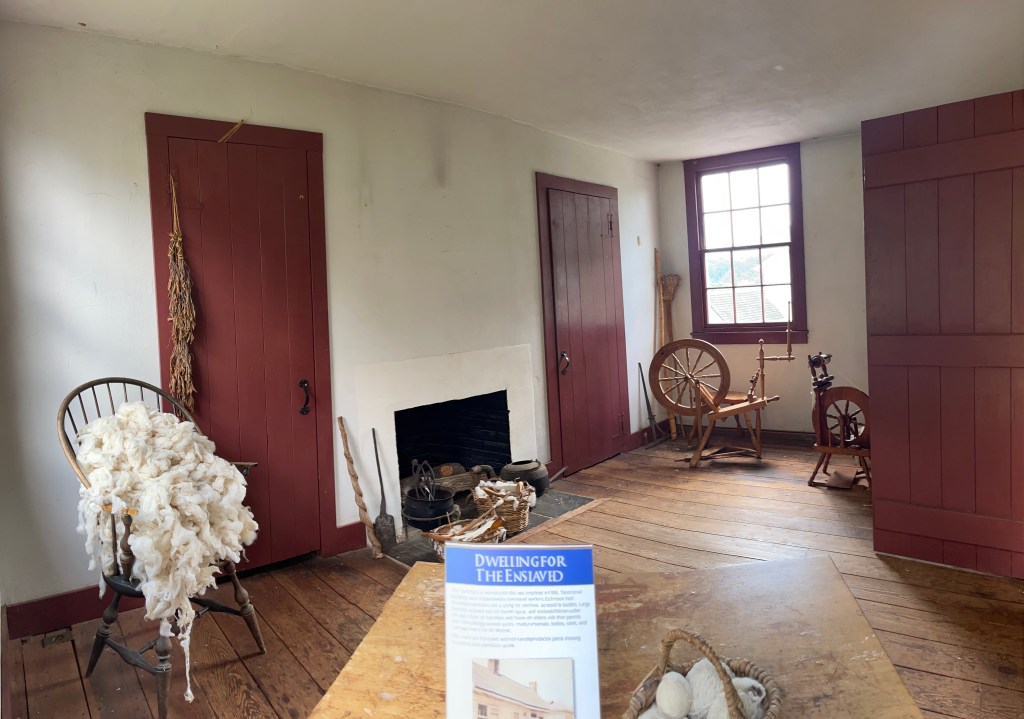
Slave Quarters (Interior)

The slave quarters were considerably nicer than many other slaves had at other plantations. That’s not saying much, considering its still slavery.

Backside of the Property

The original house in which Monroe lived in burned down long ago, so most of the property you see was made by later owners during the Victorian Era. Typically, you can go inside and tour the house, viewing the many artifacts of Monroe that once belonged to them (90% of the items being actual belongings of his). However, due to its tight spaces, it’s closed to the public. They are planning to hopefully open it up more next month.

Base Kitchen

When not utilizing the summer kitchen (mentioned earlier), this kitchen is used during the other seasons, so as to warm the house more. Further restoration work is in planning at the moment, where they plan to incorperate new knowledge that the interpreters have learned recently.

Until recently, the property was called “Ash-Lawn Highland”, the Ash-Lawn portion dating back to the one of the many owners following Monroe (Mr. Garrett if I remember correctly, in 1837). Now, its’ simply called “Highland”, as it was in Monroe’s time.
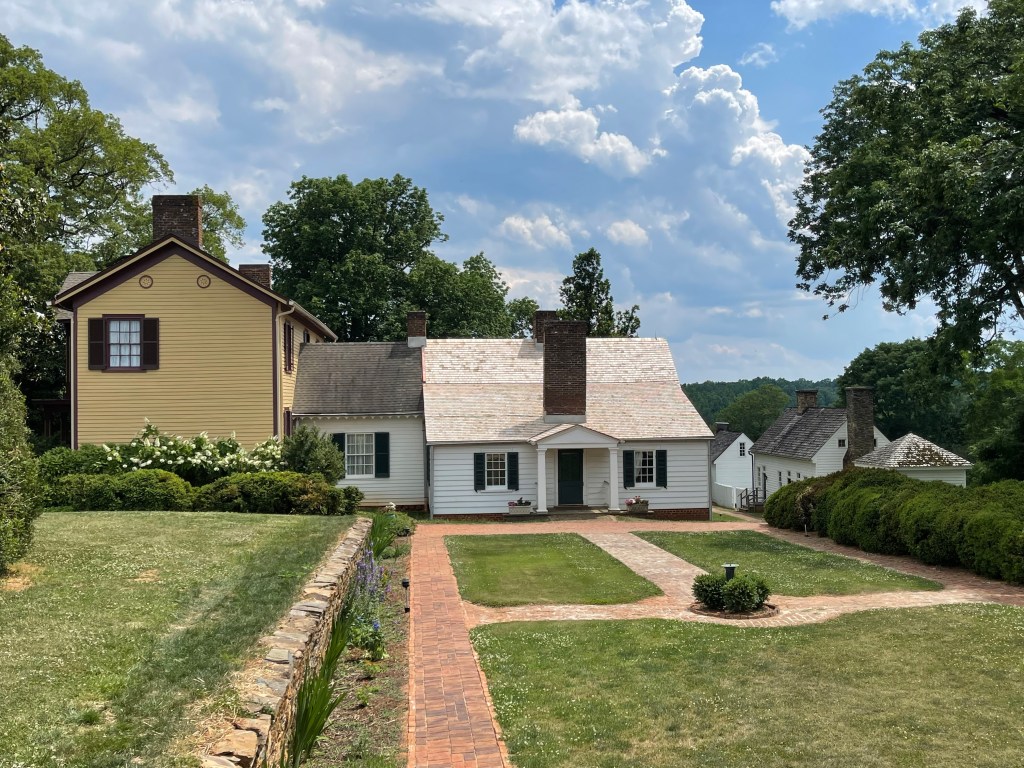
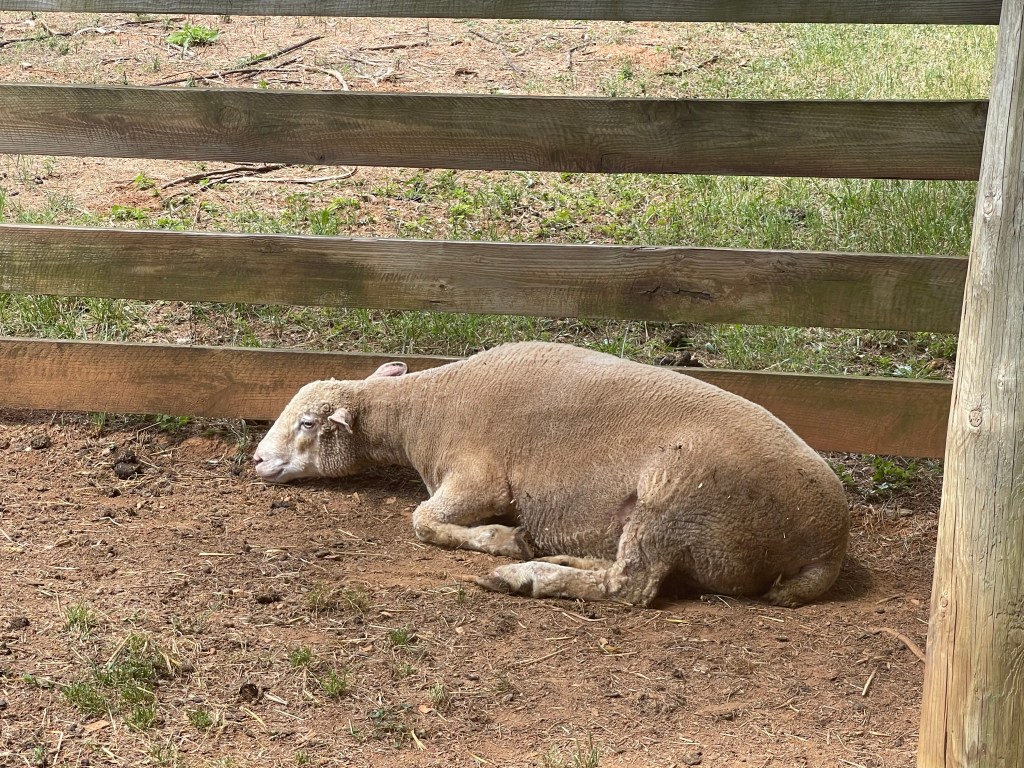
Baaa!

Still a “living-history” farm, sheep and chickens roam the fields nearby. Though in the case of this poor sheep trying to take shelter in the shade, the 90′ weather was just too much for him.
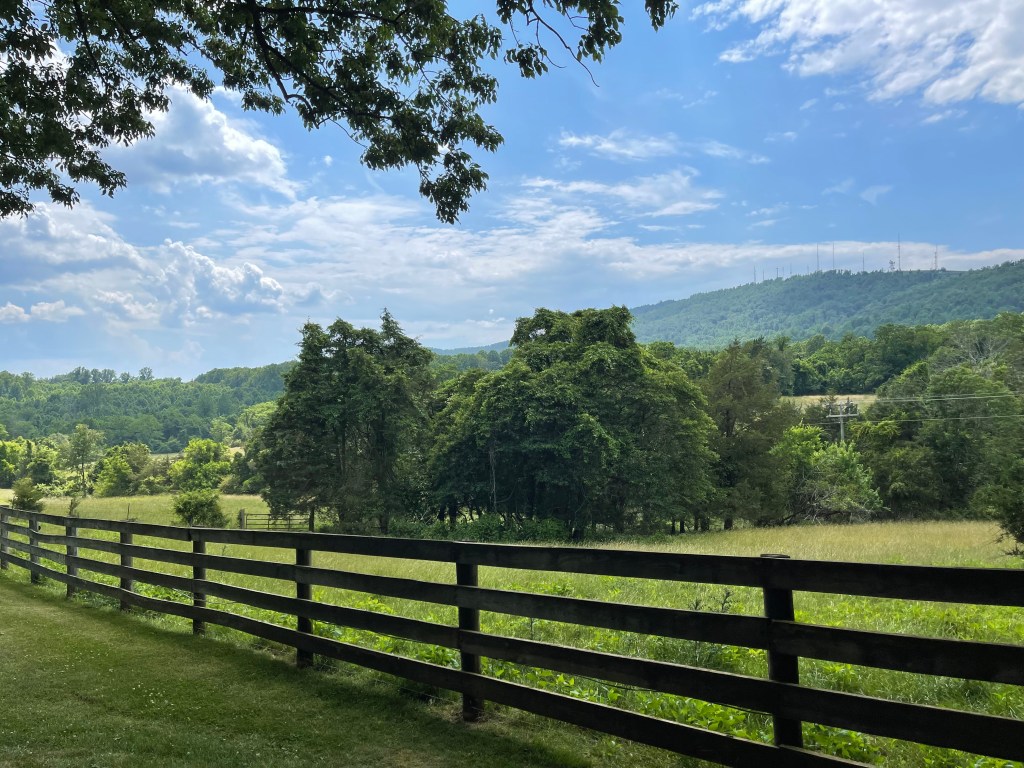
Albemarle County, where Charlottesville is located, is quite the mountainous region. Some of the views are just gorgeous.

Three interesting things to note here. One, you can see the yellow house in the back, built in the mid-1800’s.

Second, look at that 300 year-old tree! It was surely here during Monroe’s time!

Third, the foundations you see on the ground (if you squint) are the actual ones of Monroe’s original home! Archaeological work continues on the property to further learn more about it’s original structure, and the fire that destroyed it.
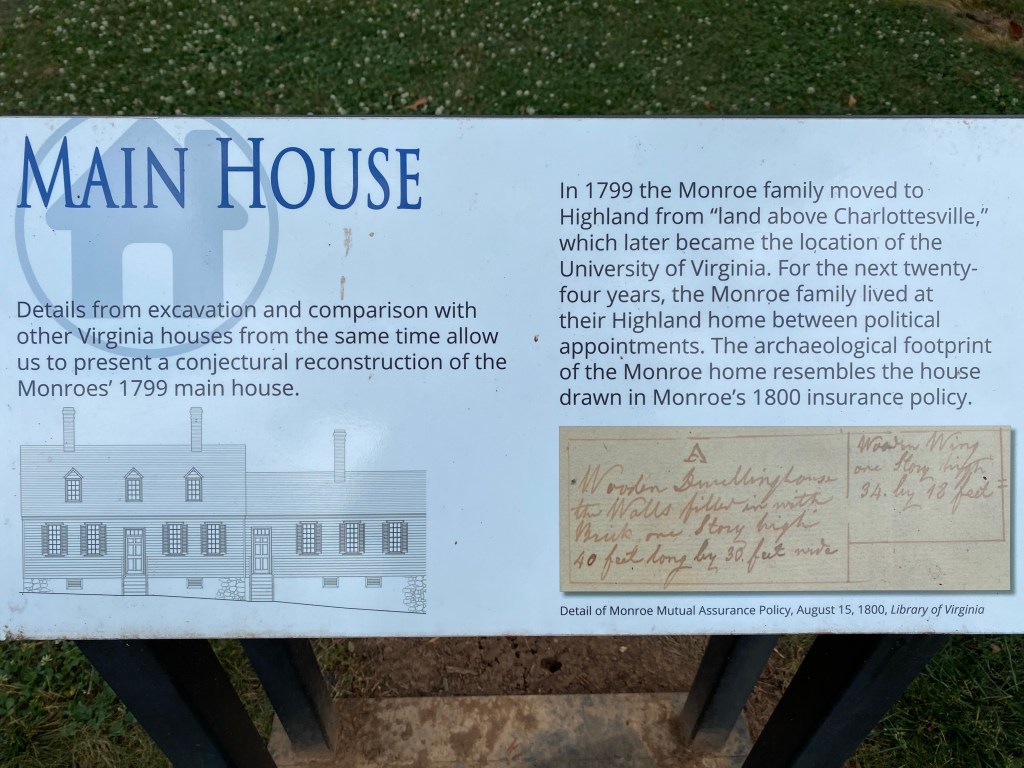
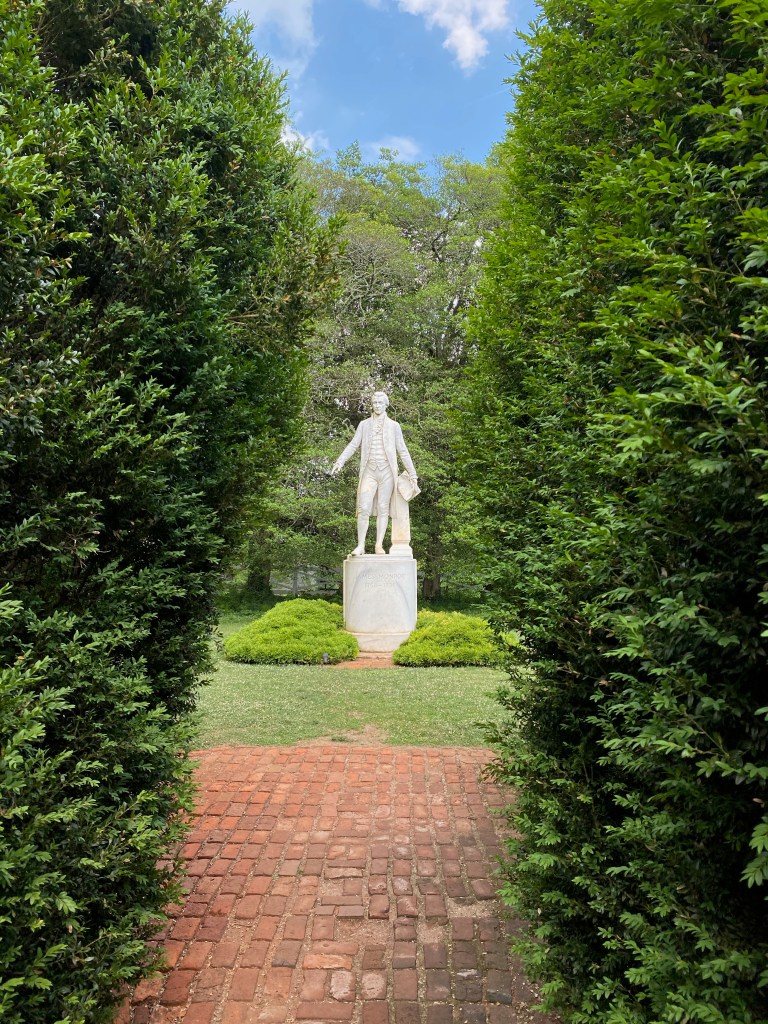
Ooh, lookie there!

Monroe may not have been here often, but I think that speaks leagues about his devotion to service.

After being bravely wounded during the Revolutionary War during the Battle of Princeton, he managed to hold more local, state, and federal offices than anyone else in American History. U.S. Senator, Minister to both France and Great Britain, twice Governor of Virginia, Secretary of both War and State, and of course, our 5th President. His resume is certainly admirable. And that calling of duty and service is something that we all could emulate in our lives.

Before I go, I have one last thing to show you!

Virginia Liberty Bell Replica

In downtown Charlottesville, near a fire station, rests the Virginia replica of the Liberty Bell! In 1953, in an effort to advertise purchasing bonds, the U.S. Government cast 53 bells identical in scale and shape to the actual bell that rests in Philadelphia. There’s one in each state, as well as in Puerto Rico, in Washington D.C., and in France, where the bells were made.

It might seem a trivial thing to look for in each state, but in my travels i’ve managed to see quite a few! Namely the Alaska, Colorado, New Mexico, Missouri, Tennessee, Georgia, and Massachusetts one. The Texas one is hung up in the old Academic Hall of Texas A&M University, in College Station.

Anyways, that’s all for now!

A big day waits for us, for next time, we explore Monticello, the pride of Thomas Jefferson, and exemplar of presidential homes! We also visit the Woodrow Wilson Presidential Library and Museum in Staunton, as we head deeper into Virginia, and closer to Tennessee!

Be sure not to miss it! It’ll be a blast. 😉
Day 6: Love and Loss (Fredericksburg, VA to Orange, VA) (6/5/21)

To put it simply: I don’t think i’ll ever be as exhausted on this trip as I was today… my legs feel like straw, and my arms like jelly. But in the name of History, these are acceptable sacrifices!

Today let us explore Historic Fredericksburg, as well as various important battlefields in Central Virginia!

Fredericksburg was filled with all sorts of fantastic sites. To cover them all, i’ll have to touch briefly on most of them.

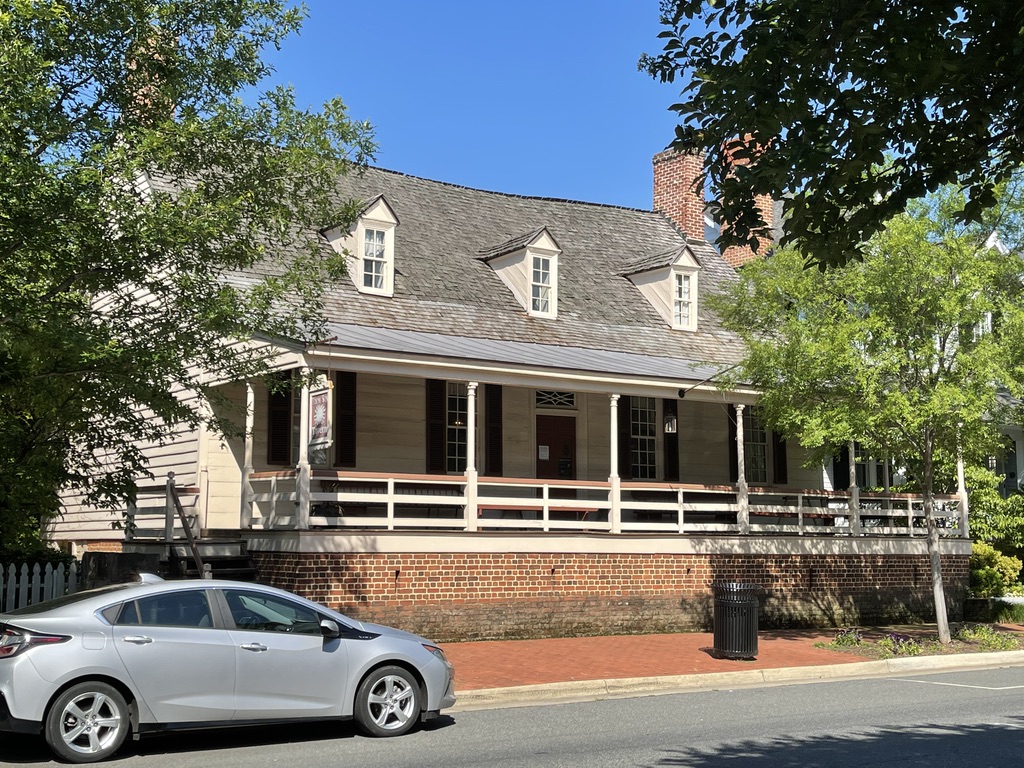
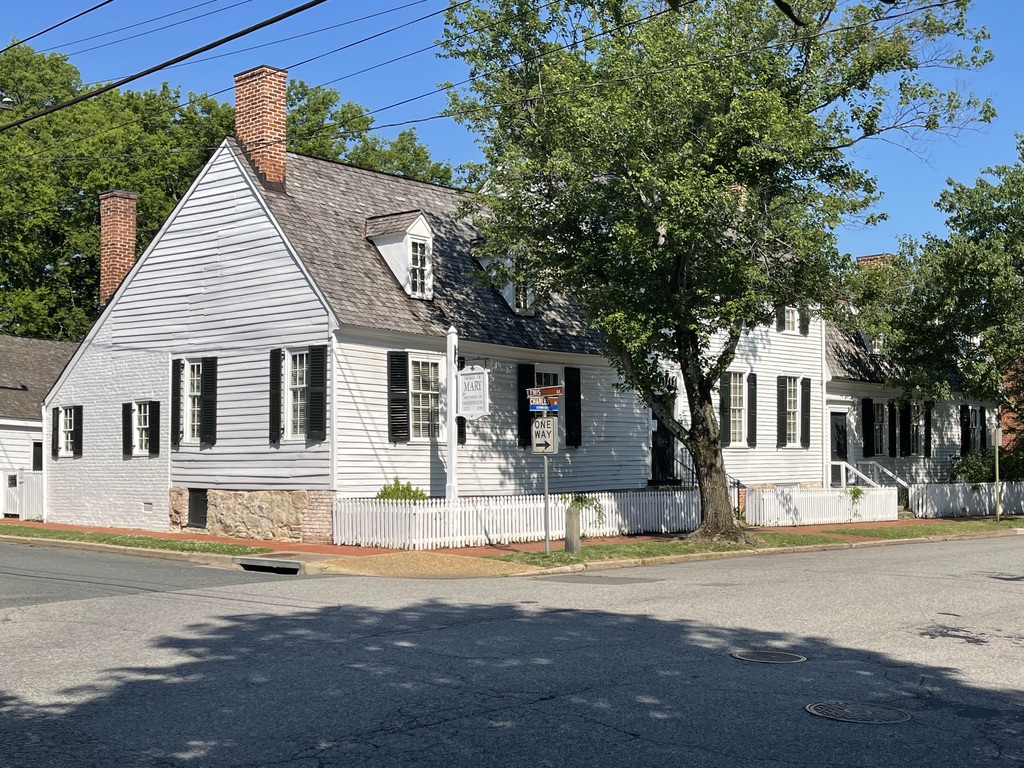
Mary Ball Washington House

George Washington’s mother, Mary, lived in this house from 1772, until her death in 1789, barely a month after her eldest son became the first president. In close proximity to Kenmore Estate, where her daughter Betty lived, Mary Washington lived in this humble abode after selling the family’s “Ferry Farm” property.

Here at this house, before he departed to New York to become president, George visited his mother one last time to receive her blessing. To which she replied (on a purely unverified account):

“But go, George, fulfill the high destinies which Heaven appears to have intended for you for; go, my son, and may that Heaven’s and a mother’s blessing be with you always.” — Mary Ball Washington, 1789

Such was the bond between mother and son.

The Rising Sun Tavern

Built in 1760 by George Washington’s youngest brother Lawrence, the building became a tavern in 1792, and the site had been a center for travellers for decades afterwards. No longer serving food or drink, it’s now a museum, part of a trio of associated museums along with Mary Washington’s House, and Hugh Mercer’s Apothecary.

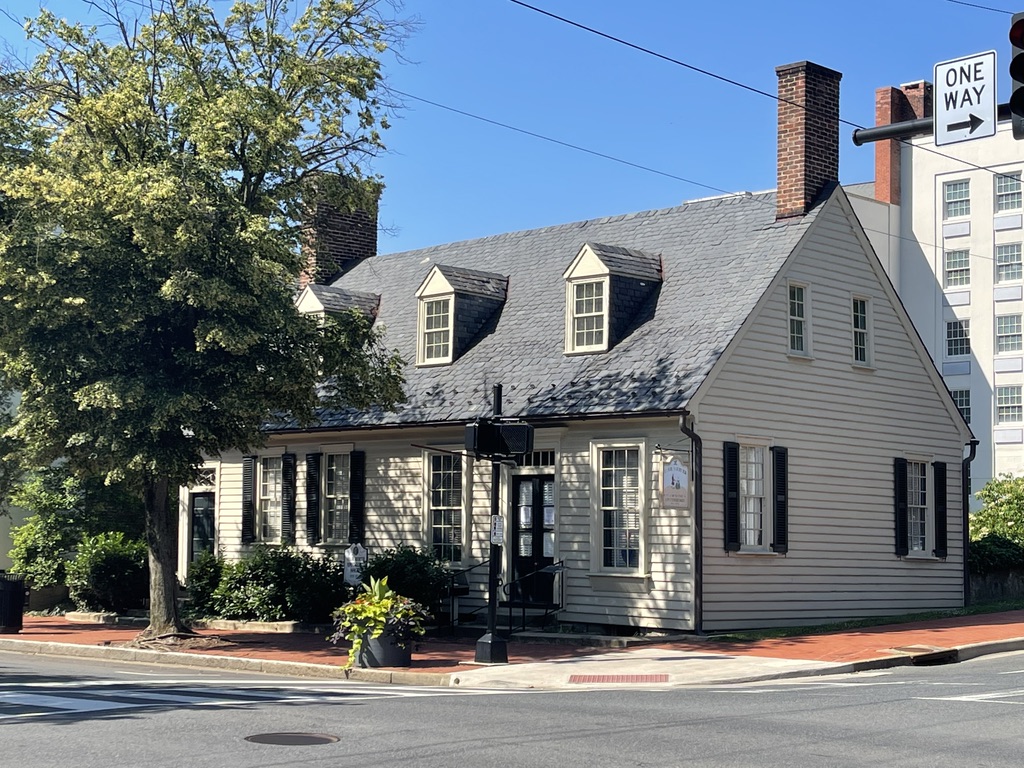
The 1749 Lewis Store has seen much during it’s time in town, starting from it’s humble beginnings as a mercantile shop.

Hugh Mercer Apothecary Shop

Hugh Mercer, a close friend of George Washington, owned and ran this apothecary shop for 15 years. As a brigadier-general in the Continental Army, Mercer fell during the Battle of Princeton, and won high praise for his distinguished bravery.

Grave of Mary Ball Washington

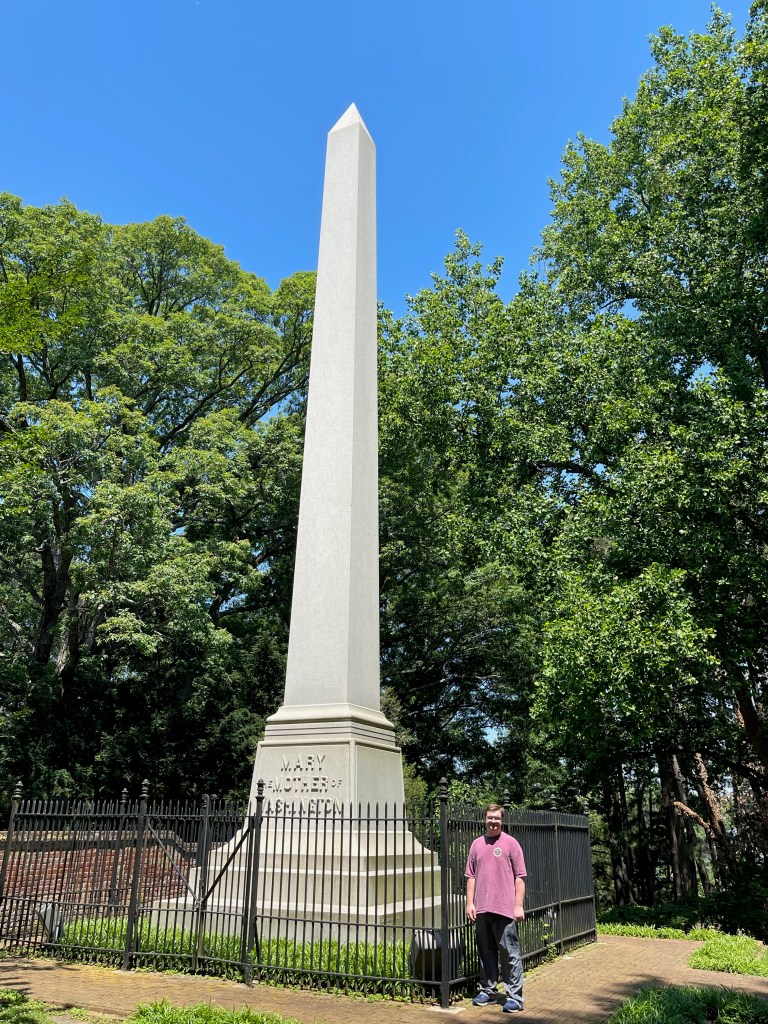
The grave of Mother Washington rests in a tiny park not far from downtown. It’s an impressive monument, and speaks leagues about the care that people had for her.

“Meditation” Rock

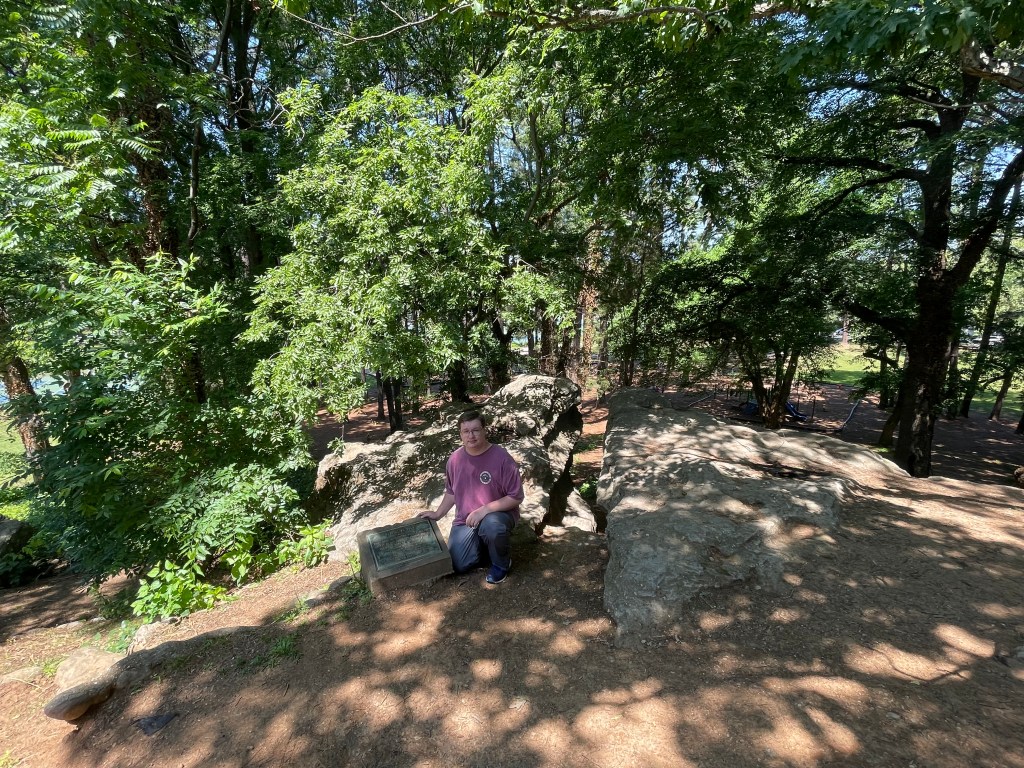
A couple of steps away from her grave, Meditation Rock would be visited every day by the elderly Washington widow, who up until her 80’s, would pray every day upon these stones, and hoping for the successful endeavors of Providence, and her son George.

Kenmore Estate

Kenmore, consisting of the last surviving structure of a once-great plantation spanning 1,300 acres, was the home of Fielding Lewis and his bride Betty Washington. Mother Washington loved to visit here regularly.

Slave Block Plaque

On this spot centuries ago, slaves would regularly go up for sale; mere livestock in a society where they were reduced to commodities. How thankful I am that slavery was abolished.

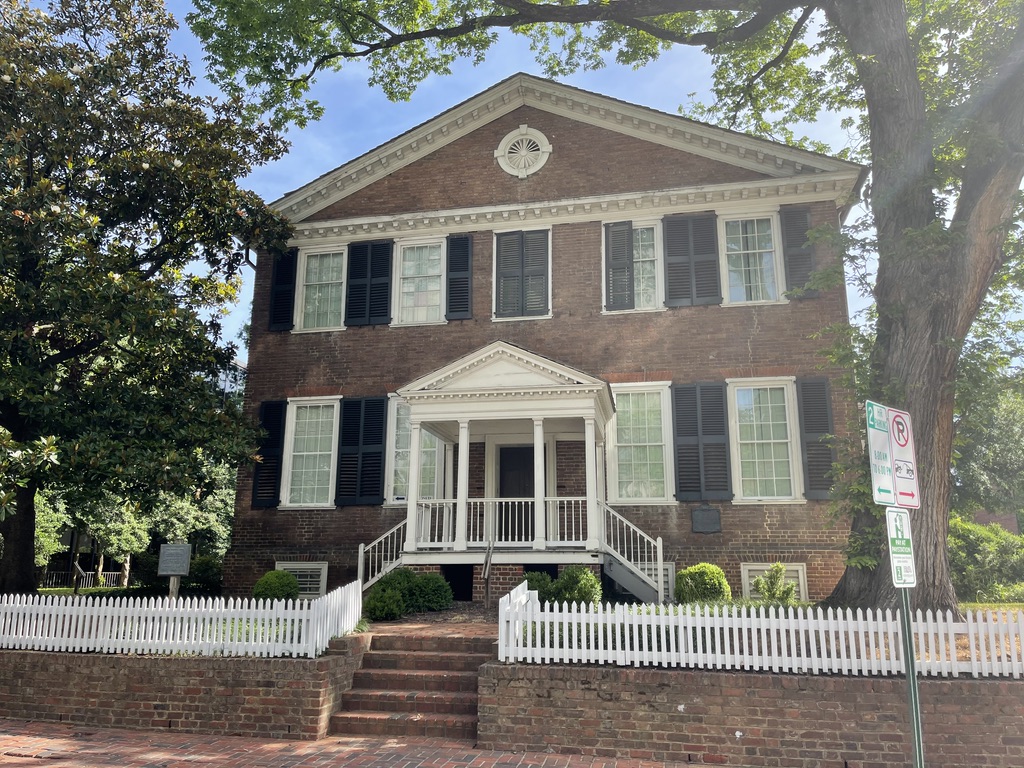
James Monroe Museum & Memorial Library

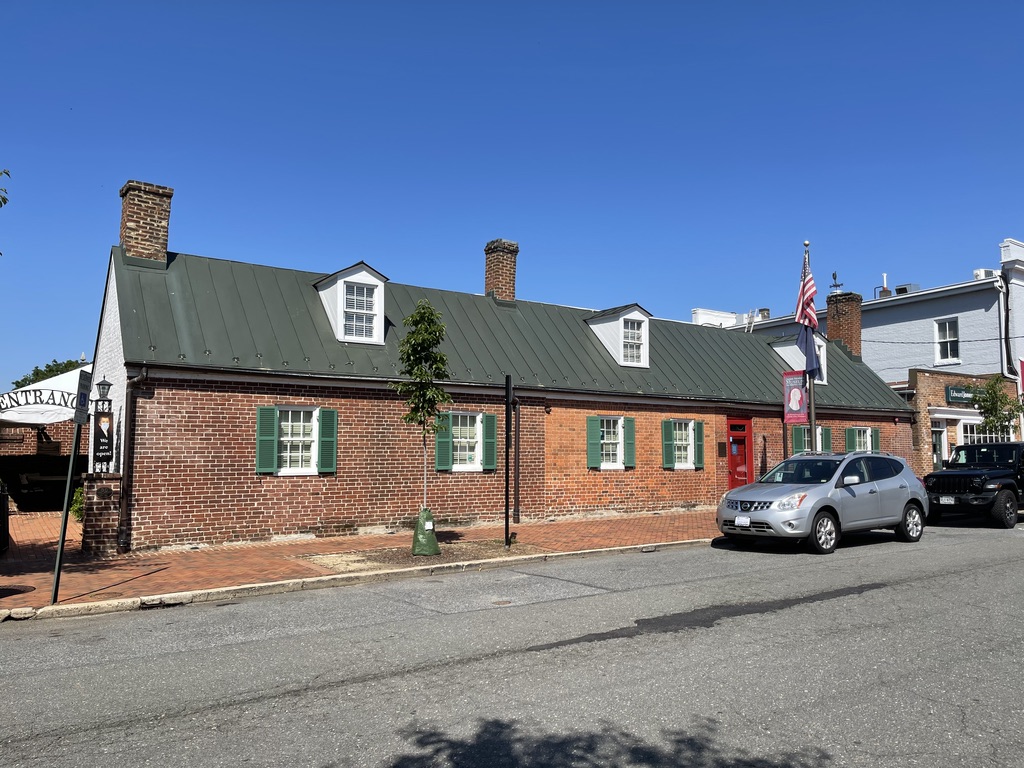
Situated in what was once President Monroe’s law office, this museum was dedicated in the 1930’s by Monroe’s descendents, and contains one of the best collections of Monroe artifacts anywhere!

Monroe Museum (Front)

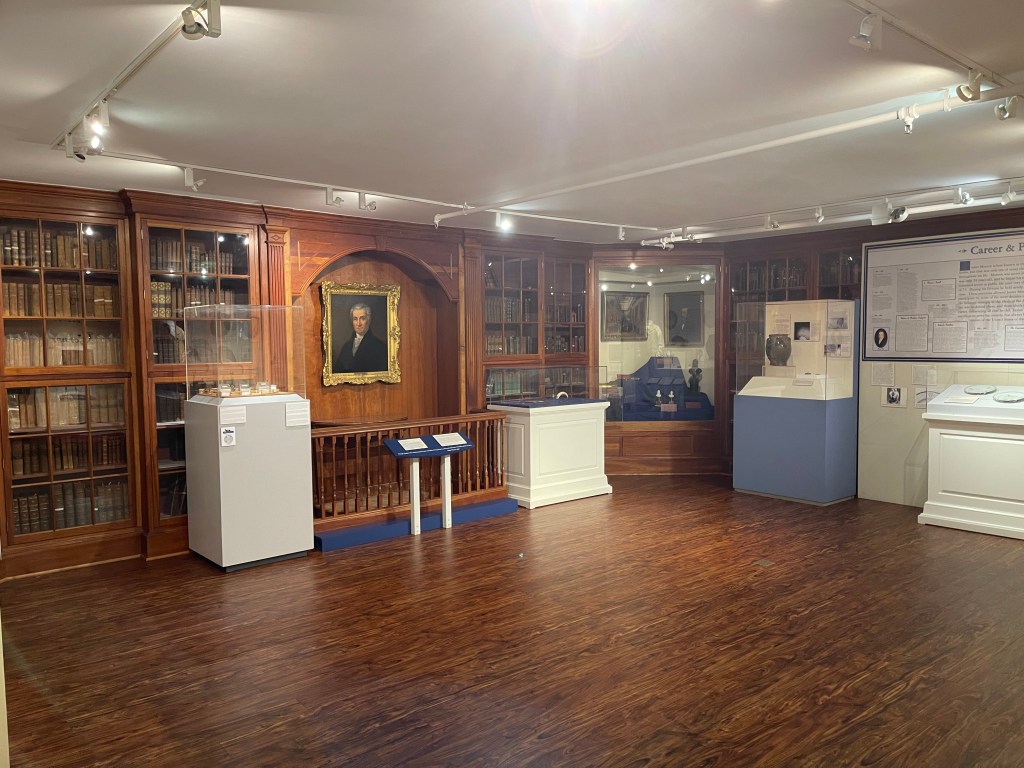
many books and artifacts of Monroe can be found here. Let’s look at a few, shall we?

Elizabeth Monroe’s Effects

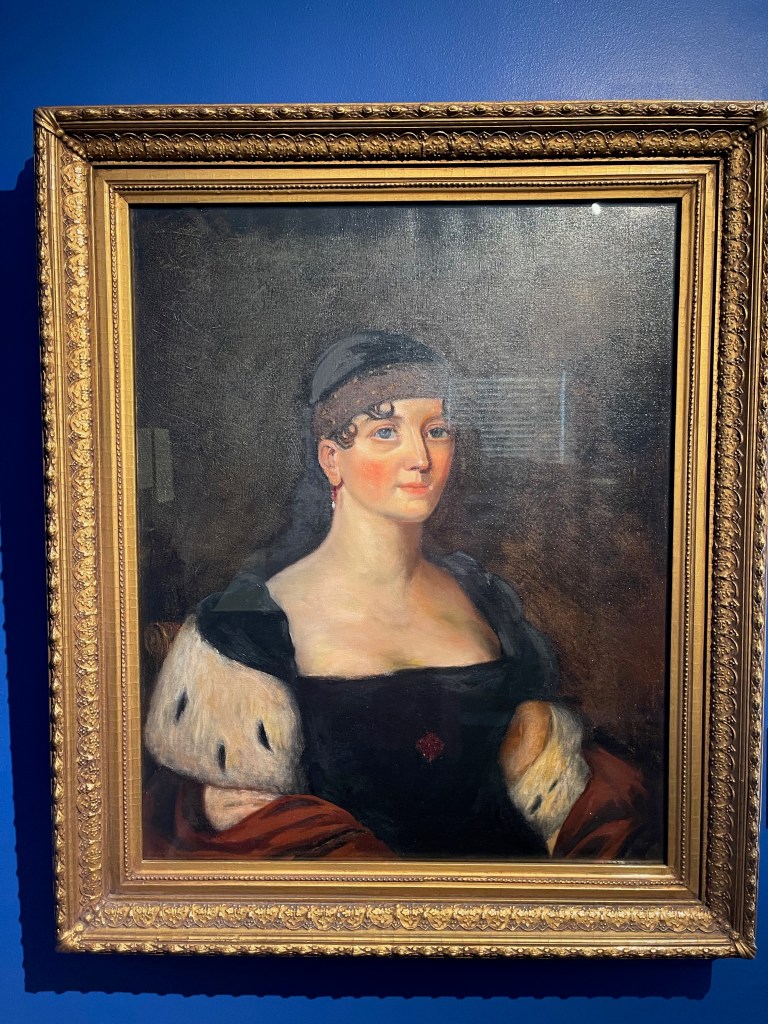
If you recall, his wife Elizabeth was the First Lady who reopened the White House, following its restoration after the Burning of Washington. She had quite a dainty figure.

James Monroe’s Effects

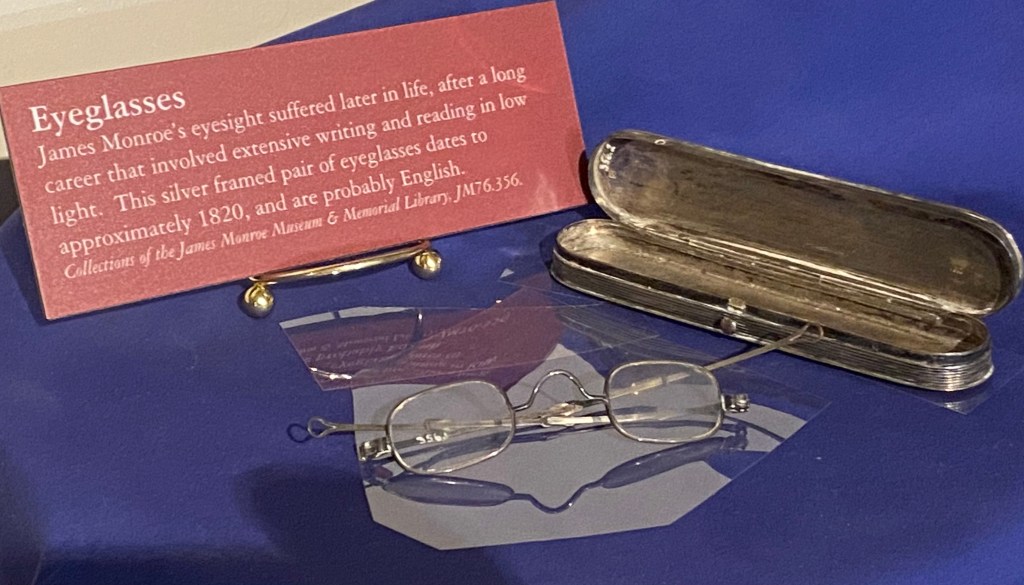
To see artifacts dating back to Monroe is nothing short of incredible. Be sure to notice his bicorn hat, soldier gloves, and especially his clothes!

Elizabeth Monroe
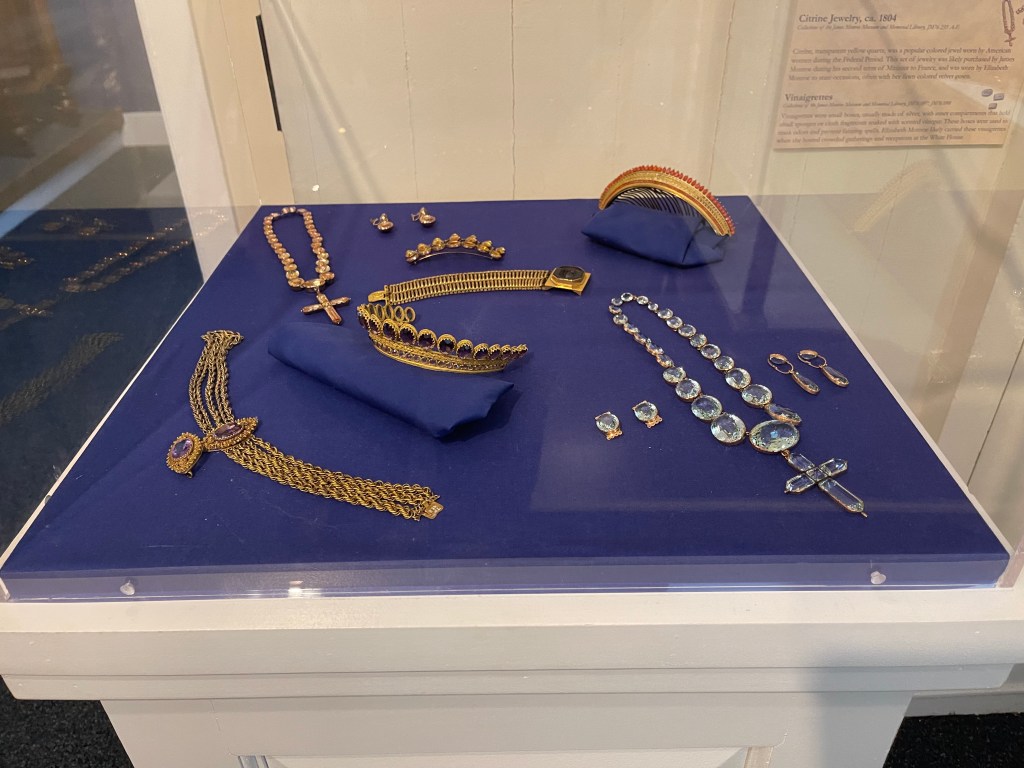
Some of Elizabeth’s original jewelry, made with precious stones (like aquamarine or amethyst.)
Monroe Doctrine Desk

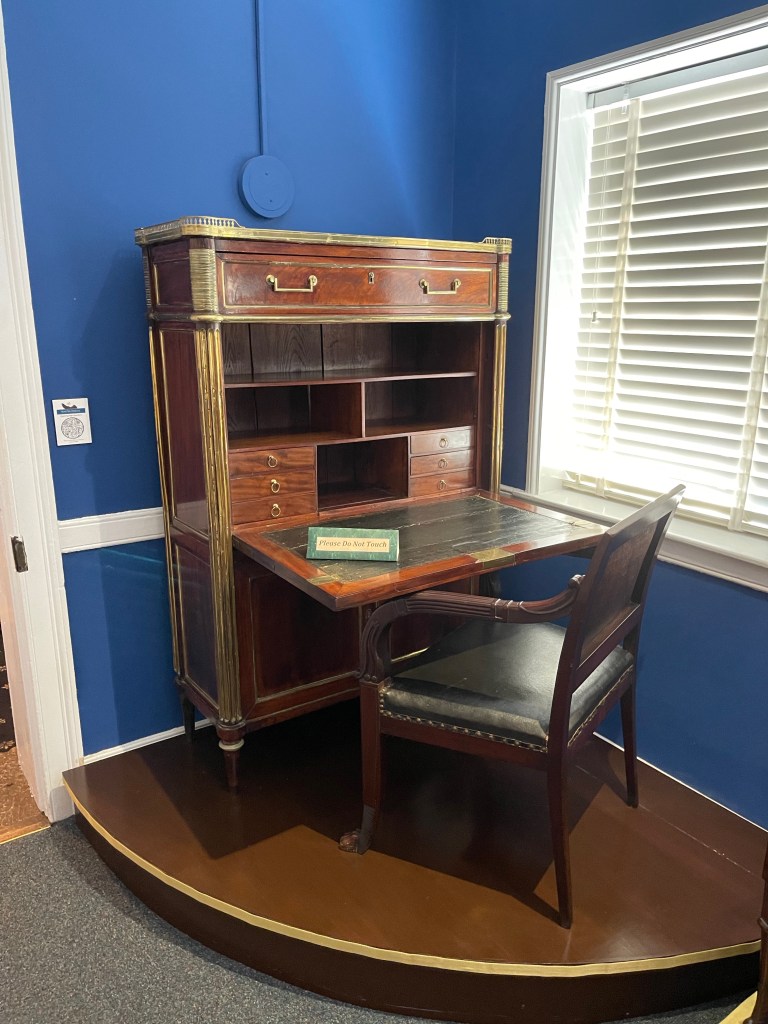
This desk supposedly had the Monroe Doctrine written on it! I question that however, as it’s principal author was John Quincy Adams, his Secretary of State (and presidential successor).

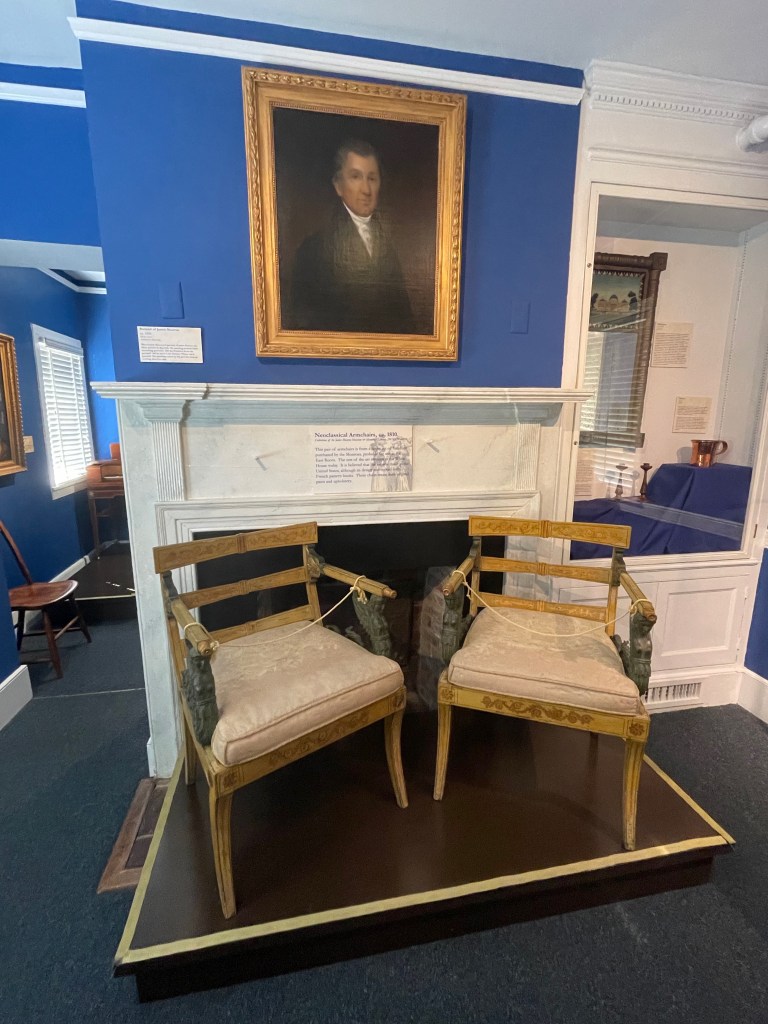
This pair of armchairs originated in the 1800’s, which Monroe likely purchased while abroad in Europe (doing his extensive diplomatic work in France and England). The rest of the furniture to this set is found in the White House!

Did I mention that James Monroe, along with Robert Livingston (one of the Committee of Five who drafted the Declaration of Independence) went to France and negotiated the Louisiana Purchase with Emperor Napoleon? I can’t quite recall.

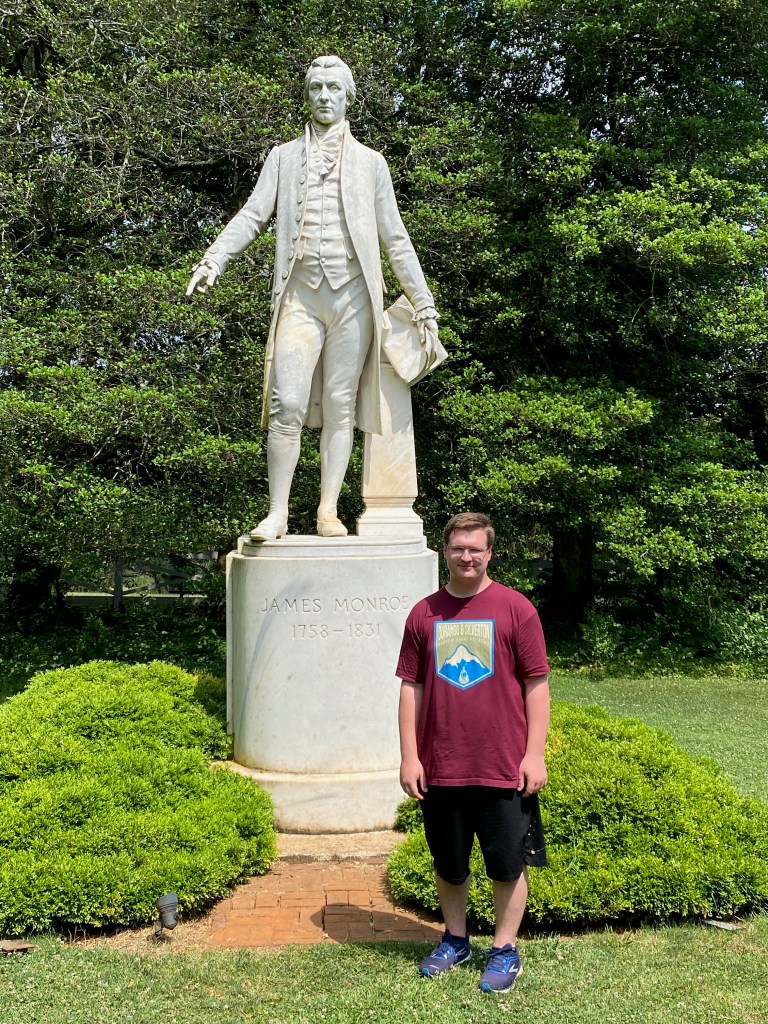
James Monroe

Such a dignified face… Monroe was the last of our “colonial” presidents, or as some like to call it, the “Last of the Cocked-hats!”

Having already learned more about Monroe at his birthplace and his museum, we’ll learn even more in our next post, at his Highland farm.

Chatham Manor

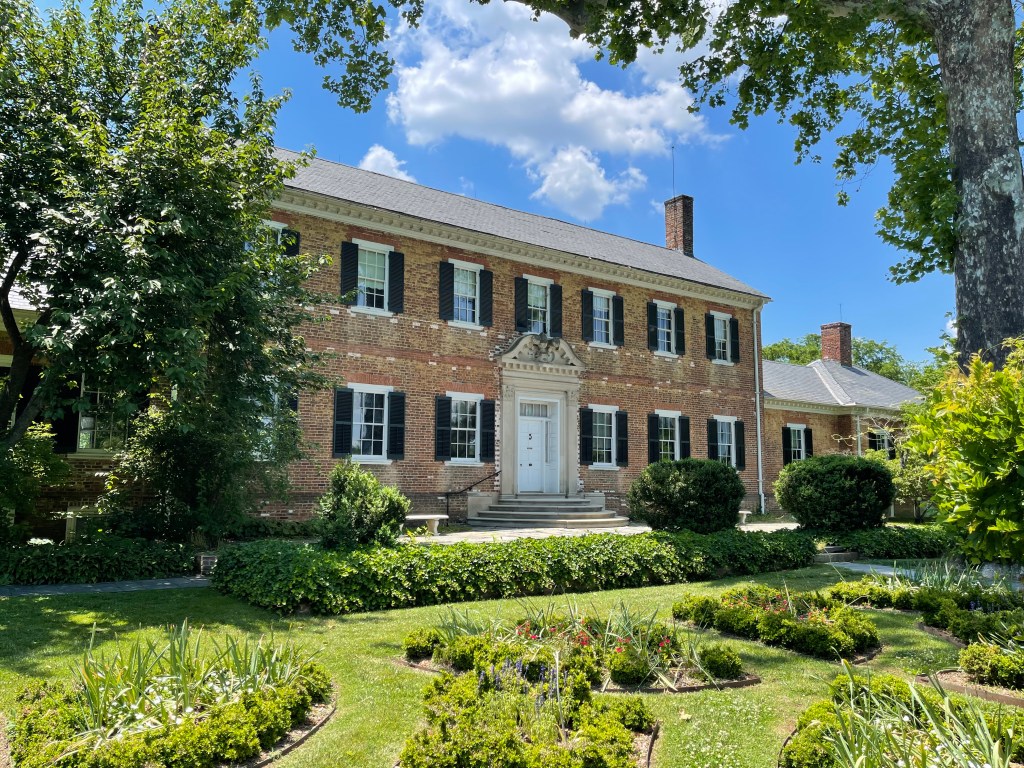
William Fitzhugh, a friend of George Washington, built Chatham Manor in 1771 for his family, whose descendants lived here for nearly 100 years. Casting an impressive view of the surrounding landscape, Chatham Manor was used by Union Forces during the 1862 Battle of Fredericksburg as a staging ground, and a hospital.

Chatham Manor (Front)

For those that are well familiar with poet Walt Whitman, he served as a nurse here, tending to the wounded. His medical experience throughout the war left a deep impact on him, and perhaps influenced much of his most famous work.

(Backside)

The beautiful manor serves as the park headquarters for the Fredericksburg & Spotsylvannia National Military Park, which oversees many of the battlefields in Central Virginia. Unfortunately, all historic buildings at these various sites are closed due to the pandemic.

Take a look of that view!

Though there weren’t many of these trees blocking the skyline back in 1862, the view still calls to mind the Union barrage of the city with cannonfire.

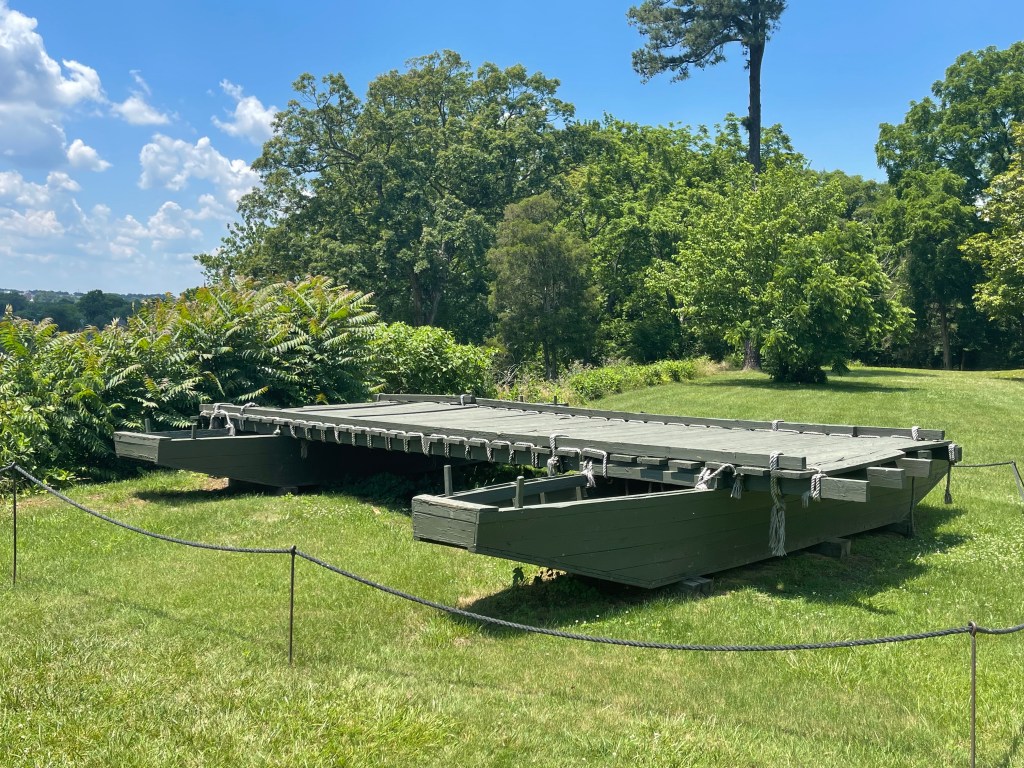
To march across the Rappahannock River, the Union Army had to construct floating bridges like this to reach the opposite shore, all while under the threat of bombardment from Confederate troops. They took twelve hours to build, costing dozens of lives.

George Washington’s Ferry Farm

The Washington Family owned a variety of properties during the young George’s life, including Pope’s Creek (where he was born), and Little Hunting Creek (which would later develop into Mount Vernon). However, from the age of 6 to the age of 16, he lived at the Ferry Farm: a humble home overlooking the Rappahannock River.

It was your typical farming property for 1700’s Virginia. It would grow crop necessities like wheat, corn, and tobacco (maybe not all necessities). Augustine, his family, and several of their slaves would come to manage this property, called “The Home Farm” by them.

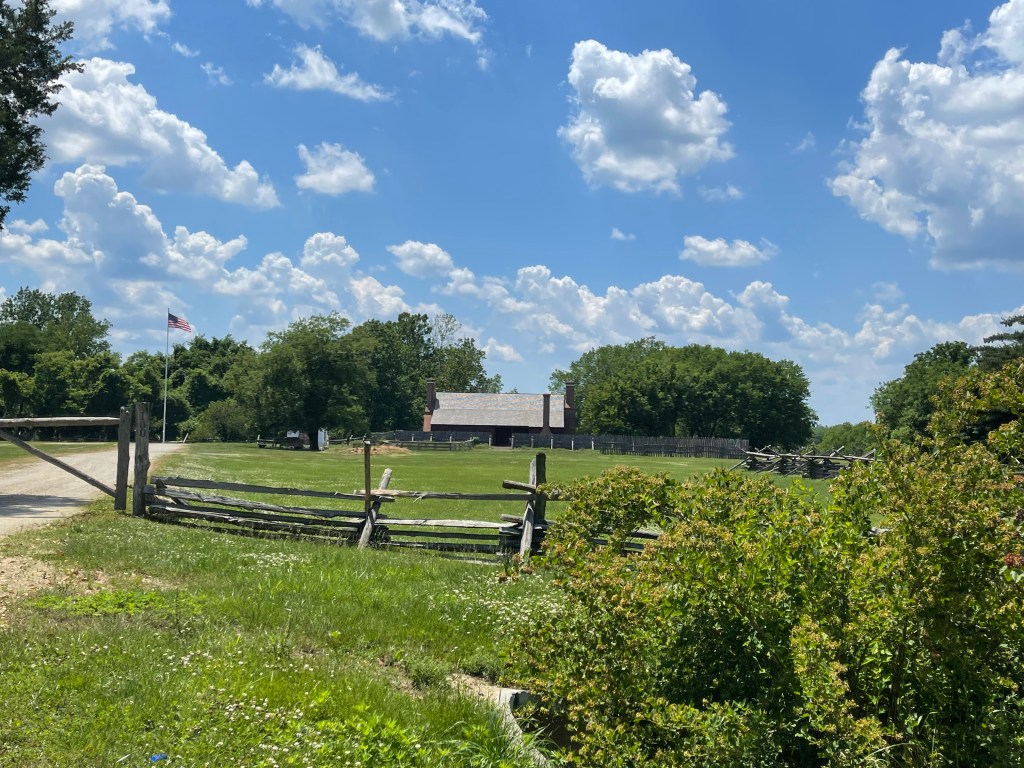
The property would be moved into by the Washington Family in 1738, who tried their best to work the land. This replica, although a 2018 replica, attempts to display life at the Ferry Farm, particularly during George’s time here (I wonder if he wandered up and down these same hills?).

It serves as the place for many George Washington fables, most notably the “Chopping down of the Cherry Tree”, in which he couldn’t tell a lie to his father. A nice story, but a fictitious one.

Augustine’s Bedroom

George’s father Augustine would die here at Ferry Farm in 1743, in this bedroom (or the bedroom that once stood on this spot). His estates were split up amongst his family, with his son Augustine Jr. claiming Little Hunting Creek (Mt. Vernon), while George was left with the Ferry Farm estate. At first pitied by neighbors for the waste of potential for him, Washington competently managed the farm, and also became a surveyor in Culpeper County. This afforded him exposure with high-ranking individuals such as the wealthy and influential Fairfax Family, who would aid in his rise to prestige.

This room served as the both the dining room and the law office for Augustine (an unusual setup). Although no original items are located in the house, these are pieces designed to convey the time period (especially with that desk, which I really want).

The Parlor. Here you might find Mary Washington knitting, or resting, or entertaining guests.

Did you know that George Washington was almost invested into a naval career? He would have joined the British Navy for a high life of adventure and travel, had his mother not forbade him from doing it. Can you imagine a Revolutionary War without George Washington?

Upstairs, George Washington’s room, with one of his siblings. Not much to tell in this room though.

In the end, after George inherited Mount Vernon following his half-brother Augustine Jr.’s death, Mary Ball Washington would manage the property for decades, before selling it in 1772 and moving to her last house, bought for her by her son George.

It’s curious to see how Washington’s life went on a trajectory from being a farmer, to a surveyor, then of course to a military man. I would say it certainly taught him various practical skills and indeed practical wisdom, which would certainly help him later in his life.

Fredericksburg Battlefield

I don’t even know where to start with all the battlefields, there was just so much… but i’ll try my best to keep it concise, so as to not bore you all with too many details.

The Fredericksburg & Spotsylvannia National Military Park not only encompasses the sites of the Battles of Fredericksburg (1862) and Spotsylvania Courthouse, (1864), but also those of Chancellorsville (1863) and The Wilderness (1864), sites of the bloodiest fighting during the Civil War (aside of course, from Antietam and Gettysburg). As Spotsylvania was out of the way on our path west, we were forced to make do with the other three sites.

Starting out at the site of the Battle of Fredericksburg, we went along the path simply known as “Sunken Road”.

The Confederates rallied around a large series of hills and along this 6-mile wall to defend themselves from oncoming Union troops under Generals Ambrose Burnside and George G. Meade (the “Hero of Gettysburg”). Once, none of these trees stood here, so the “Federals” (as they were sometimes called) had no cover when charging towards the fortifications.

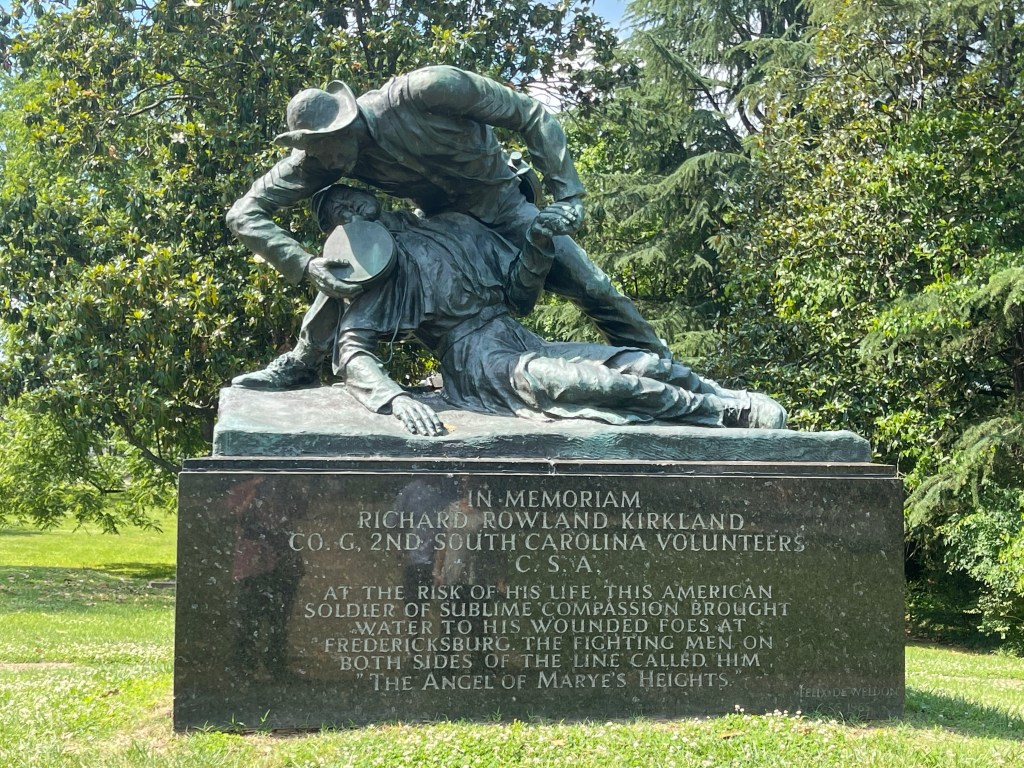
Kirkland Memorial

Richard Kirkland, a Confederate soldier from South Carolina, was spotted tending to the wounded of both Union and Confederate soldiers on the battlefield. He was referred to as “The Angel of Marye’s Heights” posthumously (Marye’s Heights being the location of that particular area of the battle). Sadly, he perished in the 1863 Battle of Chickamauga at the young age of 20.

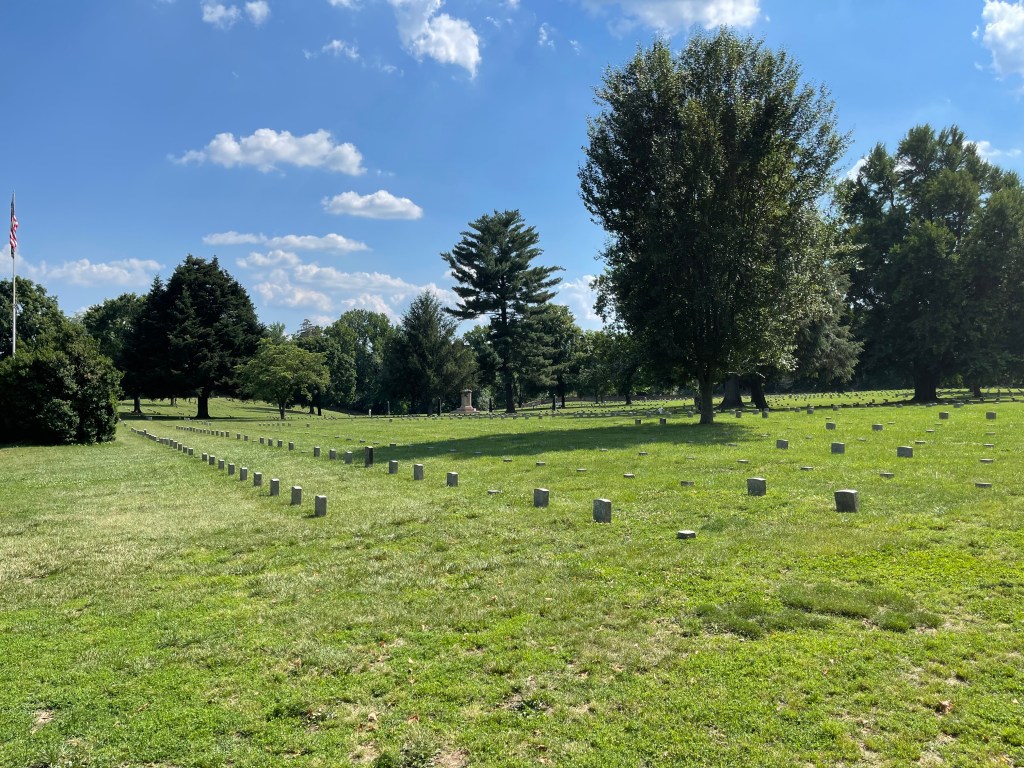
Fredericksburg National Cemetery

The Fredericksburg National Cemetery holds the remains of 15,000 Union soldiers lost during the war; only 3,000 of them have been identified. Rows and rows of so much lost potential…

Lee’s Hill

Once upon a time, no trees impeded the view of downtown Fredericksburg, where General Robert E. Lee stood on top of this hill overlooking the battle. Under Lee’s guidance, the battle proved to be a Confederate victory, though certainly a bloody one.

Lee’s Hill Artillery
Jackson’s Station

Thomas “Stonewall” Jackson also fought in this battle, manned along the southern end of the 6-mile long fortification. Though the Union forces briefly breached the defenses here, they were pushed back.

Imagine the explosions and the bloodstained earth in this now isolated area… think of the screams and the whir of cannonballs and bullets that fill the place… think of the smell of crude dirt and harsh smoke in the air…

Sensory imagery is what I often use to visualize events like this… and it’s not pretty.

At this point, our limbs were crying out in aching pain, but thankfully, most of the rest was driving. If ever you visit these sights, be prepared for both.

Chancellorsville Battlefield

A mere 11 miles west, one could also find the site of the Battle of Chancellorsville, which took place a year later. It was a pyrrhic Confederate victory, for although the way to sneak towards Pennsylvania (and Gettysburg) was now open to them, the loss of “Stonewall” Jackson was a grave loss to Robert E. Lee and the morale of the Army of Northern Virginia.

Hazel Grove Fortifications

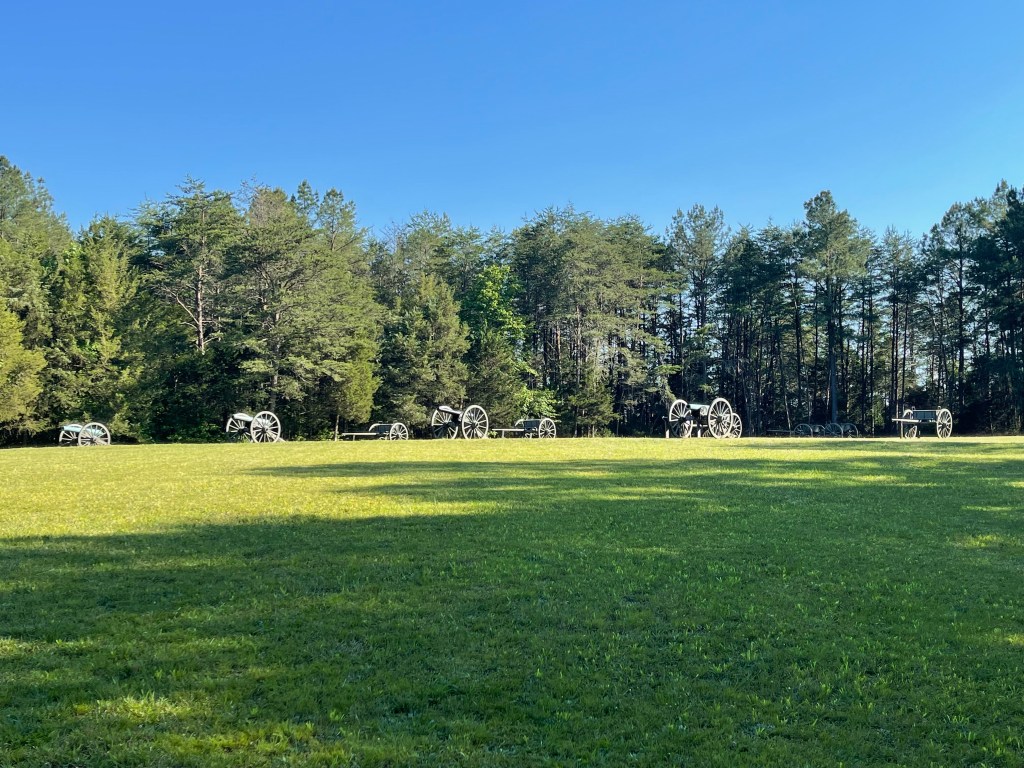
Hazel Grove served as one of the primary Confederate fortifications in the battle.. imagine the cannons firing in rows at the Union troops… it must have been quite the visual to see.

Confederate forces continued to surround the Union troops led by General Hooker (in his only battle as a commanding officer), and at Fairview, they were hard pressed…

Path to Fairview
Fairview Union Fortifications

At Fairview, the remains of the small mounds of cover made during the battle still remain today…

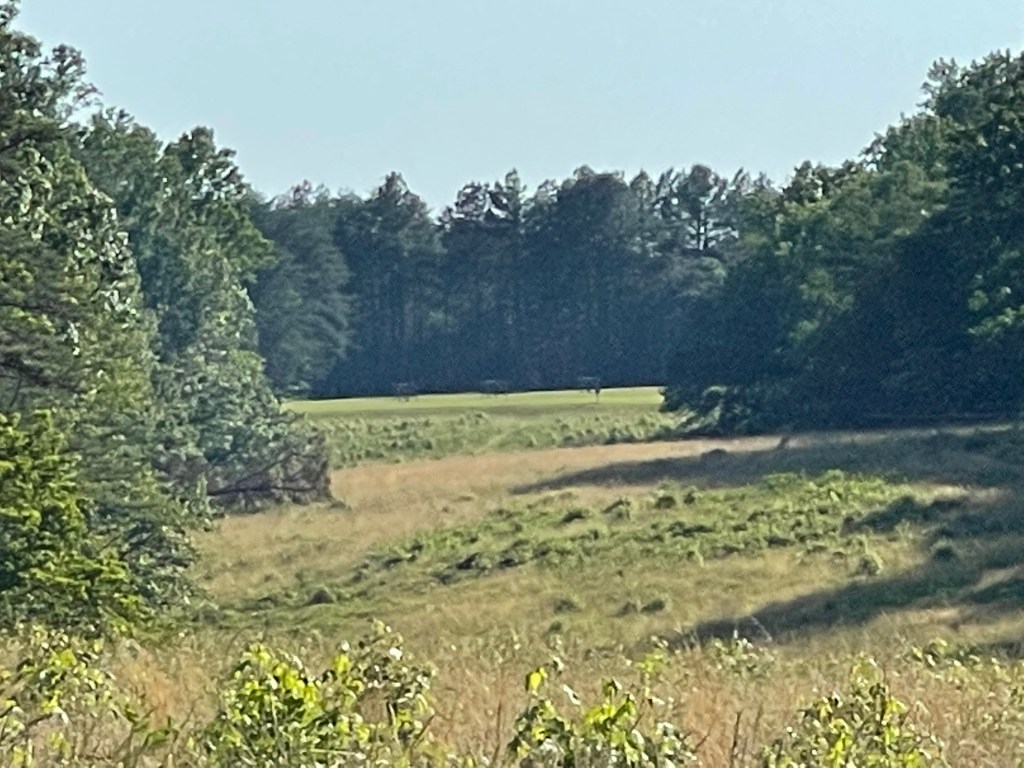
Looking at the Hazel Grove Fortifications from Fairview.

It must have been terrifying, seeing those in the distance, and not knowing whether a cannonball might mean the end of you… I don’t know how they could have possibly mustered the courage.

Do you think you could shoot a cannonball all the way to Hazel Grove (in front of you), and hit your target?

The wounded and deceased soldiers of the Union were kept around this house (reduced today to the foundations you see before you). It must have been awful, especially with little medical assistance. And not all deaths suffered in battle are immediate.

Before I leave you for now, I want to share one last little place we visited, for those of you interested in the “macabre.”

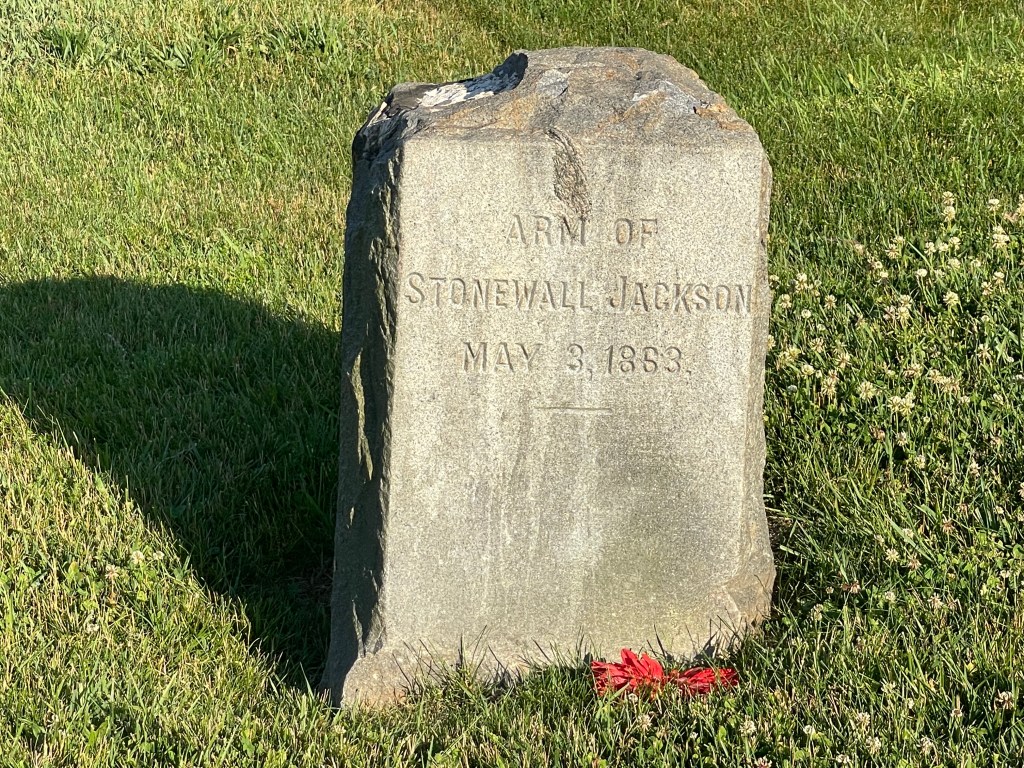
If you remember from earlier, Stonewall Jackson was killed during the Battle of Chancellorsville. Perhaps I shouldn’t say killed; “mortally wounded” would have been a better term, and this was inflicted upon him not by Union troops, but accidentally by one of his own men. Amputated of his left arm in an attempt to save him, Jackson died within the week. Lee was devastated by the loss of one of his topmost lieutenants, and never truly recovered from it.

While we’ll see Jackson’s grave in Lexington at a later date, we do get a preview… for his arm has it’s own grave. You heard me right. His arm.

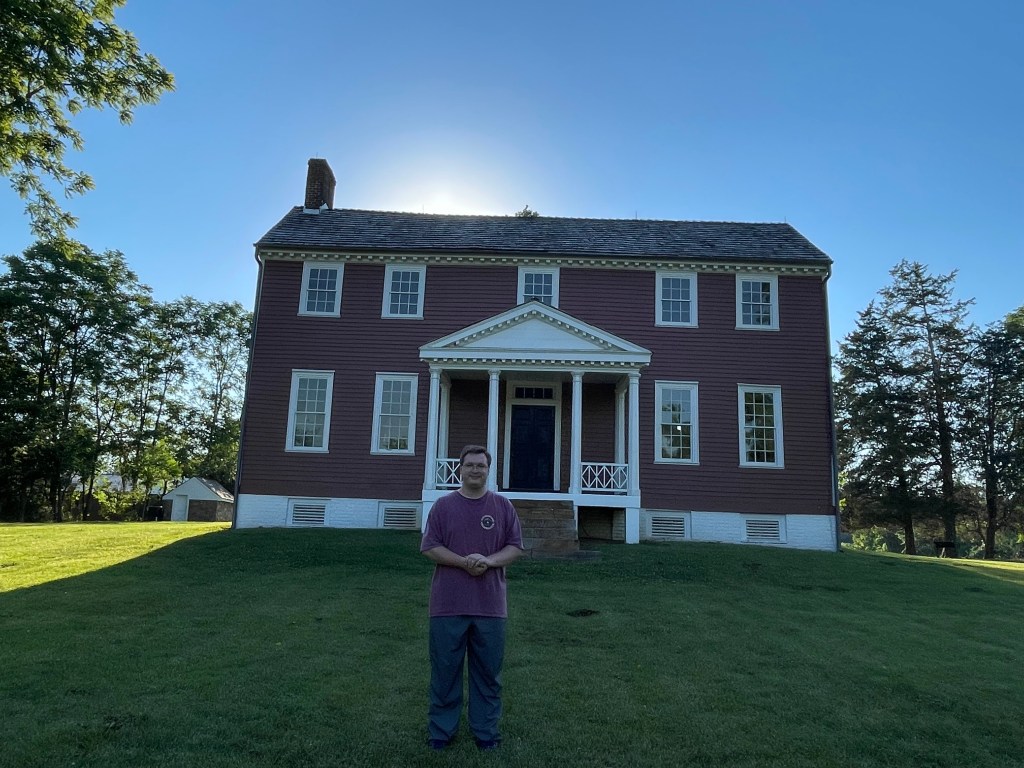
Beverley Tucker Lacy, the brother of Confederate soldier J. Horace Lacy, decided to bury the arm at the family’s estate of Ellwood Manor.

Ellwood Manor

To an extent, I can understand the need to afford some manner of dignity to it…

Grave of… sigh, Stonewall jackson’s Arm

However, the addition of a grave marker over it, stating that it is the burial place for the arm, is not an option that I would have immediately considered.

1/6th? of Jackson’s final resting place.

Still, its a popular site for tourists to visit, so I suppose I’ll join right in.

Well, thank you for bearing with me on this long and exhaustive day! Next time, we’ll explore Montpelier, the home of 4th President James Madison, as well as the farm of James Monroe: Highland.

We’re just getting warmed up, so stay tuned!

Day 5: The Road to Fredericksburg (Richmond, VA to Fredericksburg, VA) (6/4/21)

Once more we meet again to view the rich history of Virginia!

Today, we wrap up loose ends in Richmond before heading along and across many rivers to various presidential birthplaces, and finally winding up in Fredericksburg!

Let’s begin!

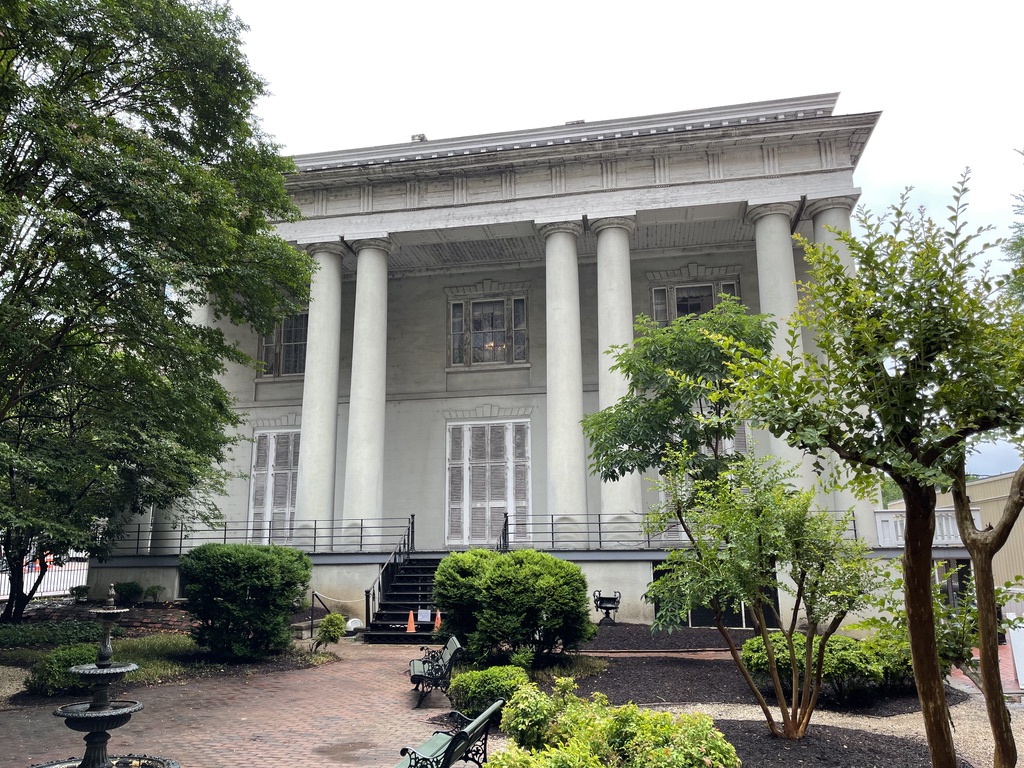
White House of the Confederacy

Owned and operated by the American Civil War Museum (which also owns the Tredegar and Appomattox museum sites), the White House of the Confederacy served as the official residence of the President of the Confederate States: Jefferson Davis, and his family.

Confederate White House (Street-view)

Built in 1818 by the wealthy Brockenbrough Family, the home was leased to the Confederate Government in 1861, who made it into both the Executive Mansion, and a strategy headquarters. This particular neighborhood in Richmond was once the shining jewel of the american aristocracy; the top 1%, the top dogs, the head honchos, the big cheeses!

Ahem, sorry.

(Garden-view)

The Confederate White House was indeed grand during the day, yet hard times would fall on it and it’s residents. In often tragic ways.

The Entry Hall

The Entry Hall might seem quite opulent with it’s tile floor and stone walls. However, the walls are actually plaster, and the floors made of floorcloth. Ironically, it was more expensive to install these, rather than putting in actual stone and tile. Perhaps shipping back then wasn’t exactly Amazon. The twin statues however, date back to their original owners.

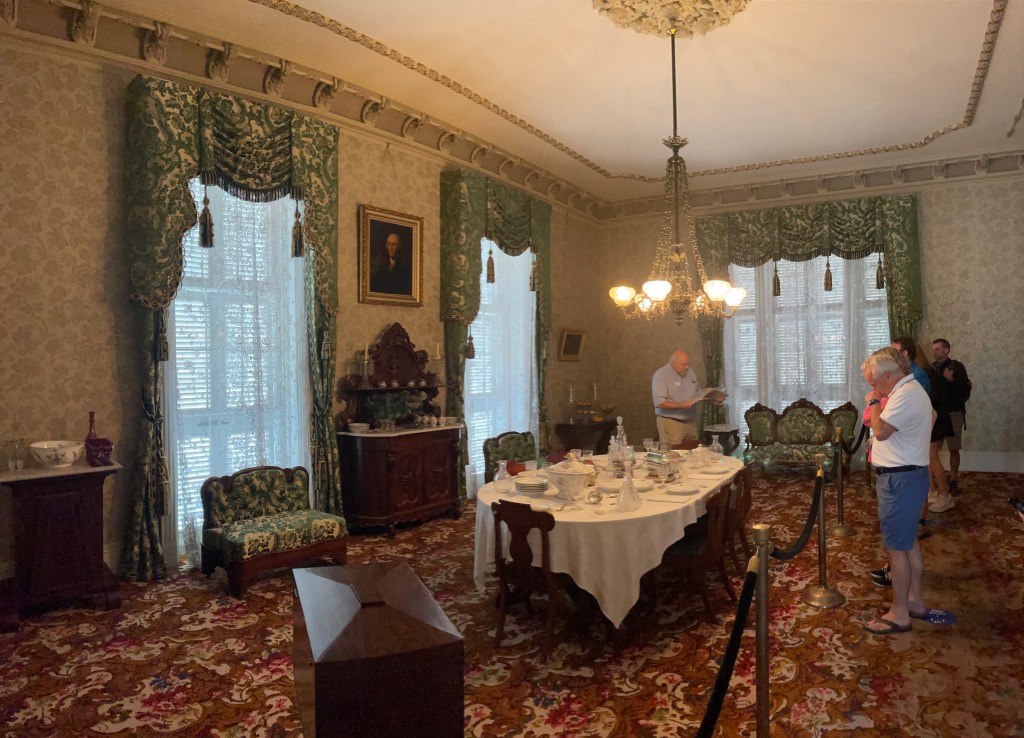
The Davis Home had 15 slaves for assorted tasks, each of whom were treated fairer than many owners who treated their slaves (although that wasn’t saying much, considering that it was still slavery). Five of them would escape in 1864, and escape into Union Territory, revealing information about the Confederate First Family.

This elegant dining hall, although adorned with wallpaper and curtain reproductions, are exact replicas of the patterns that haven’t been made in over 150 years. Dining became difficult for the family with food shortages, and food such as turkey had to last three days (turkey on the first day, sandwiches on the second, broth on the third).

Believe it or not, YETI coolers existed even back then, albeit long before the brand came around. Wood supposedly worked just as well.

The Parlor

Imagine the receptions and parties that took place in this room; for this was the domain of Varina Davis. In their marriage, Varina had enough charm for both of them (which really says something about Mr. Davis).

The “Snuggery”

As with many of the historical houses we’ve visted in the past, this house had a “snuggery” (or “man cave”), which Mr. Davis often used.

When Abraham Lincoln and his son Tad went to the newly conquered Richmond, they toured the Confederate White House, signifying a remarkable message that the war was all but over.

The Master Bedroom

Upstairs, one could find the family residence, including the bedroom of Mr. and Mrs. Davis (although I’m not entirely sure why their bed and baby crib are draped in white cloth).

Davis’s Office

The upstairs office of President Davis, who would meet here regularly with his military advisors to observe the war effort. Davis was more of a hands-on leader, who was often prone to making impulsive decisions, like a child with his toy soldiers (his advisors, like Robert E. Lee, often tried to temper his overbearing approach).

The Nursery

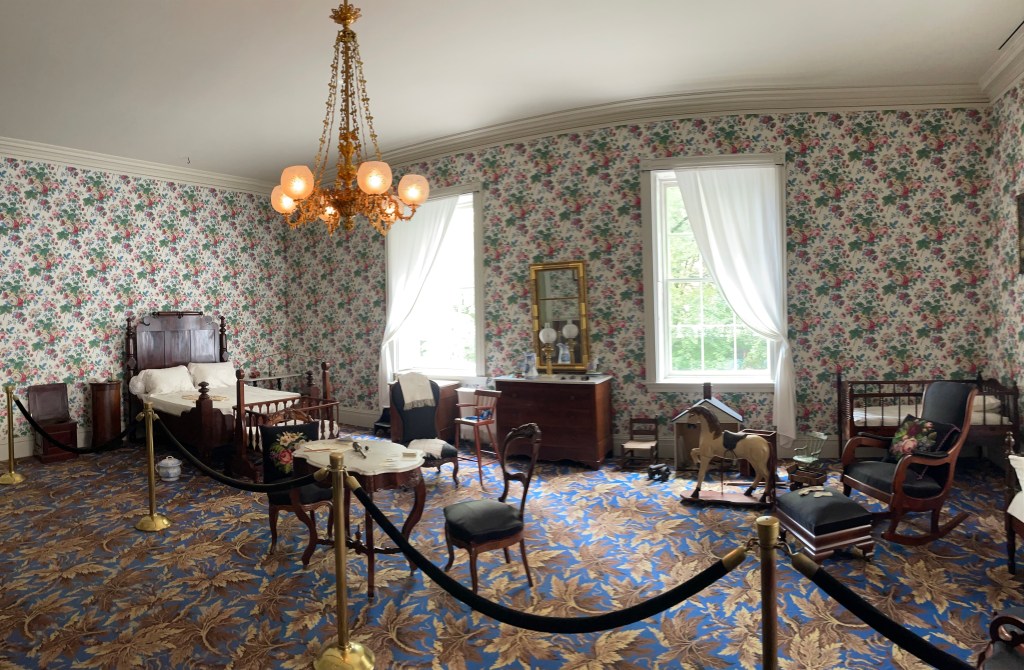
The Nursery was where a number of the Davis children lived during their time here. Of course, as we recalled in Hollywood Cemetery earlier, only one daughter, Varina, would survive to adulthood and produce offspring. Samuel, Margaret, Jefferson Jr., Joe, William would all die premature deaths, and 4-year old Joe, playing on the second-story balcony, fell to his death.

After being released from his two-year prison stay following the Civil War, the Davis family was left destitute, and Jefferson Davis died nearly penniless.

Davis receives much criticism even today for his handling of the war, and often for his “traitorous” ways. Yet at the same time, there’s a sliver of pity that might be saved for him. The loss of losing five children prematurely is something that no parent should have to endure, and I wouldn’t wish it on my worst enemy. Both sides of the war felt tremendous losses, it’s often easy to forget that vicious truth.

Then again, that’s the way of war.

Stopping for a brief surprise stop on our way out of Richmond, we came across a landmark, iconic in more ways than one…

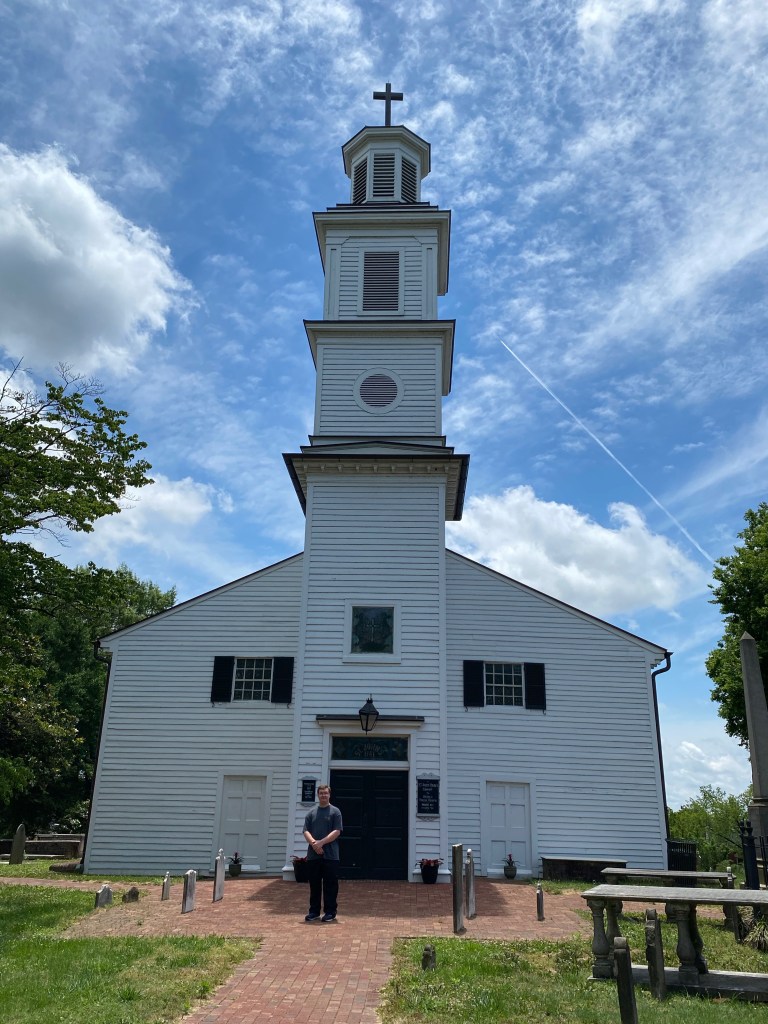
St. John’s Episcopal Church

The oldest church in all of Richmond, St. John’s dates back to it’s time as an Anglican church in 1611, and then it’s reorganization and expansion as an Episcopal Church in 1741. It was further expanded in 1772, and remains an endearment in the local community today.

However, it is remembered most of all as the site of patriot Patrick Henry’s most famous speech: “Give me Liberty, or Give me Death”! , a rallying cry to resist British tyranny over the affairs of the colonies, especially Virginia.

St. John’s Episcopal Church

And this building still remains today, hosting a still-active congregation on this historic ground.

(Side View)

This side view shows the frame of the original church, which at one time only consisted of the protruding wing (with the door).

Grave of George Wythe

George Wythe was a signer of the Declaration of Independence, and a dear mentor and friend to Thomas Jefferson. I’ve lost count of how many graves of the signers that I’ve come across in my travels…

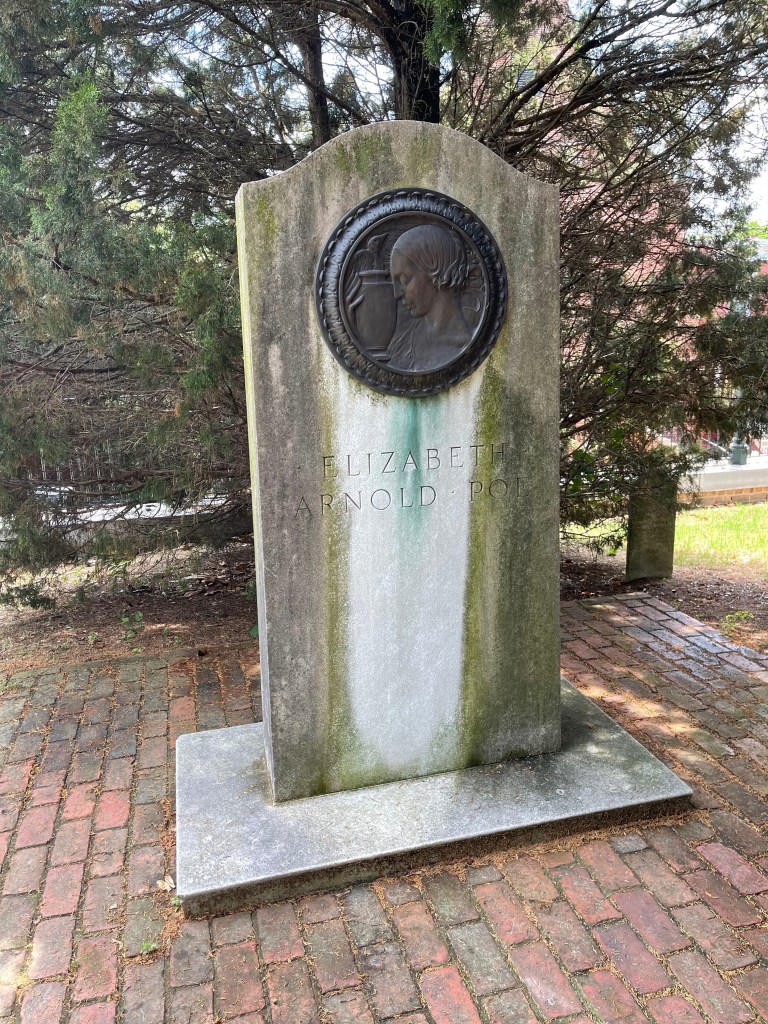
Grave of Elizabeth Poe

Perhaps for the more literary-tuned among you, St. Johns is also the final resting place for Elizabeth Poe, who was the mother of my favorite poet: Edgar Allan Poe. Dying at the young age of 24, her children would be raised by local Richmonders, and her death signified the beginning of young Edgar’s tragic life of loss and woe.

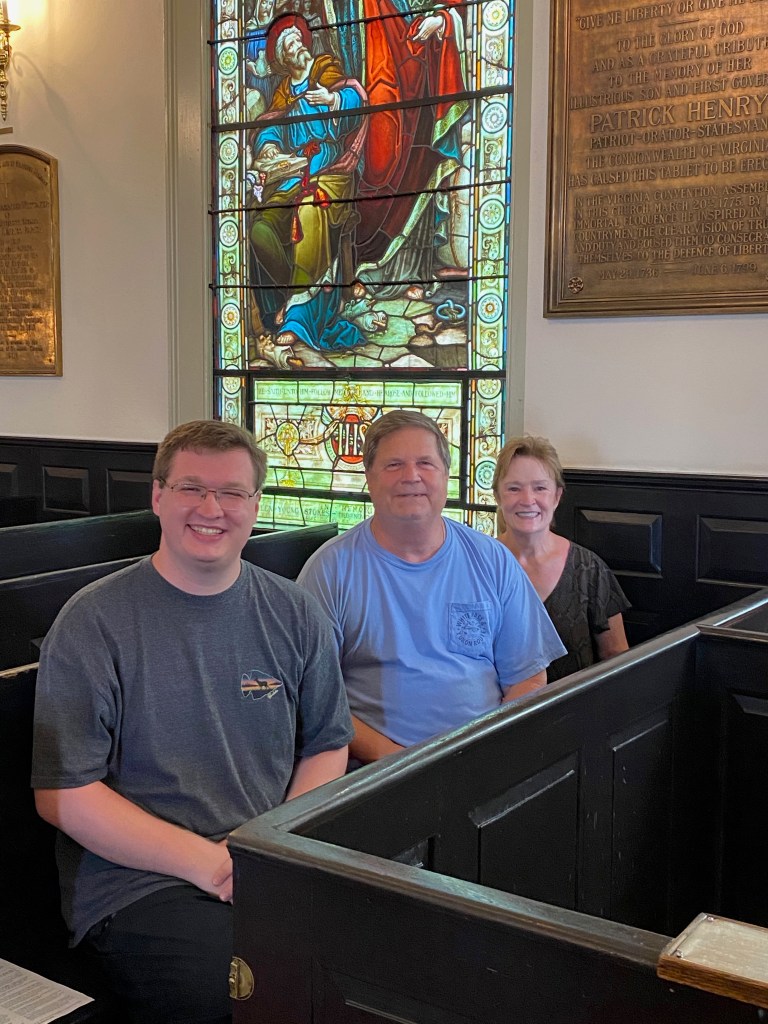
(Interior)

Here, one can see the interior of the church. Much of the building’s adornments, especially the stained glass windows and pulpit, were made in the 1900’s.

Me with our wonderful guide, Bettie.

Imagine for a moment that you were one sitting in the audience of this church on March 23, 1775. The Second Virginia Convention had been ousted from meeting in Williamsburg by their British overseers, and here they had come to this church to consider the tides of conflict that were brewing throughout the colonies, particularly in Boston. You would have found many distinguished individuals here at this gathering, including George Washington of Fairfax County, Thomas Jefferson of Albemarle County, Richard Henry Lee of Westmoreland County, Benjamin Harrison V of Charles City County, and of course, Patrick Henry, all concerned of the various taxes and punishments levied against them.

Inside Patrick Henry’s pew

Patrick Henry, when called upon by the assembly to speak, rose from his box, and strode up and down the aisle, speaking to all who would listen to his words.

Viewing from the side entrance (the original ).

Up and down the aisle he strode, and as one of the finest orators in the colonies, he waged war with fiery words, capturing the hearts and minds of many in attendance. He spoke for all the colonies of the injustices that Great Britain had visited upon them, decrying:

It is in vain, sir, to extenuate the matter. Gentlemen may cry, Peace, Peace– but there is no peace. The war is actually begun! The next gale that sweeps from the north will bring to our ears the clash of resounding arms! Our brethren are already in the field! Why stand we here idle? What is it that gentlemen wish? What would they have? Is life so dear, or peace so sweet, as to be purchased at the price of chains and slavery? Forbid it, Almighty God! I know not what course others may take; but as for me, give me liberty or give me death!” — Patrick Henry

Founding Father George Mason, also in attendance, later noted:

 “Every word he says not only engages but commands the attention, and your passions are no longer your own when he addresses them.” — George Mason

Within mere minutes, the assembly had approved the motion to form a militia, led by none other than Patrick Henry himself.

Being in the church, hearing those words, must have been quite uplifting and resounding… the power of oratory is surely a powerful one indeed. For ideas can be much more piercing than bullets and swords.

We enjoyed Richmond incredibly over the last few days, but in the end it was time to depart throughout Virginia. So we ventured northeast, and over the Rappahannock River (no I didn’t make that name up), to see some presidential birthplaces! 3 of them!

The first, was James Madison!

James Madison Birthplace Marker

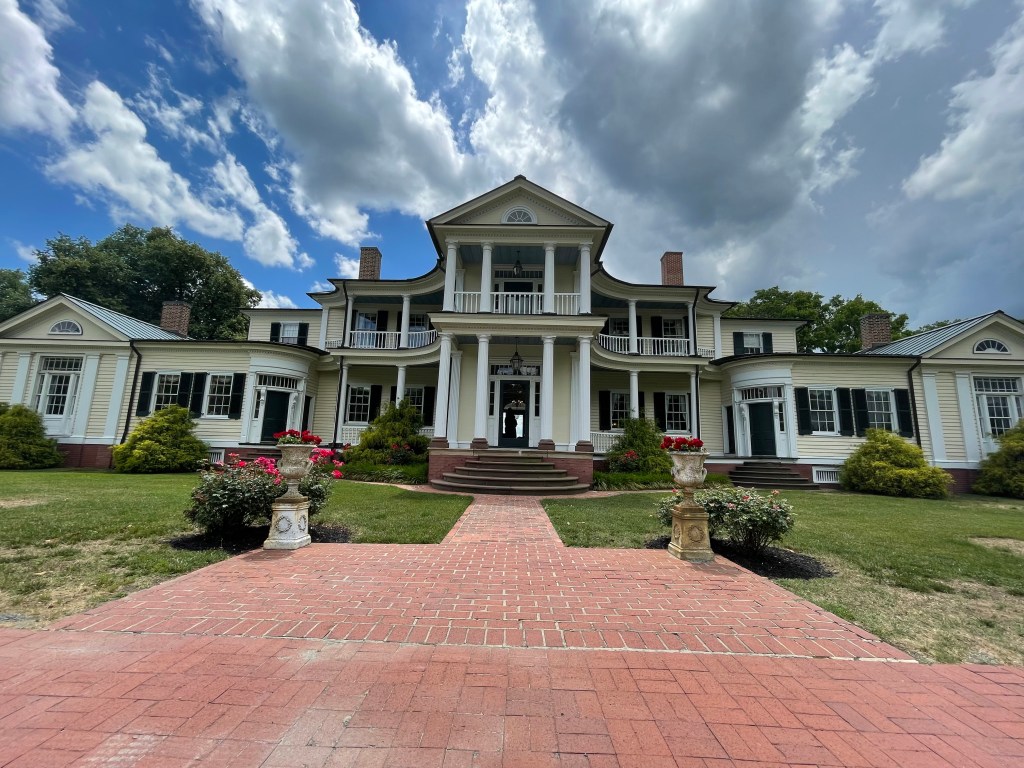
Situated at Belle Grove Plantation, in Port Royal on the banks of that… river, is the birthplace of James Madison! we’ll learn more about Madison once we reach Montpelier, his plantation home.

Belle Grove Plantation

Today, Belle Grove Plantation is actually a Bed & Breakfast! It’s a private buisness, but it looks like they host events like weddings on a regular basis (one looked to be in preparation)!

Heading further north, we entered Westmoreland County, where we found the birthplace of perhaps the most esteemed Virginian of all…

George Washington Birthplace National Monument

The “Father of our Country” was born on Februrary 22, 1732, in a medium-sized planter’s house on the banks of Pope’s Creek, which feeds out into the Potomac River to the north. It’s quite an austere place to walk and reflect upon Washington and his morals.

This 50-foot obelisk is a 1/10th model of the Washington Monument that we all know and love in our nation’s capital. Originally placed in 1896 on top of the burial site, it now stands guard over the entrance to the park.

Wakefield Farm

At one time following the Washingtons’ stay here, Wakefield Farm was located here. Much of the buildings you see however, were constructed in the 1900’s as part of the living memorial.

But a living memorial nonetheless!

Looking out, one can see Pope’s Creek! Such a gorgeous view…

The Washington Family had actually been involved in this land predating George’s lifetime. His father and brother-in-law, named Augustine and Lawrence (respectively), lived here. Washington’s grandfather and great-grandfather, Lawrence and John Washington (respectively), also invested in the tobacco industry here, with their enslaved workers.

Foundations of the Home

It was on these foundations (protected by gravel) that rested the modest farmhouse where George Washington, First President of the United States, was born.

In the moment we viewed it, we heard the distant poundings of thunder… I couldn’t help but picture the cannons firing during the war, a reminder of what experiences Washington would come to face.

Quite a lovely colonial garden is here! I wonder how often someone maintains it?

Birthplace Memorial House

The replica home you see above was built in the 1930’s, and was thought to greatly resemble the house that Washington was born in. It was modest indeed for a Virginia Planter, but still quite large for the spacious of the time.

At this point, warnings of heavy rain were starting to come our way, so we had to rush past the numerous nature trails situated here (how I wish we were able to go on them), and head elsewhere on the site, which once covered 1,500 acres.

1700’s Ice Pond

I can only assume that the name “ice pond” refers to the potential harvesting of frozen ice here during the winter, a rare commodity back in the day.

John Washington, George’s great-grandfather, moved from England and built this house on the field above. If you can zoom in on the display, you can learn more about how the Washington Family grew in influence and property.

We were quite surprised to get this close to our friendly neighborhood rabbit, who was nibbling on some grass. Apparently he wasn’t really afraid of us.

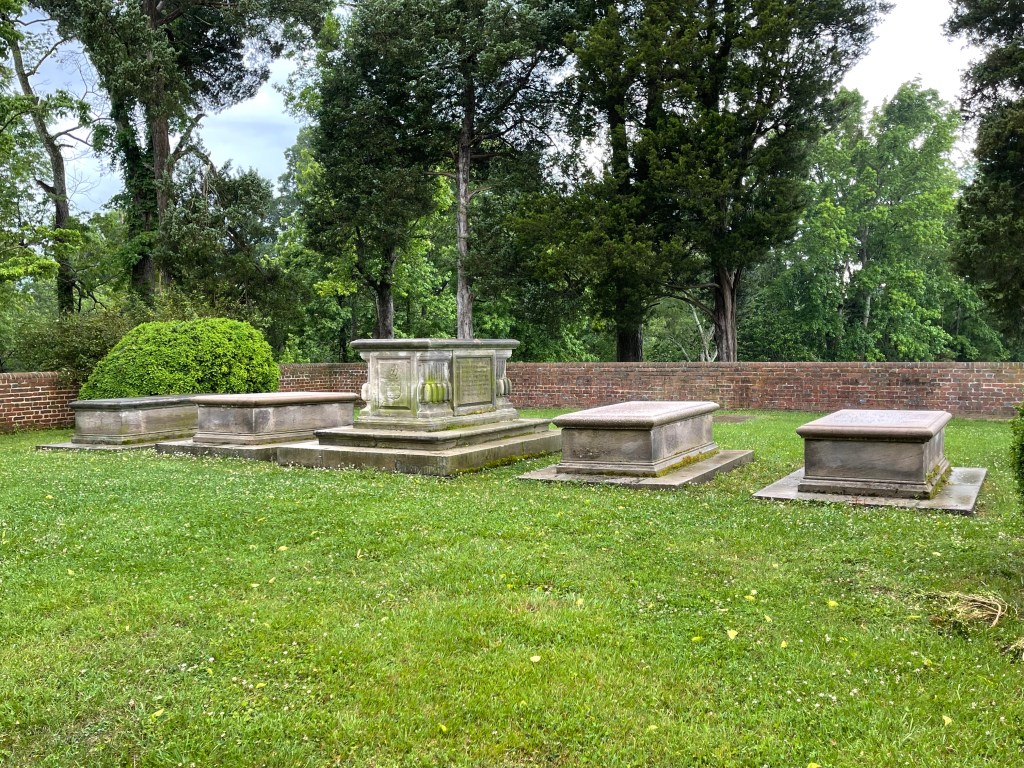
Washington Family Graveyard

Buried in this tiny cemetery, are the remains of numerous Washington family members, including George Washington’s brother-in-law, father, grandfather, and great-grandfather. The tombs you see are memorials, but their actual burial spots are scattered throughout the cemetery, along with another couple dozen of Washingtons. George’s mother, Mary Ball Washington, is buried in Fredericksburg, which I’m sure we’ll be able to spot later.

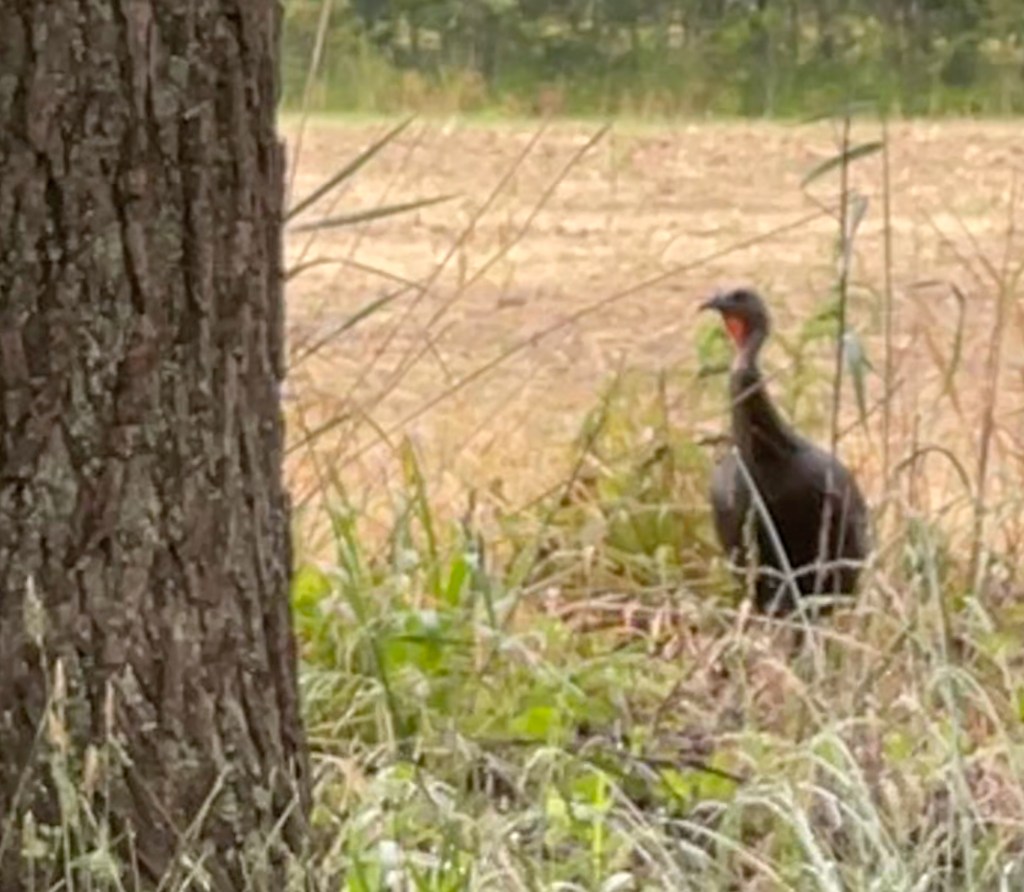
In what was perhaps either sheer luck (or a serious miscalculation of a certain November holiday’s date), we saw a wild turkey! We didn’t have long to spot it before it ran off and literally hopped over a fence, but it was incredible to see!

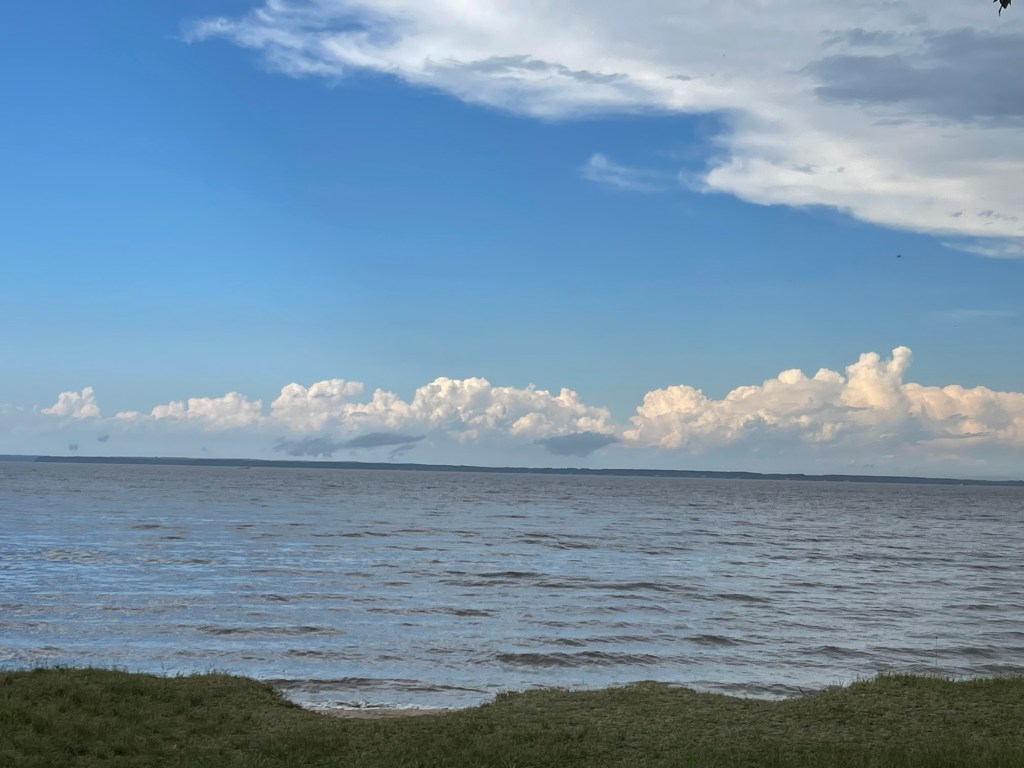
The Potomac River

Finally, near the cemetery, one can see the Potomac River! This is the very river that runs right by Washington D.C., our capitol, that bears the name of the most famous of our founding fathers.

I looked across at the far distant shores of Maryland, and I reflected on George Washington, and his high sense of duty and morality that saved this country in the most desperate of times. Aside from his wise and shrewd actions during the Revolutionary War and his presidency, perhaps the most important action of all of his, was his final refusal of power. Instead of ruling for life, he decided to go back amongst the people, to retire again as a farmer in Virginia. That was something that had never really happened in World History before. It was a testament to not only the strength of his character, but also to the potential of the great “American Experiment”.

And it all started here, in the crisp coolness of the trees, on the banks of Pope’s Creek.

Escaping the rain which had hounded us briefly, we proceeded on to the final (and brief) destination of the day.

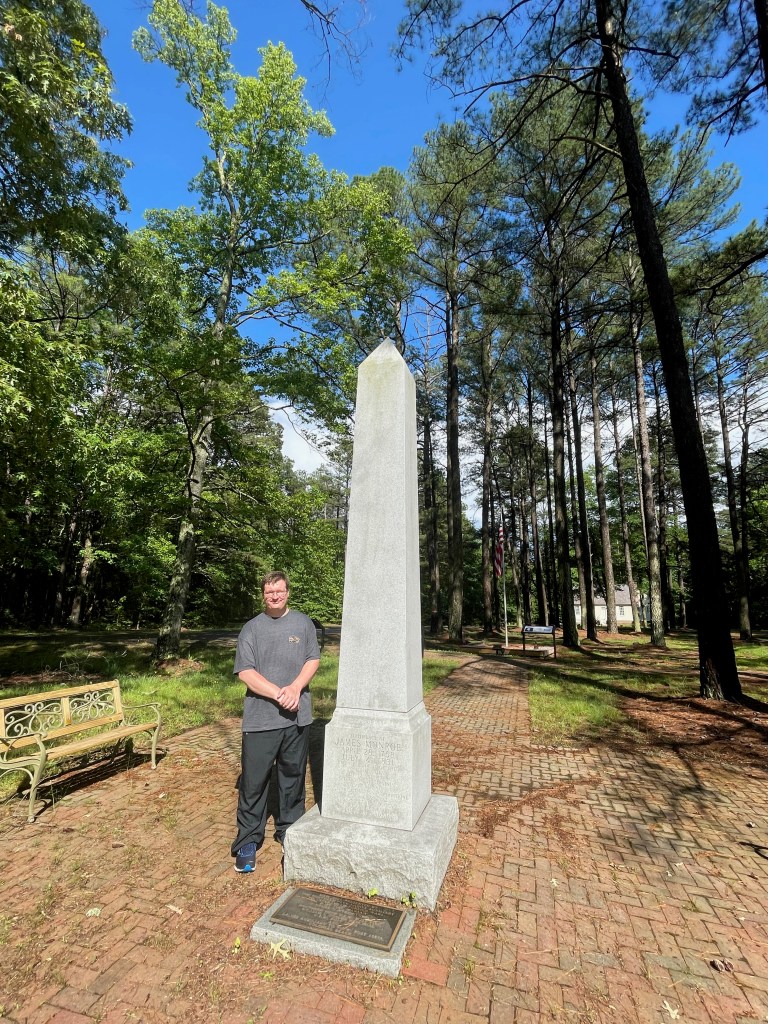
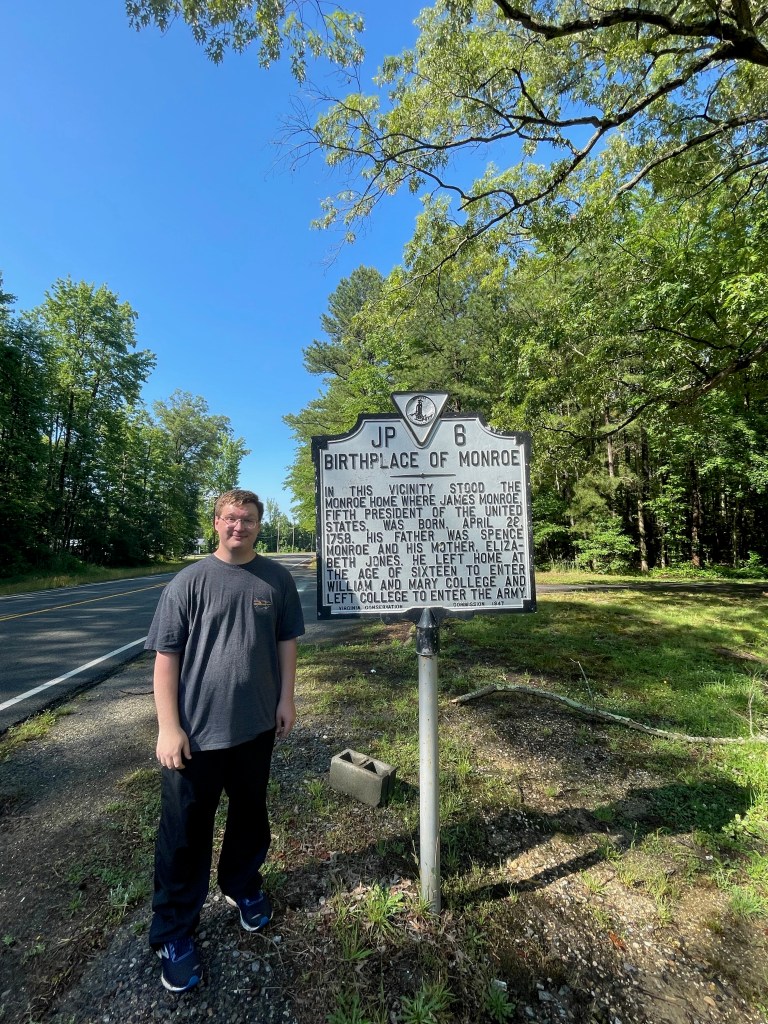
James Monroe Birthplace Marker

This site, merely 15 minutes west of Pope’s Creek, marks the site where James Monroe, our 5th President was born, and where he spent his first 16 years of life.

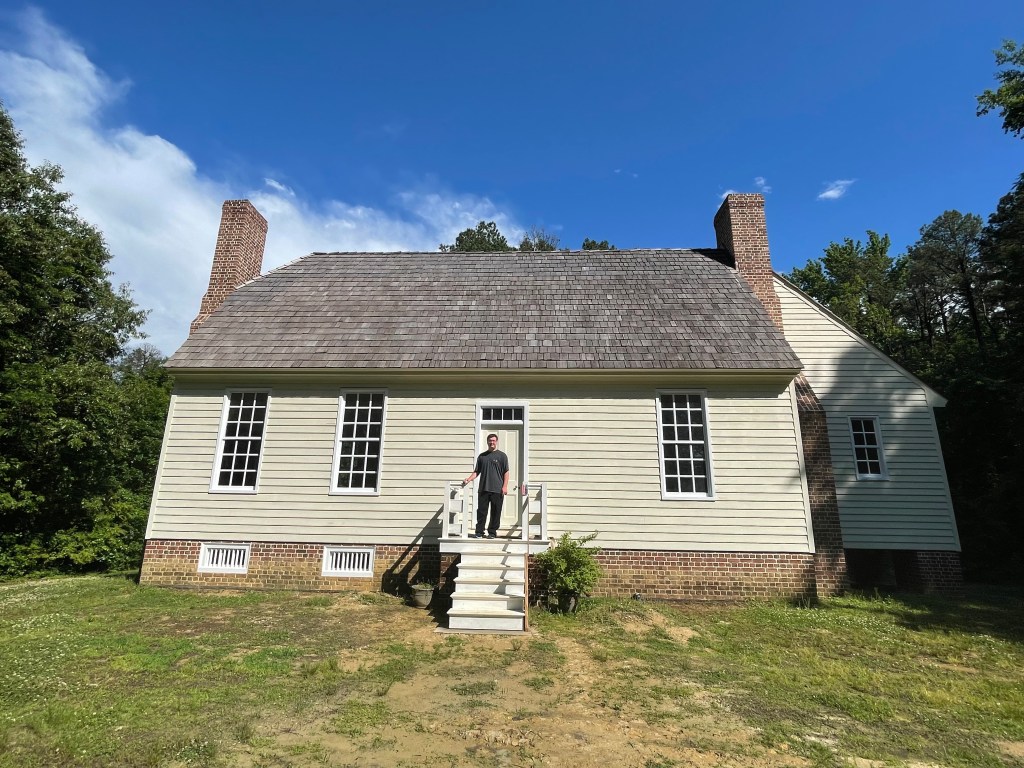
The Replica Home

This recently built replica home is built as closely to the image of Monroe’s actual birthplace as can be. Back in 1758, apple and peach orchards accompanied the swamps and forests that surrounded this area!

The trails, both peaceful and isolated, were quite lovely to walk on as well. However, I would reccomend not walking on the unpaved paths until they have dried after a rain. We’re still trying to dry our shoes and socks.

From there, within an hour’s time, we arrived at Fredericksburg, eager to rest for the busy day coming! And busy indeed it will be!

From historic and homes, to battlefields and presidents, it’ll certainly be a handful!

See you next time!

Day 4: Uncommon Virtue in Common People (Richmond/Charles City) (6/3/21)

Huzzah! Another post!

Today we explored two fascinating locations in the forms of Berkeley Plantation and the American Civil War Museum.

Let’s begin!

Berkeley Plantation

Berkeley Plantation was the ancestral home of the influential and wealthy Harrison political family, and the birthplace of both Benjamin Harrison V, a signer of the Declaration of Independence, and his son William Henry Harrison, our 9th President. But the property holds even more distinctions, as it was the location of the very first “thanksgiving” in 1619 (a year before the Plymouth Pilgrims), and where the famous bugle song Taps was first played in 1862! More on that later.

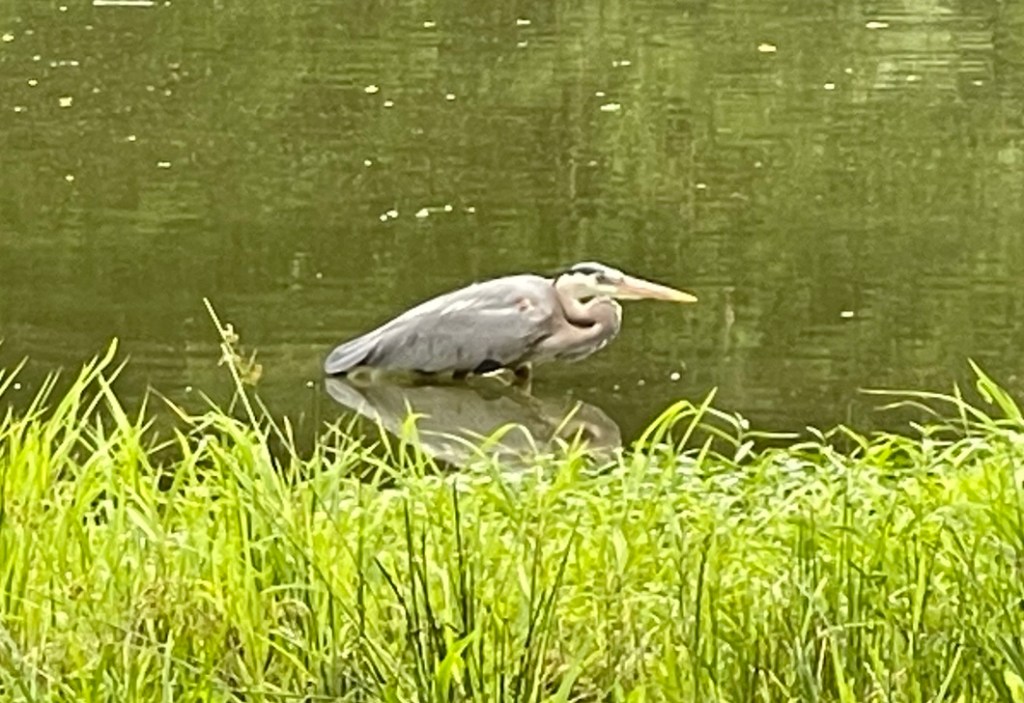
crane or heron?

In a pond on the way to Berkeley, we saw this crane! Or was it a heron? I’m not sure.

Berkeley Plantation (Front)

And this is Berkeley Plantation, also known as Harrison’s Landing in the past! Quite an iconic house.

Built in 1726 by Benjamin Harrison IV (the name sort of runs in the family), it was one of the largest plantations in Virginia at the time, particularly with it’s primary cash crop: tobacco.

House (West Side)

The first 10 U.S. Presidents, including Washington, Jefferson, and Tyler, have guested within these walls, yet tragedy would play a part in the history of Berkeley as did triumph. In 1745, Benjamin Harrison IV, along with his young daughter Hannah, were struck by lightning in the right window of the second floor (pictured above) in a freak accident, killing them instantly. His wife and mother, distraught, died within the month of grief.

Despite the downpour of despair, his son Benjamin Harrison V would go on to manage the 1,000 acre property, continuing to use his slaves and servants to reap in the cash crops of the time, and distilling a new beverage growing in popularity in Virginia… corn whisky.

We continued on our tour of Berkeley by getting shot.

Actually, this was our guide, who demonstrated how difficult it was to fire a 1600’s musket before flintlock firearms were developed.

The guesthouse/coachhouse

The guesthouse/coachhouse was where male visitors would stay their time while on the road (the women would stay in the manor, to prevent “naughty” behavior).

The kitchen/cookhouse

And the kitchen/cookhouse is where naturally, the food was prepared by slaves. It likely was separated from the house to prevent a fire. Interestingly enough, recent archaeological work has revealed a secret underground brick tunnel that ran from the kitchen to the mansion.

Unfortunatly, the elaborate interior of the house prohibited photography of any sort. I recommend visiting it yourself if you want to see what’s inside!

When Benjamin Harrison V signed the Declaration of Independence, he and his family were forced to flee to prevent being captured by the British. Benedict Arnold, the patriot-turned-traitor of the American Revolution, led his men into Berkeley, and looted and burned many of the original possessions found there. The house itself escaped destruction however, likely due to Arnold wanting to have it as a future estate. That never came about.

Other homes of the signers, however, would be destroyed during the war, and even some of their cherished family members were killed… the signers, no matter their stature, risked much in the concept of liberty and independence.

Naturally, William Henry Harrison would be more influential in Ohio and Indiana, as opposed to the previous generations of Harrisons at Berkeley, and by the lifetime of his grandson (23rd President Benjamin Harrison), Berkeley was not owned by the Harrisons anymore.

Boxwood Gardens

The Boxwood Gardens pictured above must have been an impressive sight back then as they are now.

Look a rabbit!
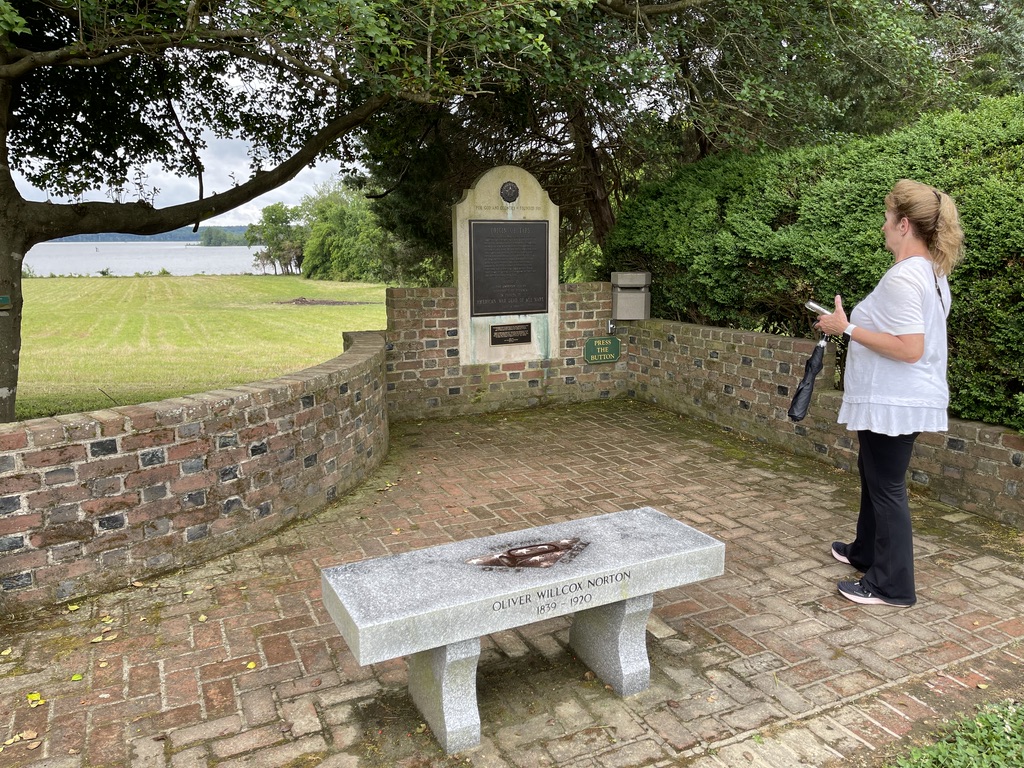
View of the James River

What a gorgeous view of the James River… and this is looking from the gardens too.

People still come here for events, particularly with the Annual Thanksgiving Festival held here.

Ah yes! Perhaps I should get to that now!

On December 4th, 1619, the Margaret, a ship led by Sir George Yeardly and 38 seasoned explorers (and Jamestown veterans) arrived on the land that would soon be called “Berkeley”. The proprietors of that expedition stated explicitly that: “the day of our ships arrival . . . shall be yearly and perpetually kept as a day of Thanksgiving”.

Yeardly and his men at prayer.
The site today.

And when the settlers arrived at Berkeley, they did just that, 2 years and 17 days before the Pilgrims arrived at Plymouth Rock far to the north in Massachusetts. Of course, in the following years, the settlement at Berkeley would have fallen to a Native-american assault, today it is still recognized as the site of the first Thanksgiving by the federal government.

ggg

Imagine these wide fields surrounding Berkeley Plantation for a moment…

During the Civil War, Berkeley Plantation was occupied by the Army of the Potomac in 1862, which meant 140,000 union troops were stationed all around the property, and gunboats would fill the James River. Abraham Lincoln himself visited twice to inspect the troops. It must have been quite the sight to behold…

Reconstructed Slave Quarters

The original slave quarters of Berkeley were dismantled by the Union army for firewood in their many camps, and many of the surrounding trees were cut down to create large fortifications.

The Taps Memorial

But it was here on this very spot that one of the most famous of U.S. Army tunes would be played for the first time to signal the end of another day… Taps.

Written by Brigadier-general David Butterfield during the army’s stay here in 1862, it was played as the sun set on these grounds. The bugle call became so popular, that it would be played by both Union and Confederate soldiers during the war, and it continues to remain the primary “final farewell” to a deceased soldier as they are laid to rest in cemeteries across the country, like Arlington.

Pressing the audio button on this spot, one could hear the bold, solemn, and resonating notes of Taps, while gazing out at the view of the wide and expansive property… hearing it actually made us tear up a little… and it meant so much more being on that spot.

Harrison Family Cemetery

The Harrison Family Cemetery is located here on the grounds, the most notable being that of Benjamin Harrison V and his wife Elizabeth. William Henry Harrison, his son, is interred in North Bend, Ohio, in a grandiose tomb along the Ohio River (we saw that tomb in 2018).

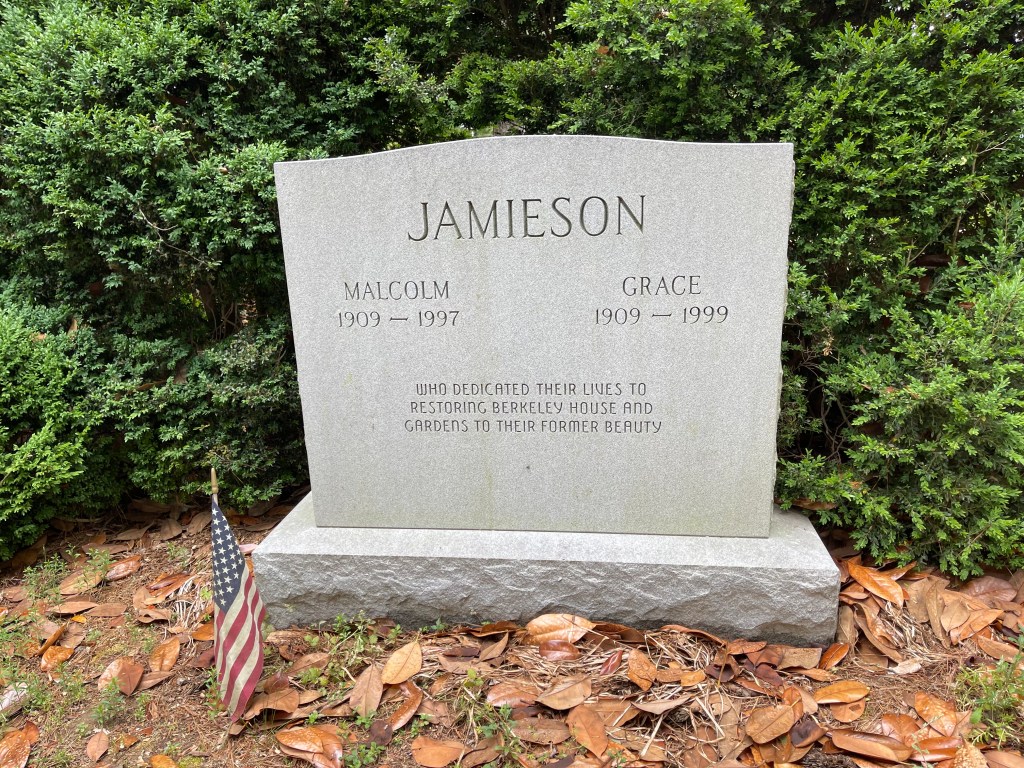
Malcolm and Grace Jamieson, the former owners of Berkeley Plantation, were critical to preserving the history here throughout the 20th Century and opened it up for tours.

Berkeley Plantation has many stories and perspectives to offer in its grounds and manor… but the concept that I found, I think, would be Bravery.

Reflect upon the hardships and sacrifices of the brave settlers that first came here in 1619, venturing into the unknown, who gave thanks for their prospects and wellbeing. Remember too of the bravery of the signers, like Benjamin Harrison V, many of whom lost much of what they held dear, in their dedication to posterity. And finally, recall the bravery of the Union soldiers who rested on these fields, as the sounds of Taps echoed throughout the dimly lit camps…

Into faith they placed their trust, and into memory were placed their souls.

Leaving Berkeley Plantation by midday, we hurried back to Richmond to visit the final site of the day:

The American Civil War Museum (Richmond)

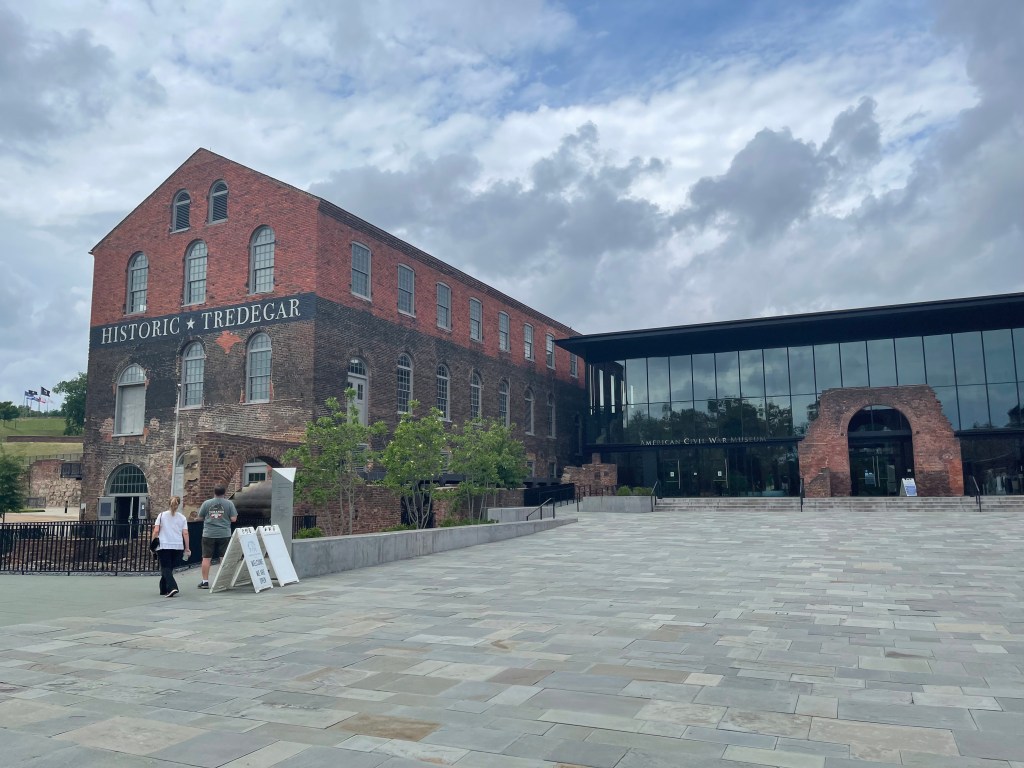
Built within the ruins of the former Tredegar Ironworks, The American Civil War Museum in Richmond is one of the foremost museums of the Civil War in the country, especially concerning southern society at the time!

The American Civil War Museum is actually comprised of three different campuses: The Richmond Museum, The White House of the Confederacy, and the Appomattox Museum. Though we will visit all three eventually, for all intents and purposes, our focus today is the Richmond Museum.

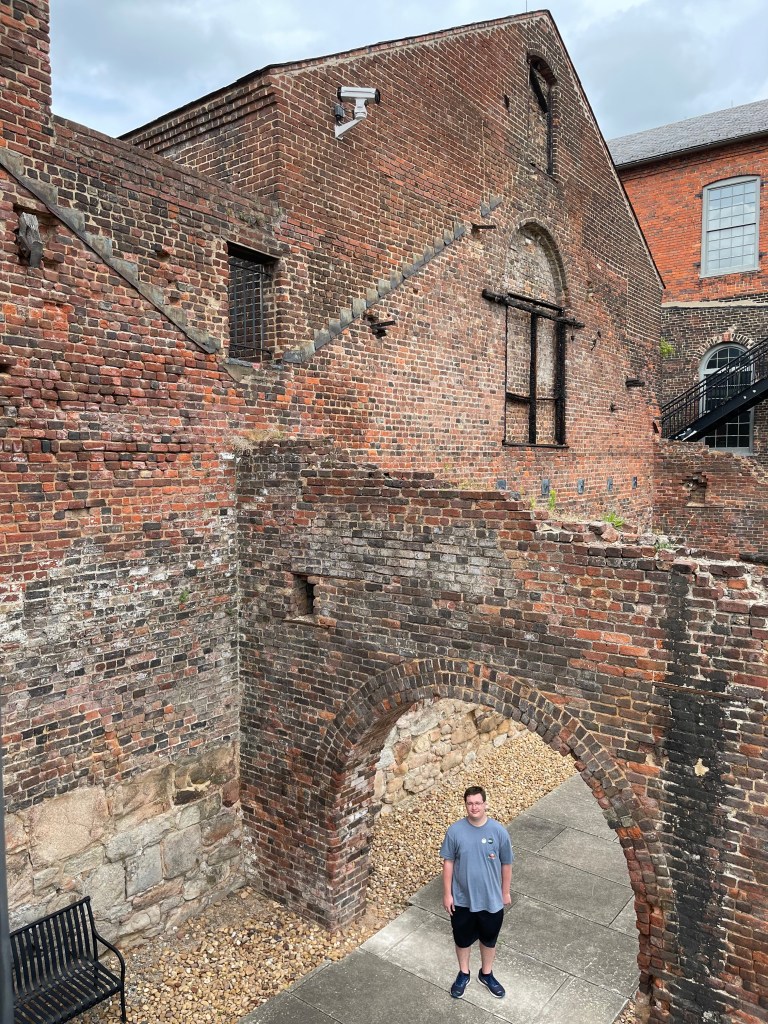
When I said “literally” in the ruins, I literally meant “literally”!

Ruins of Tredegar

Tredegar Ironworks was absolutely critical to the confederate war effort, as it produced over half of its artillery and munitions over the four long bloody years. It was here that confederate soldiers attempted to burn many valuable items to prevent they’re fall into union hands. Unfortunately, strong winds caused the fires to spread out of control out onto thousands of houses, beginning the devastating Burning of Richmond.

A memorial to Abraham Lincoln and his son Tad. They both visited the occupied Richmond mere days before the president was shot.

Museum Front

Let’s go inside!

I insist.

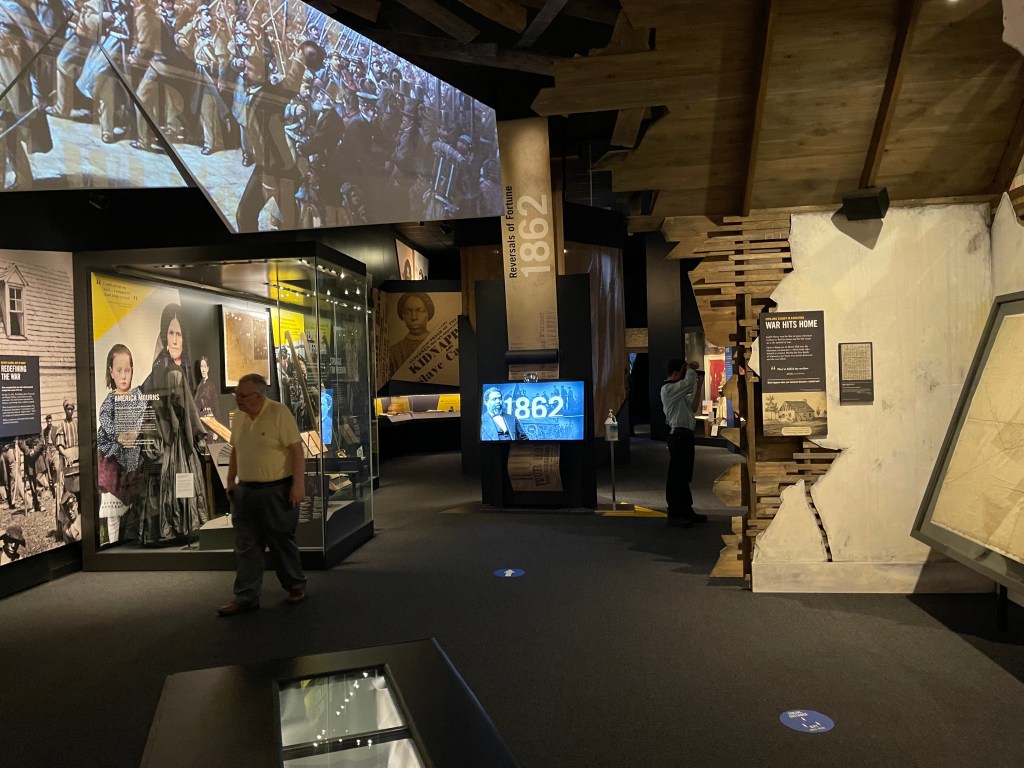
The museum truly had some state-of-the-art exhibits and displays, with various multimedia images, audio (of battles, and voices of union, confederate, and enslaved individuals), and layouts guiding you through this experience. I’ll simply go over the highlights, there’s simply too much to cover in one post.

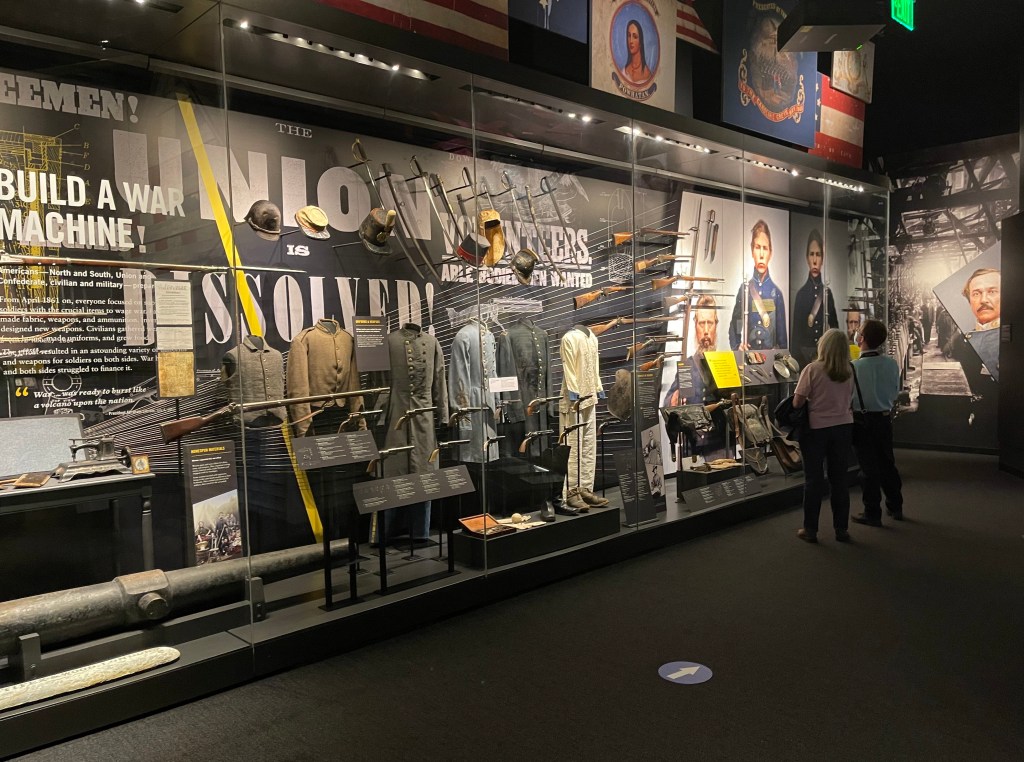
Guns and sabers of all makes lined this display, along with varying uniforms and clothes of both Union and Confederate troops.

As was typical of the Victorian Era, elegant black dresses were worn by the women of the time whose fathers, brothers, and sons were killed during the conflict. And there were thousands of them. The woman who wore this dress in particular was in mourning at least three times during the war, for relatives she had lost.

Robert E. Lee Items

Numerous personal effects of General Robert E. Lee, leader of the Northern Army of Virginia, and the highest-ranking and most famous confederate officer during the war. Here, one can see one of his hats, his rucksack, bible, binoculars, and campaign trunk, among other things. Although Lee himself didn’t believe in slavery for it’s moral depravity, he couldn’t raise a sword against his fellow Virginians, and thus turned down an earlier offer to lead the Union Army before defecting to the Confederacy.

“Stonewall “Jackson Items

These numerous personal items belonged to General Stonewall Jackson, yet another famous confederate leader. Note the flask and heavily damaged book. When Jackson was shot in an accidental incident by one of his own snipers, the bullet had also struck another soldier, killing him instantly, and nearly shattering the book. Stonewall Jackson drank from that borrowed flask on the way to the medical tent, where he died days later.

Freedman’s Uniform & Effects

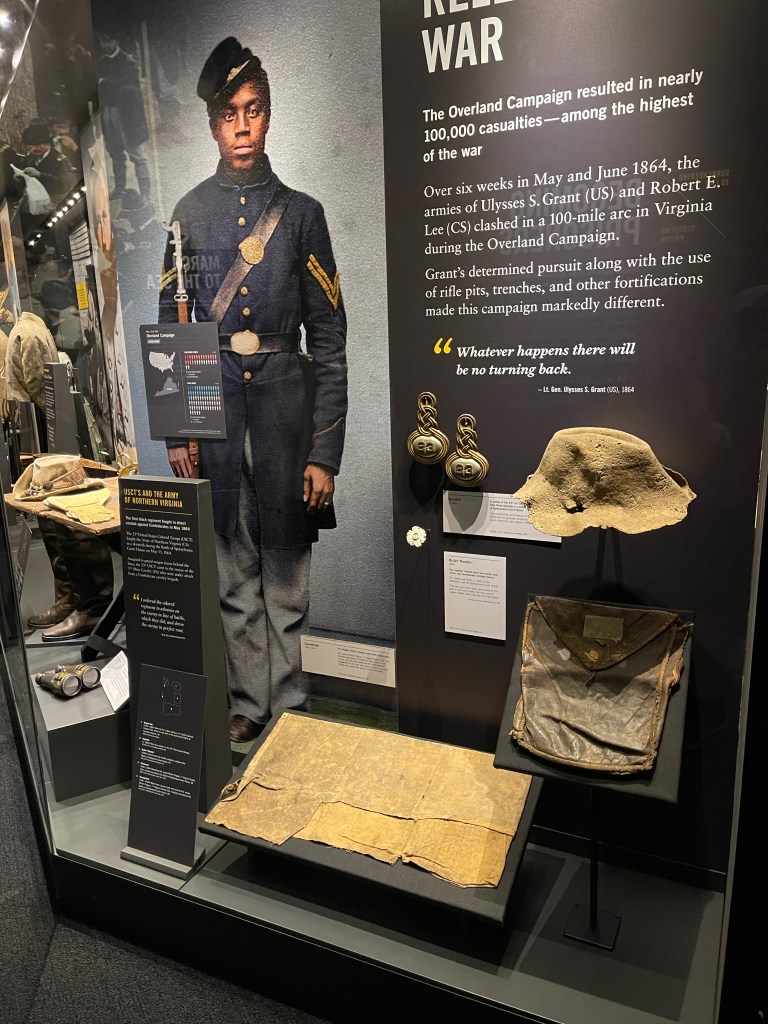
The museum thankfully shows much of how far the evolution of Civil War interpretation has come, especially in a formerly confederate region. These items belonged to freedmen (former slaves), who joined the union side to fight and protect for their freedom. The Confederacy also tried to recruit slaves to fight for them near the very end of the war, to little success.

J.E.B. Stuart’s Effects

J.E.B. Stuart, the legendary spymaster of the Confederacy, also has a number of his items here, particularly his boots, binoculars, and campaign desk.

Davis Family Items

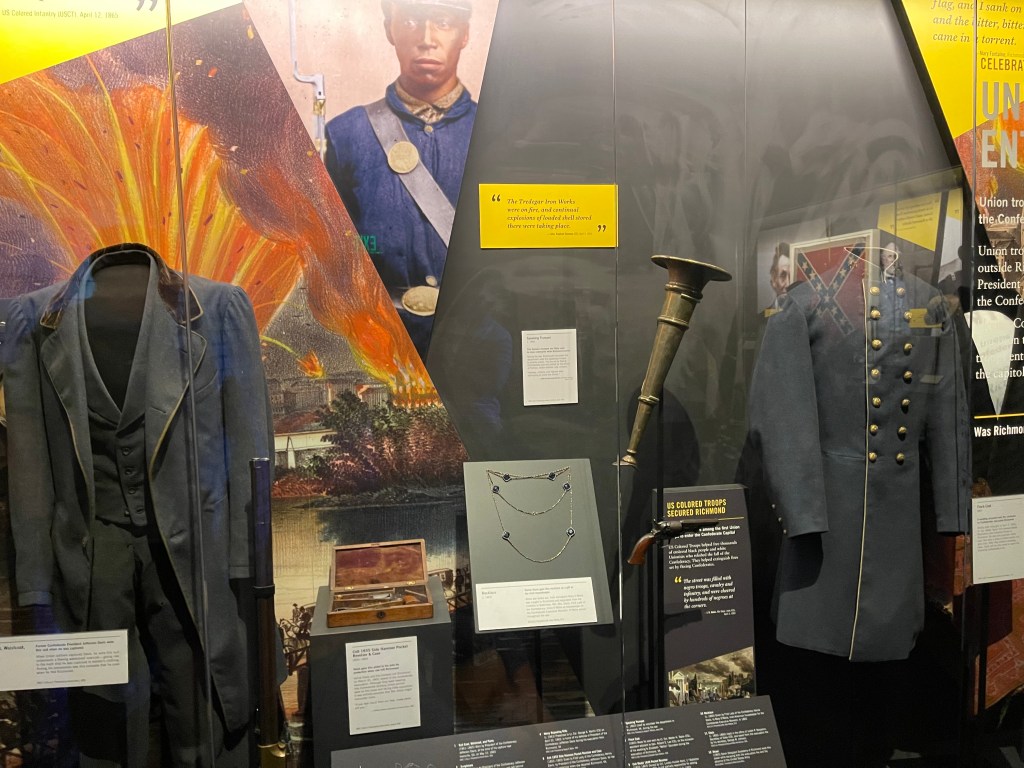
Numerous items pertaining to Jefferson Davis and his family, including the frock coat that he wore during his capture in Georgia, and one of the necklaces worn by his wife Varina. Both became unpopular in Richmond as the war progressed, as starvation led to riots, and riots to chaos.

Even back then the “art” of souvenir collecting was popular, with anything from cloth fragments of mourning drapes from the former Confederate headquarters (for Lincoln’s death), to locks of John Wilkes Booth’s hair (taken after his killing at a farm in Maryland. Sometimes people might take it a little too far, even by my standards.

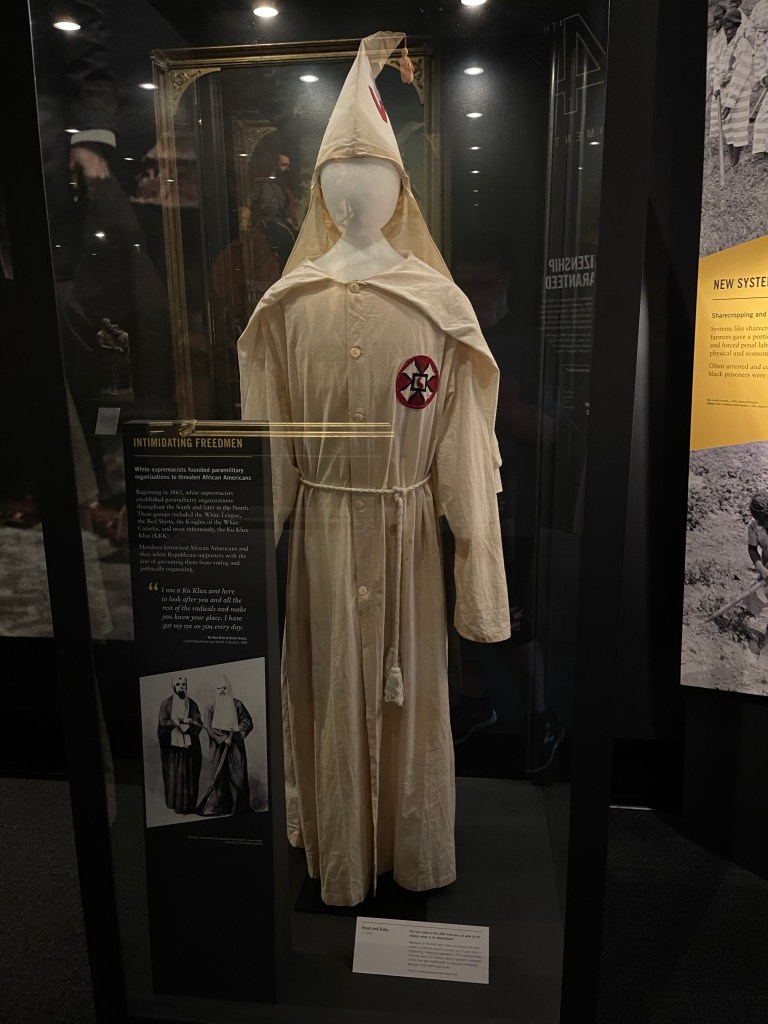
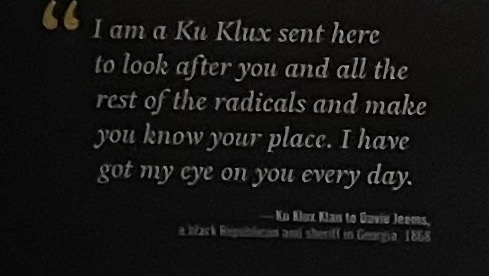
During the Reconstruction Era, despite the Thirteenth, Fourteenth and Fifteenth Amendment, which freed all slaves and bestowed upon them rights, many southern states attempted to circumvent this with the Sharecropping System (not altogether different from slavery to begin with), literacy tests, and further harassment by “vigilantes”.

Ku Klux Klan Robe (1920’s)

The Ku Klux Klan (KKK) for instance, were the terrorizers of freedmen and abolitionists, taking the “Lost Cause of the South” to heart, armed with threats, flaming torches and crosses, and of course, rope for lynching. The failure of the Reconstruction Era would provide many problems for decades to come, with the Klan continuing to surface and cause trouble throughout that time.

Nothing is more terrifying than hearing words like that. Intolerance between fellow human-beings is something that lasts even today and must be fought.

Between the two factions, over 1,000,000 lives were lost in the bloodiest war in U.S. History…

The country continued on a path of industrialization, raising its economic output and stature in the world…

And the social and racial scars and rifts from that time would continue to plague the nation for long afterward…

In truth, much has been done in the passing years to heal those rifts and scars, and unify the nation again as “One Nation, under God”. There is clearly still much work to do, and the legacy and evaluation of the Civil War and its modern-day impact on all of us continues to be felt. In one way or another, we all are connected through this war. Whether as the descendants of Unionists or Confederates, slaves or soldiers, and wives or daughters, our lives have been touched through the mutual sacrifices, pain, and torment felt by all of that terrible time. And through their stories, that history is still very real to us. And the task carried forth by our 16th President in his most famous speech, is still our mission today.

Thank you all for joining in on our final full day in Richmond!

Next time, We’ll take our leave of Richmond, and discover new exciting knowledge in the White House of the Confederacy, St. John’s Episcopal Church, and lastly, the George Washington Birthplace Monument.

Goodbye for now, and take care!

Day 3: Where it All Began (Williamsburg/Jamestown, VA) (6/2/21)

Welcome back!

Today we discover the iconic history of two important sites of colonial history: Williamsburg and Jamestown! Together, these two communities formed the first European settlements established in North America, and by extension, the United States.

Let’s not waste more time, let’s dive right in!

Colonial Williamsburg

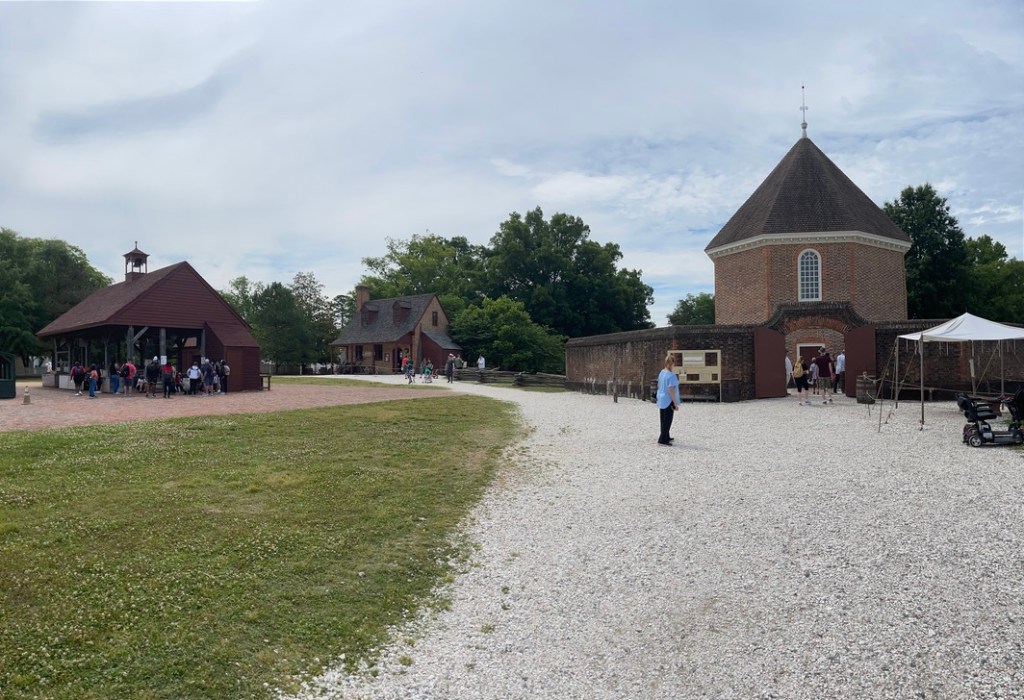
Williamsburg was the second of Virginia’s three capital cities, and served that purpose specifically during the Colonial and Revolutionary Eras (1699-1780 to be precise). Though the capital has since moved to present-day Richmond, Williamsburg is still fondly remembered by history enthusiasts for it’s” living-history” community, with entire blocks of the former downtown area preserved and functioning just as they were in the 1770’s, operated by period-styled and fashioned interpreters.

With the pandemic of course, some of that immersion has to be conveyed through face masks of the guides and interpreters (at least those who haven’t had their second vaccine yet). Despite not being required to wear a mask if your fully vaccinated, I would still recommend visiting when some degree of normalcy returns to Williamsburg, concerning the pandemic.

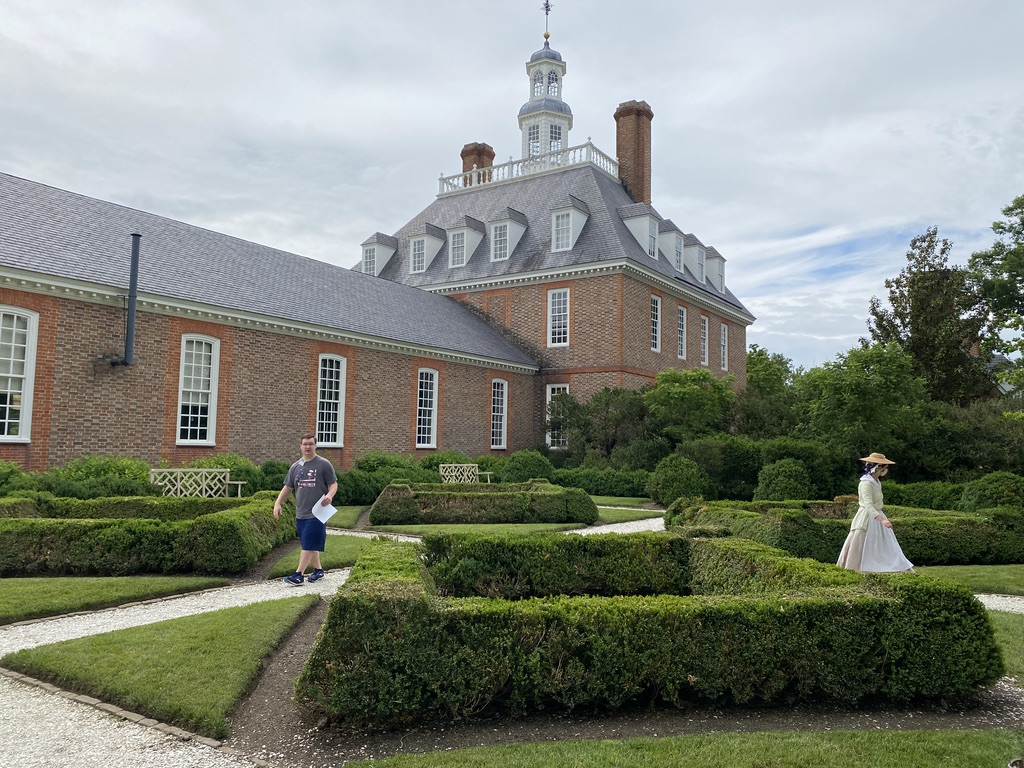
The Governor’s Palace

The Royal Governor of Virginia ( the steward of the colony for the King of Great Britain) lived in this palatial estate, considered to have been the richest and most adorned of the properties in Colonial Williamsburg. The last royal governor of Virginia was John Murray, who fled the colonies in 1775 when things were turning south during the war.

The Entry Hall

What could even be said about the many weapon adornments that surround the entry hall? Back then though, the most impressive thing would have been the incredibly rare marble floors, imported from Scotland.

The Ballroom

The sounds of violins and the harpsicord once accompanied many a minuete in this elaborate ballroom, while the dominating presence of King George III and Queen Charlotte’s portraits leered overhead. Only the top of the top class would be able to see the rare carpets, glass windows and large cast-iron stove. Well, also including the servants and slaves that took care of this place, along with many other property owners in the city.

A lovely stroll through the gardens.
The Governor’s Vegetable Garden

Vegetable gardens like the one above were vital to supporting the economy and food-supply of the city. Naturally, this doesn’t hold a candle to the size of Mulberry Row, on the grounds of Monticello. We’ll see those later.

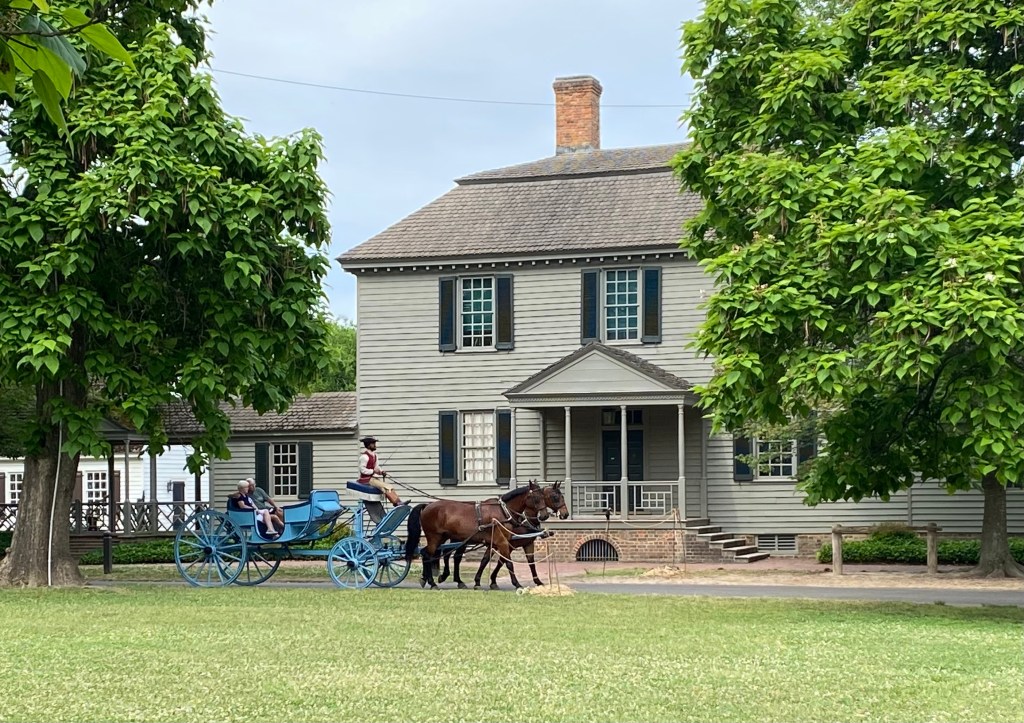
Horse Carriages!

Horse Carriages, like the Model-T Fords in Greenway Park in Michigan, roam freely around the town, and are perfect for touring the place!

Bruton Parish Church

Bruton Parish Church is still an active church today. The services held regularly on Sundays like this one are likely the only time that one can find vehicles on the road of the Colonial District, as the area is typically closed to foot traffic.

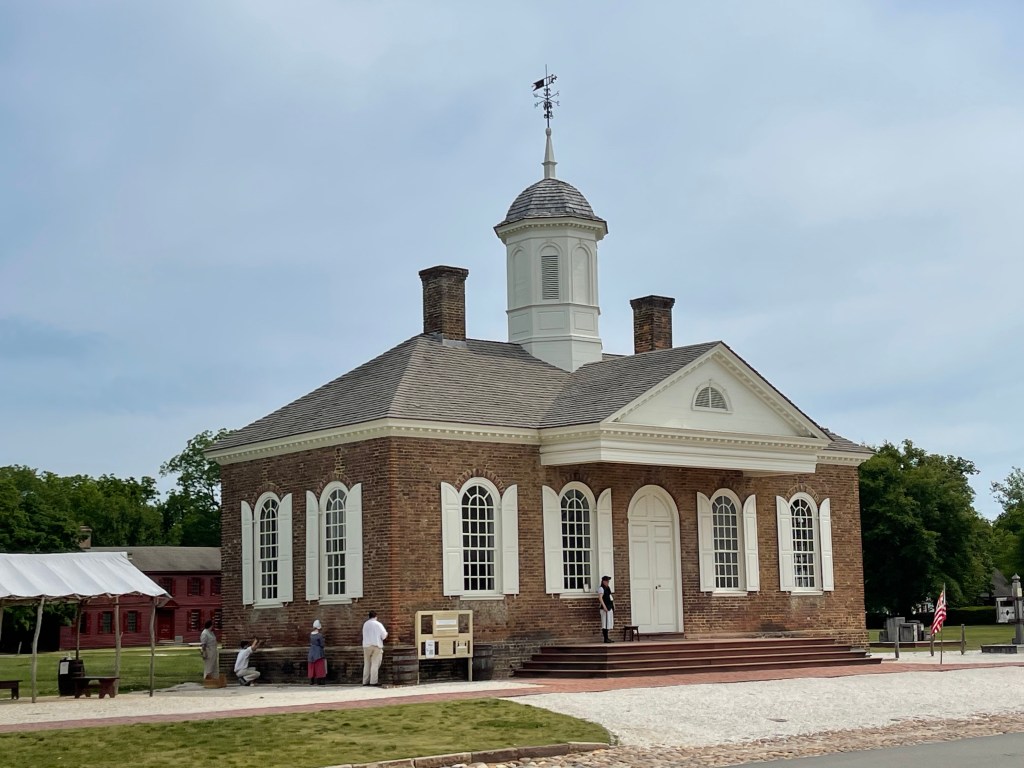
The Courthouse
Interior

The Courthouse of Williamsburg was used to settle legal matters in the town, as well as deal with minor crimes such as minor theft, the unfulfillment of work contracts, or slave disputes. Of course, to pass the bar in colonial times, one had to be a white male of 21 years of age, own property, and pass seven years in preparation. Not exactly the inclusive standards that we have today. Punishments often ranged from regular imprisonment in the gaol or time in the stocks, but also to branding and/or hanging.

The Market Square

The Market Square was filled with the hustle and bustle of produce and goods bartered from each property and from the outside world. To the right you can see the Munitions Storehouse.

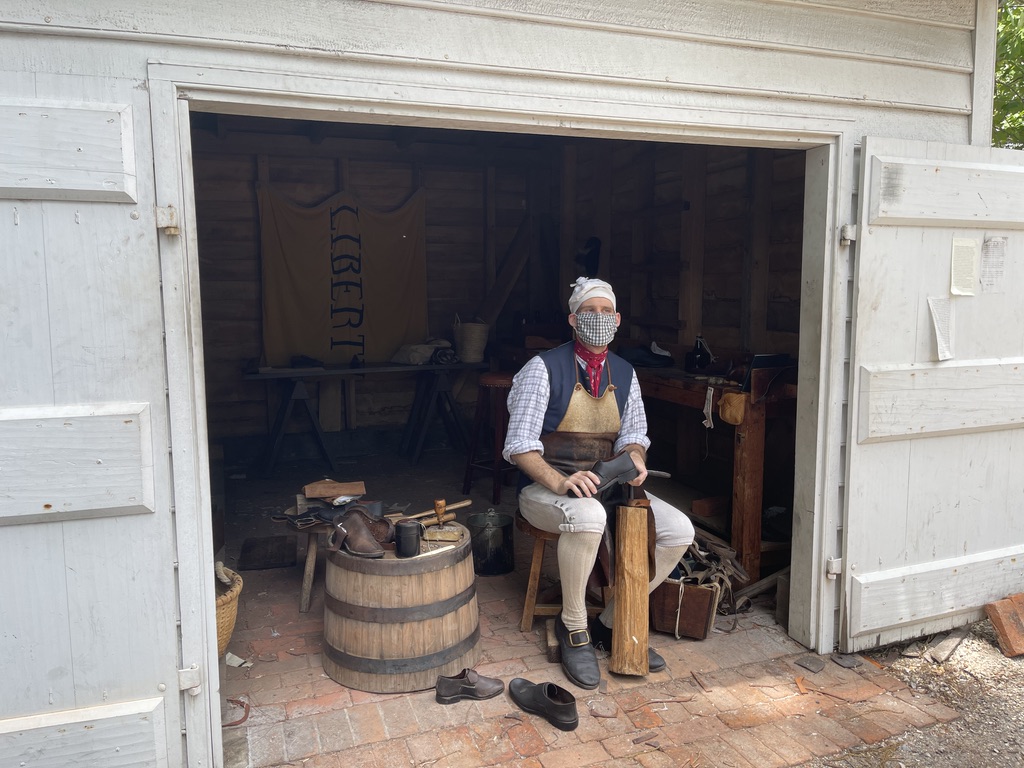
No one can do justice to recollecting the many types of artisan interpreters that are available to chat and discuss their work with, or the products that they made, including:

Gunsmiths (including both firearms and cannons),
Woodworkers (posts, tools, fences, lumber and otherwise),
tinworkers (including kettles, pots, lanterns, etc.)

(On a side note, we found out fascinatingly that since glass was a rarity back then, they would boil and then peel off the layers of cow horns to make into a flexible yet transparent substitute for use in lanterns and other such materials! Who would have guessed!?)

Wheelwrights (wheels and wagons of all sorts of designs and purposes),
Shoemakers, (for poorer people, nailed-in soles on the shoes),
Blacksmiths (blades, nails, horseshoes, tools, just about anything you can think of),
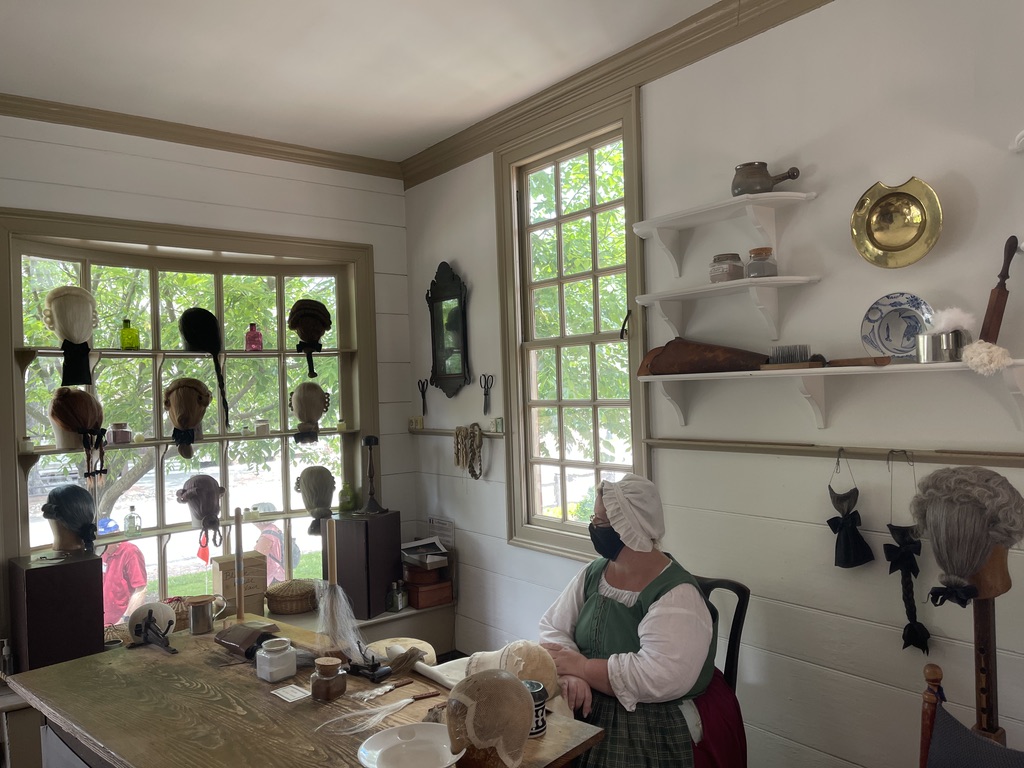
wigmakers (with wigs signifying social status and specific occasions),

And so much more!

No joke, I literally wanted to try on those wigs… I find it very fashionable, historically speaking!

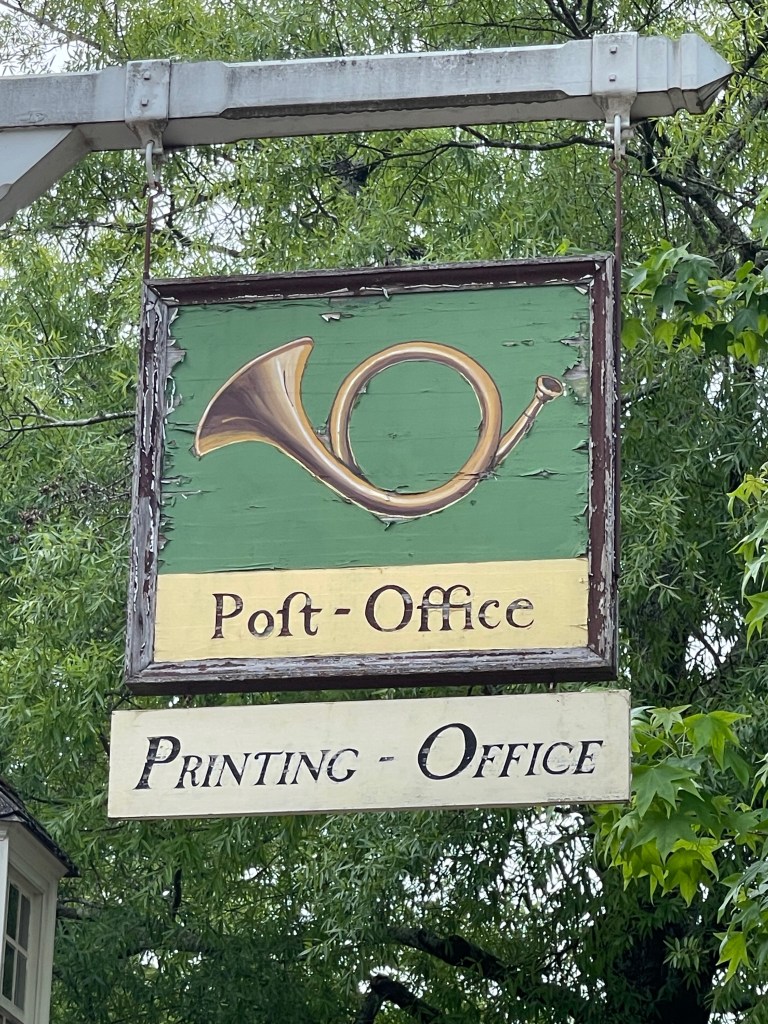
The Post (Poft) Office

Home to the printing offices (very important in those days for newspapers, books, playing cards, etc.), the Poft Office made us chuckle a bit, spelling back then was slightly different from today.

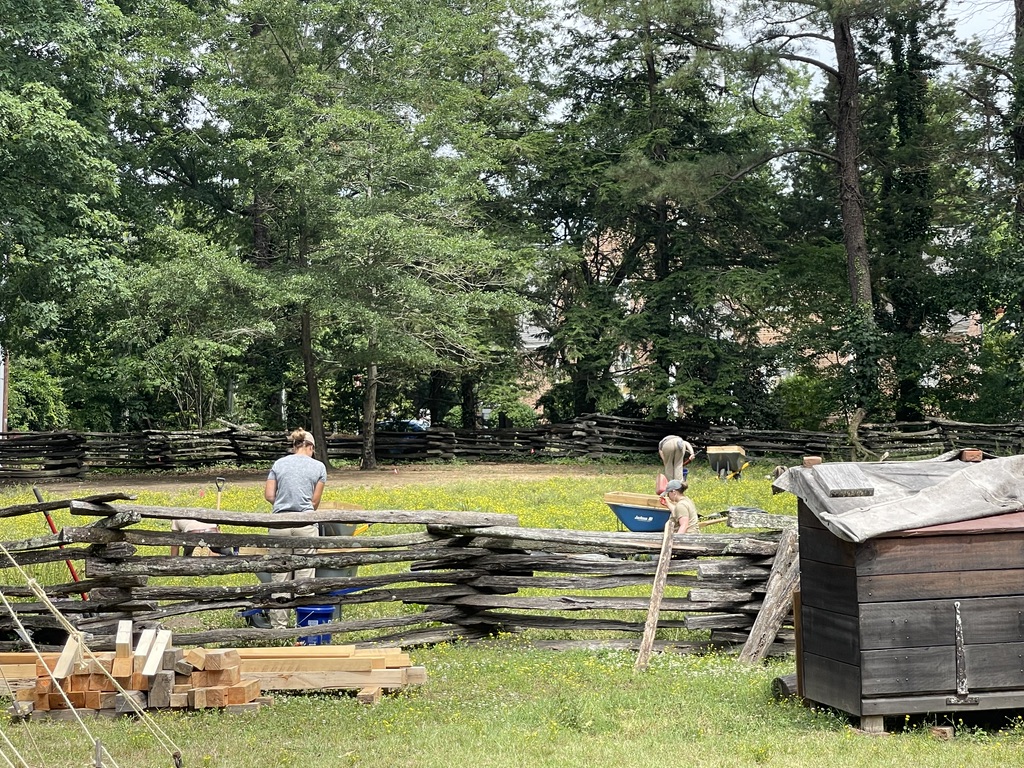
Archaeological Field

Archaeological work continues to this day, as historians continue to unearth and learn more about the past from any number of relics they could find. Imagine being involved in a project like this… for many historians, it would be a dream come true.

Livestock Sheep
Chowning’s Tavern

Chowning’s Tavern serves as a popular establishment for eating your traditional colonial cuisine!

Our meal!

Suffice it to say, the atmosphere was great, and our food excellent! I myself had Welfh Rarebit (I think the guy who came up with these f pronunciations had a lisp).

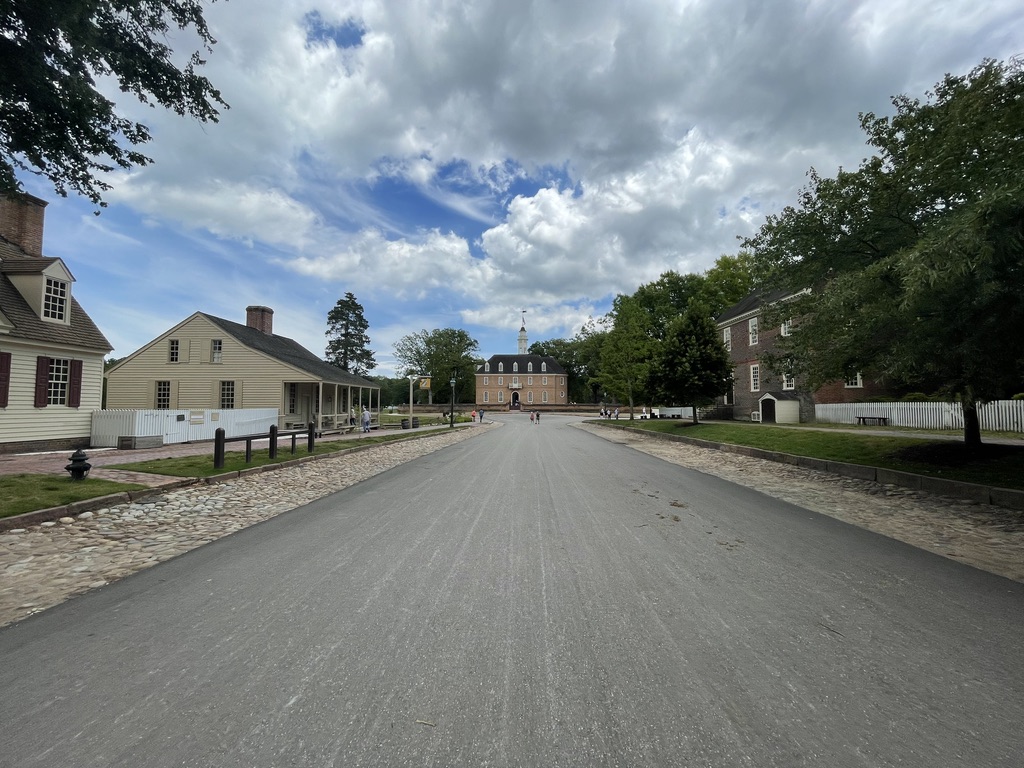
Down Main Street (Duke of Gloucester Street), one could see the final destination in this pristine community… the Old Capitol!

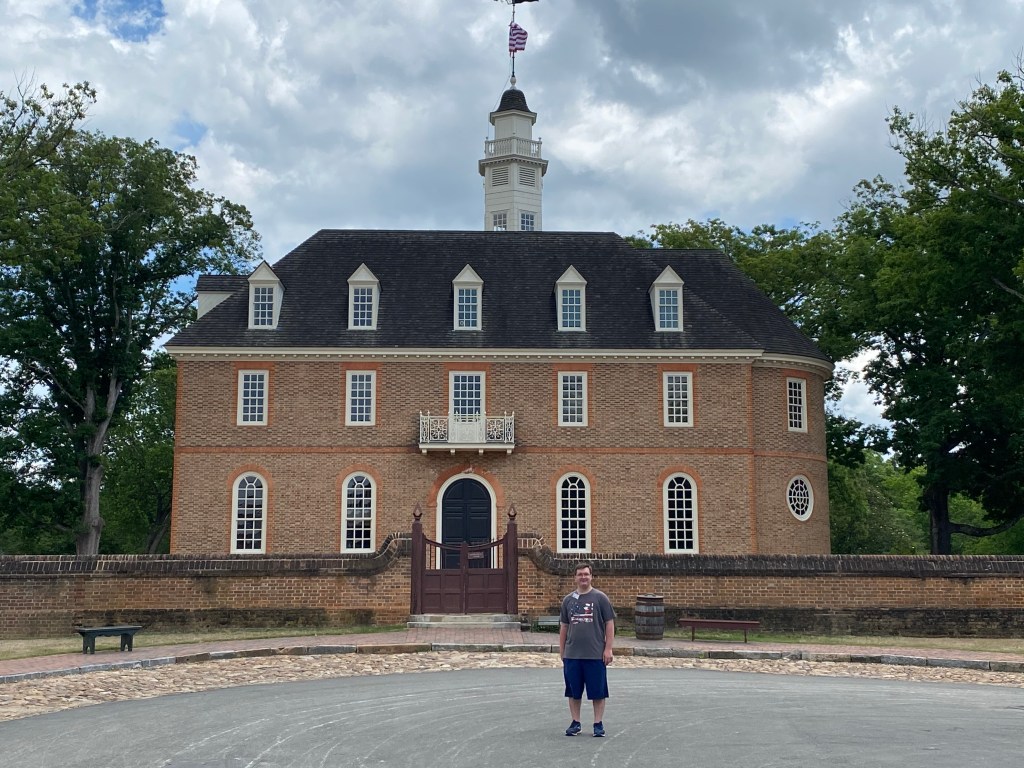
The Old Capital Building

The Capital Building on this site has gone through at least three different identical iterations, following the colonial government’s moving from Jamestown. The two previous buildings, built in 1705 and 1753 respectively, burned to the ground, thus leading to the current 1934 recreation that is viewable today.

Seeing the flag of Great Britain flying above fills you with a sense of awe, especially over a building like this. The two circular wings you see above contained the Virginia High Court (left), and the long-lived Virginia General Assembly, then known as the famous “House of Burgesses.”

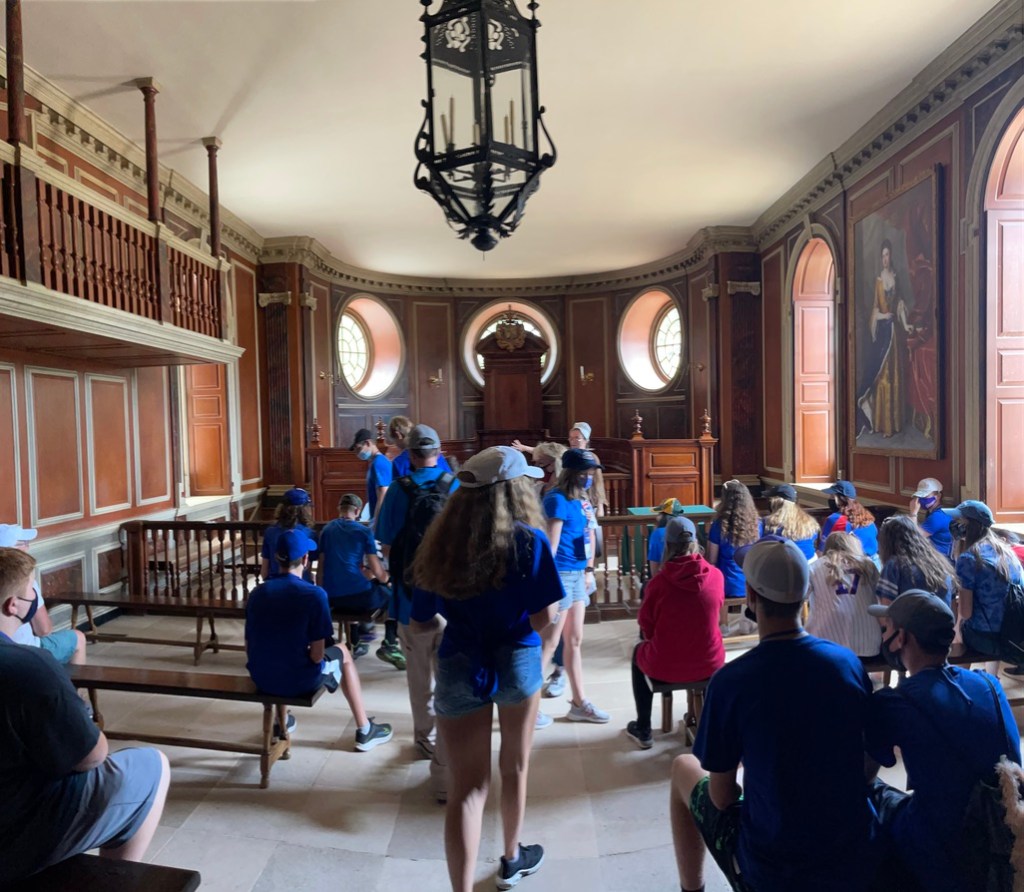
Virginia High Court

The Virginia High Court would preside over the most serious misdemeanors and felonies in the entire Virginia Colony here, including larceny, forgery, major theft, murder, treason, etc. Perhaps most famously of all, it was here that the crew of the infamous pirate Blackbeard were tried and sentenced, as he was slain near the coast of Virginia. In addition, note the portrait of Queen Anne to the right; last of the Royal House of Stuart, and last monarch of England before it’s consolidation into Great Britain. The original structure was built during her reign.

The House of Burgesses

Looked over by the portraits of King George II and Queen Caroline, the legislative body of Virginia met here to guide the ordering and lawmaking of the day. The Council of State, the upper-house of the legislature, would meet upstairs. Virginia’s structure bicameral legislative structure would go on to inspire the two houses of the U.S. Congress that we know well of today.

There’s no place in the country like Williamsburg to experience living history, especially if you want to get your steps in! We aren’t done however, especially as there’s one place to still visit today… the place Where it All Began.

Jamestown

Jamestown was the very first european settlement in North America, and naturally is regarded as the origin place of America. Founded in 1607 by english settlers looking to profit from the “New World” and it’s resources (both the settlement and the neighboring river were named after King James I), the community would endure many incredible hardships, and feature the interactions between white settlers, native-americans (particlarly the Powhatan), and black slaves from Africa.

Jamestown is technically split up into two different (and non-associated) sites: Jamestown Settlement, which features a museum and living history sites for interpretive purposes, and Historic Jamestown, the site of the original Jamestown fort, dotted with archaeological work and monuments.

Starting with the interpretive Jamestown Settlement, we ended the day by getting shot.

I’m only joking! It was simply an interpreter demonstrating how to fire a 17th century rifle, which is considerably more time-consuming and difficult to do than modern firearms would be. And louder too (ow).

James Fort Replica

An entire replica of the original James Fort helps to demonstrate how the settlers tried to survive in this difficult environment (which wasn’t necessarily easy to do). Starvation, disease, harsh winter weather and other attritions would kill over two-thirds of the original 300 settlers, and tense relations with the neighboring Powhatan tribe proved troublesome, despite occasional yet uneasy alliances between the two.

Inside James Fort

Living off the fat of the land was difficult, but much like the pilgrims far to the north 13 years later, the members of the Virginia Company were forced to live off the fat of the land, including new diets of fish, dried vegetables, and corn (the latter of which considered to be livestock food by the English of that time.

Were it not for the endeavors and organization/direction of John Smith, one of the leaders of the colony, Jamestown would not have survived long, and the fate of North America might have been very different from what it is today.

Though relations between the white settlers and Native-americans would remain cordial at best during the lifetime of Powhatan (Chieftain of the Powhatan unsurprisingly), numerous bloody conflicts would emerge between the two after his death. And the bows-and-arrows of the natives could little defend themselves against the powerful English rifles and armor.

Perhaps the deadliest however, were the new and unfamiliar diseases that the settlers brought over from Europe. The natives throughout the Americas, having no natural immunities to them, would face fatalities by the millions, which further left them vulnerable to conquest and relocation.

Jamestown Replica Ships

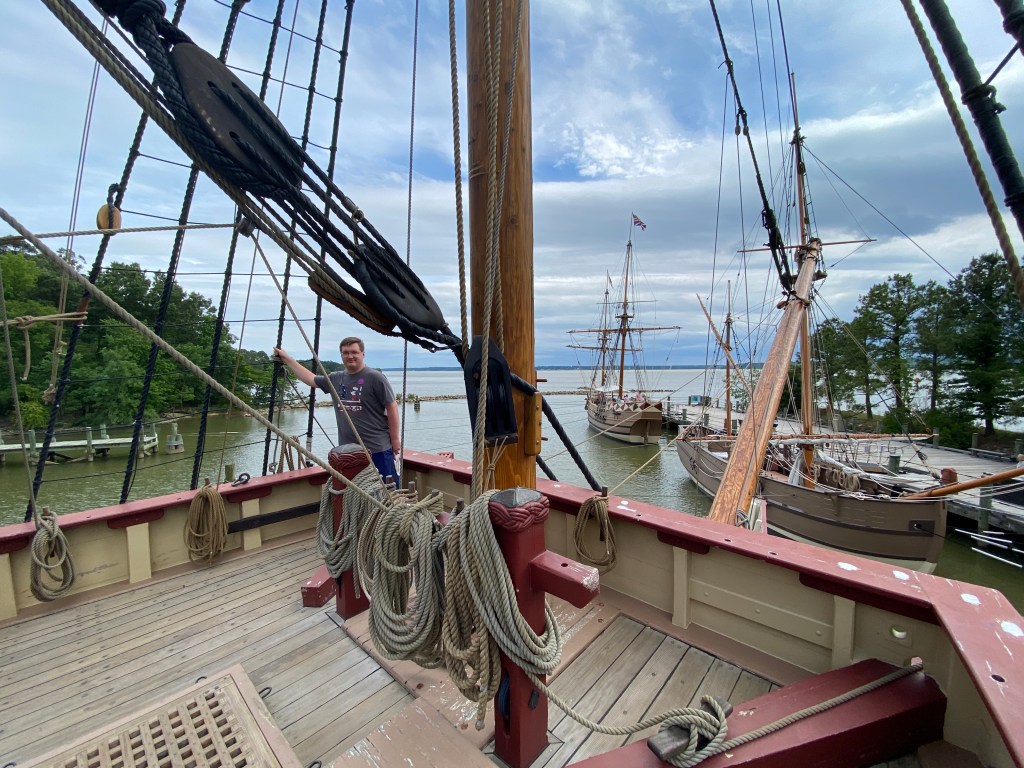
Replicas of the three ships that brought the first settlers to Jamestown are situated here, including the Godspeed (left), the Discovery (center), and the Susan Constant (right).

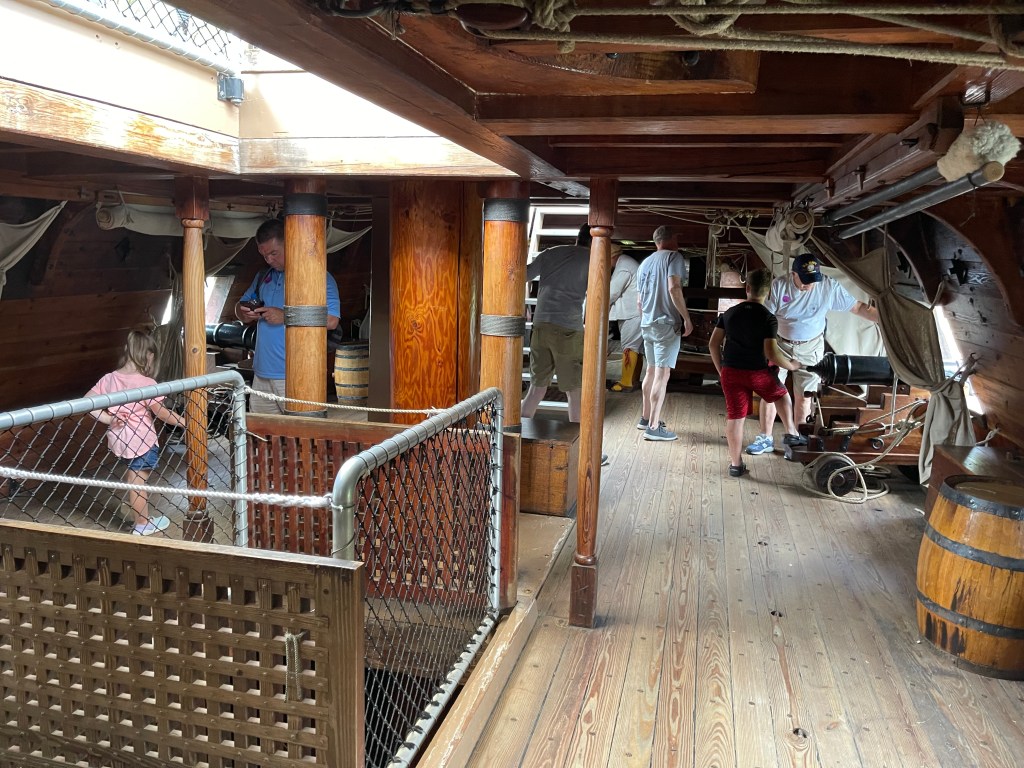
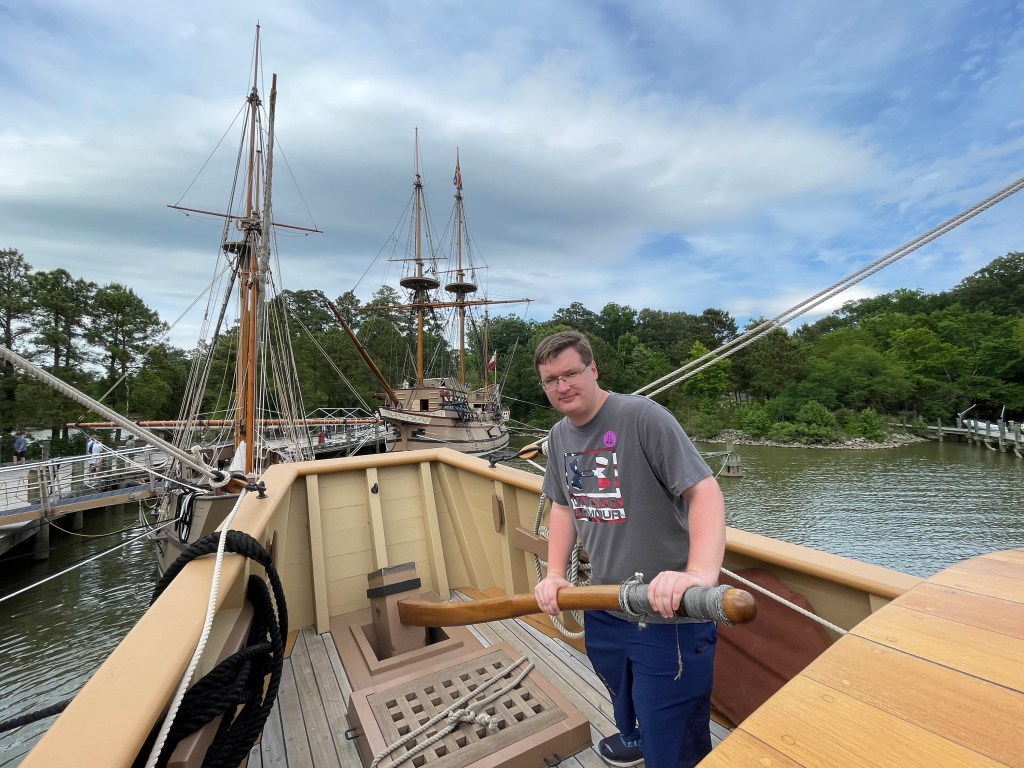
The Susan Constant
The Deck
The Mid-deck
Steering the ship through treacherous waters!
What a gorgeous view.
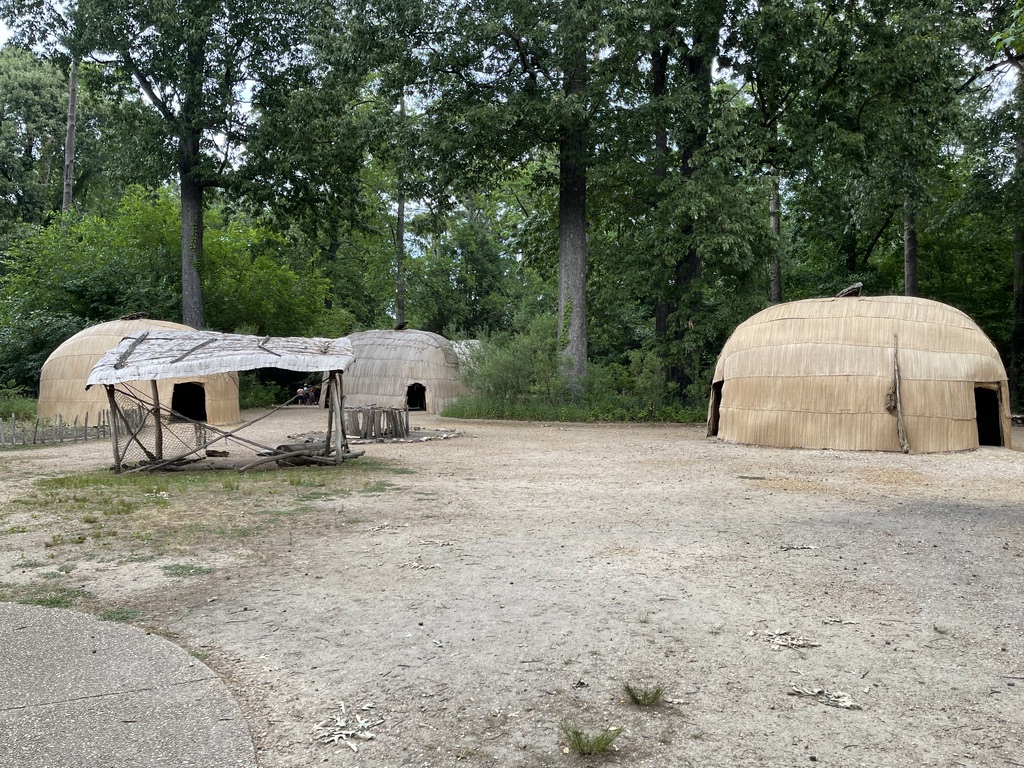
Powhatan Village Huts

Unfortunately, the interpreters were gone by the time we got to the Powhatan Huts, so we had to continue on.

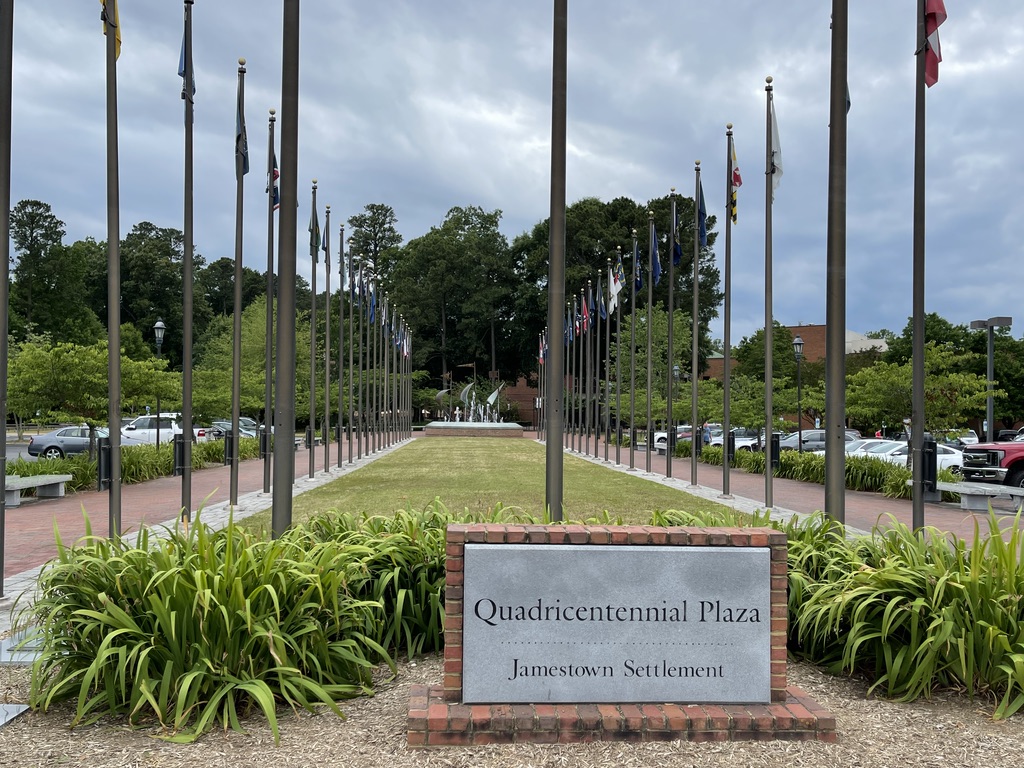
Not many cities or towns in the Americas can claim that they had a Quadricentennial… Jamestown just so happens to be one of them.

Moving on to Historic Jamestown, we soon came across the actual site of this once active community…

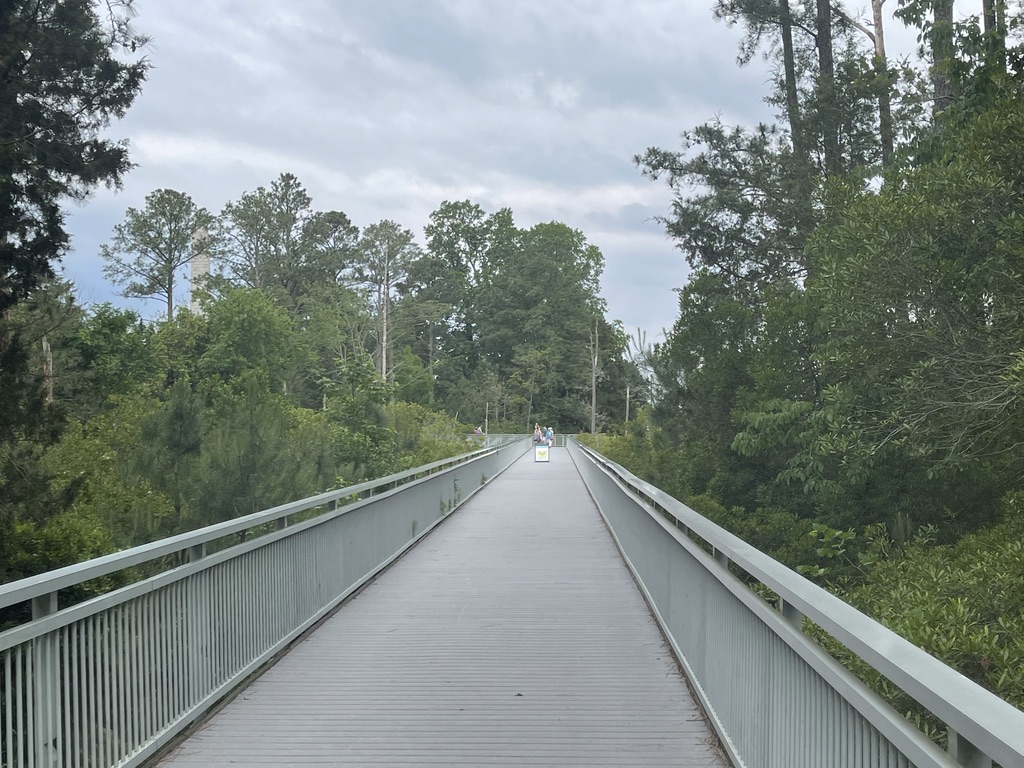
The Walkway to Historic Jamestown
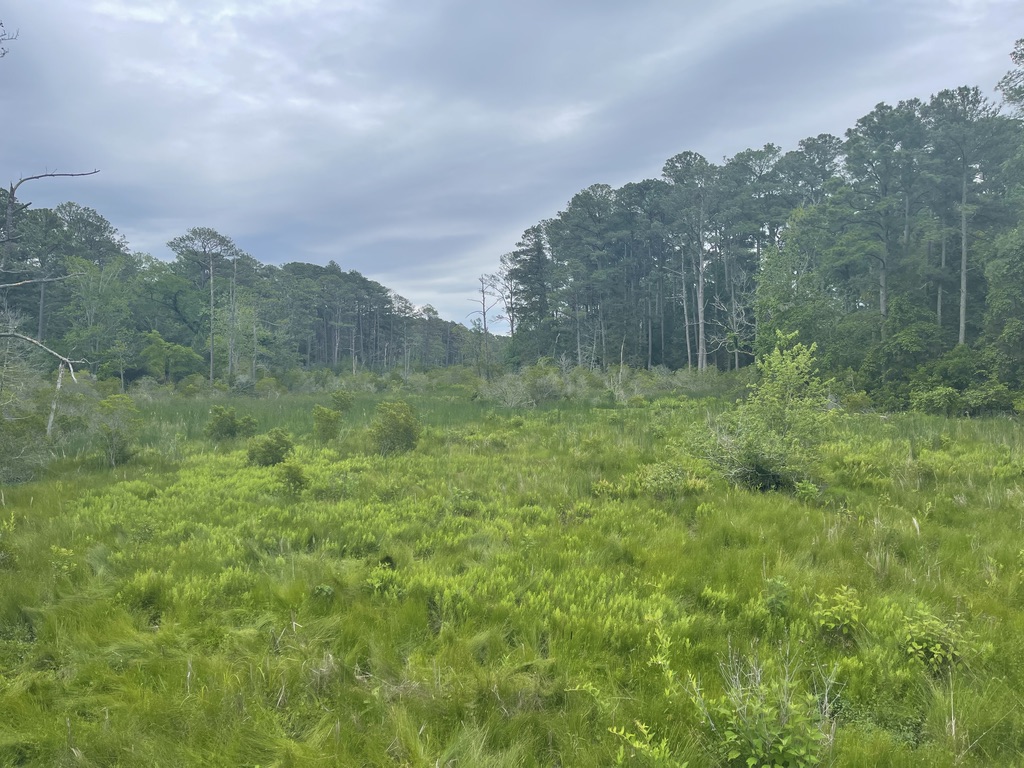
Swamplands

The marshes surrounding Jamestown Island surely provided ample breeding-havens for mosquitos and other bugs, just as they did 400 years ago (we felt it too).

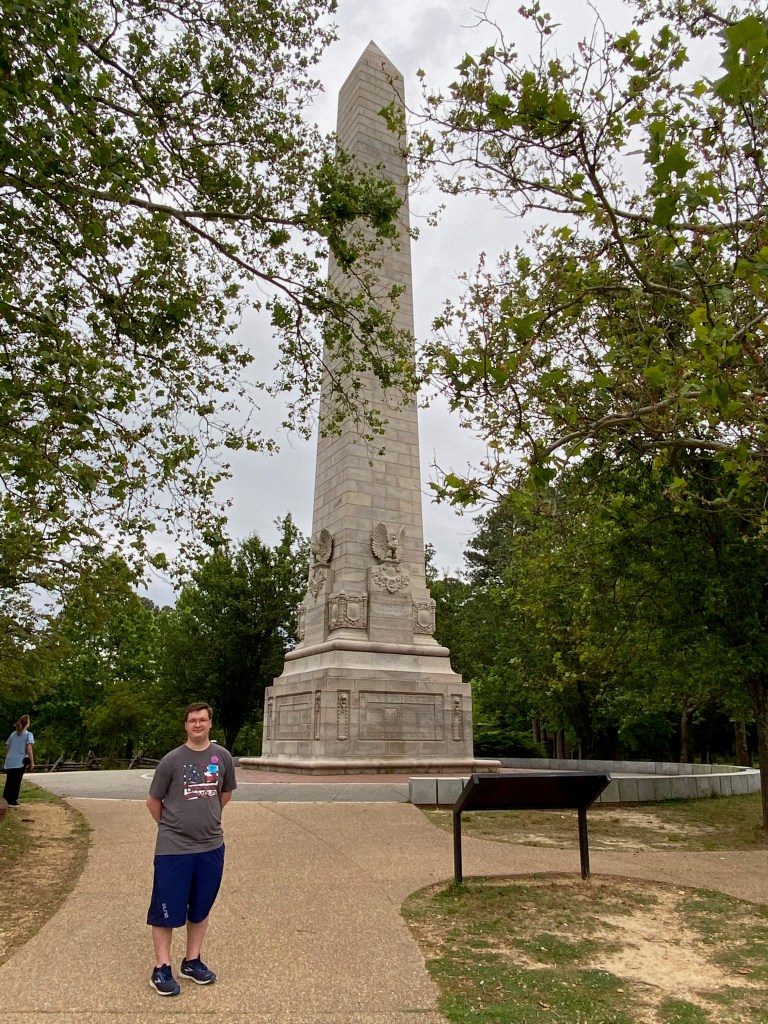
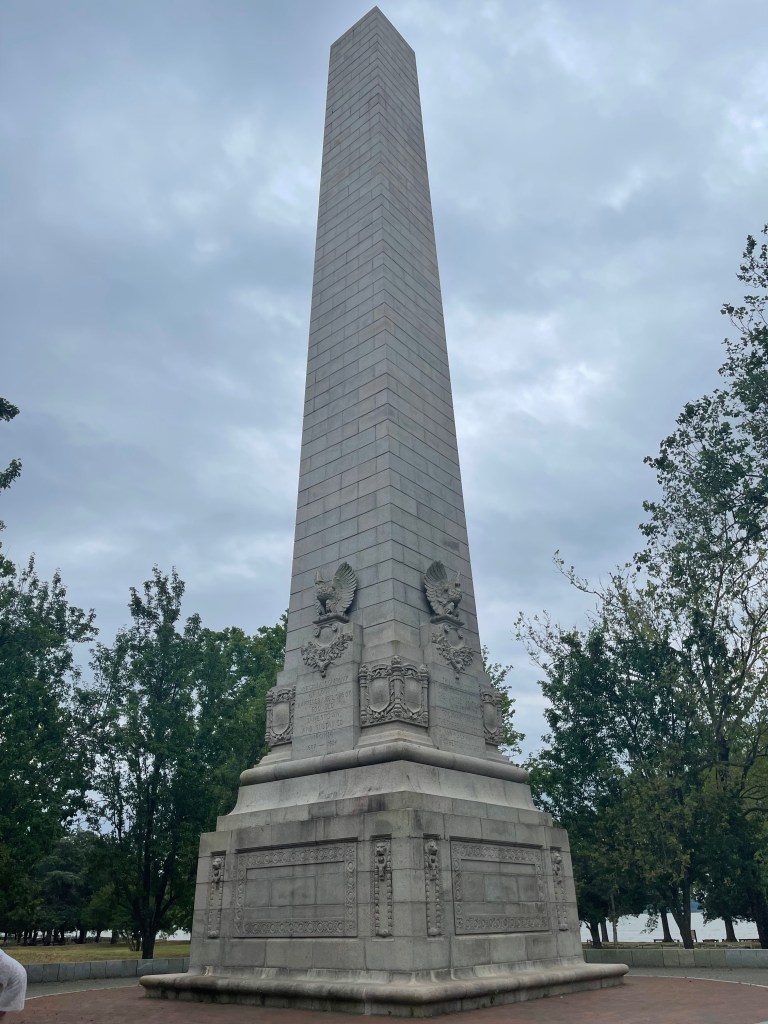
Jamestown Tercentenary Monument

This quite impressive obelisk was placed in 1907 to commemorate the 300th anniversary of Jamestown’s founding…

The foundations of the Second Capitol Building of Virginia still remain on the island. Though after ANOTHER fire burned it down, the Virginia General Assembly moved to Williamsburg. Interestingly, several years ago they uncovered over 50 graves scattered underneath these foundations, many of whom were slaves from Africa.

Inside the Archaeological Museum, one can see quite a number of exciting finds from the site found throughout the years!

Including original and tarnished English armor,

I hope that you all haven’t eaten recently for this next bit. Might get a bit graphic.

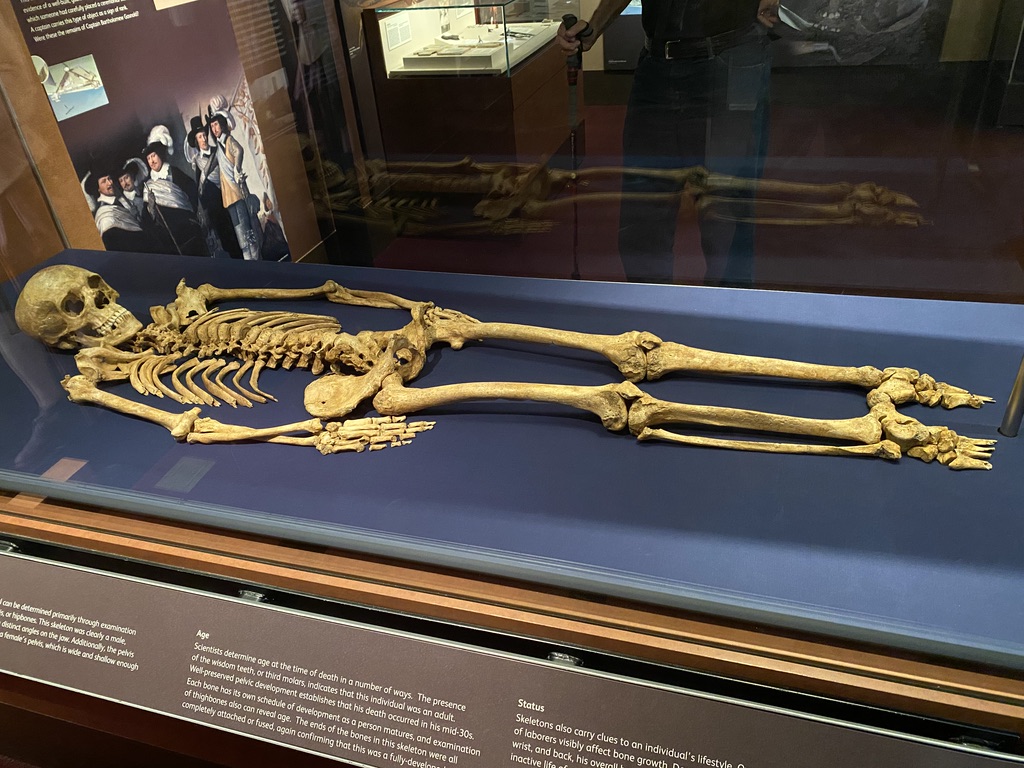
Human remains, including this skeleton here, were often found by research teams, as they further work to uncover the identities of both settlers and slaves alike.

Skull and Reimagining of Face.

Jamestown of course, experienced some of the darkest episodes in world colonial history, particularly with the lack of food there… some resorted to eating the soles off their own shoes, while others ressorted to something more horrifying… cannibalism.

Some corpses were literally dug up from their graves and consumed. Notice the fine cuts from a blade in the skull of this poor woman, and where they pryed it open to get to the brains: the most calorie-heavy part of the body.

Thankfully things in Jamestown gradually improved following successive expeditions back to Virginia.

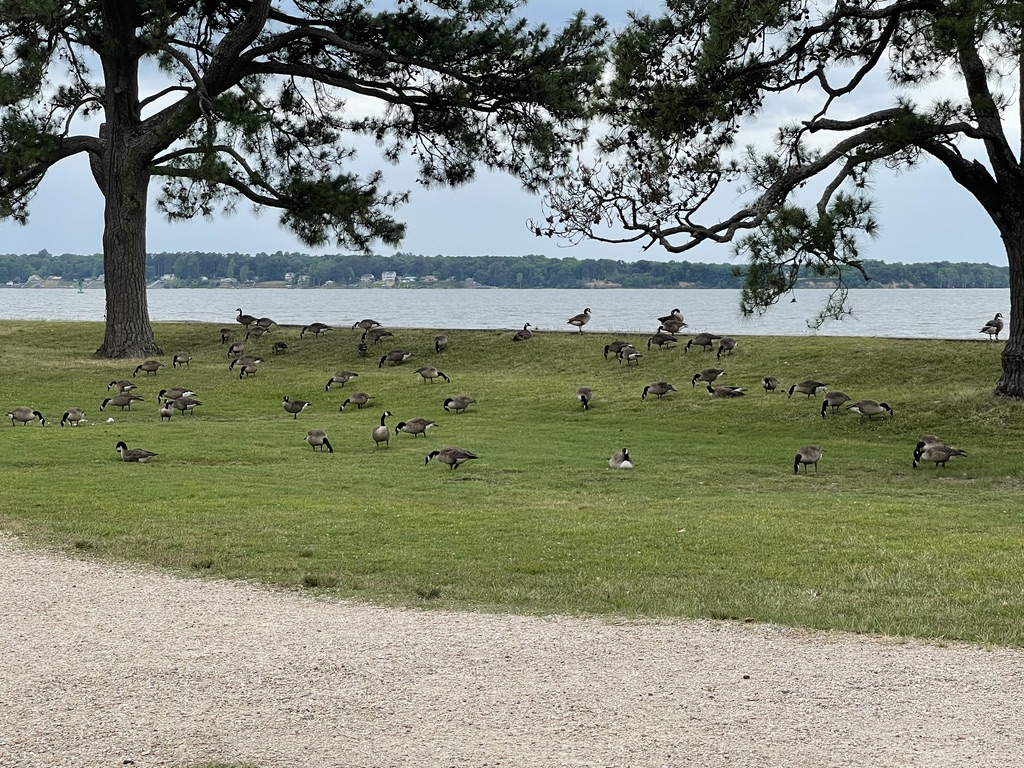
Geese.

Wary of the literal army of geese on this island, we proceeded onward.

The original shoreline that extended 25 ft past this wall has since eroded, but it was on this very spot that the Jamestown colonists looked out onto their new home… perhaps these surrounding islands were what they saw all those years ago? What else could they have seen after such a long journey?

Approach to Jamestown

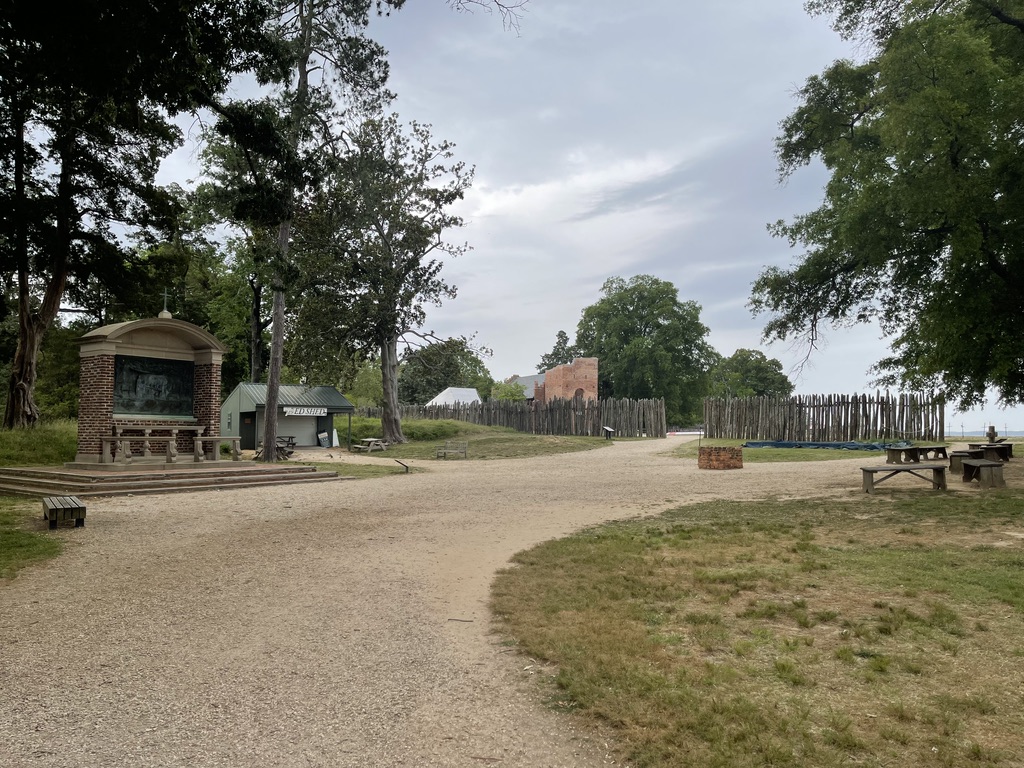
Though the wooden fence itself is new, it stands atop where the former walls of James Fort ran around the original settlement.

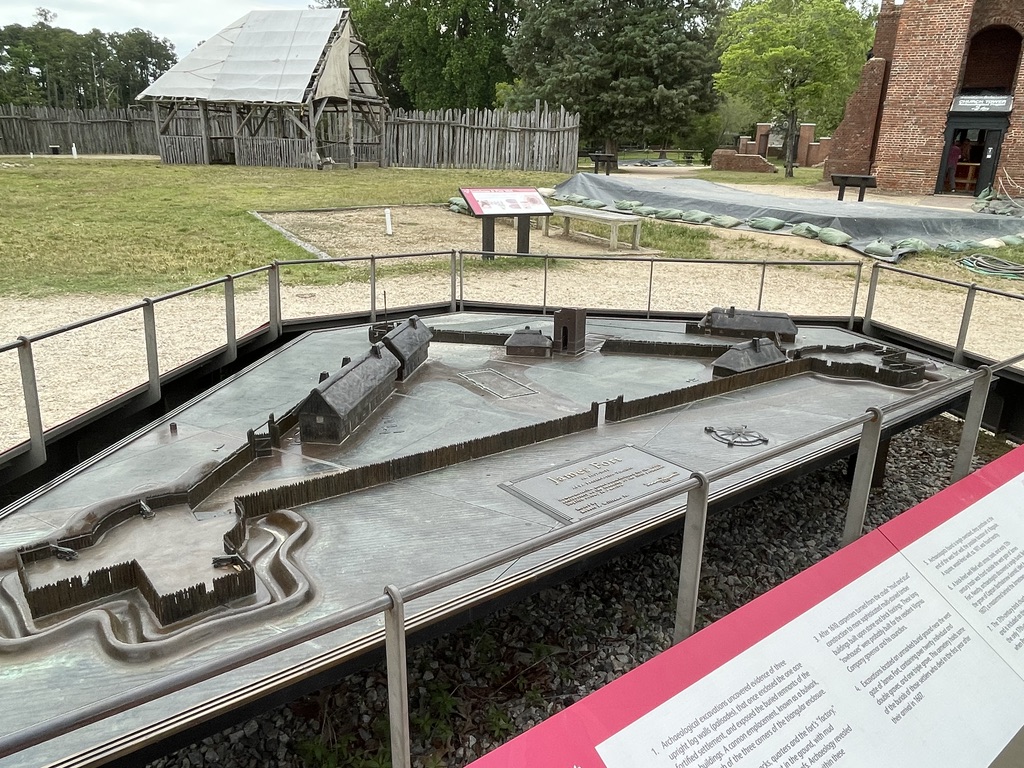
Jamestown Layout

Ah, this is a better representation of James Fort, as you can see with the triangular layout, and gun fortifications on it’s corners.

More recently discovered graves… makes me wonder what their individual stories were?

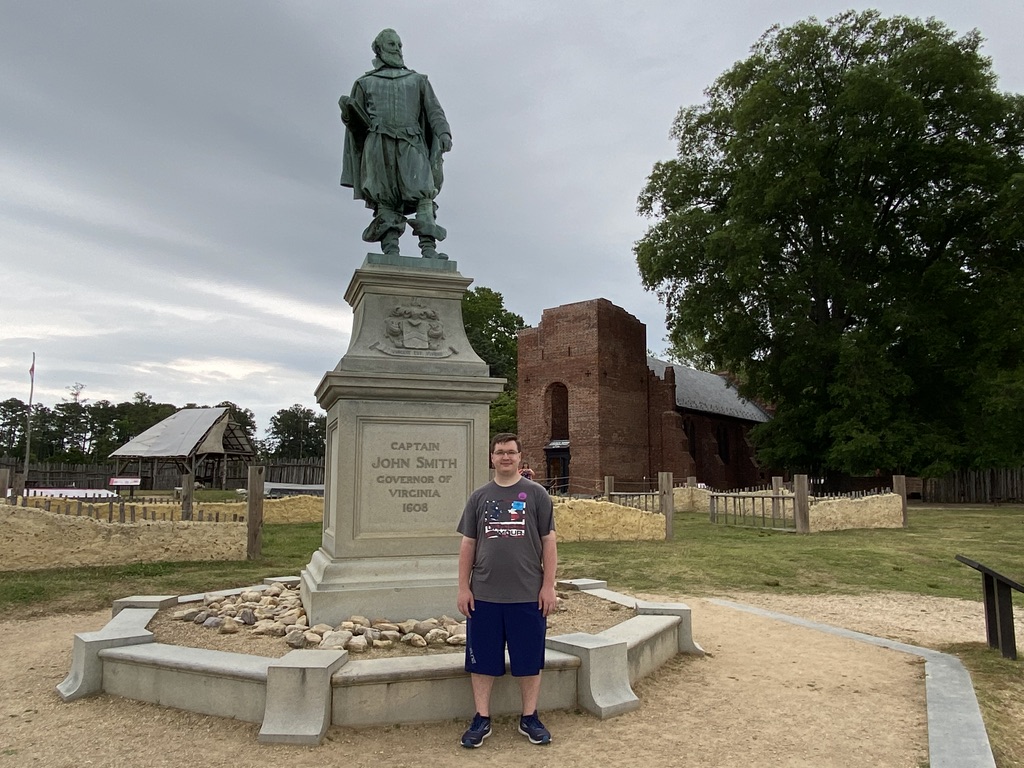
Captain John Smith Statue

John Smith is memorialized today here on the site of the original settlement, though his grave rests far away in England.

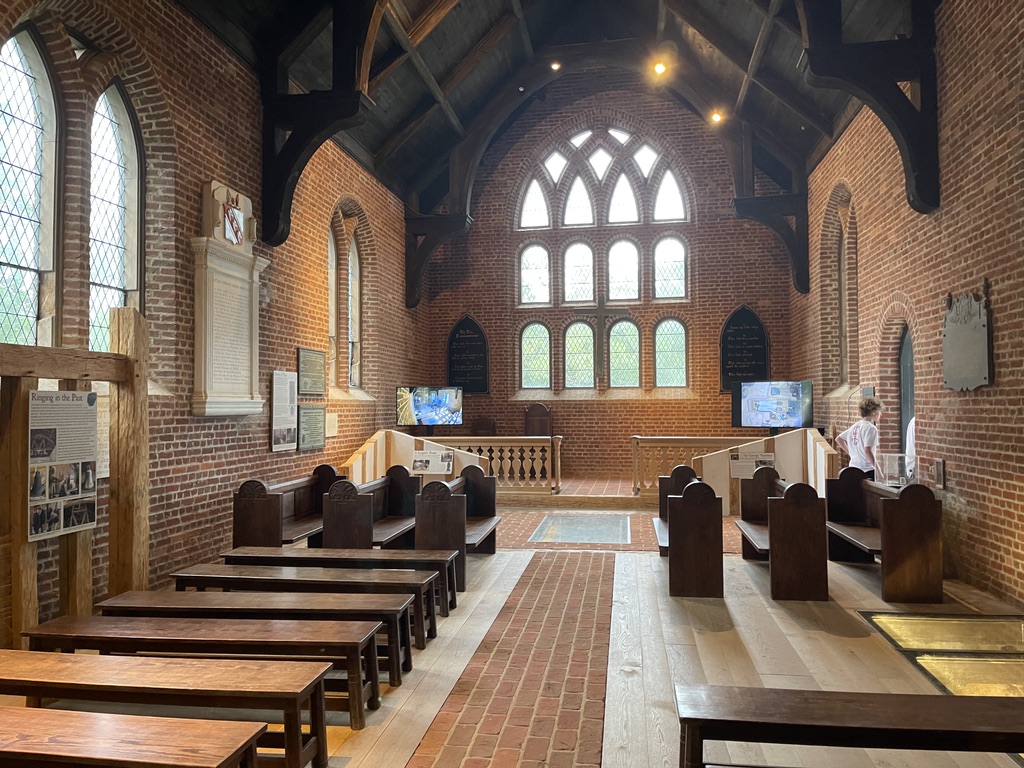
Jamestown Memorial Church

A current archaeological dig is in progress near the ruins of this memorial church constructed in 1639.

Insdie the church are a multitude of memorials dedicated to the memory of Jamestown. It was fascinating just to read them all.

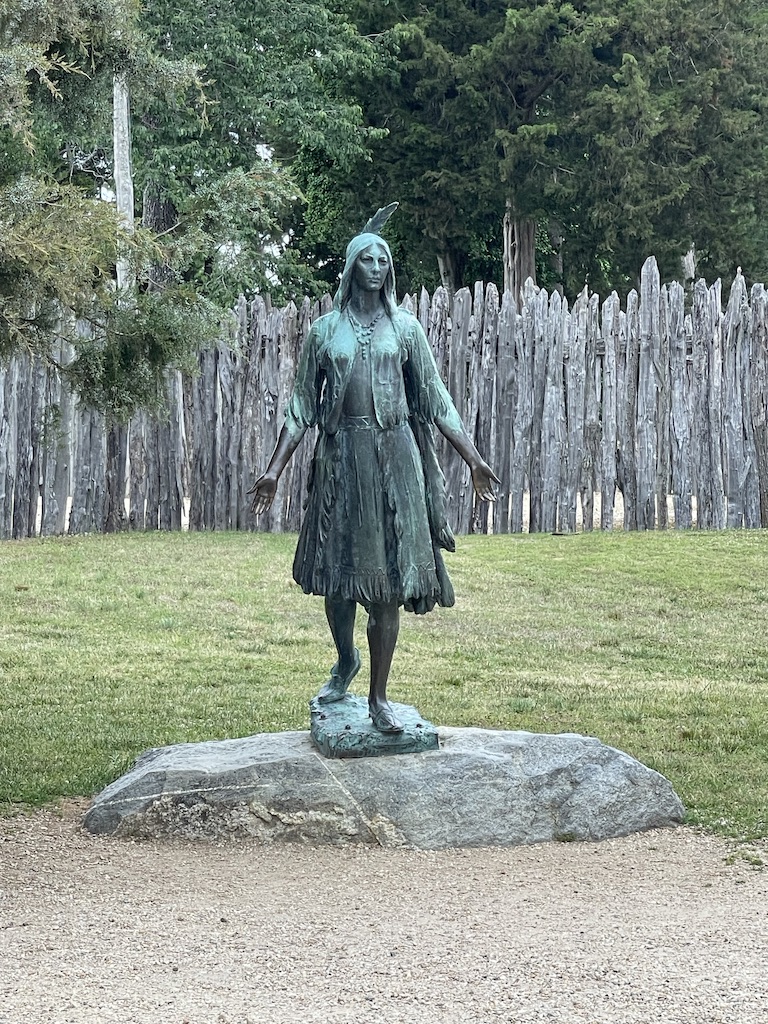
Pocahontas Statue

Who can forget Pocahontas, the daughter of Chief Powhatan, who famously helped to forge peace between the Powhatan and european settlers, and saved John Smith from execution by her kin?

Only a young girl by the time of their arrival (contrary to what might be presented in the famous Disney adaptation), she later married settler John Rolfe, which secured the alliance between their two peoples. She died only a year after returning with him to England.

Deer out for a prance.

Being on the very ground where those same settlers walked, and possibly seeing almost the same sights that they did, is quite a surreal feeling. Being “in the moment” is what I strive for when I visit these sites. Can you possibly imagine how hard it was to live back then, as a white settler, a slave or a native? The world of 400 years ago is an entirely different one from today… and as we reach for a more comprehensive and fulfilled look on all the peoples of this community, we learn a little more about ourselves too, as individuals, and as humans.

And that’s a feeling too precious to miss out on.

As a side note, Jamestown, Williamsburg, and Yorktown are on the Historic Colonial Triangle of Virginia. Unfortunatly, with our busy schedule, Yorktown will have to wait until another time.

But we have more in store next time! For tomorrow, Berkeley Plantation and the American Civil War Museum are next, in our final full day in Richmond.

Thanks for tuning in, see you then!

Day 2: Tombstones and Tylers (Richmond/Charles City, VA) (6/1/21)

If you thought yesterday was a great start to our trip… “you ain’t seen nothing yet!”

For today, along with other interesting yet singular sights in the Richmond area, we pay our respects to some very “grave” people in historic Hollywood Cemetery (okay I’ll stop). We also pay homage to our 10th President, John Tyler, at his Sherwood Forest Plantation nearby in Charles City.

Join us, won’t you?

Before we see what Hollywood Cemetery has to offer, we went to tour various minor sites across the city. Six in total! I’ll go over these very briefly.

In Shockoe Cemetery, is the final resting place of perhaps our most distinguished judicial contributor in the United States…

Shockoe Cemetery
Grave of John Marshall & Family

John Marshall was our 4th Chief Justice of the Supreme Court, serving from 1801-1835, and is generally credited as being the “Father of the U.S. Judicial System”. It was he that helped to establish the precedent of judicial review in the landmark Supreme Court case, Marbury v. Madison, which enabled the Supreme Court to declare laws unconstitutional, should the need arise.

John Marshall House

The John Marshall House, although currently closed, still stands in downtown Richmond as a tourable museum.

Monumental Church (Downtown Richmond)
Sideview of Monumental Church

Monumental Church was built to honor the 72 victims of the 1811 Richmond Fire, and was also a place of worship for my favorite poet: Edgar Allan Poe, who originated from Richmond.

St. Peter’s Catholic Church

The Cathedral of St. Peter is the oldest Catholic Church in Richmond, and seemingly also closed for the day.

St. Paul’s Episcopal Church
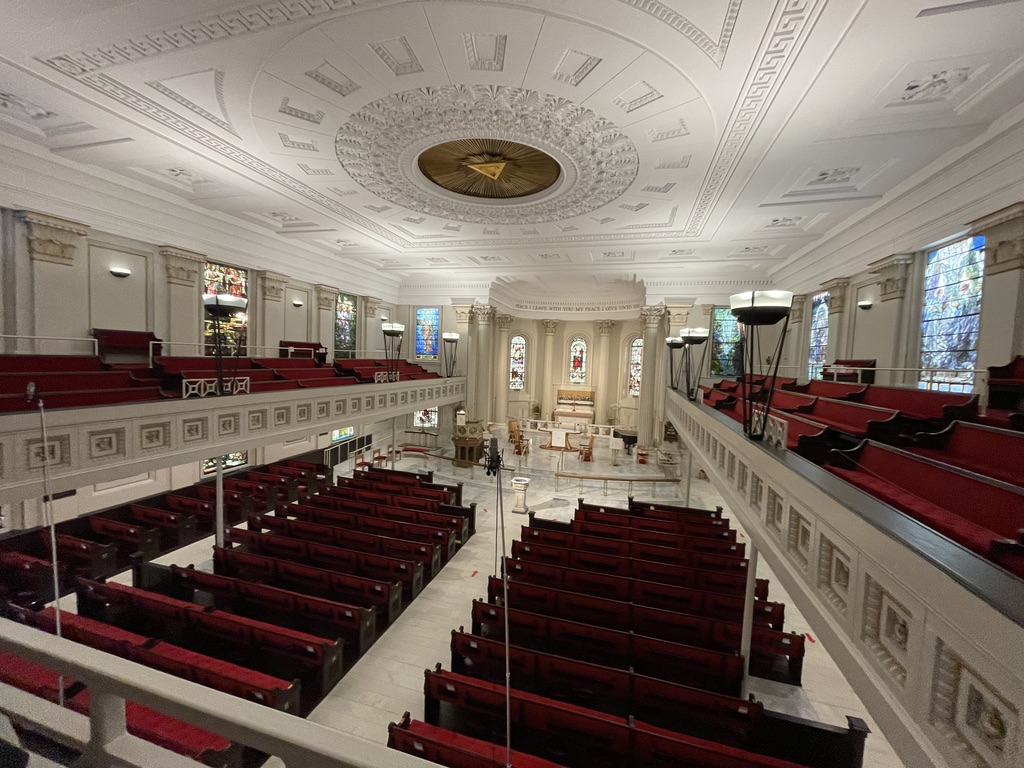
St. Paul’s Episcopal Church (Interior)

St. Paul’s Episcopal Church, pictured above, was often called the “Church of the Confederacy”, for during the war, notables such as Jefferson Davis and Robert E. Lee would worship here. In addition, John Tyler’s funeral took place here in 1862, shortly after he died in his Richmond hotel.

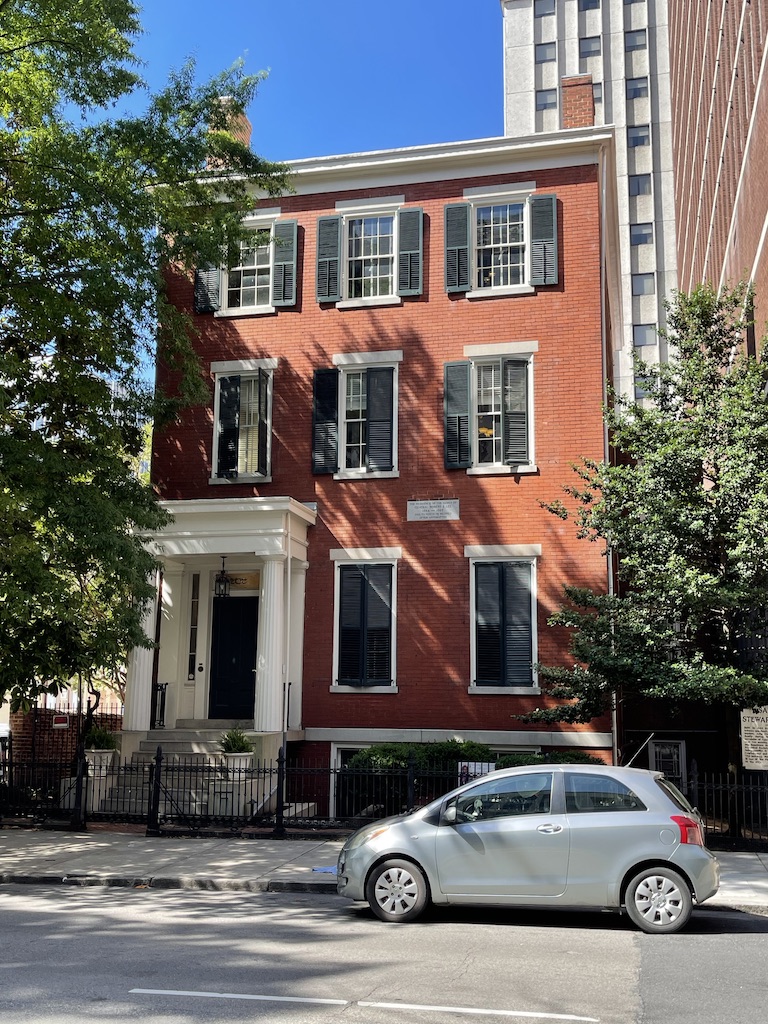
Stewart-Lee House

This tiny house on Stuart’s Row is the Stewart-Lee House, and was where Robert E. Lee lived for a brief period after the surrender at Appomattox. It’s closed to the public.

Feeling content with our time in downtown Richmond, we ventured on to the second-most visited cemetery in the United States…

Hollywood Cemetery

Often called the “Arlington of the Confederacy”, the 130 acre Hollywood Cemetery was founded in 1849, and contains many notable Virginians, including two presidents, the only Confederate President, 28 confederate generals, and over 18,000 Confederate dead. One of the greatest examples of “park-style” cemeteries, it also provides ample opportunity for exploring it in an unconventional way…

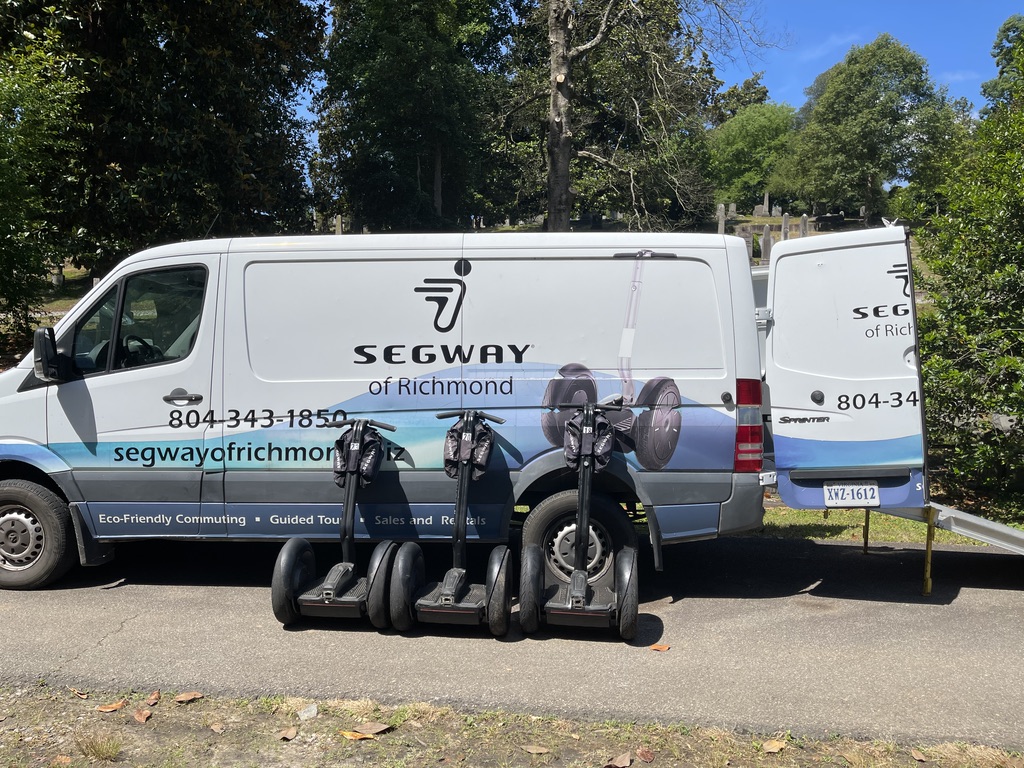
Segways!

Segway of Richmond is a company that does just what it would seem in the title: provide tours throughout Richmond with these incredible transports! Shoutout to our guide Andrew, who was able to provide us with not only quick training on the segways, but also fascinating stories told straight from the grave (okay I’ll stop this time, seriously)!

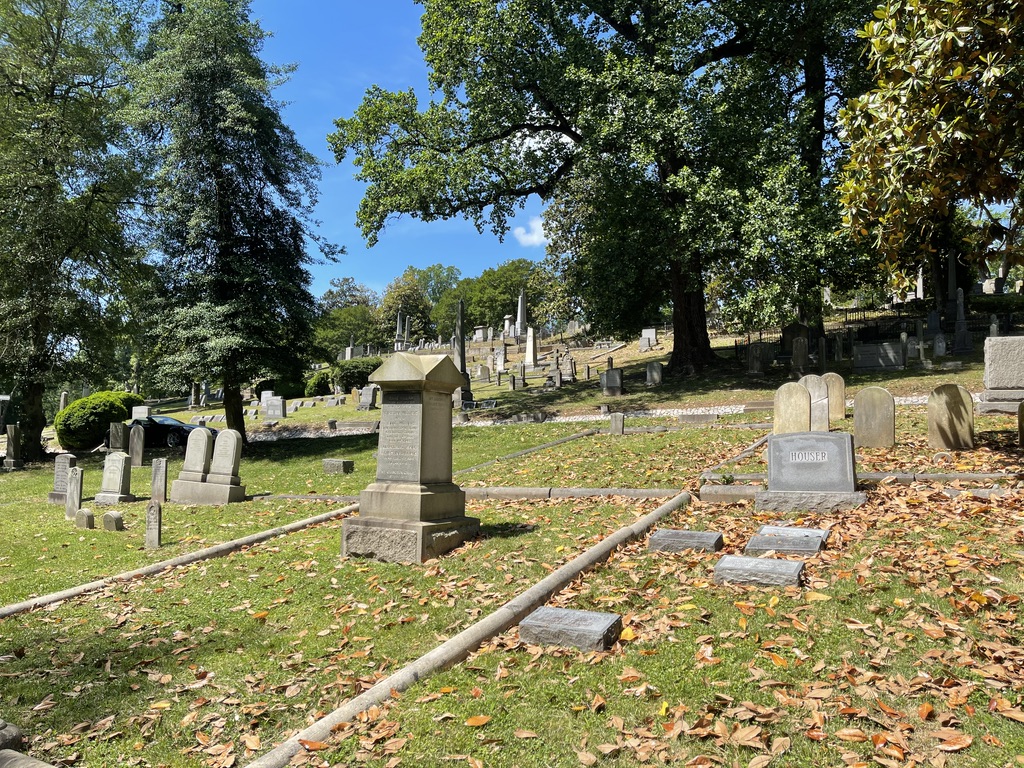
The winding hills of Hollywood Cemetery.
Confederate Officer’s Section

This hill originally served as the burial place for all officers in the Confederate Army, until they eventually ran out of space, and had to spread out elsewhere in the cemetery.

Grave of Governor William “Extra Billy” Smith

Virginia Governor William Smith, often called “Extra Billy”, was the 30th and 35th Governor of Virginia, and at the age of 65, was the oldest Confederate general in the Civil War. Previous to his governorship, he infamously established numerous “spur mail routes”, leading to the acquiring of questionable “extra funds”, hence his nickname. (Fascinatingly, Virginia is the only state that requires it’s governors to only serve non-consecutive terms).

Jefferson Davis & Family Plot

One of the higher profiles of the cemetery is none other than the only person to have served as President of the Confederate States… Jefferson Davis (1808-1889).

Previously a member of both the U.S. House and Senate from Mississippi, and Secretary of War under Franklin Pierce (ironically helping to strengthen the the U.S. Navy at that time), Jefferson Davis was elected to be President of the Confederate States by the new Confederate Congress and led the short-lived union throughout the Civil War. Imprisoned for two years following the Civil War, he faded into relative obscurity, only regaining prominence posthumously via the “Lost Cause” myth.

The Davis Plot (Davis on the left, his wife on the right).

Buried with him is his wife Varina Davis, herself a notable columnist later in her life, and their six children. Only two of their children lived to adulthood, and only the youngest daughter Varina lived to have a family.

Joe Davis’s Grave.

The Davis’s, like the Lincolns, suffered tremendous grief throughout their life, with four of their children dying young to various causes. One, Joe Davis, fell off the second-floor balcony of the Confederate White House to his death at the age of only 5 years old…

Departing from those unhappy memories, we entered the highlight of our tour: President’s Circle!

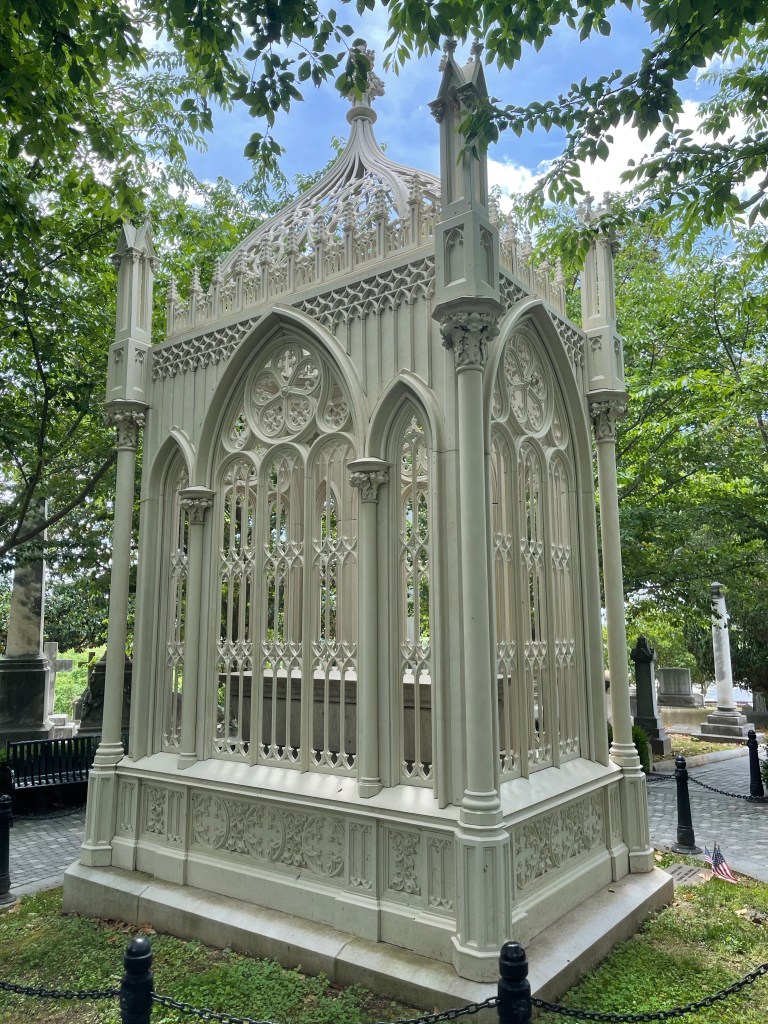
Two presidents are buried here, mere yards apart from one another. The first is James Monroe!

Monroe Tomb

Our 5th President is buried in eloquent fashion here, in this unusual cast-iron monument called “The Birdcage” by the local community.

President Monroe is buried inside this simple stone sarcophagus, inside this not-so-simple structure. He was reburied here in 1858 from his original grave in New York City, where he lived with his daughter in the final year of his life. Monroe was one of the very first U.S. Senators from Virginia, Ministers to both the United Kingdom and France (he was instrumental in securing the Louisiana Purchase from France during the reign of Napoleon), twice-governor of Virginia, Secretary of War, Secretary of State, and of course, our 5th President. The Monroe Doctrine, which warned European powers against interfering in the western hemisphere, is also considered the basis of U.S. foreign policy for most of its history (despite being written by his successor, Secretary of State John Quincy Adams).

With a resume like that, perhaps a fancy tomb of this nature is warranted after all. We’ll learn more about Monroe at his farm in Charlottesville: Highland, in the coming days.

Elizabeth Monroe’s Tomb

First Lady Elizabeth Monroe reopened the newly restored White House following it’s destruction at the hands of the British during the War of 1812, and was a devoted wife to her husband, the latter of whom was devastated following her death. President Monroe would die merely ten months after her, on July 4th, 1831, the 55th anniversary of the Declaration of Independence (the last of three presidents to have died on that historic holiday).

A few steps away, is the other of our two presidents: John Tyler!

Grave of President John Tyler

Our 10th President, John Tyler became president in 1841, and was the first vice-president to rise to the highest office in the land, following the death of incumbent President William Henry Harrison, a month into his term. If you’ve heard the slogan: “Tippicanoe and Tyler Too”, this refers to the Harrison/Tyler ticket during the Election of 1840, which they easily won.

Praised by proponents for his political resolve, and criticized by his detractors for his allegiance to the Confederacy (he died just before he would take his seat in the Confederate House of Representatives), Tyler’s foreign policy record was exemplary, including establishing trade relations with China (and also the Hawaiian Islands), forming the boundaries of Maine and Canada during the Webster-Ashburton Treaty, and most notably, annexing Texas into the Union.

Tyler was the most prolific of presidents when it came to children, 15 in total between his two marriages, some of which while in his 60’s. Notice the grave of Lyon Gardiner Tyler, his 13th child (resting to the left above). I’ll come back to him later.

Two Presidents, just yards away from one another.
Grave of Matthew Fontaine Maury

Matthew Fontaine Maury is notably referred to as the “Father of Modern Oceanography and Naval Meteorology”, and his contributions to ocean currents and winds are not forgotten, especially in naval academies. In addition, he’s credited as one of the first developers of the underwater torpedo!

View of the Richmond Skyline, from Hollywood Cemetery
The James River, which runs through Richmond.
Confederate Dead Monument

Completed in 1869, this impressive 90-foot pyramid is a memorial to the thousands of confederate dead interred in Hollywood Cemetery, and is free-standing. It certainly casts a magnificent height over the surrounding landscape.

Grave of George E. Pickett

The grave of major-general George Pickett is also located here, the namesake of the infamous “Pickett’s Charge” offensive during the Battle of Gettysburg. The botched assault on Union defenses led to the 70% casualty rate of his troops in that battle and was perhaps the defining moment of defeat for the Confederacy there.

This famous iron dog is a popular highlight of the cemetery from tourists, which stands watch over the grave of a 6-year-old girl. It was moved here secretly in 1862, to prevent it’s melting down into bullets for the war effort.

Grave of J.E.B. Stuart

Finally, the grave of J.E.B. Stuart, one of the most effective cavalry commanders in U.S. History, who was considered the “eyes and ears” of Robert E. Lee and the Army of Northern Virginia. Maintaining a spy network of couriers and scouts throughout the war, Stuart was gunned down at the young age of 31, during the 1864 Battle of Yellow Tavern.

What a fun time we had! Feeling “dead” on our feet (okay i’m serious this time! No more death puns!), we thanked our guide bade farewell to our guide, then proceeded on to the final destination of our day!

Sherwood Forest Plantation

Remember Lyon Gardiner Tyler, from earlier?

Lyon Gardiner Tyler

Yes him. Well, he in turn had children in his 70’s, one of which was Harrison Ruffin Tyler.

Harrison Ruffin Tyler

Harrison Tyler, believe it or not, is still alive at the ripe age of 93, and is the actual grandson of John Tyler!

Keep in mind, John Tyler (1790-1862) was born during the first term of George Washington, and Lyon Tyler (1853-1935) shortly before the Civil War. So the lifetimes of Harrison Tyler (1928-), his father and grandfather cover nearly the entire expanse of U.S. History! Nothing short of remarkable.

Tyler’s descendants, including Harrison Tyler and his children and grandchildren, still manage Sherwood Forest Plantation, the only presidential home that is still privately owned by a president’s family. As it is a private residence, I’m not allowed to show you the interior of the home at all, but I’ll try my best to show you what I was able to capture on the grounds, and also the map.

The Tyler Pet Cemetery
The Carriage Road
The North Porch (Panoramic)

And here it is! Sherwood Forest Plantation. It just so happens to be the longest frame house in America, at 301 ft.! The main house, built in 1842, was later expanded with the side extensions in the following years.

Sherwood Forest got it’s name from the famous English forest of the same name, made famous in the Legend of Robin Hood. John Tyler named it Sherwood Forest, because like Robin Hood, he was an outlaw, albeit a political outlaw, with no party.

The reason for that is, that despite being a Whig vice-president, Tyler’s political ideology leaned more with states’ rights and constructionist orientation common with the Democratic Party of the time. Because he couldn’t stand Andrew Jackson’s politics however, he joined the Whigs instead. After vetoing a number of Whig bills, (including one establishing a national bank), Tyler was expelled from the Whig Party, a unique occurence in presidential history.

The North Porch again, where our house tour began.
The South Porch

Perhaps I lied a little bit. The picture above is technically the front side, and the other the back side. It’s confusing, but oh well.

President Tyler lived here with his second wife Julia Gardiner Tyler (his first wife Letitia died a year into his presidency), and they truly enjoyed spending their time here in seclusion. During the Civil War, and following Tyler’s death, Julia and her family fled to safety in New York, and Sherwood Forest was briefly occupied by Union troops, who tried unsucessfully to burn the house to the ground. Parts of the house still bear reminders of that time, particularly with bayonet cracks on the door, or burn marks on the floor.

No picture could truly capture the length and scale of the house, especially with the abundance of various trees throughout the area. It’s just a necessity to see it in person to grasp it.

Sherwood Forest Layout

This map from our brochure features the layout of the house. While the second and third floors, the kitchens/laundry rooms, and the personal sitting room of the current family were closed off, everything from the dining room (E) rightwards on the map was tourable. Note the unusually long ballroom (H) on the right side, where the Tyler’s would host parties through the night, partaking in dances like the “Virginia Reel!” (see Gone with the Wind and you might get an idea of it).

The house contained various items and heirlooms from the different generations of the family, including family portraits, waterford crystal chandeliers, and various intricate and ornate decorations, ranging from practical to simply ornamental. Particularly in the dining room and drawing rooms, one could see a large number of Tyler artifacts, though not all items in the house necessarily belonged to Tyler himself. Some items are period pieces, as a number of the original furniture and items in the home were looted or destroyed during the Union’s occupation of the plantation.

Various “dependencies”

These buildings served a variety of purposes, them being the overseer’s quarters (left), the smokehouse (center), and the winehouse (right). All buildings were closed sadly, but we’ll have a better look at plantation life in the days to come, including those of the enslaved.

The Tyler Garden

The one thing I’ll likely remember most about Sherwood Forest (other than the obnoxious and ridiculous abundance of flies, bees, mosquitos, and other bugs), is the solitude. In this garden, the sounds of the outside world are drowned out by the sounds of birds chirping innocently from afar, while the winds blow refreshing air through the place, and create a silent yet peaceful rustling through the leaves of the trees. I suppose these are the same sounds and sights that President Tyler enjoyed during his time here.

It really puts it in perspective I think… even so-called “outlaws” have their havens of respite, and here, Tyler’s memory is preserved for and cared for by his descendants. It’s invocative I think, of the importance of family heritage in various communities of Virginia, especially here in Charles City.

Of course, nothing can excuse the fact of slaveowning. Nothing ever could. It’s still important however, to view the entire legacy and/or contributions of individuals, good or bad, to get a full and complete picture of them. Indeed Tyler was a slaveowner, but his contributions to foreign policy are details often forgotten about in historical evaluations today. And I suppose that’s what history is all about. Trying to find the bigger picture.

John Tyler

On the way back to Richmond, we briefly stopped at the historical marker of Greenway Plantation, Tyler’s birthplace!

Tyler Birthplace Marker
Greenway Plantation

Today, a private residence stands over the site of Tyler’s birth. Regardless, it’s always nice to discover little easter eggs like this.

What a day! It’ll certainly be hard to top!

Then again, Colonial Williamsburg and Jamestown might be some good contenders for that… perhaps we’ll try in our next post?

Join me next time as we delve into where it all began, in the oldest communities in North America that would evolve into the beginnings of what would become the United States of America!

Farewell for now!

Day 1: Back on the Road (and Plane) Again! (New Braunfels, TX to Richmond, VA) (5/31/21)

Hello one and all, and happy Memorial Day! It’s time for the first post of our 2021 Virginia Trip!

I cannot even describe the excitement of striking out to travel to new places again! It’s just so surreal to actually be doing this trip, which I had first started planning a couple of years ago.

Today might be a shorter post than later ones, but now that we are safely in our hotel room in Richmond, here’s our first day abroad!

Leaving Austin-Bergstrom International Airport early in the morning, we first went to a layover stop before going on to Richmond… Chicago!

Chicago Skyline (Note the tall Willis Tower)

The third largest city in the United States, Chicago is home to the Willis Tower (as pictured above), once known as the Sears Tower. It was formerly the tallest building in the world, and currently is the 2nd tallest in the western hemisphere (behind the One World Trade Center in New York).

Arriving at Virginia in the mid-afternoon, we were ecstatic to arrive in Richmond, and after picking up our rental car, drove downtown to scout the area for the sites on our list. As of this post, Downtown Richmond seems to be laden with construction work and remodeling, but the tree-lined streets created a unique atmosphere to this capital city.

Downtown Richmond (Not my Picture)

As we had gotten here later in the day, combined with Memorial Day Observation, many places were closed, although we did manage to walk around and see one notable landmark…

Virginia State Capitol

Home to the oldest legislative body in North America (the Virginia State Assembly), the Virginia State Capitol building was designed by Thomas Jefferson and Charles-Louis Clerisseau, and reflects both Palladian and Early Republic styles in it’s architecture.

Virginia State Capitol (frontside, surrounded by scaffolding).

Although the building itself is closed due to the pandemic, as well as ongoing construction, the grounds were perfectly suitable to walk around and explore.

Originally completed in 1788, the original central structure gained it’s additional House and Senate wings in the early 20th century.

In addition, it also served as the meeting place of the Confederate Congress during the Civil War (1861-65), and managed to survive the Burning of Richmond.

Backside
Virginia Executive Mansion

The Virginia Executive Mansion, pictured above, is the oldest purpose-built residence for governors and first families in the country. Built in 1813, the house managed to also survive the Burning of Richmond, and was home to the Governor’s Office until 1902.

Mansion Front Plaque

Also on the grounds were a variety of monuments.

Virginia Civil Rights Memorial

The Virginia Civil Rights Memorial celebrates the colored men and women of Virginia who strove for racial equality, and especially notes the contributions of african-americans such as Barbara Johns, Rev. L. Francis Griffin, Oliver W. Hill Sr., and Spottswood W. Robinson III, the latter two being famous contributors for the desegregation of public schools in the 1954 Supreme Court Case, Brown v. Board of Education.

“Stonewall “Jackson Memorial

Thomas J. Jackson, better known as “Stonewall” Jackson, was one of the most famous and successful confederate generals during the Civil War (known for his “stone-wall defences”, hence the nickname), managing to win several crucial victories for the Confederates before his accidental death at the hands of his own snipers. Naturally, as an icon of the “Lost Cause” myth, memorials of Jackson have often accrued extensive controversy in recent years.

These flowers you see in abundance around the capital by the way, are Oakleaf Hydrangeas, which I assume are unique to Virginia. They surely wouldn’t survive Texas’s hot climate, but these flowers are exceptionally pretty.

Virginia Washington Monument

This very large and impressive equestrian statue of George Washington also “rests” on the the capital grounds, and wasn’t finished until 1869. The site of Confederate President Jefferson Davis’s inauguration, the monument also features six statues surrounding the base depicting six of Virginia’s most notable early individuals, including Thomas Jefferson, John Marshall, Patrick Henry, George Mason, Thomas Nelson Jr., and Andrew Lewis.

Virginia Women’s Monument

The Virginia Women’s Monument honors the contributions of women throughout Virginia’s history, and what significant parts they played in it’s growth and development.

Finally, this Bell Tower, constructed in 1825, would ring out to alert the city of fires, attacks, or other such emergencies in 1800’s Richmond, and since 1934, it signals the beginning of session for the Virginia State Assembly.

Perhaps the most painful thing about this trip is that not even we can cover the full extent of the history deeply rooted in this city. No single visit could do it justice. But we are certainly going to try to see the best there is on this trip, and we still have three more days to explore it!

Tomorrow, although likely a less strenuous day compared with our future ones, will nonetheless be exciting, as we’ll be touring famed Hollywood Cemetery in downtown Richmond in a very unique way (i’ll reveal that surprise tomorrow), and also visit Sherwood Forest Plantation, home of our 10th President, John Tyler!

Hope to see you there!

Virginia Trip Overview

Hello hello!

Well, it’s official, I am 22 today!

Though I may be a bit older, nothing can stop me from enjoying my two passions in life: history and travelling! And what better way to spend today’s time than sharing with you our official Virginia Trip Overview?

Perhaps in the best birthday gift I could ask for, Virginia has lifted most mask and social distancing restrictions today! Though some sites will still require them, our complete vaccinations will make this process a lot easier.

Our adventure together starts next Monday, so let’s delve right in!

As you can see from this map, there’s a curious distribution of density when it comes to our stops this time around…

As per our last few trips, each mark on the map is associated with a letter or symbol, which is referenced below. Our journey will take us two weeks to complete, and there’s no shortage of things to see!

A/Start) Richmond, Virginia

As the capital of Virginia, and the former capital of the Confederate States, Richmond shines with a rich history that’s imbedded in it’s very identity. As there are also numerous places around Richmond, we expect to stay several days exploring them. Some of them include (but not limited to):

Hollywood Cemetery: Situated along the James River in downtown Richmond, Hollywood Cemetery is often regarded as the “Arlington of the Confederacy”, as numerous notable confederate generals and statesmen, including President Jefferson Davis, are buried here. In addition, two U.S. Presidents, James Monroe and John Tyler, are buried here.

American Civil War Museum (Richmond): Formerly the Tregedar Ironworks, the American Civil War Museum of Richmond contains one of the largest collections of Civil War artifacts in the world! It’s also associated with two other sites, including the White House of the Confederacy, and the Appomattox Museum location.

White House of the Confederacy: The former home of Confederate President Jefferson Davis for most of the Civil War, now a house museum, as part of the American Civil War Museum Foundation. They recently opened up the full tour again, so lucky us!

B) Charles City, VA

Home to various historic plantations, Charles City features two different estates with presidential connections!

John Tyler’s Sherwood Forest Plantation: The plantation home of 10th President John Tyler is still personally managed by his descendents, and is the longest frame house in America!

Berkeley Plantation: One of the most historic plantations in the former colonies, Berkeley Plantation boasts many firsts in american trivia, and is the ancestral home of the Harrison Political Dynasty.

C) Williamsburg/Jamestown, VA

Colonial America was practically born here, for this area was home to the first european colony in North America!

Colonial Williamsburg: Longtime capital of Colonial Virginia, and home to it’s famous House of Burgesses, Colonial Williamsburg is an entire working community modeled just like it was in the 1700’s, with dirt roads, brick buildings, and a friendly immersive experience guided by period-style interpreters.

Jamestown Settlement: As the very first european settlement in North America, the English founded this tiny colony in 1607, beginning the long legacy of colonization throughout the continent. Though little remains of the original settlement today, the site itself still offers various memorials and exhibits to learn about where America all began.

D) Colonial Beach, VA

Westmoreland County is home to various presidential birthplaces (which we will visit), the most famous of which is the George Washington Birthplace National Monument, which enshrines the memory of our nations’ first president, and the Father of our Country.

E) Fredericksburg, VA

Few towns are quite as historically enriched as Fredericksburg, with an abundance of both Colonial and Civil War history in it’s various battlefields and historic buildings. In fact, i’ll leave most of it as a surprise until we get there. 😉

F) Orange, VA

James Madison’s Montpelier: The home of our 4th President, and the “Father of the U.S. Constitution”, Montpelier Plantation covers the mansion, grounds, and final resting place of President Madison and his family.

G) Charlottesville, VA

Charlottesville could perhaps be considered in the “Heart of Virginia”, for there’s no better place to experience the very culture or cuisine of the “Old Dominion” State. Not to mention, the architecture of the University of Virginia, as well as that of Monticello, are UNESCO World Heritage Sites.

Thomas Jefferson’s Monticello: Undisputedly the most famous and iconic of presidential homes (besides the White House of course), Monticello was designed by the elaborate statesman that was our 3rd President, and it is here that his essence, spirit, and innovation is caught through his mansion, multitude of gardens, and in his final resting place.

James Monroe’s Highland: While not as elaborate as nearby Monticello, 5th President James Monroe’s farmhouse “Highland” provides a good look into his lifestyle, and that of the average 1800’s farmer.

H) Staunton, VA

– Woodrow Wilson Presidential Library and Museum: Home to the presidential archives and museum of our 28th President, the site also preserves Woodrow Wilson’s birthplace for public tours. Due to the pandemic however, it’s uncertain whether the birthplace portion will be open in time for our arrival.

I) Lexington, VA

Lexington may prove to be a brief stop, but only because of two famous Confederate individuals buried here.

Lee Chapel and Museum: Maintained by the University of Washington and Lee, the Chapel contains the final resting place of Robert E. Lee, famed general of the Confederate Army during the Civil War, as well as other members of the Lee family. As of now however, it is closed to the public due to the pandemic, and its doubtful that it will reopen in time for our visit. Still, we shall try…

Oak Grove Cemetery: Though a small confederate cemetery, the legendary confederate general Stonewall Jackson is buried here. This will naturally be a very quick stop.

J) Appomattox, VA

American Civil War Museum (Appomattox): Part of the previosly mentioned American Civil War Museum Association, this particular location focuses heavily on the Appomattox experience, surrounding the final surrender that ended the Civil War.

– Appomattox Court House Natonal Historical Park: Encompassing Appomattox Village, this National Historical Park also preserves the reconstructed McLean House, the site of the official surrender of Robert E. Lee to Union general and future president Ulysses S. Grant.

K) Forest, VA

Thomas Jefferson’s Poplar Forest: The summer retreat of Thomas Jefferson, while not as well-preserved or remarkable as Monticello, was still designed by him, and may prove to yield some valuable insight into Jefferson that Monticello might not.

L) Bedford, VA

– National D-Day Memorial: For those not able to visit the actual beaches of Normandy in France, this impressive memorial enshrines the memory of the brave souls who weathered the stormy offensive of D-Day, which sparked the turning point of victory in World War II.

M) Greeneville, Tennessee

Lightyears away, we begin our “Tennessee Tenure” in Greeneville.

Andrew Johnson National Historic Site: Though geographically an outlier from other presidential sites, the park serves as the best place to learn about our 17th President, including at it’s visitor center, the Johnson Homestead, and the final resting place of President Johnson and his family. Visiting his grave will finally complete my long quest to visit every single presidential gravesite!

N) Gatlinburg, TN

Taking a short rest from history, the small town of Gatlinburg is famous for one chief reason…

Great Smoky Mountains National Park: Nestled within the Appalachian Mountains, the Great Smoky Mountains provides a welcome respite in nature for the residents of both Tennessee and North Carolina. We’ll spend some time here to unwind, and later visit nearby Pigeon Forge for some exciting entertainment!

O) Columbia, TN

James K. Polk Presidential Home & Museum: Just an hour south of Nashville is the the only museum dedicated to our 11th President! The site is home to a hodgepodge of Polk artifacts and history that we somehow missed on our 2018 Summer Trip.

P/Finish) Nashville, TN

We revisit Nashville once again, to relive the sounds and sights found nowhere else! With my mom by our side this time, we’ll be sure to have just as good a time as we did last time! Along with visiting some sights downtown new and old, we also will revisit:

– Andrew Jackson’s “The Hermitage”: The Hermitage plantation is famous for being the home of general and 7th President Andrew Jackson! I wonder how much has changed since last time…?

Ryman Auditorium: The original home of the Grand Ole Opry, and perhaps considered the birthplace of country music, the Ryman is a must-see stop for visitors to Nashville! We’ll have to squeeze this in on the day we fly home, but no harm done.

Country Music Hall of Fame: A shrine to country music, and indeed anything into it’s culture, one could take something new away with each visit (which I hope is our case).

Phew.. and that’s our trip in a nutshell! Before we kick off on Monday however, I would like to address one minor thing, just to get it out of the way.

I’m sure that you all are aware of the political and ethical controversies that have occured within the past few years, particularly concerning the debate of historical commemoration (especially confederate monuments). As always, I try to ensure that my blog and my writing is free of political partisanship, so I will not delve into those arguements at all. I believe that no matter what opinions we might have, we can all have mutual respect for other people and their convictions.

The purpose of my blog has always been to simply share my enjoyment of travel and history with all of you, so together we could learn both about our history, as well as ourselves. And that of course, is what I intend to do.

Thank you all for tuning in once again! I hope to see you on Monday for the first daily post of our 2021 Virginia Trip! Take care!

A Retrospect in Texas (2019-20-21 Ventures)

Hey everyone!

Sooo, it would seem that all our plans for our Virginia/Tennessee Trip in the beginning of June are well underway! While I’m not yet ready to reveal the tenative day-by-day schedule to you until we get closer to departure (probably next week), I can tell you about various places and activities that we have done between the 2019 Summer Trip, and today, both before and during the pandemic.

I’ll touch on each of these briefly, so let’s get started!

San Antonio Missions National Historical Park

In October of 2019, my parents and I visited one of the most prolific National Historical Parks in Texas, The San Antonio Missions!

Situated in the San Antonio area, this park (the only UNESCO World Heritage Site located in the Lone Star State) encompasses 4 of the 5 mission structures constructed in the 1700’s by Spanish Missionaries, hoping to establish their empire’s dominance over the region, as well as convert the natives there to Catholicism (the fifth of these missions is San Antonio de Valero, otherwise known as “The Alamo”, where the famous titular battle was fought.) Though these missions eventually were abandoned from their original purpose, they remain cultural icons in San Antonio today, and were still unique communities in which Spanish and Native-american individuals interacted.

Mission San José (Side)

The largest and most unique of these four missions is “Misión San José y San Miguel de Aguayo”, otherwise known as Mission San José. Here’s me in front of it!

Mission San José (Front)
Interior

Still an active place of worship, the chapel is yet only one part of the larger mission (which could include storage areas, living quarters, fortifications, etc.), yet still recognizable. Just zoom in and take the time to look at that beautiful stonework at the front!

In the Walls.

The three other missions (unique in their own ways), include:

Mission Espada

Mission San Francisco de la Espada, or simply Mission Espada, the smallest,

Mission San Juan Capistrano

Mission San Juan Capistrano, under restorative work,

Mission Concepción

And Mission Concepción, the second-largest and also still a place of worship for locals.

If you’re in the area, I recommend checking it out if you need a day to fill! Be sure to stop by the Alamo in downtown San Antonio as well!

2020 Texas Mini-trip

Before the pandemic truly hit us in March 2020, we had managed to take a weekend “mini-trip” through East Texas, exploring some of the prominant historical sites situated there! Such as…

The San Jacinto Monument in La Porte, TX (near Houston), commemorating the famous Battle of San Jacinto on that site, the final and decisive battle of the Texas War for Independence, when on April 21st, 1936, the Texian Army led by General Sam Houston won a resounding victory against the Mexican Army led by President Antonio Lopez de Santa Anna, and by ensuring the capture and surrender of Santa Anna, guarenteed independence to the blooming Republic of Texas.

San Jacinto Monument

Commemorated in 1939, and standing at nearly 568 feet high, the great obelisk is actually slightly taller than the Washington Monument in D.C., and offers sweeping views of the surrounding landscape from it’s observation deck.

View from the observation deck, looking east.
USS Texas

At dock near the monument is the USS Texas, a BB-35 New York-class battleship launched in 1912, that is the the only remaining capital ship in the world to have served in both World Wars, and the only remaining World War I-era dreadnought ship. Though it is regularly a museum ship, overtime it’s structural hull has become strained and damaged from it’s extended lifespan, and has not been open to the public for some time.

George Bush Family Gravesite

We revisited the grave of 41st President George H.W. Bush (as well as First Lady Barbara Bush and their infant daughter Robin) at his library/museum in College Station, as a sign of respect. Though months have already passed since his burial here, the ground over his grave is still recently laid.

Sam Houston Memorial Museum

In Huntsville, we took the time to visit the Sam Houston Memorial Museum, which honors the famous general, U.S. congressman and Governor from Texas, who is often regarded alongside Stephen F. Austin as one of our most prominant Texan icons. You’ll find fascinating artifacts inside from him and his family, former belongings of Mexican president Santa Anna, and on the grounds various buildings associated with him, including some of his log cabins, a farmhouse of his, and the famous “Steamboat” House where he died.

Sam Houston’s Grave

We also took the time to pay respects at Sam Houston’s Grave in nearby Oakwood Cemetery. Feel free to blow up the image to read it.

Washington-on-the-Brazos Meeting House

At Washington-on-the-Brazos, the temporary capital of the Republic of Texas during the Texas Revolution was situated here, and in this tiny cabin in 1836, (or at least, the original cabin where this replica stands today), the Texas Declaration of Independence was written, and signed by 60 delegates from across the former Mexican colony.

Interior

Although this place seems a bit too crowded to fit 60 delegates in, i’m sure they were able to tighten their belts and make-do.

Goliad State Park

Truly, the only thing keeping us sane was walking on various nature trails and in parks around the New Braunfels/San Marcos area, yet as all of you, I was ready to get out and explore some more, when all this got better.

Nearly a year later, and after months of lockdown through the pandemic, we decided to take our chances and explore a new historical site again… and what better way to do that than by checking out the site of the famed Goliad Massacre?

Presido La Bahia

Presido La Bahia, situated above, was originally an abandoned spanish fortress situated in Goliad, and an important defensive fortification for the Texian Army during the Revolution. On March 19th, 1836, mere days after the famed Battle of the Alamo, Colonel James Fannin and his 300 troops were surrounded and captured by superior numbers of Mexican troops.

On March 27th, and on the orders of Santa Anna, the Mexican troops marched Fannin’s men down this very road (many decades before this road was paved), and down to a field. Set loose on the field, the troopers fired on the unarmed prisoners, killing nearly all of the 300, with only a few of them escaping into the wild. Colonel Fannin himself was personally executed.

The Goliad Massacre, as with the Fall of the Alamo, embittered the Texian Army to fight further against Santa Anna and his troops, and inspired them to win their crucial victory at the Battle of San Jacinto. Fannin and his troops were buried underneath this great monument near La Bahia, and Goliad remains a name strongly remembered by Texans abroad.

Miscilaneous

The remaining photos and stories I have are from assorted sites around Texas.

Monument Hill, La Grange, TX

At the Monument Hill & Kreische Brewery State Park in La Grange, is the final resting place of the Texian victims of the Dawson Massacre and the ill-fated Mier Expedition, enshrined by this tall monument.

The Dawson Massacre, which involved the death of 36 Texian militiamen on September 17th, 1842 at the Battle of Salado Creek near San Antonio, prevented the Mexican army from further advancing on San Antonio only a couple of years before the Mexican-American War.

The Black Bean Incident

And the Mier Expedition, also launched in 1842, saw a failed Texas offensive campaign into Mexico, that resulted in the capture and partial execution of nearly 300 men. 16 were executed by mexican troops in an event simply known as the infamous “Black Bean Incident.” While in prison, a group of the Texian prisoners were presented with a cup filled with different colored beans. It was reasonably simple. If you picked a white bean (9/10 chance), you lived. If you picked a black bean (1/10 chance), you were killed by a firing squad. The remains of the victims for both incidents were interred here at Monument Hill.

Also part of the State Park is the Kreische Brewery, the ruins of a once prosperous brewing establishment.

Kreische Brewery Ruins

Though once containing a third floor made entirely of wood, the size of these stone ruins is quite impressive. Built in the 1860’s by Heinrich Kreische, the brewery cleverly utilized springwater to power the distillation and sale of beer to the local area.

The Monument Hill and Kreische Brewery State Park also features several hiking trails around the area, so if your around, I definitely recommend checking it out! There’s something for everyone there.

Finally, while on buisness in West Texas in March 2021 (ironically a full year after the lockdown commenced), we stopped in Midland to visit a site that I had waited to do for a long time… the George W. Bush Childhood Home!

George W. Bush Childhood Home

Built in 1940, the house was occupied by the Bush Family from 1951 to 1955, and remains the only house that was home to two presidents, and two governors (that being George W. and Jeb Bush). A more recently opened museum, dedicated in 2006 during “Dubya’s” presidency by First Lady Laura Bush, and the elder Mr. and Mrs. Bush, it serves as a reminder (especially to older generations) of simpler times, with all the childhood delights and neighborly love that could be fondly reflected upon.

Though the furniture of the house is a mixture of replica and authentic artifact pieces from the Bush’s time here, many of the details of the house had been laid out to the letter, especially on the advice of Barbara Bush, who decided details as minute as the window-curtain shades, or the wallpaper.

Many of the exhibits here in the dining room (also the living-room) told of the story of the Bushes both before and during their time in Midland, including their time growing up in the northeast. They had already moved twice before deciding to pursue the oil-buisness here in Midland.

A lot of old classics, for those that remember them. 🙂

Kitchen
Kitchen

The kitchen was filled with applainces of the kind that Barbara Bush would have used. The kids family would’ve eaten at the table here for casual meals, and in the dining room for formal ones. By the way, that refrigerator you see actually belonged to Laura Bush’s family, who were Midland natives. Many various family members and friends were able to contribute pieces of history like this to the home.

“Dubya’s” Room

And this of course: Was George Jr.’s room, where he did some of his favorite activities as a child. He read and followed the 10 rules of the Red Ryder Oath on the back wall, play with his train set, or of course study for his classes.

Bush 43 revisiting his childhood roots.
Robin’s Room

Another room in the house was filled with various exhibits and memorabilia from George H.W. Bush’s presidency, but also payed homage to Robin… the infant daughter of George and Barbara, who passed away in 1953 to Leukemia. It was a rough time of sorrow in this house after they lost Robin, yet it made their family all the more stronger together.

Robin

Baseball was a strong running-theme in the Bush Family. George H.W. played it for Yale (even getting the chance to meet Babe Ruth in person), and George W. would own the Texas Rangers before he became president. Both of course, were very involved in the Little League in Midland, with his parents supporting the team while George W. Bush played.

Finally, the backyard was where Bush Jr. and his friends could play in the backyard doing all sorts of shennanigans, all while Barbara Bush could supervise from the house through the window while ironing.

No matter how you lean politically, it’s still fascinating to learn of the early years George W. Bush, and of how community-involved they were. For it was here that George W. Bush would learn many of the lessons that he would apply to his later life, and indeed, during his presidency. And taking lessons from our childhood experiences is something that i’m sure we ALL can relate to.

Phew… I know this seemed like a lot, but this was spread out over the past year and a half, with long breaks in between. Frankly i’m ready to get out there and explore once again, and be able to share with you all my travels! I hope to do just that in Virginia, where we’ll go into the motherland of U.S. history, and all learn things together.

Thank you again for tuning in! Next week i’ll post our tenative schedule for our Virginia/Tennessee trip, which will last roughly two weeks! See you then!

A Long Awaited Reunion (And Exciting News) – 2021

At long last, hello again everyone!

It’s been some time since we’ve last travelled together hasn’t it? Two years? It’s still so hard to believe…

So much has happened since we saw the end of our Summer 2019 Trip, where we last left off… in only the last couple of years, we have experienced political turmoil within our own republic, the dangers and restrictions of the ongoing COVID-19 Pandemic, and of course, the prevention of doing the things that we most cherish. It’s been difficult for us all, I think, and in this long and stagnant period, it’s got me to thinking how dearly lucky we are to have been blessed with the chances to follow whatever hobbies or passions that mean a lot to us. To me, travelling is one thing that gives me the most incredible zest for life, and it fills me with an energy that I can’t describe of being anywhere else. And in that time, not being able to do that has at the very least taught my how valuable it is that we enjoy doing our favorite things while we can. I had many travels arranged for 2020 to share with you, before those chances were dashed of course.

However, with the recent and gradual lifting of travel restrictions and precautions (which we will of course, still approach with an optimistic caution), I am happy to announce some big plans for 2021! Two main announcements in fact!

  1. For the first two weeks of June, I will be going to Virginia and Tennessee on a roadtrip! That means more historical sites, museums, and other incredible sites relating to the Presidents of the United States, and other beautiful and fascinating places that those two states have to offer!
  2. Although delayed since the originally intended Fall 2020 semester, I am delighted to announce that in Fall 2021 I will be Studying Abroad at Harlaxton College in England! Europe has always been a place I feverishly have wanted to explore, and now I may have the chance to do so through Texas Lutheran University’s Study Abroad Program!

More details will be forthcoming on both of these exciting developments of course, but rest assured I will have plenty to share with y’all as we explore and learn about new and exciting places, history and cultures!

Not to mention, I may occasionally send out additional posts to tell you all what i’ve been up to these past few months, on various places and things that I’ve done since Summer 2019, including an East Texas Weekend Roadtrip, and various visits to historic locations in Texas, including the San Antonio Missions, and the Monument Hill/Kreische Brewery, among others!

In the next coming days I’ll be sure to update you again on either of these things, so keep an eye out for more posts!

It’s good to see you all again, let’s make this a great year of travels together!

Â