Day 23, Journey’s End (Boston, MA to New Braunfels, TX) (6/3/19)

Long we’ve road, and far we’ve come… and now we’re finally home!

It feel so wonderful to be back home in Texas… I’m not sure i’ve ever been this long away from home in my life. I am not saddened by this fact in the least however, as we filled these past three weeks with perhaps the greatest journey that I have ever gone on.

It feels ages ago since we had touched down in Washington D.C. doesn’t it? We had then worked our way through the major cities of D.C., Philadelphia, New York City and Boston, and through the states of Maryland, Pennsylvania, New Jersey, New York, Vermont, New Hampshire, and Massachusetts!

I suppose that this post is more of a “Post-Mortem” than anything, but it’s still important to recognize all that we’ve been through.

IMG_6836.jpg

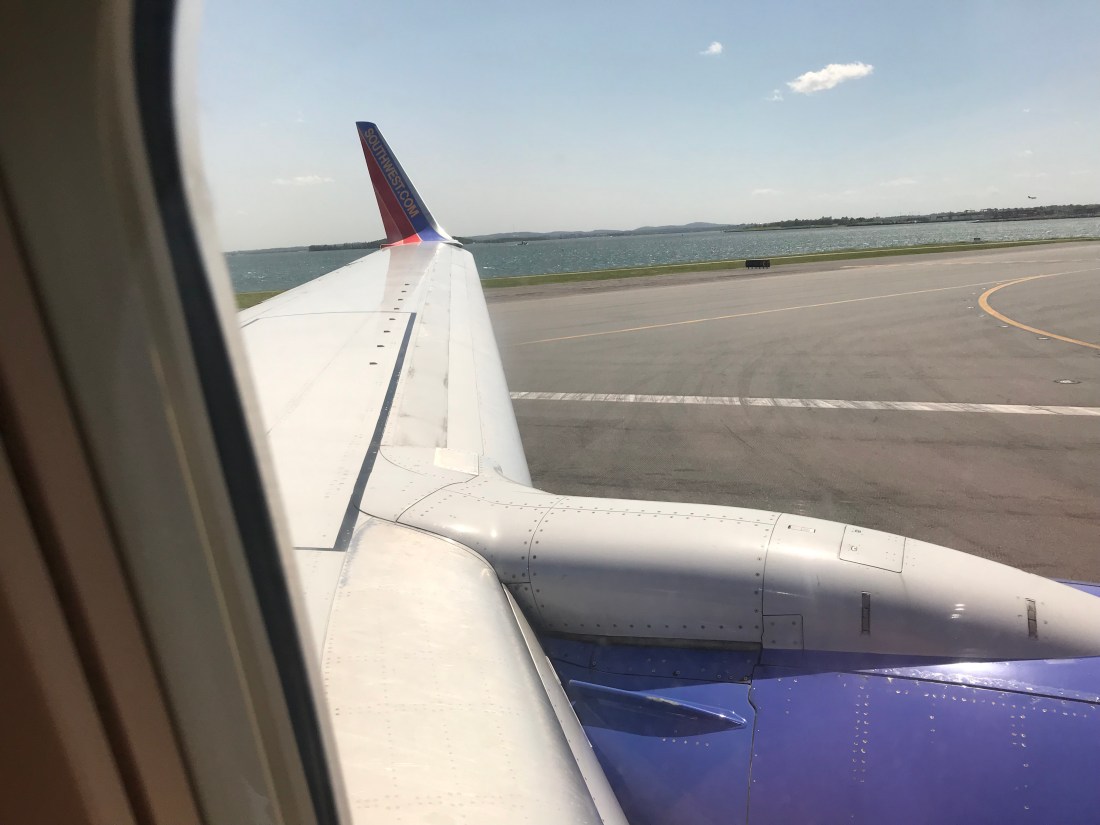
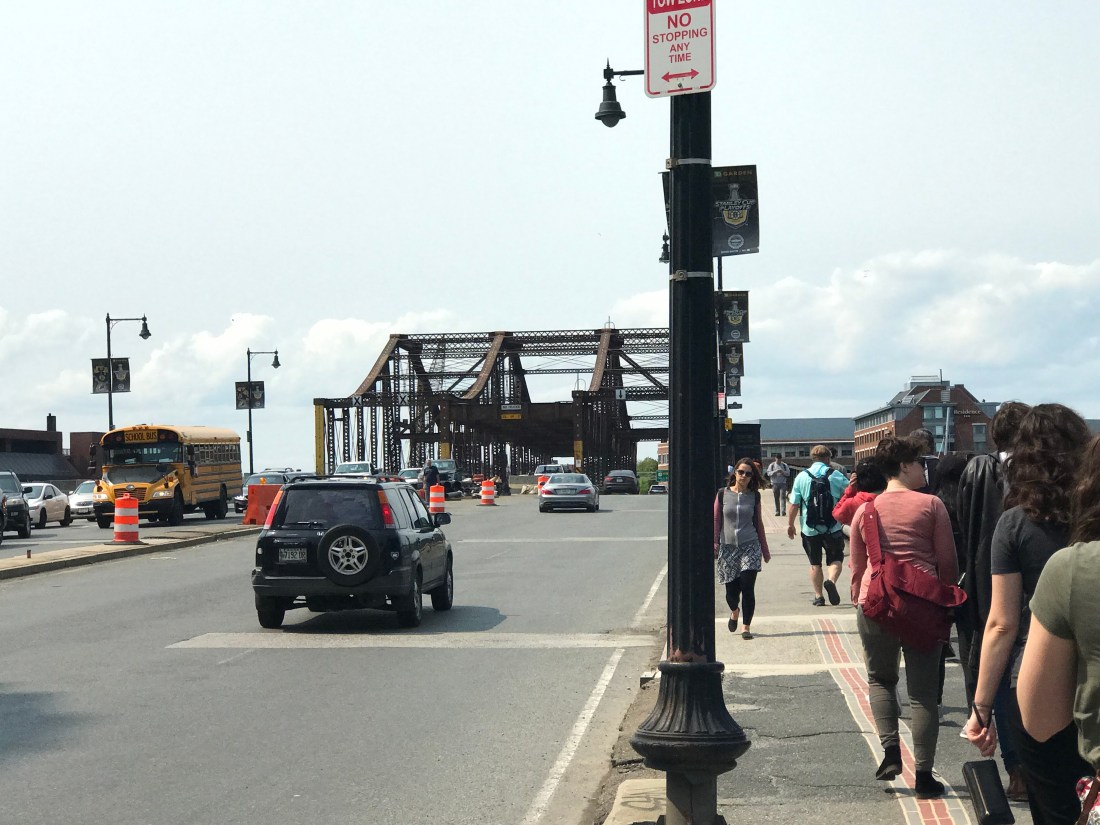
It was fairly easy to get into Boston-Logan International Airport, which was one of the busiest in the world. Just minutes to takeoff…

IMG_6838.jpg

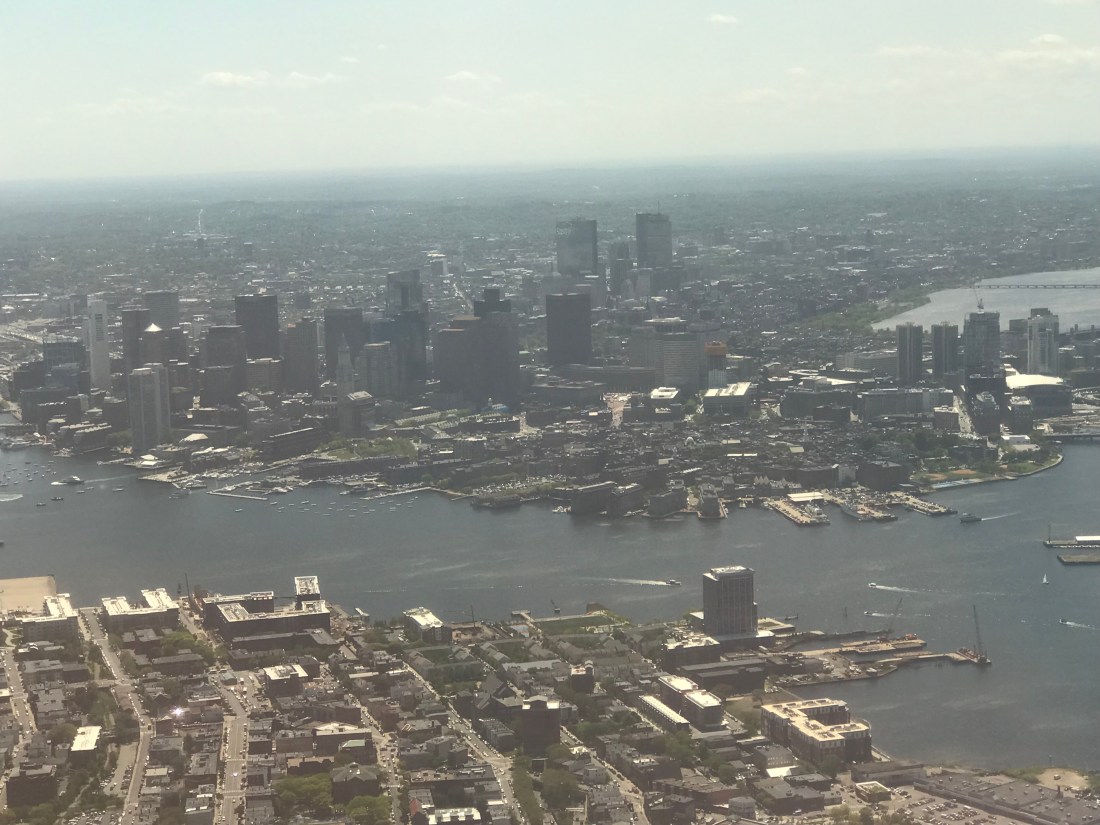
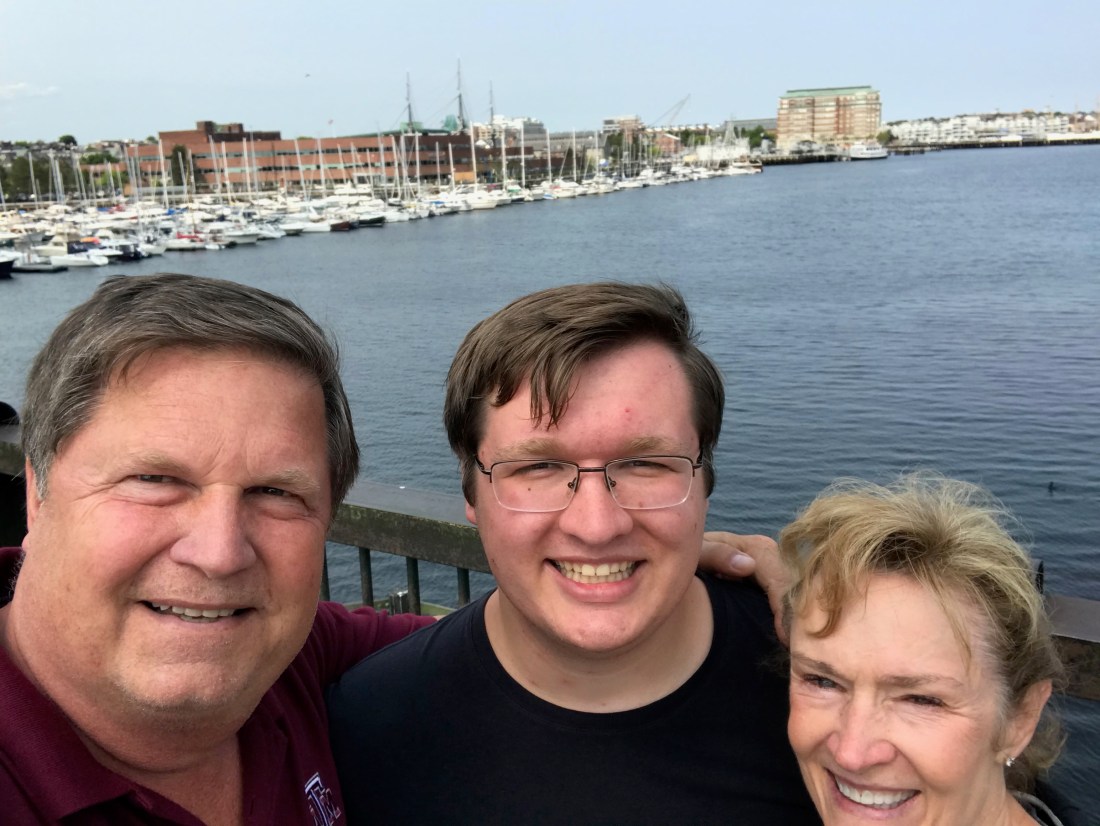
Looking down at the City of Boston, which, in hindsight, is a wonderful place to visit…

IMG_6839.jpg

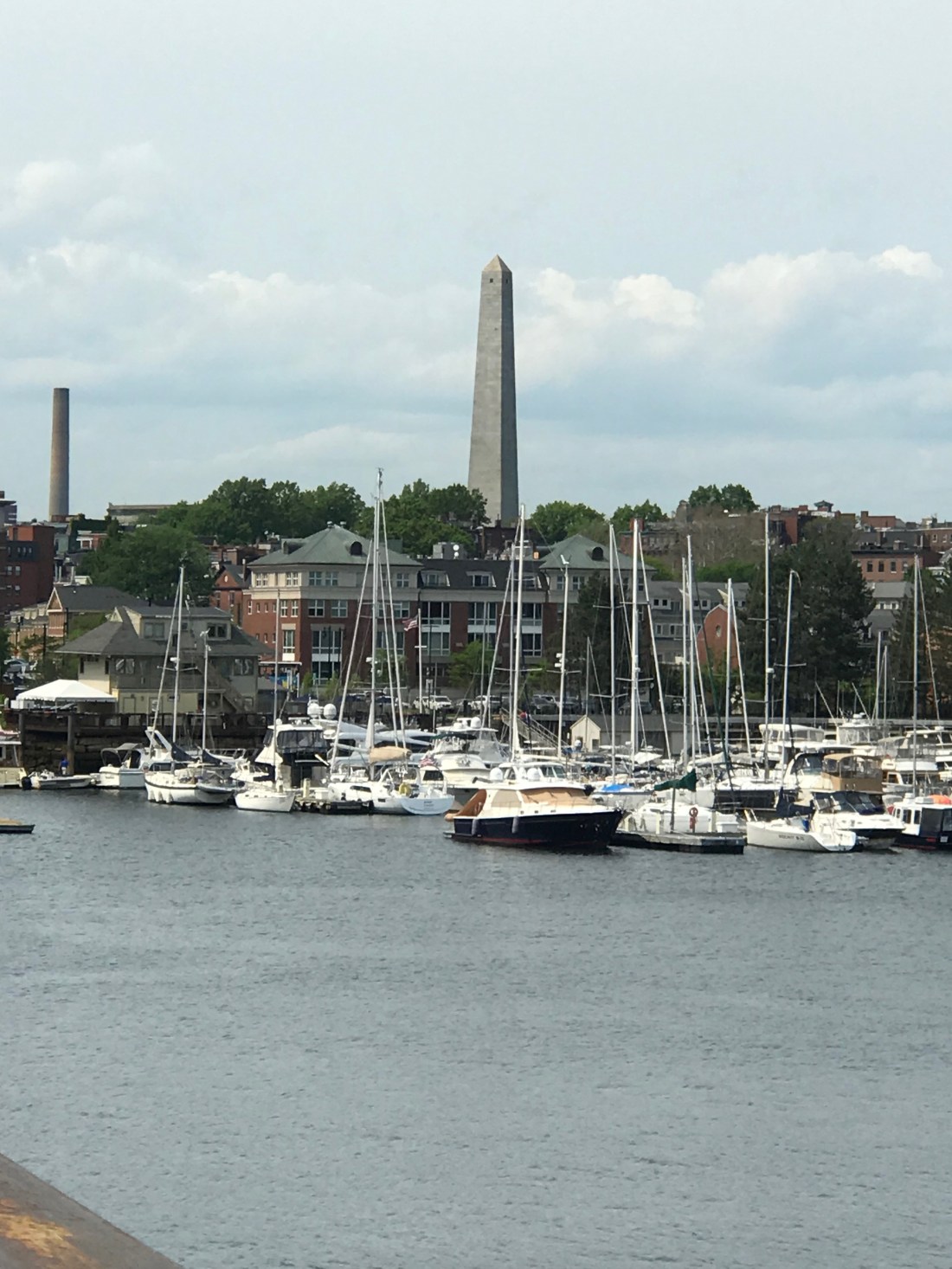
The Bunker Hill Monument can be seen if you squint at the center-right area!

IMG_6840.jpg

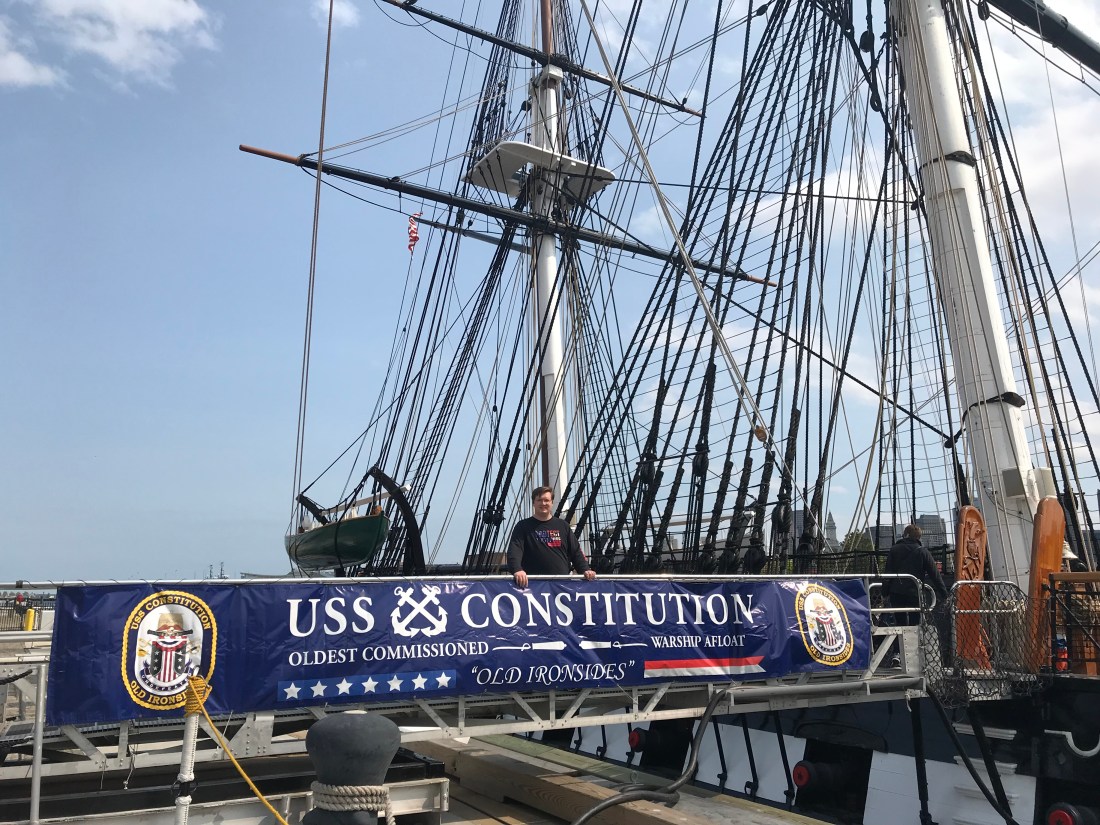
The U.S.S. Constitution can also be seen from afar! It’s a symbol that I can now recognize from anywhere…


About four hours later…

IMG_6841.jpg

We came to Texas Country one again! Farmlands as far as the eye can see! That’s the Texas I remember!

IMG_6842.jpg

As I put in the conclusion of my 2018 Summer Trip, the need to paying homage to this “Temple of Texas Fast-Food” was simply too great to resist. Whataburger, a trademark of the state!

IMG_6843.jpg

Ah… it’s been too long…


And soon enough, we arrived home, with a large bounty of souvenirs to take in!

IMG_6844.jpg

I’ll count this when I have time…

Phew… we have seen the last two of the Main 13 Presidential Libraries for our passport, bringing our grand total to 13/13 Libraries!

-Herbert Hoover Presidential Library and Museum:  West Branch, Iowa

-Franklin D. Roosevelt Presidential Library and Museum: Hyde Park, New York

-Harry S. Truman Presidential Library and Museum: Independence, Missouri

-Dwight D. Eisenhower Presidential Center: Abilene, Kansas

-John F. Kennedy Presidential Library: Boston, Massachusetts

-Lyndon B. Johnson Presidential Library: Austin, Texas

-Richard Nixon Presidential Library and Museum: Yorba Linda, California

-Gerald Ford Presidential Museum: Grand Rapids, Michigan

-Gerald R. Ford Presidential Library: Ann Arbor, Michigan

-Jimmy Carter Presidential Library: Atlanta, Georgia

-Ronald Reagan Presidential Library and Museum: Simi Valley, California

-George H.W. Bush Presidential Library: College Station, Texas

-William J. Clinton Presidential Library: Little Rock, Arkansas

-George W. Bush Presidential Center: Dallas, Texas

AND, for my morbid goal of seeing every single Presidential Gravesite, we have our total of 35/39 (Green text include those we’ve visited overall, and black text include the last four that we still need to see)!

1.George Washington: Washington Family Tomb at Mount Vernon (Fairfax County, Virginia)

2.John Adams : United First Parish Church (Quincy, Massachusetts)

3.Thomas Jefferson: Monticello Graveyard at Monticello (Charlottesville, Virginia)

4.James Madison : James Madison Cemetery at Montpelier (Orange, Virginia)

5.James Monroe : Hollywood Cemetery (Richmond, Virginia)

6.John Quincy Adams : United First Parish Church (Quincy, Massachusetts)

7.Andrew Jackson : The Hermitage (Nashville, Tennessee)

8.Martin Van Buren : Kinderhook Reformed Church Cemetery (Kinderhook, New York)

9.William Henry Harrison : William Henry Harrison State Memorial (North Bend, Ohio)

10.John Tyler : Hollywood Cemetery (Richmond, Virginia)

11.James K. Polk : Tennessee State Capital Grounds (Nashville, Tennessee)

12.Zachary Taylor : Zachary Taylor National Cemetery (Louisville, Kentucky)

13.Millard Fillmore : Forest Lawn Cemetery (Buffalo, New York)

14.Franklin Pierce : Old North Cemetery (Concord, New Hampshire)

15.James Buchanan : Woodward Hill Cemetery (Lancaster, Pennsylvania)

16.Abraham Lincoln : Lincoln Tomb at Oak Ridge Cemetery (Springfield, Illinois)

17.Andrew Johnson : Andrew Johnson National Cemetery (Greenville, Tennessee)

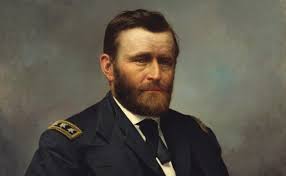
18.Ulysses S. Grant : General Grant National Memorial (New York City, New York)

19.Rutherford B. Hayes : Rutherford B. Hayes’s Spiegel Grove (Fremont, Ohio)

20.James A. Garfield : Garfield Tomb at Lakeview Cemetery (Cleveland, Ohio)

21.Chester A. Arthur : Albany Rural Cemetery (Menands, New York)

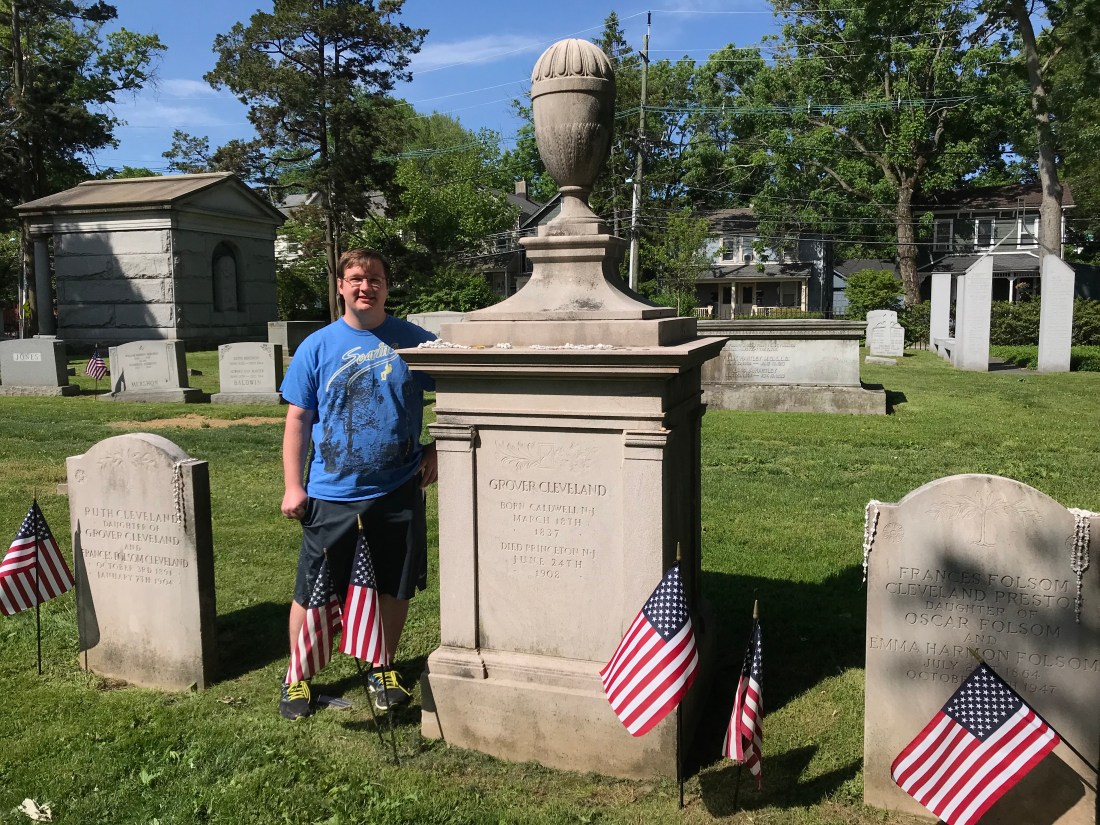
22 and 24. Grover Cleveland : Princeton Cemetery (Princeton, New Jersey)

23.Benjamin Harrison : Crown Hill Cemetery (Indianapolis, Indiana)

25.William McKinley : William McKinley Memorial (Canton, Ohio)

26.Theodore Roosevelt : Youngs Memorial Cemetery (Oyster Bay, New York)

27.William Howard Taft : Arlington National Cemetery (Arlington, Virginia)

28.Woodrow Wilson : Washington National Cathedral (Washington D.C.)

29.Warren G. Harding : Harding Tomb (Marion, Ohio)

30.Calvin Coolidge : Plymouth Notch Cemetery (Plymouth, Vermont)

31.Herbert Hoover : Herbert Hoover National Historic Site (West Branch, Iowa)

32.Franklin D. Roosevelt : Franklin D. Roosevelt National Historic Site (Hyde Park, New York)

33.Harry S. Truman: Harry S. Truman Presidential Library and Museum (Independence, Missouri)

34.Dwight D. Eisenhower: Place of Meditation at the Dwight D. Eisenhower Presidential Center (Abilene, Kansas)

35.John F. Kennedy : Kennedy Gravesite at Arlington National Cemetery (Arlington, Virginia)

36.Lyndon B. Johnson : Johnson Family Cemetery at LBJ National Historic Site (Stonewall, Texas)

37. Richard Nixon : Richard Nixon Presidential Library and Museum (Yorba Linda, California)

38.Gerald Ford : Gerald Ford Museum (Grand Rapids, Michigan)

40. Ronald Reagan: Ronald Reagan Presidential Library and Museum (Simi Valley, California)

41. George H.W. Bush : George H.W. Bush Presidential Library and Museum (College Station, Texas)

I’ll have to knock out those last four on a later trip…


And so, we come to a close for our journey… From the Plains of Texas to the District of Columbia, to the Fields of Gettysburg, the Streets of Philadelphia and New York, the Heights of Vermont, and the very shores of Boston Harbor… it’s a lot to take in.

We know what each of these destinations are,… but why are they here? Why are they significant to history?

More often than not, historical sites such as all the ones that we have visited served as incubators for great change over the course of our existence. Whether it be a birthplace or boyhood home that shaped an individual’s ideals, a home that stands as an embodiment to their personality, or a great battlefield where the throngs of war had altered the course of politics and culture, these places are only small chapters to the greater story that is the History of our country.

But so too does traveling across these new and fascinating landscapes different from our own that give us more empathetic perspective that we can use to not only make ourselves wiser and smarter, but also gain a greater appreciation and understanding for the struggles of others, and for different backgrounds and cultures.

So that is why I reiterate a point that I have often stated before… History is not mere timelines and paragraphs in a textbook… they are the actions of people just like you and me, who did, at least to the best of their ability, leave their country a little better off than it was before. It is they that have woven the very fabric of our lineage, those who had lived in those times, and those who sought to make a difference and an lasting impact on society.

And that in itself is a remarkable thing. We have that power too, if we put our minds to it. Because History is not made up of singular individuals, but all of us, striving to maintain our living and protect our interests. That is what is so beautiful about history… it is relatable, and it is us.

We are history in the making. And it is up to us to see how we are remembered in the eyes of our successors, for good or bad, and to ensure that the right lessons and teachings are passed down…

download.png

Thank you all for sticking with me to the very end… I am so grateful for your support and care for our travels, and I could not ask for anything more special than that.

Thank you.

Day 22, A Wonderful Change of Pace (Boston, MA) (6/2/19)

True to my word, welcome to the second-to-last post for this trip!

For the most part, the History of the trip is seen and done, so today is more of a relaxing day along Boston Harbor, just a chance to unwind from the hustle and bustle of the last three weeks, and one last respite before we return to Texas.

This post might be more brief than the others, so here we go!


Boston Harbor

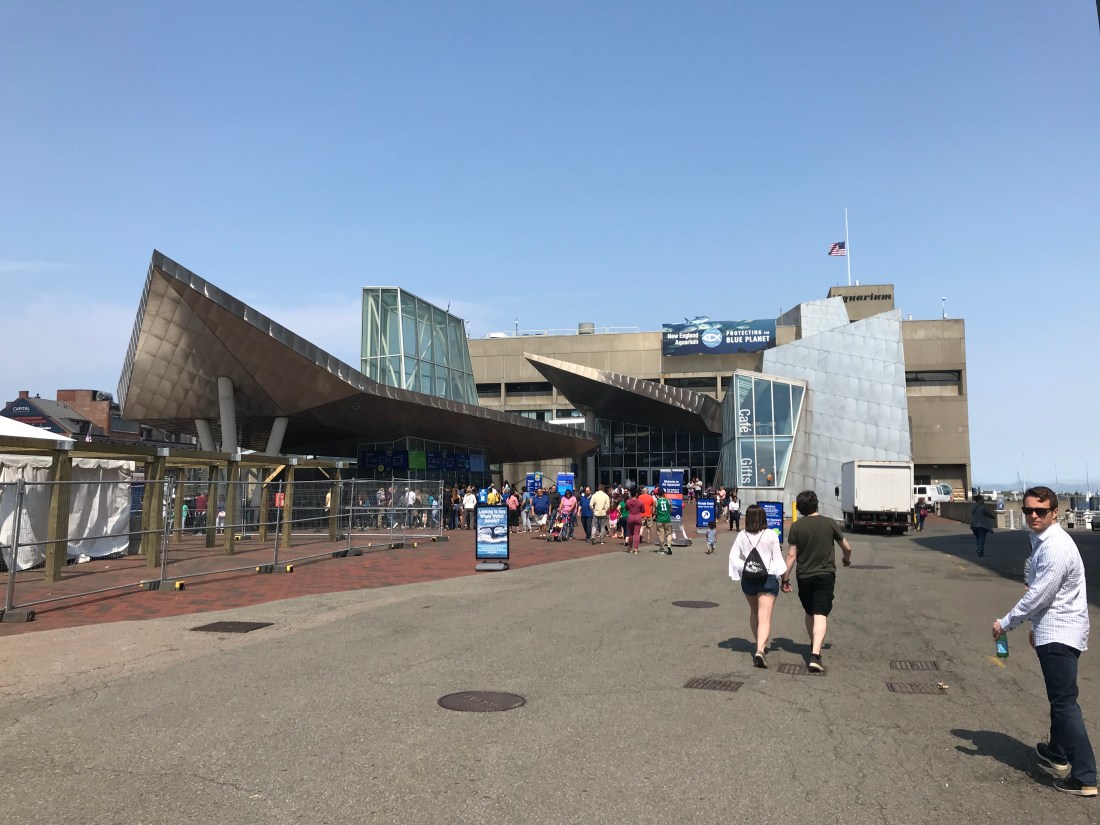
We took the subway once again to the eastern shore of main-land Boston, and arrived right in front of the New England Aquarium!

IMG_6796.jpg

One of the larger aquariums in the country, it also happens to have one of the largest sea-water tanks in the world, and also is the residence of a 94 year old world-famous turtle named “Myrtle”.

We won’t go in here however. As much as we would have liked to have seen it, our main focus was the Harbor itself.

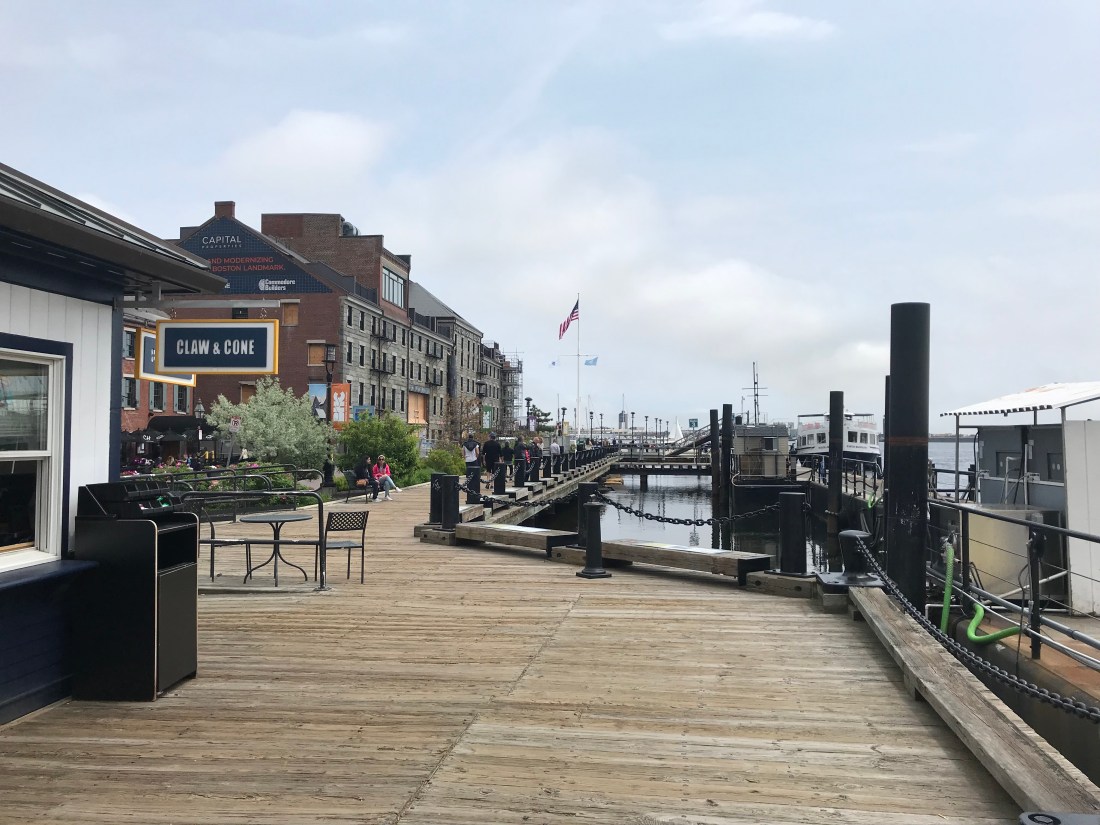
IMG_6773.jpg

The Long-Wharf is the country’s oldest continually-used wharf, and features restaurants, docks and gift-shops. It’s from here that we will depart on an 1 1/2 boat tour of outer Boston Harbor!

For now though, let’s check out the rest of Long-Wharf.

IMG_6775.jpg

IMG_6772.jpg

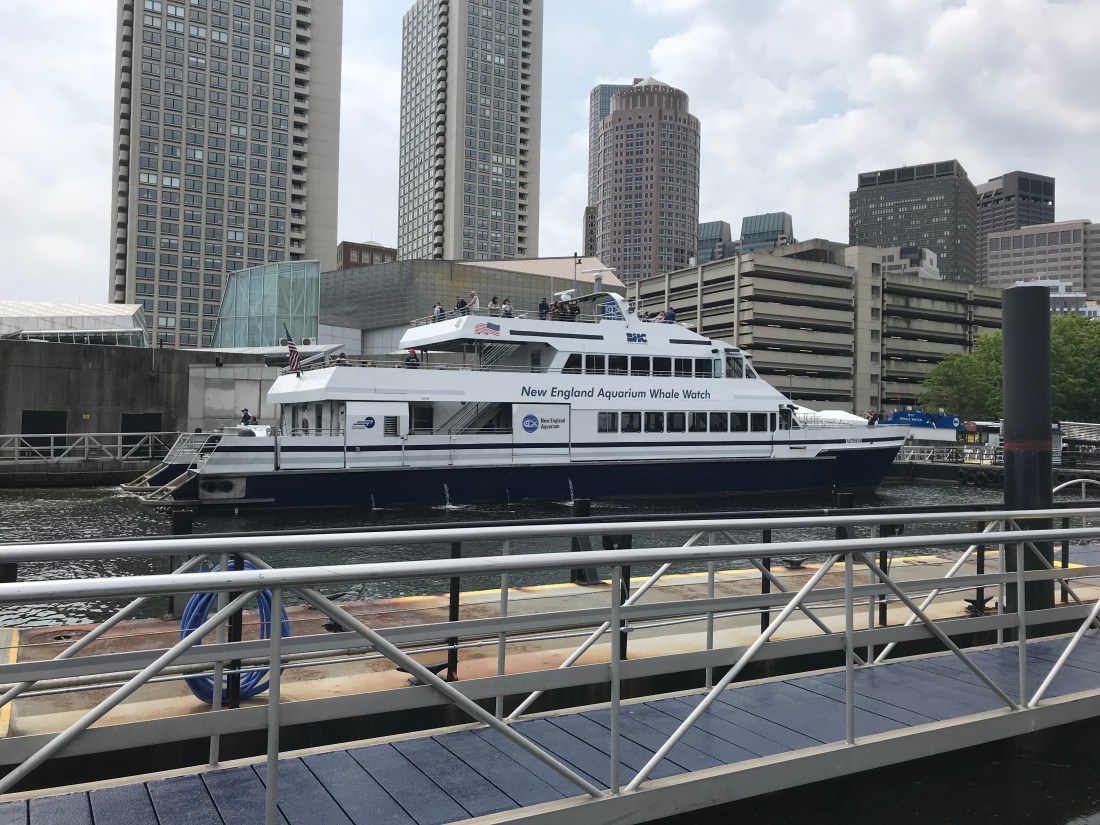
You can go whale-watching here too! It’s a very long excursion, but I imagine very rewarding. We didn’t have that time commitment however.

IMG_6776.jpg

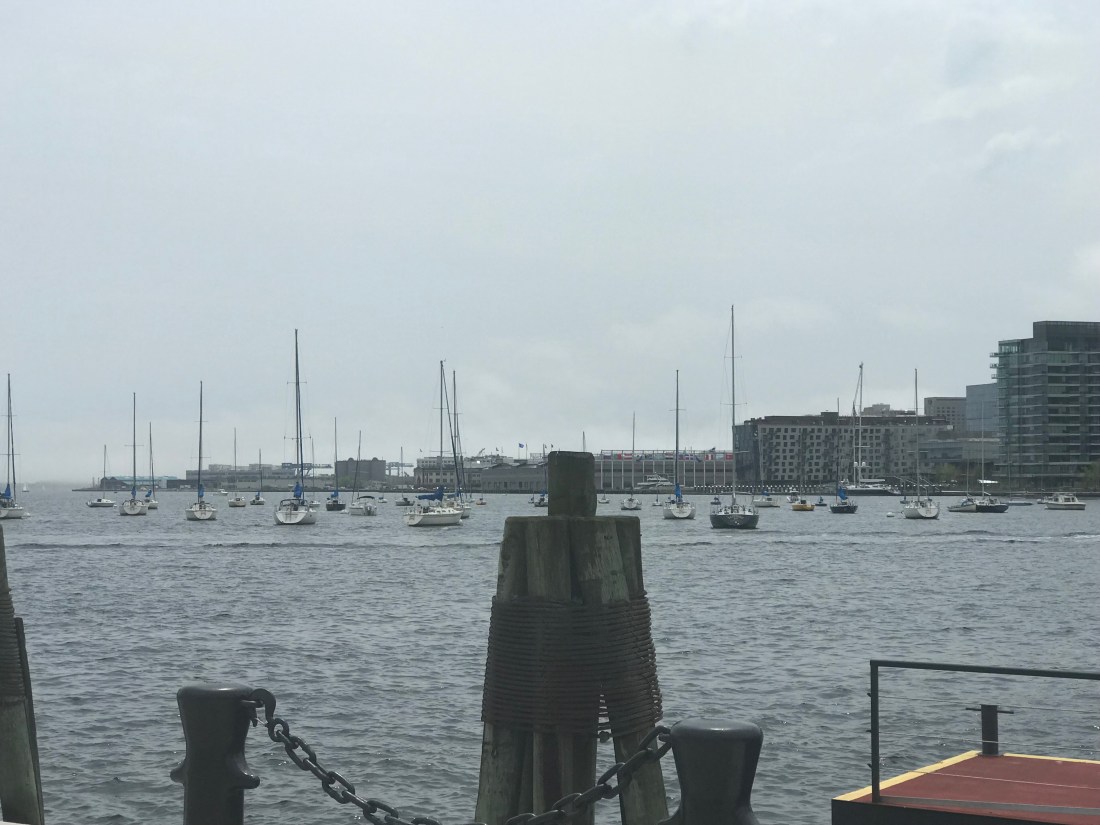
Looking across the Harbor at the various ships in the water… I wonder if some of these are houseboats, and I also wonder who owns each of them?

IMG_6777.jpg

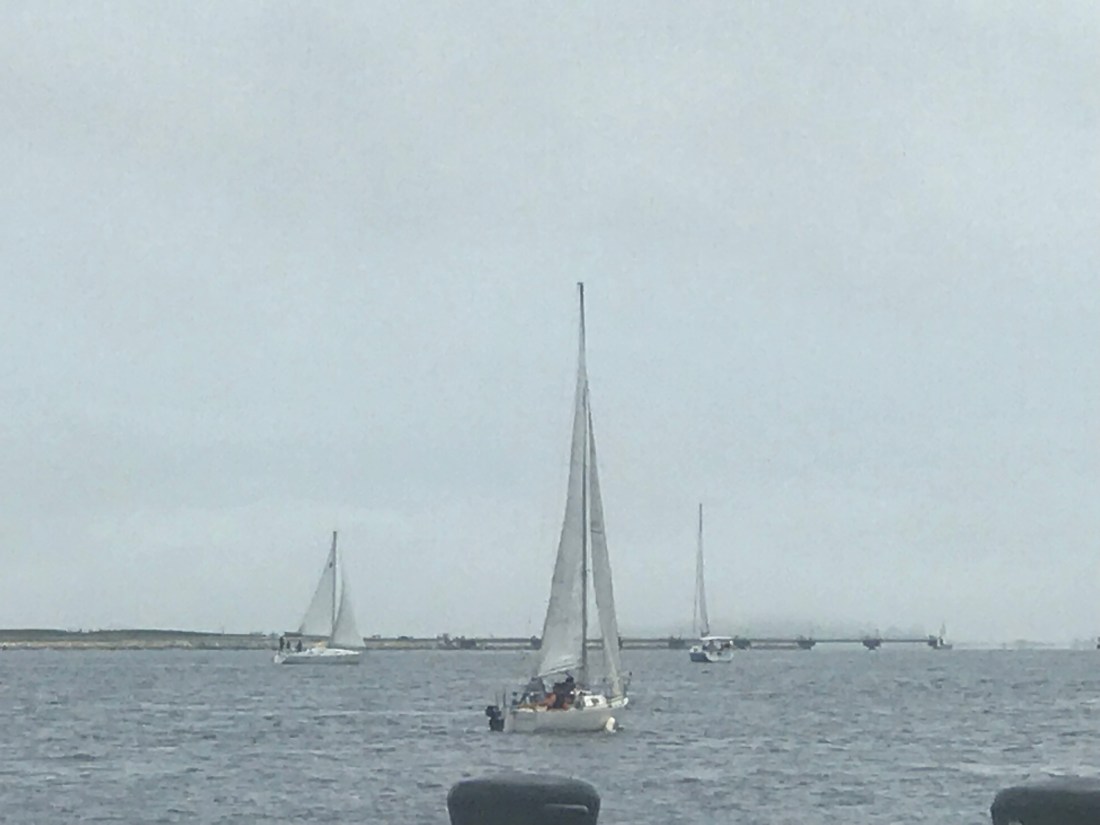
A closer look at a couple of sailboats.

IMG_2164.jpg

IMG_6779.jpg

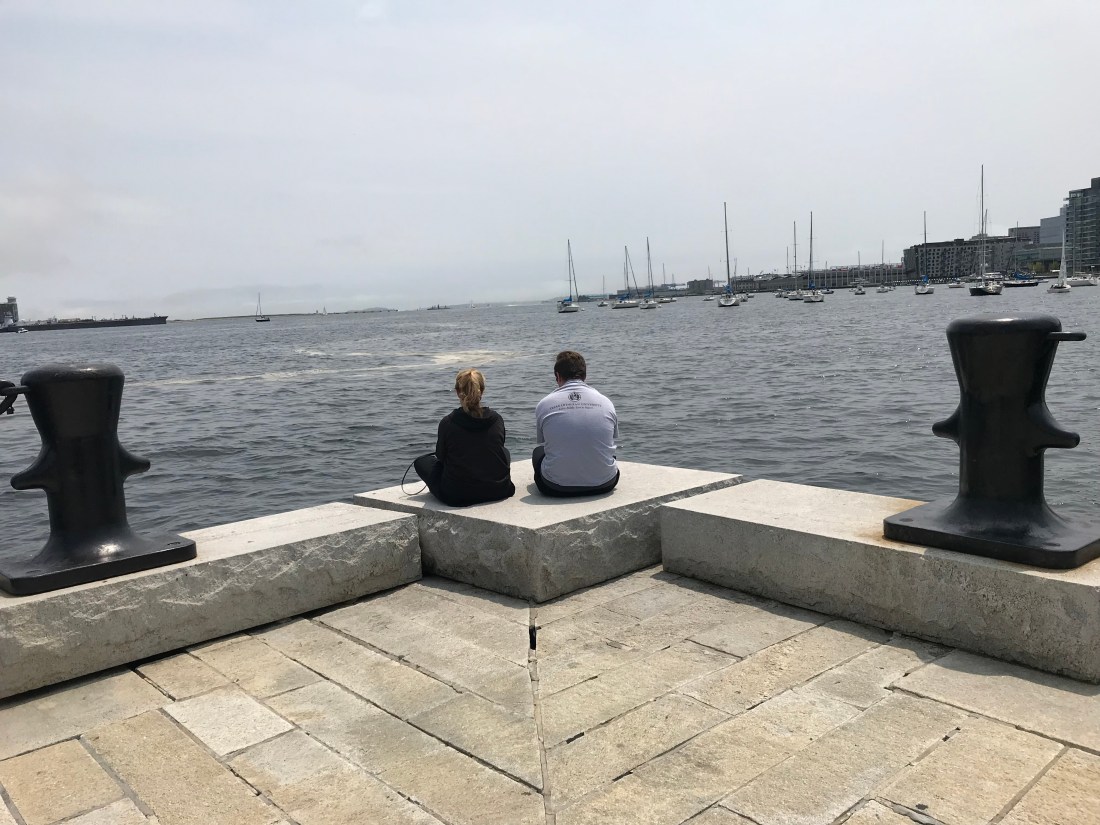
Sitting on the wharf and feeling the cool (soon-to-be chilly) breeze was refreshing… one last hurrah before we enter back into the searing heat of the Southwest.

IMG_2176.jpg

Mom and I chillin’.

Soon enough we got on our boat, which would take us for a unforgettable roundabout of the Harbor. Our narrator guide, a man with a very thick Irish accent, was one of the best that we’ve had on this trip, and his interjections of humor and wit were the life of the party!

IMG_2182.jpg

Once on the boat, we got a beautiful view of Downtown Boston…

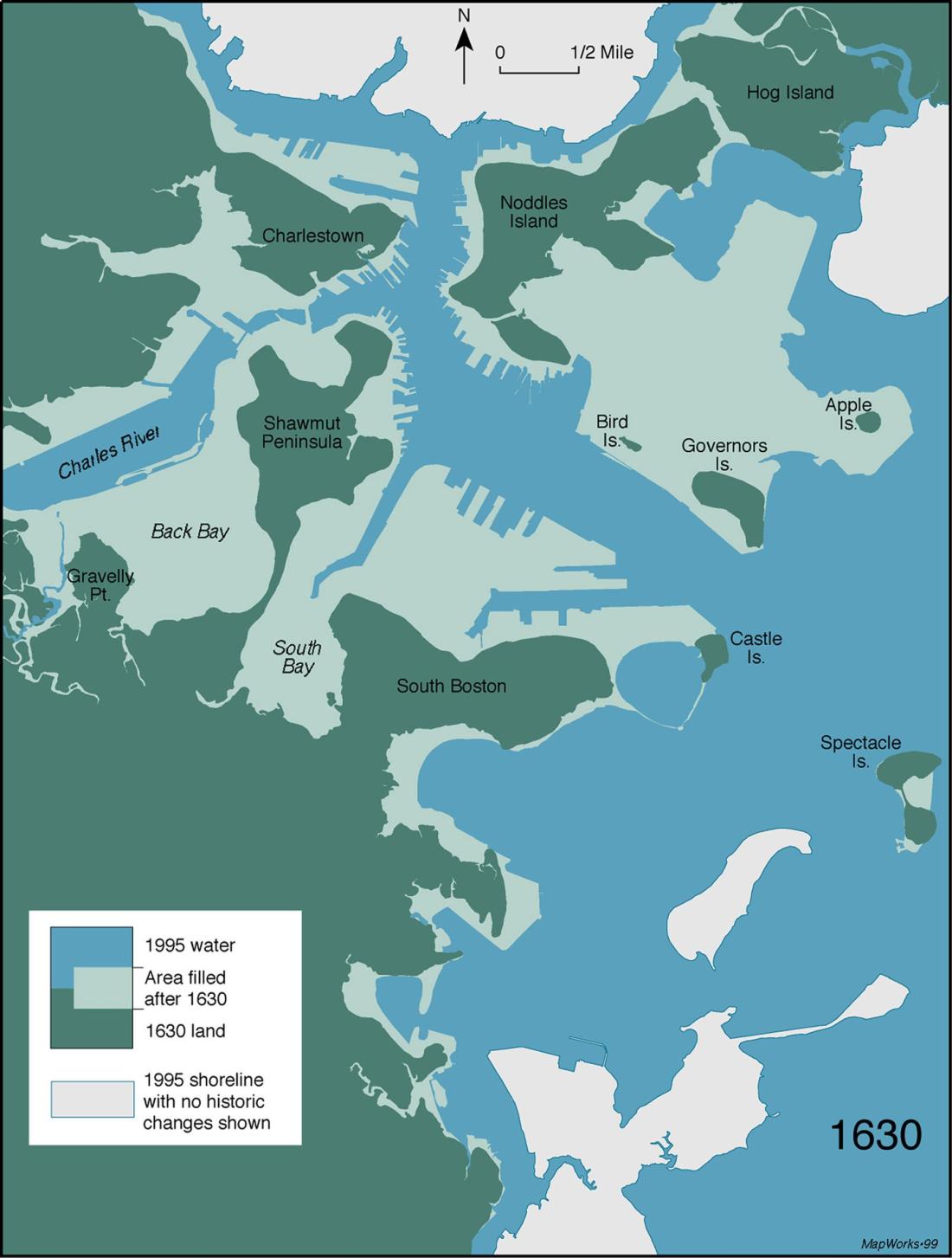
Did you know that approximatly 75% of the main Boston area is made up of artificial land? It’s true! Boston Harbor was a naturally-formed harbor, so to get more trade and commerce going through it’s ports, they expanded the land by artificial dirt leveled from the nearby hills, and thus, the Boston we know today was created!

1630-mapworks.ngsversion.1497015288661.adapt.1900.1.jpg

As you can see, the transformation from the 1630 Boston has simply been Staggering.

That artificial land that connects to Noddle’s Island is where Boston-Logan International Airport is located. Think about that! All the land that had to be filled in…

IMG_6782.jpg

IMG_6781.jpg

The Boston World Trade Center, which deals with trade from all over the globe! Note the different nation flags that hang from the top.

IMG_6783.jpg

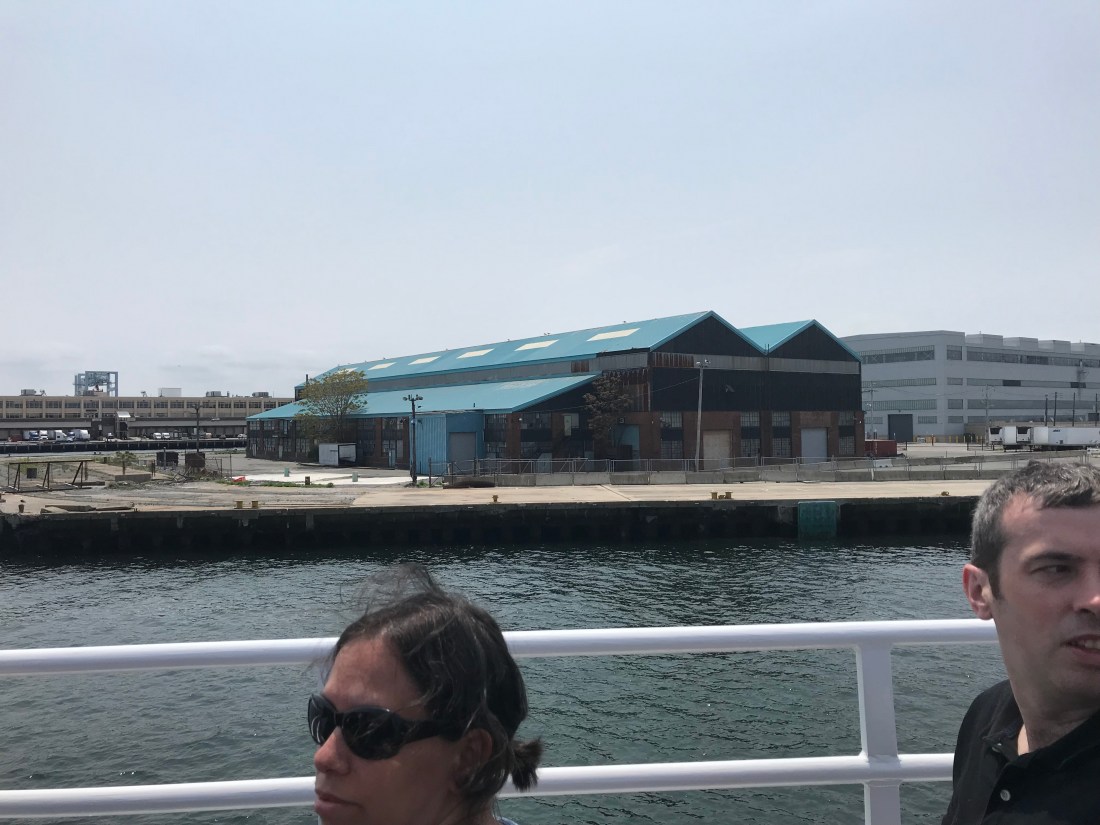
And this building, as pointed out by our guide…

“Is of no historical significance whatsoever.”

That made us crack up a lot.

IMG_6784.jpg

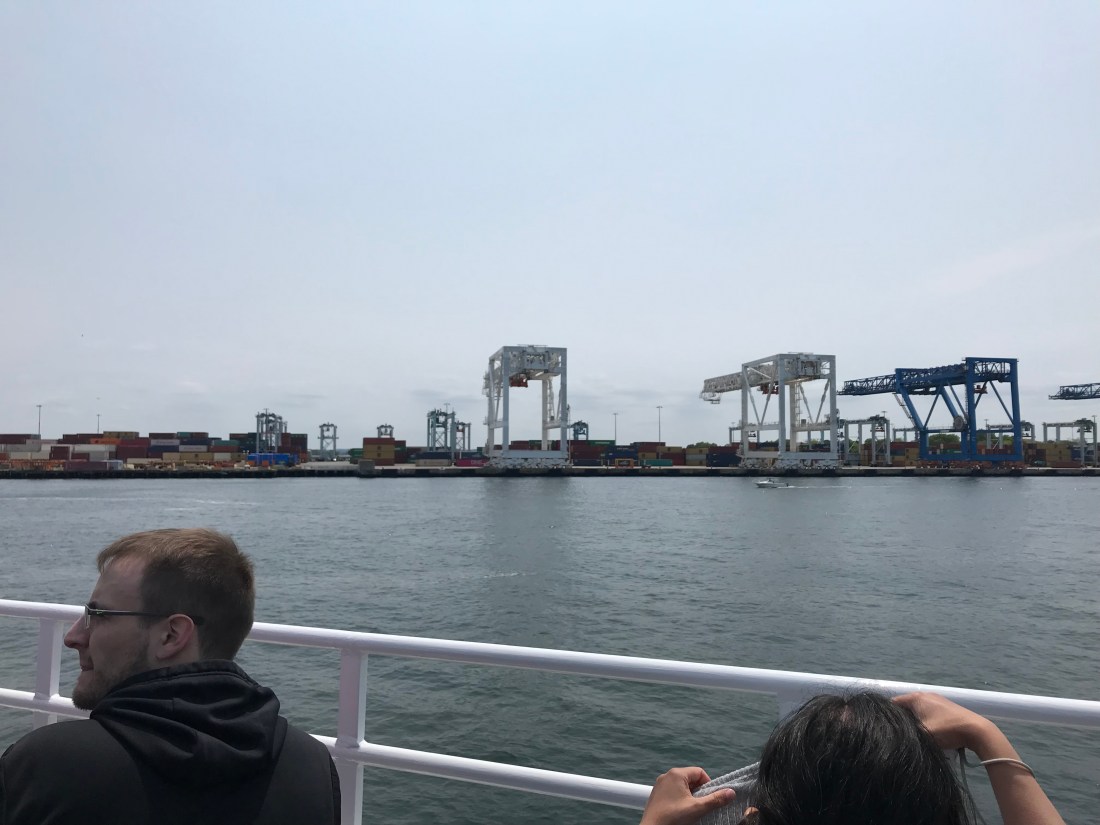
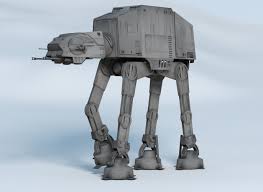
Looking at the crate docks in the distance…. Do you know what the crane to the left of the blue one reminds me of?

download.jpg

The AT-AT from Star Wars… I think it must’ve been an inspiration for George Lucas when he was making Episode V…

IMG_2188.jpg

Castle Island earned it’s namesake because of the fortress that is located on it. Though there have been previous incarnations of the place, “Fort Independence” was built before the eruption of The Civil War, but never actually saw conflict.

The name of the Island is a bit misleading however. It’s no longer an island, thanks to the artificial land that now connects Mainland Boston to the site.

IMG_6787.jpg

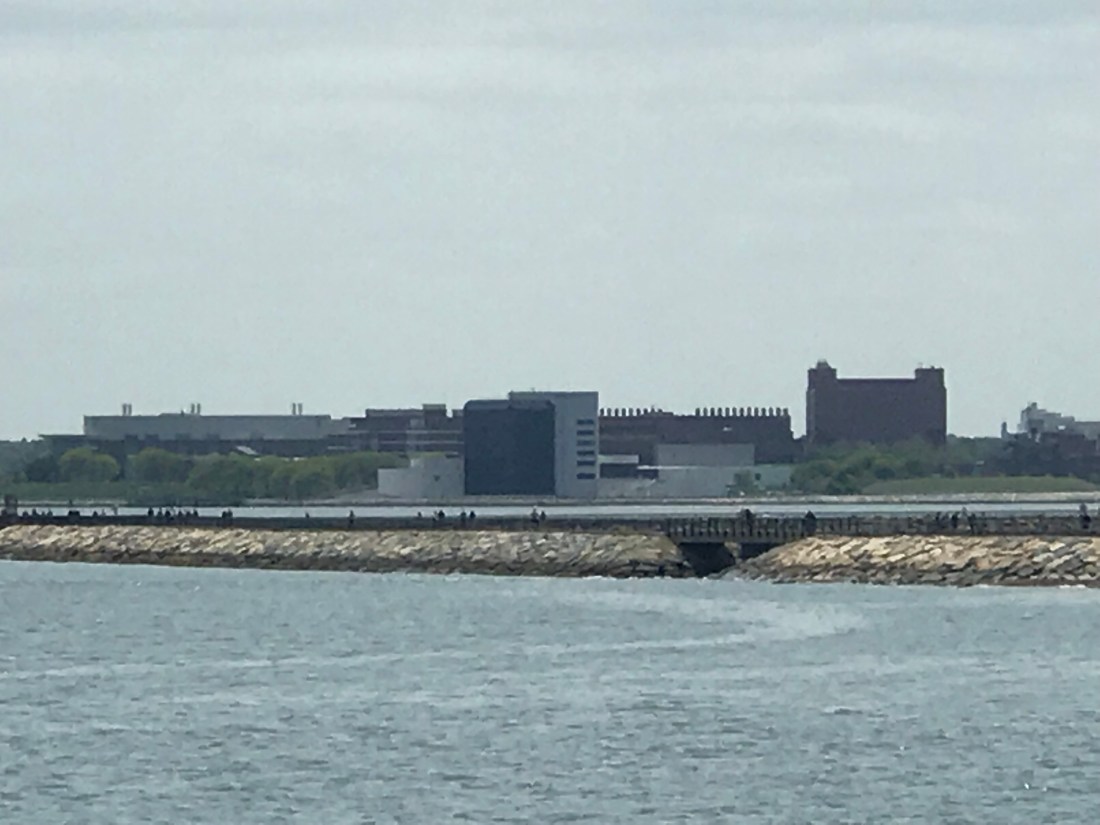
Far in the distance, one can see the John F. Kennedy Presidential Library and Museum! It’s that white building with the large black block inside it. And we were just there!

IMG_2190.jpg

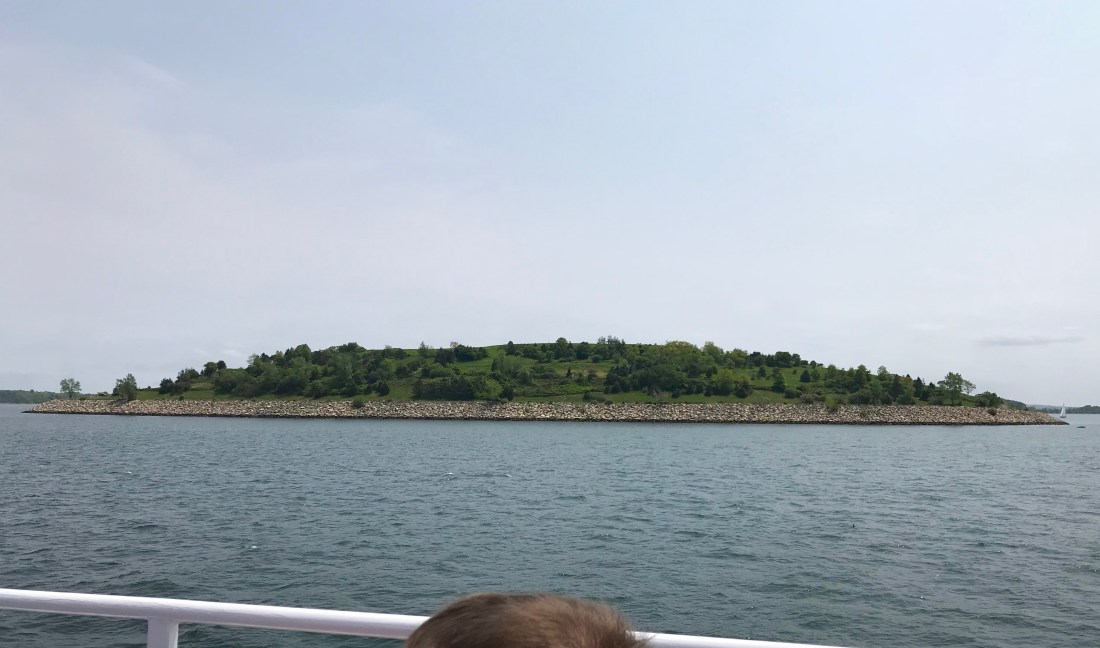
Spectacle Island likely has the most famous story…

It wasn’t always this open and green. Back in the 1800’s, it was home to two large resorts that became incubators of absolute vice, with brothels, opium dens, gambling hideouts, and other corrupt and shady dealings. It was closed and torn down by the Boston Police 10 years later, and over the next few decades had become a horse-rendering plant to make glue, and a trash incinerator for the People of Boston. When the incinerator closed down, it simply became a massive landfill, and it grew 35 acres thanks to the multitudes of trash piled up upon it.

In the 1990’s, using dirt from the recently created Ted Williams Tunnel, they resurfaced the island, covered up the trash, and soon, the newly green island became the Wildlife Refuge that it is today…

Simply stunning.

IMG_2195.jpg

One half in Long Island (not to be confused with Long Island in New York) was well camoflaged. Three hidden tunnels lead deep into the island, where at one point explosives were kept! At another time, it also served as storage for thousands of books for the Boston Public Library… huh.

IMG_2194.jpg

The other half of Long Island also plays host to a now abandoned asylum separate from the mainland. It had been the inspiration for the book Shutter Island by Dennis Lehane, and the movie of the same name starring Leonardo DiCaprio. Though the island is restricted, rumors persist that there are future plans for this site.

IMG_2200.jpg

The smallest island in the bay, which doesn’t seem like an island at all…

IMG_2203.jpg

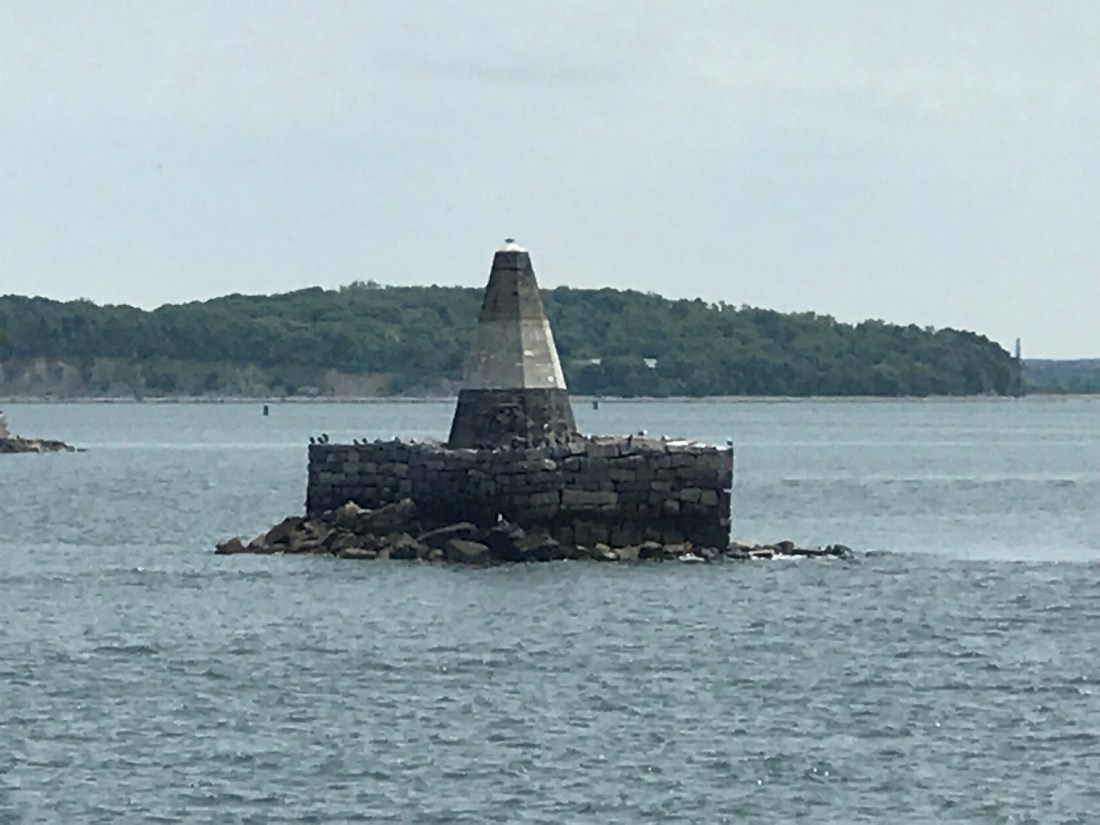
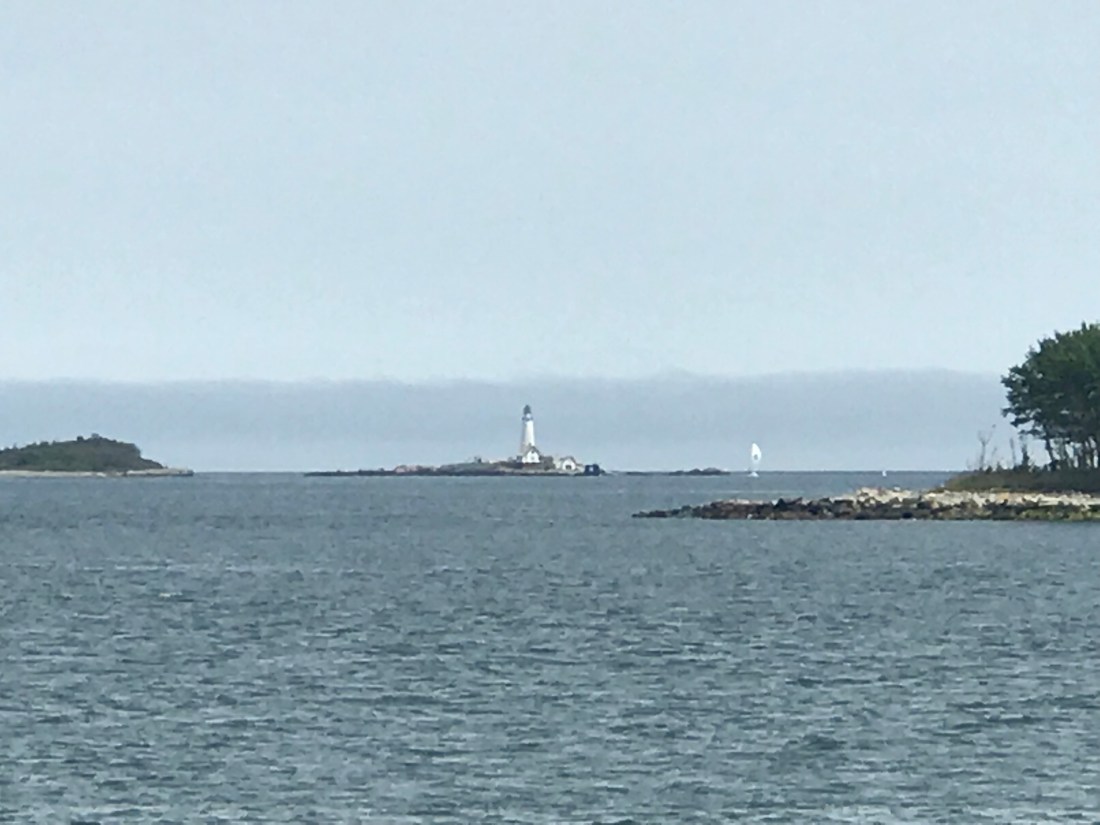
A very neat lighthouse in the distance. One could see the light blinking occasionally as it made it’s revolutions.

IMG_6792.jpg

The island with the sandbar alongside it is Rainsford Island. This island is… interesting to say the least. A single hermit, dubbed “The Mayor of Rainsford”, lives on that island all by himself. He chases anyone off the island who trespasses…

I wish that was a joke, but it isn’t. That is simply hilarious…

IMG_6793.jpg

The Atlantic Ocean out in the distance… Next Stop, Portugal!

Heh, just kidding, we began our turn back to the inner harbor.

IMG_2210.jpg

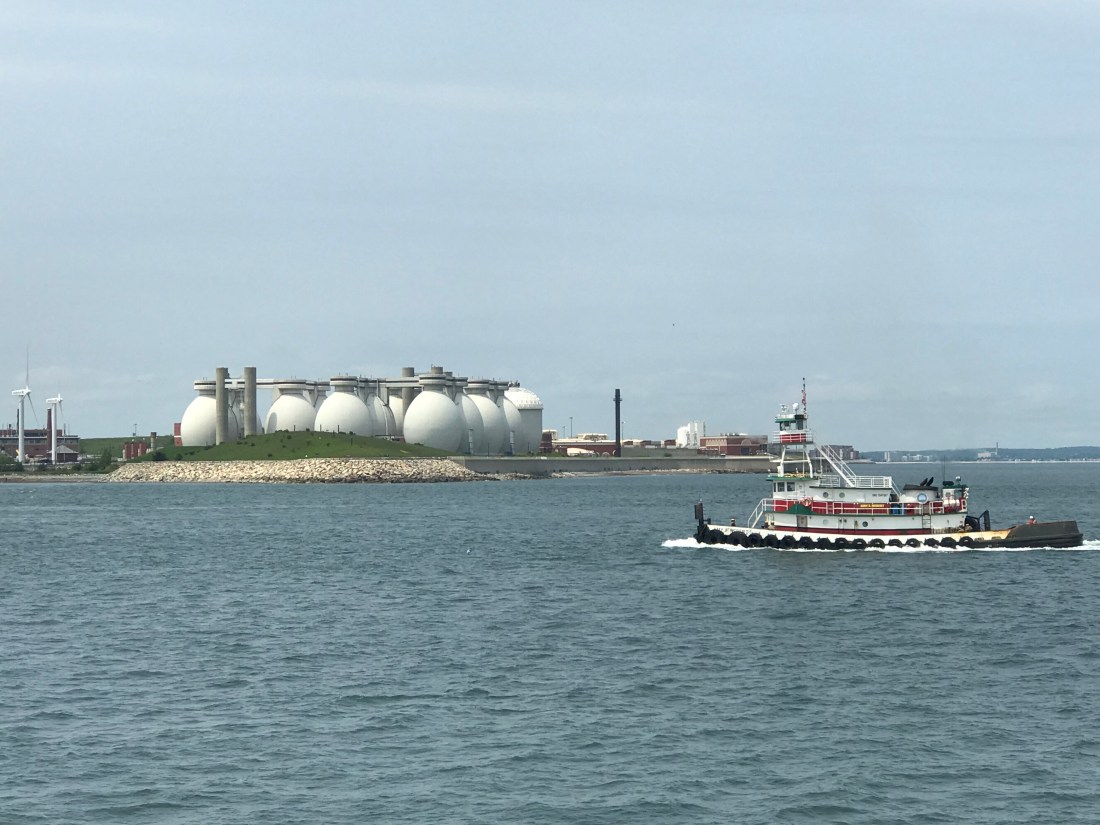
Back in the day, Boston Harbor was one of the filthiest bodies of water in the entire world, thanks to the massive pollution and waste in the water… This filtering plant, located on Deer Island (which is also not an island thanks to the artificial land connection), changed all that, and the harbor is now one of the cleanest places in the country.

IMG_2237.jpg

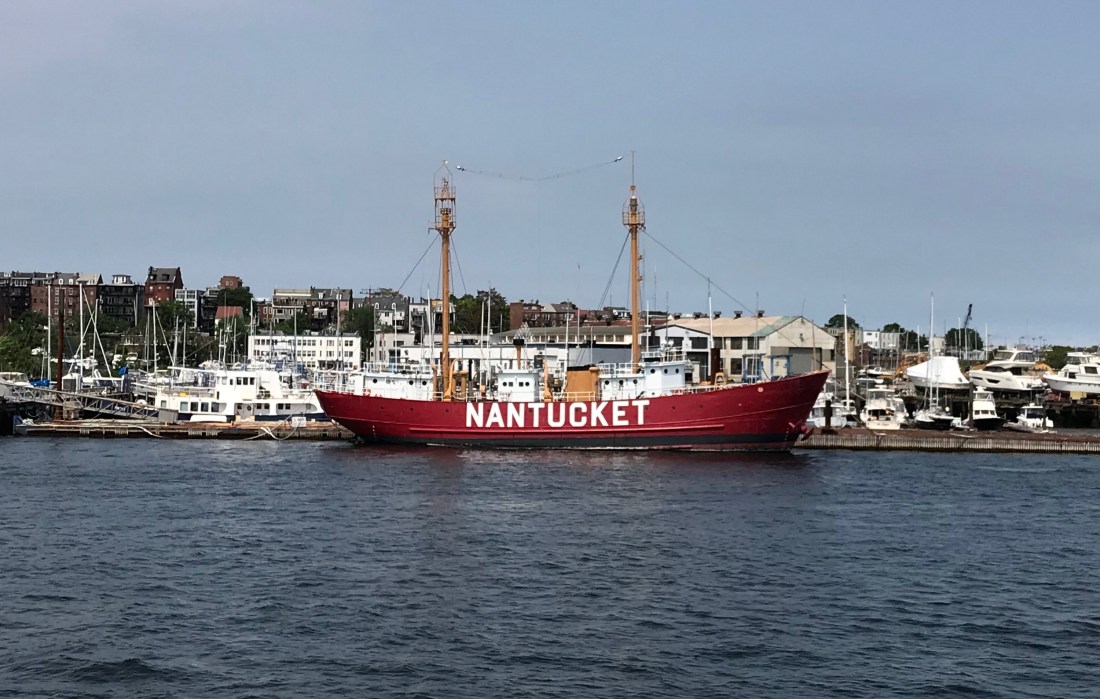
A Nantucket Lightship, which are often found around Nantucket Island (far from the Boston Harbor), where they mark the dangerous shoals of the island to better enable safe navigation to the island. It’s the largest lightship model in the entire world!

IMG_2241.jpg

The Maurice J. Tobin Memorial Bridge, which serves to connect Charlestown (North Boston) to Chelsea farther north. Tobin was a former Mayor of Boston, Governor of Massachusetts, and Secretary of Labor under President Truman.

IMG_6795.jpgIMG_2252.jpg

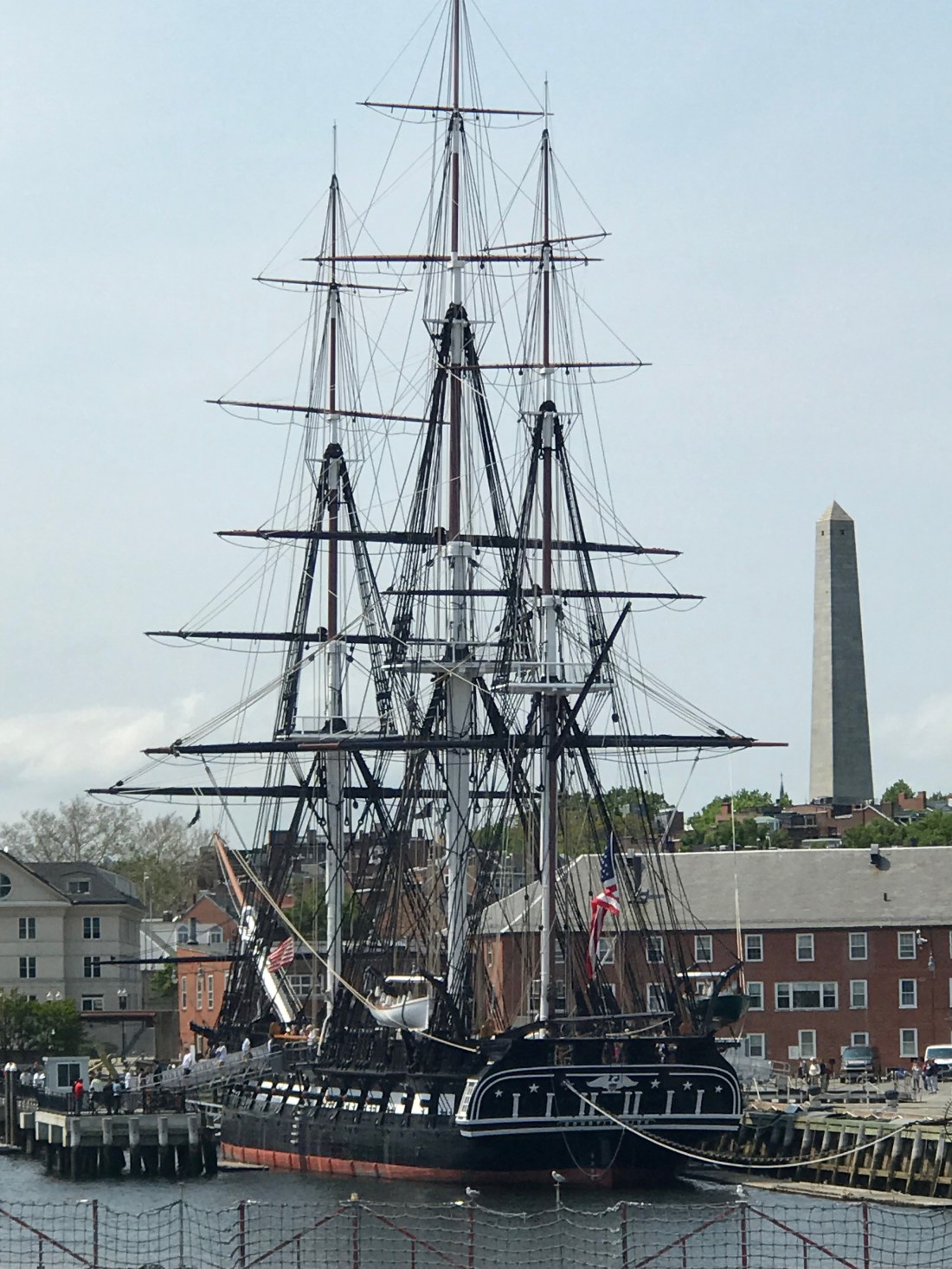
The U.S.S. Constitution herself, once again! This is a terrific angle to see it by the way, for we can see the full scale and view of the hull and rigging!

IMG_2266.jpg

Yet more sailboats just chillin’ in the harbor.

IMG_2276.jpg

See that clocktower in the distance? That’s a Mariott Vacation Club establishment, formerly the Custom House of Boston. Back during the 1960’s, this was the tallest building in Boston, which just goes to show how much the city has massively developed over the years.

Also, don’t rely on the tower to count on the time, for it will give you four different answers, one for each face.


After finishing our cruise, and thanking our tourguide, we looked along the harbor for some neat place to eat, that was truly “Bostonian Seafood.” Since this was in the middle of the afternoon, we considered that this meal would be our “Linner” (similar to “Brunch”, if you get my meaning).

IMG_6798.jpg

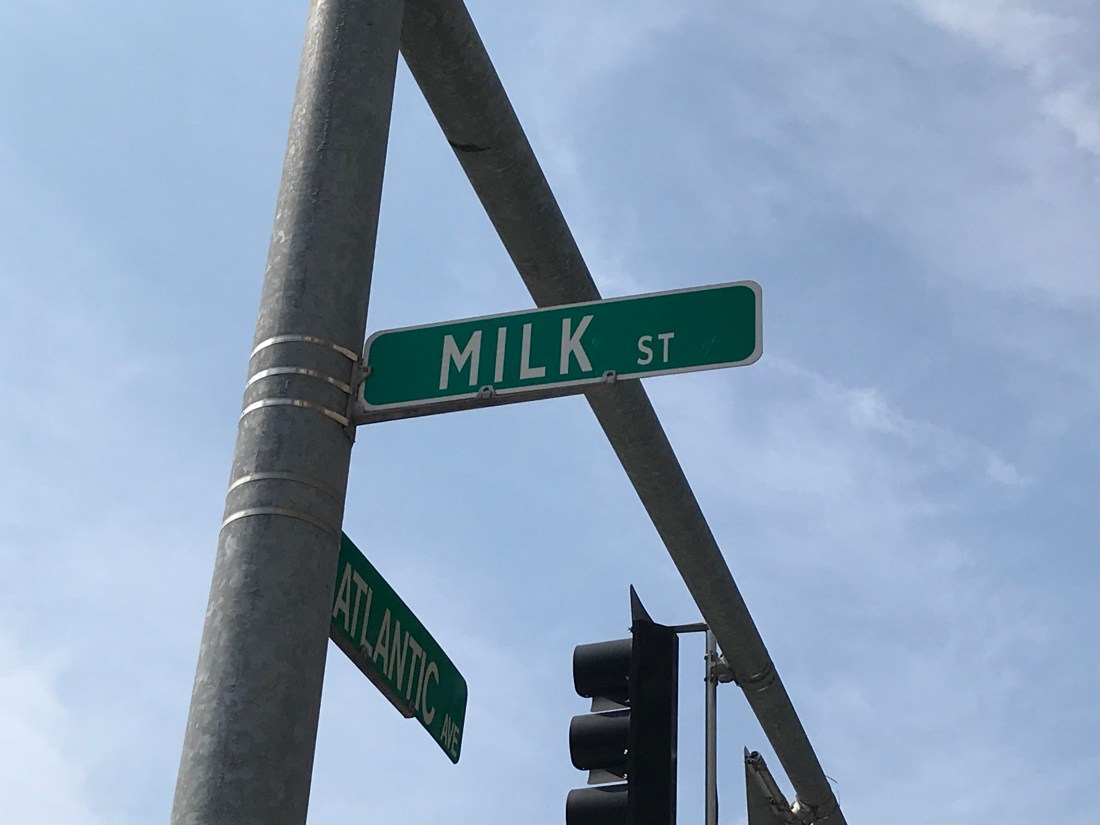
This was a suprise to me, for Milk Street was the very street where Benjamin Franklin was born! I remember writing about that in a Middle-School project on Ben Franklin, so that’s neat to see!

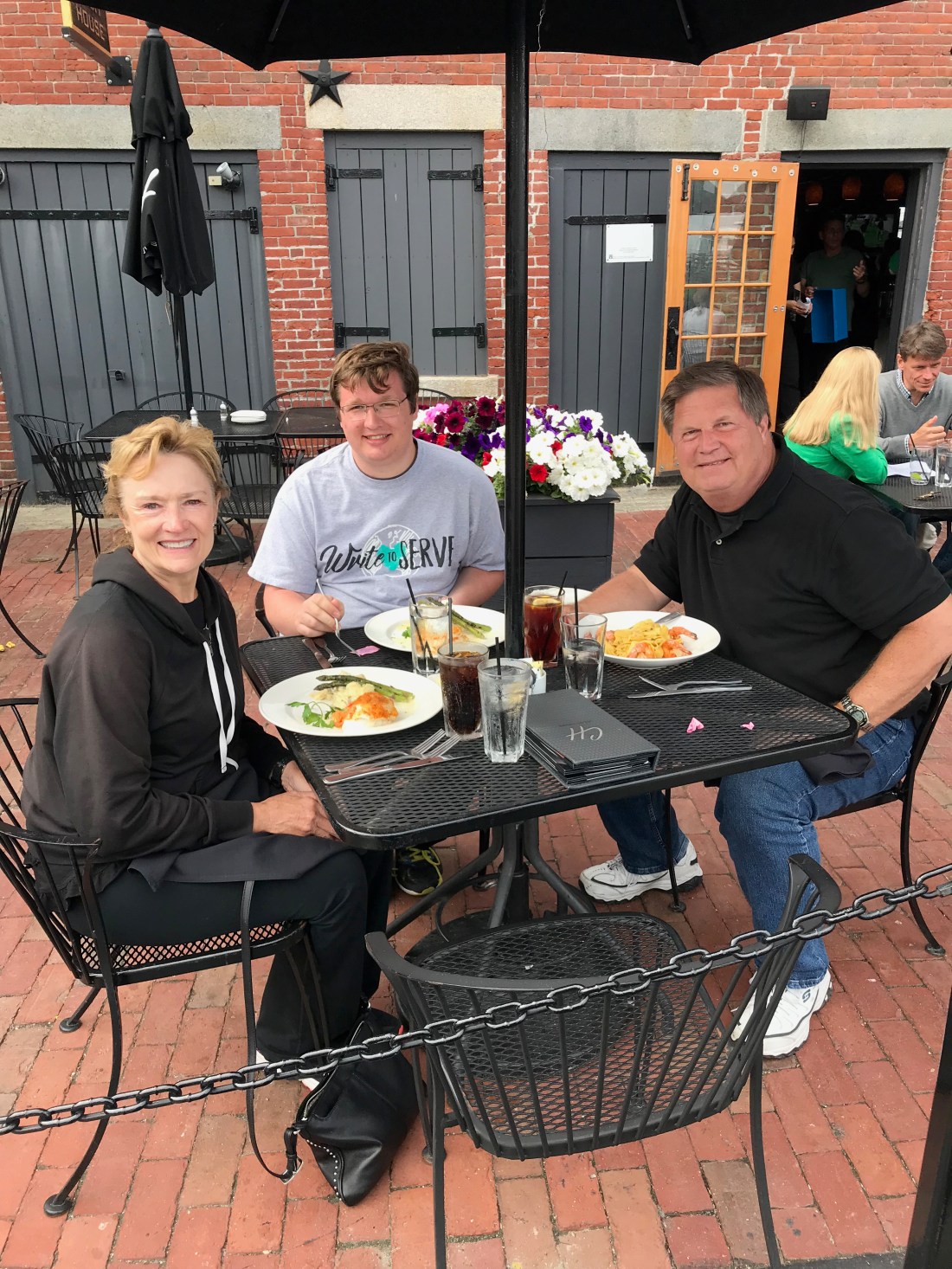
Eventually, we came to a Charter-House restaurant, and enjoyed some of the finest seafood there was to offer here in town.

IMG_6799.jpg

Really, a visit to Boston is UTTERLY FUTILE if you don’t try a cup of “New England Clam Chowder!” This was perhaps the best Clam Chowder that I have ever tasted!

IMG_6801.jpg

Perhaps a bit fancier than we could imagine, but our meals were nonetheless packed with flavor… I got “Lobster-stuffed Scrod”, along with Mashed Potatoes and Asparagus… all delicious…

IMG_2281.jpg

After spending the remainder of the day enjoying our last hours here along the Harbor, we returned to our hotel, more energized than before, and very eager to return home to our beloved State of Texas!


As of the time that I post this, we are waiting at Boston-Logan International Airport, waiting to hop on the plane back to Austin, and to home!

Only one post remains to commemorate this 3-week trip… the conclusion to the epic saga of our Historical Odyssey. The adventure is nearly over…

Thank you for sticking with me to the very end… I’ll see you for one last time very soon!

Day 21, Revolutionary Respites (Lexington, MA and Concord, MA) (6/1/19)

As I said in the last post, Welcome to Day 21!

Today was somewhat more of a restful day (until the end), mainly because we took a bus tour all around the towns of Cambridge, Lexington and Concord to explore more of the colonial history of the era! And then, We finished the Freedom Trail by visiting the Bunker Hill Monument!

So, to rest our feet, let’s hop on, and dive in!


Cambridge, Lexington and Concord

Leaving from Downtown Boston with our tour-bus (and very funny driver and guide named Sam), we took off towards Cambridge, located due west of the main Boston area. We Didn’t stay too awfully long here, so here are just a couple highlights during our brief time here.

IMG_6661.jpg

Cambridge is home to perhaps the most famous ivy-league school in the country… Harvard University! It’s programs are very extensive, and also expensive.

I’ll keep Texas Lutheran University, thank you very much.

IMG_6660.jpg

The Harvard Bookstore is a major hub of world news and literary works. You could likely find anything in here, if you were willing to search long enough for it.

IMG_6659.jpg

Crossing the bridge at the Charles River, to head further west into Massachusetts… Lexington is next!

IMG_6678.jpg

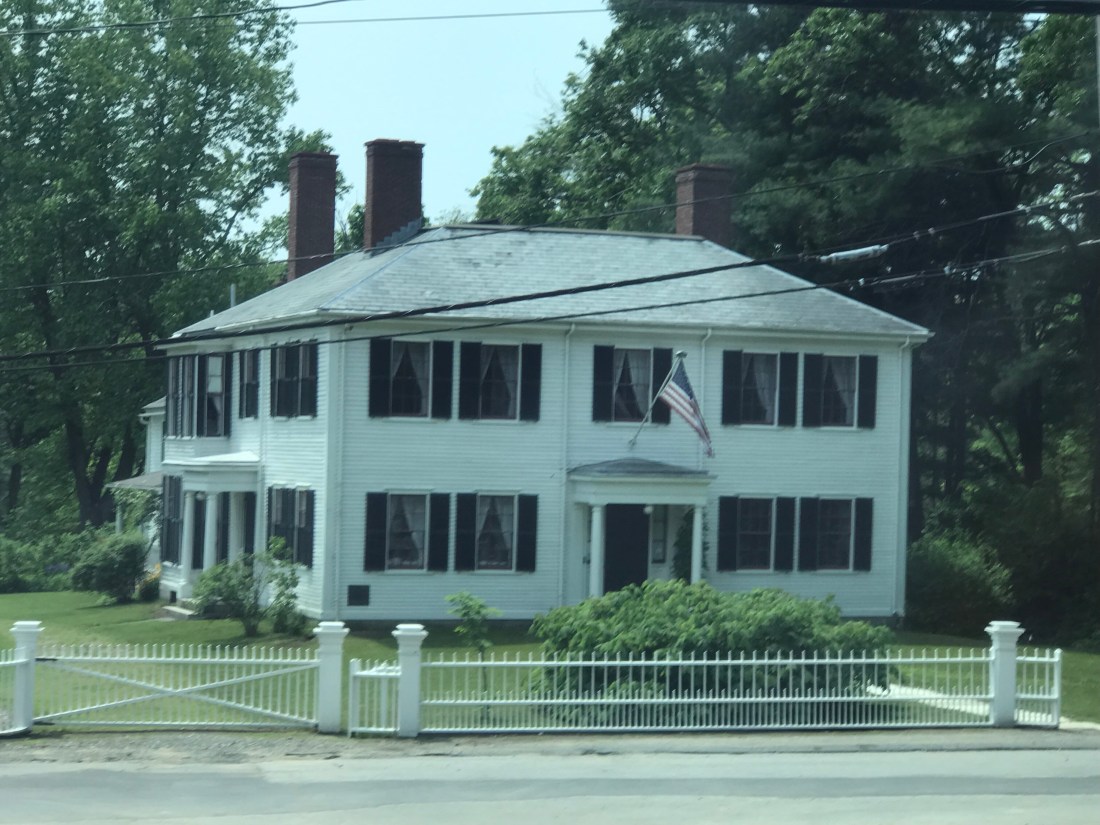
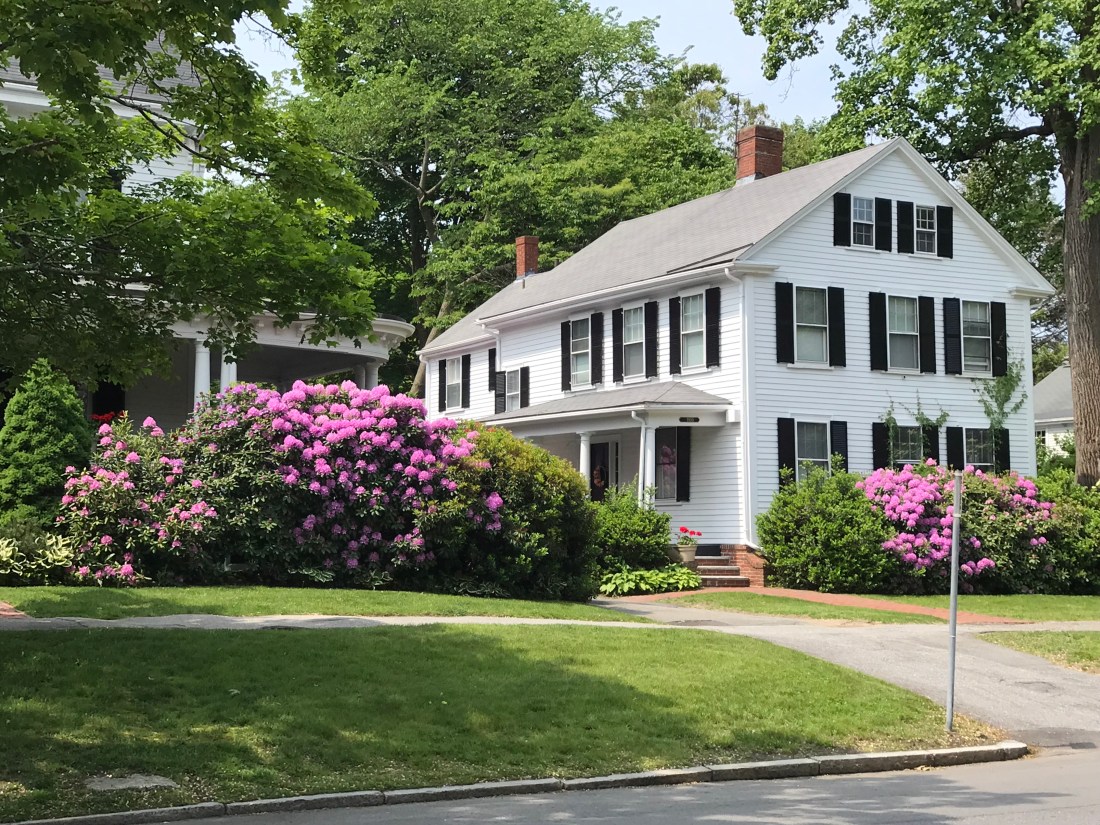
Houses like these can be found around these old colonial towns… it’s very different from those in Texas, that’s for sure.

IMG_2081.jpg

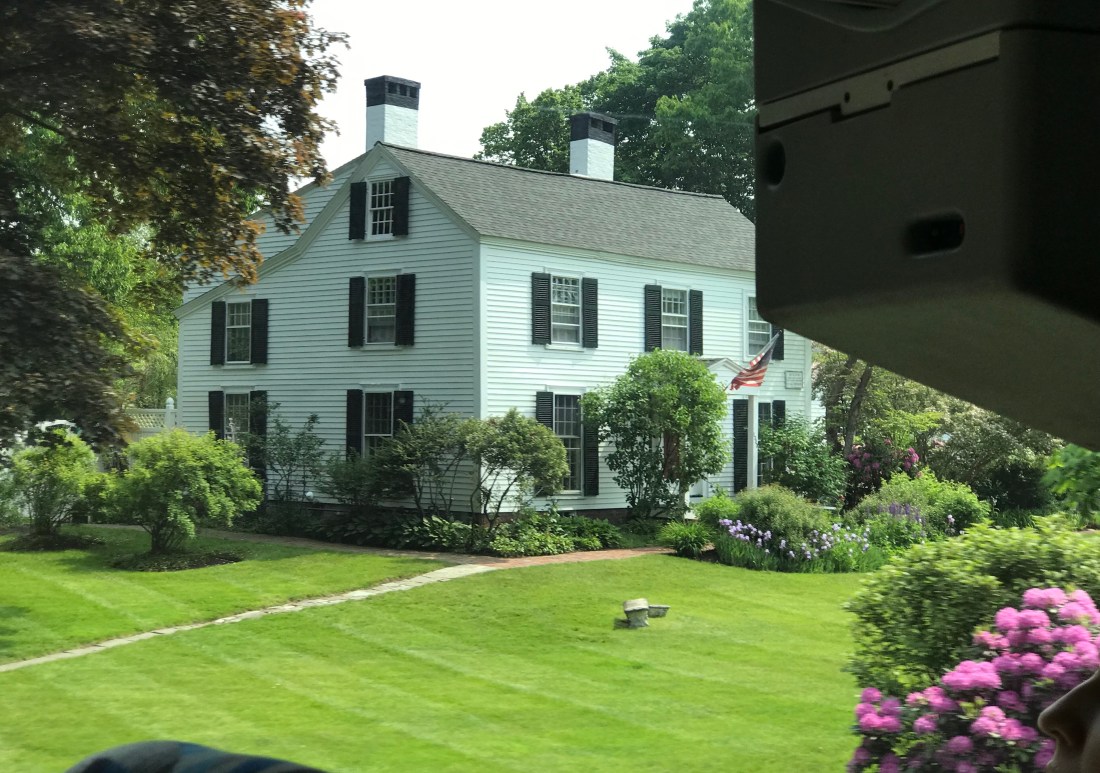
This house is special in particular, because of it’s chimneys. Back during the Revolutionary War, houses with white chimneys and black tops belonged to “Tories”, or the loyalists to the British Crown. They were welcoming signals for British Troops passing through.

IMG_2085.jpgIMG_2083.jpg

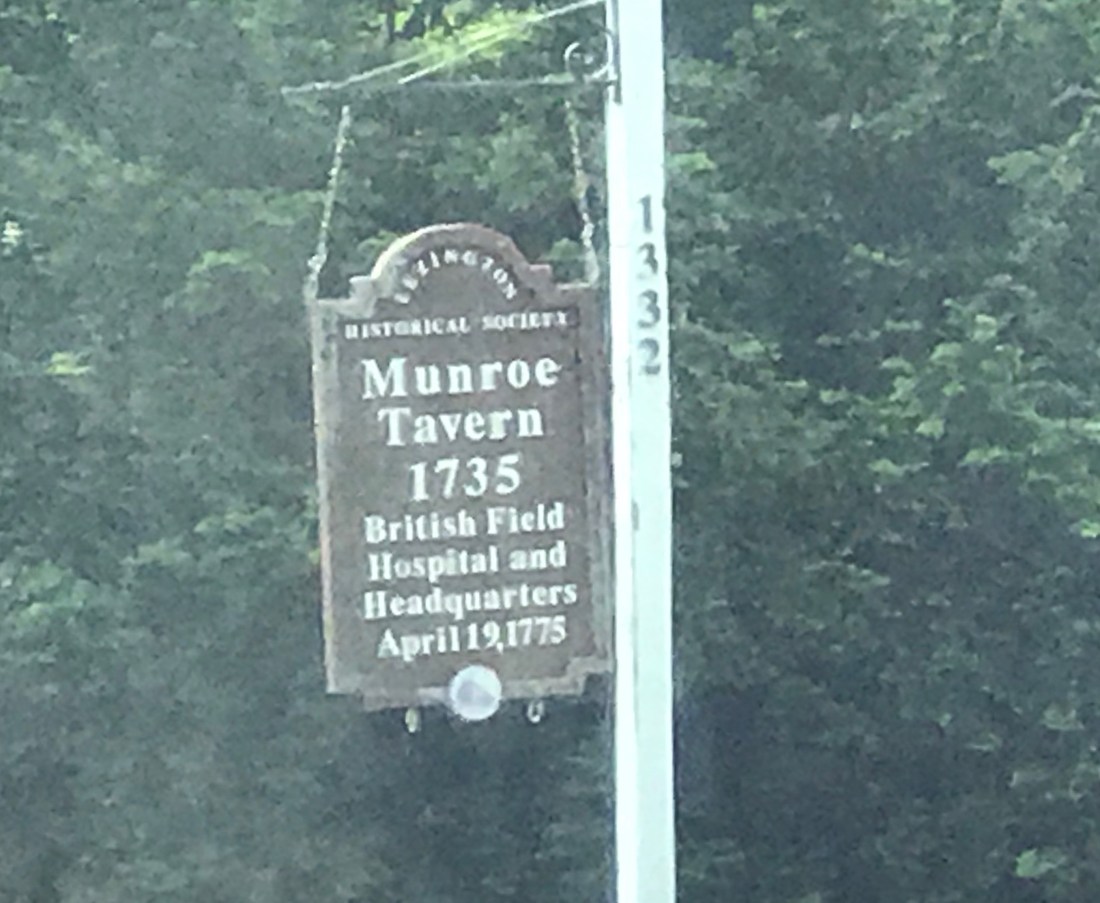
The owner of the Munroe Tavern was killed by British Soldiers in 1775, and his establishment was converted into a hospital for British Troops. The quartering of soldiers in homes without consent was one of the many grieviances against the king highlighted by the Declaration of Independence.

IMG_6666.jpg

The main reason we took this picture was because of the very vibrant flowers… how do they do it in this cold climate?

IMG_2110.jpg

The “Grand Union Flag” glides in front of this house. The flag was the first symbol of the United States, used during the Revolutionary War. The 13 stripes that resembled the 13 original colonies remain, but has the British stripes where the stars would eventually go.

IMG_2089.jpgIMG_6665.jpg

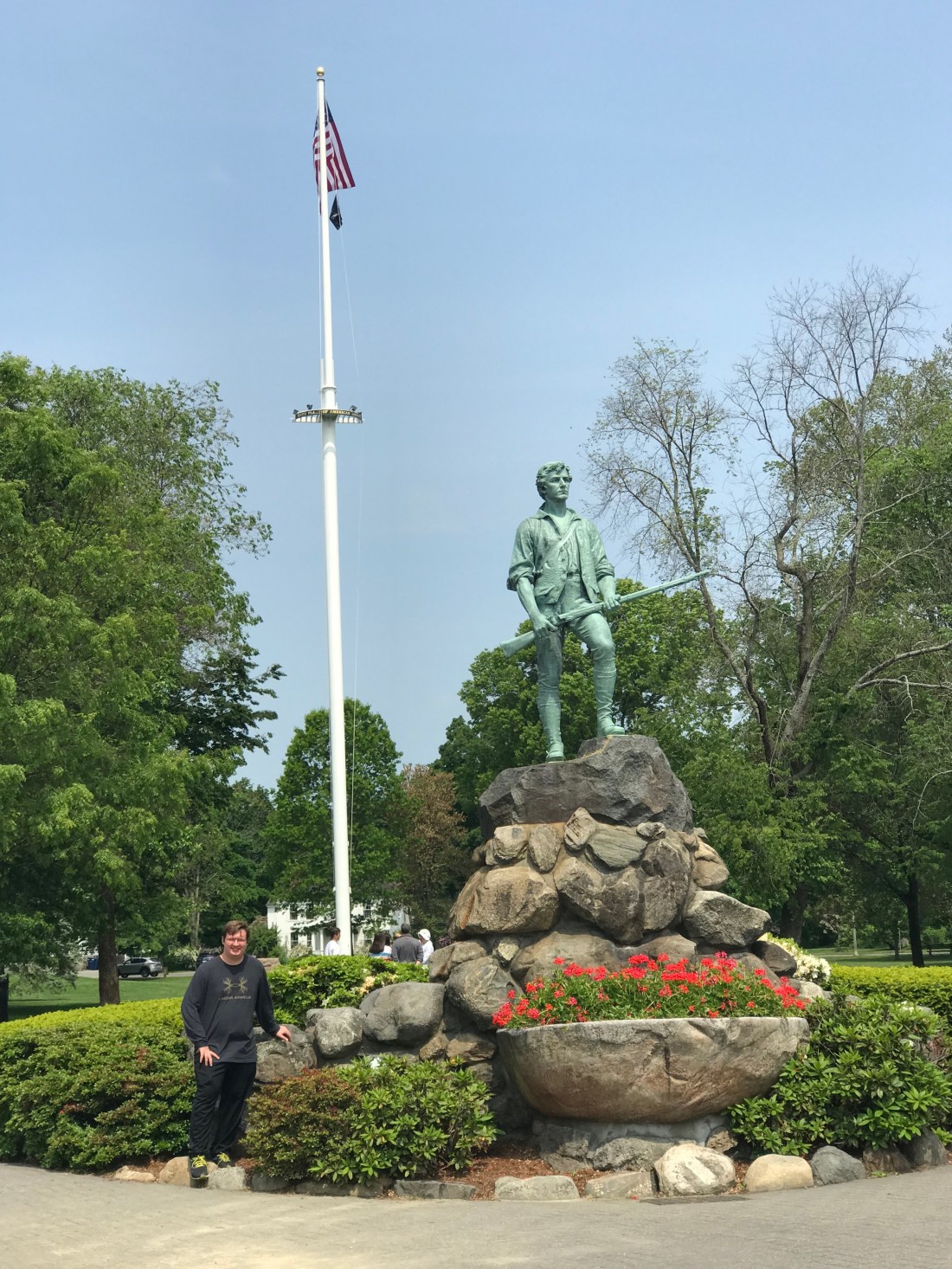
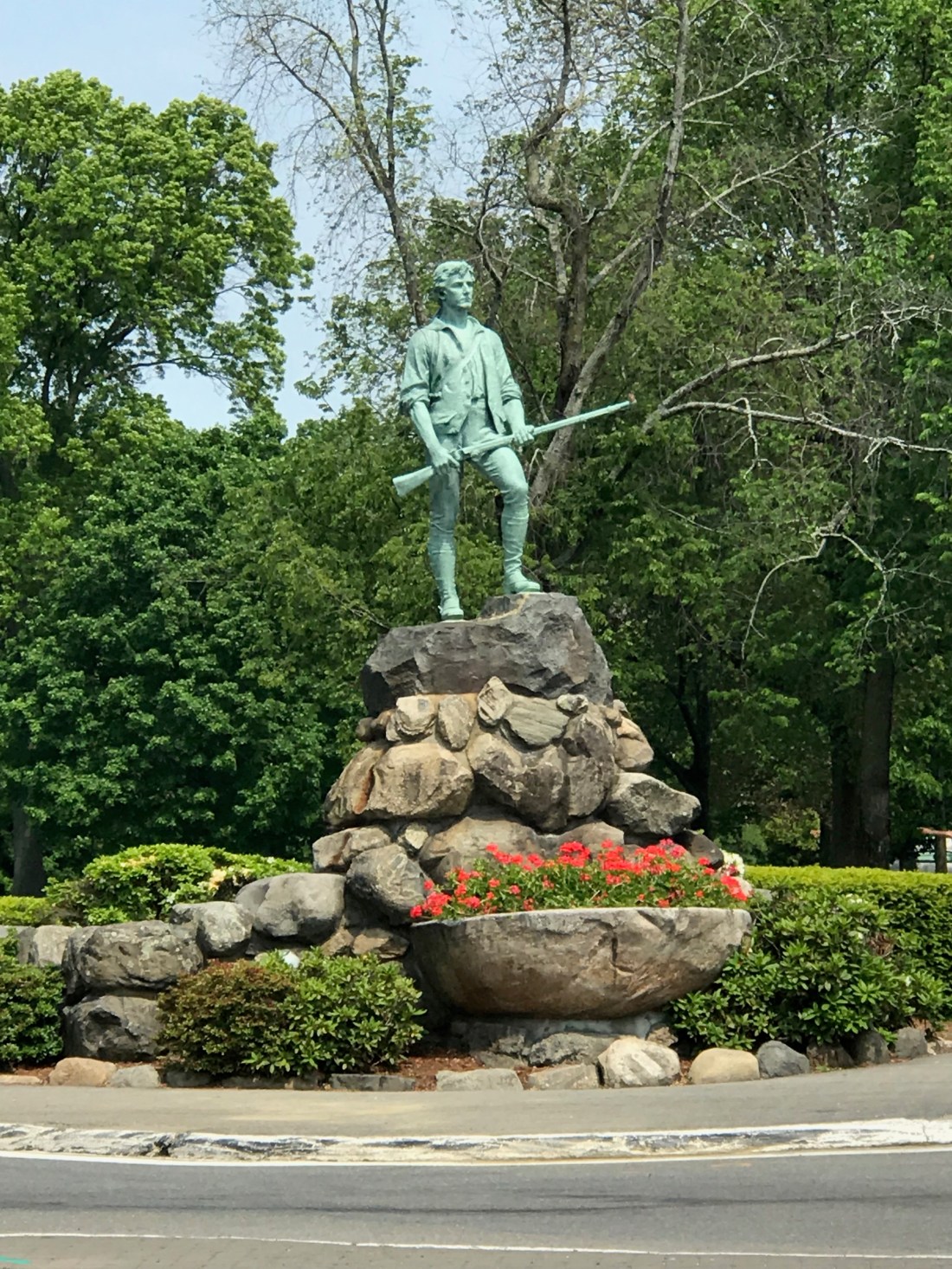
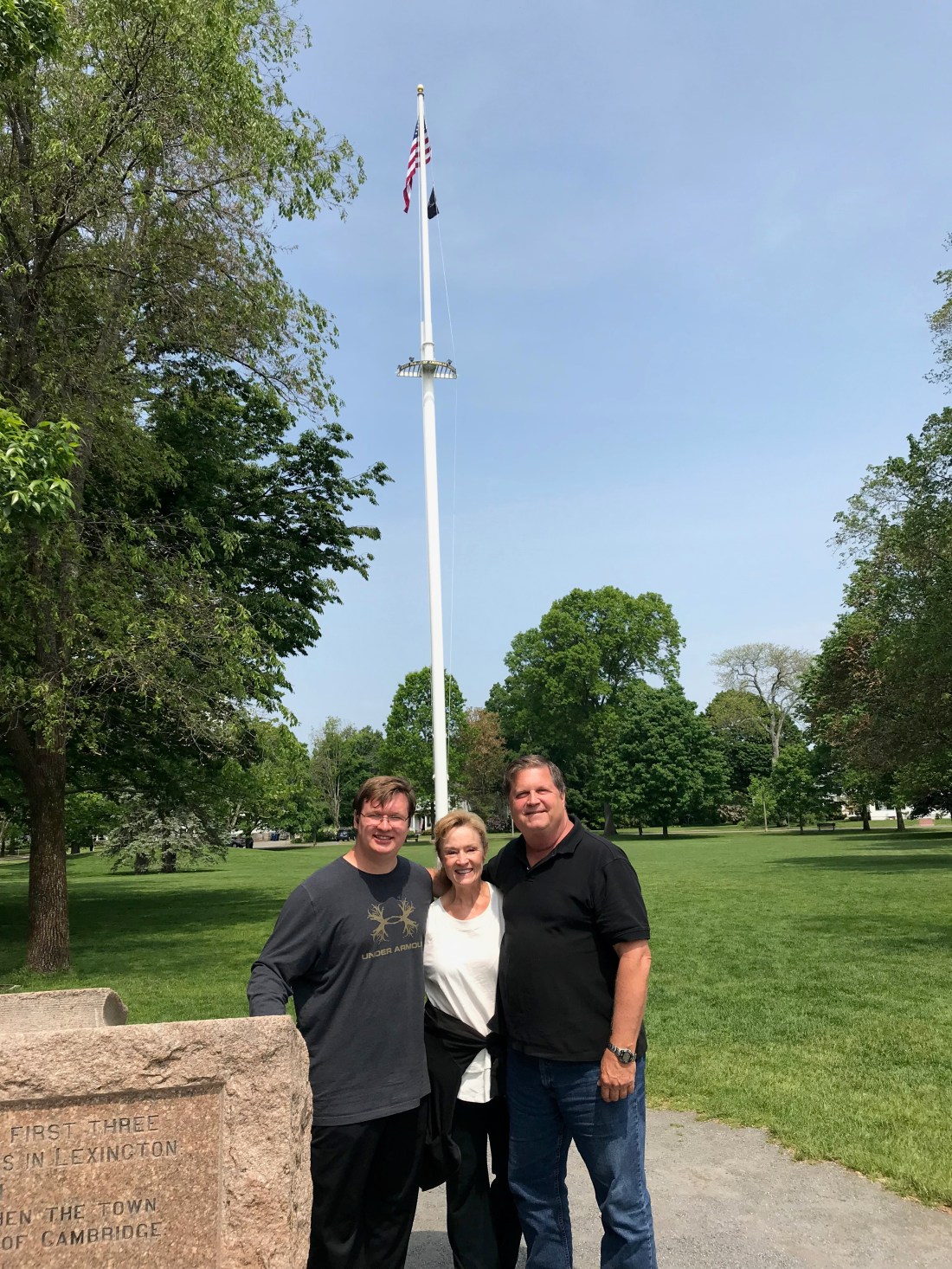
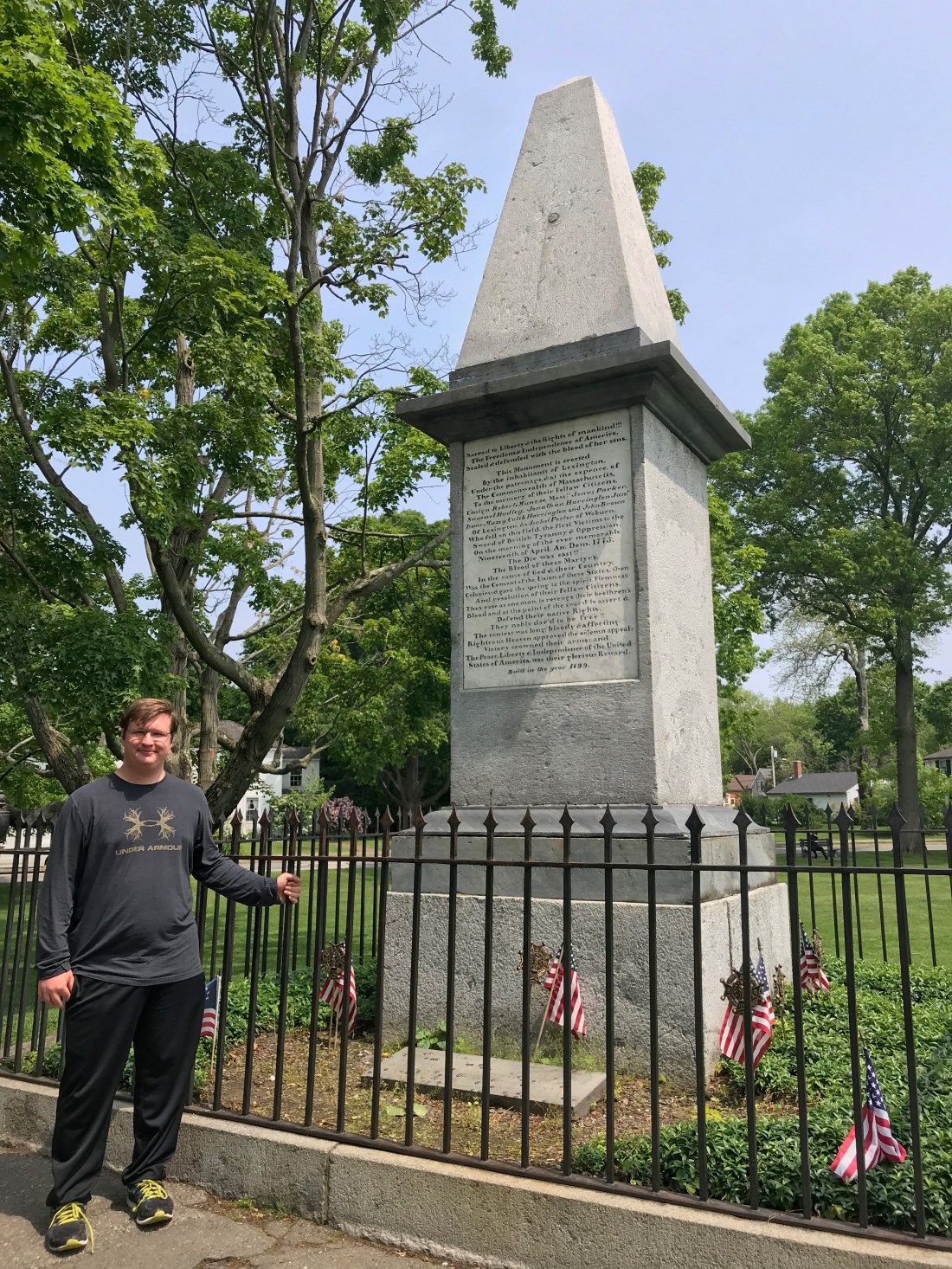
A statue commemorating the very first skirmish of the Revolutionary War, which took place right here in Lexington…

IMG_6667.jpg

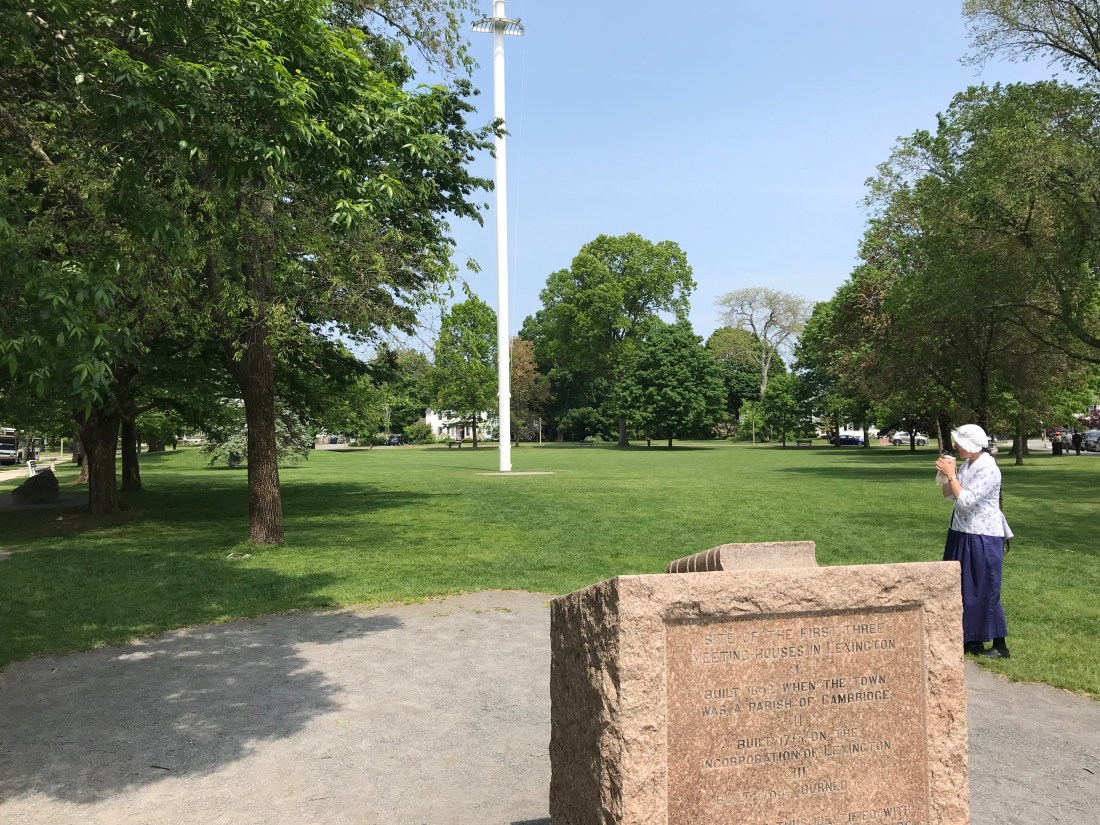
Behind it was the Lexington Common… it was at this space of green right here that the very first fighting erupted…

IMG_6668.jpgIMG_2091.jpg

IMG_6669.jpg

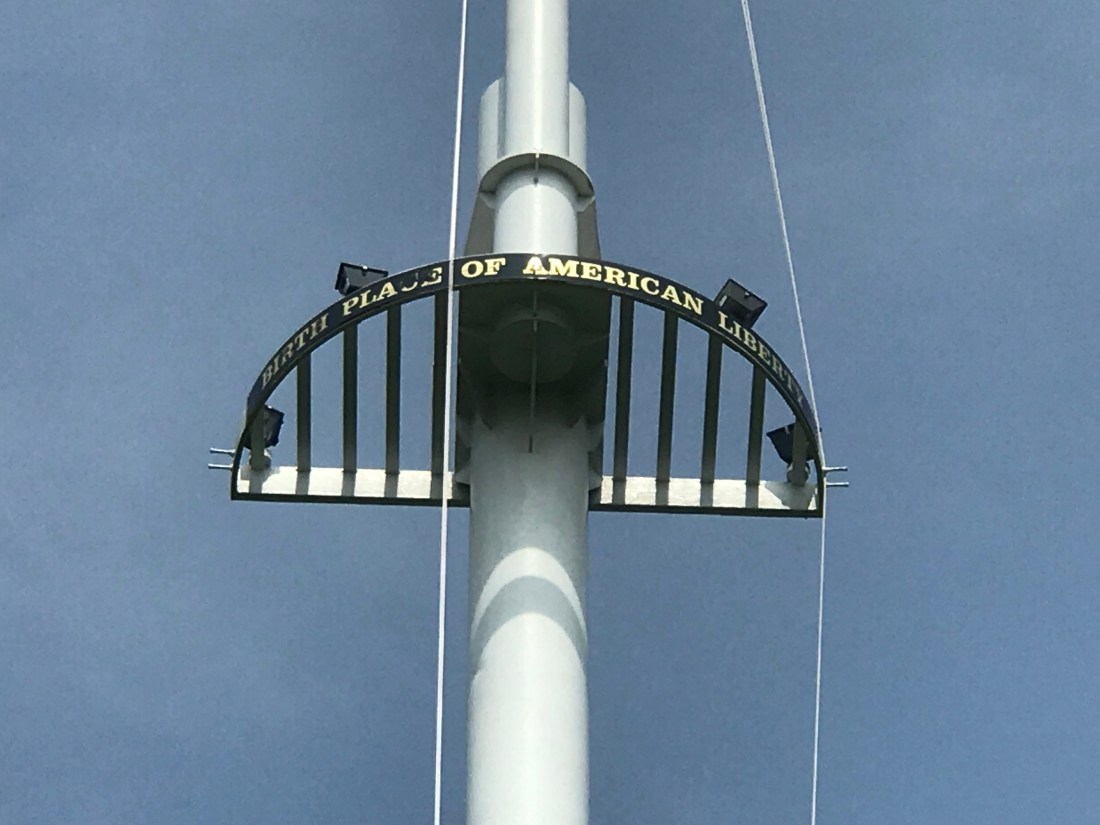
The platform on the flagpole reads: “Birth Place of American Liberty”.. it would certainly seem that way, and it was a struggle that would last for almost a decade… yet it would be won.

IMG_2098.jpgIMG_2096.jpg

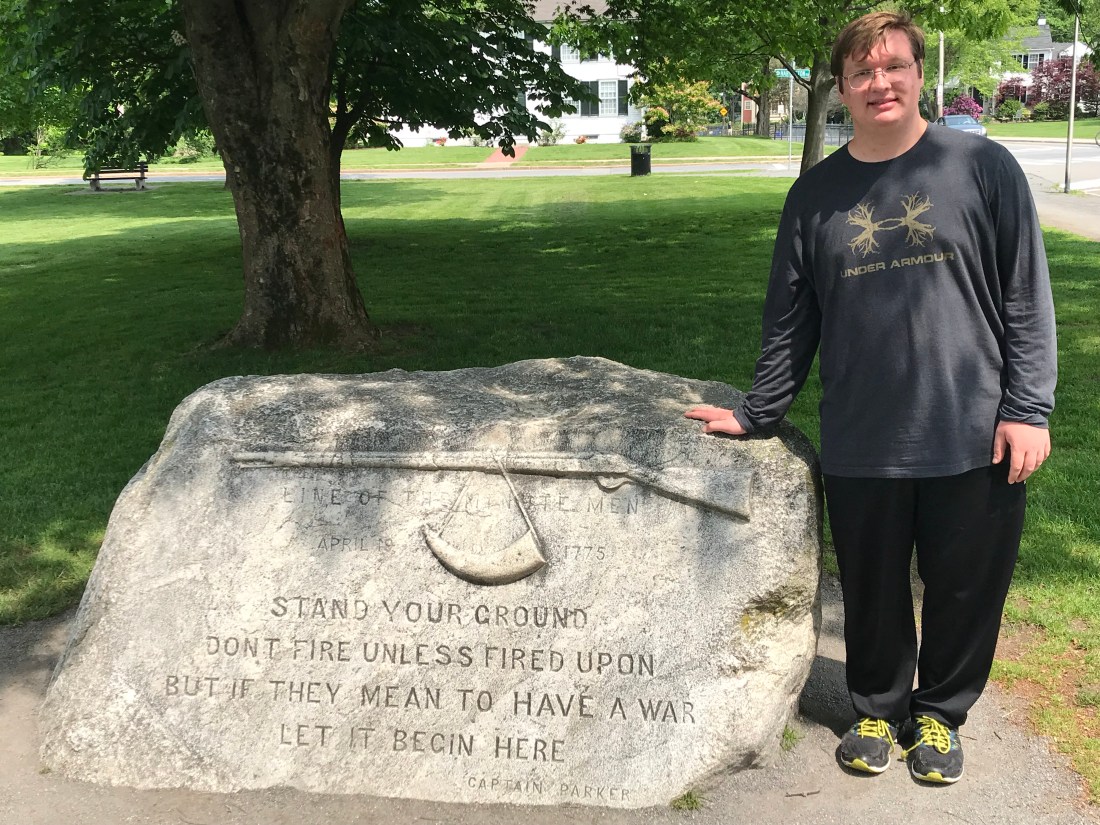
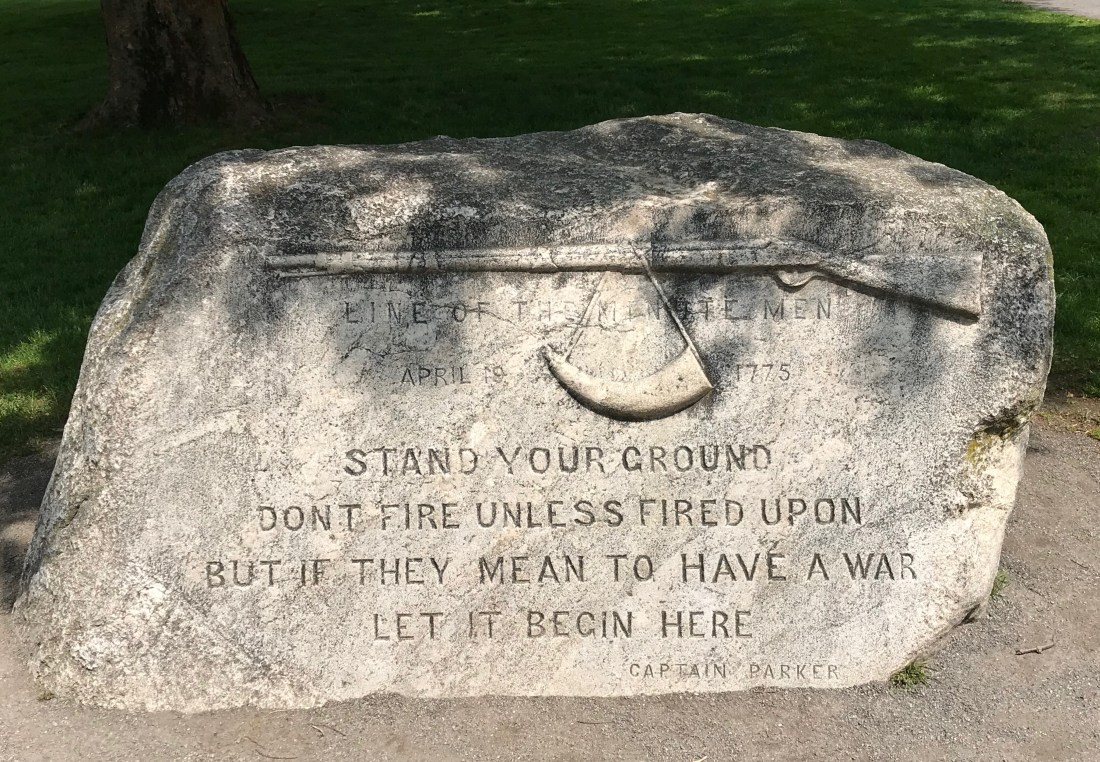
Along this line marked by the stone, the Minutemen stood, 77 of the militia against 700 British Soldiers… it took true courage for them to stand up against the greatest military superpower in the world… and stand up they did….

IMG_6672.jpg

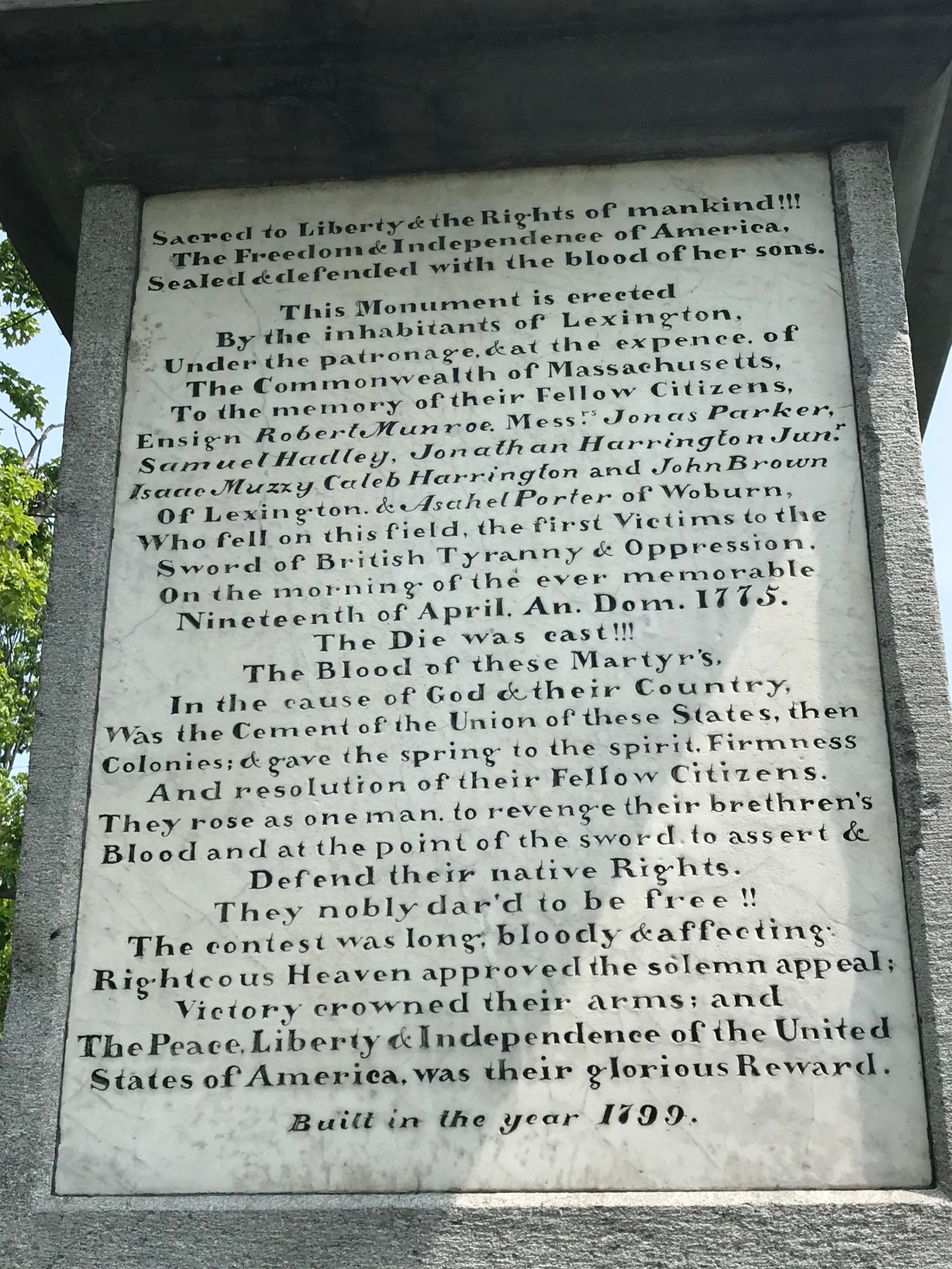
Towards the way was the memorial marker for the 8 brave soldiers that perished during the Battle of Lexington.

IMG_2104.jpg

And most of these men were mere farmers and volunteers, who were willing to give the ultimate sacrifice to protect their homes and family…

IMG_6673.jpg

IMG_6676.jpg

IMG_6674.jpg

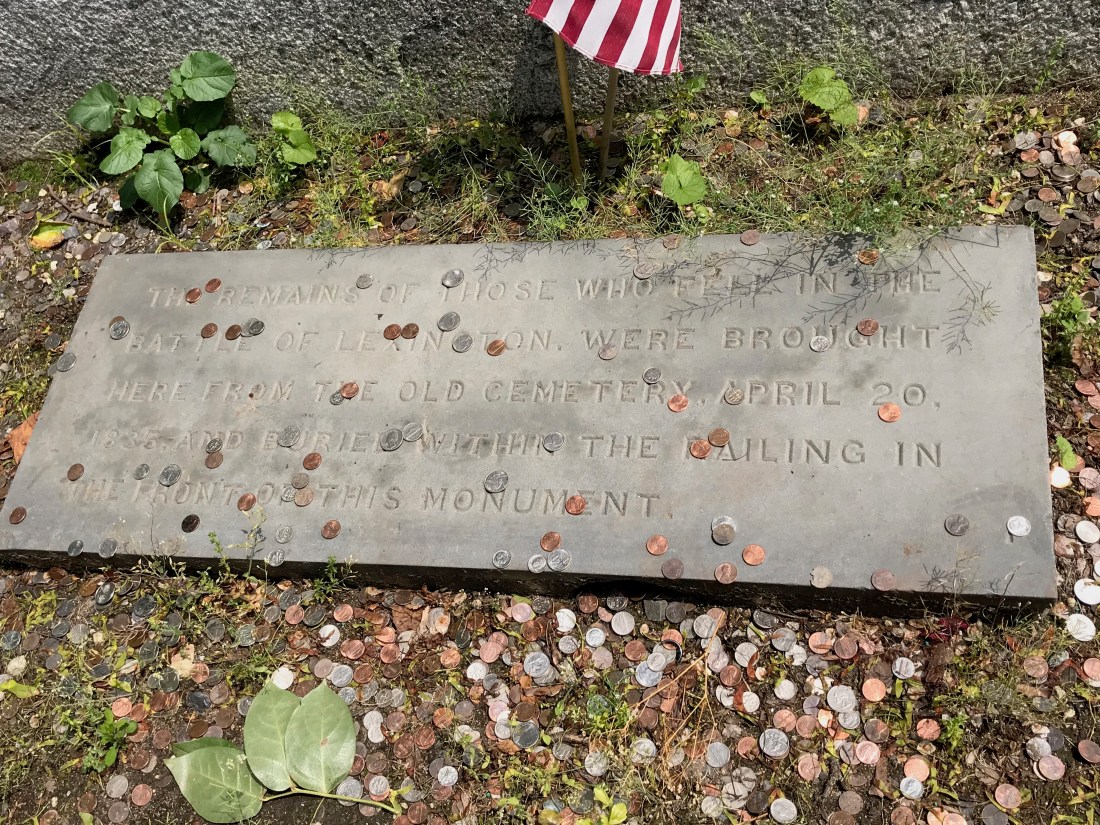
7 of the 8 patriot casualties are buried here in this little spot, which remains one of the smallest actual cemeteries in the country. The eighth, Mr. Porter of Woburn, was exhumed and taken back to his hometown shortly after the memorial was completed.

Soon enough, we hopped back on the bus and began to head towards Concord!

IMG_6664.jpg

“Over the river and through the woods, to… someplace.”

IMG_2112.jpg

This house belonged to Colonel William Smith, who was one of the leaders of the Massachusetts Campaign during the War He served directly under George Washington during this time, and would go on to marry Abigail “Nabby” Adams, who was the daughter of John Adams!

IMG_2121.jpg

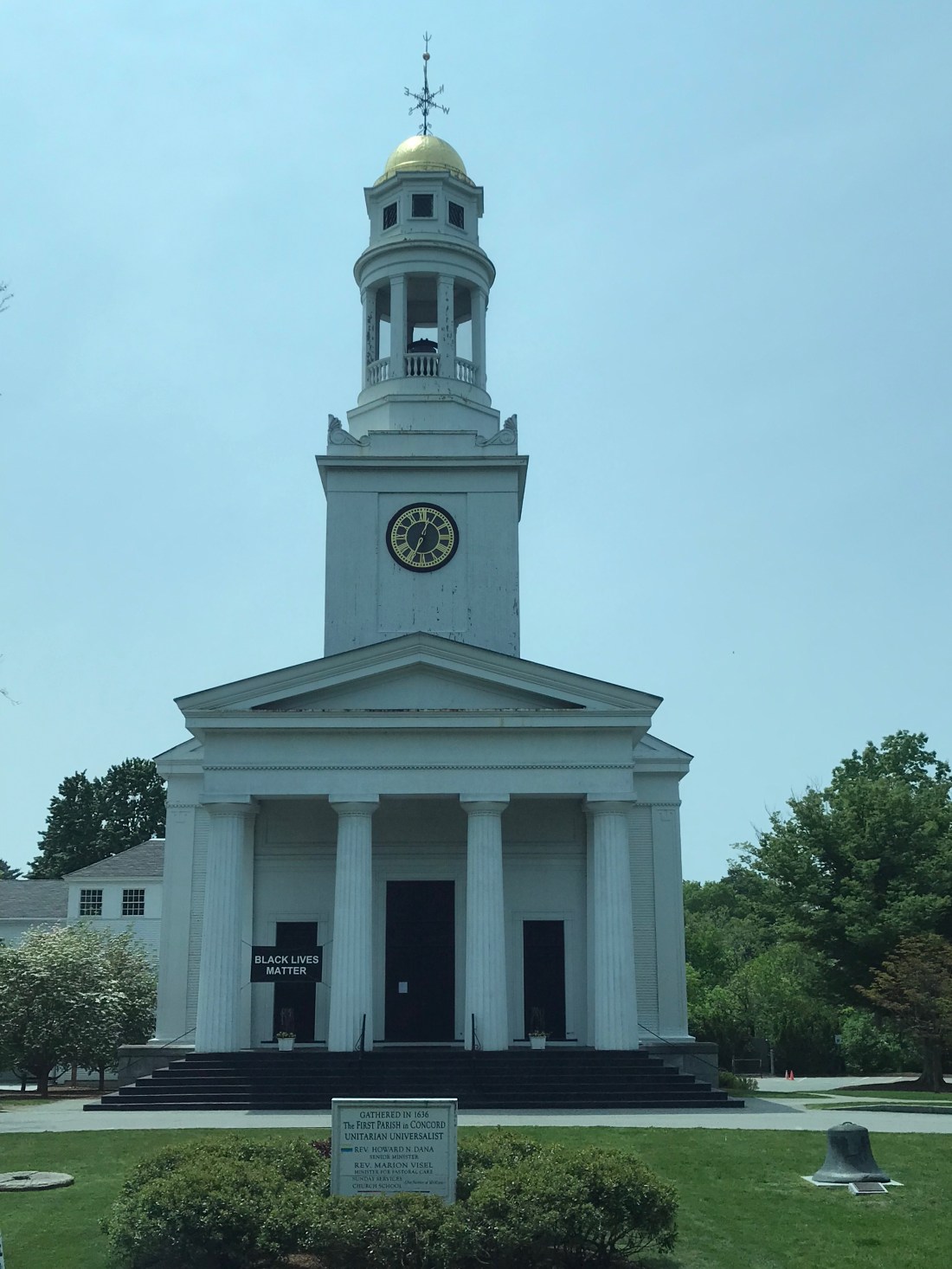
A neat church that we passed on our way there.

IMG_2115.jpg

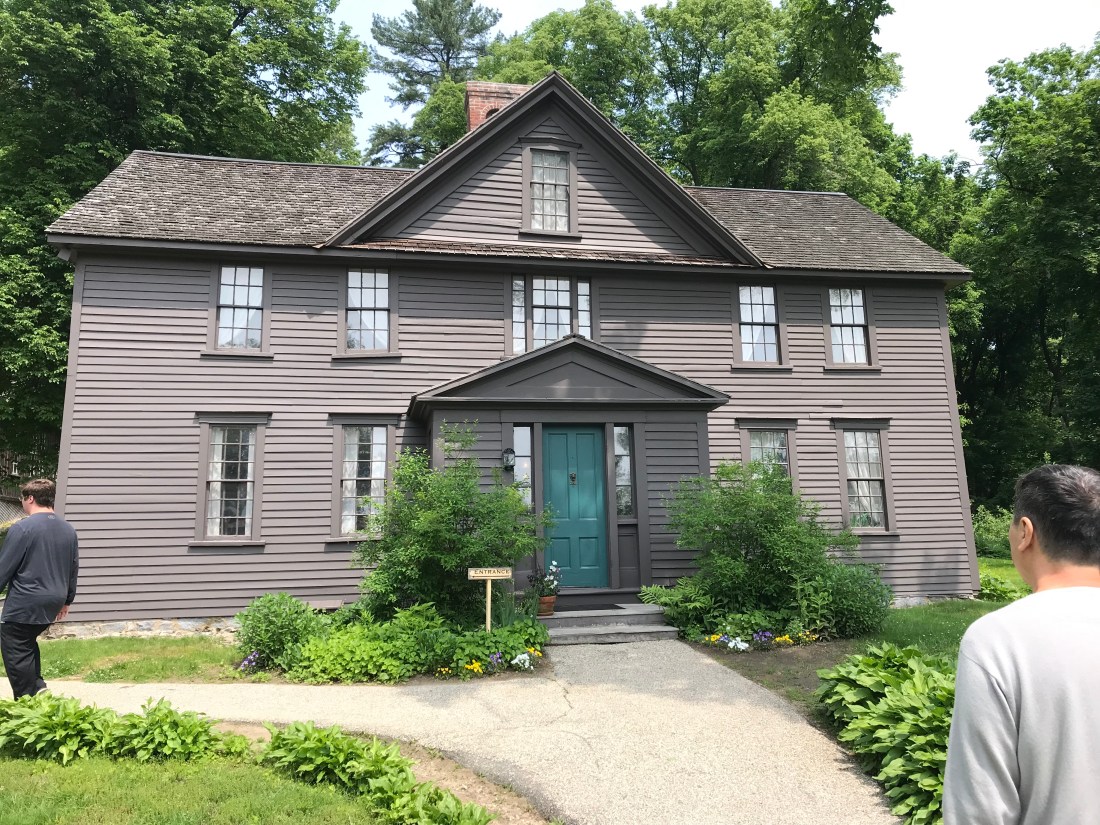
The home of Louisa May Alcott, the author of Little Woman! It was a brief stop to see, but no pictures were allowed inside. She based many of the characters and locations off real-life subjects situated here in Concord!

IMG_6677.jpg

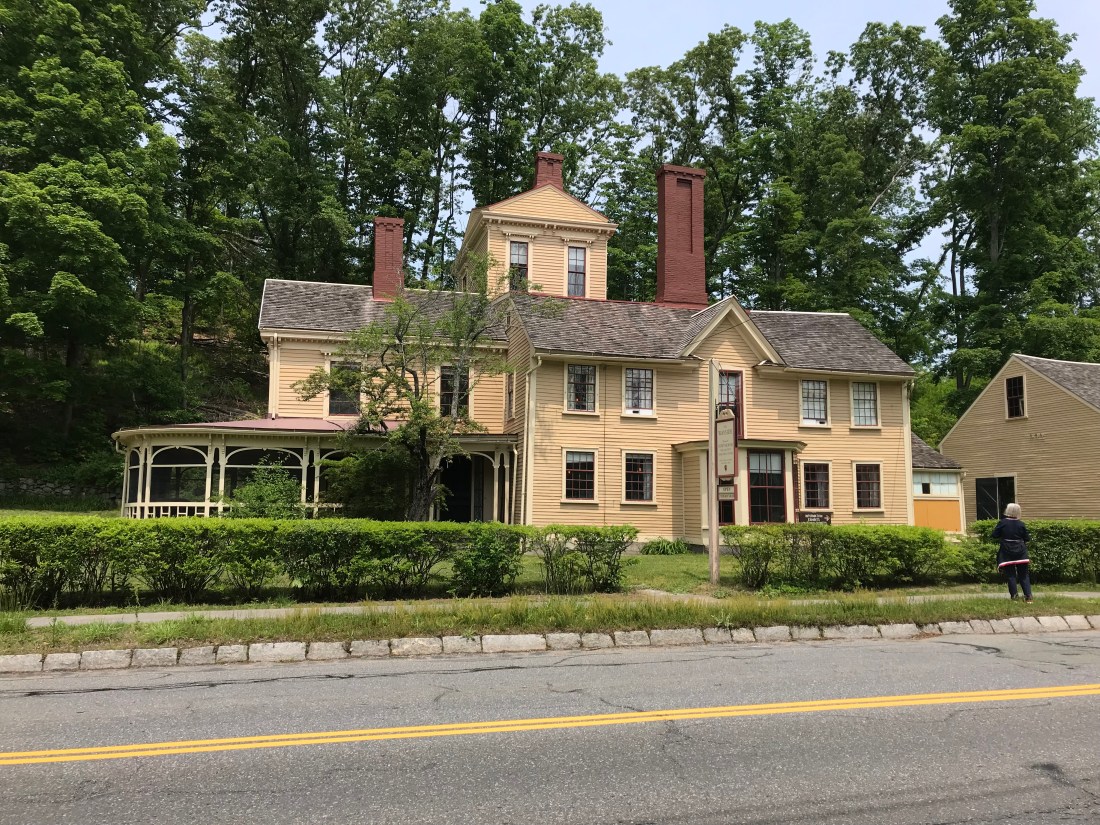
The home of author Nathaniel Hawthorne, who was known for being on the forefront of the “Romantic Movement”. He was a close friend with President Franklin Pierce, with whom he went to college with.

IMG_2123.jpg

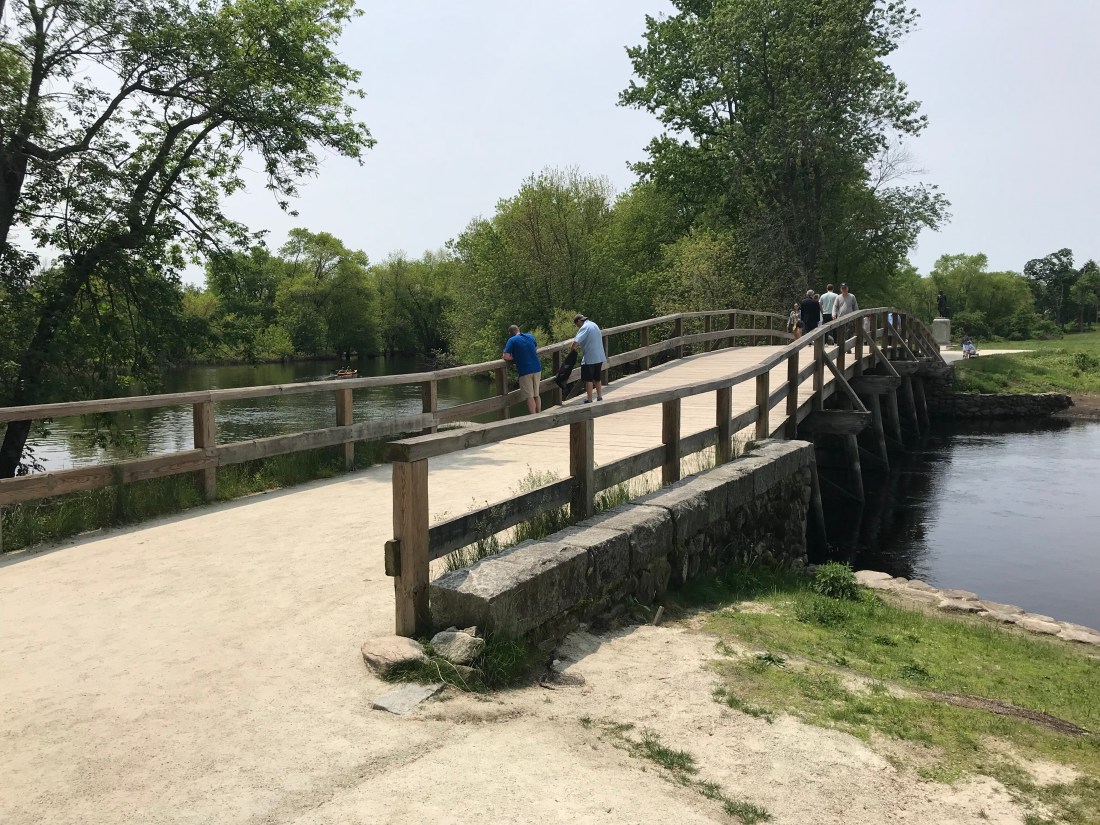
Stopping on the fringes of Minuteman National Historical Park for our next stop, we found the site of the Battle of Concord…  The North Bridge!

IMG_6681.jpg

IMG_6690.jpg

IMG_6694.jpg

IMG_6693.jpg

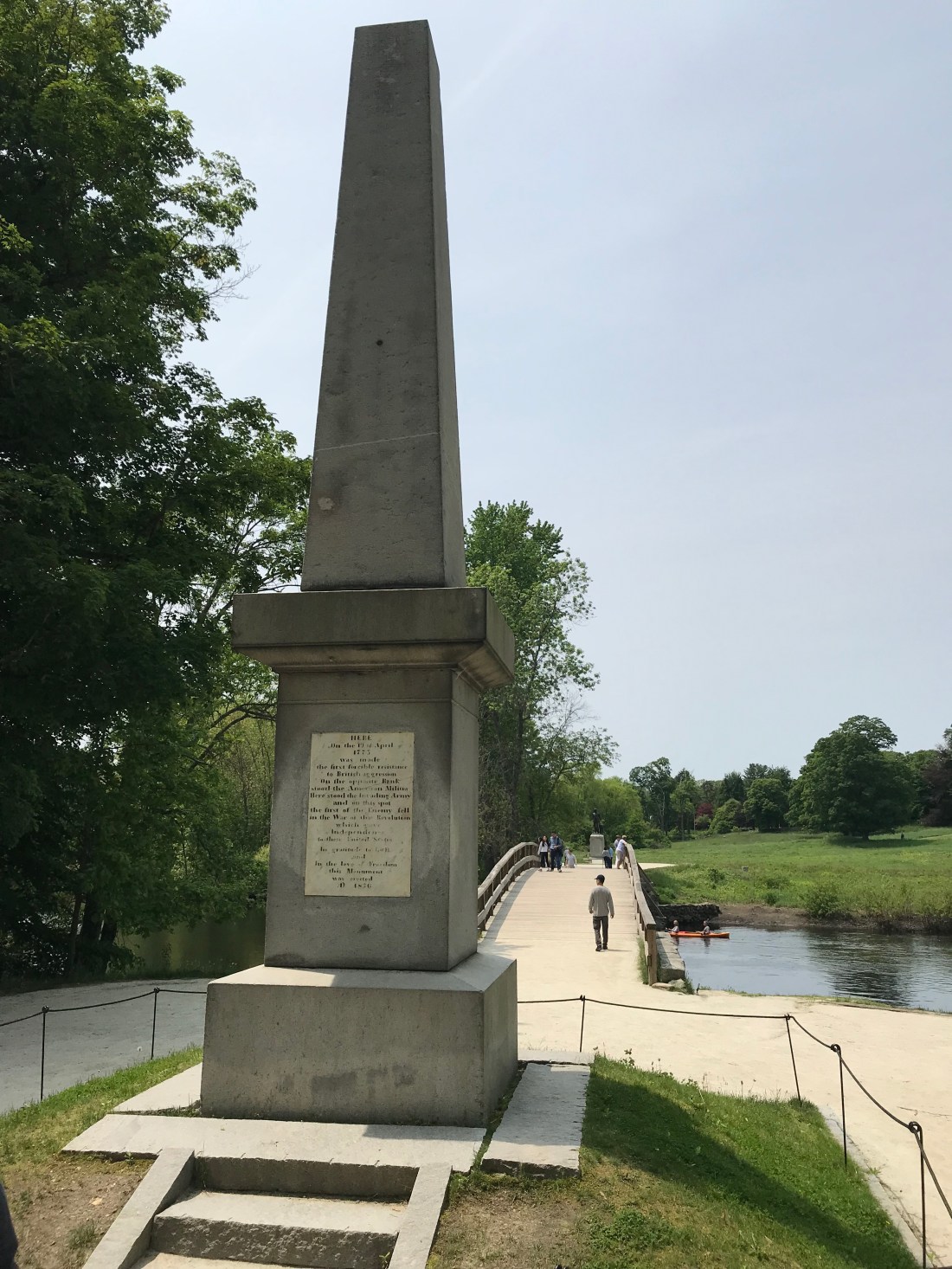
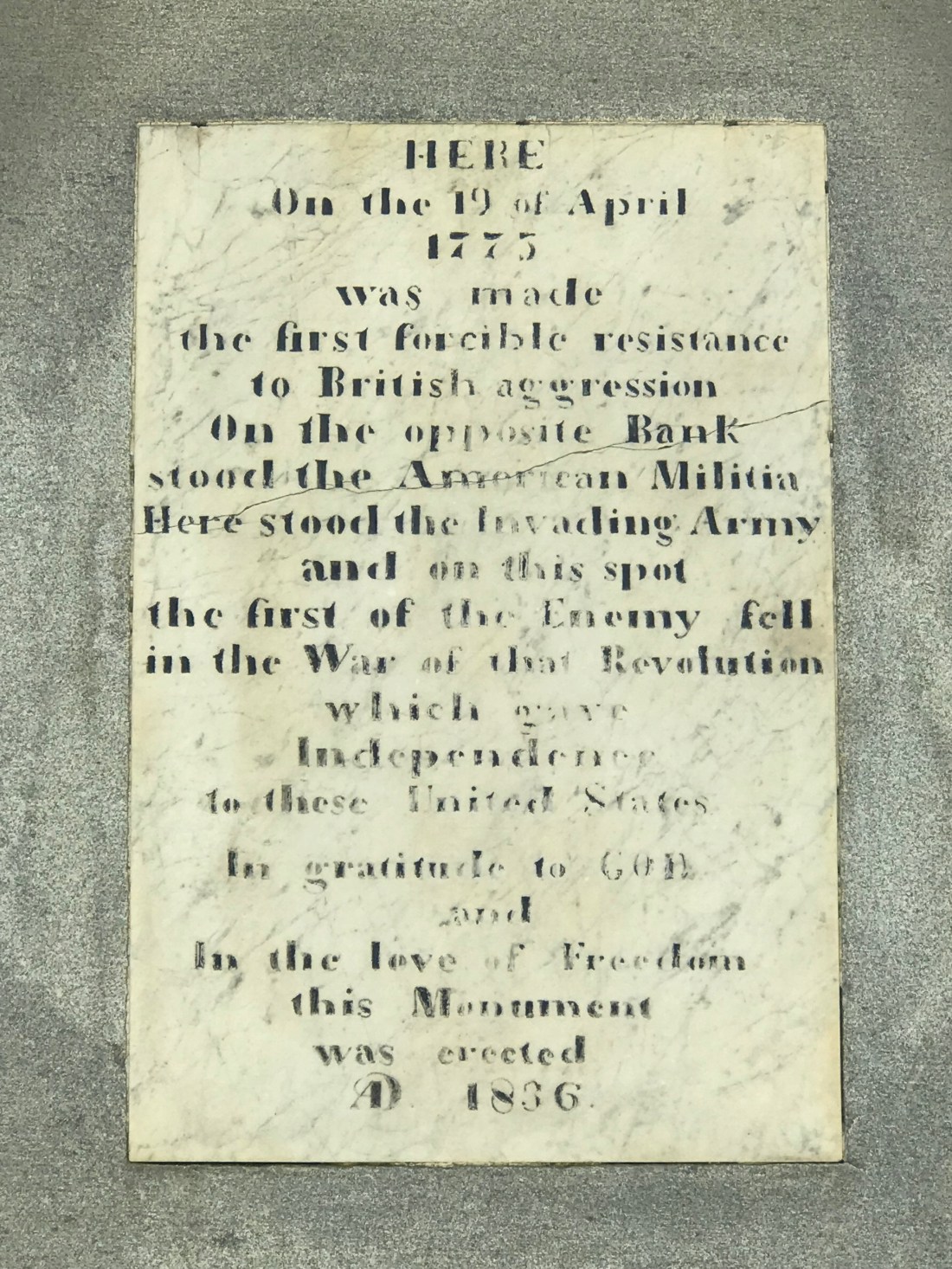
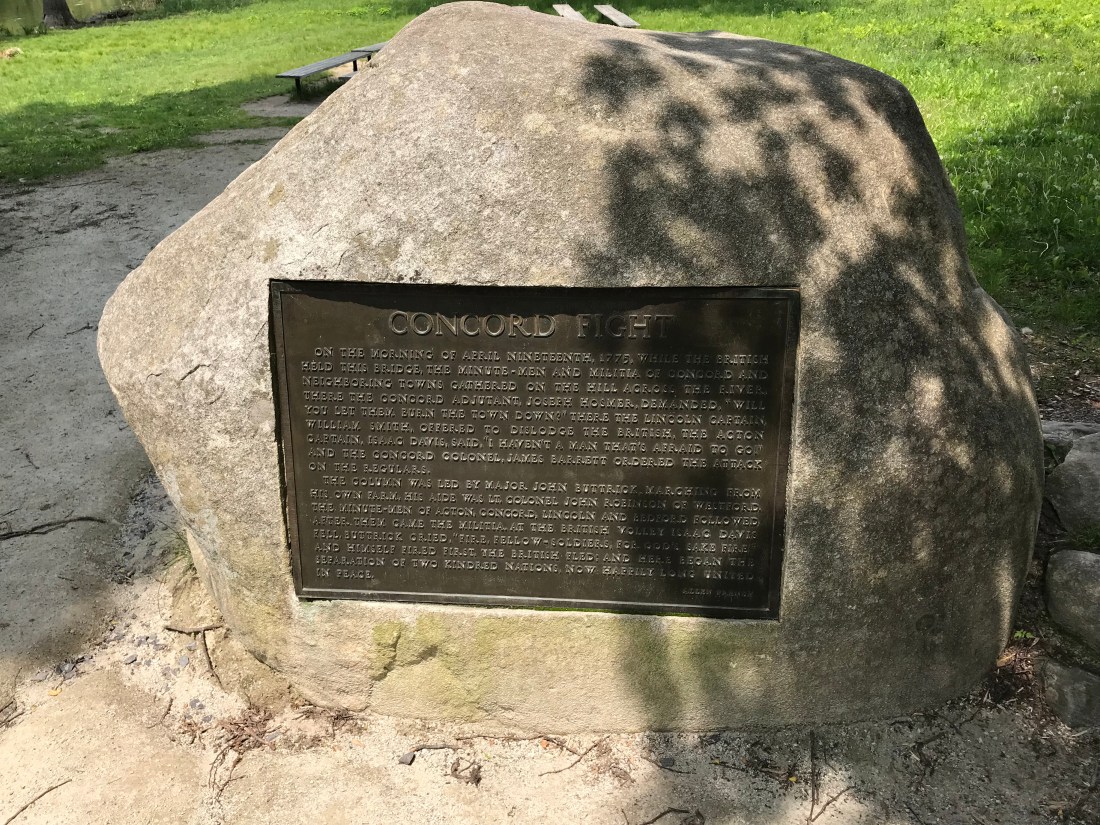
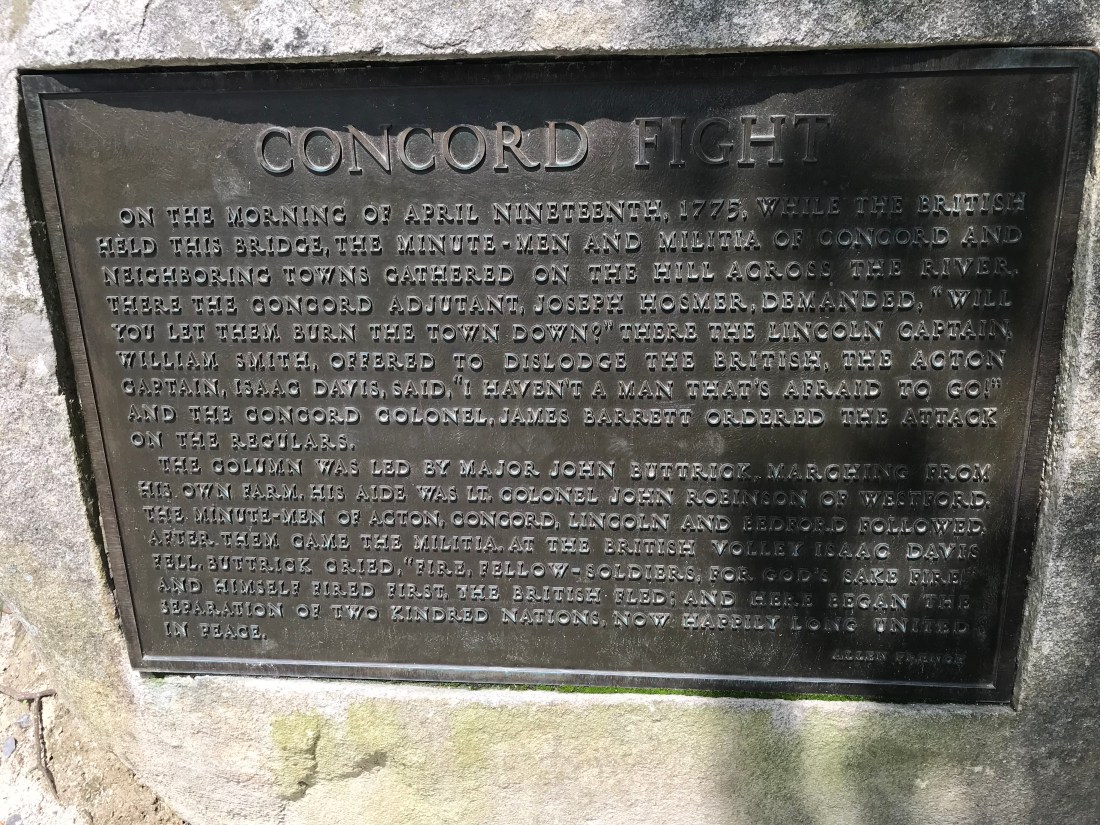
Yet another memorial to the battle that took place here, which turned out to be a victory for the patriots unlike the Battle of Lexington.

IMG_6679.jpg

Lexington and Concord each claim to be the site of the first battle… Even though the first shots were fired in Lexington, the first actual organized battle took place at Concord… It’s sort of a local competition if you will.

IMG_6682.jpg

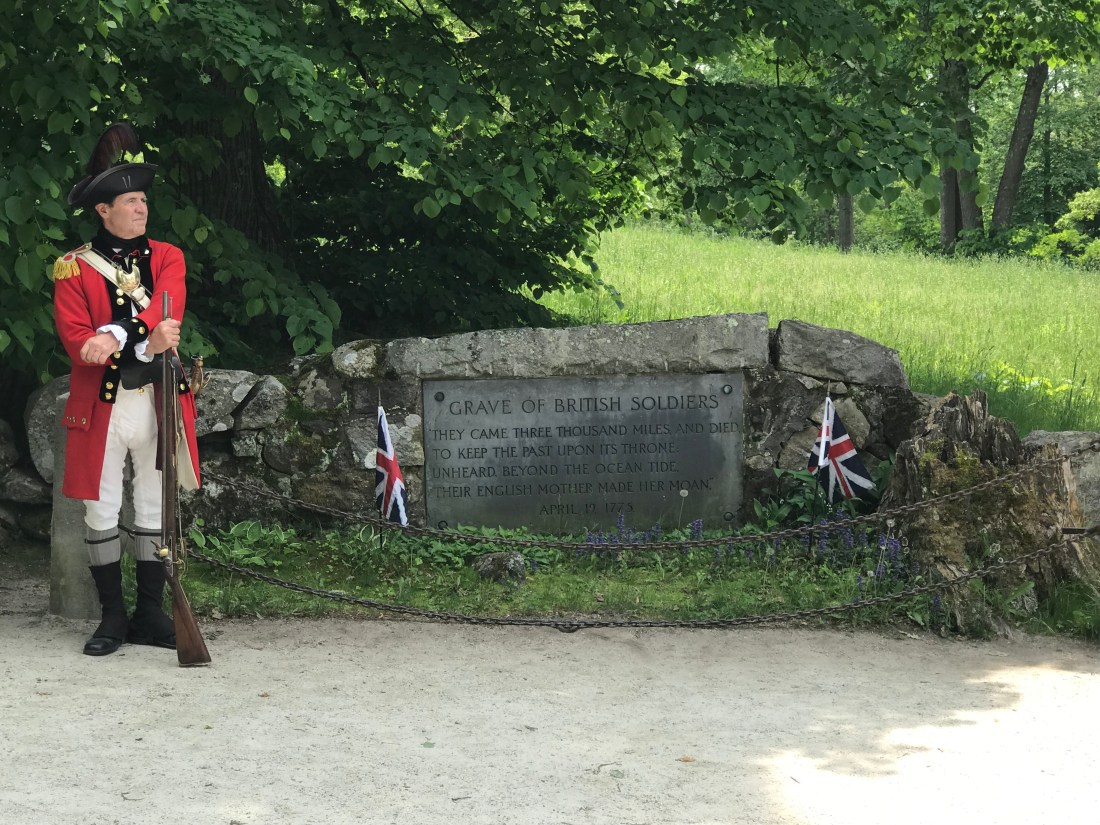
The graves of a couple of british soldiers who fell here, guarded by a lonely redcoat, who looks a little lost.

IMG_6684.jpgIMG_6685.jpg

IMG_6686.jpgIMG_6688.jpgIMG_6687.jpg

It’s a nice view of the Concord River, which is not too awfully wide.

Crossing the bridge, we came to some very neat lawns and gardens.

IMG_6695.jpg

Looking up the hill, towards some kind of ceremony at the flagpole.

IMG_6696.jpg

And looking back towards the North Bridge and the various memorials.


IMG_6697.jpg

And these are just gorgeous…

IMG_6699.jpg

Looking towards the park’s Visitor Center, which we didn’t enter.

IMG_6700.jpg

Must take a lot of effort to manacure these gardens…

IMG_6701.jpg

A nice overlook towards the North Bridge.

IMG_6705.jpg

Mom loved these flowers. We need to figure out what species of flowers these are…

Finishing our look-around with minutes to spare, we got back on the bus, which took us directly back into Boston. Sam graciously dropped us off at the last location on the Freedom Trail that we weren’t able to explore yesterday… let’s finish this.


Bunker Hill Monument

IMG_2145.jpg

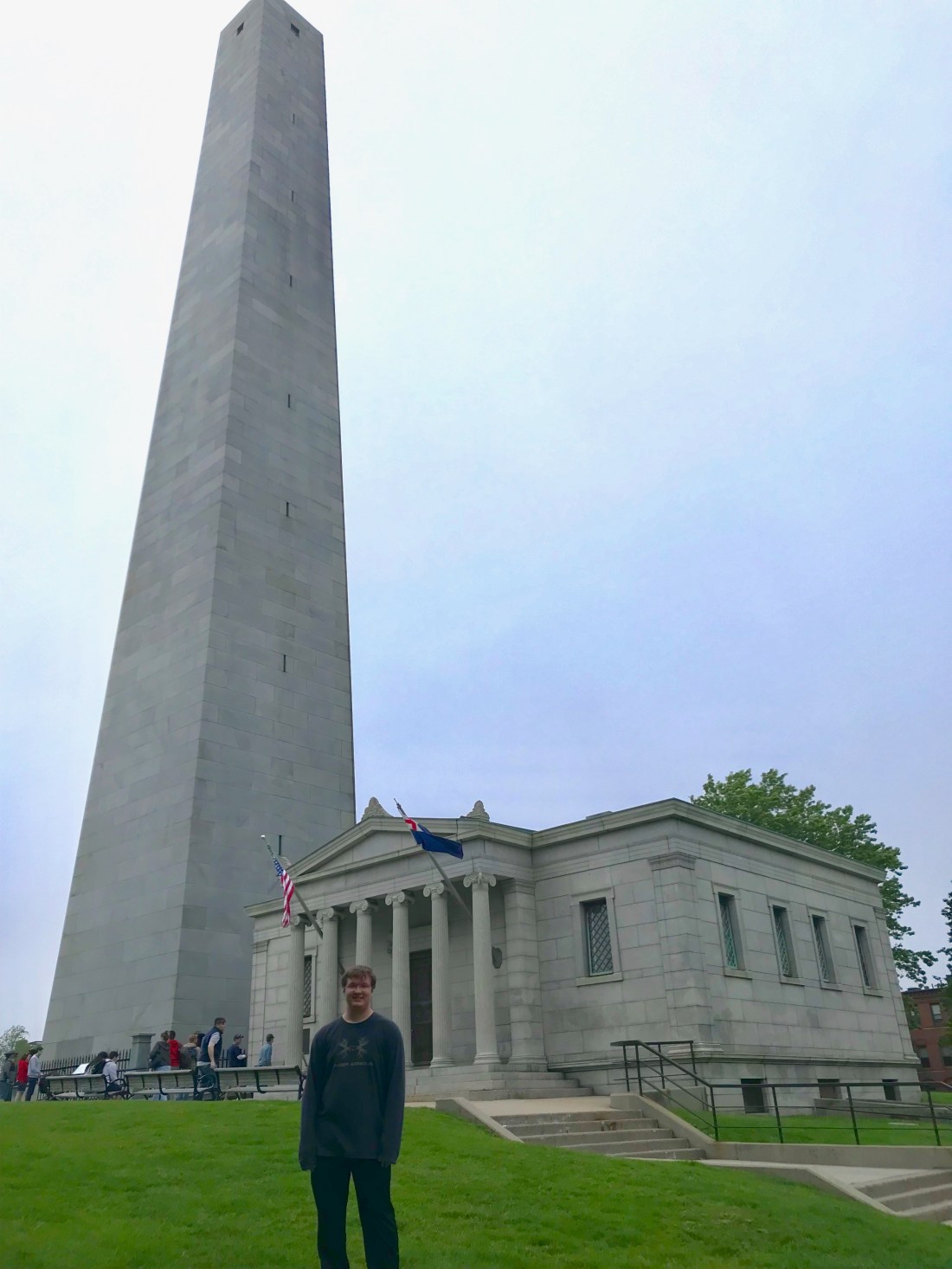
At first, I thought that I had a “Rendevous with Déjà vu” (hey, that rhymes!).

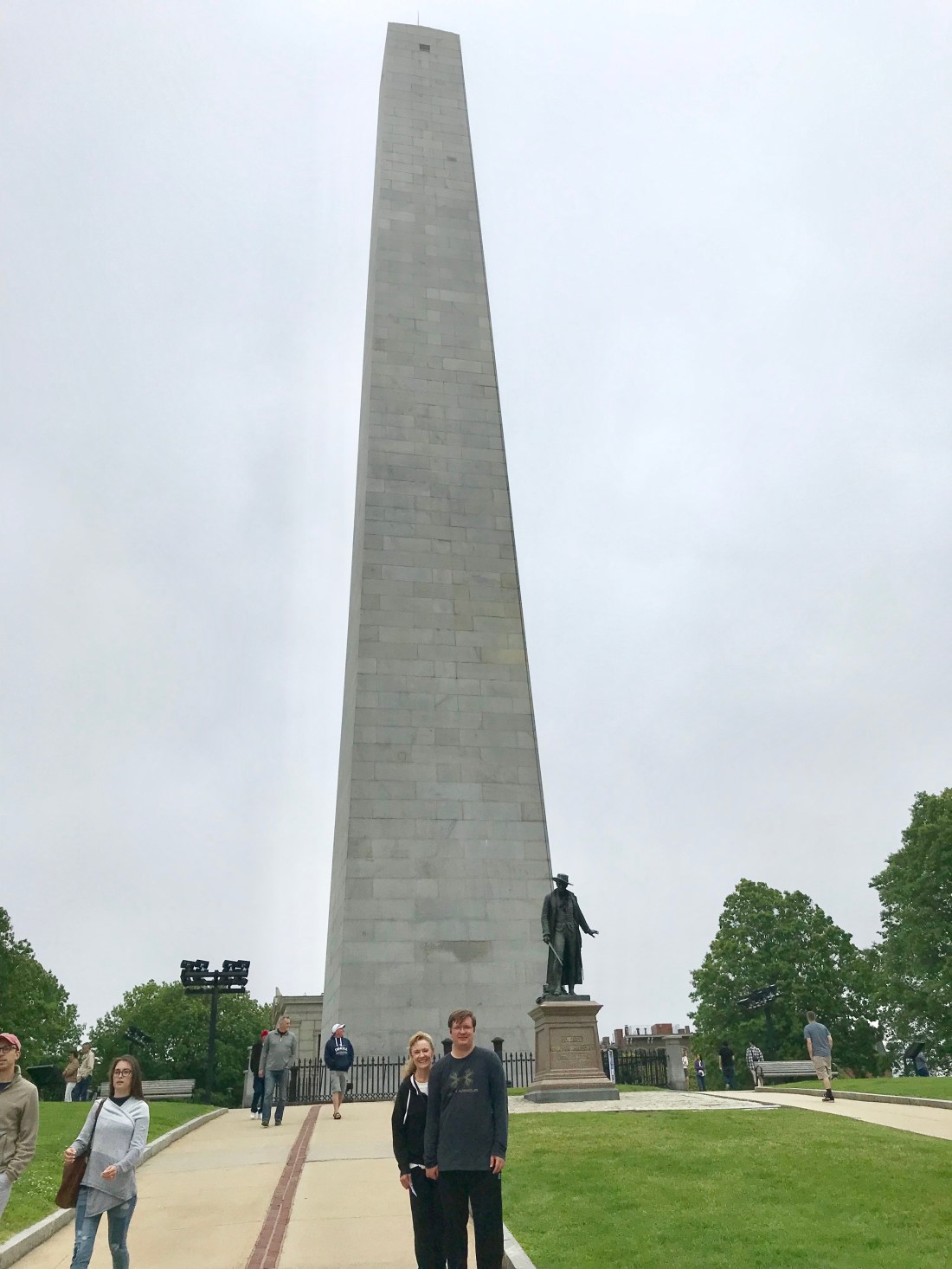
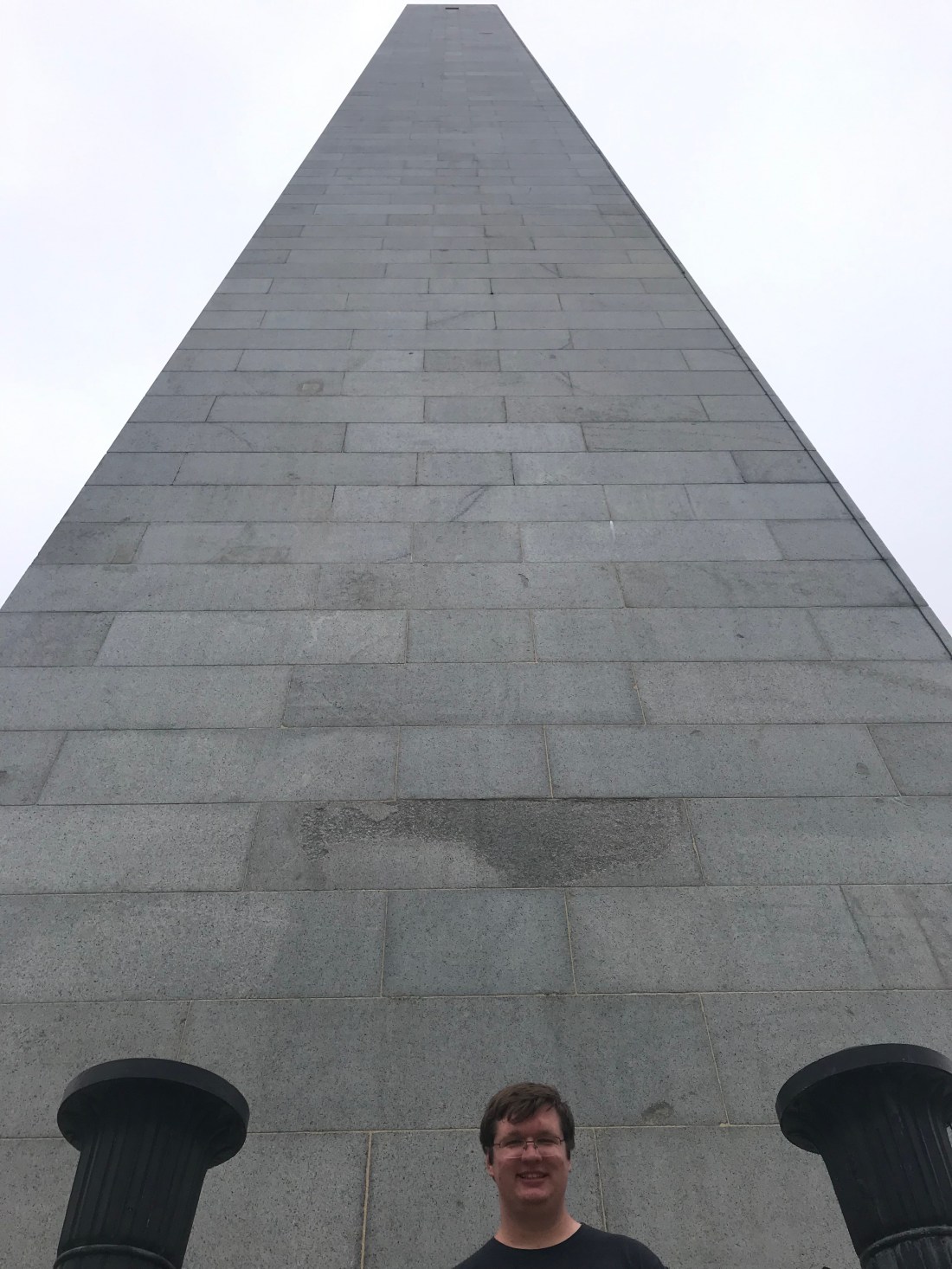
It looks a bit like the Washington Monument doesn’t it? You’d think that this monument was based off of it, but instead, the Washington Monument was based off of the Bunker Hill Monument. This was dedicated several years before the Washington Monument would be completed.

IMG_6707.jpg

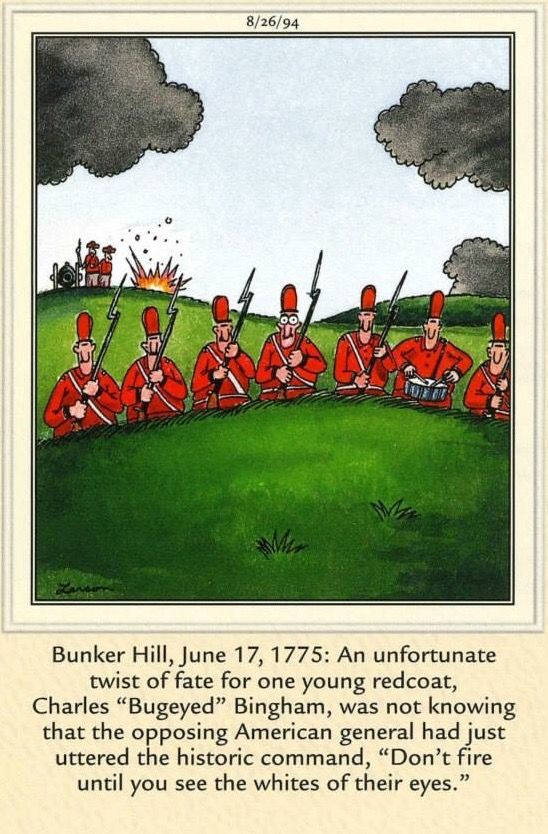
A statue of William Prescott, the commanding officer of the Patriots during the battle. Running low on ammuntion, he famously commanded his soldiers to “Hold their fire until they saw the whites of their (The Redcoat’s) eyes.” He sucessfully retreated with most of his men from the advancing British troops.

aefa89d775dbab0183da413263297abc.jpg

Poor guy…

IMG_6708.jpg

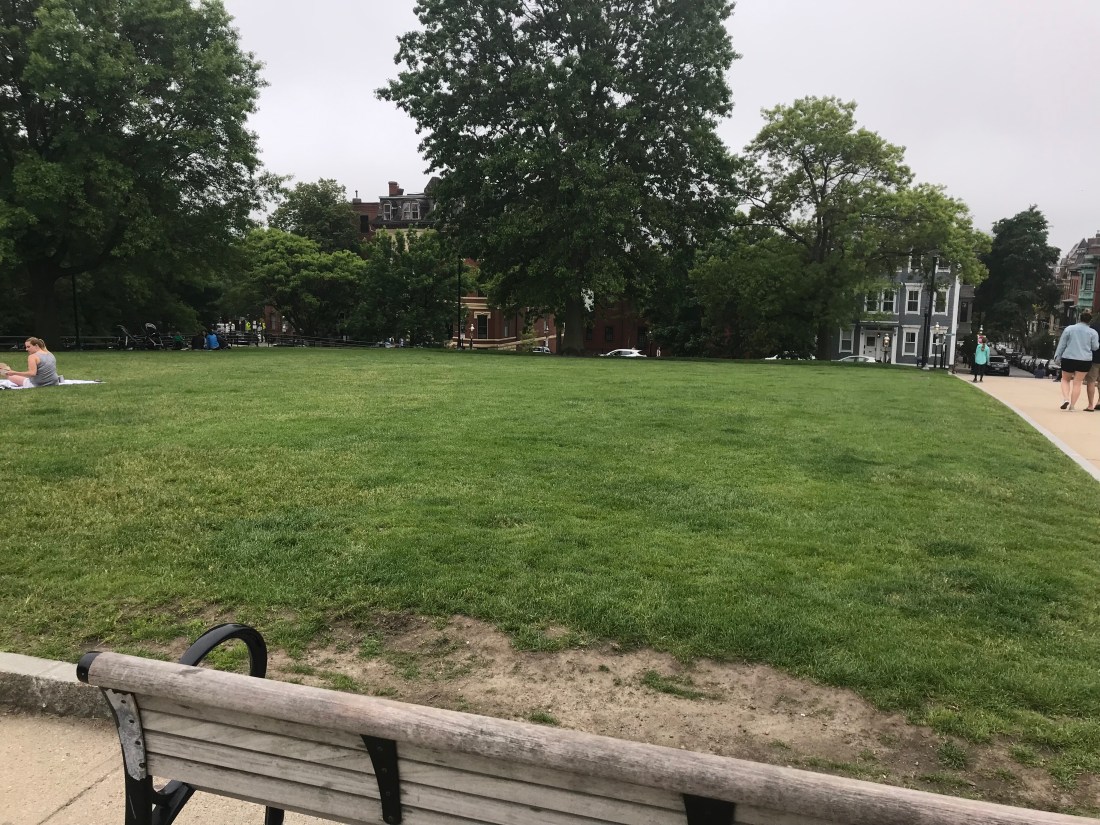
Looking down from Breed’s Hill.

What? It’s called Bunker Hill you say? Well actually, The Battle of Bunker Hill did not take place on nearby Bunker Hill, but instead took place here, at Breed’s Hill!

Just roll with it…

IMG_2153.jpg

The Monument and Memorial Hall together at the top of the hill. It was very cold up here, especially with the wind blowing.

IMG_6734.jpg

IMG_6735.jpg

IMG_2156.jpg

And this is the end of the Freedom Trail! Though it took us two days, we walked the whole trail!

It’s the same thing really, so I’ll just take that.


IMG_6736.jpg

To get to the observation deck on the very top of the tower, one has to climb 294 steps on a spiral staircase that leads up… and up… and up.

Well, nowhere to go but up. Let’s get started.

IMG_6709.jpgIMG_2147.jpg

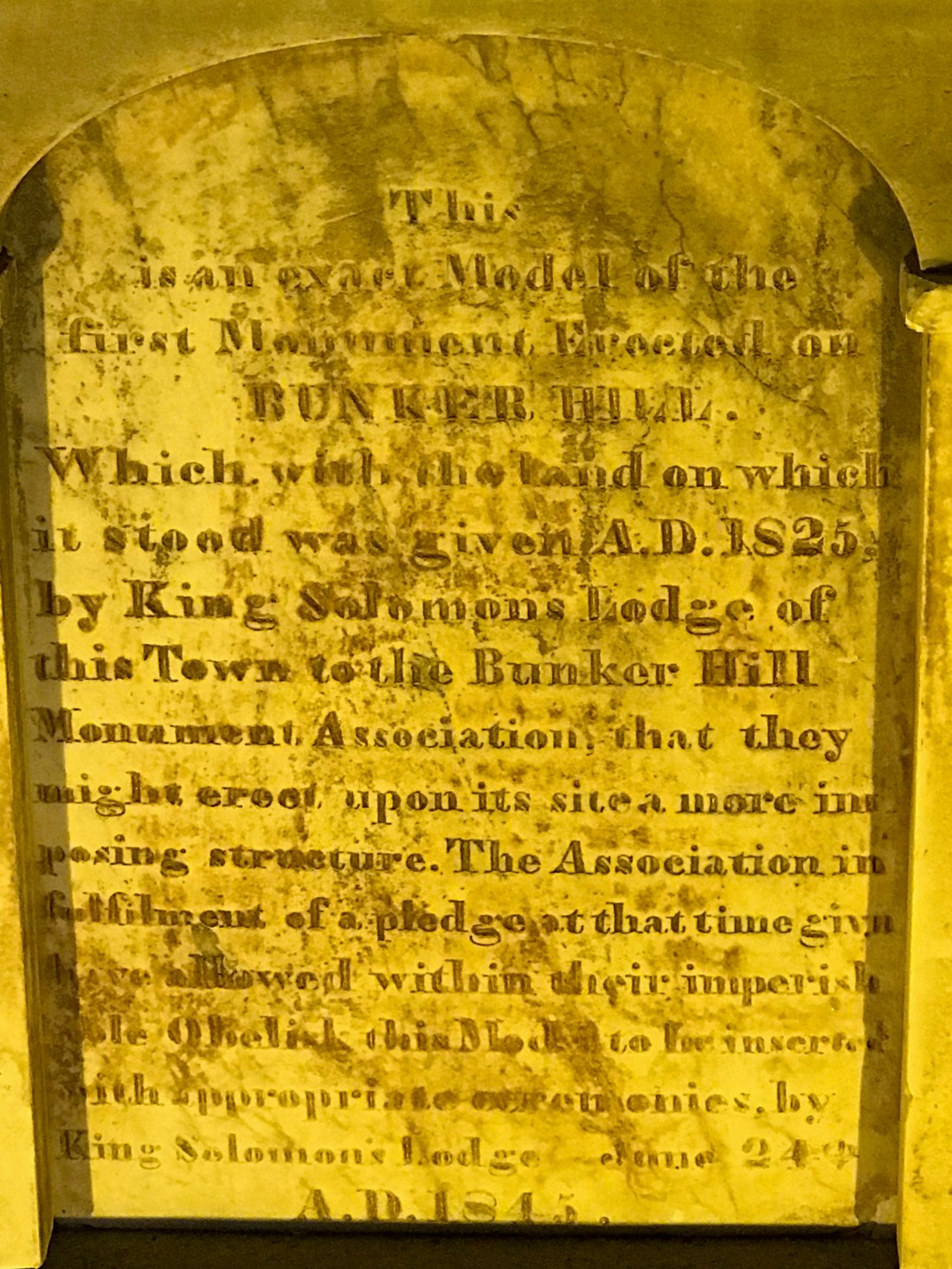
At the base was this memorial marker. A bit difficult to read with the lighting, but we managed.

IMG_6711.jpg

And up we went…

IMG_6718.jpg

And up..

IMG_6716.jpg

And up…

IMG_6714.jpg

125 steps…

IMG_6715.jpg

150…

IMG_6717.jpg

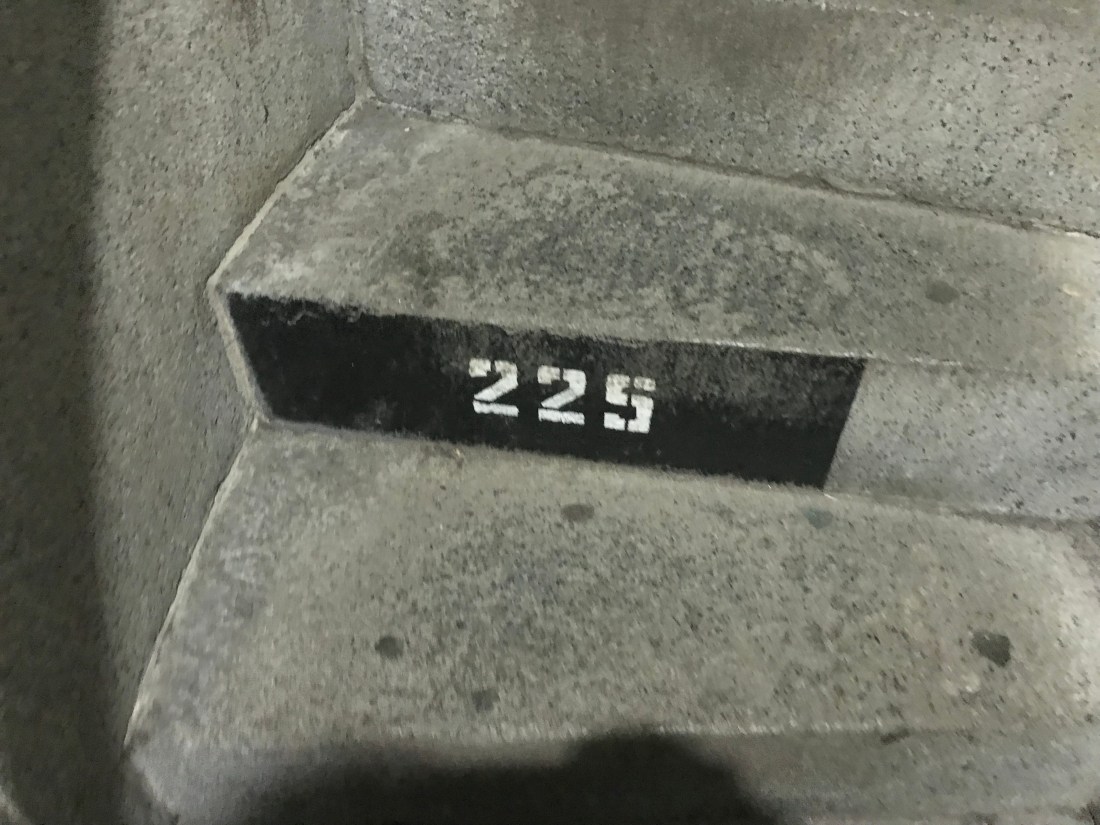
225…

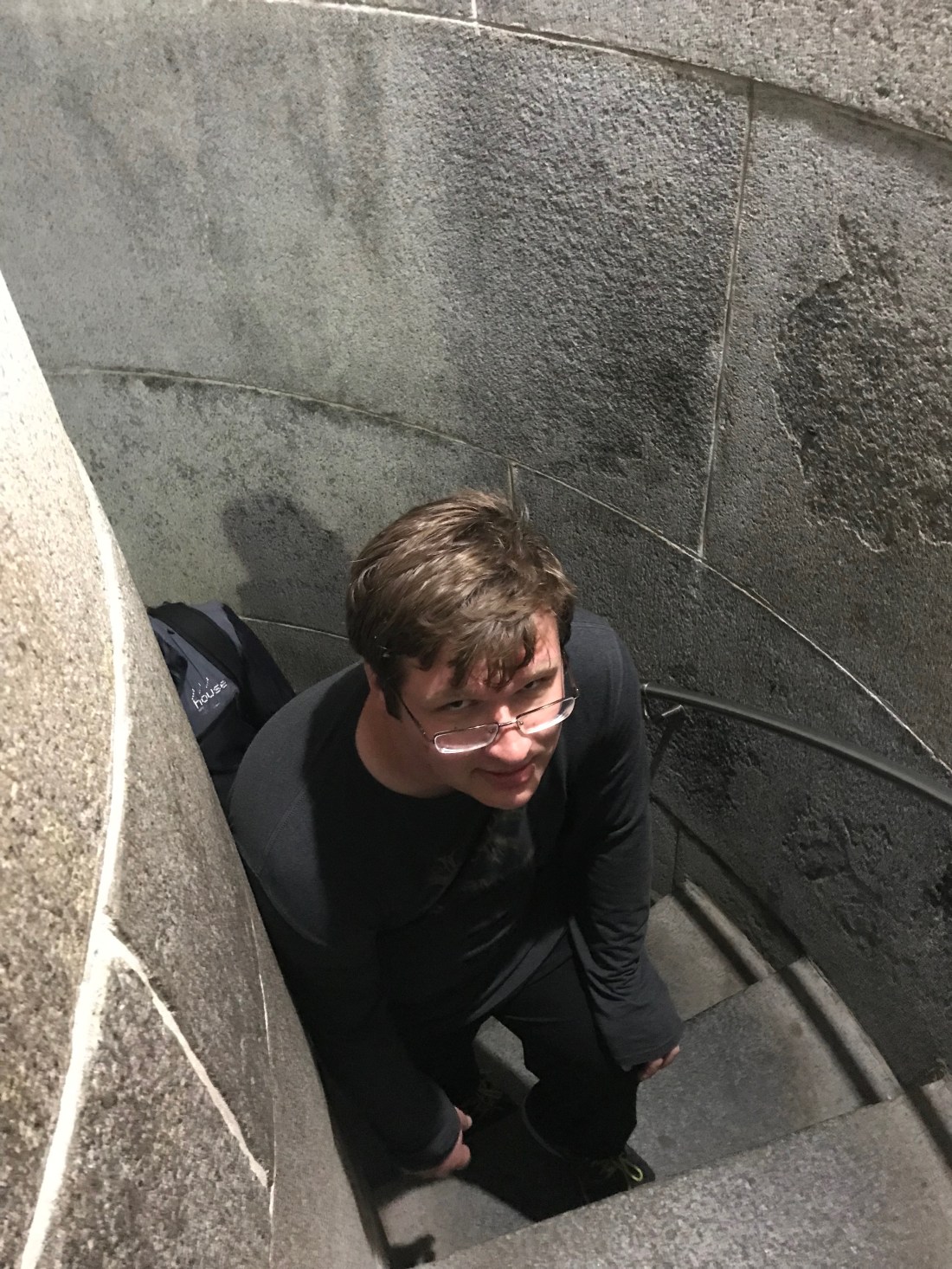
We had to take regular breaks between each of the markers… the steps were steep and narrow, and it was just plain difficult…

IMG_6729.jpg

We reached the top however… out of breath, and out of shape…

IMG_6719.jpg

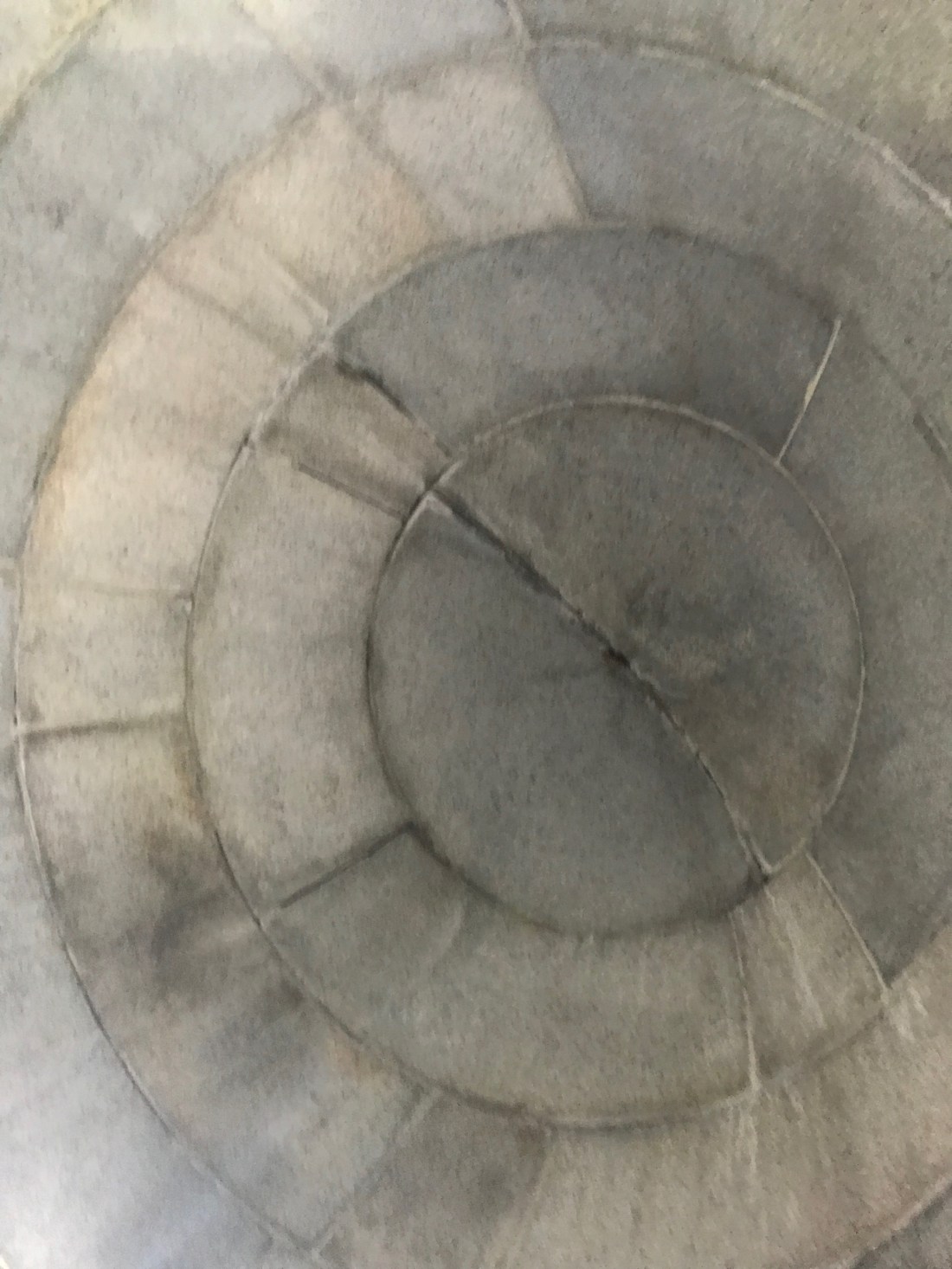
The ceiling of the observation room. The room is oddly enough circular, which is located inside the squarish shape of the monument.

IMG_6721.jpg

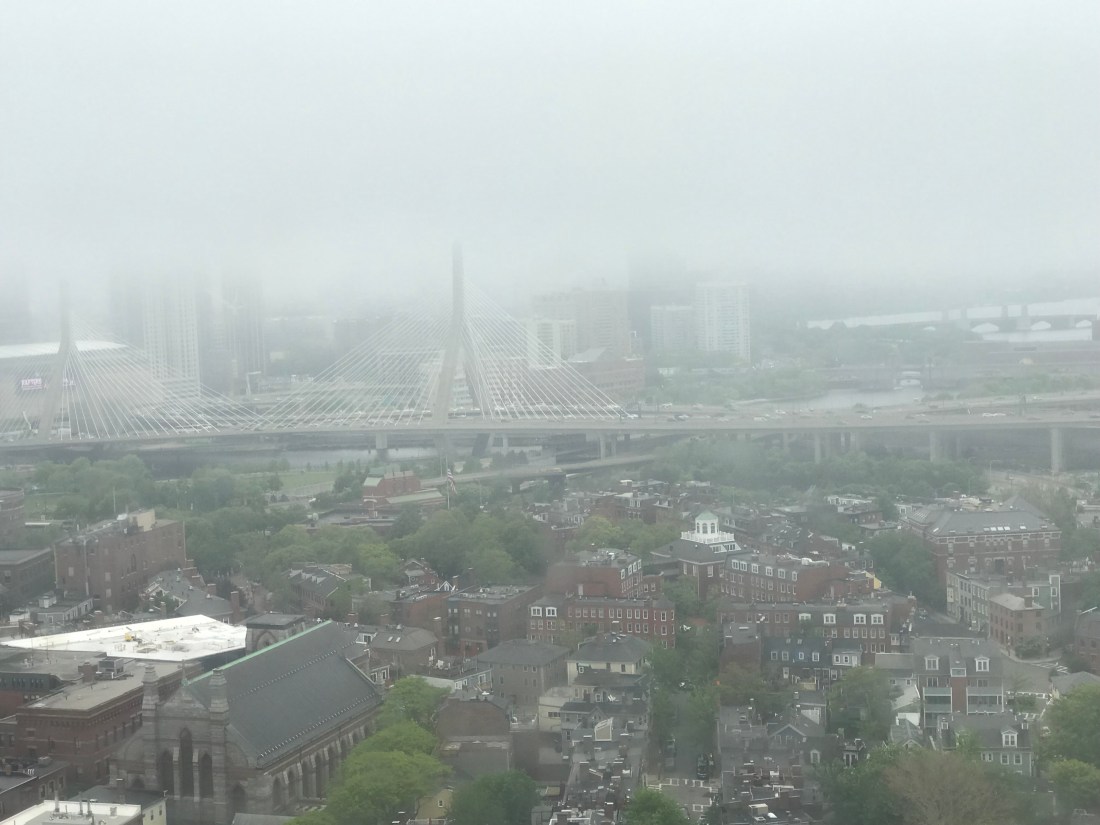
To our dismay, a large fog had come up upon Boston, and engulfed most of the view! We could still see some features thankfully… this view is looking out towards the west.

IMG_6724.jpg

Looking south, towards the main part of Boston.

IMG_6725.jpg

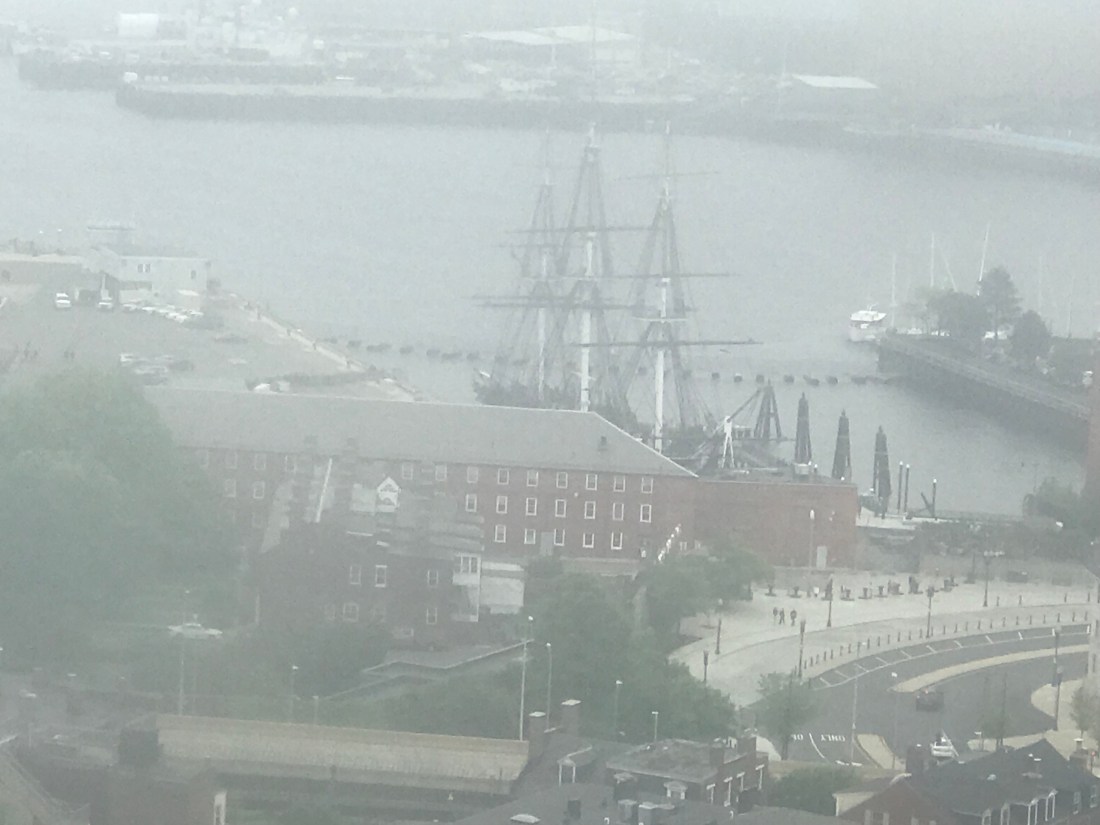
Far below, one can see the U.S.S. Constitution! It’s a pretty noticeable area to spot!

IMG_6727.jpg

If you look closely, you can see the white steeple of the Old North Church! I don’t know if there was fog during Paul Revere’s Midnight Ride, but it might have been difficult for the lantern lights to pierce any fog.

IMG_6720.jpgIMG_6726.jpg

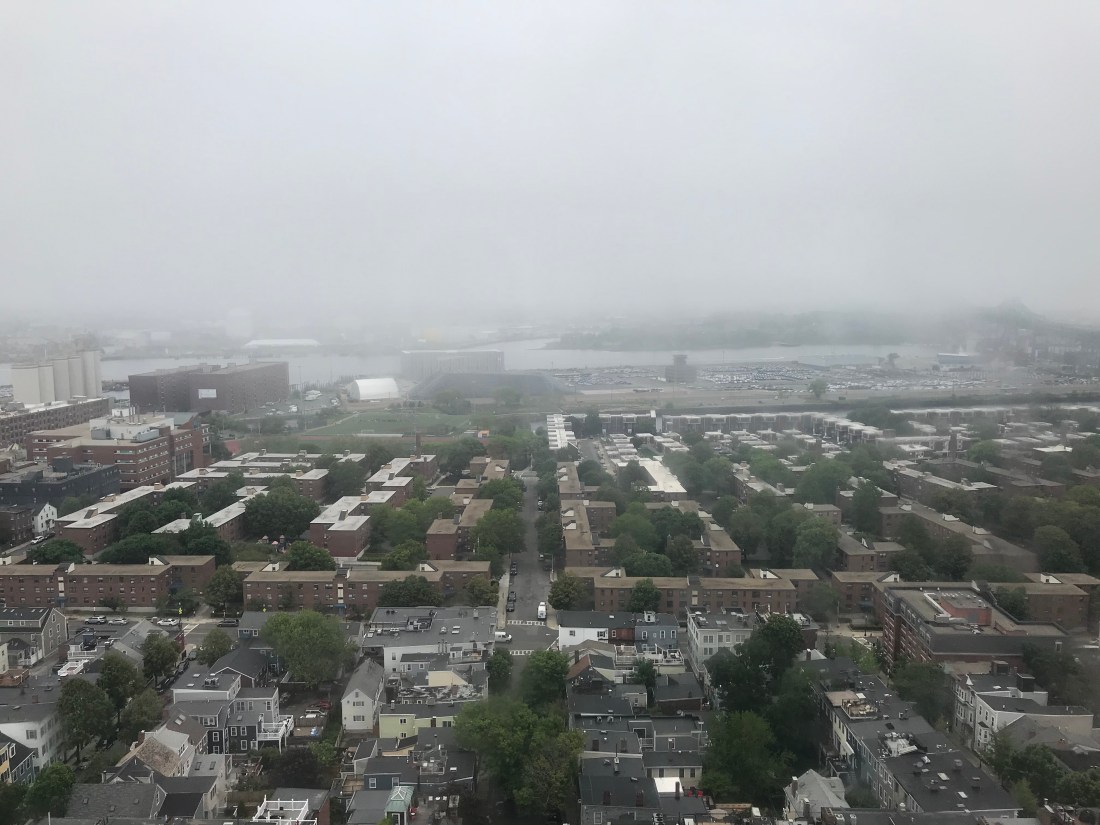
Looking North and West towards more residential and commercial buildings…

IMG_6730.jpg

… Hoo boy…

Several descending stories later, we emerged into the non-existant sunlight… our legs felt like straw, and mine were practically trembling with weakness… thankfully, since this was our last stop of the day, it should be smooth sailing on the way back to the subway!

IMG_6737.jpg

Sigh…


Well, our legs eventually recovered thankfully, and the rest of our time here in Boston would be relaxing as it could be!

Can you believe it!? Tomorrow (or today, depending on when you read this), WE’LL BE BACK HOME IN THE LONE STAR STATE!

It’ll be a long flight back to Austin, so I’ll try to have the post for today taken care of before we take off!

This is the final stretch… I’ll see you tomorrow for the penultimate post of my 2019 Summer Trip Blog!


Day 20, Footsteps of Freedom (Boston, MA) (5/31/19)

Good Morning (or afternoon, or evening, or whatever time of the day you happen to be reading this in)!

Welcome to Day 20, where we follow the footsteps of “The Freedom Trail”, a 2.5 Mile walking tour where we will explore many notable landmarks that helped to shape American History, right here in the heart of Boston!

So, grab your walking shoes or tennis shoes, and let’s…

Actually, since your not physically with me right now, maybe forget that last part…

Let’s get right down to it!


The Freedom Trail

After taking the shuttle from our hotel to the airport, we took the subway south into downtown Boston… The Freedom Trail would start in Boston Common, near where we would resurface.

IMG_6516.jpg

There are dozens of Dunkin’ Donuts in Boston! I’m not kidding, it’s like Starbucks and New York City’s intimate connection. The reason for this is likely because Dunkin’ Donuts was originally started in nearby Quincy, just to the south.

IMG_1914.jpg

Boston Common… the oldest public park in the United States…

IMG_6519.jpg

The Common was filled with many tourists and citizens going about their daily buisness. Boston Common, originally used for grazing ground for livestock, had serves as a place for celebrations, festivals, concerts, and tours (and back in colonial days, public hangings).

IMG_6518.jpg

IMG_6521.jpg

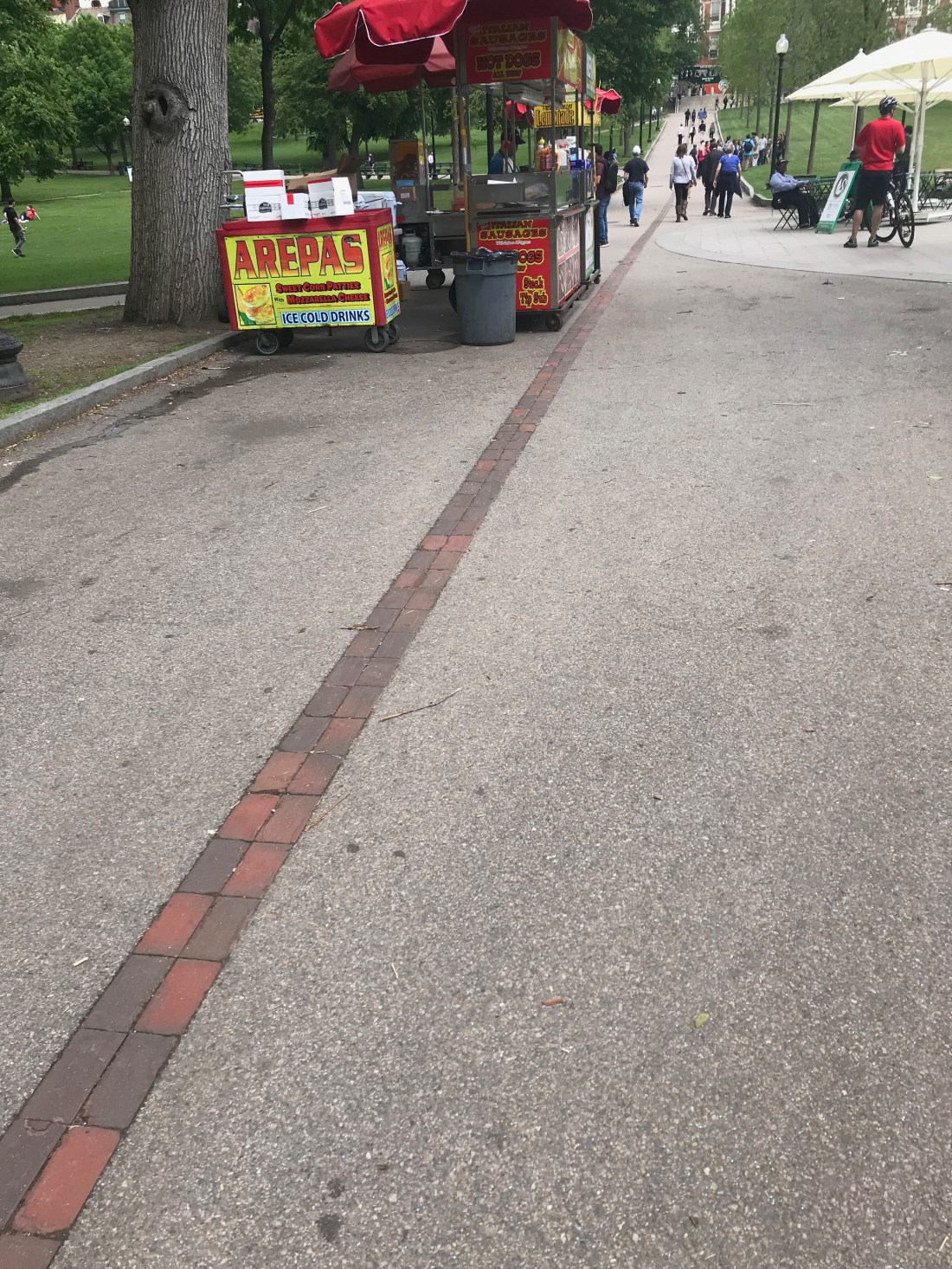
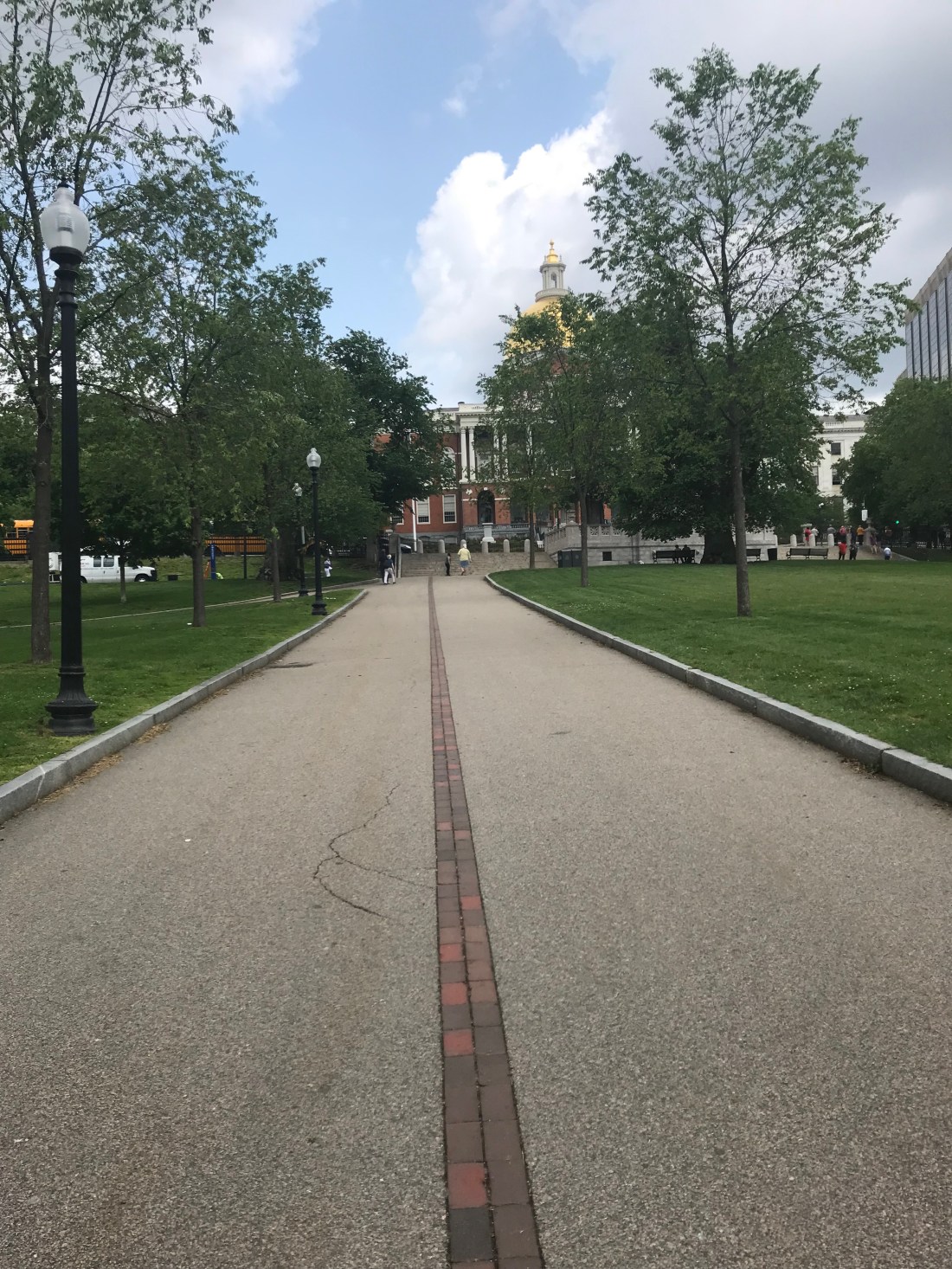
And this… is The Freedom Trail.

This red-brick line weaves throughout the city and past the most iconic historical locations throughout, and is a nice way to pursue History, as well as get your daily exercise. So, let’s start following it!

IMG_1916.jpg

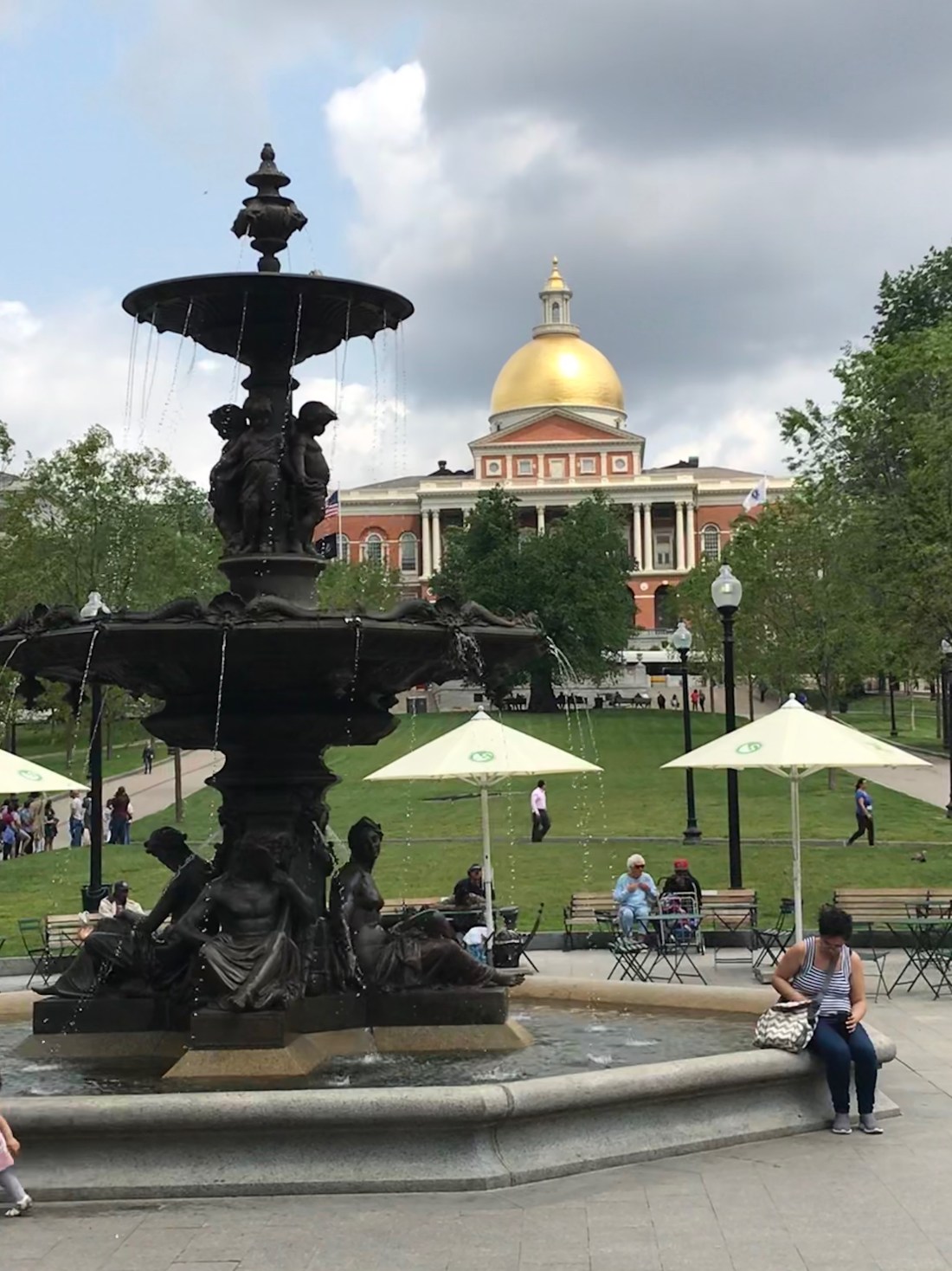
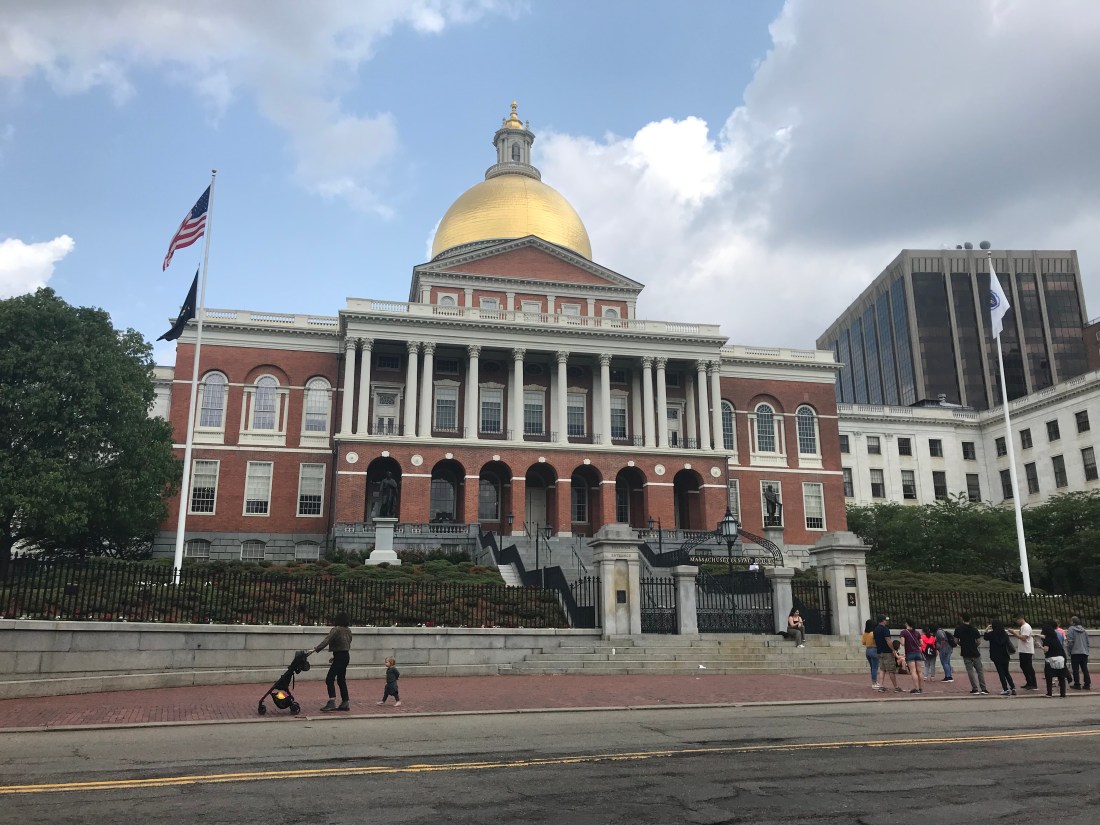
That large golden dome is the roof of the Massachusetts State House, home to the state government of Massachusetts!

Most of the state government buildings in each state are called “State Capitol Buildings”, though some (especially in the east), are called “State Houses”. Why that is, I haven’t the foggiest.

IMG_6523.jpg

Up we went to get a closer look.

IMG_6524.jpg

Designed by Charles Bulfinch, and completed in 1798,  The State House is located on “Beacon Hill”, and was also gilded with a gold-leaf dome in 1874. Unfortunetly, we couldn’t go inside.

IMG_1918.jpg

IMG_1968.jpg

In front of each of the landmarks on The Freedom Trail, this seal is embedded into the sidewalk to commemorate it’s significance. It’s pretty easy to follow the trail, and very rarely does it become confusing in trying to find the right way.

IMG_6525.jpg

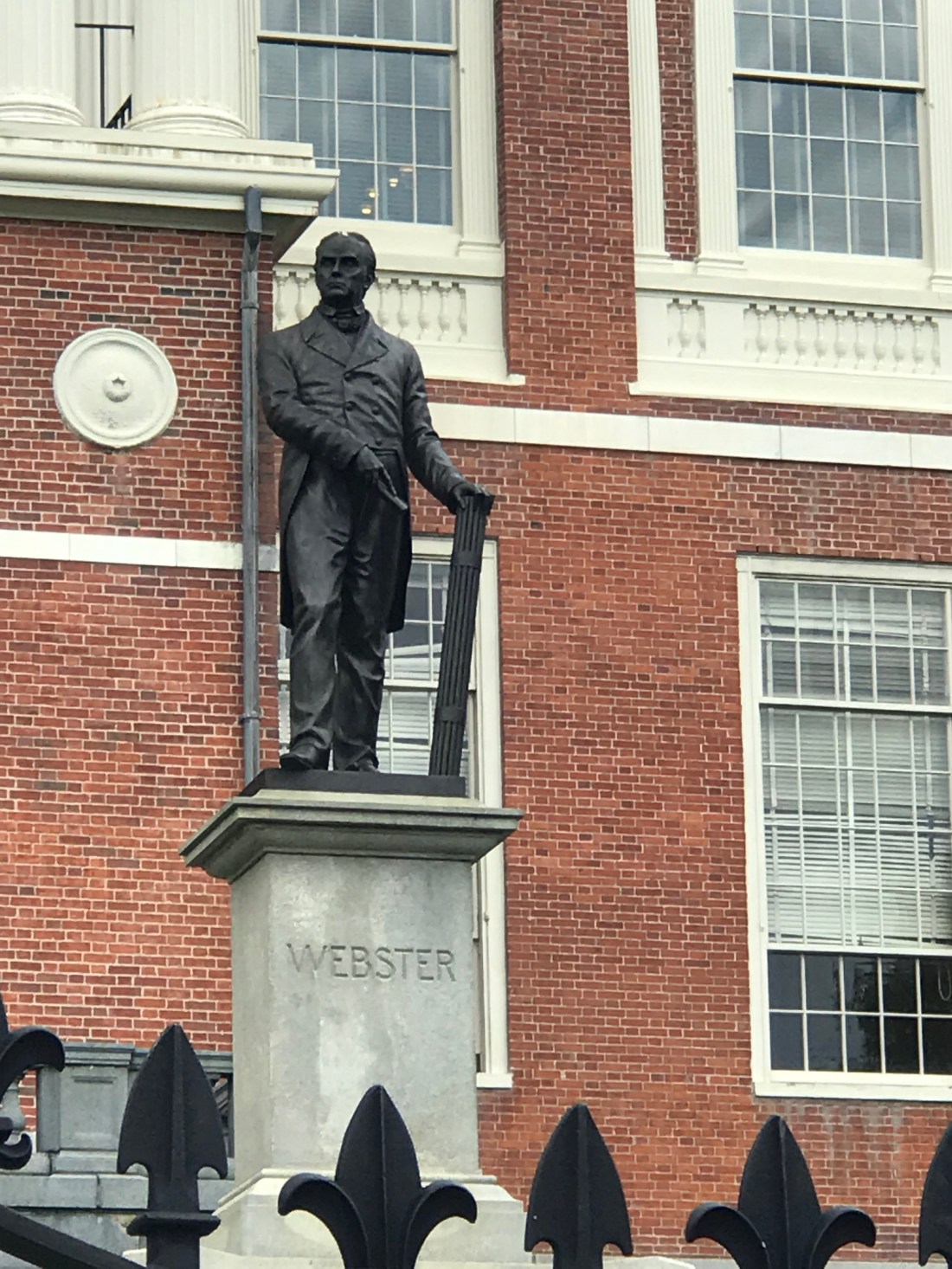
A statue of Daniel Webster, one of the most influential senators in U.S. History, who also served as Secretary of State under three different Presidents, and who helped to draft the Compromise of 1850, The Webster-Ashburton Treaty, and sucessful arguements in court cases such as McCulloch v. Maryland, and Gibbons v. Ogden. Along with Henry Clay and John C. Calhoun, he was a member of the “Great Triumviate”, three powerful U.S. Congressman that helped to set the stage for the Two-Party System in the pre-Civil War era.

IMG_6526.jpg

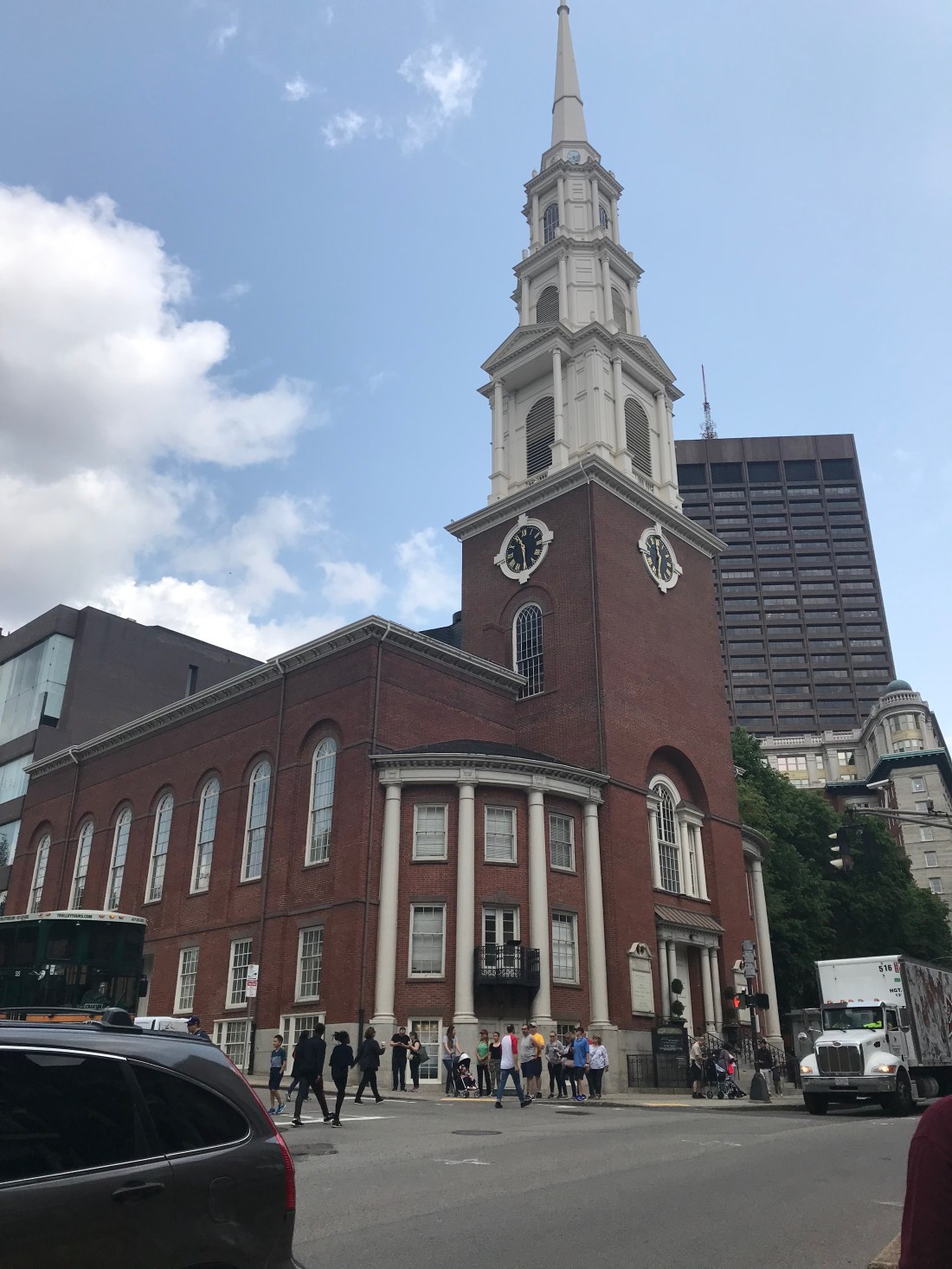
The Park Street Church, our third stop, served as a primary stage for many fiery speeches and orators in the 1800’s. Formerly the tallest building in Boston thanks to it’s white steeple, the building has seen many events within it’s walls and on it’s steps, from abolitionist addresses, to the first recital of “My Country “Tis of Thee”.

IMG_6528.jpg

IMG_6538.jpg

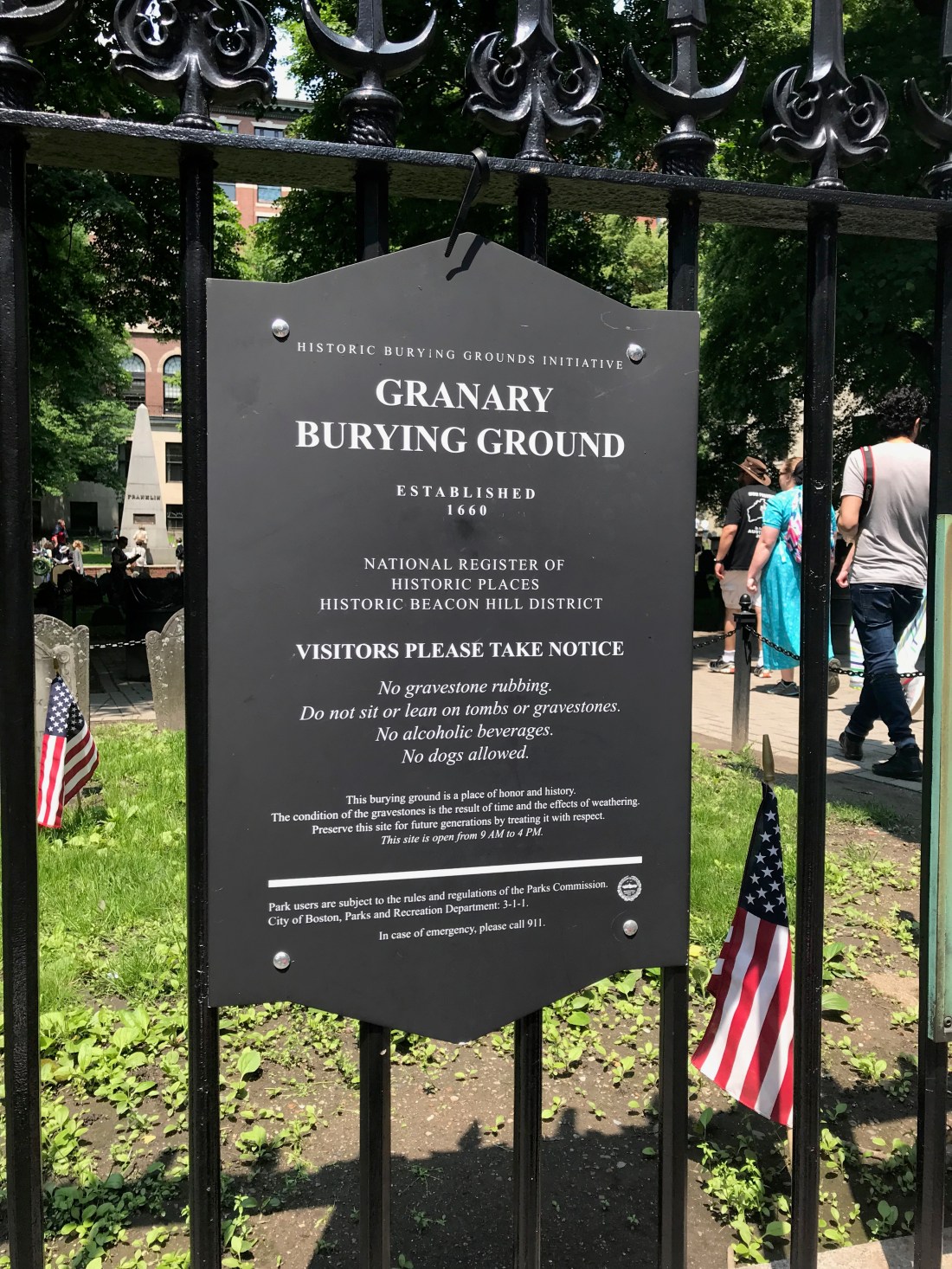
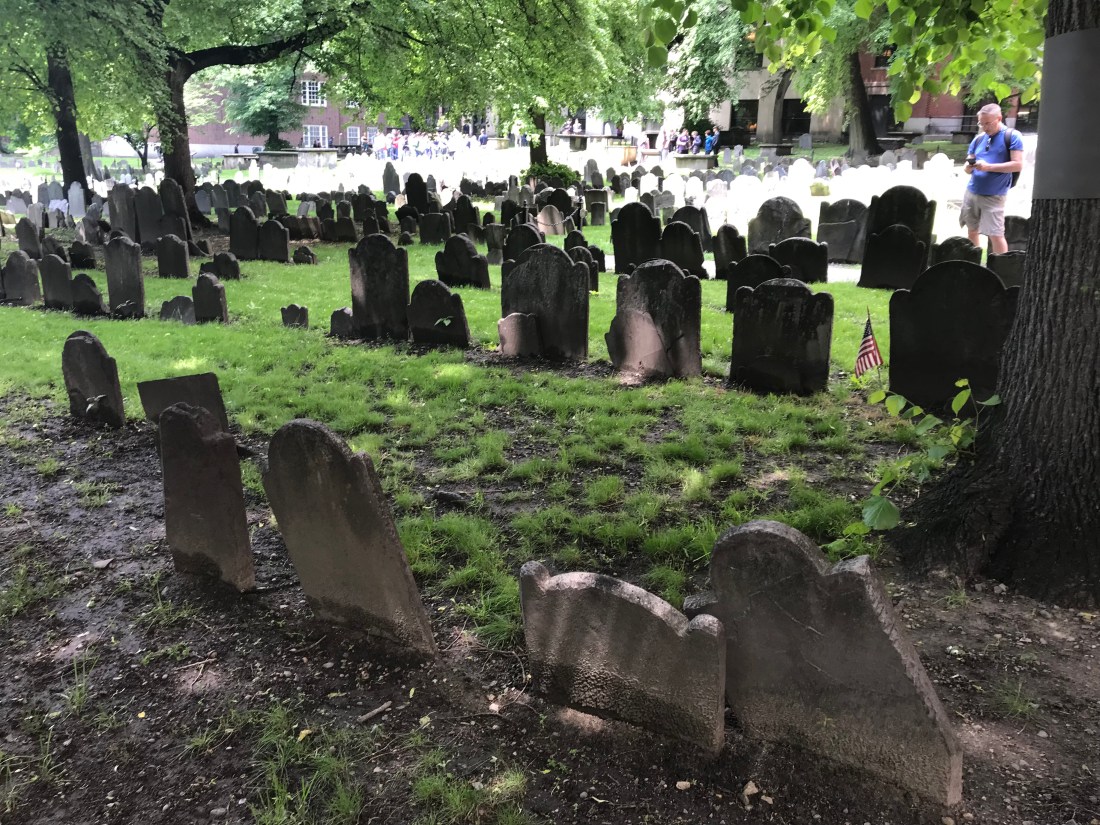
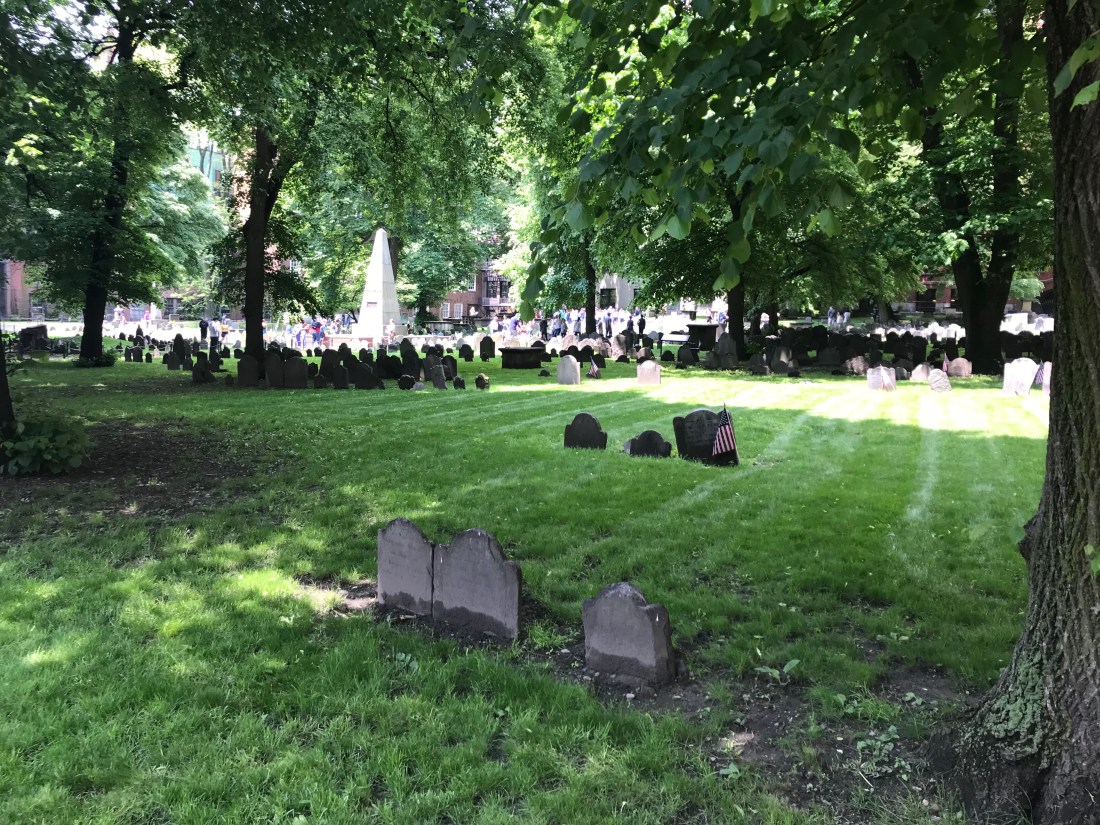
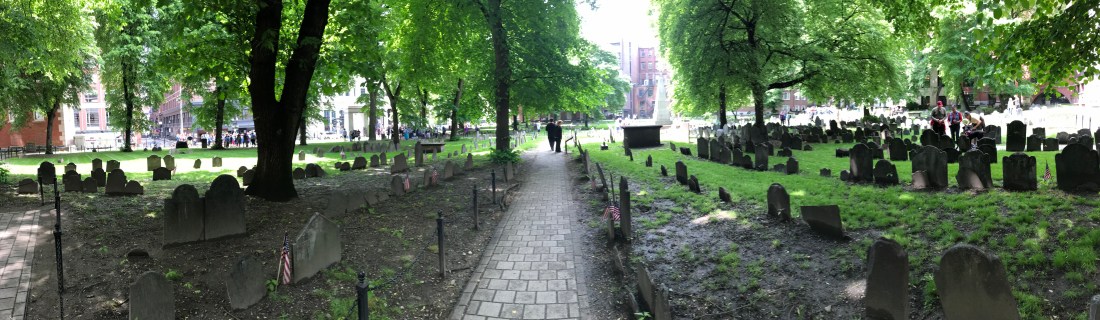
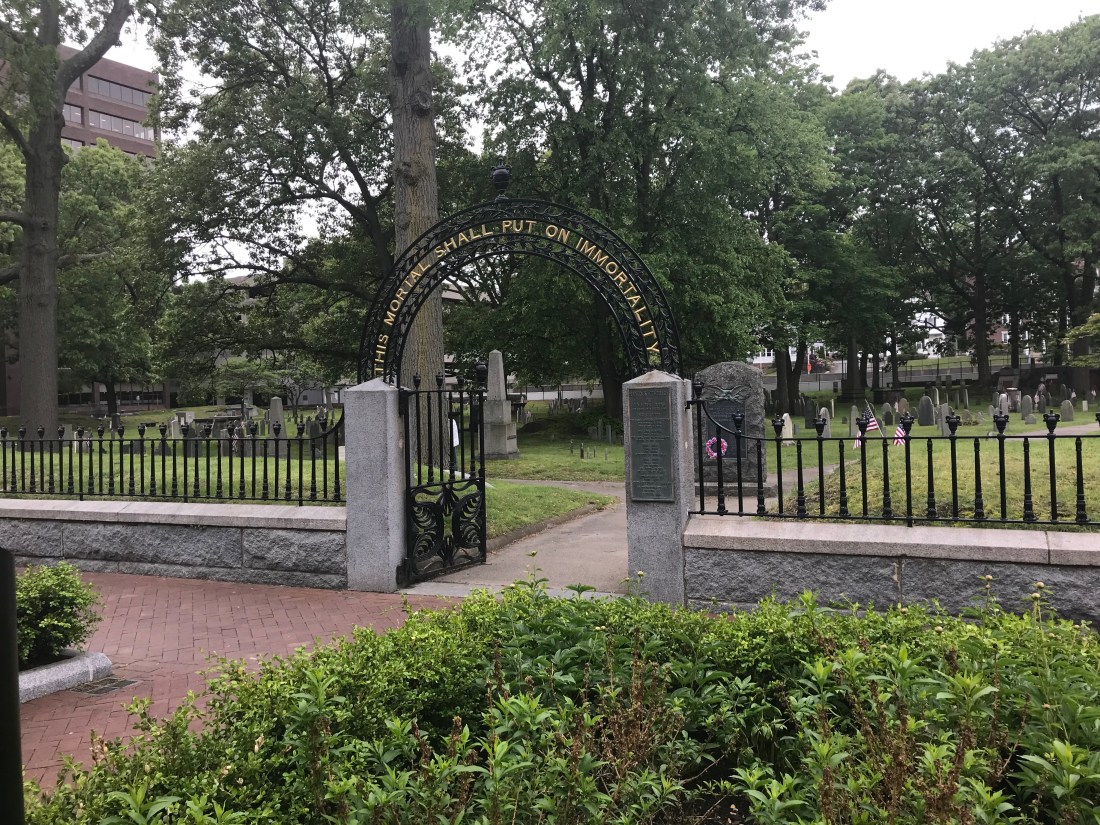
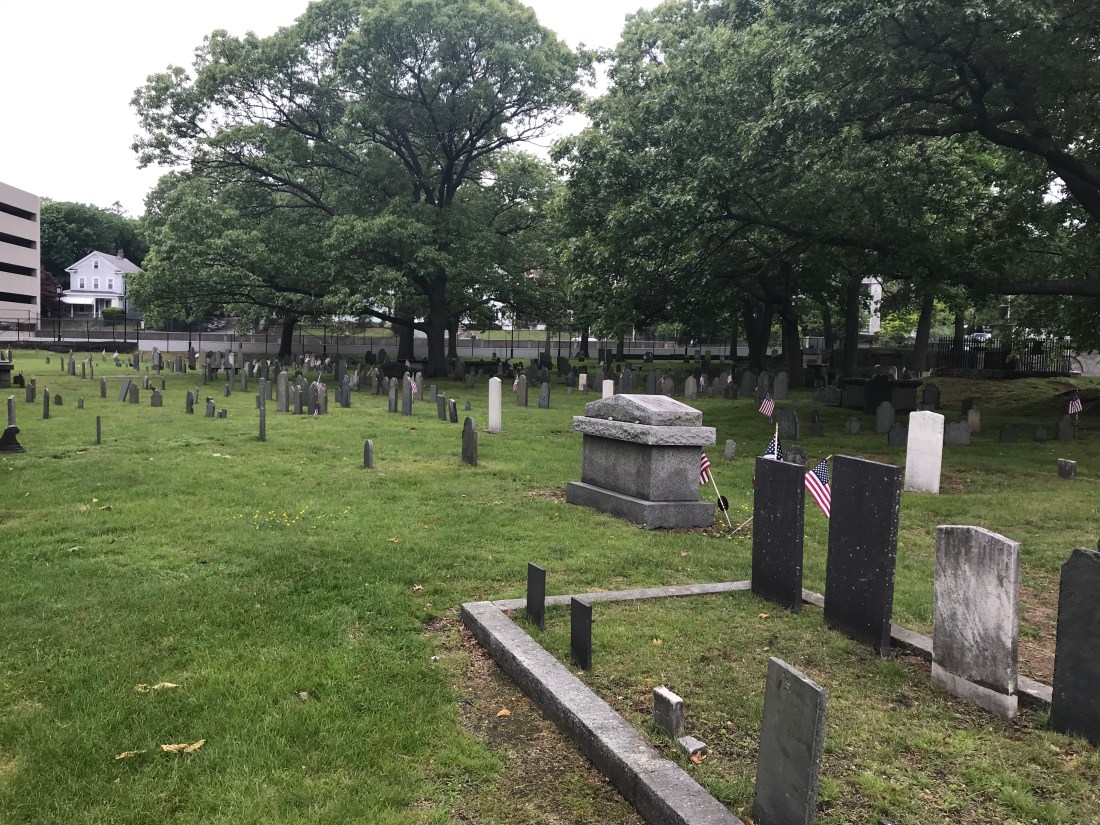
Perhaps the most famous cemetery in Boston, The “Granary Burial Ground” is the final resting place of some of our most esteemed patriots and Founding-Fathers. It’s also the third oldest cemetery in Boston.

IMG_6529.jpg

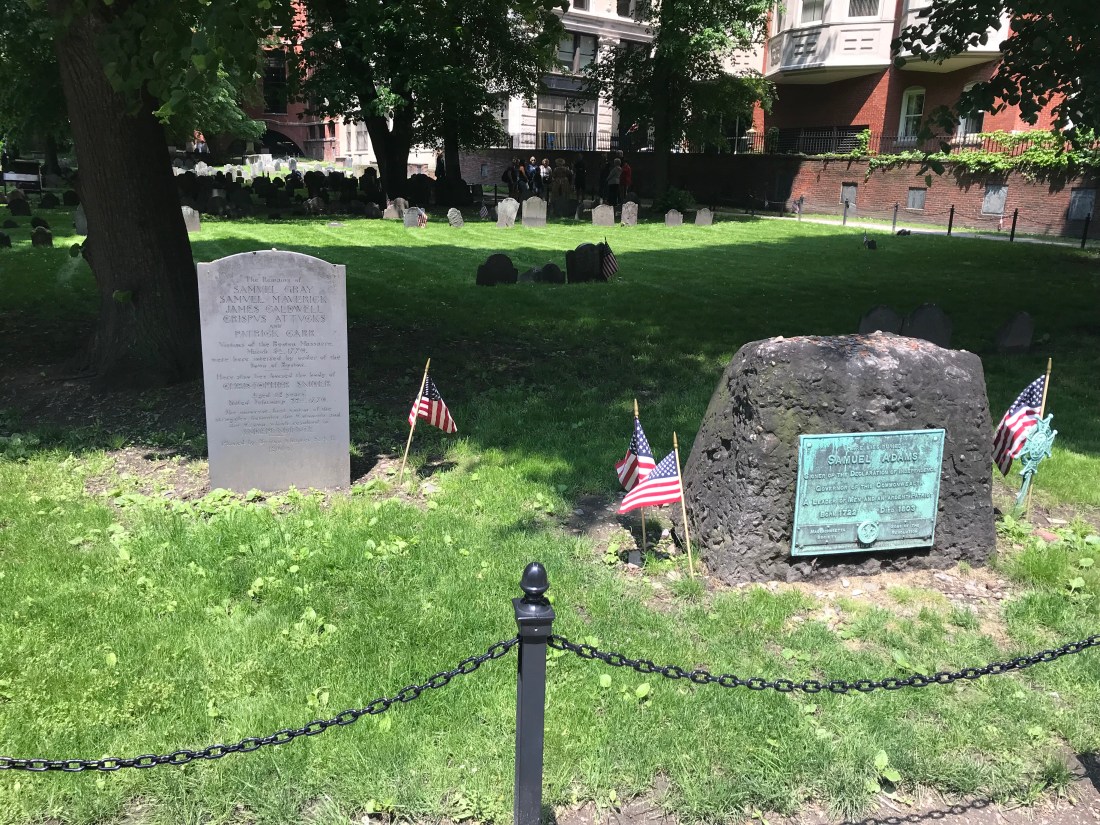
These two memorials we could spot right off the bat.

IMG_6530.jpg

The first memorialized the victims of the Boston Massacre, the riot in the streets of Boston that brewed much opposition towards British actions in the city. Crispus Attucks, one of the five Bostonians killed, was an African-American, and was the first of his kind to have died for the patriot cause.

IMG_1929.jpg

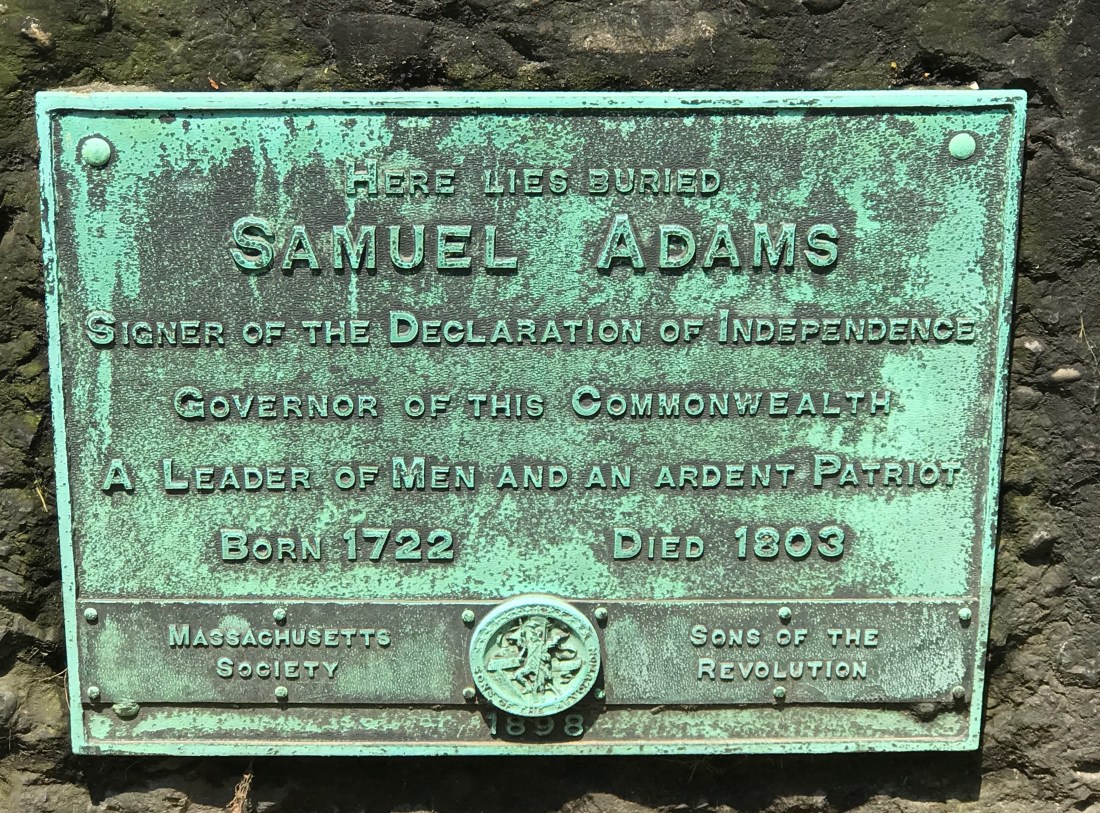
And the second on the right is the grave of Samuel Adams, one of the Sons of Liberty!

Known especially for the beer brand named after him, Adams was a distant cousin of John Adams, and was one of the most vehement opponents to British rule in the colonies.

IMG_6533.jpg

A lot of these old tombstones are really crooked… it makes you wonder if someone takes care of them regularly.

IMG_6536.jpg

One of the plaques set into the brick wall marked the tomb of Robert Treat Paine, one of the Signers of the Declaration of Independence. I’ve lost count of how many signers we’ve seen on this trip…

IMG_1934.jpg

IMG_1935.jpg

IMG_1937.jpg

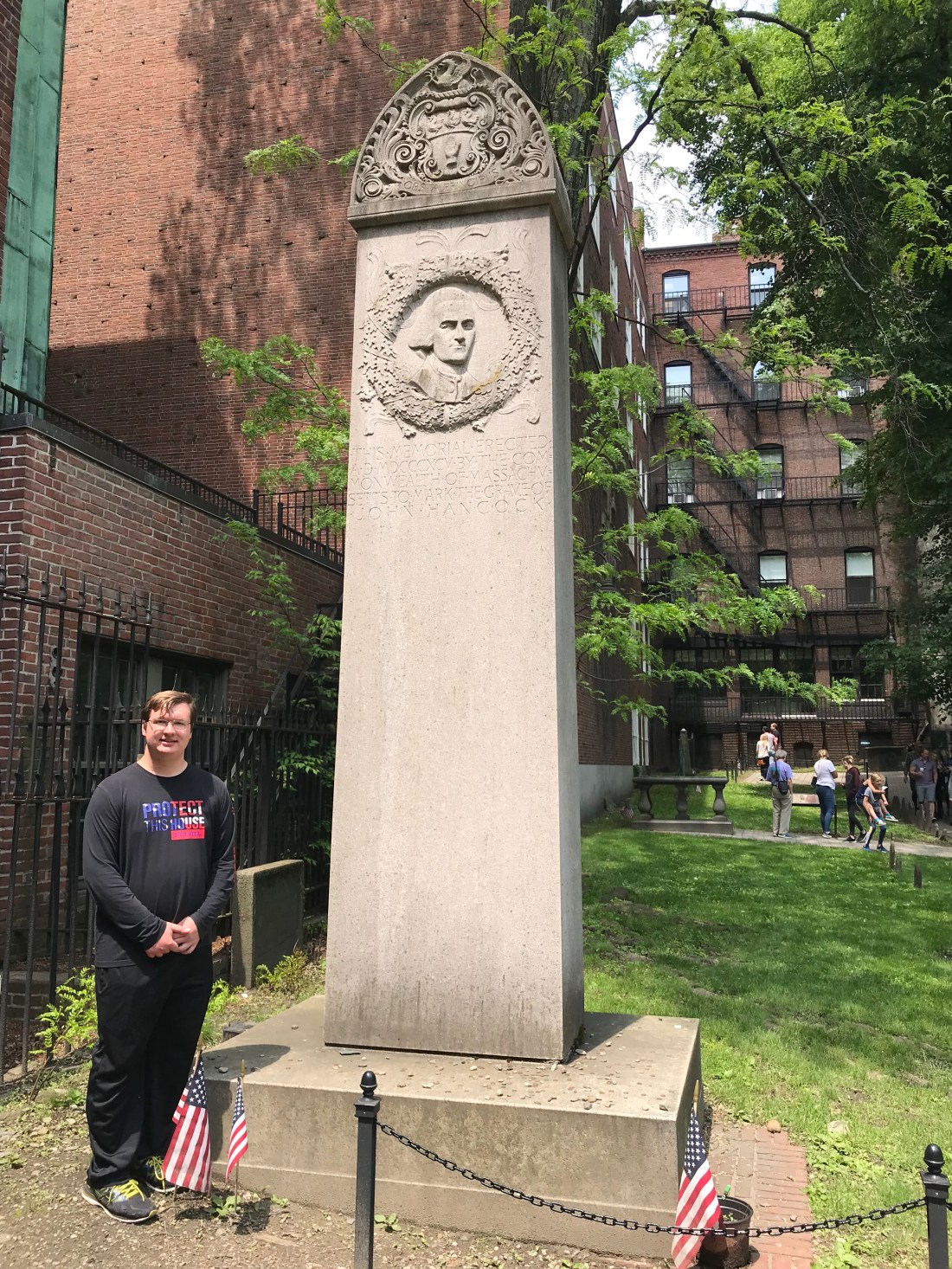
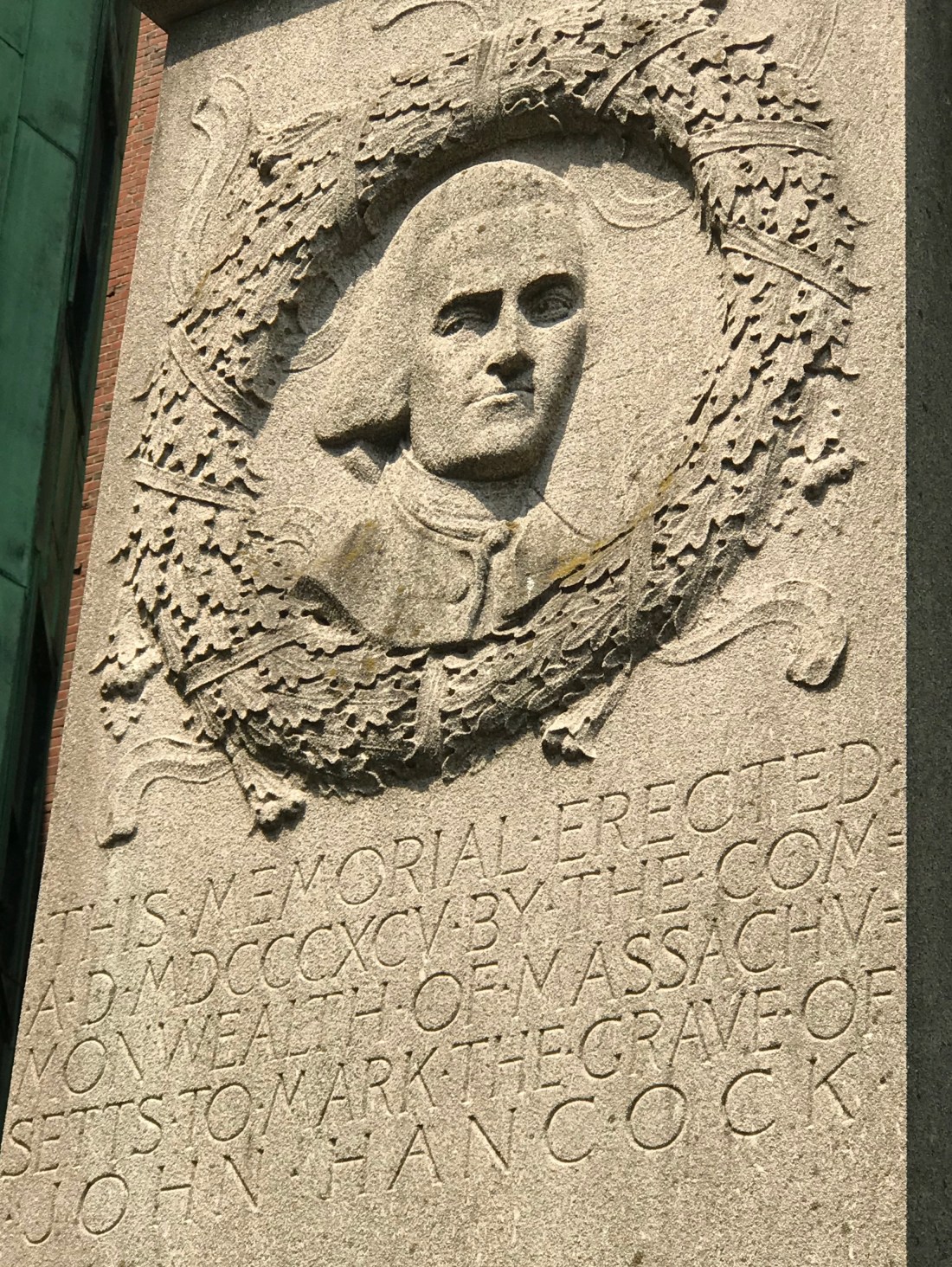
This tall monument is none other than the final resting place of John Hancock, President of the 2nd Continental Congress, and another of the Sons of Liberty. Hancock also served as the first and third Governor of Massachusetts.

So that was John Hancock…

download.jpg

And this is John Hancock’s “John Hancock”. Heh…

His large signature on the Declaration of Independence was put, as John Hancock put it, “Large enough so Fat King George in London could read it without his looking glasses.”

IMG_6542.jpg

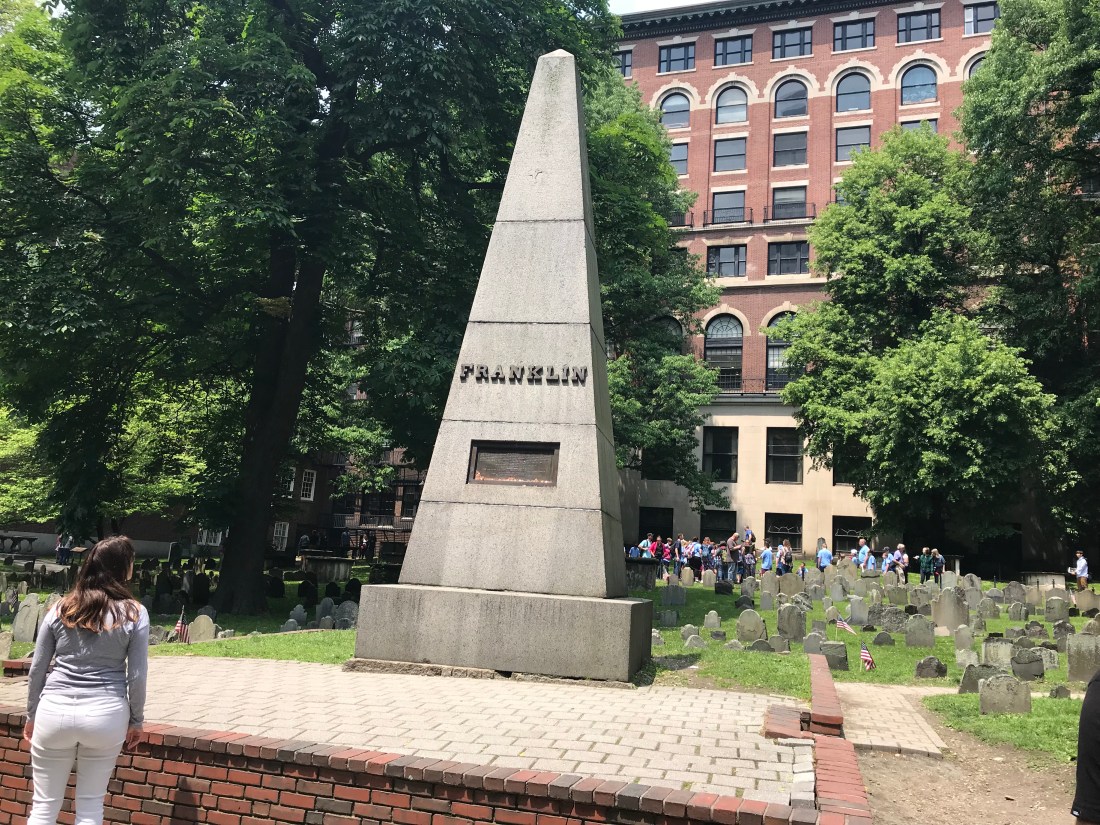
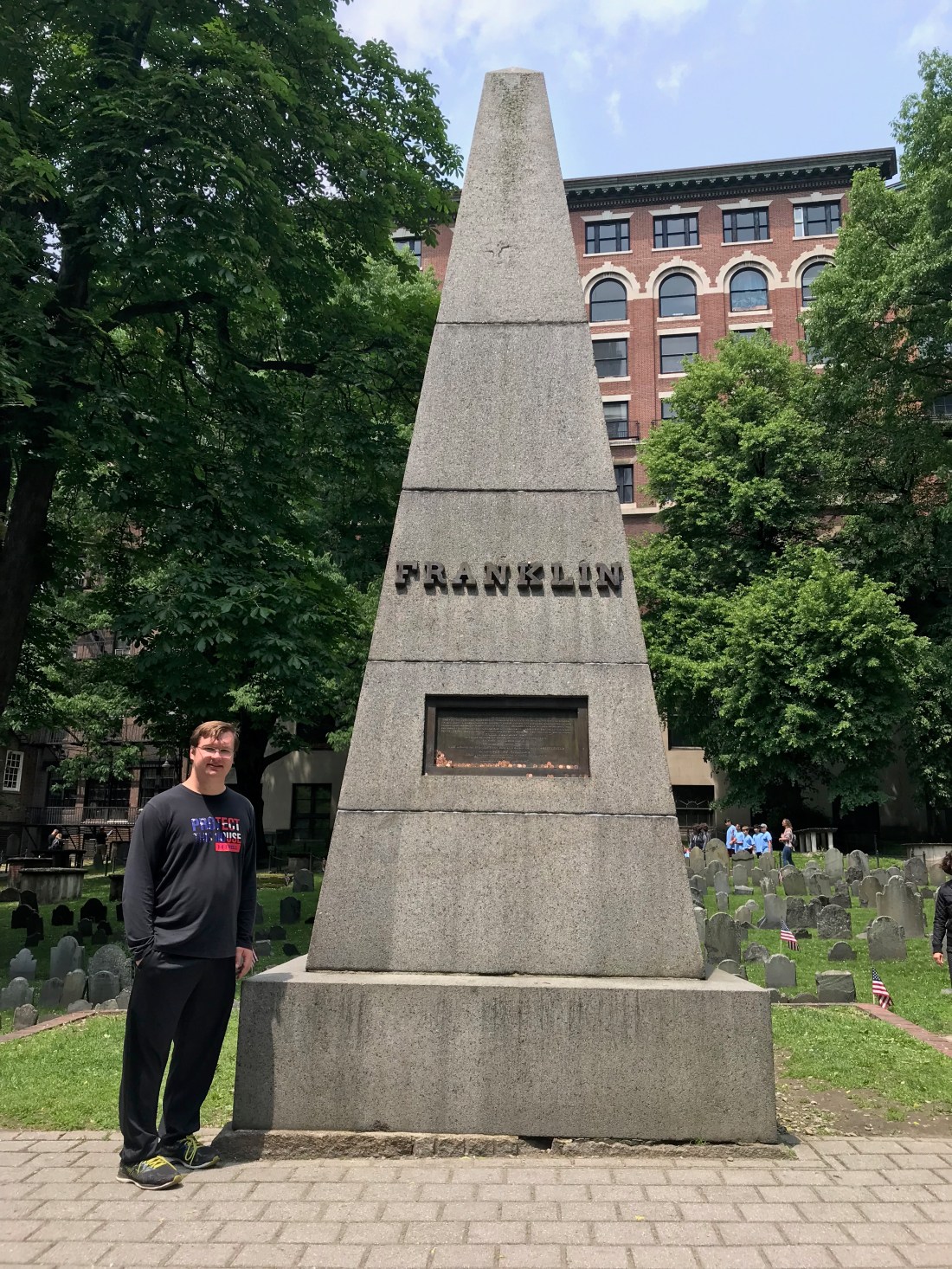
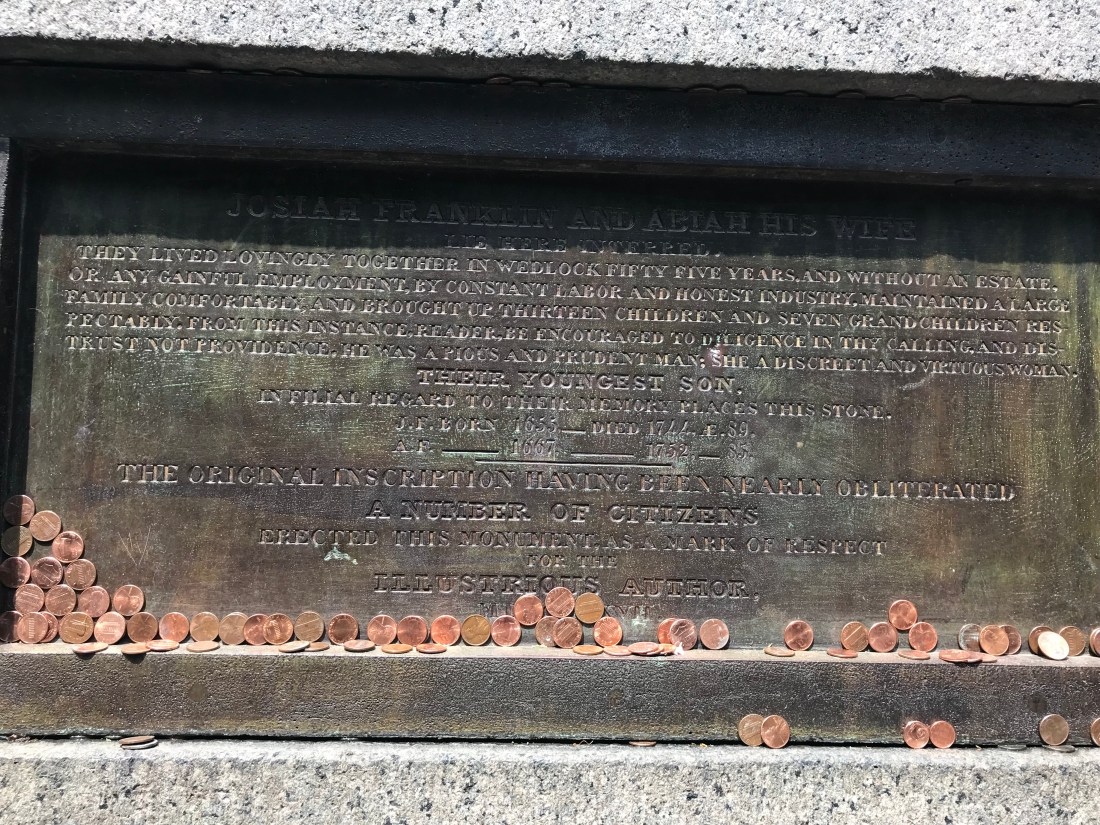
The most easily visible marker in the Cemetery is marked: Franklin. This is where the parents of Benjamin Franklin, Josiah and Abiah Franklin are buried.IMG_1938.jpg

Franklin, who originally came from Boston, ran away from home in his teen years, and would arrive in Philadelphia to begin his new life, and a decades-long career.

IMG_6541.jpg

Much like Ben Franklin’s grave in Philadelphia, his parents are also payed tribute with pennies.

IMG_6543.jpg

Now this is an intersting grave… if you look closely, the inscription reads “Mary Goose.”

It is believed by some that this is the grave of the actual “Mother Goose”, whose children’s tales are known far and wide. However, it is debatable, and there is no concrete proof that proves that she was. Still, it’s pretty nice to point out.

Also, I find it a bit strange that these skulls have to be on the top of many of the tombstones, Mother Goose’s especially. Apparently puritan values back then were very different compared to today’s standards.

IMG_6545.jpg

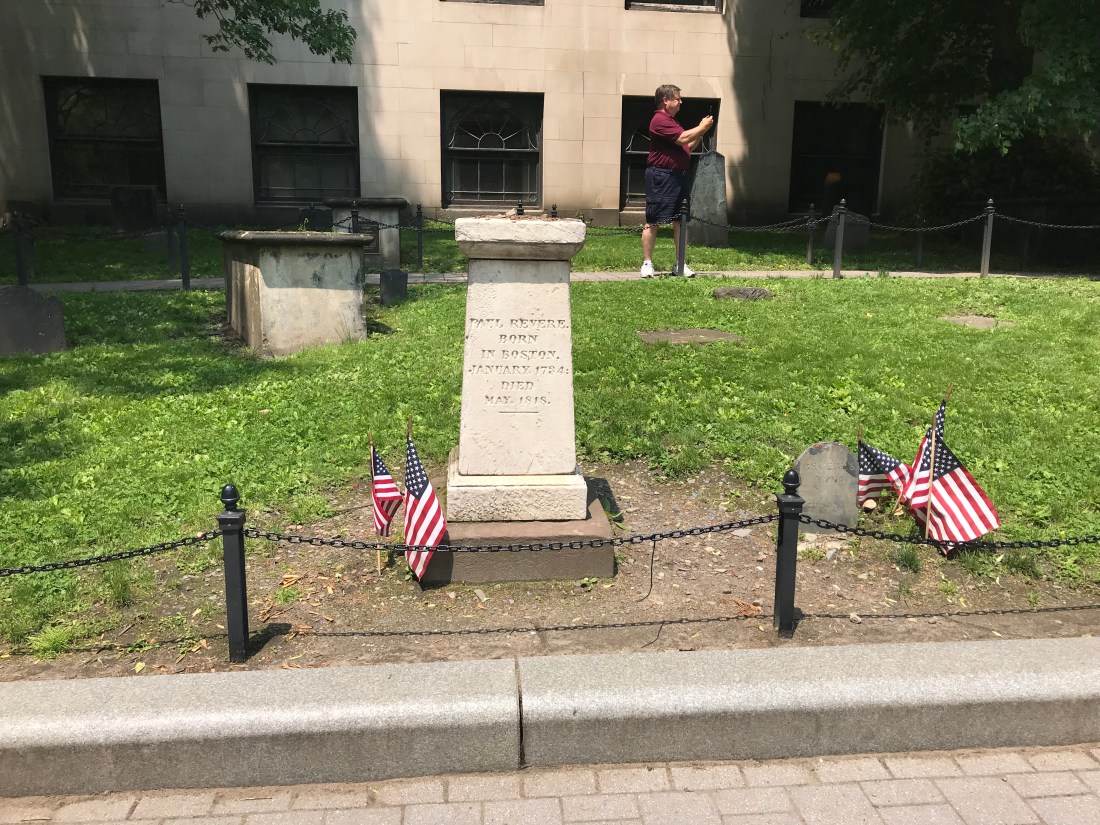
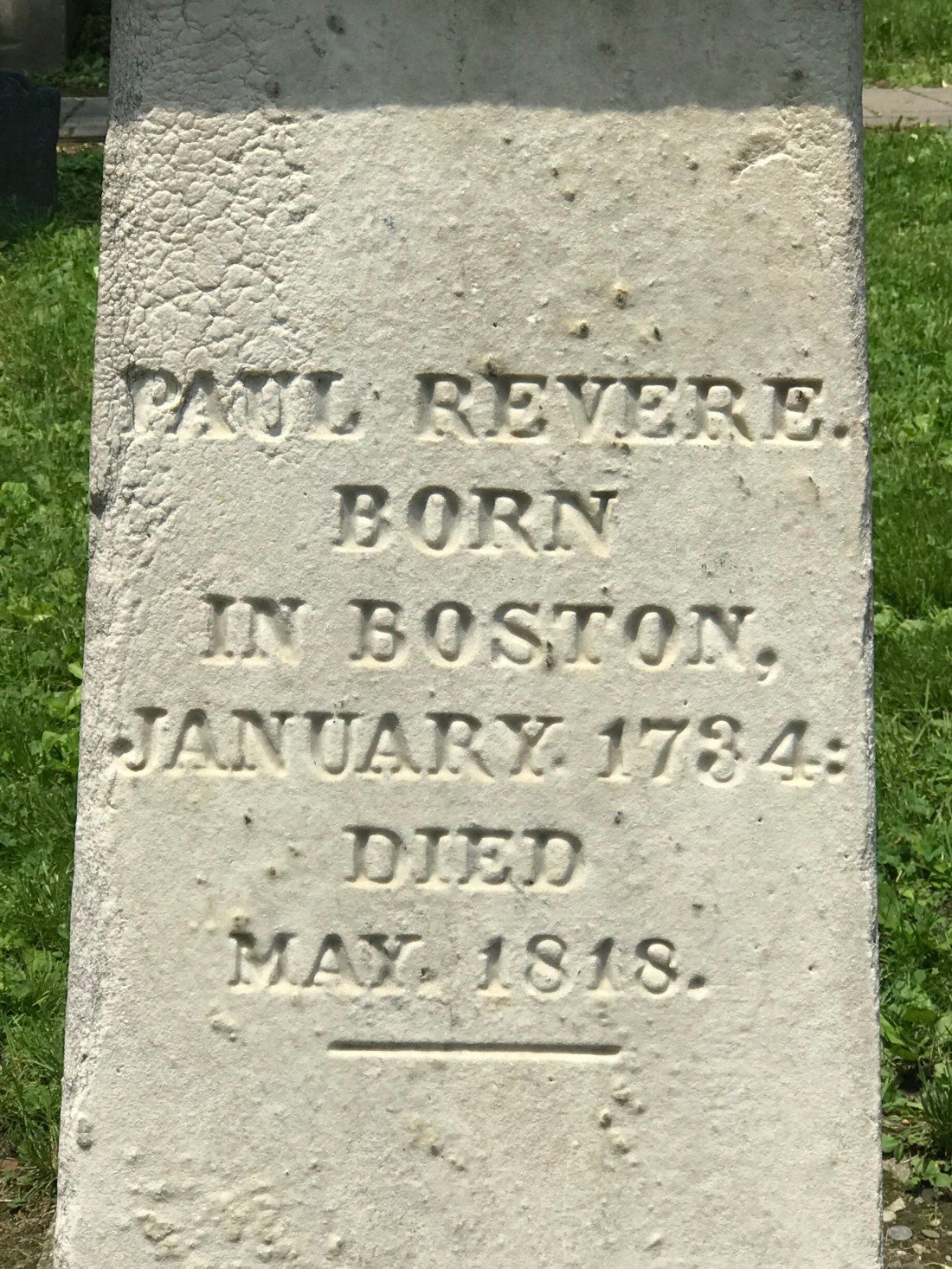
The last famous gravesite in this particular cemetery belonged to the patriot famous for his “Midnight Ride”

Paul Revere.

IMG_1949.jpg

A silversmith, Revere was another member of the Sons of Liberty, and famously helped to deliver the warning of the oncoming hordes of British soldiers to nearby towns in the Boston area. His tale endeared itself as an “American Legend”, and is commonly associated with patriotism in the American Revolution.

IMG_6546.jpg

Revere lived to be 84, a very venerable age for an era where the life-expectancy was much lower than it is today.

IMG_6549.jpg

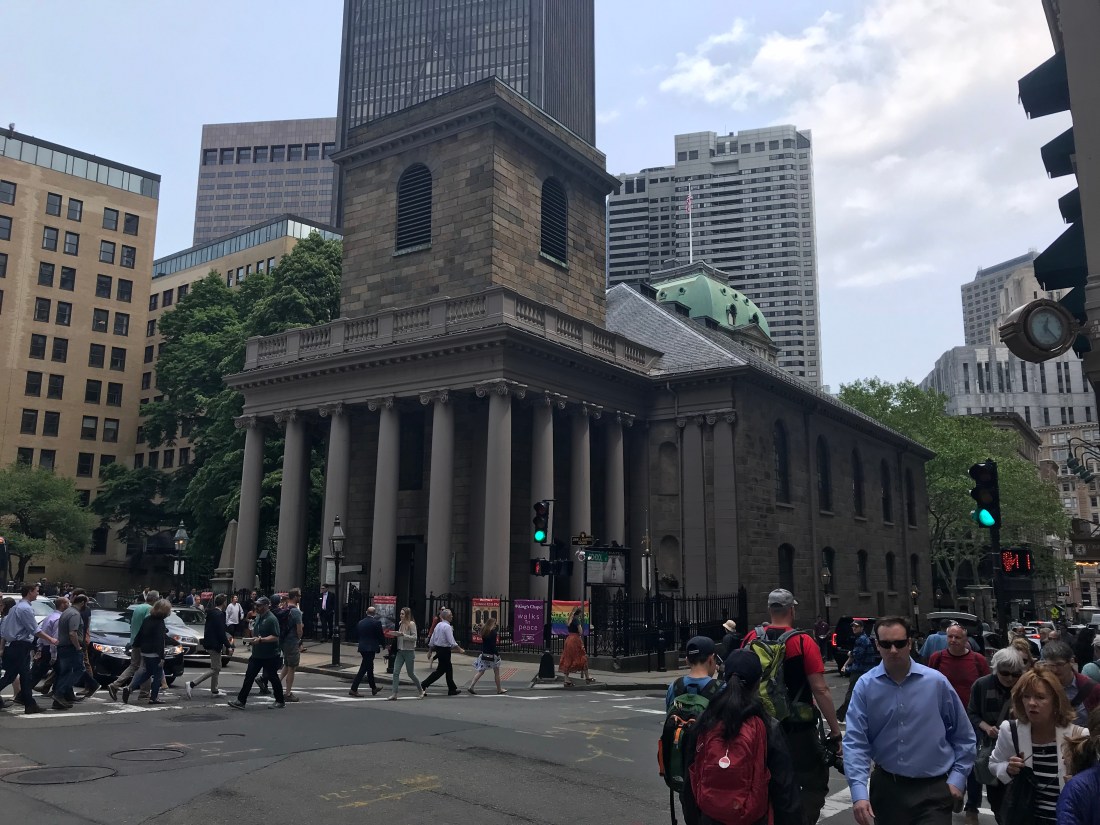
Moving on from the Burial Ground, we next arrived at Kings Chapel, built in 1686 at the behest of King James II, and which would become the first Unitarian Church in the country. A special pew located inside was reserved for royal governors to sit in, and even seated George Washington during his visit to Boston in 1789.

IMG_6550.jpg

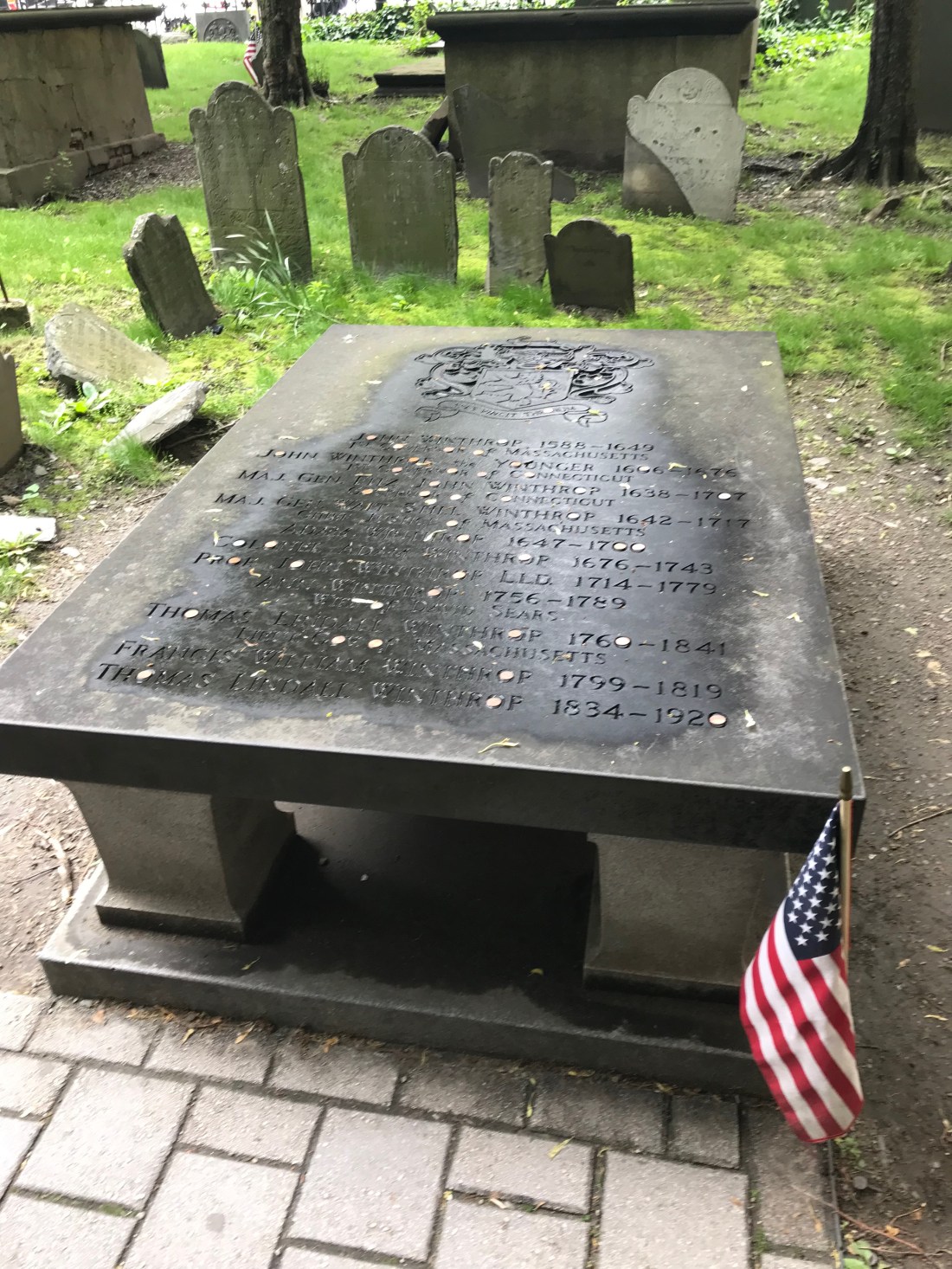
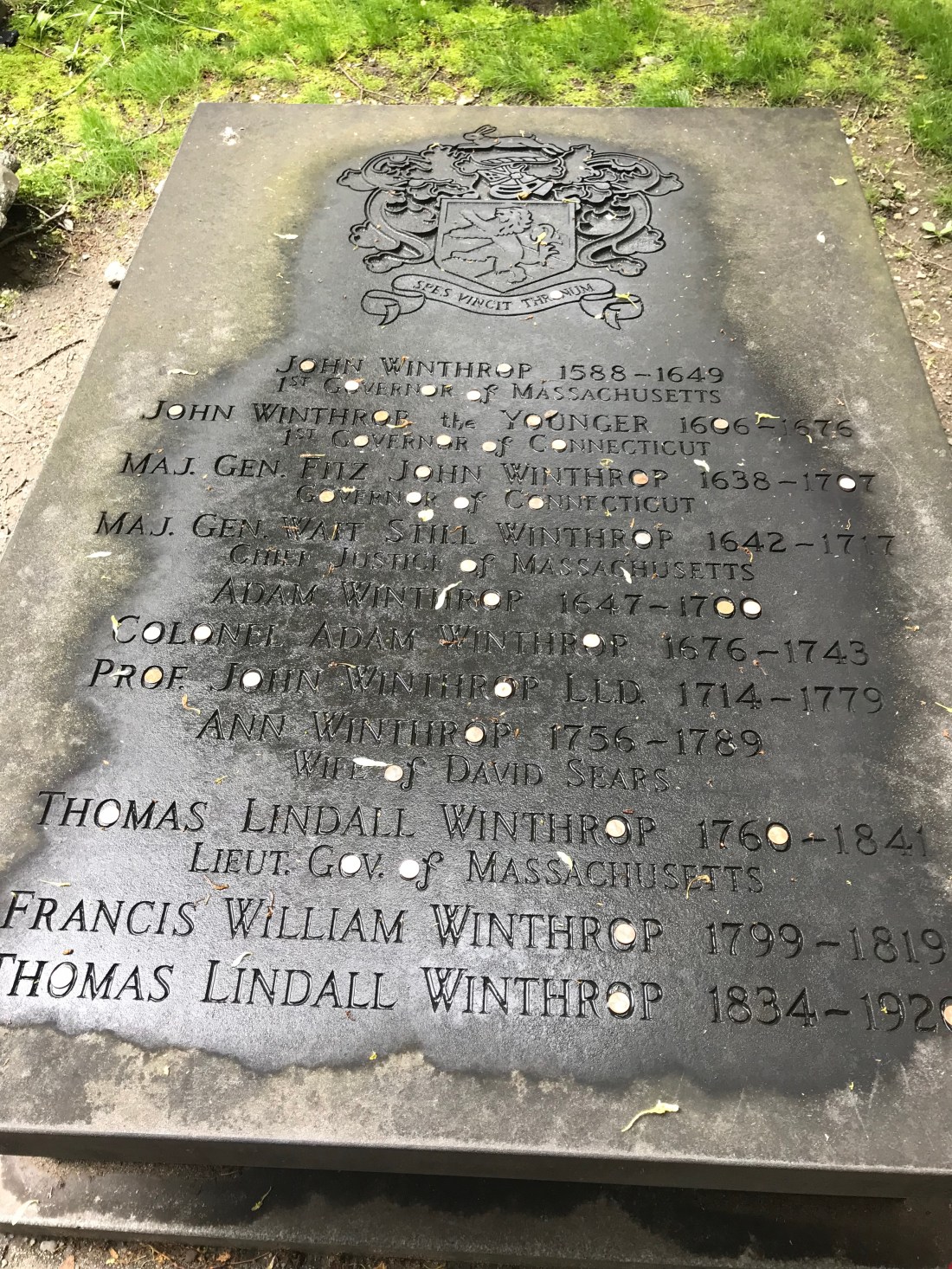
Kings Chapel Burying Ground, smaller than the Granary Burial Ground, was a quick stop, but nonetheless significant as Boston’s very first cemetery.

IMG_6551.jpgIMG_6552.jpg

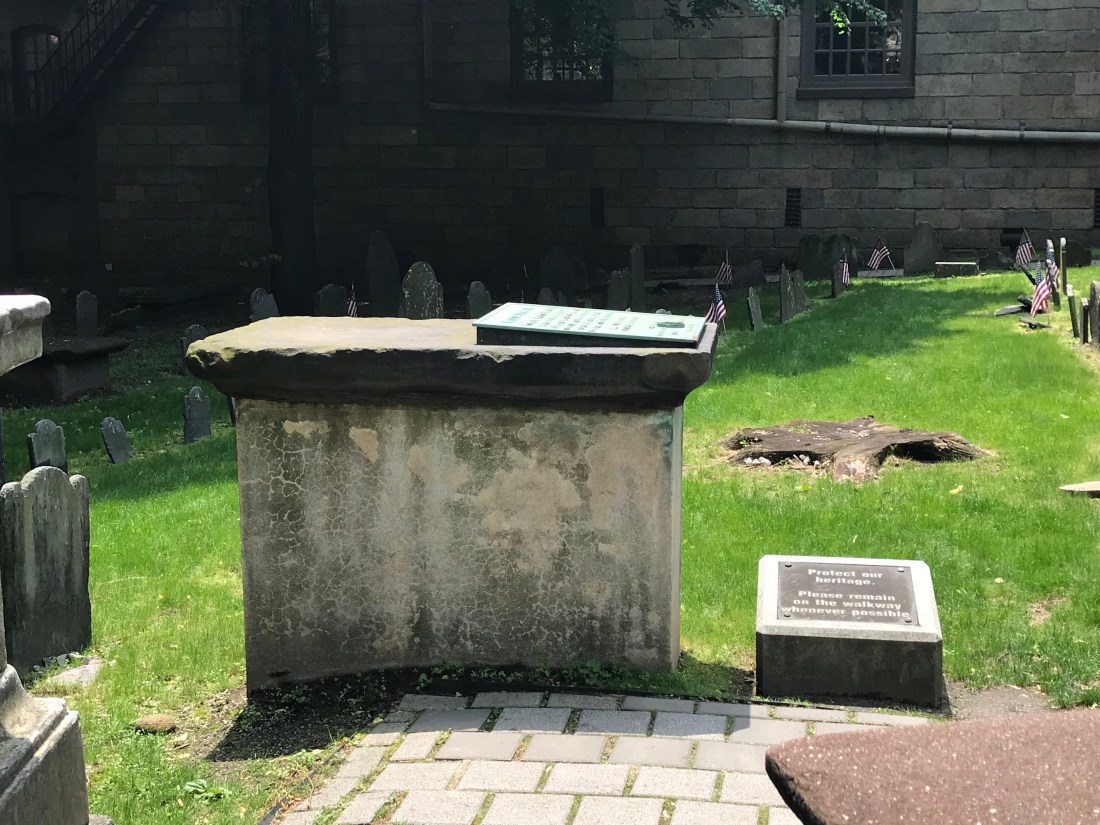
The grave of John Winthrop, the first Governor of the Massachusetts Bay Colony. He was one of the founders of the colony and it’s organization of government.

IMG_6554.jpgIMG_1956.jpg

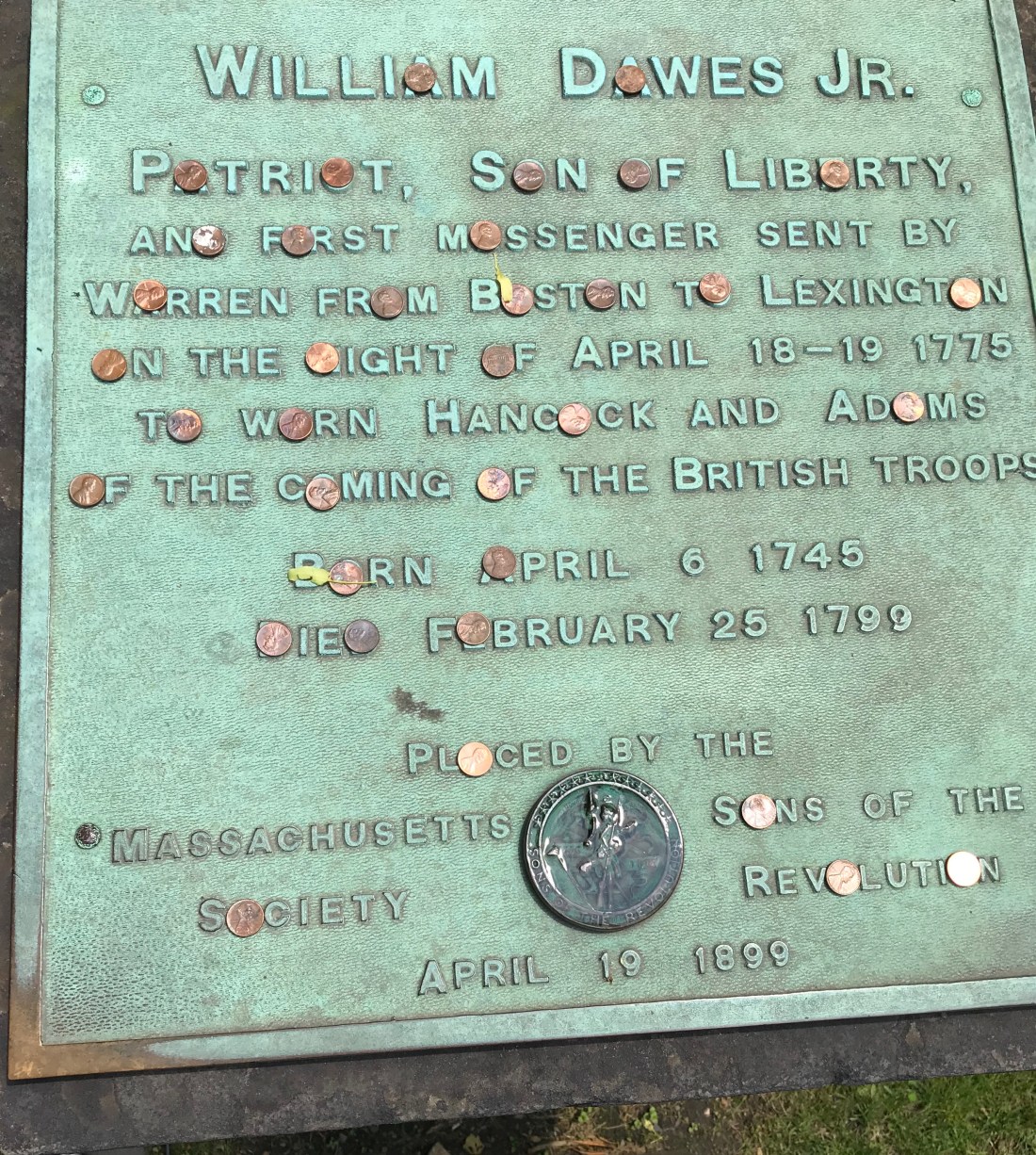
The grave of William Dawes Jr., Paul Revere’s companion during the Midnight Ride. Dawes took a different route than Revere to alert the surrounding towns of British advances, and thus is less remembered for his deed than Paul Revere was.

IMG_1959.jpg

The very large Old City Hall, which was formerly the site of the very first public school in America: Bostin Latin School. Notable alumni included Ben Franklin, John Hancock, Samuel Adams, and Ralph Waldo Emerson.

IMG_6558.jpgIMG_6559.jpg

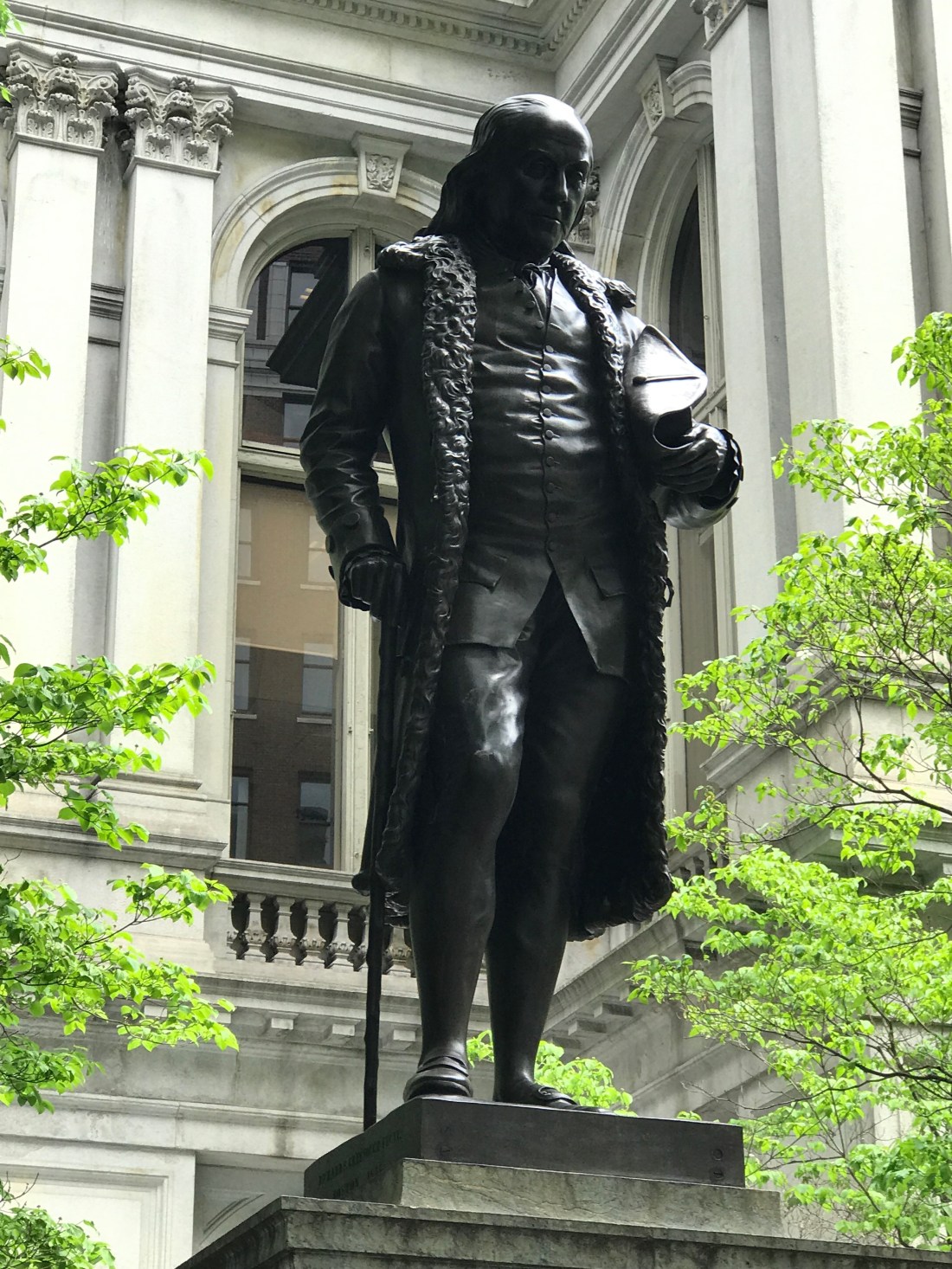
A neat statue of Benjamin Franklin, marking his original heritage here in the North.

IMG_6561.jpg

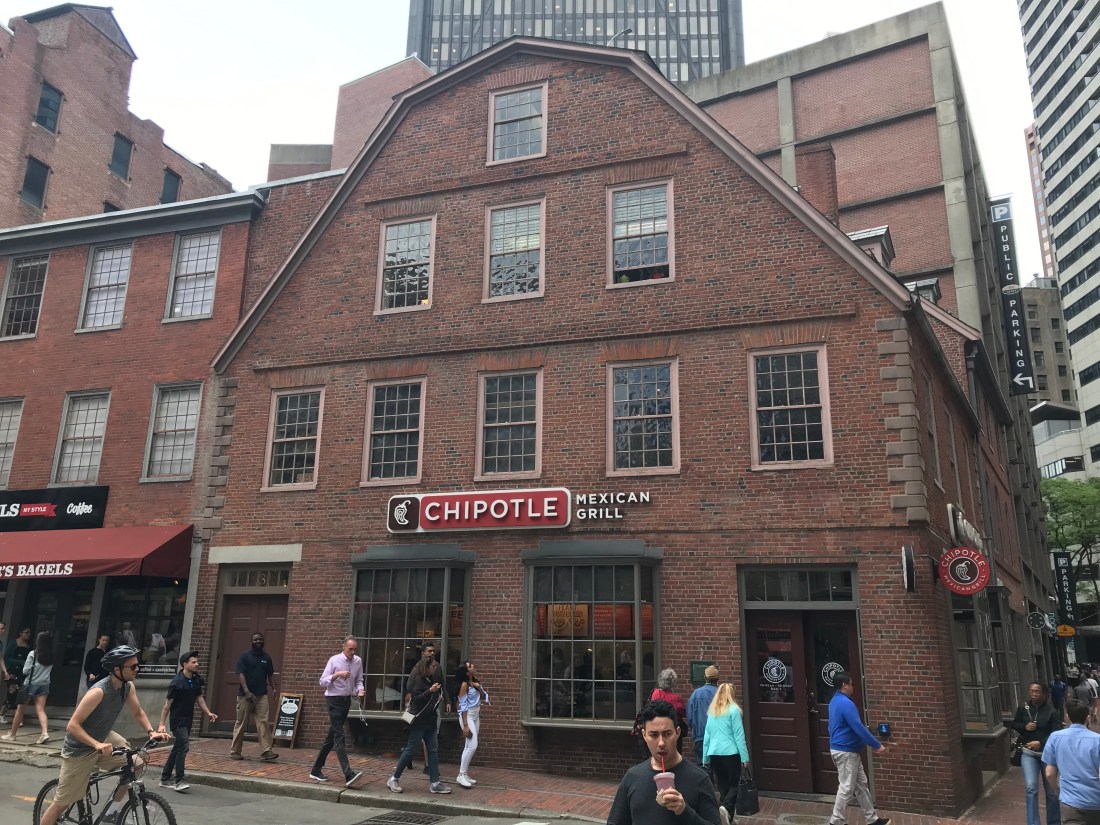
The Old Corner Bookstore was once the home of Anne Hutchinson, a founder of the Rhode Island Colony. Later it had become one of the nation’s prominant literary centers, and was home to the leading publishers of the 1800’s back in it’s day.

Now it serves as a Chipotle Restaurant.

…Why?

IMG_1967.jpg

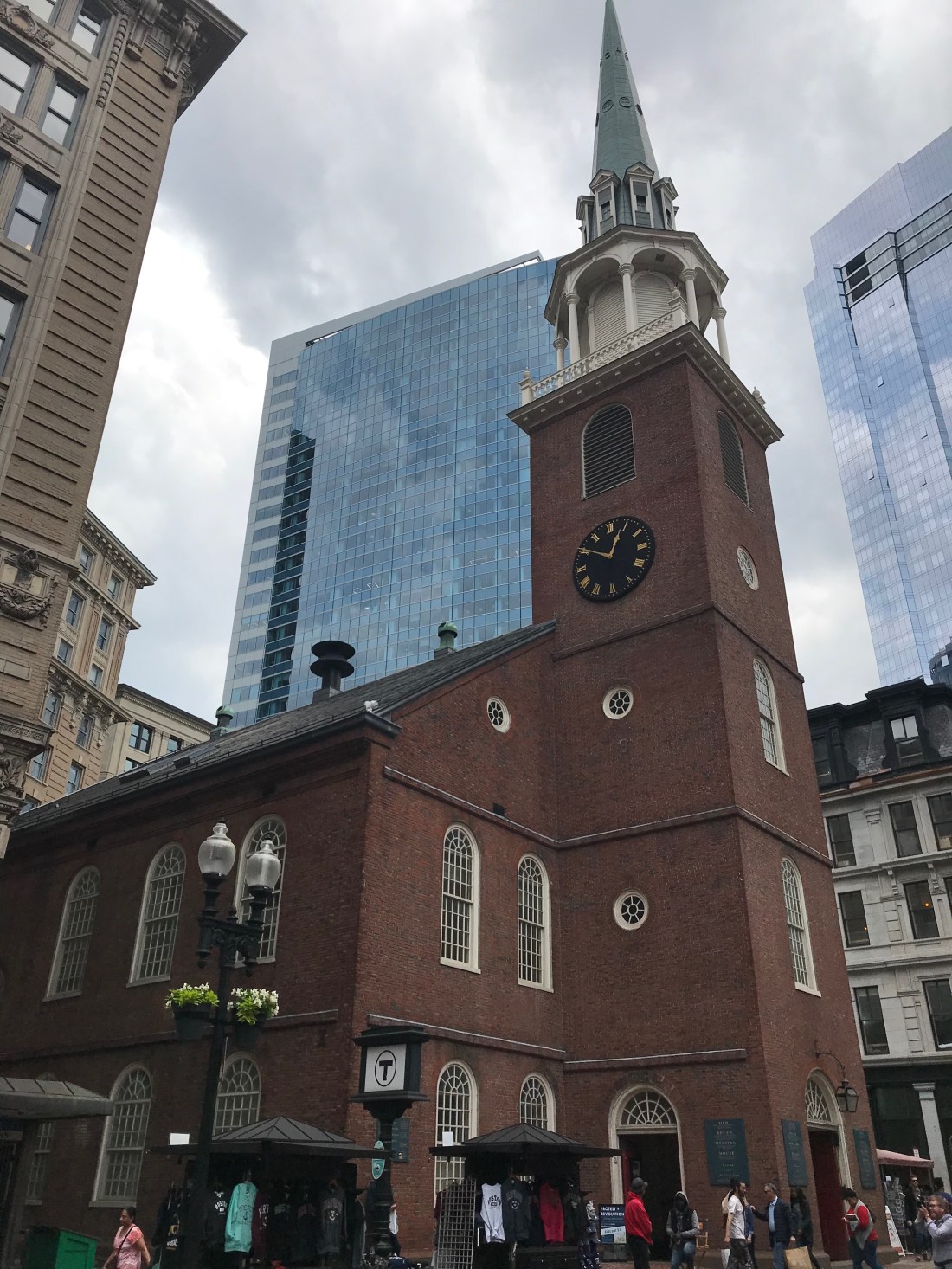
The Old South Meeting House, the second oldest church in Boston, was a gathering place for those who wanted to express their disatisfaction and anger against the British Crown, the infringements of their rights, and the unfair taxation of their economy.

British soldiers sacked the place during the occupation of Boston, desecrated much of it’s interior, and converted it into a stable.

IMG_1971.jpg

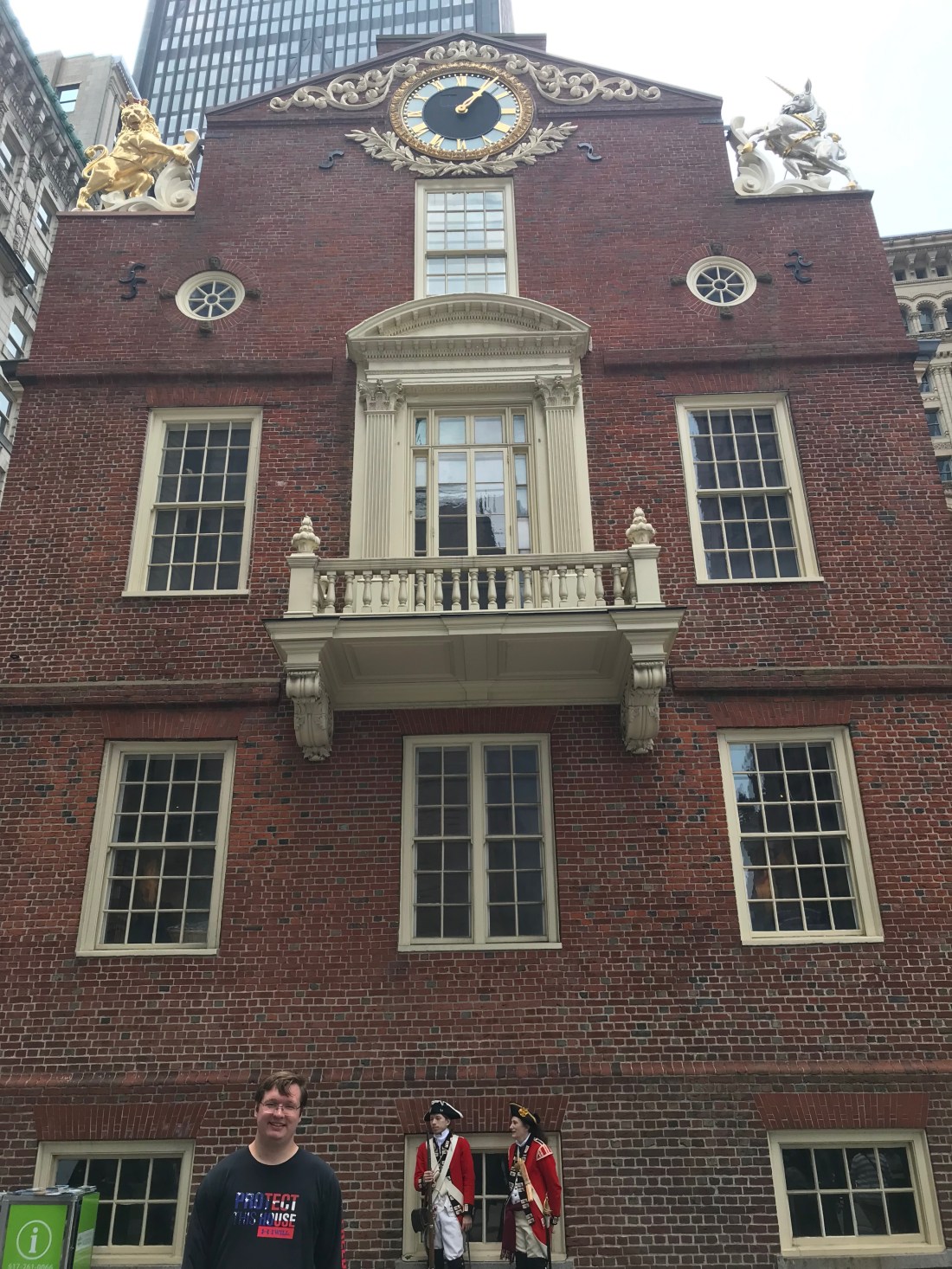
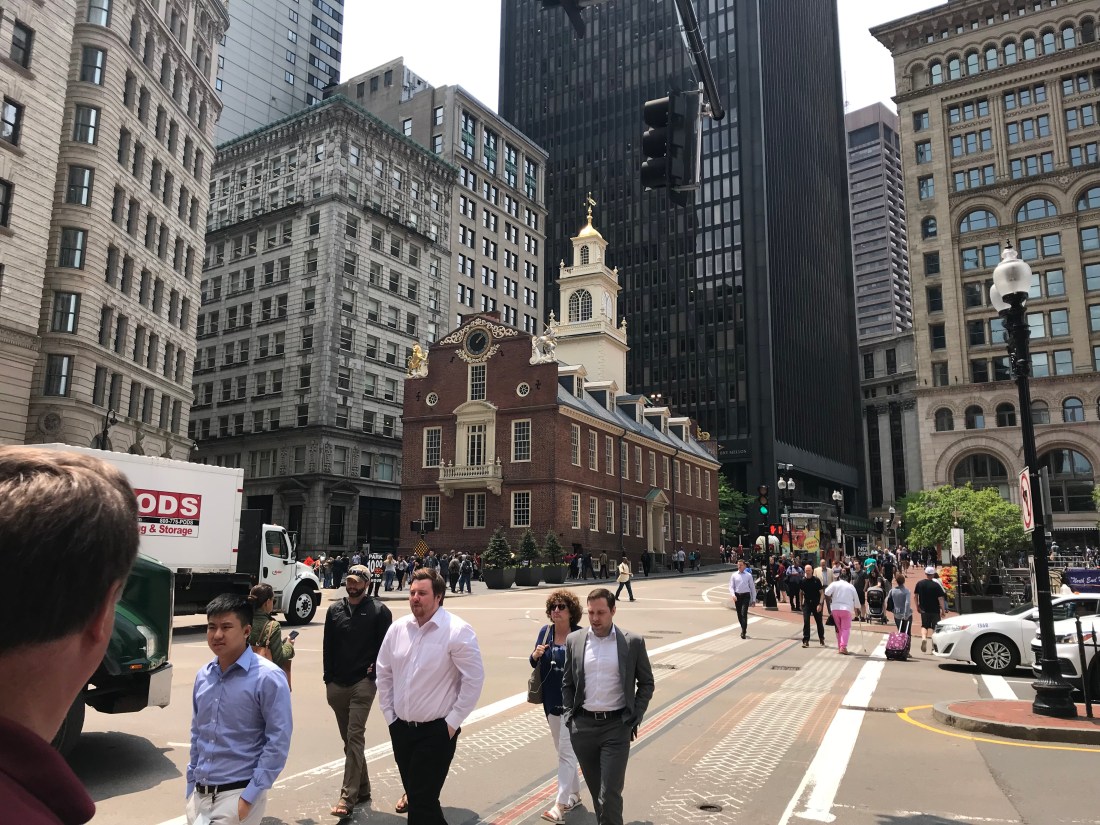
The back of the Old Massachusetts State House, where the heads of the royal government would base their power from. People regularly displayed their distaste with the king around the building, one of which would instigate the Boston Massacre.

IMG_6562.jpg

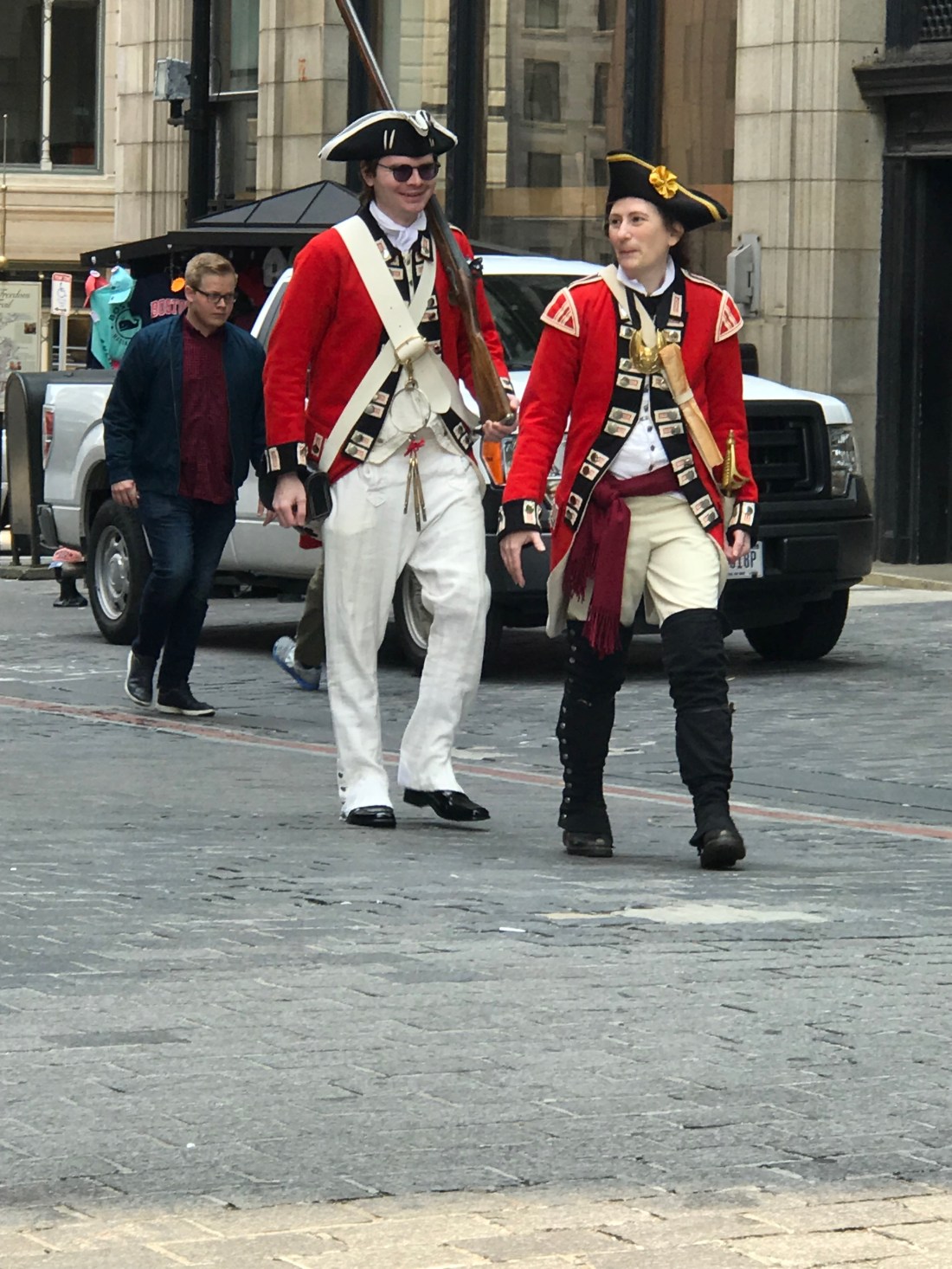
A couple of British Redcoats wandering through the streets of Boston… i’m not sure they got the memo that the war ended about 236 years ago.

IMG_1988.jpg

The backside of the building features the balcony where the first reading of the Declaration of Independence in Boston took place. I imagine that didn’t settle too well with the British.

IMG_6563.jpg

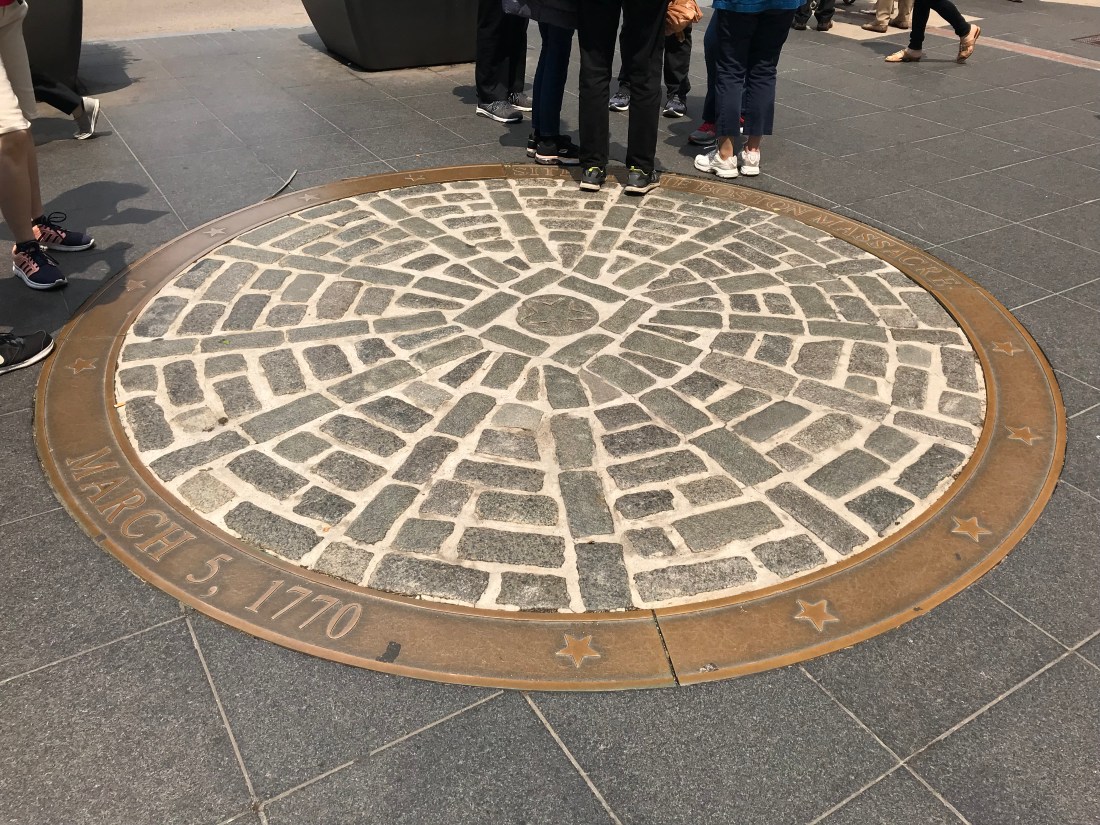
In front of the building was this memorial of old cobblestone that marked the site of the Boston Massacre, an event that would shake people’s faith in the British Empire to the core…

IMG_6564.jpg

Looking towards the Old State House, at the square that it took place at. One can see The Freedom Trail going down the street where we are now. Let’s continue to follow it.

IMG_6566.jpg

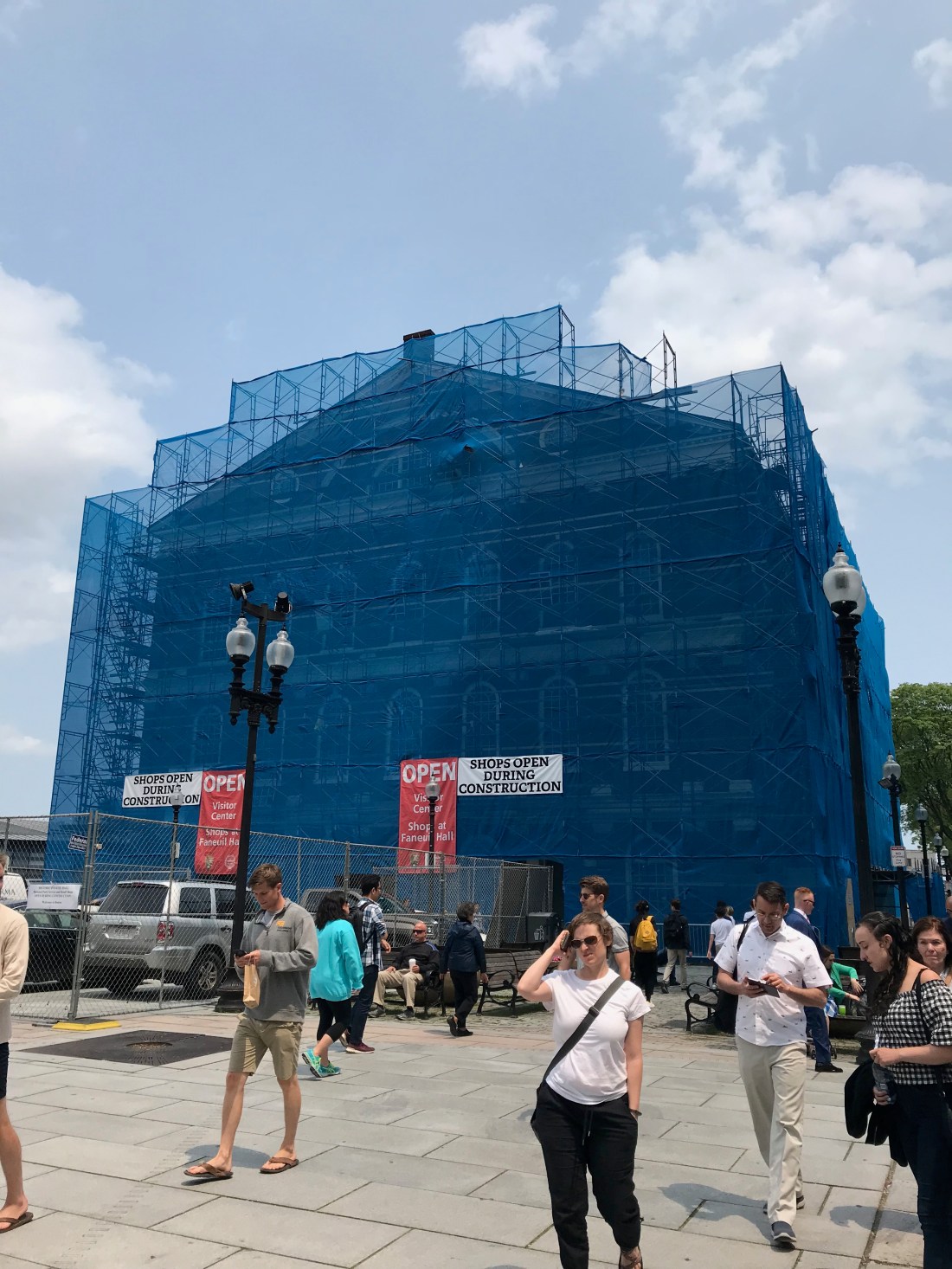
Faneuil Hall, alas, is completely covered in construction and scaffolding, likely for restoration work. So, I’ll try to find a decent stock picture of what it looks like in it’s prime.

FH-Web-2.jpg

I think that does it nicely.

Faneuil Hall has been a meeting-hall and market place since 1743, and has also served as a major hub for orations and protests both in the modern day, and colonial days during British Occupation. The passionate speeches and rallies that took place here have given Faneuil Hall the nickname: “The Cradle of Liberty”.

IMG_1995.jpg

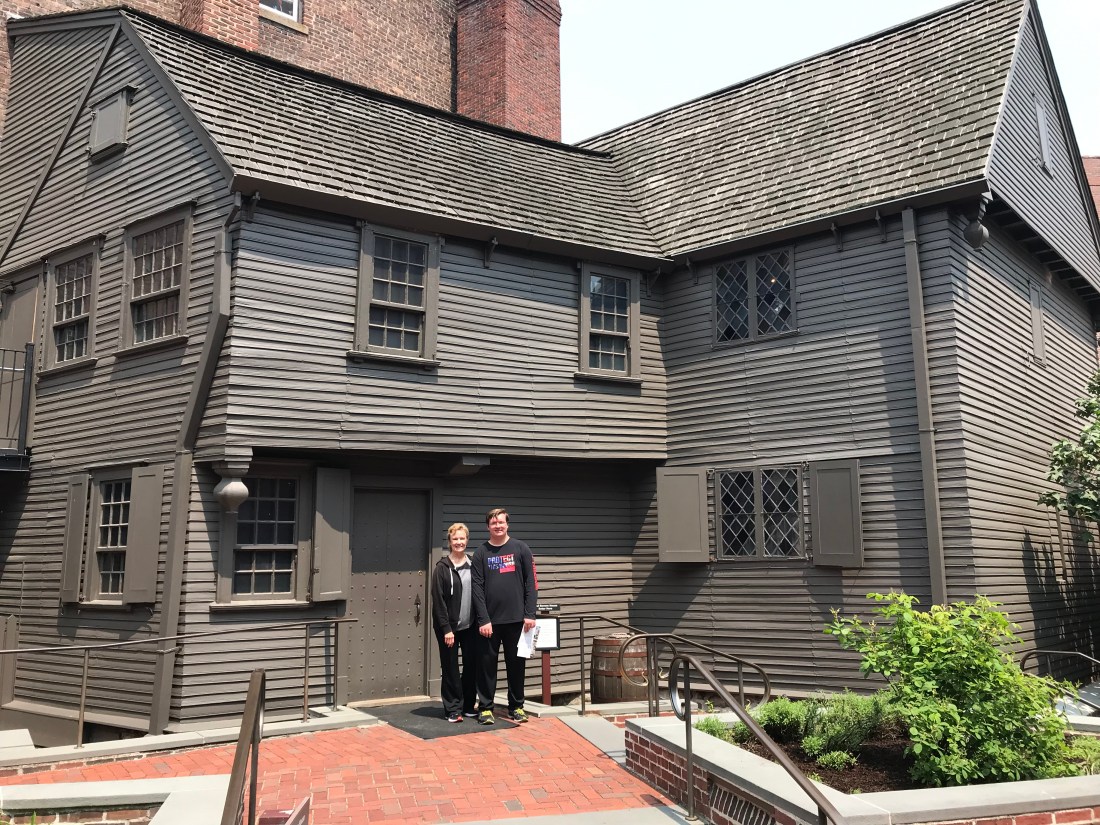
The oldest building in all of Boston is none other than the Paul Revere House, where the famous patriot and silversmith lived. The house was built in 1680, and is still structurally sound. Revere lived here with both his first and second wife, and many of their children (Revere had eighteen children between the two marriages… that is almost a record I think.

IMG_2001.jpg

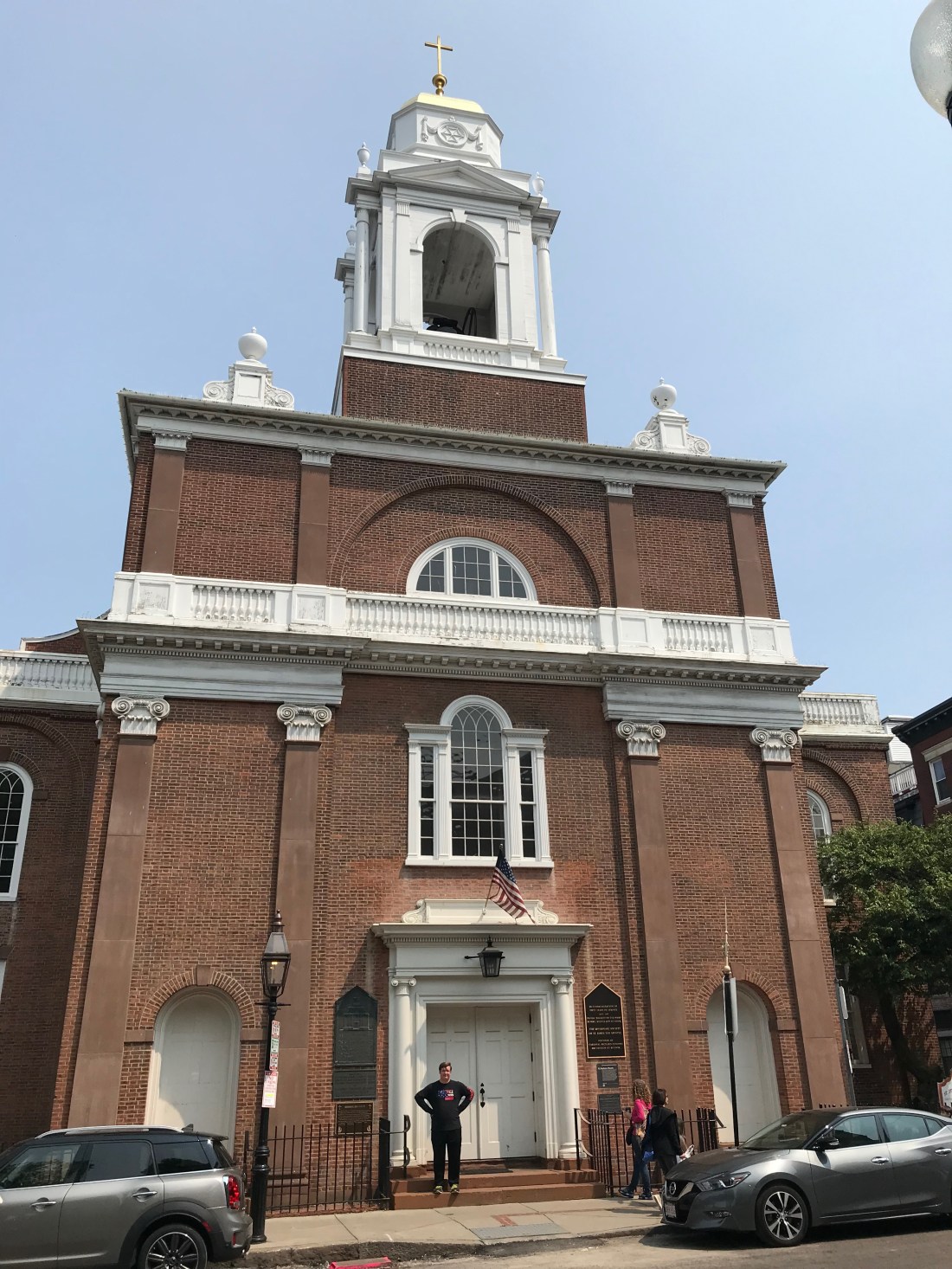
St. Stephen’s Catholic Church, though not a part of the official Freedom Trail, is still notable, because it was where Rose Fitzgerald Kennedy, mother of President John F. Kennedy was baptized. She has several areas in Boston named after her as well.

IMG_6568.jpg

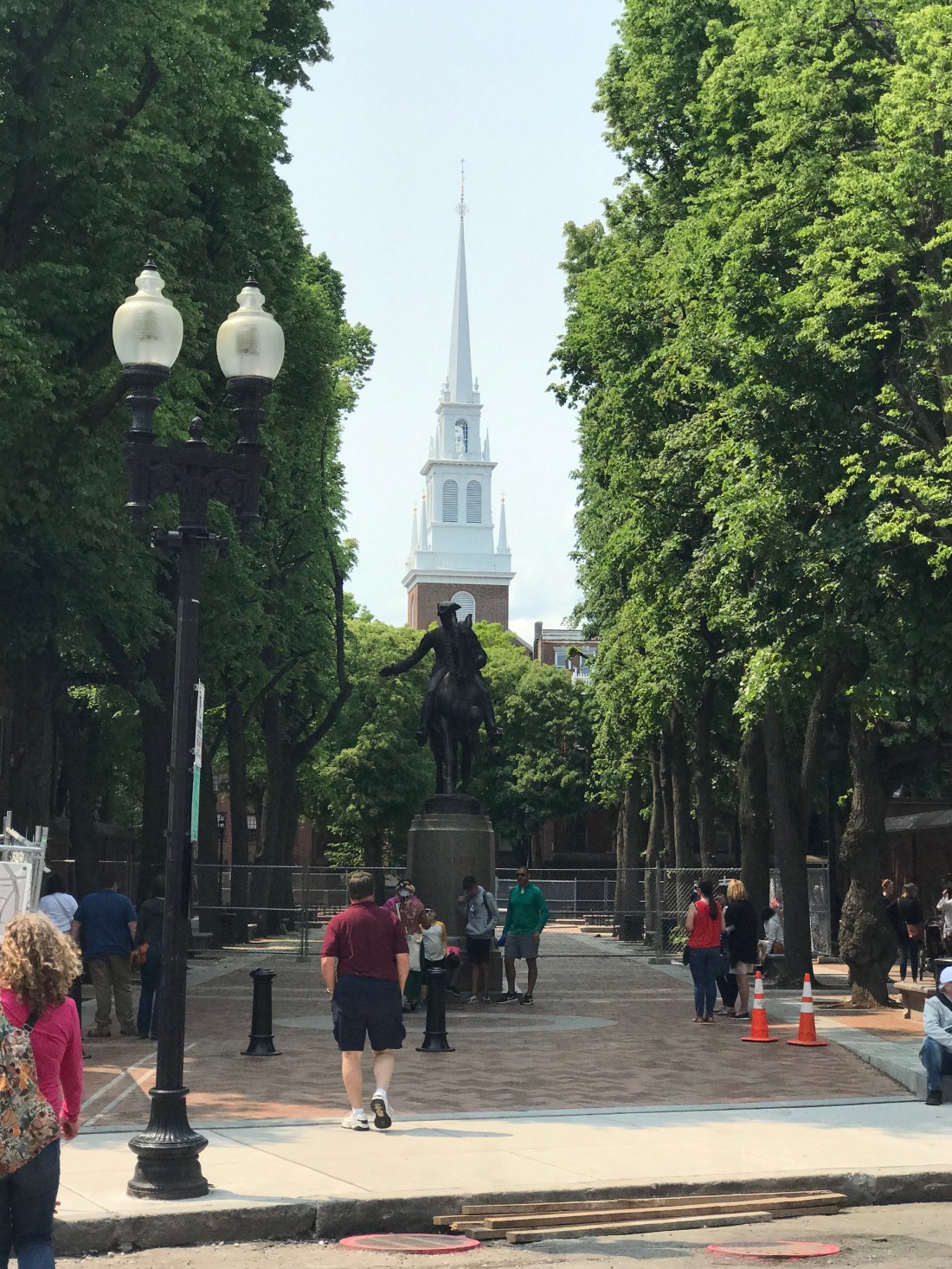
Paul Revere Mall leads directly to the Old North Church in the distance. Much of the mall is fenced off with reconstruction, but we were able to pass through unhindered.

IMG_2005.jpg

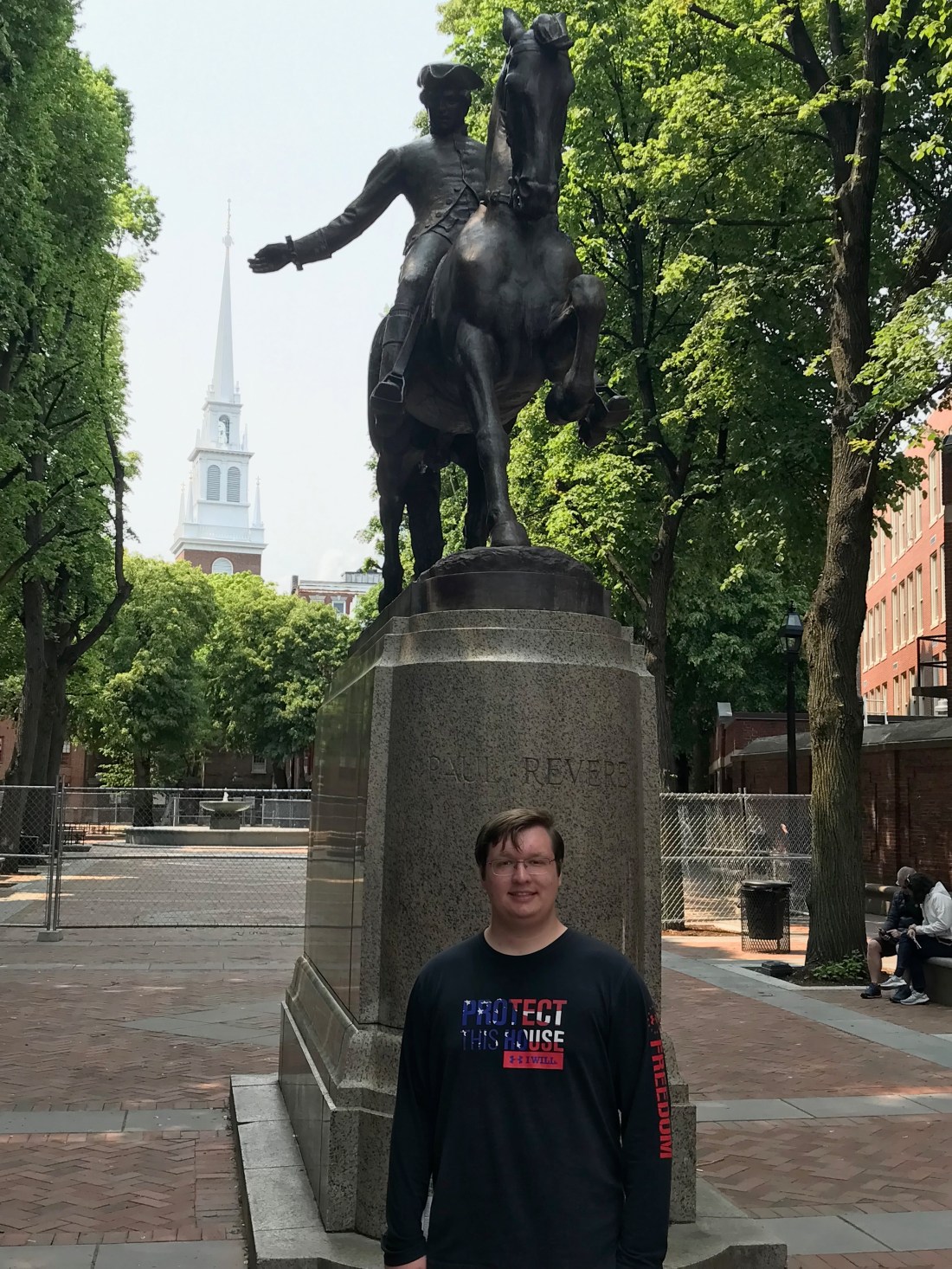
And who’s statue should be in the mall, but Paul Revere himself? IMG_2008.jpg

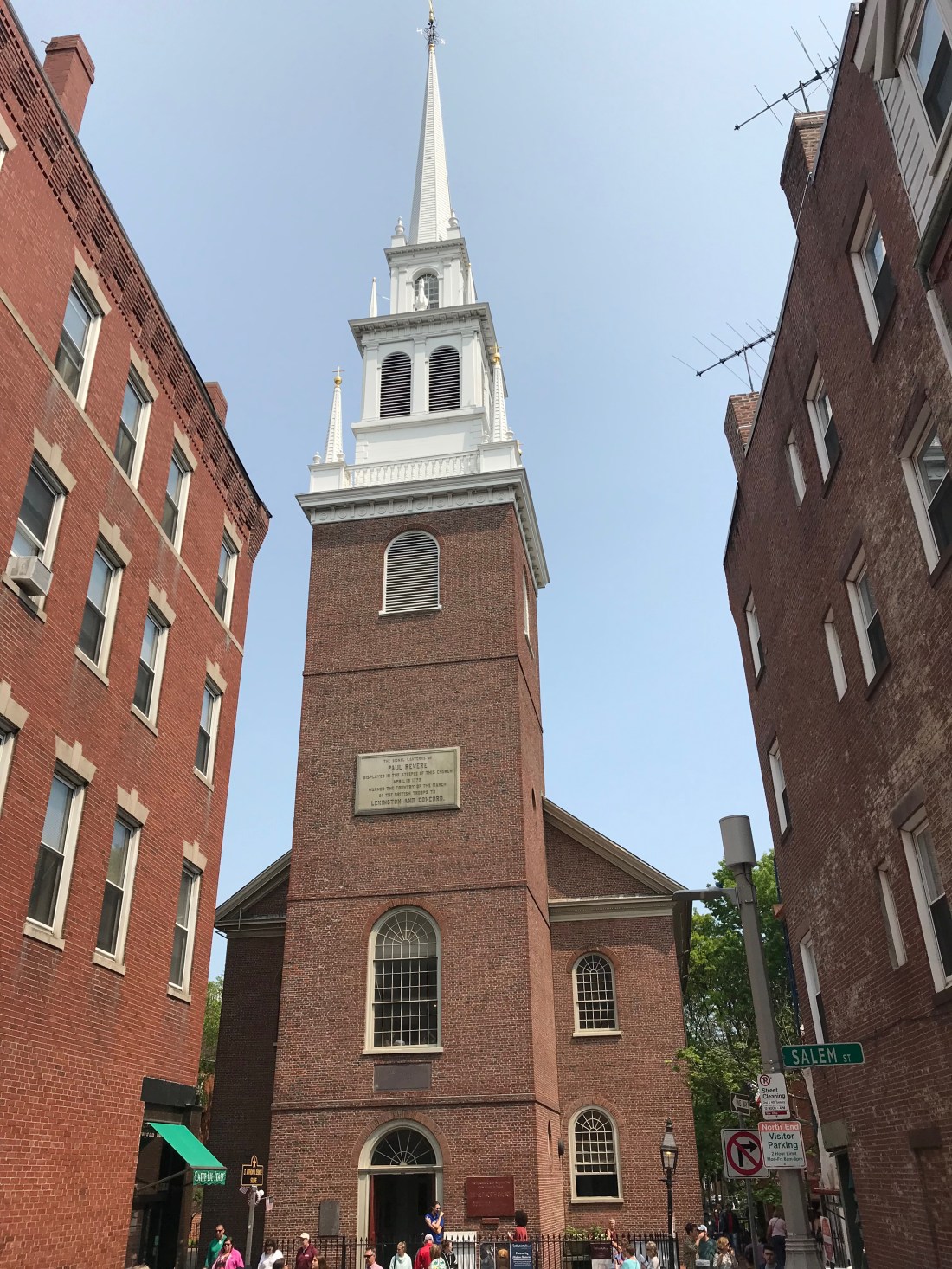
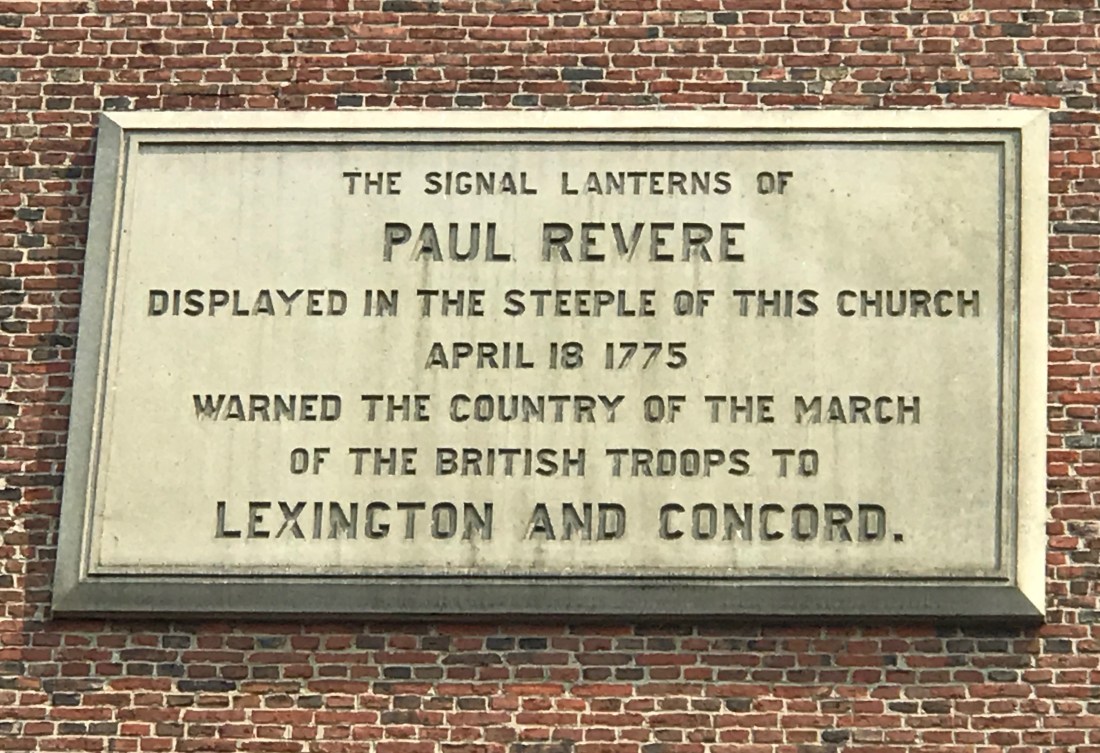
Ah, the Old North Church… it was from this very steeple that the two lanterns were lit in the window, indicating to Paul Revere on his midnight ride that the British were coming by sea… at one point, it was one of the tallest structures in the entire colony, so it could easily be seen from a great distance.

IMG_2009.jpg

Hence this sign.

IMG_6569.jpg

A neat street of Boston… it makes you wonder how old some of these buildings are… and what their living prices are.

IMG_6573.jpg

Copp’s Hill Burying Ground was the largest cemetery in Colonial Boston, though not as many notables are buried here.

IMG_6576.jpg

Still, we found the gravesite of Robert Newman, the individual who lit the lanterns in the steeple for Paul Revere. From the looks of the symbol on the marker, it seems he was a member of the Masons.

IMG_6578.jpg

The Freedom Trail led us across the Charlestown Bridge, and into the Charlestown district of Boston…

IMG_2014.jpg

IMG_6579.jpg

An entire fleet of boats… and look! The Bunker Hill Monument stands in the distance!

Though we were unable to make it to the Monument before it closed, there was still one major stop of the Freedom Trail that could NOT be missed…

“Old Ironsides” herself…


U.S.S. Constitution

So! For the more learned of you in military history, you might be wondering why this American Warship, originally completed in 1797, is still surviving to this very day?

And my answer to you is, I’m in the same boat as you. Pun intended.

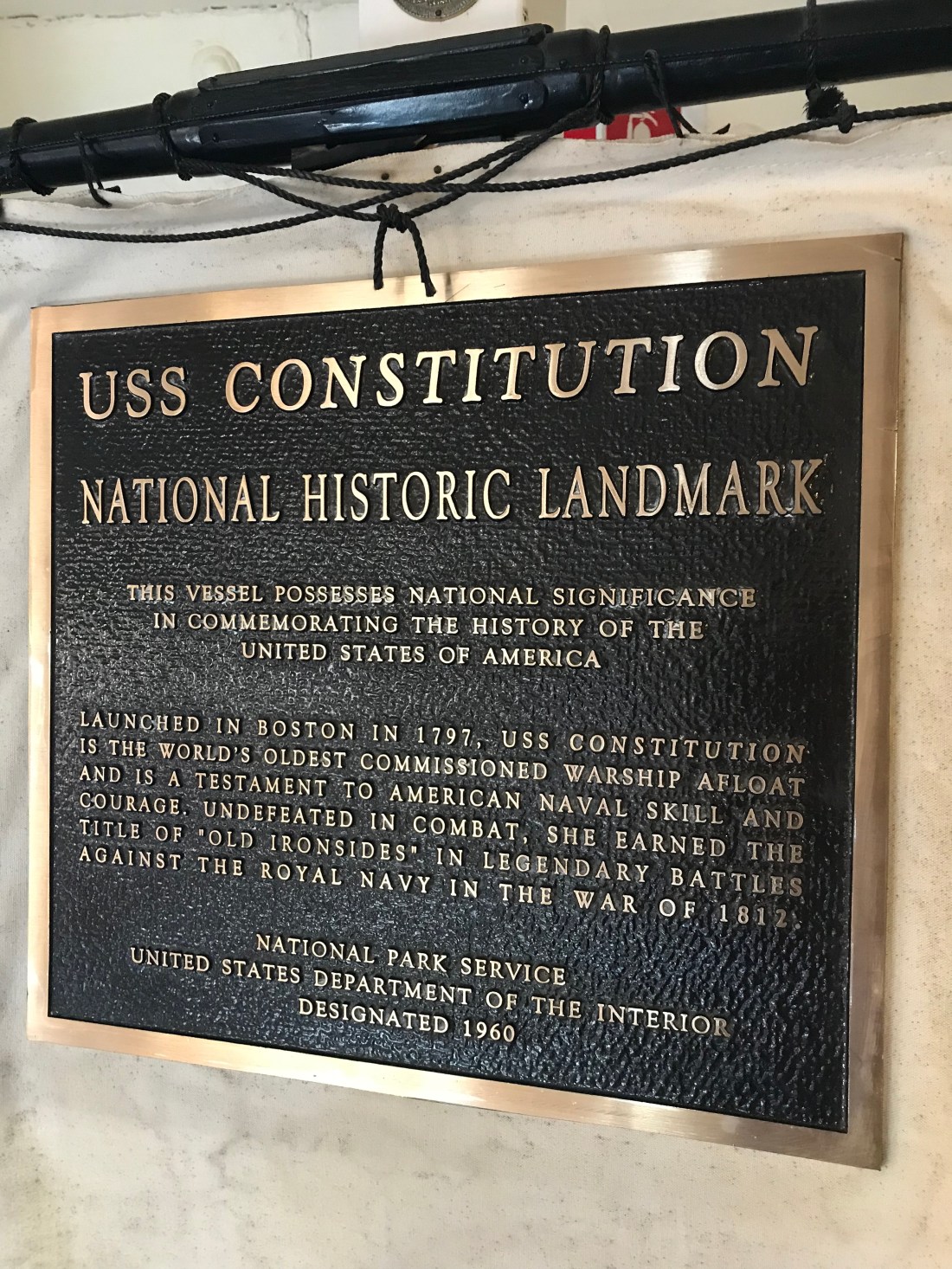
This is not a replica of the famous battleship. Nope, it’s the original U.S.S. Constitution, and it’s the oldest Naval Warship still afloat in the world! It serves as one of the symbols of the U.S. Navy, and a terrific look into the early history of the country’s naval expertise…

IMG_6581.jpg

IMG_2021.jpg

The U.S.S. Constitution took thousands of dollars (likely millions in today’s money) to build, and it took hundreds of trees from most of the 13 original states to complete.

IMG_6583.jpg

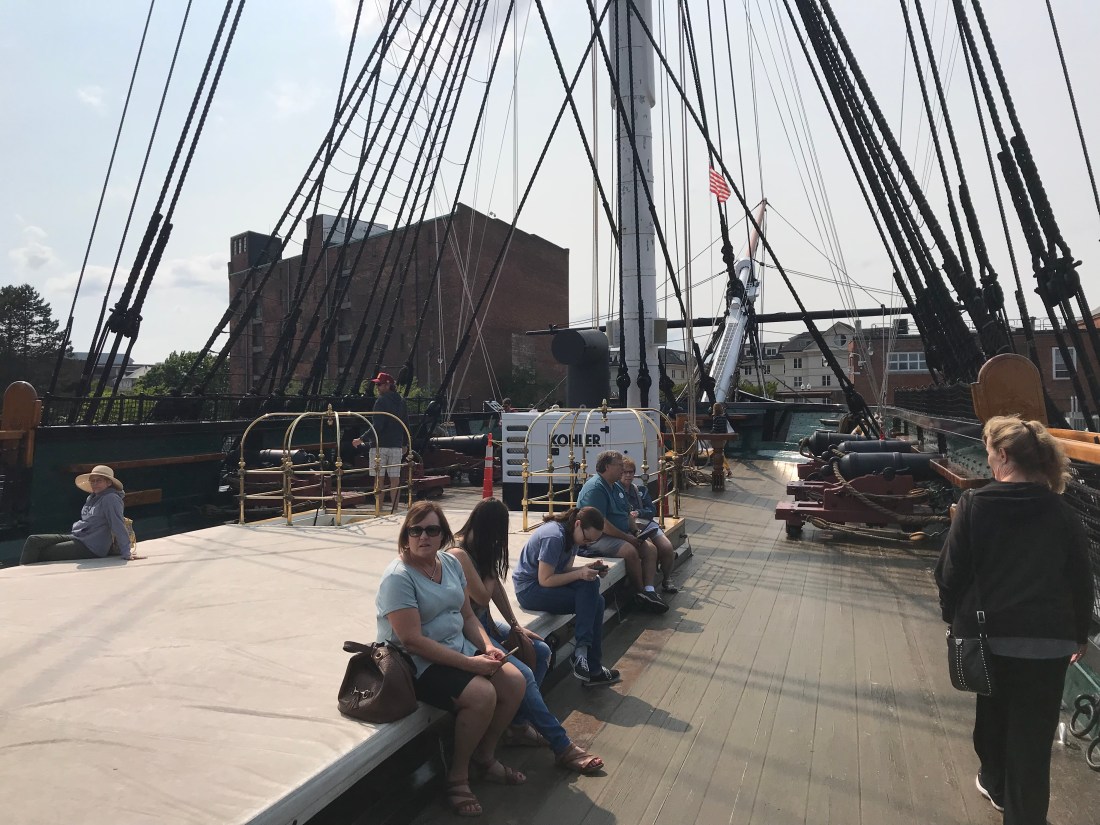
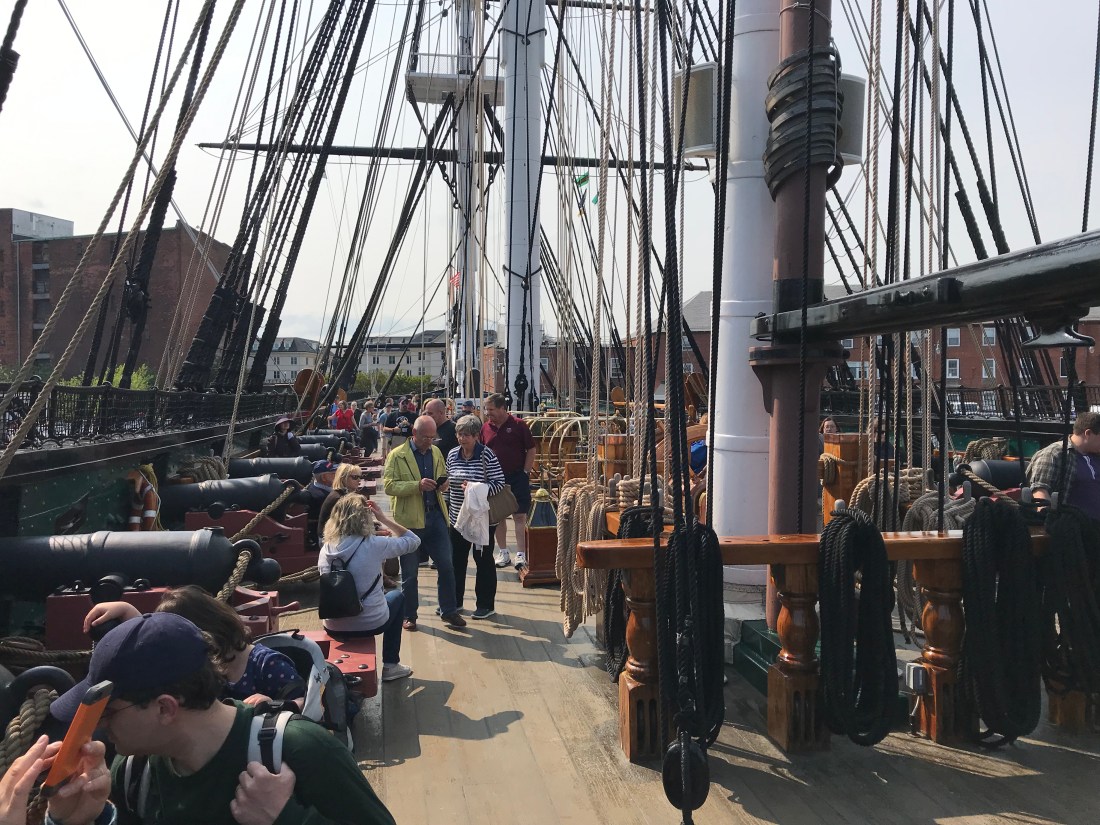
The main deck of the U.S.S. Constitution. The ship is still an actual sailing ship thanks to tug power, and has the capability of going on tour every once in a while.

IMG_6582.jpg

IMG_6593.jpg

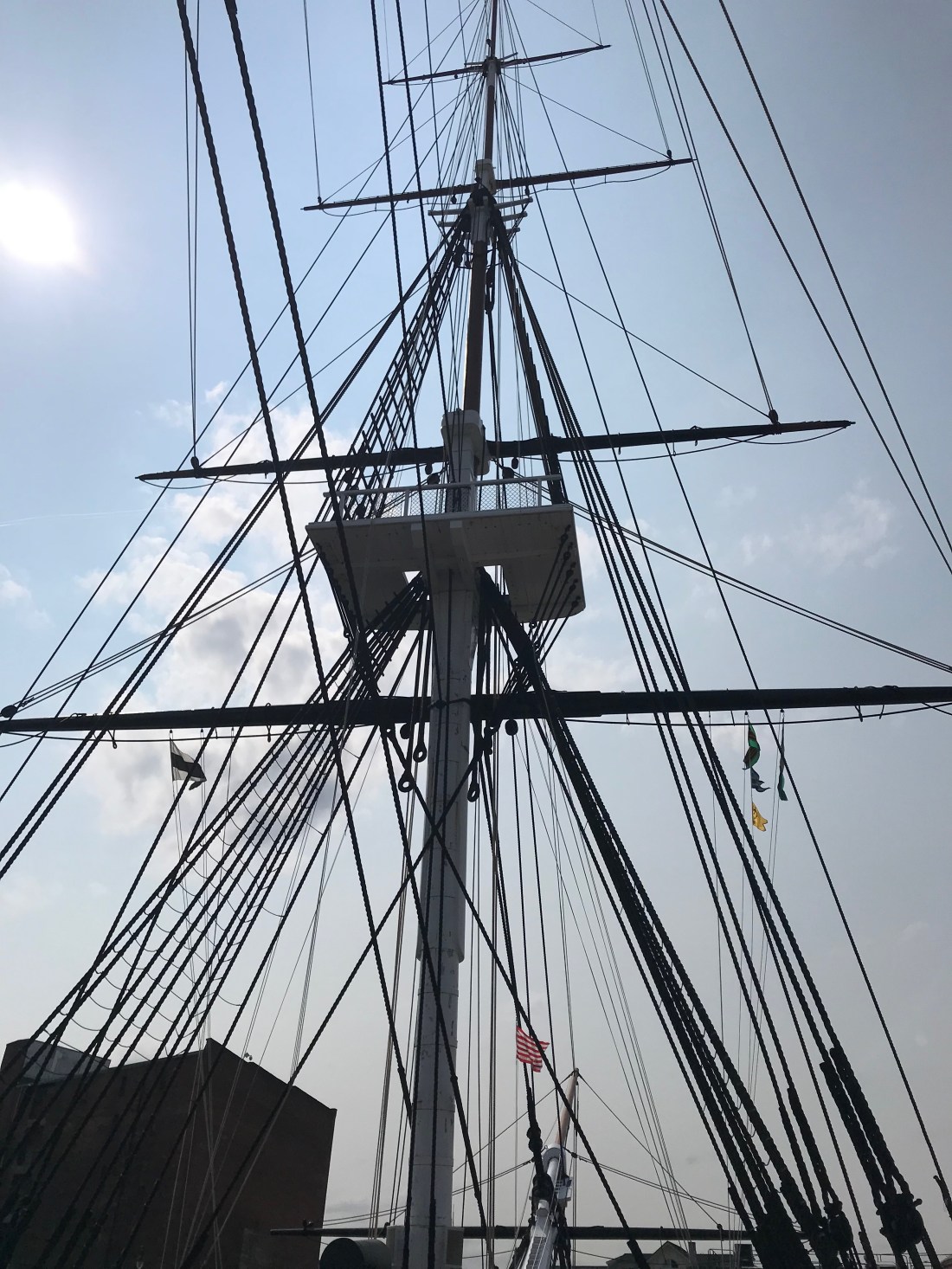
Two of the main masts of the ship. All of these knots and rigging of the ropes are beyond my comprehension…

IMG_2035.jpg

Captaining a ship was no easy feat, it was very difficult to navigate these waters…

Now granted, the main reason for that was because the wheel was stuck in place, so I couldn’t really go anywhere… still, A for effort.

IMG_6594.jpg

The cannons are actually 1927 replicas, but are still very resemblant of the actual cannons used during the ship’s prime.

IMG_2025.jpg

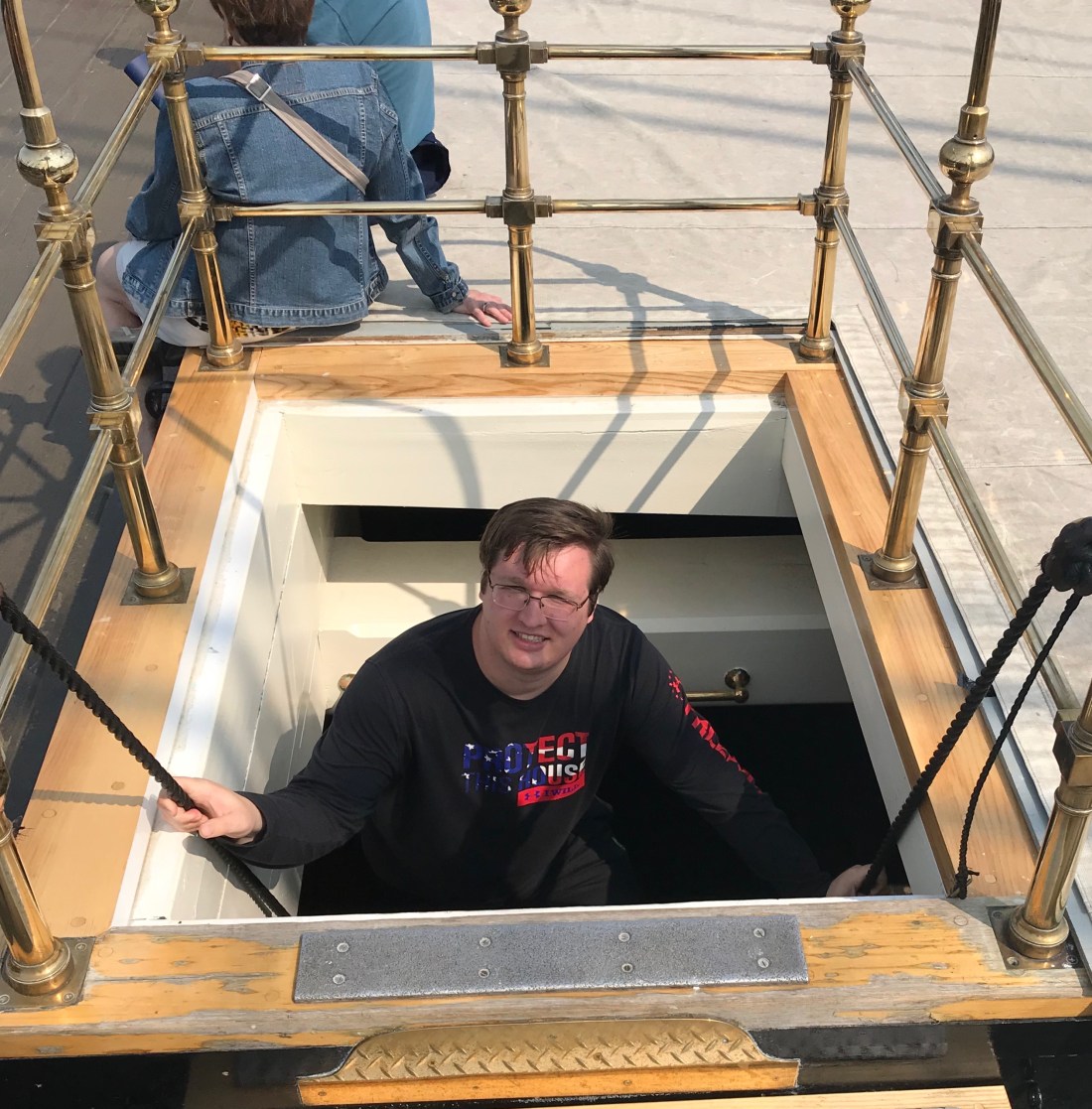
Nowhere to go but down!

IMG_2030.jpg

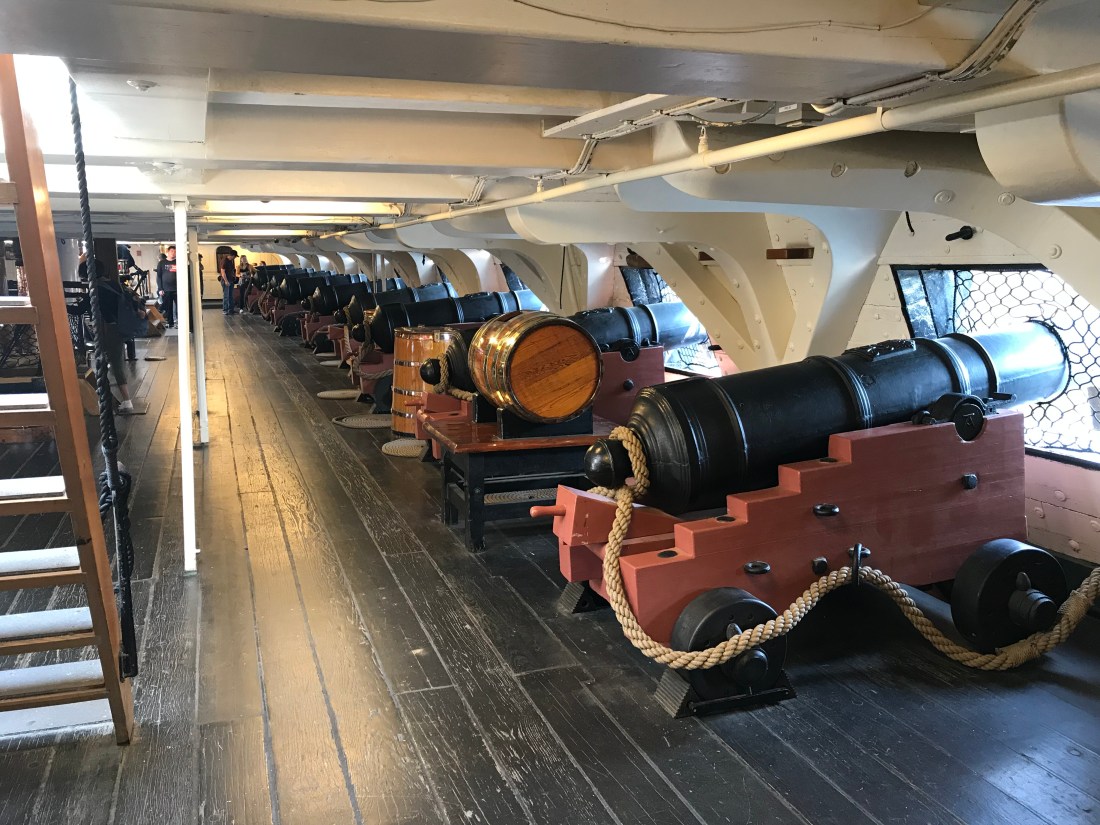
Yet more cannons line the deck… there are twenty-four on each side of this deck… it makes you wonder how strong a ship must be to carry all that weight.

IMG_6585.jpg

IMG_6588.jpg

A small lounge that perhaps serves as a galley for the crew members.

IMG_2032.jpg

IMG_6591.jpg

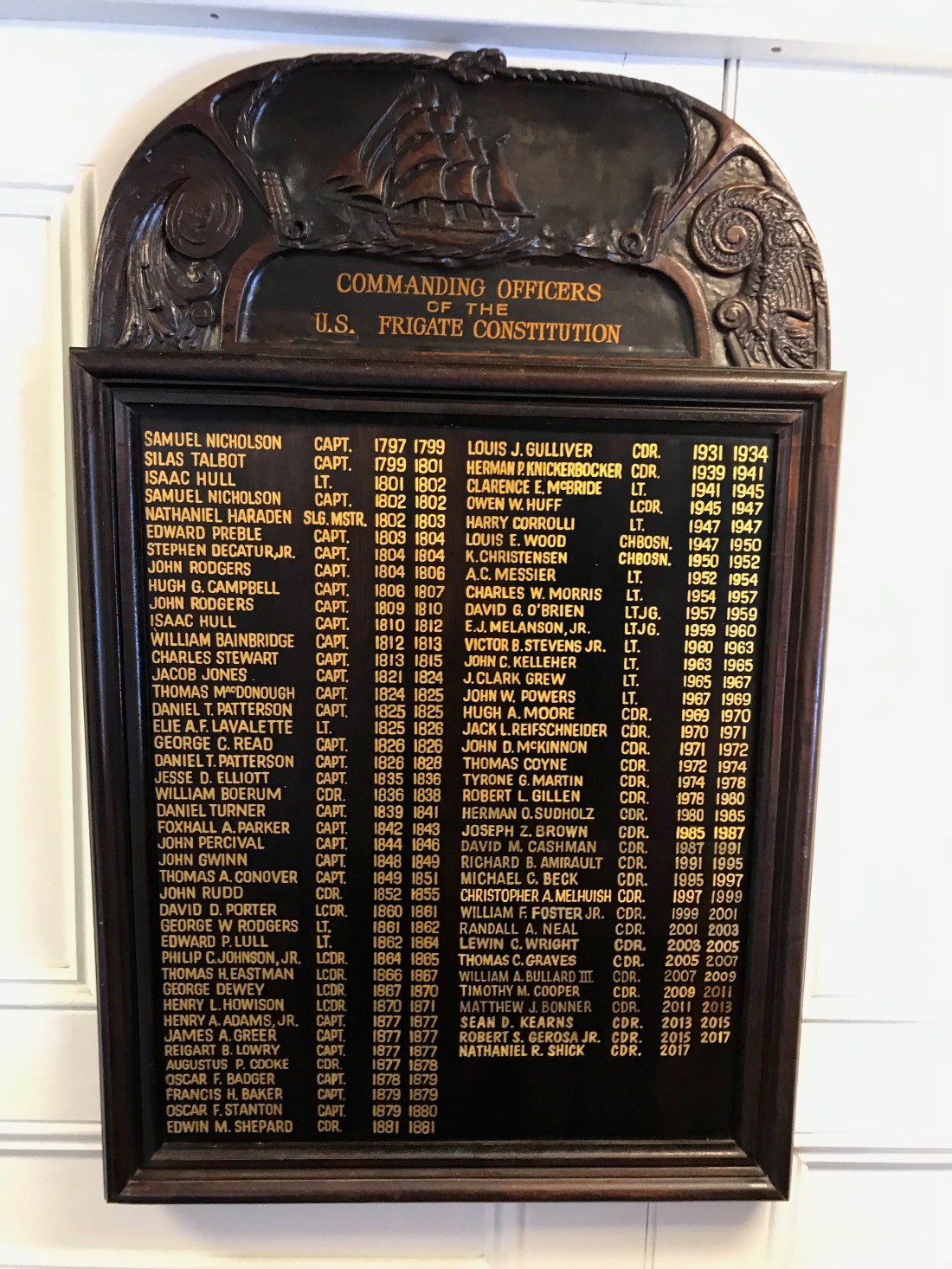
Woah! This ship has had a lot of commanding officers! Most of them serve two years at a time, and there have been 75 different commanders since 1797!

IMG_6592.jpg

One of the navy officers was eager to demonstrate to us some of the basics of ship building and maintenance. As a still-operating Navy vessel, it is still manned by Navy operatives, who on normal days dress in period clothing such as this and serve as docents of the ship. It’s a neat touch.

IMG_2051.jpg

During the War of 1812, the ship was undefeated in all of the skirmishes that it participated in, and when the cannonballs of an enemy British ship seemed to simply bounce off the Constitution’s hull, a crewmember cried out: “Huzzah! Her sides are made of Iron!” And thus, the monkier “Old Ironsides was born.”

IMG_6596.jpgIMG_2058.jpg

Hopefully, given proper restoration and support, the ship can continue to become a symbol of America’s heritage and naval history.


Exausted, we returned to the hotel with aching feet, and heads full of knowledge…

It was a busy day no doubt, and the next day would be no less of an occurance either! I won’t get into details just yet, but lets just say we explored many of the outer-towns of the Boston-Metropolitan area, with many suprises to come!

And so, as of the time this is posted, we return back home to Texas the day after tomorrow! I’m counting down the days, yet I’m sad that the adventure is almost over… it’s been so much fun sharing our experiences with you, and we can’t wait to share the last adventures that we have here!

And so, I’ll see you at the Day 21 Post, which will come soon! Take care!


Day 19, Around with Adams (Quincy, MA) (5/30/19)

Ah Quincy… one of only two places in the entire country to have two presidents associated with it… for it is home to one of the most esteemed families in the entire country!

That’s right, The Adams Family!

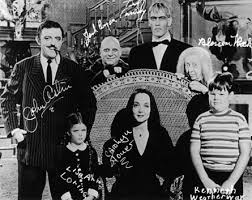
images.jpg

No no no, different one!

John Adams.jpg

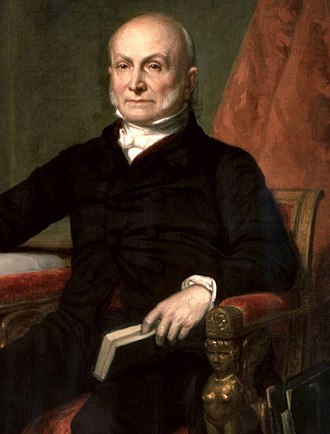
John Quincy Adams.jpg

Ah, there we go!

Presidentia; father/son duo John and John Quincy Adams both hailed from Quincy, and the Adams National Historical Park encompasses many of their historial sites, from their Birthplaces, to their home of Peacefield, and to the very church where they both are entombed!

Let’s not waste any more time, let’s dive into the very last Presidential Site on this long roadtrip!

Adams National Historical Park

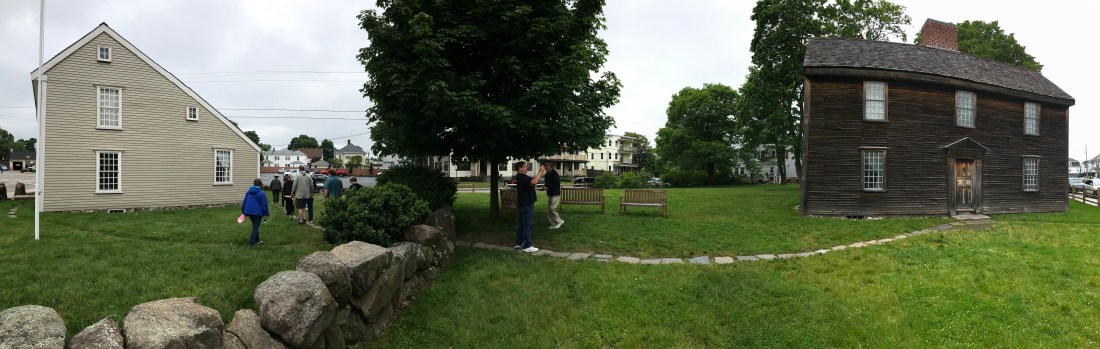
Arriving at the visitor-center, we barely had time to get our bearings before hopping on the shuttle to the different sites. The first stop were the birthplace homes of both John and John Quincy Adams… which were right next to each other.

IMG_1789.jpgIMG_1788.jpg

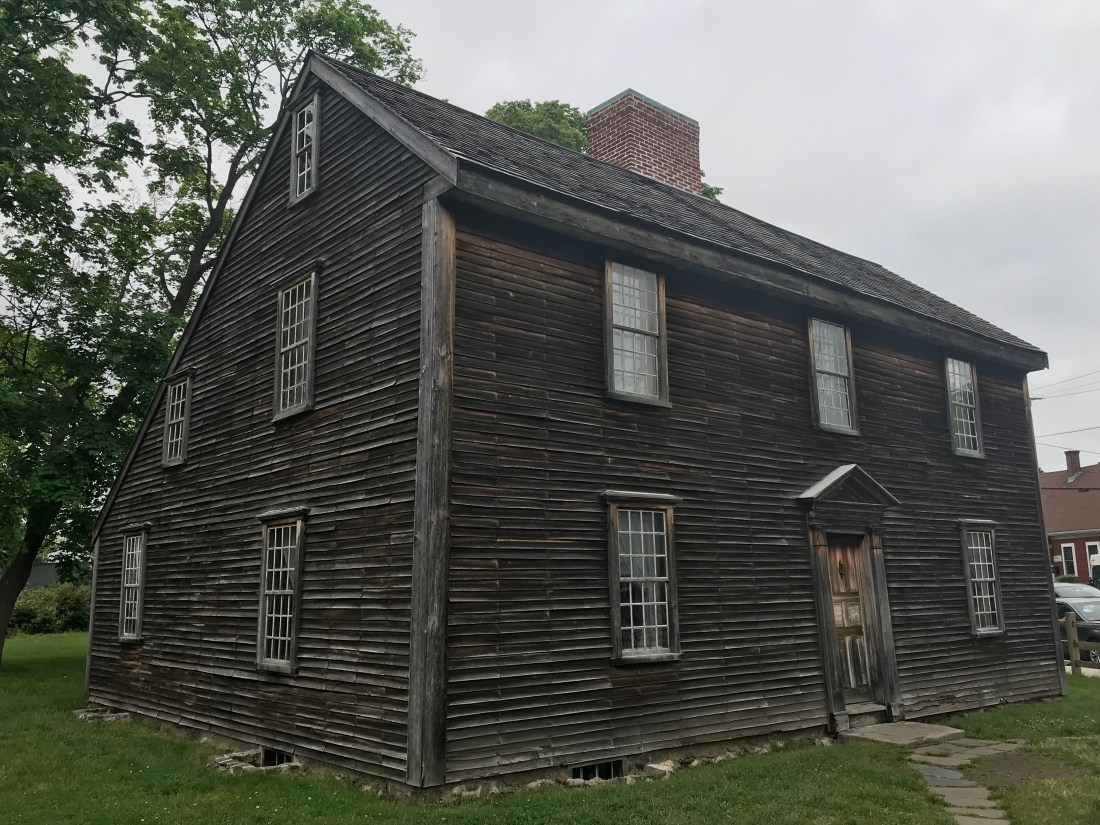
Comparatively small, John Adams was born here on October 30th, 1735, in what was then known as the town of “Braintree”. The reason that I am telling you this now, is because the second levels of both the homes were off limits to visitors, likely due to structural weakness (and likely, fire codes). The upper-right window here is at the room where he was born.

IMG_1784.jpg

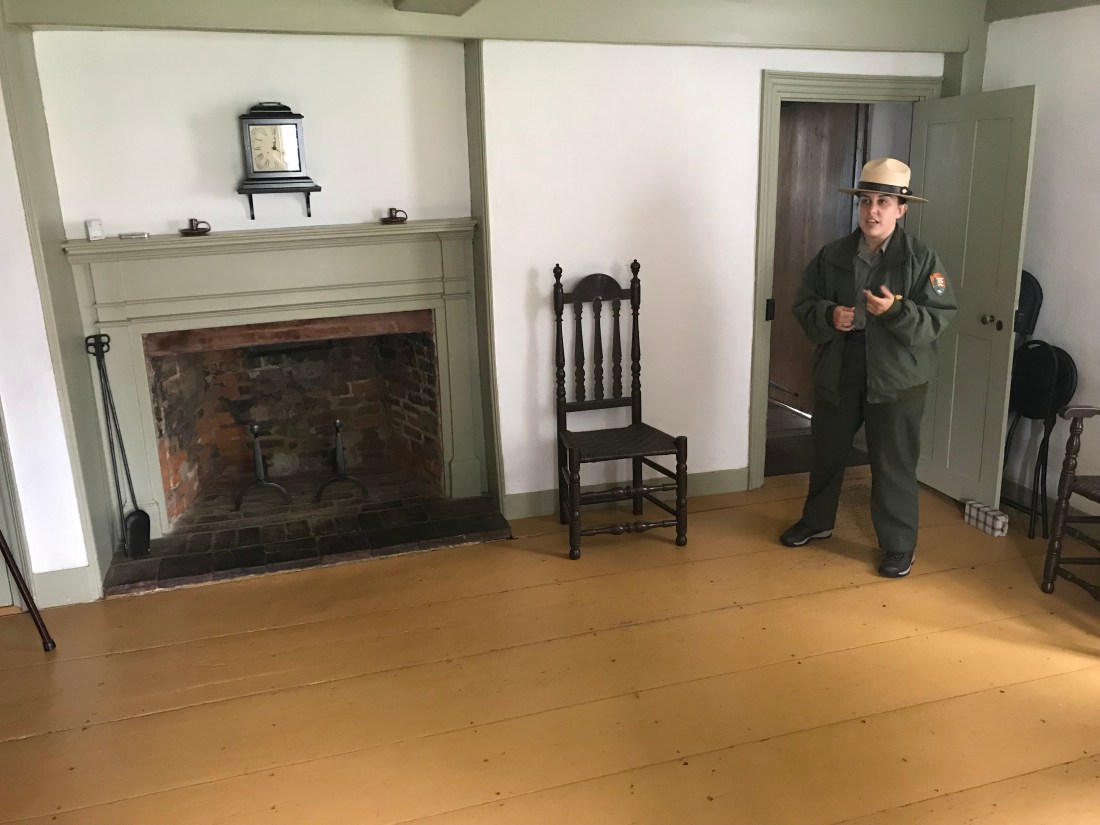
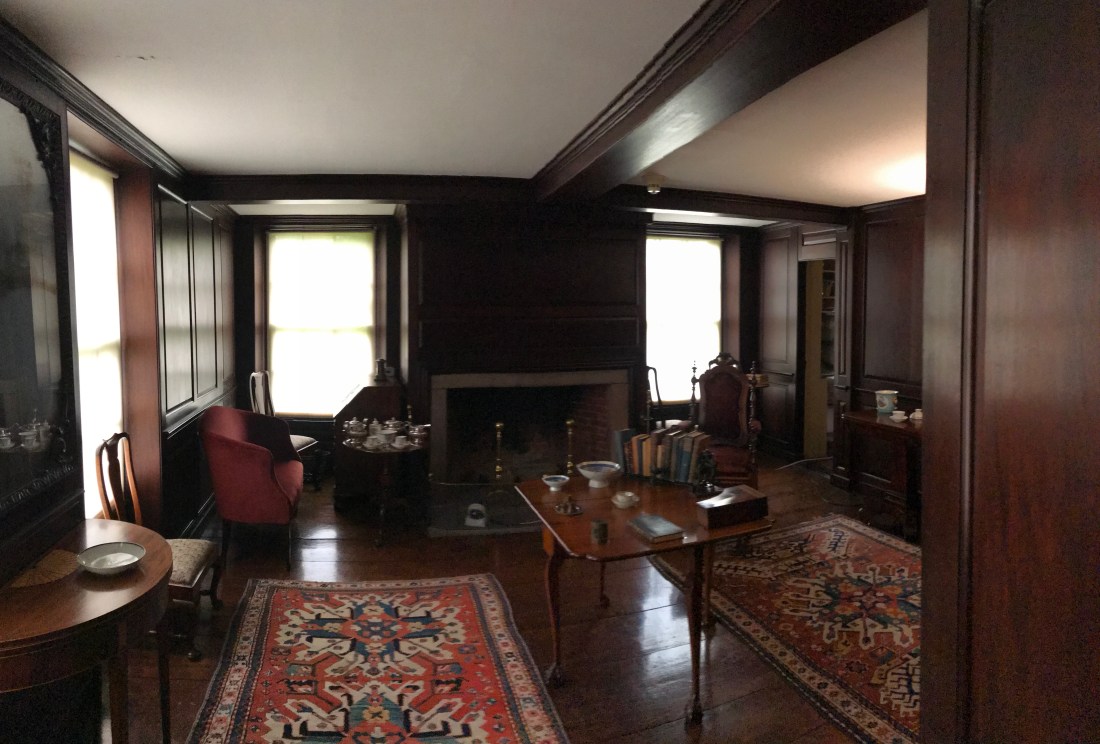
Much of the house here is bare however, and has had many owners after the Adams family lived here. As such, no original belongings of the Adams exist in either house.

IMG_6378.jpg

The harpsicord in the corner is also not original to the house. John Adam’s father, a deacon, would not benefit from an item that would be considered frivious.

IMG_1786.jpg

Upstairs, which is of course inaccessible.

IMG_1782.jpg

Of course, that isn’t to say that none of these items are period artifacts. Most of them were indeed used back in the day, just not by the Adams family.

IMG_6385.jpg

Just a few yards away was the birthplace of John Quincy Adams, and the home of John and Abigail Adams for much of the time around the Revolution.

IMG_6391.jpg

Yet another furnace. There seems to be a fireplace in every room visible, likely to add more heat. Also, lower ceilings allow for heat to stay down closer to the ground.

IMG_6389.jpg

IMG_6390.jpg

This little doohicky here is fascinating.. It’s an Eel Spear, and it was used to hunt eels, which were considered a delicacy back then (What does eel even taste like? Not sure I want to try that…).

IMG_1798.jpg

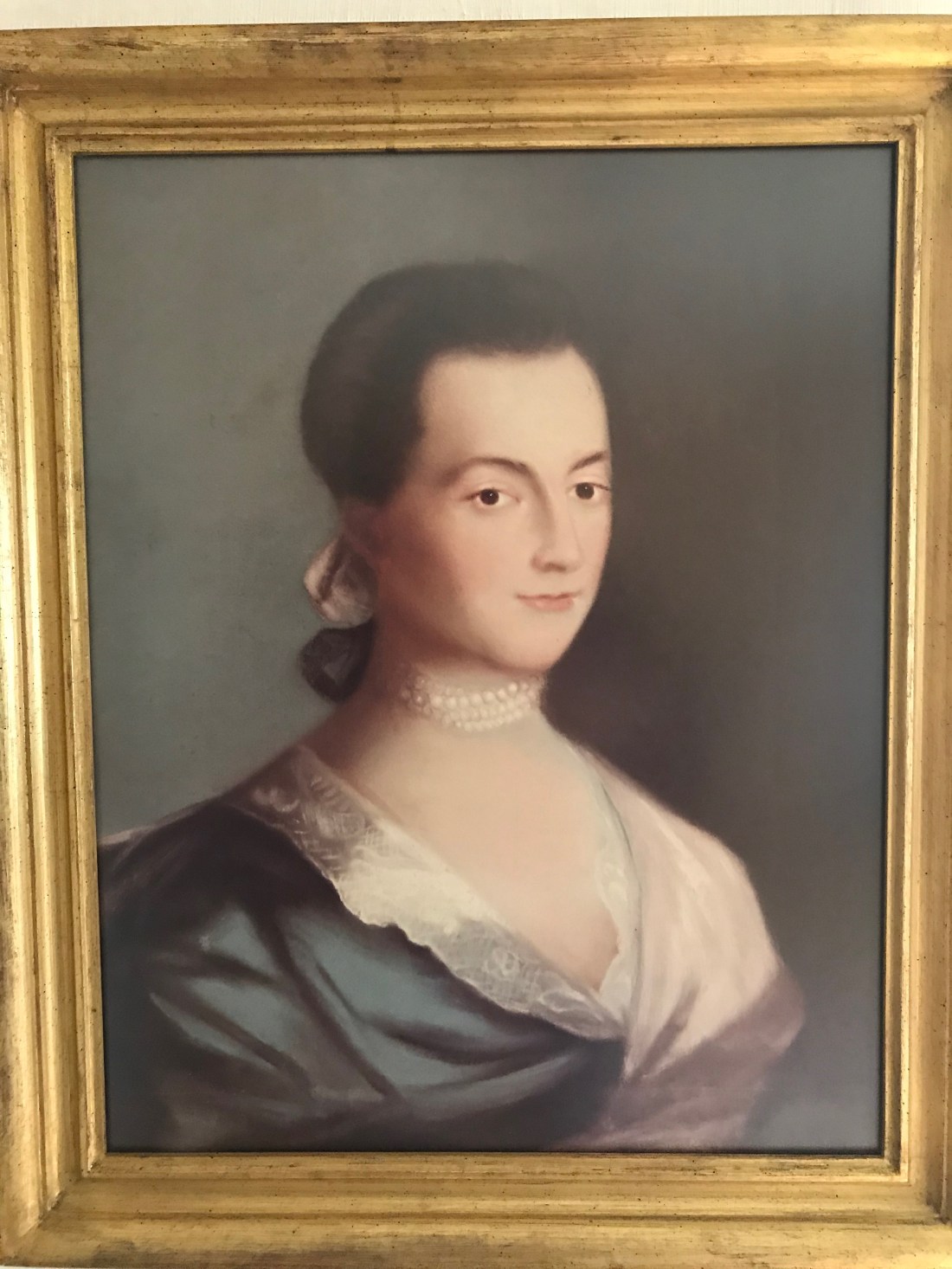
A picture of Abigail Adams. John and Abigail Adams considered each other to be best friends, and they were true soulmates for their 54 years of marriage. Their letters of long-distance correspondance are still well-known to this day.

IMG_6394.jpg

The study of John Adams (when he wasn’t away for long periods of time), with a copy of the Massachusetts Commonwealth Constitution, which remains the oldest of it’s kind in the world. John Adams wrote it, and it served as an model for the U.S. Constitution, when it was structured.

IMG_6396.jpg

All of the Adams family members were passionate readers, and both John and John Quincy Adams practiced to be lawyers. John Quincy Adams could himself recite 6 or 7 different languages, and write in 12.


We hopped on the shuttle once again, and then travelled to “Peacefield”, the primary home of the Adams family for four generations!

IMG_1844.jpg

It’s a very gorgeous house, and was built in 1731, and bought by the Adams family in 1787. The Adams Family would to own it well into the 1940’s, until it was handed over to the United States.

IMG_1850.jpg

Led by our tourguide, we began to explore the home of our 2nd and 6th President.

IMG_6400.jpg

A side parlor room, which was likely used by John Adams’s descendents.

IMG_6401.jpg

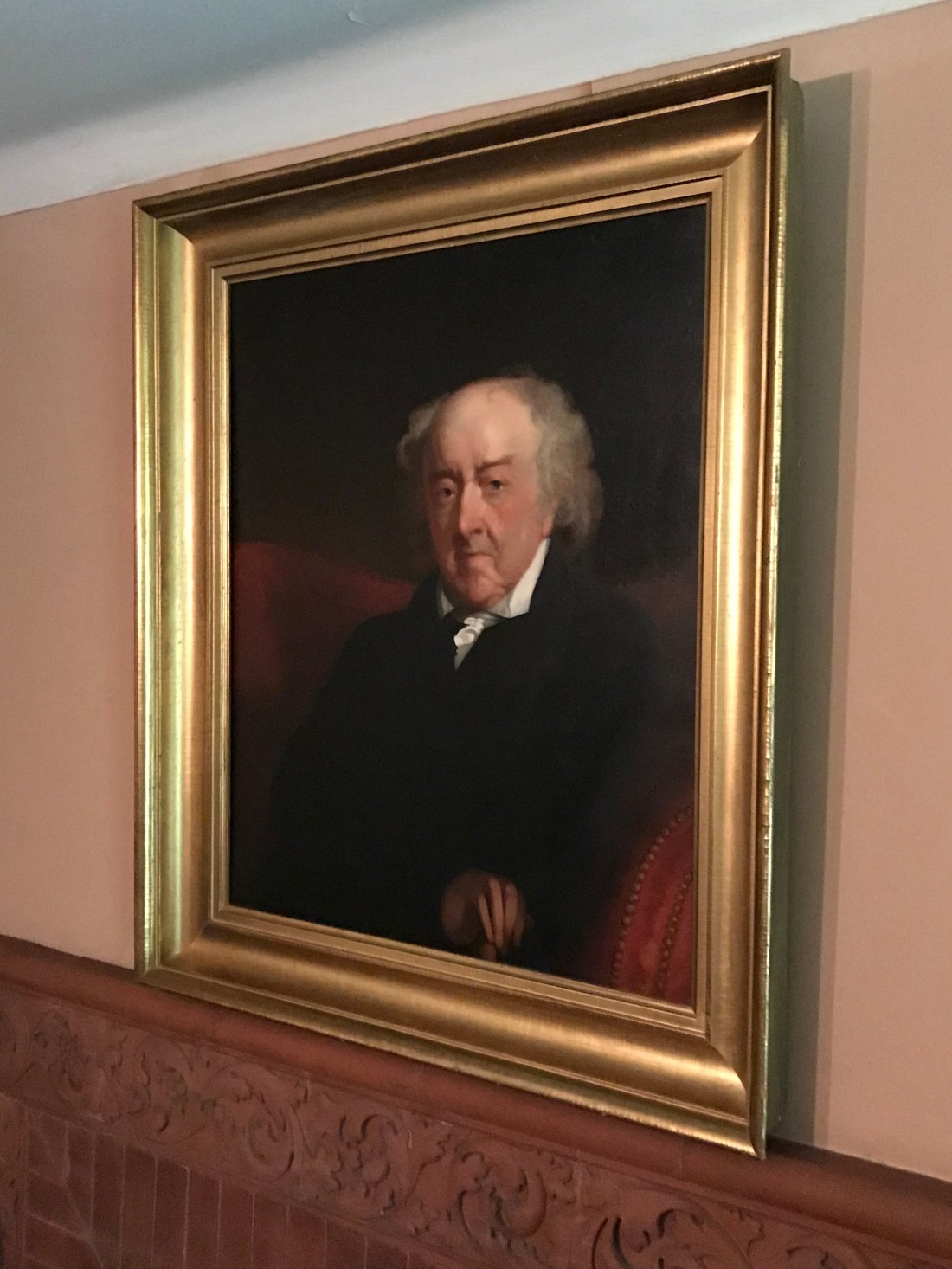
A picture of an elder John Adams when he was 88 years of age. When he died at the age of 90, he would long remain the longest-lived President in U.S. History.

IMG_6402.jpg

The dining hall of the home. John Adams preferred to purchase second-hand furniture, many of which can be seen here. Unlike the birthplaces, Peacefield contains many more artifacts of the Adams, across the four generations.

IMG_1817.jpg

A picture of George Washington, who John Adams greatly admired (he was Washington’s Vice President, and the first serving in that office). Washington himself stated that this portrait seemed to be the most accurate depiction of himself than any others.

IMG_1819.jpg

John Quincy Adams, who was a literary genius, wrote the Monroe Doctrine that warned Europe not to impede affairs in the Americas. He served distinguished careers as Secretary of State and Minister to England (John Adams, John Quincy Adams, and Charles Francis Adams would all serve as U.S. Ambassadors to England, from Grandfather, to son and grandson).

As a side note, he loved to skinny-dip in the Potomic River during his Presidency, in an effort to keep his exercise up.

IMG_6404.jpg

The main parlor, an addition to the original house filled with many more Adams furniture. Though prominent, the Adams family was not the wealthiest, and sometimes suffered financial difficulty.

Abigail Adams, wanting to add this onto the house while John Adams was away, tried to get builders to raise the roof to make the roof taller. Given the risks of the possibility of unevenness in the roof, the builders weren’t able to do that. So she smartly remarked: “If you cannot raise the roof, lower the floor!” And they did just that. That’s why it’s a bit taller than the others.

IMG_6416.jpg

The entrance hallway, with the stairs that go up further into the mansion.

IMG_1822.jpg

And up we go!

IMG_6406.jpg

This study was perhaps a sanctuary for the patriarchs of the Adams family, especially John Adams, who would even sleep in a cot here in his older years. He would die here on July 4th, 1826, the 50th Anniversary of the signing of the Declaration of Independence…

His last words were: “Thomas Jefferson still Survives”. His dear friend, he had hoped, would have his ideals followed by the American people. However, little did he know that Thomas Jefferson had passed away hundreds of miles away in Virgina, mere hours before Adams did. Perhaps it is a poetic thought that both men passed on the exact same landmark occasion…

IMG_1828.jpg

IMG_1825.jpg

John Adams would write to Jefferson from this desk in the corner, and their long correspondance healed the wounds of the bitter Election of 1800, and renewed their friendship. Many of the over 50 letters that they wrote to another still survive today, giving testament to their faith in bipartisanship.

IMG_6409.jpg

A guest room, which, back in the day was the only way to get from one half of the house to the other on the second floor. John Quincy Adams, before installing a separate hallway, would often have to walk through the often occupied room to get to his study.

IMG_1833.jpg

Until moving to his study, John Adams slept here with his wife Abigail in the master bedroom, until Abigail died in 1818. Her death shook John Adams to his core, and he truly felt lonesome in those last 12 years of his life.

IMG_6412.jpgIMG_6413.jpg

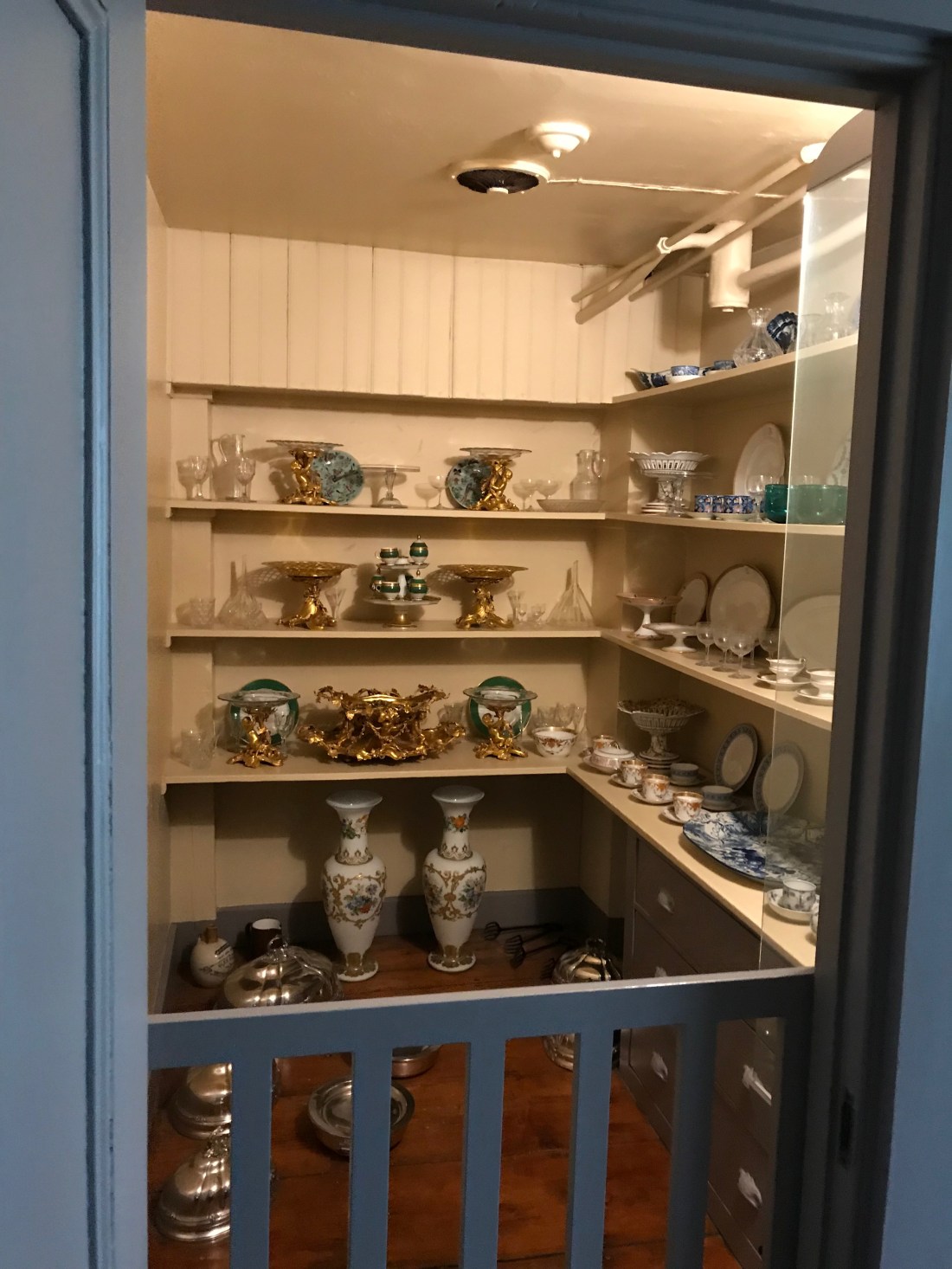
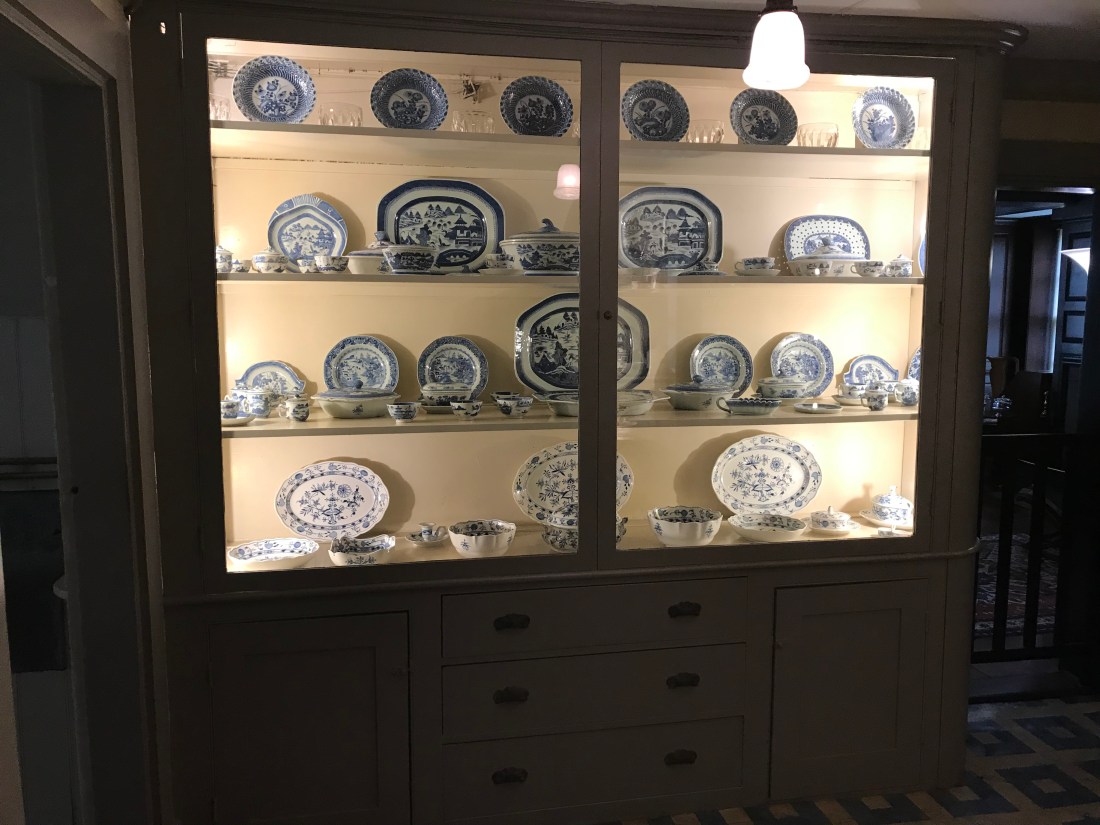
Treasure-troves of Adams china and dinner displays. I imagine that there is a fascinating story behind each of them.

IMG_1834.jpg

This hallway used to be empty, but was eventually filled by John Adams’s great-grandson, Henry Adams. It was upon his death and his wife’s that the house was bestowed to the public.

IMG_1836.jpg

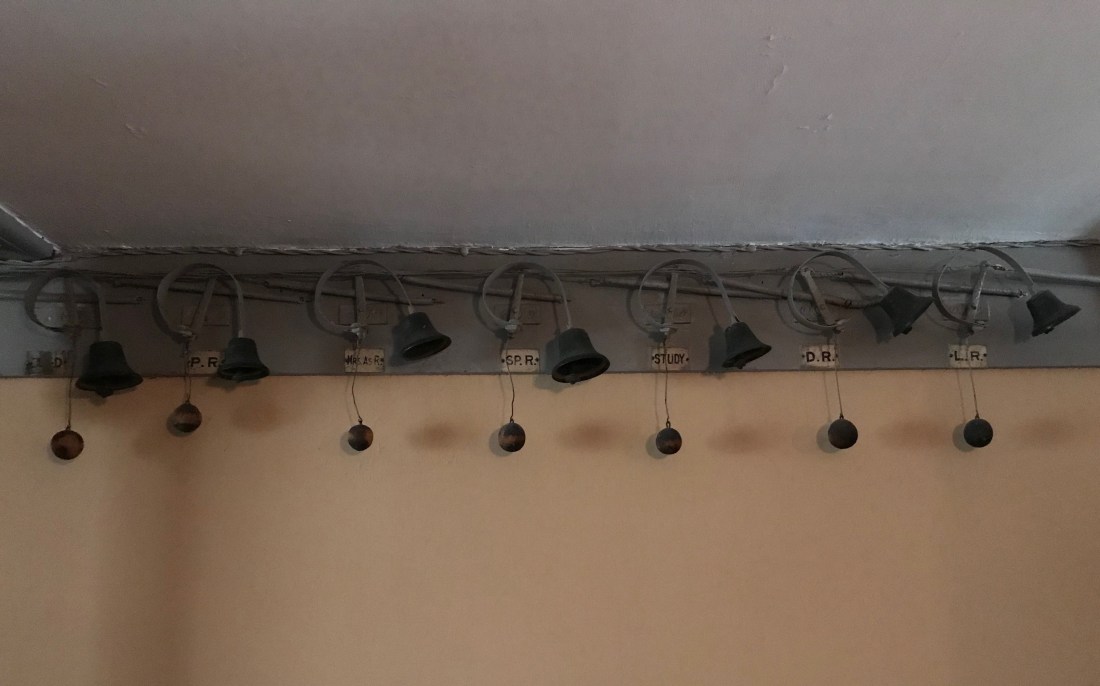
A bell-system similar to that of Martin Van Buren’s home in Kinderhook. The servants who tended to the family could rely on the pitch of the bells to determine where next to tend (this was necessary for those who were illiterate).

IMG_6414.jpg

A bust of John Adams. Both he and his son were short, pudgy and somewhat bitter men, and often were not well-liked at times.IMG_6415.jpg

The last parting sign of the house was located above the door… an upside horseshoe. Horseshues are often associated with good-luck, and were typically faced up to resemble the keeping of good luck. This is upside down however, because Abigail Adams believed that their family had been blessed so much, and she wanted anyone who walked under it to visit Peacefield to gain a bit of the Adams family luck. It’s little stories like this that somewhat gives the most fascination.

IMG_6419.jpg

The outside gardens of Peacefield were very precious, and filled with grass lawns, budding roses, and a large tree in the distance that was planted by John Quincy Adams himself, who was an amateur botanist.

IMG_6418.jpg

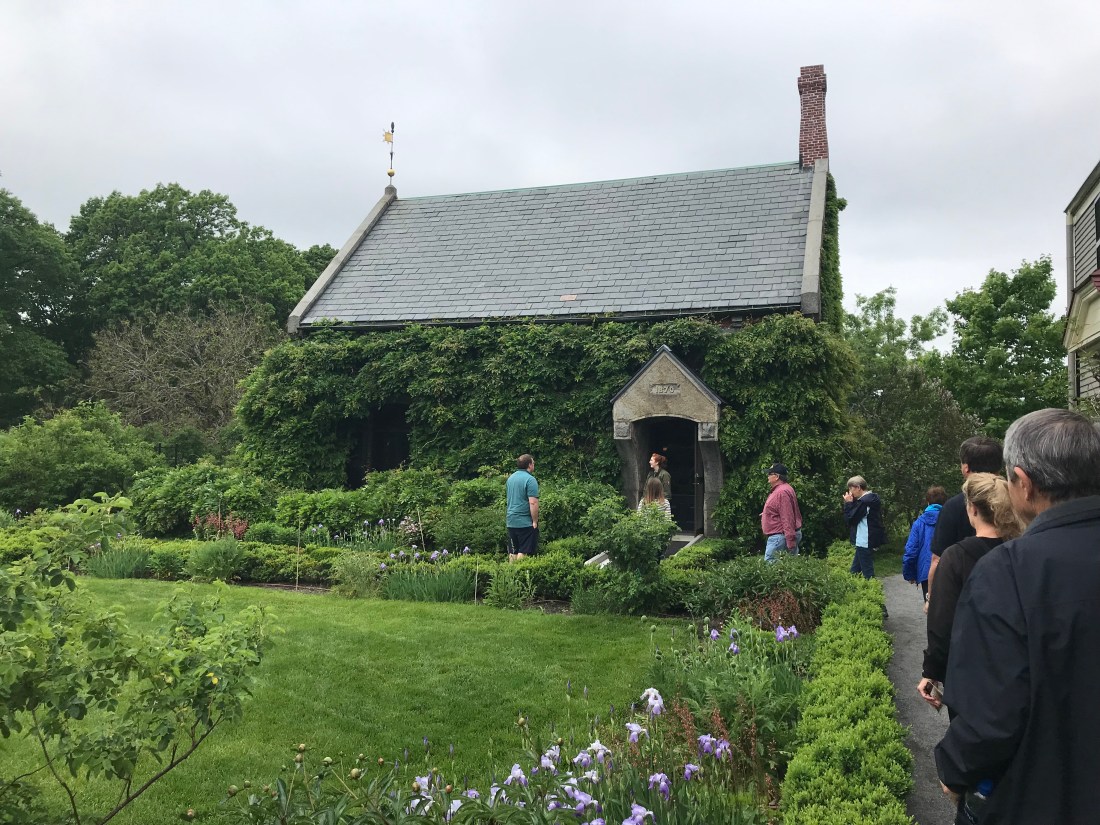
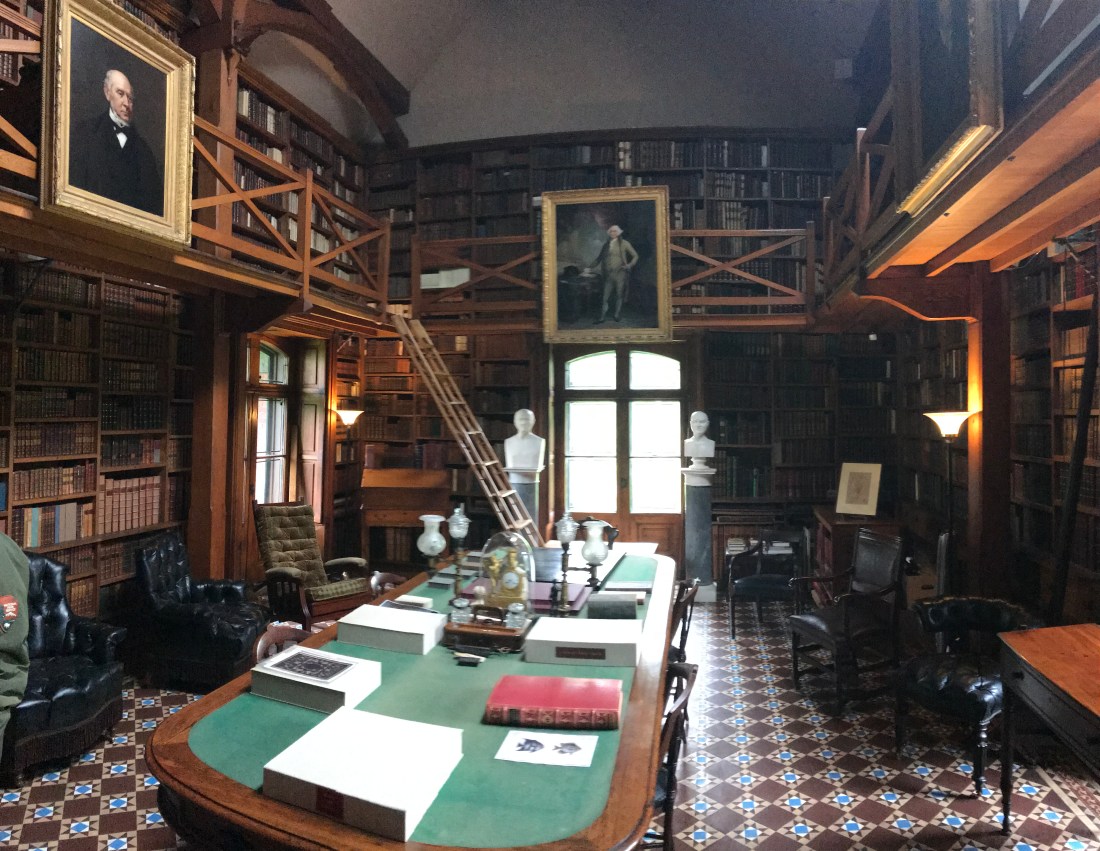
The Stone Library was built by Charles Francis Adams, John Quincy Adam’s son, for personal use to house his massive family collection of books and manuscripts. It was separate from the rest of the house in case of a fire. Neither of the Adams Presidents used this Library, as it was constructed after both their deaths.

IMG_1846.jpg

12,000 books lined the bookshelves, many of which were of John Quincy Adams’ private collection. These books covered anything from modern-history to lingual scripts, almanacs, and encyclopedias. Some of these books were also in other languages such as hebrew and french.

IMG_6422.jpg

Easily the most impressive part of the tour, and a bookworm’s dream come true.


Finishing our tour, we took the shuttle back to the visitor center, and headed towards that very special church that contained their final resting places.


United First Parish Church

IMG_6426.jpg

Hancock-Adams Common was nicely organized, and a very beautiful sight to walk, even if it was a bit small.

IMG_6427.jpg

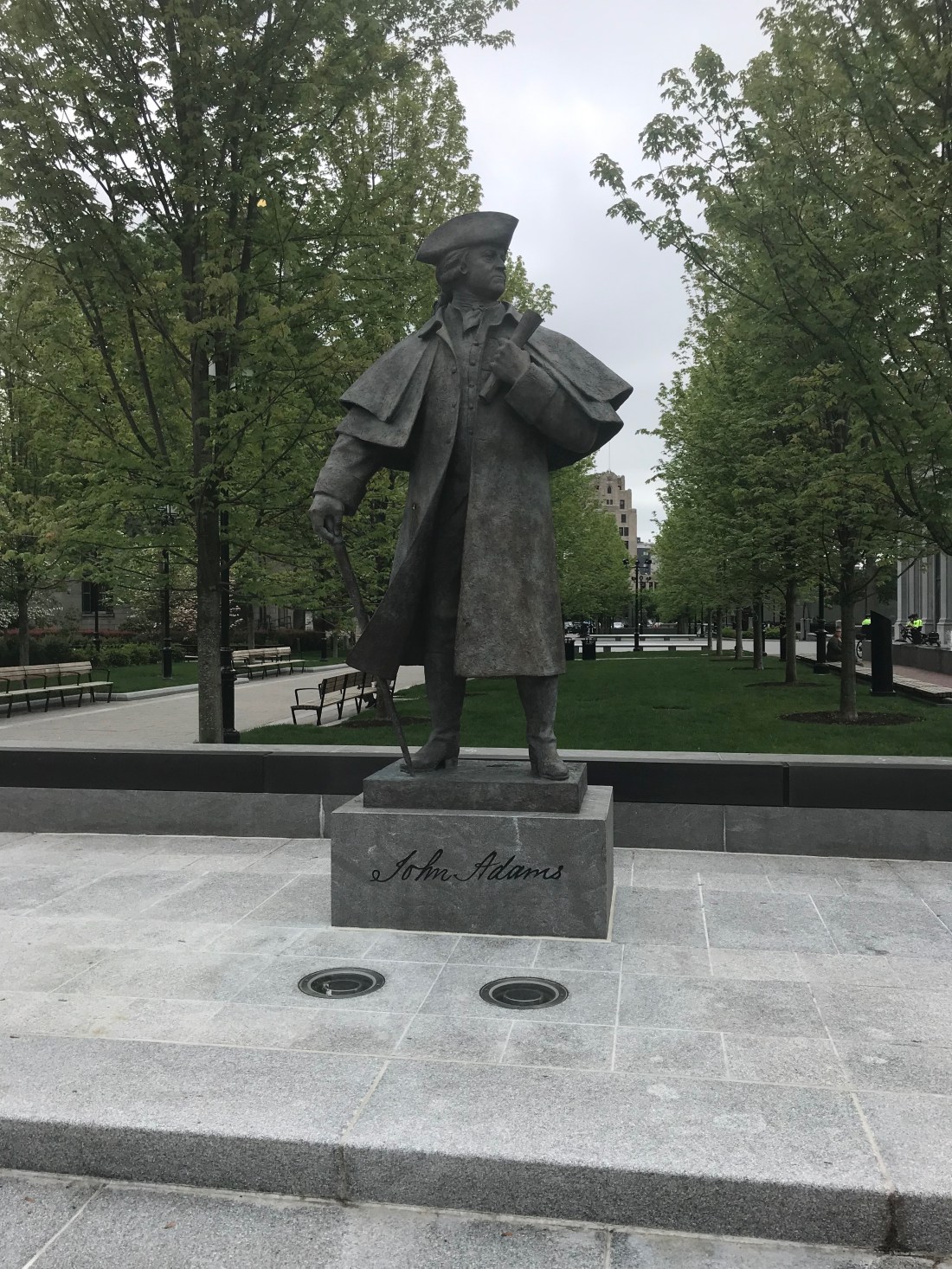
A statue of John Adams, one-half of the namesake of the walk.

IMG_6452.jpg

And of course, the other half of the namesake, Patriot John Hancock. Hancock had much of his roots in here, though he is buried in downtown Boston.

IMG_6428.jpg

Hancock Cemetery, named for the father of Patriot John Hancock, Minister John Hancock Jr., was one of the oldest burial grounds in the entire Boston area, and contained gravesites that date as far back as the 17th Century.

IMG_6431.jpg

IMG_6430.jpg

This small niche served as the original burial place of the Adams family, before John and john Quincy Adams and their wives were moved to the church.

IMG_6433.jpg

The grave of Colonel John Quincy, who became the name for Quincy-town, and the namesake of John Quincy Adams.

IMG_1857.jpg

Looking towards the United First Parish Church from the cemetery.

IMG_6434.jpg

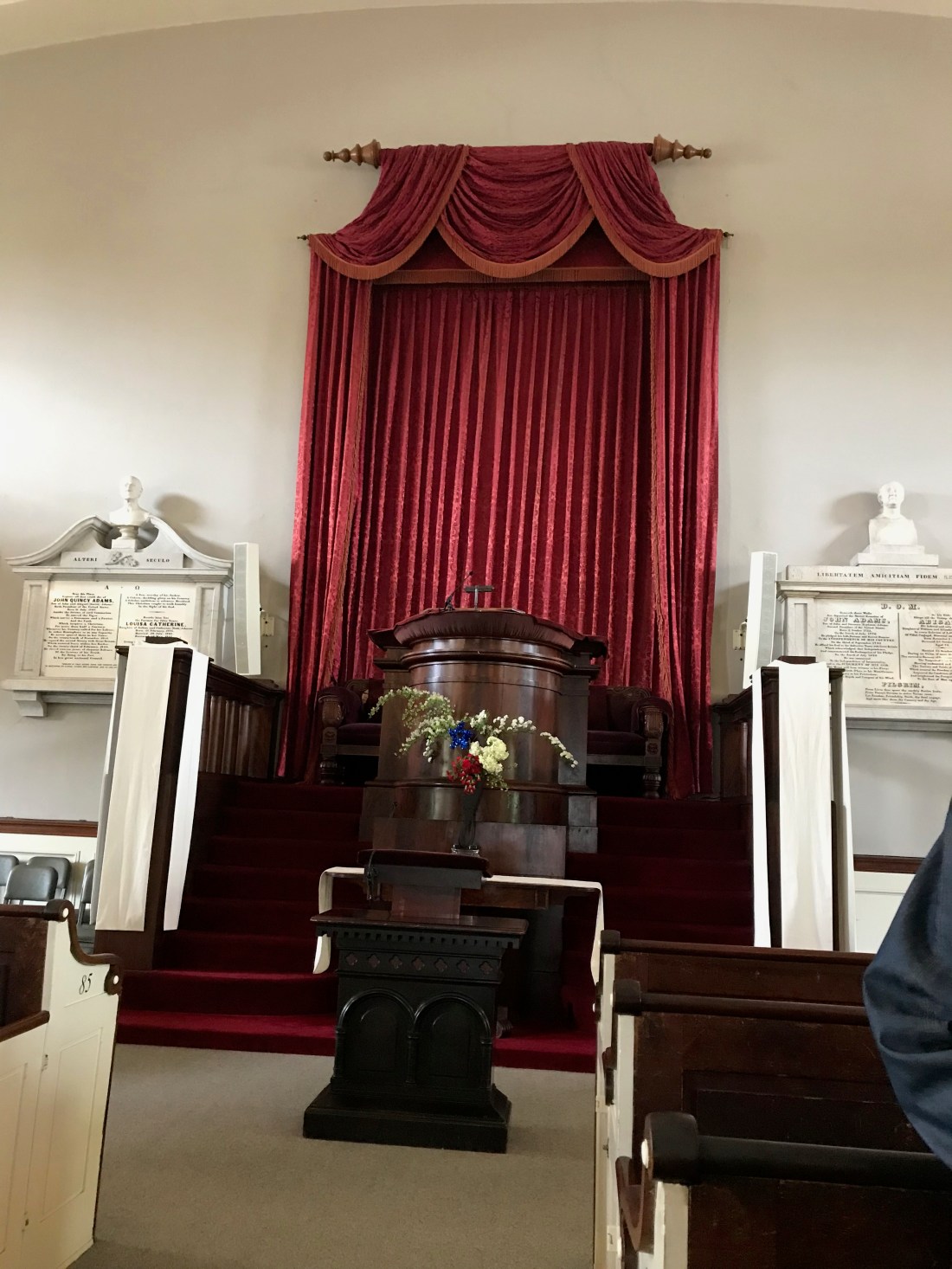
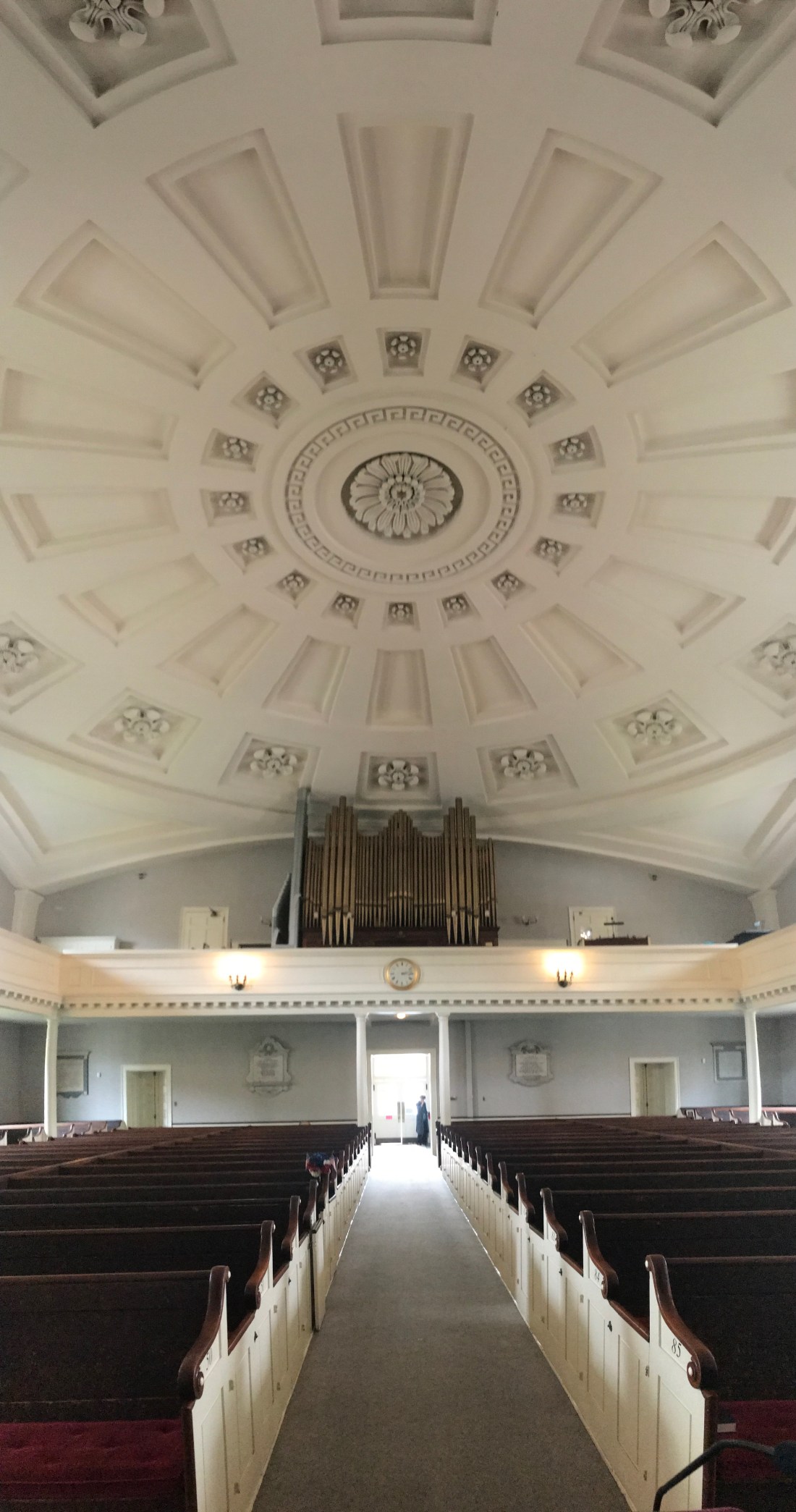
An inpressive structure, this “Stone Temple” was commissioned by John Quincy Adams to be a memorial and crypt to his late father. It is perhaps one of the more iconic structures in Quincy.

IMG_6435.jpg

Only three places in the U.S. have the status of hosting two different Presidential Gravesites. This is one of them, along with Arlington National Cemetery near D.C., and Hollywood Cemetery in Richmond.

IMG_1902.jpg

The inside of the building itself was impressive to look at. The town knew what it was doing during the construction.

We were accompanied in the building by a tourguide at all times, who was happy to provide more insight into the building of the place.

IMG_6439.jpg

John Quincy Adams became a member of this church, and would worship here whenever he stayed in Quincy for the summer. It would become his tomb after his death in Washington D.C. in 1848. He has the only distinction of being a former U.S. President who afterwards served in the House of Representatives.

IMG_1864.jpg

IMG_6441.jpg

So much detail…

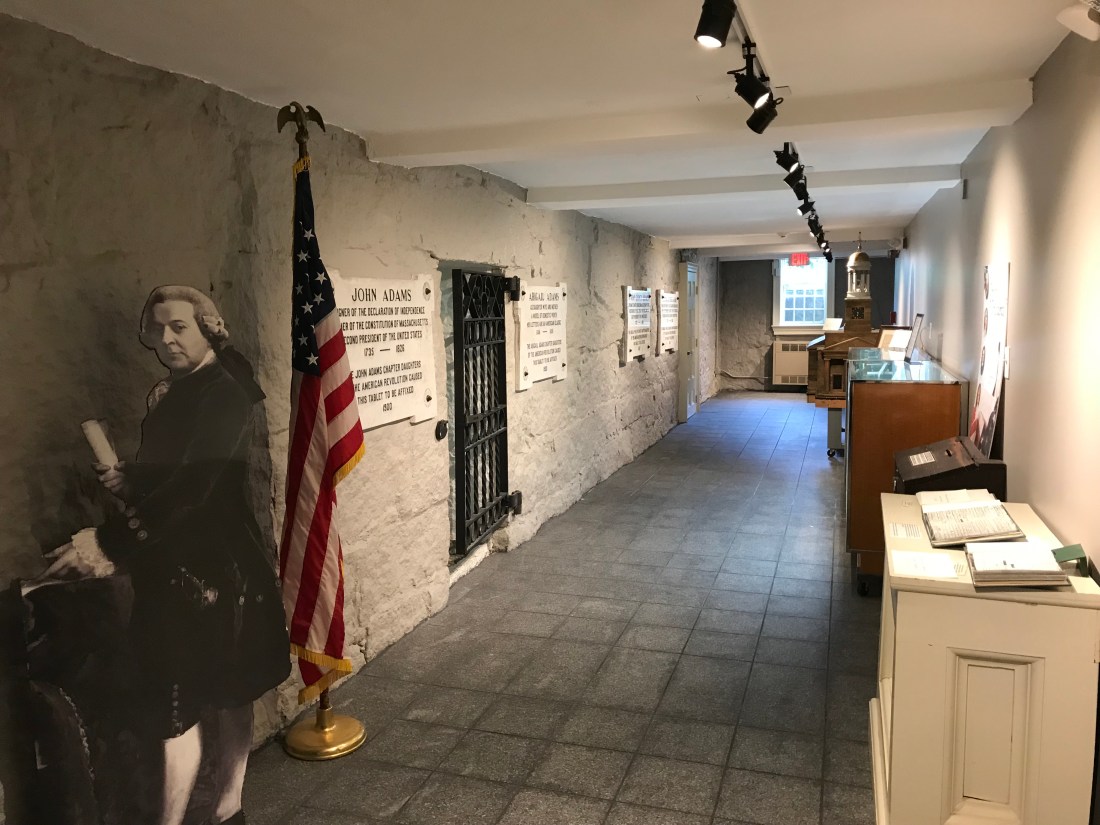
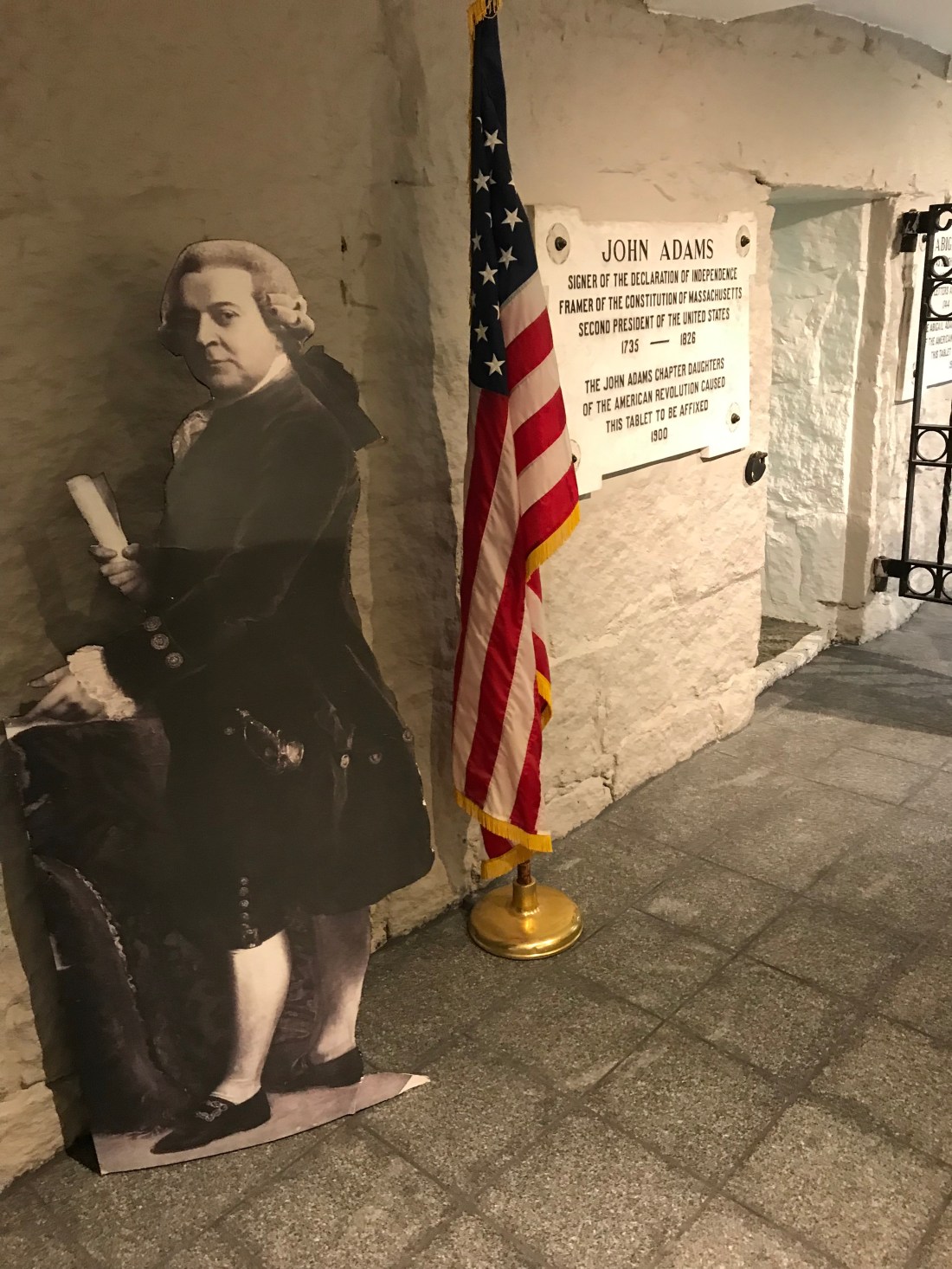
A short trip down the nearby flight of stairs took us to the basement level… and the crypts.

IMG_6444.jpg

IMG_1870.jpg

No other Presidents are buried so close together… this is special.

IMG_1895.jpgIMG_1896.jpg

IMG_1900.jpg

IMG_1901.jpg

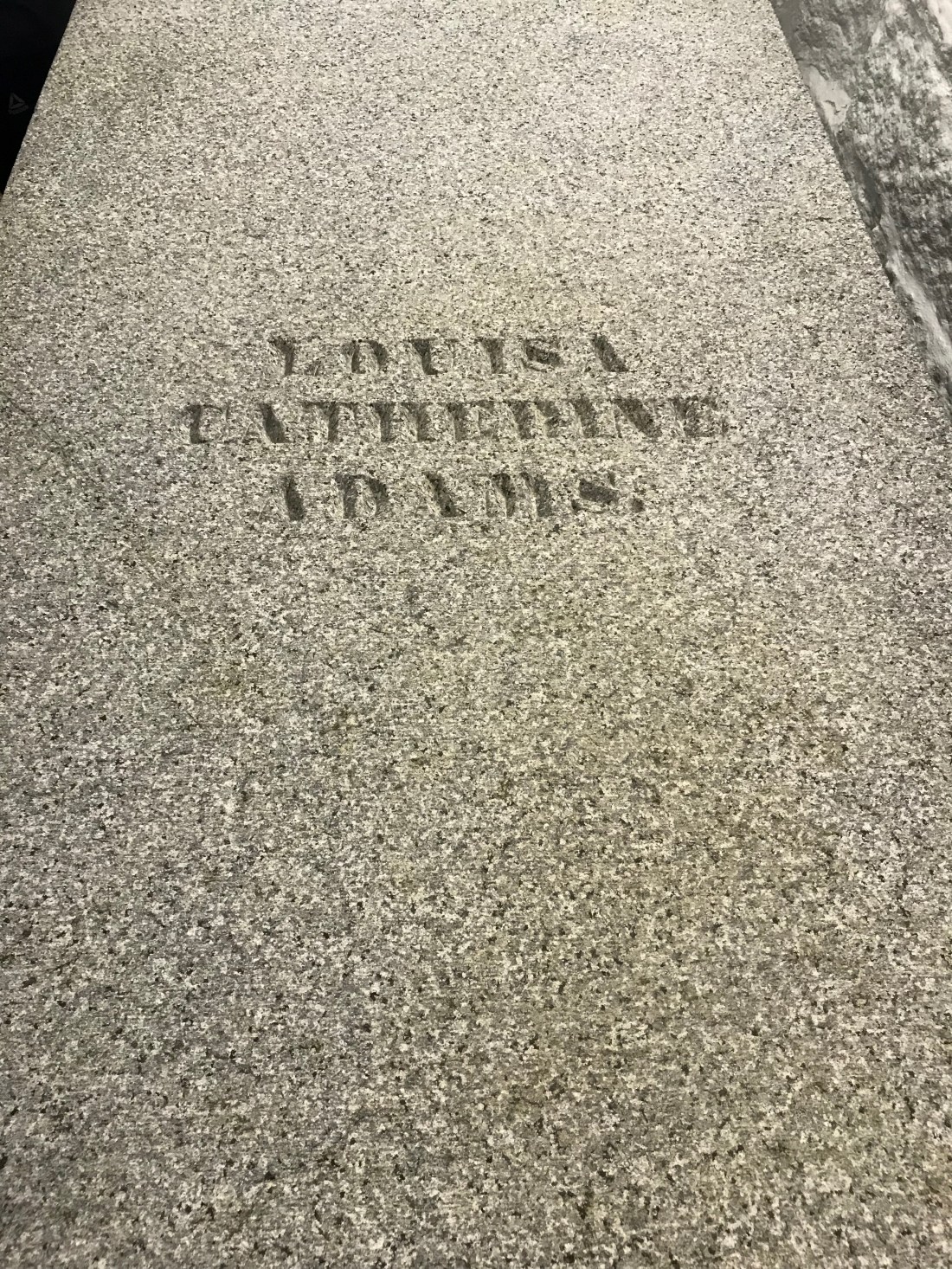
Unlike her husband John Quincy Adams, Louisa Adams was beloved by almost all, and her time as First Lady/White House hostess earned her much respect and praise from fellow socialites.

She is also one of only two First-Ladies not to have been born in the U.S. She was born in London, while current First Lady Melania Trump was born in Slovenia (then known as Yugoslavia).

IMG_1899.jpg

IMG_6450.jpg

The tombs of John Adams (left) and Abigail Adams (right), side by side…

At first, I was dismayed that we would not see the tomb of John Quincy Adams, since it was tucked away out of sight in the vault…

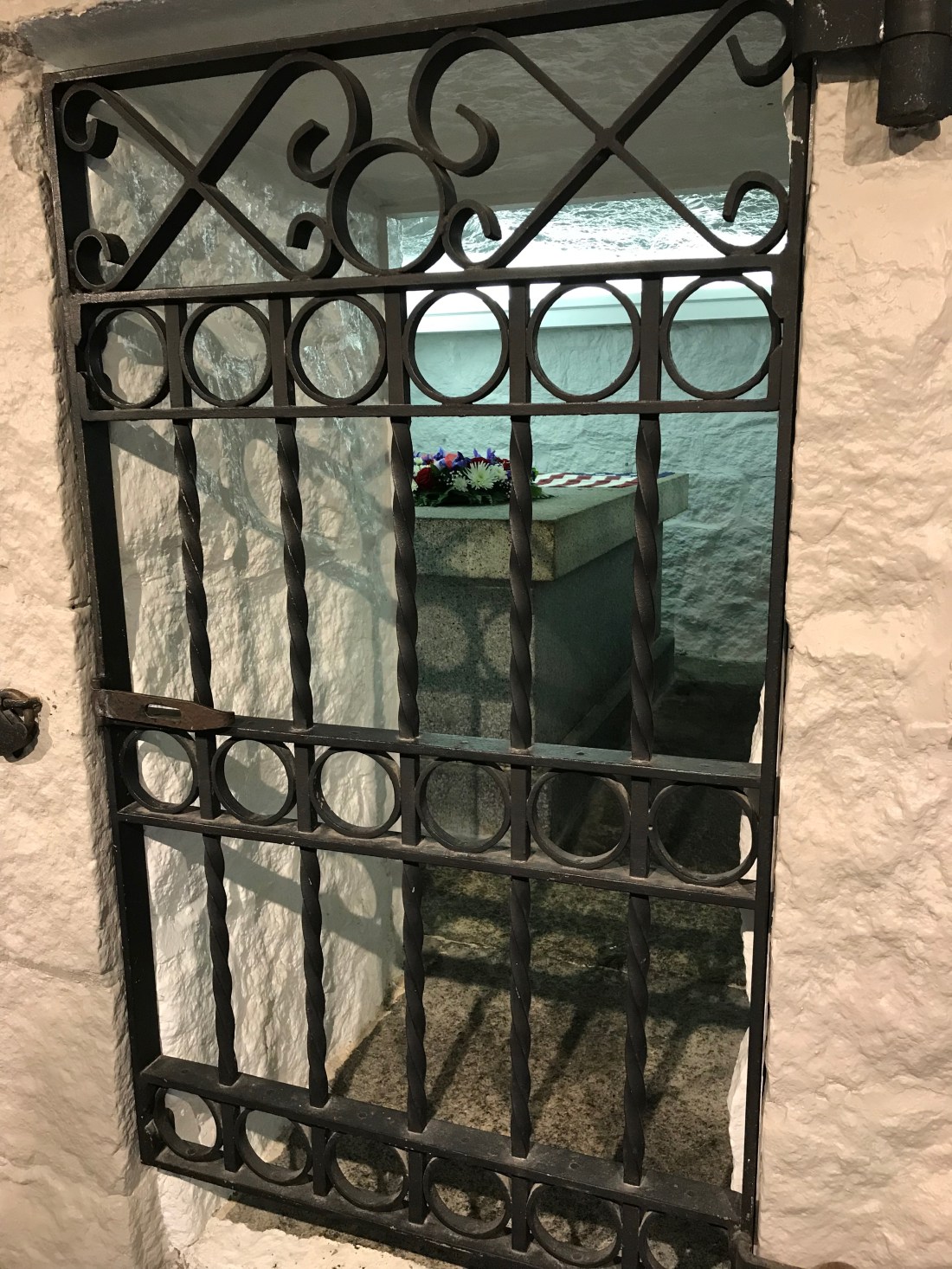
However, to our utter suprise, the tourguide unlocked the tomb door for us, and let us inside…

IMG_1871.jpg

Elated as we could be, we entered the crpyts…

IMG_6445.jpg

My god…

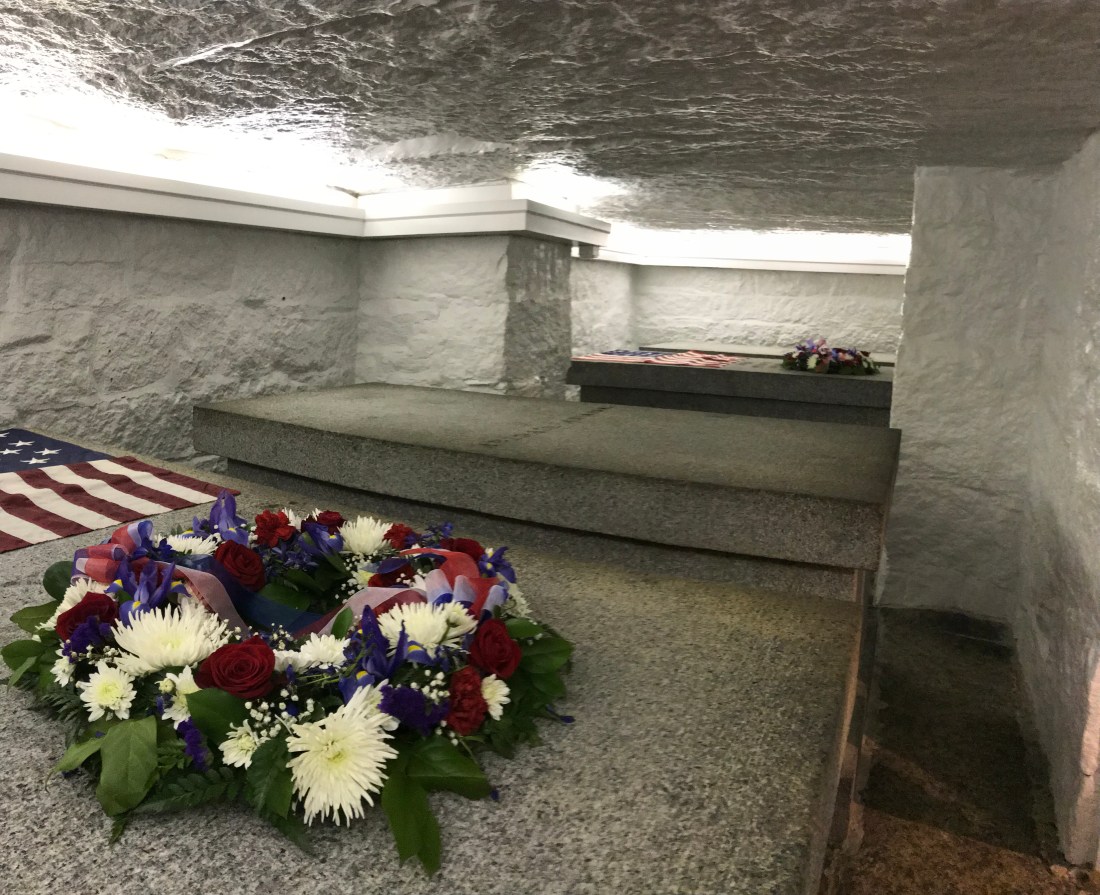
Four crypts. In order from closes to farthest of this perspective was John Adams, Abigail Adams, John Quincy Adams, and Louisa Adams… the crypt was well-lit and dry, and simply awe-inspiring to the fact that we could actually go inside!

IMG_1873.jpg

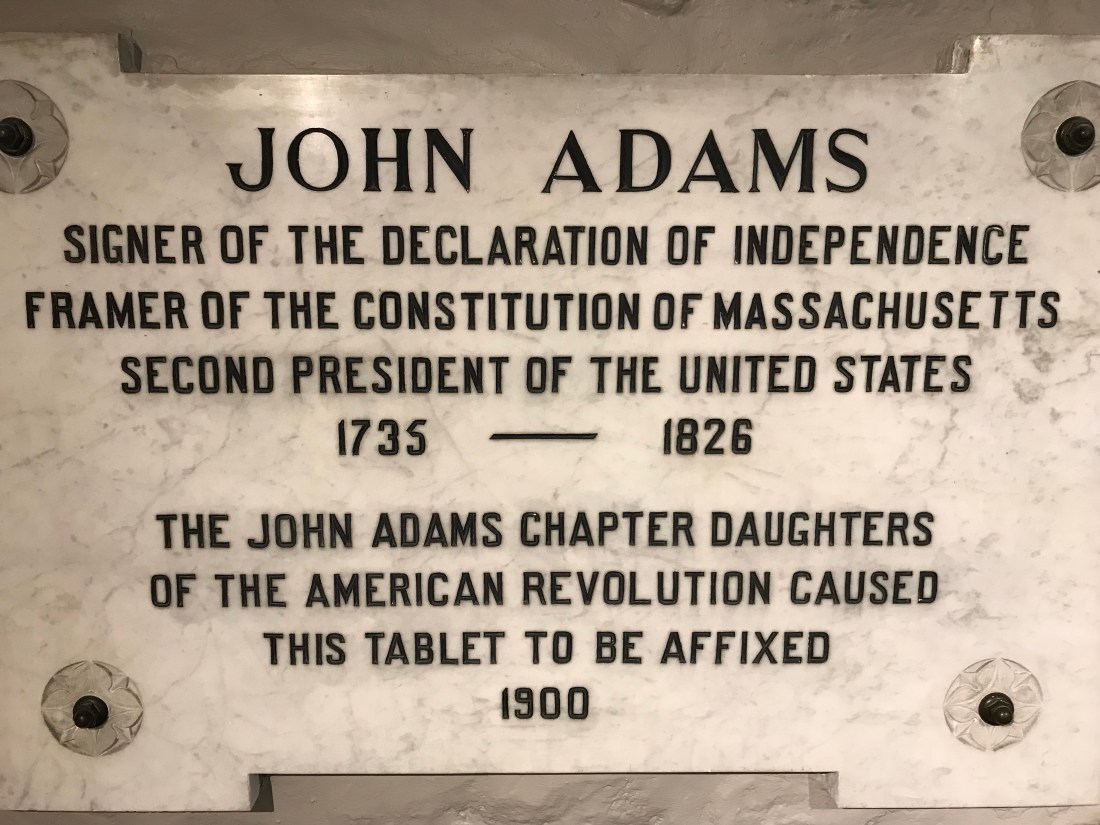
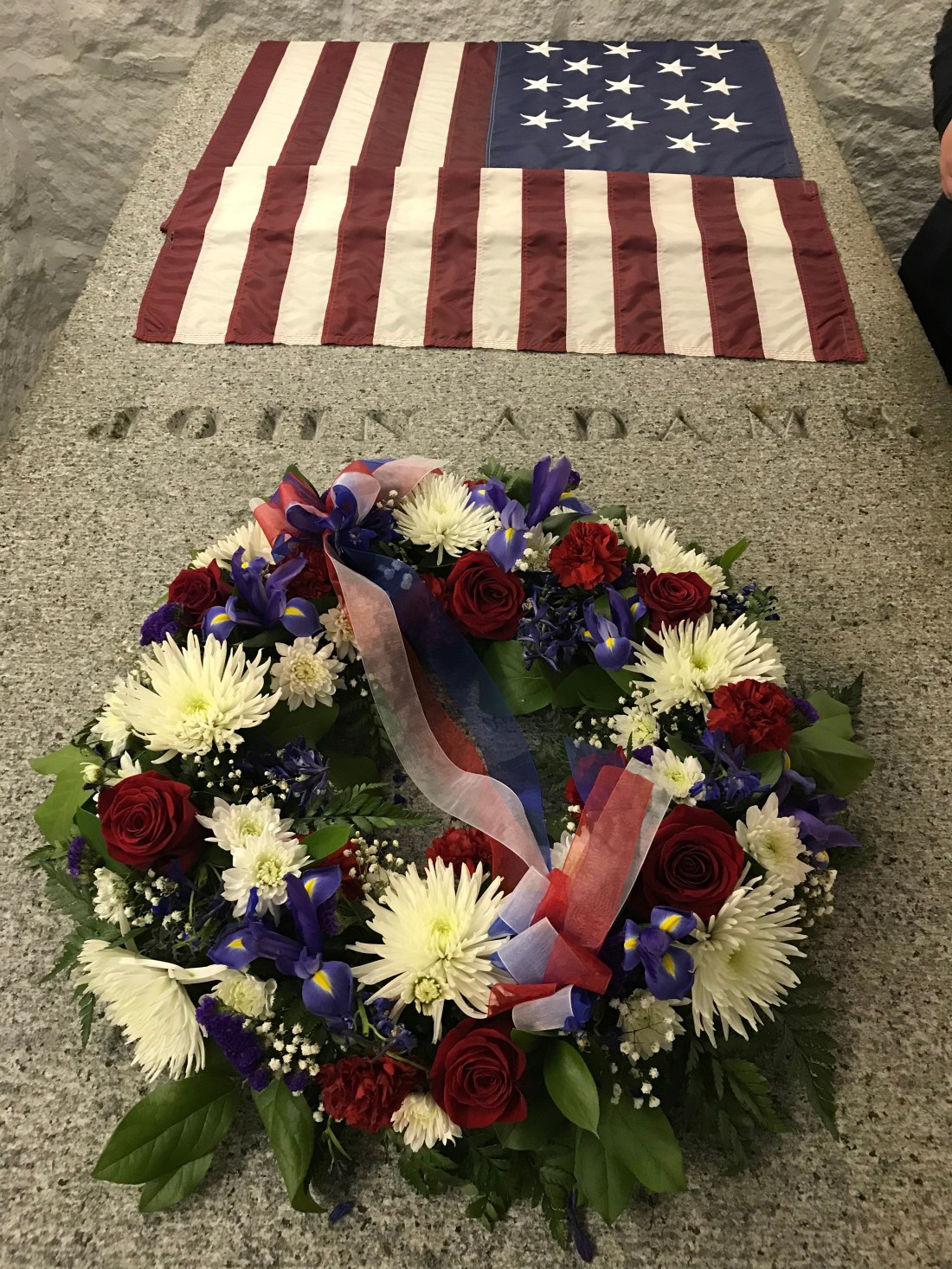
John Adams… one of the most esteemed founding fathers of our nation… right before our very eyes.

IMG_1875.jpg

The flag’s stars contains the number of states admitted to the Union at that time: 15.

IMG_1880.jpg

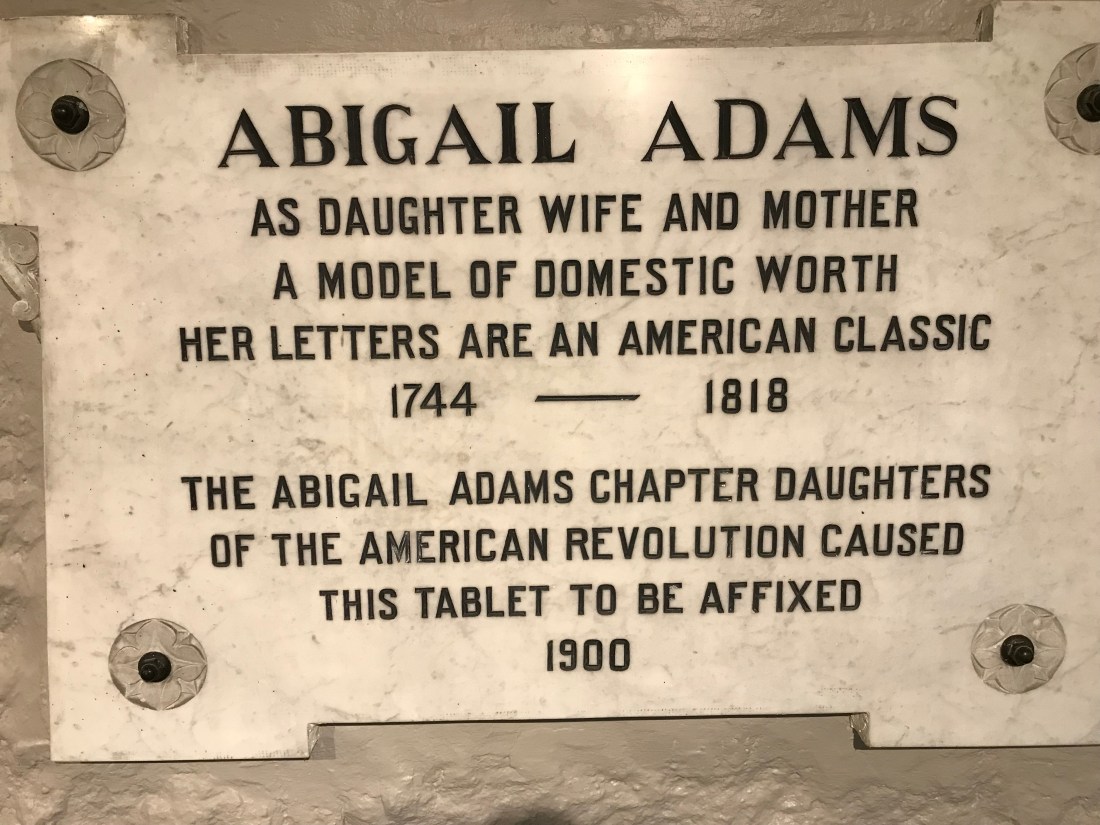
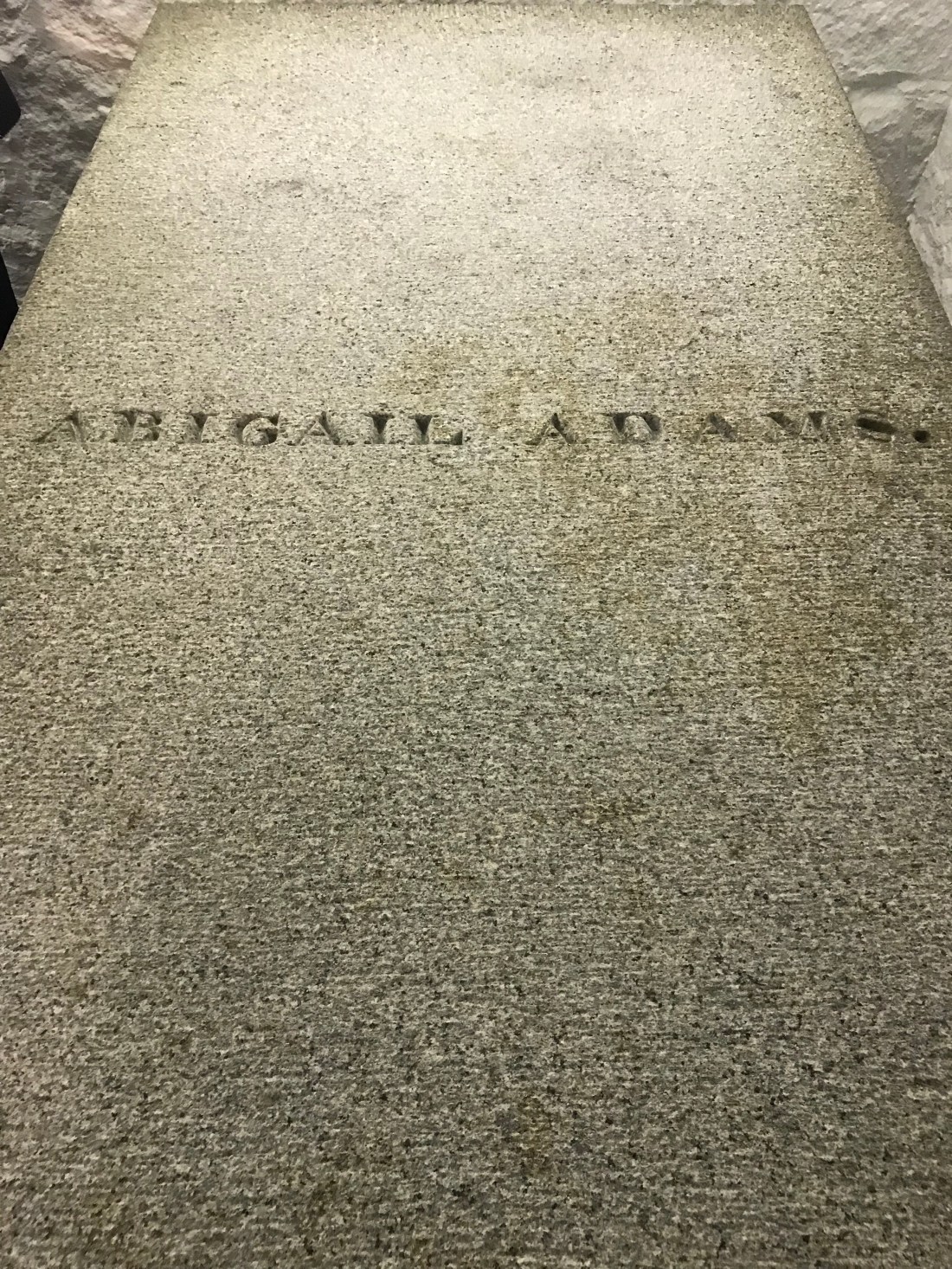
Abigail Adams’s simple inscription. All of these are relatively simple.

IMG_1885.jpg

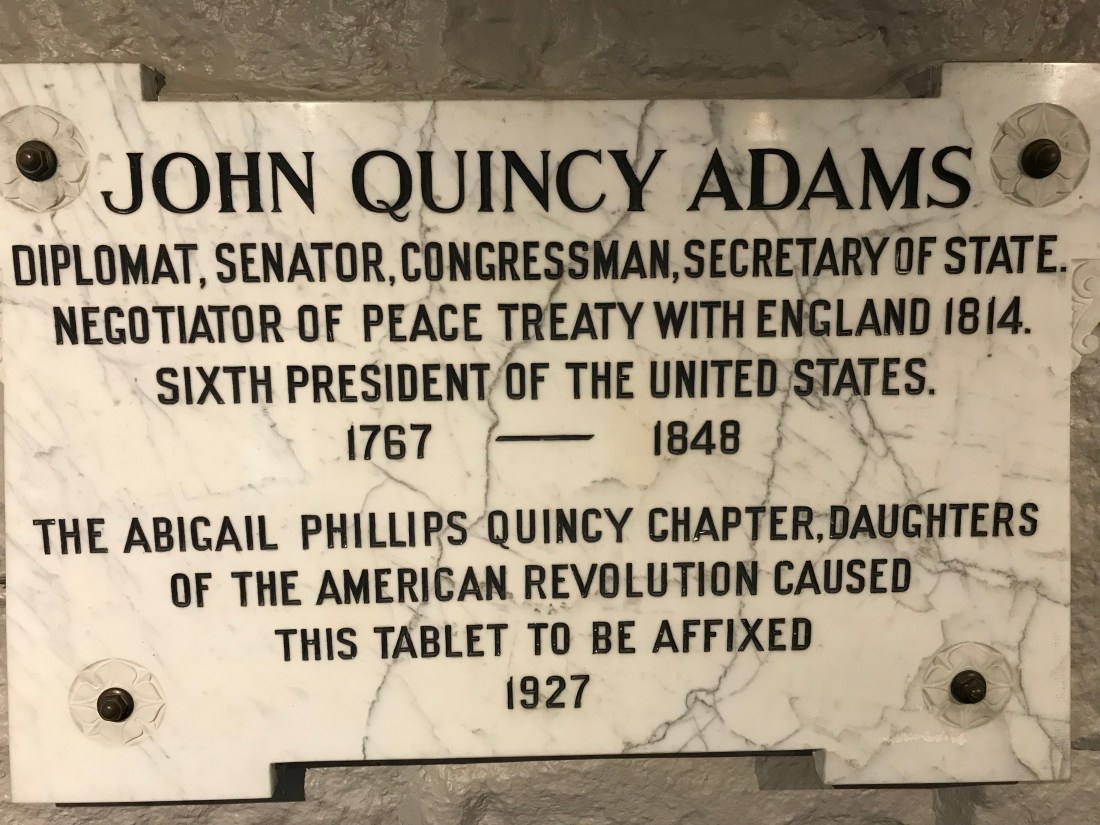
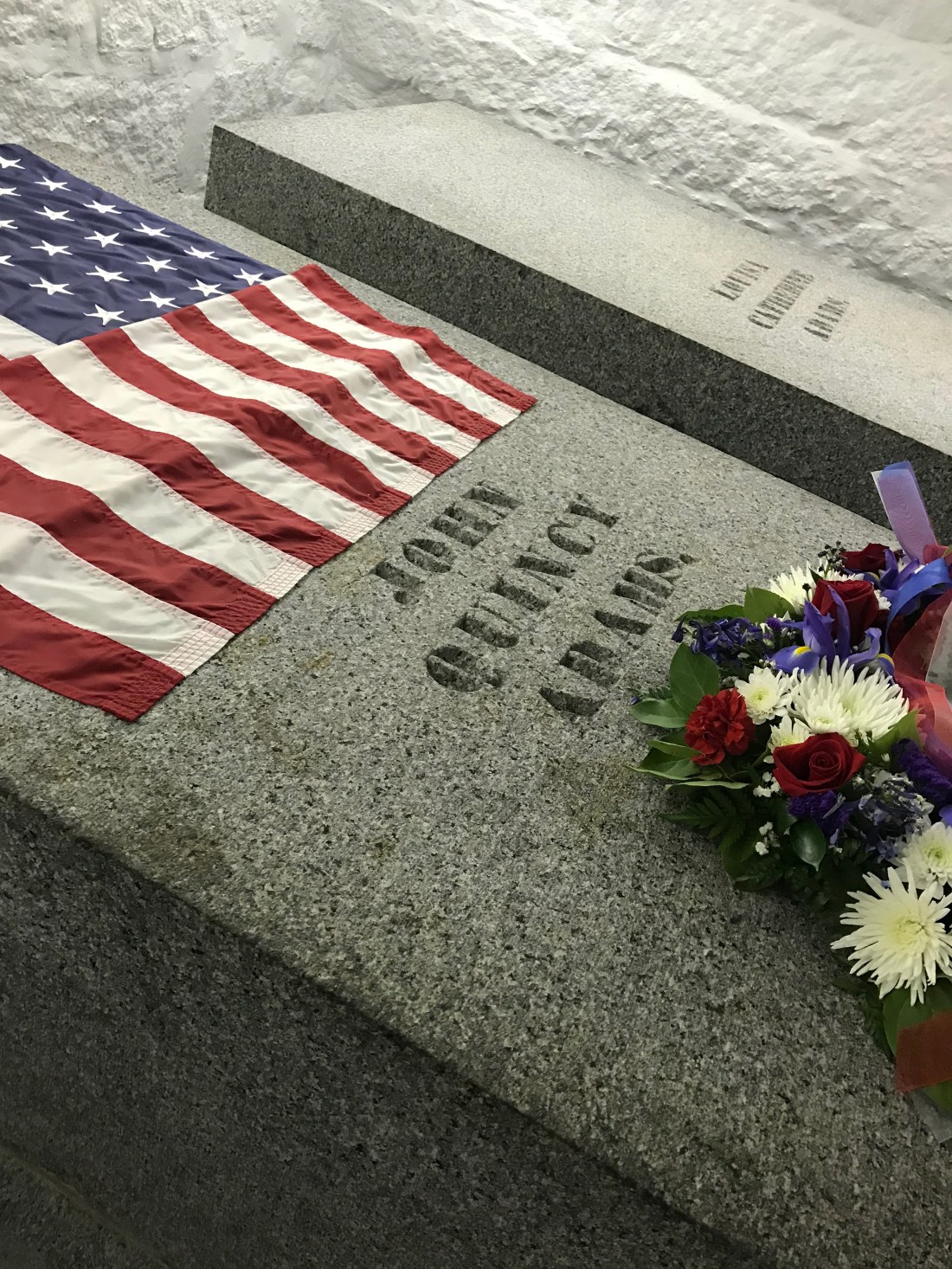
The tomb of John Quincy Adams, also very simple… I wonder how recent these wreaths were placed here?

IMG_6447.jpg

IMG_1890.jpg

After paying our respects, we left the tomb, which was resealed.

These last two Presidential Gravesites on the trip brings our final total to 35/39 Gravesites seen… only four more to go!

Without getting overly-exausting on the philosophy like I usually do, I tend to note a special theme for both our 2nd and 6th Presidents.

For John Adams, it was his undying will to sustain Liberty for the fledgling nation. He was willing to risk all that he held dear, and everything that he had to protect something bigger than himself… a hope for a new birth. His loyalty to the United States could not be understated in any possible way.

And for John Quincy Adams, a man who was bitterly defeated in many of his various occupations (including as President), he still continued to work his ardent beliefs through other passions of his, particuarly with his 16 year service in the U.S. House of Representatives. To him, if one door closed, all that he needed was for another one to open so he could continue on with his life.

Though nowhere perfect, both of our Presidents from the town of Quincy still resemble commitment to service in a way that could be emulated. And for that, I respect them very much for it.

download.jpg


As we get closer to Monday, the day that we return to our beloved home state of Texas, we will try to knock out whatever else we can in Boston. Though the weariness of the trip as a whole (and homesickness) is starting to kick in, we are more than ready to end it with a boom!

So! Next Post will feature our very active day following The Freedom Trail through the very heart of Boston, and through the epicenters of Patriotism during the American Revolution. Tomorrow (from the time of this post), we will be taking a bus ride throughout the towns of Lexington and Concord, exploring even more Colonial History! I’m sure that it wont disappoint.

Until we meet again! Farewell!

Day 18, A Quest’s End (Brookline and Boston, MA) (5/29/19)

Well, I didn’t plan this at all…

Day 18 happens to be the day that we explore all of the sites pertaining to John Fitzgerald Kennedy, one of our most beloved Presidents…

And today happened to be his 102nd birthday.

So, not only was visiting his birthplace in Brookline on the day of his birth a fitting tribute, but so too was visiting the 13th and final official Presidential Library of all, at the John F. Kennedy Presidential Library and Museum!

So, without further ado, let’s delve deeper into one of the most esteemed individuals in American History…


John F. Kennedy National Historic Site

The birthplace home is carefully preserved by the National Park Service, and thus, on normal days, is open to visitors in certain periods of time.

IMG_6242.jpg

At first, we were slightly worried. It looked like a special event was going on…

IMG_6266.jpg

IMG_6265.jpg

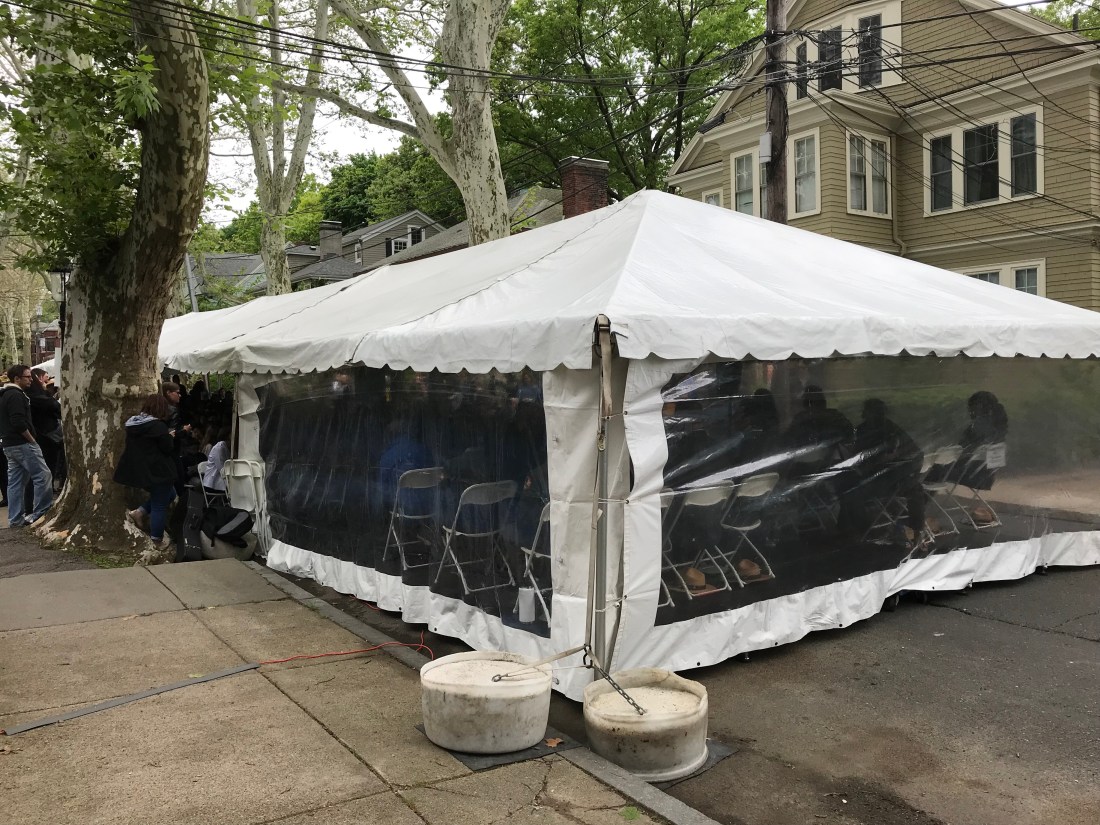
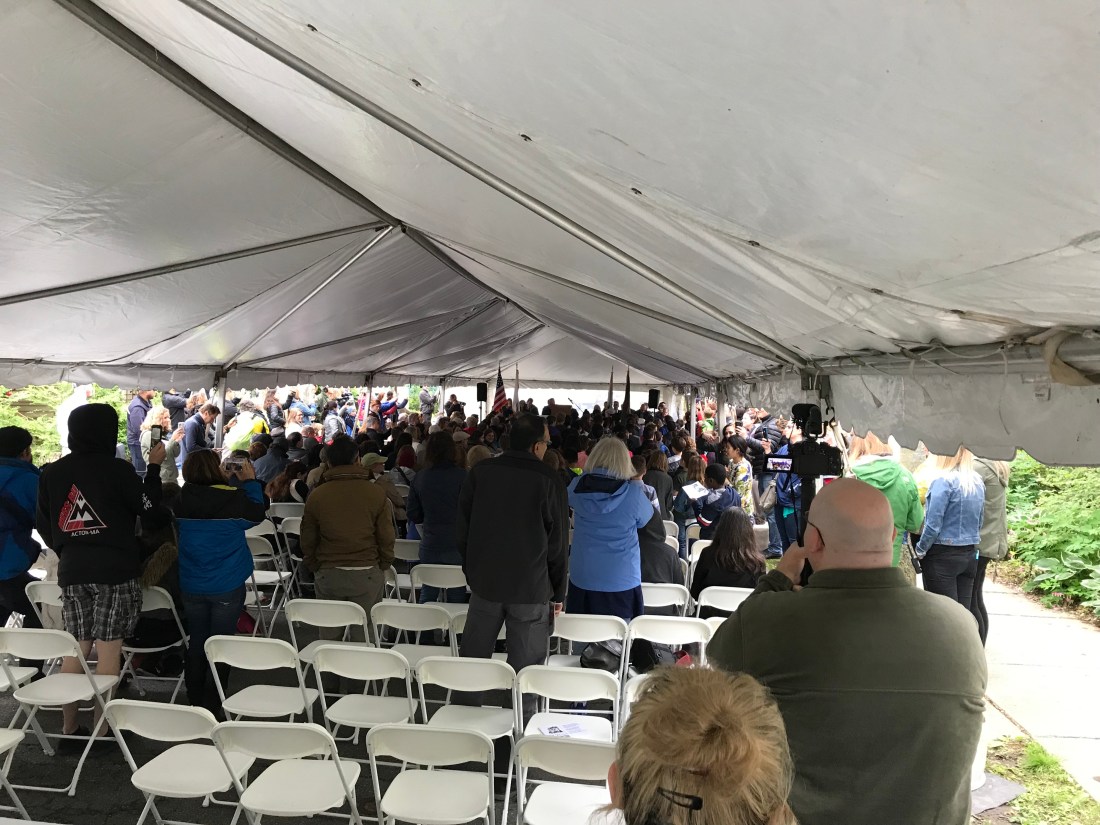
Indeed, it was the 50th anniversary of the House’s dedication as a museum! In 1969, Rose Kennedy, JFK’s mother, gifted it to the National Park Service as a memorial to her lost sons and her family dynasty. It also seemed that a nephew-in-law of the President was coming to speak, but we saw no such sign of him.

IMG_6259.jpg

And that’s Mrs. Kennedy during the dedication ceremon 50 years ago today. She lived to be 100 years old, and outlived several of her children.

IMG_1702.jpgIMG_6263.jpg

There wasn’t a good way to get a straight-on view of the house thanks to the event tent, so this picture from the side will suffice.

IMG_1701.jpg

And here was the plaque dedicated in 1961 around the time JFK was sworn in. It’s still very easy to read.

To our relief, the site was open-house, and we could enter right off the bat and explore the interior!

IMG_6261.jpg

Rose Kennedy supervised every miniscule detail of how the house was organized, especially the original wallpaper and carpets.

IMG_1678.jpgIMG_6243.jpg

The kitchen was the center of life for the family, both Joseph and Rose Kennedy, and their nine children. You could probably just imagine them running up and down the halls and steps, screaming with joy. And meals here also represented the quality conversations that the family would go on to enjoy into all of their adult lives.

IMG_6245.jpg

Some original Kennedy dinner pieces. The Kennedys and the Fitzgeralds were both very prominant families, yet the Fitzgeralds were certainly the more wealthy and well-known.

IMG_6246.jpg

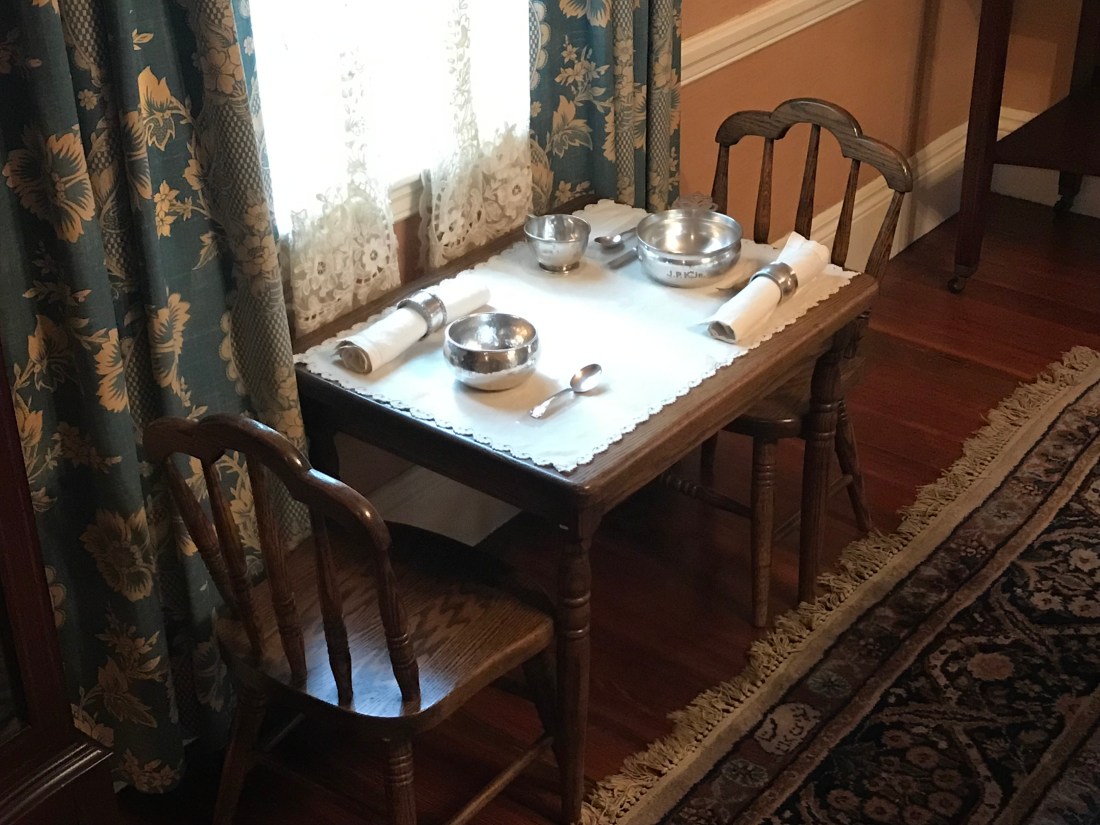
Now this is just adorable. Little Joseph Jr. and Jack (JFK) would sit at this mini-table. Jack would’ve been sitting in the chair closest to us. Unfortunetly, Joseph Jr. would be shot down in his plane during World War II, in Japanese-controlled waters.

IMG_6247.jpg

Also more Kennedy dinner utensils and plates. Much of the house was organized to Rose Kennedy’s memory.

IMG_6244.jpg

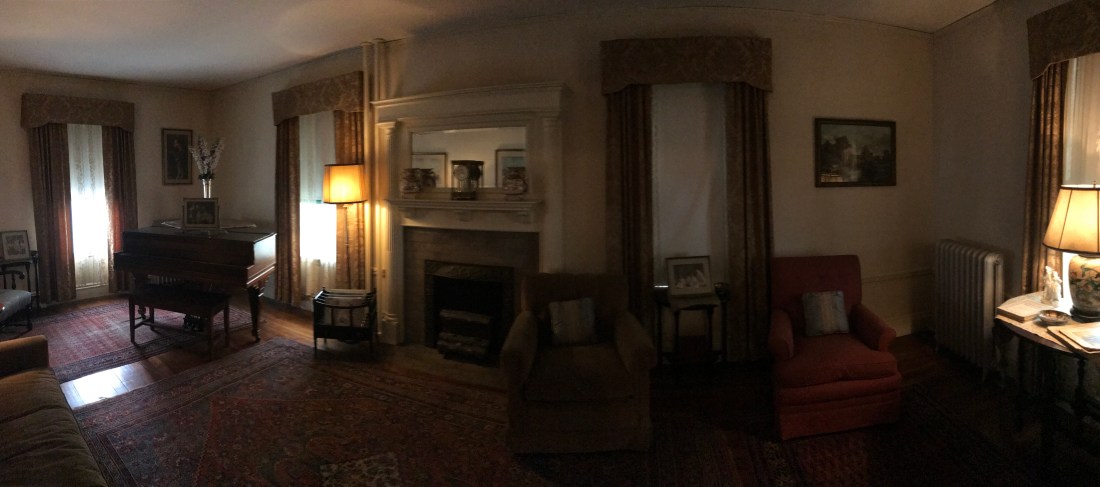
The living room, also assorted by Rose’s preferences. Some of the rooms were more dimly lit than others.

IMG_6249.jpg

The master bedroom… it was in the bed furthest from us that John F. Kennedy, 35th President of the United States, was born in 1917.

IMG_6253.jpg

IMG_1695.jpg

102 years to the day…

IMG_6252.jpg

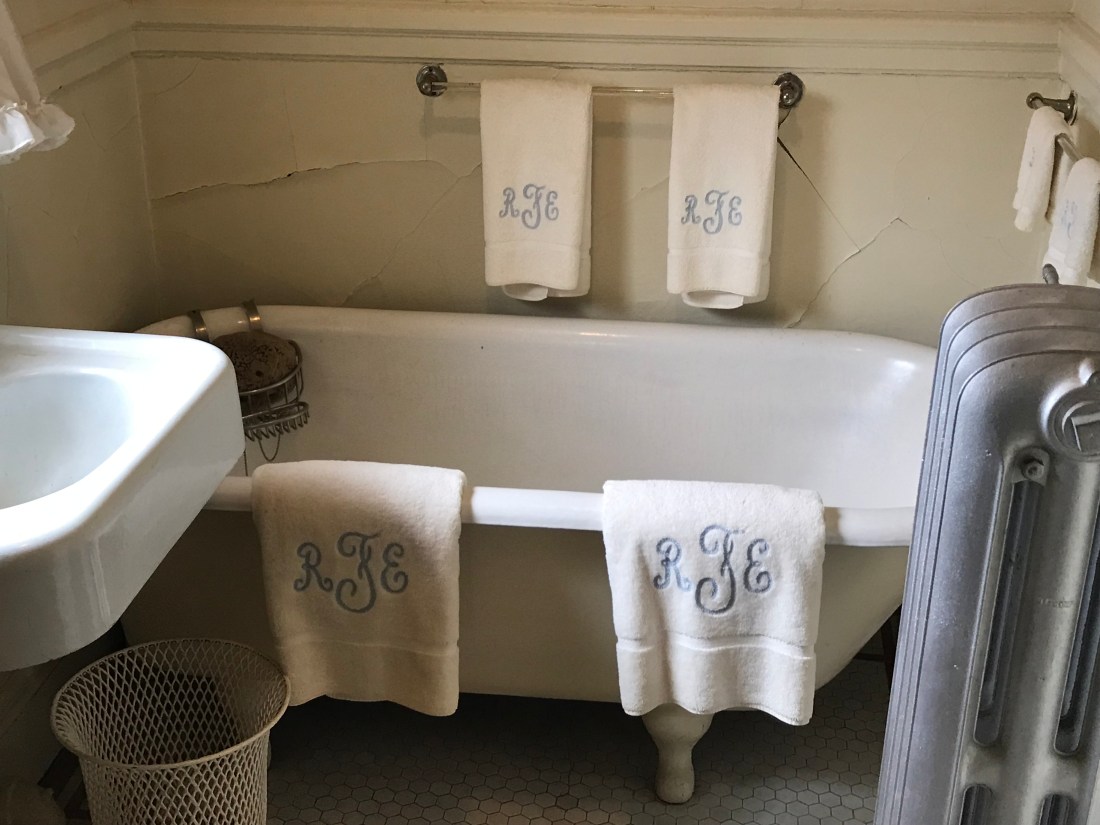
A towel, with the enitials “R.F.E.”, which stands for Rose Fitzgerald Elizabeth. The towels were a wedding gift to Joseph and Rose from Rose’s father, who wanted to remind the Kennedy family that the Fitzgeralds were the more superior and wealthier family. A bit of an ego-trip there…

IMG_6254.jpg

Rose’s personal study, which she would use to run the affairs of the house.

IMG_6251.jpg

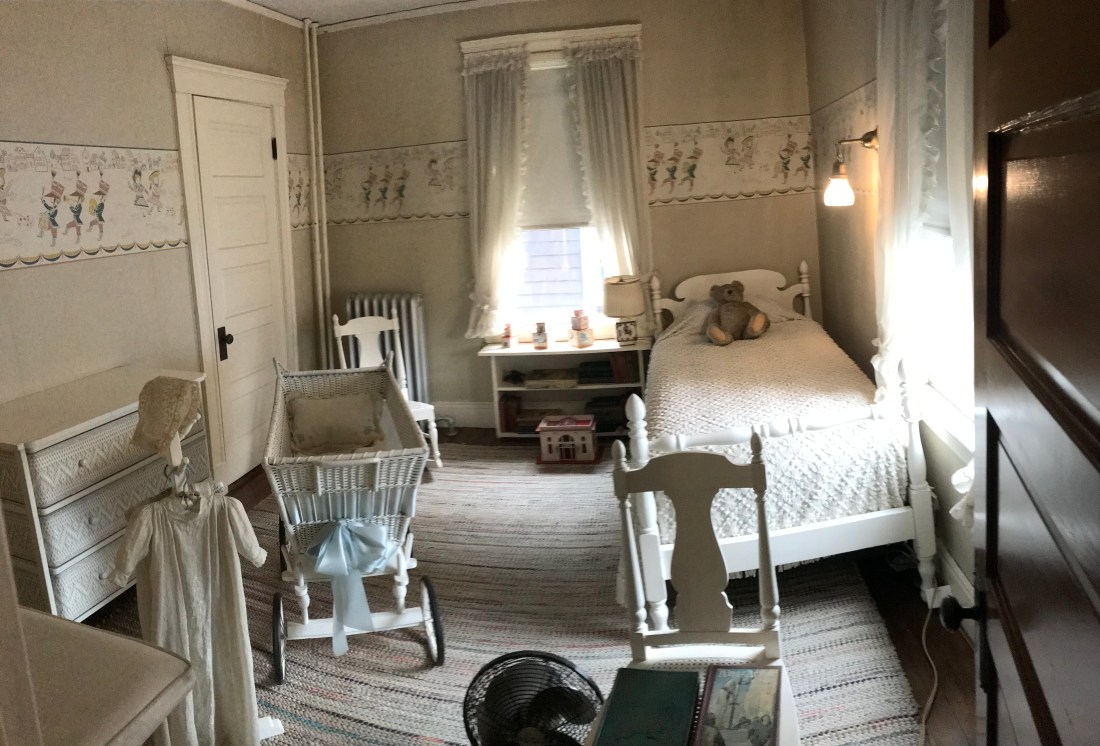
The nursery of Joseph Jr. and Jack, wh loved to play in this room.

IMG_6250.jpg

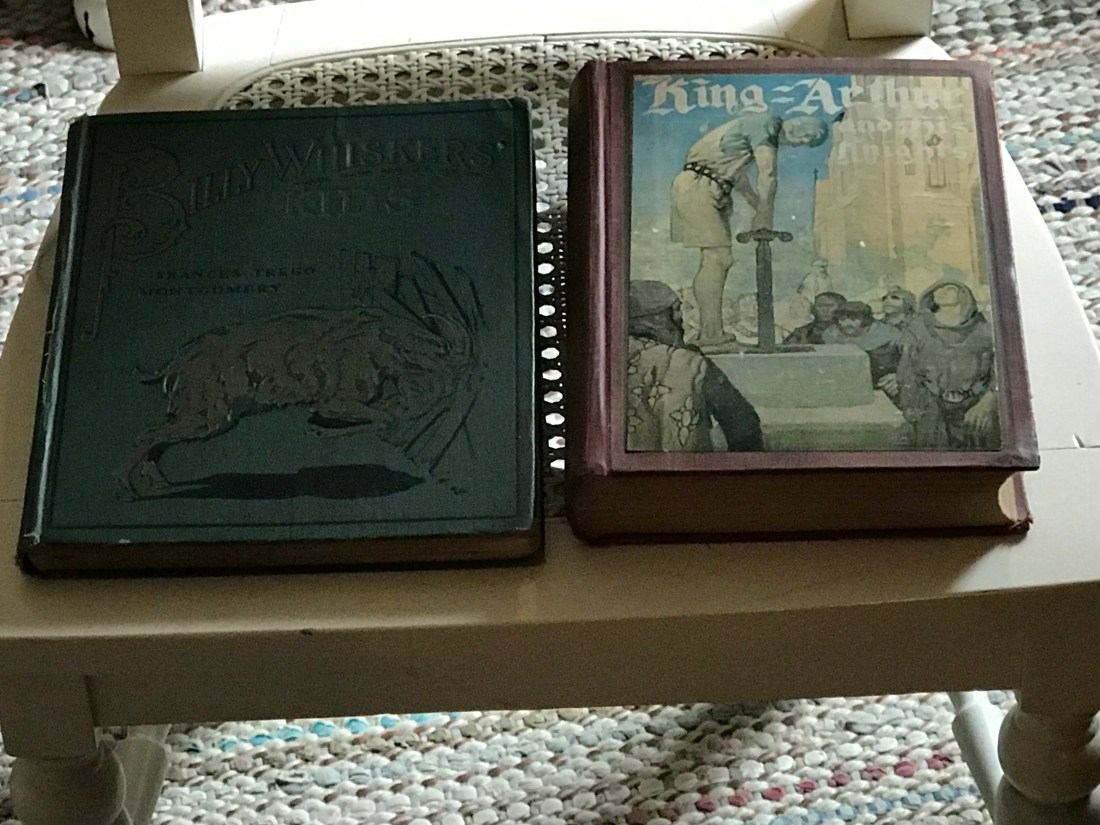
These two books were beloved by Jack when he was little: “King Arthur and the Knights of the Round Table”, and “Billy Whiskers” (the story of a goat who went on adventures). These two books might have helped Jack to gain a sense of adventure and activity, as shown by his career in the Armed Forces and as a politician.

IMG_6322.jpg

Little Jack Kennedy… one of the most adorable baby photos I have ever seen… Jack and John kind of went hand in hand, and is similar to how Robert is the same as “Bob”.

IMG_6260.jpg

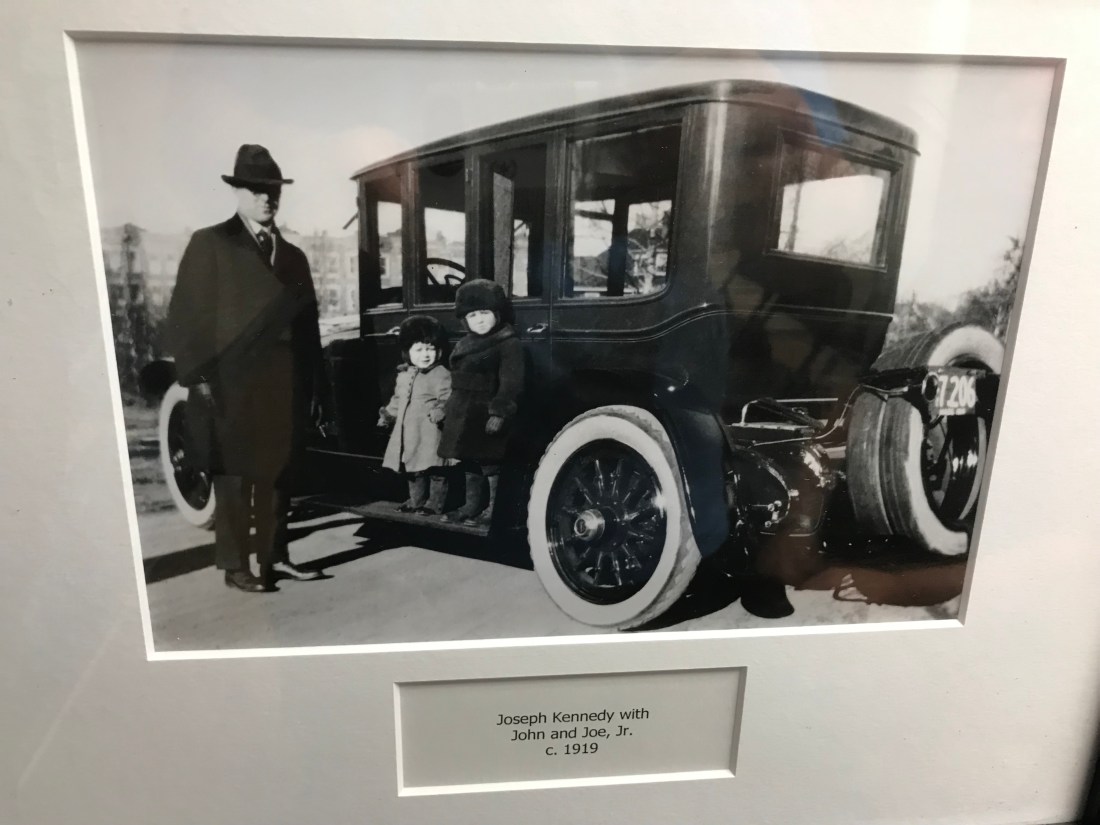
Joseph Kennedy with Joseph Jr. and Jack! Mr. Kennedy was an important Ambassador to the U.K. during World War II.

IMG_6257.jpg

The backyard of the home was filled with more tents and lawn-chairs, likely for a later ceremony.

IMG_6258.jpg

Complete with Cake too (don’t worry, we didn’t steel any slices).

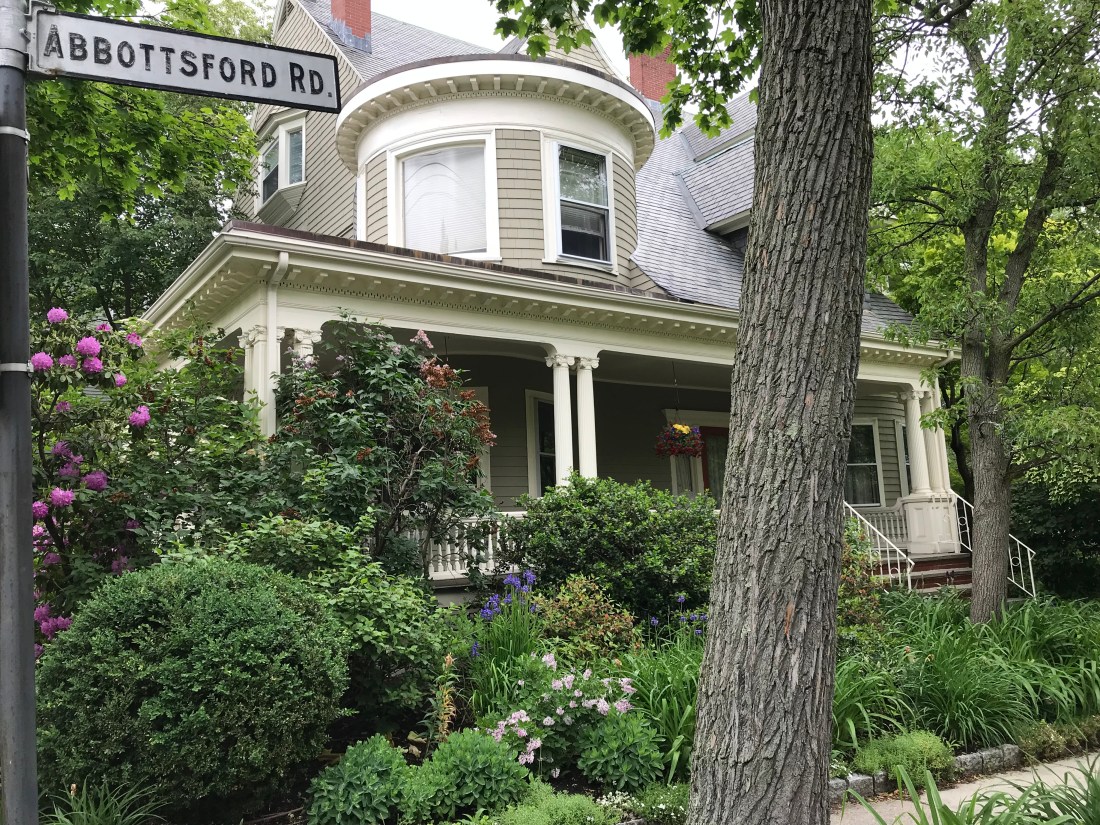
Not wanting to impede on the ceremonies, we headed down the street to another childhood home that the family moved into when Jack was three and a half years old.

IMG_1711.jpgIMG_1709.jpg

It’s a private home, but it’s still neat to see a piece of his story! He lived here before moving to Hyannisport.

Eager to obtain the last stamp of the Main 13 Libraries… we headed to the other destination of the day…

John F. Kennedy Presidential Library and Museum

Situated right on Boston Harbor, the JFK Library is the main museum dedicated to JFK, and the last of the Main 13 Libraries in the passport.

IMG_6267.jpg

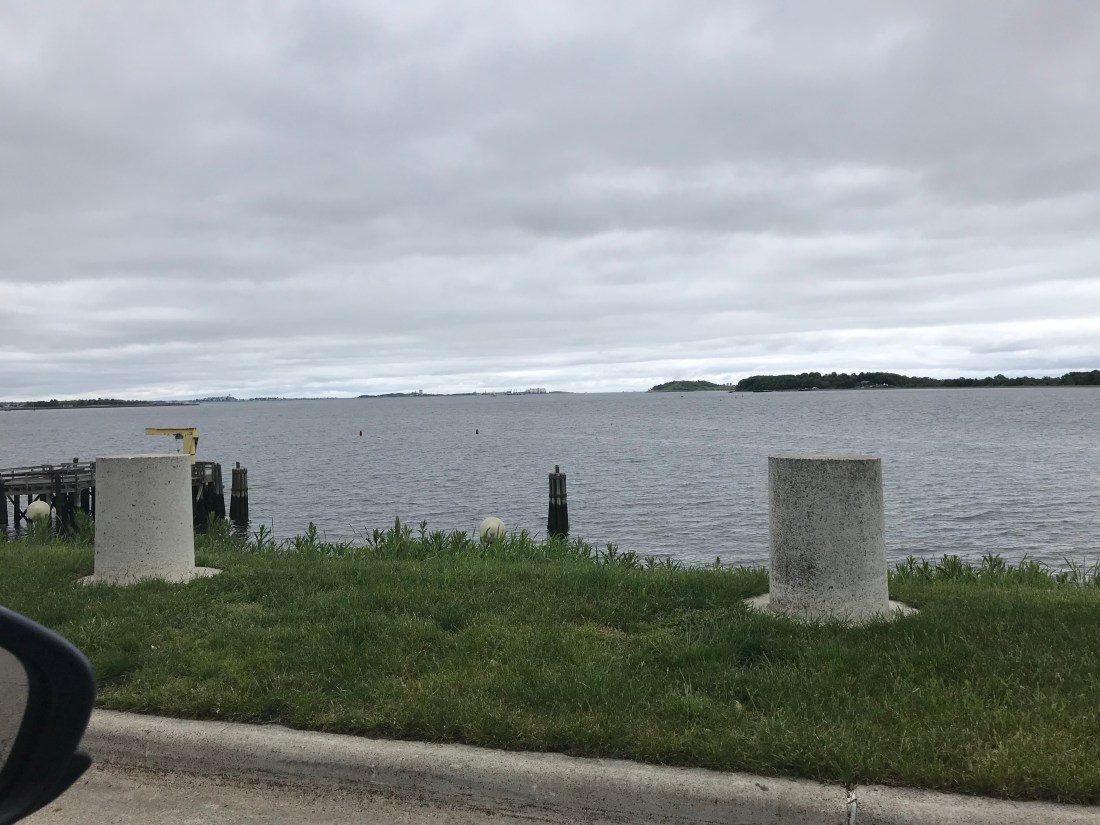
Nice view of the harbor. It was a very windy and cold day.

IMG_6268.jpg

IMG_6269.jpg

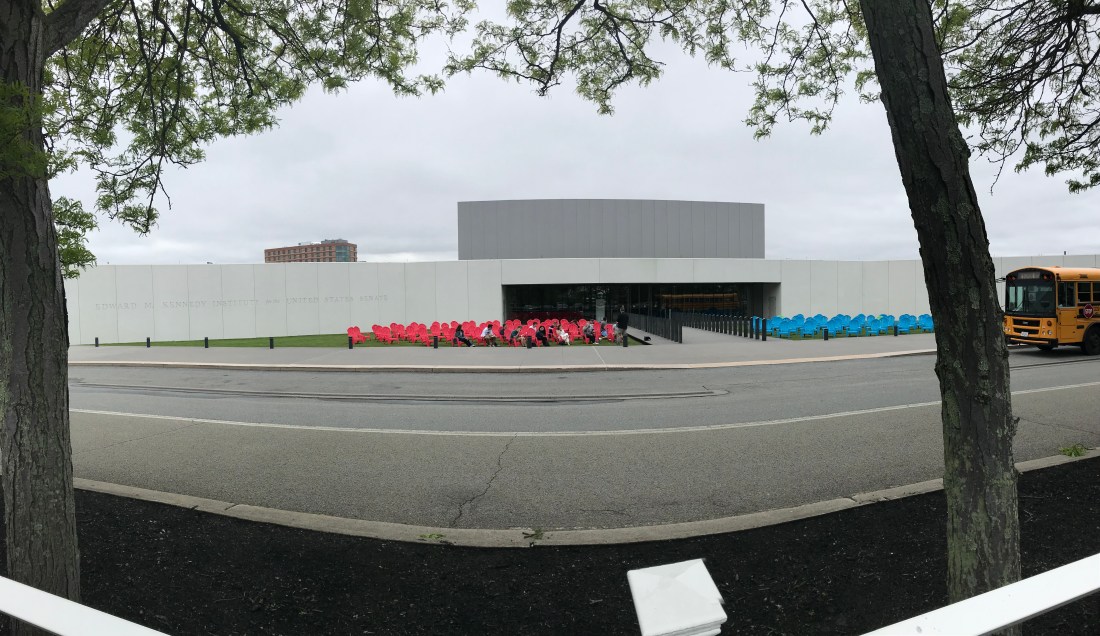
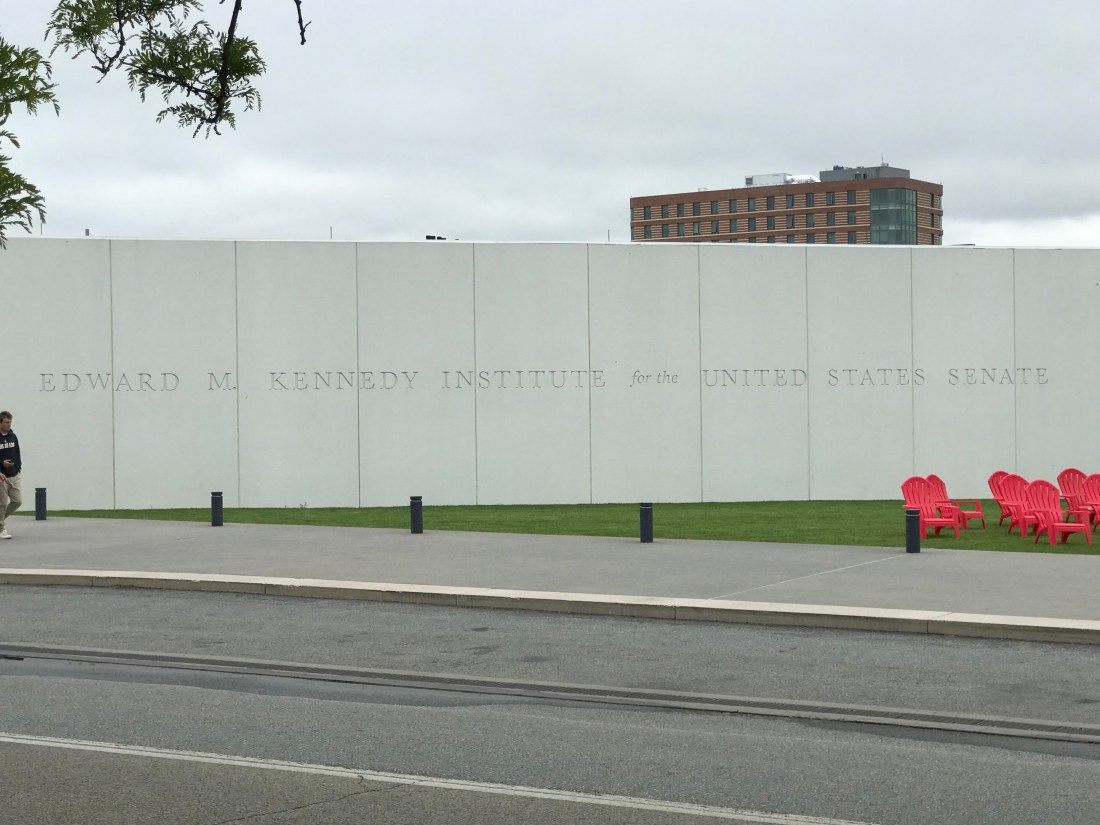
The EdwardKennedy Institute is a repository of knowledge concerning the United States Senate, and likely serves as an extension for the documents of the brothers of President Kennedy.

IMG_6270.jpg

And here we are… the JFK Library…

IMG_6331.jpg

It really is a beautiful building, with it’s own special taste.

IMG_1714.jpg

At long last… THE QUEST IS DONE!

IMG_1722.jpg

I received my official last stamp, a special souvenir pin, and soon to be in the mail, a special certificate!

I have no officially been to all the main 13 Libraries… it has taken me across the mountains of California, the plains of Texas, the dens of Michigan, the woods of New York, and finally here on Boston Harbor… it has truly been an extrordinary venture.

For now however, lets check out the library!

IMG_6303.jpg

Kennedy’s Posthumous Presidential Medal of Freedom, presented by his former Vice-President, Lyndon B. Johnson.

IMG_6304.jpg

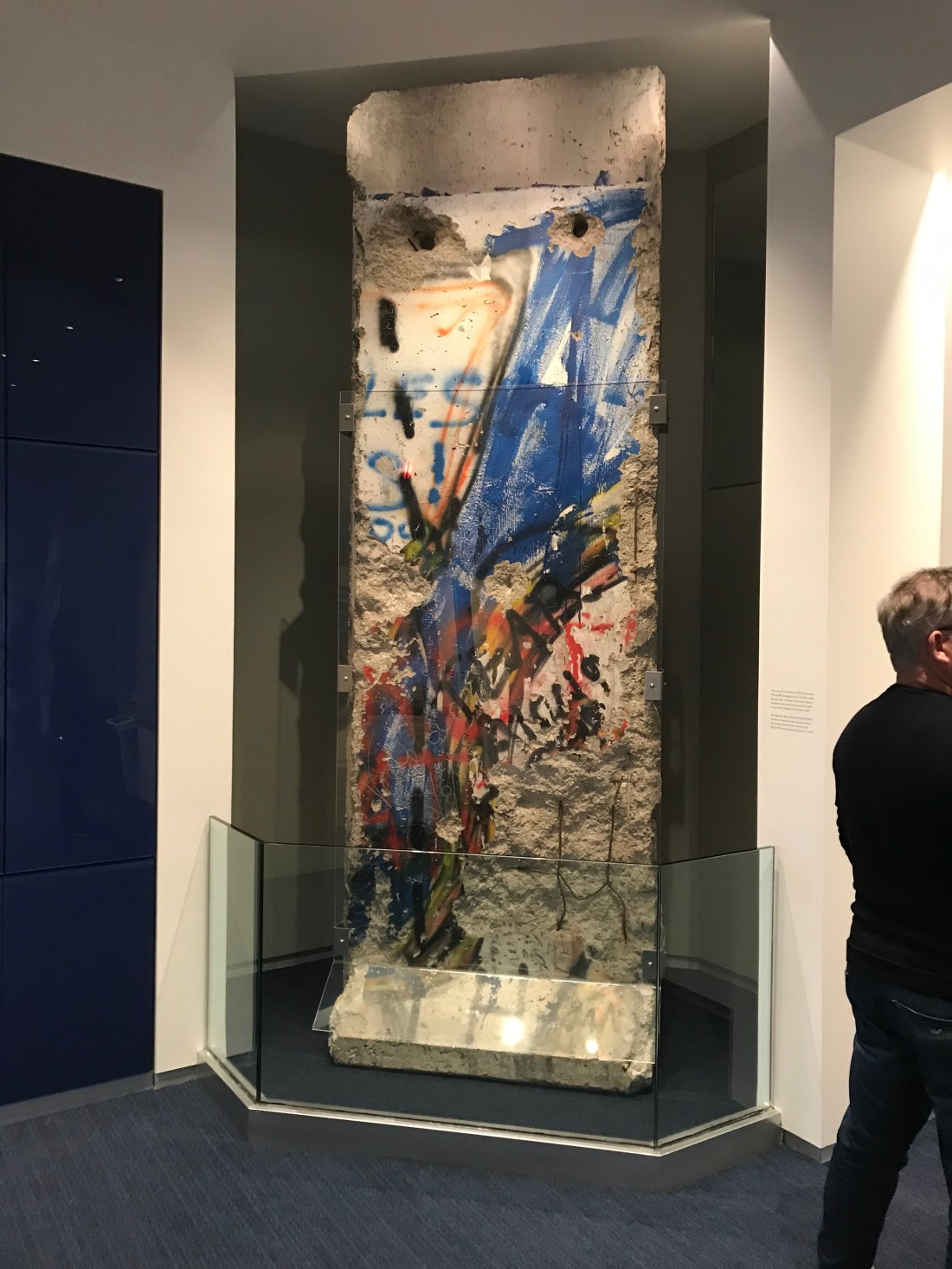
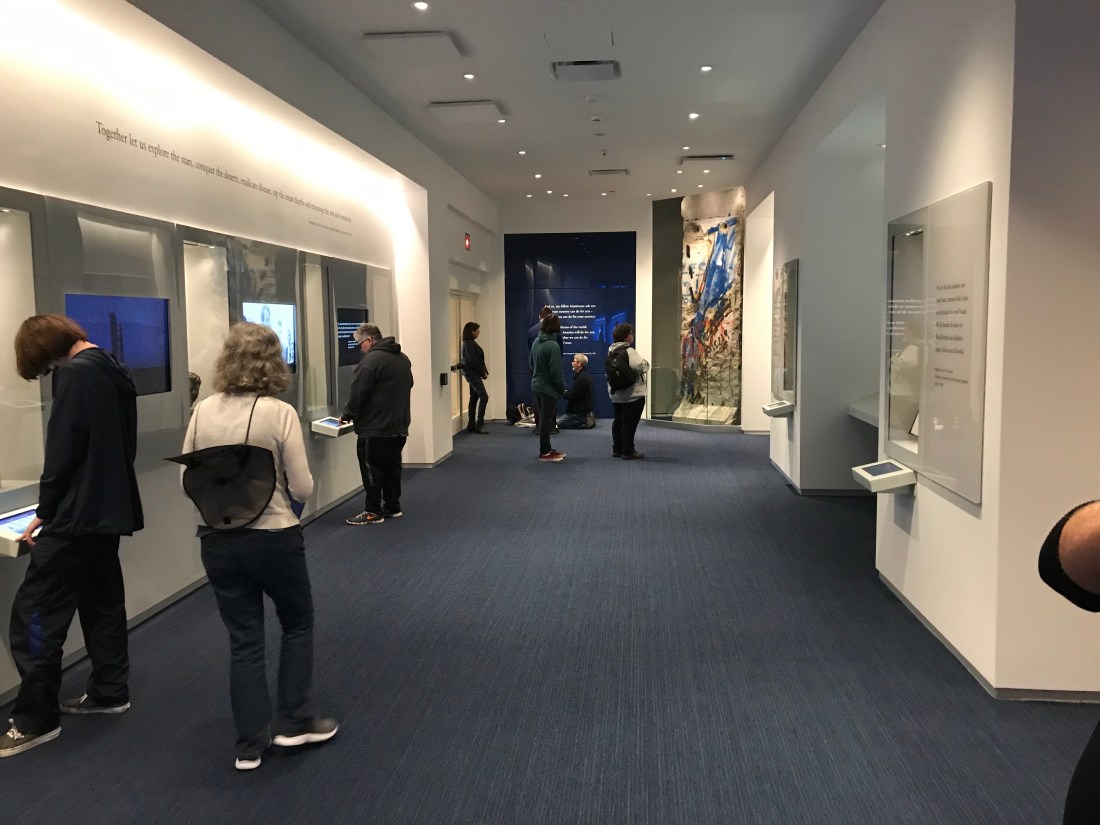
A section of the Berlin Wall. Hundreds of pieces are scattered in museums all over the world, this being just one out of many.

IMG_6312.jpg

Also, the Library happens to house the collections of Ernest Hemingway, the famous writer. It was reported that he was a big fan of the Kennedy family.

IMG_6314.jpg

Rose Kennedy with her nine children! From left to right is Joseph Jr., John (JFK), Rosemary, Kathleen, Eunice, Patricia, Robert (Bobby), Jean, and little baby Edward (Ted) with Rose Kennedy.

IMG_6315.jpg

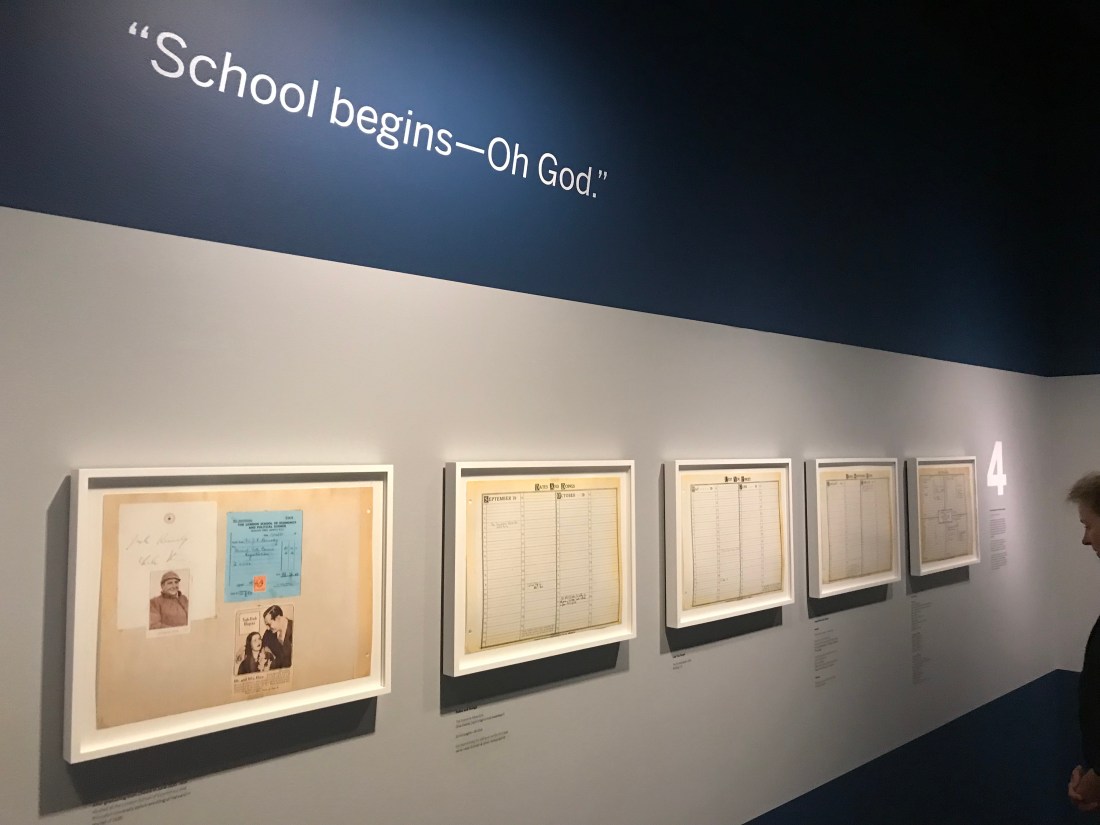
Suffice it to say, Kennedy wasn’t the best student in early school grades, yet he managed to make something of himself well enough to become a student and graduate of Harvard University!

IMG_6316.jpg

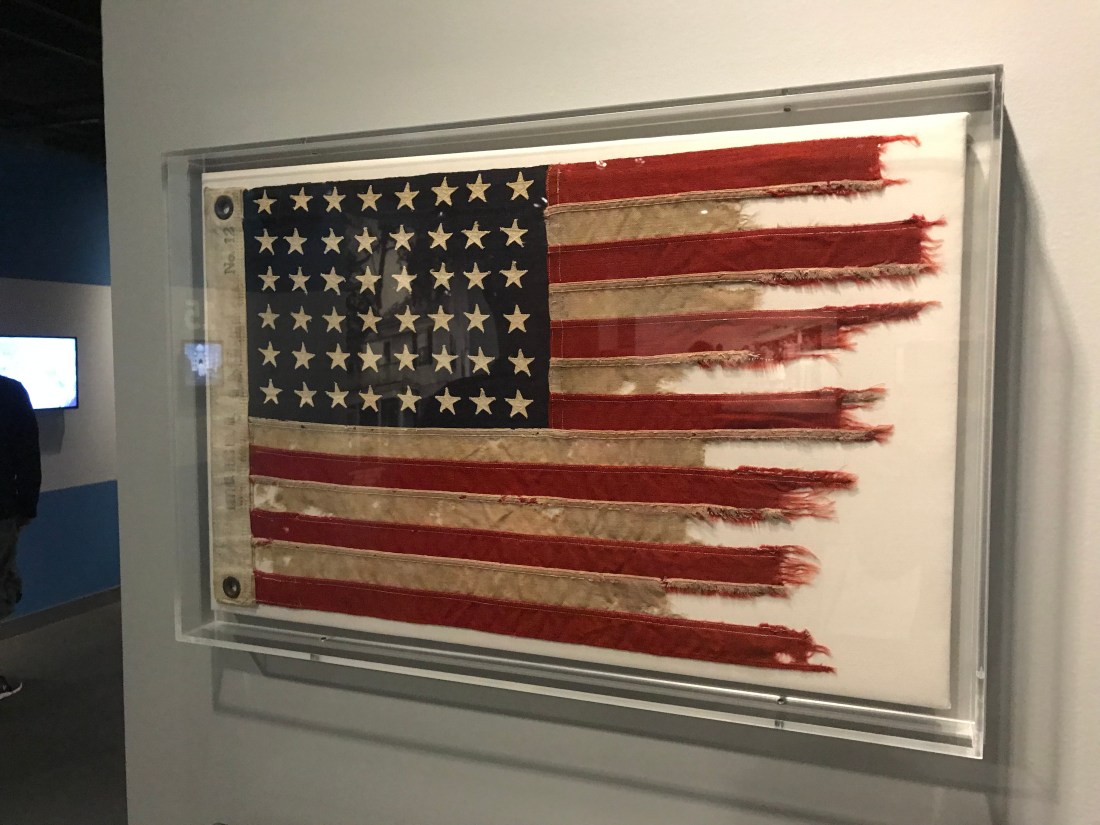
One of the last original pieces of PT-109, the flag taken down just weeks before the boat was destroyed…

IMG_6318.jpg

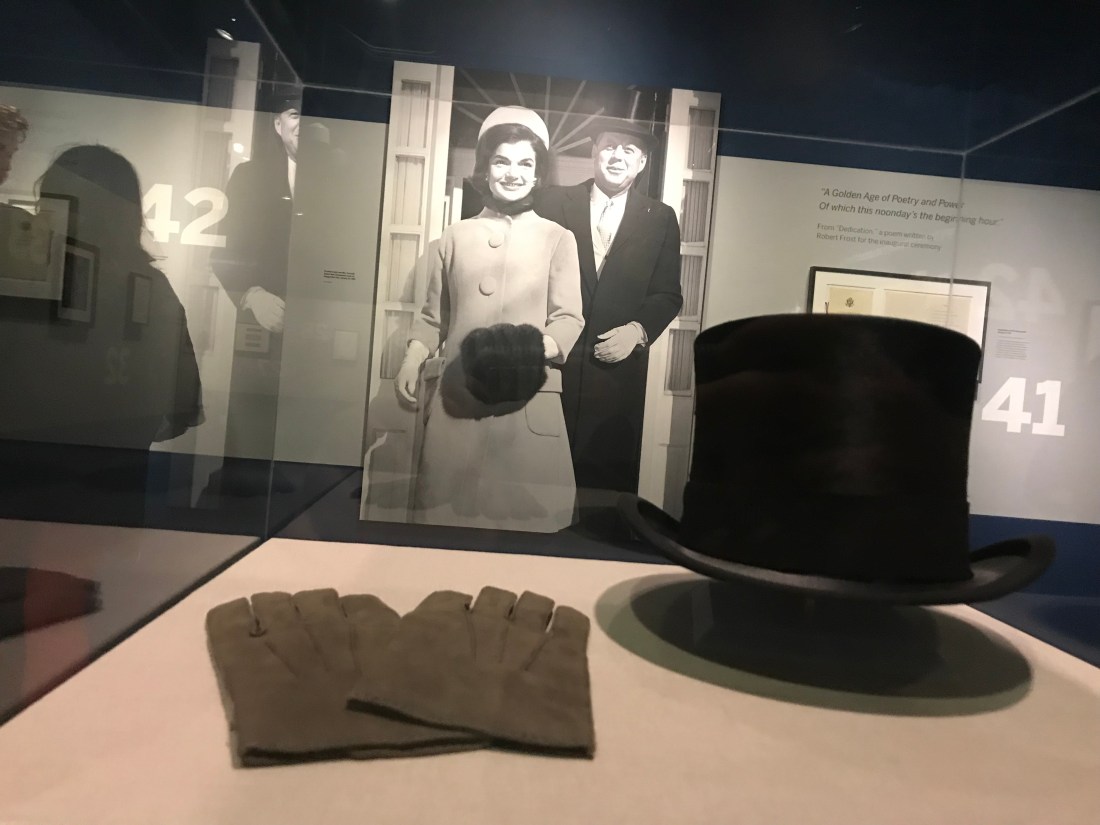
Kennedy’s inaugural hat and gloves, that he wore in the picture behind the display.

IMG_6319.jpgIMG_6320.jpg

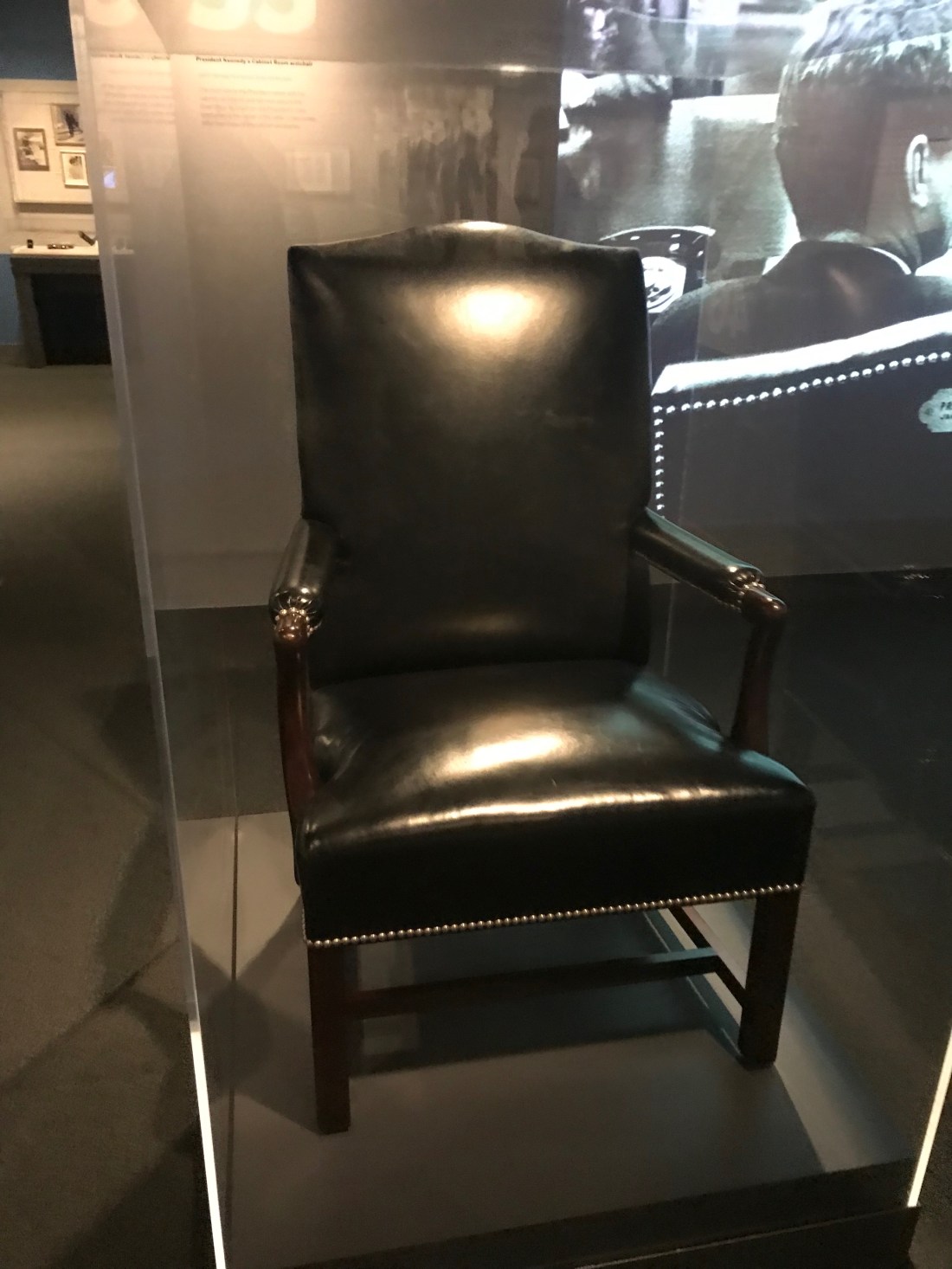
JFK’s Cabinet Chair that he used during his administration. It was retired following his death.

IMG_6321.jpg

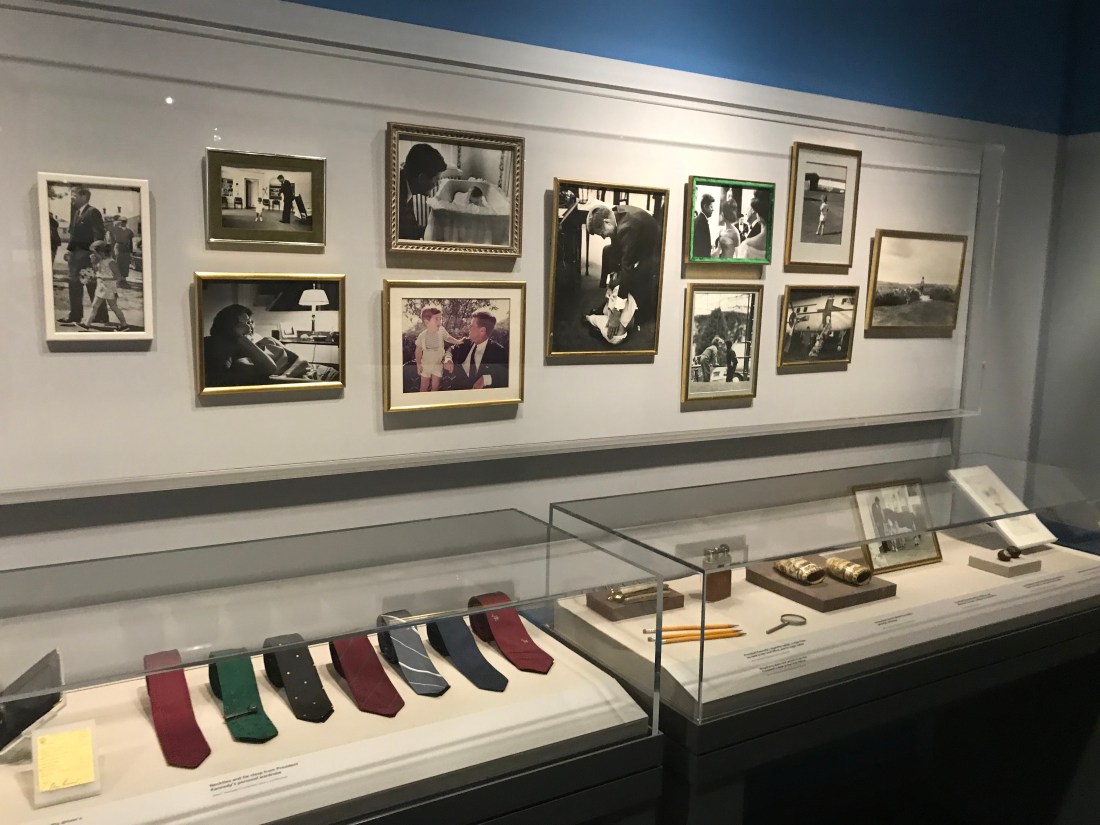
More personal effects of the President, including several of his ties, and his personal cigarette lighter.

IMG_6271.jpg

JFK had several health problems, including an aching back. He would use these crutches when his physical ailments were more extreme.

IMG_1724.jpg

Anyone seen the movie PT-109 here?

When Kennedy was a commander of a PT boat in the Second World War, the boat was split in half by a Japanese Cruiser, and Kennedy and the rest of the crew were forced to swim miles away to safety, and to try to make it home safely. He inscribed a special message on this coconut piece so it could be passed to a native who would take it to the nearby Naval Command Base. It reads:

IMG_1725.jpg

And so, he made it into a paperweight that he used during his Presidency. It is perhaps the most famous item here at the museum.

IMG_6272.jpg

His special medal awards, including the Purple Heart award on the right,

IMG_1734.jpg

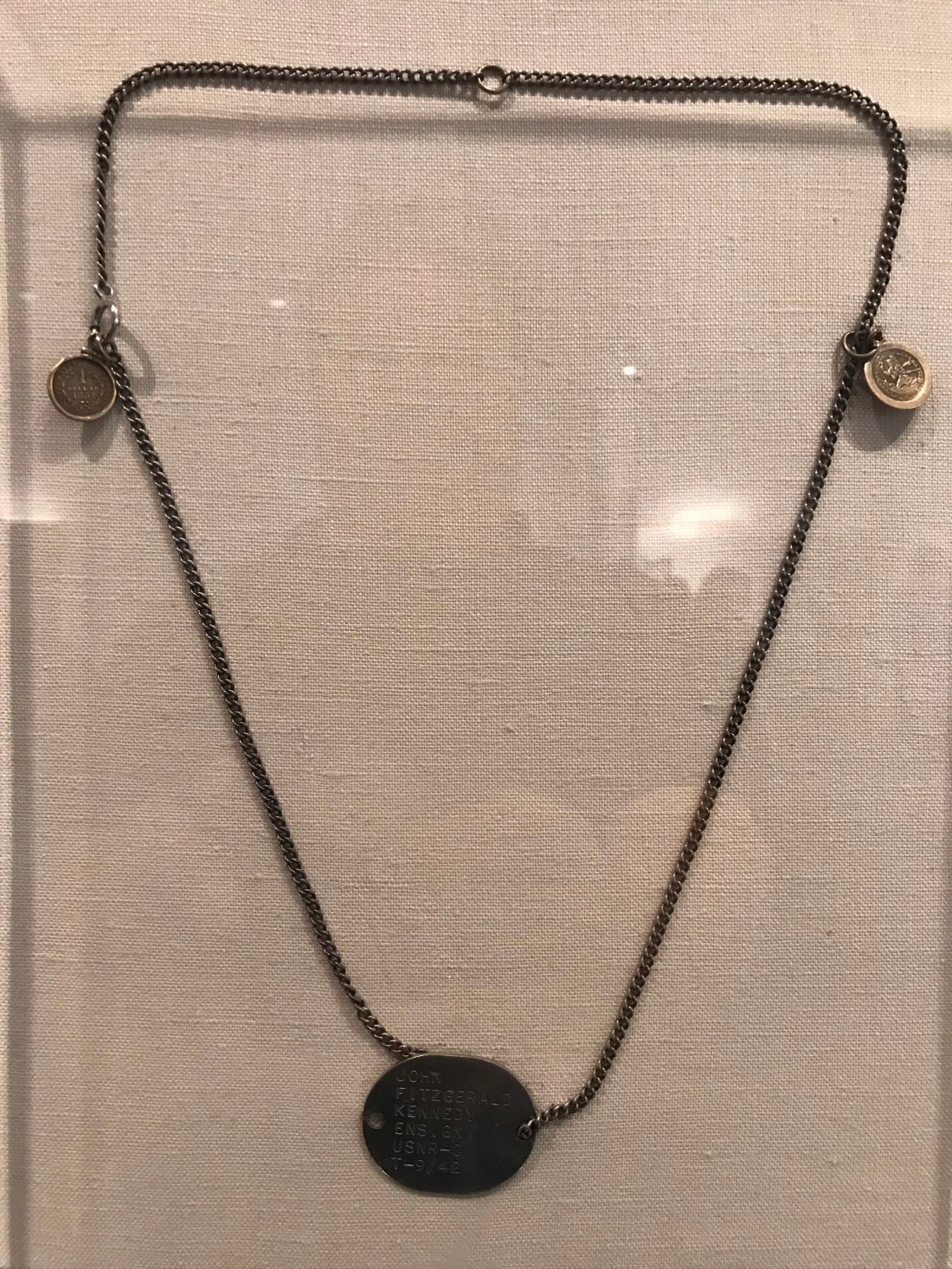
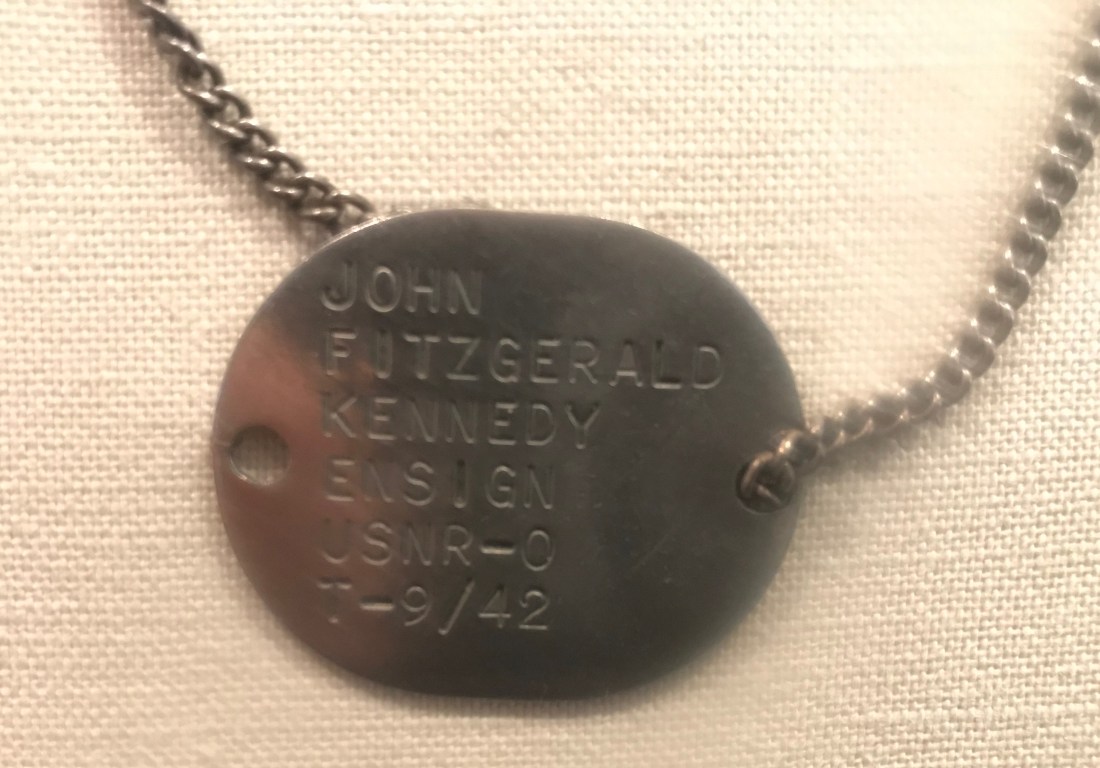
And his dog tag, which identified him should he have been killed in action.

IMG_1730.jpg

IMG_6273.jpg

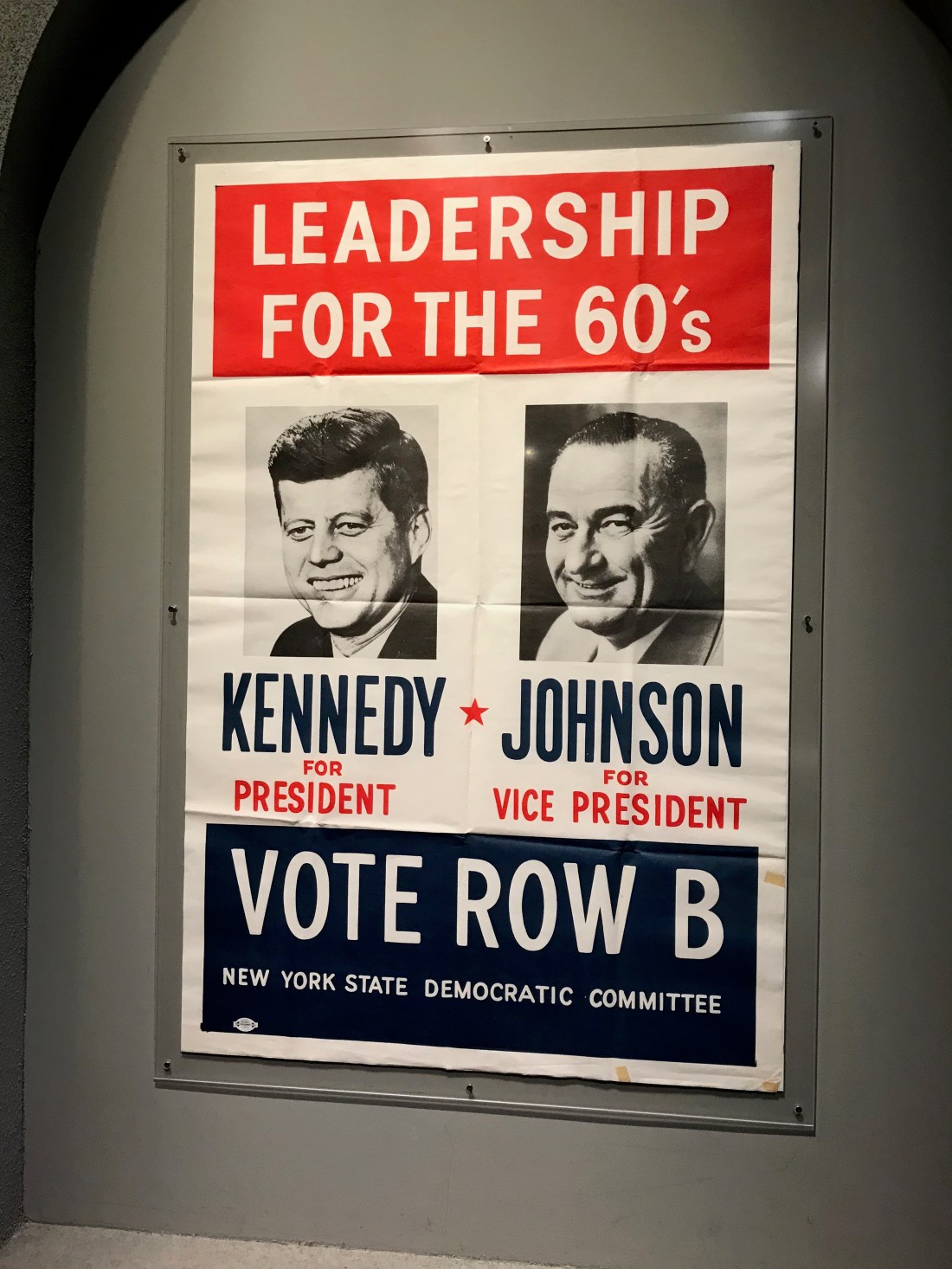
The Presidential Campaign of 1960 was very close indeed… Republican/Vice President Richard Nixon VS. Democrat/Senator John F. Kennedy.. which would win? Normalcy or Change?

IMG_6275.jpg

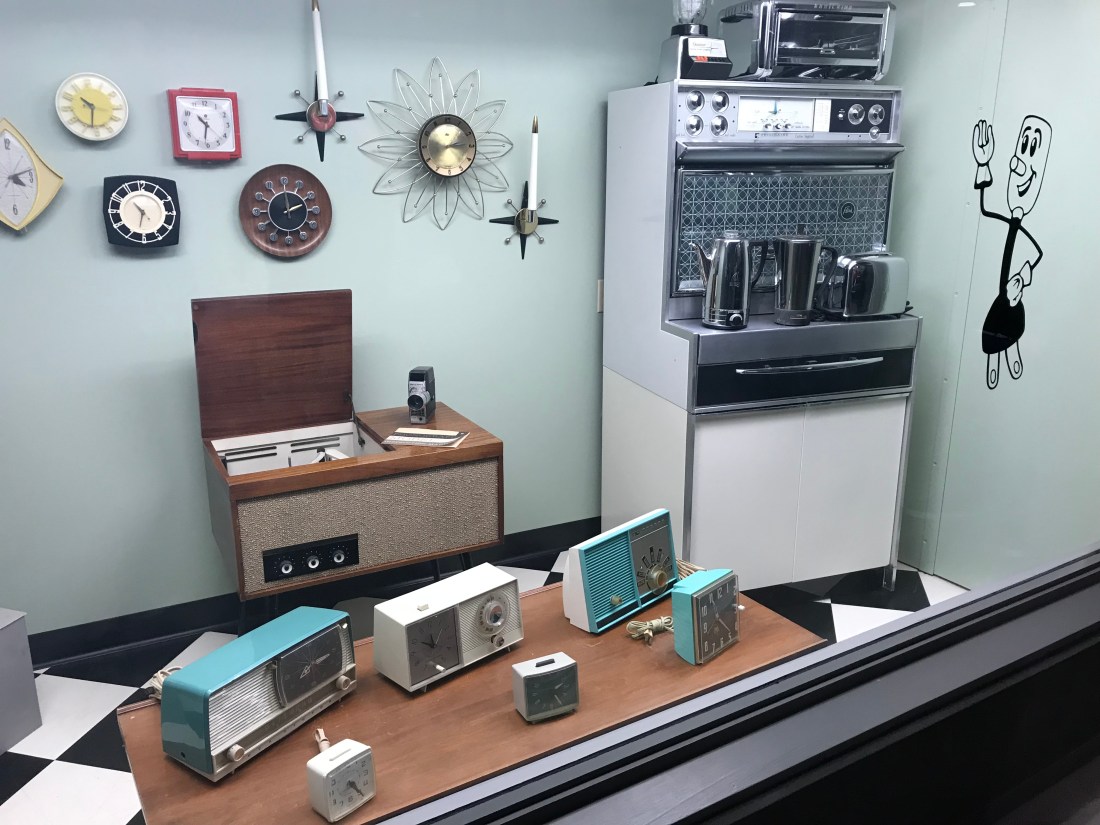
A bit of nostalgia for those who lived in the 50’s and 60’s… radios and refridgerators, among others.

IMG_6276.jpg

Henry Cabot Lodge, Nixon’s Vice-President, came from a long and prominant political family, and Nixon himself had much experience in the Executive Branch as Eisenhower’s Vice-President.

IMG_6277.jpg

Kennedy, though young, certainly had special charisma, and his Vice-Presidential Canidate, Senate Majority Leader Lyndon B. Johnson of Texas helped to balance the regionalticket.

IMG_6274.jpg

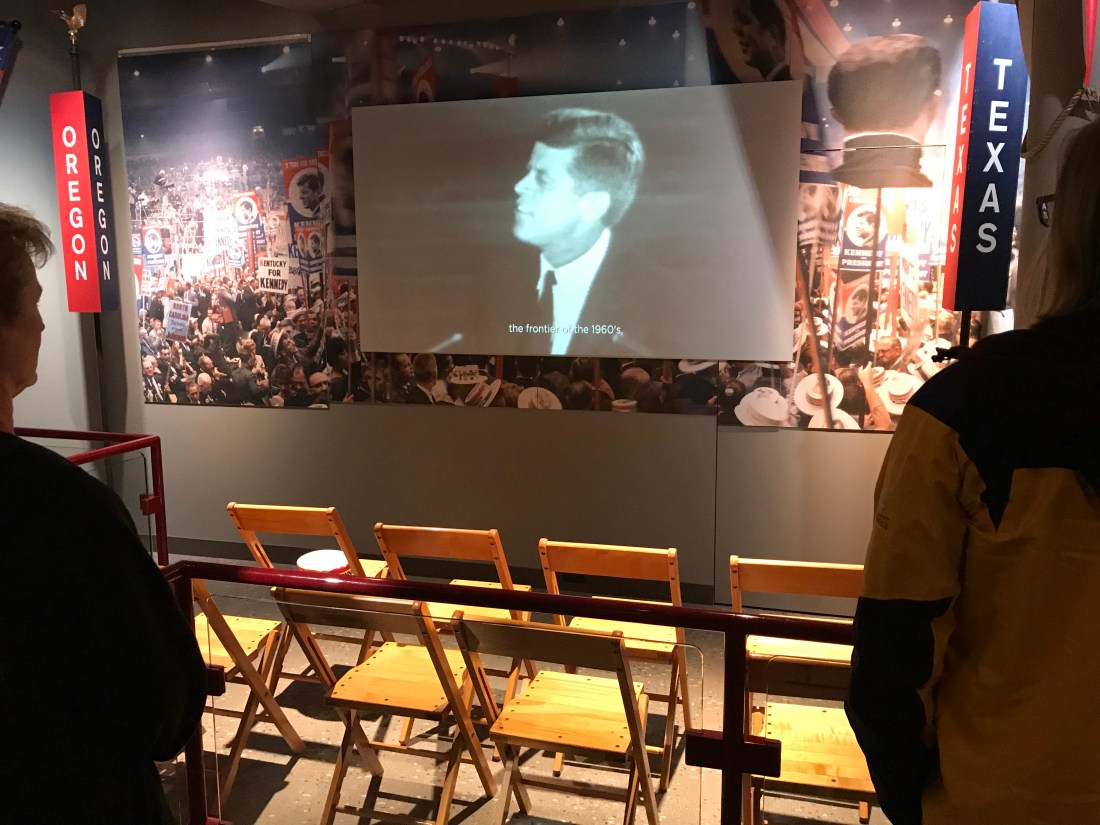
One thing for certain however, the Kennedy fans certainly had spirit! It easily carried him through the Democratic National Convention.

IMG_6278.jpg

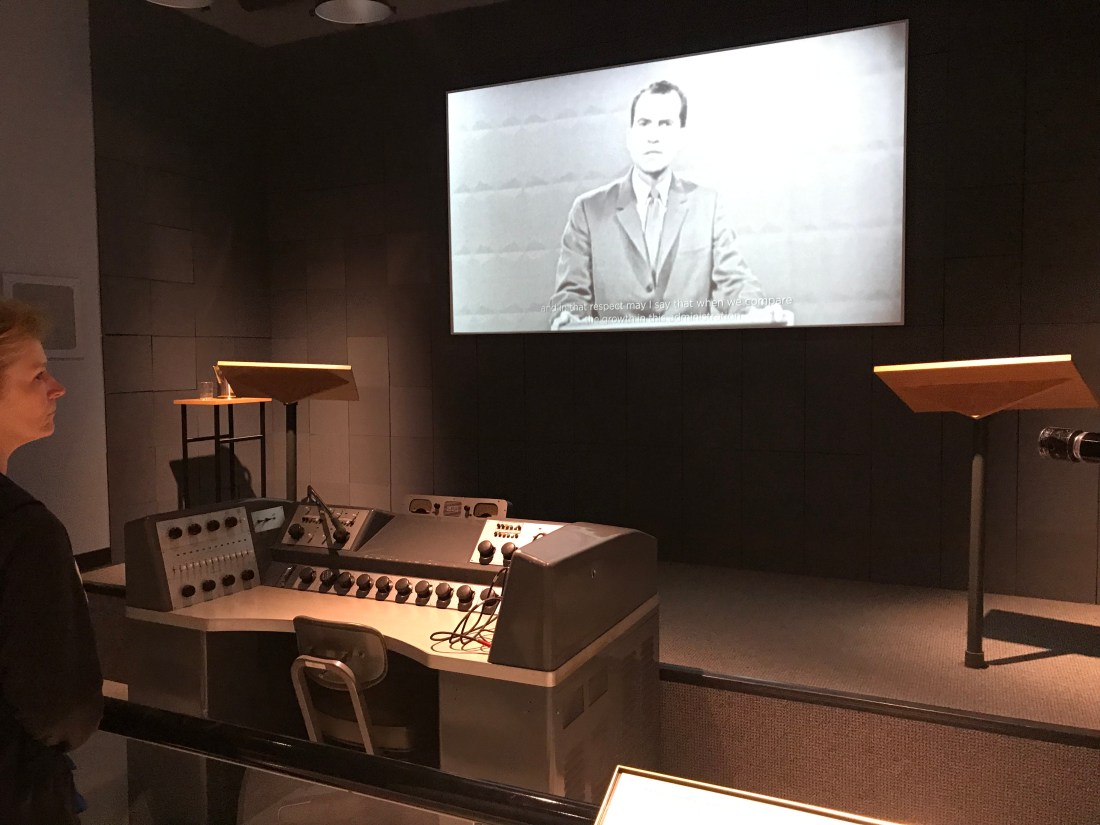
The actual monitor used during the 1960 Presidential Debate. The first televised debate in elections, Kennedy shined with his youthful and energetic appearance, which made him seem more likable than the stiff-necked Richard Nixon. Perhaps it was that that helped Kennedy to prevail in the General Election and win.

IMG_6279.jpg

IMG_6280.jpg

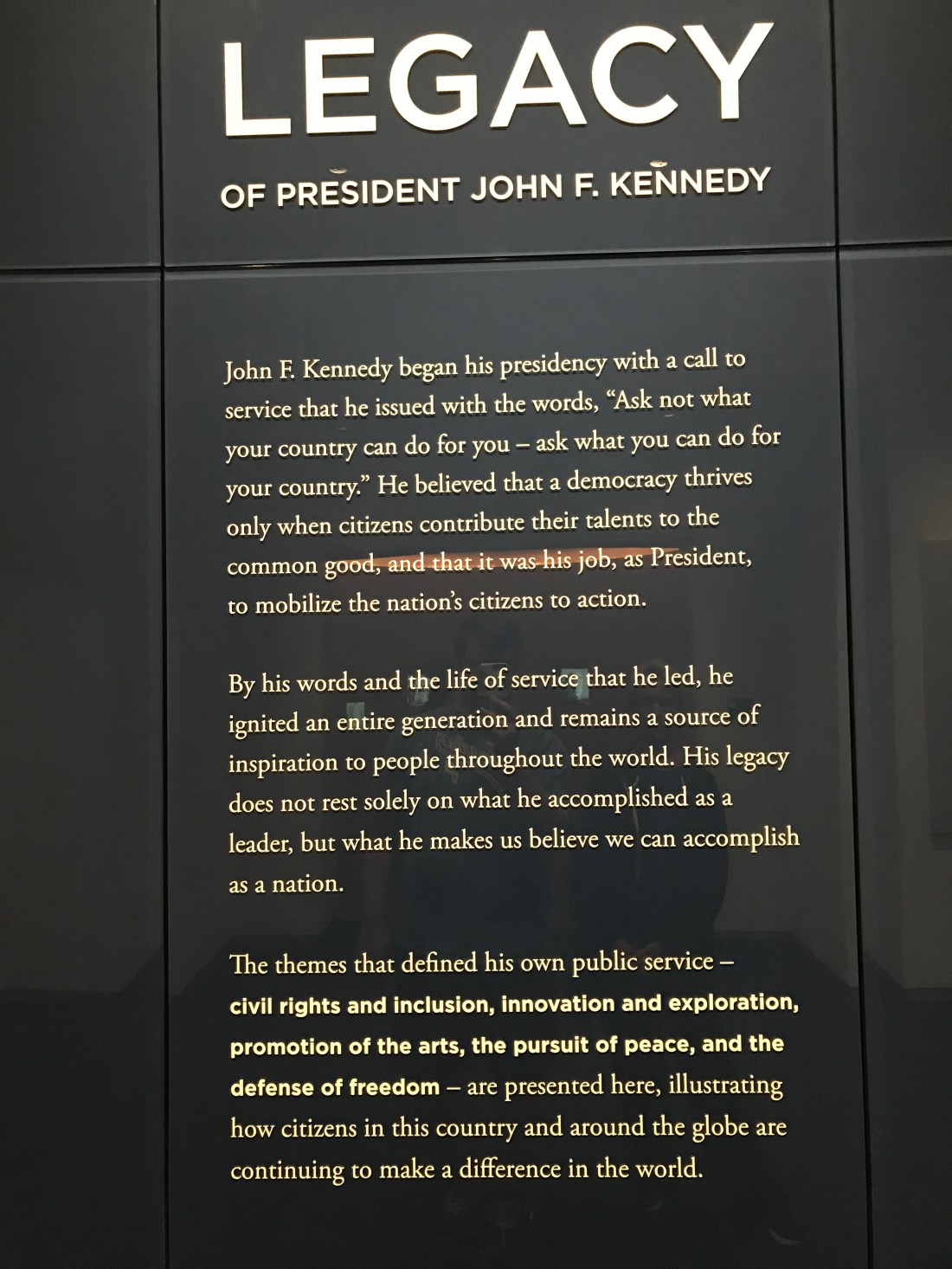
Though not the longest Inaugural Speech of all (yes, this is comparatively short), it is nonetheless masterful in it’s idealistic writing, with one very famous line: “Ask not what your Country can do for you, Ask what You can do for your Country.”

I love that…

IMG_6281.jpg

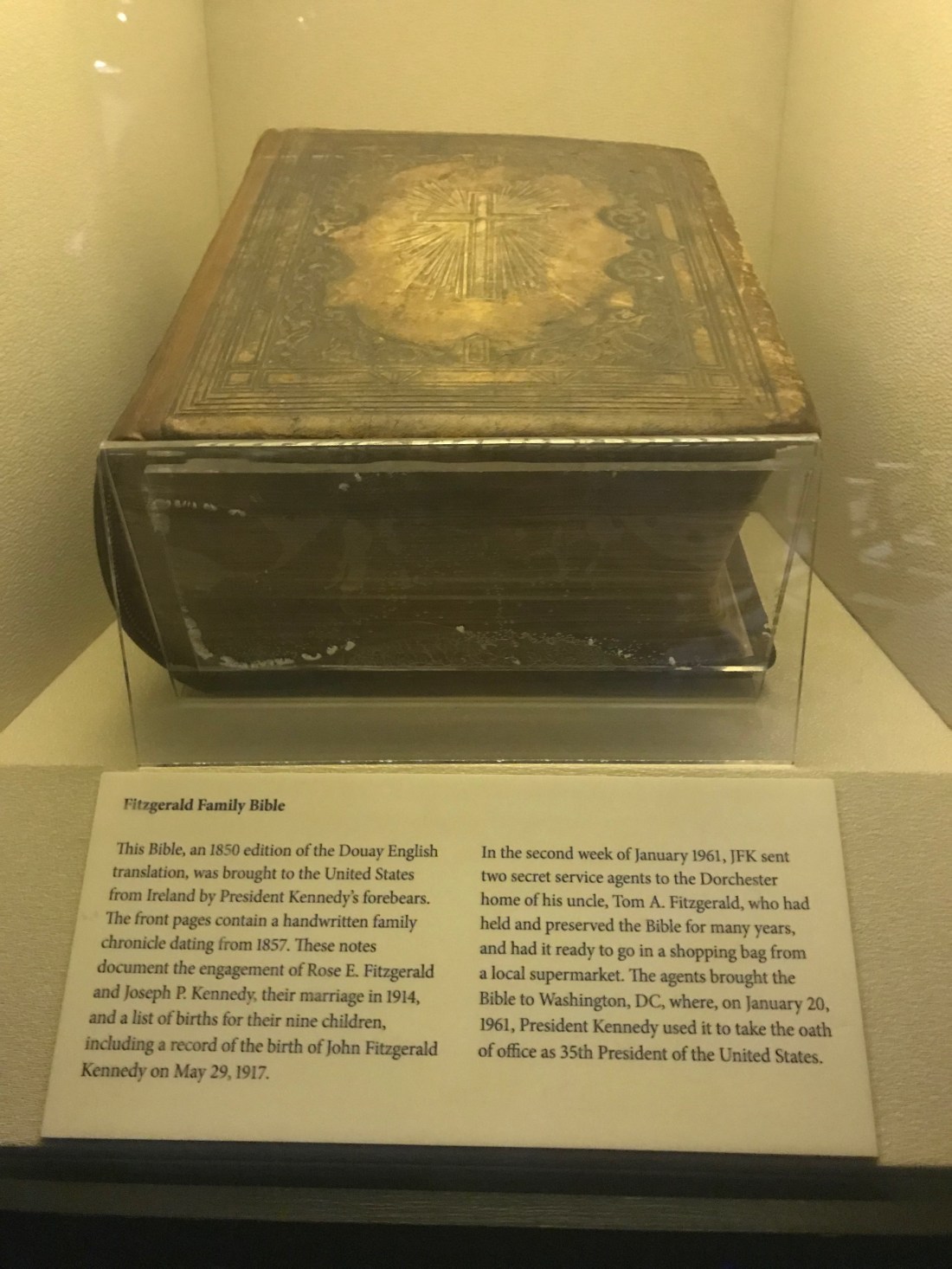
The Kennedy Family Bible, which was used during his Inauguration. The Bible was brought to Washington D.C. in a shopping bag from a grocery store, but nonetheless made it safe for the swearing-in of the only Catholic U.S. President to date.

IMG_6284.jpg

A hallway looking exactly like one in the White House! A neat touch.IMG_6285.jpg

IMG_6287.jpg

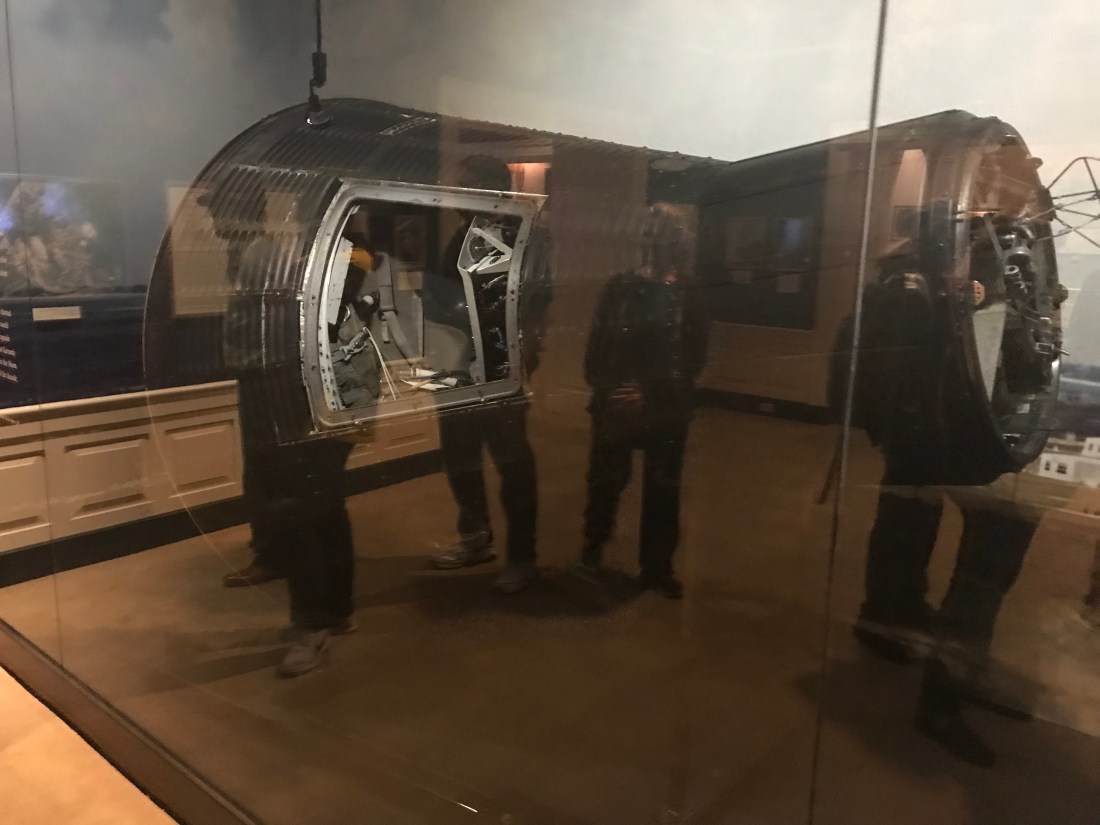
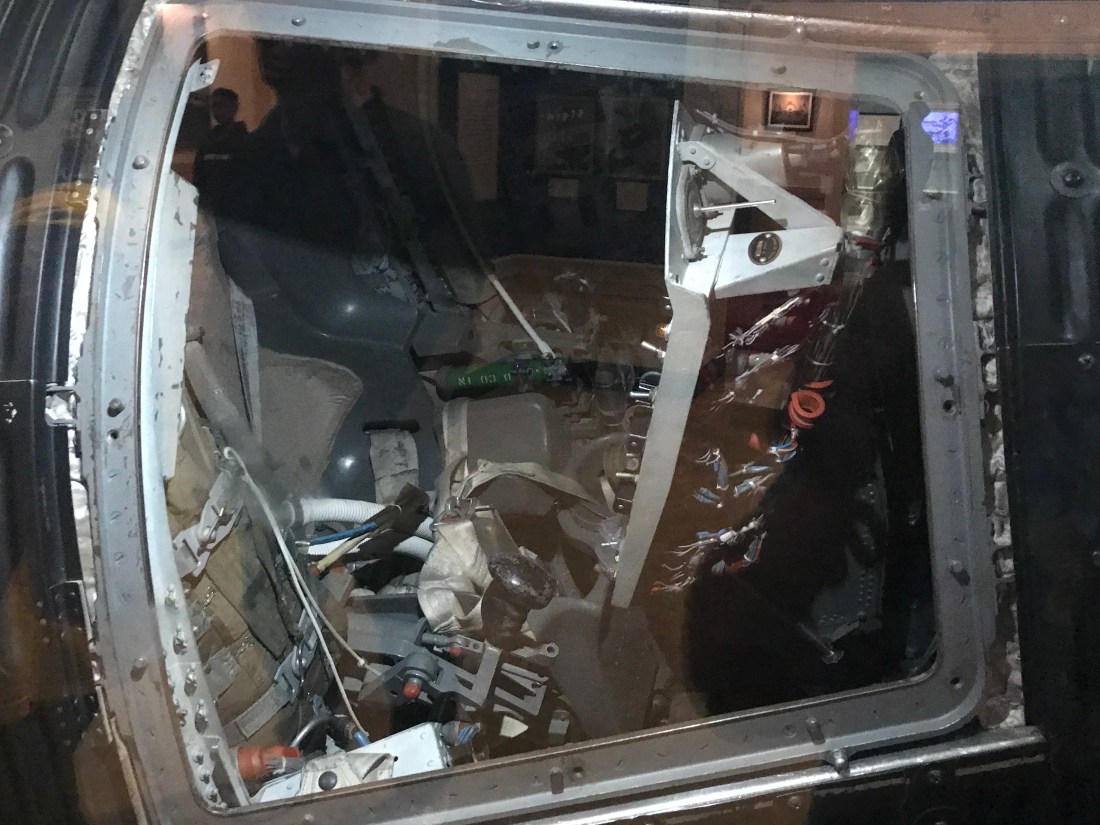
The original Freedom 7 Space Moduele! It was in here that Alan Shepard became the first American to enter space, and the one where he was greeted by President Kennedy following his landing.

IMG_6288.jpg

One of the most trying moments of his Administration, the Cuban Missile Crisis, where soviet missiles were being placed on Cuba in close proximity to the U.S., could have meant nuclear war and annialation. Thankfully, through tense and slow negotiations, the crisis was averted. Kennedy’s greatest moment was perhaps dealing with this event.

IMG_6289.jpg

The Nuclear Test Ban Treaty prohibited the testing of Nuclear Weapons of any sort in America, which went a long way into helping out Detenté.

Did I mention that he also started the Peace Corps? To this day they remain one of the most powerful forces of charity and change in the world.

IMG_6290.jpgIMG_6294.jpg

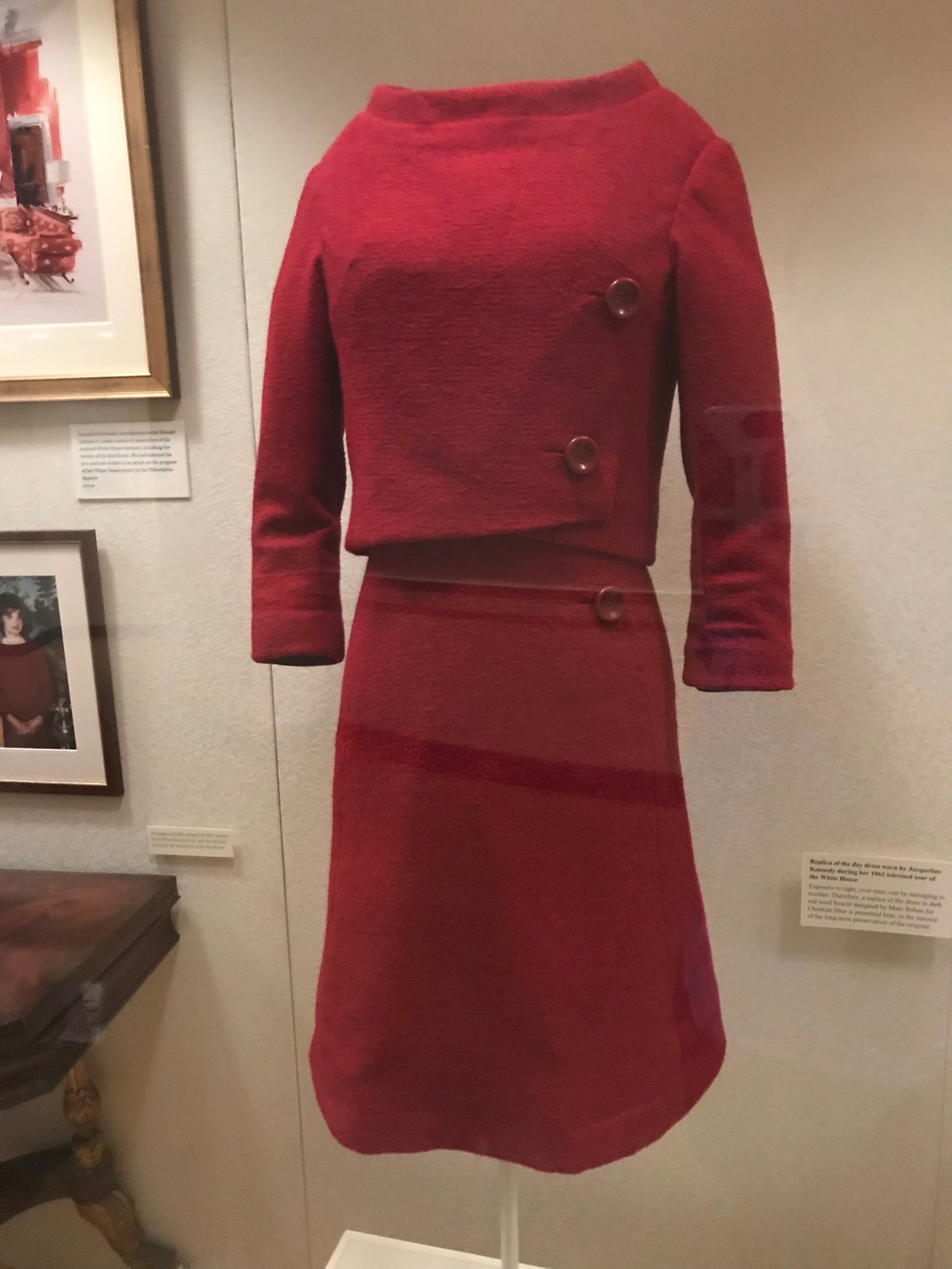
And really, what could be said about Jacqueline Kennedy that hasn’t been said already? She was beautiful, charming, intelligent, and truly one of the best first-ladies that we have ever had. JFK once said to a crowd of onlookers in Berlin, that “he was the one to accompany Jackie Kennedy into Berlin”. She was beloved by all, and her strength and perseverance following November 22, 1963 proved to be an inspiring banner for the nation.

IMG_6292.jpg

Robert Kennedy served as the Attorney-General for his brother Jack, and like his older brother, was gunned down by an assasin, this time in 1968 in Los Angeles. One could not begin to comprehend the amount of grief that family had to endure…

IMG_6293.jpg

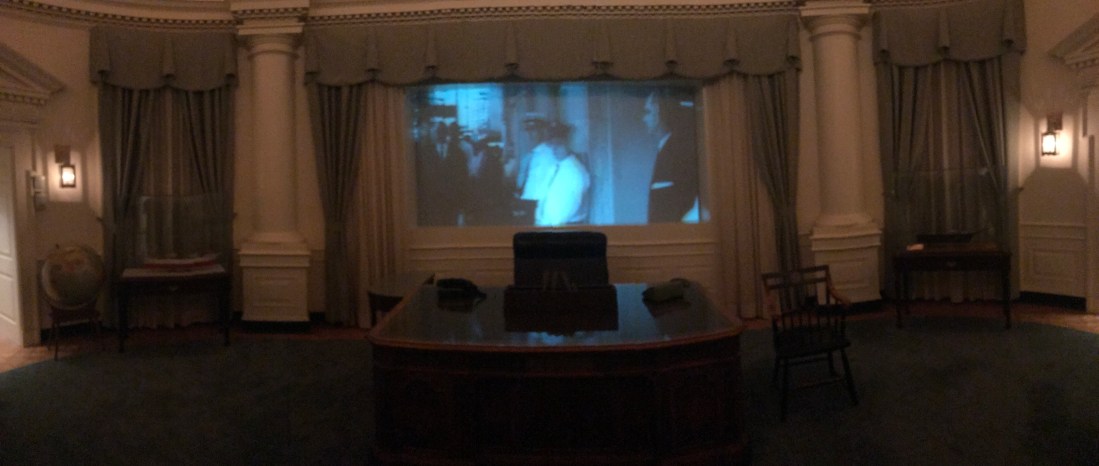
Though not the most accurate Oval Office replica I’ve seen, it still got the basic premise of the construction down.

IMG_6296.jpgIMG_6297.jpg

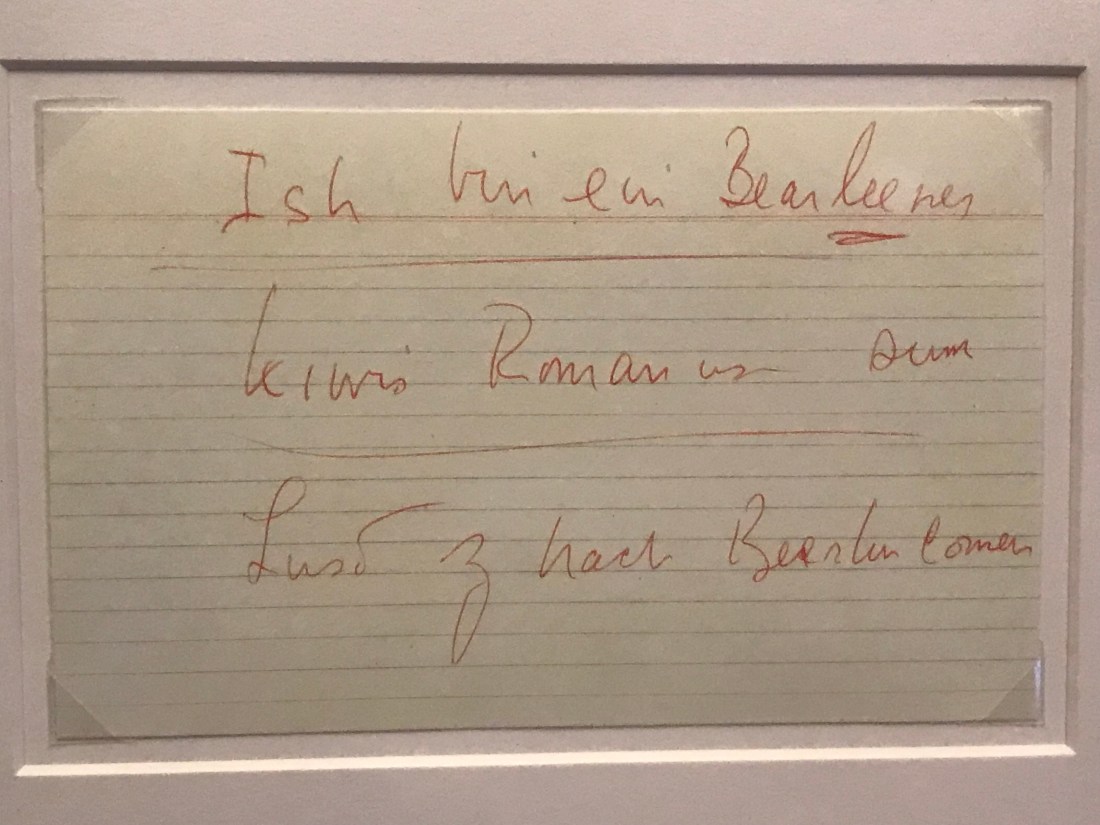
Kennedy’s visit to the Berlin Wall preceeded that of Reagan’s fateful visit in the 80’s. The former gave a very passionate speech condeming the wall and promoting the spirits of the people of Berlin, and it was on this note that he inscribed his authentic last line in german. He wrote it down so he wouldn’t have trouble pronouncing it.IMG_6298.jpg

The actual assasination of President Kennedy was barely touched upon in this Library… though we were a bit disappointed at this, I suppose that, in an artistic sense, that is not what the Library wants us to focus on. Rather, it is President Kennedy’s ideals and values that everything else is centered around.

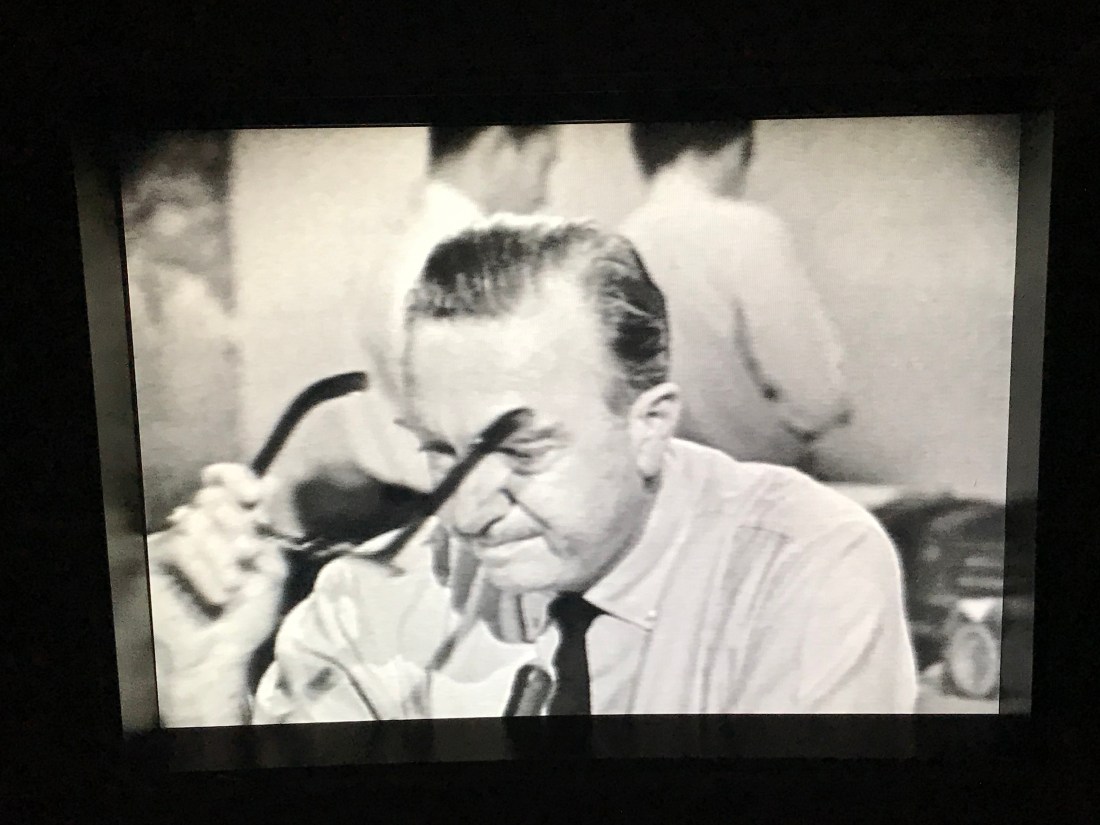
Still, who could forget Walter Cronkite’s report on the assasination? Those who could remember, much like 9/11, remember exactly where they were when it happened, and, much like Cronkite in the shot above, were dismayed and simply stunned by the gravity of it all.

IMG_6299.jpg

Though President Kennedy did not live to see through his term, his premature death made him only a martyr, and his image only amplified in significance, as did his beliefs.

IMG_6301.jpgIMG_6300.jpg

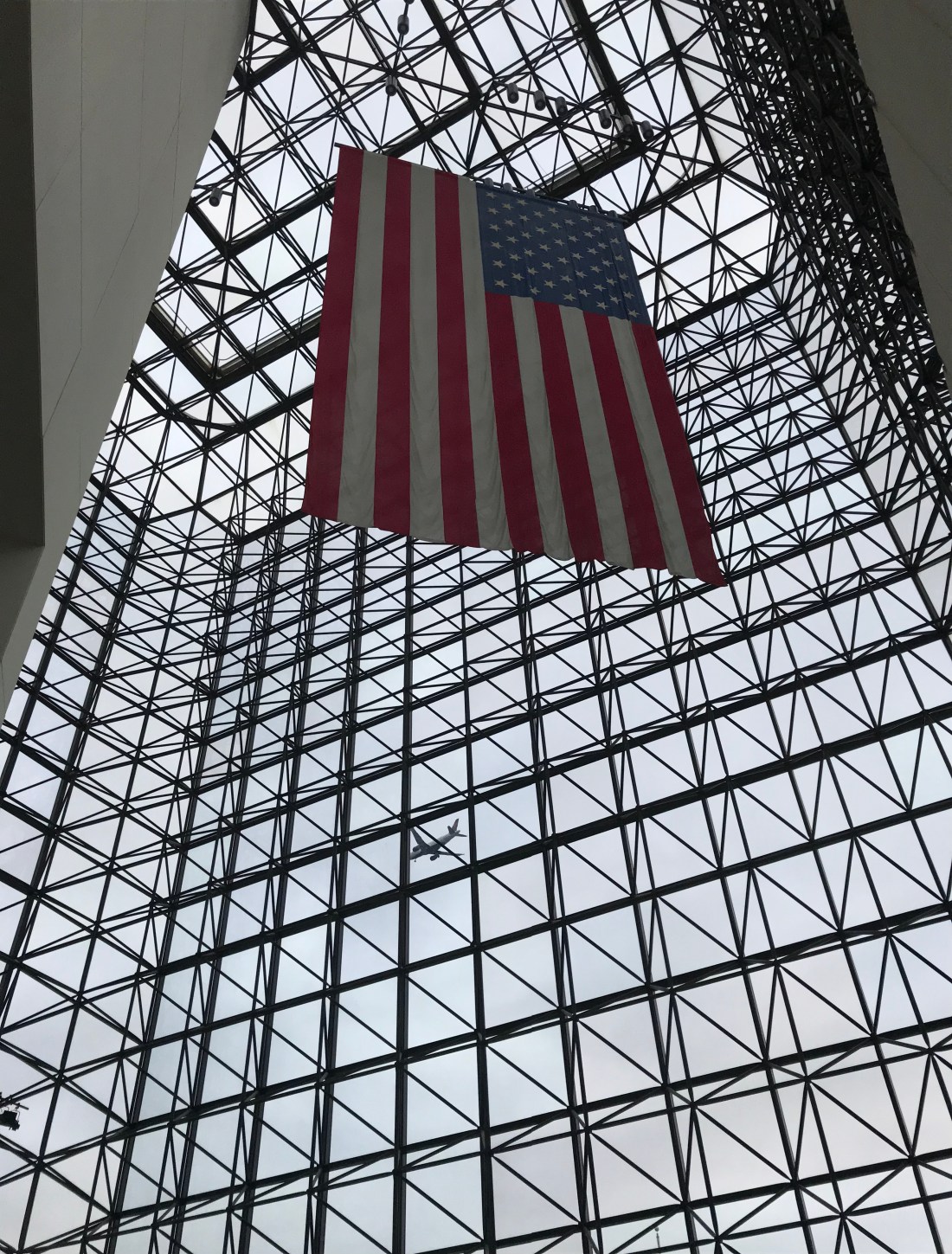
We exited out into the giant glass pavillion, and into the bright sunlight (or at least as bright as it could be with it being a cloudy day).

IMG_6311.jpg

.. Woah.

IMG_6307.jpg

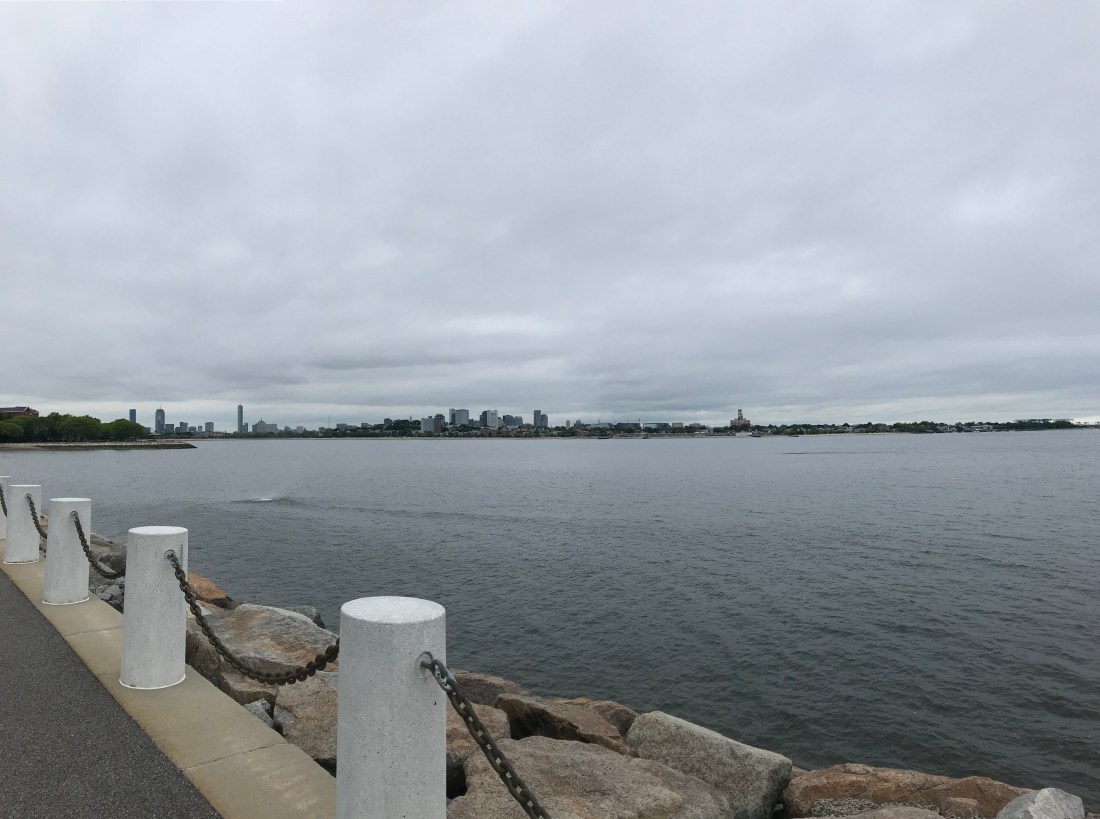
Looking towards the Boston Skyline.

IMG_6305.jpgIMG_6310.jpg

IMG_6324.jpg

Simply a stunning place with great acoustics…

IMG_6326.jpg

IMG_6330.jpg

We walked along the backside of the library to find the edge of Boston Harbor…

IMG_6328.jpg

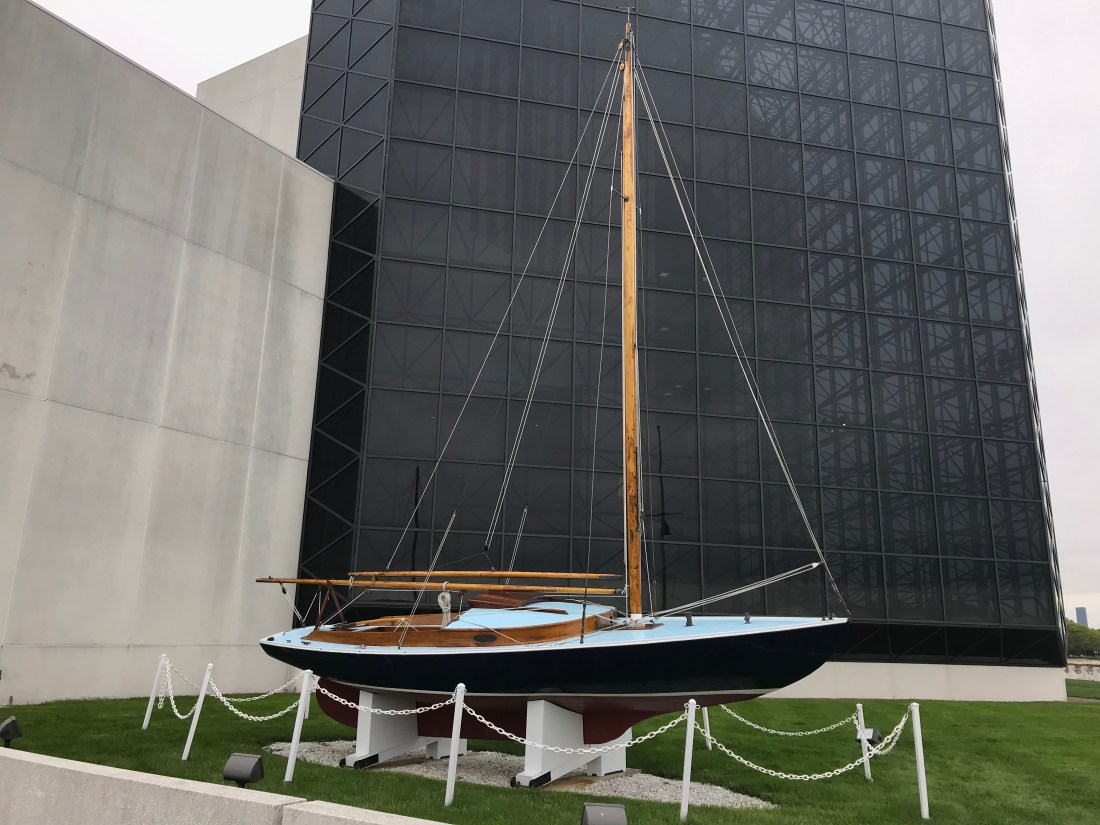
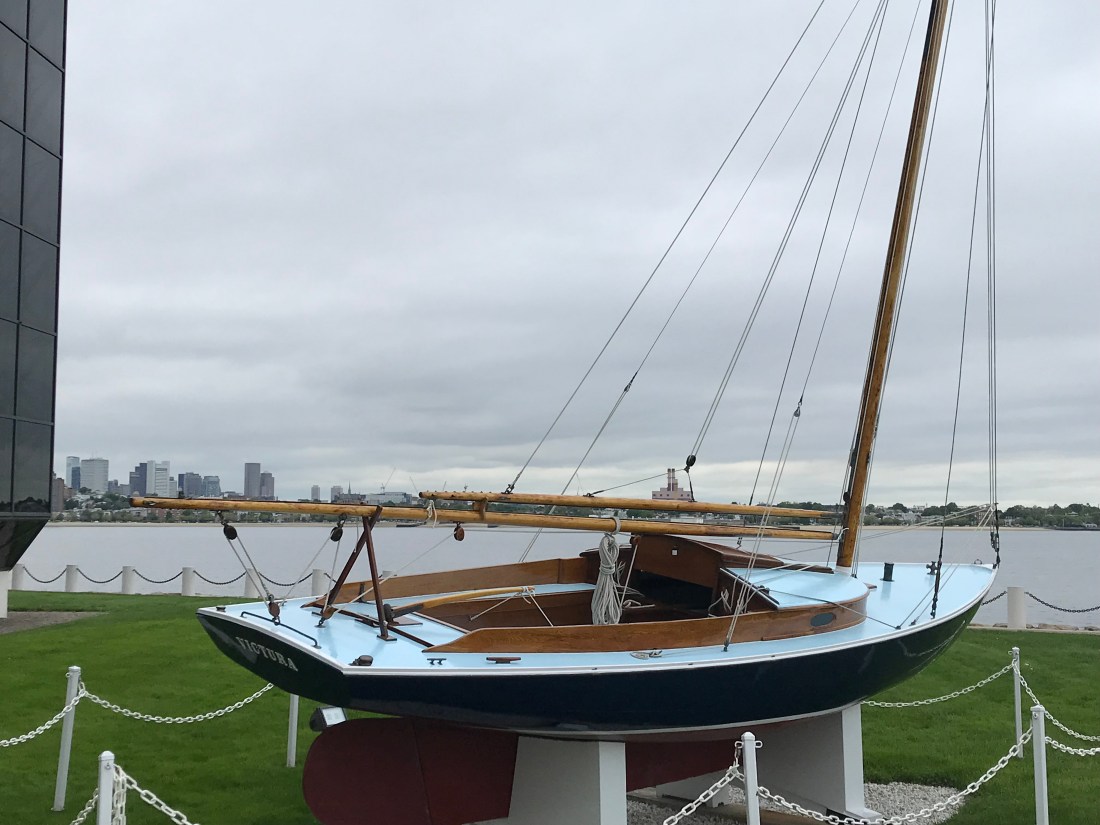
And this, is the Victura… Kennedy’s favourite sailboat that he loved to ride on the waters… he loved it dearly, and the last sketch that he drew on a napkin just hours before his death was of the Victura… sailing on the waters of Massachusetts…

IMG_1767.jpg

IMG_6329.jpg

The glass pavilion. If you squint, you can see the american flag hanging from the ceiling.

IMG_1771.jpg

President Kennedy remains in our hearts particularily for, in my mind, one reason. Though he is not perfect, his inspiration is one where we see not who we are, but what we could be. President Kennedy had fresh optimism for a new birth of freedom, and of an age in which all Americans would share in the promises of the land that it offers. And so, let us live on in his memory, and strive to better our society in whatever way we can, and leave the world a little better than we found it.

IMG_6306.jpg


Thank you once again for tolerating my late post, at this rate I think that I will not be able to find time to get fully caught up, so just expect spontaneous blog posts at random times. We still got plenty of suprises in store for Boston, both for sightseeing and historical ventures! In the next post, we will cover the town of Quincy and two of it’s most esteemed citizens, Presidents John and John Quincy Adams!

This is Mark, over and out!

Day 17, The Brave Little State of Vermont (Rutland, VT to Newton, MA) (5/28/2019)

Welcome back!

My birthday has come and gone, and it seems hard to believe that I am now 20… even more so, it is hard to believe that I am even on this trip!

Really, this trip is more of a gift that i’d prefer than anything else, so I’m right at home with you all!

So, for my birthday yesterday, we will go through our last major day of traveling through a great distance, from the heights of Vermont to the outskirts of Boston itself!

Let’s begin, shall we?


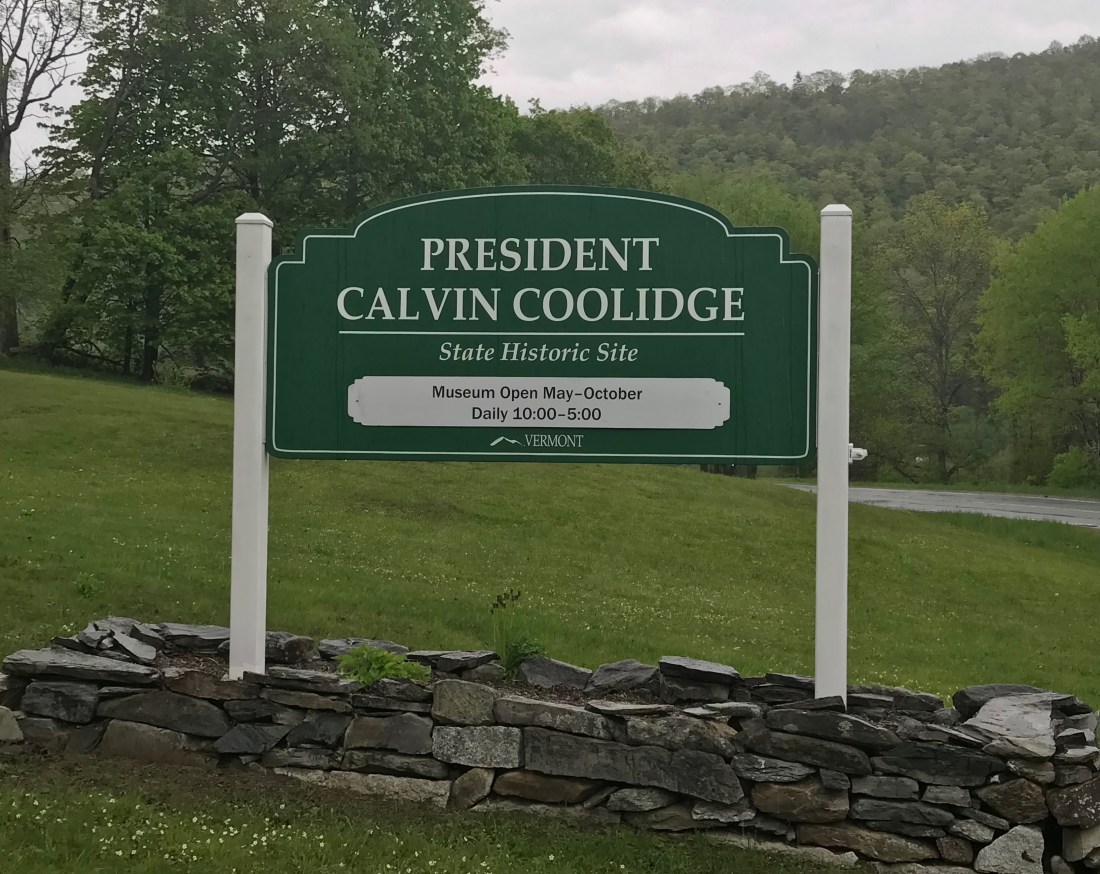
Calvin Coolidge State Historic Site

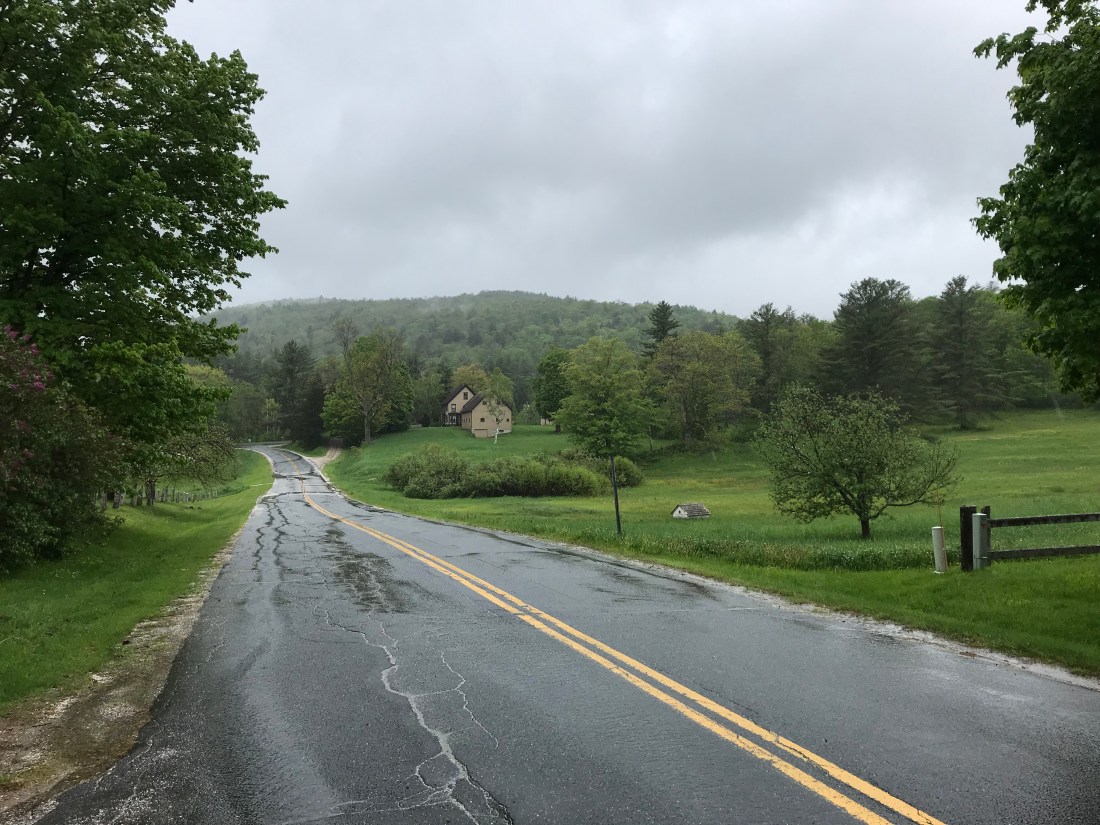
People are always products of where they came from, so it’s no suprise that our 30th President, Calvin Coolidge, inherited many of the same values that were equally shared by his hometown in Plymouth Notch, Vermont!

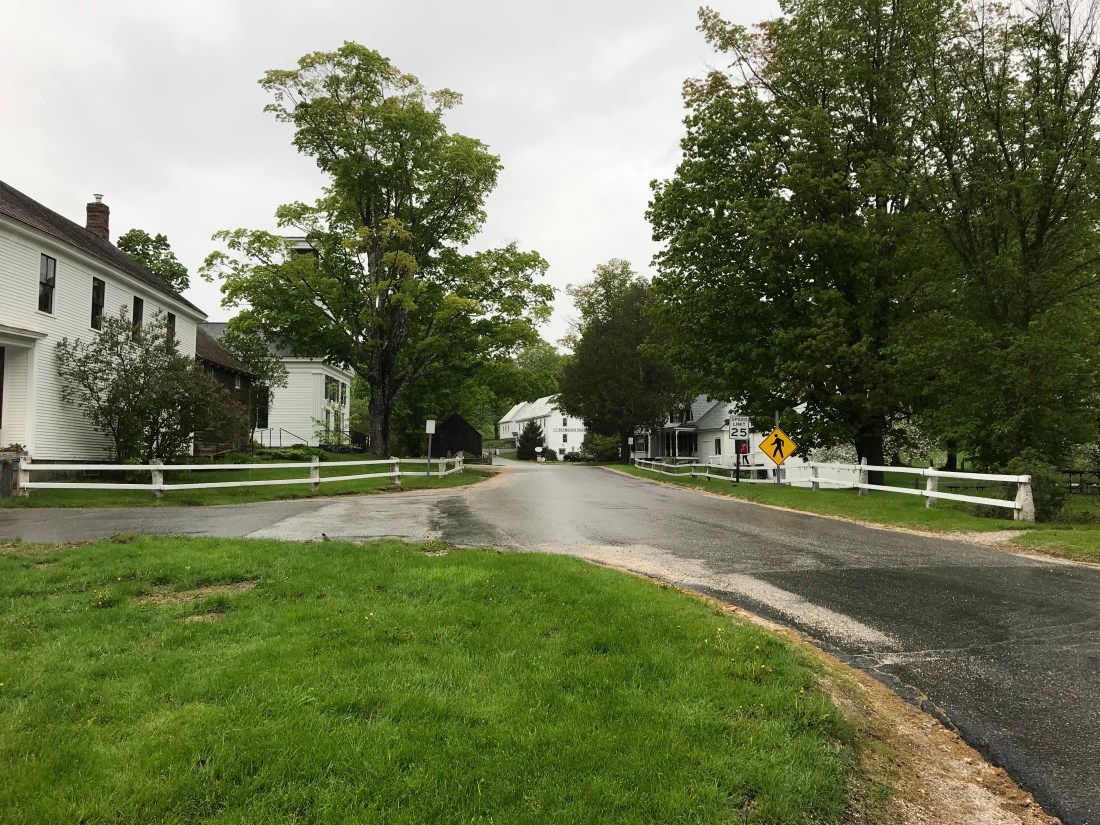
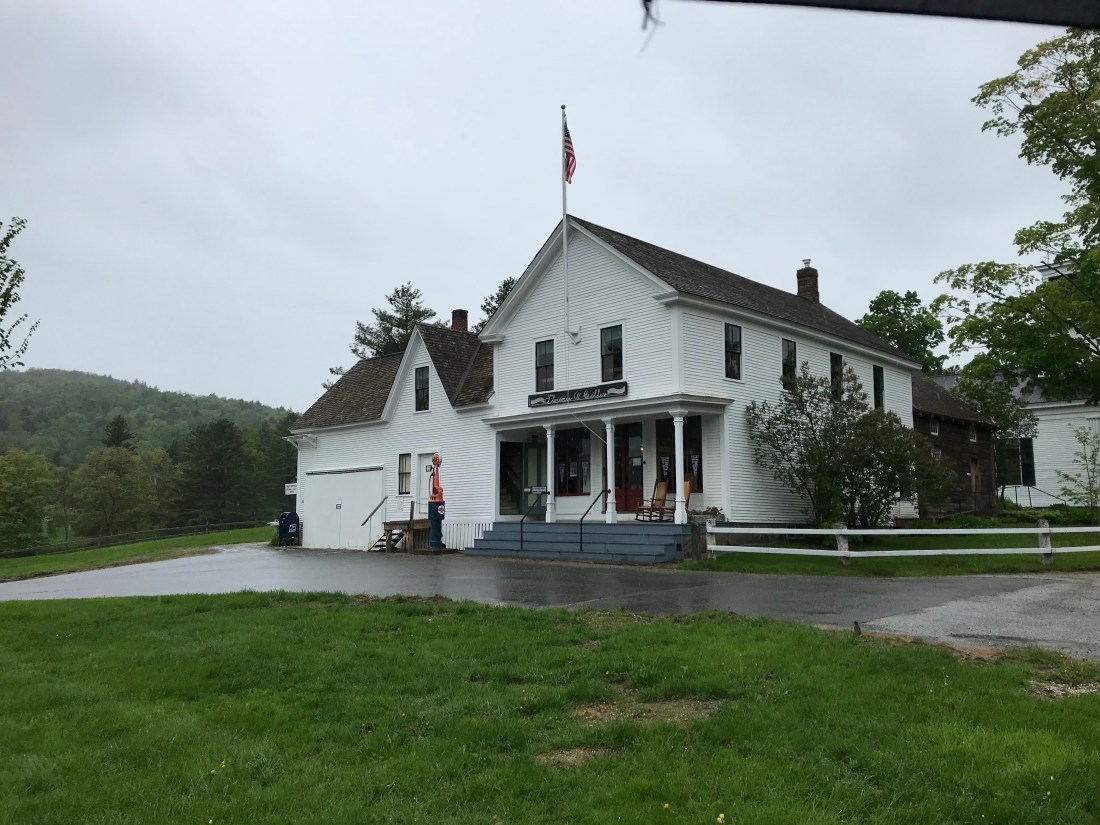
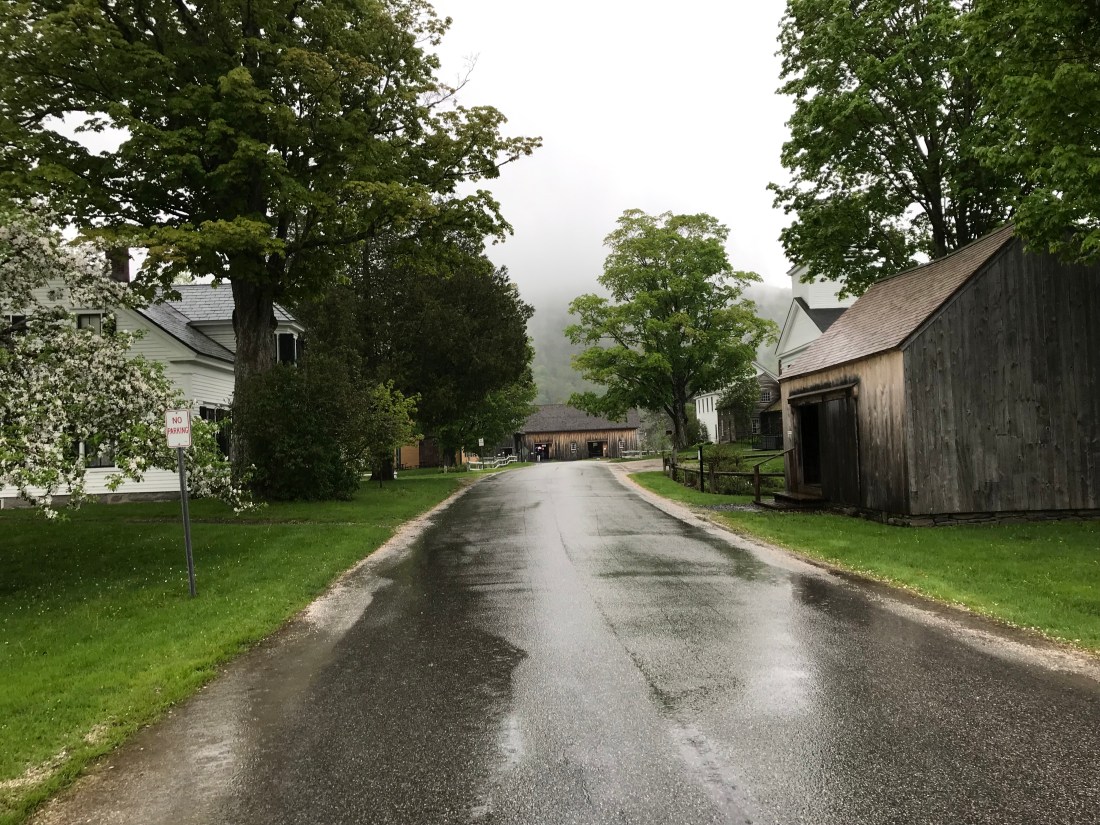
Plymouth, a very small village (only about 20-30 people in Coolidge’s day), served as not only the birthplace and boyhood home of Mr. Coolidge, but also as his inaugural site and final resting place. It was to these hills of Vermont that Mr. Coolidge always remembered fondly of.IMG_6111.jpg

IMG_6170.jpg

And I think that I will remember them fondly too… I love it.

IMG_1594.jpg

Perhaps the most remote historic site you could imagine, the entire town is situated in between the large hills.

IMG_6112.jpg


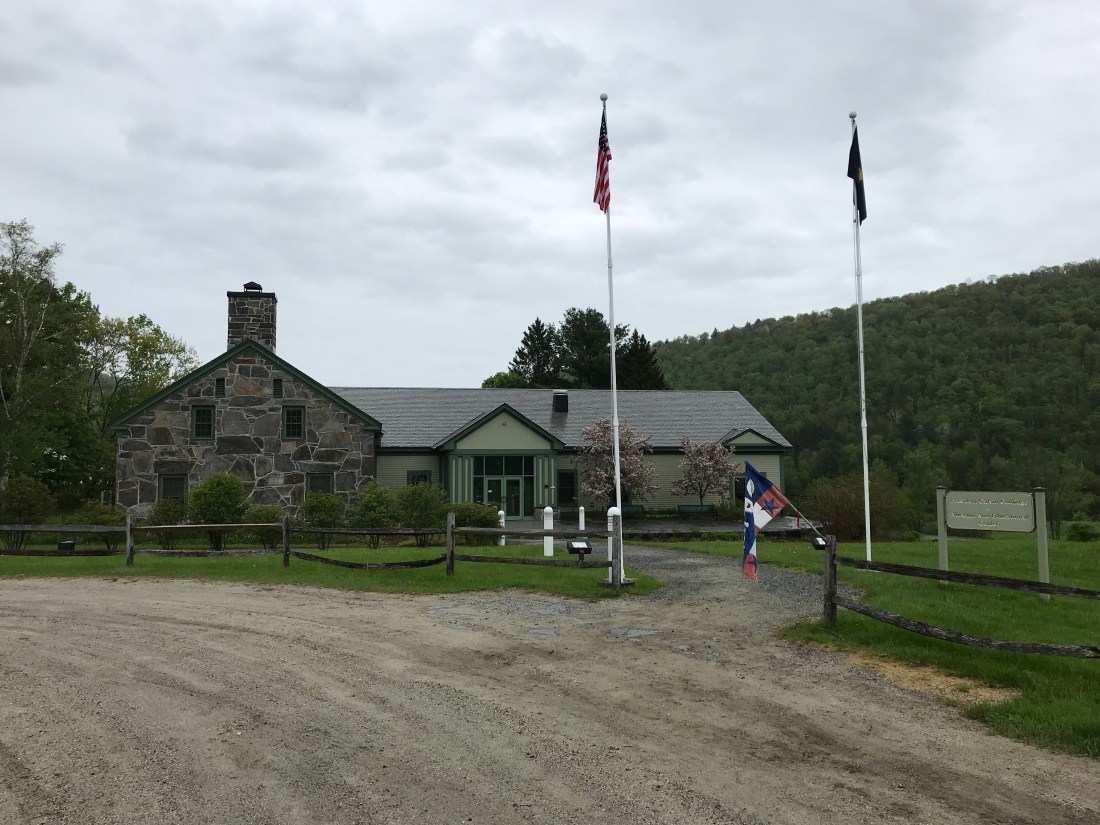
First, we stopped by the Visitor Cemter to get our bearings of the place, and to see the museum!

IMG_6172.jpgIMG_6113.jpg

The latter picture has some very rare artifacts: belongings of President Chester A. Arthur! Arthur destroyed most of his papers shortly before he died, so objects of him are very hard to come by.

IMG_6173.jpg

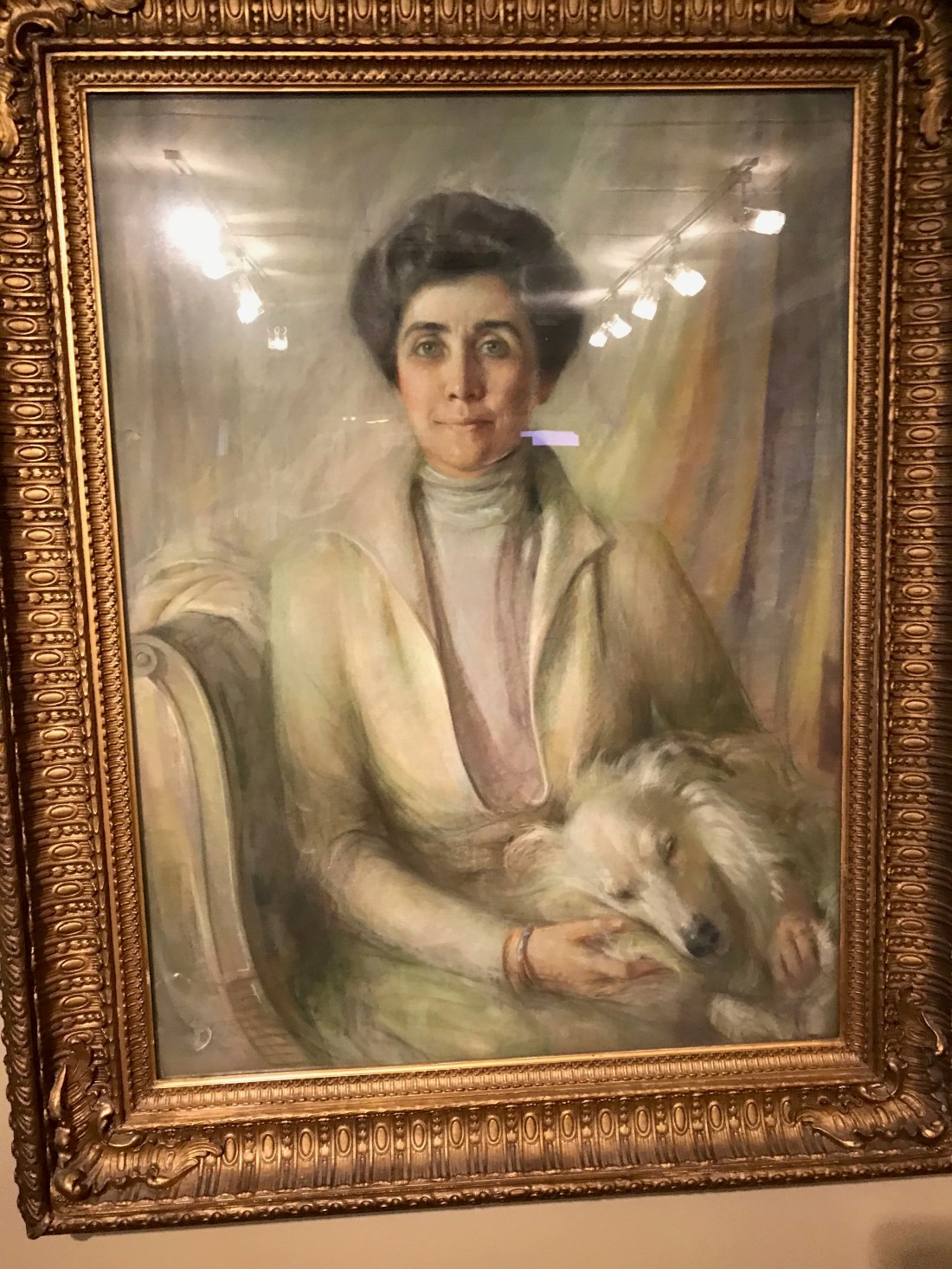
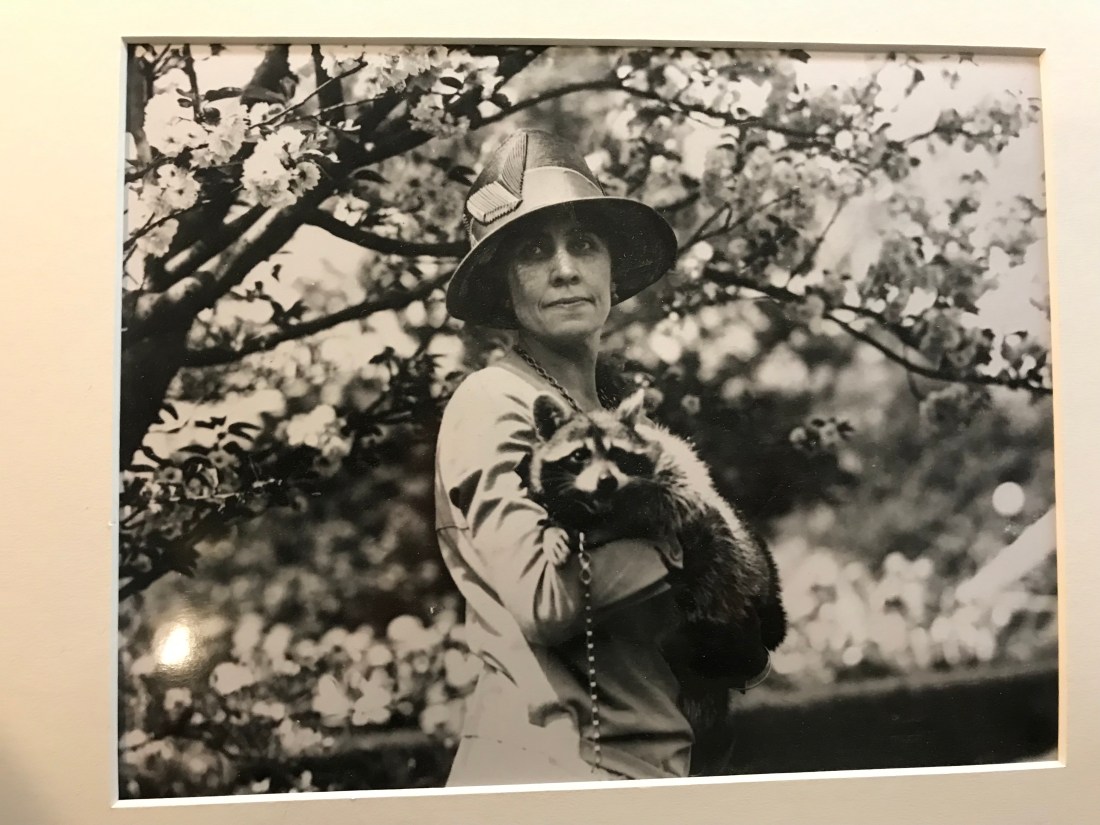
First Lady Grace Coolidge, who was a terrific supporter of the deaf and the Red Cross. She was a very well-respected woman.

IMG_6120.jpg

Don’t ask me why, but Grace also owned a pet raccoon, which was named “Rebecca.” She didn’t get along too well with people, hence her expression.

IMG_6174.jpg

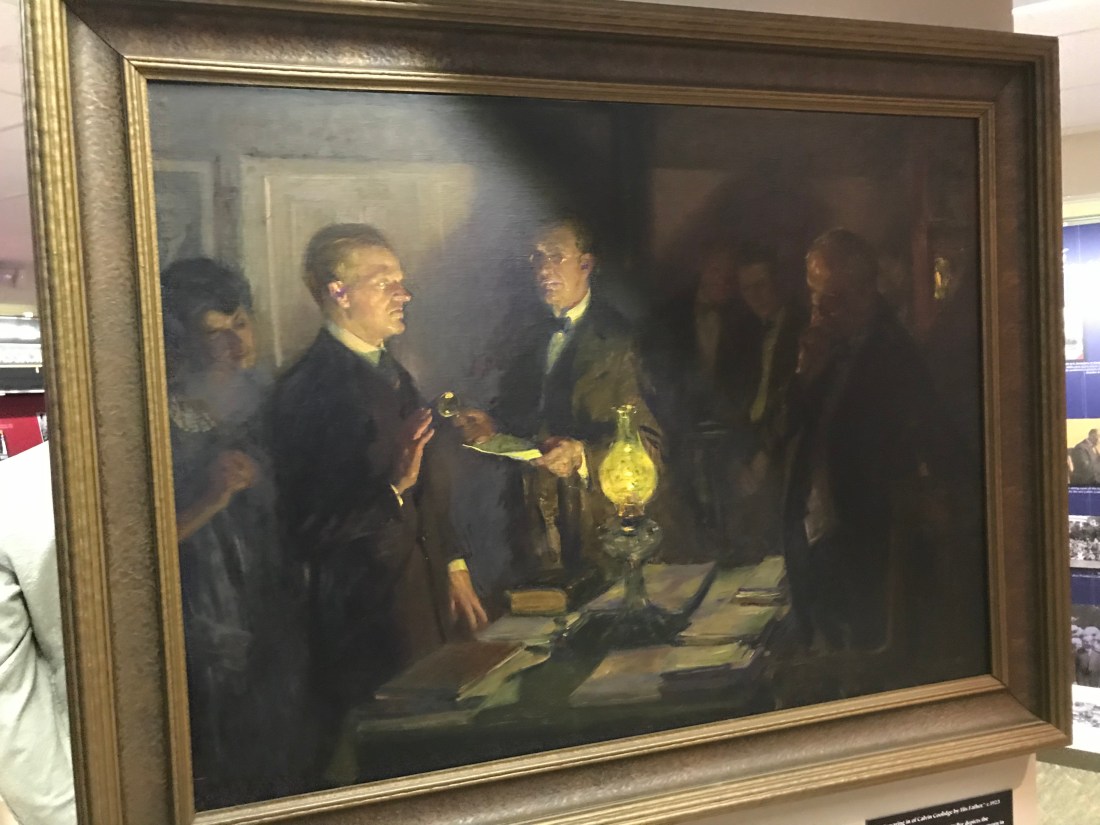
His old governor chair, hand-carved by prison inmates of Massachusetts. The painting on the left depicts his inauguration, which I will touch on later.

IMG_6175.jpg

Mr. Coolidge’s derby hat and cane. He was a very sharp dresser.

IMG_6176.jpg

Though you can hardly see it because of the reflection, in the screen in front of us is a holographic image of Calvin Coolidge (or an actor of him)! What’s even more cool, is the fact that you can ask a question in the nearby microphone, and he would answer it! That seems like very advanced tech, especially for a place like this.


IMG_6177.jpg

Coolidge’s cabinet chair during his presidential years. While most items of his are kept at his library in Northampton, there are still a good number of effects here as well.

Now then, onto the village itself!

IMG_6114.jpg

Ah, so little to do and so much time.

Wait a minute! Strike that, reverse it.

IMG_6117.jpg

It’s a very pristine setting, no matter how you put it. It was cold and clammy with all the rain pouring down, but of course, we could care less.

IMG_6119.jpg

This corner building is the general store that his father, Colonel John Coolidge ran. Let’s take respite from the wetness.

IMG_6122.jpg

IMG_6124.jpg

Tons of assorted goodies and merchandise! You could find anything here, cookbooks, candies, sodas, postcards, and even bottles of classic Vermont Maple Syrup (or as Roger Miller likes to call it, “Maple Surple”).

IMG_6123.jpg

These well-built counters were actually built by the president and his father! They feature alternating planks of Bird’s Eye Maple and Cherry woods.

IMG_6157.jpg

IMG_6156.jpg

Upstairs, one could find the small dance hall, which was also used as a Summer White House for the president! When he was here, hundreds of cars would show up to the town filled with reporters who would monitor the outside of the building. It brought a lot of attention to the tiny town of Plymouth Notch.

IMG_6125.jpg

This barn at the end of the road featured tons of old farming equippment! And most of it’s original too!

IMG_6165.jpgIMG_6163.jpg

IMG_6166.jpg

An assortment of Maple Syrup troughs and harvesting materials. these were actually used by Coolidge himself, who was terrific at extracting sugar from the syrup.

IMG_1656.jpgIMG_6162.jpg

The larger part of the barn was filled with all sorts of carridges and other vehicles, including this Model T Ford!

IMG_6168.jpg

This teahouse, “Top of the Notch” served as a gift shop in the town for the longest time, and now serves as the administrator’s office.

IMG_1601.jpg

And this tiny building connected to the general store is the birthplace of President Coolidge!

IMG_6128.jpg

The kitchen, with low ceilings in order to keep heat down in the room.

IMG_1605.jpg

Calvin’s parents, John and Victoria Coolidge. Victoria died when young Calvin was just 12, so it was his father who would do much to shape his early life.

Colonel John Coolidge (the colonel was an honorary title,) was a jack of-all trades, and was at various times a state legislator, farmer, craftsman, storeowner, postmaster, sherriff, and notary public, to name just a few (there are many others that he did as well).

IMG_1607.jpg

The birthroom… Calvin was born in this very bed in 1872… on the Fourth of July. He is the only president to be born on such a date, and he took pride in it heavily.

IMG_6130.jpg

I’ve lost count of how many birthplaces we’ve seen so far… it would seem however that almost all of them came from humble beginnings, and got their worthy traits early on in life.

IMG_6131.jpg

The pantry stuffed with original Coolidge artifacts.

Next up was the Coolidge homestead!

IMG_1644.jpg

It’s raining VERY. HEAVILY.

Coolidge lived here for most of his childhood, and it played host to his unpredicted inauguration…

IMG_1617.jpgIMG_6132.jpg

The stable, filled with wagons, blacksmith tools, and other objects of John Coolidges.

The entire family line was a whole menagerie of John’s and Calvin’s, many of which spanned 5 or 6 generations… Calvin was originally named “John Calvin Coolidge”, but eventually the John was dropped.

IMG_6133.jpg

Calvin’s old room, which was curiously small.

IMG_6134.jpg

A workbench of Calvin’s father, with god knows how many special tools and devices around.

IMG_6135.jpg

The dining table. Almost every building on the site was lighted by kerosene lamps, just as they were back then. This is one prime example.

IMG_6136.jpg

…. A collector’s true dream…

IMG_6142.jpg

The parlor, which was sometimes used for church services. All of these items are also original.

IMG_1630.jpg

John Coolidge’s room. It was here that he died during his son’s time in the White House.

IMG_1637.jpg

He looks a bit comical in that large hat and that long coat. Still, to each his own.

IMG_6138.jpg

Picture yourself in 1923… then Vice-President Coolidge was staying in the room upstairs, when he was suddenly wakened up by his father in the middle night, who was warned by a telegraph message handed from a messenger…

President Warren G. Harding had died of a heart-attack in San Francisco, leaving a vacant hole in the government… there was no time to lose.

IMG_1626.jpg

In the family living-room, by the single light of the kerosene lamp, Calvin Coolidge was sworn on the family bible as President of the United States… by his own father.

IMG_6178.jpg

IMG_6141.jpgIMG_6139.jpg

And with that, Calvin Coolidge became the 30th President of the United States, and hurried back to Washington to establish his administration. But it all happened here, in the roots of his youth, which he dearly loved.

IMG_6149.jpg

And so, we hurried down the road to explore the rest of the site.

IMG_1638.jpgIMG_6148.jpg

Calvin’s schoolhouse, filled with exhibits about Vermont wildlife and plantlife, and more information about the community in Plymouth.

IMG_6144.jpg

One of the best places about this site… was a cheese factory.

What? This was here when the Coolidges lived here! And it still produces fresh artisan cheese to this day made only by the finest ingredients!

IMG_6145.jpg

In fact, the cheese at this place was perhaps the best that I’ve ever tasted in my life… at one point, it was rated the #2 best cheesemaking establishment in the entire country! Think about that! And also, I fell in love with the brie…

IMG_6146.jpgIMG_6147.jpg

Upstairs were original devices concerning cheesemaking back in the 1800’s. I’m ordering this stuff online when I get back…

IMG_6115.jpg

The Wilder Tavern was home to some of the neighbors of the Coolidge family, but it seems to be closed at the moment.

5121184664_1680b34ecb_b.jpg

In case you were wondering why it was clear skies, this is not my photo. There really wasn’t a good way to take a picture in the pouring rain. It got really hard.

Anyways, this is the village church, where Coolidge, his father and stepmother and others worshipped. He remains our only “Congregationalist” President (Congregationalists are related to Puritan faith).

IMG_1650.jpgSuffice it to say, this church was beautifuly and masterfully crafted, and was a wonder to behold. The President and his family also worshipped here whenever they were in town, and away from their home in Northampton or the White House.

IMG_1649.jpgIMG_6153.jpg

IMG_6151.jpg

Reading this stone makes you smile. Even though he claimed his home-state as Massachusetts, he always valued his true-home in Vermont.


Down the road from the site was Plymouth Notch Cemetery. Suffice it to say, it was pretty easy to find the Coolidge gravesite.

IMG_6191.jpg

Right by the side of the road (that’s our rental car there)!

IMG_6179.jpg

It’s really unassuming isn’t it? If it weren’t for the Presidential Seal on top, you couldn’t even guess that it was a presidential gravesite.

IMG_6185.jpg

It is WET. And COLD.

IMG_6182.jpg

John Coolidge, the President’s son, lived until 2000…  he is buried here too, among seven generations of Coolidge.

IMG_6181.jpg

Grace Coolidge’s headstone,

IMG_6180.jpg

Calvin Coolidge Jr. sadly died in 1924 of an infectious sore. It broke the President’s heart. He was never the same person since, and died only nine years after that happened.

IMG_6184.jpg

More of the Coolidge Family. The closest one belongs to John Coolidge, and the two next to it are of Victoria Coolidge and Calvin’s stepmother, Carrie.

IMG_6188.jpg

Looking down the hill.. who know’s how old these tombstones are?

As one could expect, visiting the early days of notable people always provides deep insight into their personalities and values. Coolidge developed that sense of “no-nonsense”, sensible sort of personality, and it is perhaps the cold frigid region here that developed his tart and formal sort of mannerisms.

Still, learning more about these sort of sites gives you more reason as to what could influence certain decisions, and Coolidge stayed the course of normalcy to the best of his ability. And no matter what consequences might have come (even with a Great Depression shortly after he left office), he still enacted his policies to the best of his ability; the humble farmer’s son from Plymouth Notch Vermont.

So, Keep Cool with Coolidge.

Calvin Coolidge.jpg


The rest of the trip to Boston consisted of several brief stops, which I will touch on.


Old North Cemetery

Throughout the everlasting rain, we arrived in Concord, the capital city of New Hampshire, to pay tribute to the only president to hail from “The Granite State”.

Our 14th President, Franklin Pierce.

Franklin Pierce.jpg

Perhaps our most tragic president, we sought to visit his final resting place in Old North Cemetery, before checking out his home in nearby Hillsborough.

IMG_6193.jpg

Another very old cemetery, with yet more tilted tombstones. You don’t usually find as many old cemeteries like this in Texas…

IMG_6195.jpg

Getting close…

IMG_6196.jpg

Aha, here we are.

Franklin Pierce, a northern democrat, was chosen to be President in 1852, and sought to quell the regional tensions between North and South before the Civil War. His incapability however, only helped to hasten the Civil War, as his bitterness and pro-southern beliefs did not do well to unite both sides, and solve the Slavery Issue in Bleeding Kansas.

IMG_6198.jpg

STILL. COLD.


His family life was likely the most tragic of any other Commander-in-Chief… Both he and his wife Jane lost two of their three sons to infant sickness, and on their way to the inauguration, their train derailed, and their last son Benny was killed before their own eyes…

IMG_6197.jpg

Jane, a fiercely religious woman, blamed her husband for this, as his election put them on that train… she would write letters to her dead son from the second floor of the White House, and always wore black…

In 1863 Jane died, and later, Franklin’s good friend, writer Nathaniel Hawthorne, passed away as well. Depressed and alone, Pierce took to drinking, and died in 1869 of a broken heart, and likely liver-poisoning.

… I don’t like to study Pierce that much, mainly for these reasons… it’s just plain depressing.

Still, to give him credit, not everyone could become president, and I can’t imagine anyone having to cope with losing all of their children prematurely. There is nothing else that I can add really, I suppose that all we can give him now is pity, poor guy…


Franklin Pierce Homestead

In Hillsborough, we found out to our dismay that the homestead, where he grew up, was closed for the season!

IMG_1669.jpg

So, we simply took our losses (and a few pictures).

IMG_6203.jpg

His father Benjamin Pierce was a military officer and Governor. It would seem for Pierce that he would give much promise, especially with his first careers as a lawyer and a general in the Mexican-American War.

IMG_1670.jpg

IMG_1672.jpg

With nothing else to do, we retreated into Massachusetts, and into Newton, only a few miles away from Boston!

Celebrating at a local mexian-restaurant, we tried something new…

IMG_1674.jpg

Fried Ice Cream!

I’ve always wanted to try this, and suffice it to say… i’d try it again in an instant. It was delicious!

In that restaurant, I also learned that my parents were keeping a birthday secret from me since the start of our trip…

As it turned out, they got me a little something back at Mount Vernon in Virginia… one of the best gifts that I have ever gotten on a birthday…

IMG_6206.jpg

An original penny from 1803! Words could not express how giddy I was to see this! Nothing that any of us owned was as old as this! 216 years old, and minted in Thomas Jefferson’s Presidency might I add!

I won’t ask them how much it cost…


Well, suffice it to say, it was a pretty good birthday. And we would be ready to finish the remainder of our trip in our last major destination… I hope to see you in my last set of posts, coming very soon!

Boston awaits…


Day 16, Hudson Valley Expedition (Castleton, NY to Rutland, VT) (5/27/19)

Upon reflecting on the planning for the remainder of the trip, I realized something.

Today is my 20th Birthday…

That’s it! May 28th… it seems that in all this rush, I had almost completely forgotten about my own birthday, which granted, is not a very easy thing to do.

Regardless however, I will still continue on my pace, for there is nothing more that I would ask for than visiting all of these special Historical Sites, and to share it with my family and you all! So I thank you once again for keeping with me so far!

This post will be dedicated to May 27th’s activities, which took us from the Hudson Valley of New York, all the way to the piney heights of Vermont! It’s quite a big jump, so let’s get to it!


Martin Van Buren National Historic Site

Our next stop is Kinderhook, New York, which is located only a few miles south of the New York State capital of Albany. Kinderhook is a relatively small town, and would likely be forgotten in the annals of history were it not for the fact that our 8th President, Martin Van Buren, lived here for much of his life.

Van Buren’s residence of “Lindenwald” is preserved by the National Park Service as the Martin Van Buren National Historic Site, and is likely the best place to learn about the “Little Magician”, as he was called.

IMG_1494.jpg

And here we are, let’s get right to it!

IMG_5952.jpg

The grounds on the estate, aside from the massive excesses of gnats flying around, was certainly a pretty one to see.

IMG_5991.jpg

And this is Van Buren’s home, ‘Lindenwald”! Though this house didn’t exist before his birth, it is still worthy to note the amount of Dutch Influence in this place. Besides being the first president to be born an American Citizen, Van Buren was also the only one to speak english as a second language (dutch was his primary tongue)!

IMG_1534.jpg

Originally the estate of a wealthy judge, Van Buren bought this place after the former’s death, wanting it to become a form of a “Presidential Retreat” for his second term. Of course, that latter goal didn’t exactly come to fruition.

IMG_1500.jpg


Entering the house, guided by our very knowledgeable park ranger, we came into the entrance hall…. or should I say… dining room?

This is an odd occurance, especially in those days…

IMG_1497.jpg

This table however, is foldable! It’s fashioned in an accordion-like design, and could easily be folded into just a single panel of the table, should the need arise.

All that interesting wallpaper is also original! They did very extensive work to restore it to the vibrant color it had when Van Buren lived here.

IMG_1505.jpg

Interesting manual chandelier, that you can raise or lower.

IMG_5953.jpg

A peek into one of the lower guest-rooms. Henry Clay stayed here during his 3-day visit to Kinderhook, and his slave slept in front of the bed on those layed out cloths. Though Van Buren’s family had owned slaves, Van Buren himself was neutral on the subject until the end of his life, in which he became a staunch supporter of the Union, Abraham Lincoln, and anti-slavery causes.

IMG_5956.jpg

One of the main parlor rooms, which was often used by the ladies who visited the place. Though the carpet and wallpaper are mere reproductions, they are all still the exact same design and pattern used by Van Buren.

IMG_1509.jpg

The other parlor room! Note the three different pictures of Van Buren on he left, Thomas Jefferson in the center, and Andrew Jackson on the right.

Van Buren emulated Thomas Jefferson and his political beliefs, and was a prominent member of his Democratic-Republican party. Van Buren, being a terrific political mastermind and organizer, was one of the founders of the Democratic Party, and would become Andrew Jackson’s Vice-President. Naturally, with someone as popular as Jackson supporting him in his bid for election, Van Buren easily won the White House.

IMG_1508.jpg

Look at those sideburns…

Van Buren was called the “Old Fox of Kinderhook” by some, or more commonly, “Old Kinderhook”. The last nickname was shortened to the acronym “O.K.” And thus, that is how we got the word OK!

If you take nothing else from this post, at least remember that we can thank Martin Van Buren for coining OK! I’d be a happy camper if you do.

IMG_5976.jpg

The servants area was actually a lot nicer than most that we’ve seen lately… they were paid very well by the president, but each servant never stayed for long, as they moved on to other jobs.

IMG_5977.jpg

A neat bell system with different bell tones for different rooms of the house. It’s a clever idea that allows servants quicker completion of requested tasks.

IMG_5978.jpg

The kitchen! Van Buren, as a northern farmer, was a great grower of staple crops such as potatoes, and of varous other crops. Some of his favourite foods included Fish, fresh fruit, Oysters (which were a very common commodity to find in Kinderhook), and Madeira Wine.

IMG_1515.jpg

Look at the size of this stove.. how on earth did his servants not get back pains?

IMG_5979.jpg

The Laundry Room. Cotton buisness boomed in the South thanks to the use of slave labor, but was not enough to counter the Economic Panic of 1837, which Van Buren presided over. Andrew Jackson’s victory over the closing of the National Bank had severely damaged credit to farmers and industrialists alike, and Van Buren got the blame.

IMG_5980.jpg

Some mighty impressive storage, which would likely be enough to stock an entire larder in.

IMG_1516.jpg

Looking up through the cupola high above, one can see that there are FIVE floors to this house (though, the last couple of floors are just tiny chambers)!

IMG_5982.jpg

Van Buren’s private study. Like many presidents, he was another big bookworm.

IMG_5983.jpg

Though Van Buren would likely have not worn a toga in the 1800’s, it is still important to note that Van Buren was, for all intents and purposes, a “dandy”. he was the kind that would regularly take baths a day, wear expensive clothes, and ride around in pricey carriages. This didn’t make him seem exactly in touch with the common people, which probably was the cause for his losing the Election of 1840 to William Henry Harrison.

IMG_1523.jpg

Upstairs in this bedroom, one can spot the portrait of Angelica Singleton, who was Van Buren’s Daughter-in-law. She served as White House hostess (and First-Lady) during his administration, because his wife Hannah died several years before.

IMG_1531.jpg

In this picture of the Red Room in the White House, one can see George H.W. and Barbara Bush, George W. and Laura Bush, and President Barack Obama and First Lady Michelle Obama. Angelica Singleton looks on from the wall, as you can see.

IMG_5990.jpg

The last room in the house was the President’s bedroom. It was a very spacious room, and DID NOT have a circular fan like you can see near the fireplace.

IMG_1528.jpg

And it was in this sleigh-bed that Martin Van Buren breathed his last in 1862, in the midst of the Civil War. In his will, he stated that above all else in his active political life, there was no greater joy than getting to spend time with his family, which would carry on longer than he did.

Martin Van Buren was certainly not one of our better presidents, and historians rank him as in the bottom quartile of the 44 men that have graced the office. However, it is quite possible that we are not looking at Van Buren’s “character” in the proper angle that it should be examined.

Van Buren’s occupation that he enjoyed the most in his life was his time as a farmer in the later years of his life, and not as the most powerful man in the nation. He wanted to leave behind bounties and resources that would actually make a difference, and leave society a little better off than it was before. It is through his work as a farmer that perhaps gives him the most deserving merit.

His extraordinary capabilities as a political organizer were potentially not the best suited for the Presidency, but yet aside from helping to create the oldest-surviving political party in the world (the Democratic Party), his assertive ambition would also lead him to become a U.S. Senator, Governor of New York, Secretary of State, Minister to the United Kingdom, Vice-President, and finally President.

And that in itself is something worthy indeed in History.


Martin Van Buren.jpg


We then travelled to the north end of Kinderhook, at the local Kinderhook Reformed Church Cemetery. There, we will see Martin Van Buren’s Gravesite, and then-

IMG_5994.jpg

… Que?

IMG_5996.jpg

Geez… the most special secrets are the ones that are actually secret…

IMG_5997.jpgIMG_5998.jpg

This is a VERY old building! It must have been built VERY well.

Well, anyways, we reached the cemetery in a few minutes.

Kinderhook Reformed Church Cemetery

This is a very small, ungated cemetery, that would be forgotten by most were it not for it’s most famous internment.

IMG_5999.jpgIMG_6001.jpgIMG_6002.jpg

Something tells me that he’s buried here.


IMG_6003.jpg

It is still very old and pretty here though, considering the slight lean of some of the tombstones.

IMG_6004.jpg

Aha, here we are!

IMG_6005.jpg

IMG_6008.jpg

One of the most noticeable monuments in the Cemetery, and possibly the tallest of all of them.

IMG_6013.jpg

Sadly, the marker was weathered and worn, with the letters hardly legible.

IMG_6011.jpgIMG_6010.jpg

Hannah Van Buren, his wife, is buried here. She has a special epitaph that covers her grave.

IMG_6012.jpg

And this is the actual headstone of President Van Buren, which simply reads: MVB.

IMG_6014.jpg

And his son, Martin Van Buren Jr. He had several sons, one of which is buried in the next cemetery that we are going to visit.


After paying our respects, we got in the car and travelled further north through the Hudson Valley, and into the town of Menands, New York, a satellite city of Albany. Another presidential gravesite awaits us in one of the largest cemeteries in New York!

Albany Rural Cemetery

IMG_6015.jpg

The cemetery is nicely filled with small copses of trees, though it could certainly use a bit of lawn-mowing.

IMG_6016.jpg

It wasn’t hard to find our target however, even how deep inside it was.

IMG_1541.jpg

This is the grave of Chester A. Arthur, one of our most forgettable presidents.

download.jpg

… geez that facial hair… I’d be cutting those off in his sleep.

IMG_6023.jpg

IMG_6018.jpg

One can see the presidential seal on his marker. Arthur, formerly the Chief Port-Collector of New York, was chosen by President James A. Garfield to be his running mate. When Garfield was shot by a disgruntled worker in Washington D.C., and with the former’s passing weeks later, Arthur was sworn in as the 21st President.

IMG_6017.jpg

A beautiful angel, which seems even more sorrowful given the oxidized green color to it. It’s oddly serene looking.

IMG_6019.jpg

This gravesite hides a very interesting lie… Chester A. Arthur was born in 1829, a YEAR before what is depicted on the gravestone!

Why is that? Did he want to make himself seem younger, or is there another purpose to it? We may never know..

Arthur, having been born 15 miles south of the Canadian border in Vermont, was ridiculed by opponents with rumors that he was actually born in Canada, which would have made his claim to the Presidency illegitimate. The rumors were easily dispelled, though talk remains to this day about such a possibility.

IMG_6021.jpgIMG_6022.jpg

Nearby is buried many others of the Arthur family, including his wife Nell (who died before he became President), his parents William and Malvina, and several of his siblings.

If Arthur did anything notable in the office (which is a little bit hard to find), it would have been his work towards Civil-Service Reform, which allowed merit-based government appointments to be recommended instead of reliance of the “Spoils System”.

Still, his lack of notability puts his good values into merely an average administration. Our Presidential Gravesite total is now at 31/39!

download

That does it, I’m getting the scissors!


Grant Cottage State historic Site

Our last site of the day… well, tells a story. The story of a War-Hero that sought to save his family from financial ruin… his last heroic battle…

I speak of course, of Civil War General and 18th President Ulysses S. Grant, who came to this cottage in Upstate New York to spend his final weeks writing his memoirs, before dying here amidst the wooded slopes of Mt. McGregor.


IMG_6024.jpg

Up the hill we go.. it was a long winding path, and feeling the cool wind on our faces as we went was refreshing.

IMG_6026.jpg

… wait a minute… this doesn’t seem right…

As it turns out, there is a recently abandoned correctional facility that rests right on the side of the hill… Used to, you had to provide ID to get the security clearance needed to proceed to the cottage. Thankfully, this isn’t the case anymore.

IMG_6025.jpg

Aha, here we are!

After stopping at the nearby visitor center, we walked up to the cottage itself.

IMG_6035.jpg

IMG_6036.jpg

It’s actually a very nice cottage. I can’t imagine how many people don’t know about this, it’s a very well-hidden gem.

IMG_6031.jpg

Ah yes, time to begin our story!

It was in the early 1880’s, and Ulysses S. Grant, the hero of the Civil War (and President of the United States) was dying of terminal throat cancer… his habit of constantly smoking and chewing on cigars had done the general in, and greatly weakened his physical strength. His son got him involved in a ponzi-scam that left their family with only $200 in their name… Things seemed bleak, because it was very possible that the general would leave his family penniless and destitute following his inevitable death…

So, there was only one thing for it. He began to write his autobiography, his Personal Memoirs… if he could finish them just before he died, then it’s sales could save them from financial ruin…

And so, it was a race against fate itself. As the words flowed from General Grant’s pen, the cancer worsened, and his doctors recommended fresh air to help his ailing throat.

IMG_1547.jpg

And so, the President moved with his entire family up from the smog-filled streets of New York City, to the heights of this very mountain… he had just weeks left.

IMG_1573.jpg

The tumor on his cheek looks so painful… this is a poor-quality photograph actually, and not a painting.

Our very enthusiastic tour-guide let us into the cottage, which has carefully been preserved EXACTLY the way it was when the general spent his last days here…

IMG_6043.jpg

This room was the President’s “Bedroom” and office, where he would work on his memoirs when he wasn’t resting on the front porch.

IMG_6048.jpg

Grant rested his feet on top of these chairs put face-to-face. He slept in a sitting-position here as well, because he would’ve choked if he lied down… it makes you feel truly sorry for him…

The upholstery of the chairs were redone in the 50’s, which gives reason as to why they look somewhat new.

IMG_1549.jpg

The President’s pen and notepad, which he used to write the memoirs. Grant had a terrific capacity for writing, and could easily write 10,000 words in a single day.

IMG_6042.jpg

“I have such difficulty speaking that I am no company.”…. That almost breaks your heart to see him write that…

It’s a marvel that these items have survived for so long… for 134 years to be exact.

IMG_6040.jpg

And this is 134 year-old water. What is that stuff on the ground you ask?

Well… are you sitting down for this? (Well… might be a bit weird if you were standing up for this.. scratch that). This will blow your mind.

That is actual Cocaine.

Yes..  you heard me right. Cocaine. Apparently, this “Cocaine Water” was swabbed on Grant’s throat so it would quell his pain a little bit… I can’t imagine that helped too much, but what would they know back then?

Even stranger is the fact that the New York State Department of Parks and Recreation measures the amount of Cocaine in there every year to make sure that none of it is gone. I kid you not.

Grant labored on for six more long weeks… after much labor, he finished his memoirs, managing to get his good friend, famous author Mark Twain to publish it.

Grant died just Three Days later.

IMG_1568.jpg

IMG_1571.jpg

This very room… and this very bed… he died a soldier’s death, fighting to the last…

IMG_6045.jpg

IMG_1552.jpgIMG_1554.jpg

This clock, which was running that fateful morning, was stopped by the President’s son at the EXACT time of his death. It hasn’t ticked in 134 years.

IMG_6047.jpg

IMG_1564.jpg

His death mask, which shows that he died in relative peace… and he did, surrounded by friends, family, and holding onto the hand of his beloved wife Julia.

IMG_1557.jpg

Even more eerie was this room… these floral decorations are 134 years old. Perfectly preserved, and perfectly readable.

IMG_1558.jpg

Exactly like in the photograph…

IMG_1565.jpg

U. S. Grant..

IMG_1561.jpg

There are very few historic sites that have so immersed me and made me shiver as this one… consider me very impressed.

Ulysses S. Grant was buried in what would become the largest mausoleum in all of North America: Grant’s Tomb!

download.jpg

Though located in New York City, it was not a place that we visited this trip. However, we DID visit it last year, during our first trip to New York during Spring-Break.

Finishing our tour, we walked down the nearby path to the overlook.

IMG_6049.jpg

Simply gorgeous.

IMG_1585.jpg

Look at this view! It’s breathtaking, and you can see as far as the hills of Vermont!

IMG_6055.jpgIMG_6054.jpgIMG_6056.jpg

IMG_1575.jpg

Pictures can’t really do it justice.

IMG_6050.jpgIMG_6052.jpg

And it as at this protected spot that Grant had his last view of the valley… he collapsed here, and it was the last time he was ever outside.

So, to finish the story… did he save his family?

He did. Really his memoirs became the first big “Celebrity Autobiography”, and it reaped in millions of dollars in today’s money for his family, which saved them from financial ruin. Grant had truly won his last battle.

IMG_6059.jpg

The moral of the story? History is not merely a paragraph in a textbook, or a single object of significance… “Stories”, are history. It is about what individuals did with their goals, and of the meaning and purpose behind every object and decision that is involved. The fabric of that tale continues to be woven… what will your story be like?

images.jpg


Content with this full day, we crossed into Vermont!

IMG_6061.jpgIMG_6063.jpg

And it’s official. I think i’m in love with this state.

Those rolling hills look spectacular…

And from there, we bedded down in Rutland, Vermont. The next day, my birthday, would be filled with many surprises, as we would come to the final stretch of our trip!

Can’t wait to share it with you as soon as possible. See you soon!


Day 15, Relaxing with Roosevelts (Syosset, NY to Castleton, NY) (5/26/19)

Welcome friends, to the ROOSEVELT RUMBLE!!!

Heh, yes, I just coined that term, what of it?

This entire day (which, by the time I post this, was two days ago, oops,) was a day dedicated to the Roosevelts, one of the most famous and prestigious political families in American History, which has given us two of our great presidents: Theodore Roosevelt and Franklin D. Roosevelt!

Though both are fifth cousins, the Roosevelt Presidents have deep and expansive family roots in New York, and what better place to learn all about them than at their homes?

This is our look into Oyster Bay and Hyde Park, so strap yourselves in, and we will be OFF!

Sagamore Hill National Historic Site

First, let me note that Long Island (or at least this part of it), was absolutely gorgeous.
IMG_5667.jpg

So lush and green… I can understand why Theodore Roosevelt loved it so…

IMG_5704.jpg

Ready for a bit of genius logic? Well, Oyster Bay, the town where Sagamore Hill is located, has a bay full of oysters!

Sorry, that might seem a bit of a no-brainer… still, Oyster Bay produces 75% of American Oysters, which makes it a very valuable asset to the seafood market. This bay is also nice, which empties into the Atlantic Ocean.

IMG_5702.jpg

Coming up the hill, we saw the home from a distance! Sagamore Hill!
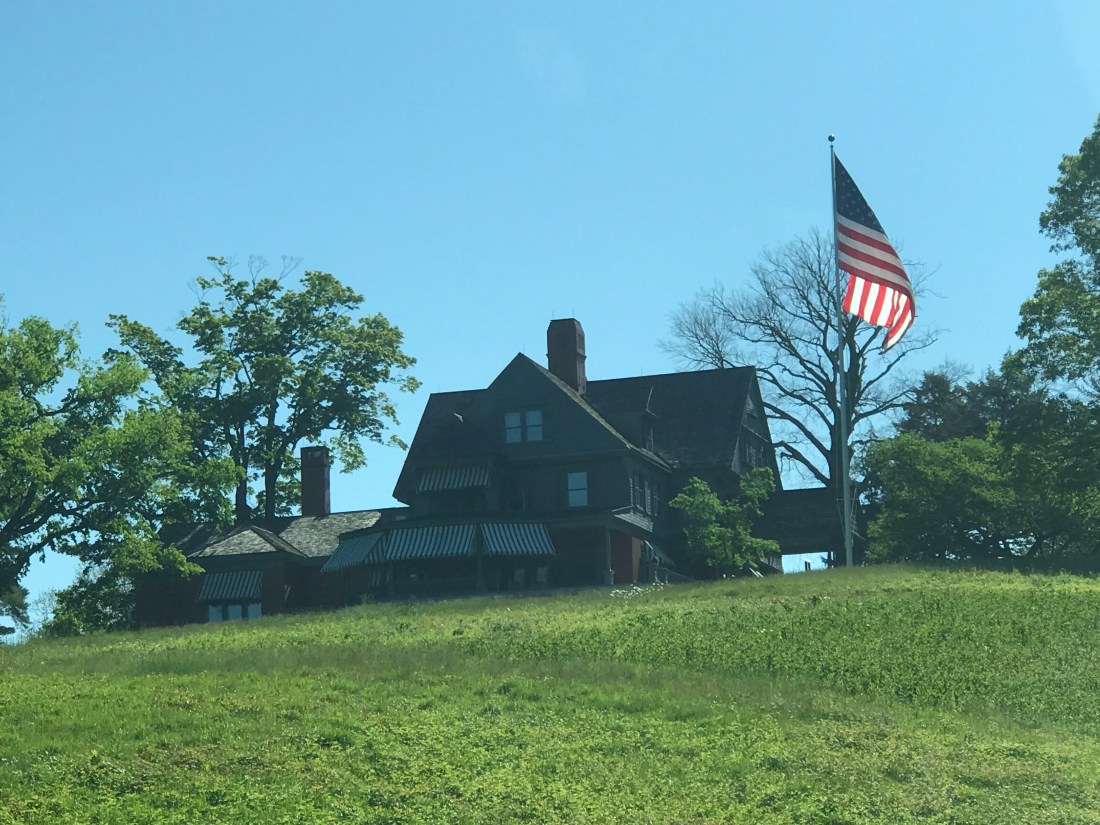
IMG_5668.jpgIMG_5670.jpg

Parking our car, we wandered the paths towards the site’s museum. This clear area is quite peaceful, and especially on such a clear and hot day.
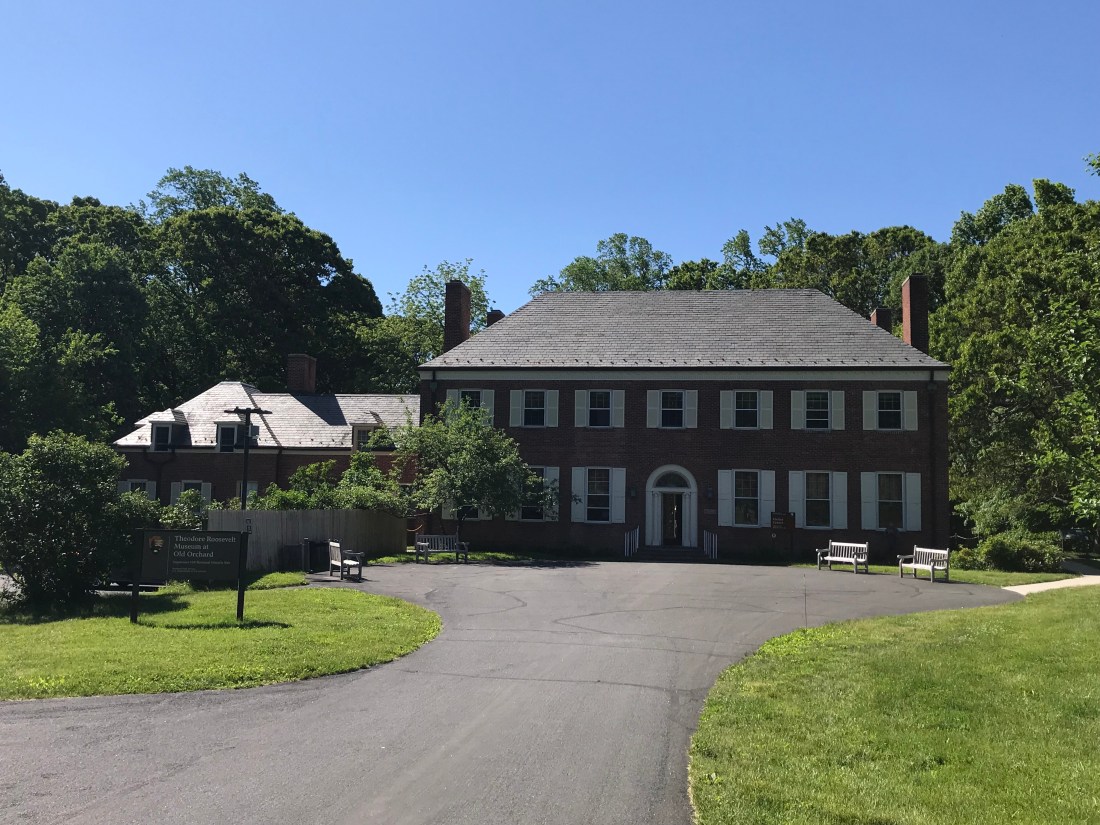
IMG_5671.jpg

Formerly Archie Roosevelt’s (TR’s son’s) estate, Old Orchard residence has been converted into the Visitor-Center and museum!
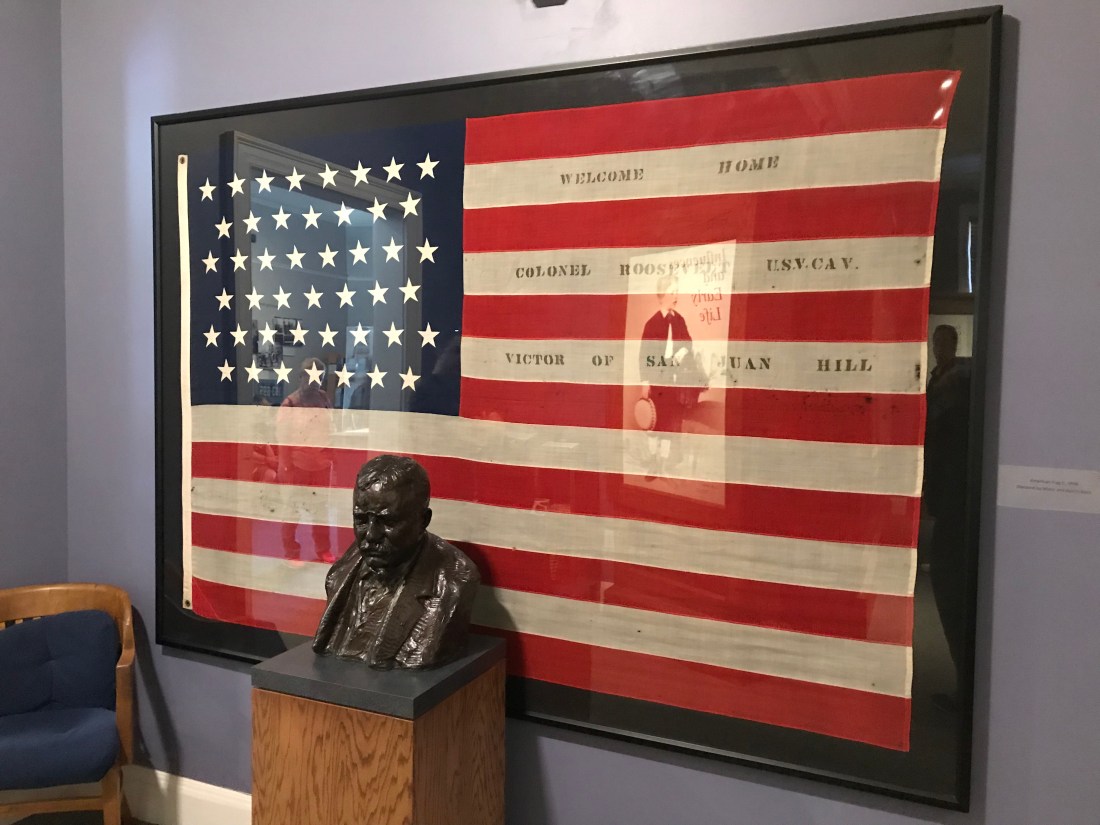
IMG_5672.jpg

A flag which honored Teddy’s service in the Spanish-American War, at which point he was a Lieutenant Colonel. He led the infamous charge up San Juan Hill during the titular battle, and received much public fame, as well as a Medal of Honor. He remained a very proud and active supporter of the military throughout his life.
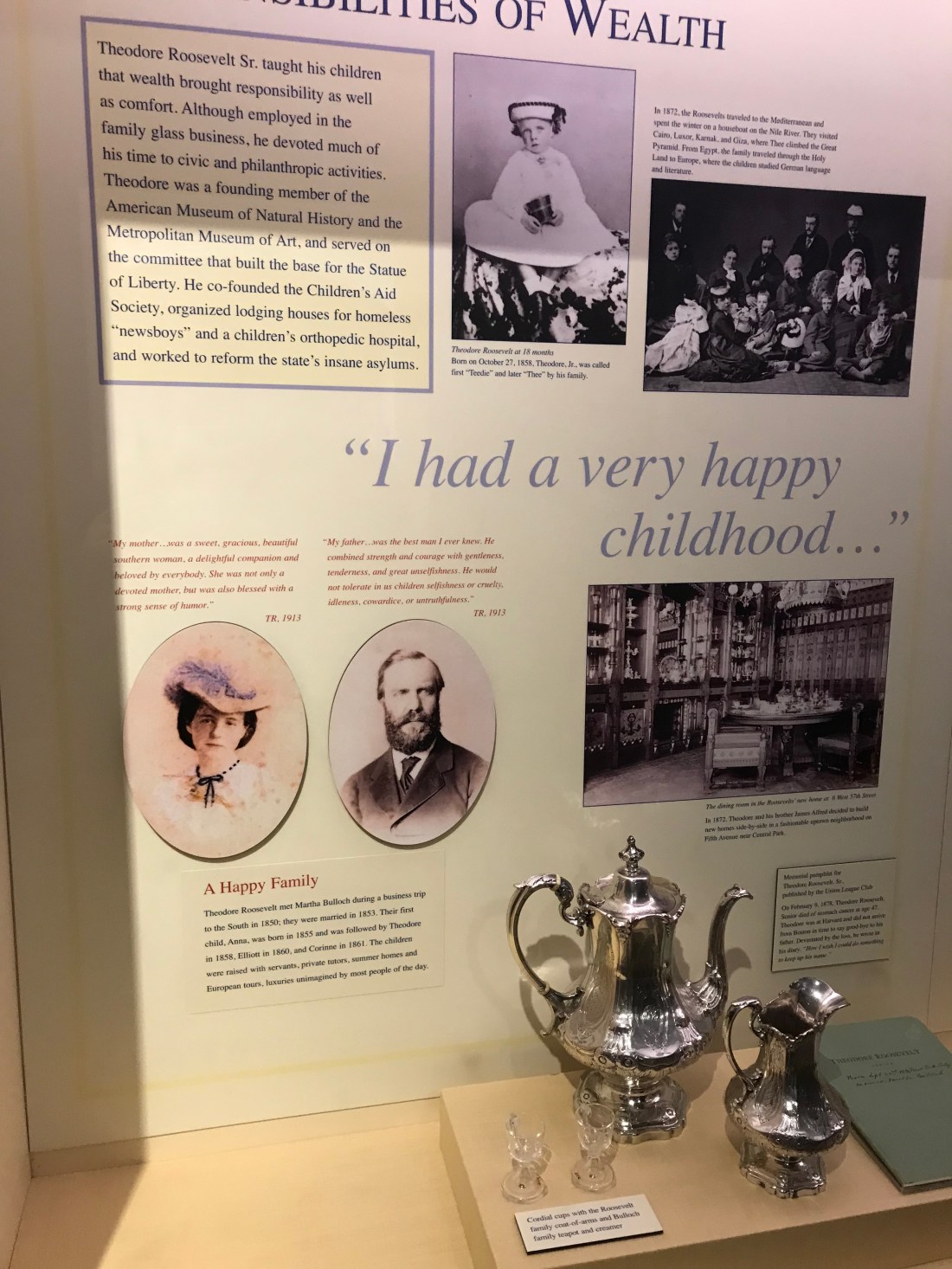
IMG_5673.jpg

Theodore Roosevelt Sr. and Martha Bulloch were TR’s parents, and had come from a long line of wealthy aristocrats based in New York. They both were major influences in a young Theodore’s life, which helped to instill him with responsibility for his actions, and humility striven by service.

On Valentine’s Day of 1884, two terrible events drew Roosevelt into a deep depression… first the passing of his first wife Alice, and then, hours later in the same house, his mother passed as well.
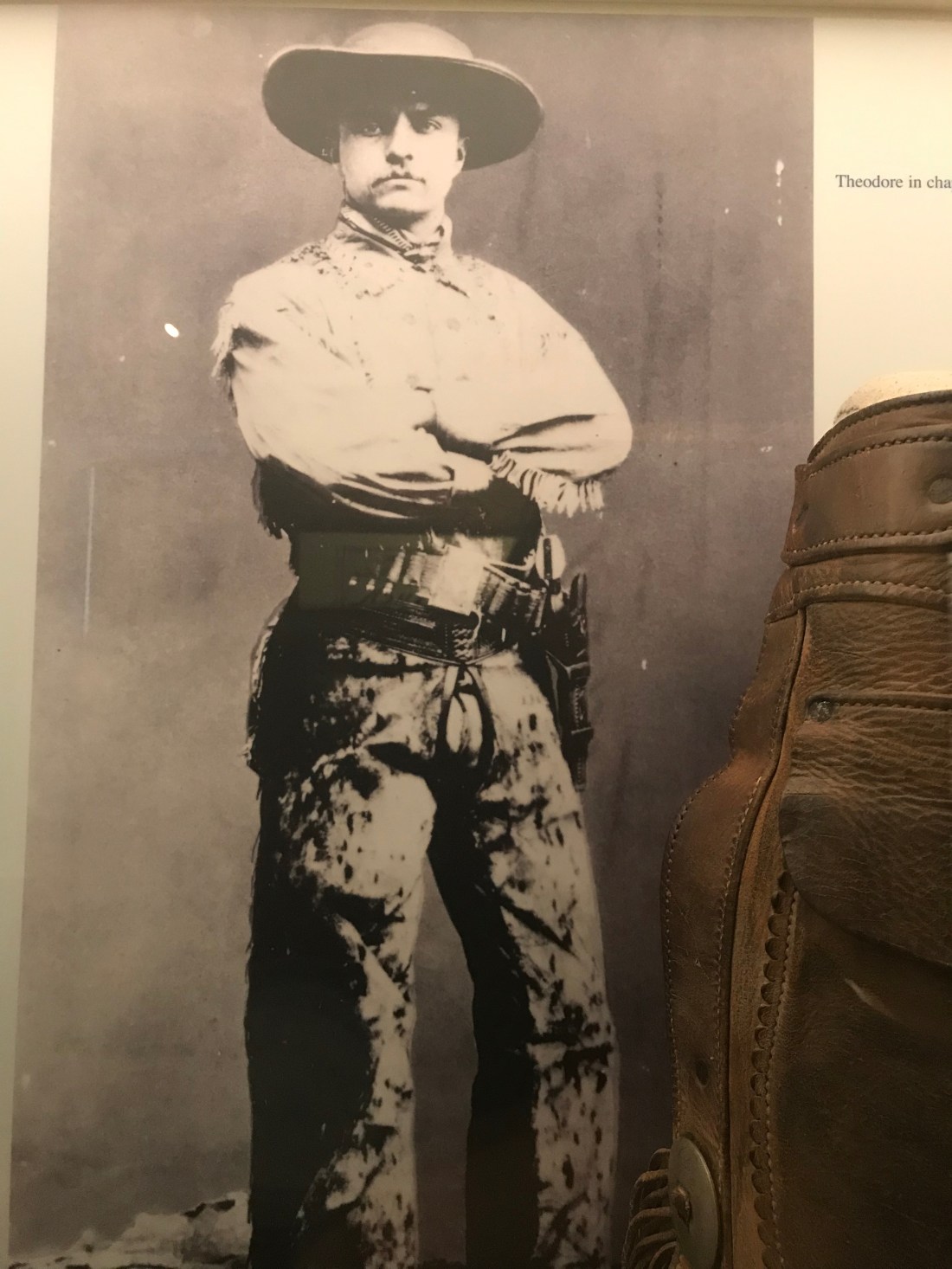
IMG_1324.jpgIMG_1327.jpg

Theodore Roosevelt found solace in his ranch in the Dakotas, where he gained much appreciation for conservationalist efforts, which further channeled his love of nature.

IMG_1339.jpg

One of Theodore Roosevelt’s Rough Rider outfits from his service in the Spanish-American War! Teddy recruited many of the Rough Riders right in San Antonio, Texas, at the Menger Hotel downtown. It’s nice to see connections like this.
IMG_5675.jpgIMG_5674.jpg

Would you even recognize TR as these people? I certainly couldn’t.
IMG_5679.jpg

Roosevelt’s political career was certainly fast-paced, and by 1901, the man had over-time held the positions of NYC Police Commissioner, Assistant Secretary of the Navy, Governor of New York, and as Vice-President under William McKinley. Fun fact, the photo on the left of Roosevelt and McKinley is actually two different photos that were stitched together. The difference between the Ohio Politician and the New Yorker-turned-cowboy could not be any different.
IMG_1345.jpg

The trust-buster that was Theodore Roosevelt helped to break up the monopoly empires that had long dominated America over the past decades, helping to begin the end to the likes of Standard Oil Company and Carnegie’s Steel Productions.

One fascinating event that occured in 1912 to him was someone trying to kill him with a pistol while the ex-president was running for an unsucessful third term. During his speech, Roosevelt was shot in the chest by a disgruntled worker, but not in a fatal area. TR then proclaimed:
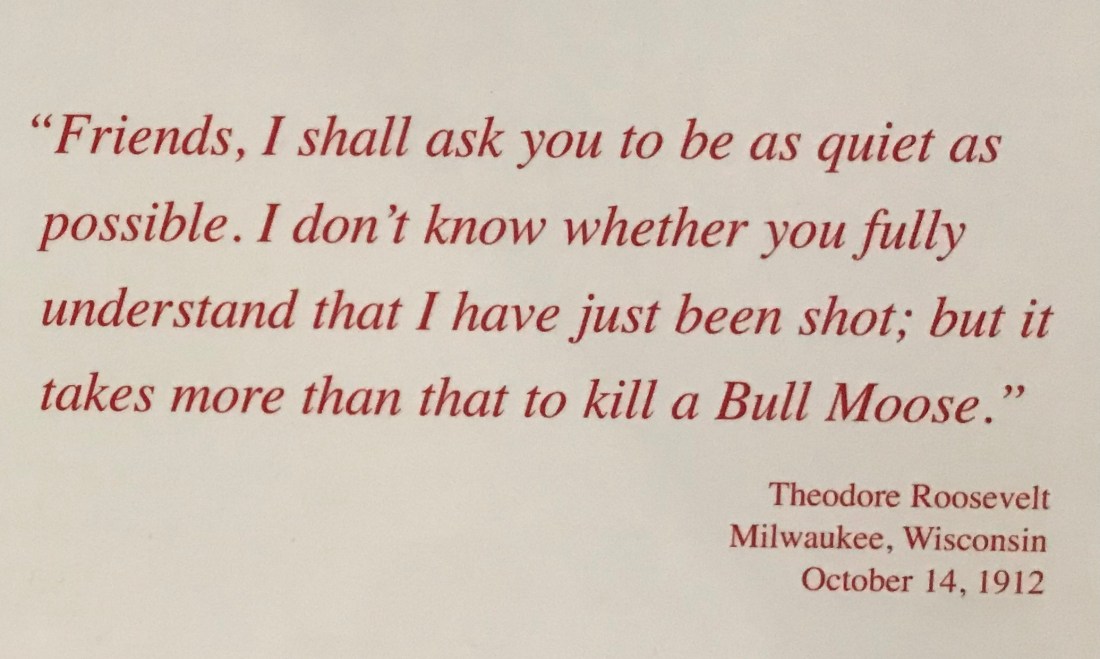
IMG_1376.jpg

With his bloody shirt he proceeded to FINISH HIS SPEECH. 90 Minutes later, he calmly walked to the nearest hospital and survived…

Do I even need to say anything? It’s amazing… he had grit for sure.
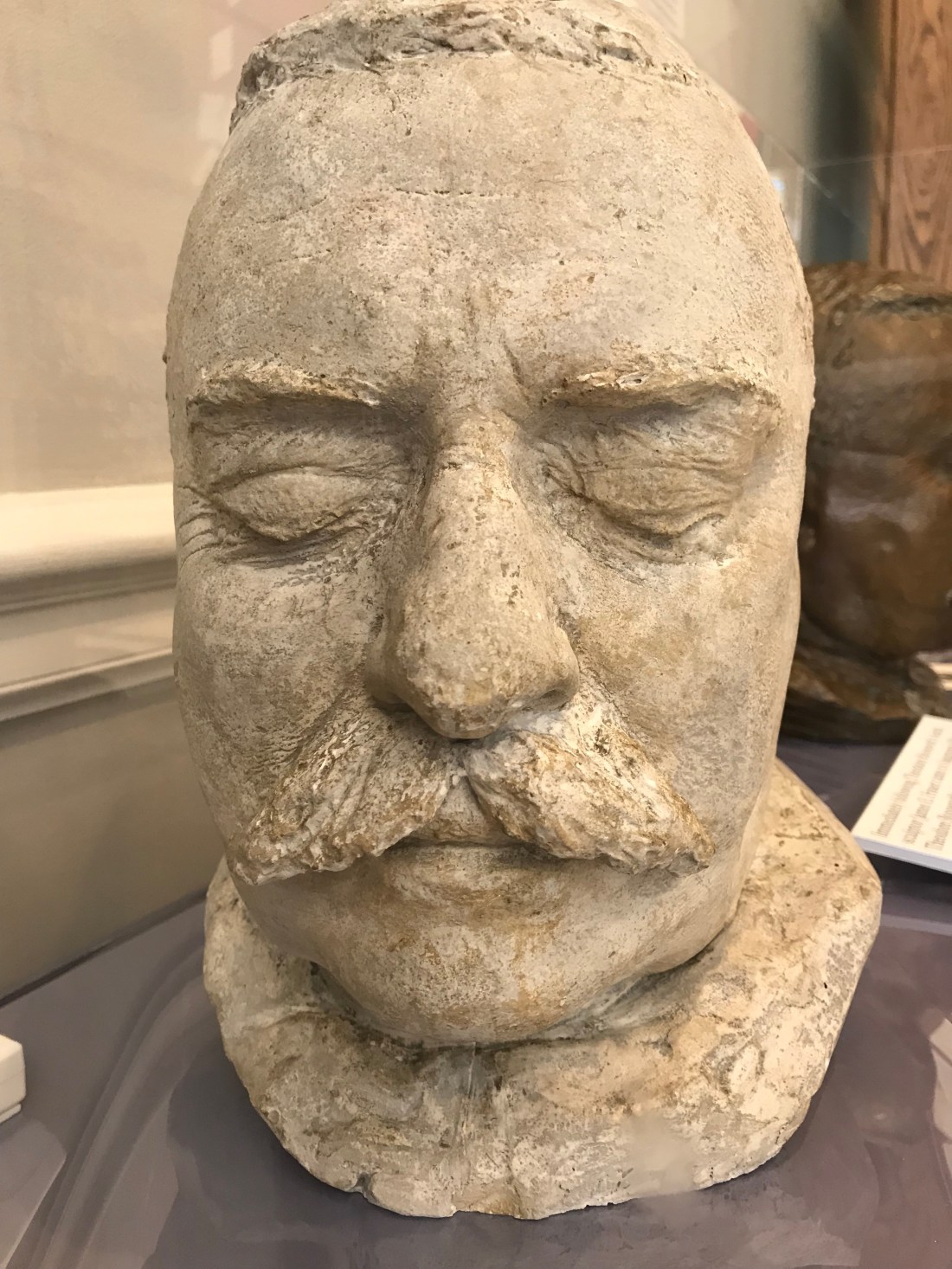
IMG_5685.jpg

A death mask of TR taken shortly after his death. It is eerily accurate.
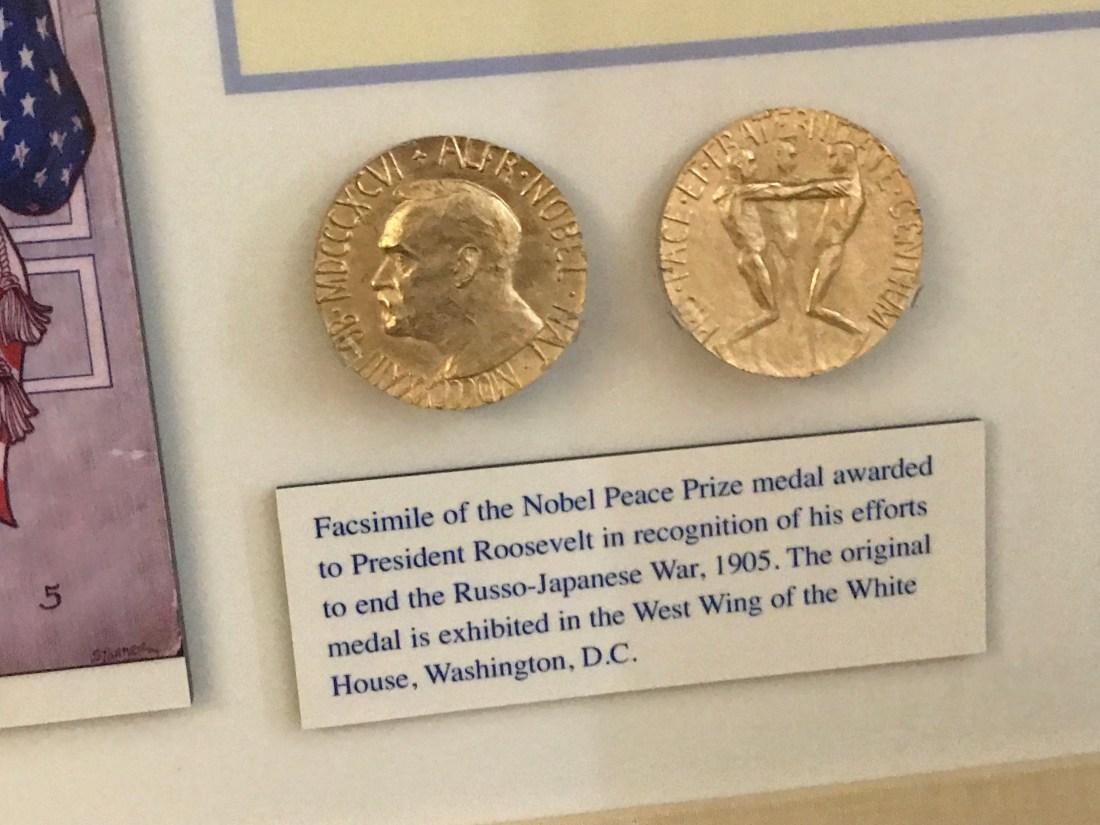
IMG_5683.jpg

For his negotating of the Russo-Japanese War, TR earned himself the Nobel Peace Prize (he is one of four Presidents to have done so, with the others including Woodrow Wilson, Jimmy Carter, and Barack Obama)! This particular one is a facsimile however.
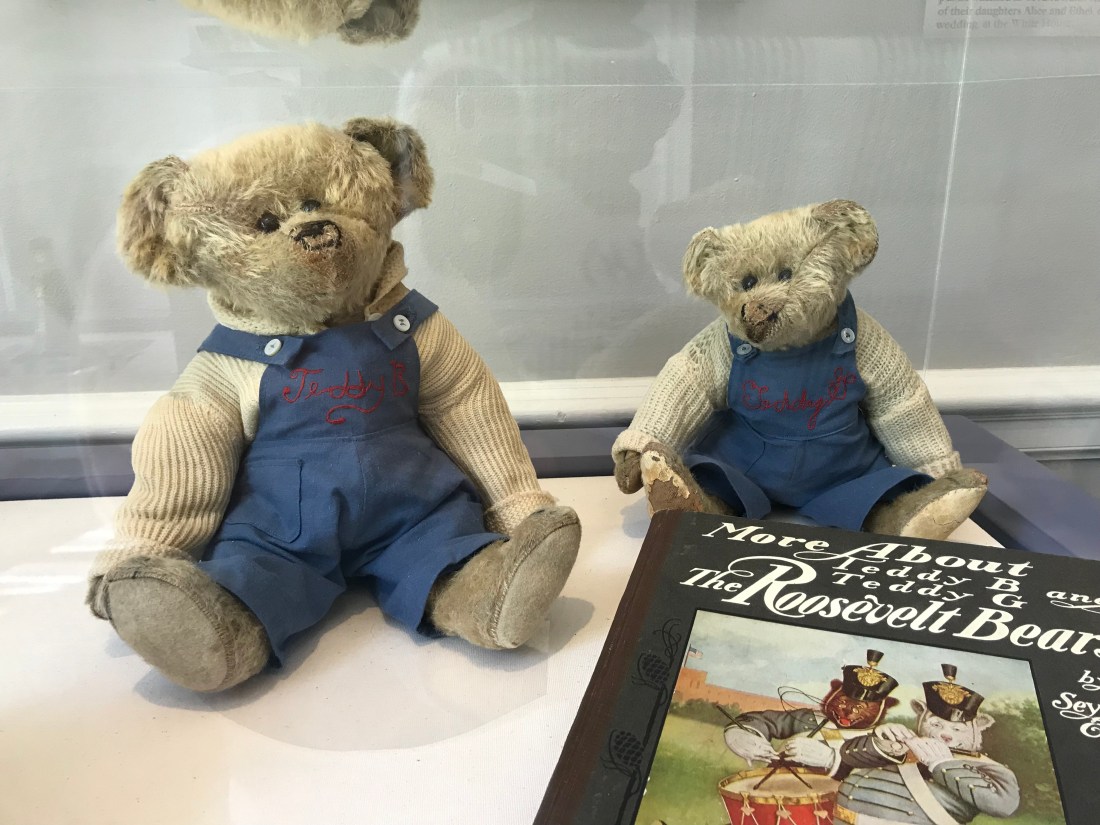
IMG_5686.jpg

And who could forget the Teddy Bear? Named after TR after he refused to shoot a black bear while hunting, it became a popular toy worldwide.
IMG_1383.jpgIMG_1384.jpg

TR was the first president to ride both a Car and an airplane while in offic! He was kind of brave for that former title, even if it was only for a few seconds in the air.
IMG_5698.jpg

What a large family… TR dearly loved his family, and considered it to be the only thing he loved more than leading an active life.
IMG_5699.jpg

On the ticket of the “Bull Moose” Party during the 1912 Election, Roosevelt split votes from incumbant William Howard Taft, allowing Woodrow Wilson to win the White House. Nonetheless, Roosevelt to this day the most powerful third-party canidate in American History.

IMG_5689.jpg

We hurried back outside to the house, and found the beautiful 22-room mansion that TR called his “Summer White House”. He dearly loved this place.

IMG_5690.jpgIMG_5687.jpg

IMG_5697.jpg

IMG_5688.jpg

The views around this place were absolutely spectacular.
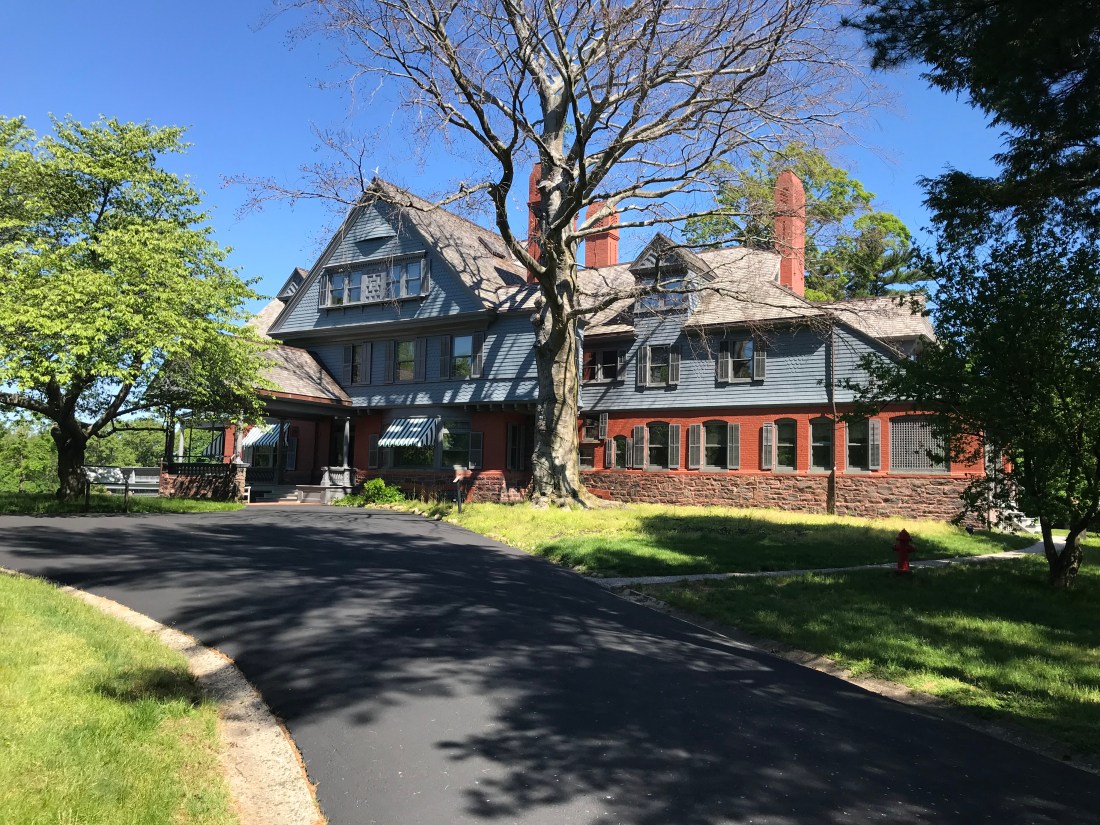
IMG_5691.jpg

The front of the house. Tickets are on a first-come, first-serve basis, and start every hour.

IMG_1362.jpg

There’s me and mom up there! It was really quite comfy up thre.
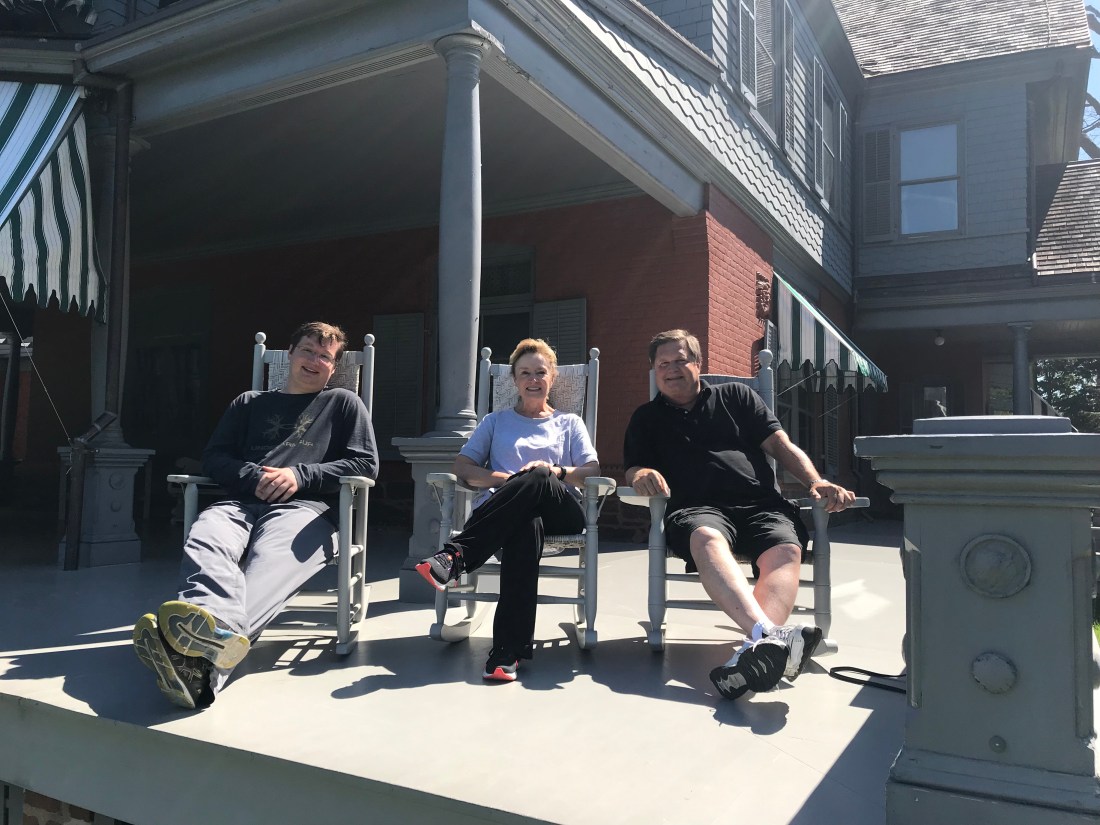
IMG_1367.jpg

IMG_5694.jpg

And what a gorgeous view too…

IMG_5692.jpg

This slab marker once covered the original grave of Quentin Roosevelt, one of TR’s sons that was shot down during combat in the First World War. His death deeply hurt TR emotionally, as it was he that helped to encourage him to go to war. He only lived a year after he received word that Quentin was gone.

IMG_5695.jpg

The Presidential Seal was located on the outside of the house, fashioned nicely.

Our tour-guide (who sounded an awful lot like Comedian Milton Berle), led us into the darkened house, where there was no photography of any kind allowed. So, I’ll have to rely on a couple of stock photos again (sorry for the poor quality).

download-3.jpg

Relics dotted the formal parlor of the house, many hunting trophies of which were shot and aquired by TR himself. Though this picture does not show it, there were items there such as his hat and sword used during the Charge of San Juan Hill, a small set of samurai armor aquired during the Russo-Japanese negotiations, and countless books… TR loved books very much, and like many presidents, just soaked them up like a sponge.

download-2.jpg

The family shared all their meals in here, and would also receive any formal visitors here for dinner.

download-1.jpg

TR’s den, which he used as his formal office and library. This functioned a lot like the Oval Office would, and even had a direct line to the Executive Mansion (It was TR that first labeled the Mansion as “The White House”. The name stuck.)
images.jpg

This room was where Theodore Roosevelt died in 1919 at the age of 60. A political opponent of his said respectfully of him:

“Death had to take Roosevelt sleeping, for if he had been awake, there would have been a fight.”

Speaking of Theodore Roosevelt’s death, let’s head to the cemetery where he’s buried!


Youngs Memorial Cemetery

Back down the road, was a very small cemetery, “Youngs Memorial Cemetery” to be precise.
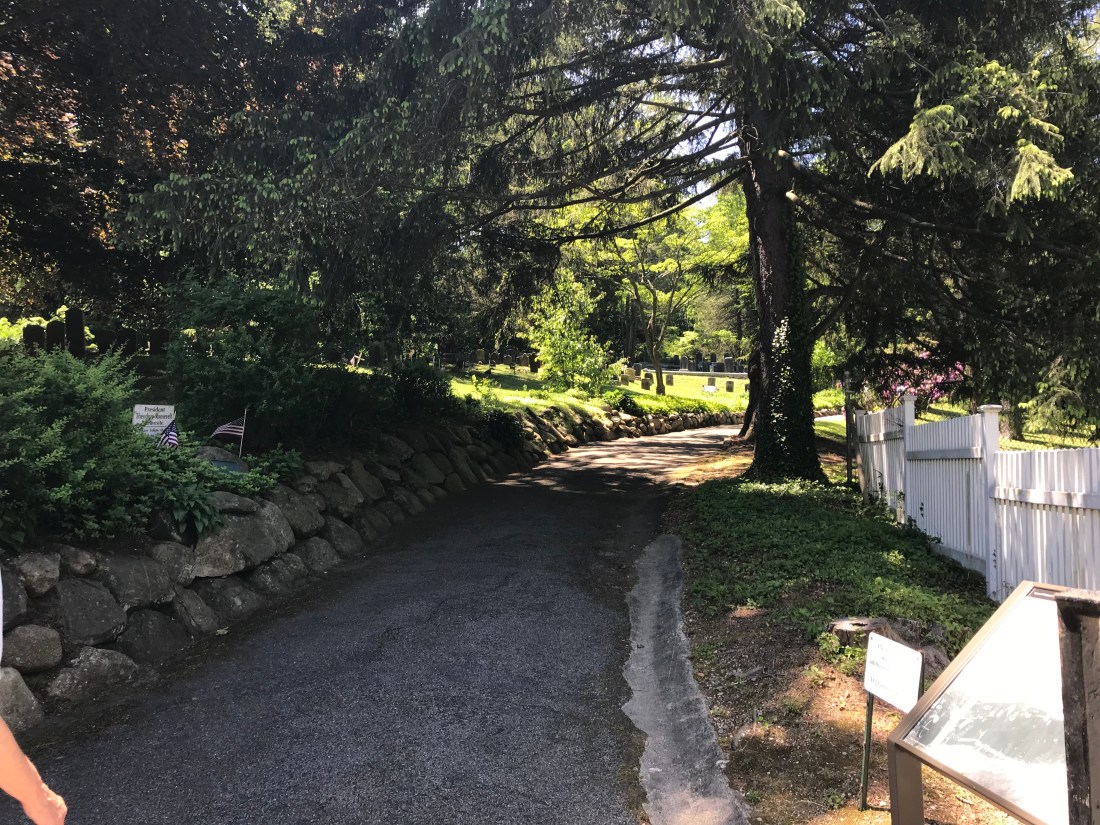
IMG_5708.jpg

This beautiful hilly cemetery leads to TR’s grave. Let’s check it out.

IMG_5710.jpg

Hehe! I can’t wait!

IMG_5711.jpg

My mom with some gorgeous flowers. Wish we had these in Texas.
IMG_5715.jpg

These 26 stairs represent Theodore Roosevelt’s place as our 26th President. I named each of his 25 predecessors as I went up each step.

IMG_5736.jpg

Here we are.

IMG_5723.jpg

Within this small plot, Theodore Roosevelt and his wife Edith lie buried… it is just barely over 100 years since Roosevelt died in 1919…
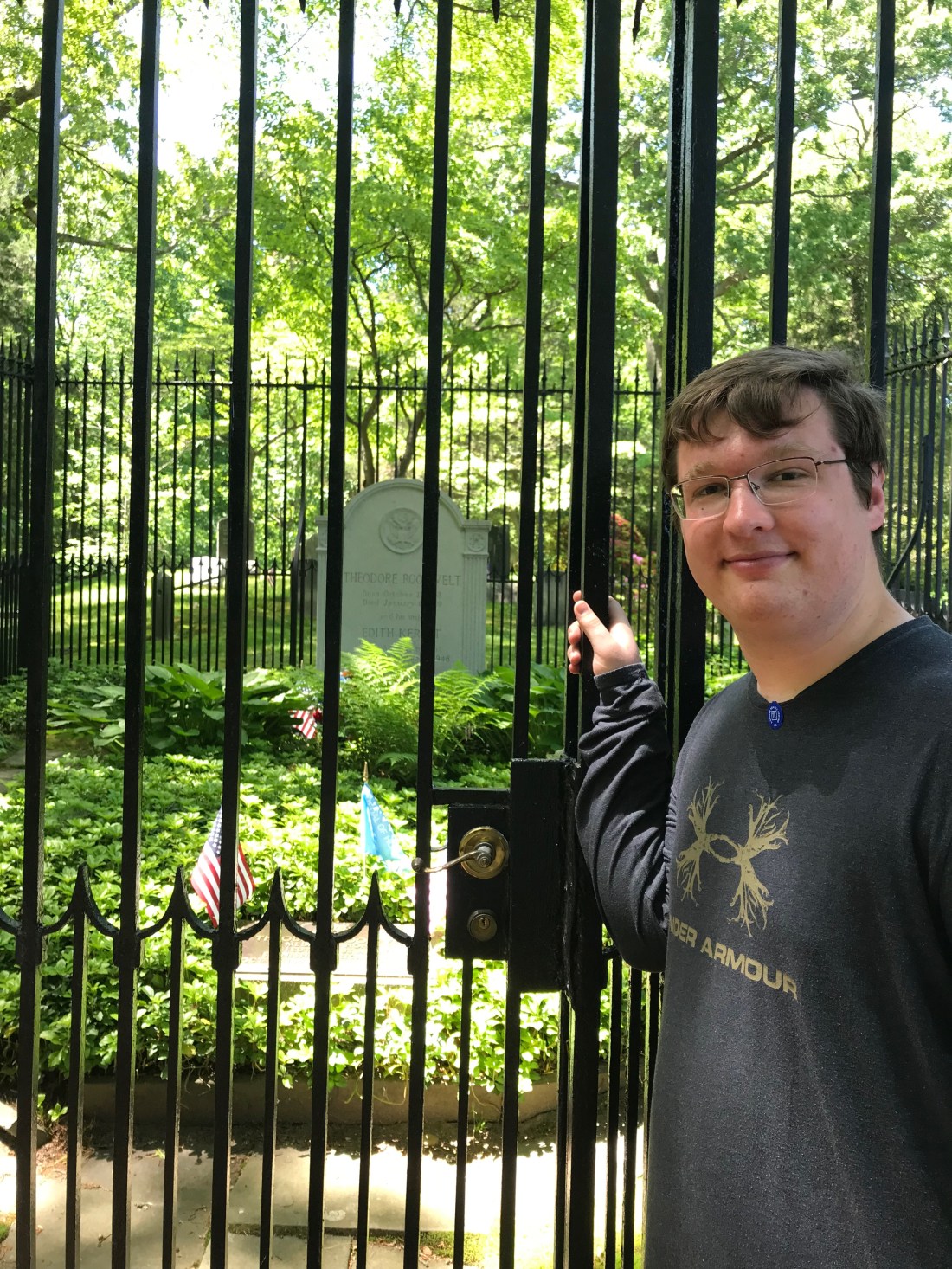
IMG_5720.jpg

IMG_5730.jpg

IMG_5724.jpg

Really, it’s a very nice spot.

IMG_5725.jpg

Headstones (or in this case, footstones) of this type are always present on veteran’s gravestones. My grandfather has one on his for example, for his brief service in World War II.

IMG_5727.jpgIMG_5729.jpg

A nice view overlooking the bay.

Ah Teddy Roosevelt… no historic individual could better portray adventurous spirit or a slakeless drive to get work done… and that’s not just because of his habit of drinking a gallon of coffee a day (and, with six cubes of sugar in each cup might I add).

He found things that could keep him going… spending time with family, improving american quality of life, negotiating with foreign policy, and simply being a dedicated person in whatever he did. That comittment is simply one that would not seem human… but he is still human after all. Maybe we can learn a bit from his example that, should we put our minds to it, we can acquire that same energy and put it forth into whatever we want to accomplish.

download.jpg


And now, it’s time to learn about the OTHER famous Roosevelt President… FDR.

IMG_5738.jpg

It was a 2-hour drive that took us from Oyster Bay to Hyde Park, and one that would take us through the outer boroughs of New York City, (across the bridge above into The Bronx), and out into mainland- New York!
IMG_5741.jpg

Passing through the Hudson Valley, we came across the sign! We’re close!

Hyde Park, located just north of Poughskeepie, has long been the residence of the Roosevelt family branch that FDR was descended from. Though there are other sites such as Eleanor Roosevelt’s Val-Kil and the Vanderbilt Mansion located here, FDR’s Historic site was what we came for.
IMG_1490.jpg

And so we arrived!


Home of FDR National Historic Site/FDR Library and Museum
IMG_5743.jpg

Pulling into the visitor-center, we got our bearings and necessary information to tour the place.
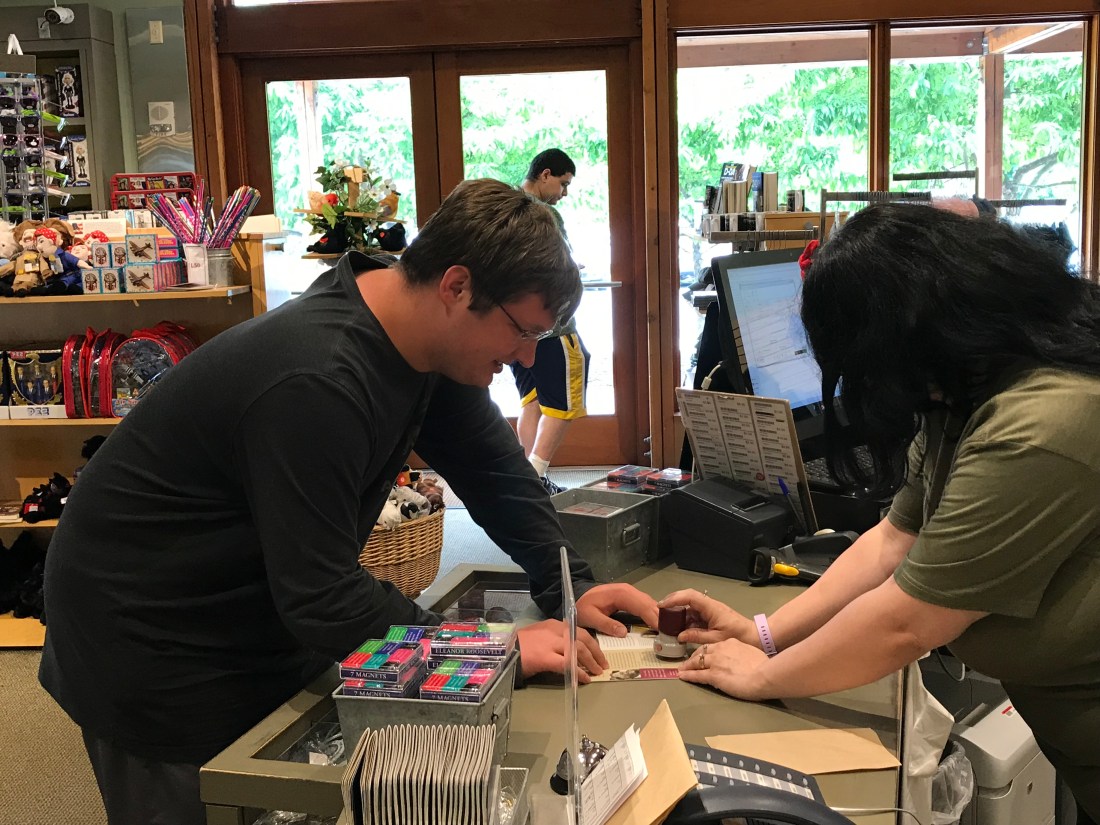
IMG_5747.jpg

IMG_5745.jpg

Since the FDR Library is yet another of the Main 13 Presidential Libraries that I have on my list, I got the official stamp for my passport! We’ve come a long way… 12 of the 13 library stamps we now have, and the JFK Library in Boston is all that I have left! Mwuhahaha!

-Cough-, Sorry, something in my throat.
download.jpg

Well, as you can see on the map above (if possible, the quality isn’t the best again with this stock photo), this is a large map of the entire place! Four different features stand out in this mass-historical complex. Other than the visitor-center, the remaining three are the Library and Museum (located in the building in the center-right of the map), the Rose Garden (located in the south center of the map, where Franklin and Eleanor Roosevelt are buried), and his home of “Springwood”.

IMG_5748.jpg

Some old farming-plots on the property, which, as one could predict, still contains fresh plants not yet in season..

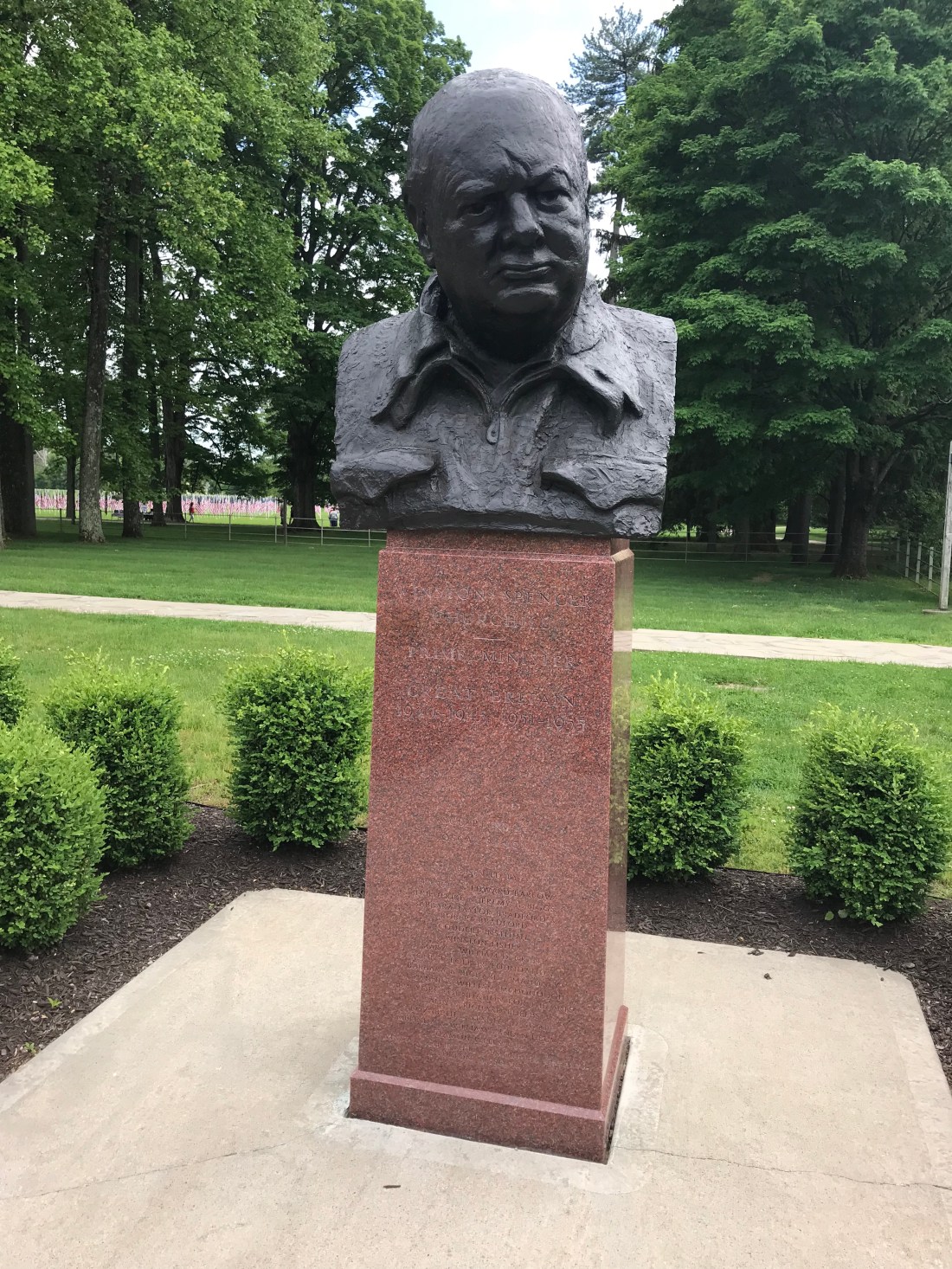
IMG_5752.jpg

IMG_5751.jpg

Statues of FDR and British Prime Minister Winston Churchill. The two formed a close bond between one another that perhaps secured U.S. support of Great Britain and the Allied Forces in World War II, following the Bombing of Pearl Harbor. Churchill famously said of Roosevelt, that

download.jpg

IMG_5754.jpg

Two pieces of the Berlin Wall. Though constructed after Roosevelt’s untimely death in 1945, it was Roosevelt that championed the idea of “Freedom from Fear”, which can be related to the crumbling remains of the Wall.

Now then, into the Rose Garden we go…
IMG_5755.jpg

IMG_5759.jpg

IMG_5757.jpg

That pedestal you see behind the gravestone belongs to none other than Fala, FDR’s beloved dog. He was perhaps the most famous presidential pet ever, and is buried here.
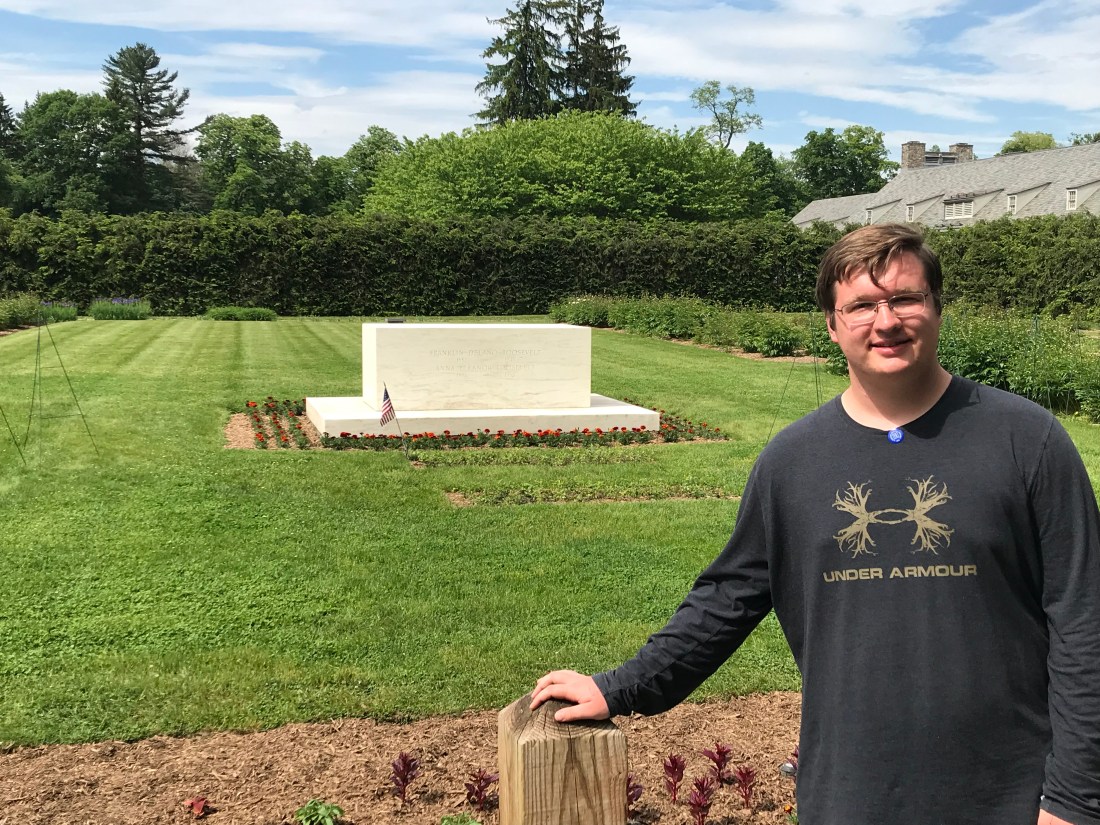
IMG_1395.jpg

And here we are. One of our greatest figures in American History, and the face on countless american dimes.

IMG_5764.jpg

The white marble tombstone is not actually the grave; the two little cutouts in the grass in front of it are however. The far one with the American Flag at the head belongs to Franklin, and the one closer to us belongs to his wife, Eleanor, who was perhaps one of our greatest first ladies.
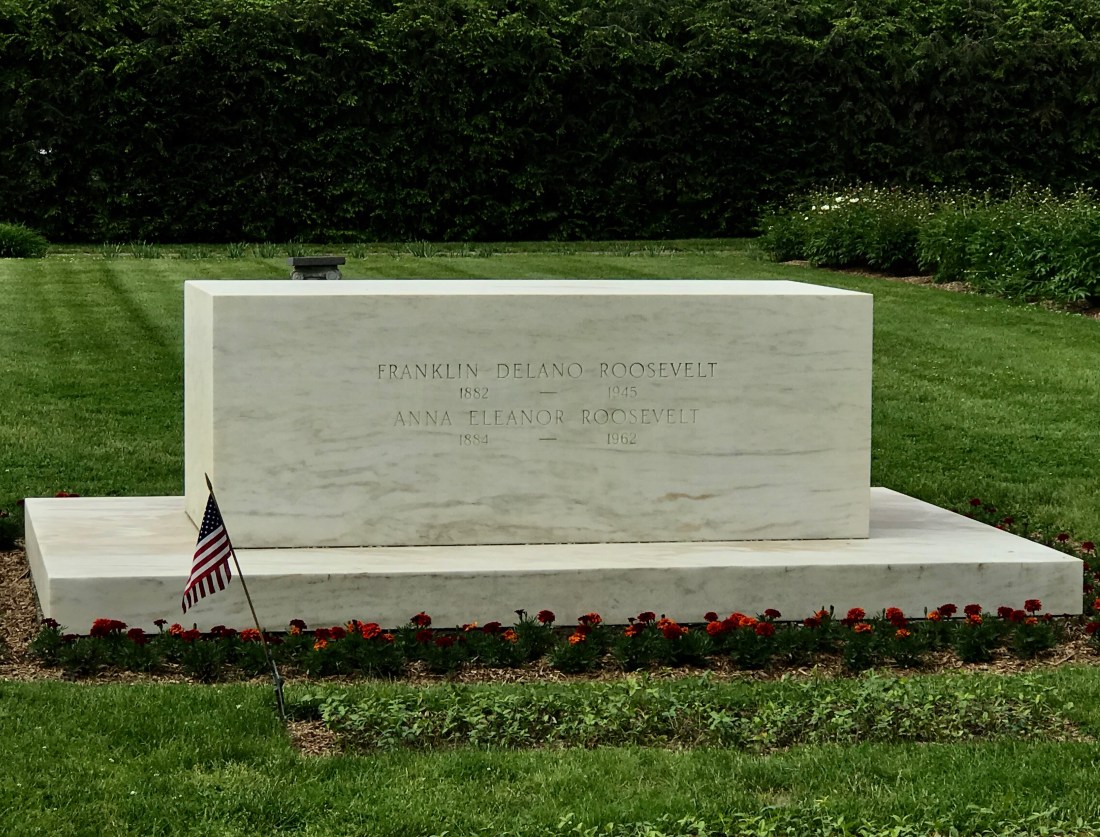
IMG_1391.jpg

It’s so simple a burial to be honest… even with all he did, his memorial marker simply reads:

IMG_5866.jpg

You’ve got to admire that.

IMG_5805.jpg

And nearby, this his home of Springwood!

IMG_5805.jpg

FDR was born in this very house, and his mother, Sara Delano, lived here well into her son’s presidency until her death in 1941.

IMG_1400.jpg

The house exterior is in need of a tiny bit of restoration work (the pillars in front had the paint peeling off), but nonetheless depicts the terrific grandeur of wealth that the Roosevelt family had.

IMG_5765.jpgIMG_5766.jpg


These are some of the most unique and perfectly intact flowers I have ever seen…

We were then let into the house by a Park Ranger.
IMG_5777.jpg

IMG_5787.jpgThe main entrance hall served as a hub of access into all of the rooms in the lower level. Like these.

IMG_5786.jpg

The formal parlor room of the house. I found it fascinating that even the chandeliers were plated with china…

IMG_5790.jpg

The dining room, where the Roosevelts received very special heads-of-state such as the King and Queen of England, as well as Winston Churchill.

IMG_5791.jpg

That chair pulled out belonged to him, and he would sometimes work here late at nights…
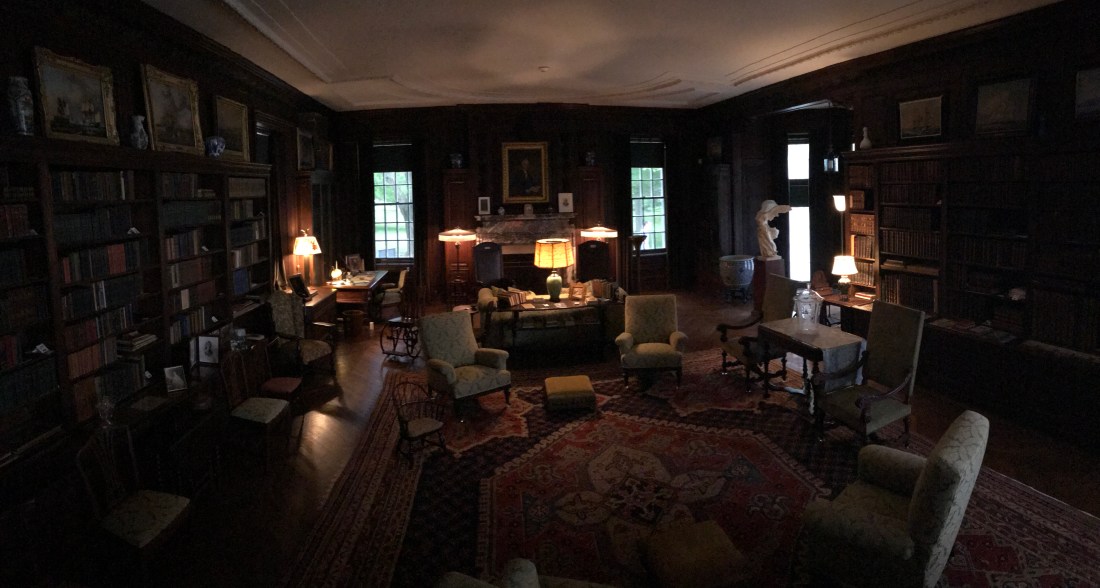
IMG_5782.jpg

Roosevelt’s personal library, which he often used as an office during the time he spent here.

Fun fact, Franklin did not own this house until his mother’s death in the 40’s. He had A ROOM. The President of the United States, perhaps the most powerful figure in the entire world, had a room in his mother’s house…

If that is not a great irony, then I don’t know what is.
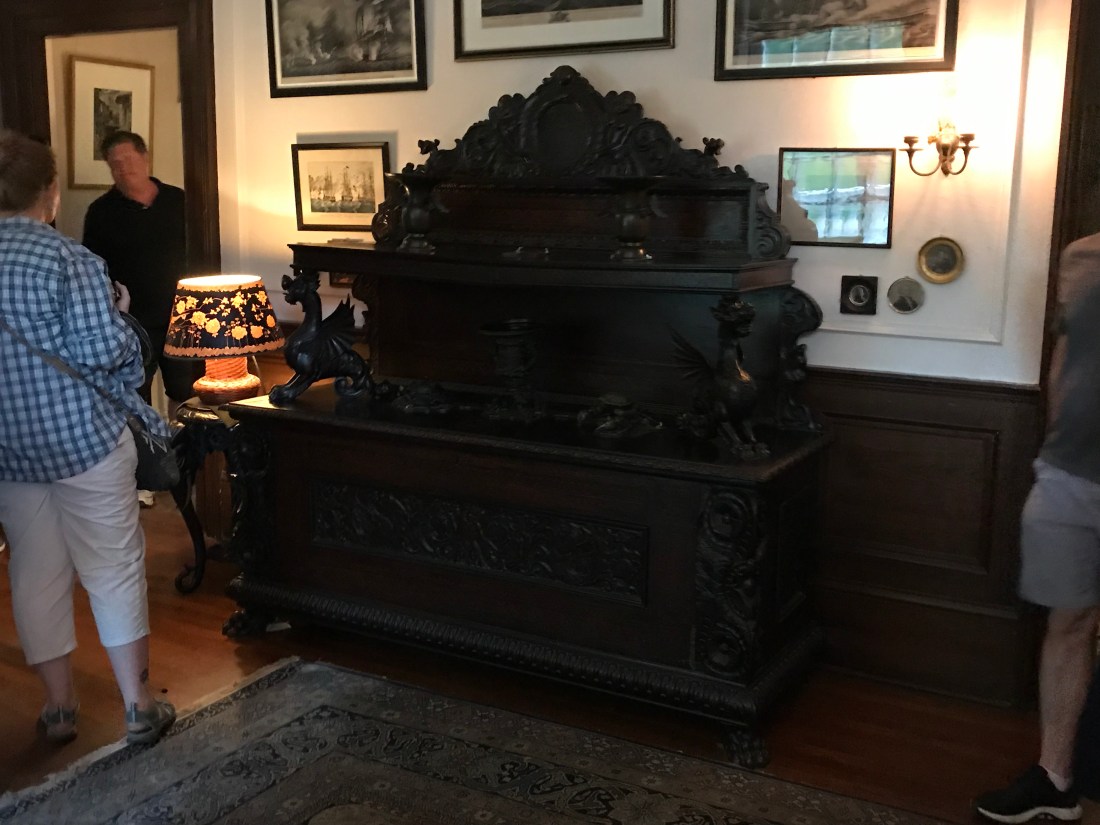
IMG_5778.jpg

An interesting and ornate piece of furniture. The Roosevelts certainly came from old money.

IMG_5785.jpg

This poor quality picture depicts Sara Delano Roosevelt’s “snuggery”. A snuggery is an odd term for a person’s “private den”, and Sara Delano ran the affairs of Springwood from this room.
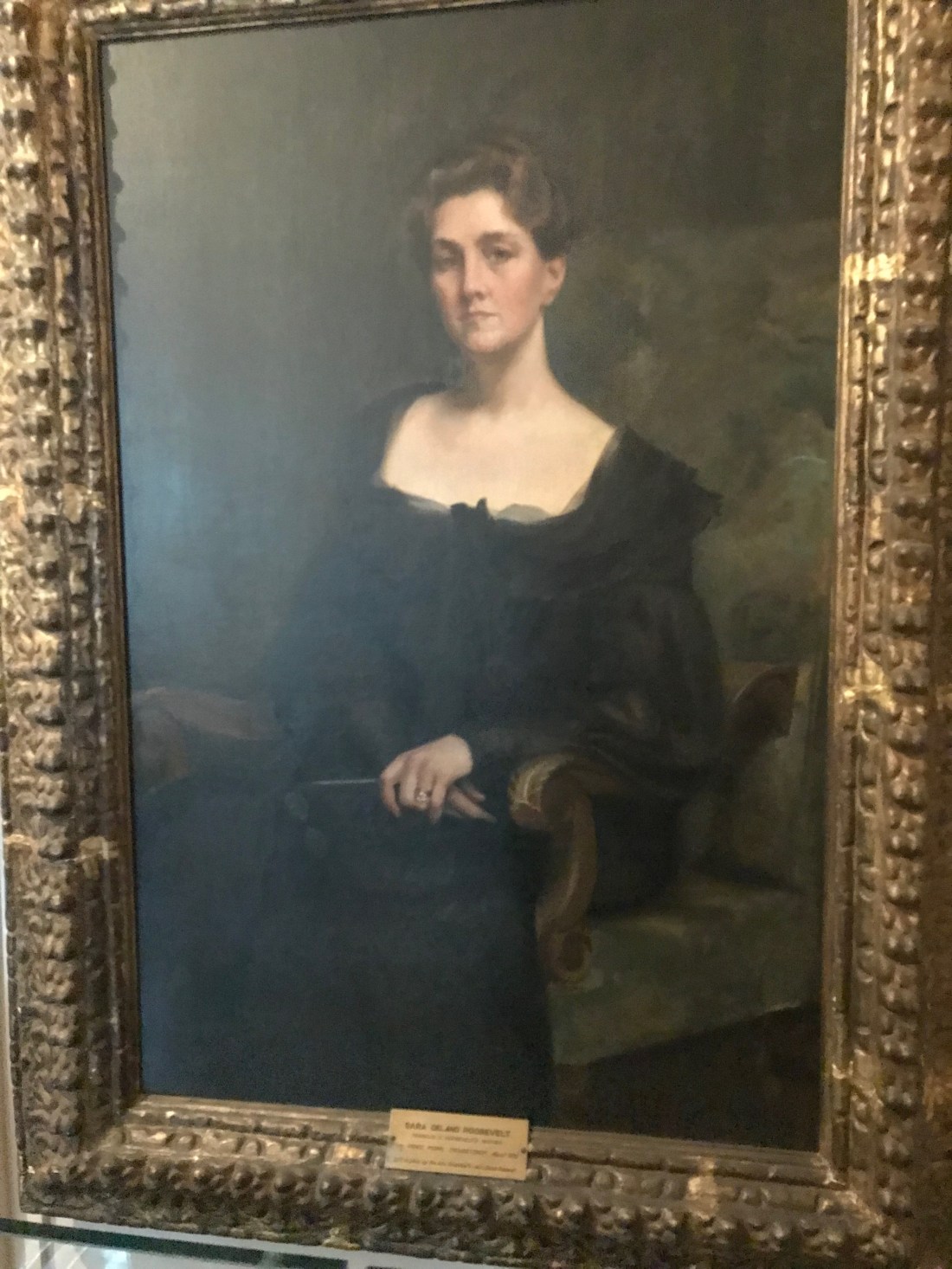
IMG_5783.jpg

IMG_5779.jpg

James Roosevelt, Franklin’s father, died when he was young, and Sara remained at Springwood for the rest of her life. She was the first parent of a president to vote for her son in an election.
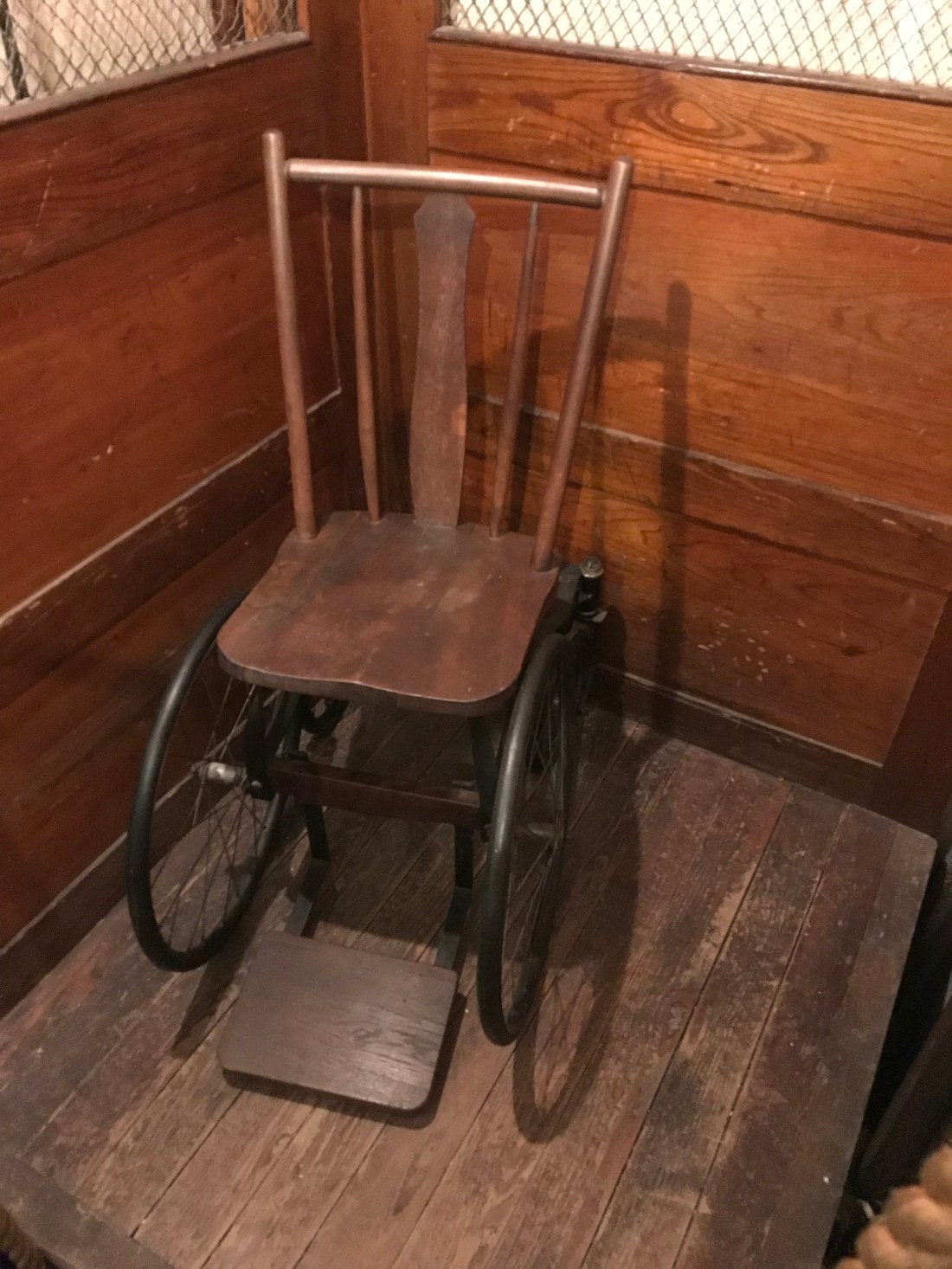
IMG_1419.jpg

This little makeshift-wheelchair is one of several that FDR adapted to suit his needs around his main locations, such as The White House, here at Springwood, or at his retreat in Warm Springs, Georgia. This elevator was what he would use to hoist himself up to the second level and down again.

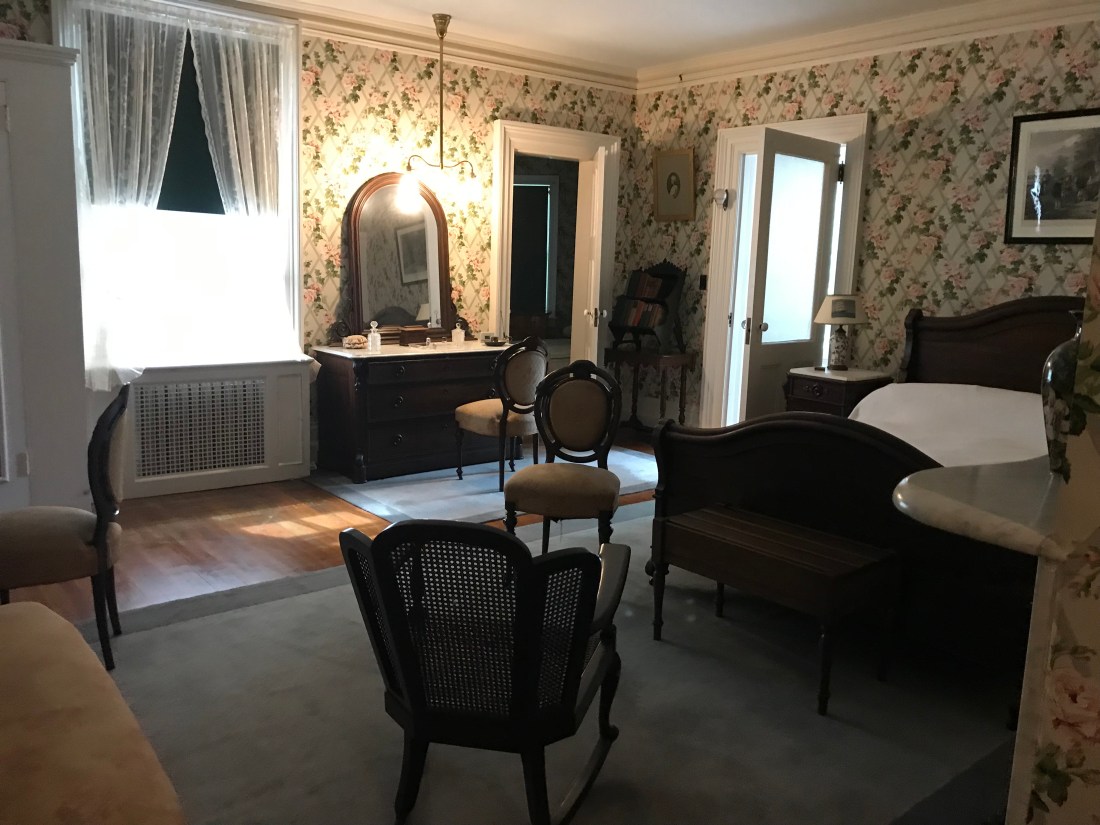
IMG_5792.jpgIMG_5794.jpg

Upstairs, one could find several bedrooms, including FDR’s mother’s room.

IMG_5795.jpg

Franklin’s boyhood room, where he spent his childhood years! As each of Franklin’s four boys left the home one after the other, the next elder sibling in line would reside in here.
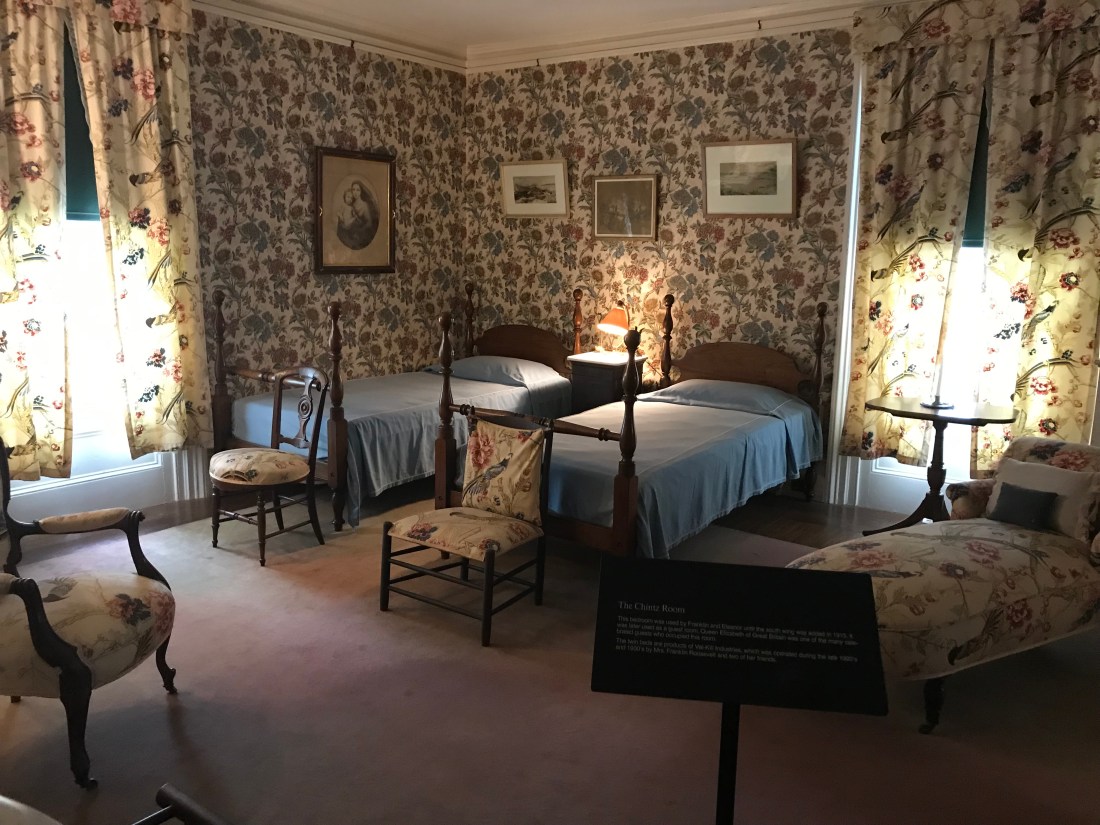
IMG_5796.jpg

This guest room was where important dignitaries (like the King and Queen of England) stayed during their time at Springwood. Did you know that the Roosevelts served hot dogs to the royal couple during their stay here? I can’t imagine what they must have felt like)…

IMG_5800.jpg

This room was where on January 30th 1882, a ten-pound baby boy was born to Sara and James Roosevelt… this boy would go on to become on of our nation’s greatest leaders.

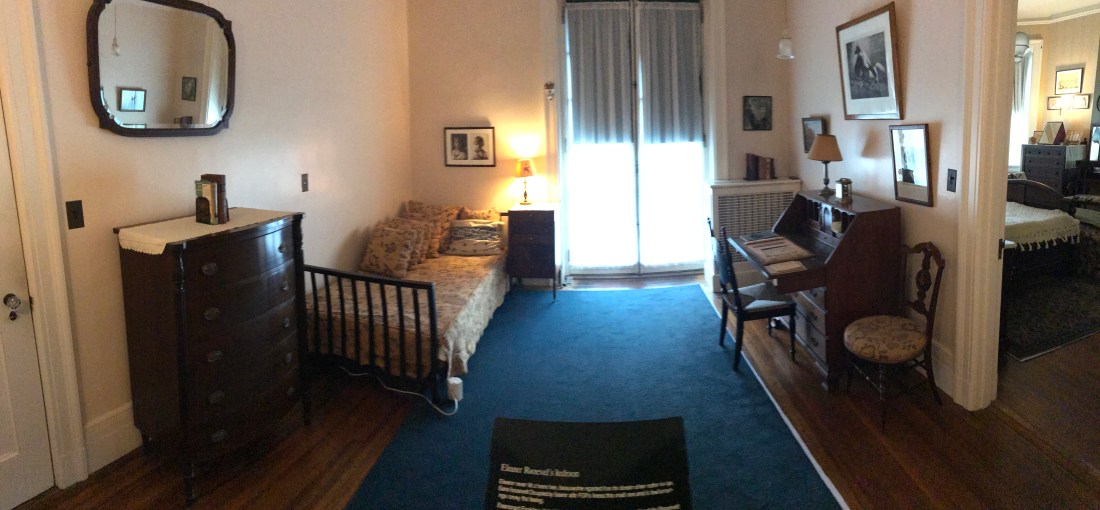
IMG_5801.jpg

IMG_1436.jpg

Eleanor Roosevelt’s room. Eleanor never liked to stay here too long, as it was mostly Franklin’s mother’s domain. She preferred to stay at her cottage at Val-Kil, just down the road.

IMG_5803.jpg

Franklin’s bedroom. It was likely more spaced out to help his movement around the place in the wheelchair.

IMG_5804.jpg

And also the side porch! The estate offers a sweeping view of the Hudson Valley.

IMG_5770.jpg

The side of the building, and opposite this perspective is…
IMG_5767.jpg

The Hudson Valley.

IMG_5768.jpg

Now let’s head into the Library!

IMG_1462.jpg

There’s me with the passport!

IMG_5807.jpg

This library is very special… it is the first of the Main 13 to have been created, and the only one to be founded while it’s subject was still in office! FDR needed a place to store all of those documents over his long service in the Oval Office (many of the archives of which are located below the ground floor).

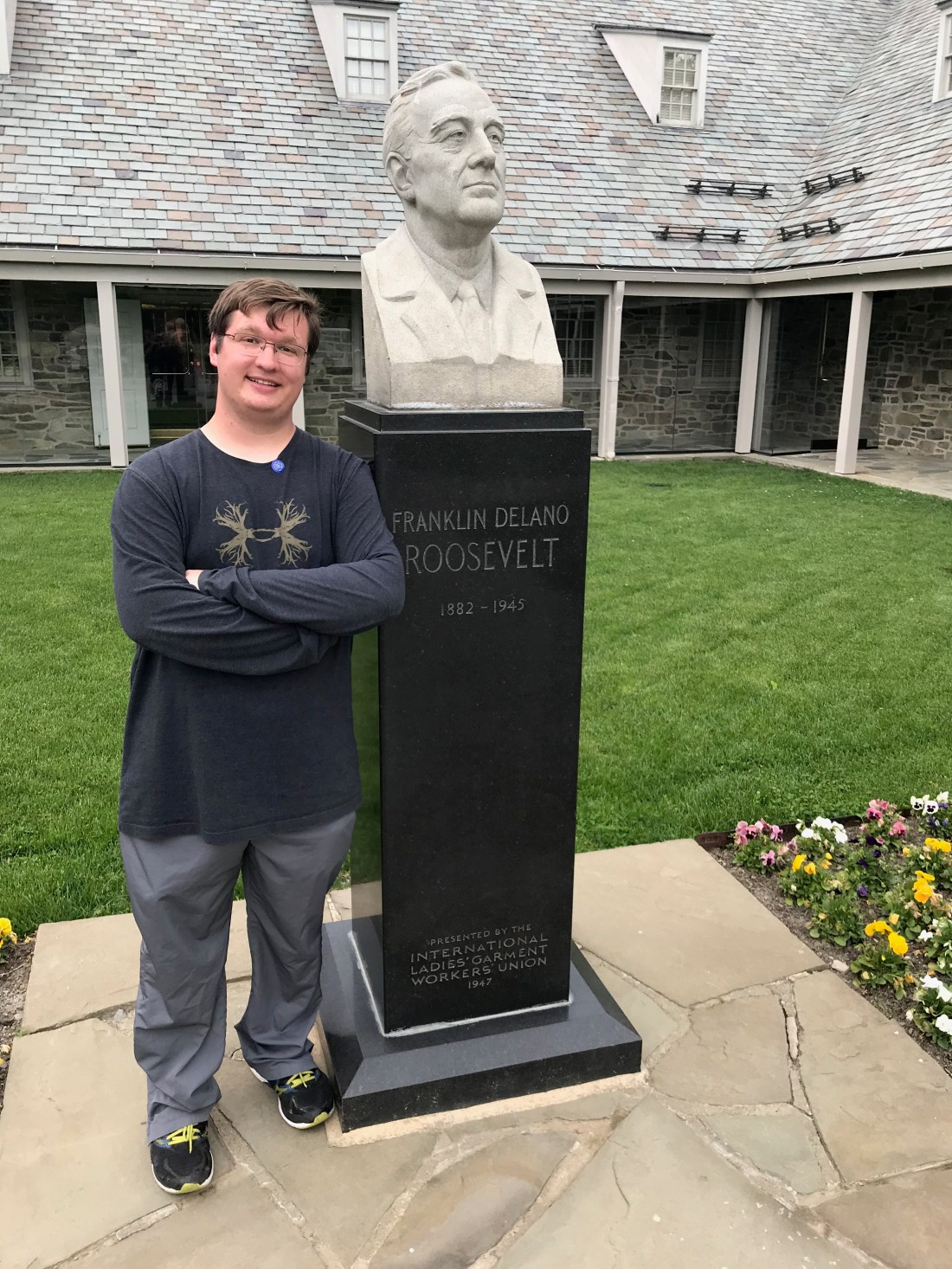
IMG_5808.jpg

IMG_1463.jpg

Such an iconic face…

IMG_5810.jpg

The entrance hall to the library had this charming of FDR with one of his famous quotes above. Just that smiling expression is enough to make you smile along with him…

IMG_5809.jpg

Franklin and Eleanor, one of the greatest political duos in the White House…

IMG_5811.jpg

FDR came into office during the Great Depression… perhaps the greatest and longest economic crisis in world history… millions had become unemployed, and there was simply no hope or security that could support families… incumbent President Herbert Hoover, blamed for all of the Depression’s ill effects, lost to FDR in a terrific landslide.
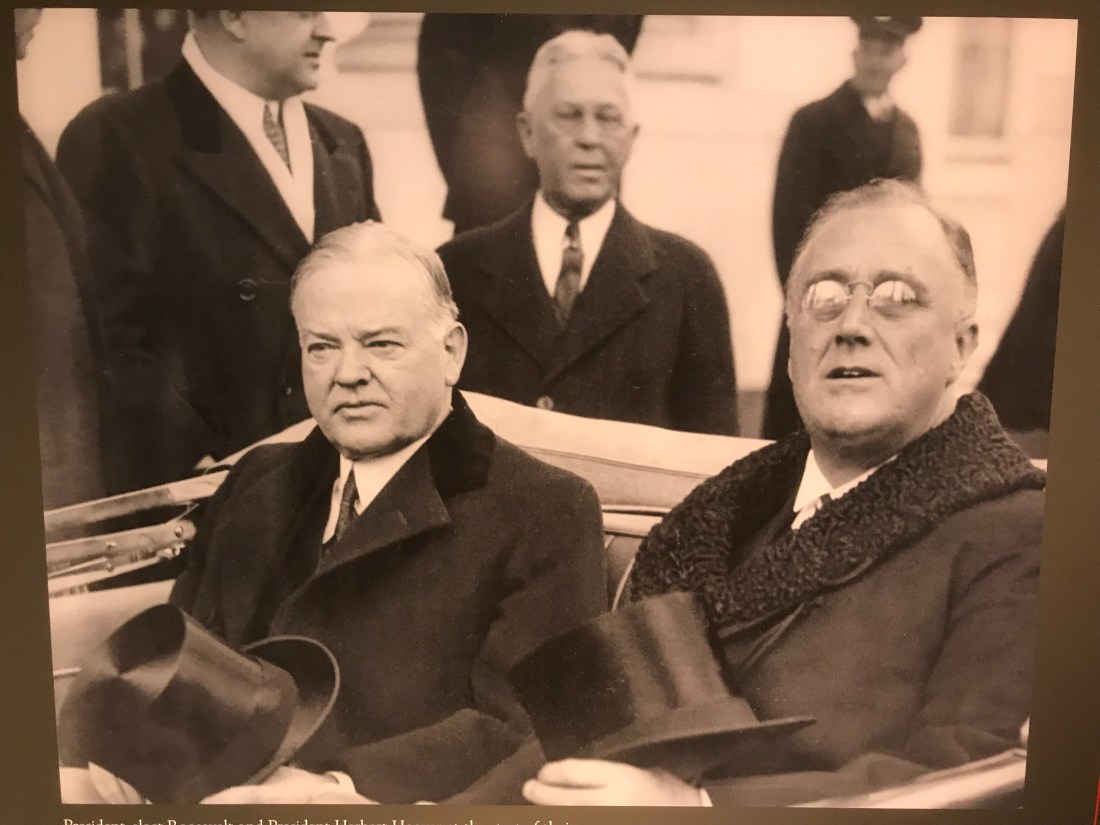
IMG_5815.jpg

The two men were very bitter opponents towards one another, and Hoover (left) would go on to be one of his fiercest critics.IMG_5813.jpgIMG_5818.jpg
Several of his effects, which include one of his trademark hats, his family bible (which he was sworn into office upon), and the Pince-nez glasses that he wore to the Inauguration! (Pince-nez actually means “pinch nose” in french, which seemed appropriate).
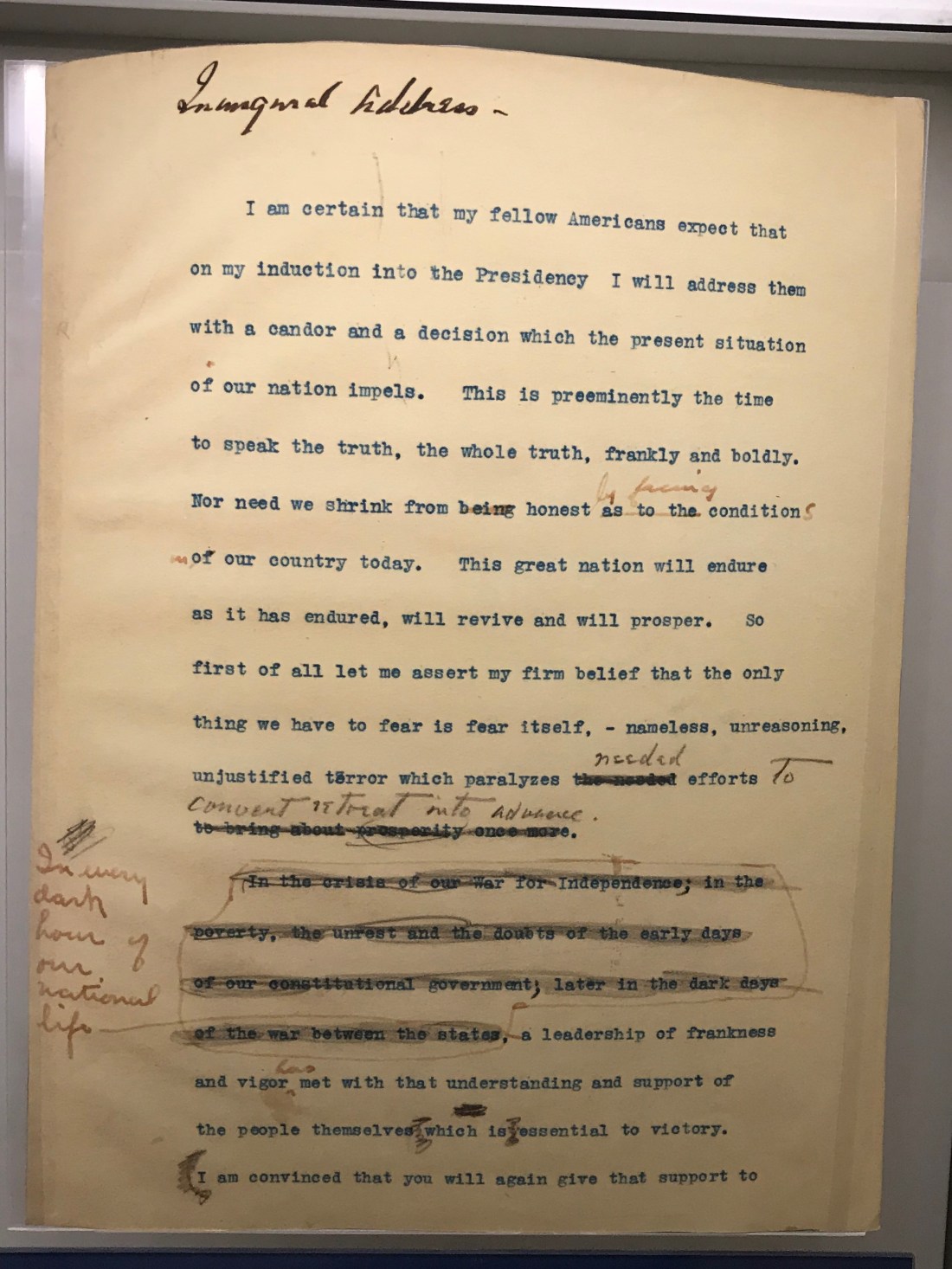
IMG_5817.jpg

IMG_5816.jpg

Some facsimiles of FDR’s speech notes. He was a very particular speech-giver, and possibly one of the greatest orators in Modern History.
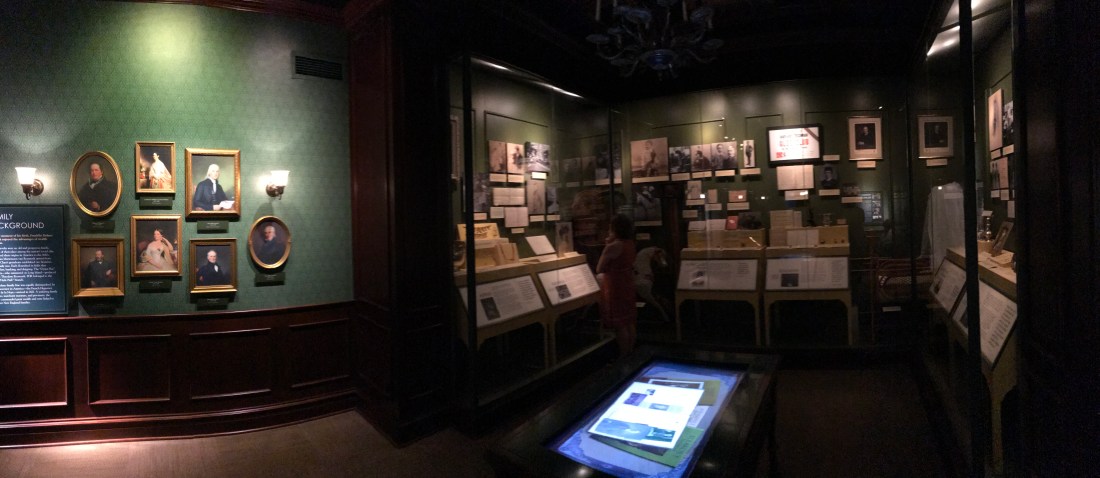
IMG_5820.jpg

Several exhibits detailing the lineage of the Roosevelt Family, and of FDR’s earlier life.

IMG_5824.jpg

Polio hit FDR hard… he had to use leg-braces, a cane, and the physicl support of a nearby person to walk without his wheelchair… if anything however, he didn’t let the disability of his legs get in the way of his agendas and willpower. If anything, it helped to strengthen his commitment to his principles.
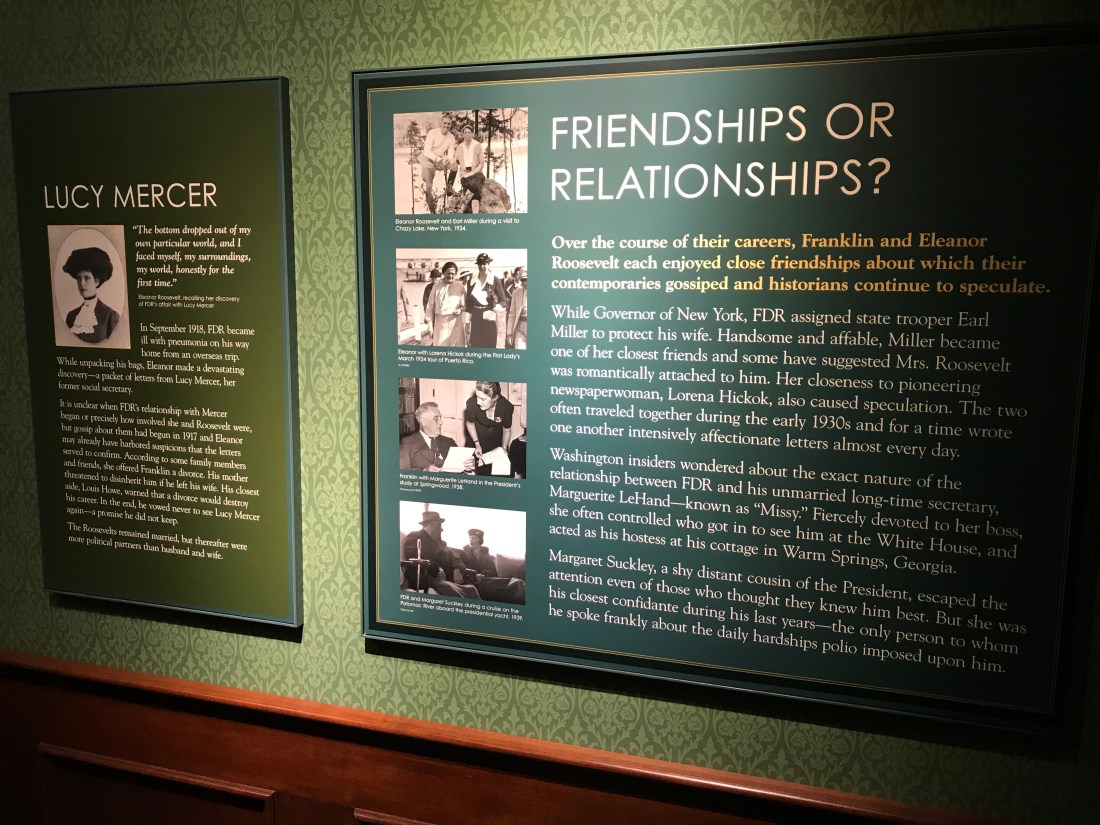
IMG_5823.jpg

This library is not afraid to speak of the more controversial aspects of Franklin Roosevelt, including a number of his alleged “mistresses”. Unfortunetly, his relationship with Eleanor would never be the same afterwards.
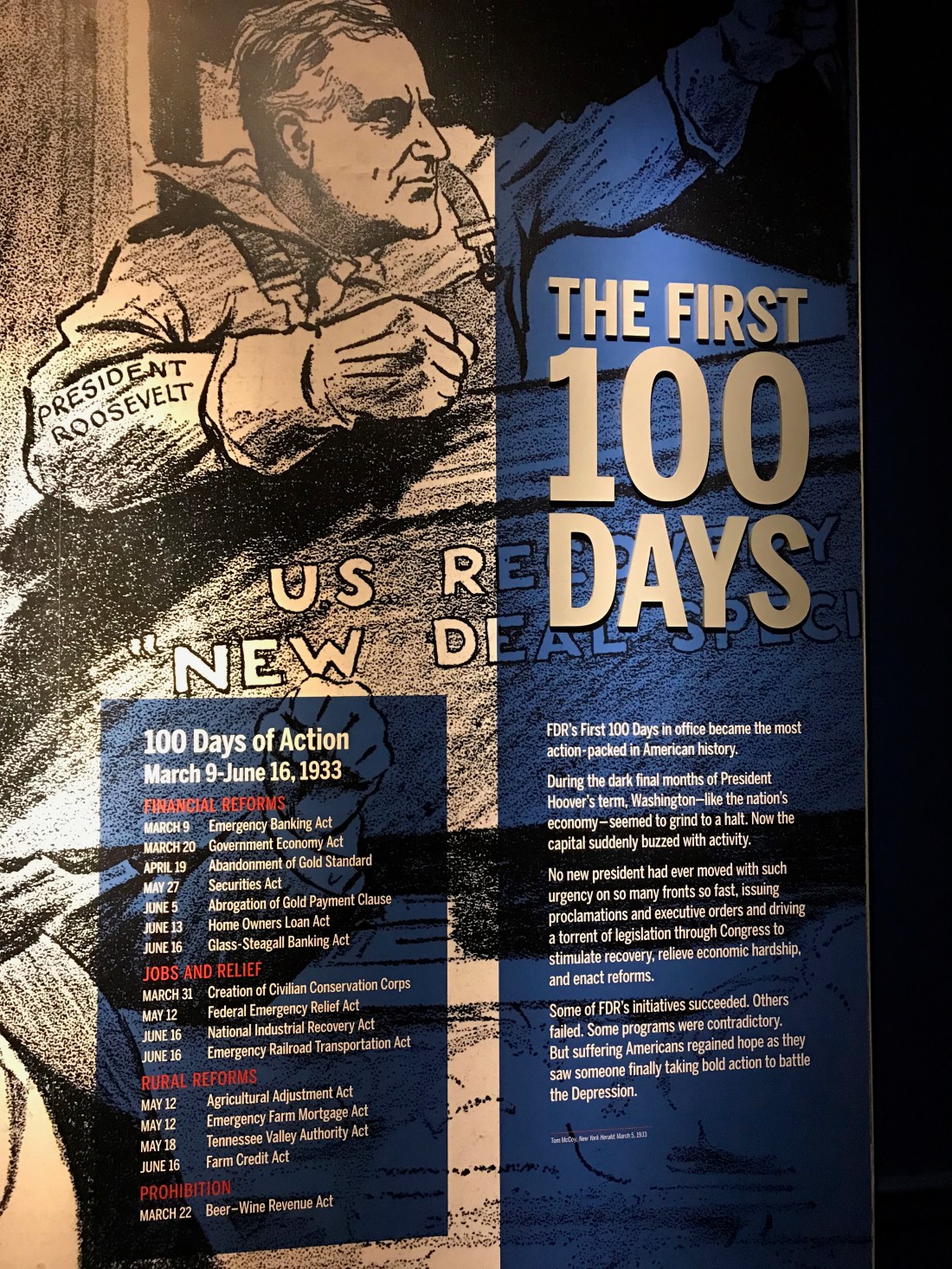
IMG_5825.jpg

IMG_1469.jpg

FDR completed a whirlwind of legislation even in just his 100 days in office! He believed in supporting the people so they could support themselves, as opposed to constant reliance on the government. I certainly respect that.

IMG_5826.jpg

The repeal of the 18th Amendment (and of prohibition), was a very popular move, which helped to provide a bit of income in the economy.
IMG_5837.jpg

The Four Freedoms, shown above, all represent goals that FDR sought to restore to the American People.

IMG_5834.jpg

A chart showing the blue line of Government Spending, and the red line of unemployment, all of which correlate during his presidency. Towards the end, and at the beginning of World War II, Spending skyrockets, and unemployment plummits sharply.

Though FDR’s “New Deal” programs (such as The Works Progress Administration (WPA), National Recovery Administration (NRA), The Tennessee Valley Authority (TVA), The Civilian Conservation Corps (CCC) and Social Security did not officialy end the Depression, they helped to not only provide a bit more relief to the impoverished of the nation, but also instilled hope throughout the nation of a better tomorrow.
IMG_5832.jpg

Perhaps Roosevelt’s greatist political tool was his wife, who served as an emissary of the White House far and abroad, and was his eyes and ears to the plights of the most common people. IMG_5827.jpg
And who could forget his legendary fireside chats? For the first time, regular broadcasts by the president could be conveyed to the American People, not only making them feel that their President was closer to them than before, but also allowing FDR to rally public support for his political propositions.
IMG_5830.jpg

The radio just poured FDR’s assertive tones into millions of american homes.. it must have been a truly beautiful event to just listen to…
IMG_5856.jpg

It’s hard to believe that many of the “Greatest Generation” have already passed into memory… they dwindle by the day, and within a few years, they may soon be lost to us. Those that lived and served in those times were proud to be Americans, and to have lived in the “Era of Roosevelt”.
IMG_5840.jpg

And who could forget the most famous presidential pet of them all!?

Fala the scottish terrier was perhaps Roosevelt’s best companion, and was endeared in the hearts of the american people. Fala even had his own reporters following after him, noting his everyday activities wherever he was… And Fala sorely missed Franklin upon his passing, and was never the same dog since.
IMG_5842.jpgIMG_5843.jpg

Several of Eleanor Roosevelt’s travelling effects, including her wartime outfit and her suitcase. She was especially essential in laying out the foundations of the United Nations.
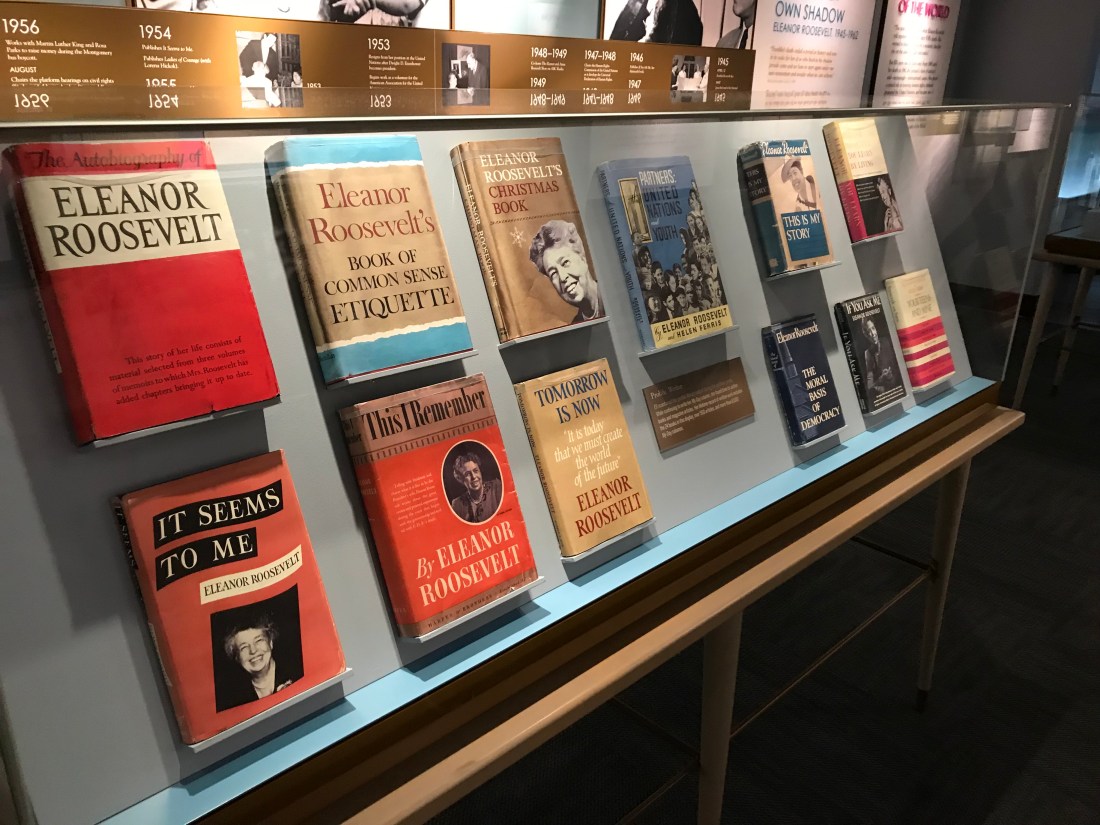
IMG_5850.jpg

And she had written countless books too.. until her death in 62, Eleanor Roosevelt was perhaps one of the most respected women in the entire world.
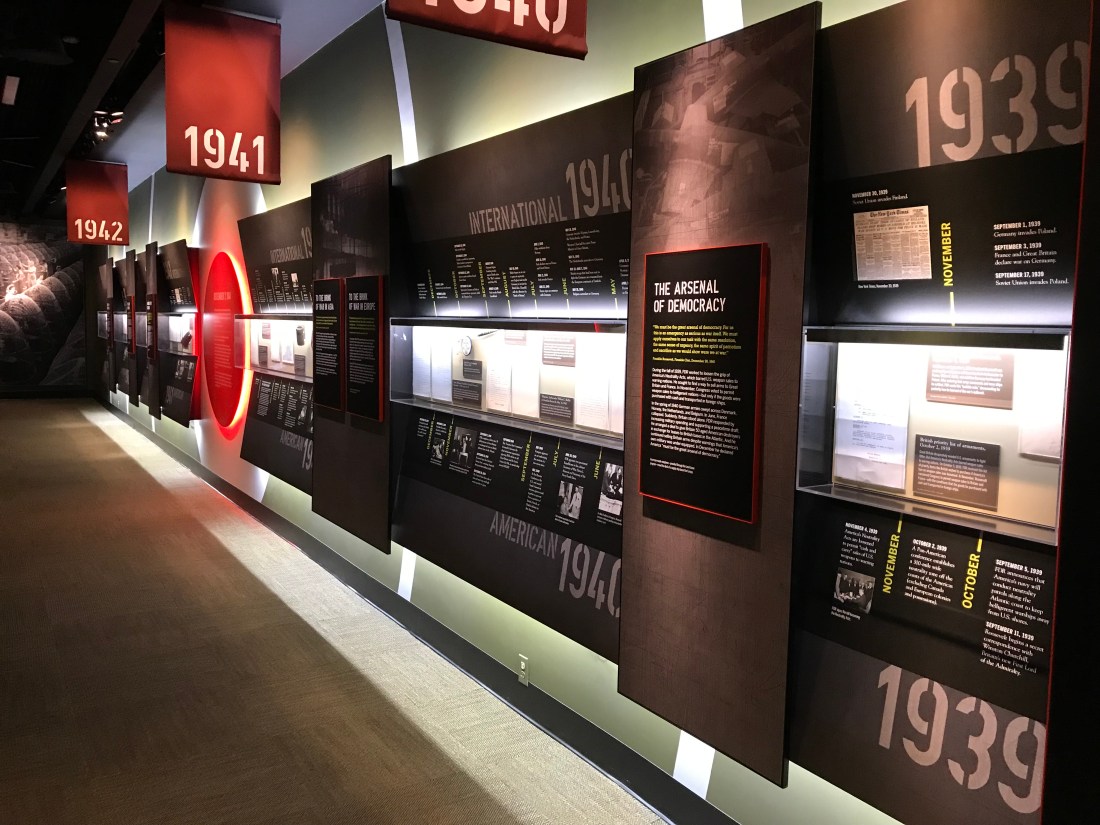
IMG_5838.jpg

The museum elaborated on the war-years of Roosevelt’s administration very well, and had some very interesting drafts…

IMG_5839.jpg

Though you likely can’t see it, this is the first draft of his “Day of Infamy” speech, which took place only a day after the Attack on Pearl Harbor. The first line of the draft originally read: “A date that will live in World History”. That line was scratched out, and changed by FDR’s handwriting, to “A date thatt will live in Infamy.” Just that once change made the entire line much more memorable, but it is hard to imagine that it could have been a date that would live in “World History”. I’m kind of glad it didn’t.
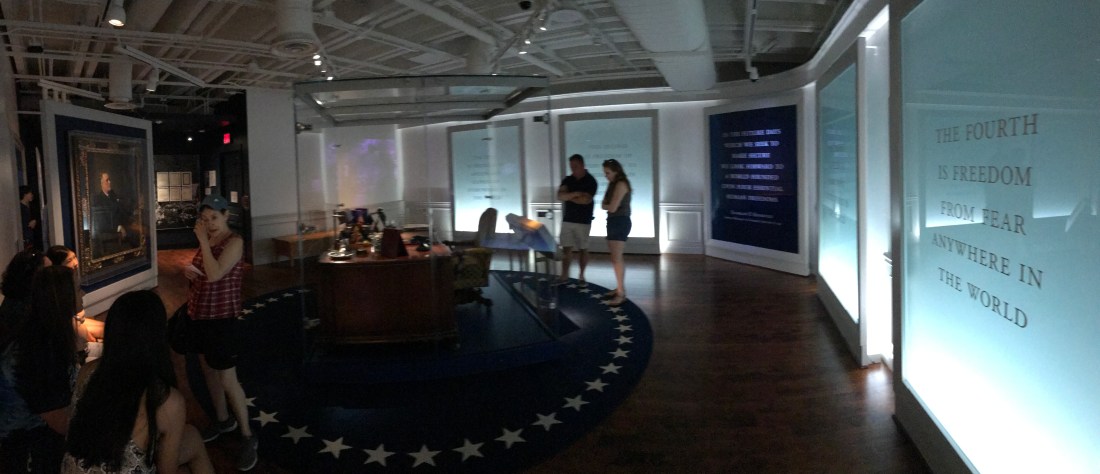
IMG_5845.jpg

FDR’s actual office desk which he used in the Oval Office (he did not use the traditional “Resolute Desk” that is commonly used in various administrations).
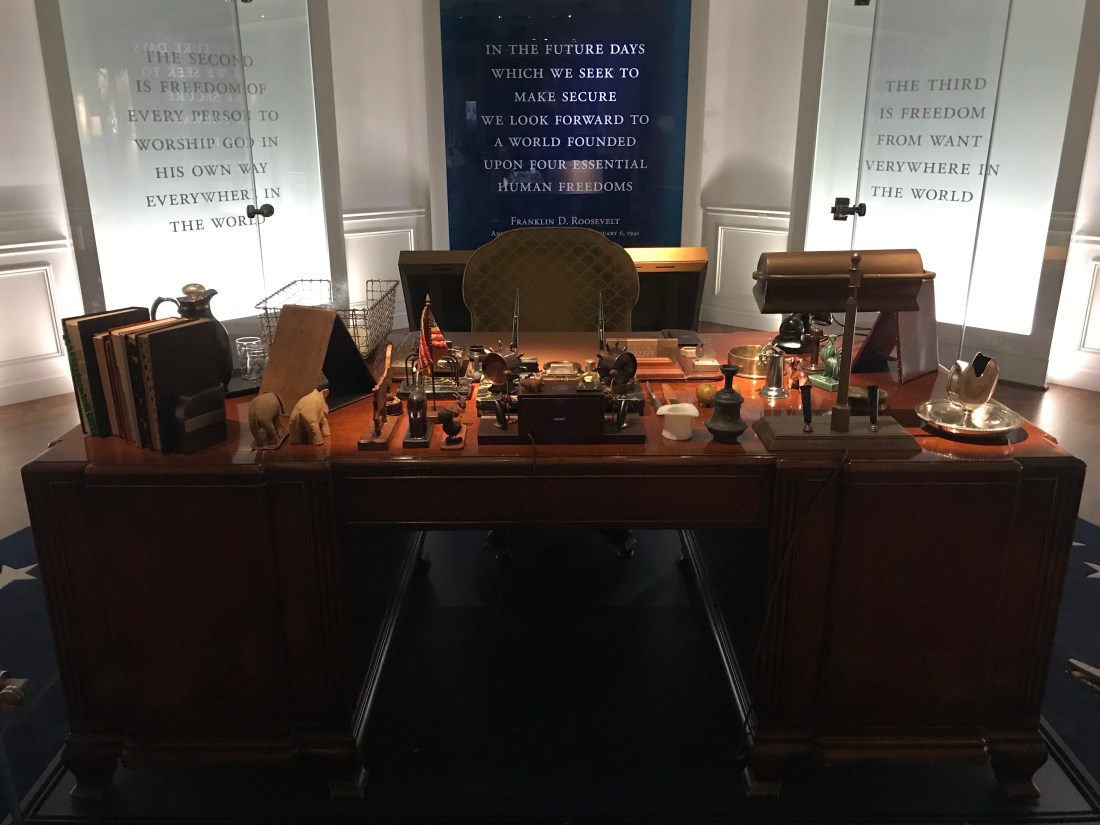
IMG_1484.jpgIMG_5852.jpgIMG_5851.jpg

Imagine what stress that he had when he had to tackle both The Great Depression and the Second World War… it must have certainly taken it’s toll on him…

IMG_5853.jpg

The country was struck in horror when Roosevelt suddenly died in Warm Springs, Georgia of a massive stroke, and was an event that would be recalled as just as tragic and pungent as it was with President Kennedy’s asassination, or the September 11 Attacks.
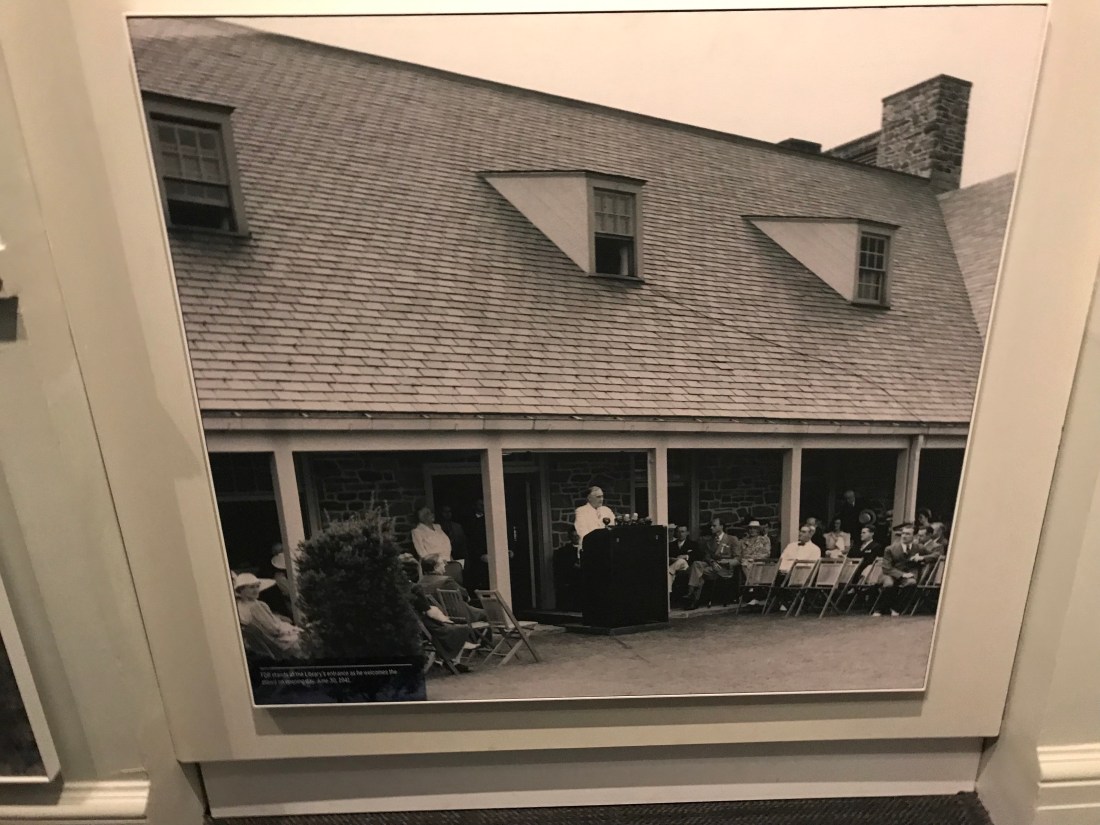
IMG_5836.jpg

The library was dedicated by then-President Roosevelt himself! He had his own personal study here, and used it regularly during his twelve years in office (he was the longest-serving Commander in Chief in American History, serving three full terms, and part of a fourth term).

IMG_5857.jpg

Presidential Libraries are not book libraries in the typical sense… they are repositories of knowledge, and classrooms of democracy.

The official personal and public documents of the President are recorded within these archives, and are open to the public for further study and understanding. Though other libraries had been set up before this, the FDR Library was the first one to explicitly be available to the general public. It was FDR that started the long precedent of sucessor presidents to set up their libraries as well.

IMG_5848.jpg

Some items in the library storage included these paintings (most of which were owned by FDR),IMG_5847.jpg

And his special Ford Automobile! This car is actually ingenious, because it has a clever contraption built into it.

IMG_5849.jpg

Since FDR was incapable of using his legs, he designed a hand-brake system that would brake the car instead! It was perhaps a special design that he made famous.

Well, not much else can be said about Franklin Roosevelt that hasn’t already been covered here… he had charisma, he had responsibility for his country’s wellbeing, and he was genuinely caring of others and their plights, which in the end properly place him among the greatest ranks of our Commanders in Chief. Many following presidents and millions of other people emulate him as their role-model, and seeing this library, it is certainly no suprise to see why. Thanks FDR!

IMG_5860.jpg
Thank you for once again putting up with my late post! Circumstance hasn’t been kind to my time to work on the blog, and as I post this, I will currently be staying in our hotel room in Vermont, where we will explore the northernmost points of our trip with some of our Northerner Presidents, and soon arrive on the edges of Boston itself, and to the final days of our long trip!

I’ll be sure to post yesterday’s post ASAP, as it had some very neat places to visit!

Until then however, take care, and keep on rollin’!


Day 14, Faith, Hope and Love (New York City, NY to Syosset, NY) (5/25/19)

“Where were you when the world stopped turning on that September Day?”

Those were the lyrics of Alan Jackson’s beautiful song, which truly captivated the horrors and wonders of the September 11 Attacks…

No other place or monument could so properly relay the intensity and fear of that infamous day than the 9/11 Museum in New York City.

For our final day in New York City, we explored this museum in depth, and wrapped up loose ends before we headed out onto Long Island, and into the third and final leg of our journey.

Now then, let’s take ourselves to the very foundations of the Twin Towers… This is, the 9/11 Museum.

9/11 Museum

IMG_5613.jpg

IMG_5577.jpg

The pools still retain their solemn majesty, through night and day. Silence was everywhere around it, in respect for the departed.

IMG_5611.jpg

If you remember, the white flower signifies a person with their birthdate being the current day. This name here seems to have been visited by family perhaps, hence the pink flowers… The memory is evidently still fresh in countless minds… What did you have to endure to have a loved one lost to such senseless acts?

IMG_5575.jpg

Above on the nearby walkway was this work of art: “The Sphere”. This was located in the main plaza between the Twin Towers.

IMG_5579.jpg

Of course, it would be reduced to mere debris, and now serves the purpose of teaching the lesson that, like beautiful works of art, like human-beings, can be ruined by such wanton destruction.

download.jpg

(Not my photo)

Let’s go in.

IMG_5581.jpg

Support beams that once held up one of the Twin Towers. Many pieces of the debris have been scattered across the world as exhibits, but there are quite a few pieces here.

IMG_5584.jpg

The 9/11 Museum, which opened on September 11, 2011 (The tenth anniversary of the attacks), is yet another state-of-the-art museum that tells a story to painstaking and excruciating detail and emotion. There was never a dry eye in this place… And mostly, not one of the likely hundreds of visitors in that place preferred to say a word… word’s were not enough.

IMG_5585.jpg

Looking down at the very foundation walls of the North Tower. The museum itself is several stories deep, and rests beneath the two memorial pools.

IMG_5596.jpg

As the steps that we stood on descended deeper into the complex, so did the “Survivor Stairs” to the next of us… these very stairs were ones that were located at ground-level in the World Trade Center, and would save nearly 400 lives from certain death. The panic and genuine fear must have been so terrible…

IMG_1215.jpg

Another piece of debris. The Towers were a technological wonder, and struck such a terrible wound to the entire world.

IMG_5597.jpg

This mosaic is special for a very special reason.

Each tile represents a person who was there in New York City on September 11, each with a different account of what color the sky was… no doubt there are thousands represented here. Each could have been from viewing perspective throughout the city, from distance or proximity, or simply because of hope or despair. Was it a clear day of every-day, or a darkened sky of tragedy?

IMG_5589.jpgIMG_5591.jpg

Some pictures need no accompanying captions to show the transformation of the landscape…

IMG_5598.jpg

IMG_5599.jpg

The foundations of the South Tower. They are fused into the very foundation rock of the Island, and still remain there…

IMG_5603.jpg

Box foundations of the North Tower. It must have been tremendous force that ripped the beams from their places…

IMG_5610.jpg

More foundations.

IMG_5600.jpg

One of several walls that depicts every single face of those that perished in the 9/11 Attacks, as well as the 1993 Bombing of the WTS.

IMG_5601.jpg

They were doctors, teachers, firefighters, secretaries, construction workers, husbands, wives, sons, daughters, mothers, and fathers… each with different ages and backgrounds, and most with a smile of promise on their face, which were dashed by the events on that fateful day…

IMG_5602.jpg

No words.

IMG_1219.jpg

A piece from the North Tower that was directly hit by the incoming hijacked plane. Each metal beam has identification numbers painted on them, showing where they were. Metal can be contorted into horrible shapes under such thermal stress.

IMG_1224.jpg

A piece of the top pinnacle of the North Tower, revealing many of it’s complex interior designs…

IMG_5604.jpg

Different relics that predated the Revolutionary War were also found in unearthing Ground Zero. The earth beneath Manhattan is likely filled with archaelogical finds, and who knows what else might still lie under the skyscrapers?

IMG_5606.jpg

The Elevator Batteries of the Twin Towers were the largest of it’s kind, and perhaps some of the most complex models that one could find.

IMG_5608.jpg

A Fire-truck that got completely crushed underneath the weight of burning and falling debris. This is just horrific.

The rest of the museum, located in the “Historical Exhibition”, prohibited photography. So, I will simply provide a few last pictures…

download-1.jpg

images.jpg

download.jpg

Throughout the exhibit, one could only feel the sheer emotion that flowed through every artifact and display…

One could find items that pertained to the hours beforehand, such as election posters, newspapers of the status-quo, and time-magazines rife with celebrity gossip…

Even more debris from the planes, destroyed buildings and the restoration dotted the landscape here and there, and the reactions of people around the world were very evident…

Even though I was only two years old at the time in the care of my grandparents, I had become aquainted with the accounts of those close to me who could remember exactly where they were when the planes struck the towers… my dad in the teacher’s workroom at the school he taught at, and my mother working at the HP Building in Austin. They, along with anyone else who can remember, could remember the fear and uncertainty they had… no one knew what could happen next… and that feeling of unknowing dread was simply an awful thought.

Even those that cannot recall that day in their recent memory, still know of the tragedy, and they connect to it nonetheless, just like this museum did to us. As time passes, the wounds will heal, but the memories will not. It will be remembered as a day where heroes were lost, where inspiration was found, and where people united together to become stronger than ever…

We must keep their memory alive, so I ask once again…

“Where were you when the world stopped turning on that September day?”

download.jpg


Leaving the 9/11 Museum, our last loose end to wrap up was Trinity Church, whose churchyard was now open!

Trinity Church Visit 2

IMG_5615.jpg

IMG_5616.jpg

The larger of the two graveyards in the cemetery was absolutely packed with gravesites. It is perhaps for the relative lack of space on Manhattan Island that no one can be buried here anymore.

IMG_5618.jpg

A massive and very ornate pillar. Just thought I’d point that out.

IMG_5619.jpg

Albert Gallatin was the 3rd and 4th Secretary of the Treasury under Thomas Jefferson and James Madison. There are a couple of other notables buried here too.

IMG_5614.jpg

Francis Lewis was a delegate to the Second Continental Congress, which signed the Declaration of Independence. These markers are likely on every signer’s gravesite across the country.

IMG_5617.jpg

A memorial to New York veterans that served in the Revolutionary War. It’s almost as impressive as the Church itself.

IMG_5627.jpg

John Watts was one of the first U.S. Representatives from New York, and also Speaker of the New York State Assembly. He has a massive statue here, which marks his grave.

IMG_5621.jpg

Wait a minute…

IMG_0829.jpg

…what the…

Why does this one look so similar to Grover Cleveland? I mean granted, it’s not the exact same shape, but they are very identical…

IMG_5622.jpg

Hamilton’s grave is busy! Let’s check it out.

IMG_5623.jpg

The front of Robert Fulton’s grave, who is buried right next to Hamilton.

IMG_5624.jpg

Here he is…

IMG_5625.jpg

One of our most prominant founding fathers, Hamilton was by no means perfect, but still helped to set up much of the groundwork for our government’s workings.

IMG_5626.jpgIMG_1233.jpg

After tossing a coin on his grave (a fitting tribute for the man who founded our Treasury system), we finally departed Manhattan Island and New York City, exiting to the east past Brooklyn and Queens.


We then ended our day by arriving at our hotel in Syosset, New York, located on Long Island!

download.jpg

Long Island is literally, a LONG Island (shown in red above). It’s a very expensive place to live, but beautiful nonetheless.

The next blog post (which, by the time I post this, I will be in the middle of our day’s adventure), will detail our visits to two sites dedicated to two of our most esteemed Presidents… Sagamore Hill: The Home of Franklin D. Roosevelt, and Springwood: The Home of Franklin D. Roosevelt.

So, until then, I’ll see you soon!